Takahiro Iwasaki
Takahiro Iwasaki (born 1975 in Hiroshima Prefecture, lives in Hiroshima Prefecture)
Using everyday objects close at hand—toothbrushes, towels, bookmarks from paperback books, duct tape—Takahiro Iwasaki creates delicate, ephemeral landscapes, transforming familiar daily items into other images and thereby unsettling our fixed points of view. Transmission towers rising from towels piled haphazardly on the floor evoke the pylons that support power lines deep in the mountains, while cranes standing atop a forest of paperback bookmarks look just like a cluster of buildings under construction. Iwasaki also produces his “Reflection Model” series, in which he meticulously recreates, from pieces of hinoki cypress, historical buildings unified with the inverted reflections mirrored on the water’s surface. Behind these works one can sense the influence of Hiroshima—the city where Iwasaki was born and raised and where he is still based—a city obliterated in an instant by the atomic bomb and then, during the postwar reconstruction, turned a full 180 degrees from a military city into a city of peace; the works convey Iwasaki’s own consciousness of time. In 2017 he was selected to represent the Japan Pavilion at the 57th Venice Biennale, where his solo exhibition “Turned Upside Down, It’s a Forest” (2017) was held. Among his other major recent solo exhibitions, in 2015 “Takahiro Iwasaki: Dust (10-10) and Moment (10-18)” was held at the Oyama City Kurumaya Museum of Art, “Takahiro Iwasaki: Piled Up, Even Mountains Become Dust” at the Kurobe City Art Museum, and the solo show “In Focus” at Asia Society in New York.
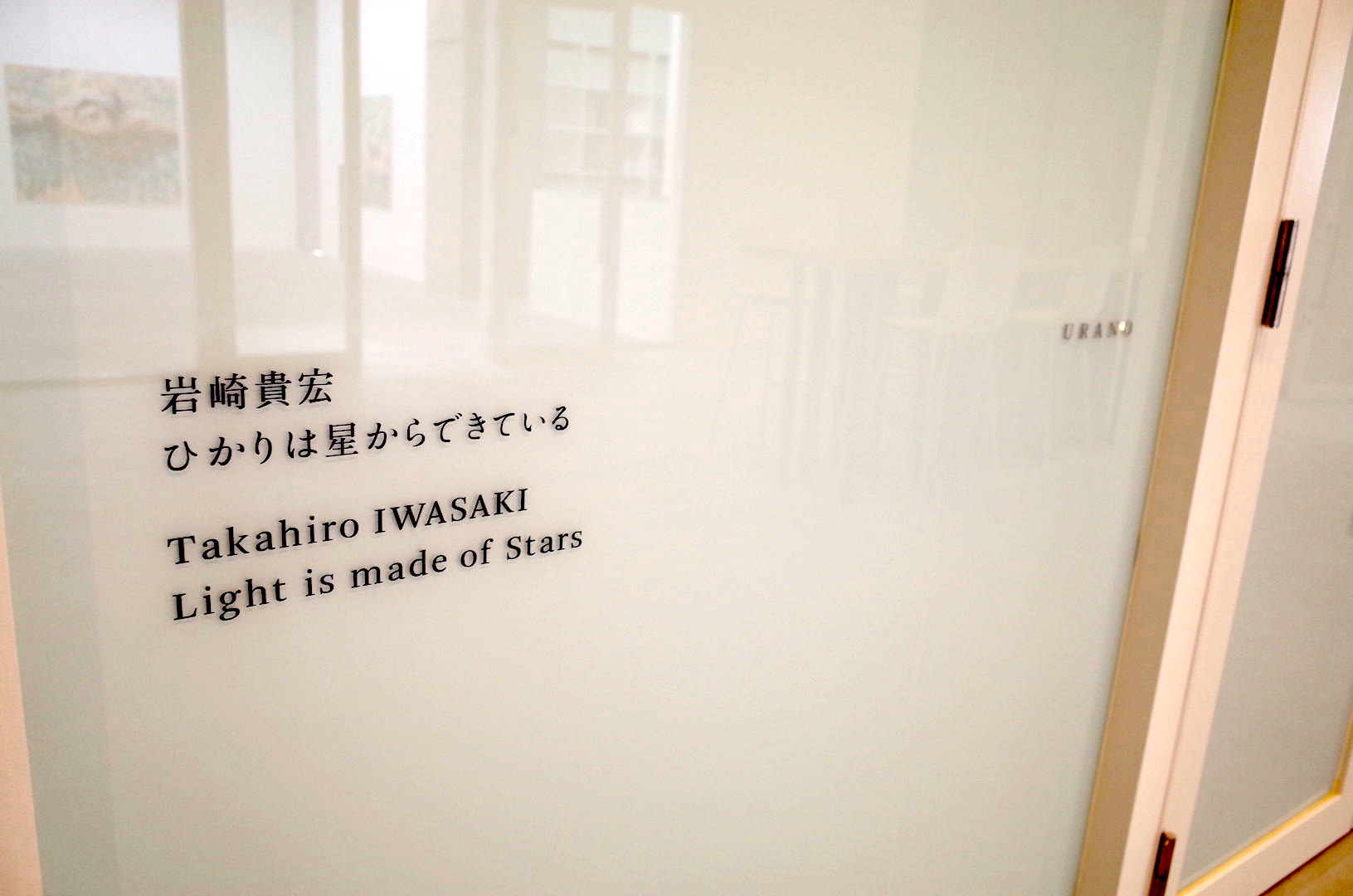
Light is made of Stars
I went to see the solo exhibition “Light is made of Stars,” held at URANO in Tennoz. Perhaps because it was nearing the end of its run, the works were almost entirely sold out. According to the gallery staff, being selected to represent Japan at the Venice Biennale seems to have had a major effect.
“Light is made of Stars”
At night in Suzu City in the Oku-Noto region, when I looked up at the sky—perhaps because there was no city light at all—I felt a kind of fear that the countless points of light in the star-filled sky might come falling down on me.
Starlight is light emitted in the distant, far-off past, and by now those stars may no longer exist. What pierced my eyes was the afterimage of stars glittering with jagged spikes, not mere pentagons.I recalled that while the light of the stars twinkling in the night sky is born of nuclear fusion, the light of nuclear power plants on the ground is drawn from nuclear fission. My life is indirectly sustained by energy extracted from atoms. Or else I am indirectly using what lies buried—liquids and gases from the corpses of ancient microorganisms and the like, converted into energy. I sensed a great, invisible flow and framework.
Gazing at the Tokyo night sky, where the stars can no longer be seen, I thought about how we live in constant change, all things relating to one another.
Takahiro Iwasaki
Every work in the exhibition is covered in “black,” and the space feels as if it has been cast under a “black magic” I had never experienced before.
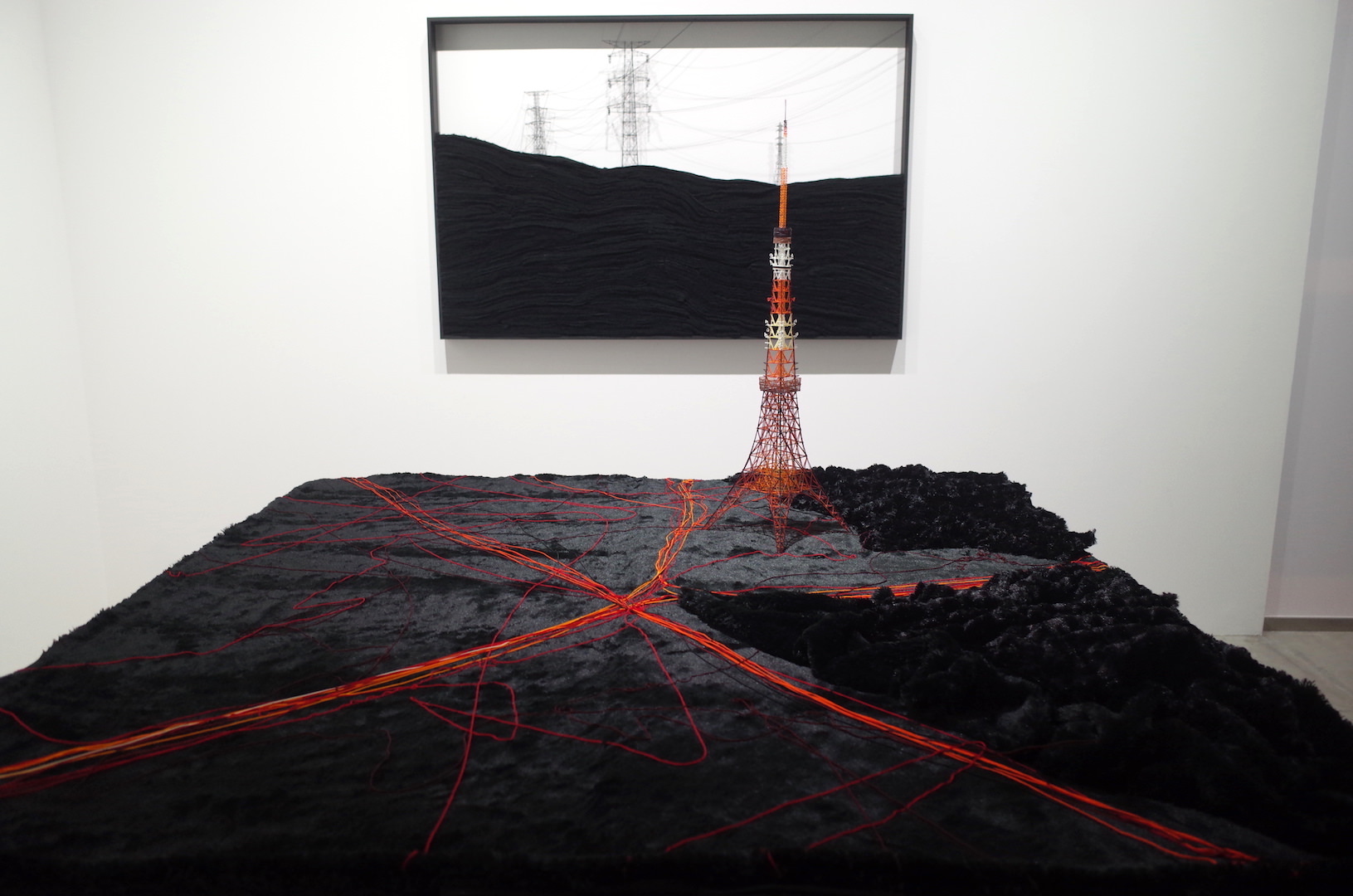
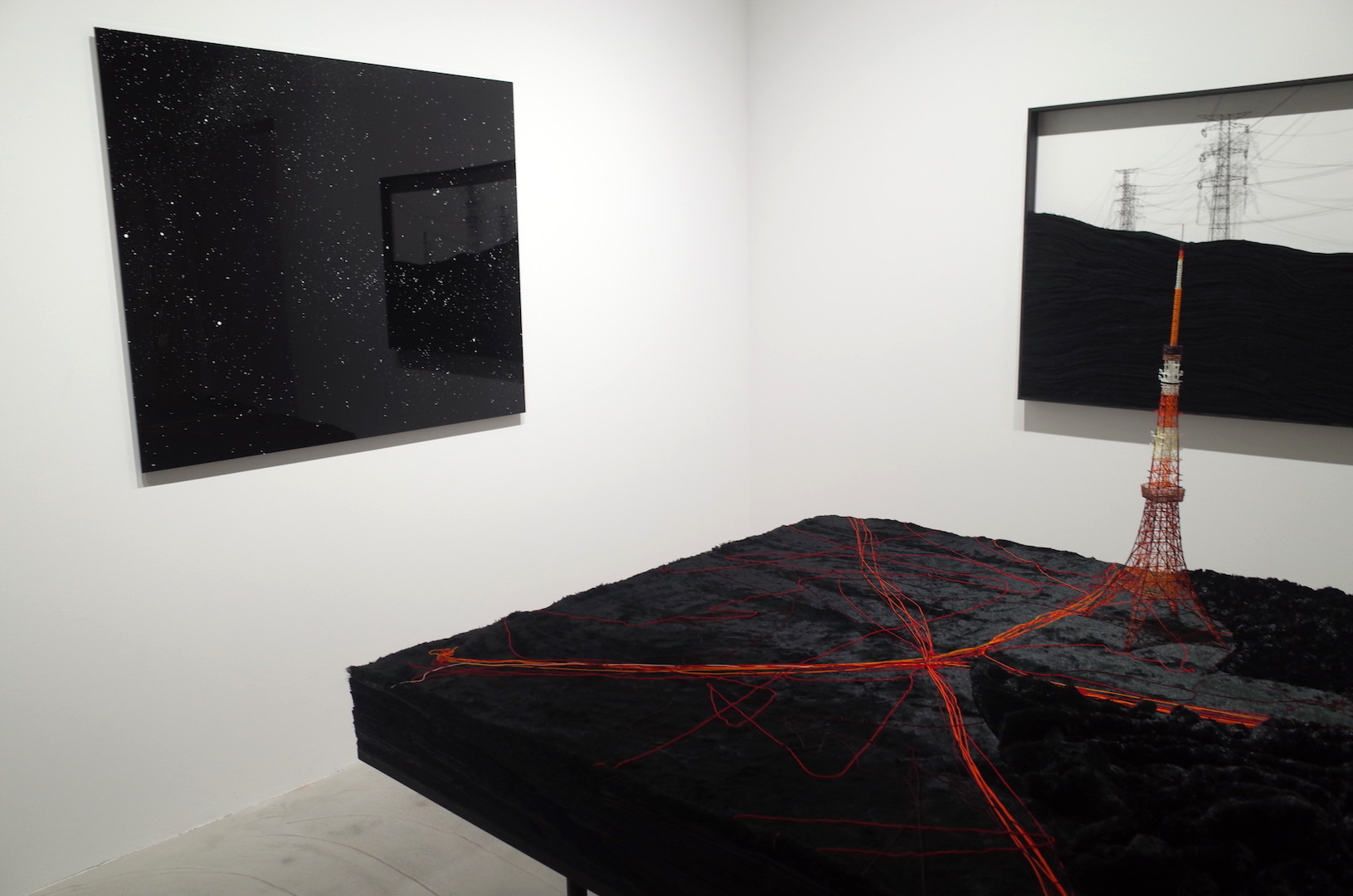
Even though everything is unified in black, a twist has been added to the modes of expression.
The message is especially concentrated in the works that incorporate energy and resource issues.
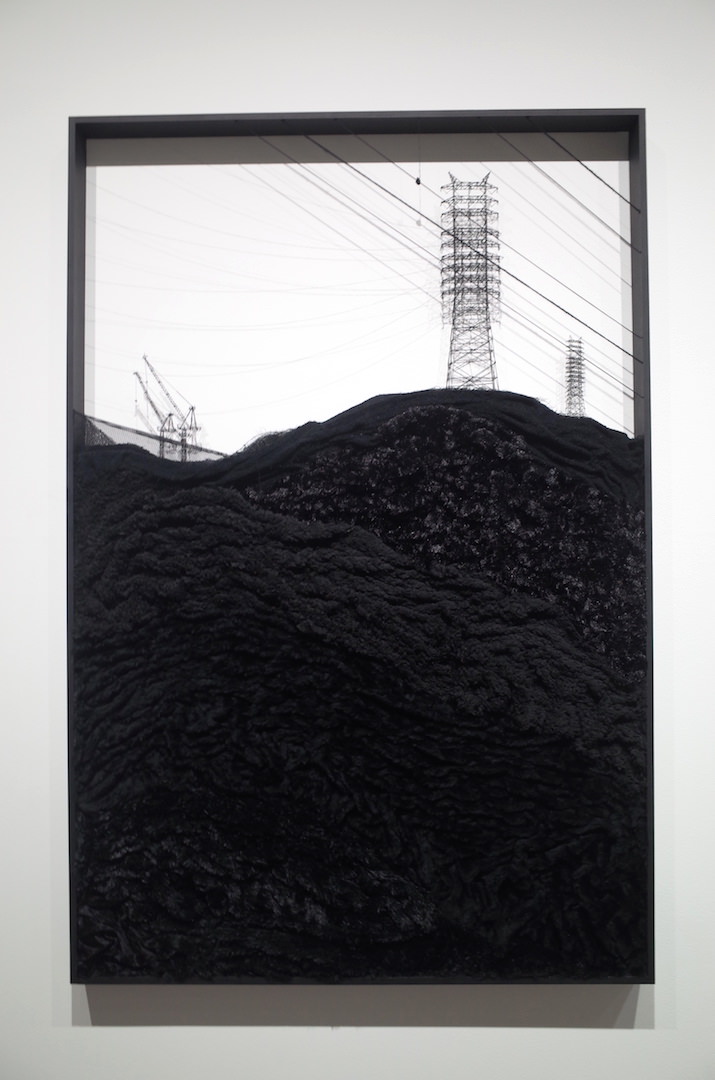
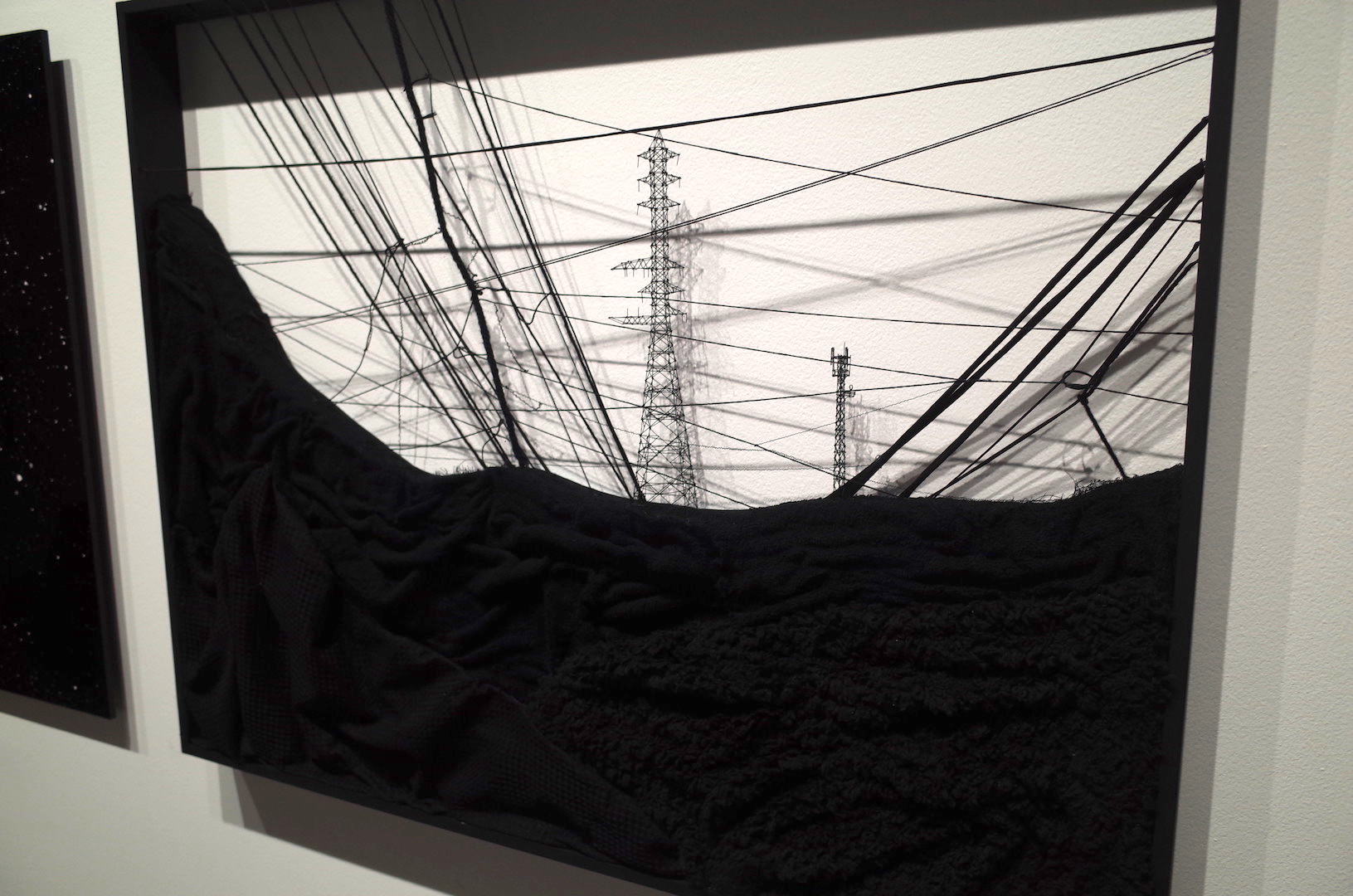
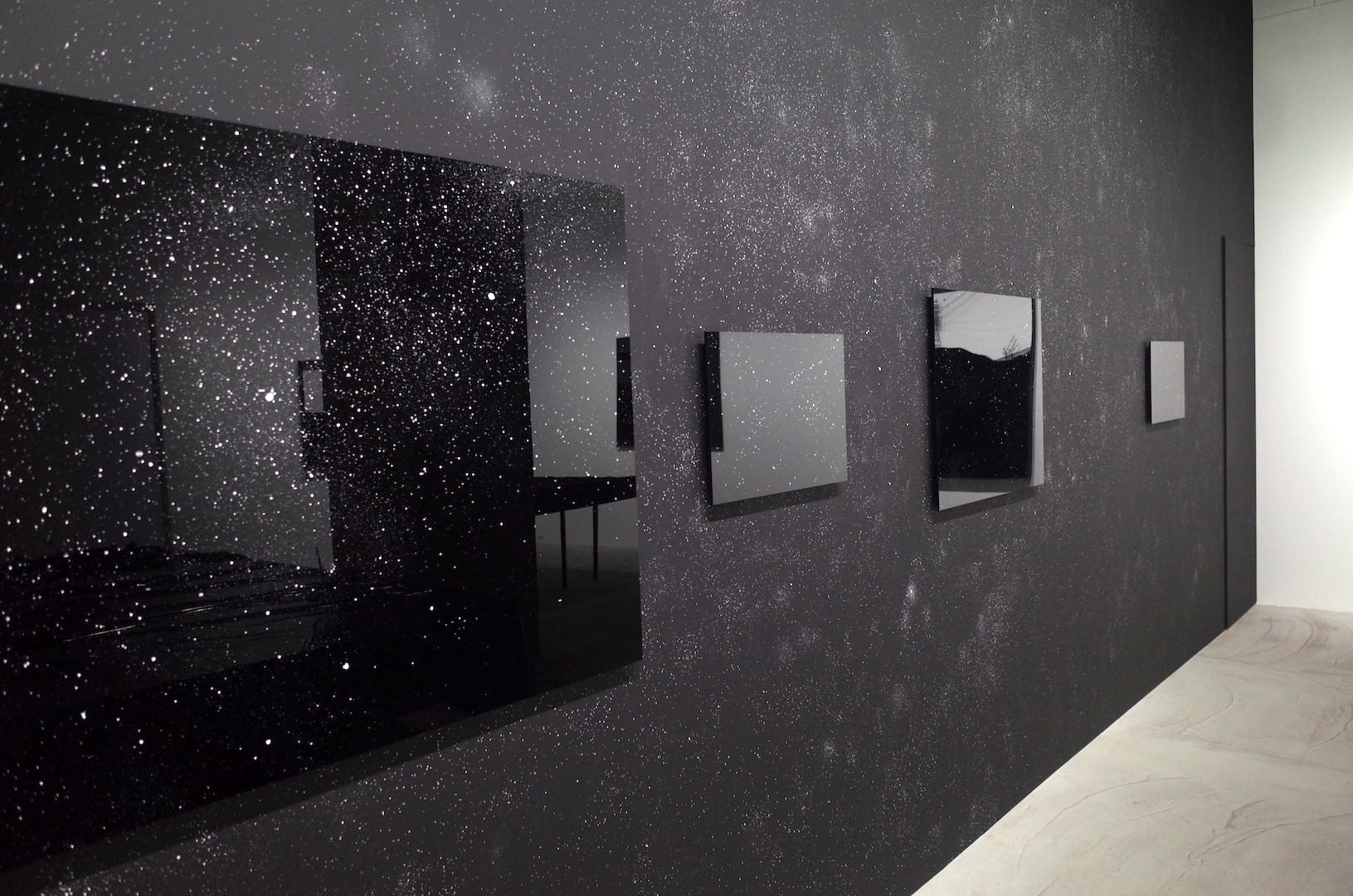
Even works that look as though they simply depict ordinary stars are packed with all sorts of ingenuity.
The work in the photo below is also striking for its white paint, but it was sprayed with a can that had been chilled in a refrigerator. By cooling it, the sprayed white particles are apparently rendered onto the work in an irregular pattern.
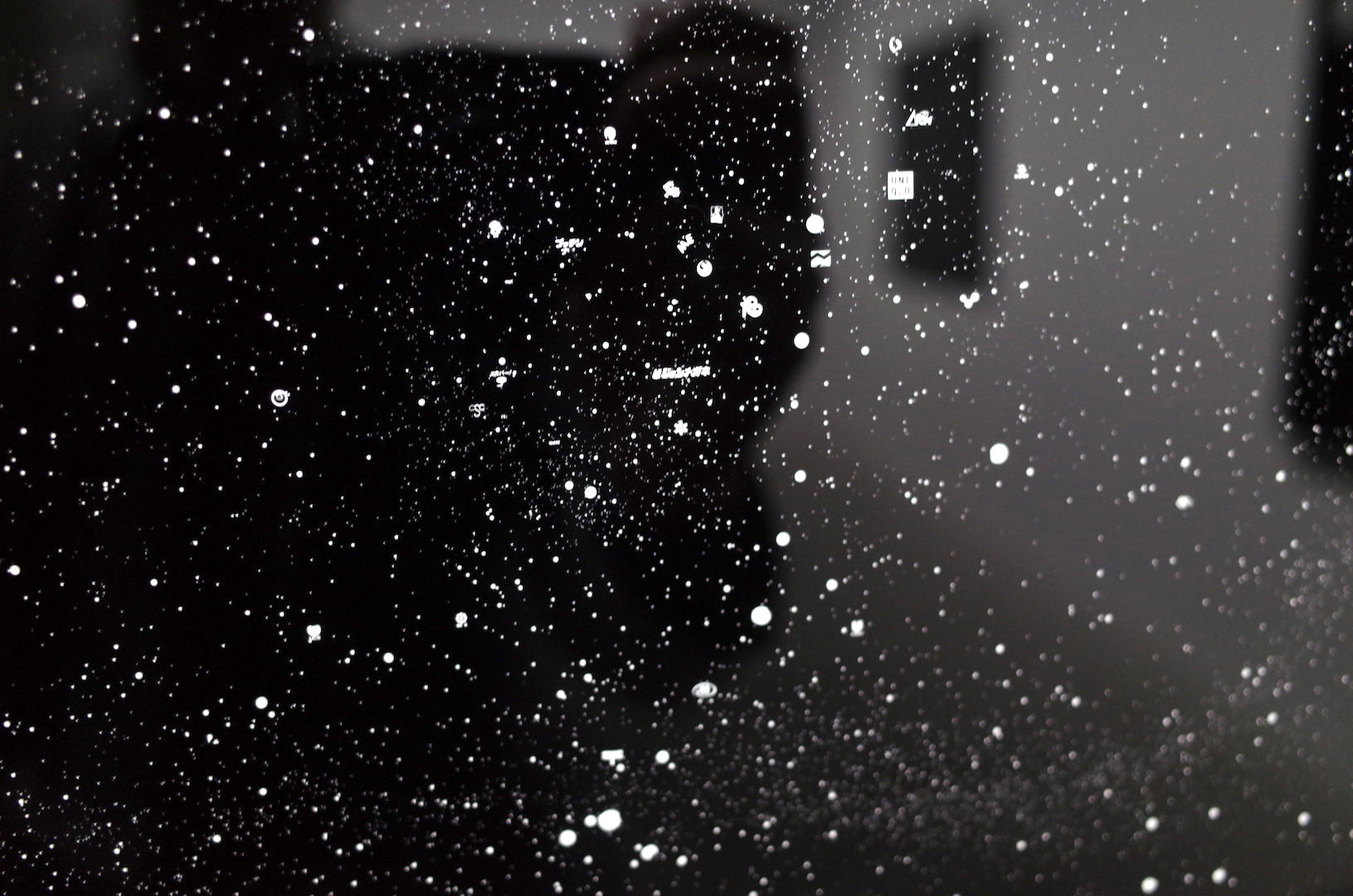
Also—easy to overlook—it is striking that corporate logos are slipped in among the lights, which look like stars, or like city lights seen from inside an airplane.
He also addressed the issue of crude oil in his work.
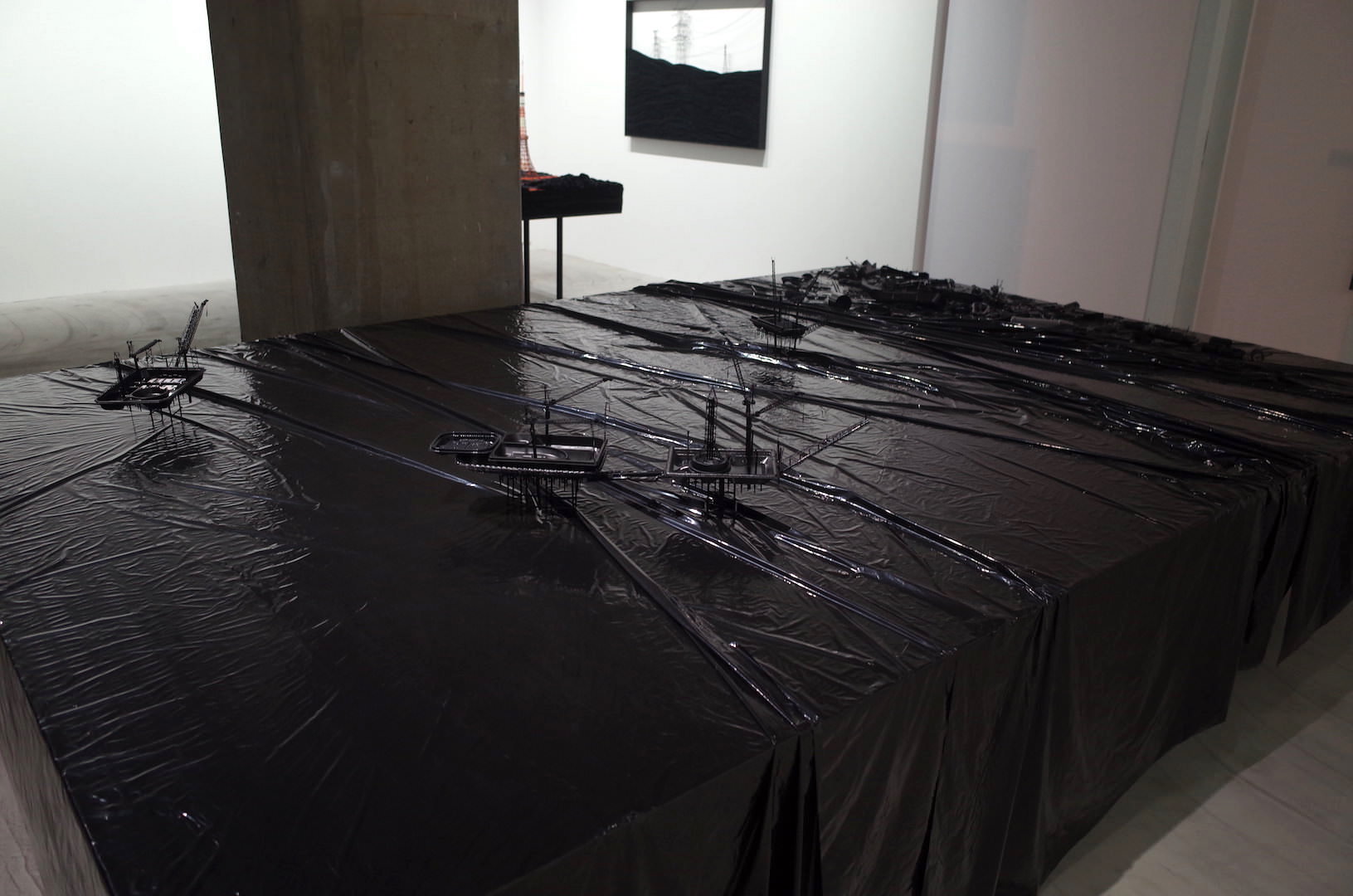
It is a large work that dyes the sea black.
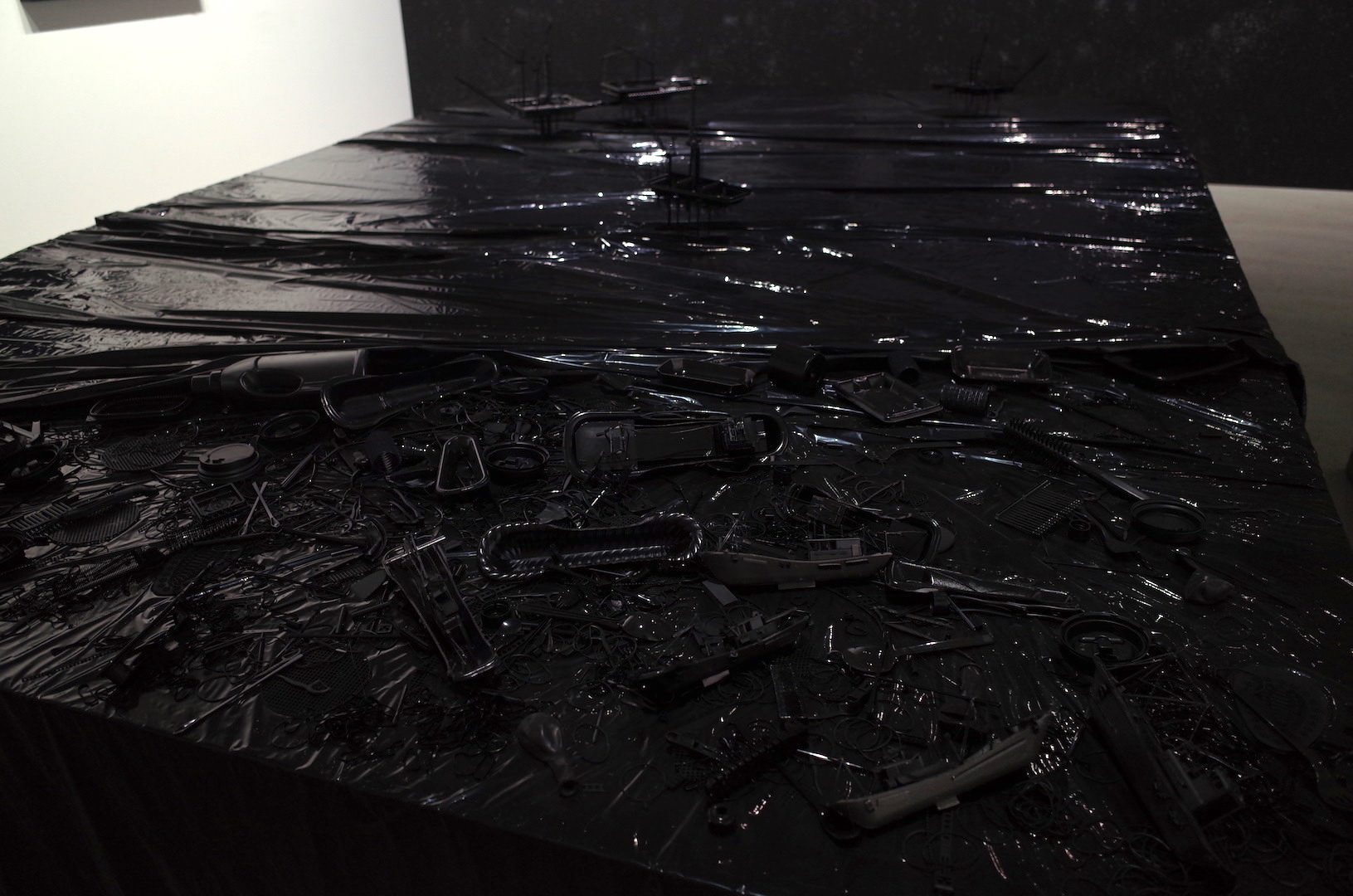
It is nicely satirical that black parts, made from petroleum and already used up, are incorporated into the work.
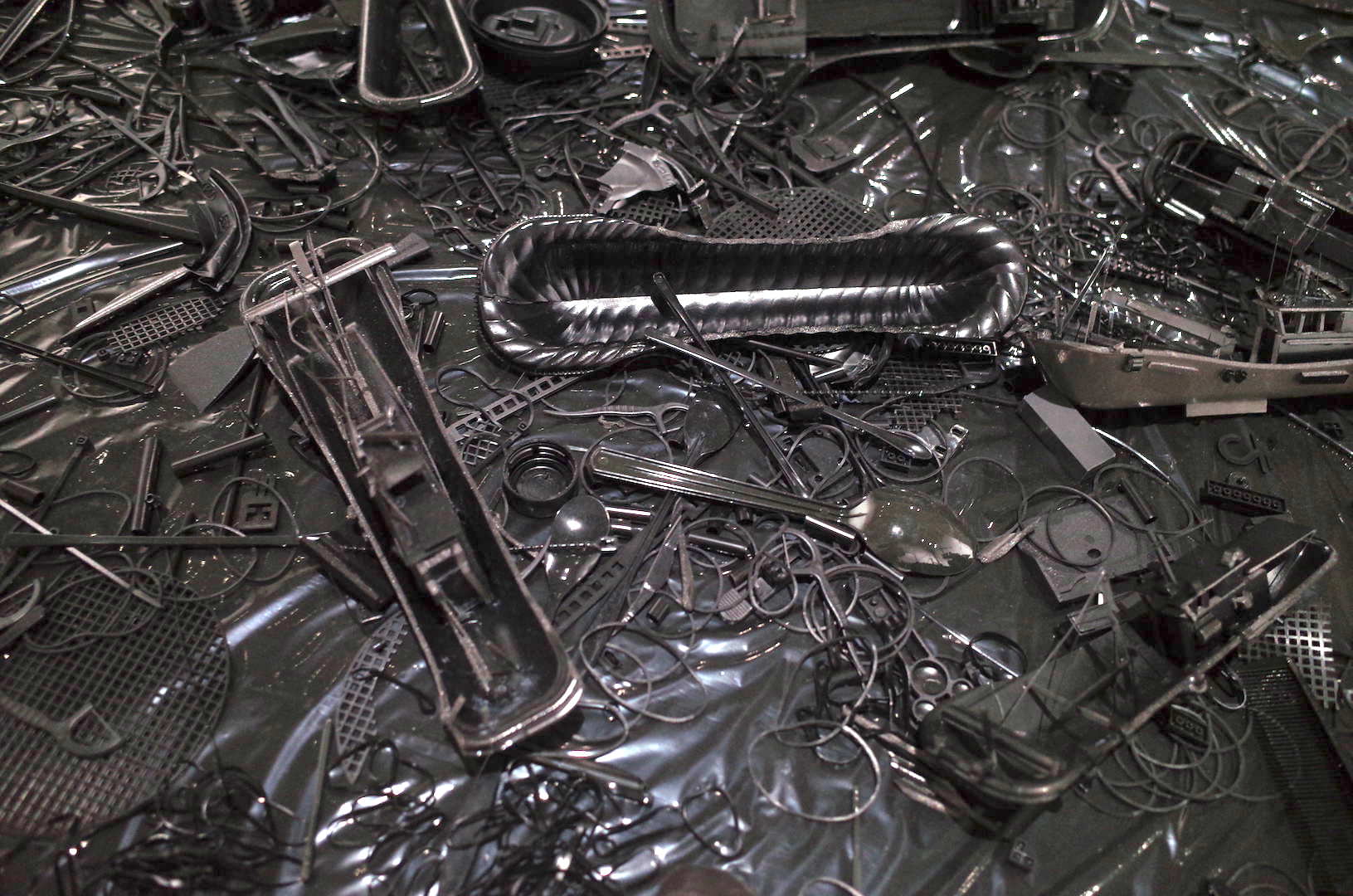
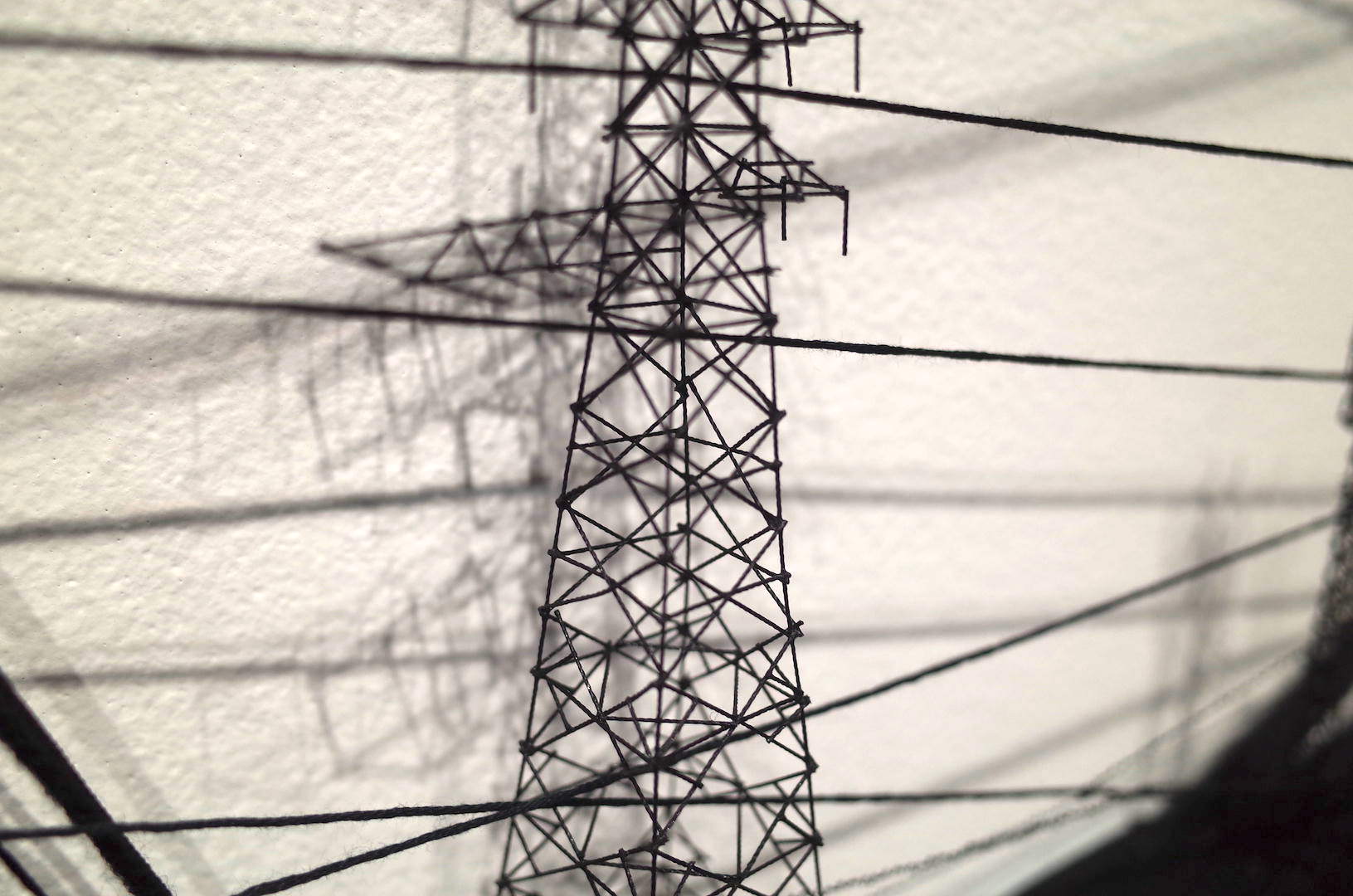
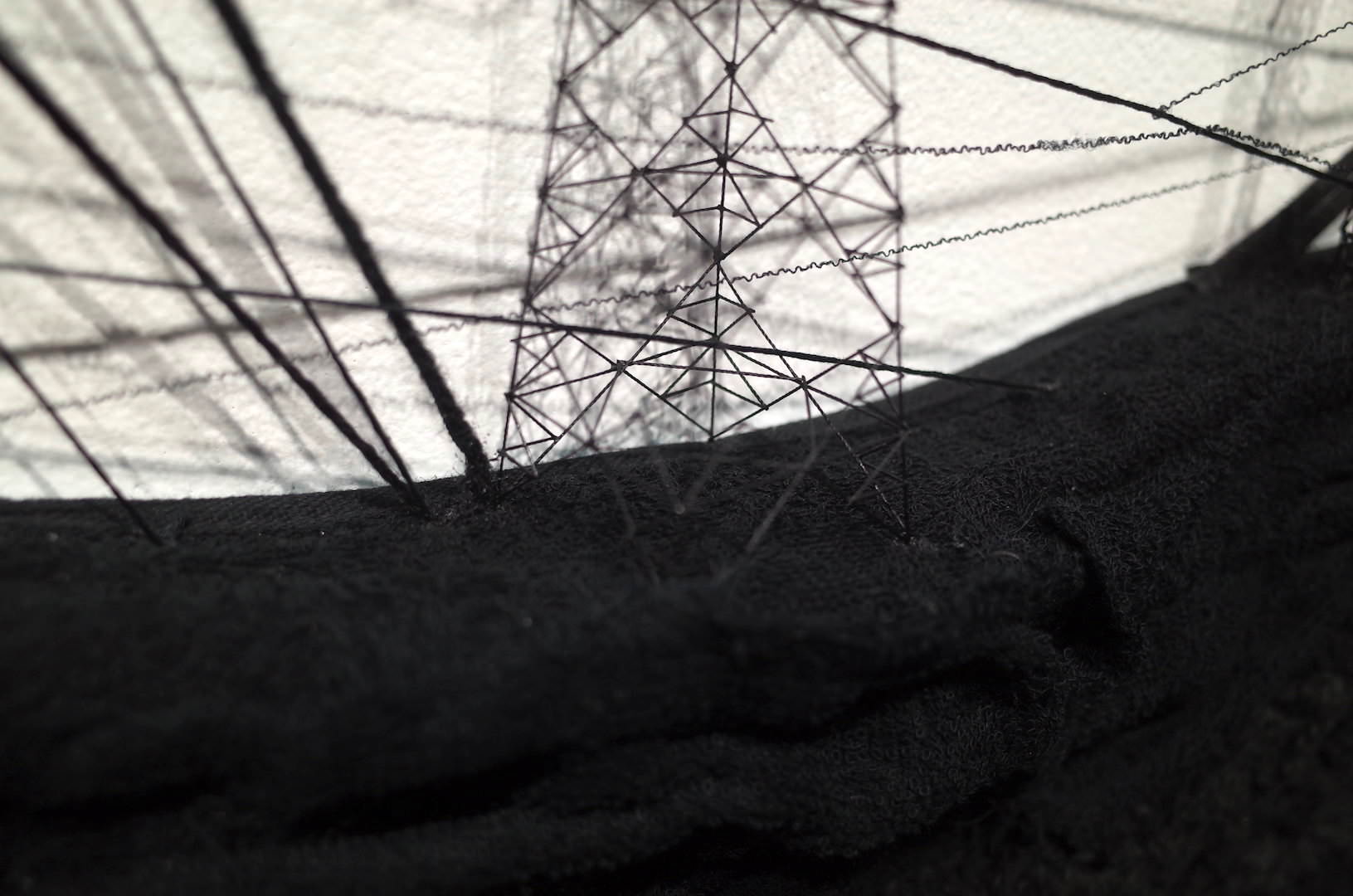
These transmission towers, too, were made with carefully chosen materials, I was told.
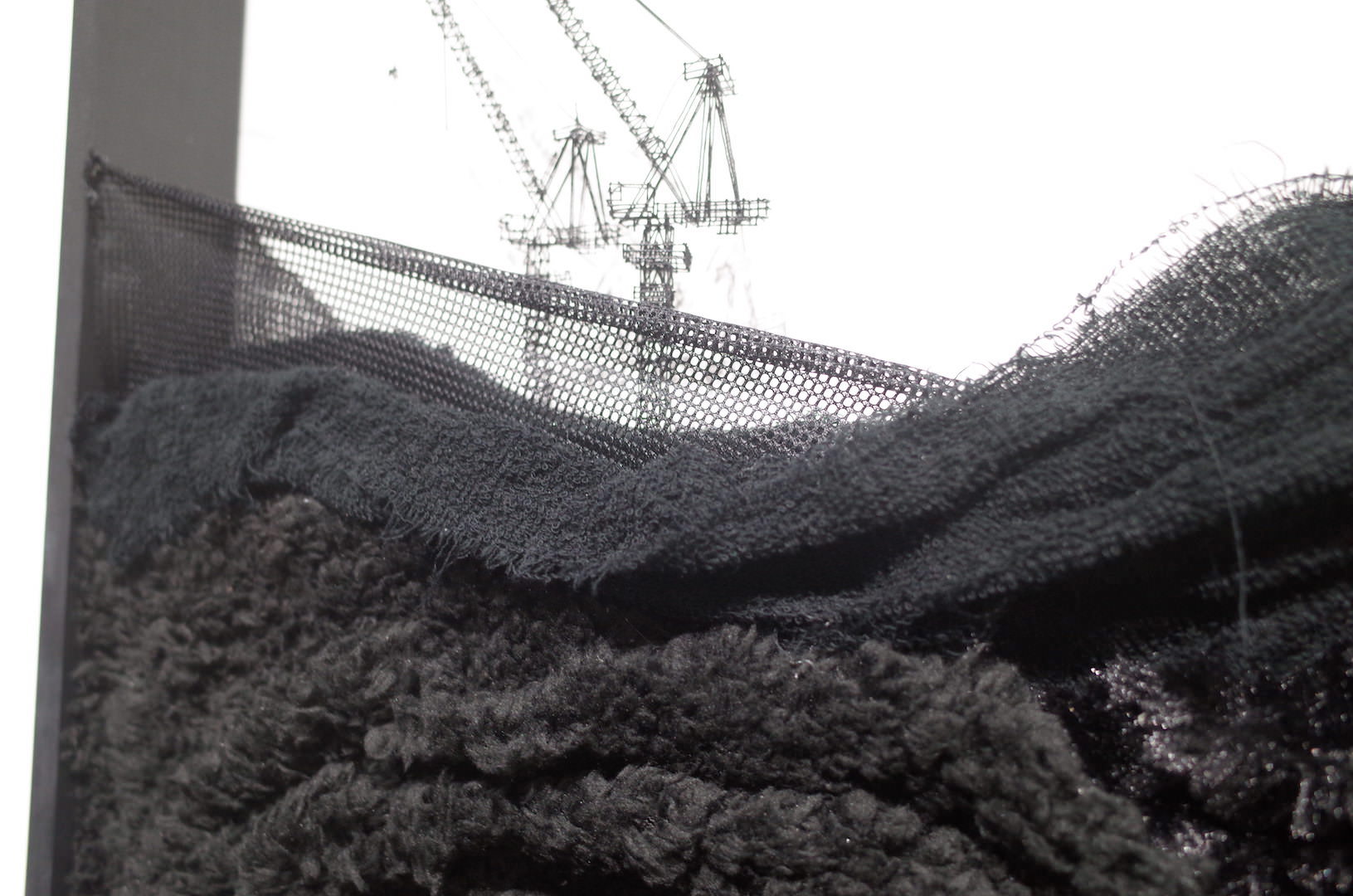
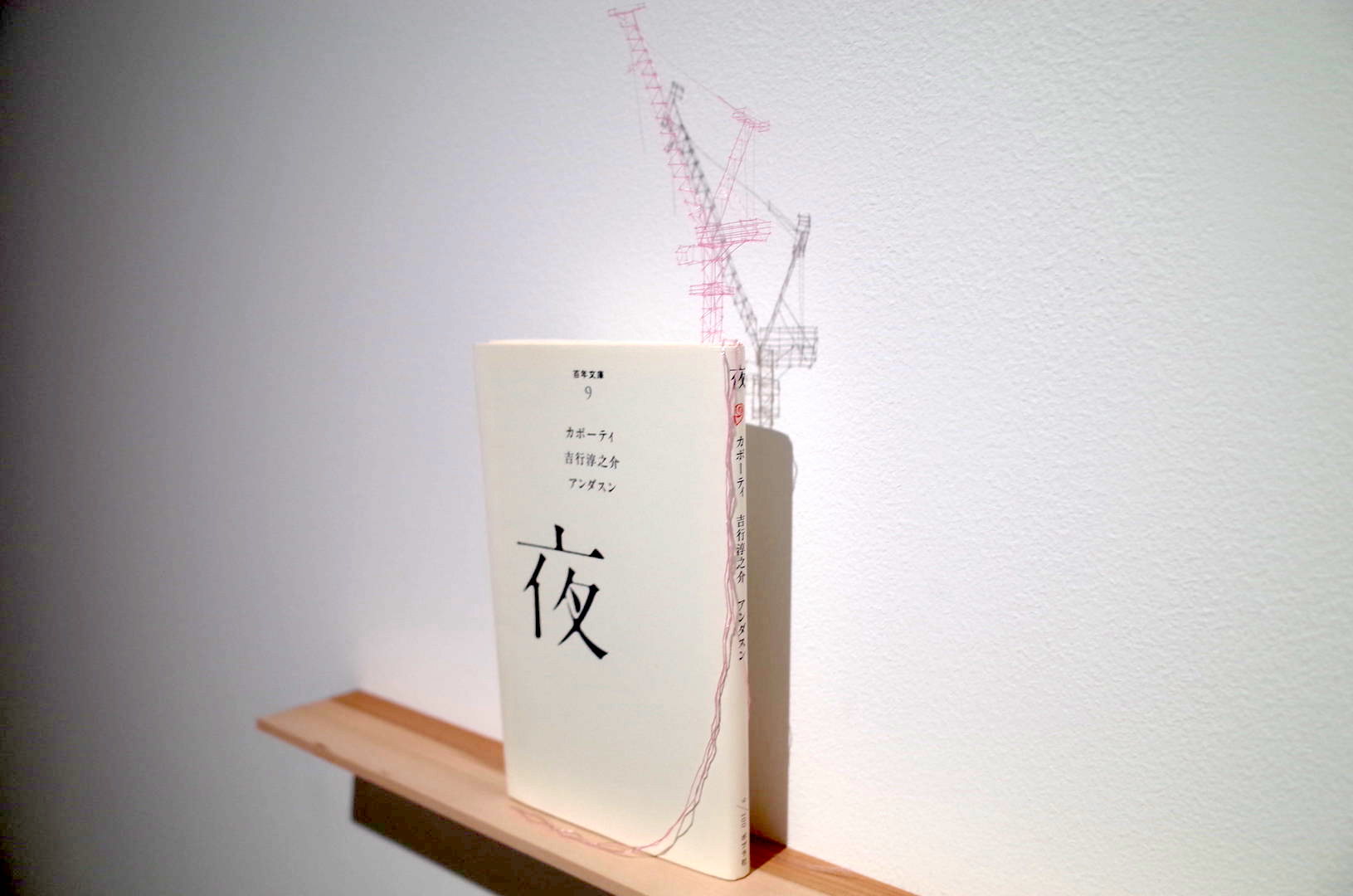
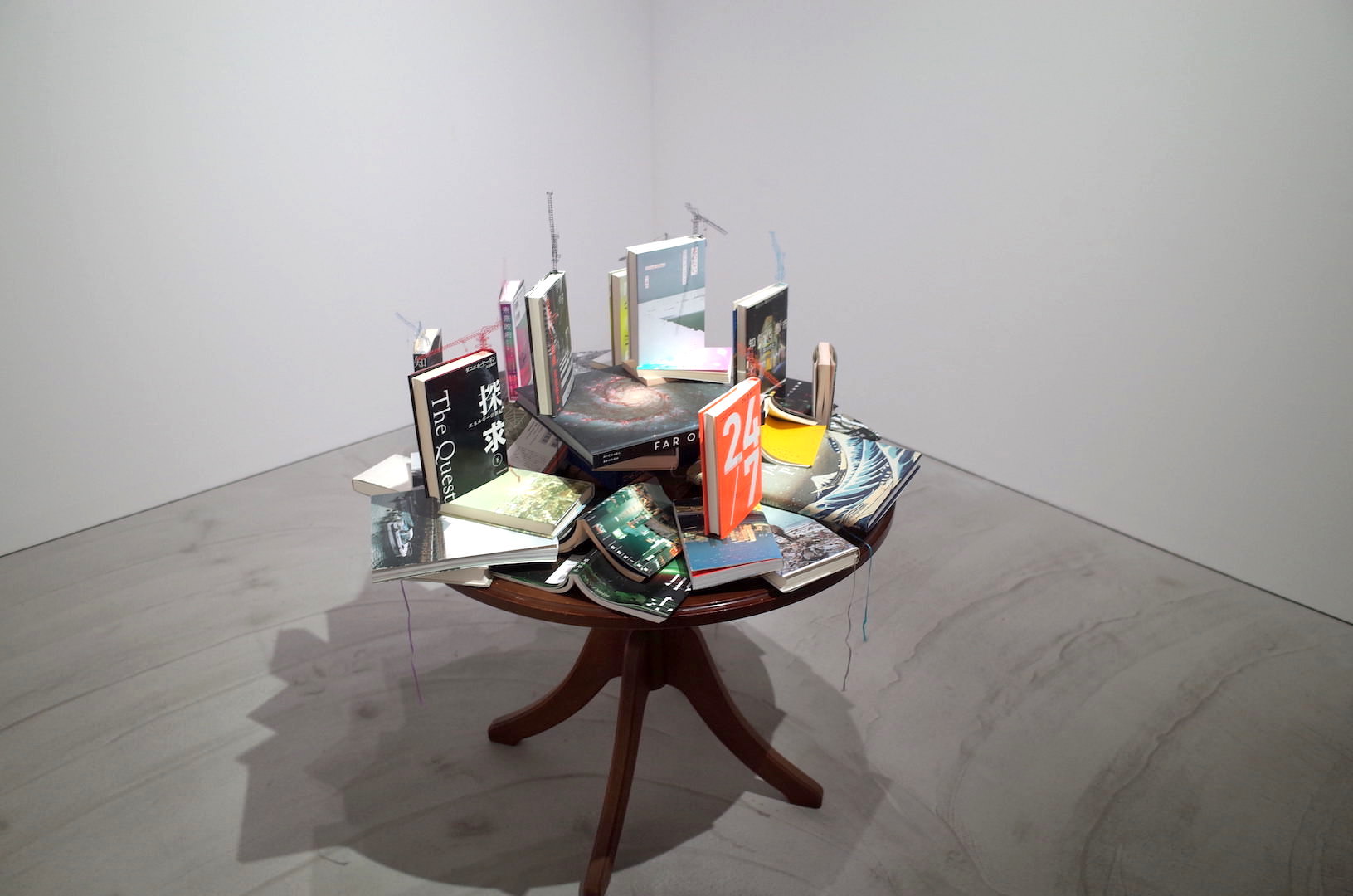
 This work, which brings to mind a building under construction, is from the “Tectonic Model” series.
A crane made by unraveling the ribbon bookmark (spin) of a book perches neatly atop the book.
Summary
In his ability to make the difficult color “black” his own, turning it into art within a minimal range using materials and other colors, I sensed a glimpse of tremendous talent. Thanks also to the URANO gallery staff’s careful explanations, I came to understand backgrounds and techniques I might otherwise have overlooked, making it an exhibition I could thoroughly savor.
Despite the hurdle there must be in acquiring black works, the content made it easy to understand why the pieces are selling.