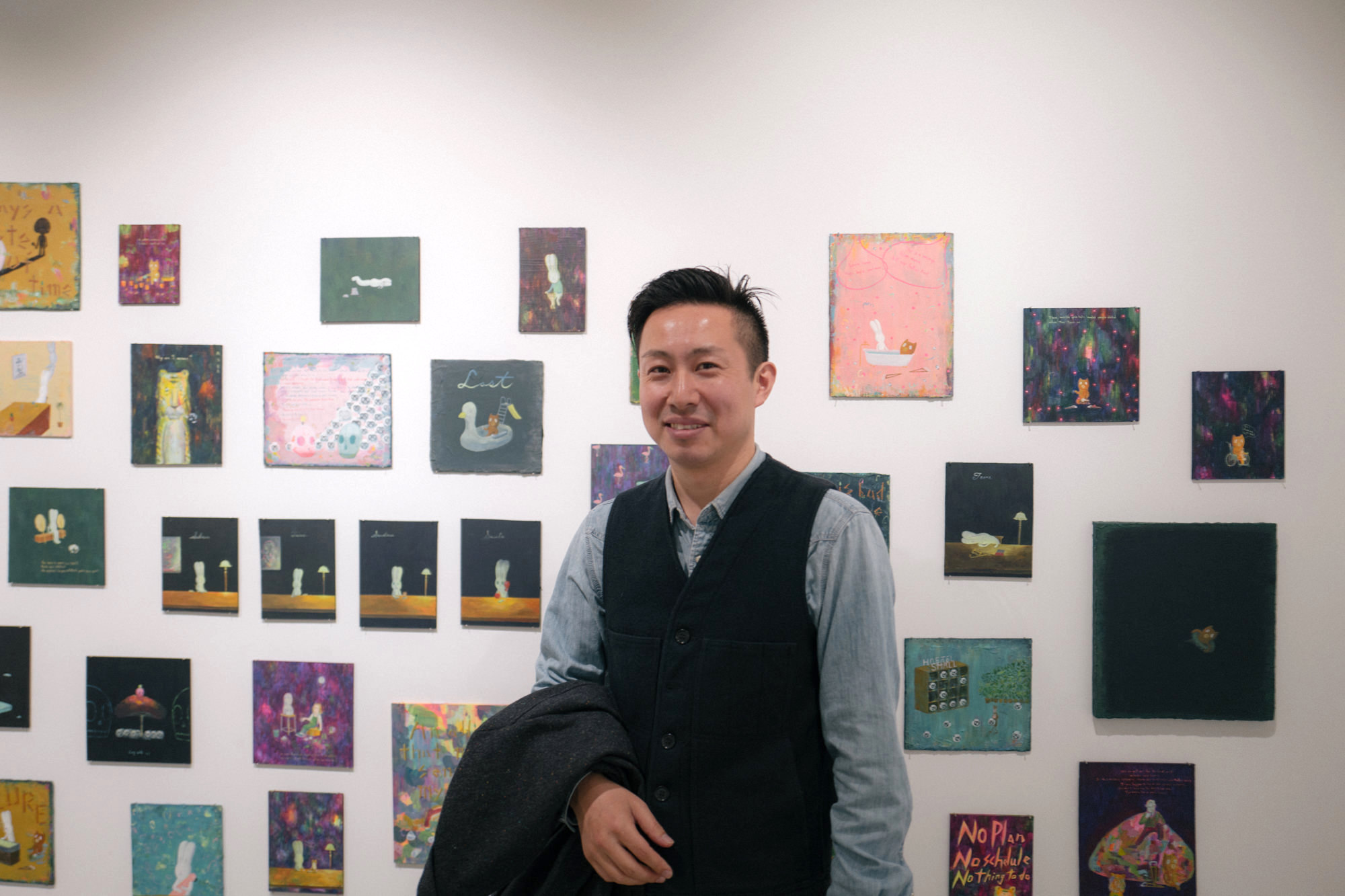
Atsushi Kaga
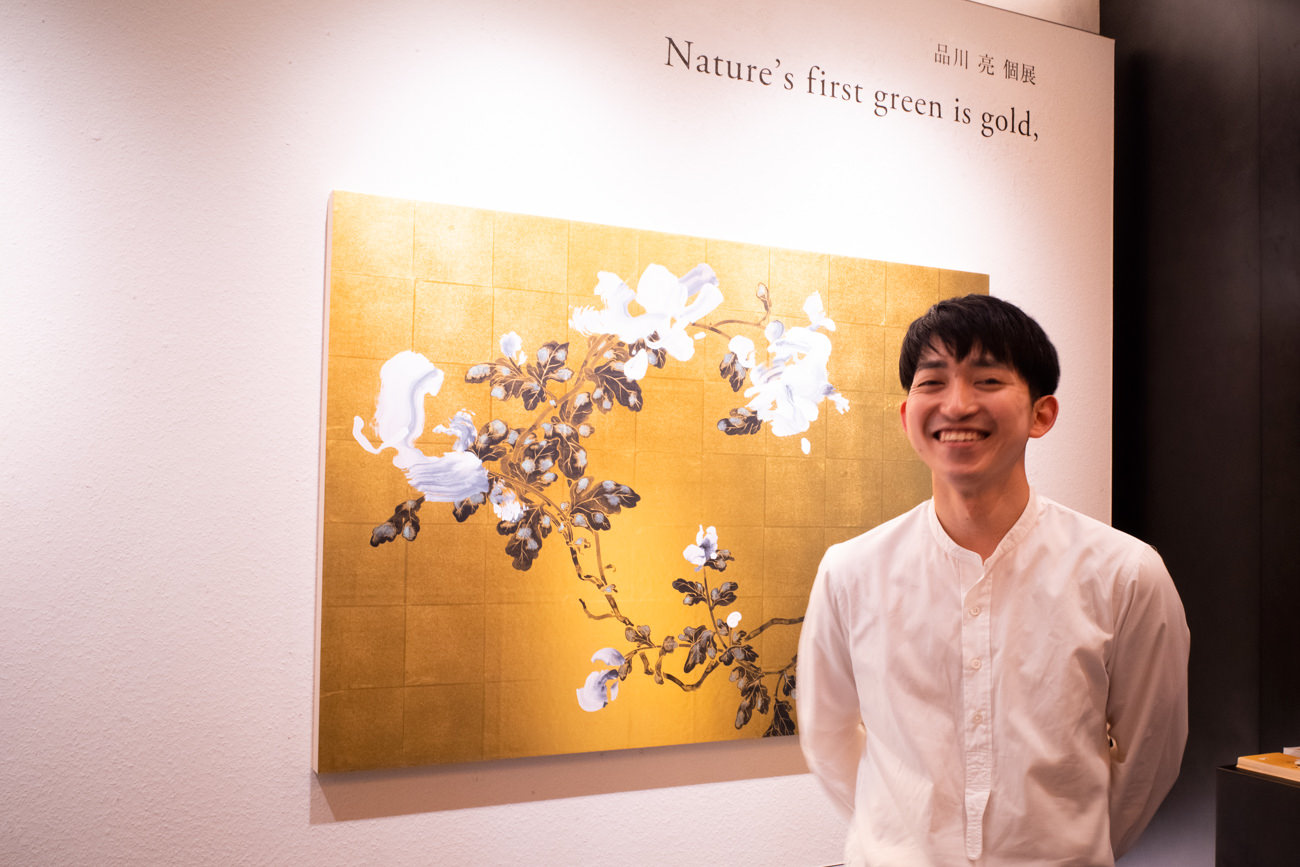
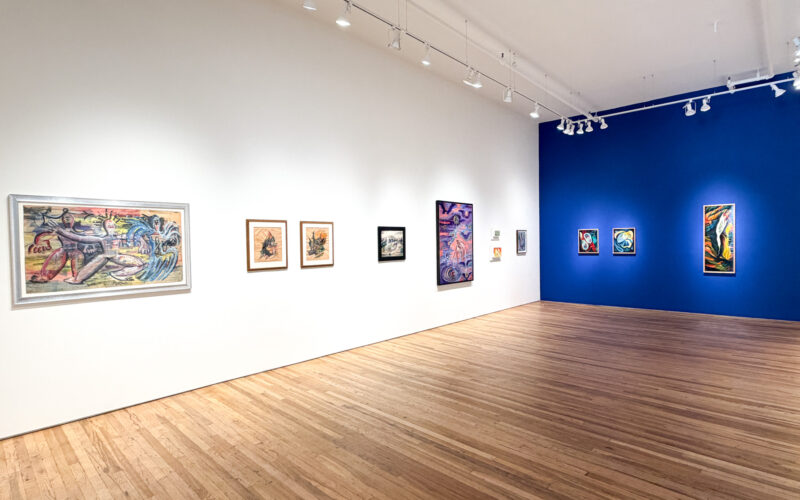
Atsushi Kaga was holding his first solo exhibition in Japan at MAHO KUBOTA Gallery.
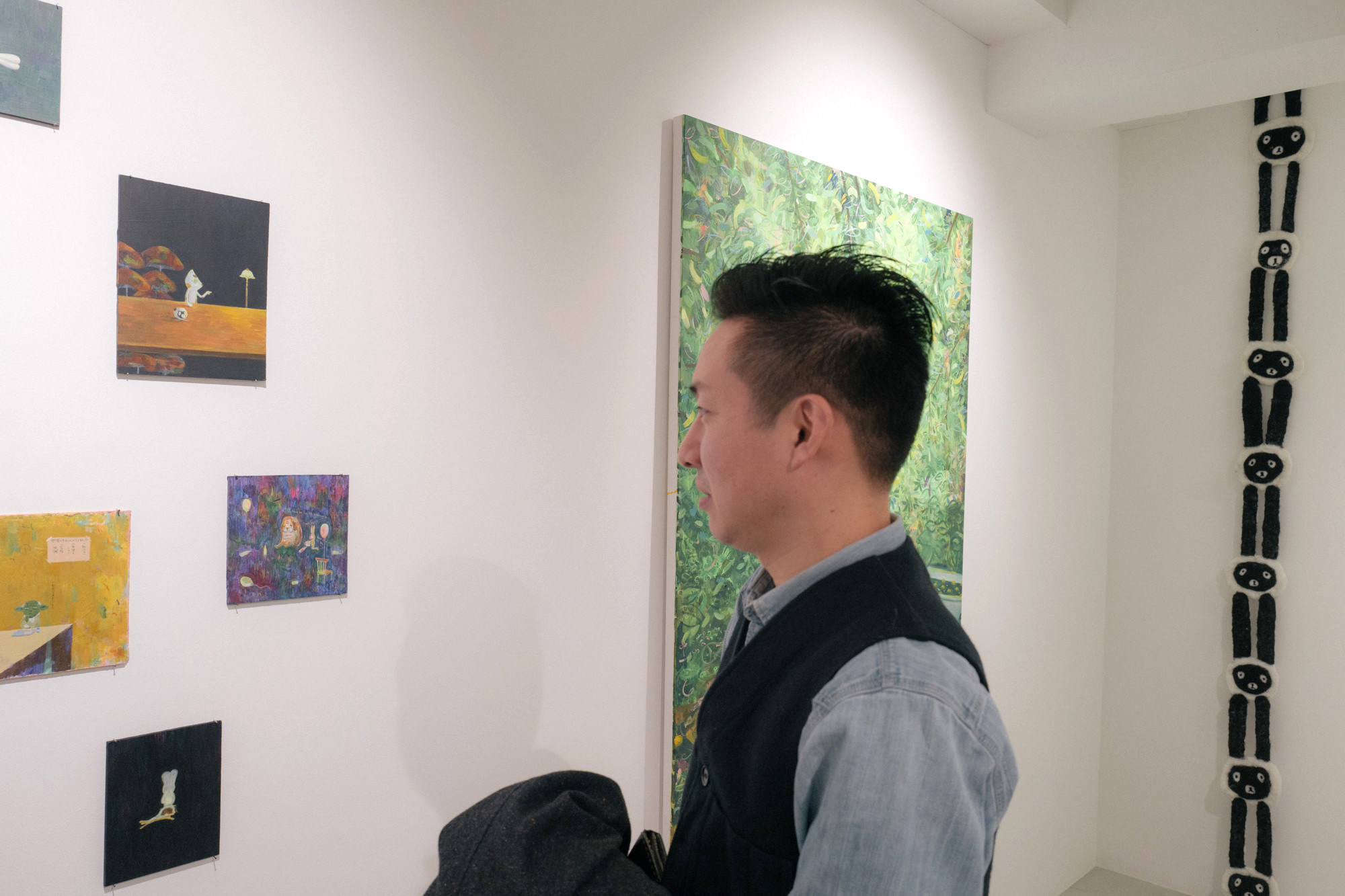
I too visited the gallery in the first half of the run and viewed the works with great interest.
https://art-on.jp/atsushi-kaga-2018/
As the run was drawing to a close, I was fortunate to spend a long time with him and talk about all sorts of things.
A meal near the gallery, commentary at the gallery, back to the restaurant for a meal, then regrouping again at a cafe. Counting up afterward, we talked for about five hours.
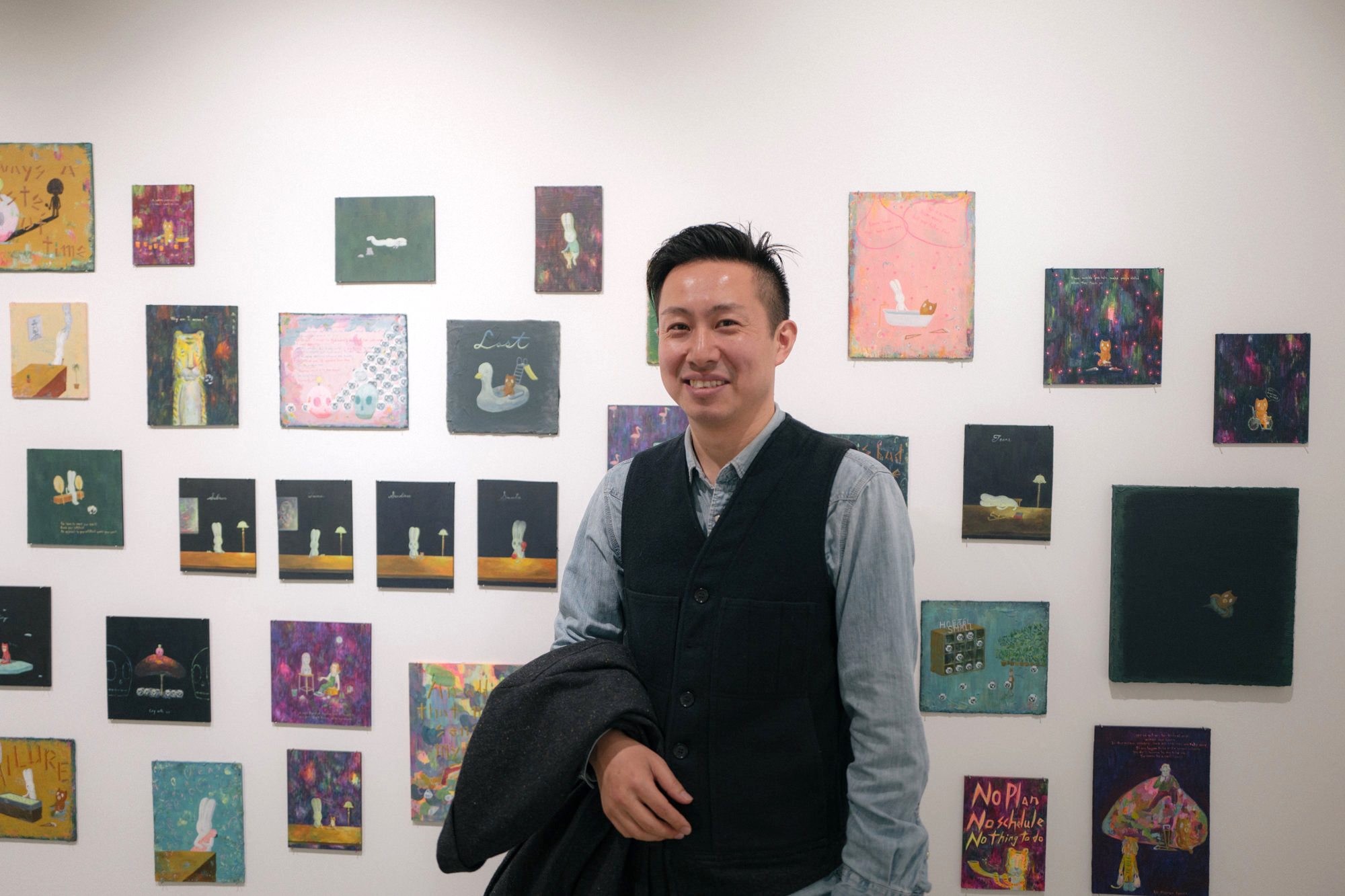
Kaga is an international artist who moved to Ireland at age 19, studied at a local art school, and along the way stayed three years in New York. He is currently based in Dublin as a working artist and belongs to two galleries: Mother’s Tankstation LTD (Ireland) and Maho Kubota Gallery (Japan). He spoke while weaving in native English throughout.
http://www.motherstankstation.com/
As for creating works, ideas seem to well up one after another, and Kaga says he never runs out of material. Once he sets the brush down, as if a switch flips, the brush seems to move on its own, one after another, and production proceeds. Kaga expressed it with the metaphor of performing a piece of music: when the first note sounds (the piece begins), just as notes keep coming out, once he sets the brush down the work gets completed, it seems. For production he uses not only canvas and board but also a special smooth board material called MDF.
Even a once-finished work, he does not hesitate to transform into a different work with an expression he calls REMIX, layering color over it, adding to it, or painting over it. On the back of the canvas he apparently overwrites the completion date with the REMIX date. When buyers encounter such a work, they should be able to immediately confirm, It is a REMIX!
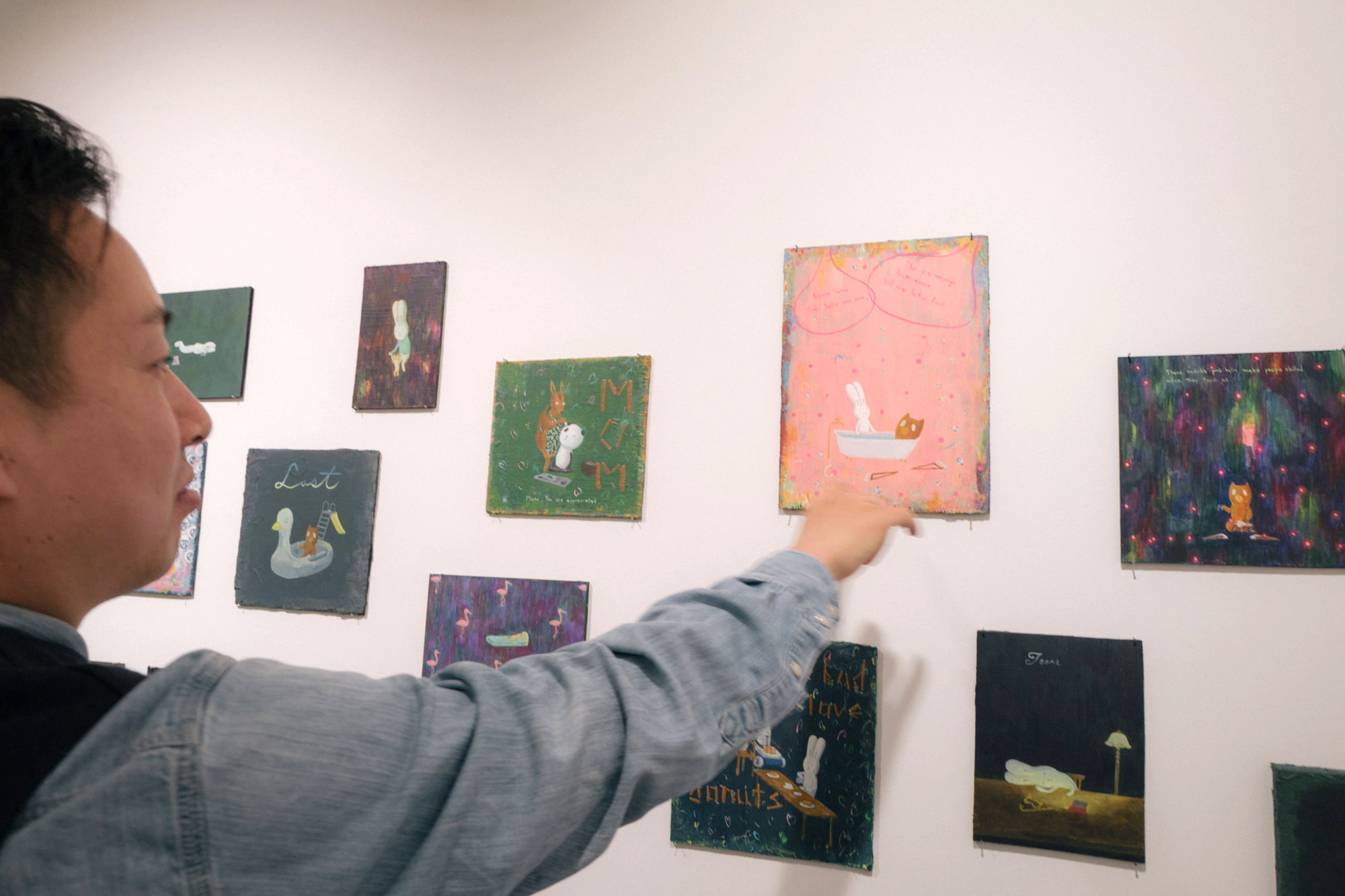
Perhaps because of the sense of accomplishment after finishing, works he has completed seem to become like relics of the past, and even works in the atelier are apparently handled so carelessly it makes you go Huh?!
His passion for a work peaks before production and cools off all at once after completion, giving the impression that he holds a cool viewpoint toward his works.
Even when I mentioned that an art book I recently got had many photos in it, he returned the unexpected comment that just putting the pictures in feels apologetic to those who bought it, and his slightly unusual way of thinking was interesting.
https://art-on.jp/atsushi_kaga_3books/
With some changes, such as slightly incorporating Impressionist elements after visiting New York this year, he basically has not changed his works’ themes, and even looking through archives of past exhibitions his basic approach seems unchanged.
About the state of art in Japan
At the gallery the talk centered on Kaga’s works, but moving elsewhere over a meal, the conversation extended to the state of art in Japan that he felt through this solo exhibition. Through this exhibition, his first, he apparently had various realizations and surprises.
Market
The fact is that art simply does not sell. Kaga too is convinced that the probability of selling is higher in Hong Kong than in Japan. Comparing Art Fair Tokyo and Art Basel Hong Kong makes it obvious.
Opening events
I asked Kaga, who is familiar with the art scene abroad, for his impressions of holding a solo exhibition, and one point was that the turnout at the opening event was unexpectedly small. Abroad, partly because you can drink for free, it gets crowded with many people including students. Indeed, in Japan it is subdued.
Area-related issues
In New York and London, galleries are clustered where the galleries are, so it is geographically easy to make the rounds of each gallery. Looking at Japan, on the other hand, even in Tokyo they are scattered (Ginza, Roppongi, Aoyama, Shinjuku, Kiyosumi-Shirakawa, Shibuya), so even we art fans have to spend considerable effort and time. This problem does seem quite big.
Art
When we finished the not-very-positive talk about Japan’s art environment, somehow the conversation turned to Katsushika Hokusai. He talked about the background of why Hokusai is still discussed today, tying it to three elements by which art greatly grows. His theory: art spreads when three things, the artist, technology, and the collector, overlap.
The view is that Katsushika Hokusai raised the perfection of his works by using Prussian blue (bero-ai), the then-newest pigment that had entered Japan.
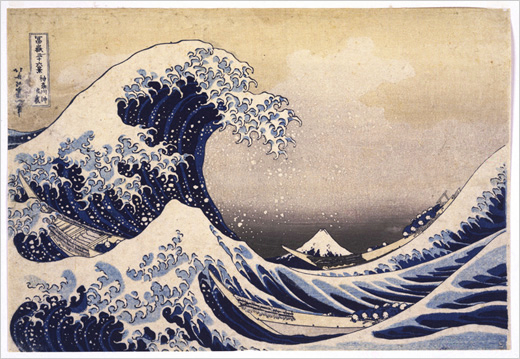
It was a story that art is established only because there is the artist who paints the work, the product technology of art materials that supports it, and the collector who supports it through viewing and purchasing. His view is that present-day Japan has a phenomenon of very few end users supporting art. If Japan’s art market were a bit more developed, perhaps the problems it currently holds could be solved.
In closing
Finally, he told me reference books recommended for both artists and collectors. The pitch is that it is a ridiculously interesting book that both artists and viewers can enjoy in common.
It is Robert Henri’s The Art Spirit. I ordered it right away, so I would like to post a review later.
In closing
The talk with Atsushi Kaga, active globally, was very interesting, letting me survey Japan’s art world from a global perspective, and I too was able to get a little closer to that situation.
At the same time, the problems Japan holds came into view and I felt a complicated state of mind; I pondered for a while how they could be solved, but it felt like a deep-rooted problem that must be considered starting from art education from childhood.