Tomokazu Matsuyama
Tomokazu Matsuyama is a globally active artist based in New York.
In 2012 he was selected by the American magazine COMPLEX as one of its “25 Painters Under 40 to Watch” and one of the “100 Most Influential Artists Working Today,” among other honors — an artist attracting a great deal of attention.
Matsuyama has held solo shows and exhibitions all over the world, and we have materials from his 2011 solo exhibition “East Weets Mest” at the Joshua Liner Gallery in New York, stored at the following location → PDF (approx. 8.5MB). Please take a look for reference.
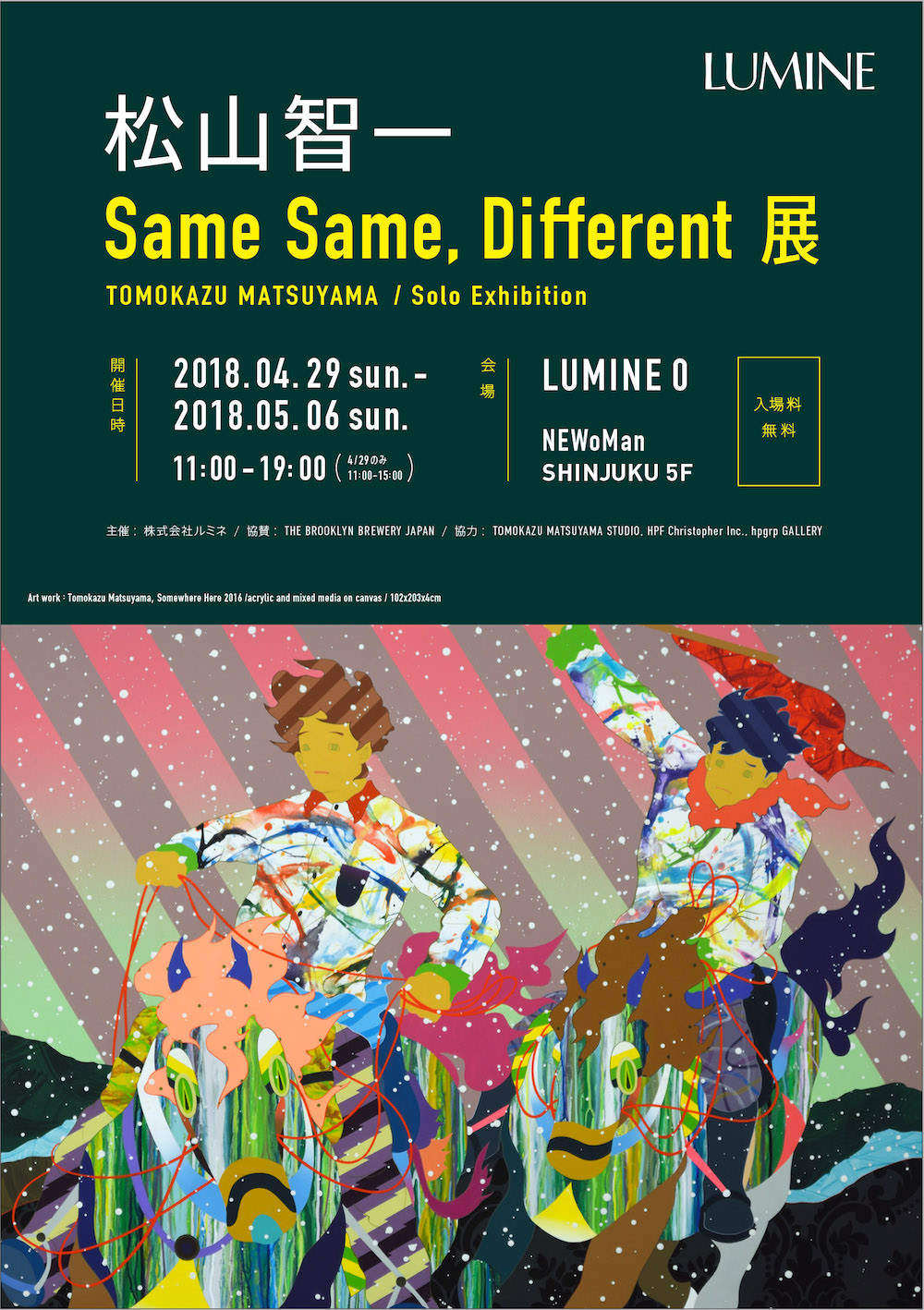
I visited Tomokazu Matsuyama’s solo exhibition — his first in Japan in about ten years.
The venue is LUMINE0 (pronounced “zero”) in Shinjuku. It is usually used as an event space, and this was the first time I too had visited it for an art exhibition.
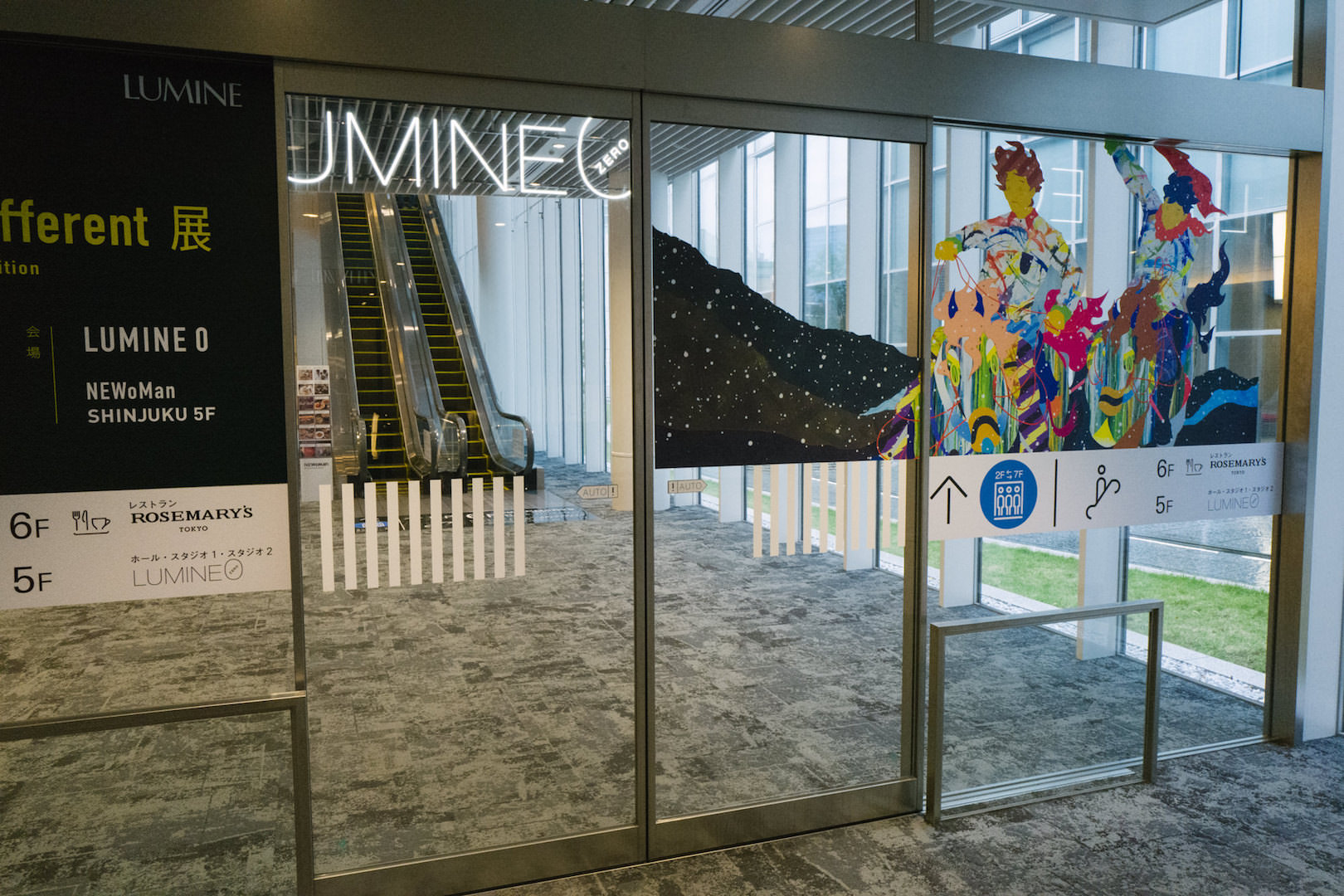
Tomokazu Matsuyama “Same Same, Different”
The exhibition title “Same Same, Different” is a phrase used in everyday greetings in the United States and elsewhere, apparently conveying the idea that daily life carries just a little bit of change. Its playful ring was another reason it was adopted as the title of this show. (An interview video with Matsuyama is included at the end of this article.)
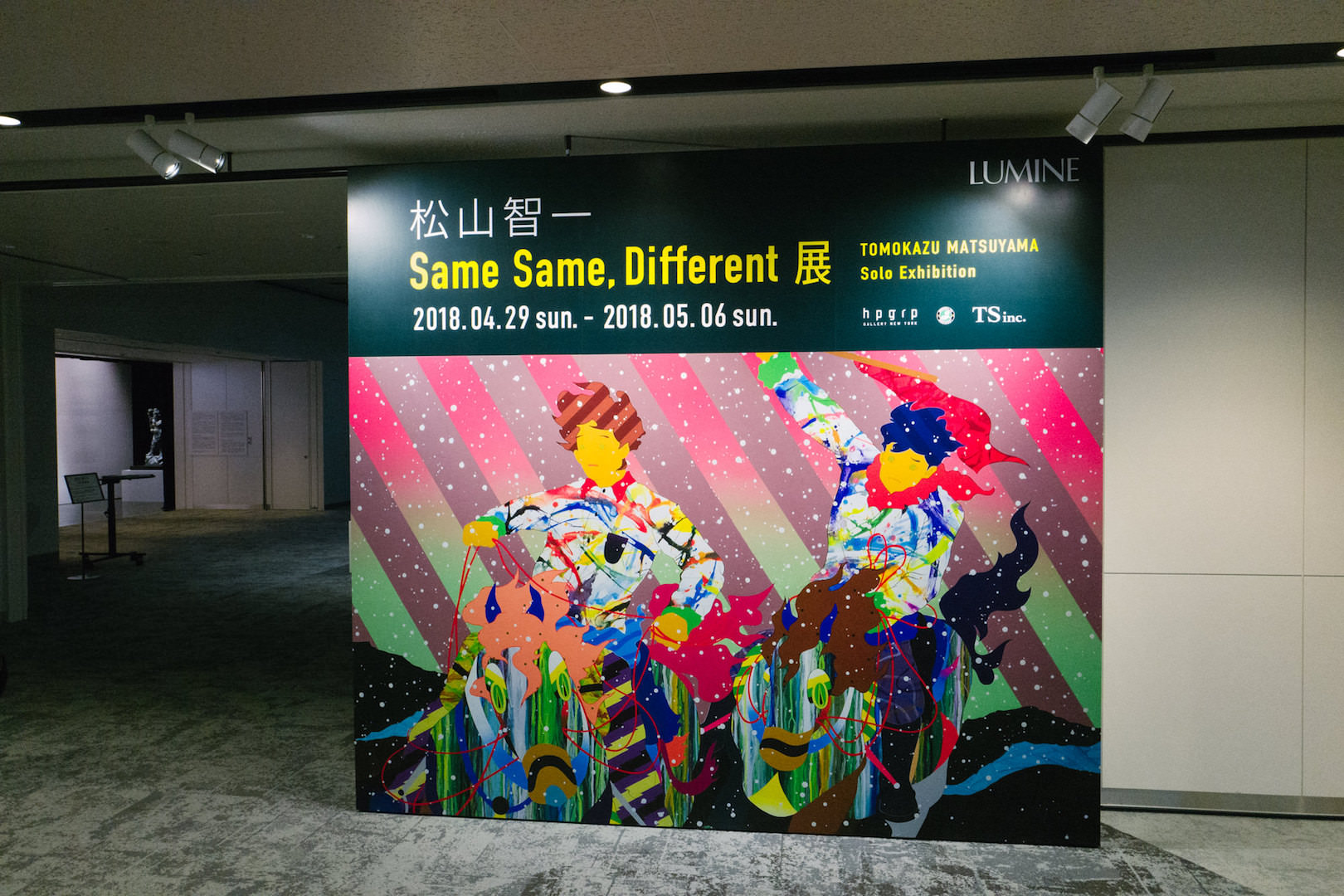
It runs a little long, but I quote the statement here regarding the themes behind this exhibition.
What is the solo exhibition “Same Same, Different”?
Matsuyama’s work reflects two cultural experiences rooted in having been raised in both Japan and the United States.
He currently produces his work in a studio in Brooklyn, New York, but he has always felt himself to be an outsider — whether viewed from his native Japan or from America.
Yet it was precisely that perspective that granted him “freedom.”
Encompassing a contemporary, global dialogue, Matsuyama’s work is expressed through the free perspective available only to an outsider.
“Floating identity” is a sensation he has carried since childhood, and it is also a theme strongly expressed in the works selected for this exhibition.
This exhibition reflects Matsuyama’s “empathy for aesthetic sensibilities at opposite poles.”
Tradition and modernity, ornamentation and logic, West and East — it is an exhibition that plastically expresses the boundaries between both.
Matsuyama proposes a new perspective by fusing the flatness and decorative design of Japanese painting, the singular, boundlessly original dynamism of American Abstract Expressionism, and the free-spirited openness of the gesture painters who flourished in postwar New York (a painting style, exemplified by Jackson Pollock and others, in which bodily movement is linked to the work).
These painting styles may seem contradictory at first glance, but by harmonizing their many overlapping layers with meticulous technique and logical ideas — leaning into the conceptual nature of Western contemporary art while responding with a respect for Eastern materials and refined quality — he sublimates them into a style all his own.
Transcending stereotypical cultural categorization, Matsuyama’s work is metaphorically described as “a pluralistic interpretation of the local and the global in the present age.”
He playfully incorporates multiple cultural images into his work; this is one form of global cultural exchange in the present age, and can be said to condense and visualize the fragmentary nature of twenty-first-century phenomena.
Through his work, Matsuyama has established a way of fusing his own personal experiences of Eastern and Western cultures.
By treating the archetypal Western spirituality and the Eastern character that stands opposite it as equals, he rejects an antiquated hierarchy and seeks to reconstruct the great divide that spans East and West, and tradition and modernity.
This forms a harmonious dialogue within contemporary global society, inviting those who view the work to consider what identity means to them.— Excerpted from the official website
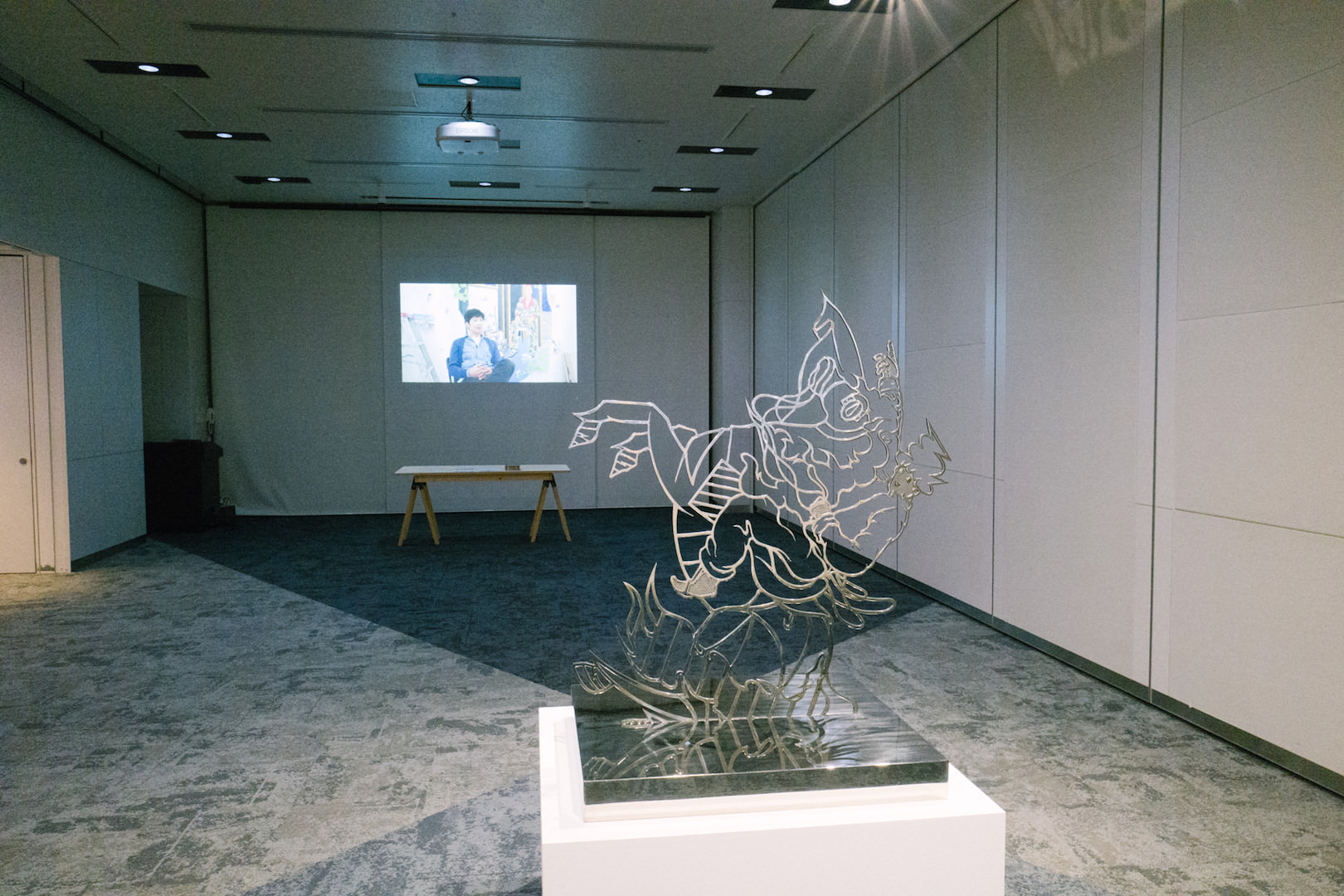
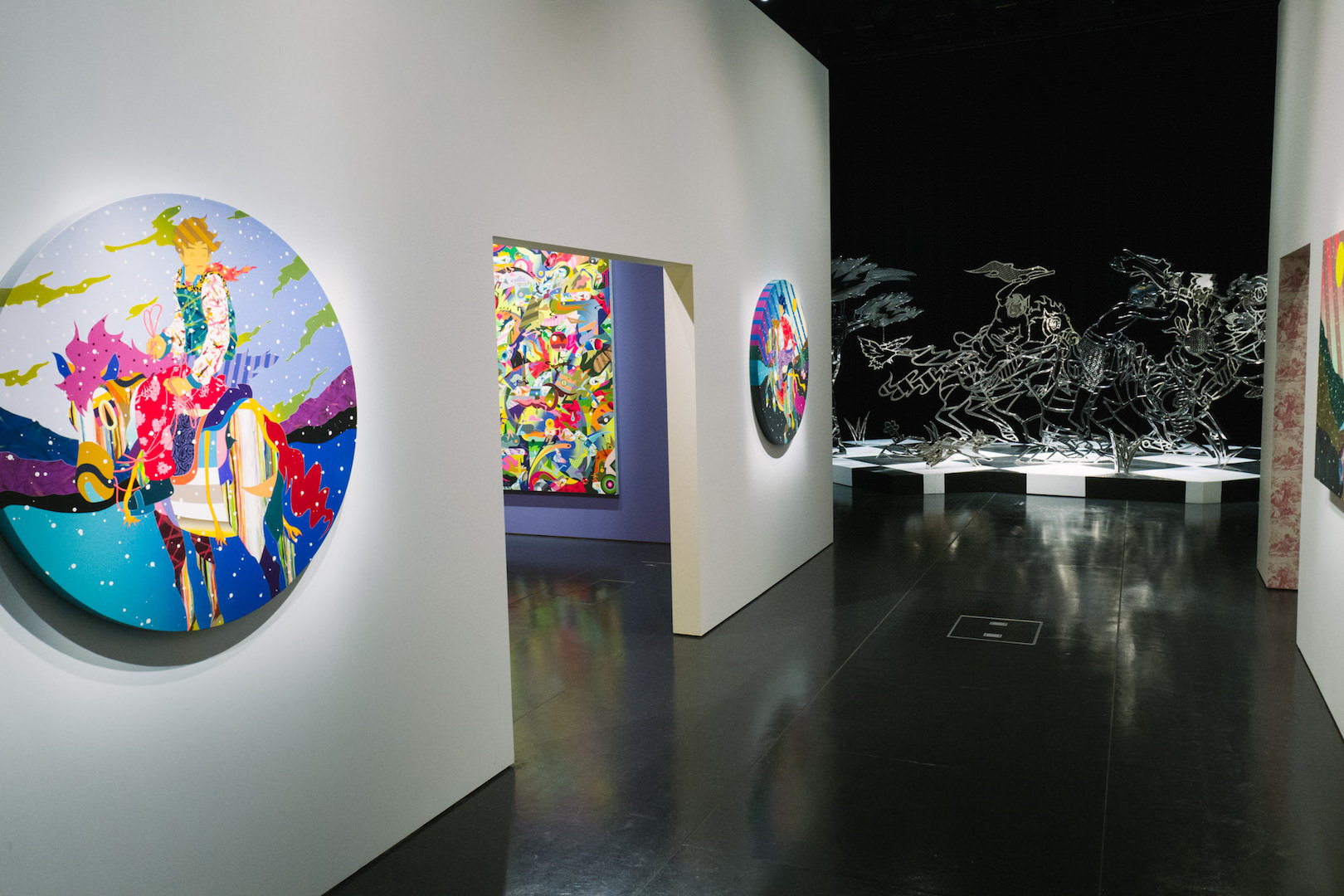
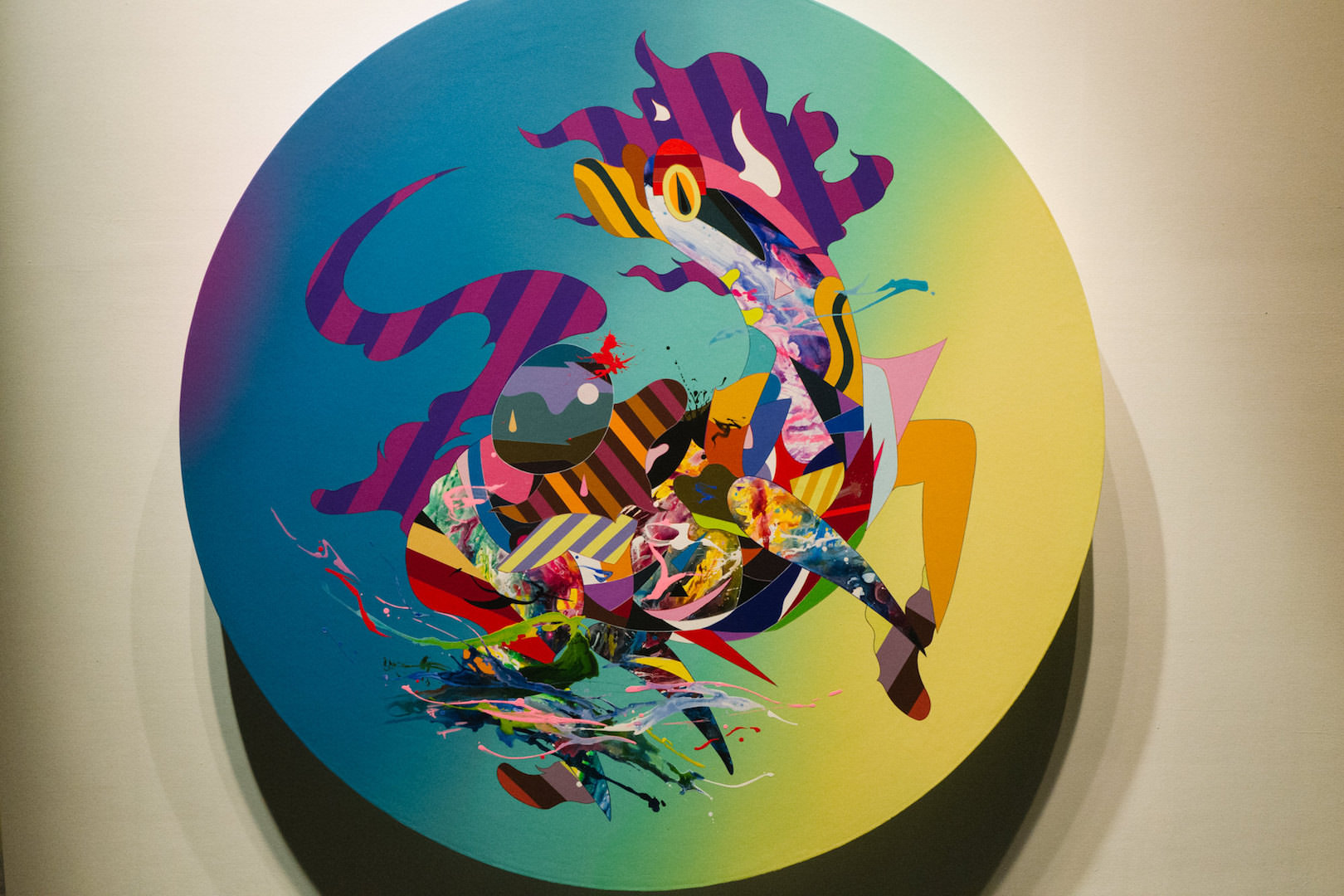
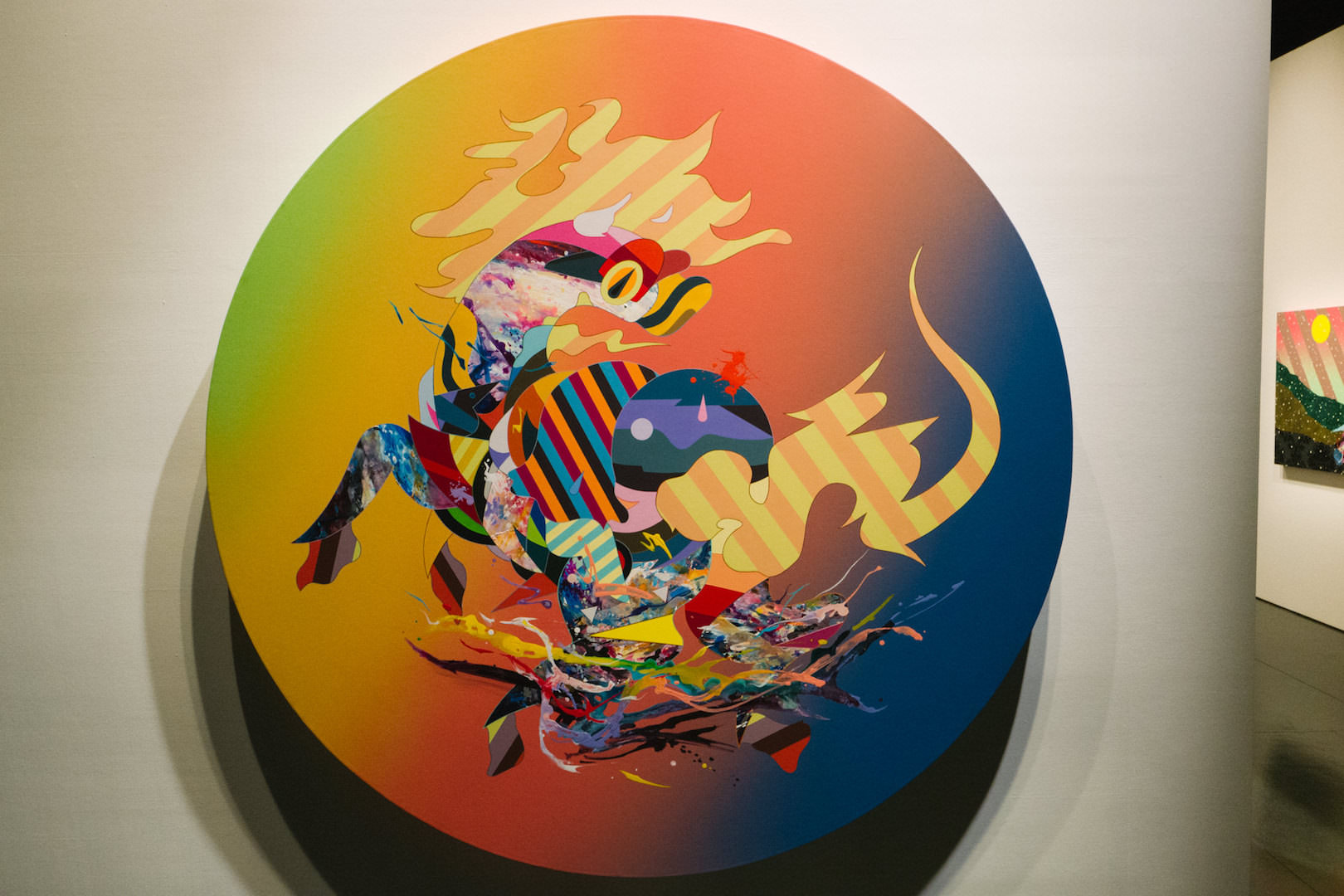
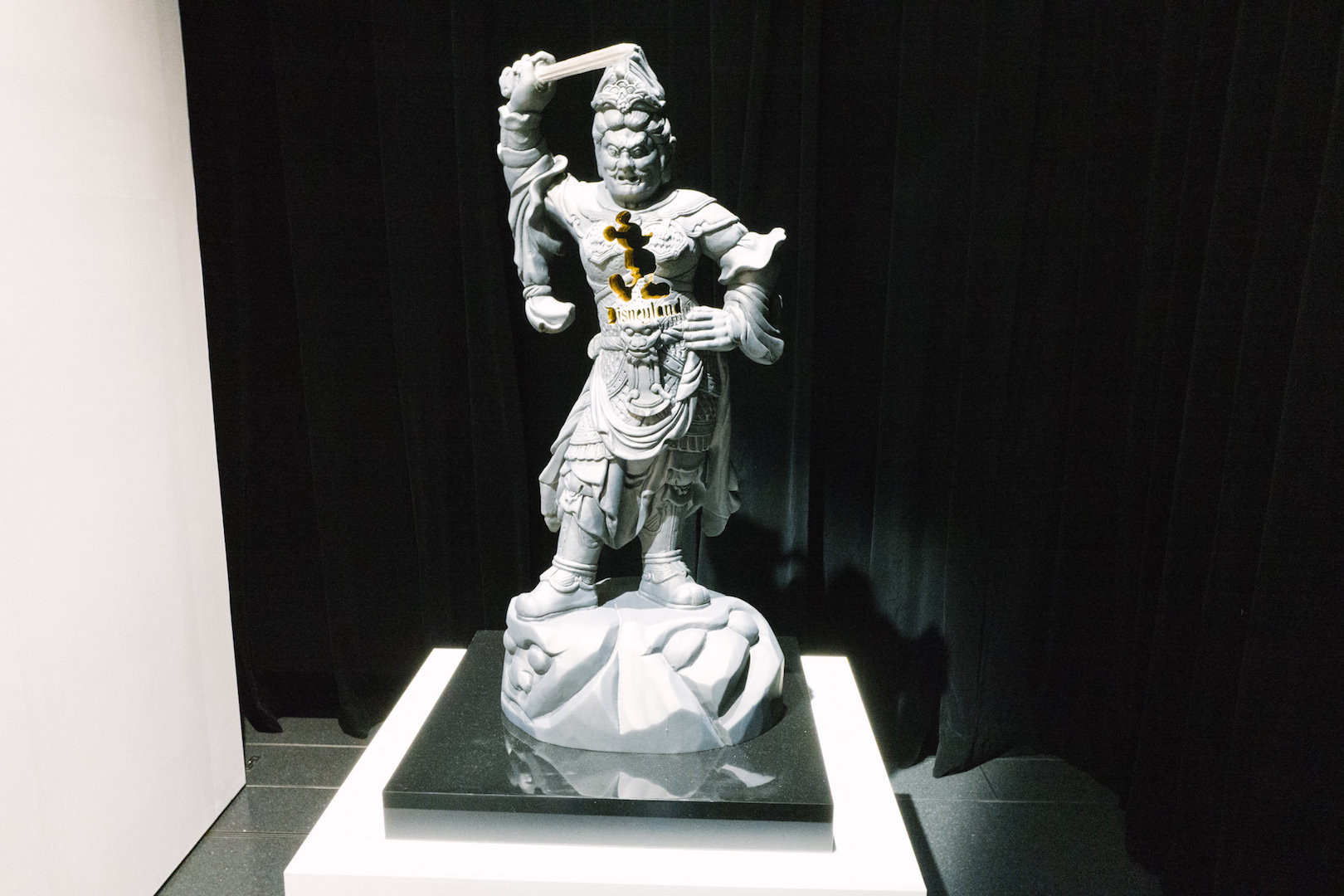
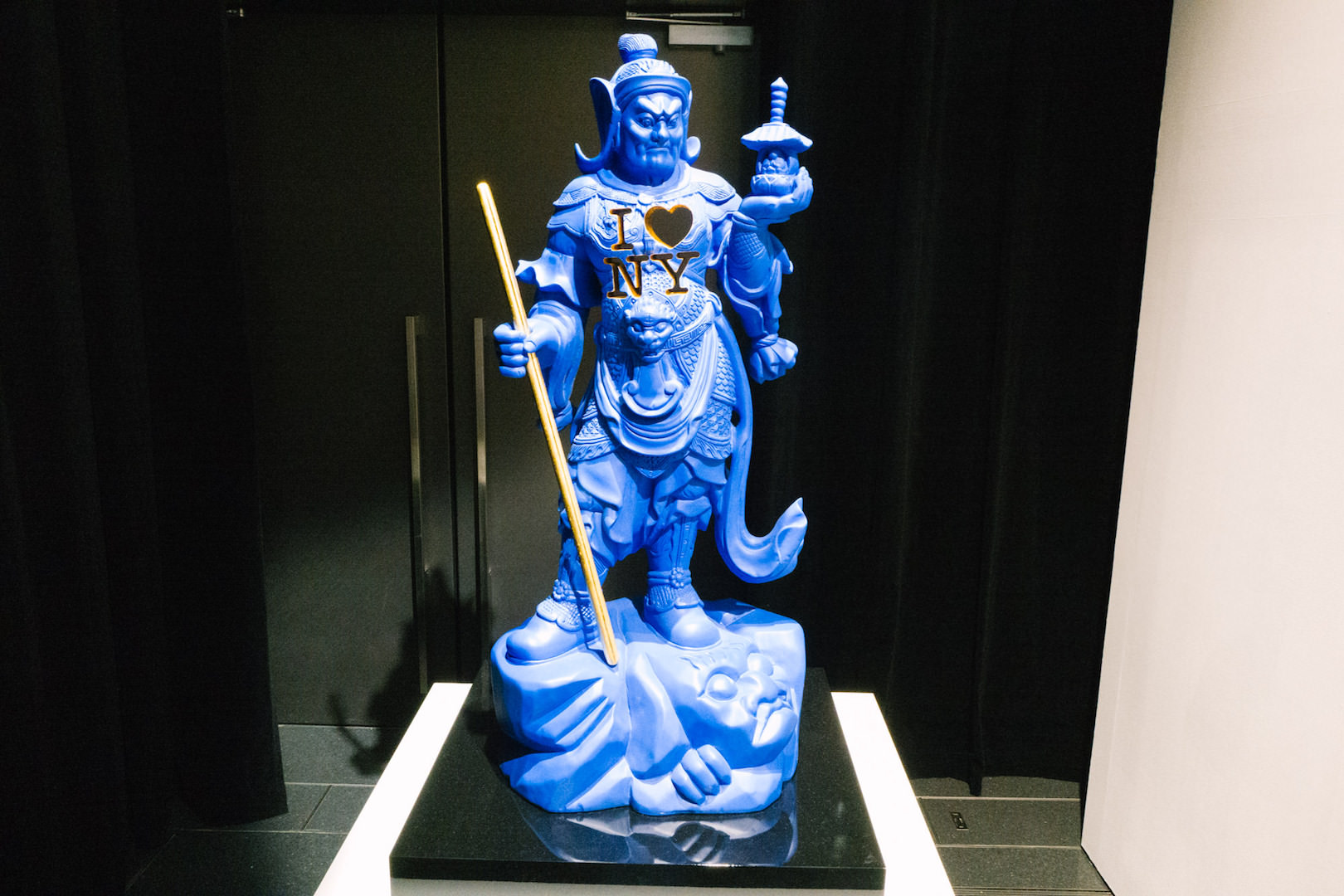
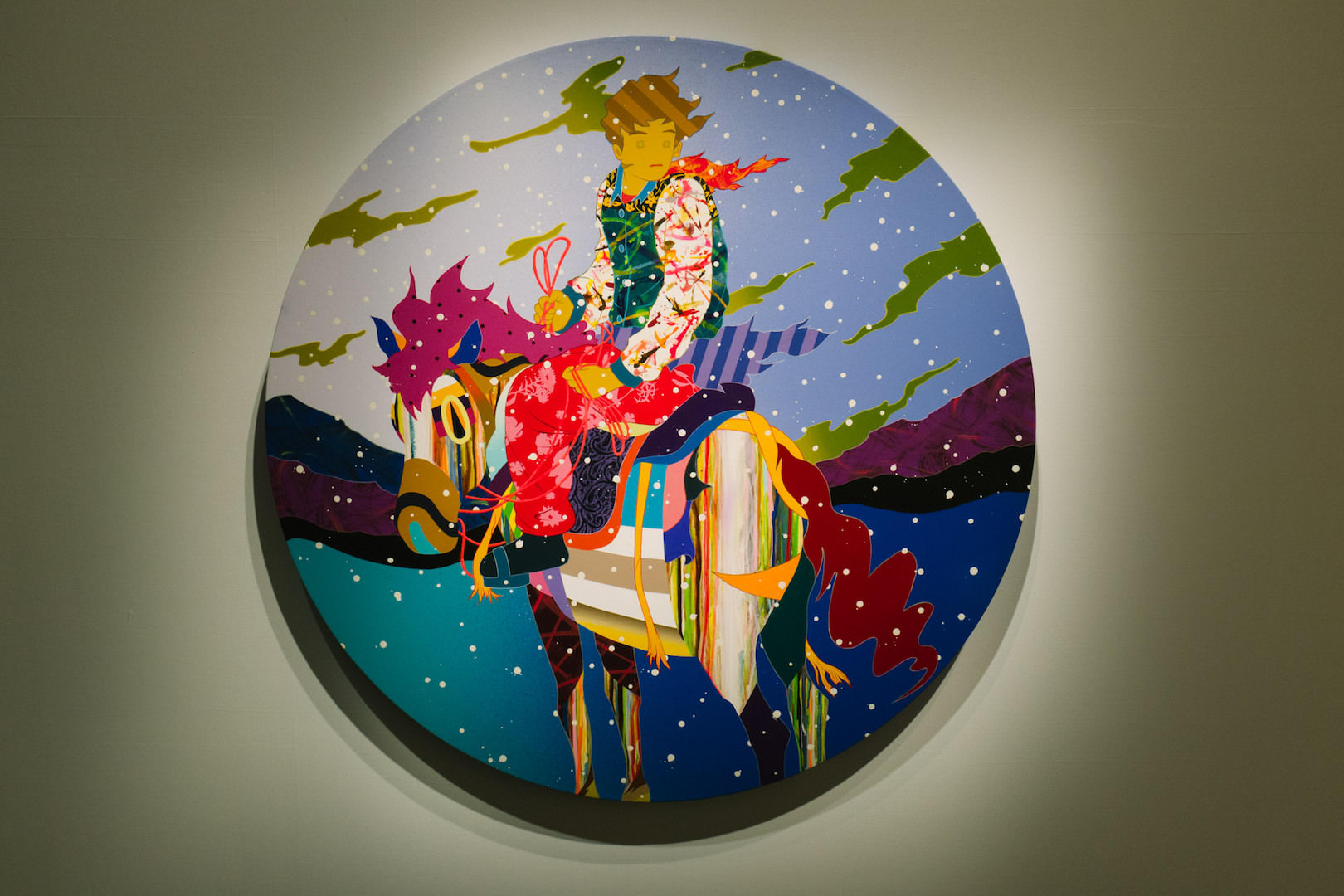
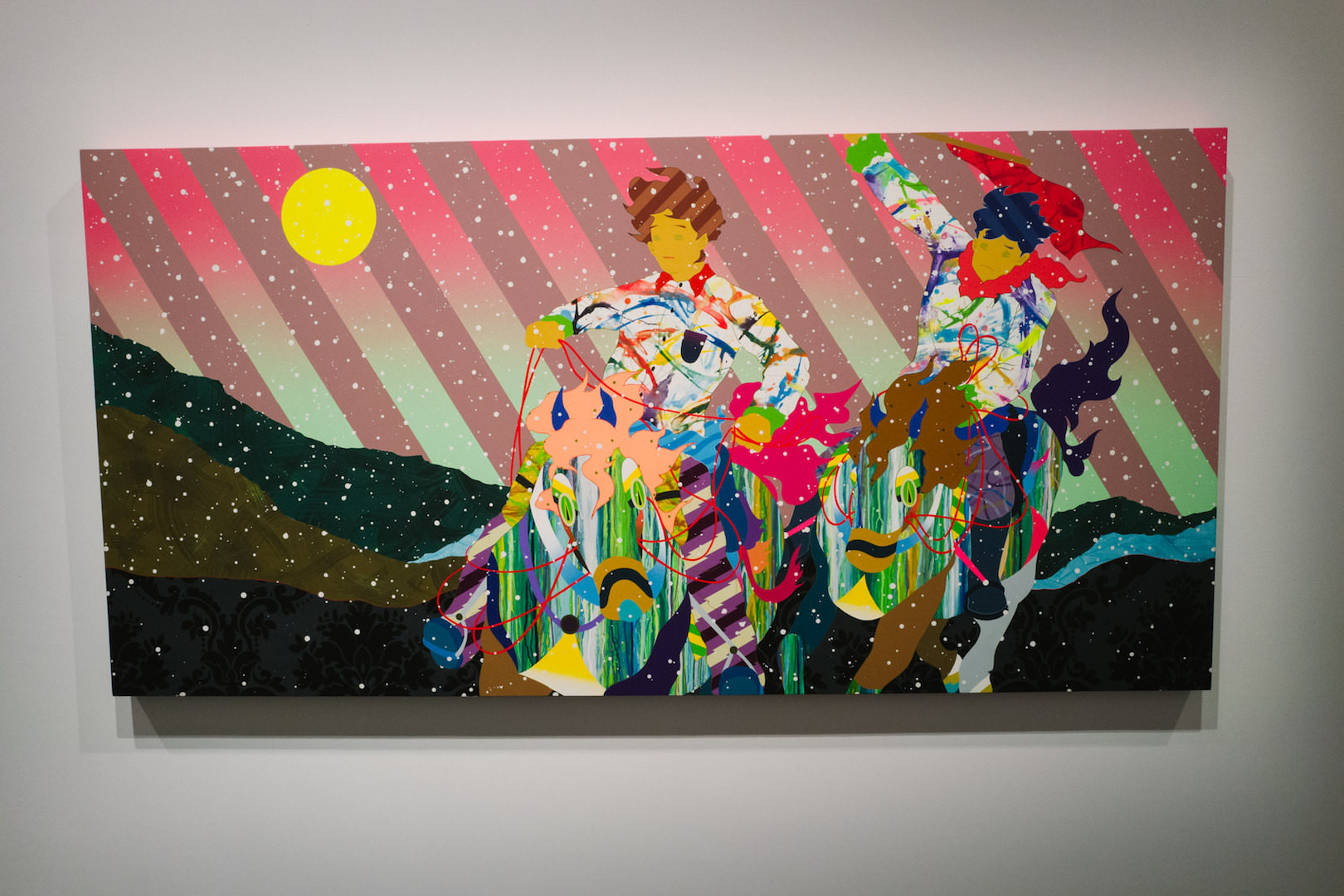
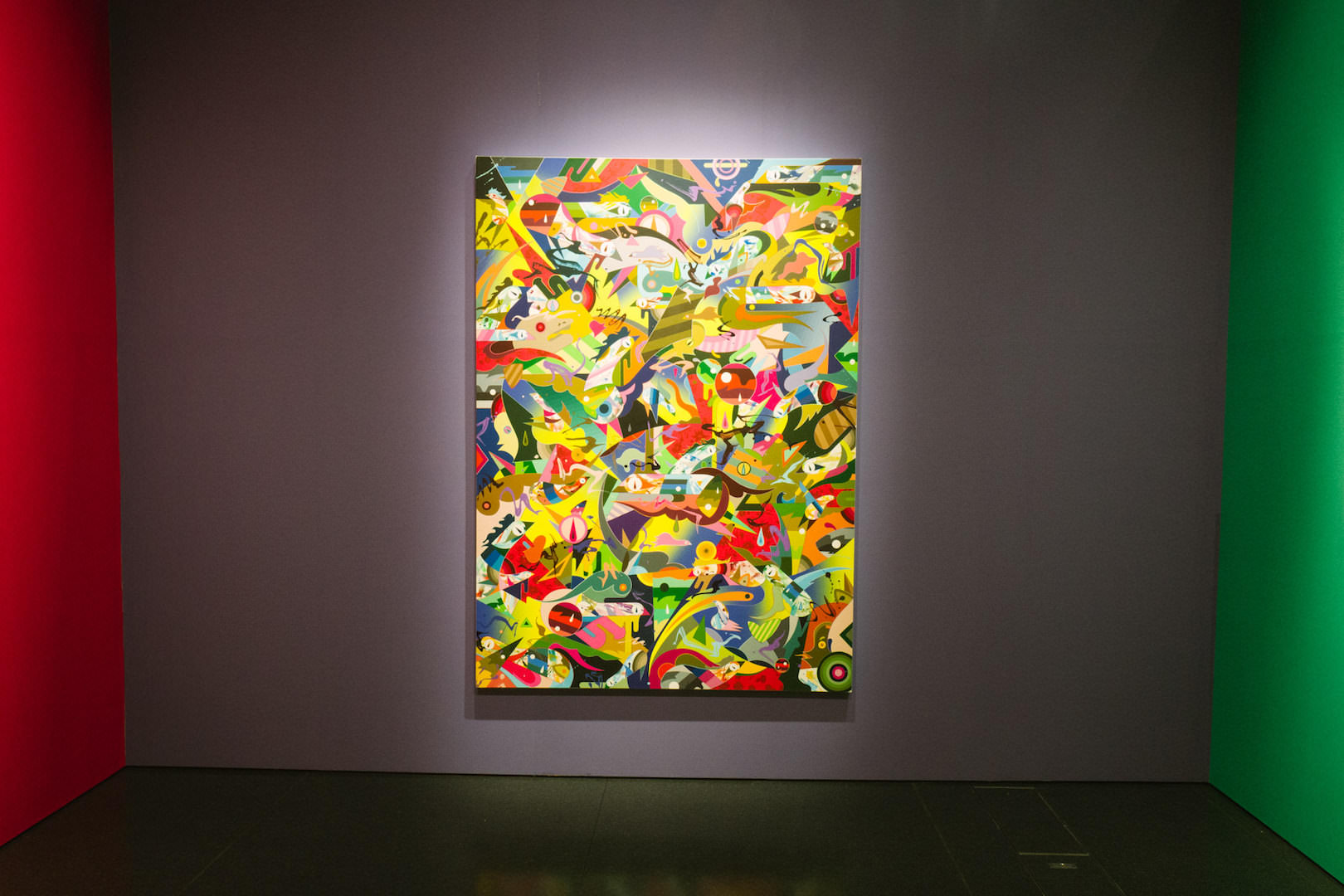
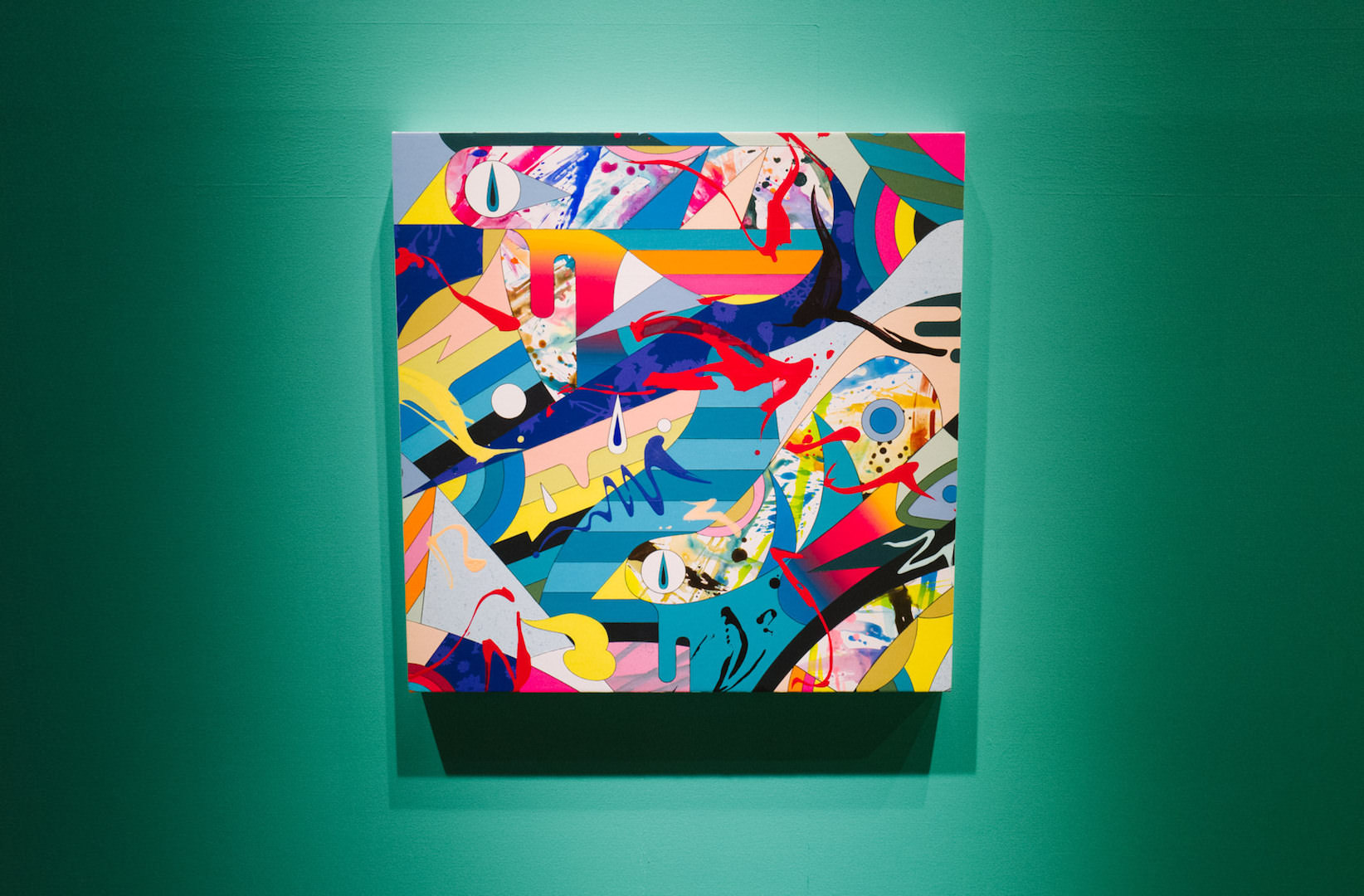
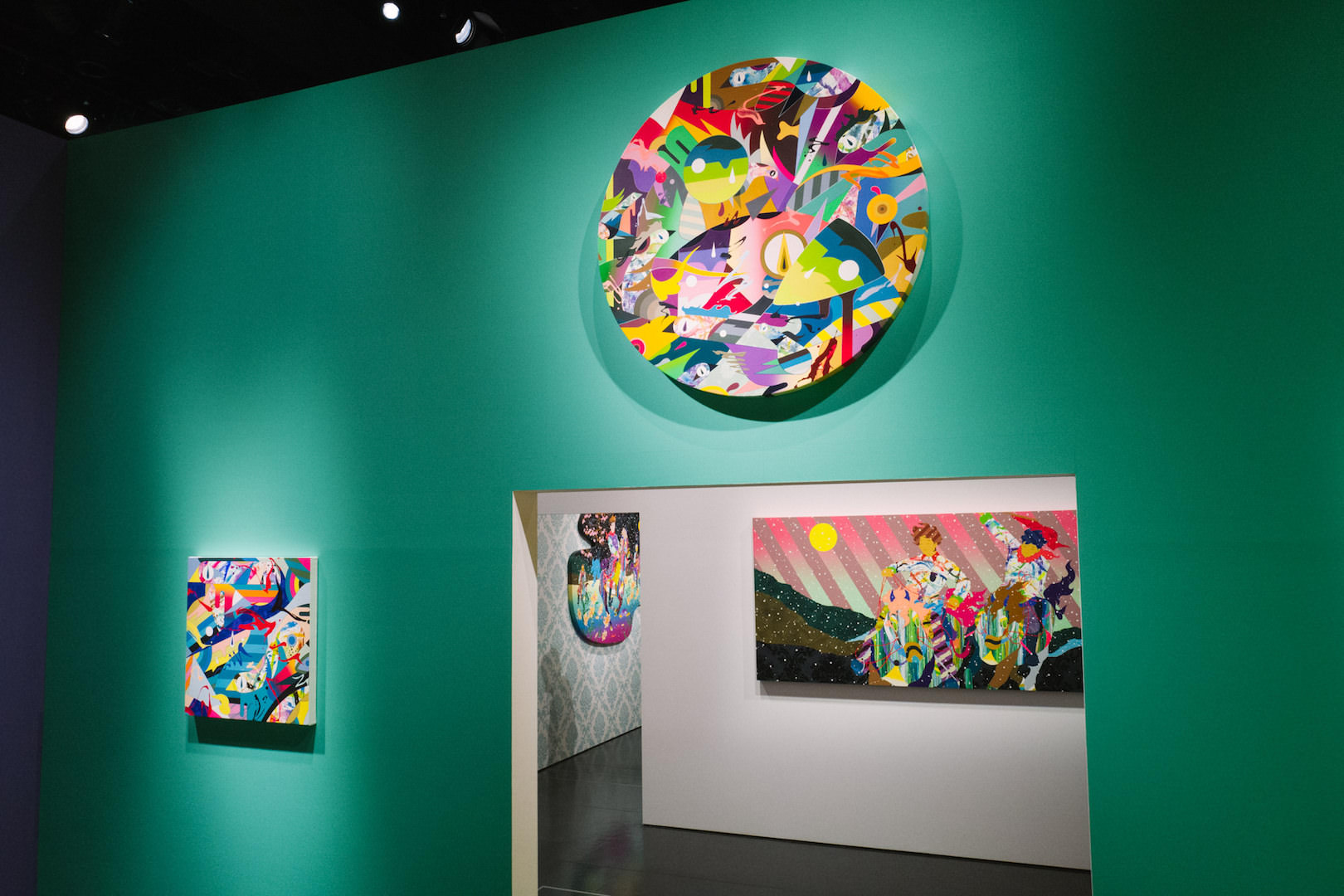
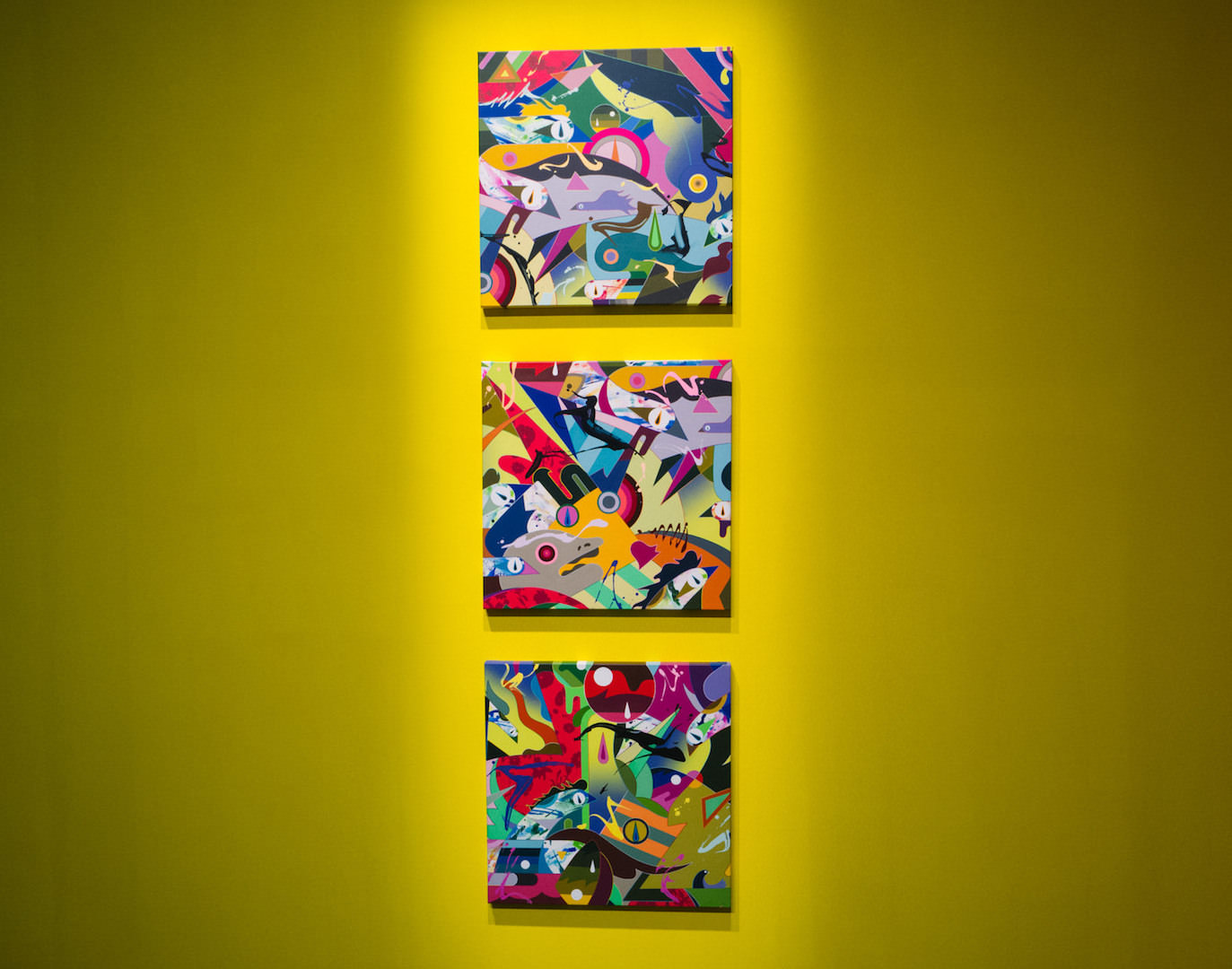
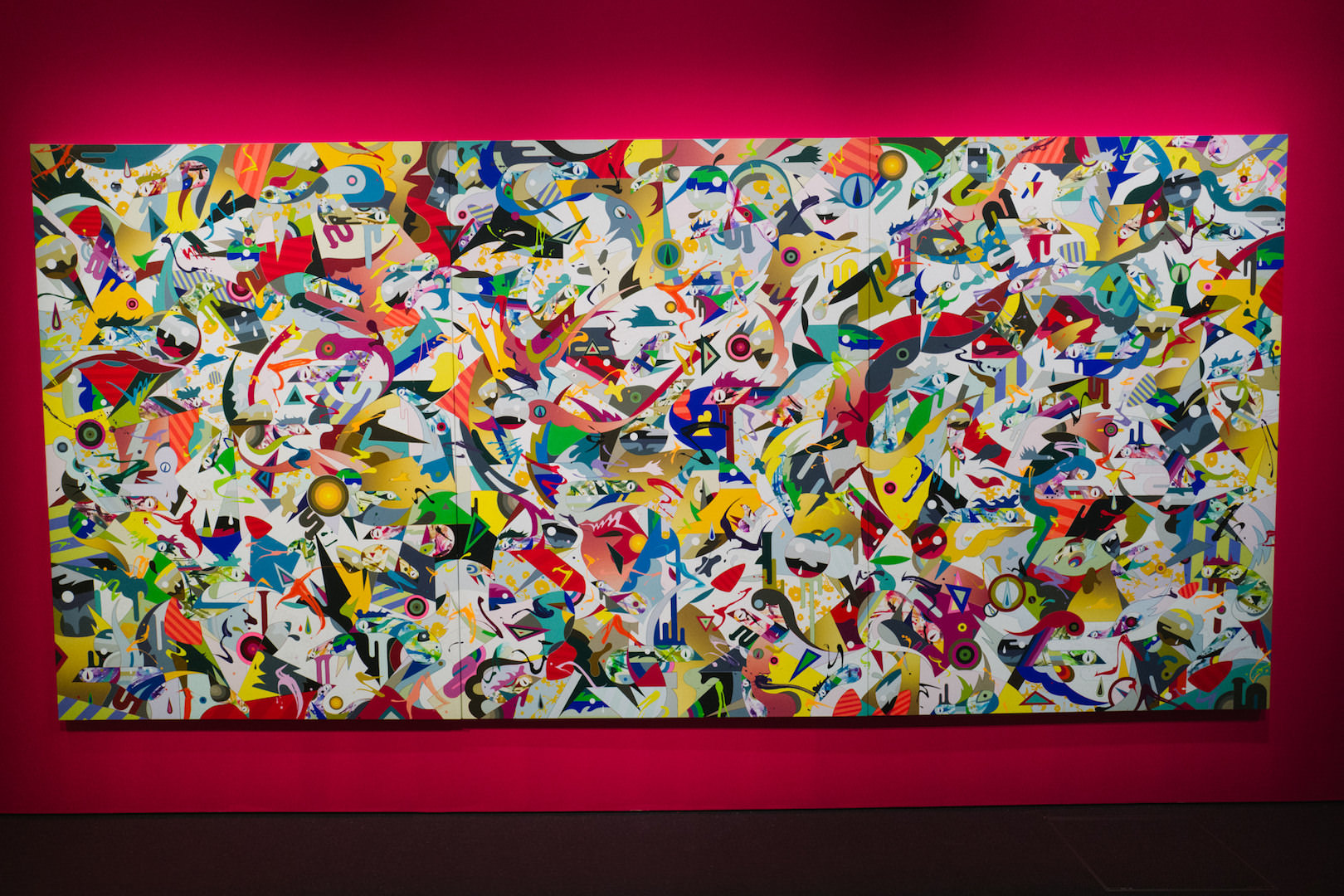
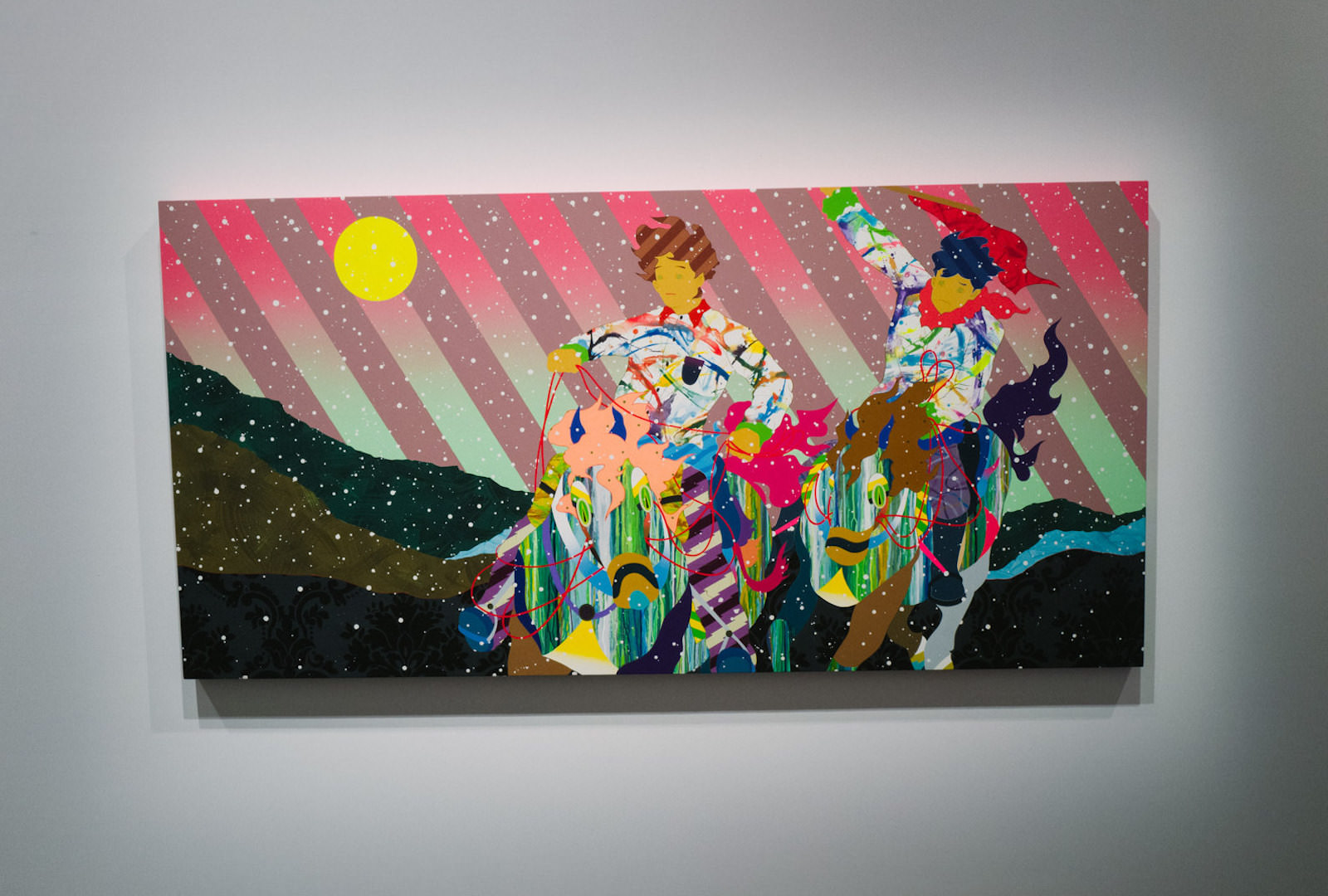
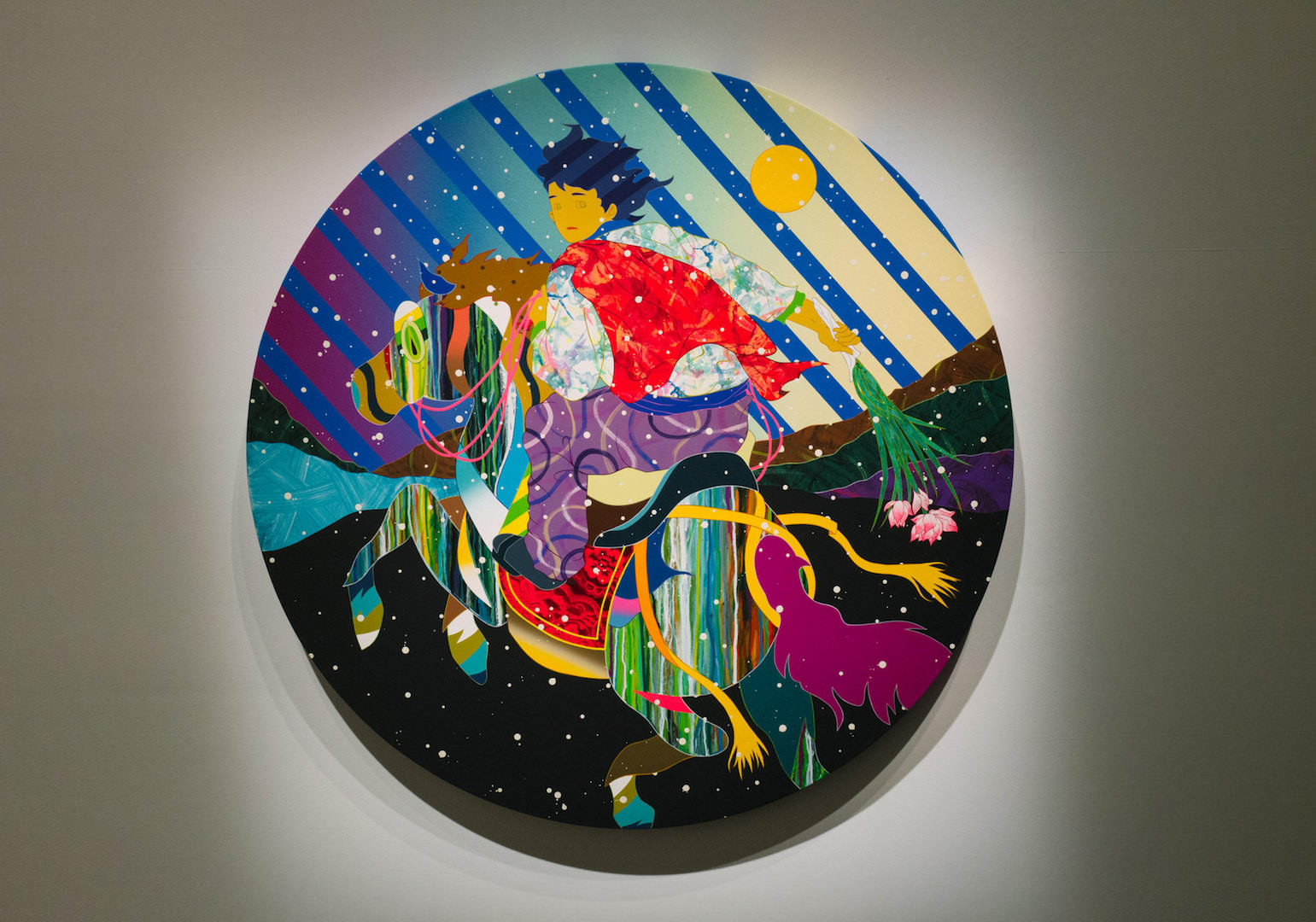
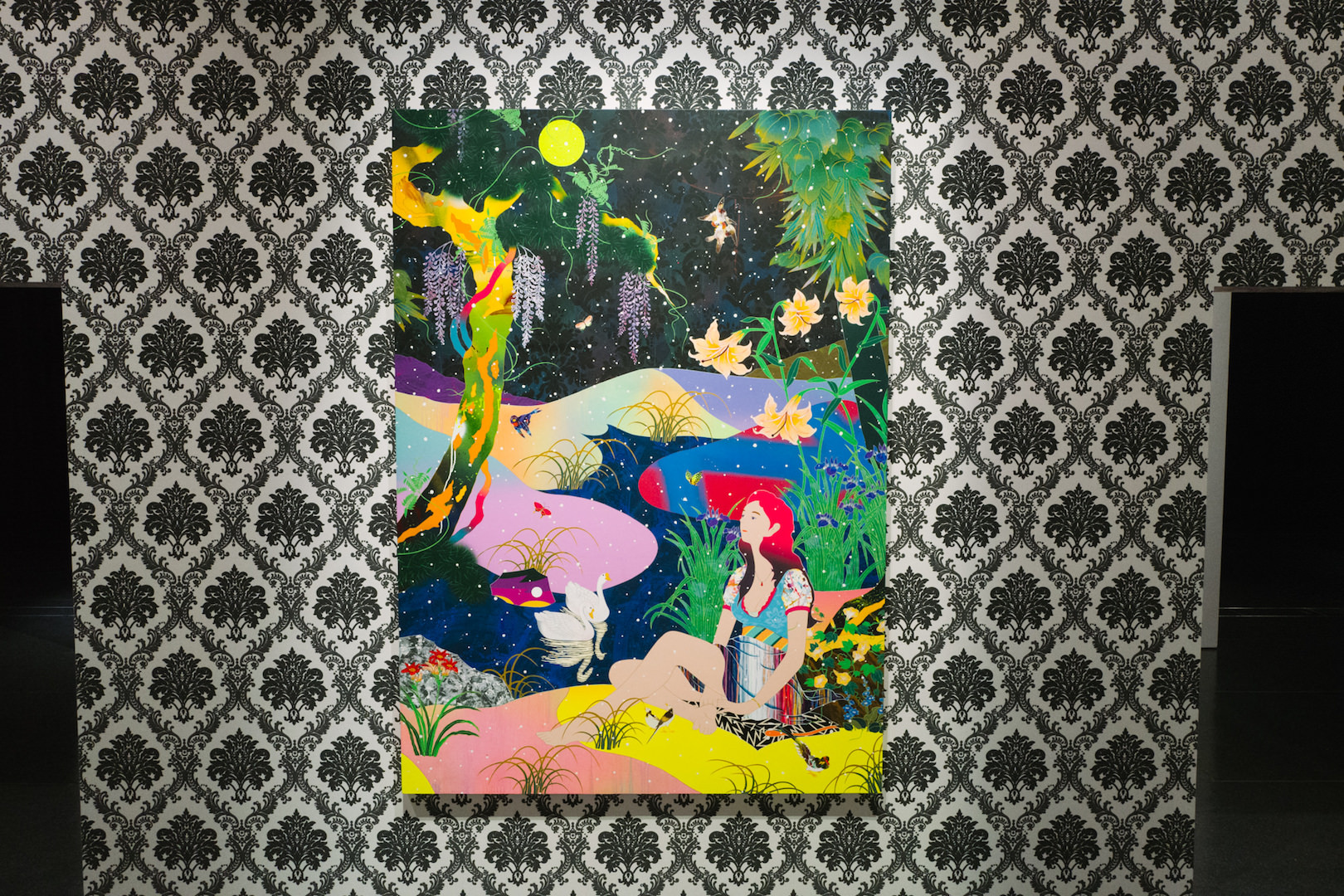
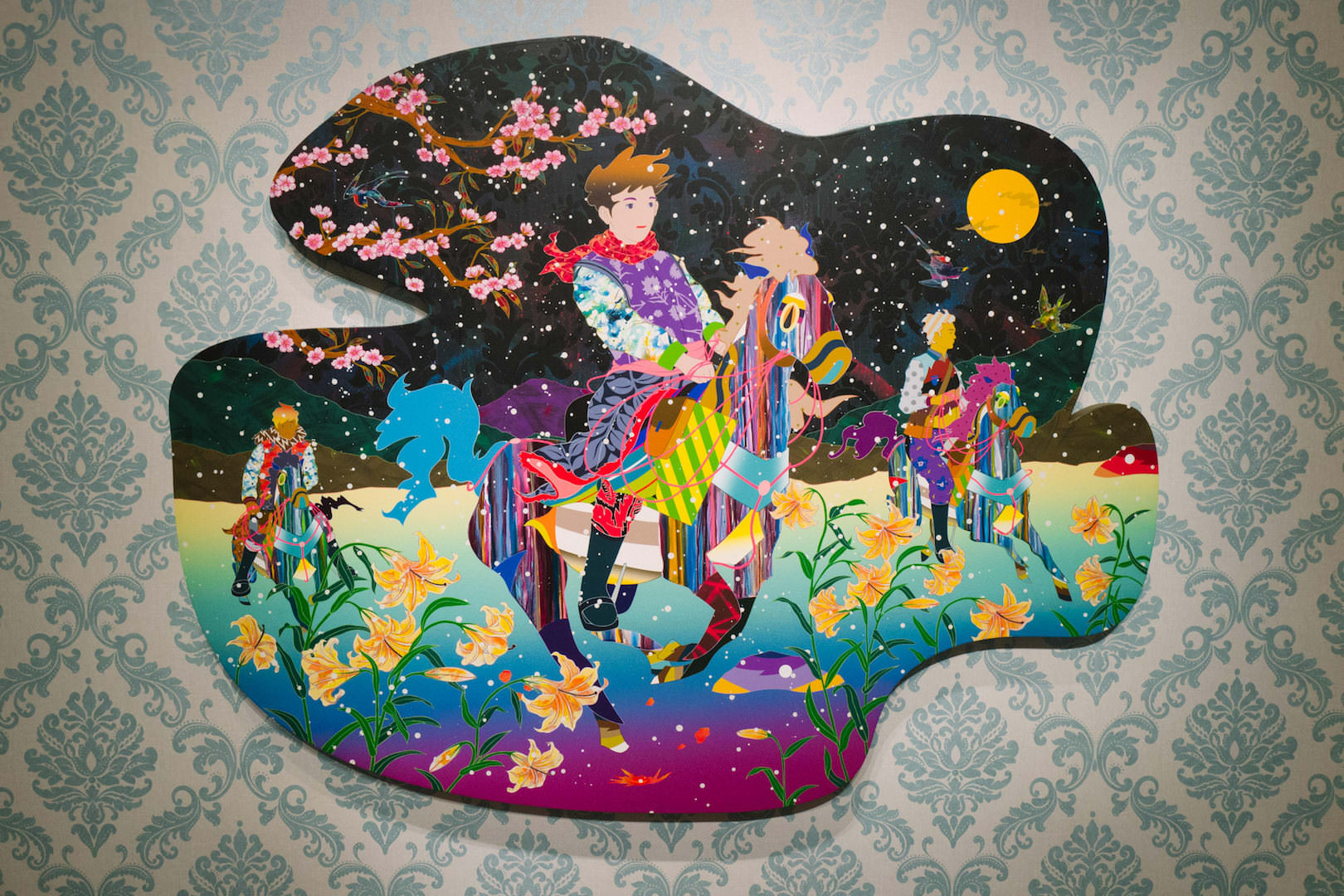
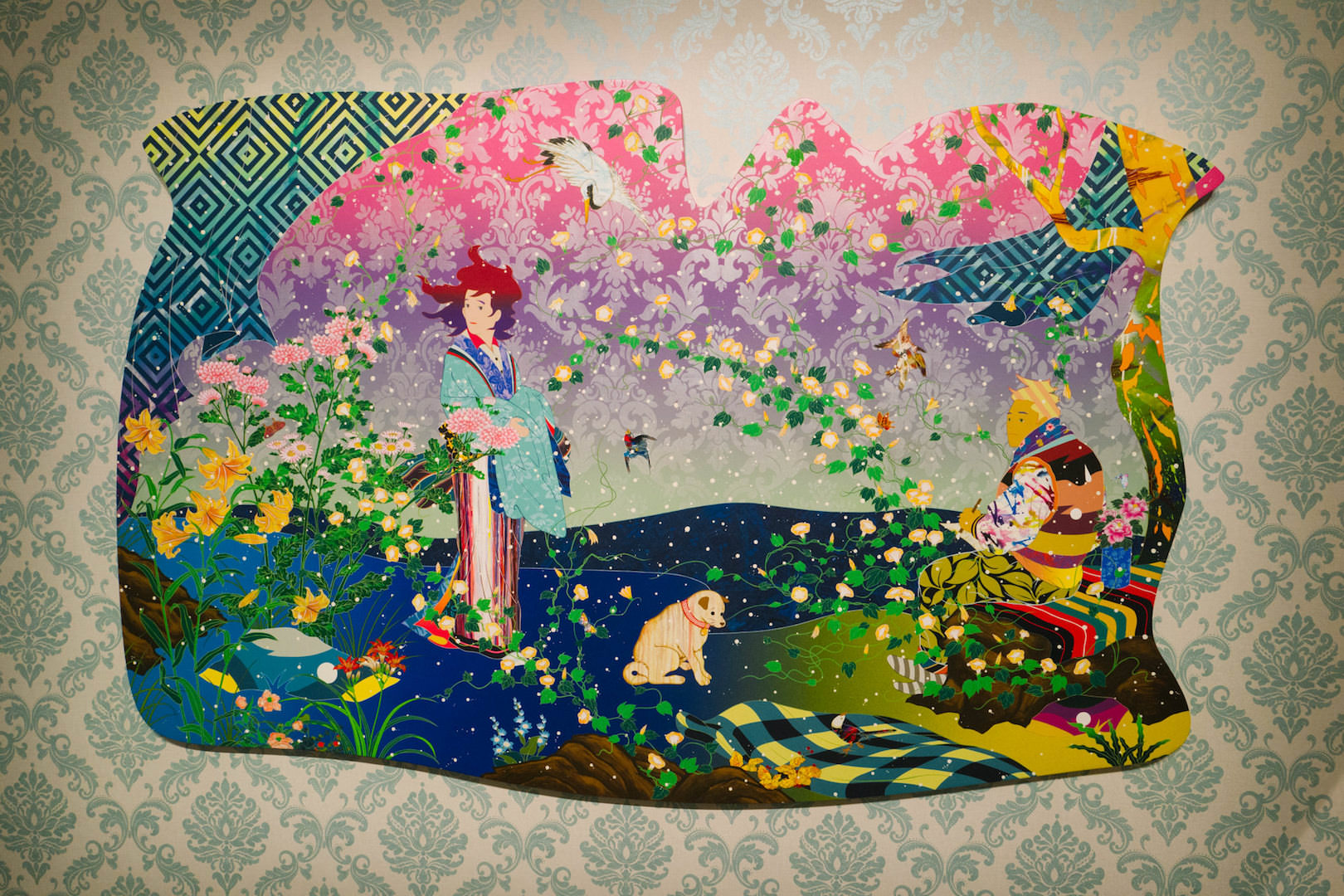
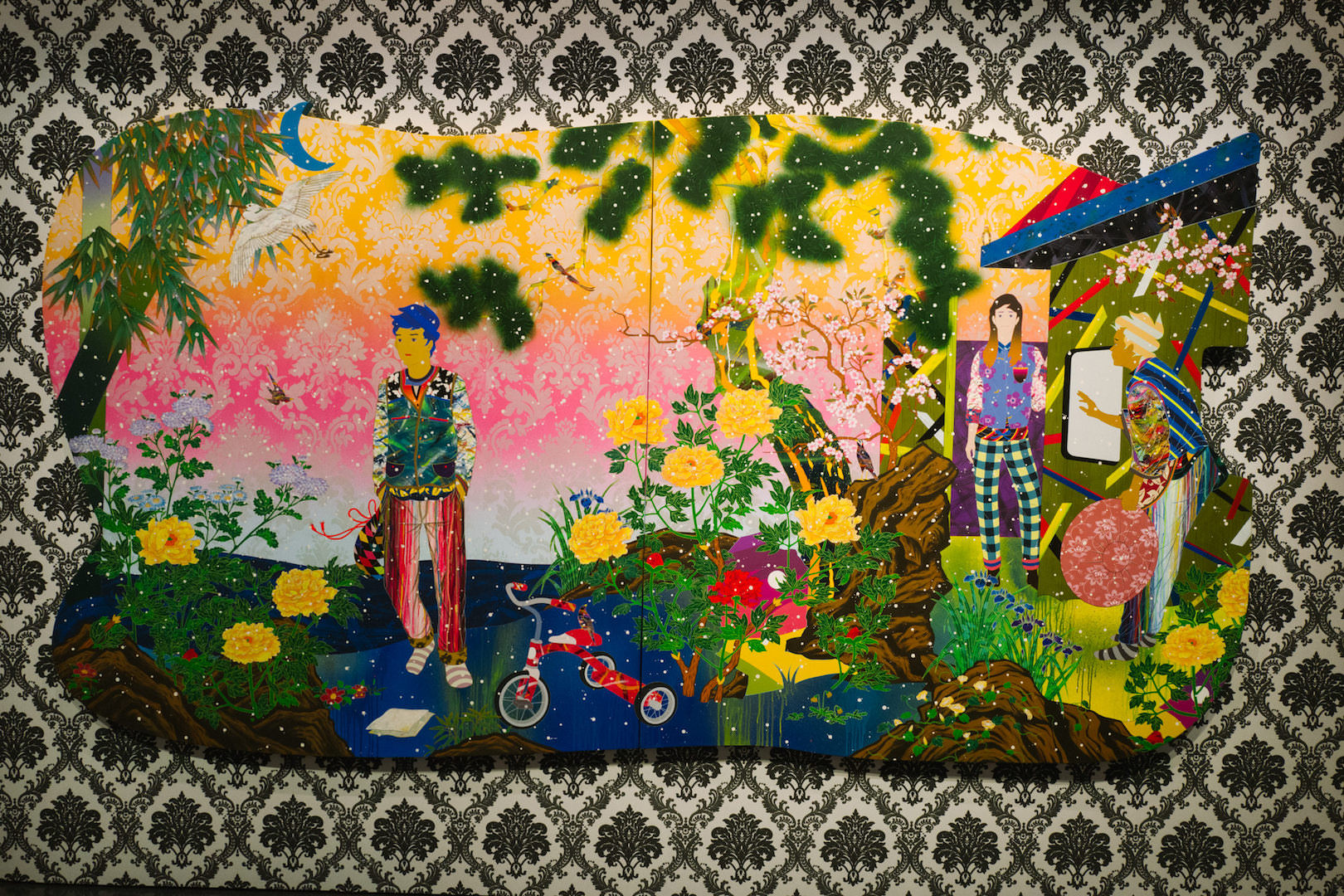
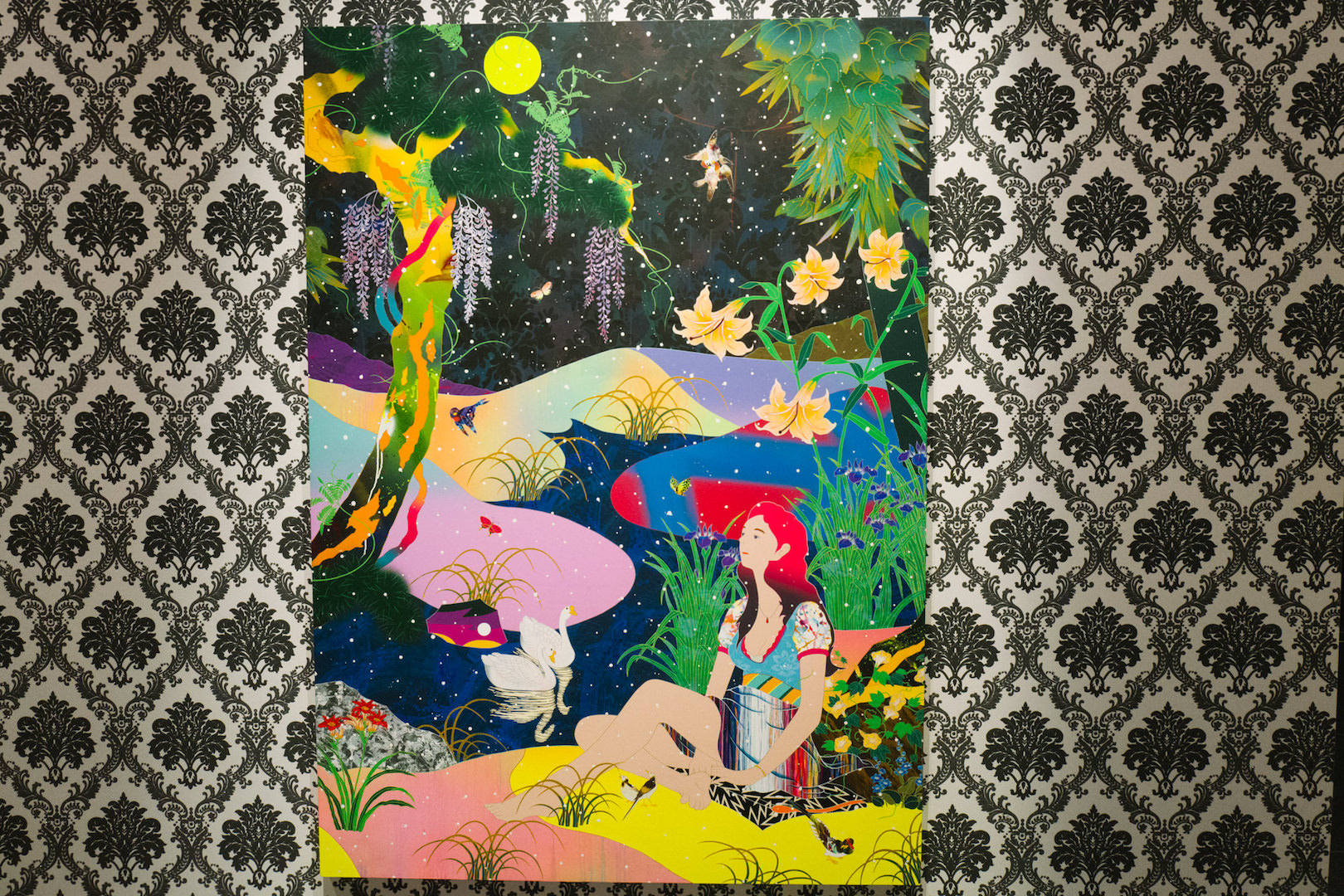
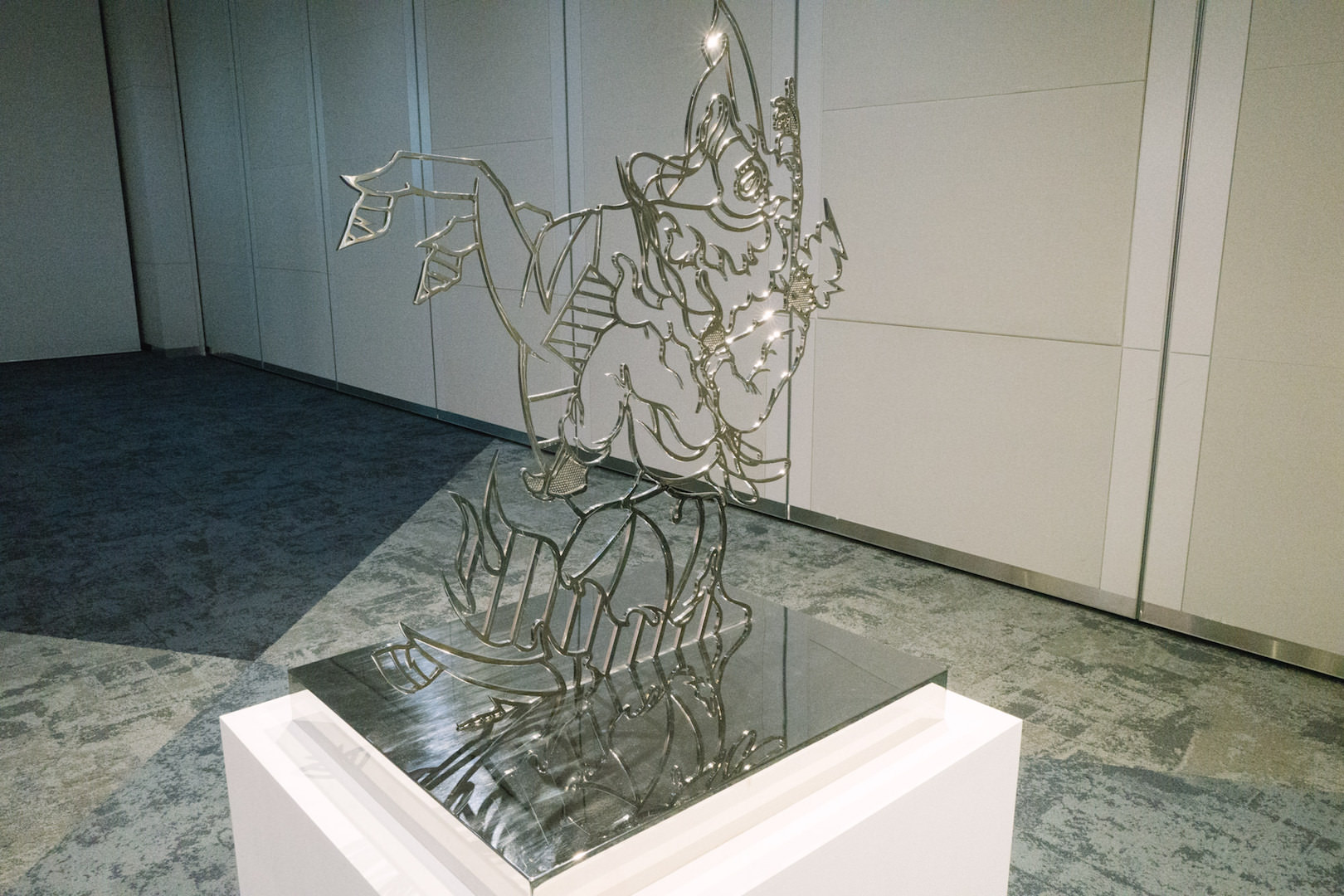
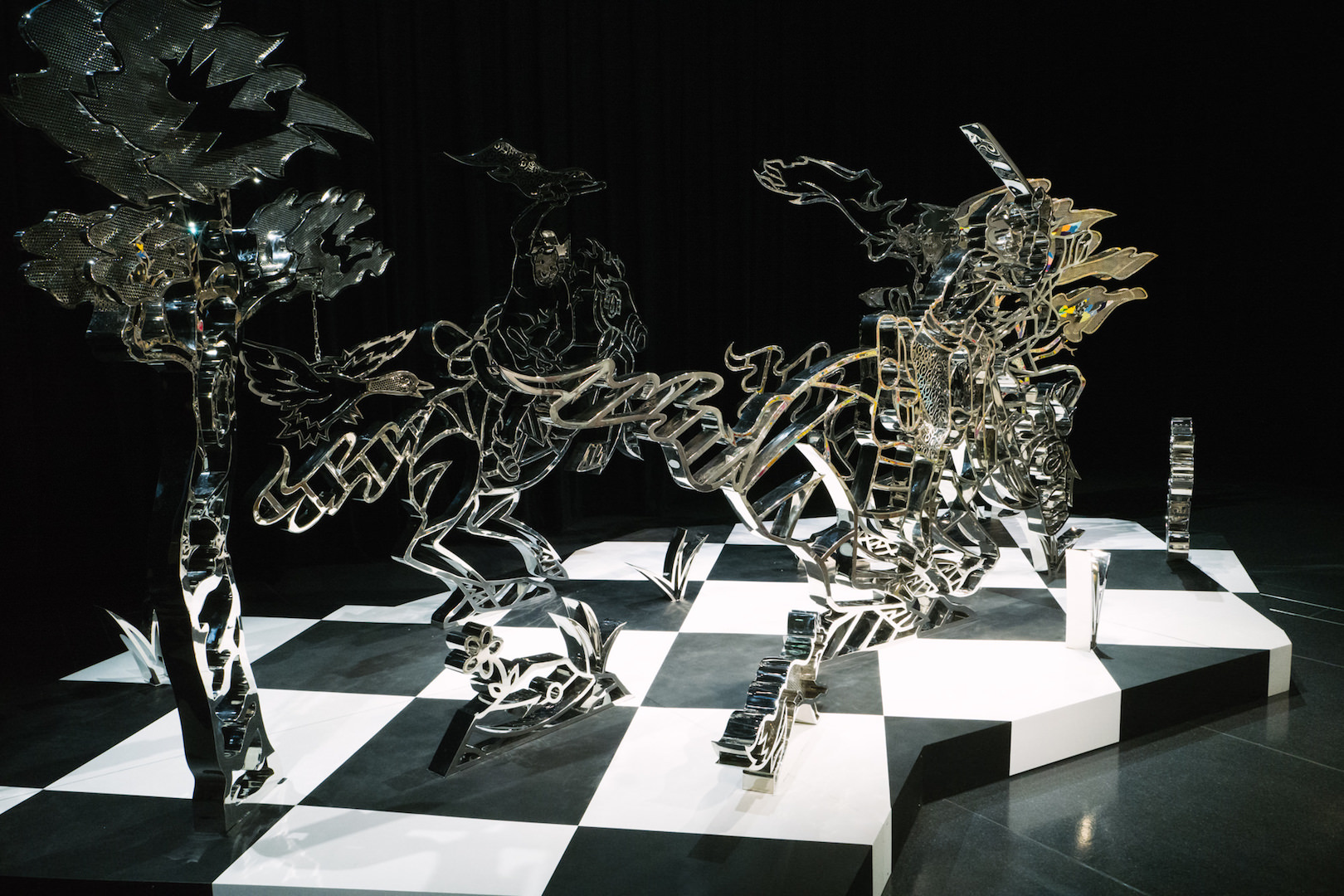
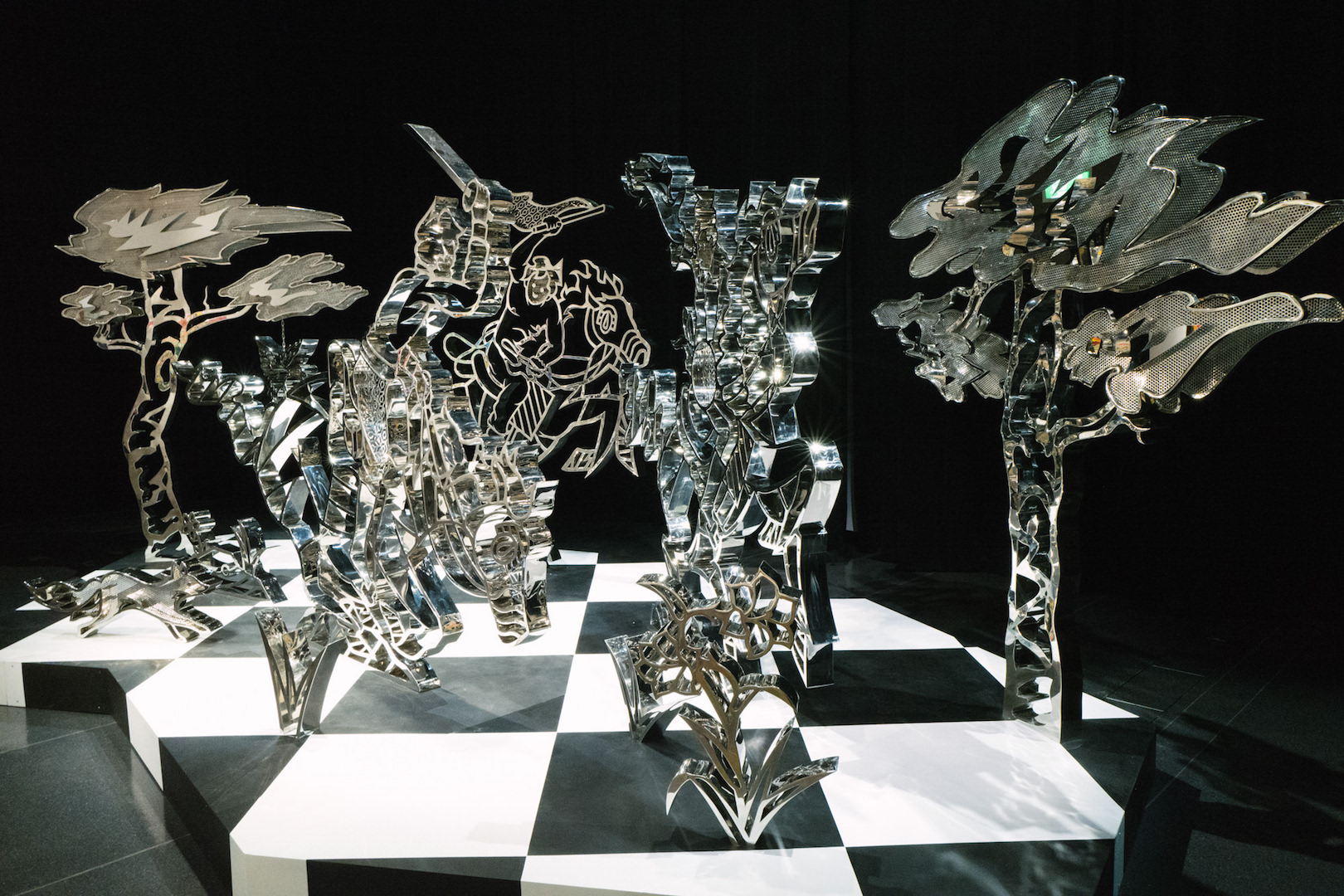
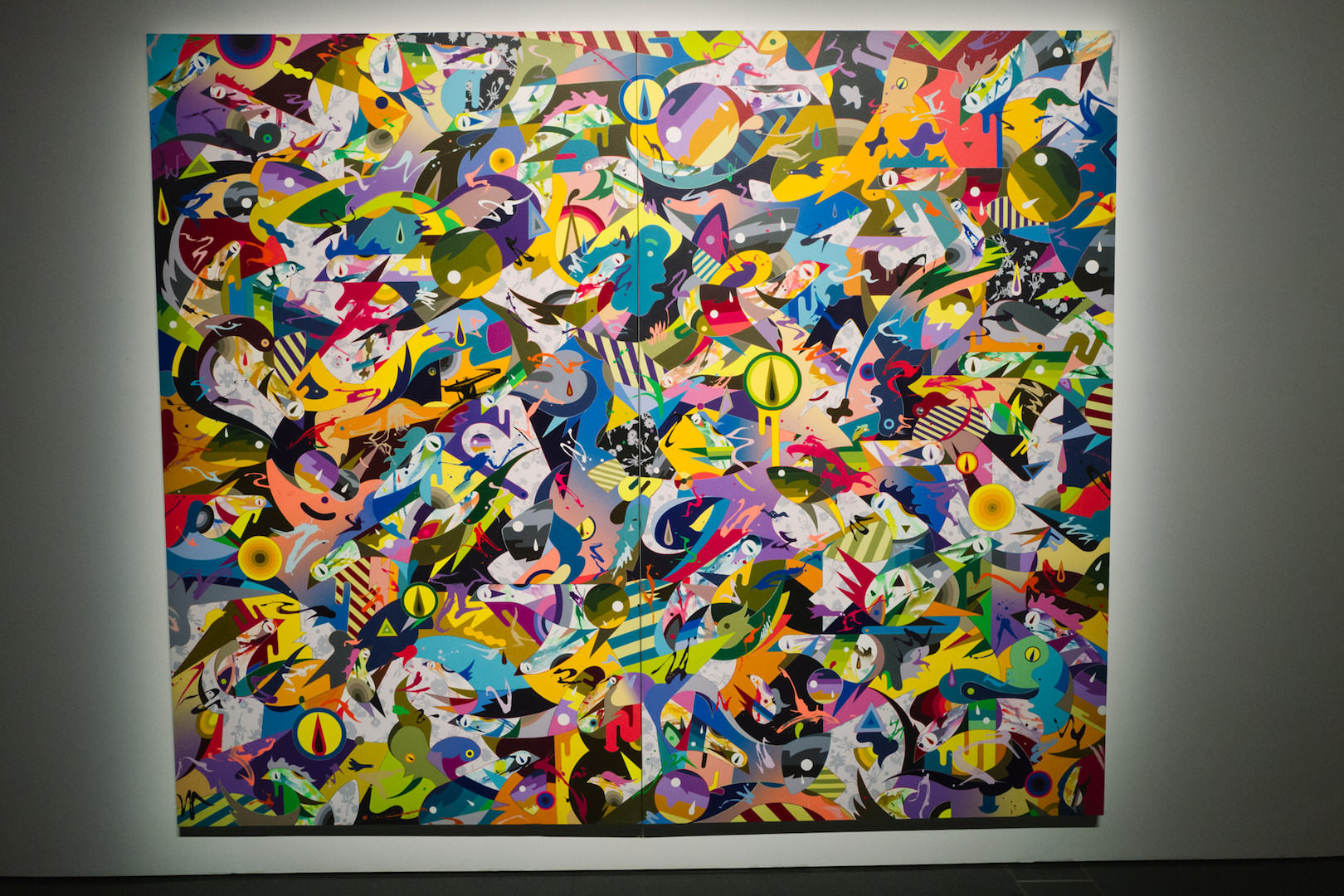
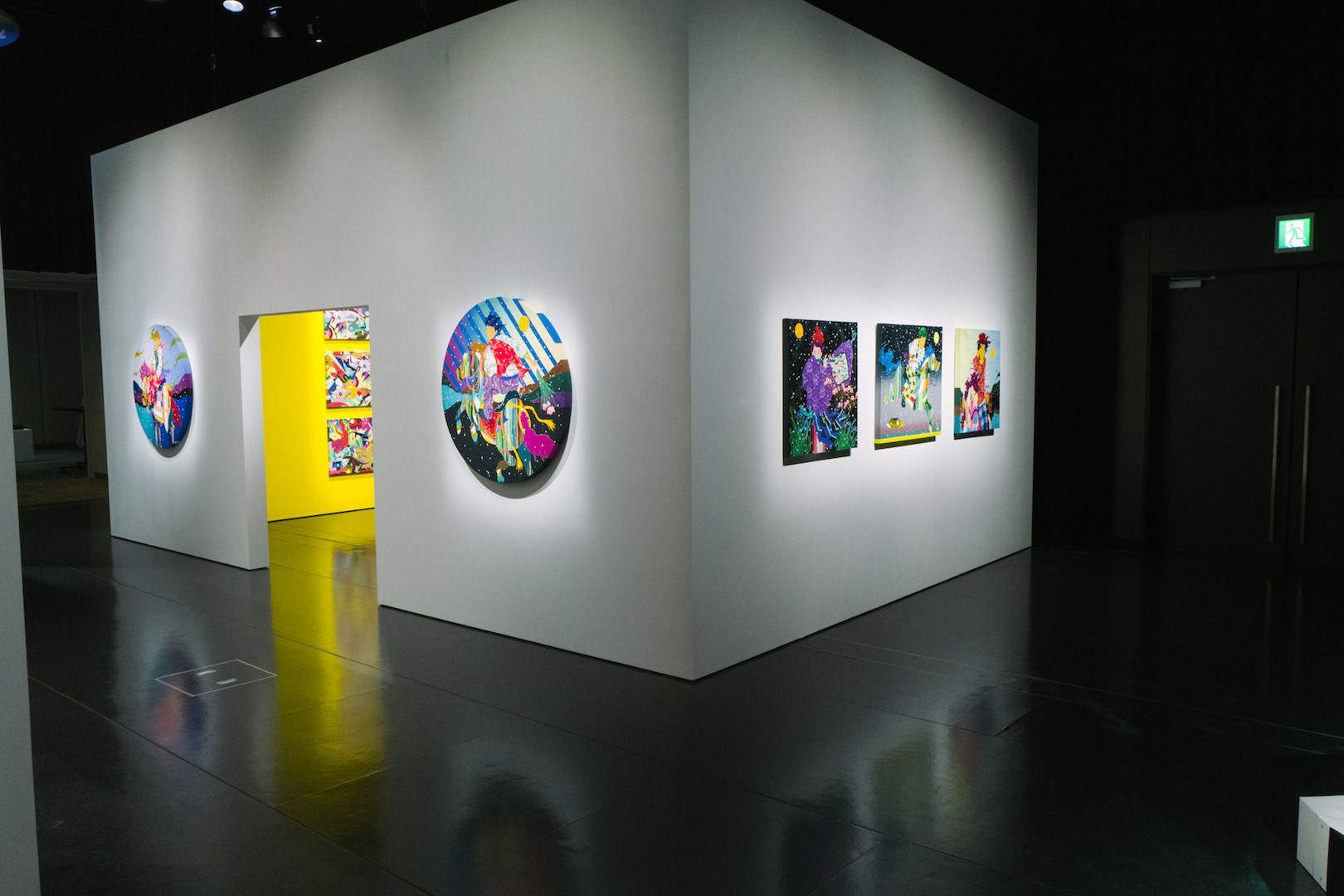
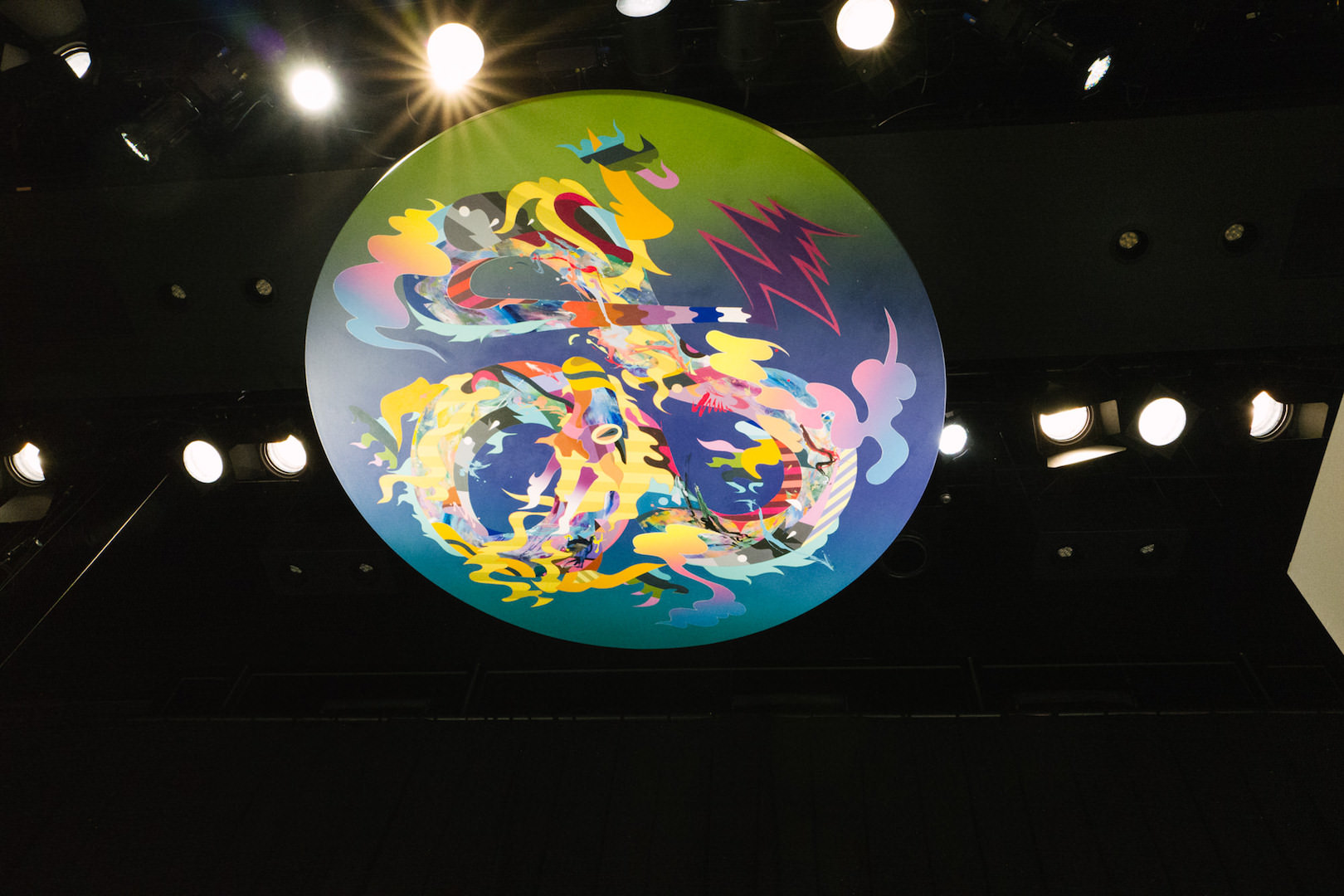
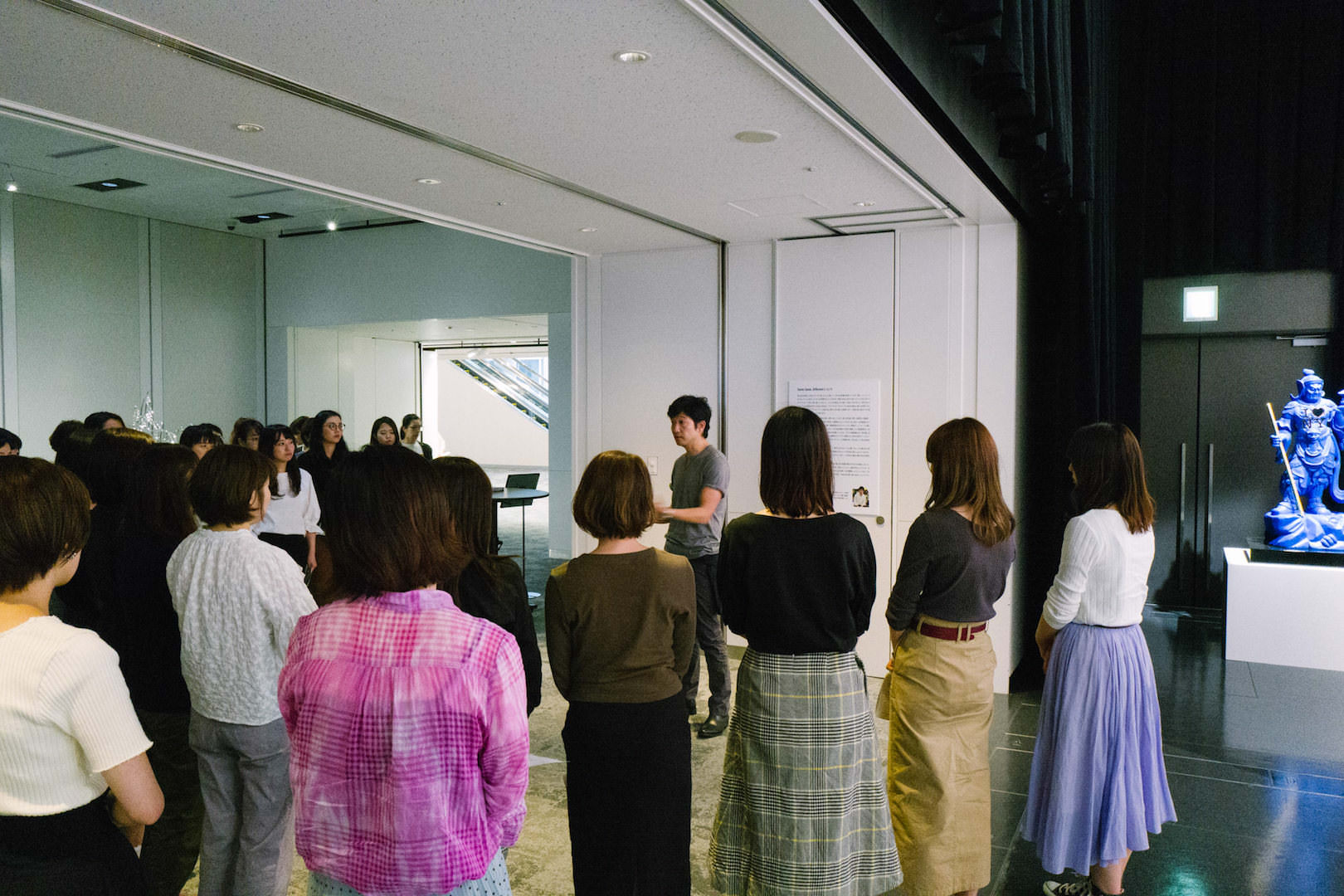
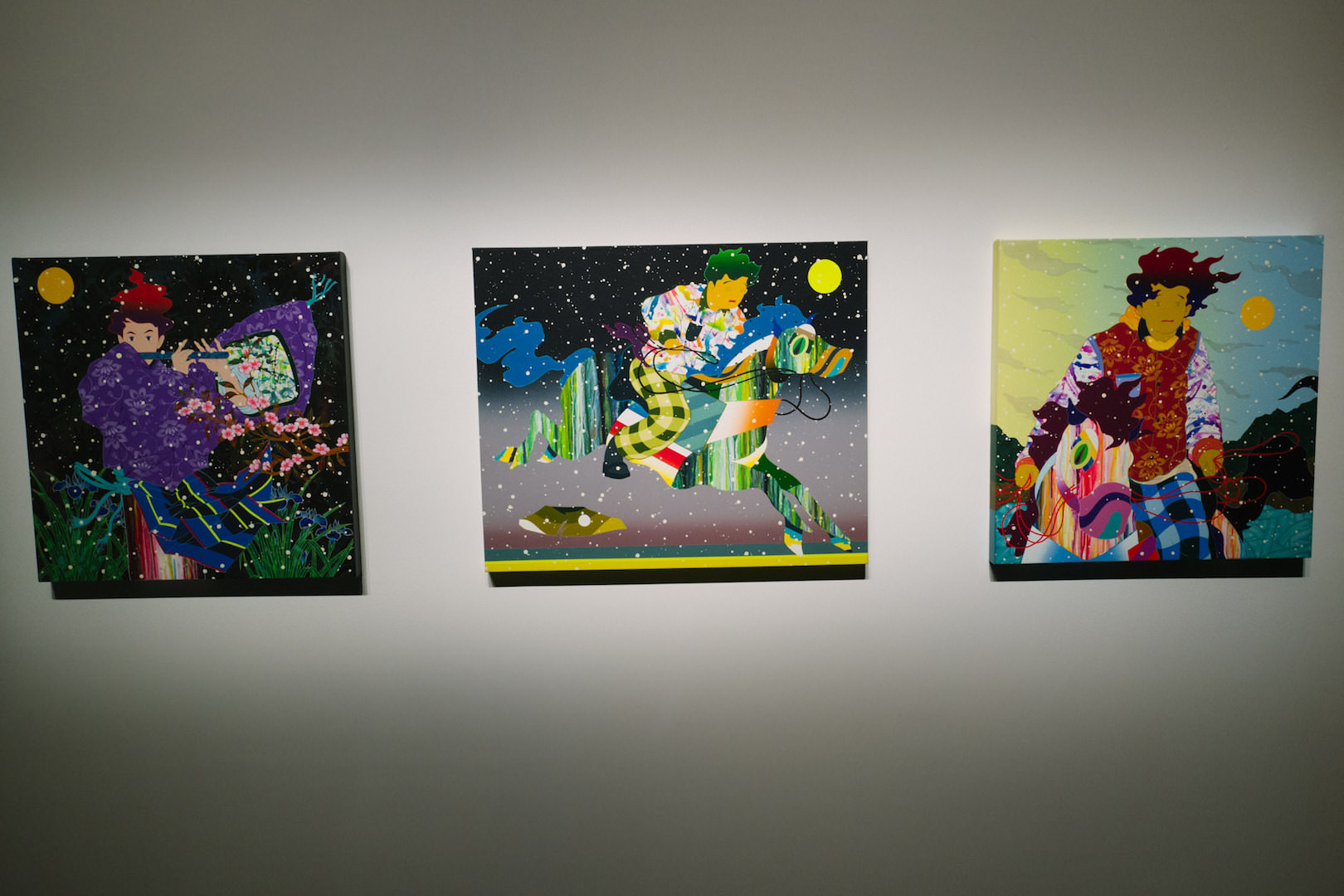
I captured a quick video of the venue.
Works were also on sale at the venue.
Some of the exhibited pieces were owned by collectors, while others were available for purchase.
The original works, though prices varied with size, were priced at around 1 to 2 million yen. A fitting price point for the ever-popular Matsuyama.
An interview with Tomokazu Matsuyama filmed at the time of the exhibition is below.