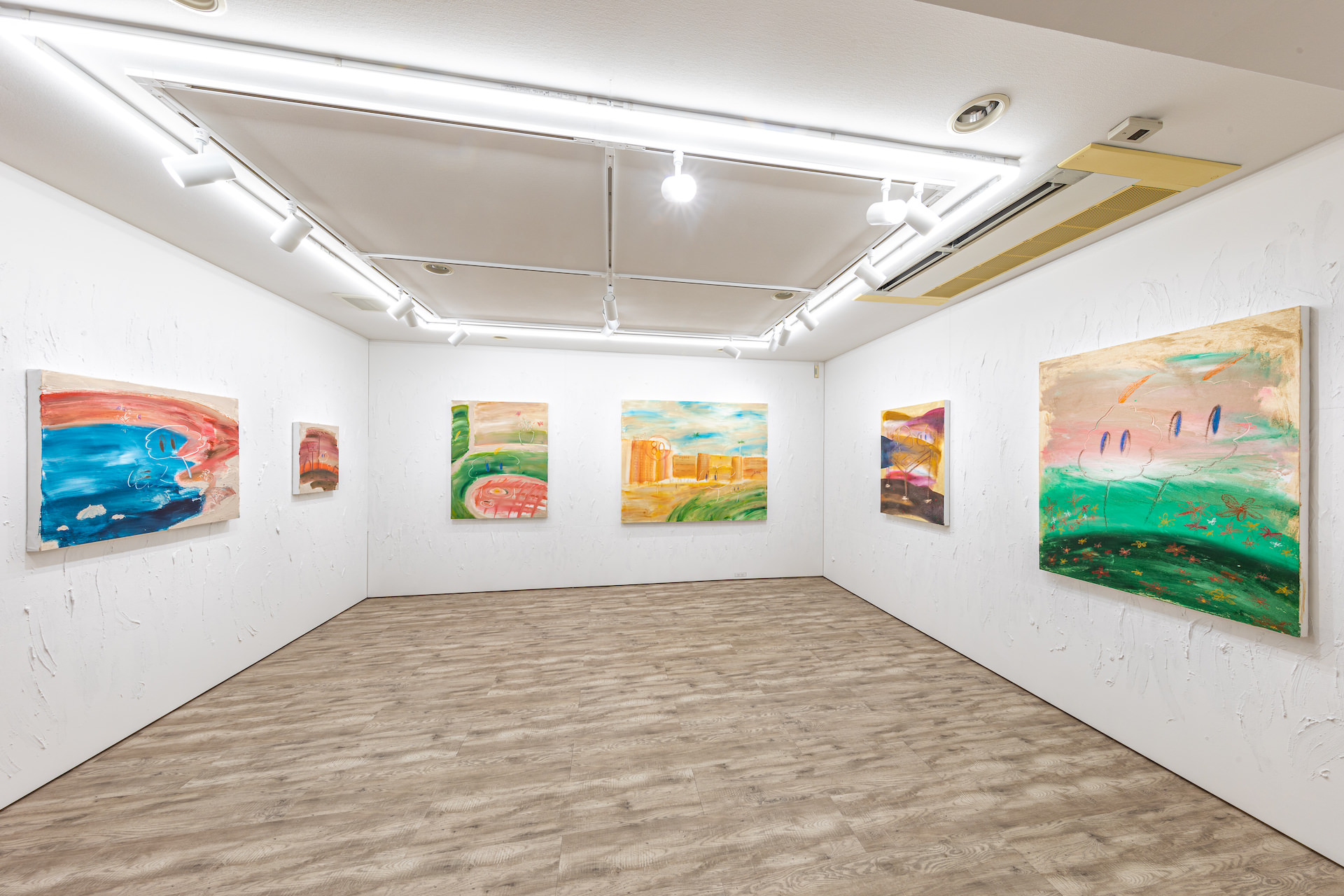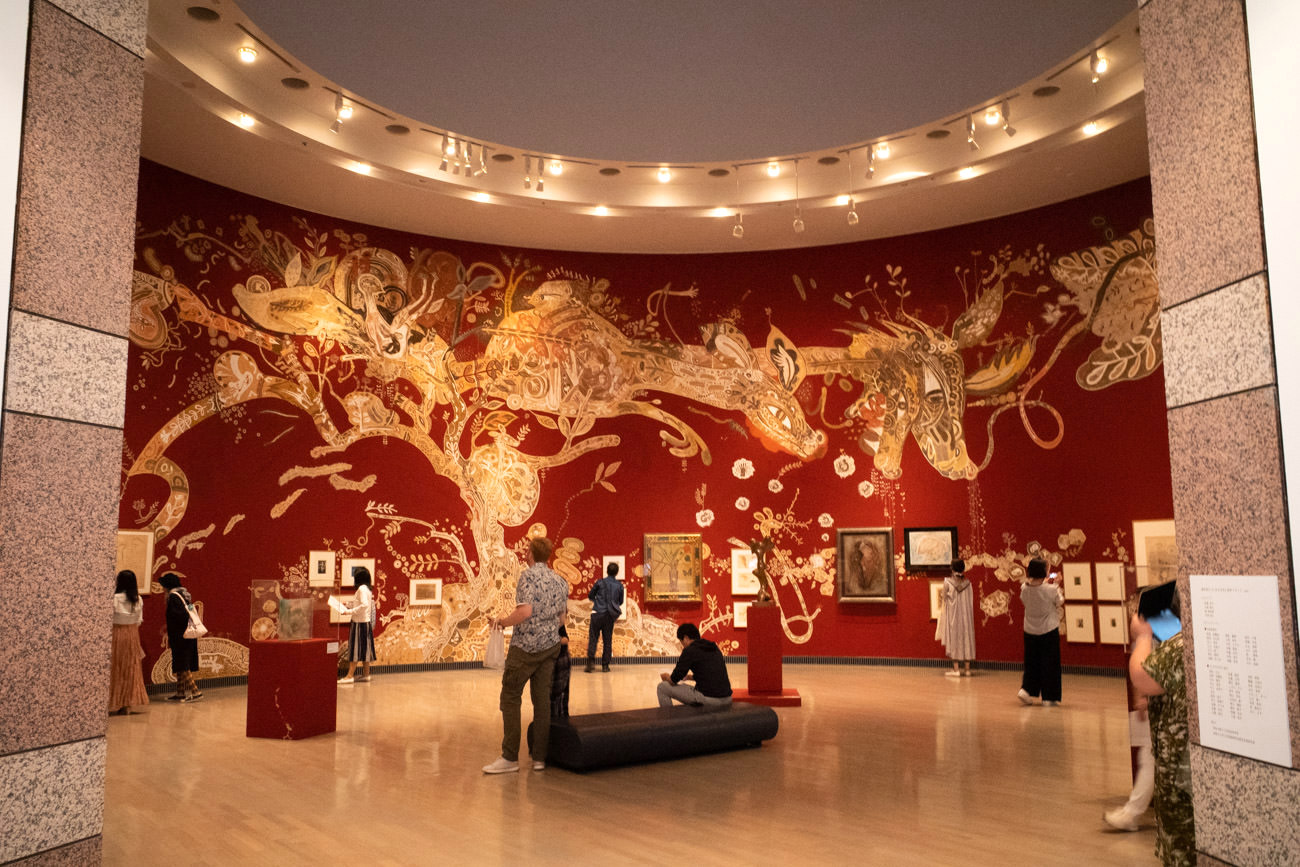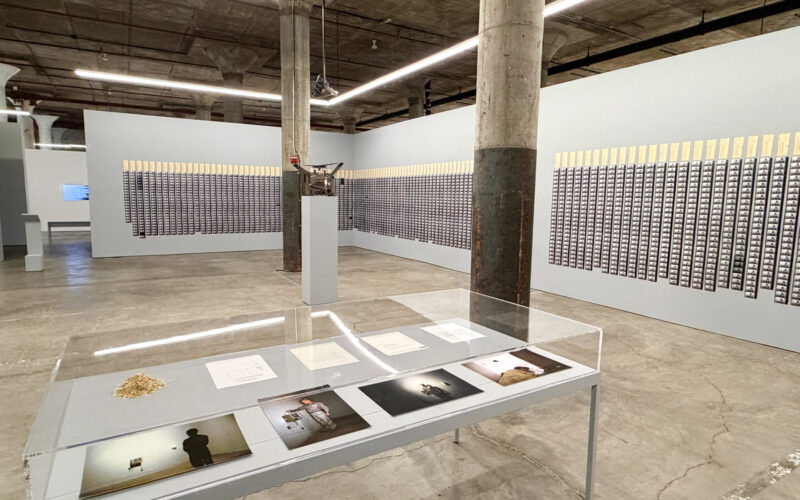
Yuichi Hirako “Project N 71”
At Tokyo Opera City, where Tomoo Gokita’s exhibition was being held, there was another show not to be missed.
Held concurrently, it is Yuichi Hirako’s exhibition “Project N 71.”
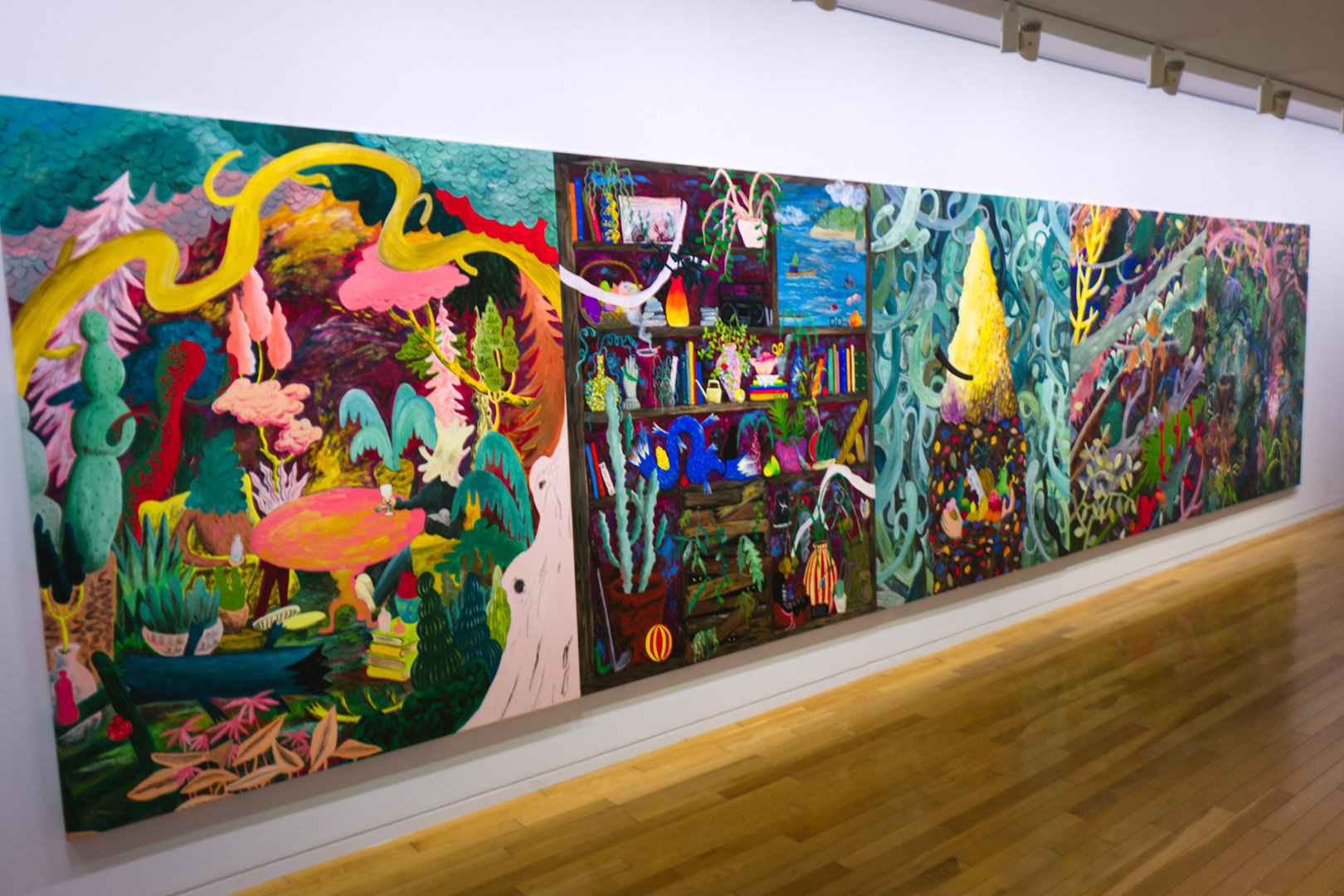
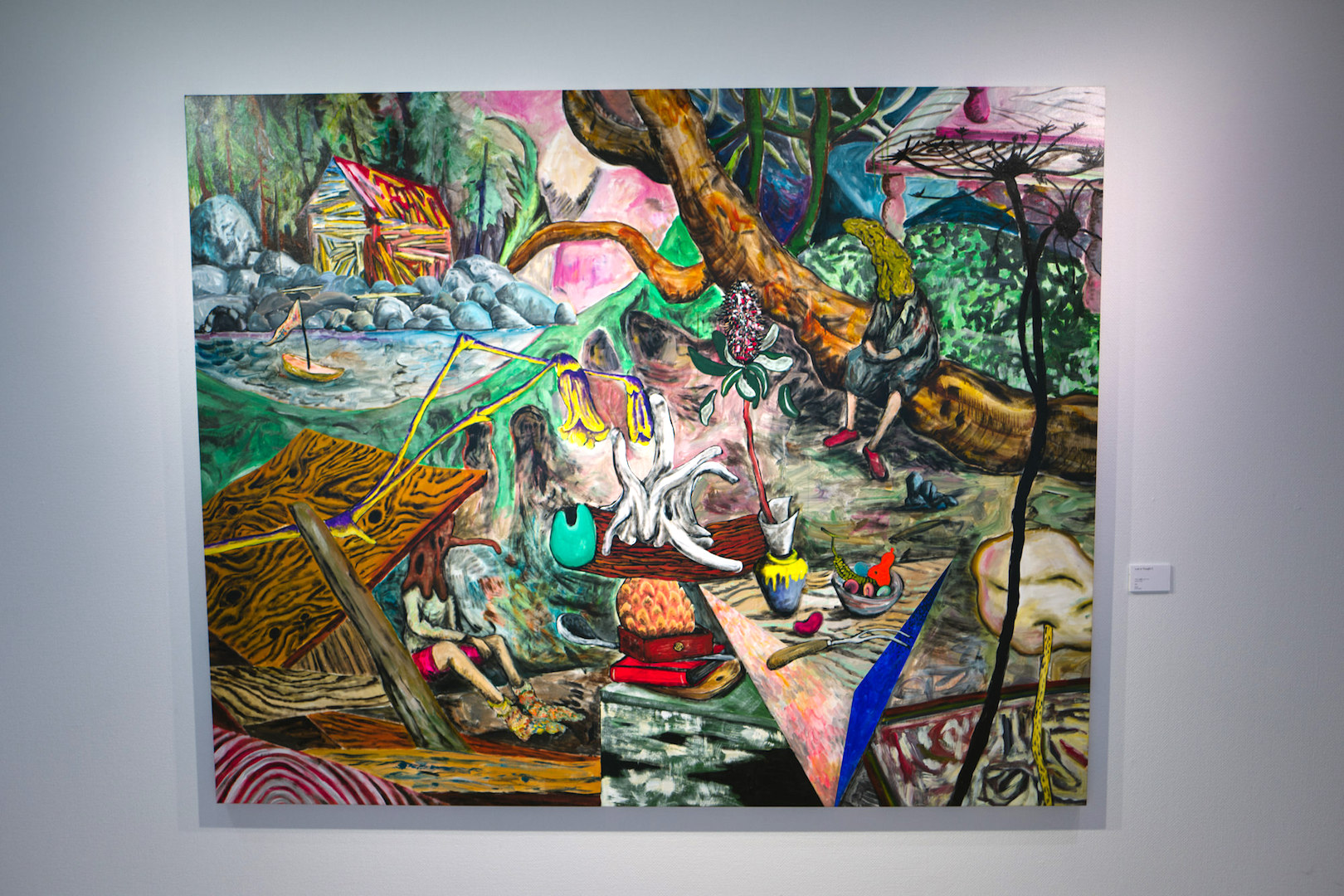
The display, which lined up five large-scale works, was overwhelming.
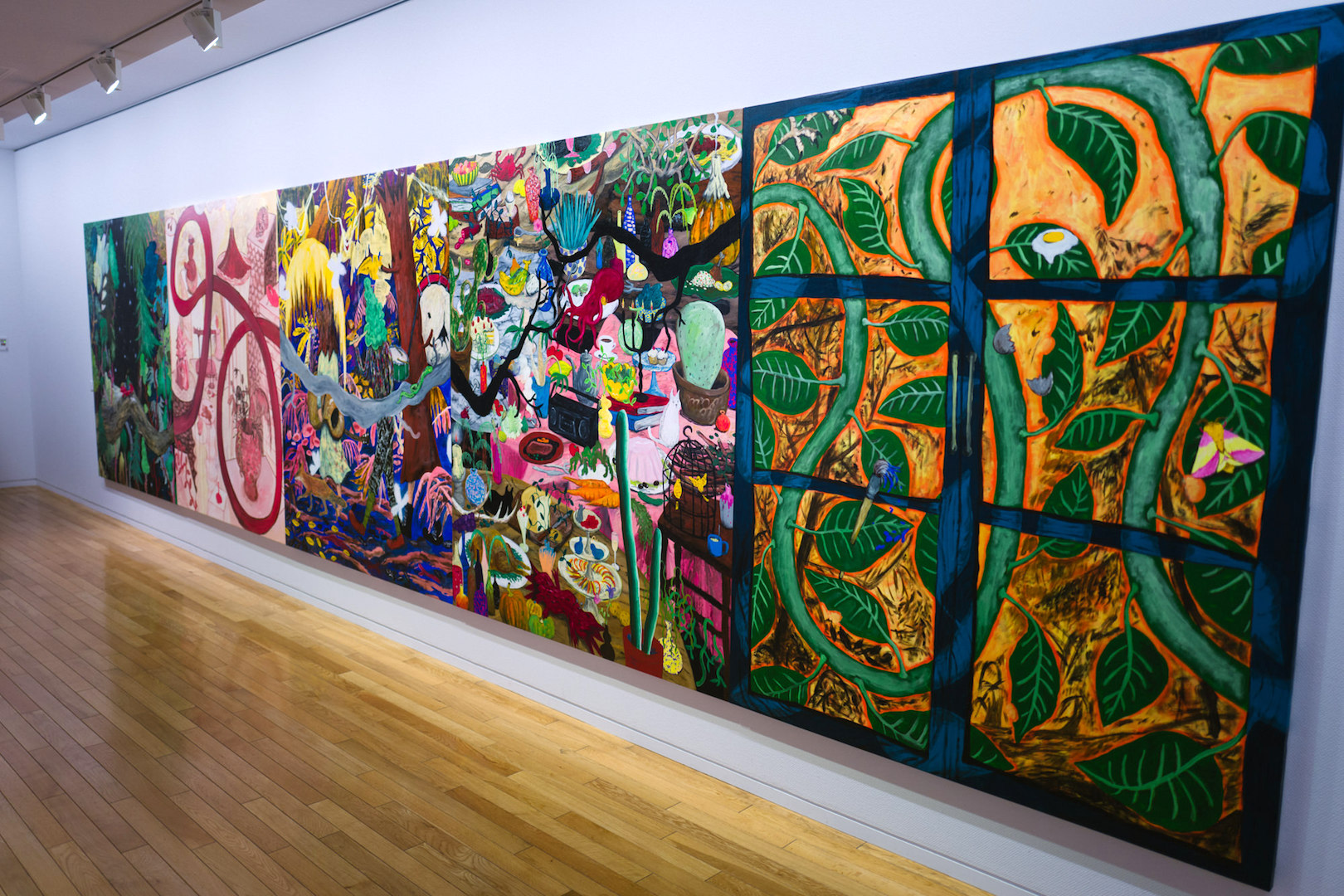
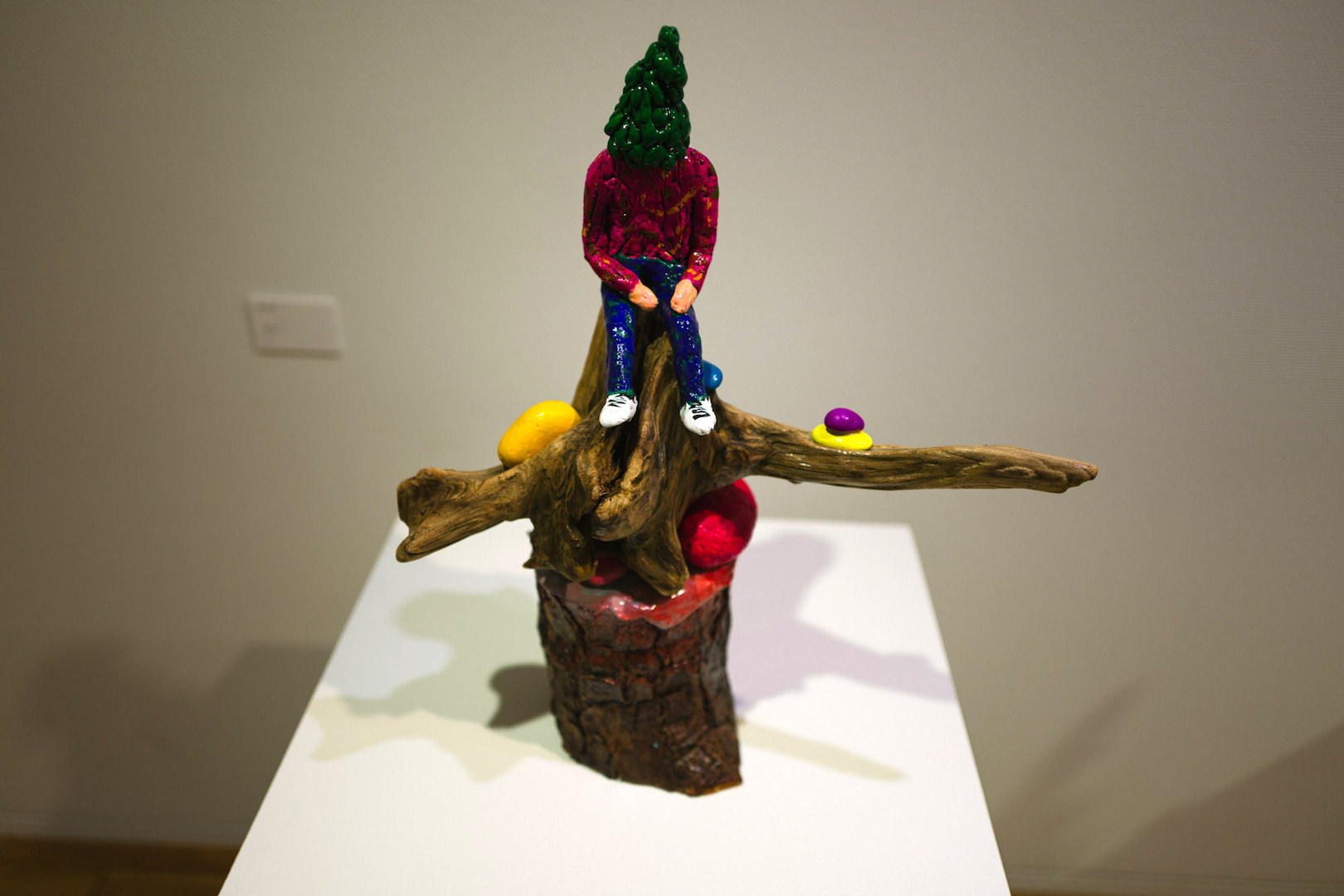
Large-scale paintings, three-dimensional works, and more unfolded a colorful world centered on plants.
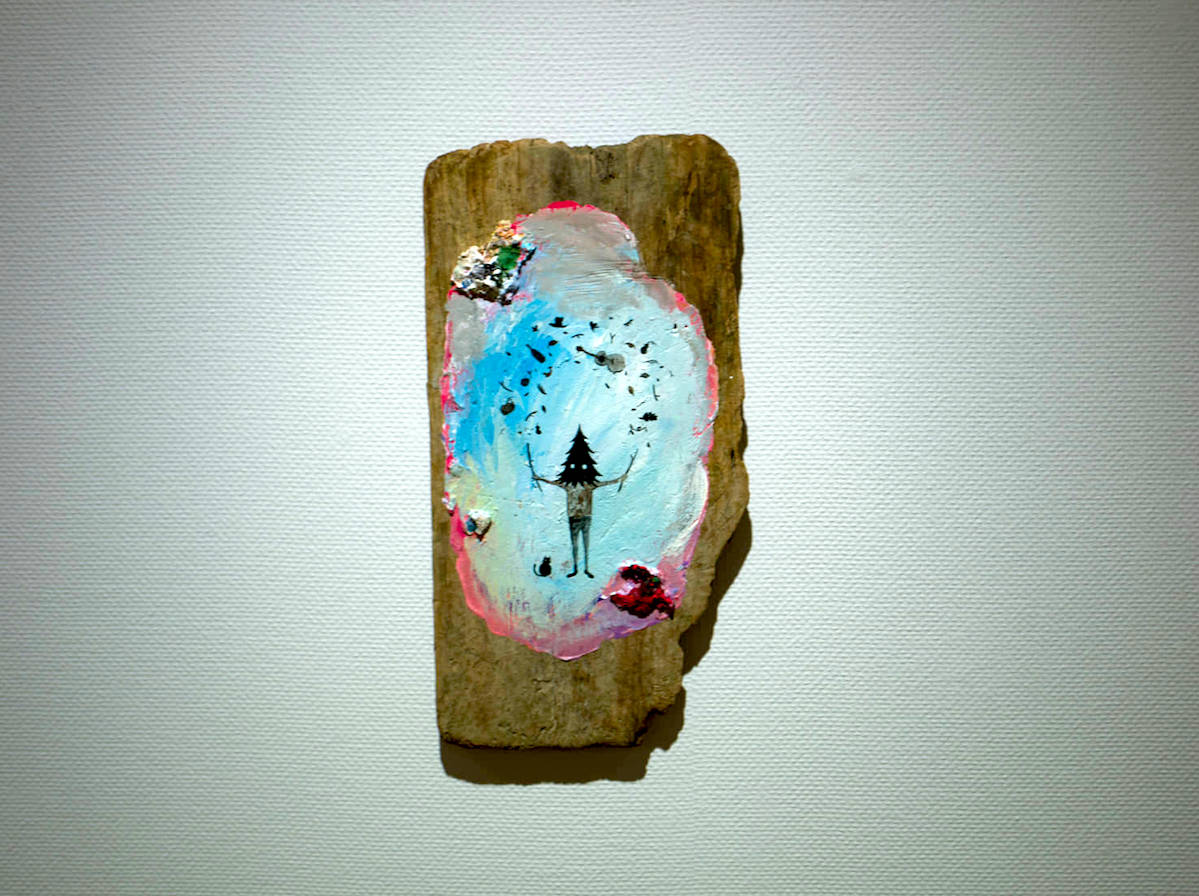
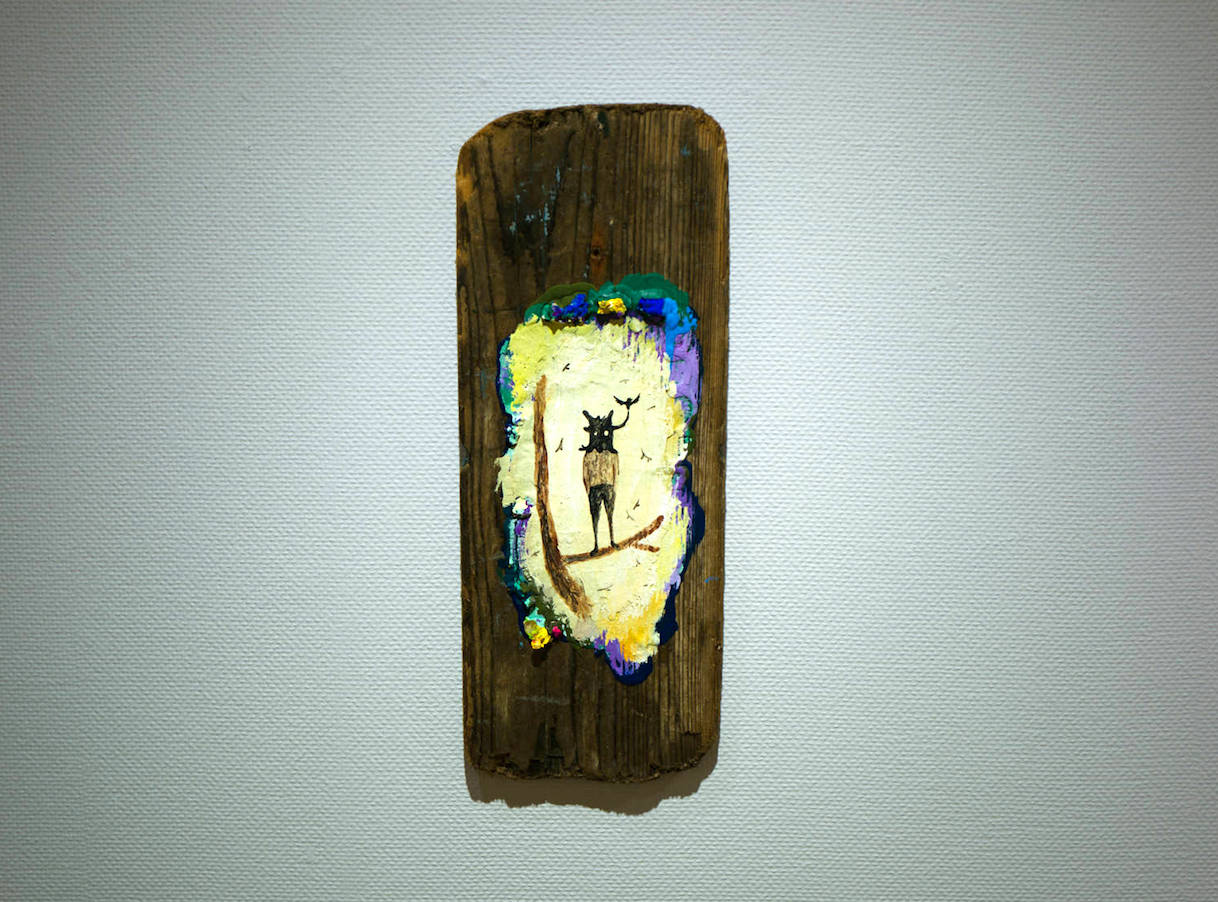
The sculptural works were wonderful.
Made using real wood and other materials, they seem to express Yuichi Hirako’s worldview just as it is.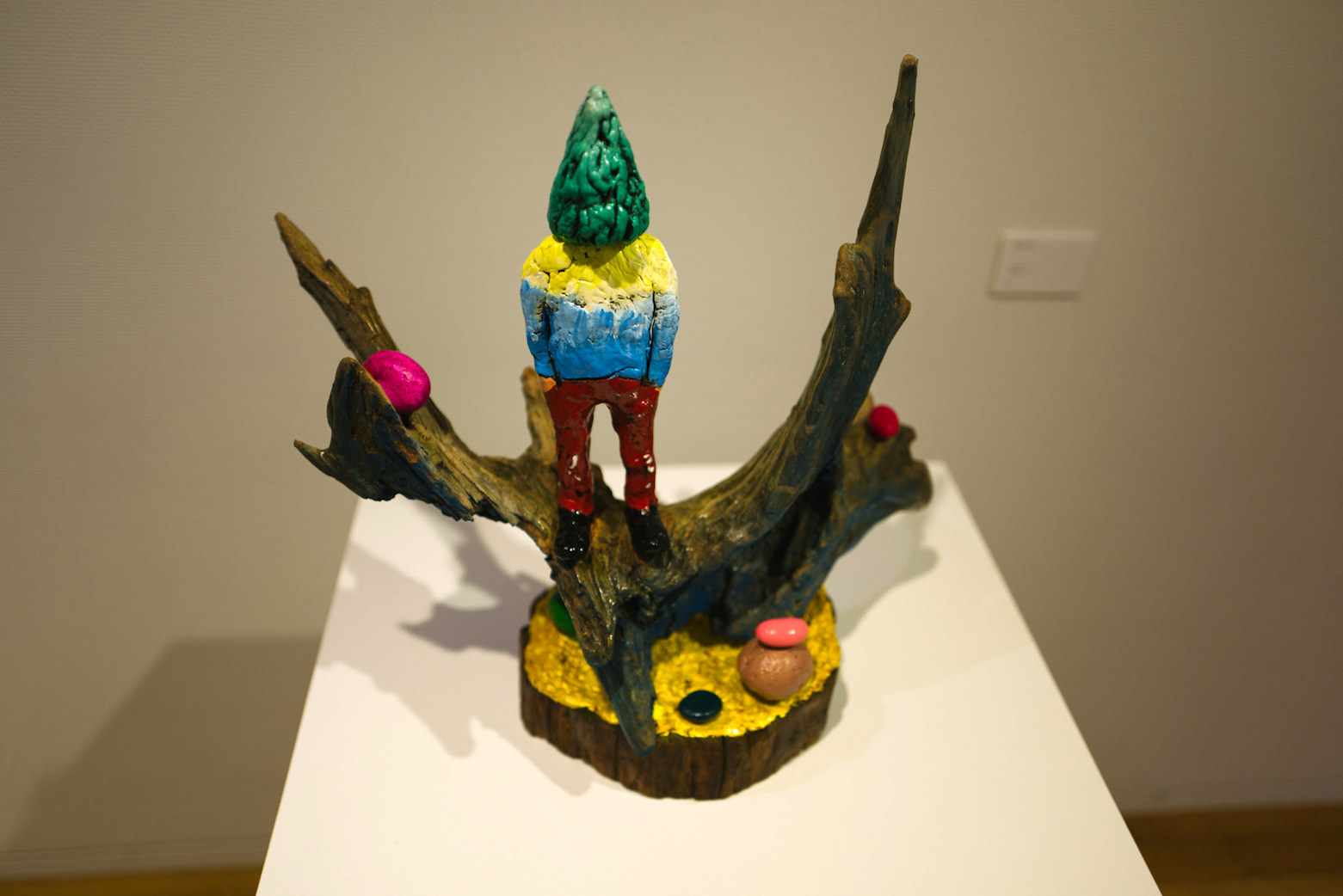
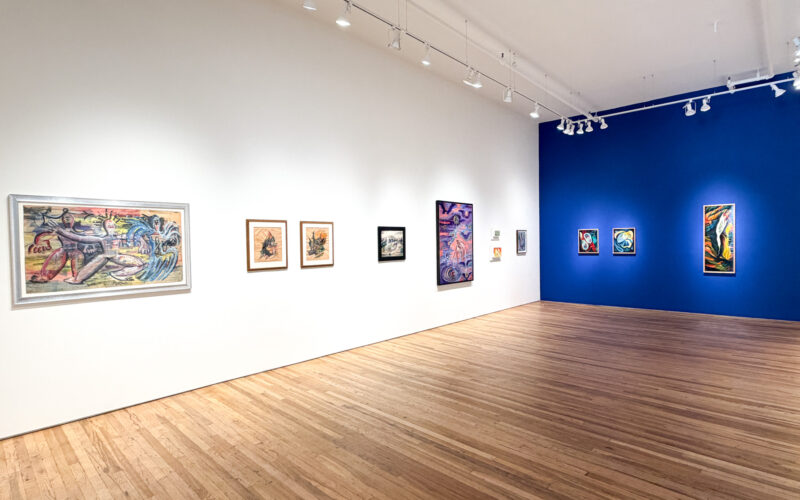
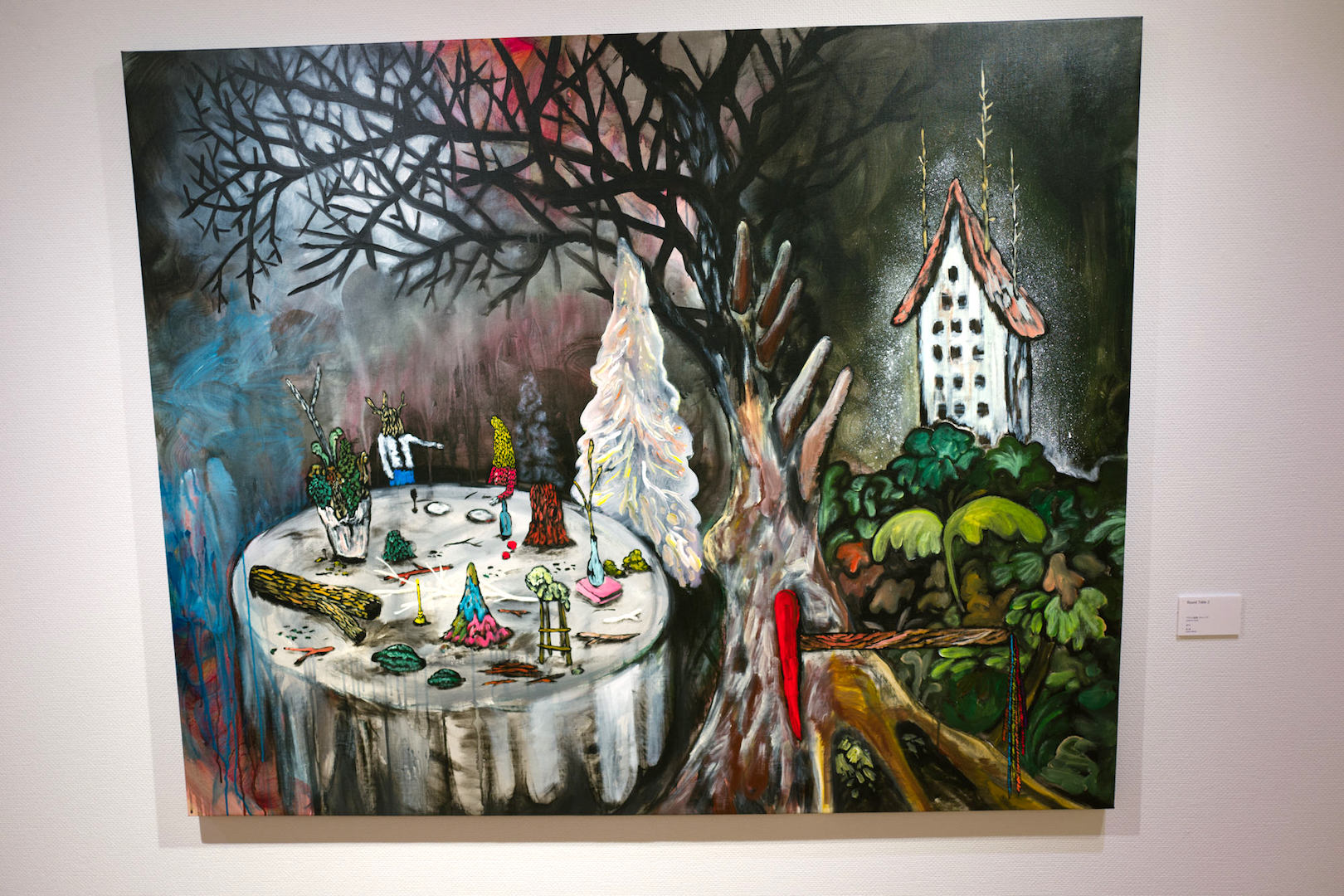 As it was held concurrently with Tomoo Gokita’s exhibition, monochrome works were also on display.
I thought he was a witty and fascinating artist.
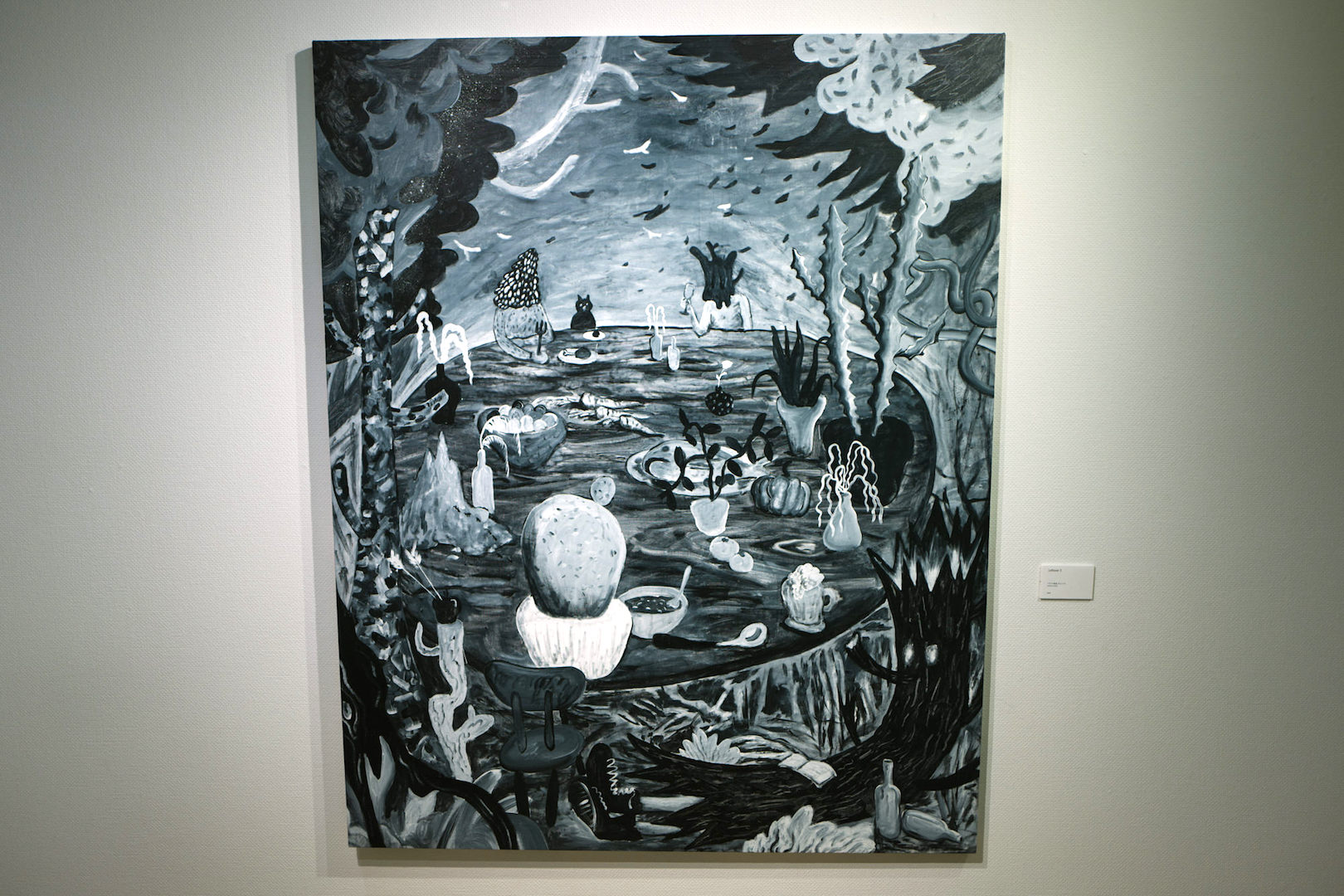
I viewed the works thinking how good they were.
It seems a concurrent show was also being held around the same time at the WAITINGROOM gallery in Edogawabashi.
Yuichi Hirako: In an Unknown Forest
Yuichi Hirako creates an imaginative series of paintings in which fantastical plants grow in profusion. There, the nature represented by plants is depicted on equal footing with human activity and man-made objects, and at times the boundary between the natural and the artificial becomes hard to distinguish. Figures whose heads have turned into plants, and various distinctive symbolic motifs, are skillfully arranged, so that the picture sometimes takes on an ominous power and an apocalyptic aspect while at the same time giving off a comical air. This may be called a highly narrative form of expression, yet Hirako’s consistent concern lies not in the description of any specific story, but in independently reconsidering anew the relationship between “plants” and human beings — a relationship that, perhaps because plants are such a familiar presence, is always overlooked as something “ambiguous” in people’s consciousness — and the relationship between nature and humankind.
Its starting point, he says, was when, studying abroad in the UK, he felt doubt and absurdity at the way people cherished artificially selected and managed plants and greenery as “nature,” and became aware of the difference from the view of nature he had taken for granted. For Hirako, who was born and raised in Okayama and grew up amid a nature-rich environment, in contact with forests, fields, and paddies, it was untamed, freely proliferating life force that constituted nature, and the very notion of completely controlling something and then admiring it as “nature” was quite beyond his expectations. At the time, Hirako recalls, he felt a simple question: the urban dwellers of Britain were not in touch with raw nature, so why on earth did people go to such enormous expense to create an artificial “nature” in the first place?
Given this background, it would not be mistaken to connect the proliferating plants Hirako paints with, for example, an “animistic” view of nature rooted in Japanese history and climate — one different from the Western view of nature that objectifies and seeks to dominate it — and Hirako himself is surely conscious of this. That said, what Hirako is trying to do as a whole is not simply a celebration of nature’s life force, nor a one-sided expression of nature worship. Still less is it a matter of painting plants, greenery, and forests because he likes them, or painting nature because he loves it. Hirako himself says he is neither a so-called plant lover nor a nature lover. What Hirako is trying to focus on is, above all, the relationship between nature and the artificial, between the human-made and the natural — the depth of their connection, and the very ambiguity of that connection itself.
5.jpg)