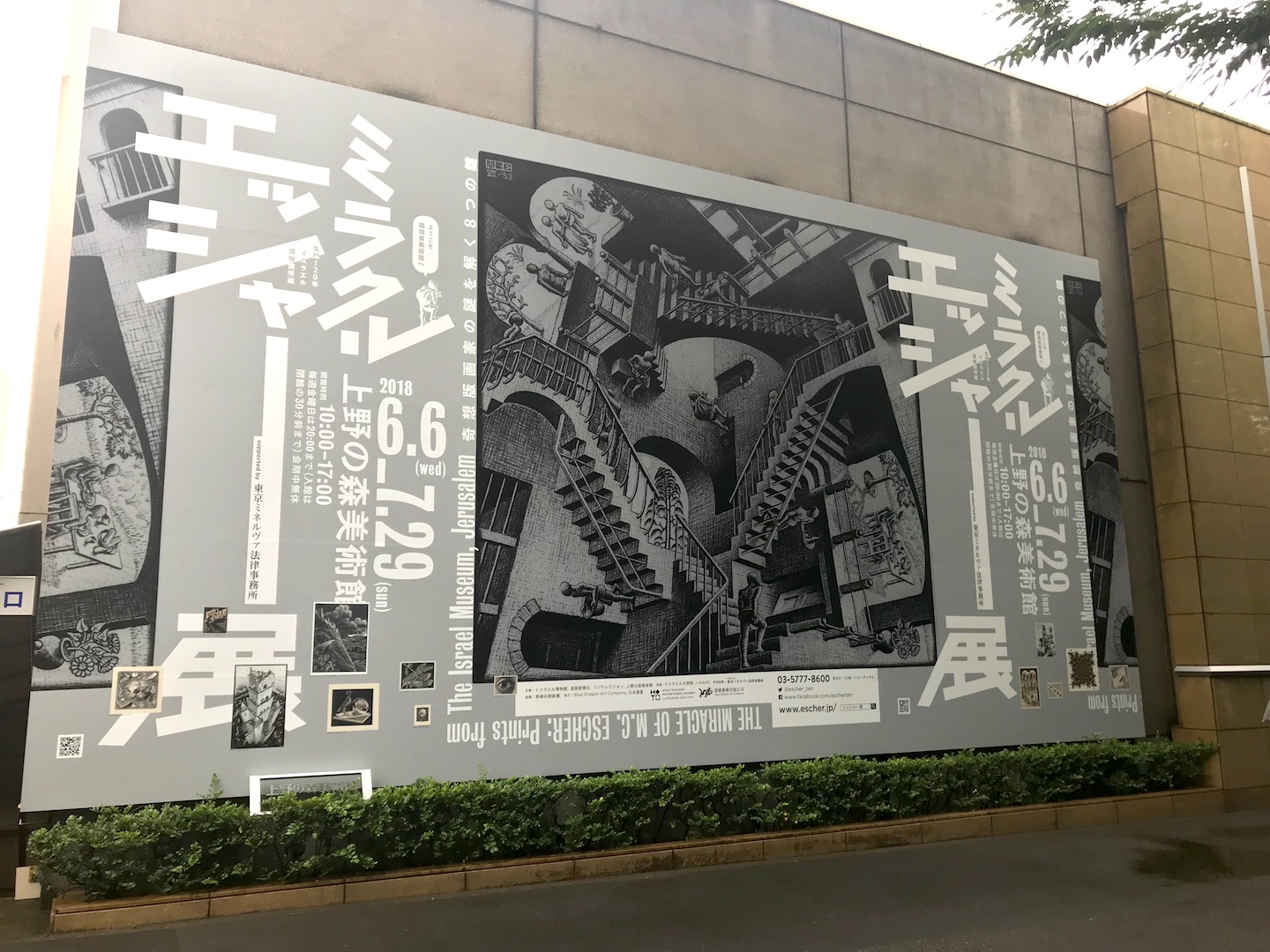
The Miracle of M.C. Escher
Famous in Japan too for his optical illusions and trick art, “Escher.” To commemorate the 120th anniversary of his birth, this large-scale exhibition presents around 150 carefully selected works — shown in Japan for the first time — from the Israel Museum, which holds one of the world’s largest Escher collections.
Waterfall, a landscape that seems as if it could exist but never could in reality; Relativity, in which figures appear to be walking in circles yet never connect — Escher’s mysterious world, which everyone has seen at least once in a textbook, is nothing short of a one-of-a-kind, singular worldview. The printmaker Escher, who continues to enchant people around the world today, marks the 120th anniversary of his birth in 2018. It has been decided to hold a large-scale retrospective in Japan in this landmark year. This exhibition draws on the precious collection of the Israel Museum, and all of the works will be shown in Japan for the first time.
The exhibition is composed of around 150 works — the representative optical-illusion pieces alongside early works, as well as the plates used in his printmaking and his original hand drawings.
The venue is The Ueno Royal Museum, right by Ueno Station.
Escher, the Visionary Printmaker
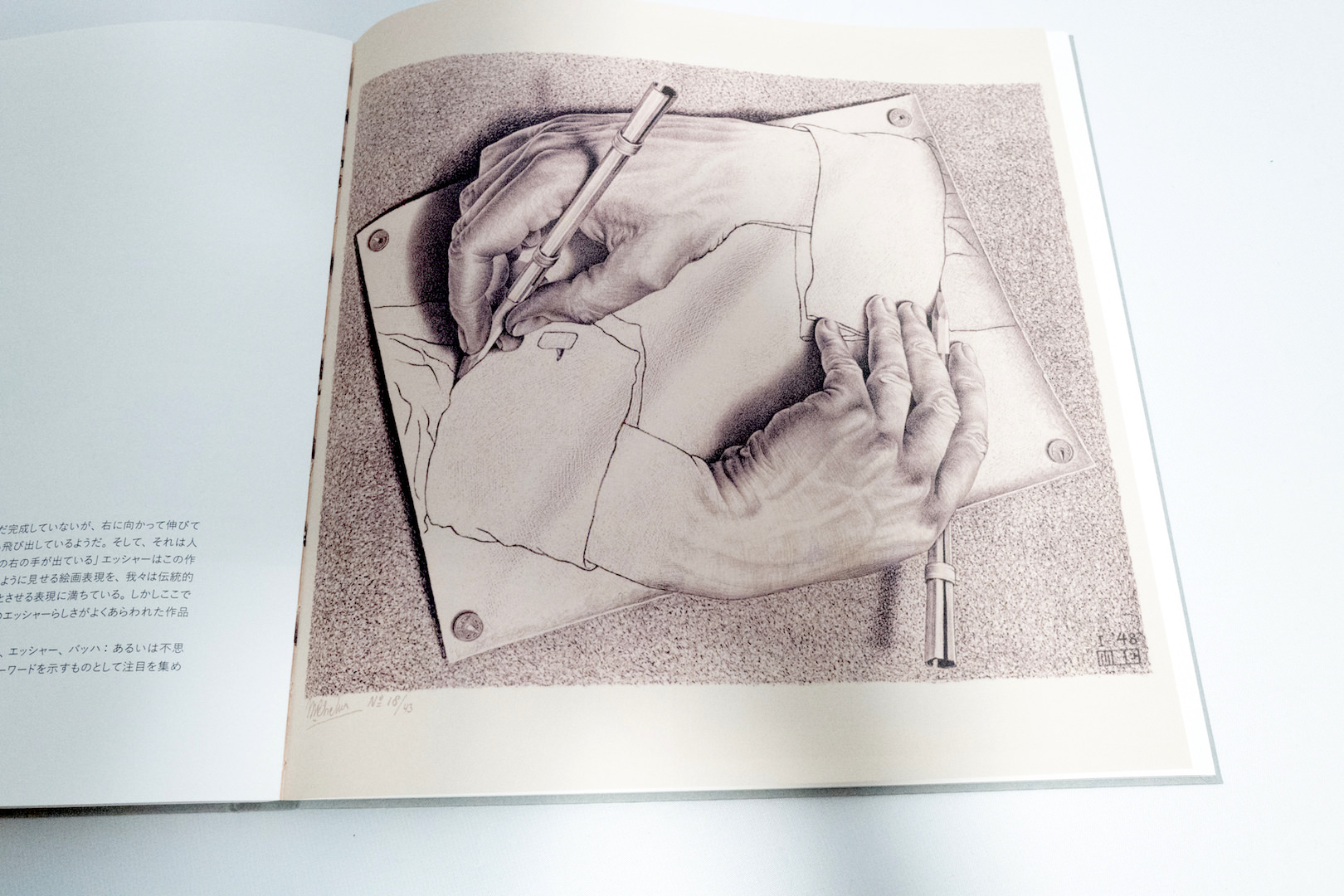
Perhaps not many people are conscious of the fact that Escher created his works primarily as prints. This exhibition also puts the actual woodblocks on view, and Escher was a first-rate “printmaker” who engaged with a range of print techniques, advanced them to a very high level, and at times integrated several techniques within a single work.
At this exhibition, you can view his prints up close to your heart’s content. Alongside the pleasure of looking at Escher’s works, there is also the appeal of encountering all sorts of different types of print.
The exhibition’s eight sections
The exhibition is divided into eight zones. It was a nice touch that the captions on the works also indicated the age of the artist when he made them.
1. Escher and “Science”
In Escher’s prints, specific motifs are repeated and cycle around, or at times fill the plane like tiles — a distinctive geometric mode of expression. To generate these images, Escher took inspiration from the “science” of his time and developed his own mathematical theories.
This section introduces the various geometric expressions that appear in Escher’s prints.
2. Escher and “the Bible”
This section takes up the prints on Christian themes that Escher made in his youth. In his series based on the Book of Genesis, one can see the influence of the Art Deco style that was fashionable in Europe from the late 19th to the early 20th century.
3. Escher and “Landscape”
The source of Escher’s distinctively realistic yet uncanny imagery was his own experience of landscape. His travels in Italy and Spain from the 1920s — and above all his encounter with the geometric decorative patterns at the Alhambra — became the origin of the patterned motif expressions that would follow. The picturesque landscape prints depicting the Mediterranean already prefigured the visual experiments to come.
4. Escher and “Figures”
Figures in Escher’s prints often appear as one of the repeating pattern motifs, but the early Escher also engaged with single-figure representation. Many of the figures introduced in this section depict family members and people close to him, and at the same time he made his own self a motif in various ways.
5. Escher and “Advertising”
Escher’s imagery also appeared in commercial design. This section introduces images used for commercial purposes together with small greeting cards in which the essence of Escher’s style is condensed.
6. Escher and “Technique”
Considering himself not an “artist” but a “printmaker,” Escher engaged with a range of print techniques — woodcut, wood engraving, lithograph, and mezzotint — advancing them to a high level and at times combining multiple techniques. Through delicate carving and printing he realized his uncanny worlds and created uncanny print spaces. This section introduces Escher’s print techniques through a wide variety of examples and materials.
7. Escher and “Reflection” (Mirror Images)
One of the defining features of the uncanny world Escher creates is the “mirror” image. Paintings that use mirror reflections have been made in Europe since before the modern era. Escher too became absorbed in depicting images in which motifs and figures in the real world coexist with their mirror images in a virtual world.
8. Escher and “Optical Illusion”
Representative elements of Escher’s art are “impossible worlds” — images of impossible architectural constructions and patterns that go on transforming forever. Some of these original expressions were inspired by the impossible figures published by mathematicians of his time, and together with the cyclic expressions using regular divisions of the plane, they are the formal manifestation of a theory Escher developed on his own over many years.
Epilogue. A World in Circulation
Metamorphose II, the major work Escher created in 1939–40. Starting from letters, various forms transform and cycle onward, eventually returning to the initial letters — this expression marks the pinnacle of Escher’s art.
Miracle Digital Fusion
An adjacent corner also featured participatory content.
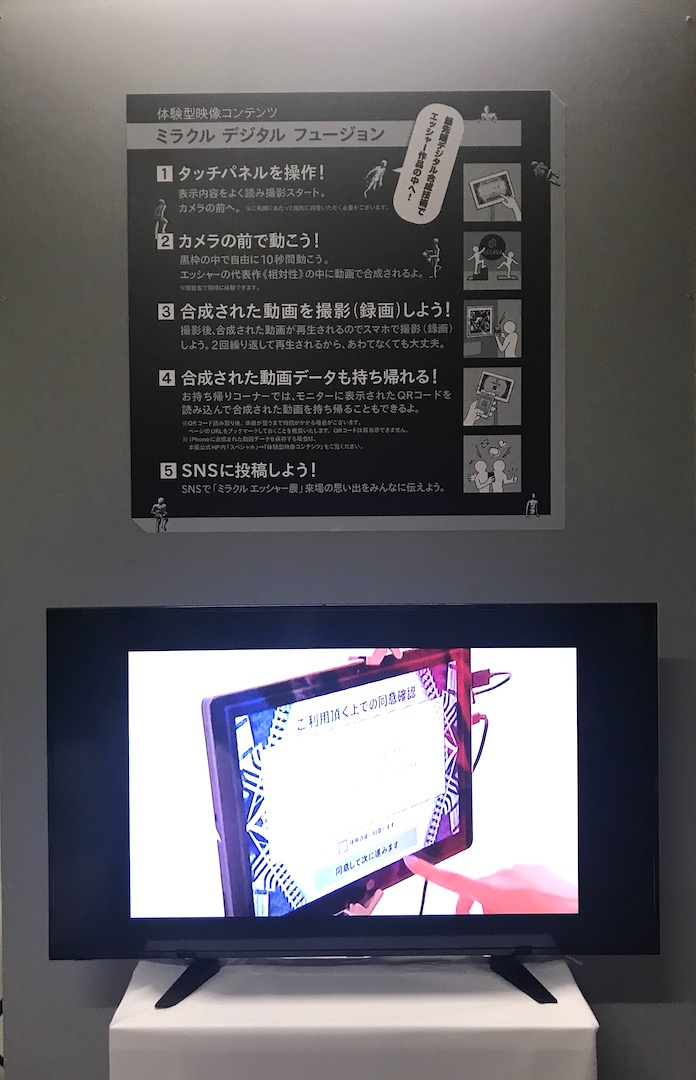
It’s a fun installation, but expect a line here too. Plan to give yourself plenty of time to take part.
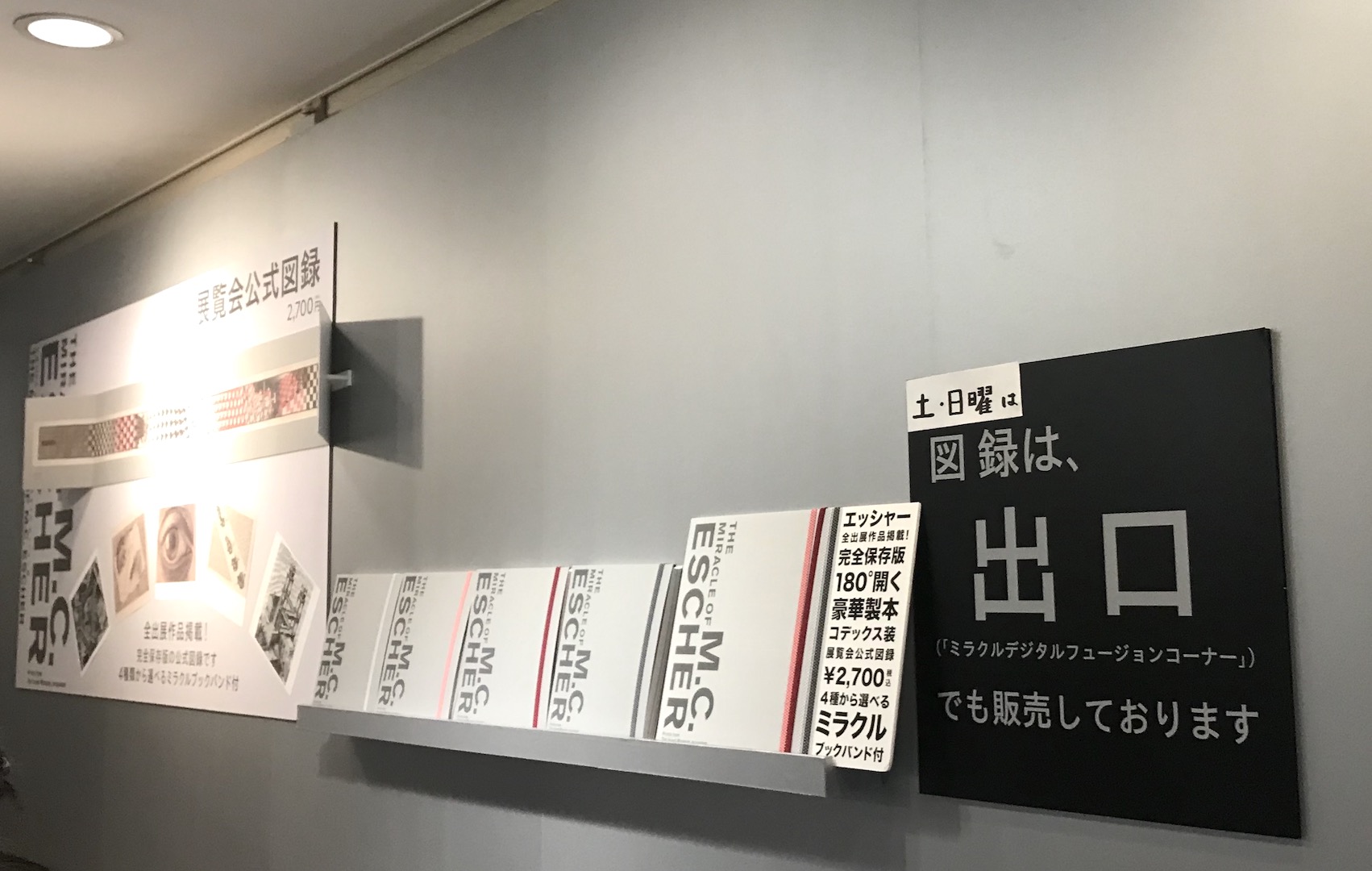
Official Catalog
Aside from the major work Metamorphose II, the works on view are prints, so there are no very large-scale pieces. Rather than viewing the works from a distance in a crowded museum, I recommend buying the catalog and taking your time with them.
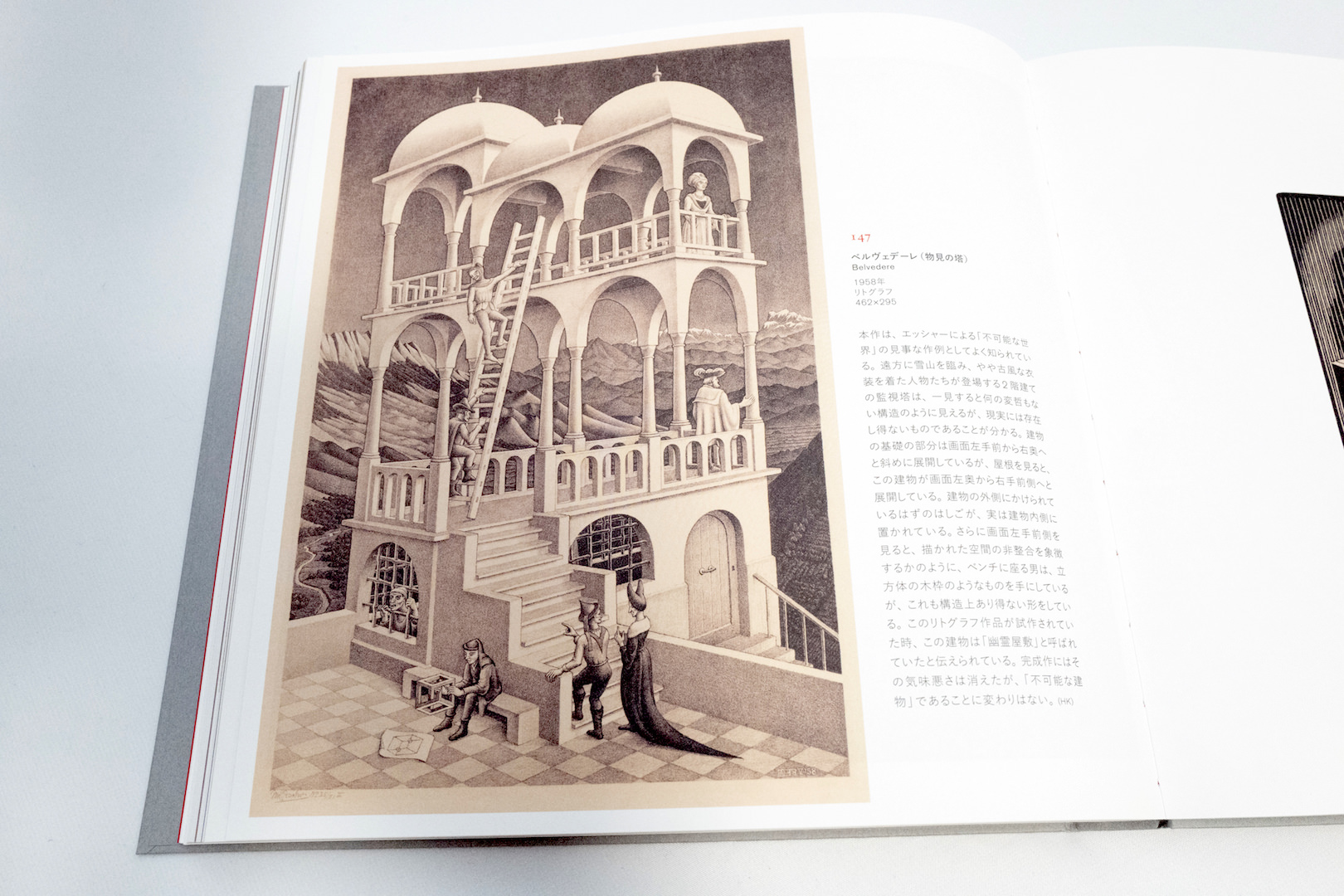
Please see the article below on the official catalog.
https://art-on.jp/escher-catalog-2018/
Summary
This was a precious exhibition where you could view Escher’s works right in front of your eyes.
There were moments where the meticulous lines and singular motifs of the works evoked a sense of madness. There were also moments of gentle relief at the warmth of the drawings scattered throughout.
Looking at the audience, there were many young visitors, and one had the impression that many people who don’t often engage with art or fine art were also in attendance. It felt as though his legacy is being firmly passed on to the next era, and I felt anew that the achievements of this maverick printmaker, Escher, are certain and immense.
If Escher were still alive today, I would have wanted him to make me a bookplate — with that thought, I left the venue.