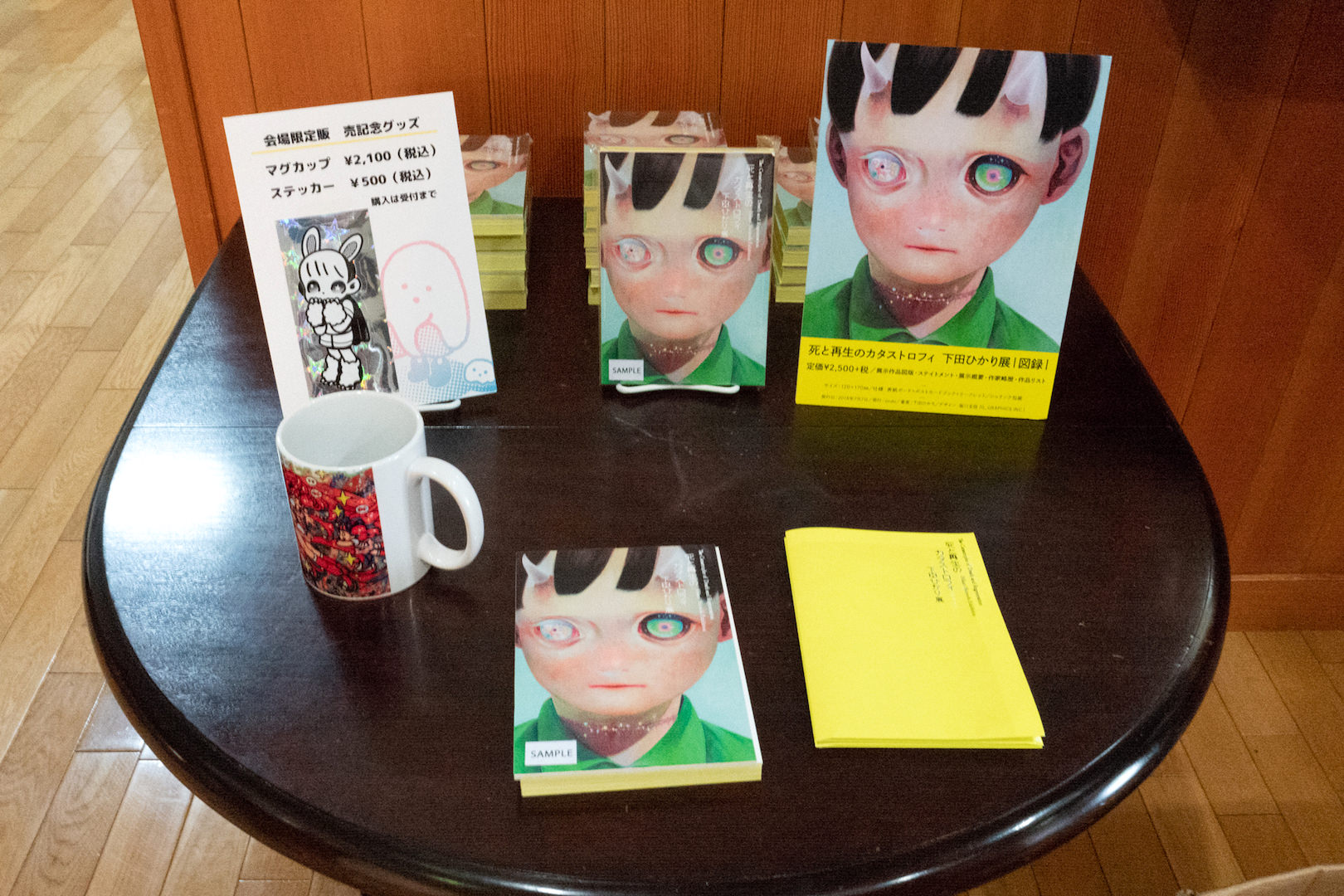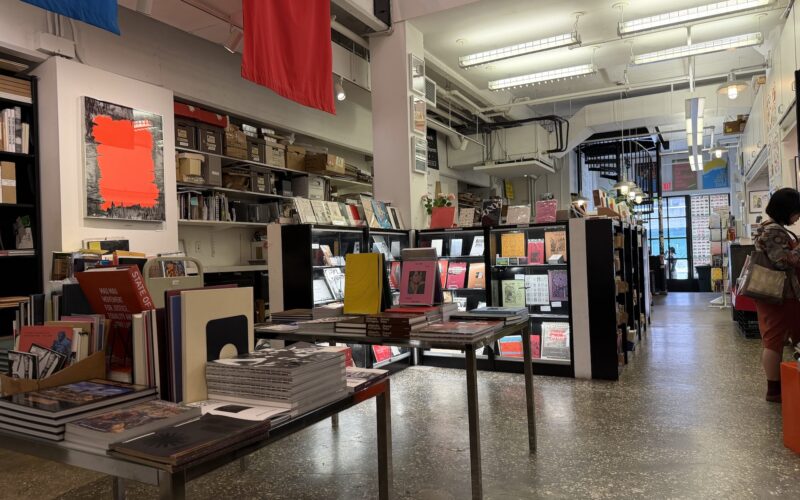
I visited Hikari Shimoda’s solo exhibition “Whereabouts of God – Catastrophe of Death and Rebirth.”
Asahi Museum of Art
The venue for the solo exhibition was the Asahi Museum of Art, located in Asahi Village, Nagano Prefecture — a place quite far from Tokyo.
On the middle day of a three-day weekend, I took a highway bus from Shinjuku, Tokyo, and arrived at Matsumoto after four hours (the usual trip is 3 hours 20 minutes). From there it was about ten-plus minutes by train, and then another 20 minutes or so by car from the nearest station. On the day I visited, it happened to coincide with a gallery talk by Hikari Shimoda herself, and complimentary shuttle service was being provided from the nearest station. Many thanks to the staff for their consideration!
While this solo exhibition took place at a museum that isn’t exactly a spontaneous drop-in destination, the main reason for holding it in Asahi Village is that this is where Hikari Shimoda still lives.
https://art-on.jp/asahi-museum-nagano/
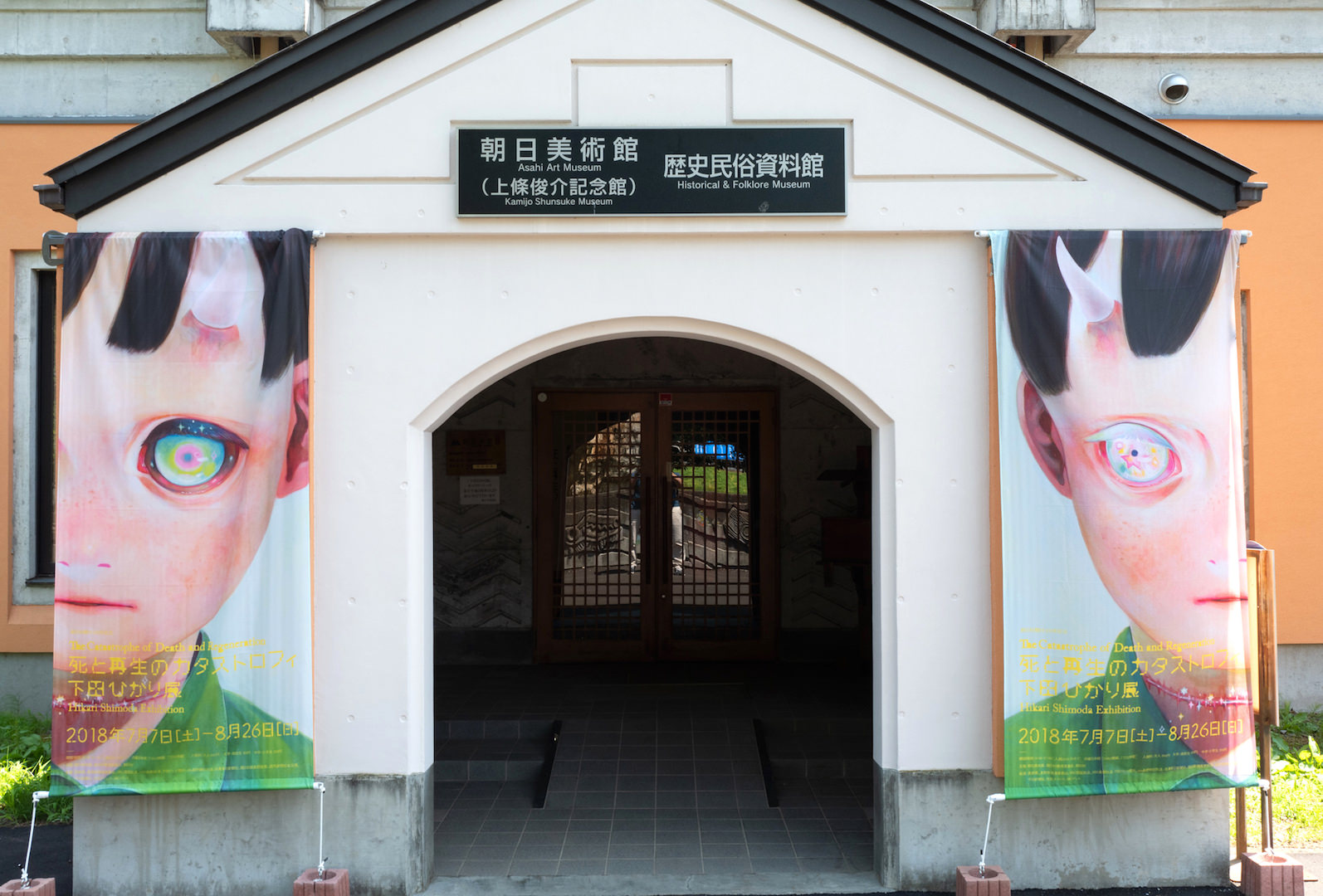
Entrance
Inside the Asahi Museum of Art, outdoor shoes are not allowed. Visitors change into slippers before entering. Rather than a white-cube style museum, it has the warm, welcoming feel of a community hall.
Upon entering, a three-dimensional figure greets you.
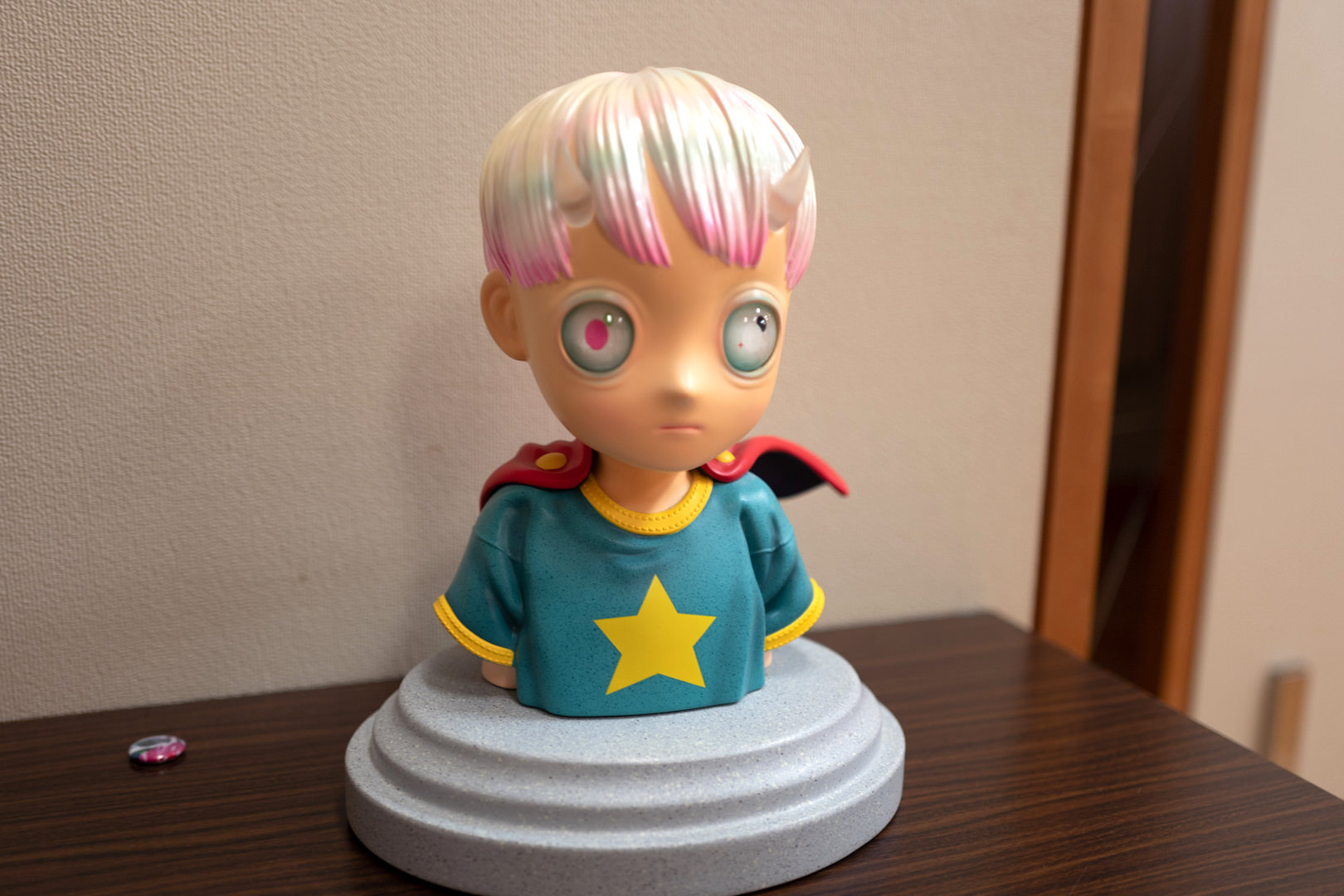
The figure looked somewhat familiar… and looking back at past posts, sure enough! It’s “the figure that sold out in one minute” featured in the article below!
At first I was surprised by the reality of having the work I had wanted right in front of me, but seeing its imposing presence and high level of finish, I felt my desire to own it flare up again within me. I still want it after all…
https://art-on.jp/hikari-shimoda-soldout/
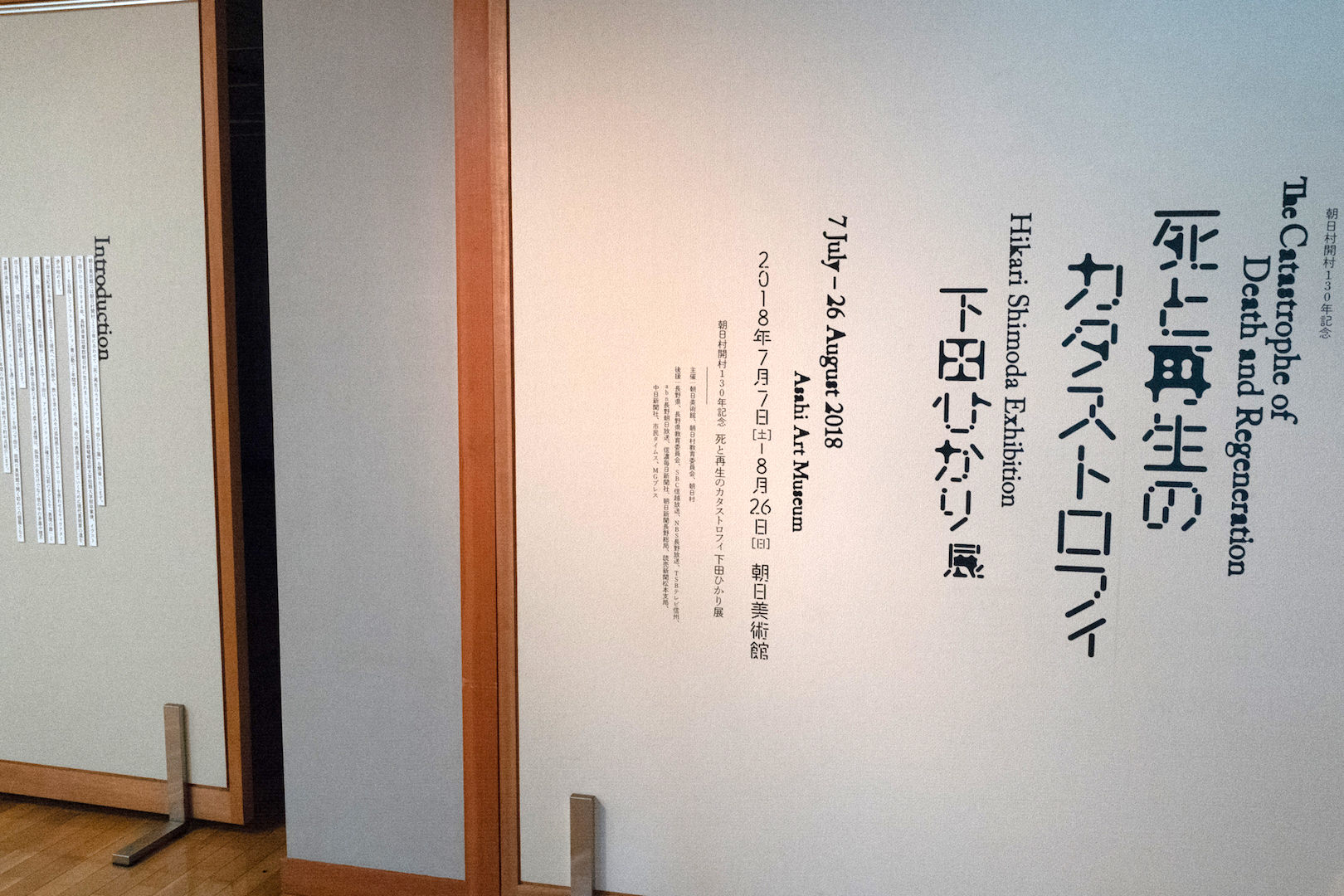
Hikari Shimoda “Whereabouts of God – Catastrophe of Death and Rebirth”
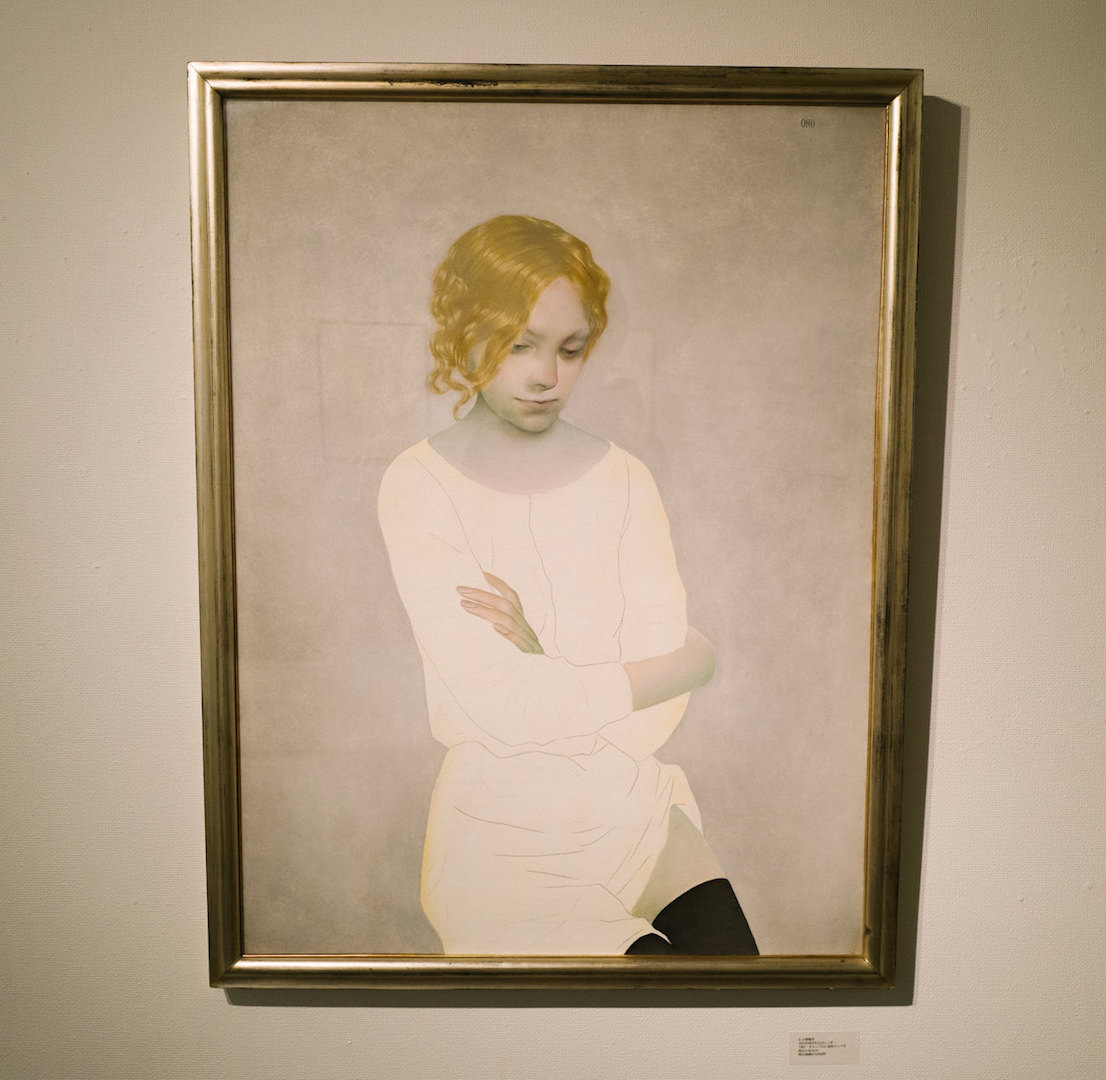
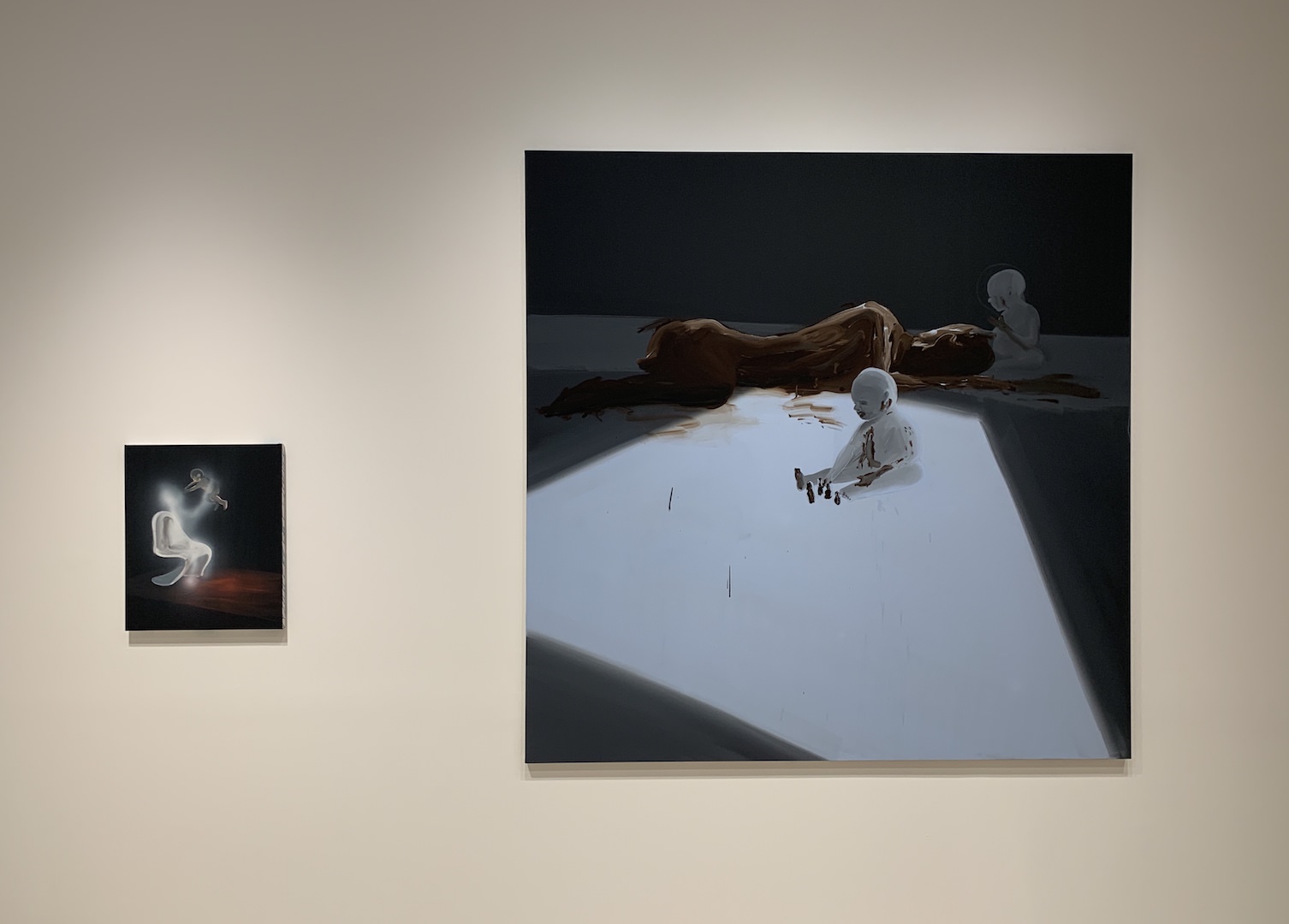
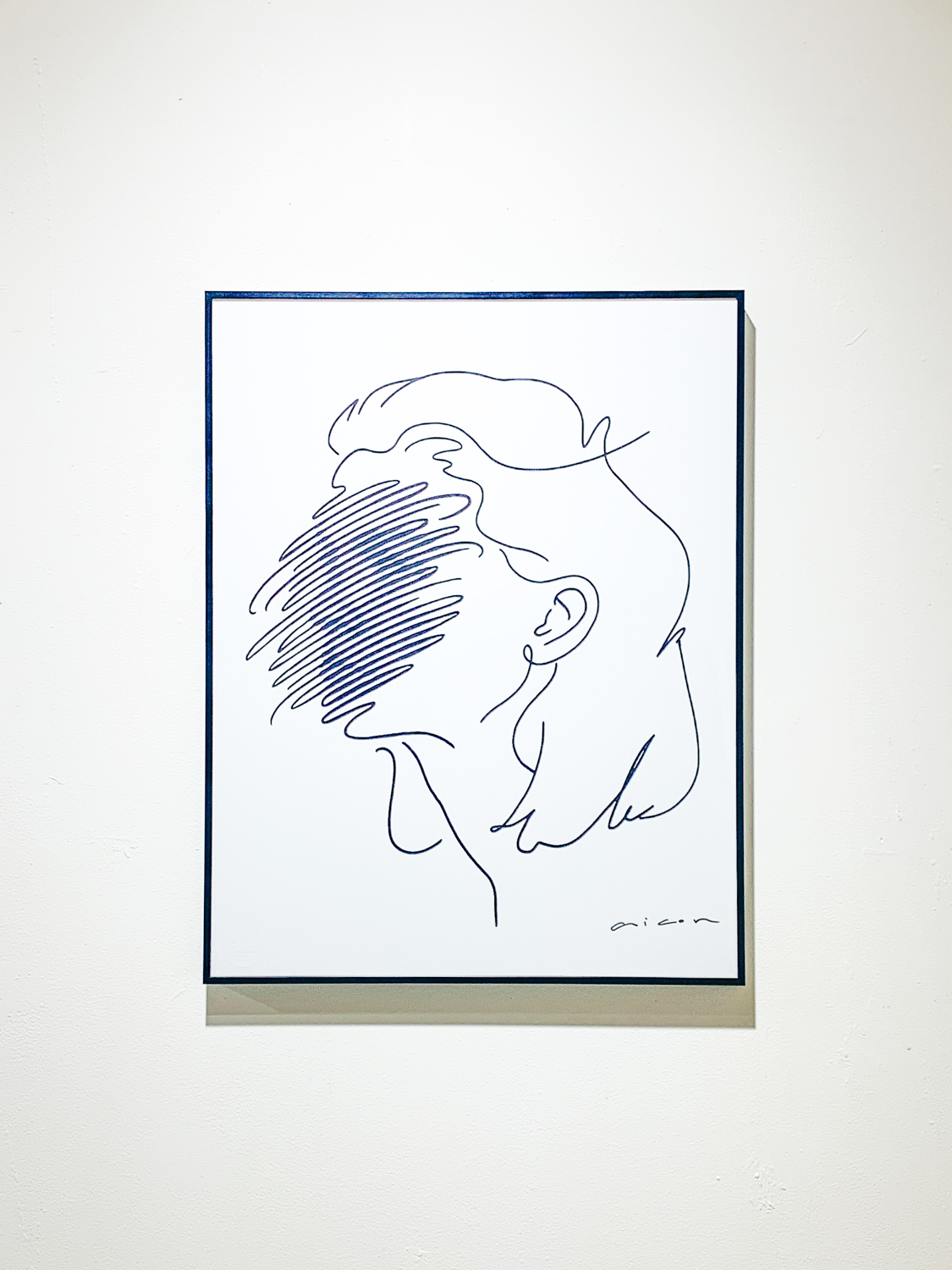
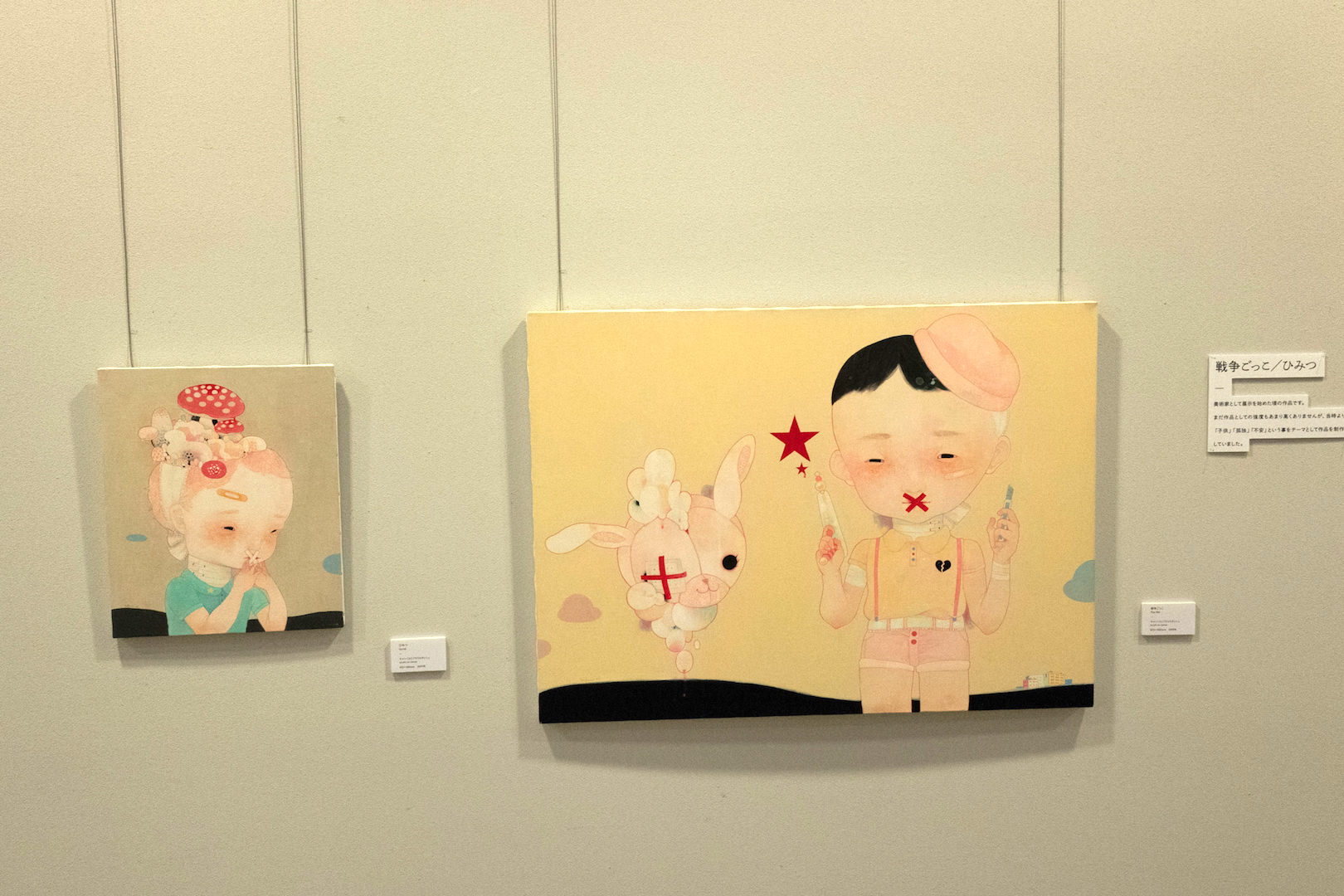
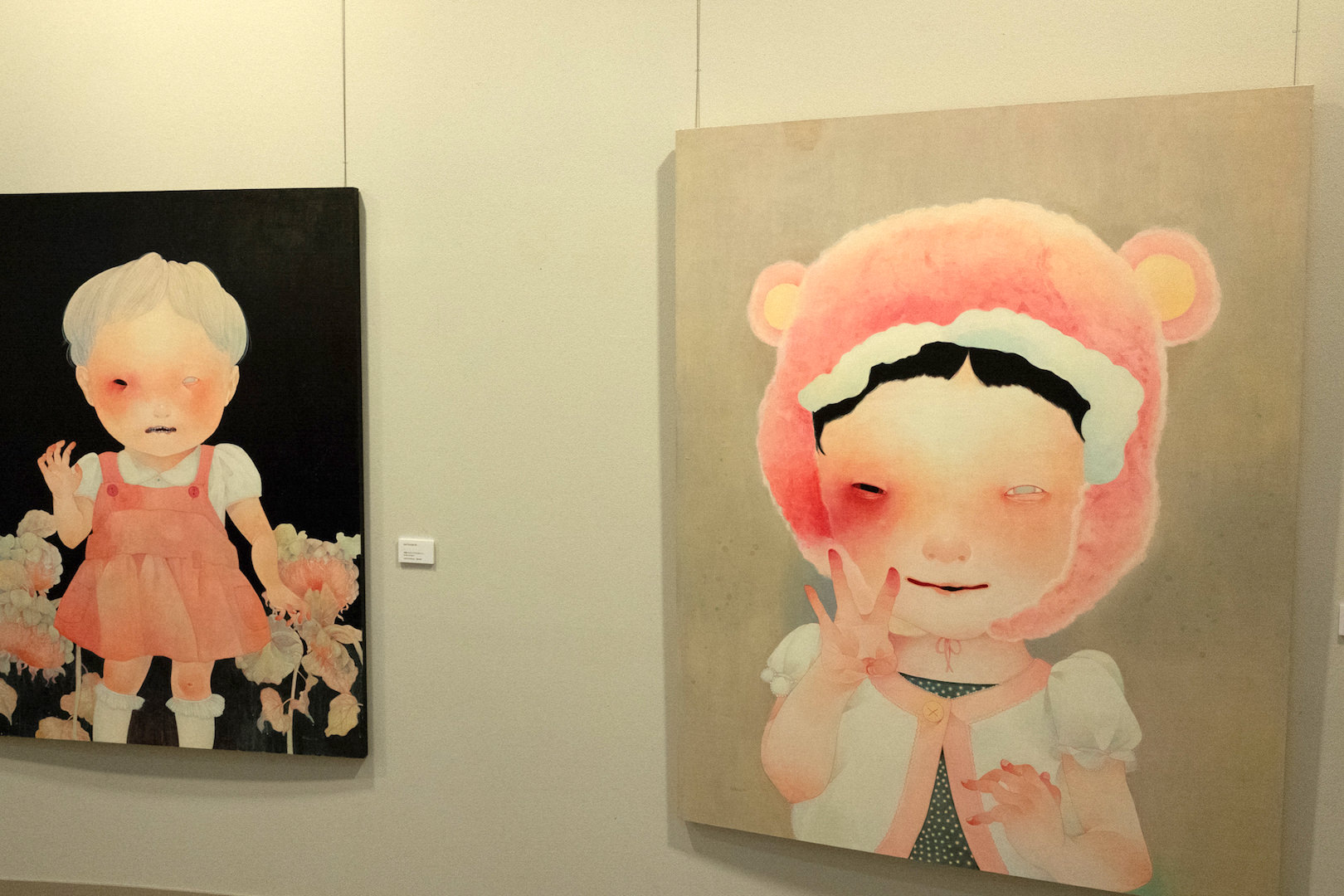
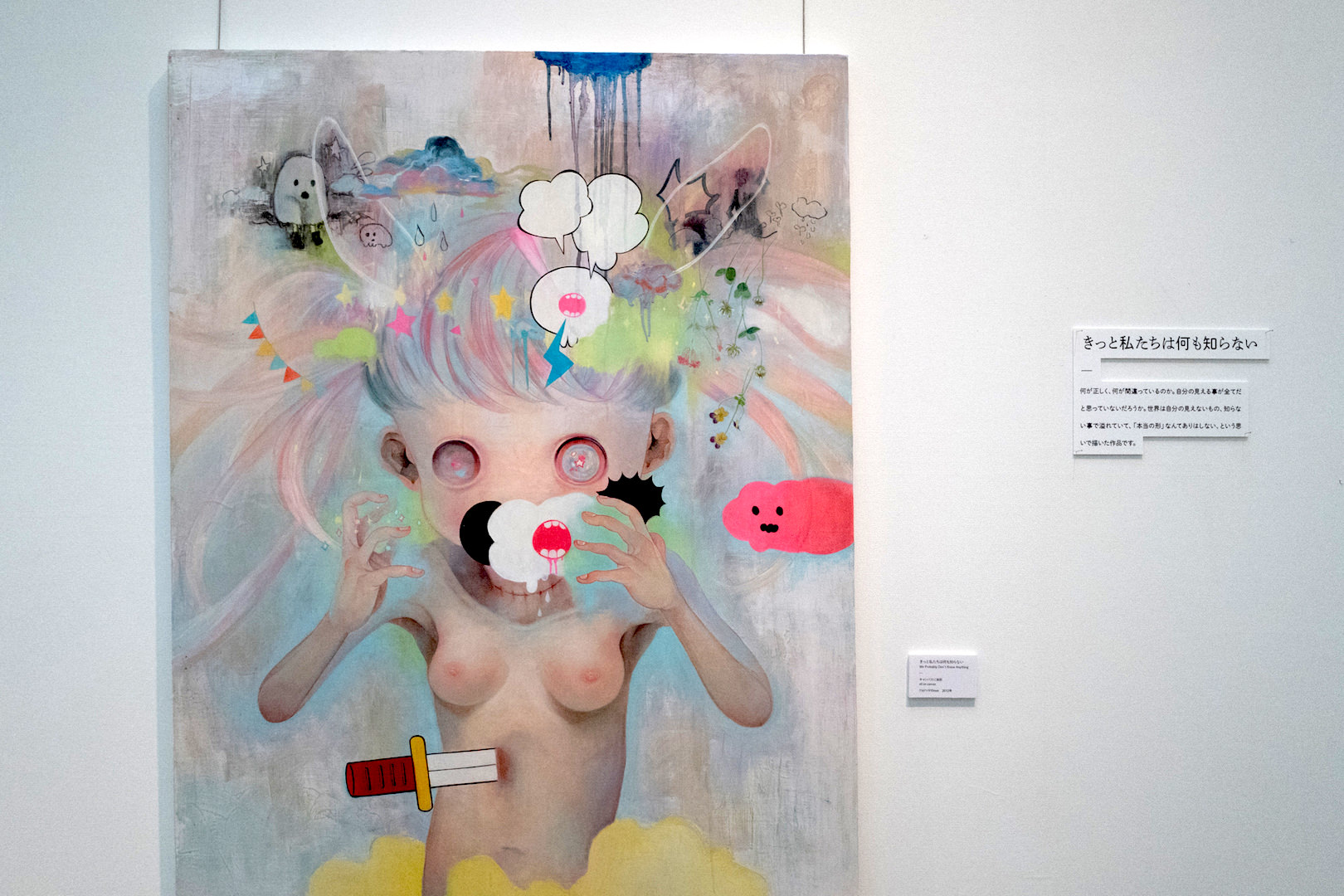
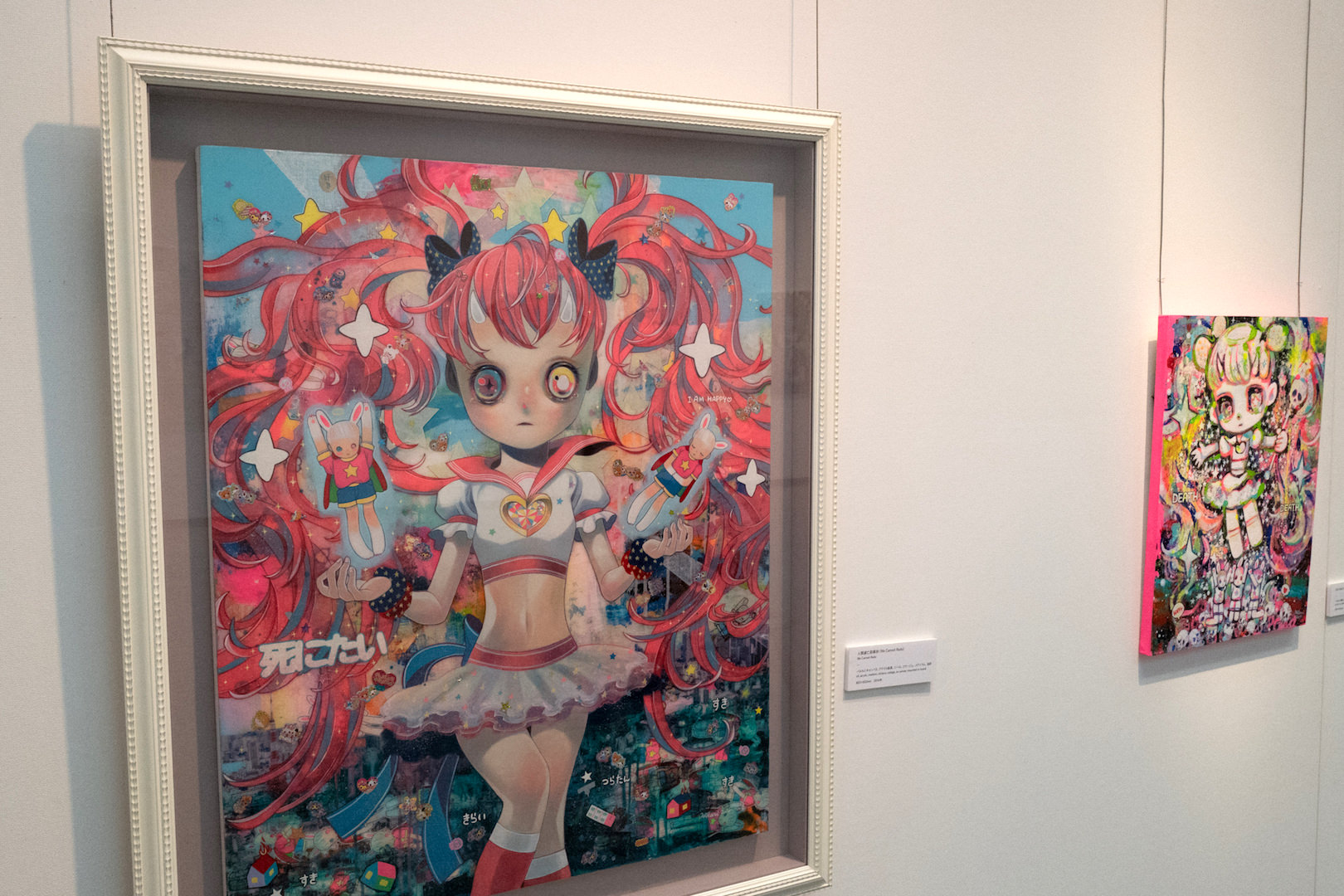
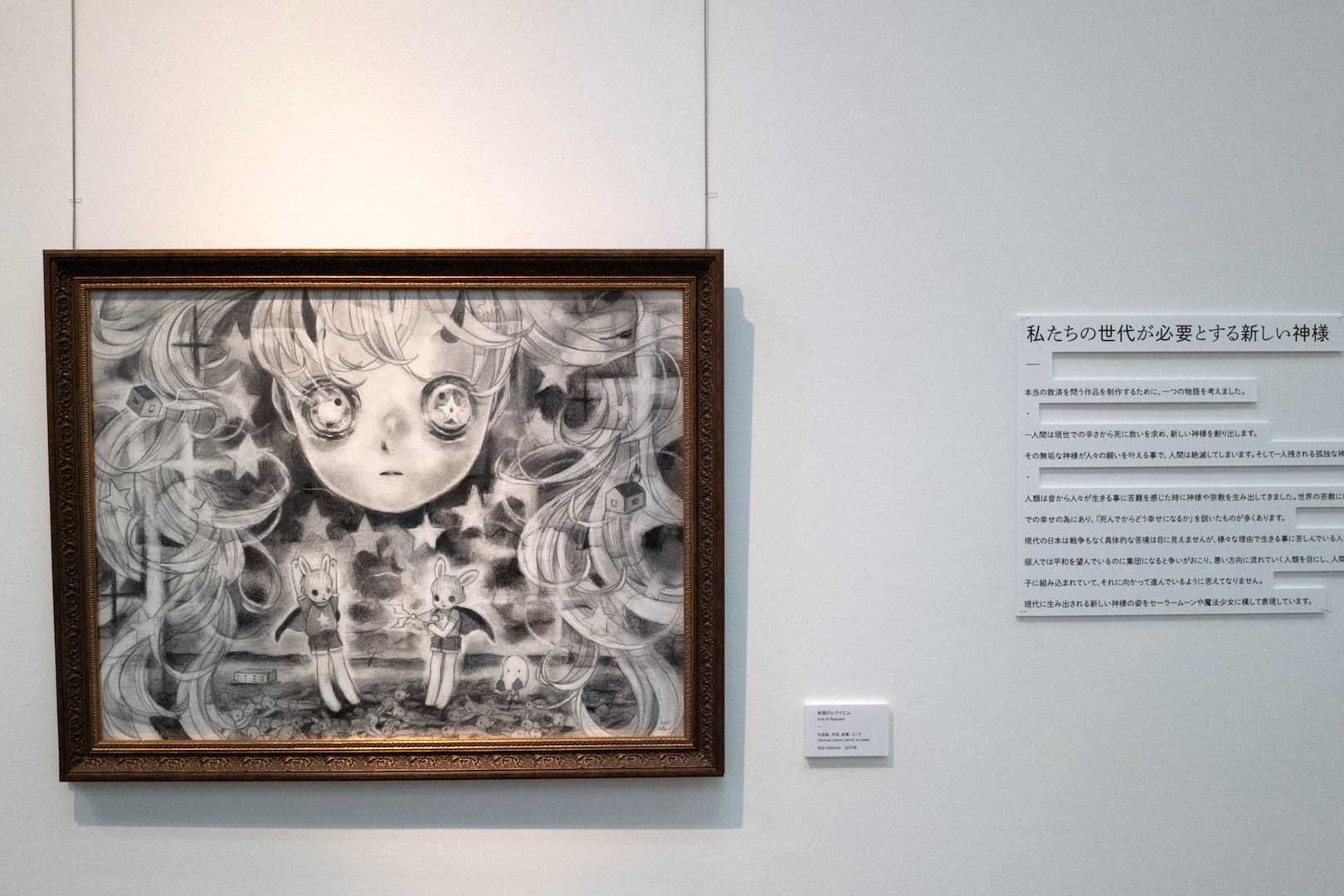
The exhibition features 37 paintings in total, ranging from 2009 works to the newest 2018 pieces. The early works use acrylic gouache, while all works from 2011 onward are oil paintings.
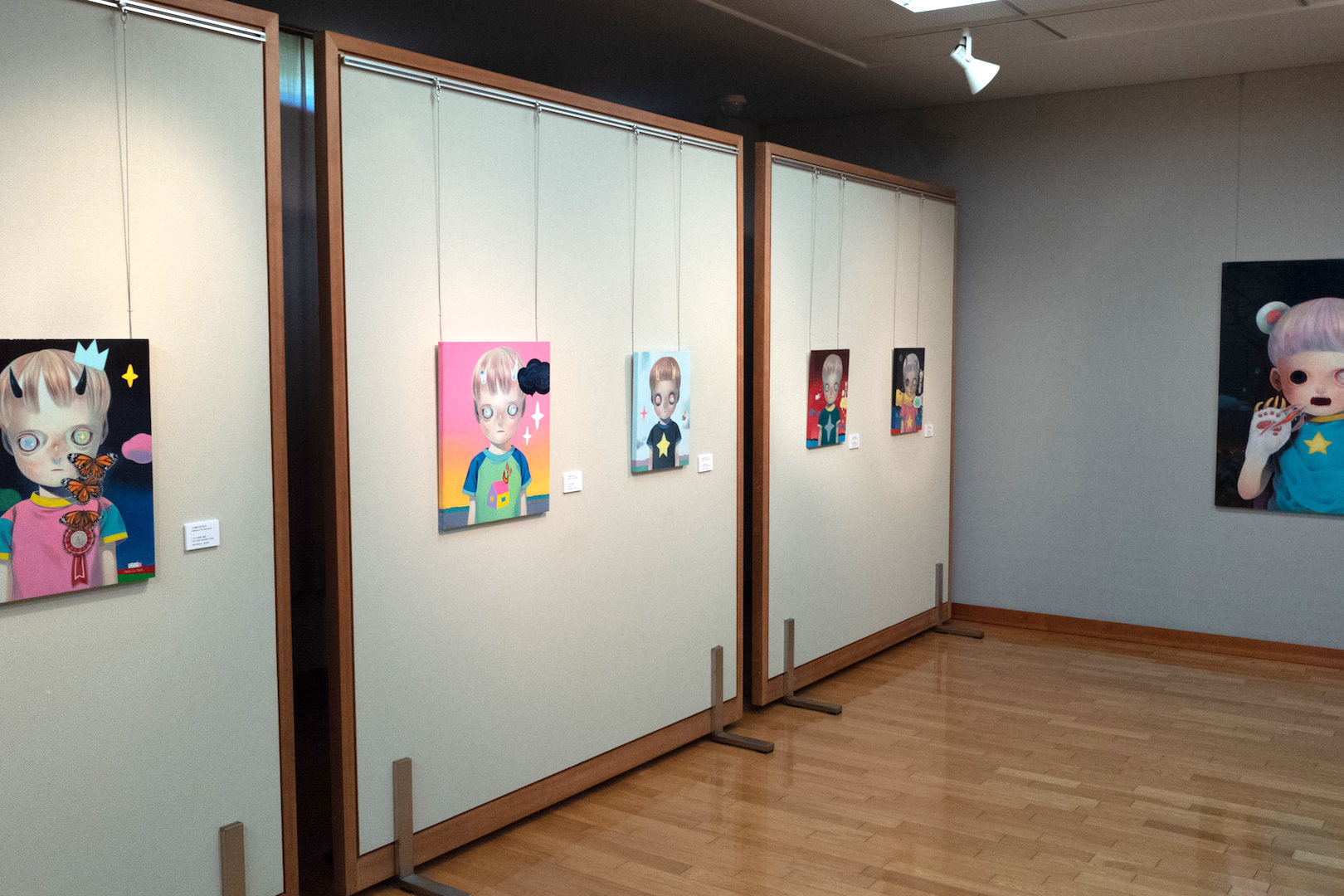
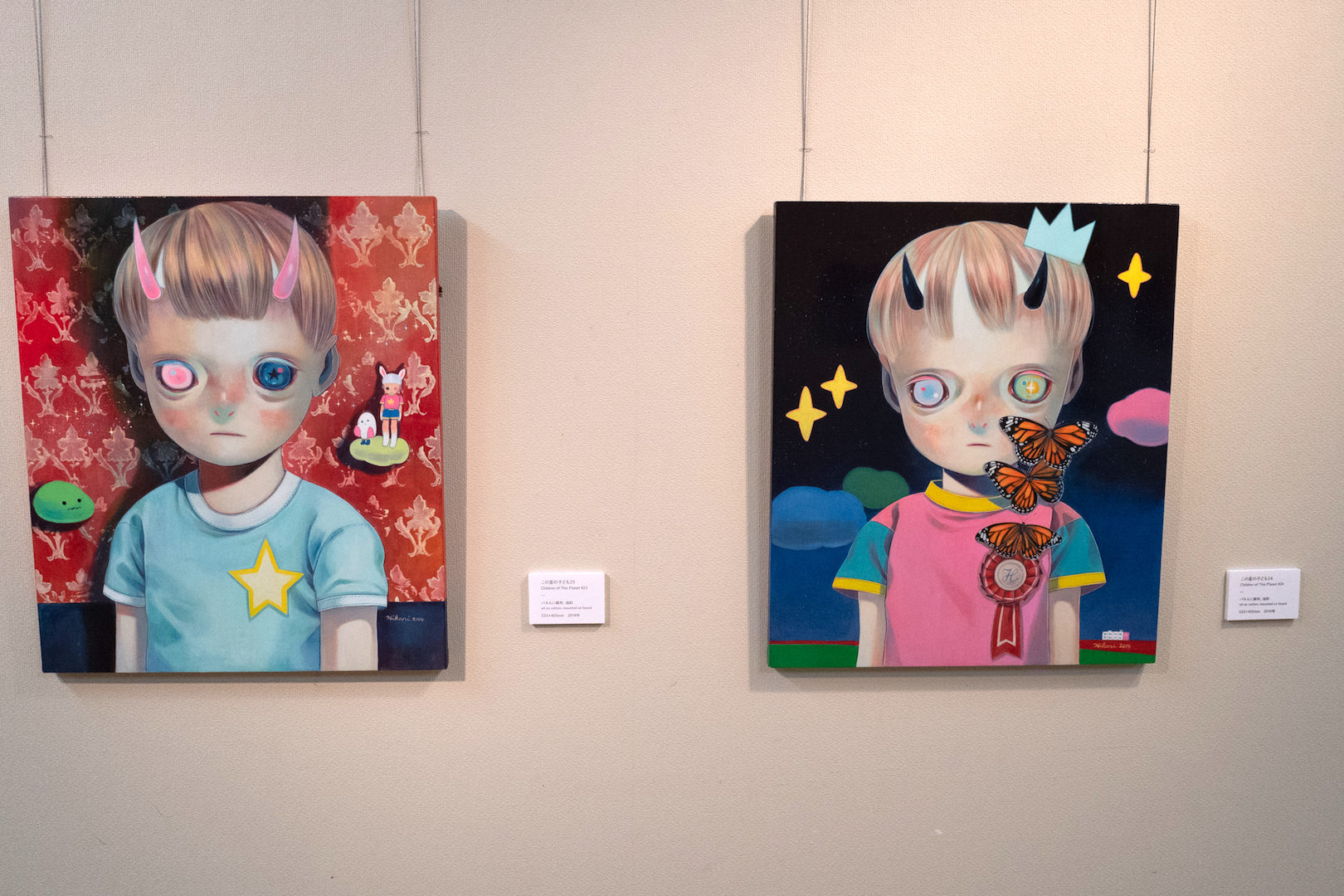
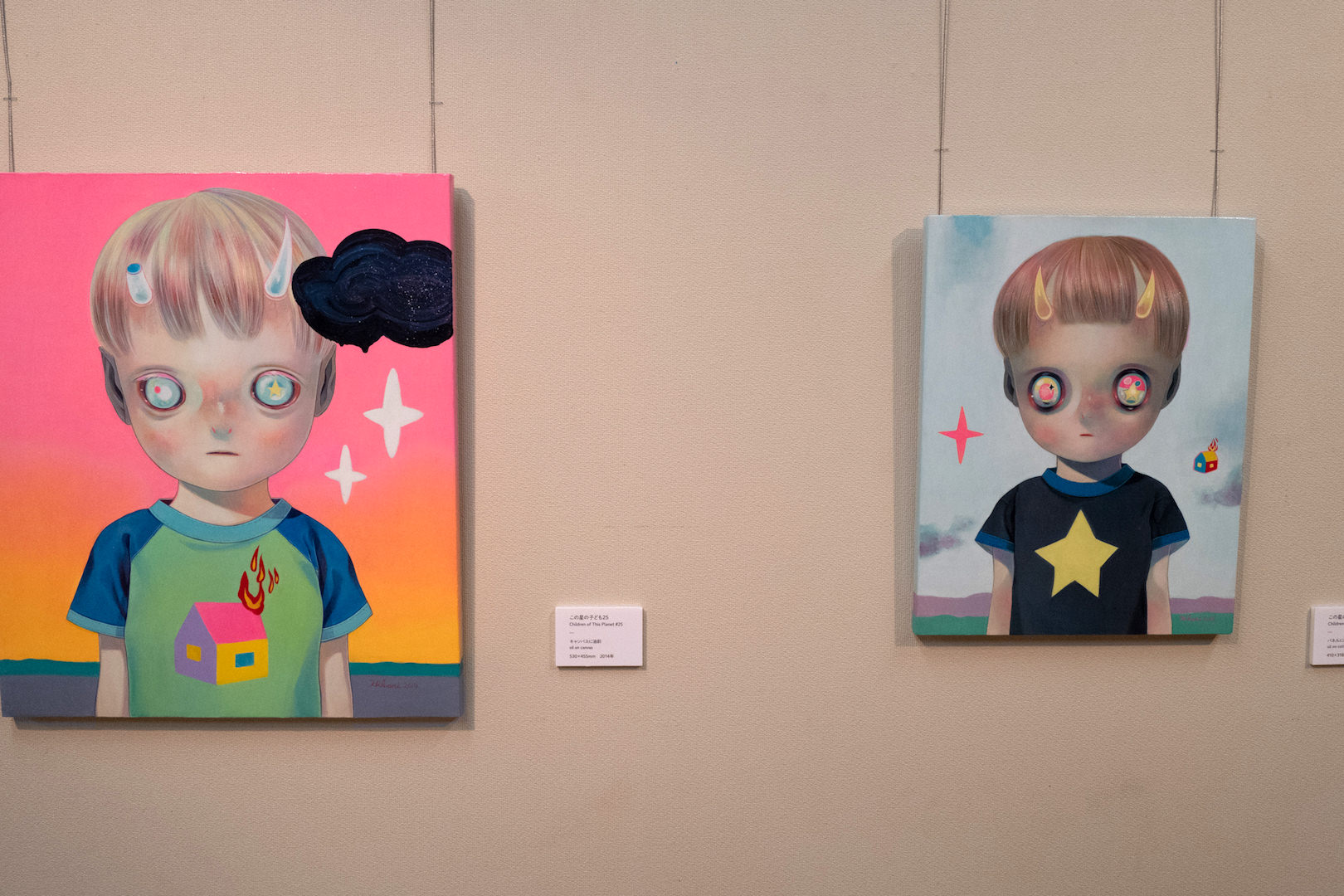
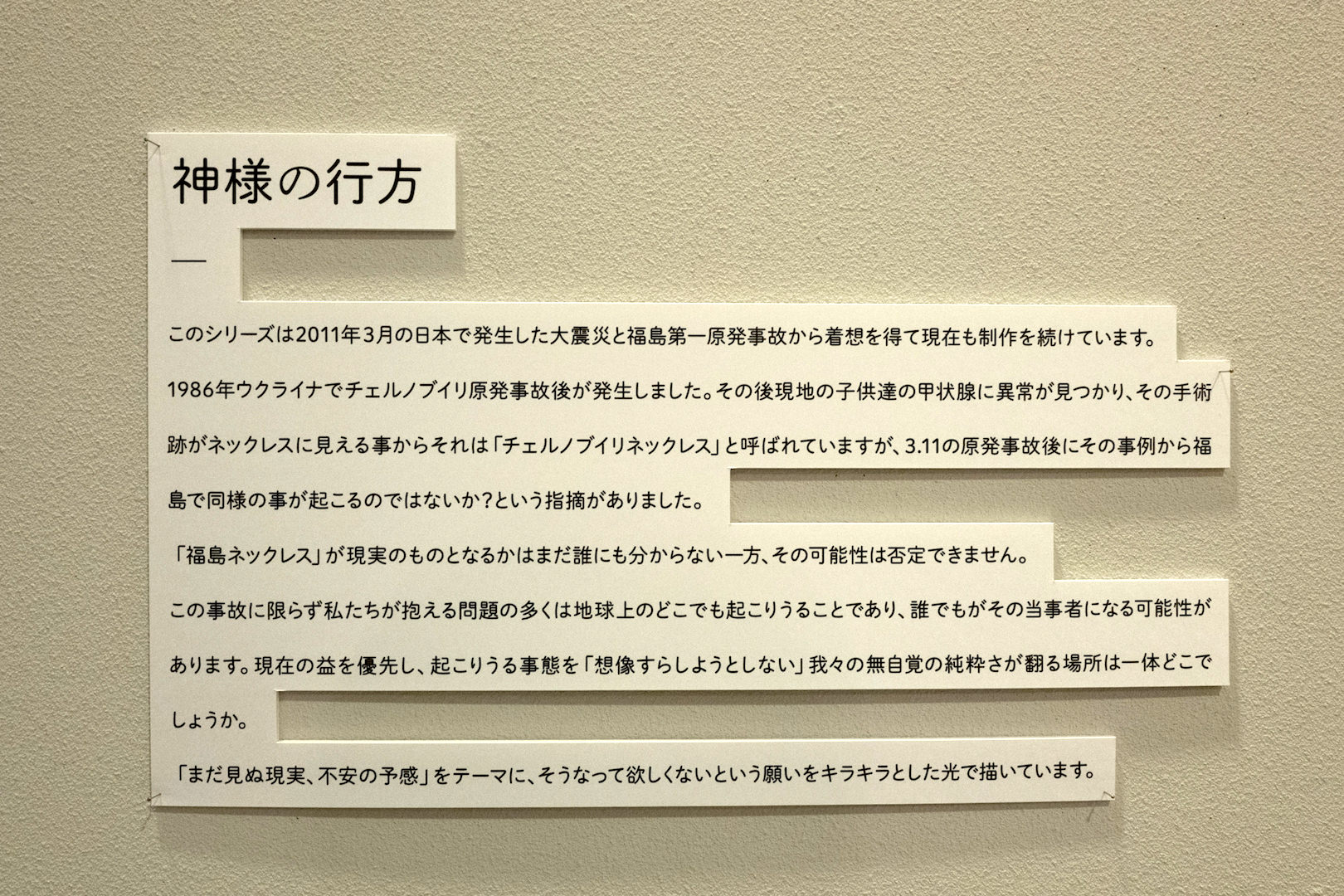
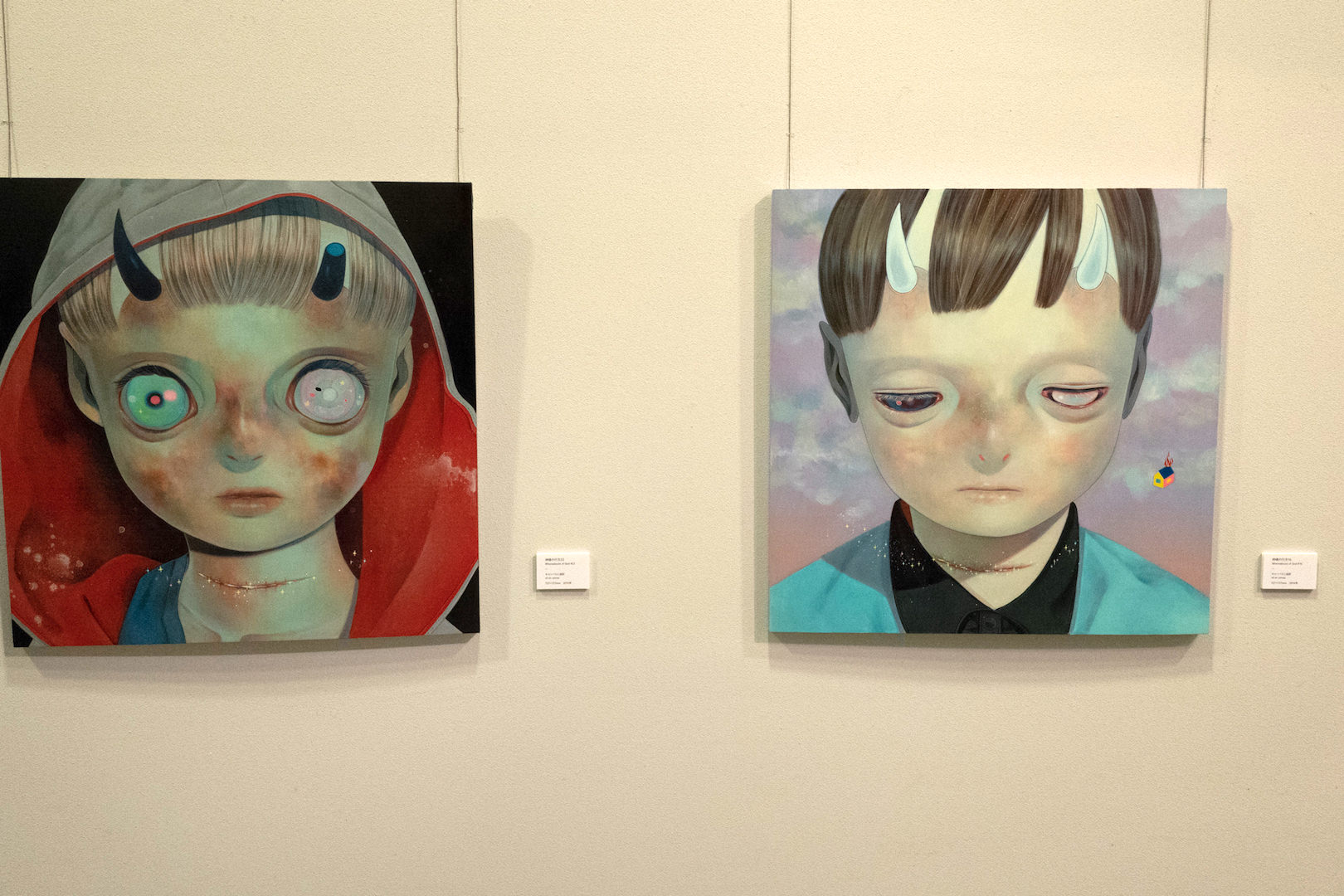
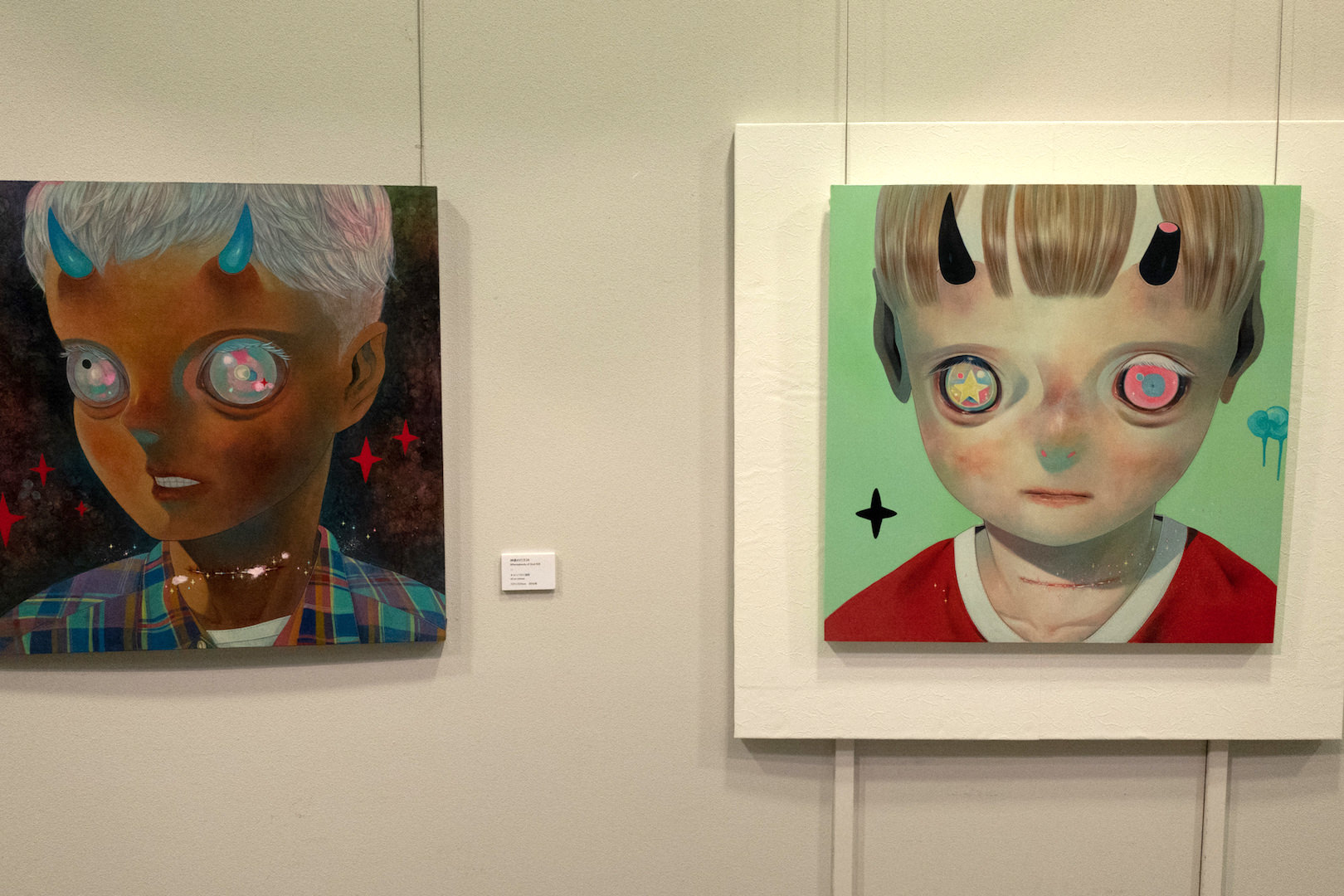
Whereabouts of God
One of Hikari Shimoda’s representative series is titled “Whereabouts of God.” Nine works from this series are on display in this exhibition. Note that only some works belong to the artist herself; thanks to the cooperation of collectors, so many works were gathered here.
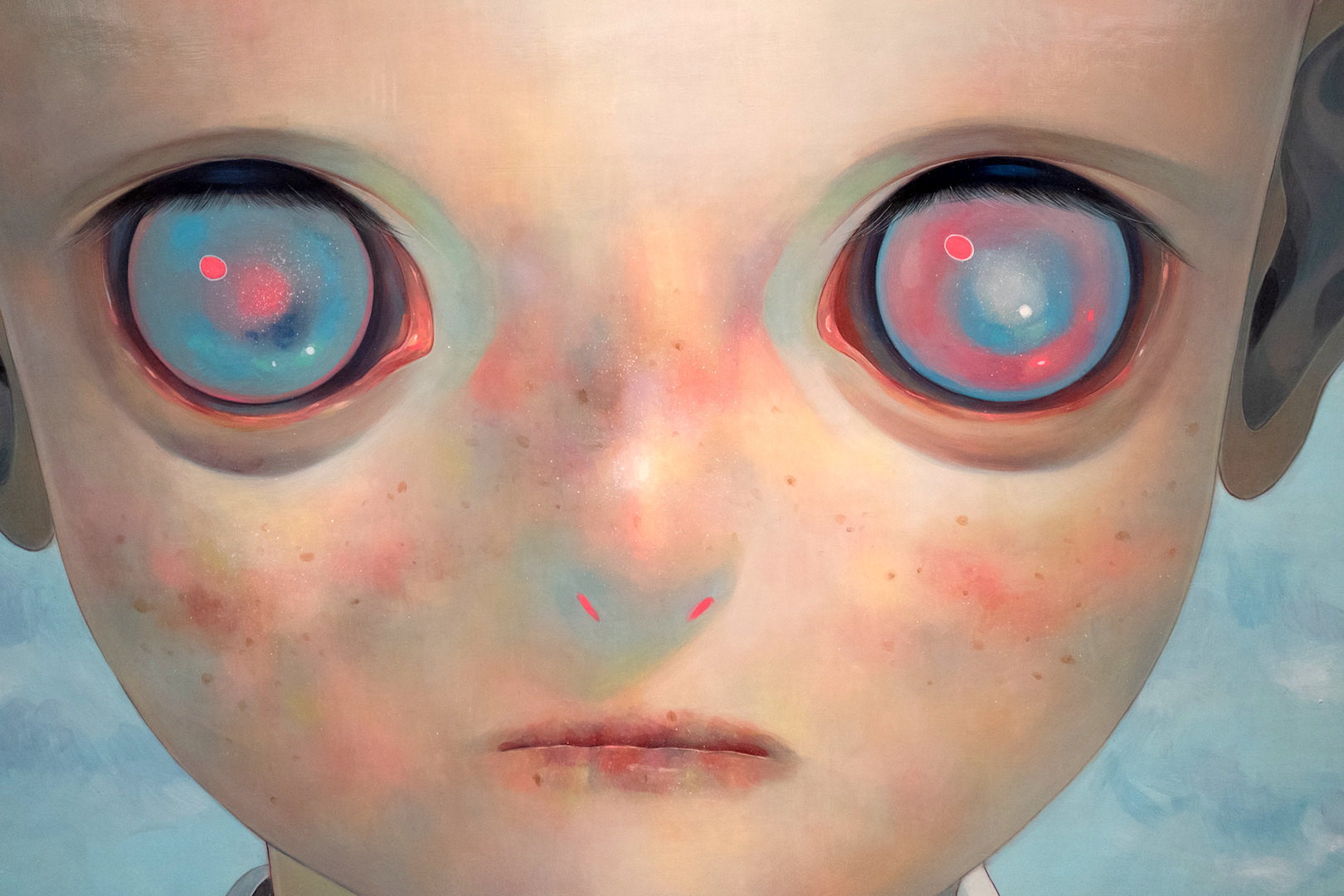
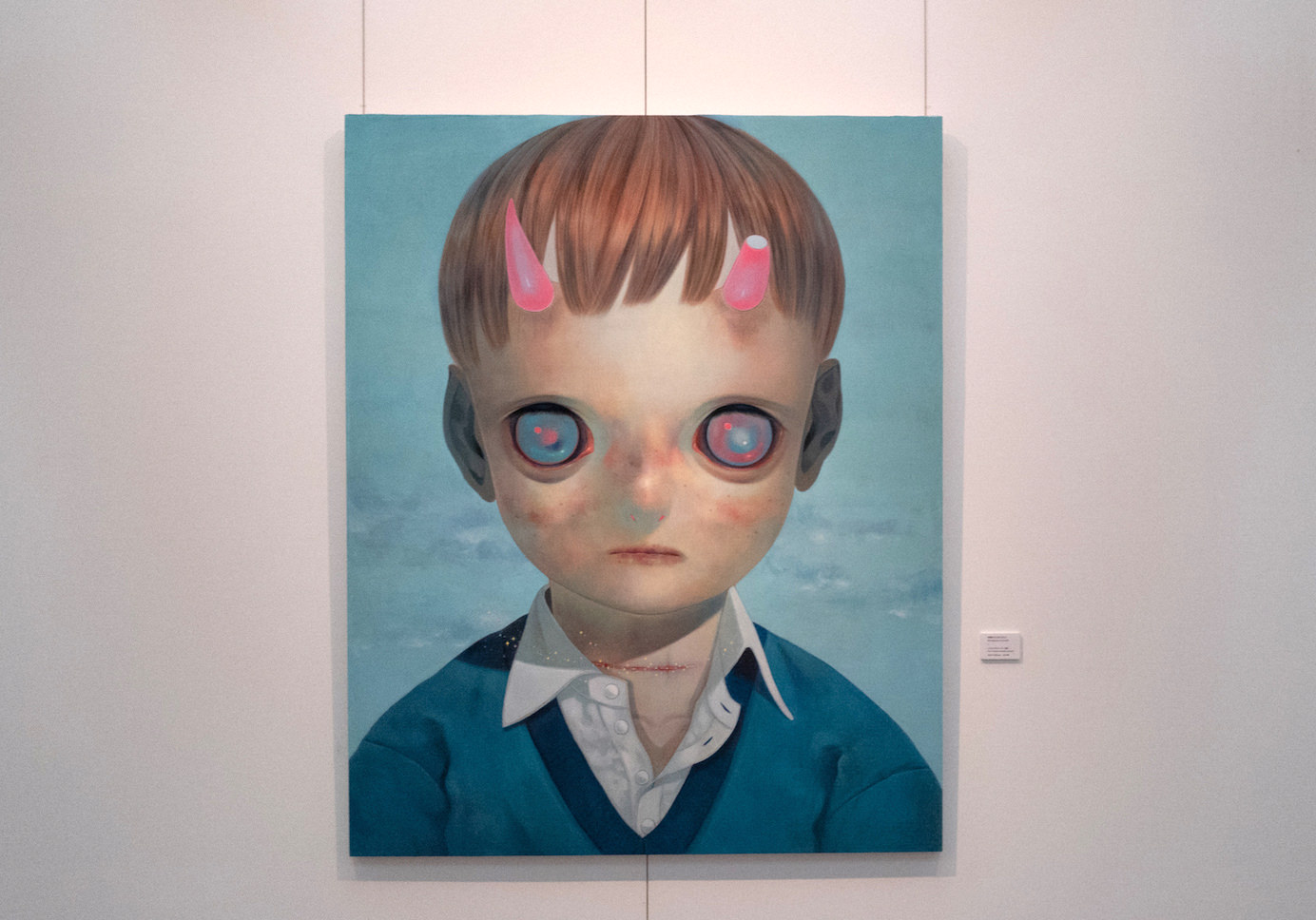
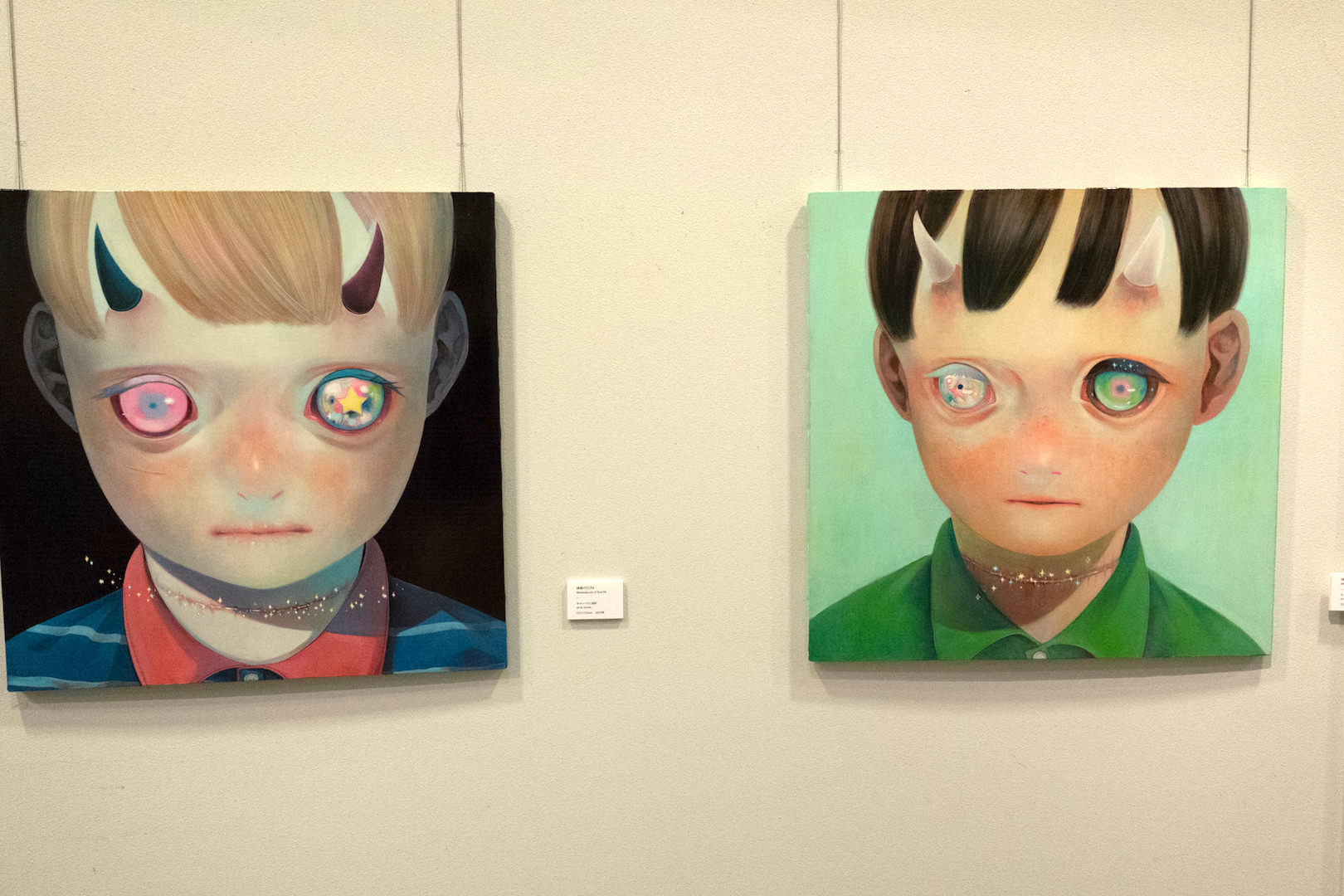
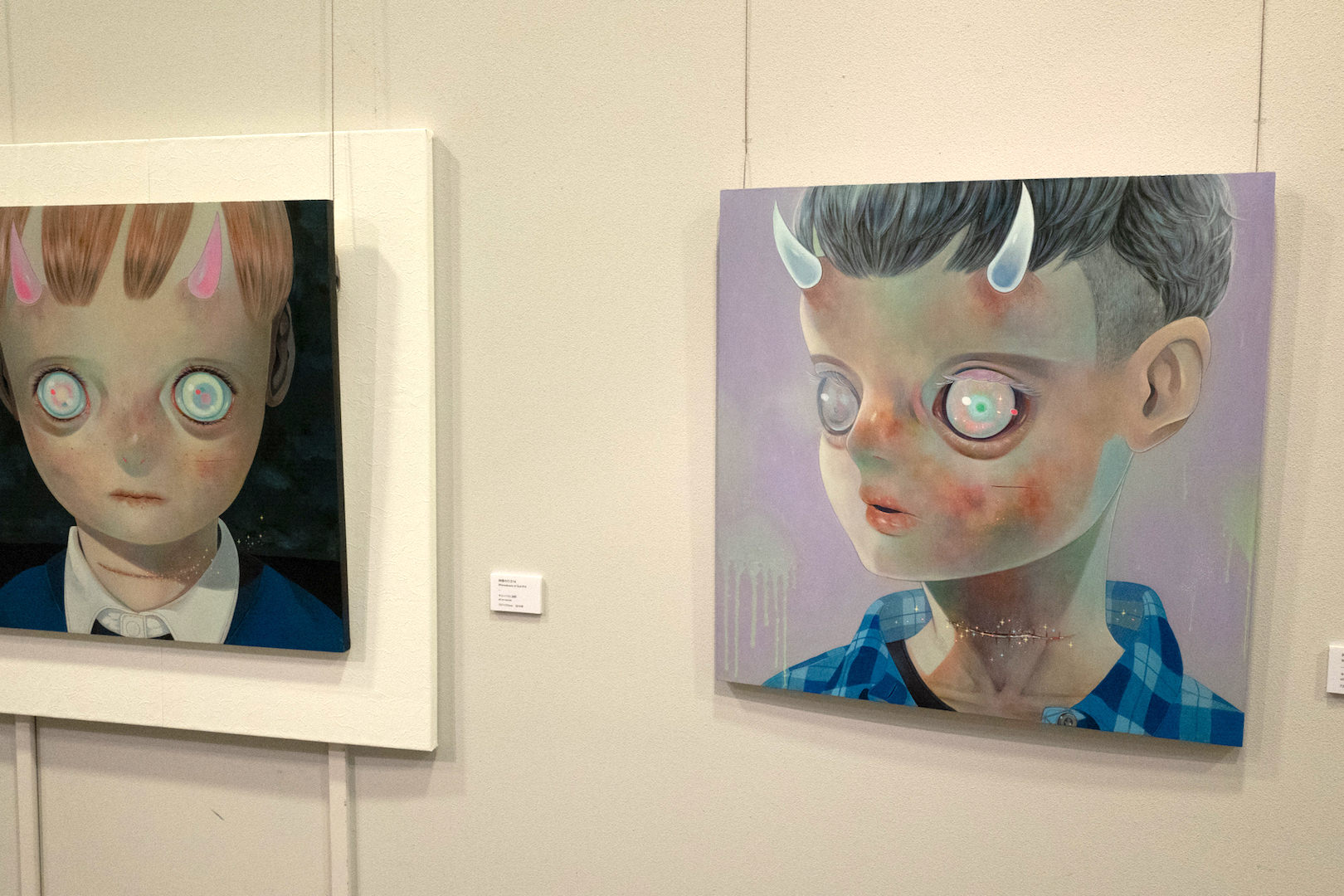
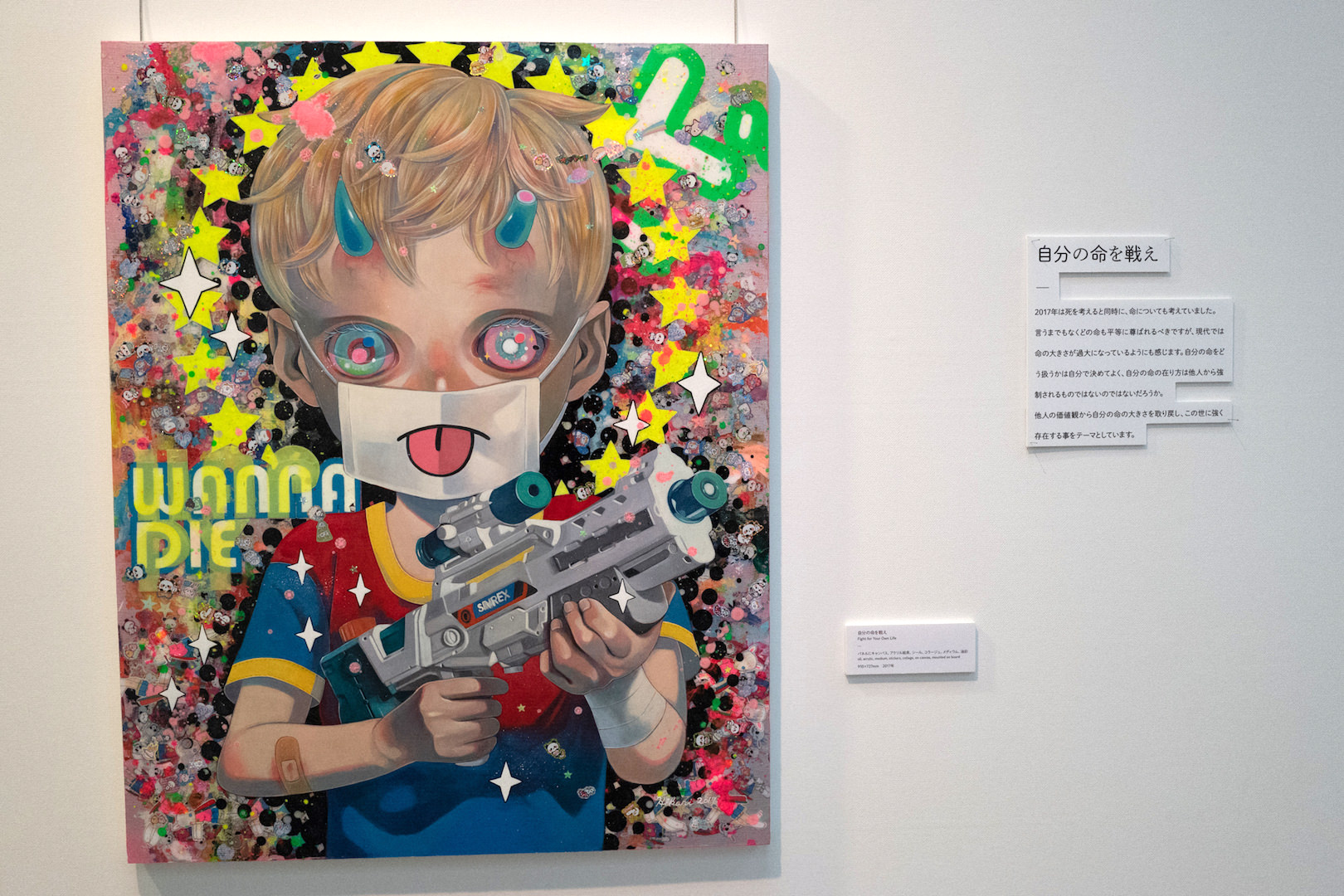
The “Whereabouts of God” series, created from 2012 onward in the aftermath of the earthquake, incorporates the “Chernobyl Necklace” motif and takes as its theme “unseen reality, premonitions of anxiety.”
A distinctive feature is how the surgical scars carved in a necklace shape are painted like sparkling rays of hope. Up close, the beautiful shimmer is delicate and dazzling, and it seems to connect to the expressionless eyes — making you imagine the futures of these children. A strong energy seemed to emanate from the works as a whole.
Exhibited Works
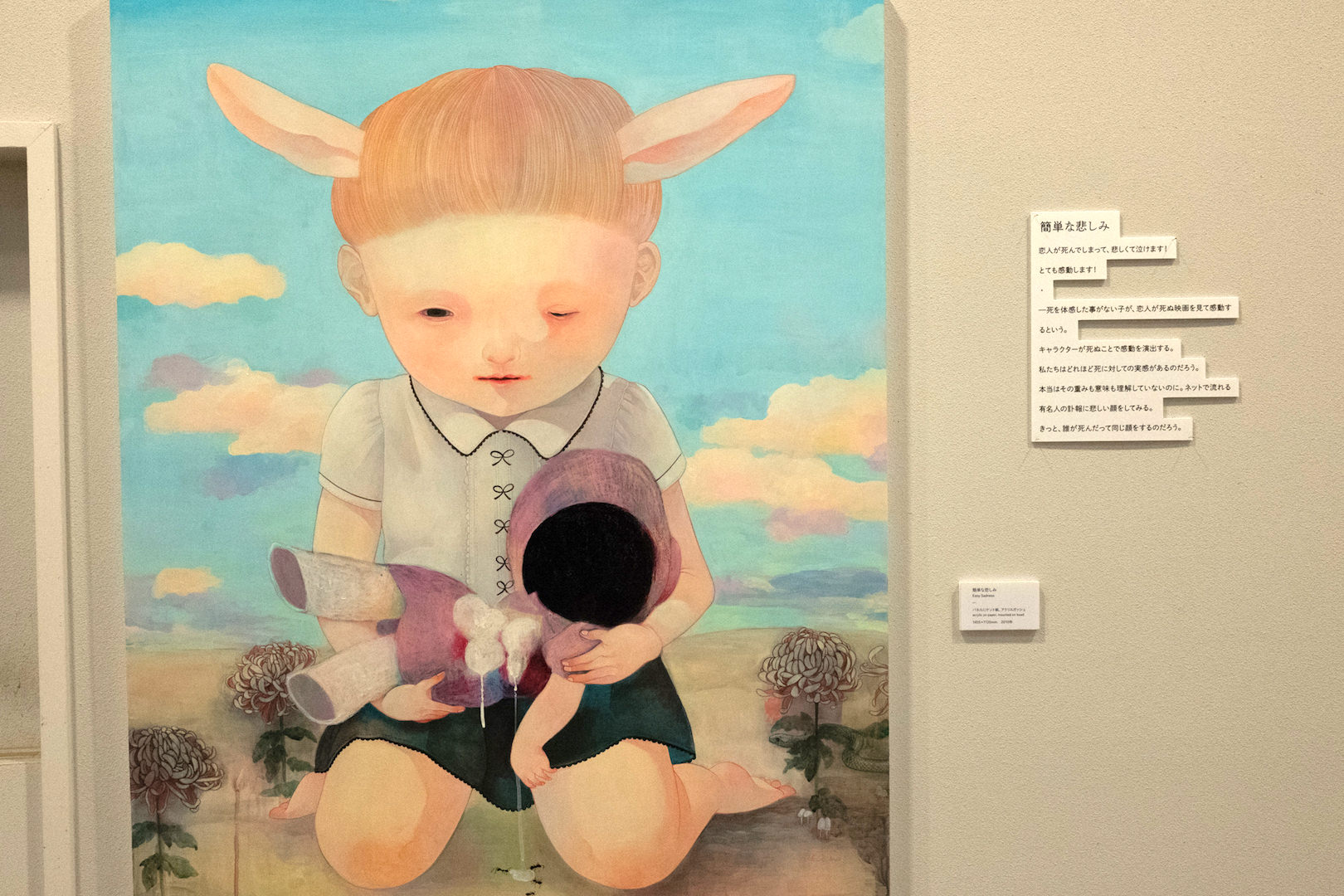
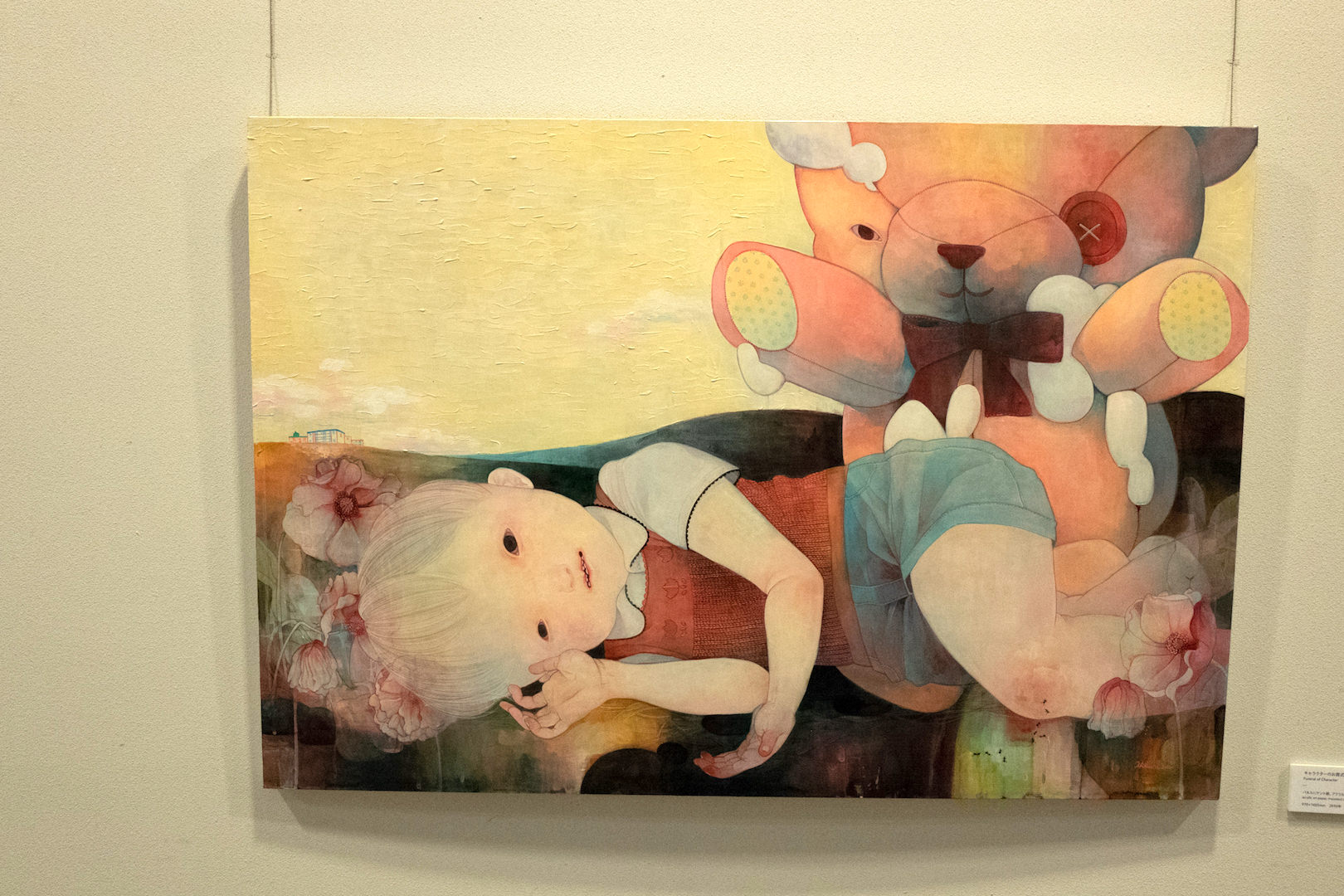
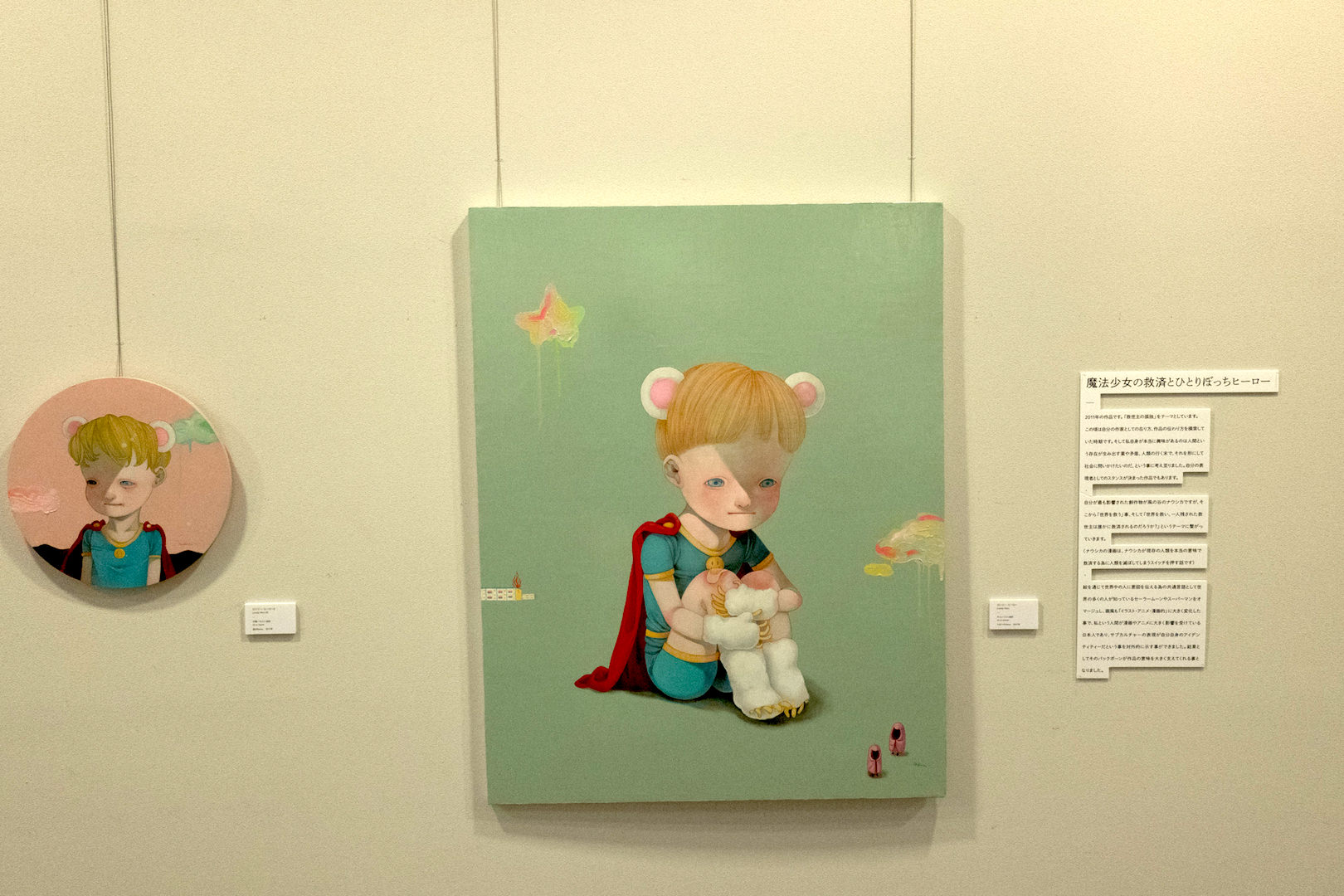
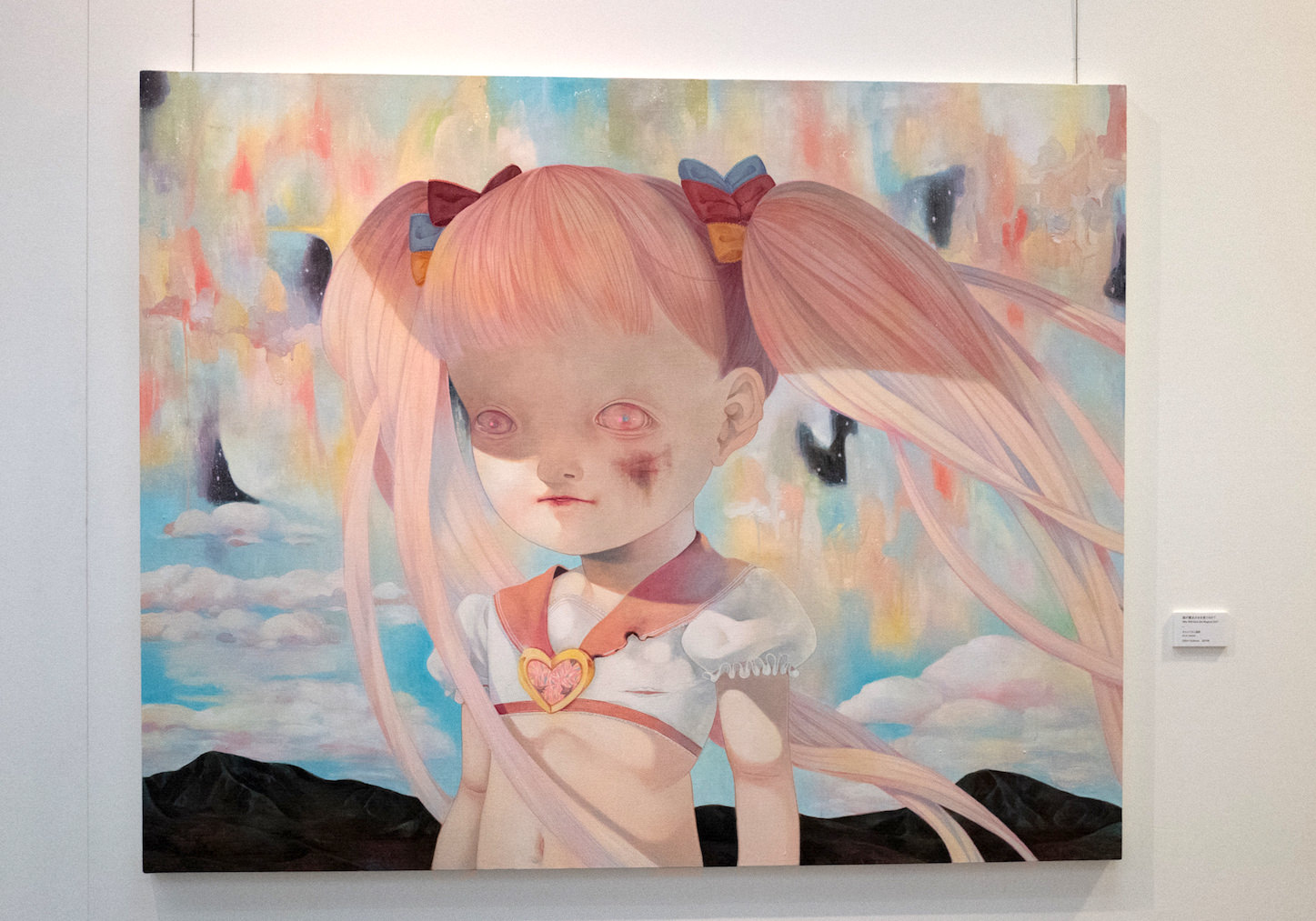
Catastrophe of Death and Rebirth
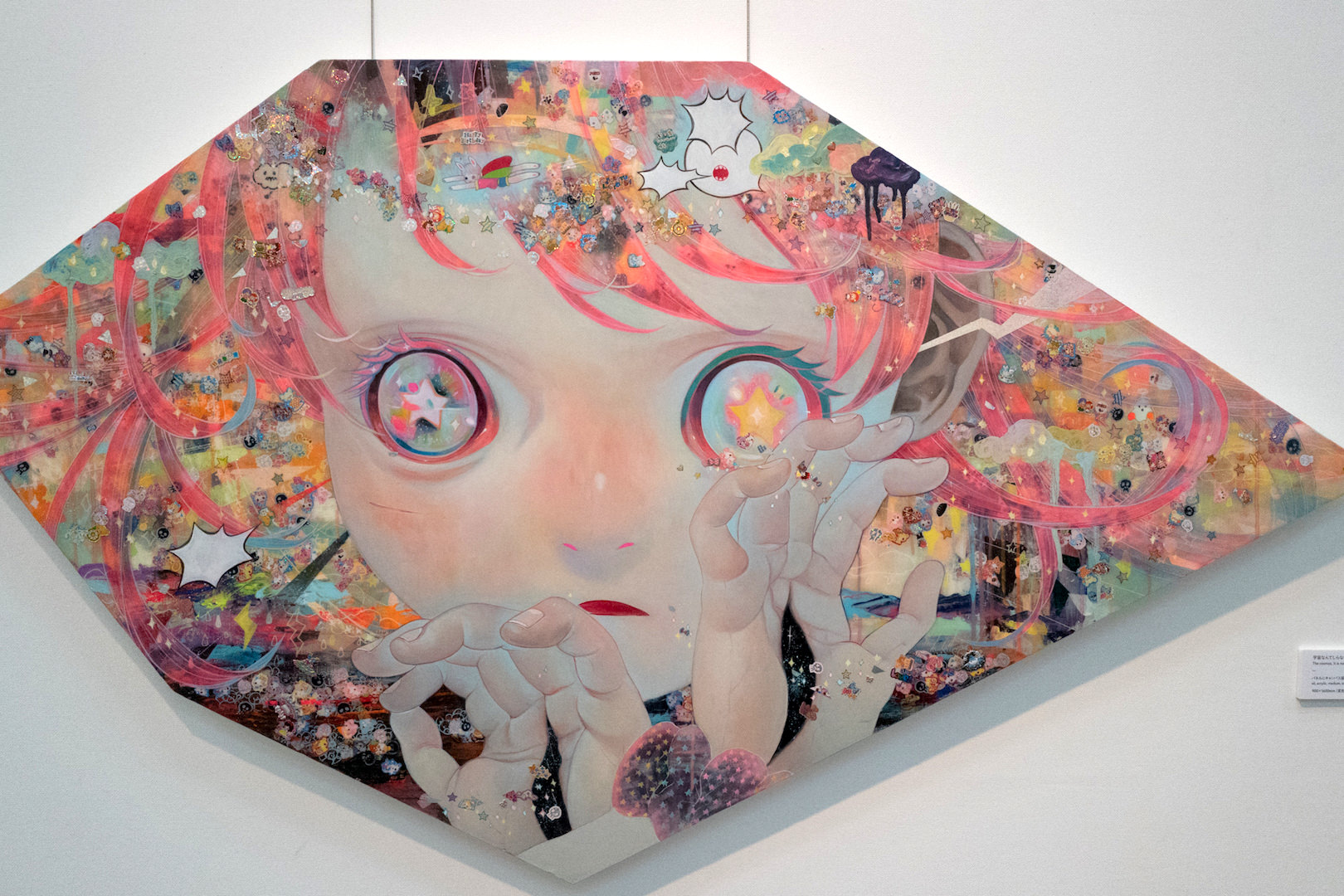
“Catastrophe of Death and Rebirth” — the largest work, and the title piece of the exhibition — was displayed in the center of the museum’s most prominent hall.
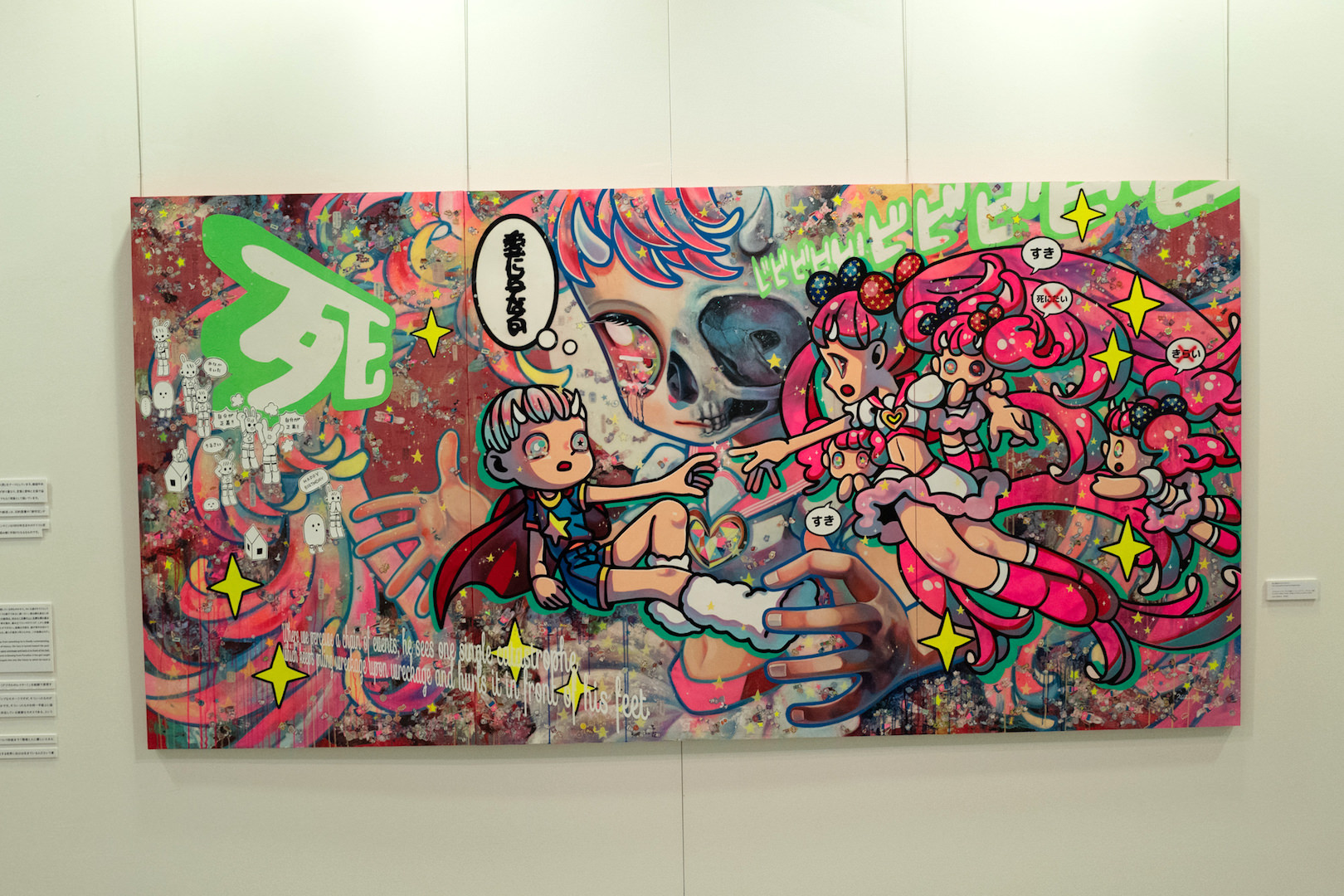
Conscious of the digital age, the artist concentrated on layering upon layering in this work. At first glance it looks like a digital piece made on a PC, but it is in fact a physical work completed over time by carefully arranging countless objects.
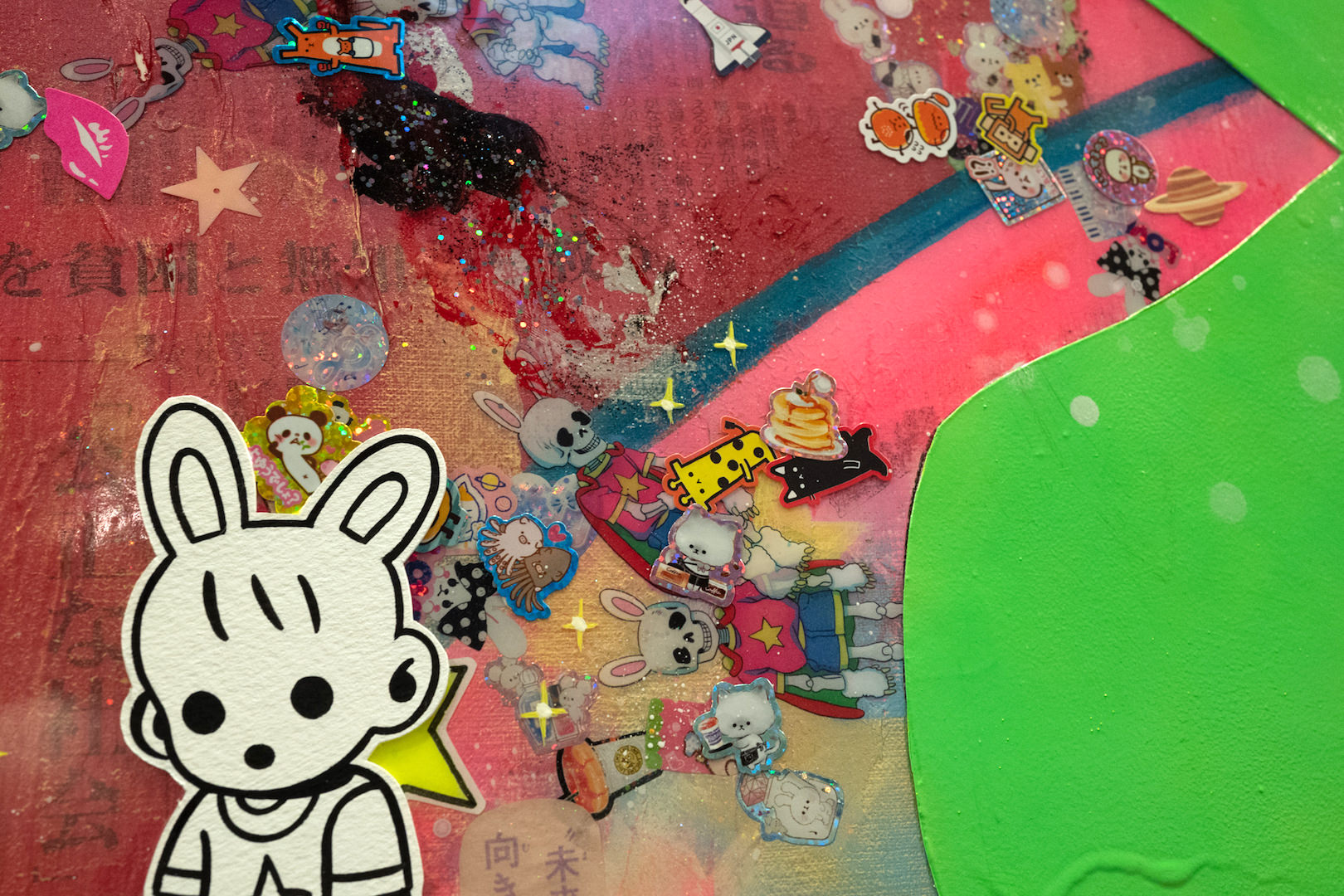
The artist appears to place great value on the textures that remain on the canvas surface. Being able to enjoy these up close, work by work, is one of the merits of viewing originals directly.
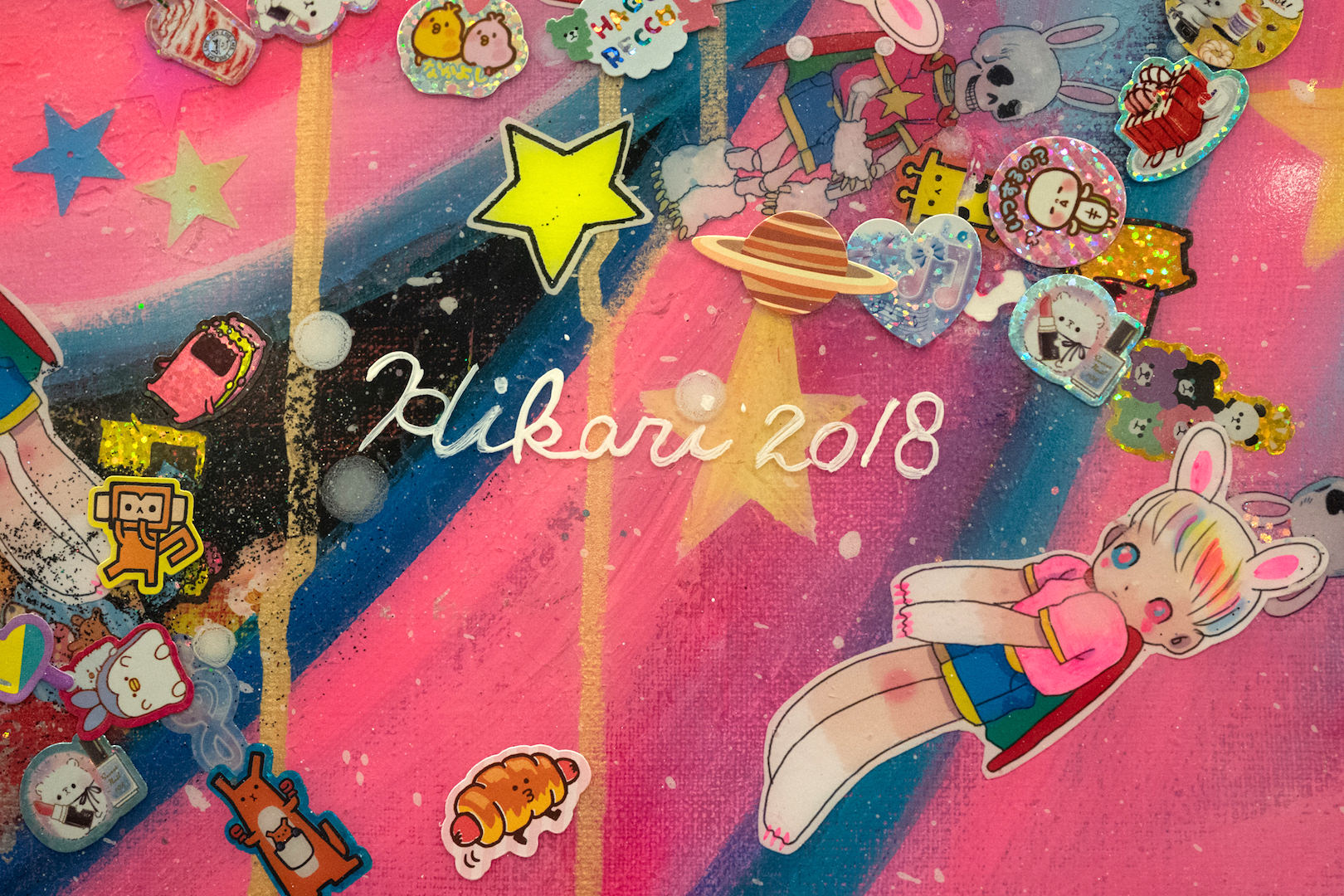
“Layering” carries meanings beyond simply piling on paint — it also connects to the layering of light and darkness that exists in reality. Rather than a one-dimensional way of seeing things, the work seems to project the meaning that reality is composed of the accumulation of various elements.
Gallery Talk
The “Gallery Talk” held on the day I visited flowed smoothly, covering the artist’s own background, the state of the contemporary art scene, and explanations of her works.
From the story of how she moved from illustration into contemporary art, to answering questions from attendees, her attentive way of speaking left a strong impression.
The wide range of visitors — local elderly, children, young women who had traveled from far away, middle-aged attendees — spoke to the breadth of generations that resonate with her work.
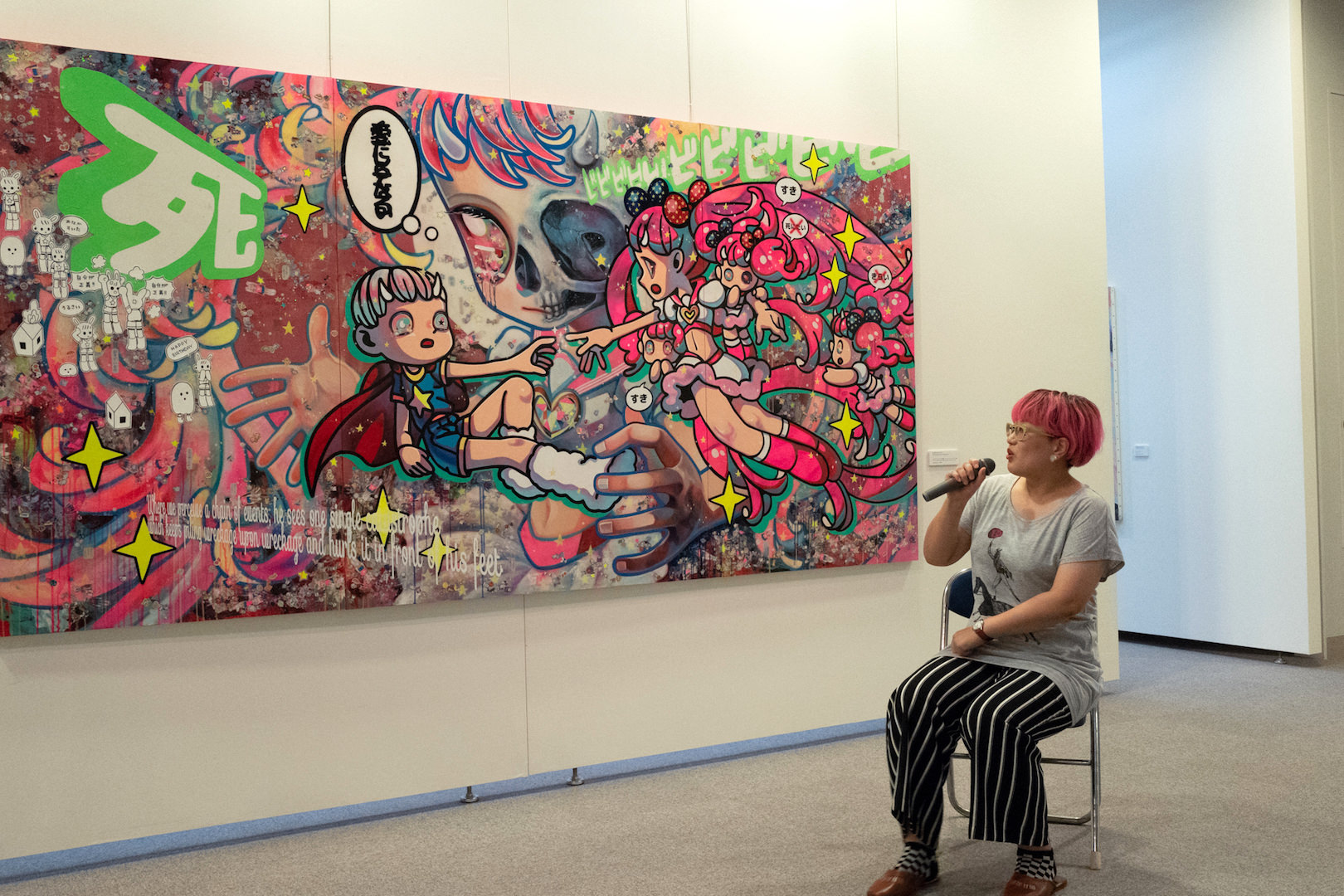
I use the universal problems that society holds as my motifs.I believe that including the message I want to convey on top of a manga-like approach makes it come across in a more serious direction.
Summary
Amid all the discussion, what left the strongest impression was how she seemed to accept “being Japanese” and “being influenced by manga and anime” not so much as weapons but as premises.
Perhaps it is precisely because she has this “natural” attitude — accepting her own environment and skills, running alongside contemporary society without resistance, and sensing things with her own eyes — that she is recognized worldwide today.
And as I watched the heartwarming scene of her giving autographs to visiting children, I left the venue feeling that “Asahi Village,” her hometown and creative base, was truly the most fitting location for this exhibition.