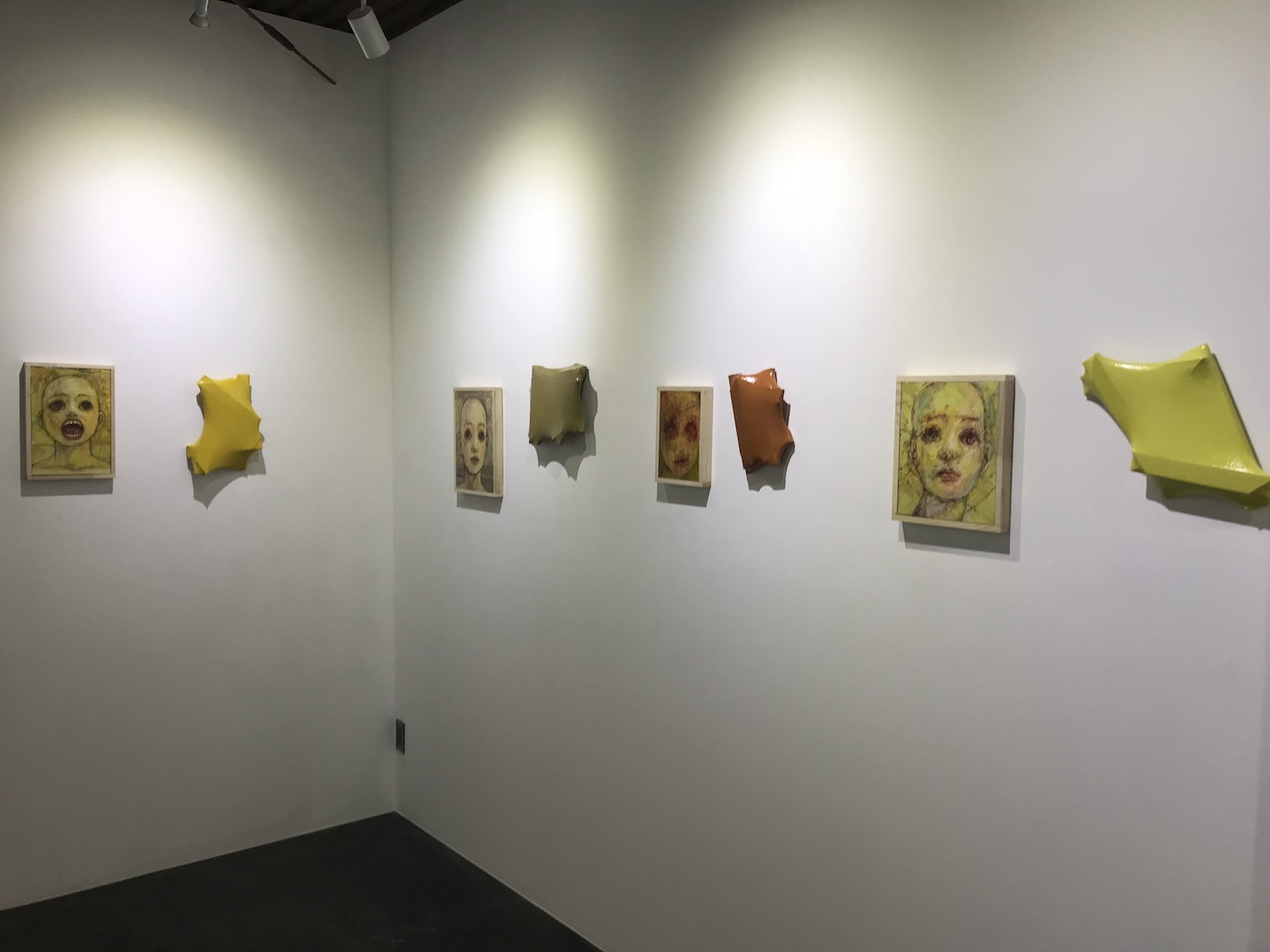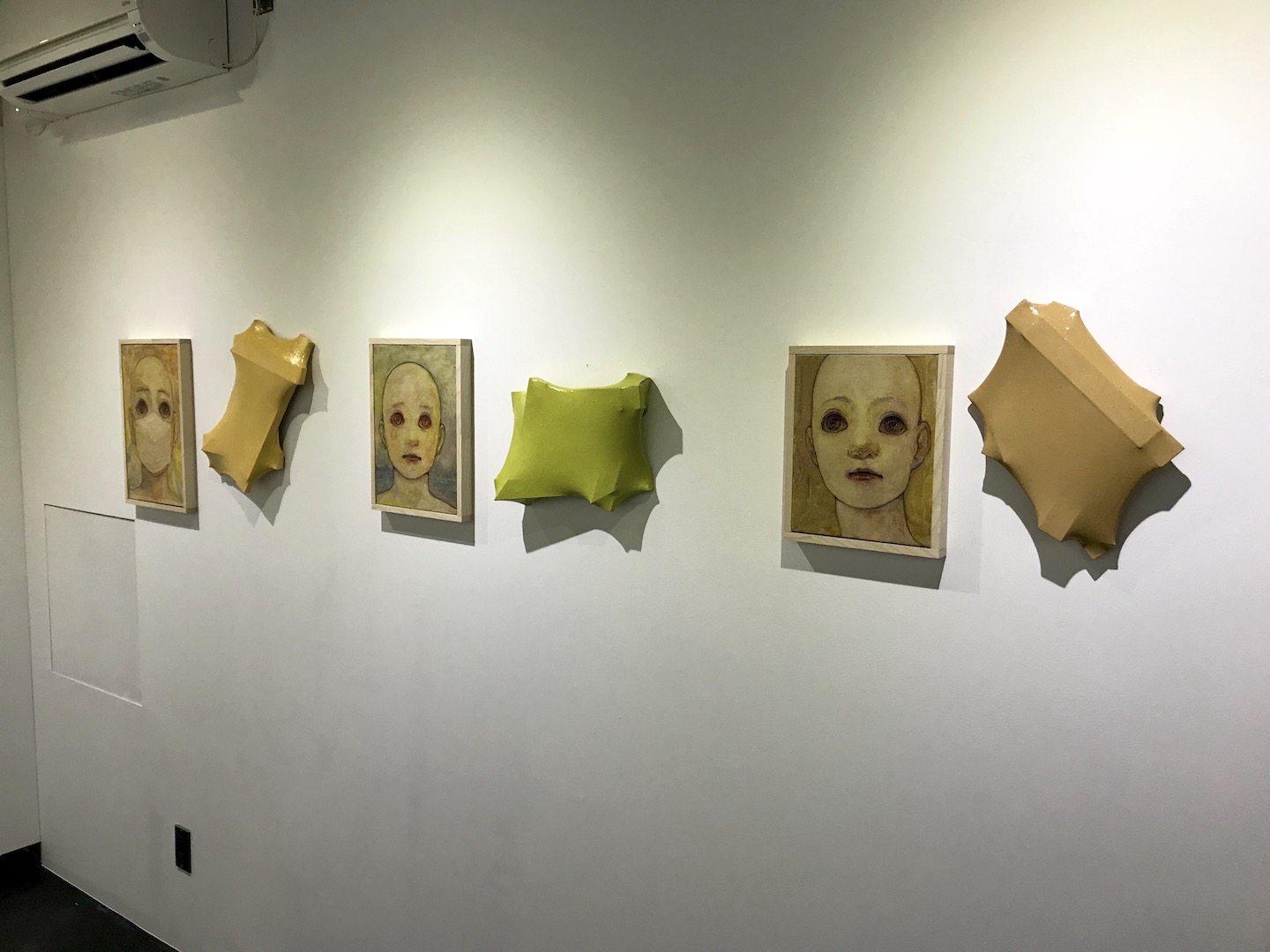
I visited the gallery “TAKU SOMETANI GALLERY” in Asakusabashi.
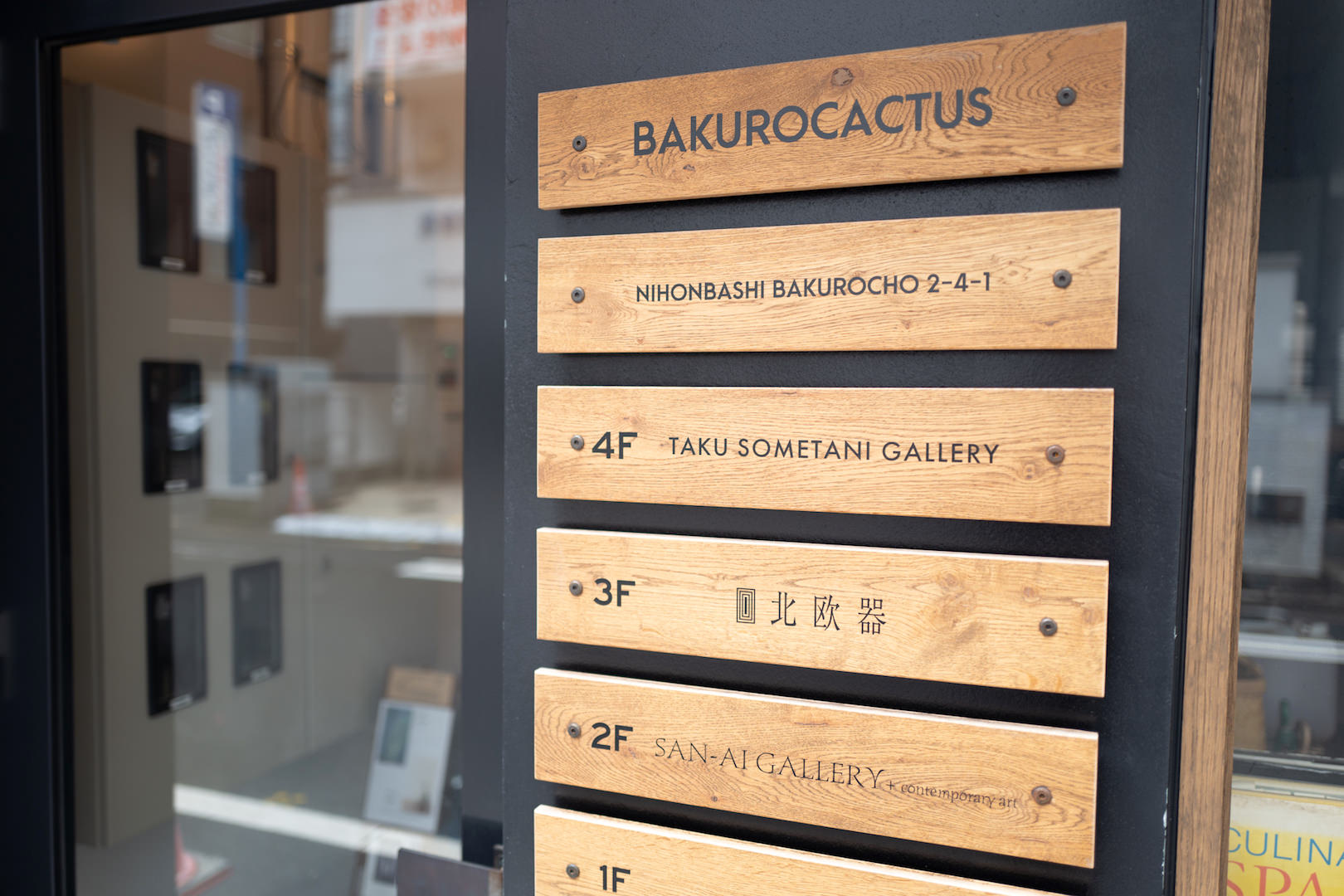
This gallery is on the 4th floor of “BAKUROCACTUS,” a new art complex that opened in May 2018. There’s no elevator, so I diligently climbed the stairs.
Koichiro Tada
I had recently seen Tada’s work at the Tokyo University of the Arts graduation exhibition and had been paying attention.
His distinctive brushwork is impressive, and I felt an emotional quality that seems to seep out from within, drawing a clear line from the trendy bijinga (beauty paintings). It was a work that pulled me in strongly.
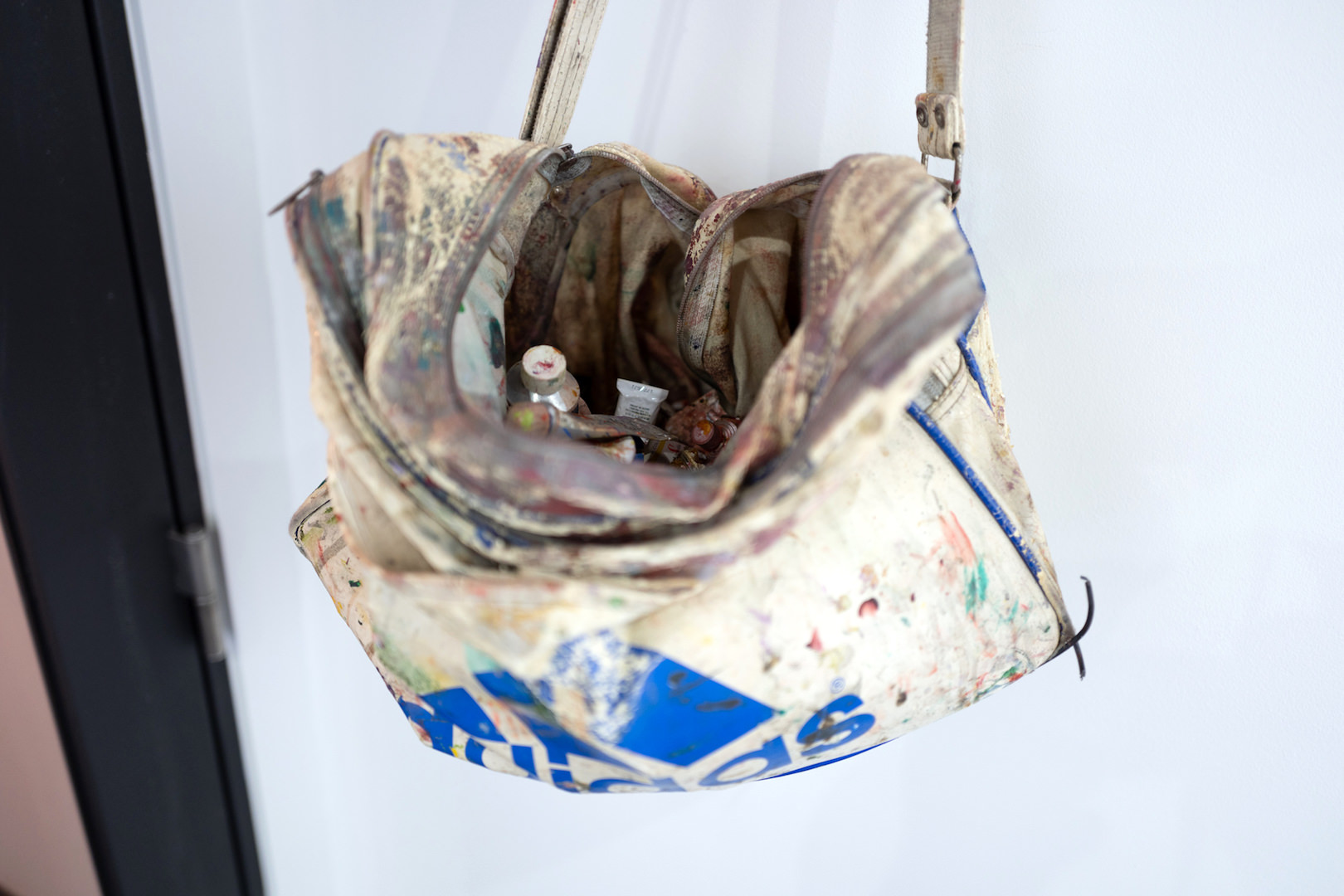
World Rally
The keyword of this solo exhibition is “two contradictions.”
It’s a composition that expresses, with two kinds of works (painting and three-dimensional), the reality and delusion that come and go like a rally. *The statement is quoted at the end of this article.
Sales of the works were also carried out as sets.
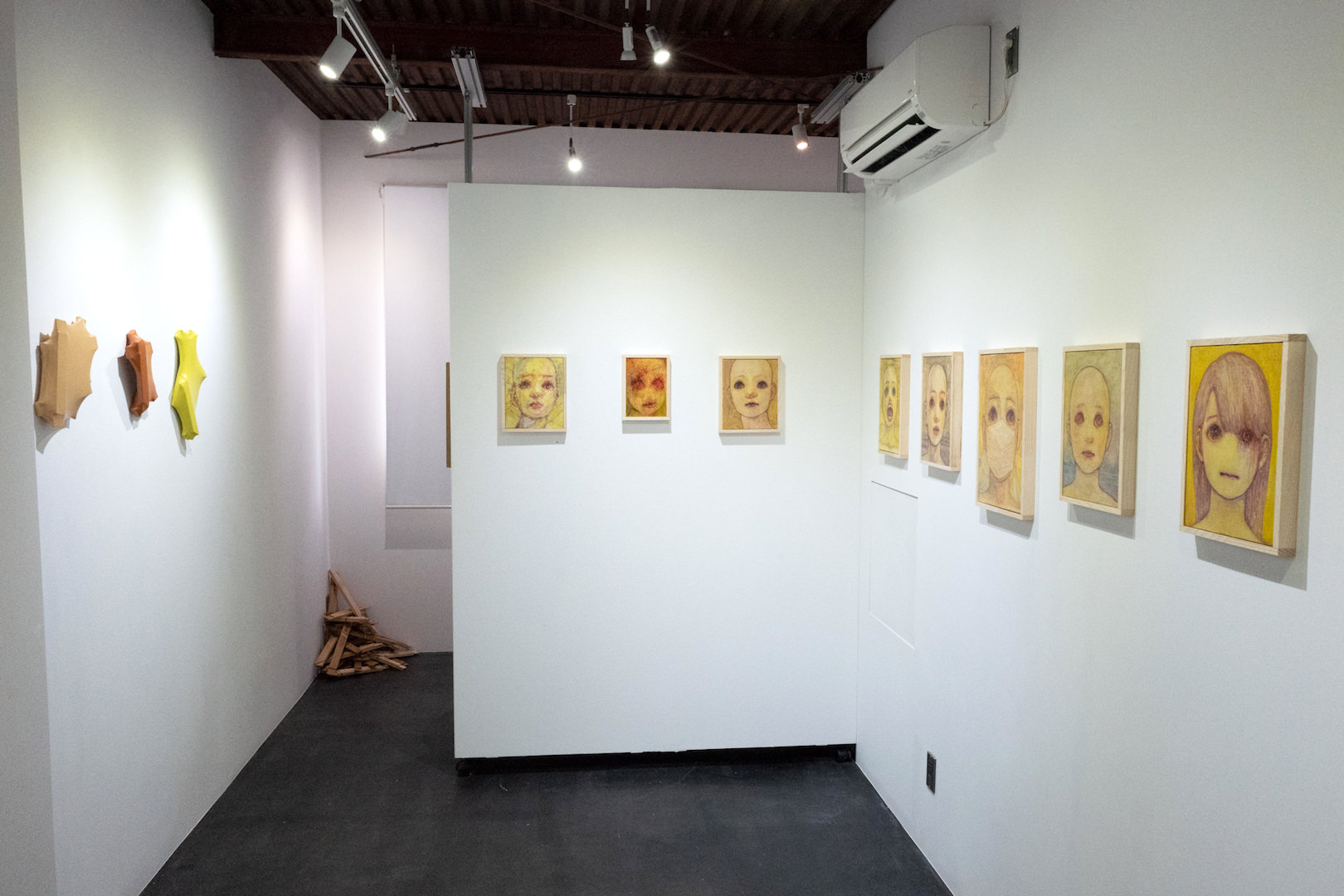
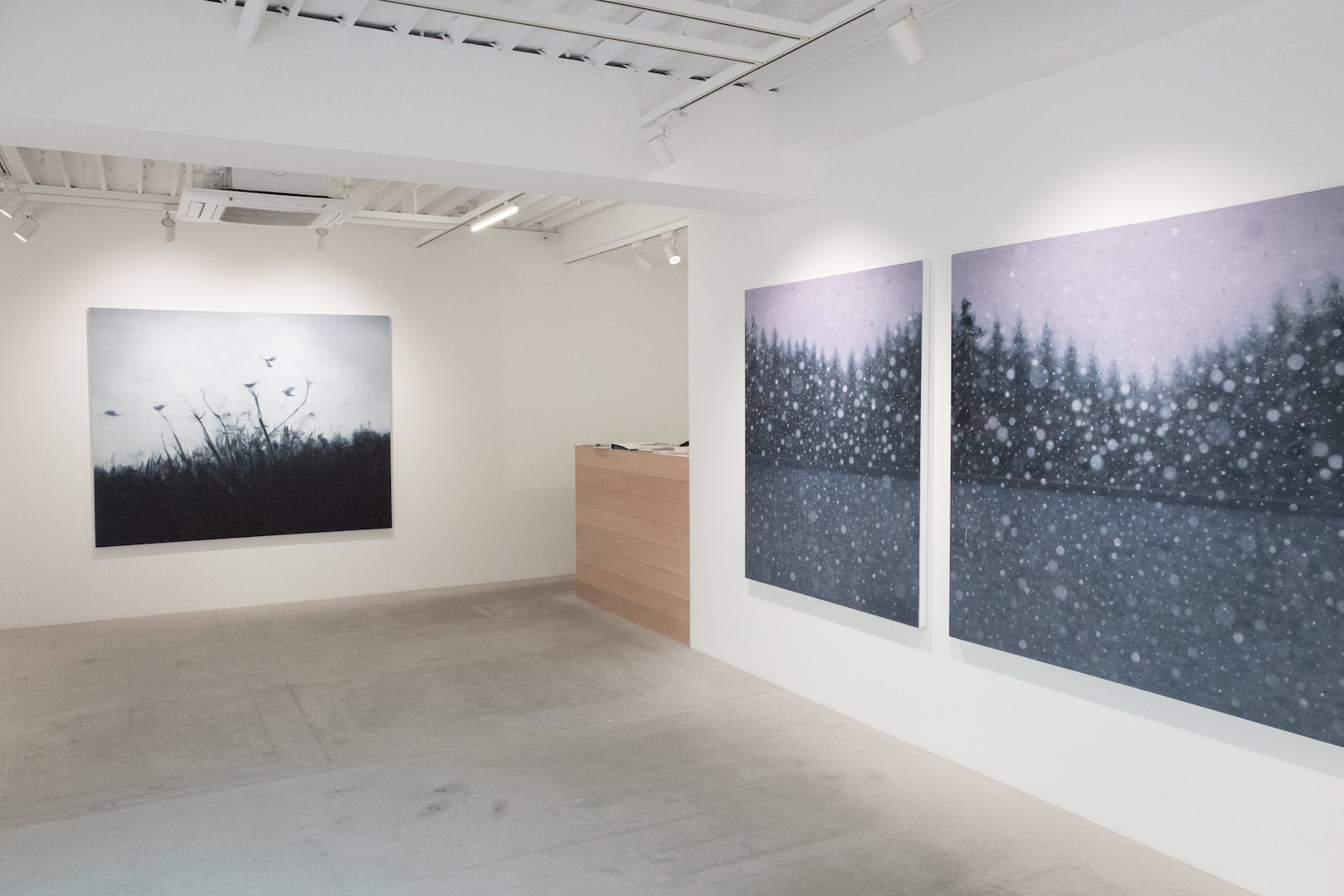
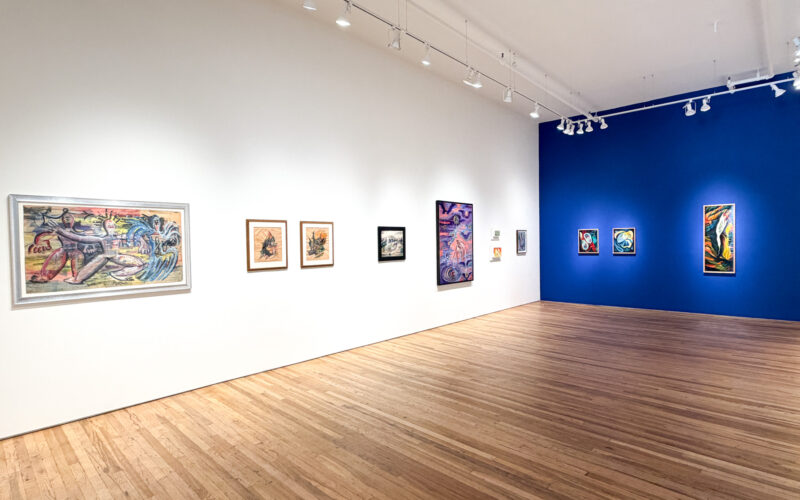
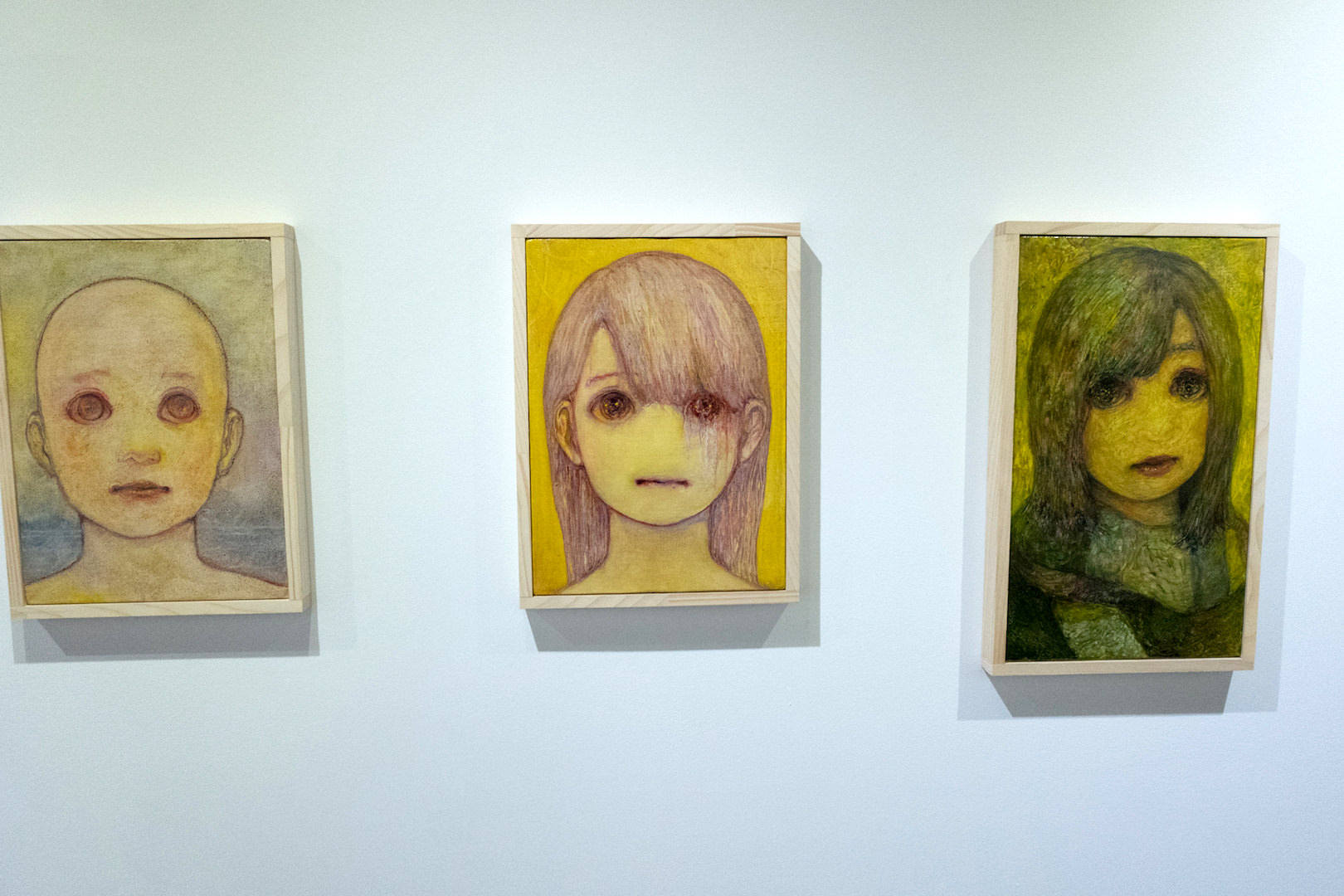
The centerpiece of this solo exhibition, “Person-1,” also used on the DM, was already sold (leftmost in the photo below). Seeing the work in person, the way the paint is placed and the color use are exquisite, a touch you fall in love with. It was etched in my heart as the most wonderful work in this solo exhibition.
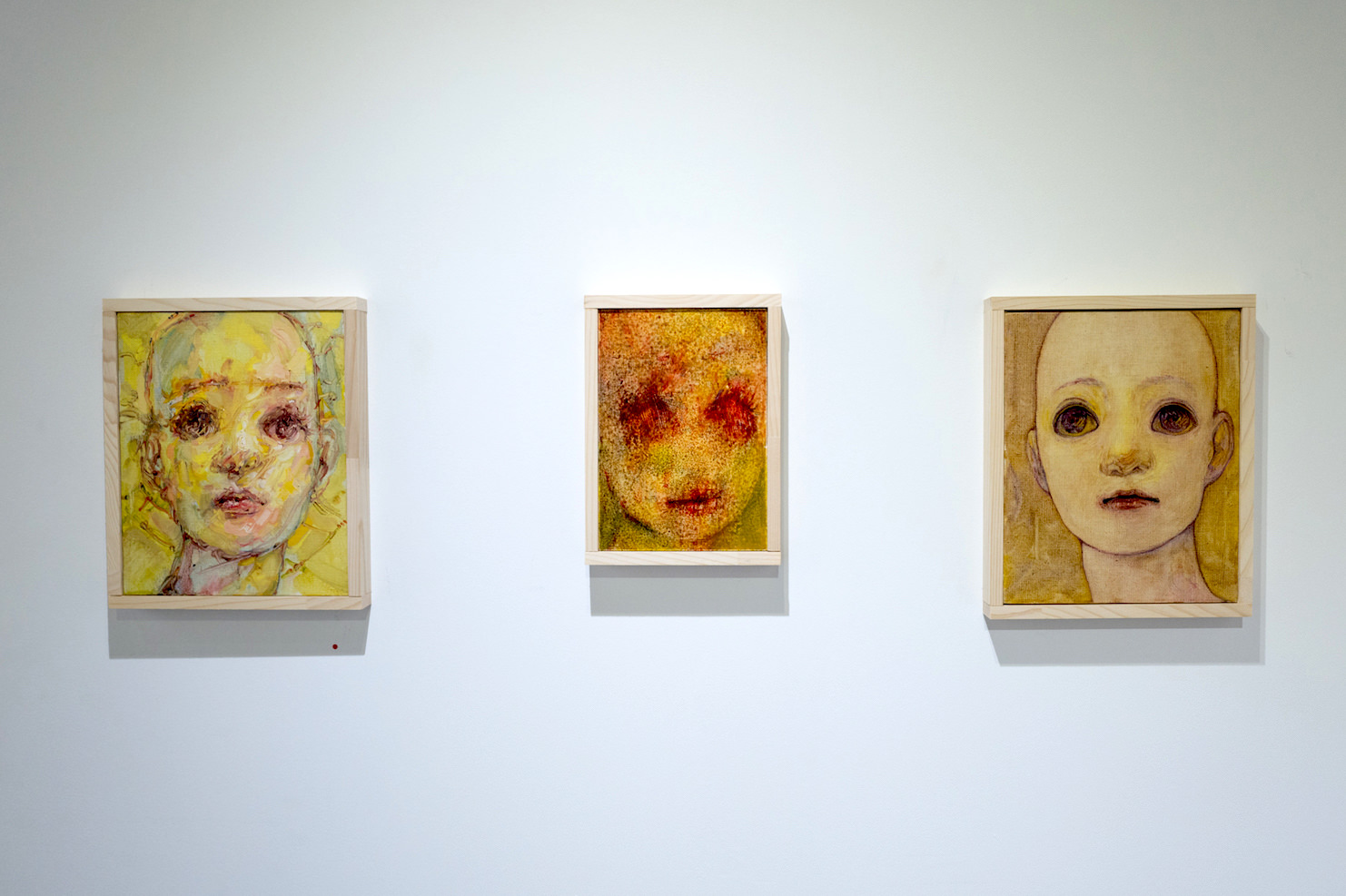
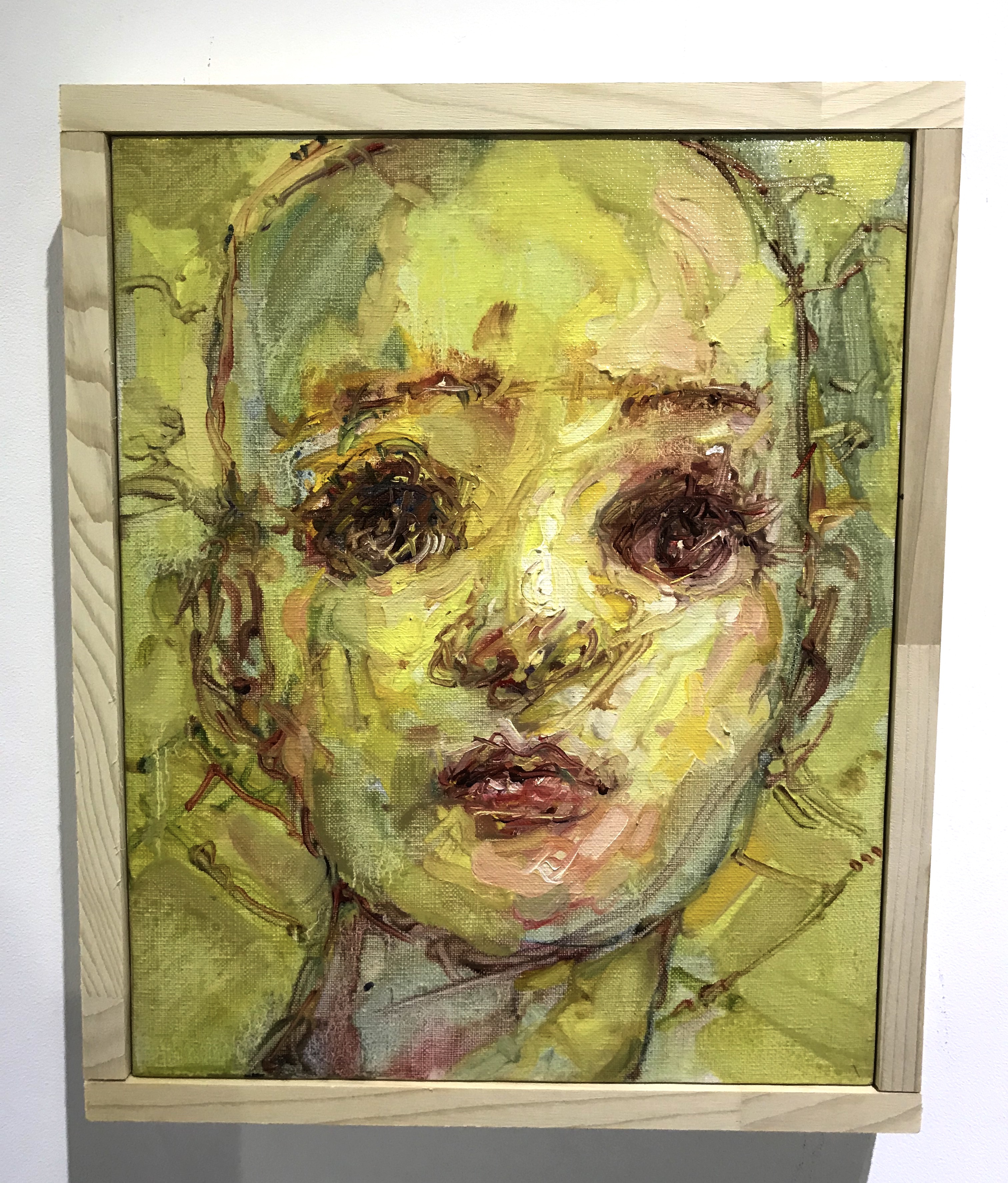
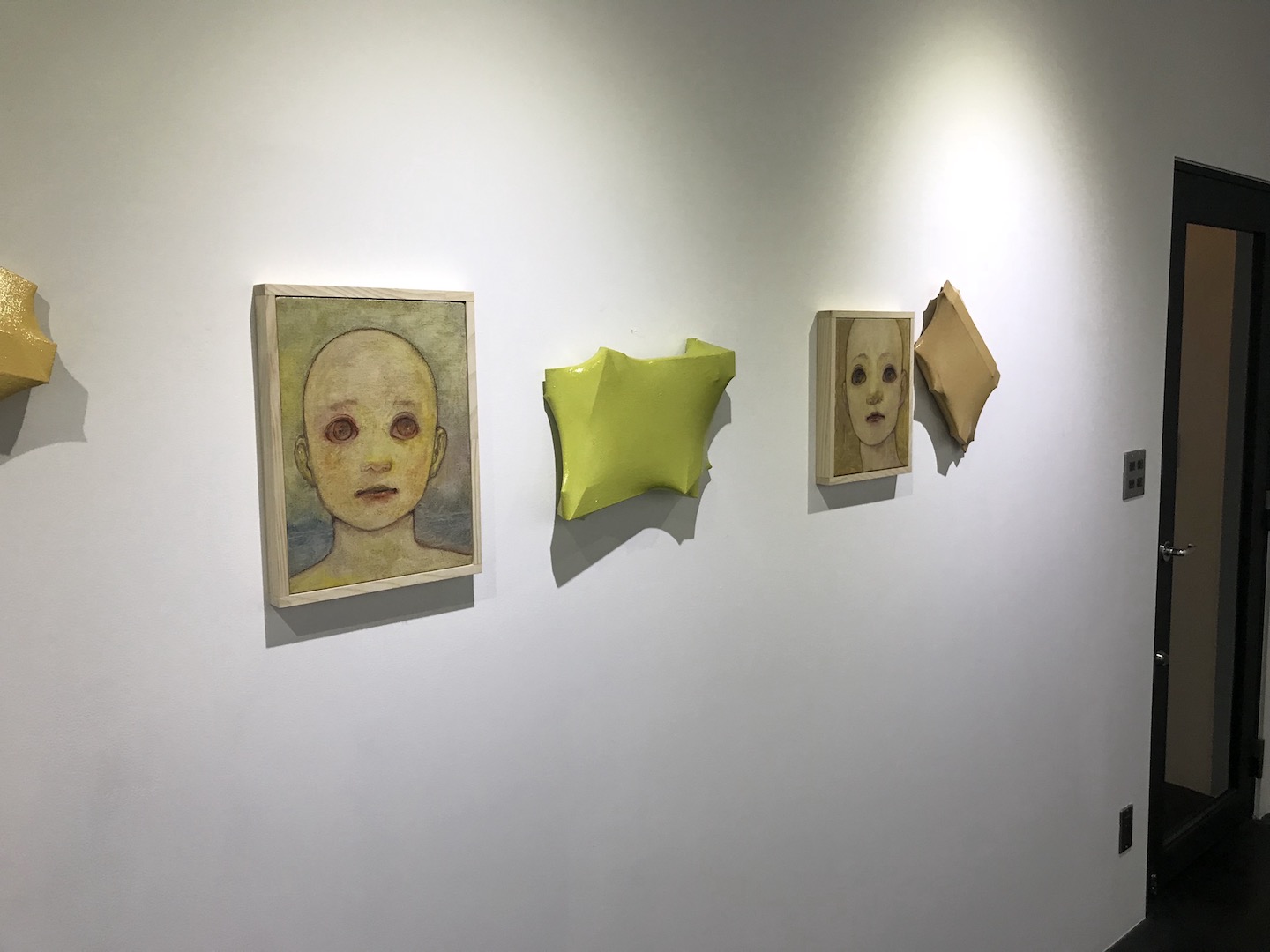
Looking closely, most of the works depict women’s faces, but you notice that the expressions and brush handling are all different.
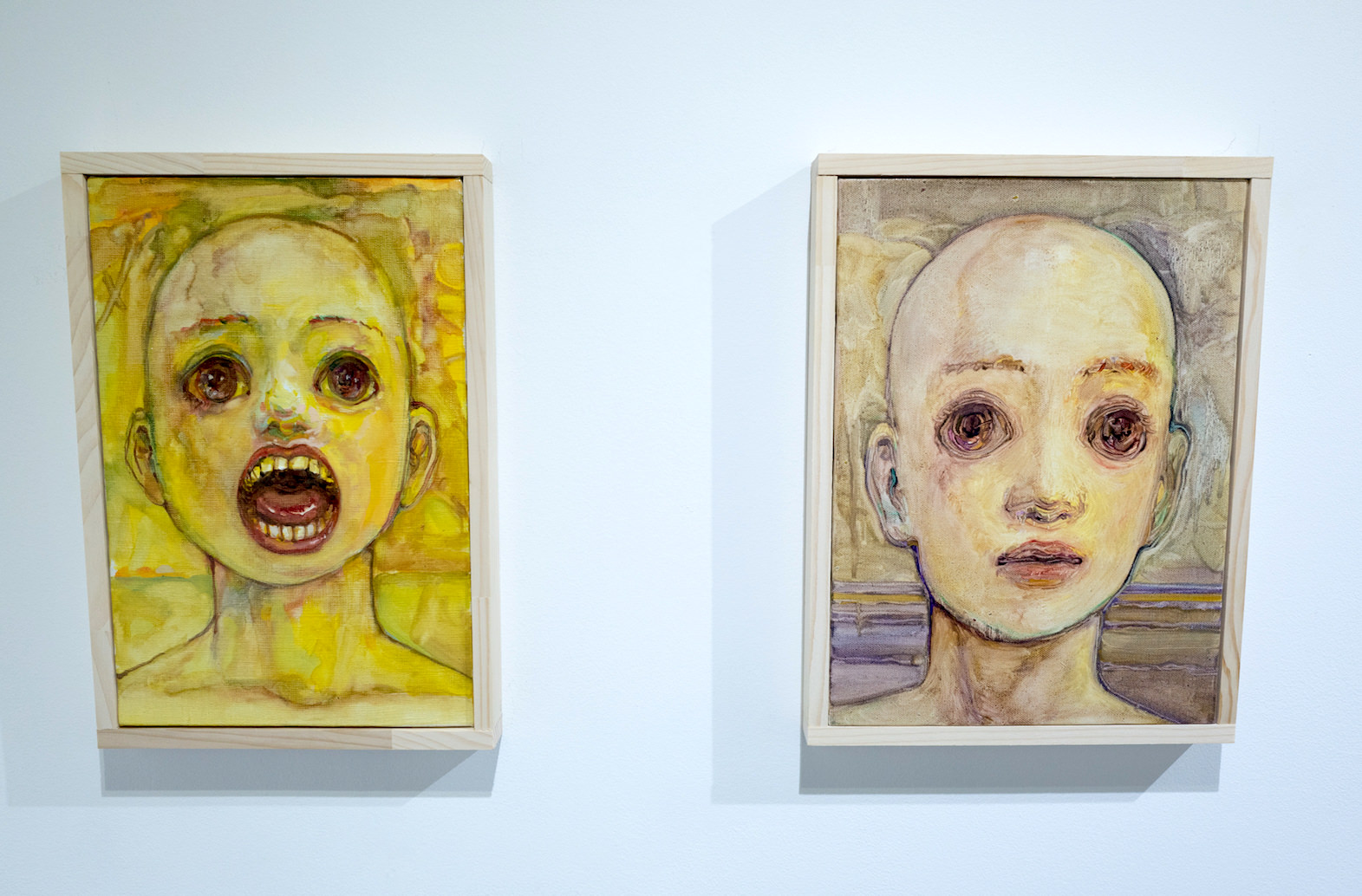
Because the way of painting differs, each work gives a different impression. You can tell he’s a very skilled artist.
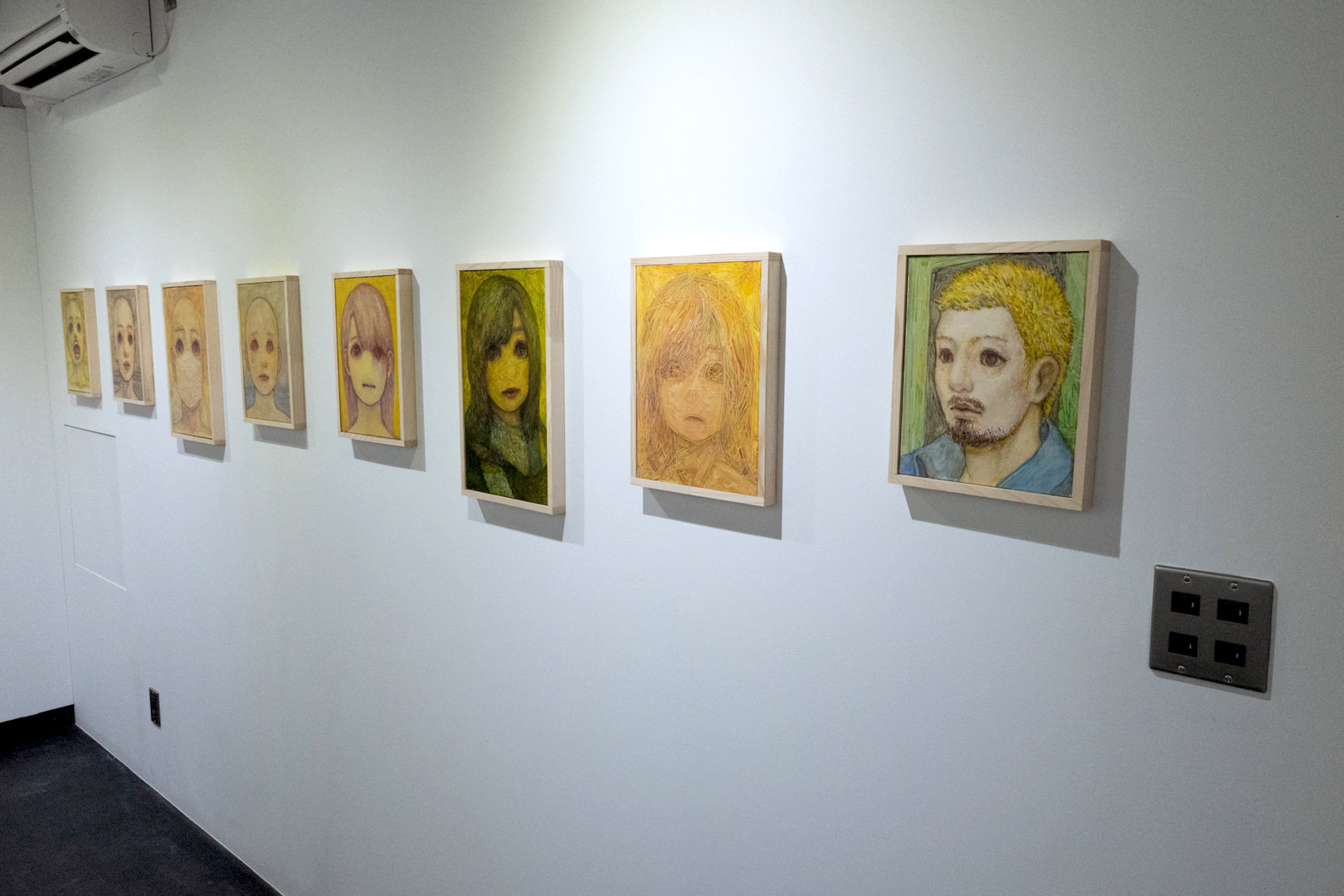
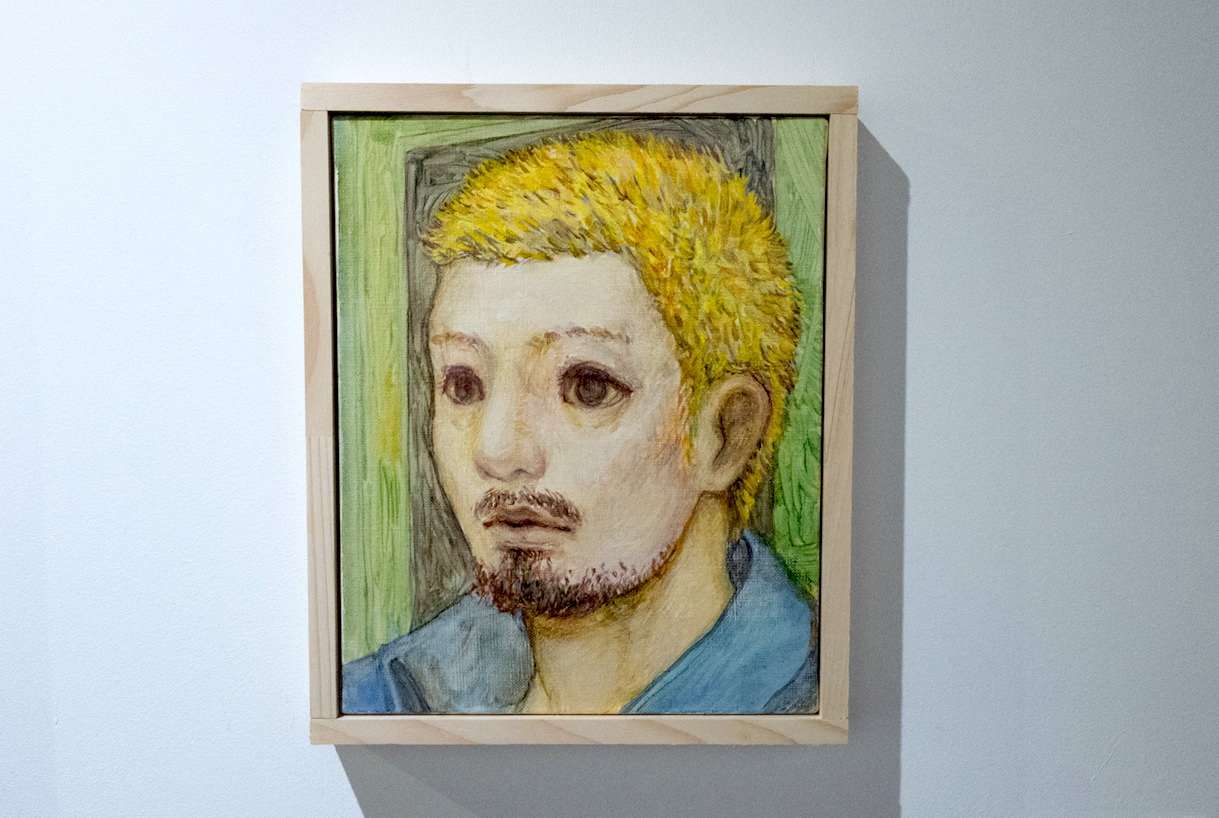
The three-dimensional works combined wooden frames in deformed shapes, stretched fabric under tension, and built up three-dimensional canvases. The coloring felt matched to the corresponding work.
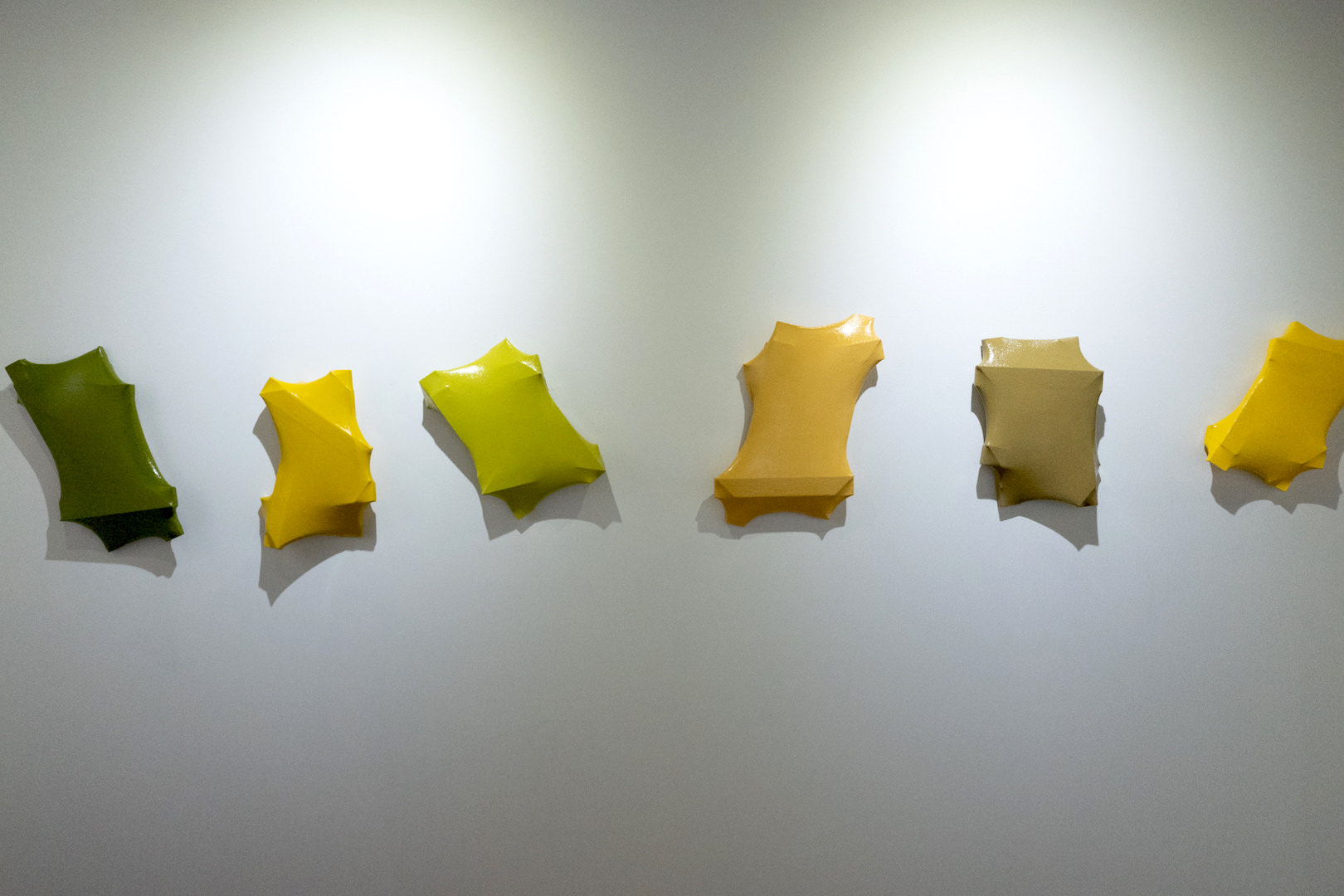
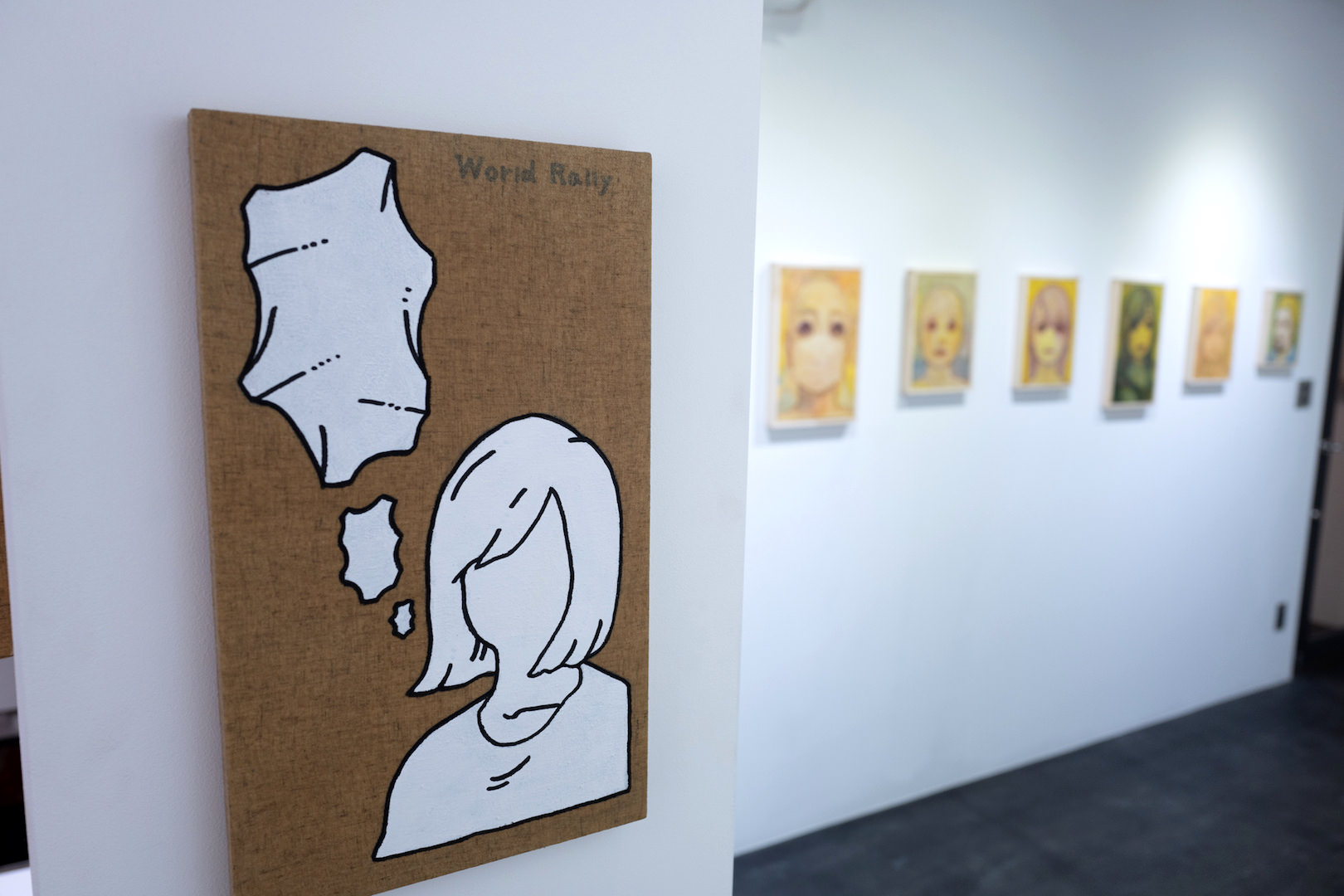
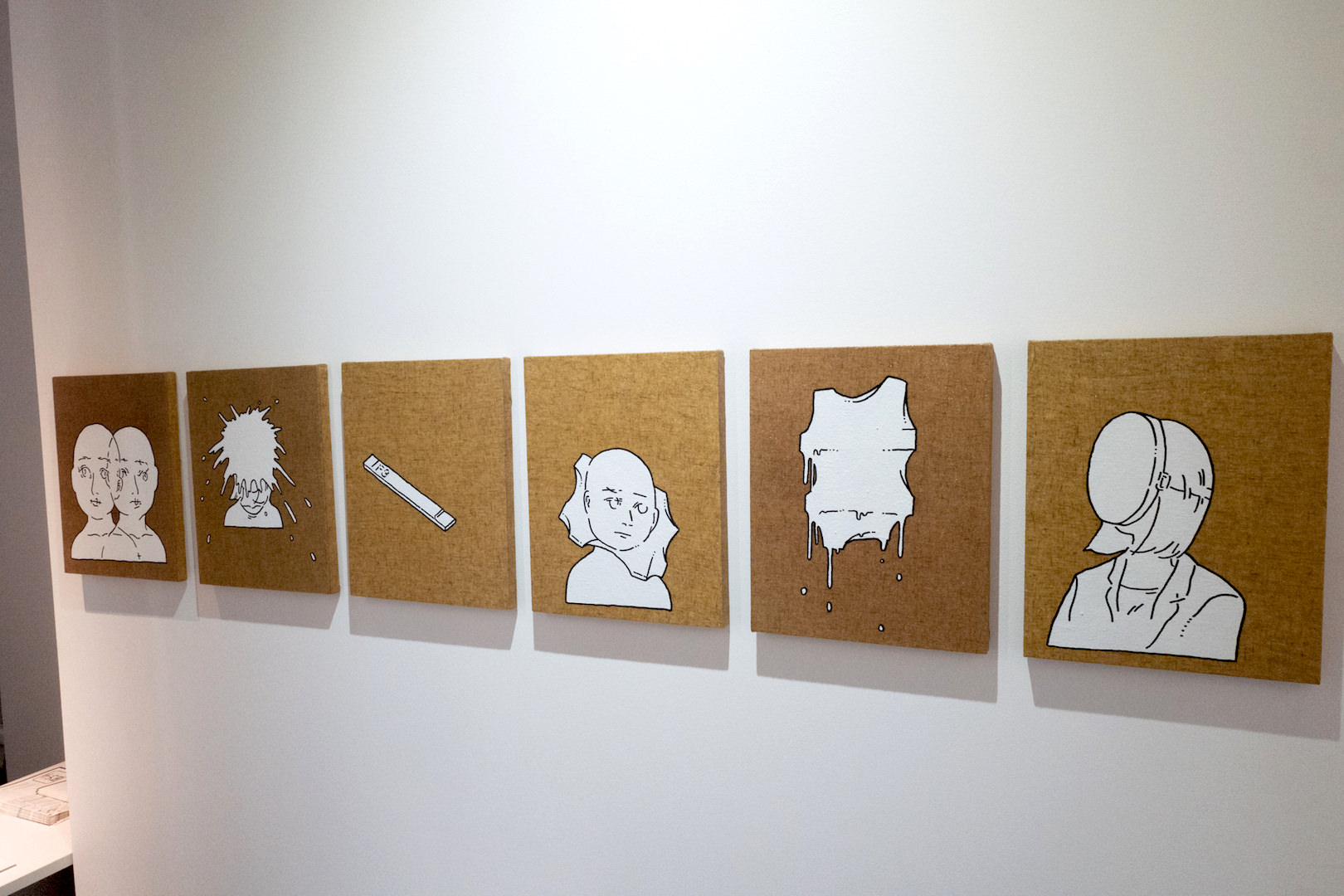
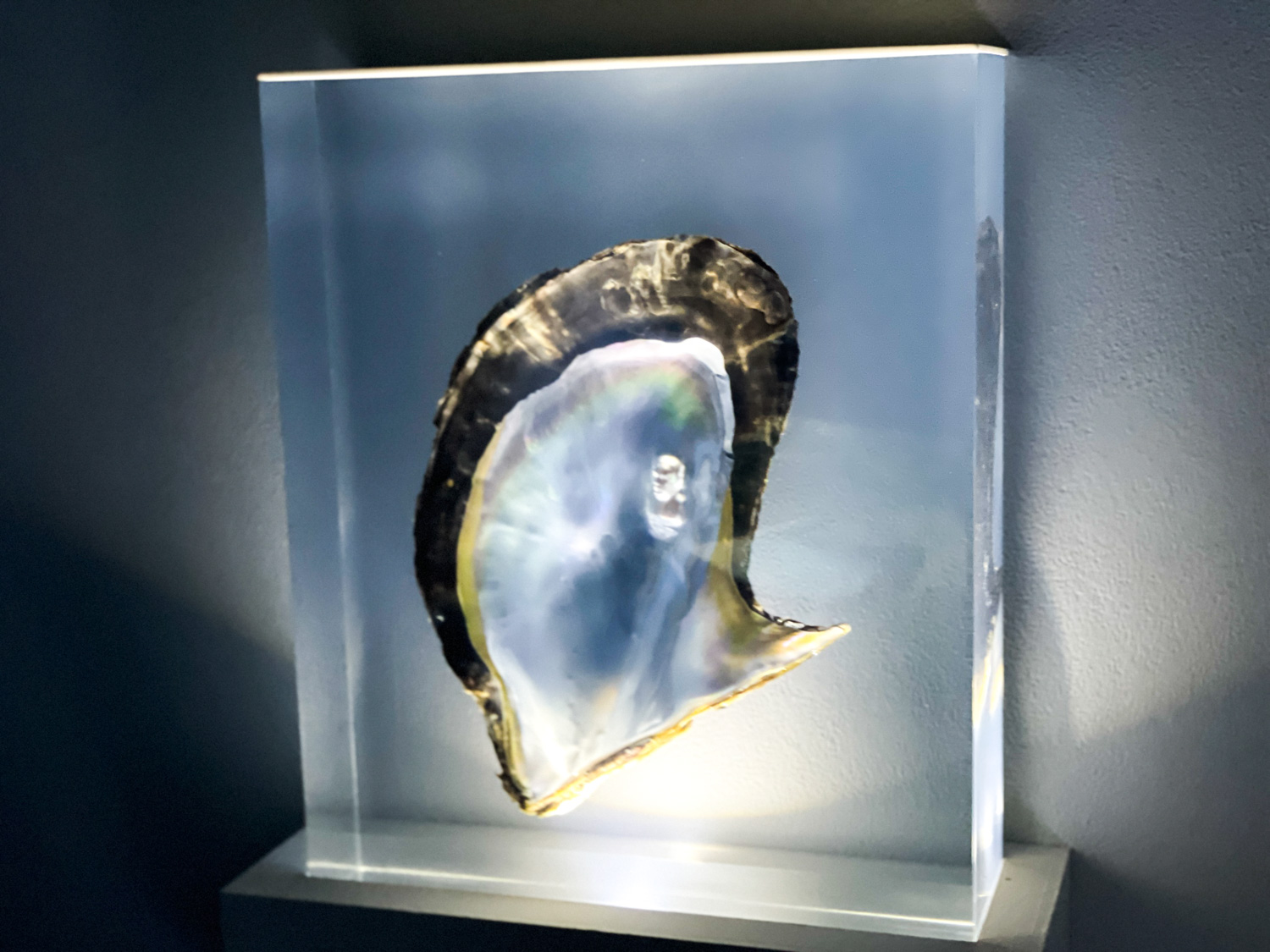
A work was also displayed in a spot as if hidden behind the drawing works; its title is “Gaze.”
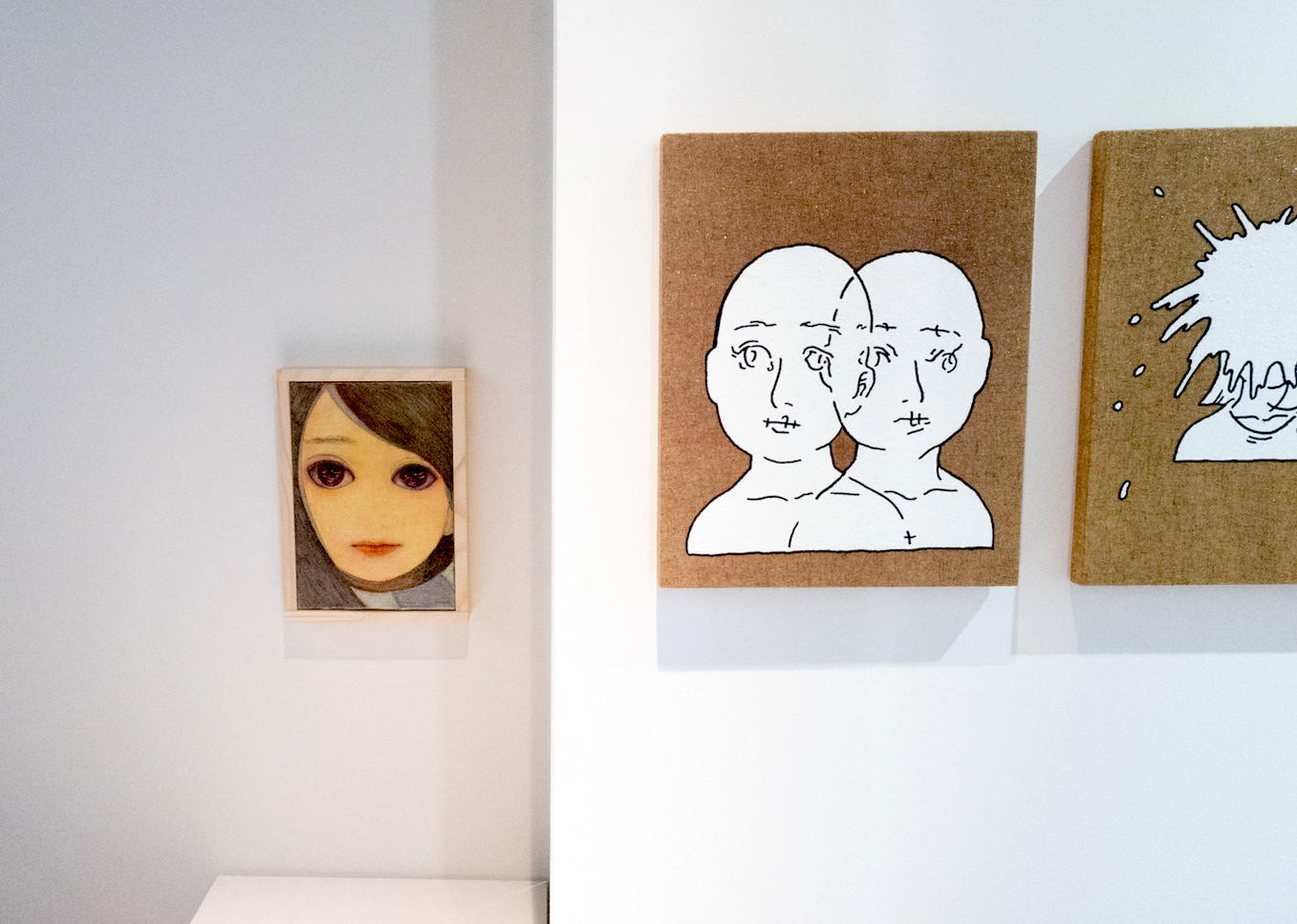
artist stetment
The act of instinctively and blindly believing in the order of pictorial space and creating a world where a “personality without a body” exists deserves to be called “delusion.”
The act of theoretically dismantling the order of pictorial space and destroying a world where a “personality without a body” exists deserves to be called “reality.”
If you concentrate all your nerves on “delusion,” what awaits at its end is the “extinction of the body” (suicide).
If you concentrate all your nerves on “reality,” what awaits at its end is the “extinction of sensation” (boredom).
—————————————-
[My actual feeling goes back and forth between two “realities,” like a “rally” in tennis.]
One day in my junior-high years, a girl named Yukari, who sat in a corner seat of the classroom, was absent from school. At the time, many people made mobile self-introduction sites. In the comment section of Yukari’s page, multiple slanders had been written. It became a topic throughout the school, and by after class that day it was quickly clear who the culprit was. It was a girl named Yumi, who belonged to the same wind-instrument club as Yukari. Yumi had made multiple posts by herself. What everyone thought was group bullying was the malice held by just one person.
Who was it that drove Yukari into truancy? The one who should be judged is undoubtedly Yumi, but the one inside Yukari was not Yumi. A sense of alienation, as if one’s existence were denied by multiple people. Those multiple “people” exist only inside Yukari. Neither ghosts nor demons. Personalities without the body assumed of a person. In Yukari’s eyes, inorganic faces without human warmth were probably lined up before her.
There is always a “gap” between the true intent in the other’s “main personality” and one’s own interpretation. So the “personality without a body” you build up by saying “he’s a good guy” becomes something similar to yet different from the other’s “main personality.” However, the “gap” in communication carried out through expression, tone of voice, and gesture is slight, and it didn’t form a “personality without a body” so far off as to cause real harm. Even if a little misunderstanding arose occasionally, it was the kind of thing that could be solved by meeting and talking.
I felt a change in the nature of the “gap” after I got a mobile phone and started emailing with friends. In faceless communication carried out on SNS, there is no expression, no tone of voice, no gesture, and the back-and-forth of words that used to go by the second came to be carried out by the minute or by the day. If you spend time trying to read the other’s true intent from their simplified words, naturally fine misreadings arise within your interpretation, and the other misreads that further. As such exchanges pile up, the “gap” gradually grew larger. Quarrels triggered by SNS also increased over time. The “similar-yet-different relationship” between the main personality and the personality without a body, which in conventional face-to-face communication wasn’t even worth considering separately, had become a “dissociated relationship” so severe that confusing them caused real harm.
The “personality without a body” that at first I was passively forced to create through email and such, I came to create voluntarily as I chased trendy SNS like twitter and Instagram. With the icon, the bio, the posts, the images, I colored the “personality without a body.” Unconsciously, all too naturally, considering the “main personality” and the “personality without a body” separately took root in my life like a kind of habit.
The habit of dividing personality in two, toward others and toward myself, produced a new sensation I hadn’t had before. On a night tweeting alone on Twitter, my daytime self who’d been talking with friends felt like a different person. In the daytime talking with friends, I made my nighttime self posted on Twitter into material for conversation with friends. When one side has the actual feeling of “reality,” the other is processed as “unreality”—a sensation like depersonalization. Neither painful nor enjoyable, that cycle simply arose as a matter of course.
—————————————–
“World Rally” is an exhibition of “painting” that proceeds around this sensation. It is an exhibition to show my actual feeling, which has no fixed position, which can’t be asserted as “existing in spatiality” nor as “existing in flatness.” Viewing contradictory feelings as one feeling is probably strange. But that is what a person is. We merely become something so bugs don’t arise, while in truth harboring any number of contradictions. Two personalities, two worlds. Visualizing an antinomic scene is, for me, the very “proof of the human.”
(2018.7.4)
Rehang @final day only
On the final day, Tada himself was present, and he changed the way of displaying the works to arranging them in pairs.