Displaying a frame
Displaying a painting in a room changes the atmosphere at once. A daily life with art adds color to living. On this site, too, I’ve delivered various ways to display art and recommended items. This time, I’d like to deliver a way to solve an“easily overlooked blind spot”when displaying a frame.
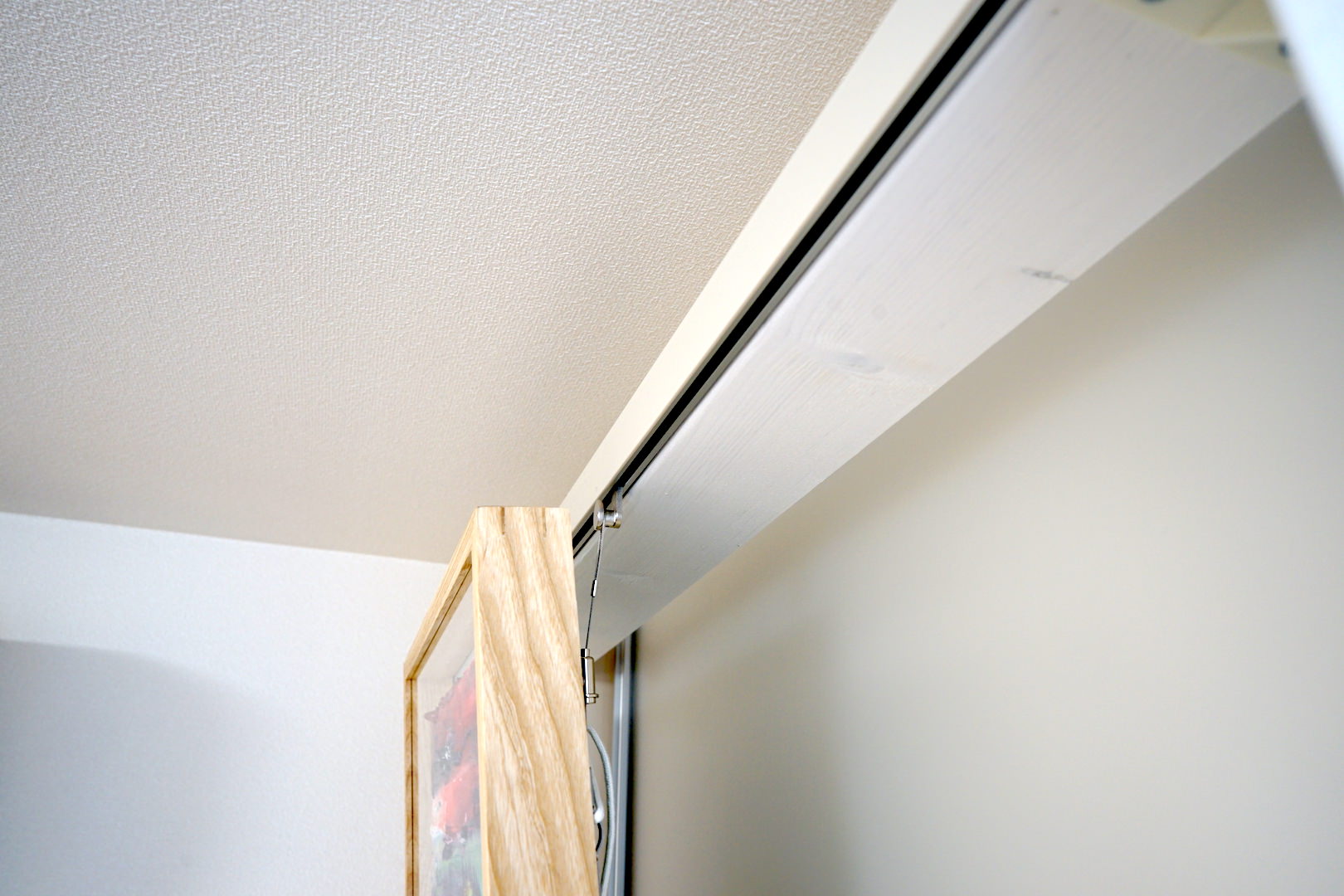
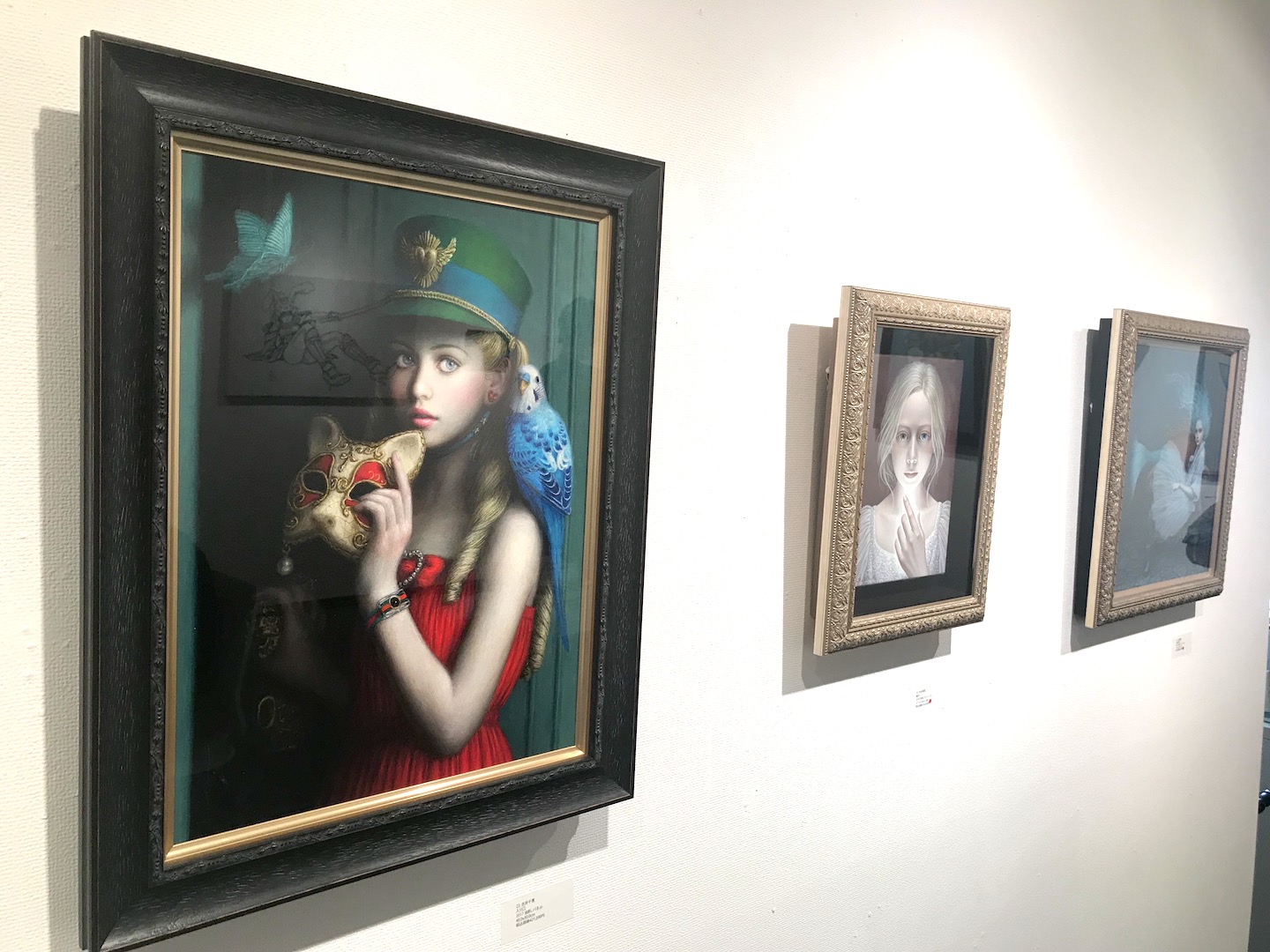
The easily overlooked blind spot is “the problem that when you hang a frame on a wall, it ends up slightly bowing forward.”
Whether hanging with wire or hooking the frame with something like Kabe Bijin, it’s a problem that structurally always occurs.
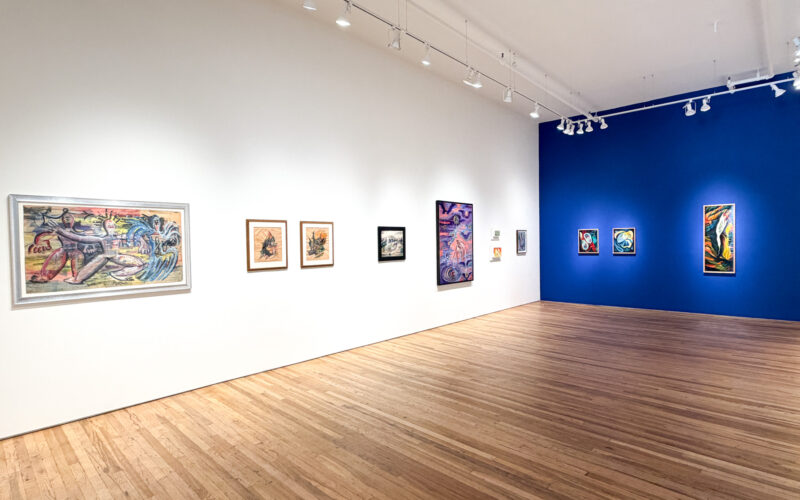
Since it’s a common sight even in galleries, I too had taken this state as “unavoidable and normal.”
Framing shops
Until now I’ve had works framed at several galleries and specialty frame shops.
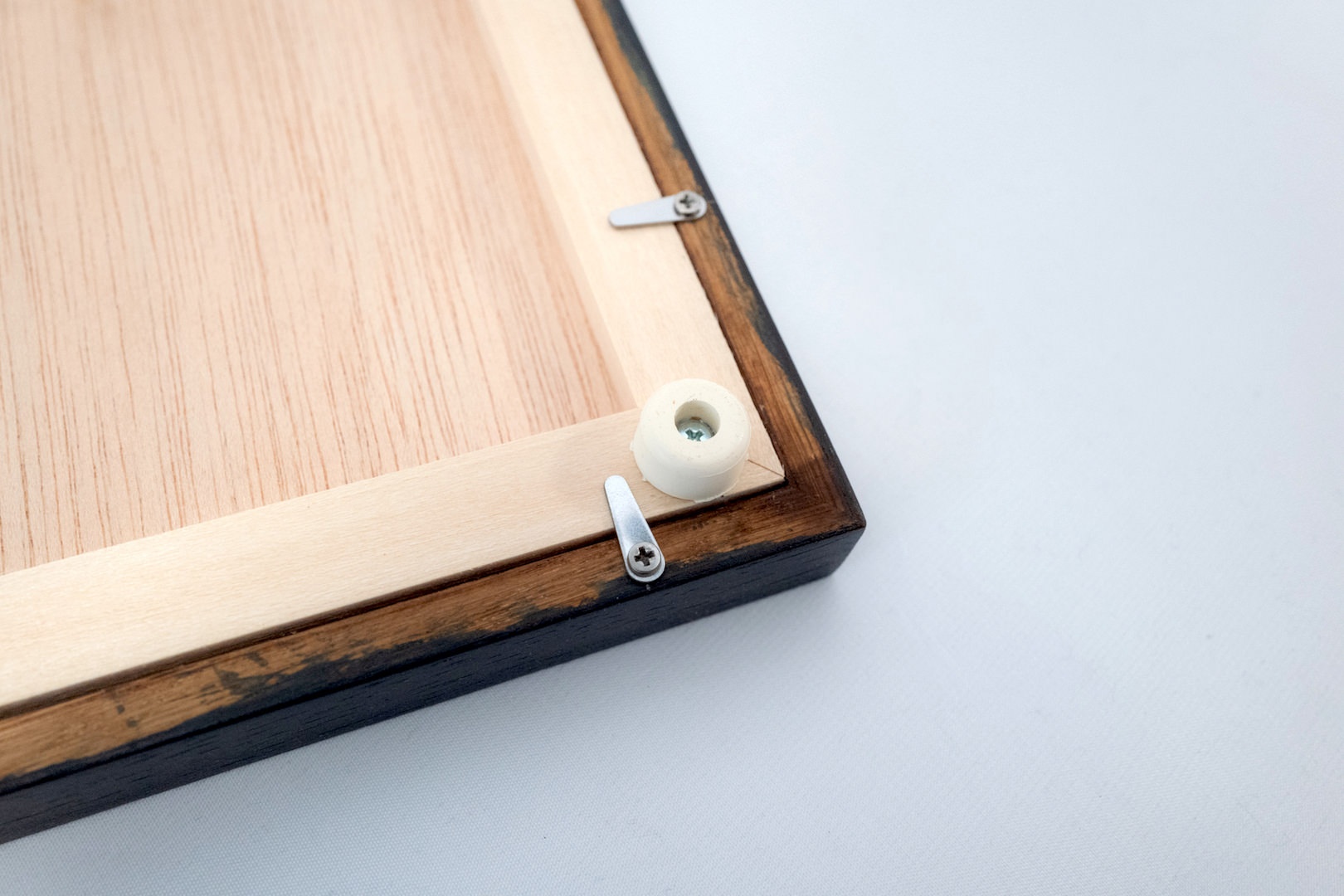
When I asked a shop I’ve been going to recently to do the framing, even though I hadn’t requested it, it came backwith back rubbers attached. This surprised me.
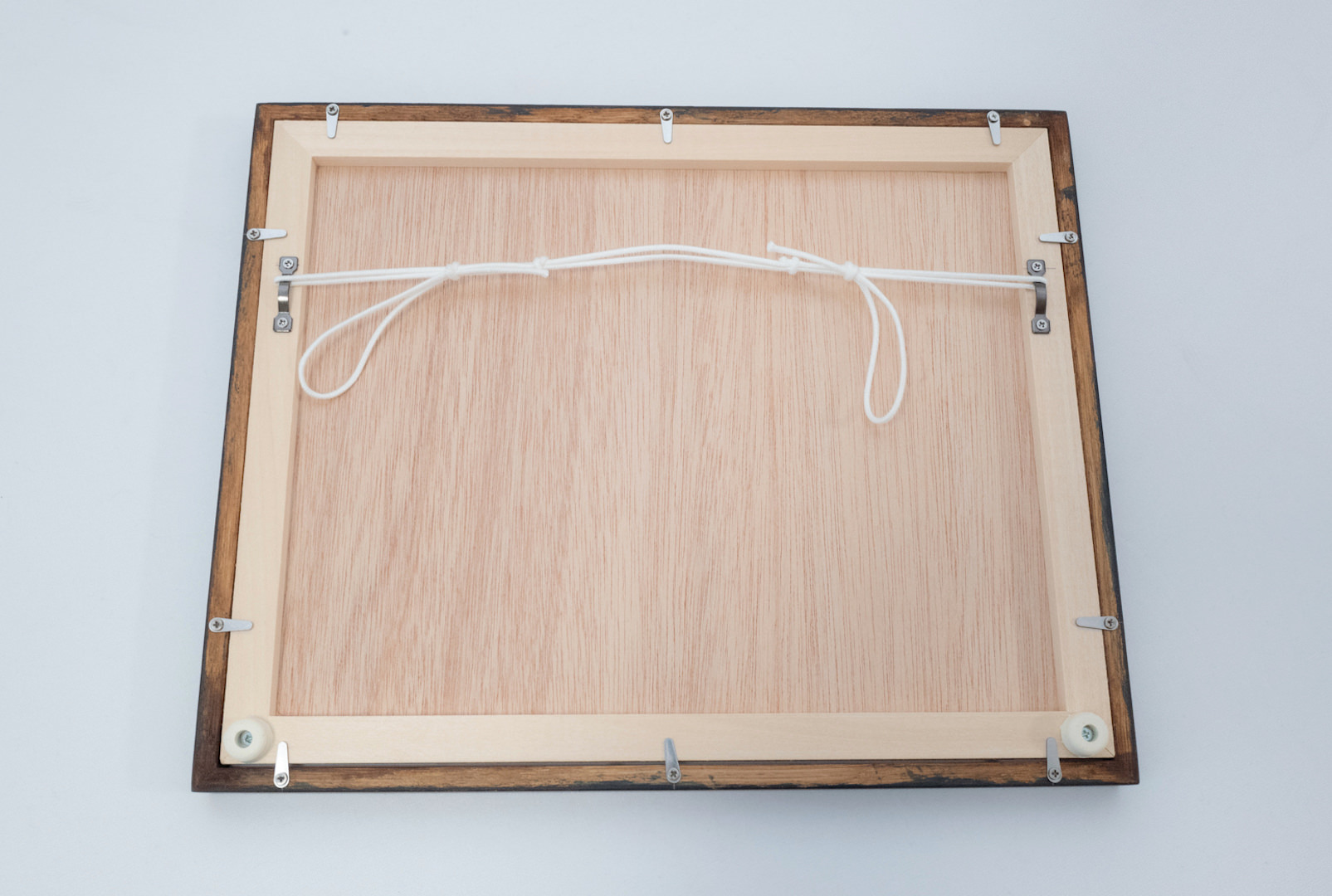
Just attaching two back rubbers made it adhere snugly to the wall, corrected the frame to vertical, and let it face the work squarely. My impression is the work stands out much better. *The work is byKosuke Ajiro.
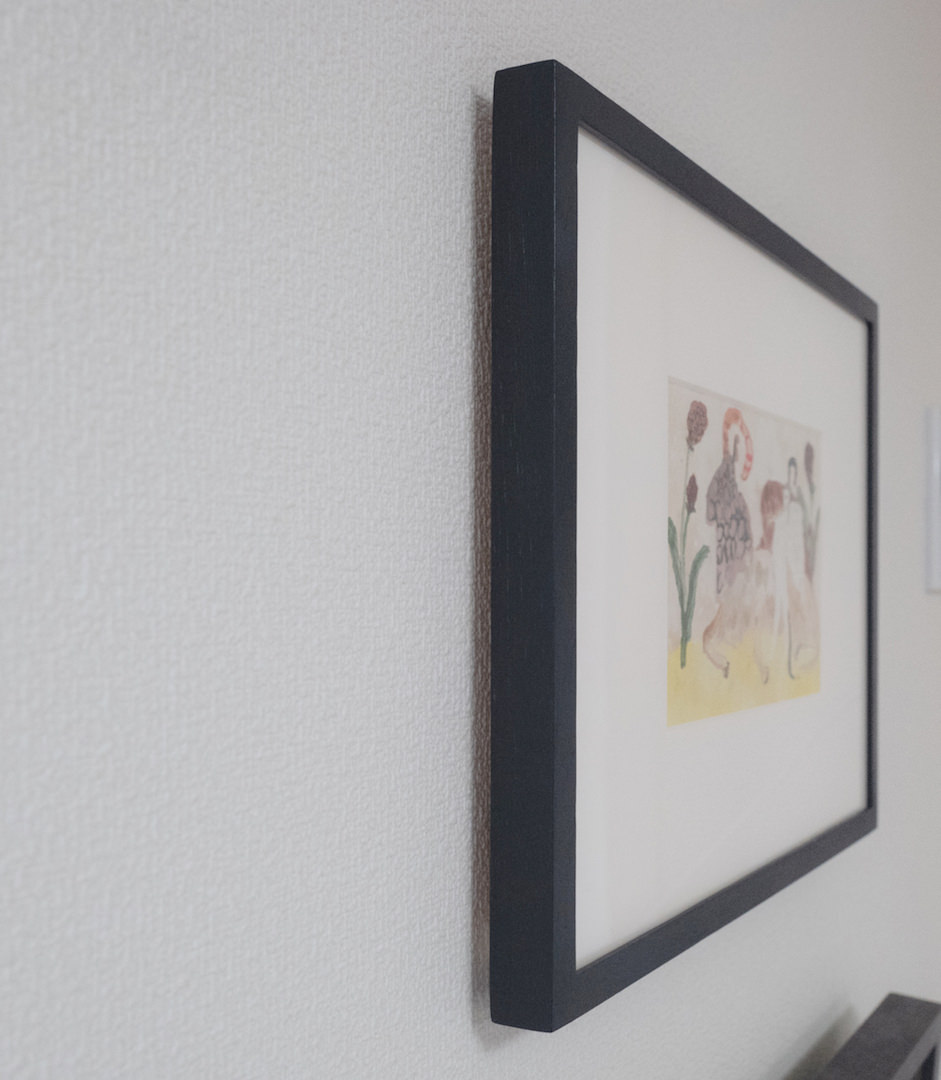
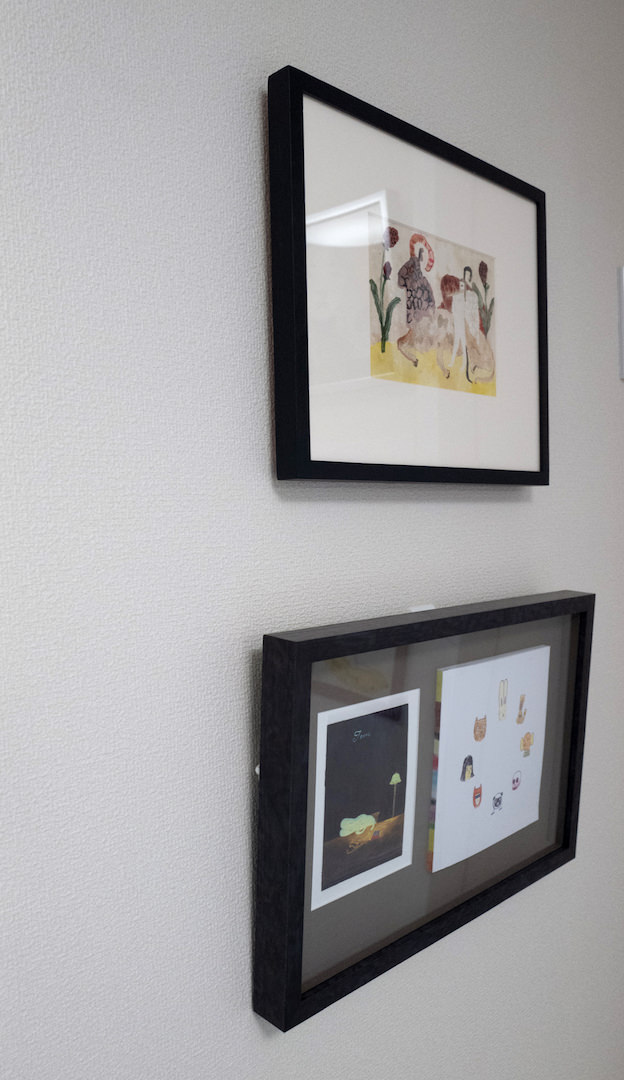
The photo below compares a work with back rubbers and one without. You can see the appearance clearly differs.
Merits of attaching back rubbers
I’ve written out the merits of attaching back rubbers.
- The frame fits snugly against the wall, changing to a clean, tidy impression.
- The work stands vertical, and its visibility improves.
- A certain gap opens behind the frame, improving airflow, which leads to reduced humidity.
- As with “3,” dust is less likely to collect.
- It also helps protect the wall.
The “back rubber” is a small presence, but it has various elements that lead to good points!
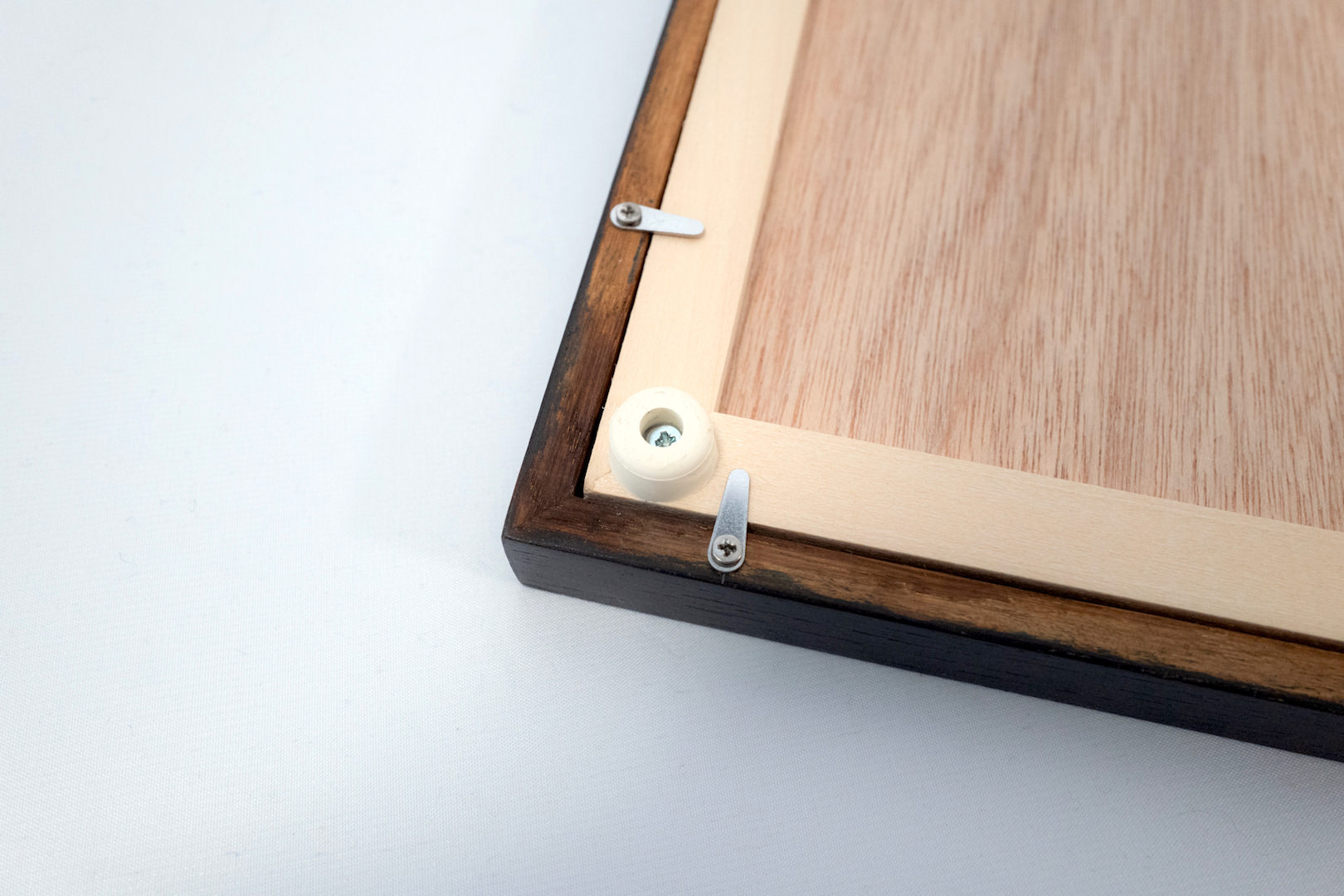
This site recommends back rubbers, but for those who oppose them—“I don’t want to make holes in the frame” or “attaching them is a hassle”—there is another method.
Methods other than back rubbers
Here, I’d like to introduce a method other than back rubbers. It’s a method of inserting something at the lower back of the frame.
The art on (“Buratto Art”)-style recommended method, which we’ve introduced before, is a method that utilizes “Hittsuki-mushi” (reusable adhesive putty).
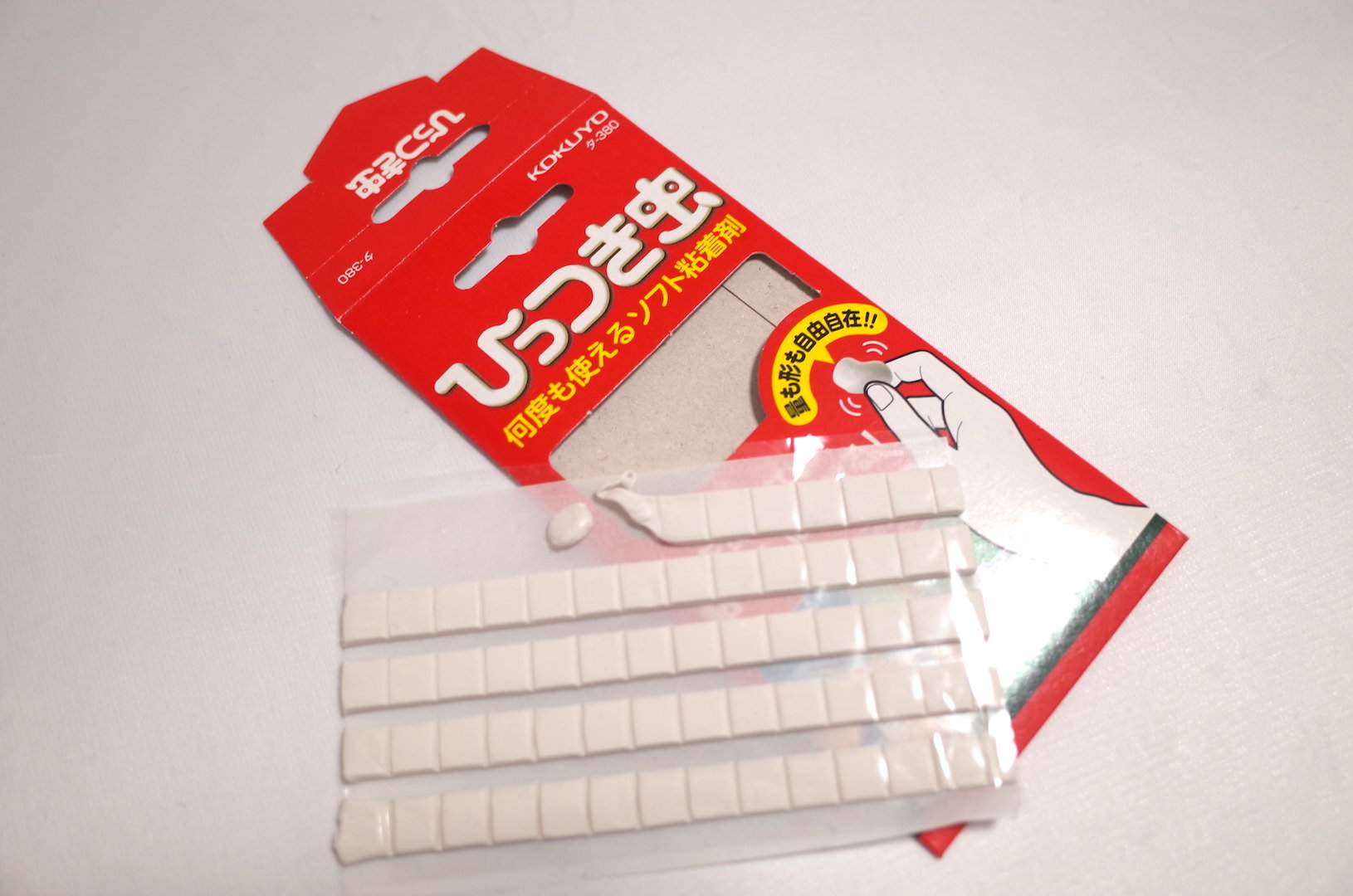
https://art-on.jp/postcard-management/
“Hittsuki-mushi”—you take just the amount you need, adjust the quantity, and attach it to the back of the frame as a substitute for rubber feet. This method needs no screws and doesn’t damage the frame.
One point to note is that the “oil” in Hittsuki-mushi may transfer to the frame or wall. Also, since the adhesion isn’t stable, there’s a chance it may have fallen off before you notice. Even if it’s a hassle, I’d like to use “back rubbers” as much as possible.
Summary
How was it?
It’s a small extra step, but back rubbers alone will greatly boost a frame’s presence. It’s a framing method with a big effect for a slight investment.
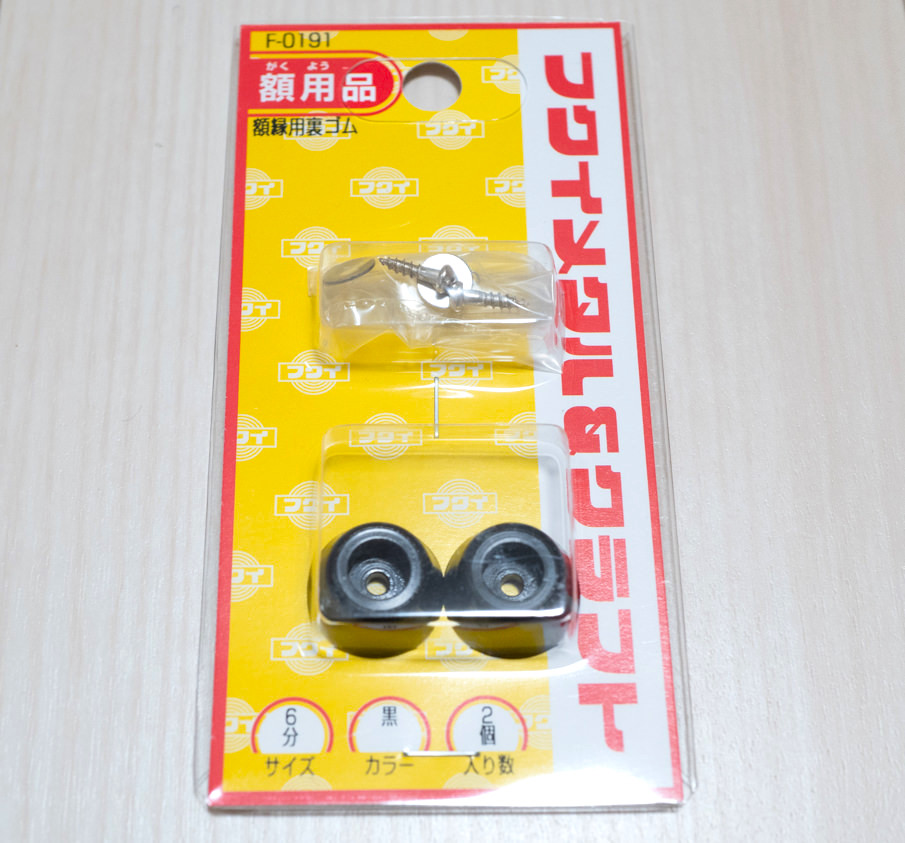
When holding a solo exhibition at a gallery, isn’t this a point the exhibiting artist should also watch out for? Since few artists do their own framing, I feel many don’t pay much attention. When a work is bowing forward, it often doesn’t look clean, so why not consider consulting with the gallery?