Special Exhibition “Jomon”
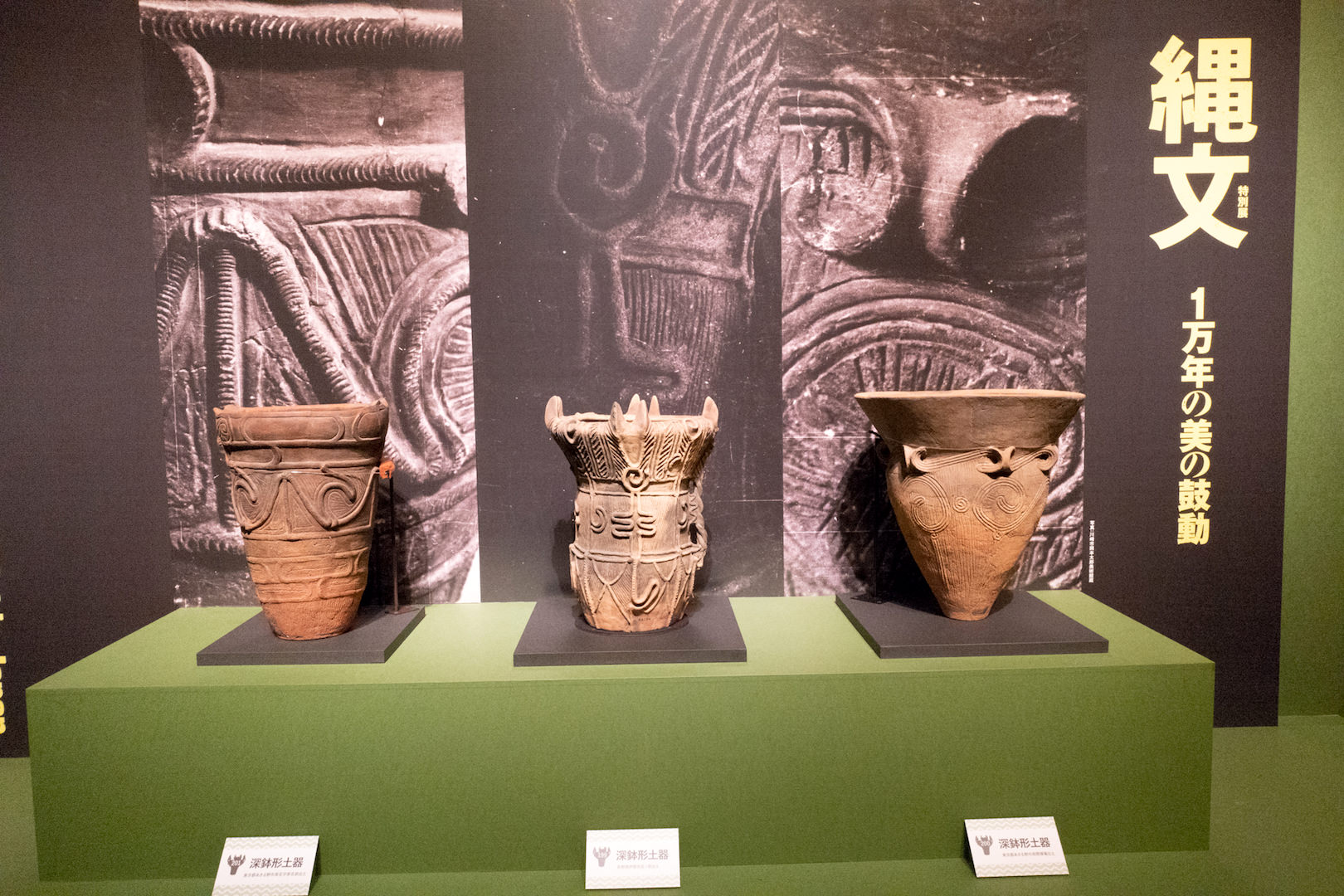
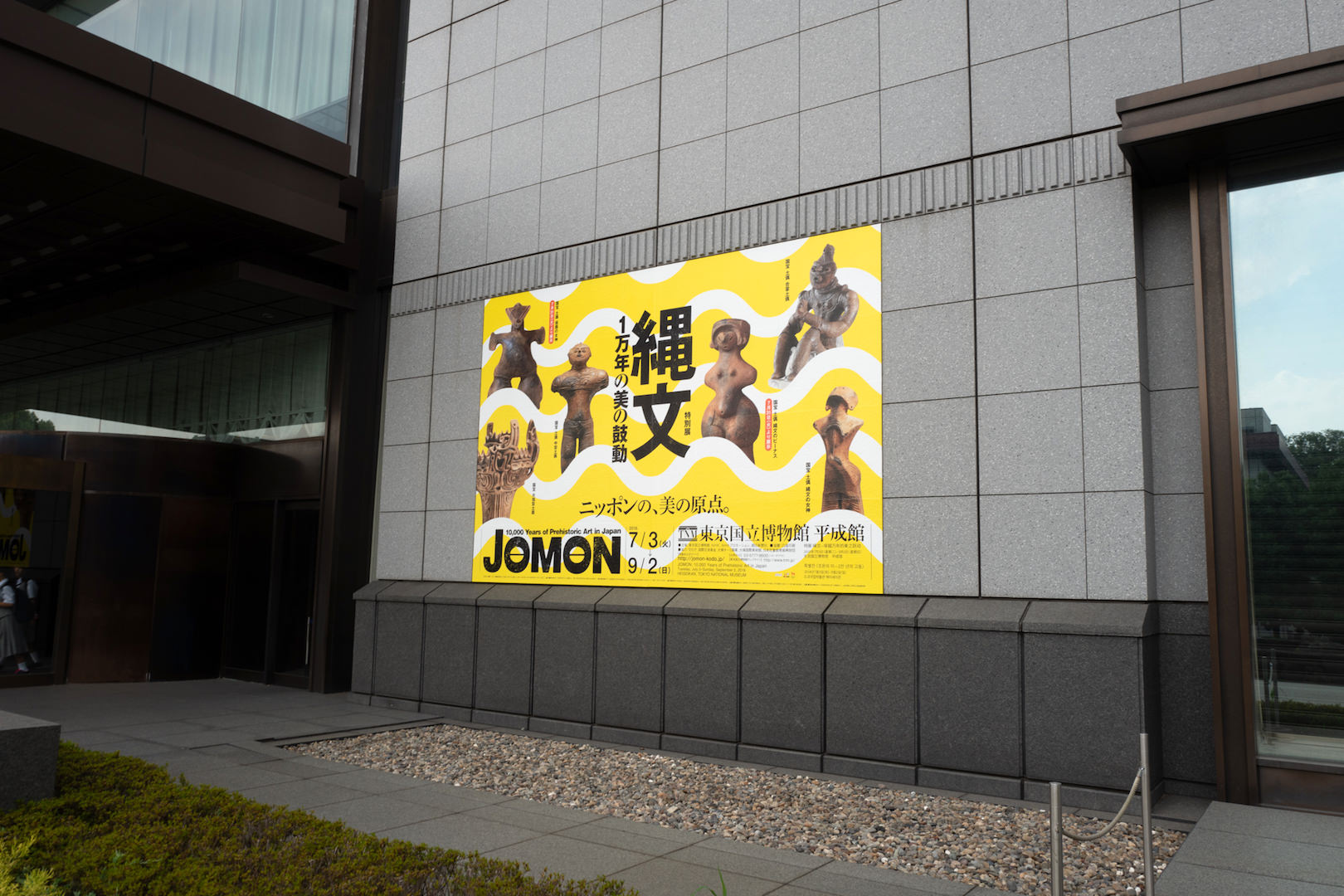
We visited the “Jomon Exhibition” now on view at Tokyo National Museum. Attendance has surged past 200,000, and the show seems to be gathering ever more momentum as the closing date approaches. The unique promotional strategy has caught our eye and we’ve been watching turnout with great interest — surely this counts as a resounding success.
https://art-on.jp/2018/07/jomon-kodo/
The Jomon period stretches roughly from 15,000 years ago (around the 131st century BCE) to about 2,300 years ago — an extraordinarily distant, sweepingly broad era. The Jomon people had a strikingly refined sensibility, and part of the fun lies precisely in imagining what the many excavated artifacts might have been used for, drawing on speculation permitted only by not knowing.
A Grand Gathering of National Treasures!
One of the highlights of the exhibition is the assembly of all six items designated as National Treasures among the excavated artifacts from the Jomon period (“Masked Goddess” and “Jomon Venus” are on view from July 31 (Tue) onward).
- Dogu, Hollow Dogu
- Dogu, Masked Goddess
- Dogu, Jomon Goddess
- Dogu, Praying Dogu
- Dogu, Jomon Venus
- Flame-Shaped Vessel
What especially caught our attention was the “Praying Dogu.” Its pedestal is made of “custom-cut crystal,” and the way it fits perfectly was truly striking. Even in photographs it’s charming — those endearing features are a wonderful touch.
.jpg)
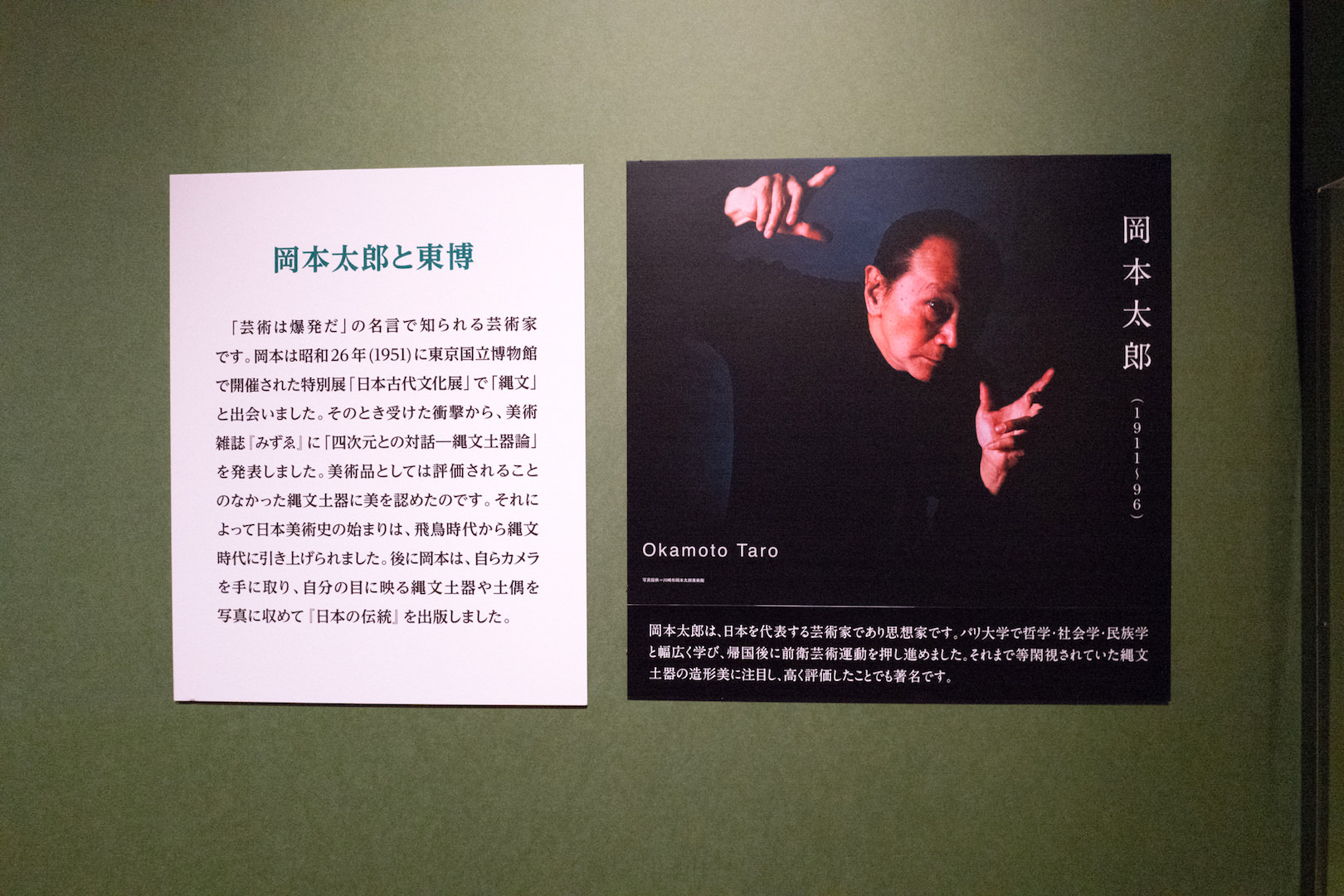
Taro Okamoto — The Discovery of “Jomon Beauty”
The person who uncovered a Jomon appeal different from the “Jomon” identified by archaeologists was the artist Taro Okamoto (1911–1996). Known for the famous saying “Art is an explosion!,” he described it as “a chilling force that makes you want to cry out,” and what shook his conception of the “essence of art” most powerfully was the Jomon pottery he encountered at Tokyo National Museum.
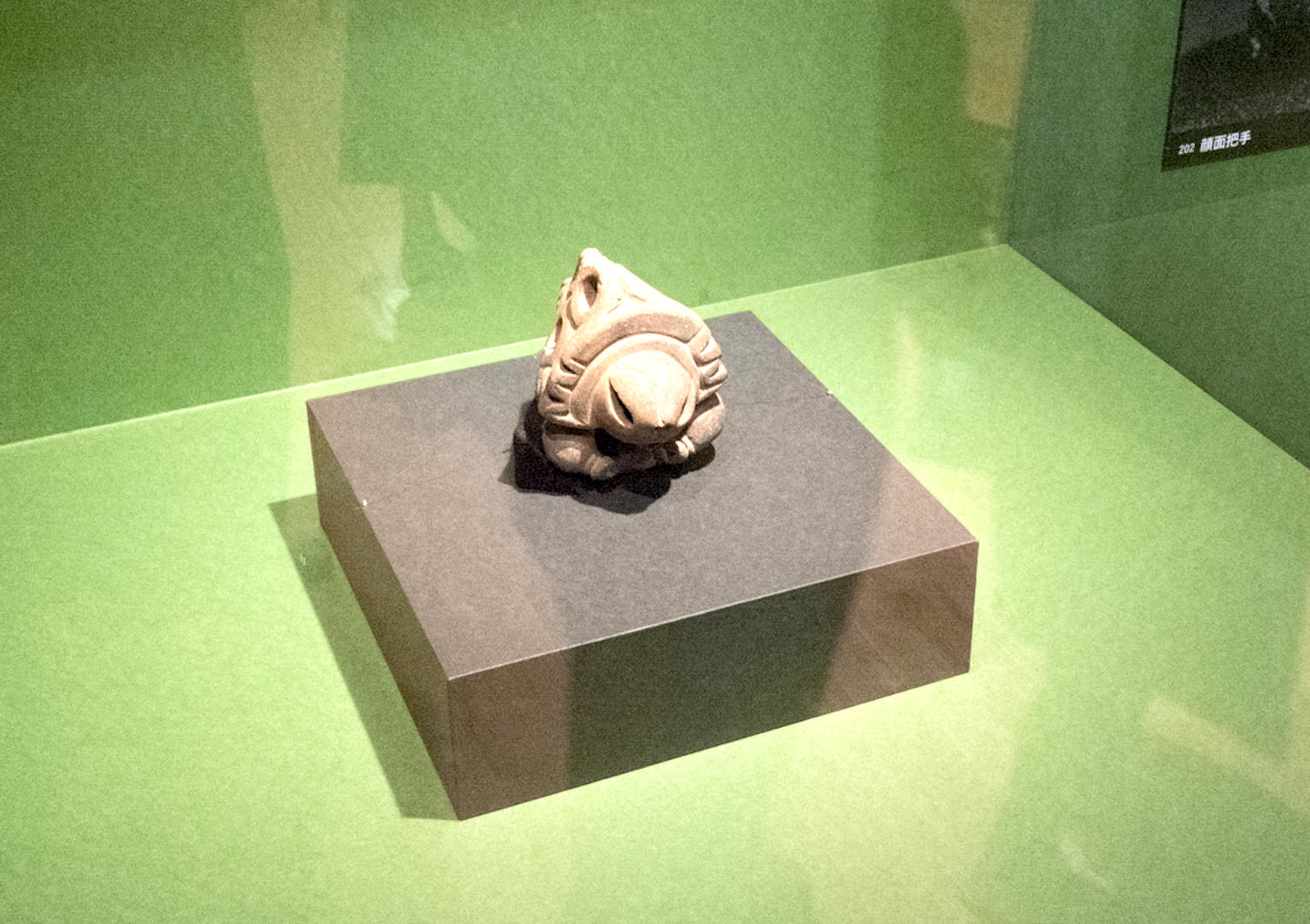
This writer could not manage to cry out, but Taro Okamoto surely must have laid eyes on the “Human-Face Handle” too. Somehow it does evoke something reminiscent of Okamoto’s own work. It’s rather charming.
Final Thoughts
Some segments of the media have voiced criticism that the display leans too heavily toward an aesthetic approach — but from this writer’s viewpoint, anything of that sort can always be checked in a book, and such complaints strike me as rather off-base.
The works were beautiful, unique, and stirred all kinds of imagination — a genuinely absorbing viewing experience as artworks. And it was an exhibition that also awakened a strong intellectual curiosity about that distant time.