MITSUKOSHI ✕ Tokyo University of the Arts Summer Art Festival 2018
“MITSUKOSHI ✕ Tokyo University of the Arts Summer Art Festival” is a project that presents works by roughly 100 graduate students and alumni under 40 from Tokyo University of the Arts on the 6th-floor art gallery of Nihombashi Mitsukoshi Main Building. 2018 marks its fifth edition.
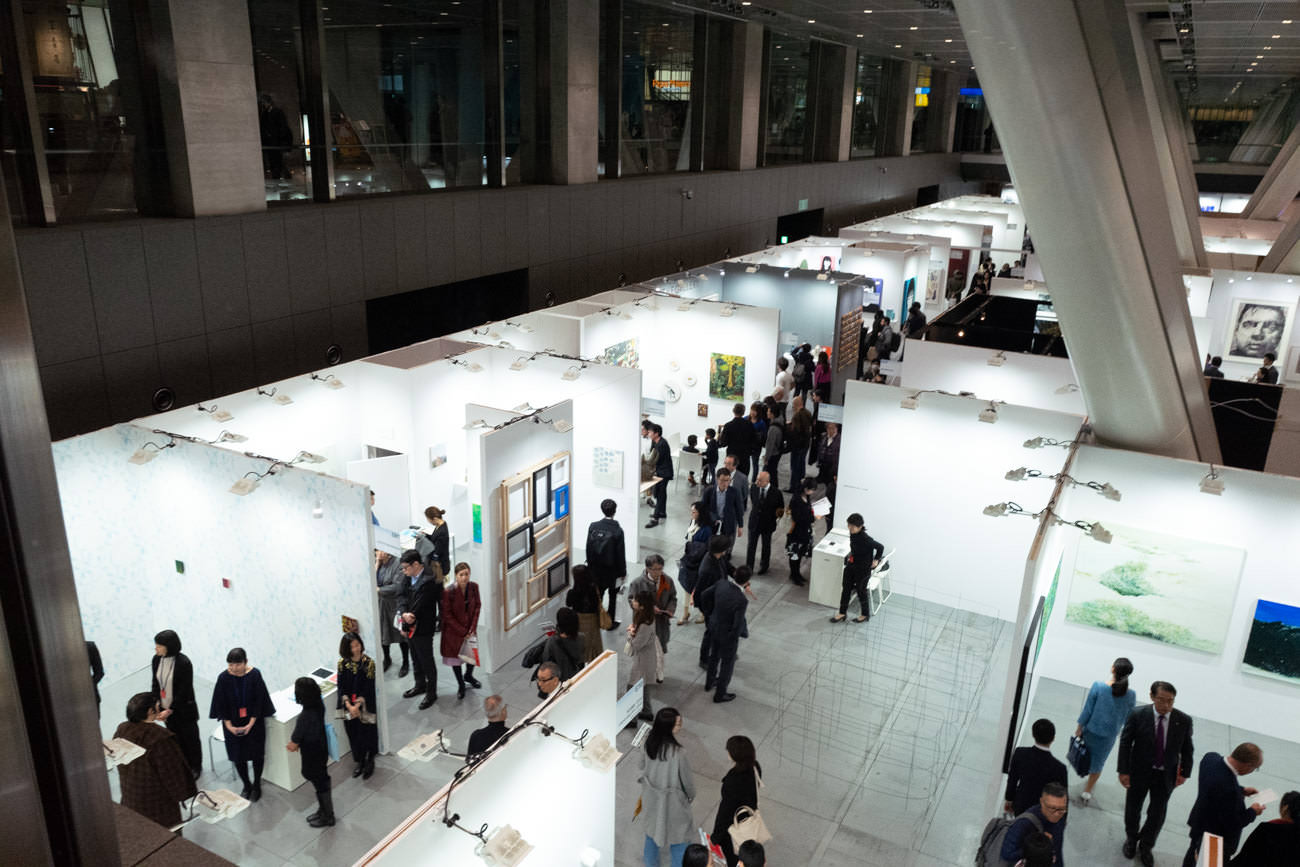
Having artists from a wide range of genres gather on a single floor makes for both a rewarding viewing experience and an easy way to browse. A remarkably broad group of artists is participating (see the list at the end of the article).
One thing you notice when so many diverse works are gathered in one place is: “Ah, out of all these works, THESE are the ones I like!” — you get to see your own preferences reflected back at you. Surrounded by the elite young artists of Tokyo University of the Arts, the pinnacle of Japan’s art academies, you can recognize and reaffirm your own tastes and sensibilities.
And in the middle of that, you sometimes stumble onto an unexpected discovery. Perhaps because I belong to a generation that grew up around plastic models and figures, my eyes were arrested by the three-dimensional works of the sculptor Kishi Omori, whom I encountered this time.
Kishi Omori
The work Kishi Omori exhibited was titled “After the festival.” He seems to have expressed his own worldview through the overall theme “Festival.”
For an exhibition themed around “Festival,” I thought there could just as well be a piece imagining the world after the festival is over. Looking back on what kind of “festival” it was — that is what matters. — Kishi Omori
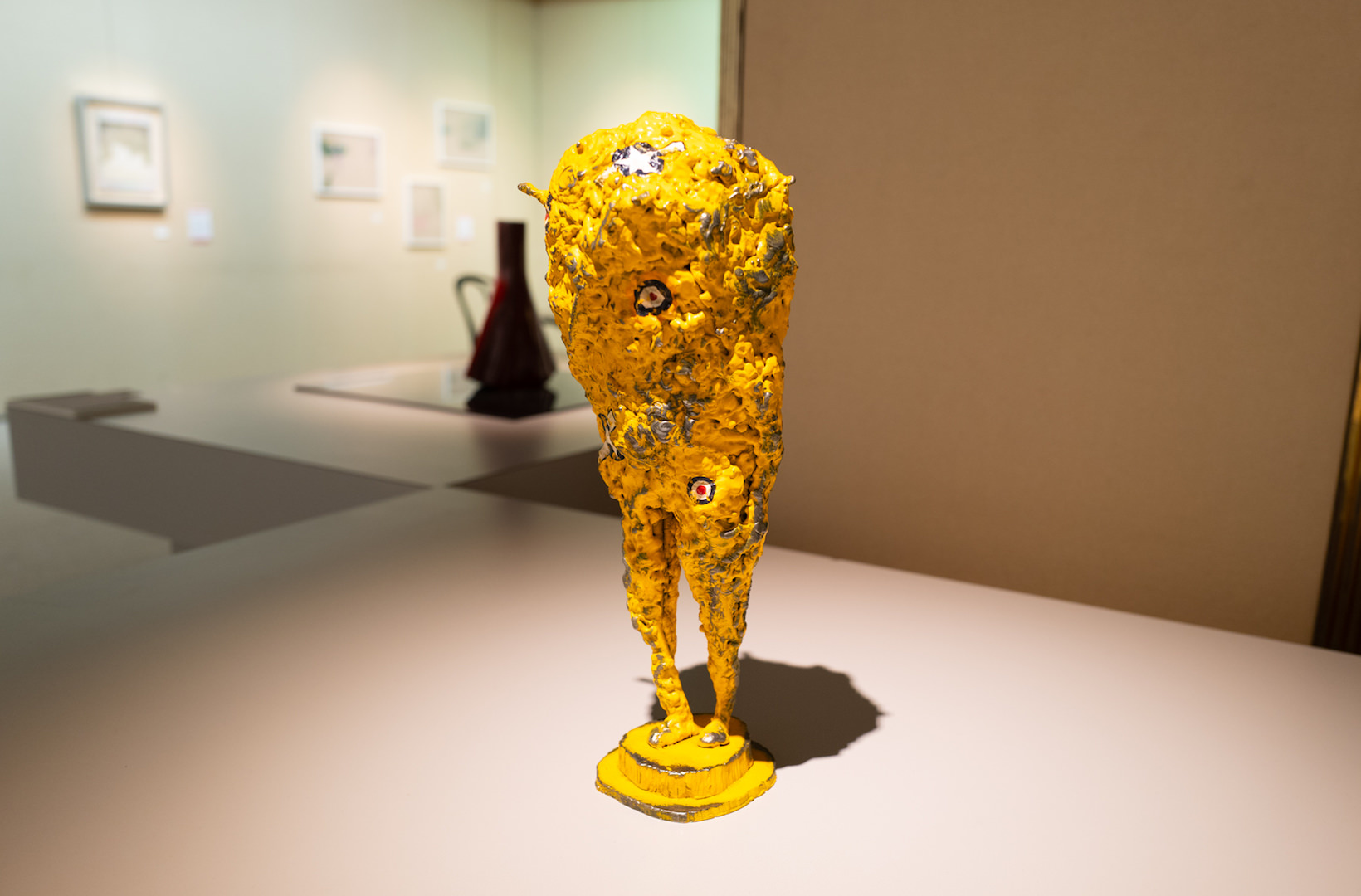
A three-dimensional work painted in yellow lacquer paint. The national identification marks placed on the bodies of military aircraft are the two of the British and U.S. militaries. It’s a work that evokes war. What lies after the festival…
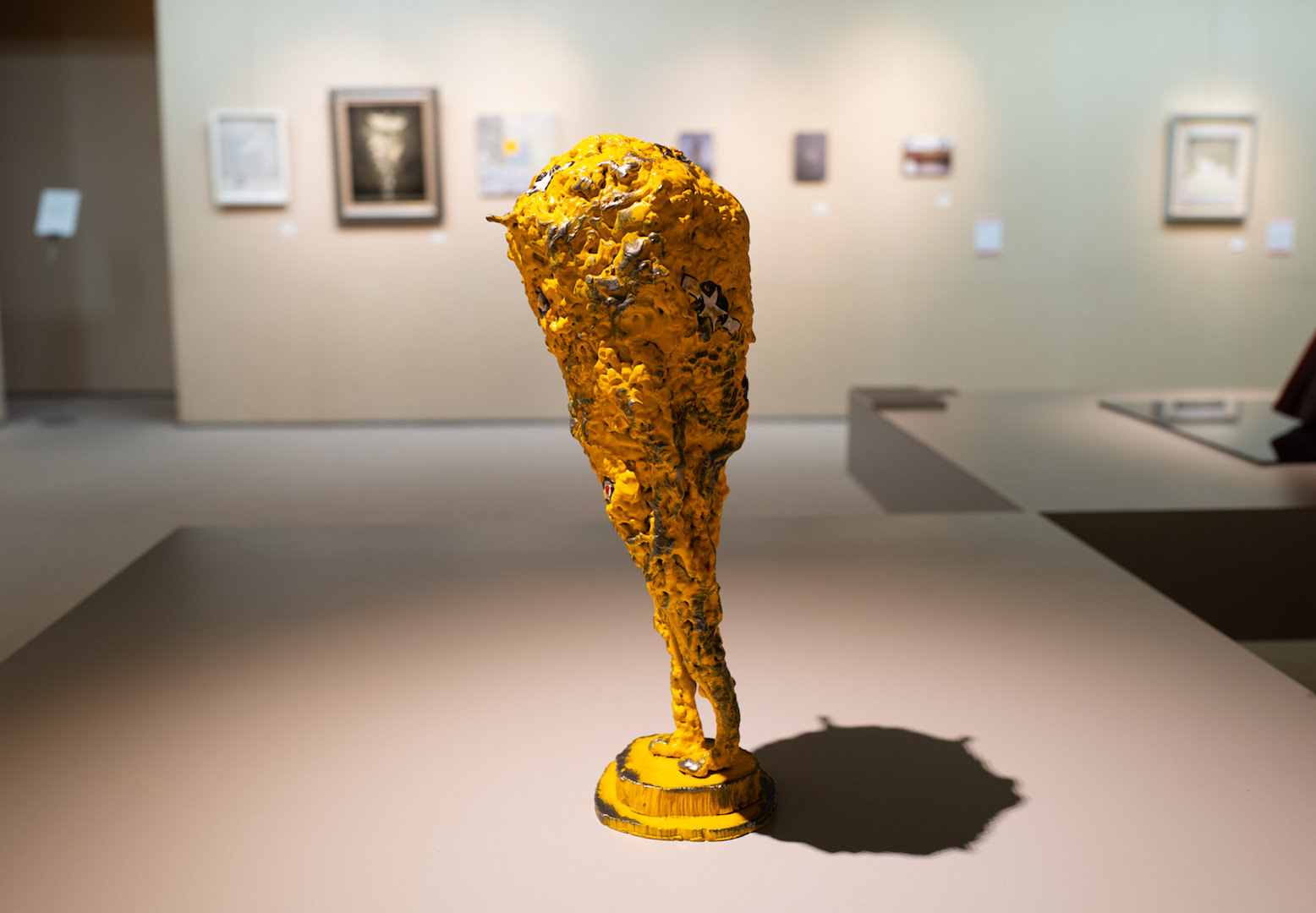
Kishi Omori’s characteristic technique is called “mixing build,” in which multiple different parts are combined to produce an arbitrary form. This work appears to be made of iron; how such a complex piece was actually built is a question that lingers.
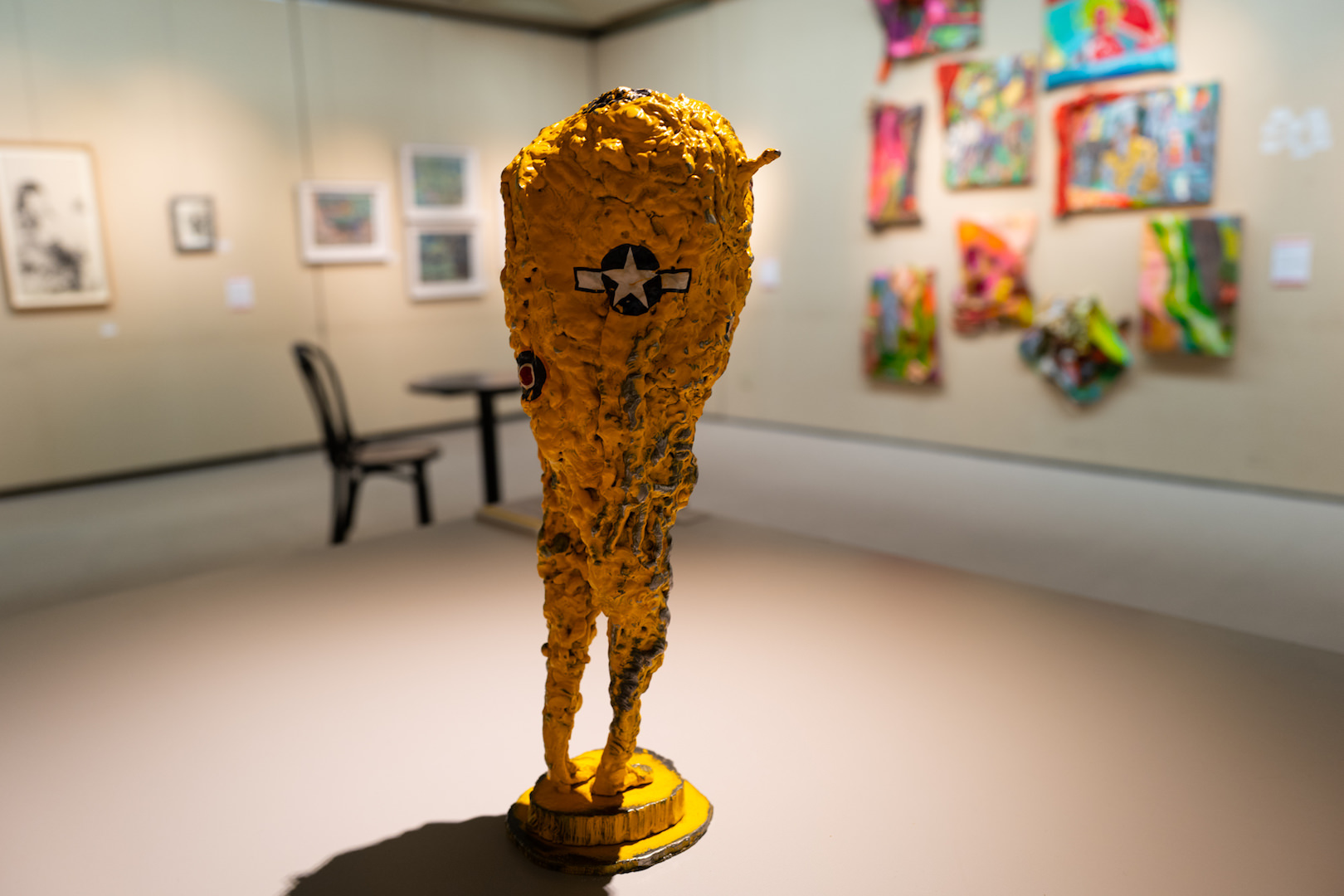
Iron relics melted after fierce conflict — they too seem to evoke something. Unfortunately, by the time this writer saw the work, it had already been sold.
In 2017 Kishi Omori published a paper titled “Fragments of the Imaginary — Sculptural Expression Inspired by Plastic Models”, in which he cites “inspiration drawn from plastic models” as a key element in his own sculptural practice.
We look forward to the future activities of Kishi Omori, a sculptor of the next generation!
Details
MITSUKOSHI ✕ Tokyo University of the Arts Summer Art Festival 2018
Nihombashi Mitsukoshi Main Building, 6F Art Gallery
August 15 (Wed) – 20 (Mon), 2018 — closes at 5:00 p.m. on the final day
Participating Artists
● Japanese-style Painting
Haruka Ito, Kota Iwatani, Hanako Sawasaki, Rinna Shiino, Sanami Shimada, Kei Sugiyama, Yui Furuyama, Yukie Mori, Yuki Yamada, Yuka Den
● Oil Painting
Rena Uchida, Sachiko Osugi, Ryu Kawada, Reira Takemura, Mariko Tachihara, Kenichi Nakamura, Manami Numata, Sei Nozawa, Gin Hasegawa, Sara Haruta, Sabrina Hedwig Horak, Xu Yun, Yuhei Makiyama, Yo Mogi, Jun Yoshida, Li Feifei, Hikaru Watanabe
● Sculpture
Susumu Ako, Kishi Omori, Hiroyuki Kawashima, Shoichi Kitayama, Terumi Kozuka, Mao Saruwatari, Gento Suzuki, Konomi Mori, Ayumi Morooka
● Metal Carving
Kumiko Endo, Maya Koga, Nao Mizutani
● Metal Forging
Marie Sakagami, Eiko Miki, Mizuto Miyazaki, Ayako Kuno, Sakiko Sugimura
● Lacquerware
Iori Oda, Ami Tanakadate, Shinpei Matsuzaki
● Ceramics
Takato Sasaki, Masashi Shigeta, Taro Takaoka
● Textile Dyeing and Weaving
Kishi Ebizuka, Miho Katsuragawa, Miho Sekimizu
● Glass
Yu Uchida, Kaho Enomoto, Yasuo Okuda
● Craft Foundations
Masaki Ikoshi, Taku Higuchi
● Woodcraft
Takayuki Koishi, Shintaro Murao
● Design
Yusuke Aonuma, ICHASU, Yoshiaki Oshiro, Haruka Kanemaru, Eri Karasawa, Kyo Koganesawa, Nana Shimomura, Yuji Takahashi, Kei Tanaka, Akiko Nakaya, Nitoushin, Hayato Fujimura, Takashi Hokoi, Marina Hosoda, mollydomon, Isana Yamada, Dari Yamada, Manami Washino
● Architecture
Ryohei Akita, fujirooll, Megumi Machida,
● Intermedia Art
Yoshiki Omote, Chie Orihara, Noriaki Kamiya, Ryota Kikuchi, Arisa Chinen
● Art Education
Noriko Nomura, Seiji Mukai
● Cultural Properties
Naoshi Ono, Satoko Ogura, Hisanori Kojima, Atsuo Suzumura, Yuko Takeda, Chisato Nakano, Daisuke Mukai, Aki Yamada