“Painting, ___” Vol.2
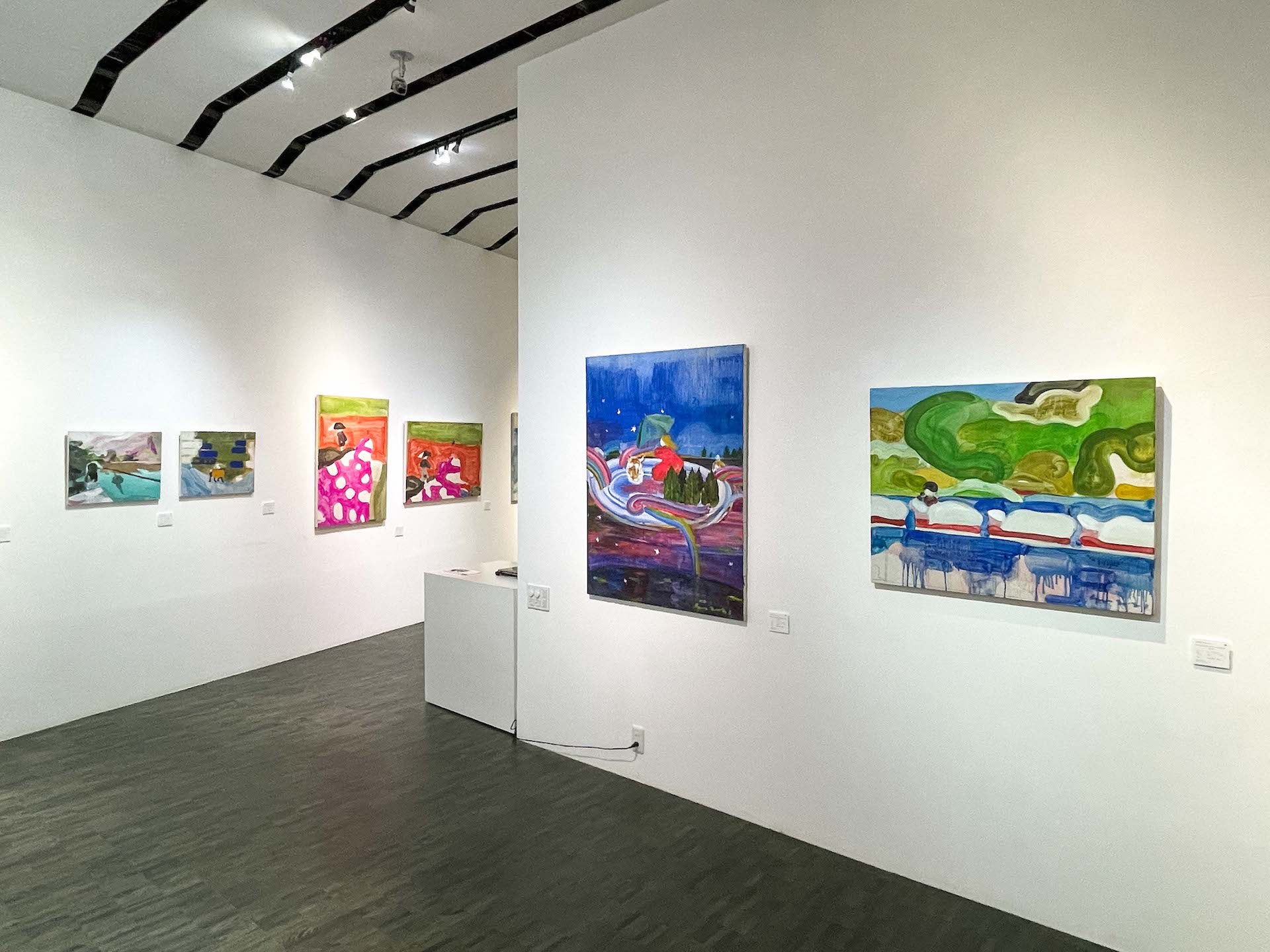
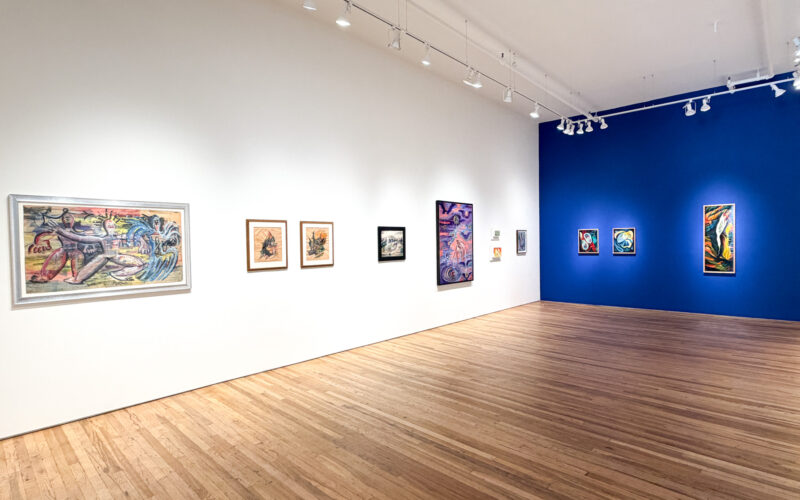
The second installment of “Painting, ___,” a series curated by Mika Kuraya of The National Museum of Modern Art, Tokyo, was on view, so I paid a visit. The venue is “gallery αM,” operated by Musashino Art University.
Mika Kuraya recently oversaw the planning and structure of the “Morikazu Kumagai Exhibition,” and she also seems to have a deep understanding of contemporary art. This series introduces five artists over the course of a year.
As the title suggests, the project asks how painting engages with reality. The blank space in the title is perhaps a vessel prepared for each artist and each viewer to fill in on their own.
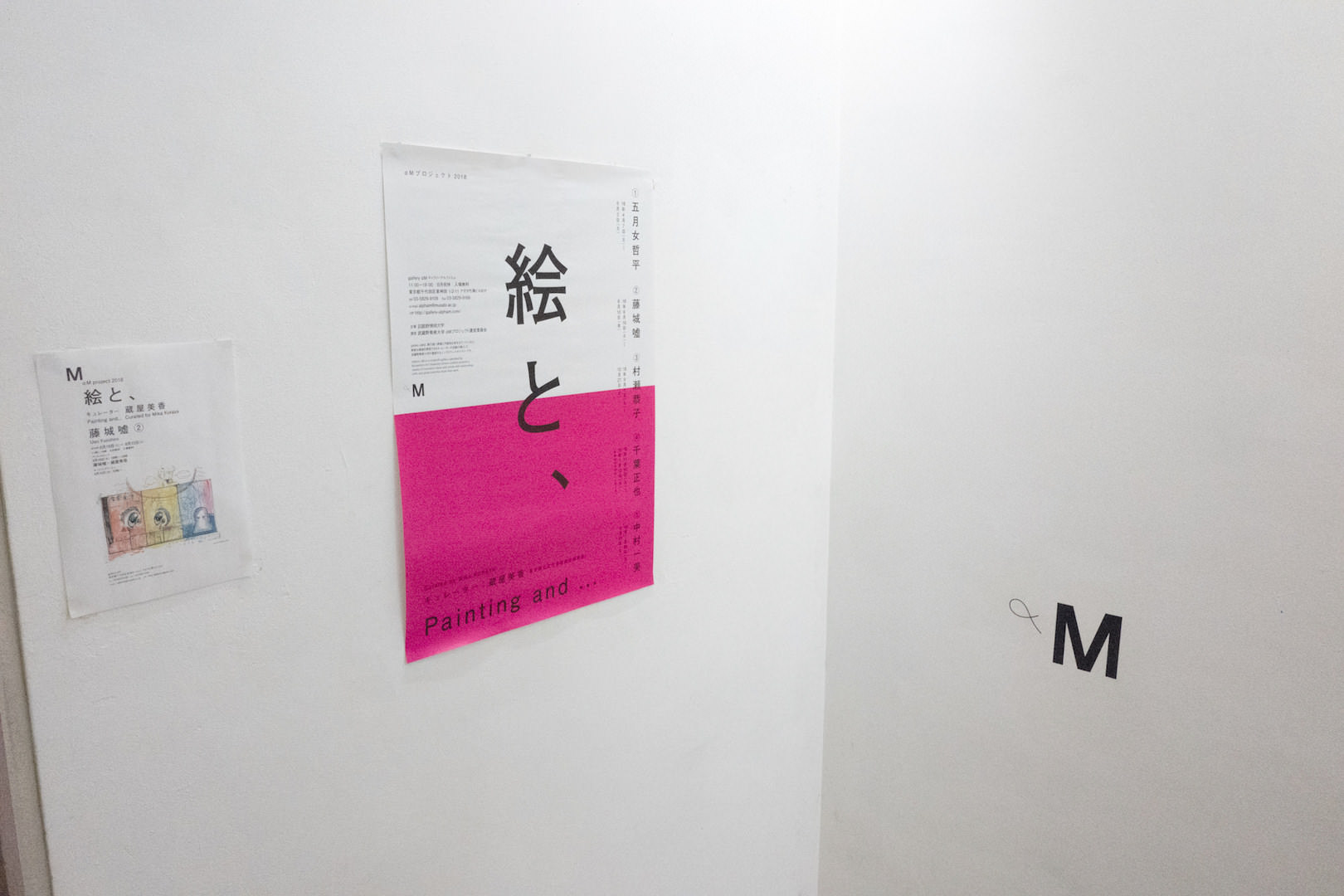
“Painting, ___”
vol.1 Teppei Soutome: April 7 (Sat) – June 2 (Sat), 2018
vol.2 Uso Fujishiro: June 16 (Sat) – August 10 (Fri), 2018
vol.3 Kyoko Murase: September 1 (Sat) – October 27 (Sat), 2018
vol.4 Masaya Chiba: November 10 (Sat), 2018 – January 12 (Sat), 2019 (winter break Dec 23 – Jan 7)
vol.5 Kazumi Nakamura: January 26 (Sat) – March 23 (Sat), 2019
“Painting, ___”
Mika KurayaThis year’s series takes up painting. It came at the request of Musashino Art University, which runs the gallery. I hesitated to accept. I like painting very much, but I have recently been at a loss for how to think about painting. Even when I find individual works or artists compelling, I feel it has become difficult — especially within Japan — to sense the energy of a movement or the emergence of the medium’s new possibilities.
For me, this feeling grew markedly stronger after 3.11. Seven years have passed since the earthquake, and in that time society has grown more intolerant of dissent, economic disparity has widened, and both the government and international relations have changed significantly.
Let me tentatively call all of this — including its aftermath — the “earthquake” (in quotation marks). In response to this “earthquake,” works that speak candidly about society have become conspicuous in the Japanese art world. Photography, video, and project-based works, given the medium’s inherent commitment to reality, have tended to respond quite directly. Painting, however — leaving aside the material level of pigment and canvas — can in principle assemble color and form without any connection to reality. It can of course depict political subjects head-on, but this method, tried during the era of the Great Kanto Earthquake through the wartime 1920s–40s and again in the postwar 1950s–60s, often carries the danger of oversimplifying things.
What is the better way for painting to engage with reality?
The question sounds embarrassingly plain, but unless it is brought into the open and confronted head-on, my unease is unlikely to lift. Incidentally, the term “painting” is a kind of insider jargon that risks confining the problem within the art world, so I intentionally used the word “picture” in the title.
The painters chosen this time are each attempting to connect “painting and” reality through methods unique to painting. “Painting and” social events, “painting and” symbols, “painting and” sensation — many different things can follow “Painting, ___”. I hope that carefully tracing their attempts one by one will provide a powerful catalyst for lifting the unease of myself and others who share these questions.
Uso Fujishiro
The artist Uso Fujishiro (born 1990) is a young artist in his twenties. He mainly presents painted works in a mode that incorporates characters rooted in otaku culture together with text, icons, and symbols.
He is an artist who properly explains his own works through statements and commentary, giving the impression of a strong sense of responsibility toward his practice.
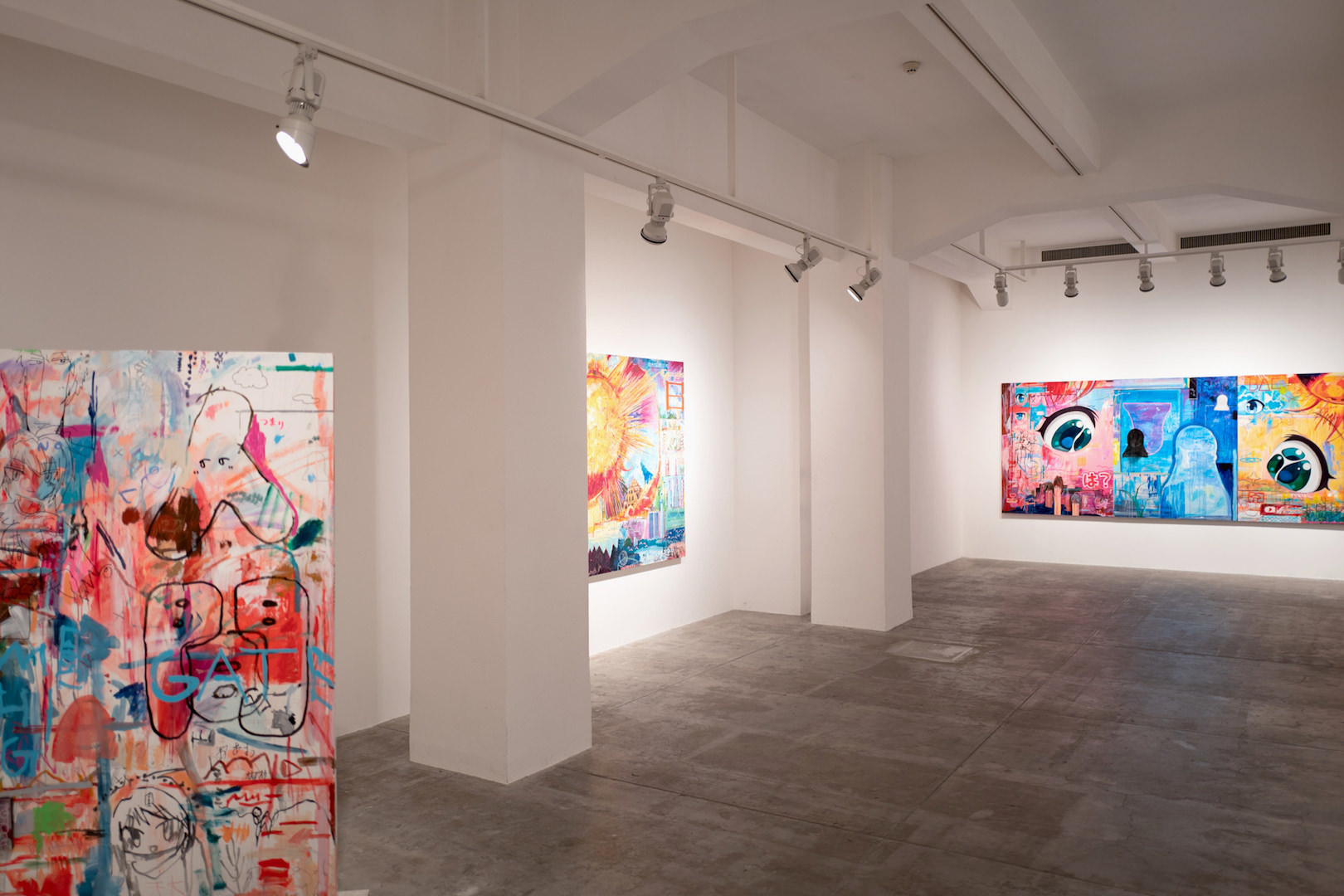
The exhibition comprises five works from the five years since 2013, together with four new pieces produced in 2018 — all of them large in scale.
Exhibited Works
Uso Fujishiro himself has published commentary on his website for some of the works, and it is quoted here.
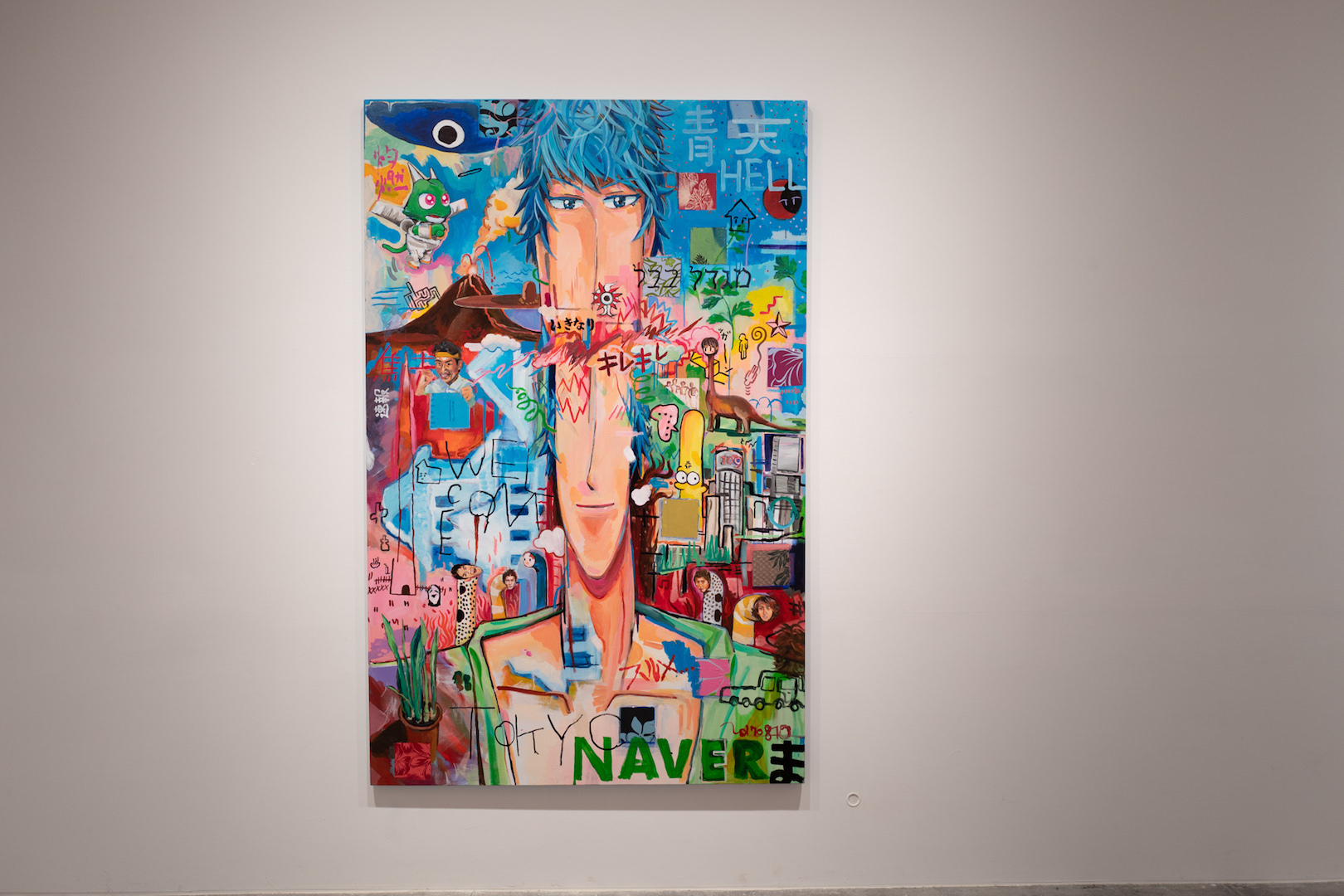
For those familiar with subcultures grounded in manga and anime, saying “character” often calls up “cute girl character” first. But of course all creative works have “characters” of every age, gender, and beyond human — and if you make work with “characters” in mind, the differences among them shouldn’t be ignored. So — what, for example, are the notable features of the so-called “handsome boy character”?
I began consciously observing and drawing anime “handsome guys” around 2013. Popular at the time were the 2011 anime adaptation of Uta no ☆ Prince-sama ♪ and Kyoto Animation’s FREE!. Copying the characters directly, I noticed a slightly odd, elongated nose bridge. Even with the nose positioned lower and lower, the “handsome guy” look still holds. In other words, the more vertically extended, the higher the “handsome” quotient? And from that, by inversion, the “cute” of a “cute girl” whose big eyes sit side by side may be produced by horizontal deformation. This is the “character vertical-horizontal law”… (mysterious). — Uso Fujishiro
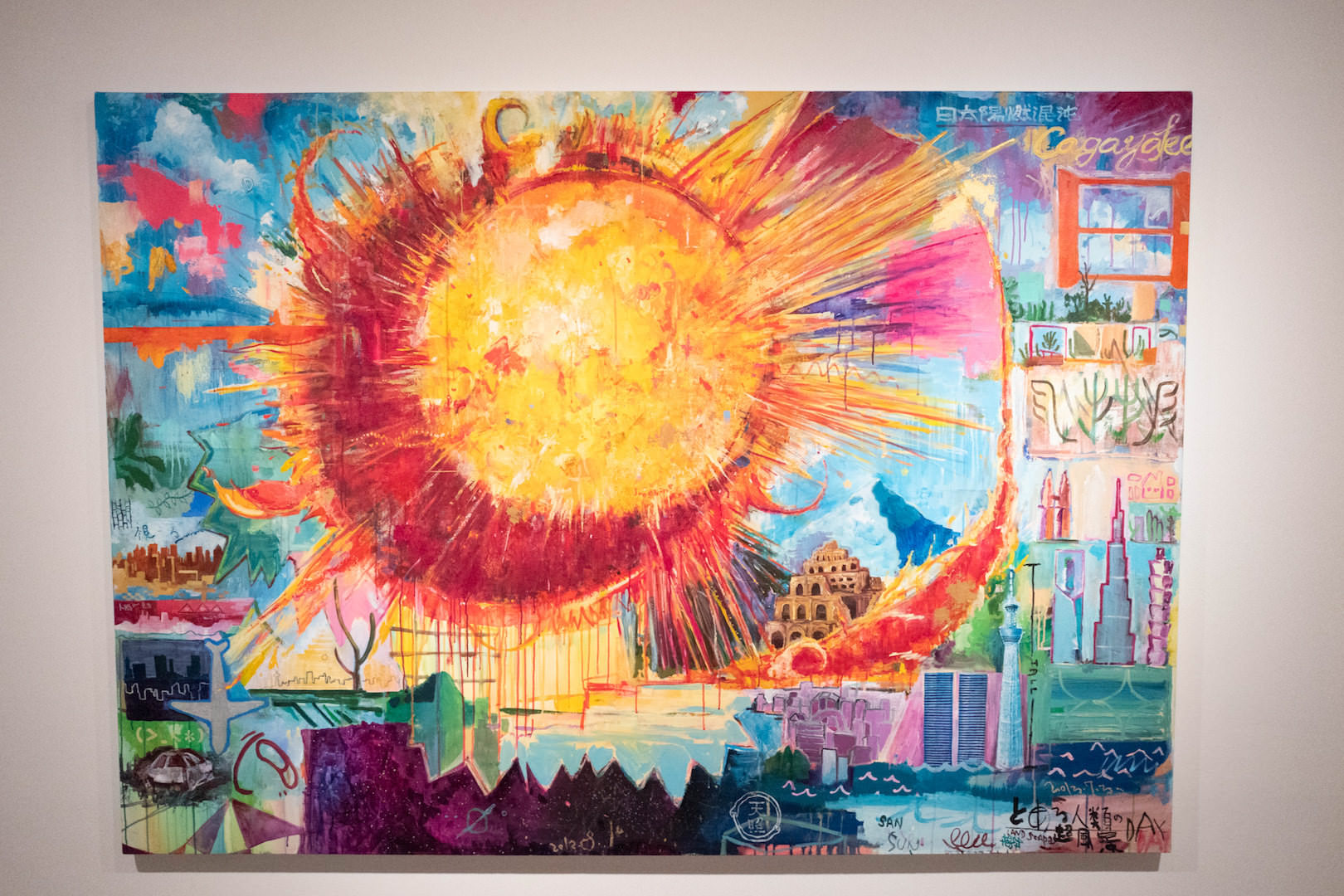
Since childhood I have been interested in the spectacles of weather and celestial phenomena — spectacles humans have no way of resisting. But when they actually occur as disasters, they are anything but funny, and we are forced to face natural calamities and the dead.
This work is based on a watercolor drawing originally made for the feature “Landscapes of Acceptance — Toaru Jinrui no Chōfūkei” in GENDAI*ART vol.1, published by Chaos*Lounge the year after the Great East Japan Earthquake. — Uso Fujishiro
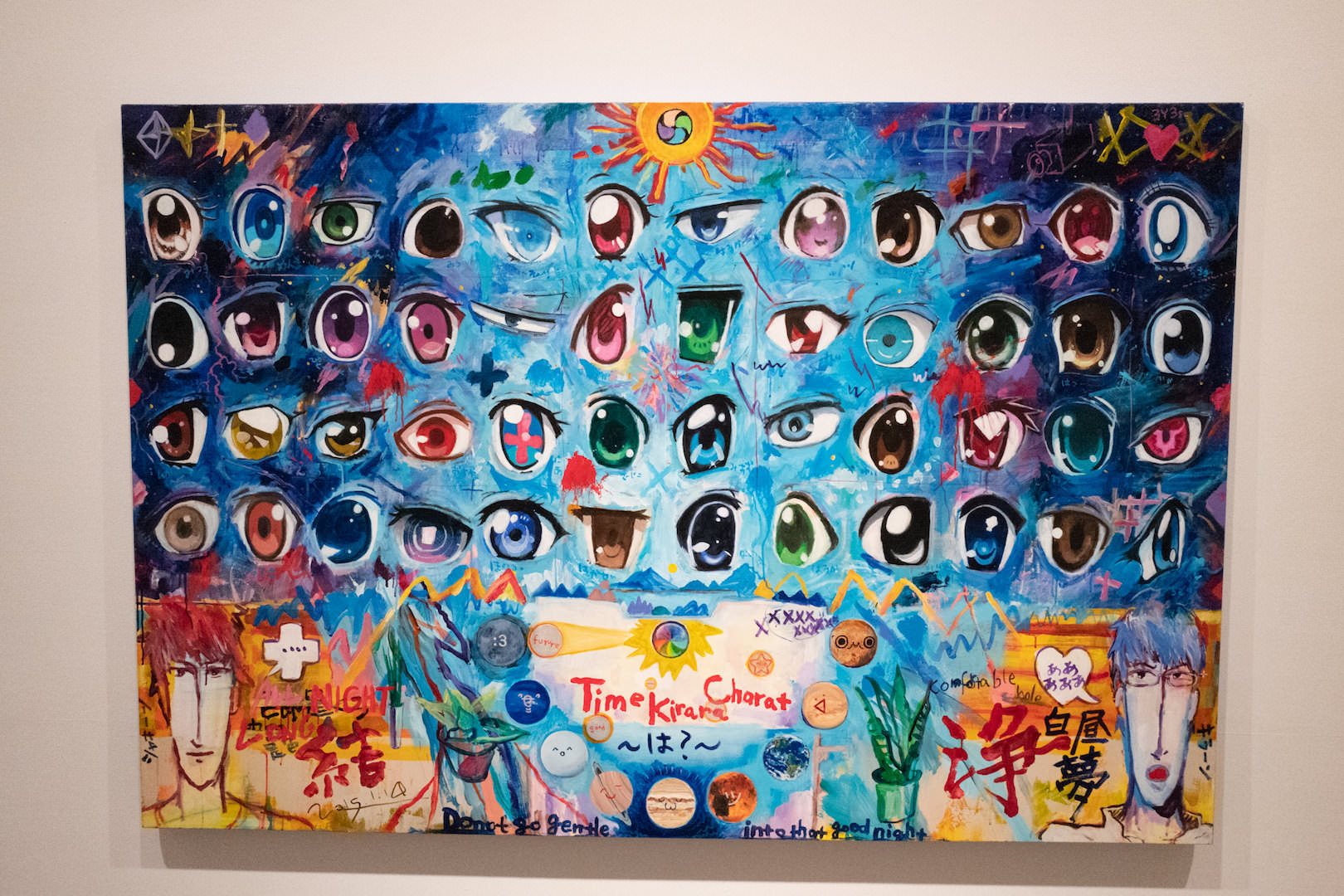
This piece was a graduation work and is one of the “night” series I introduced earlier, part of the “day” and “night” series. Kochira, Raigō — which continues the “day” series — was produced around the same time.
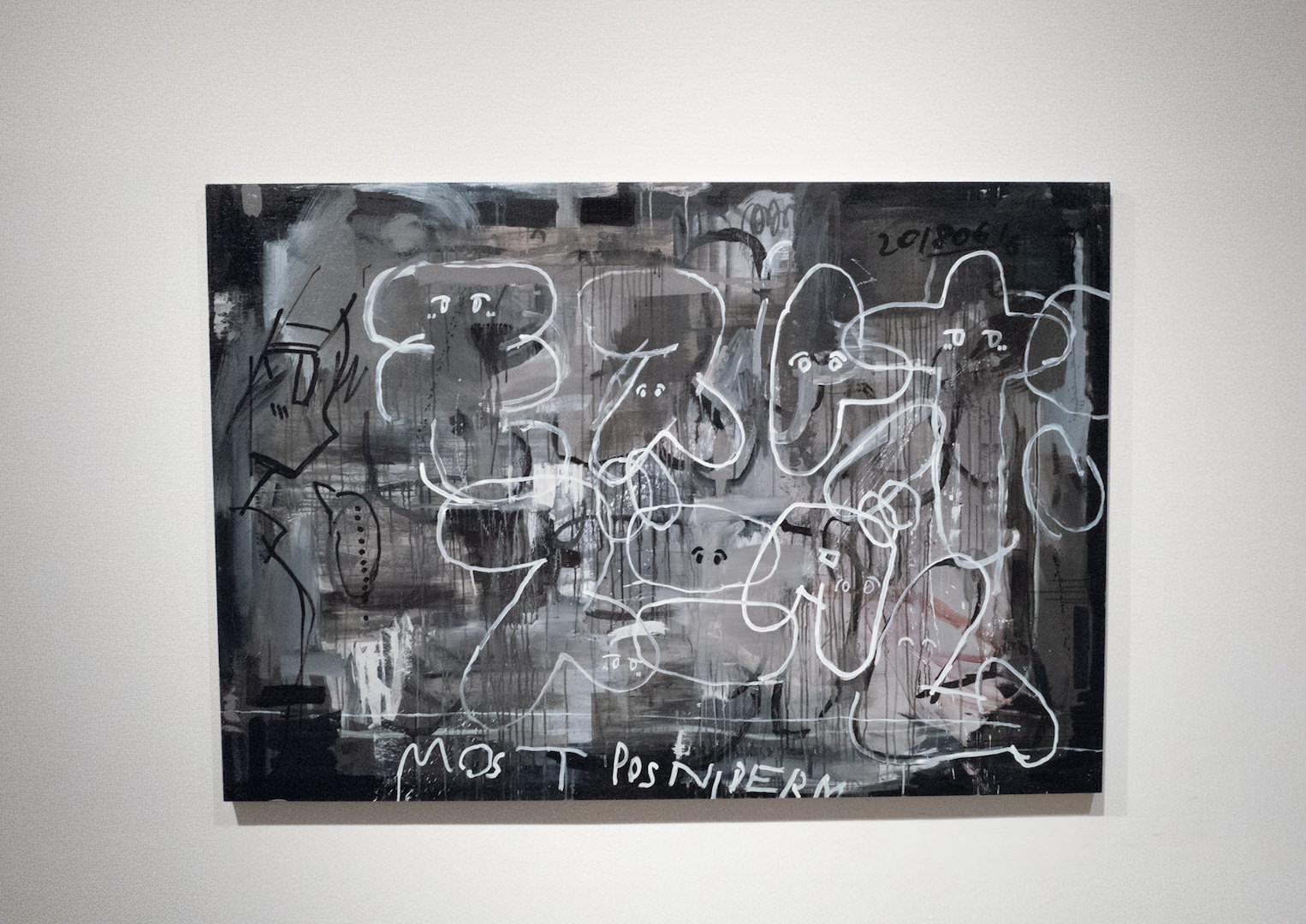
This work is part of a series with “text” as its theme. Since I began working seriously in painting, I have carried a certain resistance to accurate draftsmanship. During my time at art prep school, watching my fellow students, I sensed that “with 2 or 3 months of daily focused practice, just about anyone can become good at basic drawing,” and precisely because of that I found earnest academic drawing boring (I also thought the world of “clichés about plaster casts” that circulated as academic humor was silly). As a result, I went through a period of drawing during those sessions in which I repeatedly drew circles of various shapes (or more precisely, lines that always returned to their starting point), letting the accumulation of circles form the object. I call this style “Circle Drawing.” — Uso Fujishiro
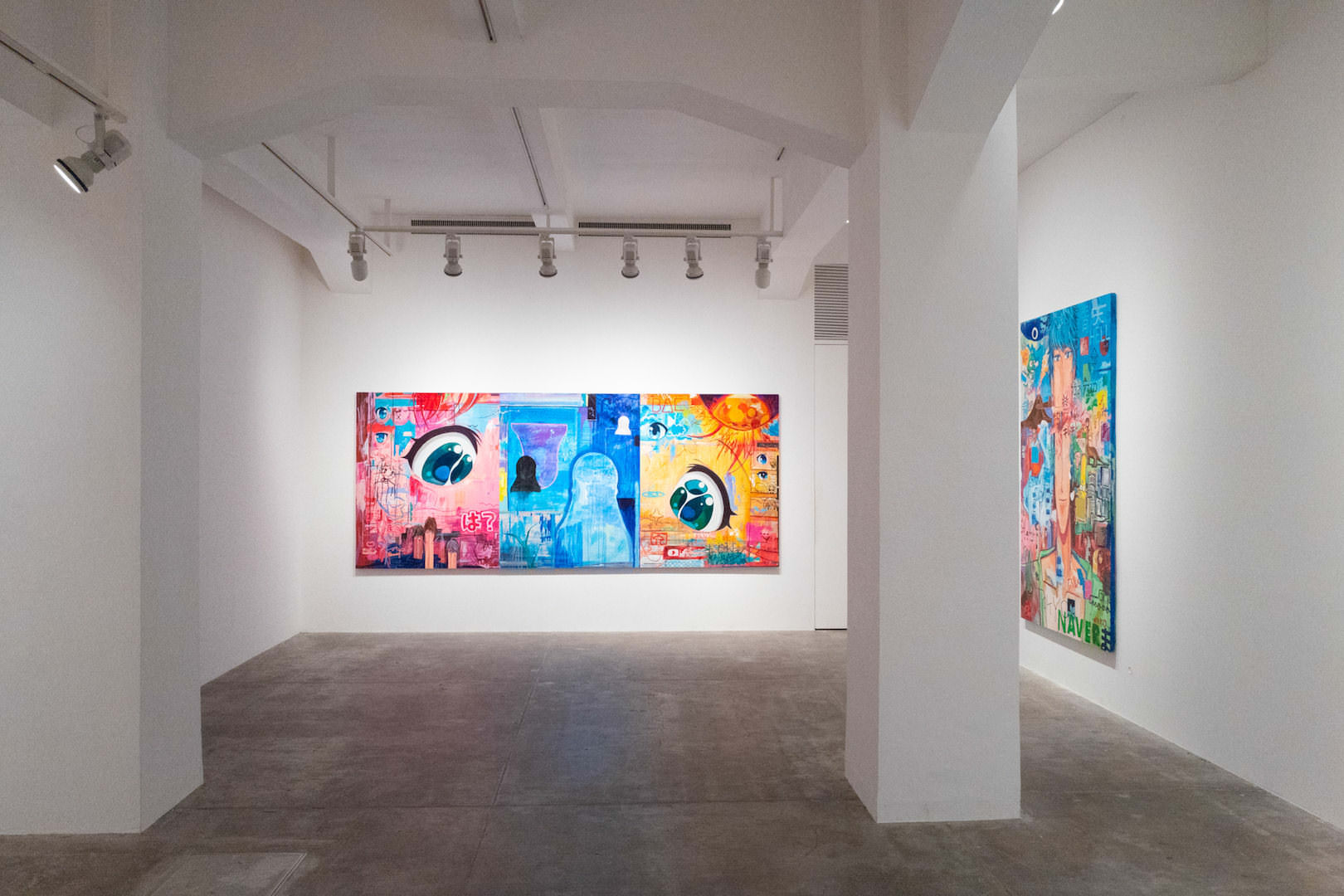
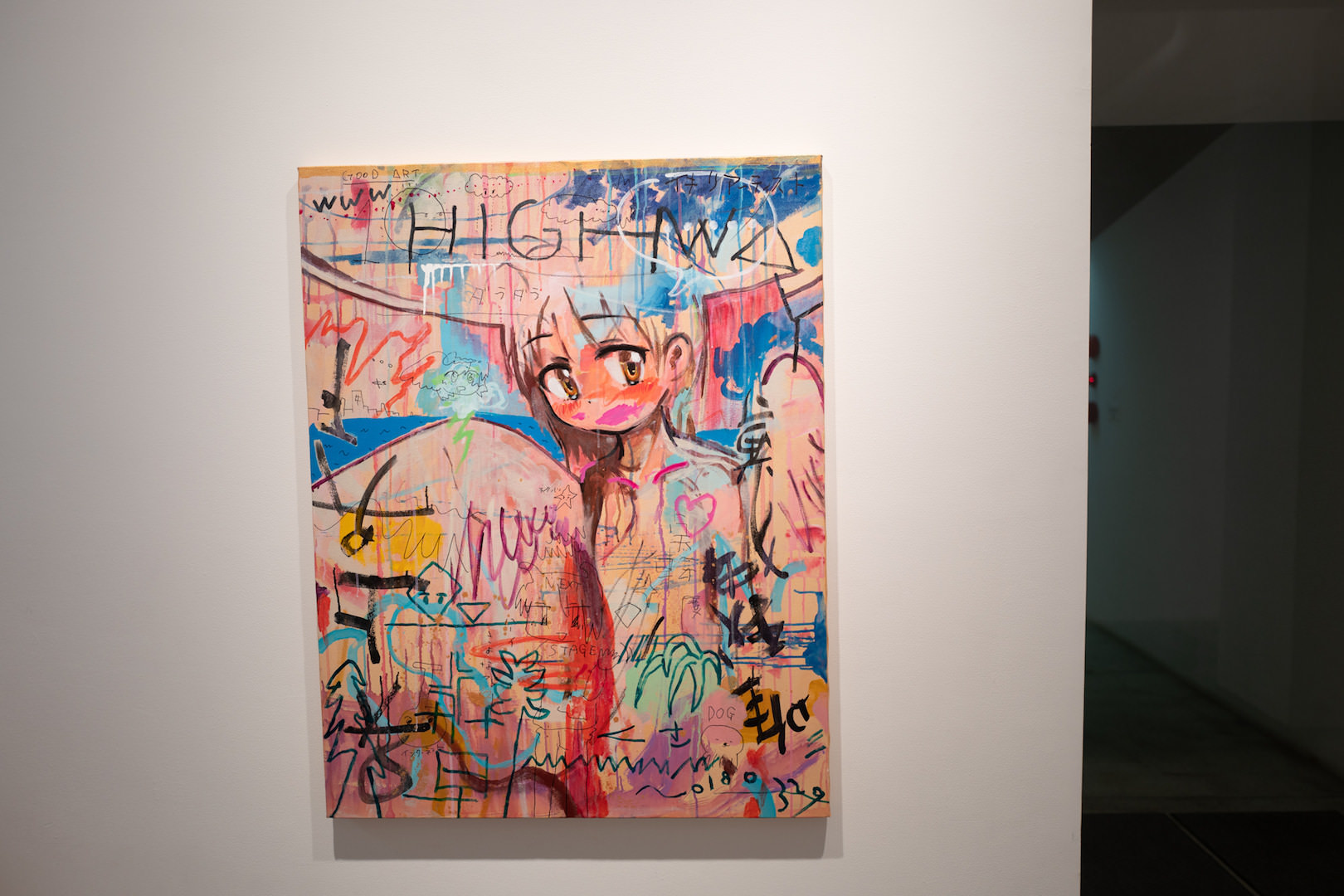
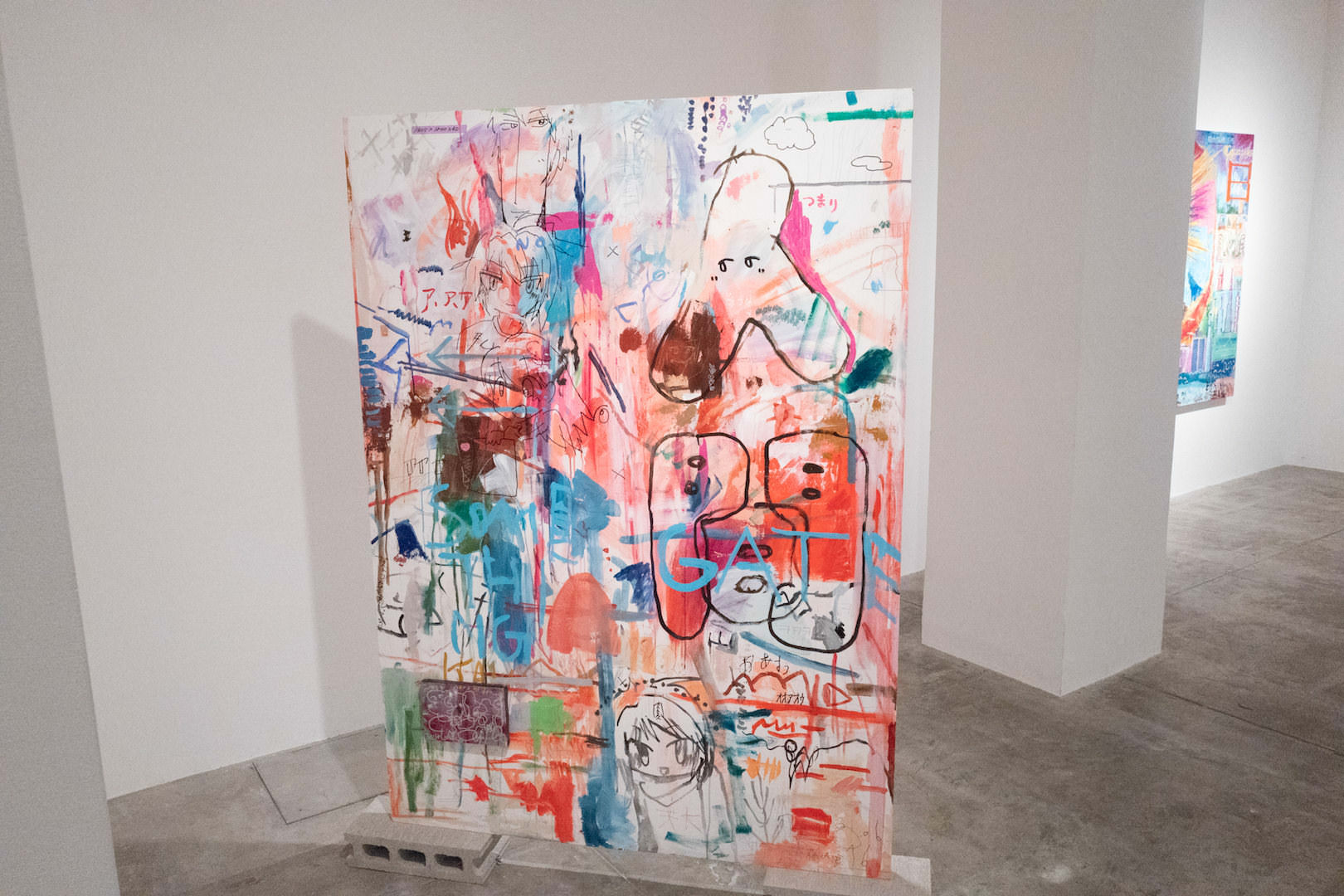
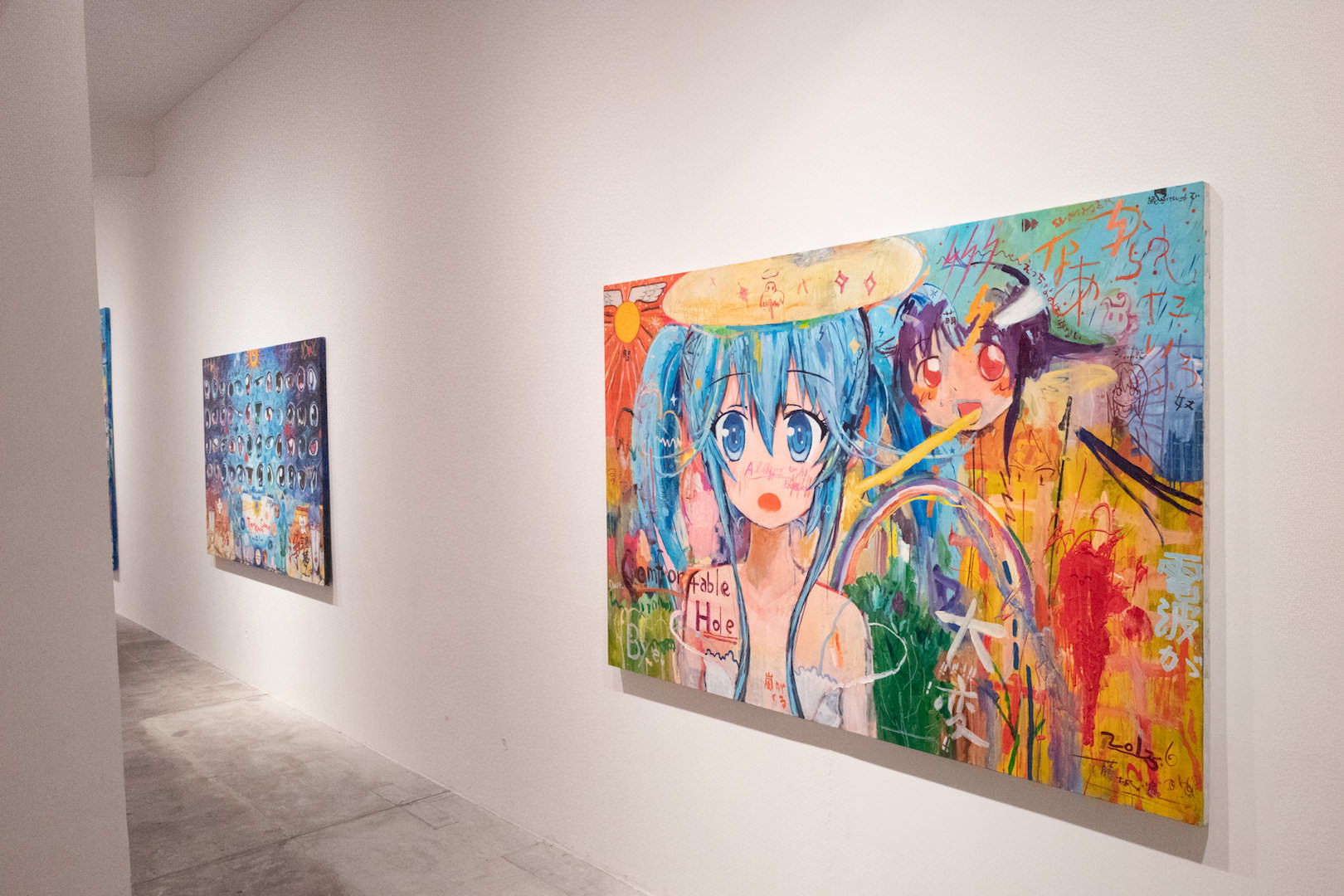
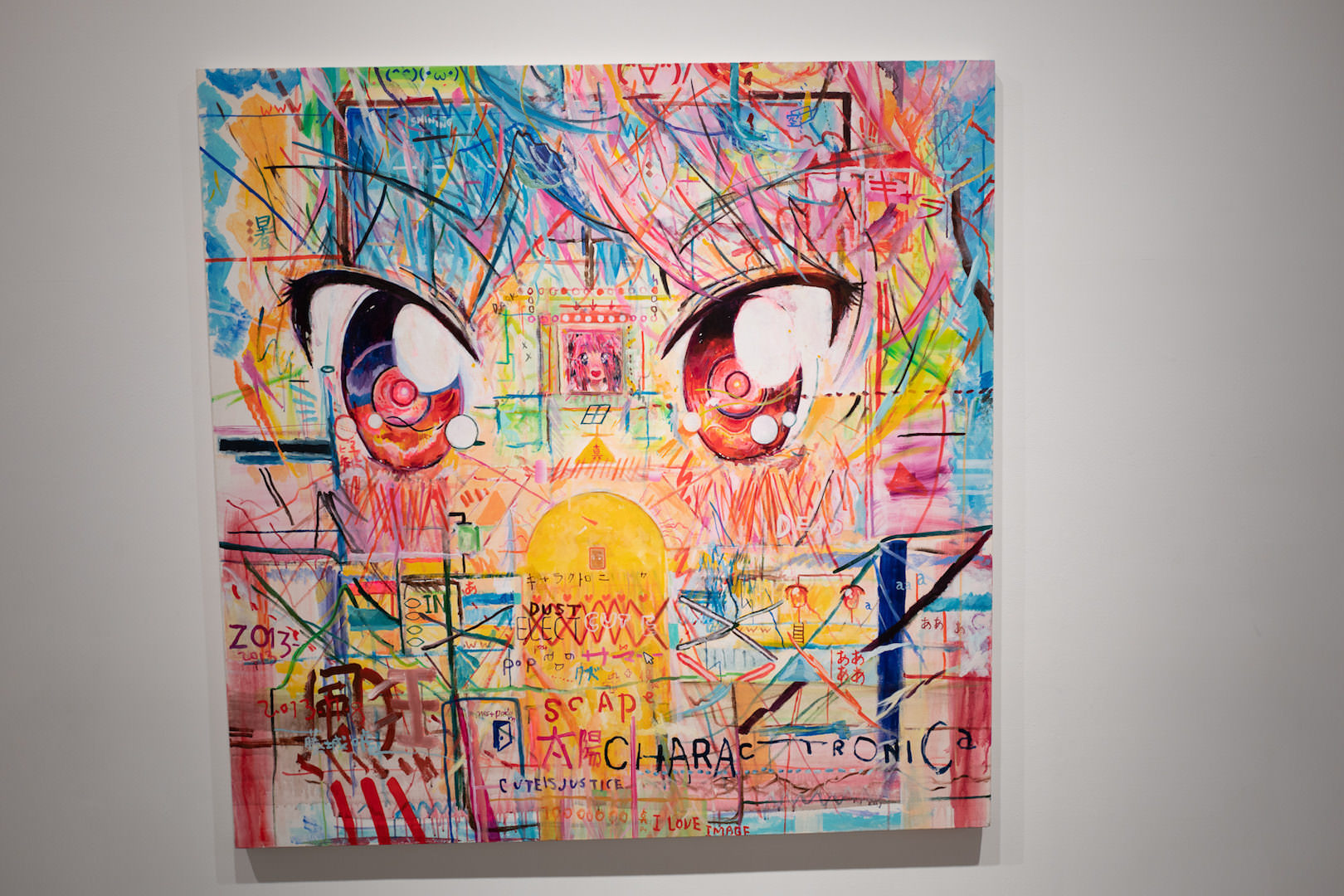
Every work carries a great deal of information, and I spent time with them as though holding a conversation. Layering them with various contemporary cultures and entertainment content, my first impression of each work sometimes changed. Reading and decoding the works is one of the pleasures of the show.
Artist Talk
It’s a long video, but I found footage of the artist talk and am including it here.