Yokohama Museum of Art
I visited “Monet — Reflections in the Century Since,” currently on view at Yokohama Museum of Art.
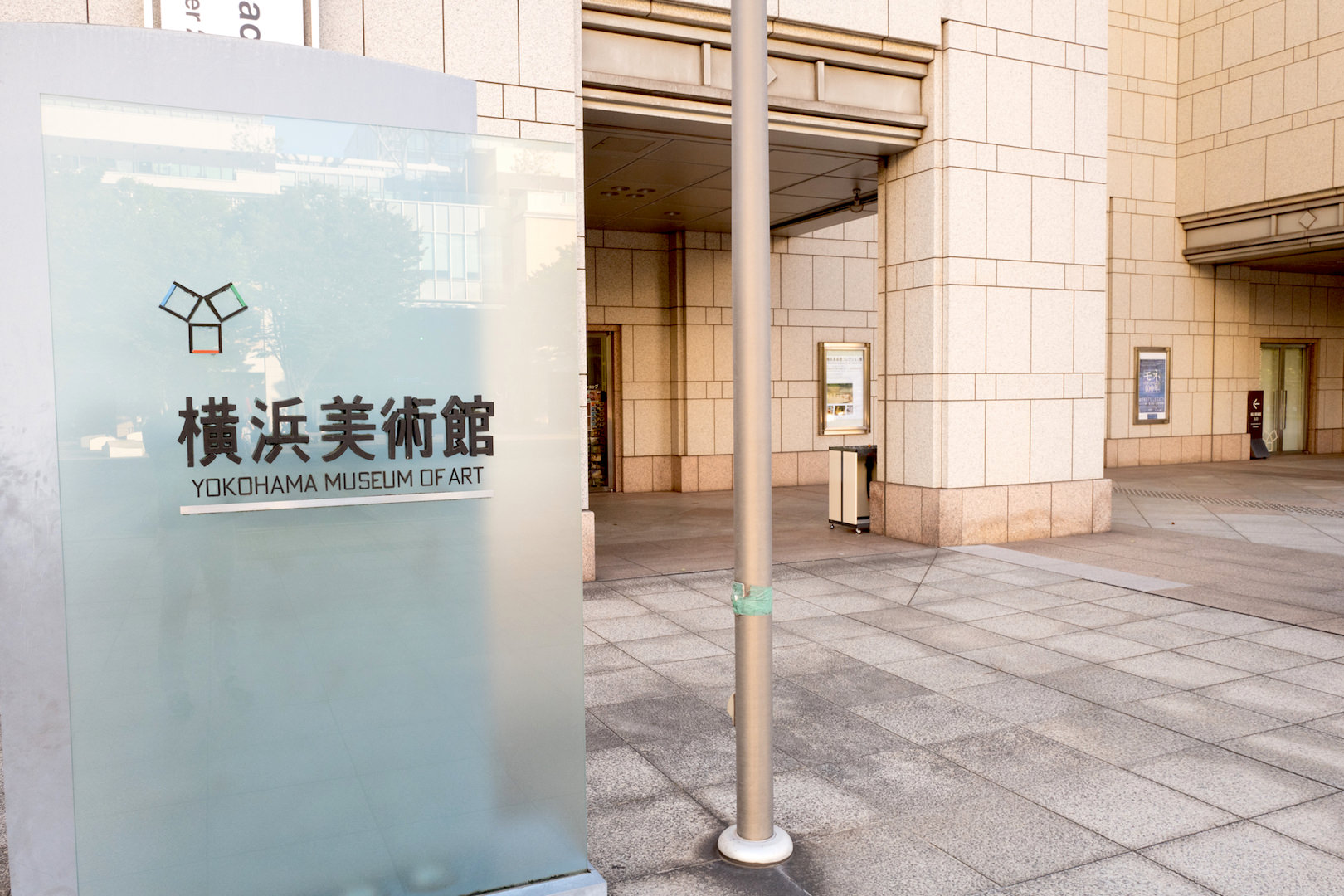 The exhibition itself was as engaging as one would expect from Yokohama Museum of Art’s programming. In particular, this was the first time I joined its “Art Cruise” program — attending the pre-viewing lecture by chief curator Shintaro Matsunaga before touring the show — and I believe that experience shaped my impression strongly.
Drawing on curator Matsunaga’s clear, quiet-yet-passionate talk and its Art Cruise content, I’d like to look back on “Monet — Reflections in the Century Since.”
Monet — Reflections in the Century Since
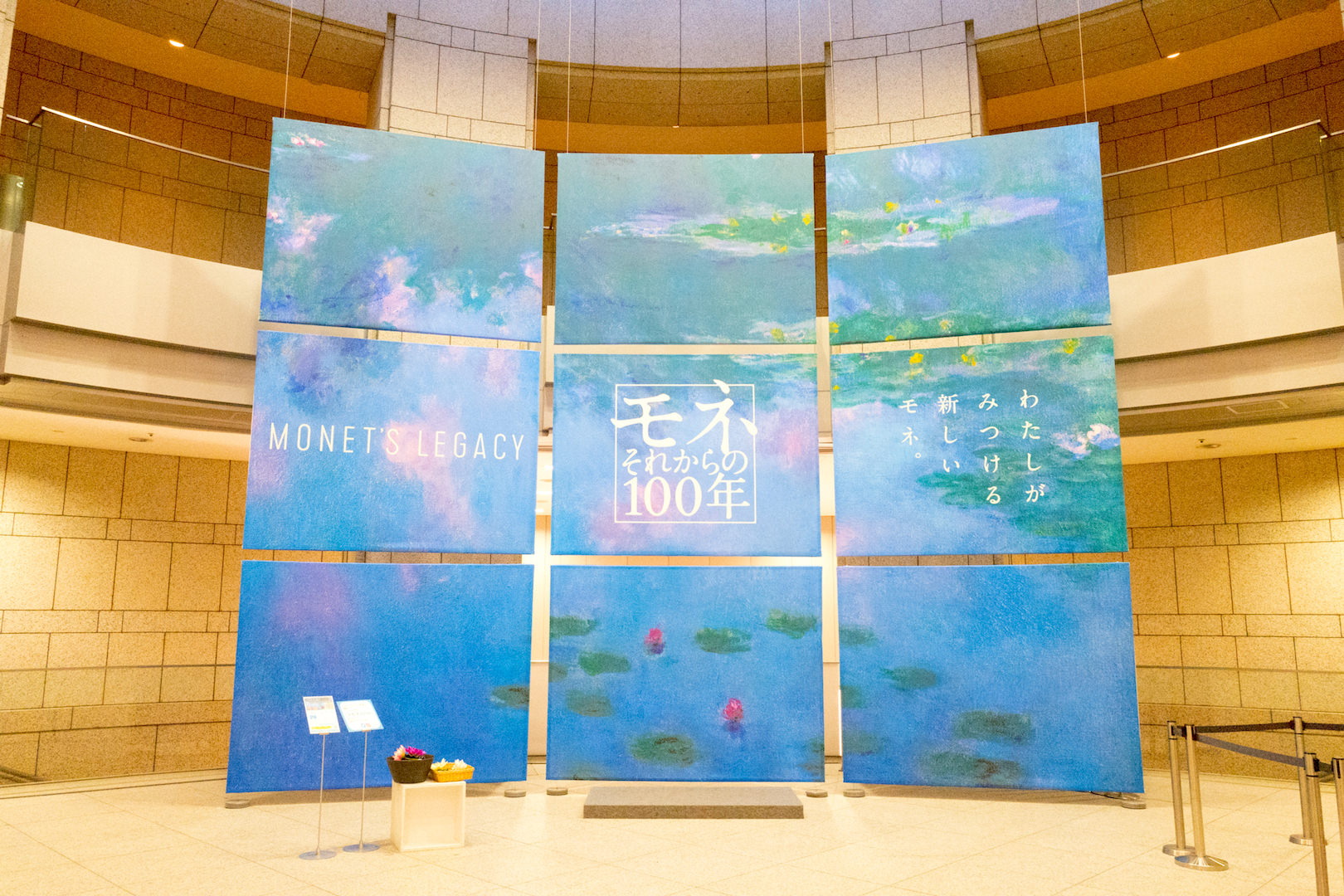
This project is not simply a “Monet exhibition,” but “Monet — Reflections in the Century Since.” As the title suggests, “the century since” is the keyword.
This is Yokohama Museum of Art’s first Monet exhibition since its opening. According to Matsunaga, “we wanted to draw a line separating this from the usual formats. Rather, this is a project that re-examines Monet by placing him alongside the art that came after him.” Many contemporary works are on display.
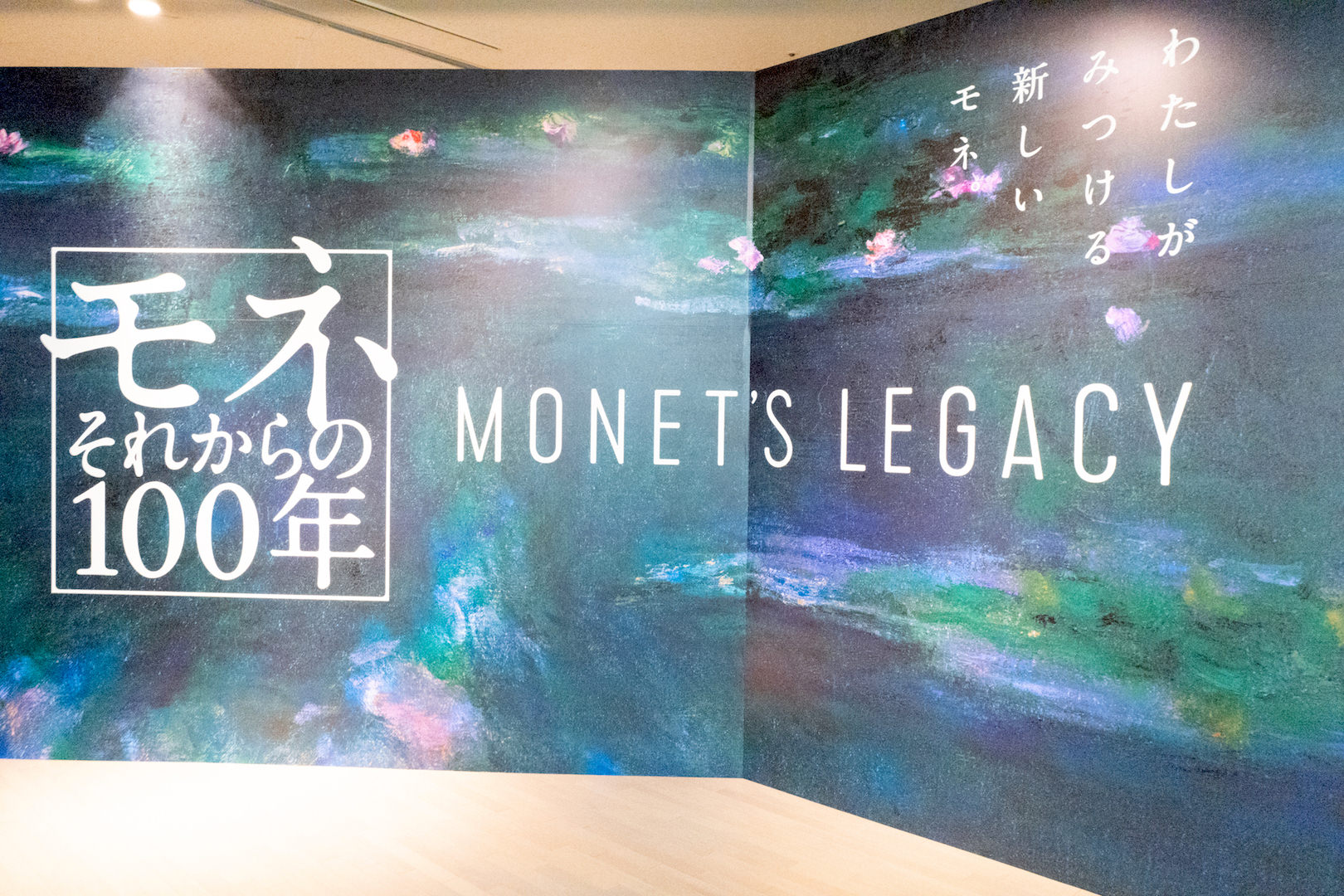
The title logo renders “Monet” in a large font, so some visitors may misread this as a 100% Monet exhibition; the actual balance of works, however, is “25 works by Monet” alongside “66 works by 26 contemporary artists.”
Art Cruise — Seven Points
Art Cruise is not run within regular exhibition hours; it is a special program organized after closing time and requires advance registration. You register via the official-website form and pay on the day to enter. There are five key points of the Art Cruise, listed below.
- Advance registration required
- Limited to the first 220 attendees (18 or older)
- Paid program: this time 3,500 yen (tax included)
- One-hour lecture by the curator of the project ※ this time, chief curator Matsunaga
- Art Cruise-exclusive free viewing session
- No audio-guide rental
- No admission to the Collection Galleries
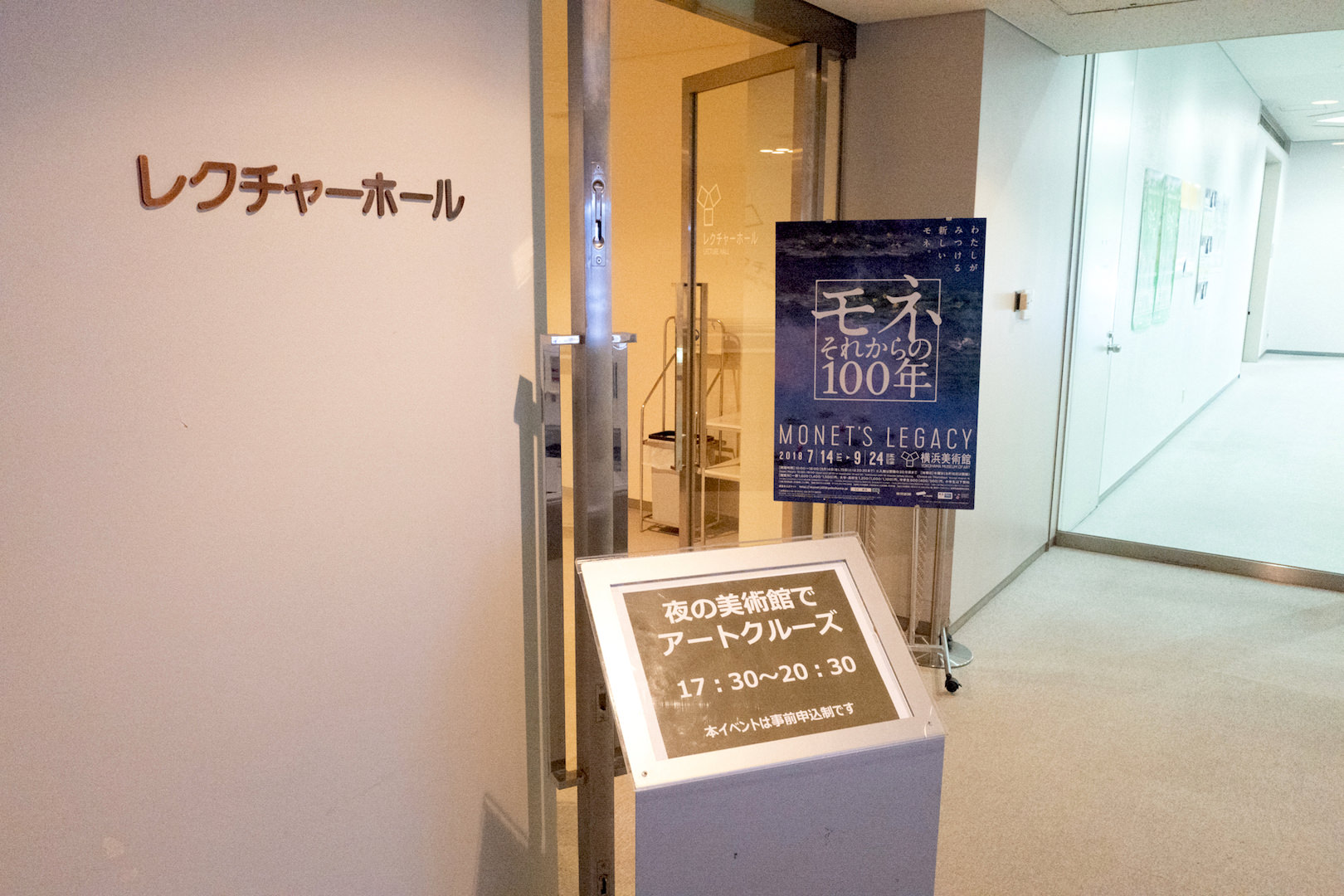 The point is that visitors deepen their understanding through a one-hour lecture, then view the show at leisure in what is effectively a private viewing. Hours are 17:30–20:30. You pay roughly twice the regular fee, but the program is popular and this session, too, was completely sold out.
Lecture
After registering and paying, you enter the lecture hall, where curator Matsunaga uses slides to explain the aims of the exhibition and the key points of the display.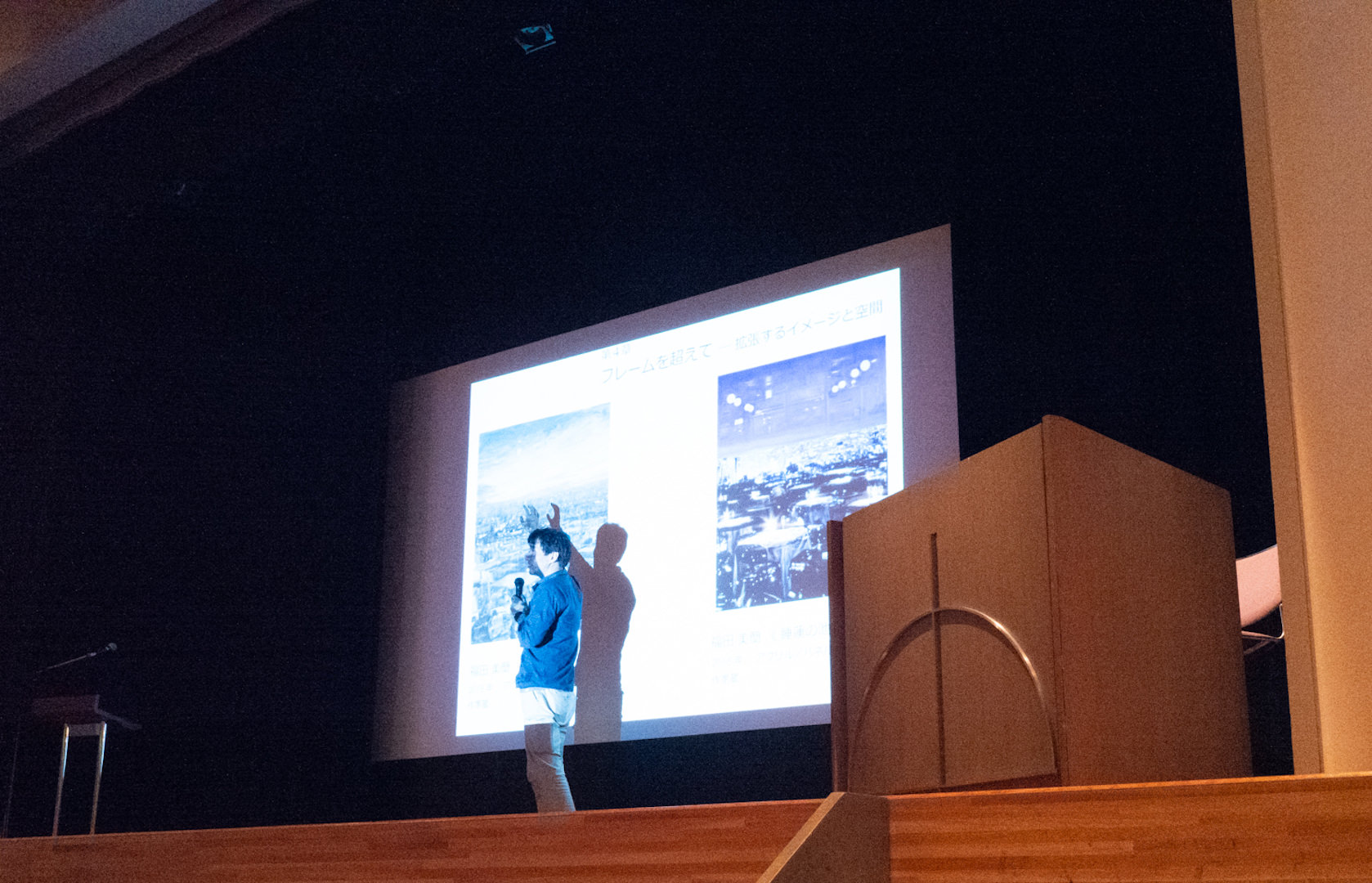 Matsunaga’s talk is calm and unhurried, yet marked by an easy-to-follow, affectionate tone — you can really feel that he genuinely loves art.
His comments on the show are erudite, with an ample stock of references and clear expertise, and yet he communicates all of this in plain, accessible language.
Viewing the Works
The lecture ended and we headed to the galleries. Because everyone was moving in at once, we were asked to “spread out,” and each of us drifted toward one of the four sections.
The exhibition is structured in four chapters; after the lecture, Matsunaga circled — “cruised” — the galleries, offering commentary on individual works and answering visitors’ questions.
Chapter 1 — Toward a New Painting: Color and Touch Rising into View
The keyword for Chapter 1 is “divisionist brushwork.” This is a technique in which the pigments — yellow, green, and so on — are applied one color at a time to the canvas. The chapter gathers works in which
the protagonist of the picture plane is not the individual motif but color and brushwork themselves.

“The colors mix on the viewer’s retina” — that’s how Matsunaga put it, and it’s exactly right. How they mix will vary from viewer to viewer, but he illustrated the idea by referring to Naofumi Maruyama’s “puddle in the woods 5,” which uses the staining technique for which the artist is well known. Maruyama himself says, “I’m not particularly conscious of Monet — I do like his work, though” — Matsunaga pointed out that the influence is universal rather than deliberate.
Through divisionist brushwork, the entire picture plane fuses into a single unbroken whole. There’s a fascination in receiving the whole rather than the parts, as the outlines dissolve.

Naofumi Maruyama’s recent solo exhibition is covered in the article below.
Chapter 2 — A Gaze at the Formless: Light, Atmosphere, Water
The keyword for Chapter 2 is “spatial expression through layered application.” Starting from Monet’s famous “London Series,” the chapter introduces contemporary works through such themes as landscape abstraction, evocations of transience and the instant, and the pursuit of a spatial expression particular to painting.

Morris Louis’s “Wine,” expressed through staining, and Gerhard Richter’s “Abstract Painting (CR845-8),” which reveals layered strata of color built up with a squeegee, both had a powerful presence one could truly savor.
Chapter 3 — Homage to Monet: Various Forms of “Quotation”
Chapter 3 turns to “homage,” introducing contemporary works that drew direct inspiration from Monet’s paintings and, within each artist’s individual practice, tracing resonances with Monet and inheritances from him. The presentation seems consciously designed for accessibility, with a variety of contemporary works gathered around the Water Lilies series.

Among them, Miran Fukuda took as her motif the water lilies floating on the pond in the inner courtyard of the Ohara Museum of Art in Kurashiki, depicting the scene where the lilies and the reflections on the water’s surface overlap. That theme of “layered images” also carries over into her new “Water Lily Pond” series, discussed below.
Chapter 4 — Beyond the Frame: Expanding Images and Space
The keyword for Chapter 4 is “the expansion of image and space.” Two features characterize the Water Lilies series:
- a semi-perspectival picture plane formed by the layering of differing images
- the expansion of space brought about by the fragmentation of composition and the juxtaposition of multiple panels
In the late Monet’s departure from landscape painting and his installation-oriented sensibility, he built compositions that extended imagery out beyond the frame.

Matsunaga also noted that Andy Warhol’s “Flowers” — displayed as if papering the gallery walls, in a way conscious of Monet — reflects Monet’s influence. In this exhibition, too, the rule that the works could be hung in any orientation was observed.
What made a particularly strong impression here was Miran Fukuda’s work “Water Lily Pond” and its companion piece, “Water Lily Pond — Morning,” specially exhibited only at Yokohama.


Both are contemporary reworkings of Monet’s paintings, incorporating “artificial light” and “glass surfaces.” The interpretation is straightforward, but the overwhelming energy radiating from the canvases drew me in — I found myself facing the works as if absorbed into them. The two pieces seem to express the shifts within Monet’s career itself, and they had many facets to draw the eye — extraordinarily memorable works.
※ In the image below, slide the pointer at the center left and right to compare. It’s fun to appreciate the two works in direct contrast.
※ Miran Fukuda’s “Water Lily Pond” was chosen for display at the outset of the exhibition, and “Water Lily Pond — Morning” was begun later still, so it did not make it in time for the Nagoya venue and is not included in the catalogue.
Final Thoughts
Viewing the works in the leisurely, effectively private setting of the Art Cruise, I realized — however awkward the phrasing — that this exhibition “is really a contemporary art show using Monet as bait!”
“It isn’t that we gathered only artists who are consciously working from Monet. Even artists who aren’t aware of it end up re-enacting Monet,” said Matsunaga — and viewing the show, I could genuinely feel that the pictorial techniques and thinking Monet opened up have taken root in the present day. As his line “I want visitors to view contemporary art with the eyes they use for Monet, and to rediscover its appeal” makes clear, this exhibition seems to contain a highly accessible “course in how to enjoy contemporary art.”