exhibition

[Chaumet Exhibition] Chaumet from an Art-Loving Man’s Perspective — A World of Jewelry Art Transcending Time and Space; the Esprit Begun in 1780 Paris @ Mitsubishi Ichigokan Museum

【ショーメ展】アート好き男性視点でのChaumet〜時空を超える宝飾芸術の世界―1780年パリに始まるエスプリ@三菱一号館美術館

The Chaumet Exhibition

An exhibition all about Chaumet, seemingly all women. I’d pictured it as an extension of a jewelry store, and could hardly bring myself to go.
Imagining myself standing in a jewelry shop surrounded by dazzling women, I automatically felt my feet refuse to move.*The author of this article is a man.
As the run entered its latter half, reading posts on social media and art blogs, I had to change my mind: “It seems I really must go and see this.”

The brand called “Chaumet (chaumet)” — for me,a man with no connection to or understanding of it, and as for jewelry,a complete amateur — but I organized my thoughts as follows and resolved to go see it.

  • A brand with roughly 240 years of history
  • Jewelry-making involves design drawings, and there’s an artistic side in that a vast number of them are put on display
  • Word that the quality of the works looked high
  • The way it was displayed also looked good
  • The praise from those around me was high
  • A day when you can get original goods → this is key
Entering

Before I could change my mind, I headed to the venue, bought a ticket, and went straight in — and as expected,women made up nearly 90% or more.。An overwhelming sense of being on away turf. What’s more, the atmosphere was clearly different from an ordinary museum exhibition; the crowd felt less like art lovers and more like a swarm of “Instagram girls.”
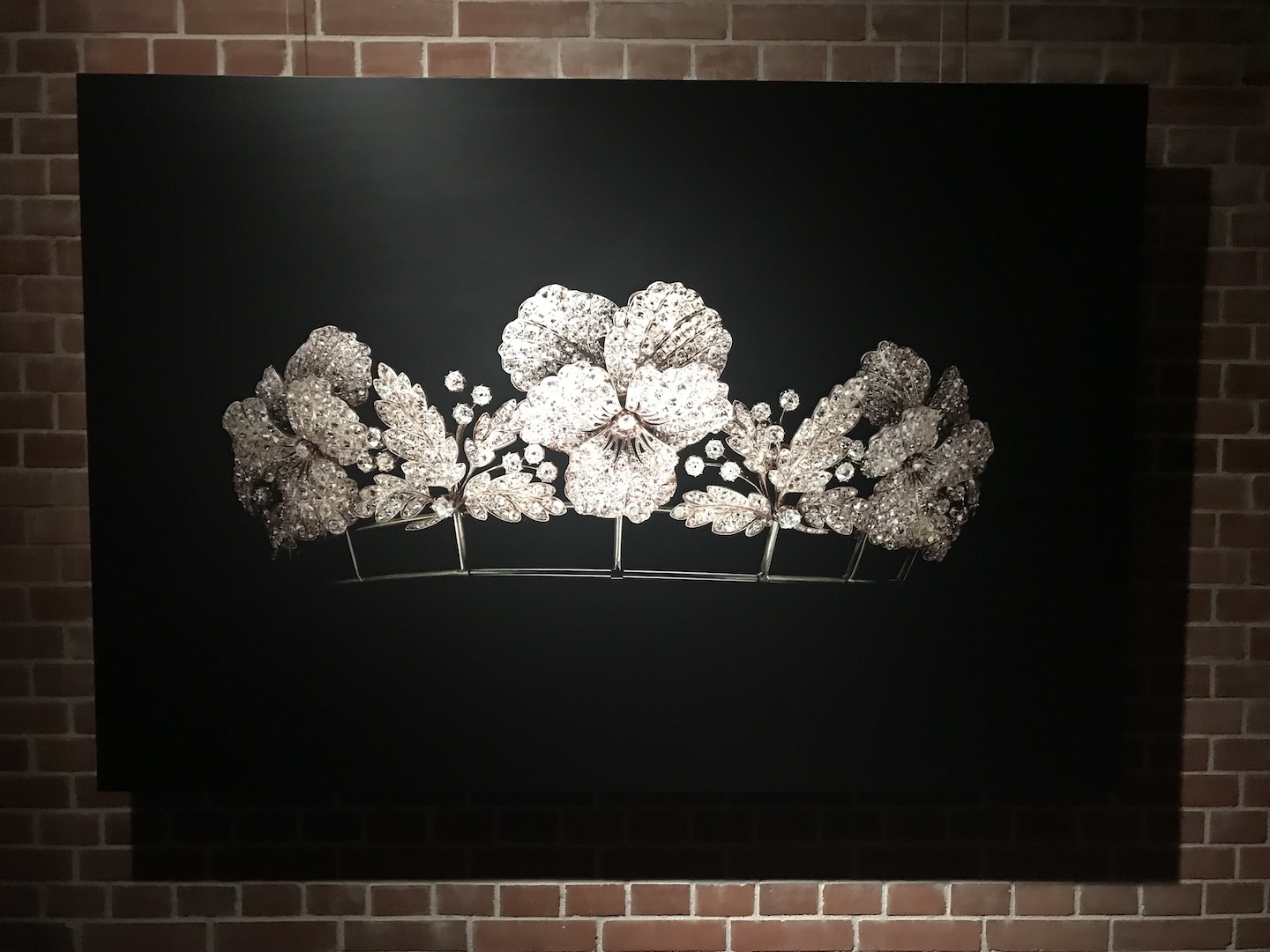
Photographed at a photo-OK spot inside. You can sense the dim, hushed atmosphere.
The jewelry on display was simply dazzling, and I felt the dimly lit galleries of the Mitsubishi Ichigokan Museum filled with a solemn, noble air unlike its usual mood.
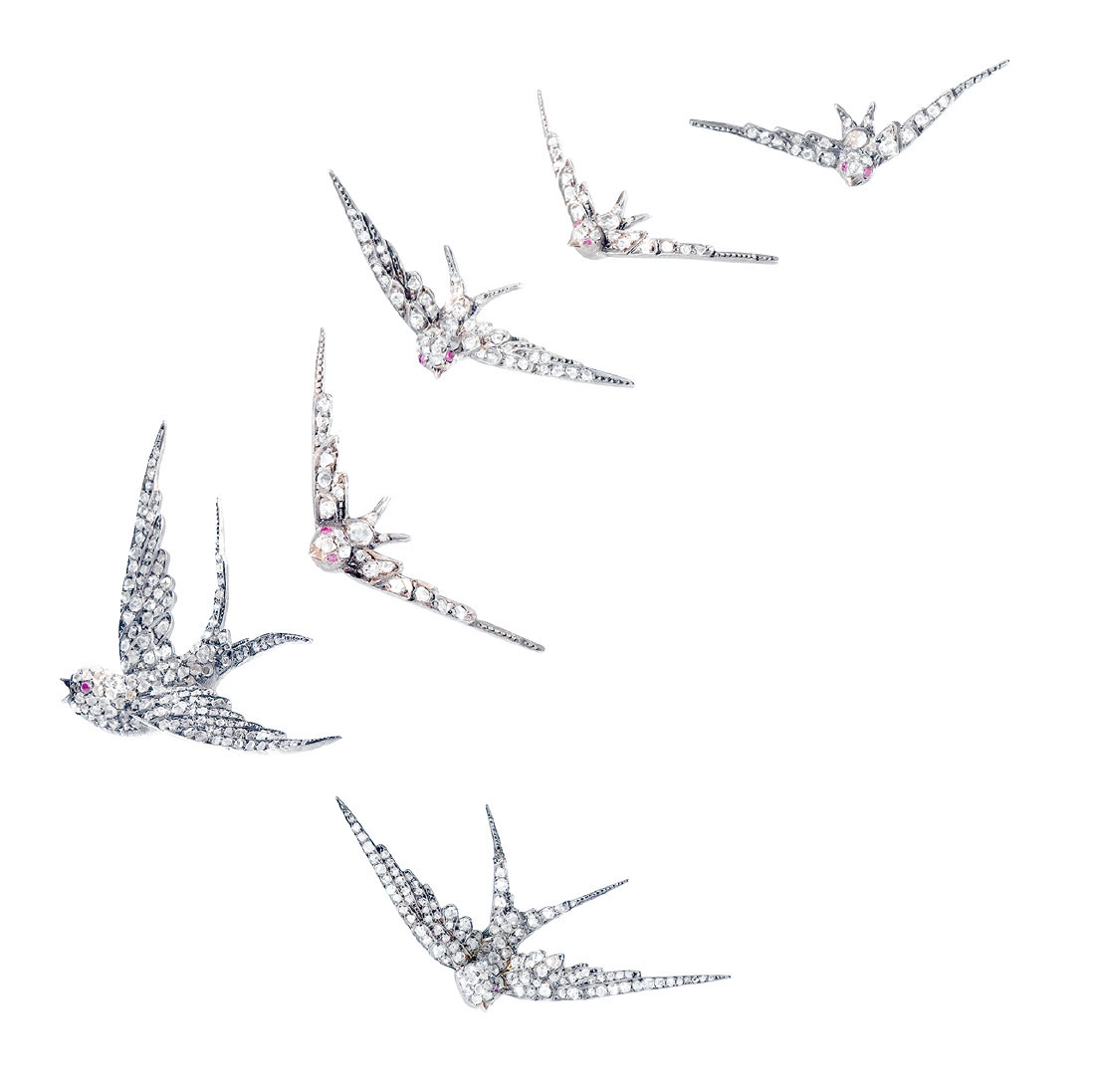
Joseph Chaumet, Series of Six Swallows, 1890, platinum, gold, diamond. Musée Lalique, Wingen-sur-Moder; on deposit from Shai…
Joseph Chaumet, Series of Six Swallows, 1890, platinum, gold, diamond. Musée Lalique, Wingen-sur-Moder; on deposit from Shai Bandmann & Ronald Ooi. © Rami Solomon & Kineret Levy Studio, Israël, Musée Lalique, France, dépôt Shai Bandmann et Ronald Ooi
With the aim of viewing the jewelry itself, the lighting felt a touch dark, but the brilliance reflecting the light struck the viewer’s eye with a presence stronger than the light source itself.
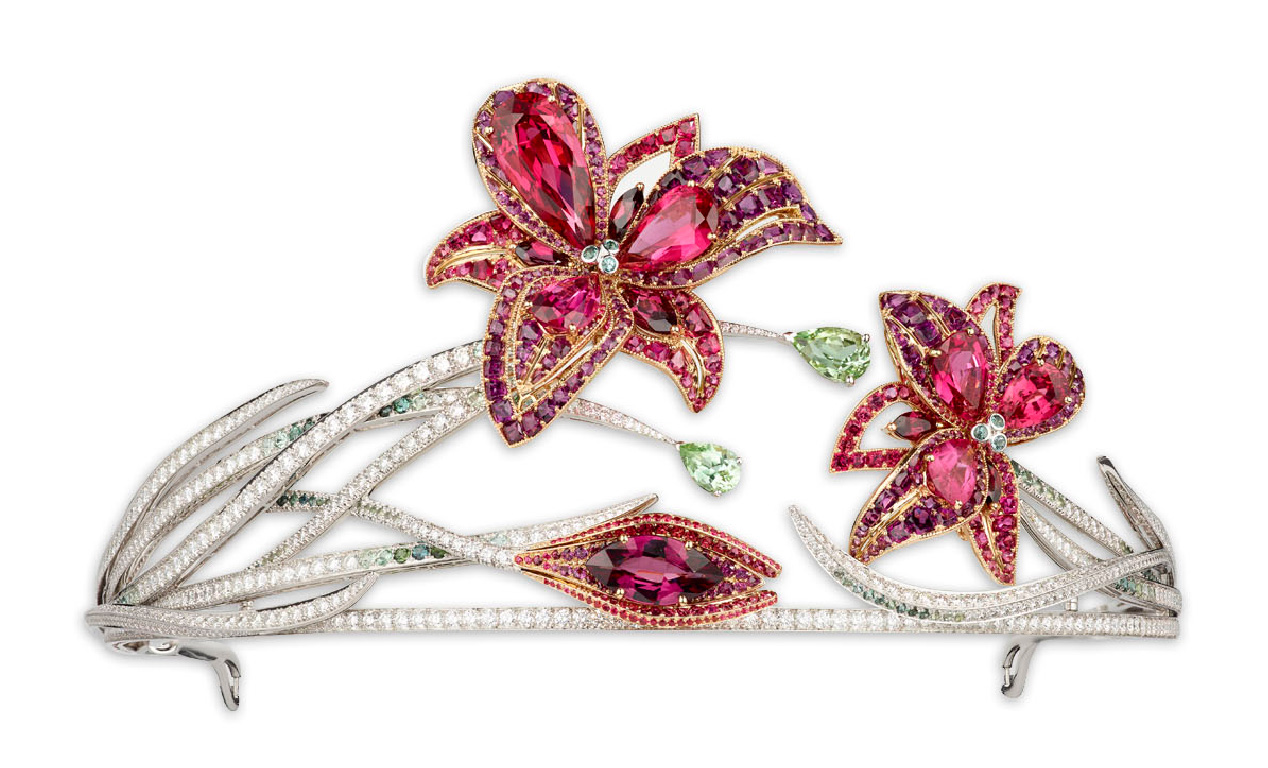
Chaumet, Vivid Scarlet Passion, 2016, “Nature de Chaumet” collection. White gold, pink gold, red spinel, rhodolite garnet, g…
Chaumet, Vivid Scarlet Passion, 2016, “Nature de Chaumet” collection. White gold, pink gold, red spinel, rhodolite garnet, green tourmaline, diamond. Chaumet, Paris. © Chaumet

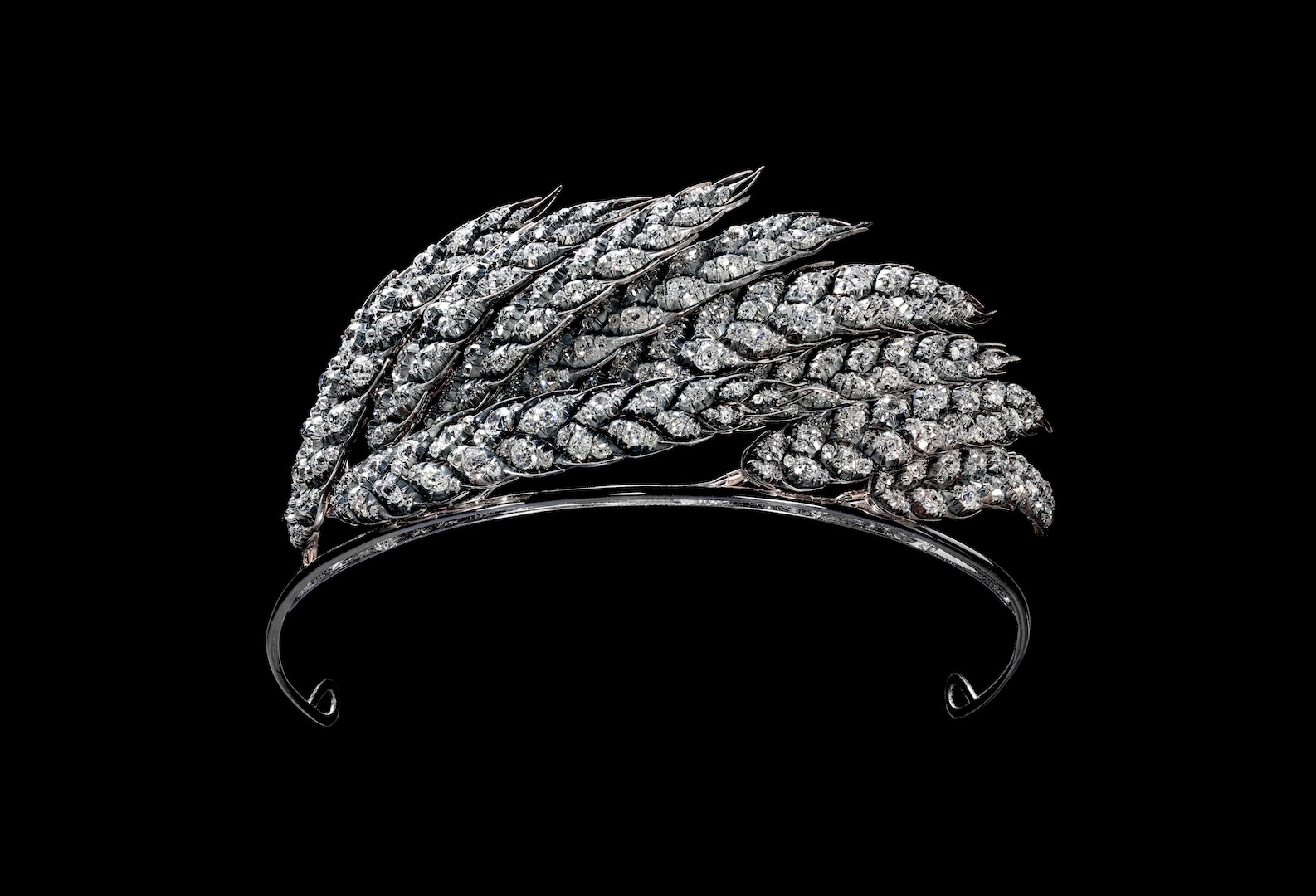
François-Regnault Nitot, Wheat-Ear Tiara, c. 1810–1811, gold, silver, diamond. Chaumet Collection, Paris. ©Chaumet / Guido M…
François-Regnault Nitot, Wheat-Ear Tiara, c. 1810–1811, gold, silver, diamond. Chaumet Collection, Paris. ©Chaumet / Guido Mocafico
Even works over 200 years old had a lustrous brilliance and presence that betrayed nothing of their beauty’s age or the history they’d traveled — truly splendid.
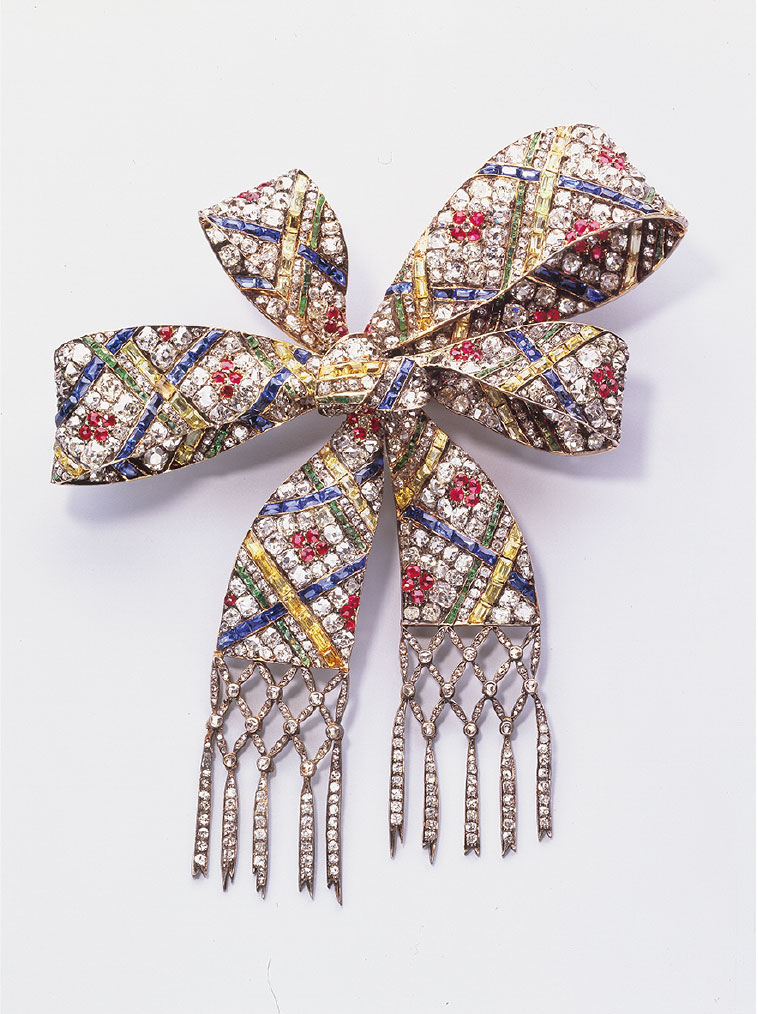
Joseph Chaumet, Tartan Ribbon, 1907, platinum, gold, diamond, colored gemstones. Private collection. © Droits réservés
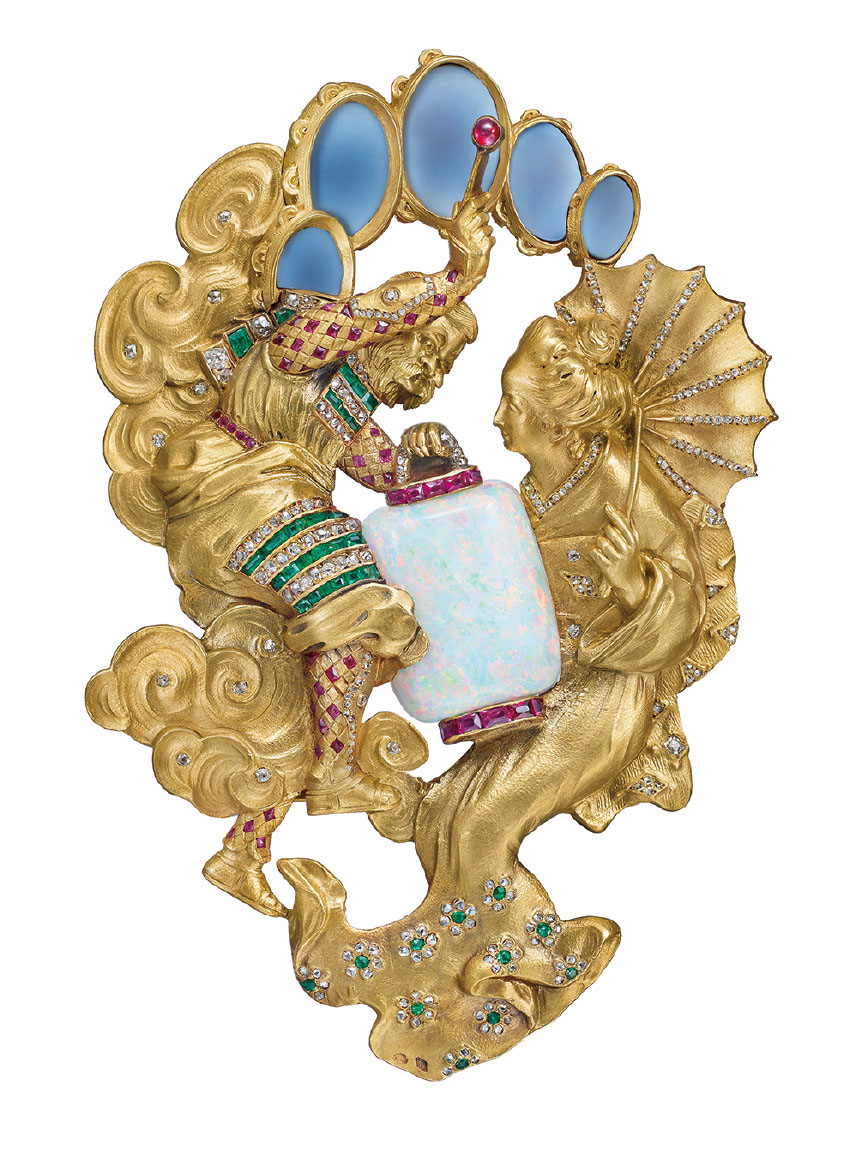
There were also works and design drawings conscious of Japonisme, as if conveying the significance of holding this exhibition in Japan.
Joseph Chaumet, Thunder God (Raijin), c. 1900, gold, opal, niccolo agate, ruby, emerald, diamond. Chaumet Collection, Paris.…
Joseph Chaumet, Thunder God (Raijin), c. 1900, gold, opal, niccolo agate, ruby, emerald, diamond. Chaumet Collection, Paris. © Chaumet / Nils Herrmann
I realized while viewing that my initial worry — the courage to view alone, a lone man among so many women — had been needless.
Most of the women viewing were absorbed in the Chaumet display, with no room or time to mind their surroundings. Helped by the dim lighting, I never felt anyone’s gaze; as a presence outside women’s field of view, even a man could take it in at leisure. *It’s likely to be crowded just before the run ends.

Paintings

Several paintings were also on show.
The overwhelming one was a portrait of Napoleon. Please see the image below.
Look closely and he’s wearing an almost excessive amount of jewelry.
The sword in his hand is a work by Chaumet’s founder “Nitot,” and the diamond he set into it is the legendary 140-carat (!) diamond known as “Le Régent,” acquired by Philippe, Duke of Orléans. This sword is now said to be held at the Louvre. I wish I’d seen it!
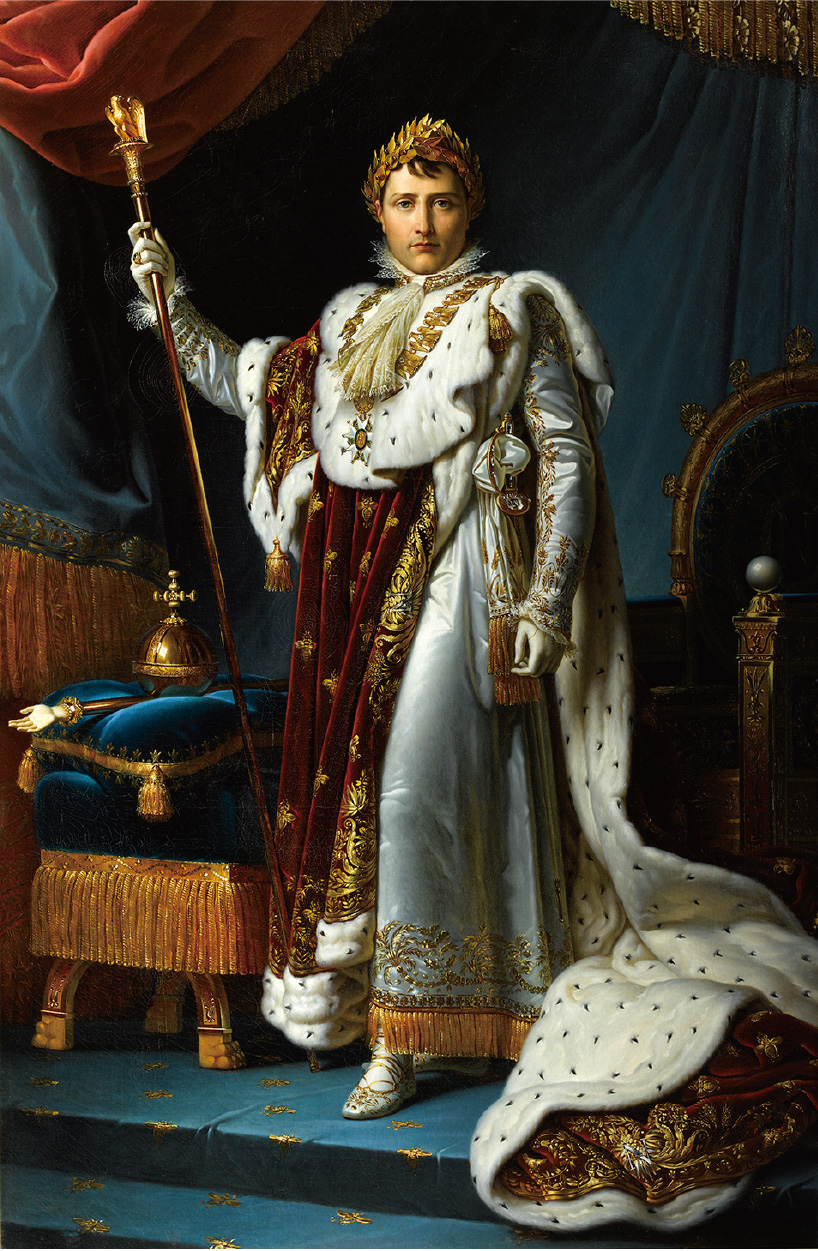
François Gérard, Emperor Napoleon I in Coronation Robes, 1806, oil on canvas. Palais Fesch, musée des Beaux-Arts, Ajaccio. ©…
François Gérard, Emperor Napoleon I in Coronation Robes, 1806, oil on canvas. Palais Fesch, musée des Beaux-Arts, Ajaccio. © Palais Fesch, musée des Beaux-Arts
The portrait of Napoleon I’s wife, Joséphine, was also stunning (I couldn’t arrange an image — my apologies).
Sensing the women viewing around Joséphine’s portrait, what was the author thinking…? I found myself drifting into all sorts of daydreams.

Design Drawings

I learned that jewelry in general — not only the Chaumet works on show — is made through a division of labor between a jeweler (gemstone artisan) and a goldsmith (working gold, silver, and so on). And what’s needed in the process before that is the “design drawing.” I also learned that production begins only once this design drawing is complete.
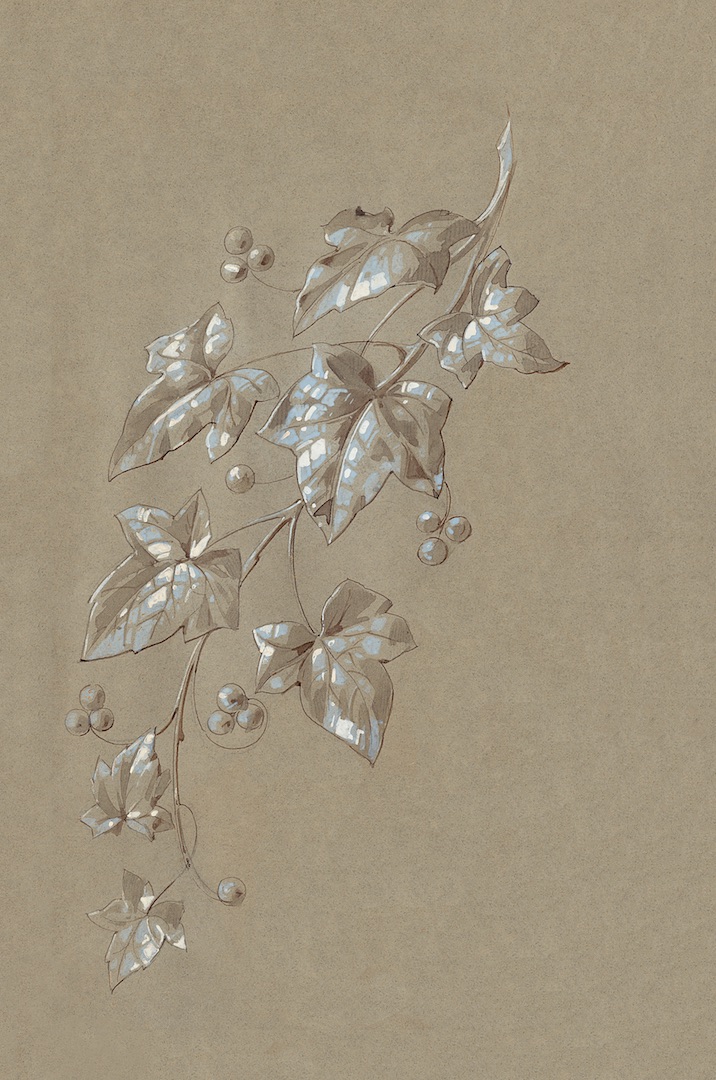
A design drawing based on the motif of “English ivy”
The design drawings, without asserting themselves, seem finished with every excess pared away for the sake of the completed piece.
Quiet, yet as paintings aimed at three-dimensional works, I felt a quiet assertion and became engrossed. A contrast with the actual finished pieces might have been nice, but the presentation, devoted to art display, also showed pride in the drawings’ completeness as design drawings — as if conveying Chaumet’s pride through the works themselves, which was fascinating.
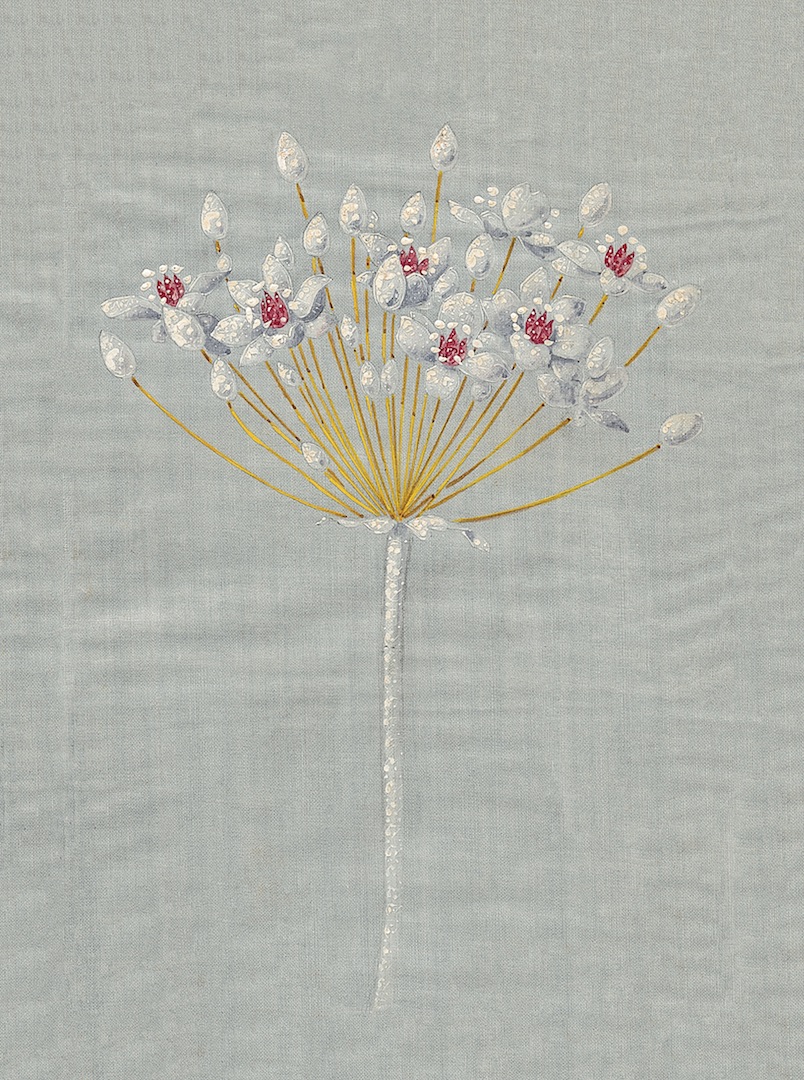
A design drawing based on a floral motif
The show featured about 300 works. As artworks transcending the frame of “jewelry,” it was a display of overwhelming power.

At the same time, imagining a woman wearing Chaumet’s works, I felt newly aware of the presence and power that come from wearing fine jewelry.

If a day ever comes when I do for someone what Napoleon did for Joséphine, may Chaumet’s brilliance be there… and on that note I’ll close.

The catalogue was superb.
Translating...