Mami Kosemura, “Phantom Pictures — The Skin of Images”
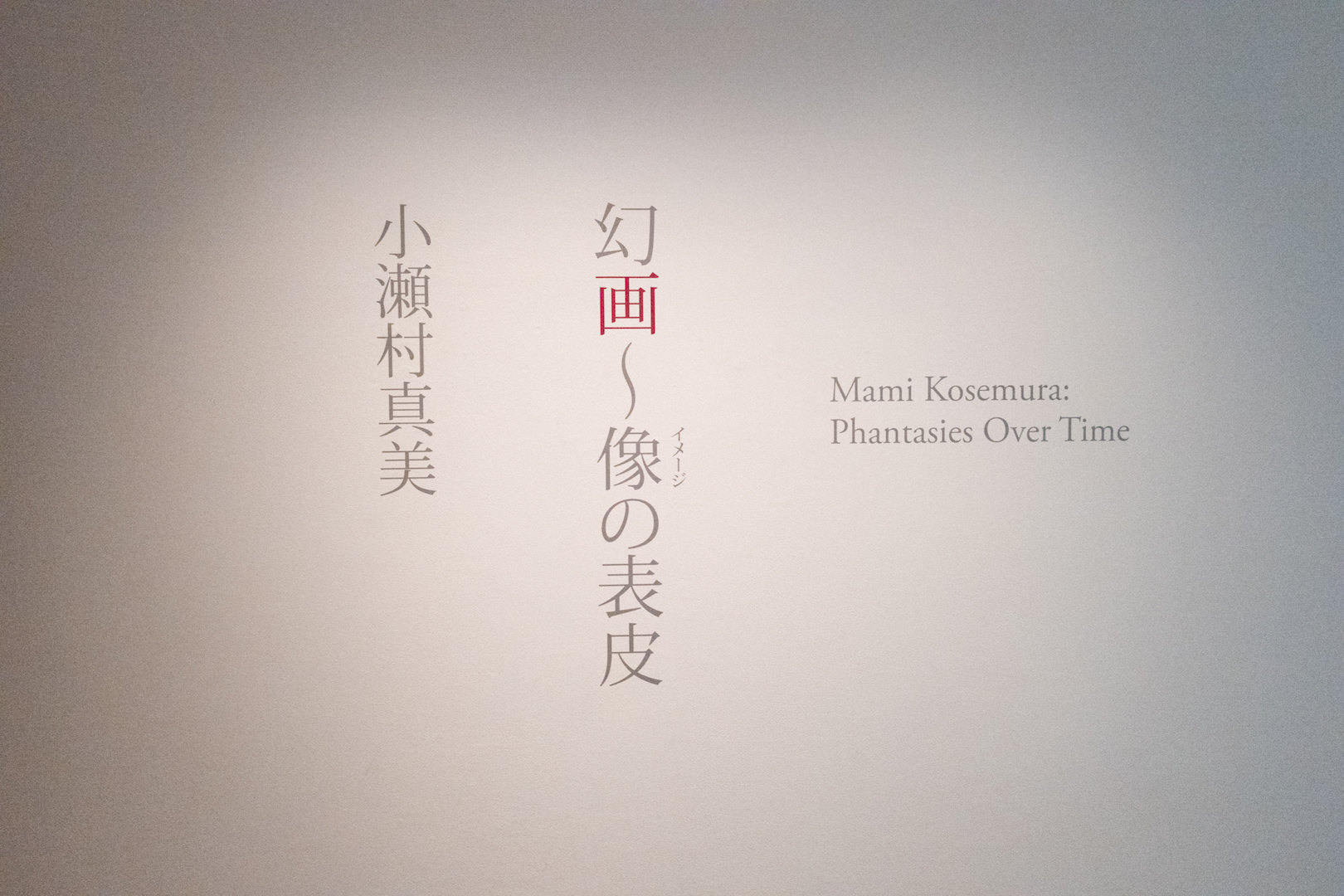
I visited Mami Kosemura’s solo exhibition. The venue is the Hara Museum of Contemporary Art. The title: “Phantom Pictures — The Skin of Images.” As the name “phantom picture” suggests, there are no drawings or paintings on display, but this is an exhibition where you can appreciate works that feel like paintings.
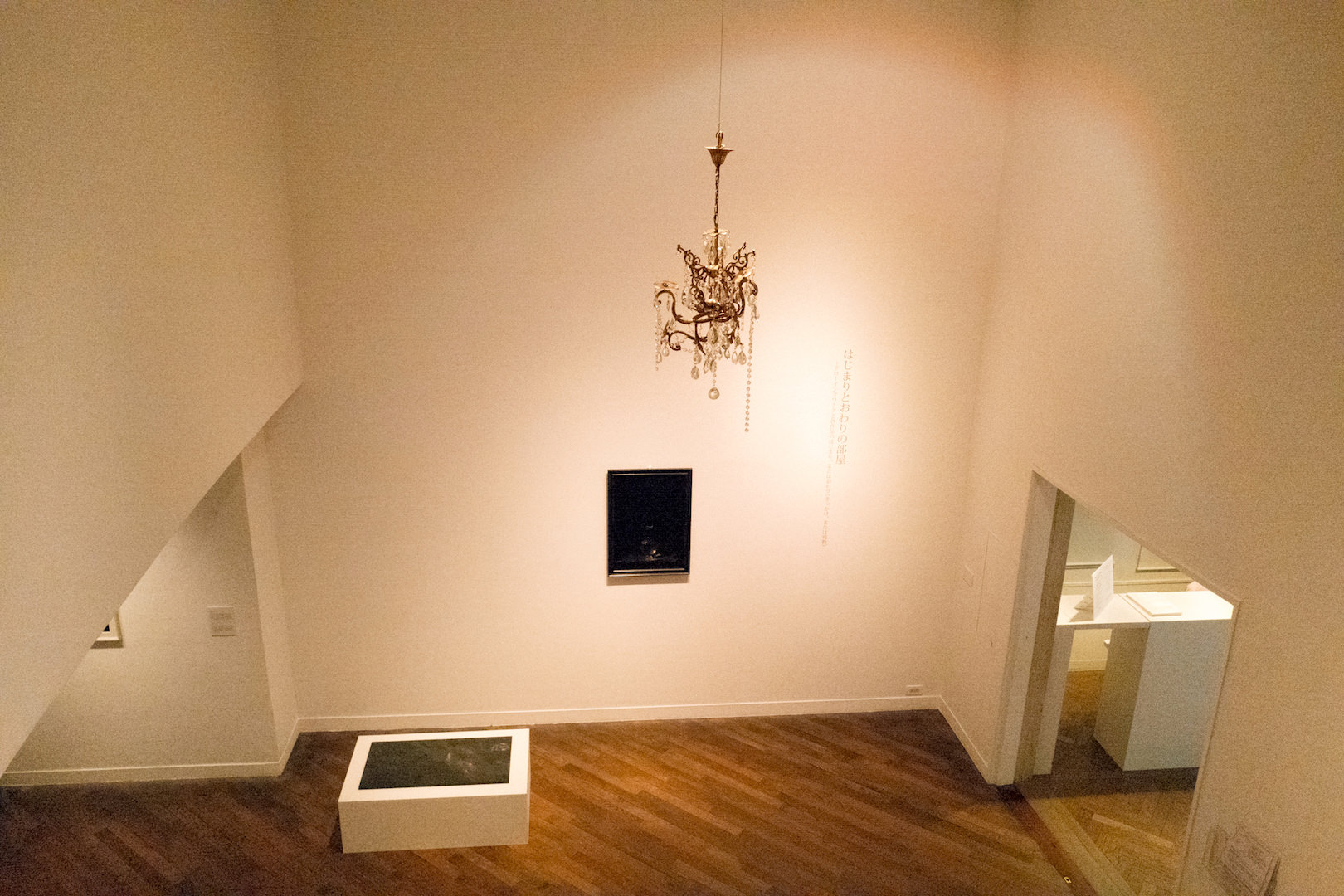
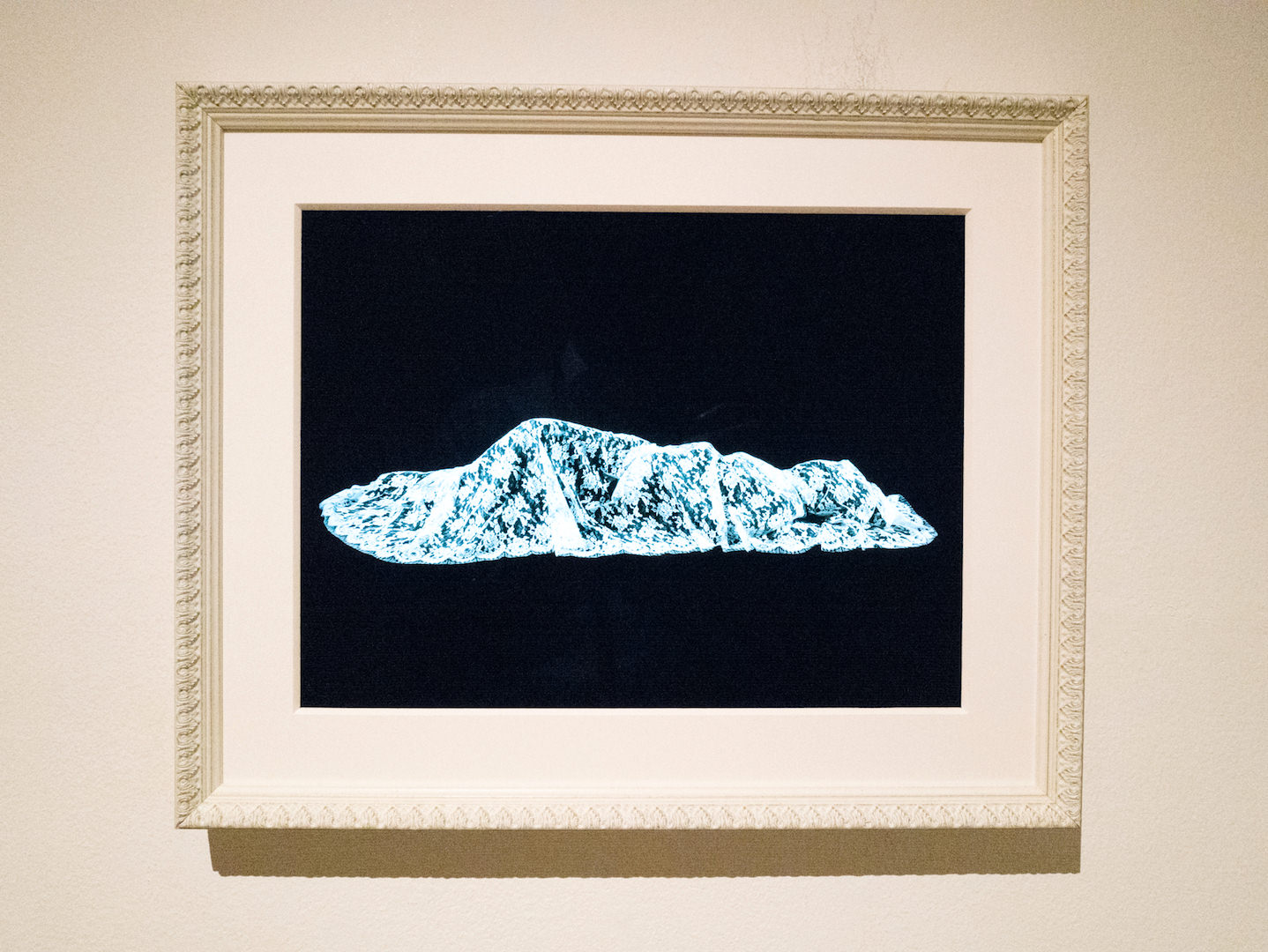
[Gallery I] Introduction — the Room of Beginnings, alongside Veil, produced as a drawing work: the beginning, or the ending (the trigger, or the remnants) of each work
Right after you step in through the entrance, the first small room prepared for you is the “Room of Beginnings and Endings.” The exhibition starts here — and finishes here. The title sounds cryptic, but as you make your way through the show its meaning becomes clear.
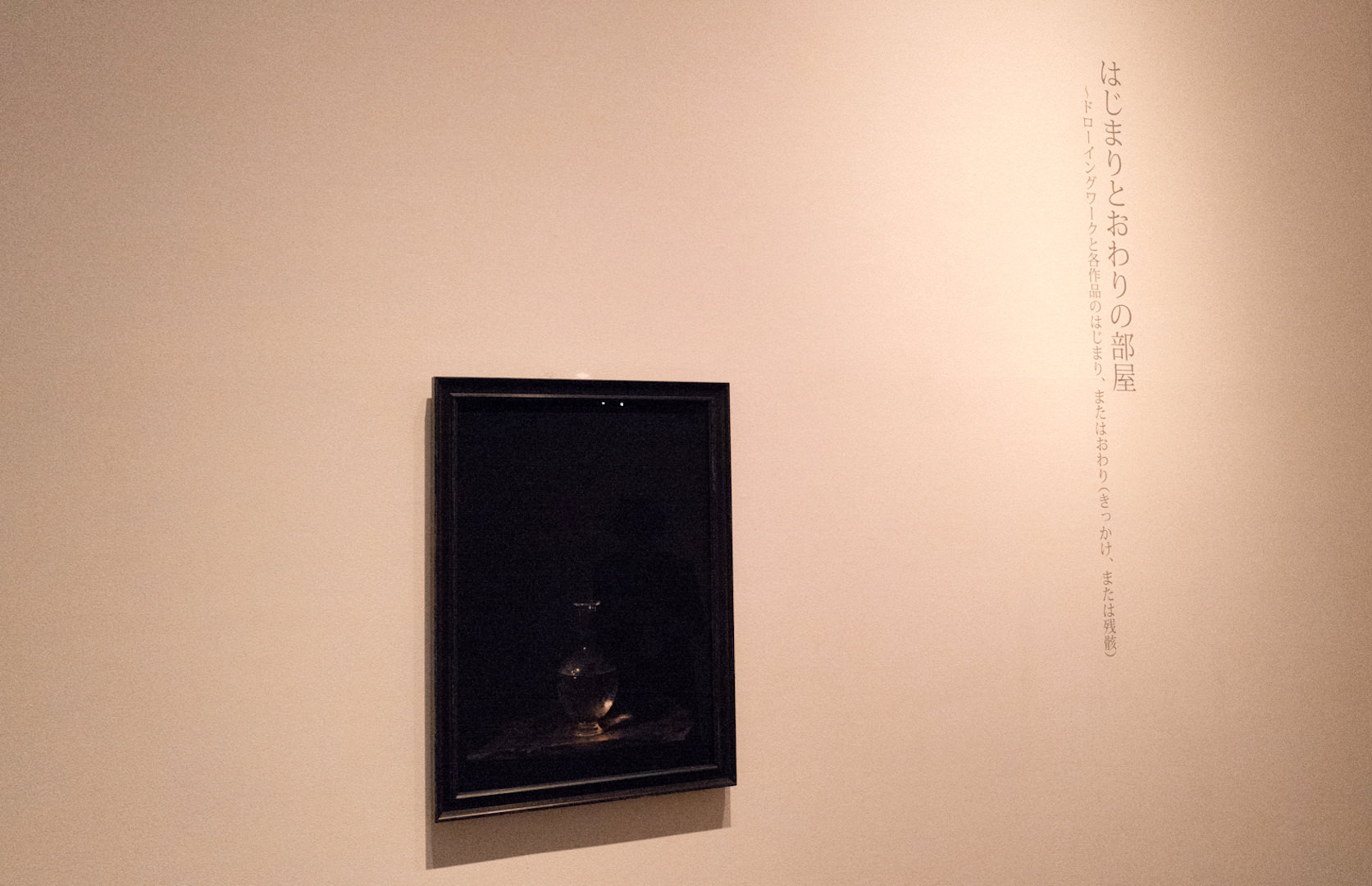
Kosemura’s practice, which tries to link painting, photography, and video, feels like an activity that swings back and forth between beginning and ending, like a pendulum.
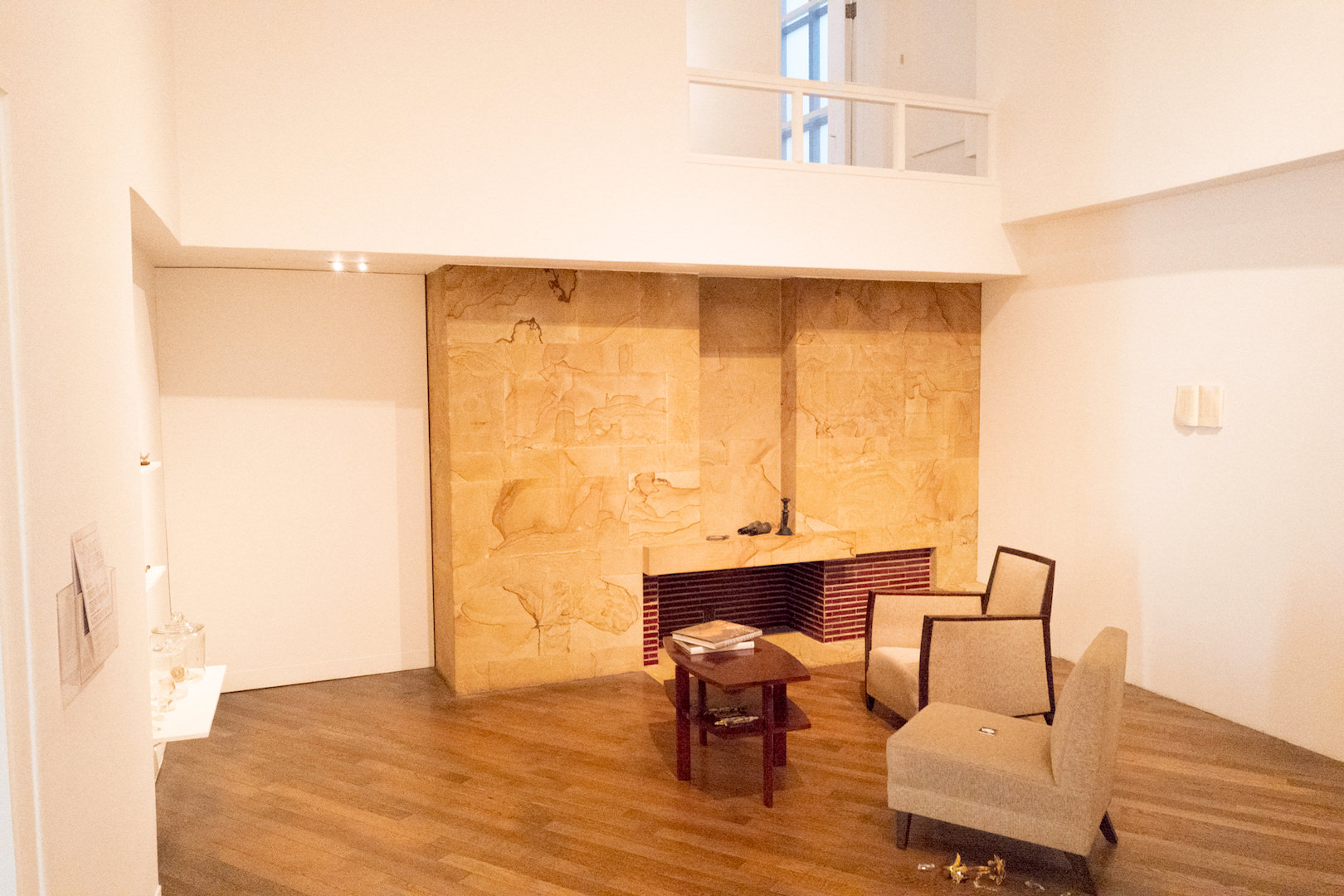
[Gallery II] Room of Western Painting — from early works to the newest pieces, photographs and videos side by side, an imagined “Pictures at an Exhibition”
The second room is the “Room of Western Painting.” Even though it’s credited as a room of paintings, every work here draws on Western painting as its motif — these are all Mami Kosemura’s latest works, produced from photographs.
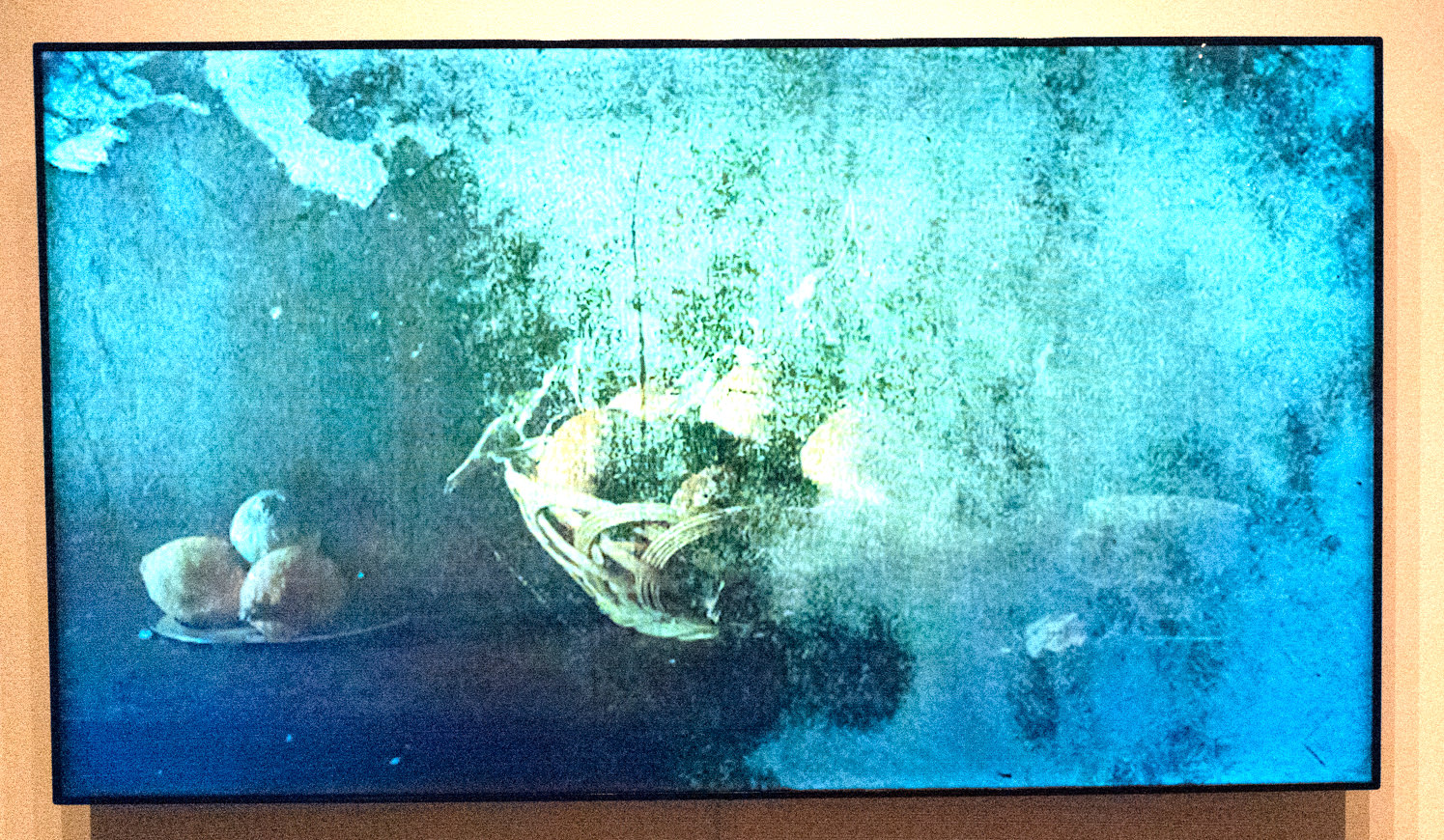
First is Zenmai (Fern), a nine-minute-25-second video work made in 2003. It imitates Still Life with Oranges, Lemons and a Glass of Water (1633) by the painter Francisco de Zurbarán.
She prepared real oranges and lemons, and used “interval photography” to shoot over a long span of time, then joined the frames together on a PC into an animation. According to Kosemura, her interval intervals range as long as 30 minutes to 2 hours between shutter releases. She then processes these on the PC, and in some cases overlays drawings on top — so the amount of labor and time invested is dizzying.
As the work progresses in time, the oranges and lemons decay. Notice also that even the teacup ends up broken.
*In the image below, slide the central pointer left and right to compare. Take a look at how things change over time.
The rotting subjects are one thing, but toward the end there’s also an effect where the work itself seems to deteriorate. Sound effects layered onto the piece work well too — a captivating work that presses in on the viewer in just the right way.
The next work, Shou (Adornment), is a set of seven pieces.
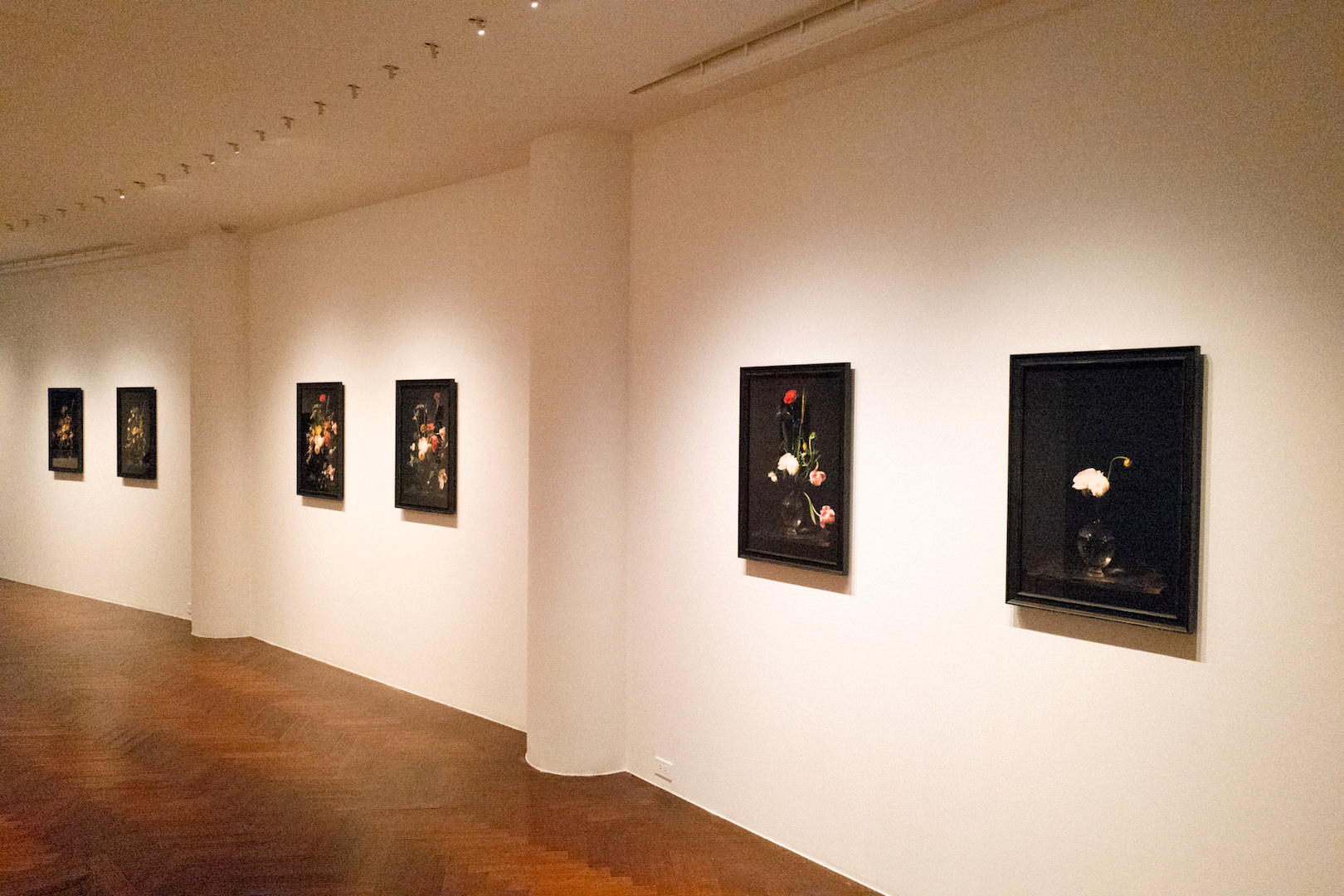
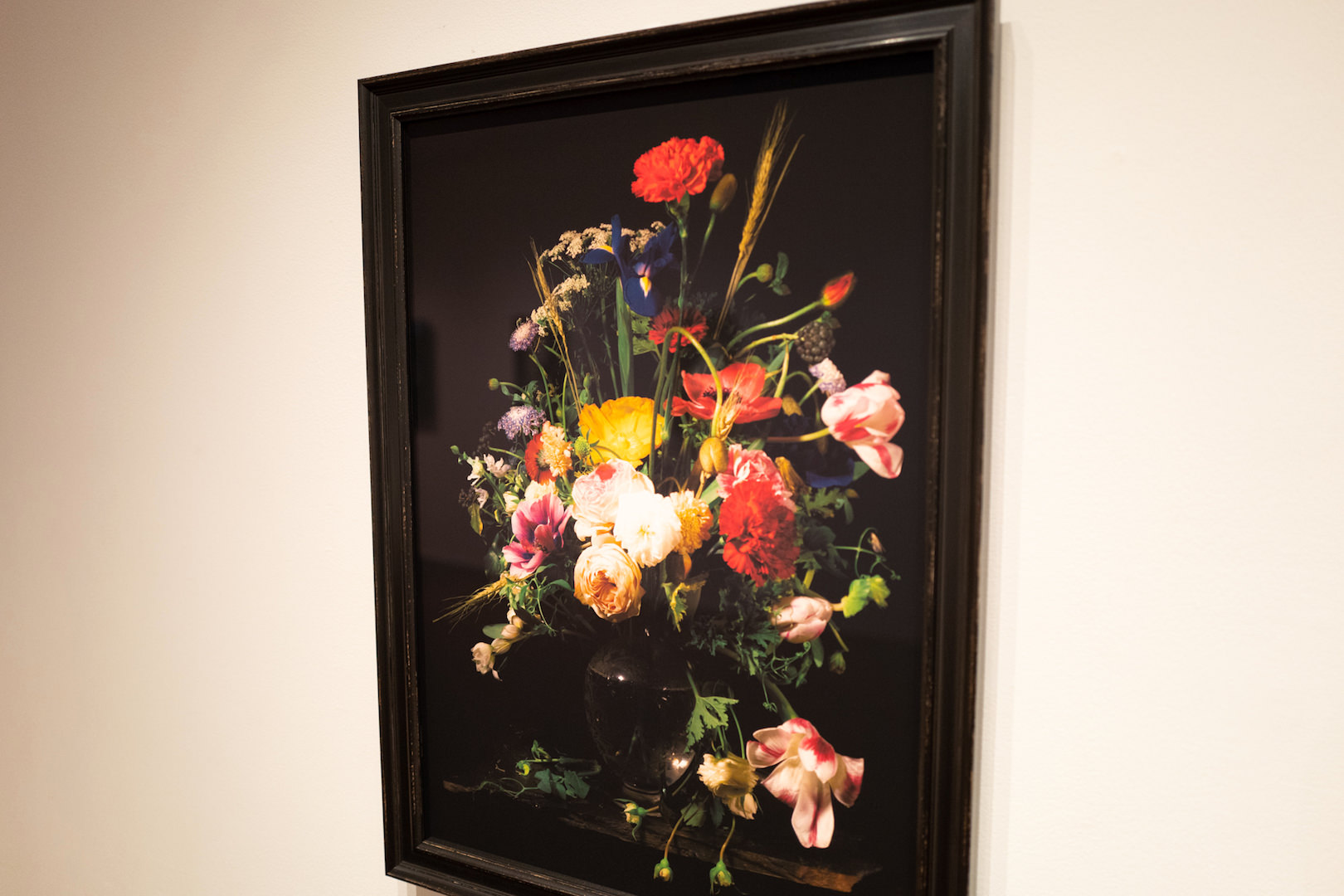
Look closely and you’ll notice — this glass vase is the same one from the first work, isn’t it? But check that first work carefully, and the mouth of the vase is really, really small. And yet the flowers arranged in it increase in number as time passes. There’s no way that many should fit, but they appear to sit properly in the vase. Strange, isn’t it? This is a trick: “making it look as if they’re arranged in the vase.” Apparently the flowers are actually fixed to the outside of the vase, so it just “looks like they’ve been arranged in it.”
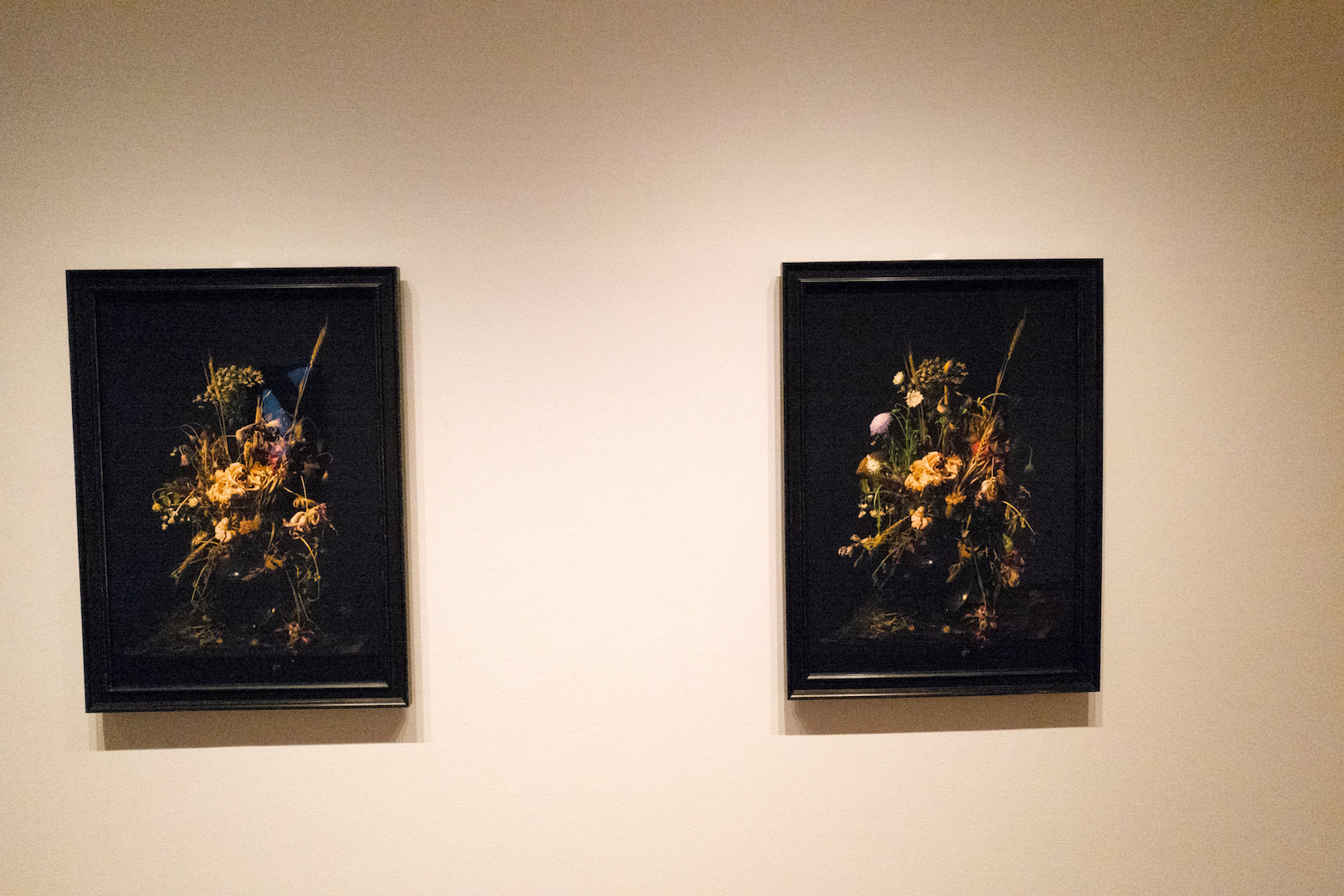
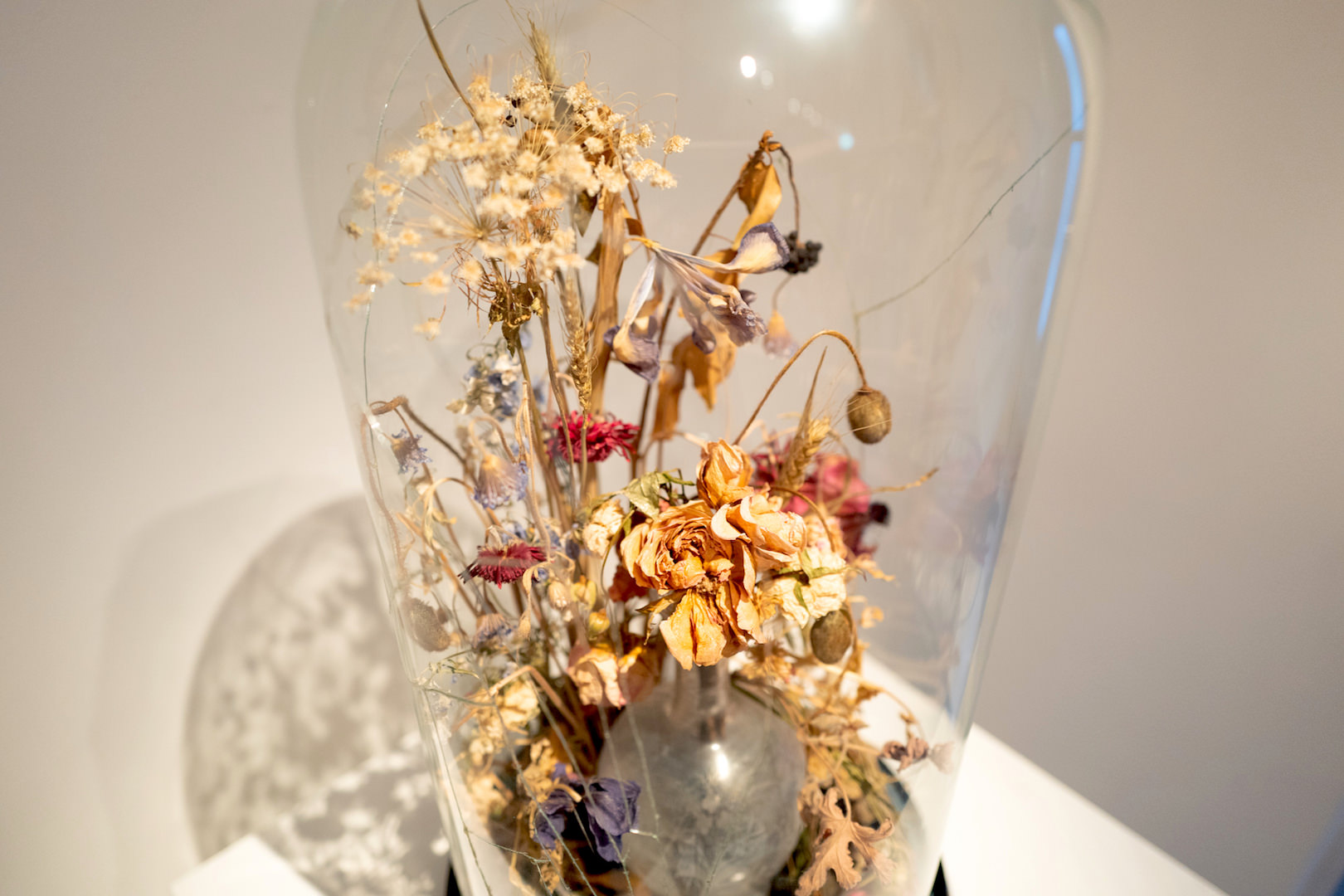
The flowers actually used in the shoot were on display as dried flowers.
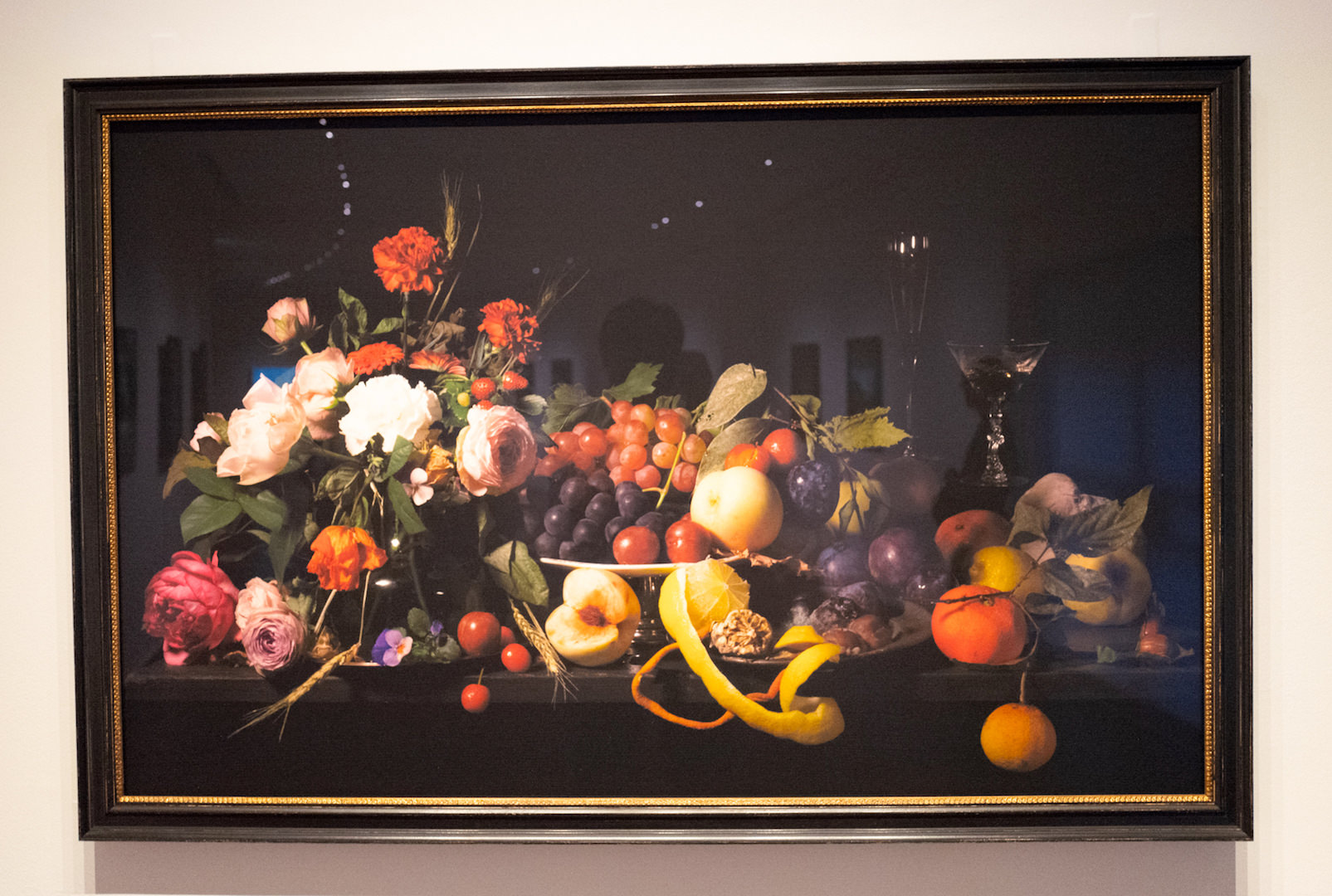
Next, the work below, San (Feast). This is another photograph work dressed up as a painting, and it contains several tricks. Can you spot them?
There’s an unnaturally large number of flowers and fruits on the table, which seems to be for a meal. Flowers and fruits from different seasons are lined up together, ignoring the calendar. Shot over the course of four months, the accumulated photographs are then “condensed” into what is set up to look like a single painting.
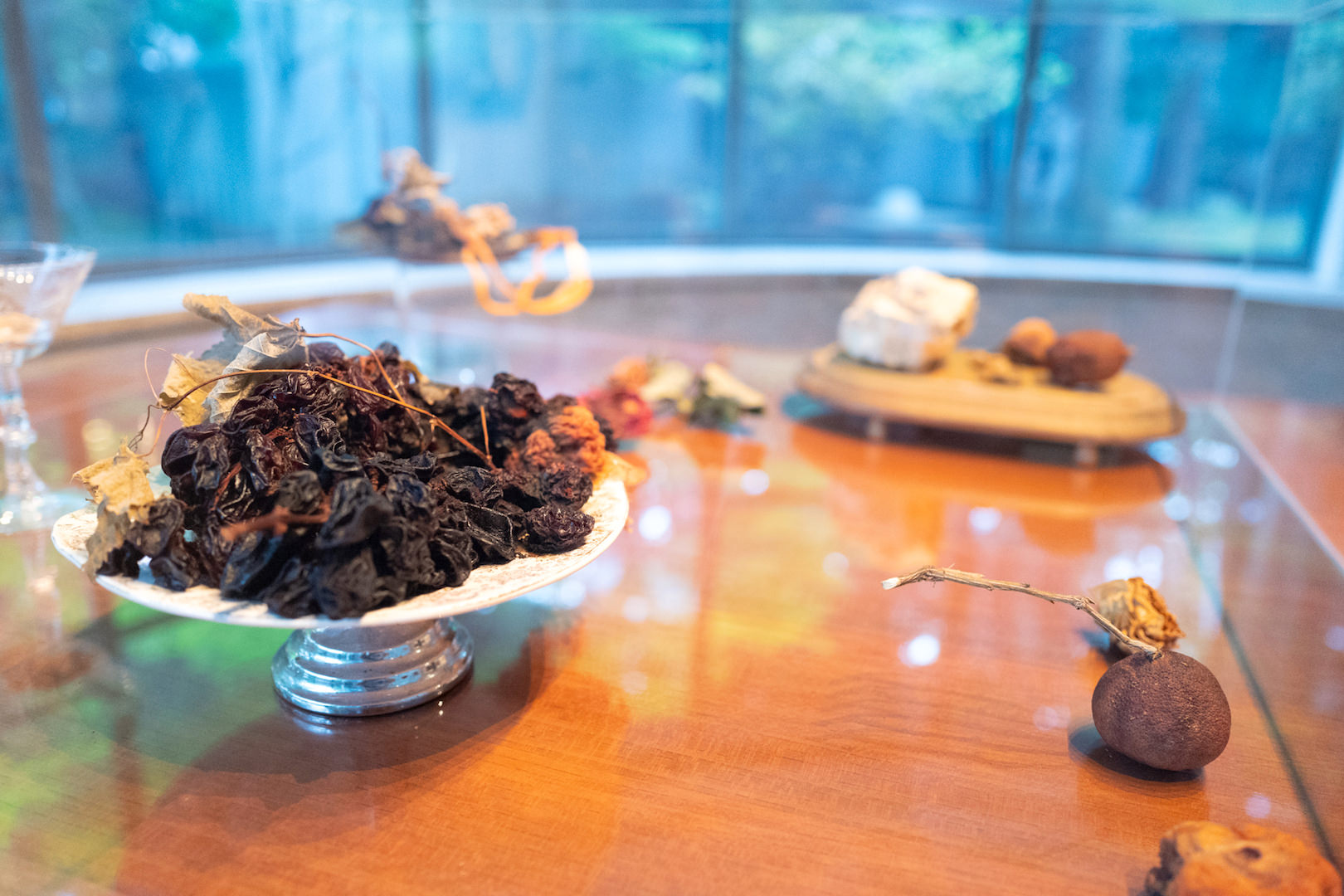
Showing the items used in the work and exposing the making process — a kind of “spoiler” gesture — carries a meaning of revealing the structure and behind-the-scenes of the work, and also functions as a form of self-verification.
Furthermore, the work showing five portraits is also a video piece disguised as a painting.
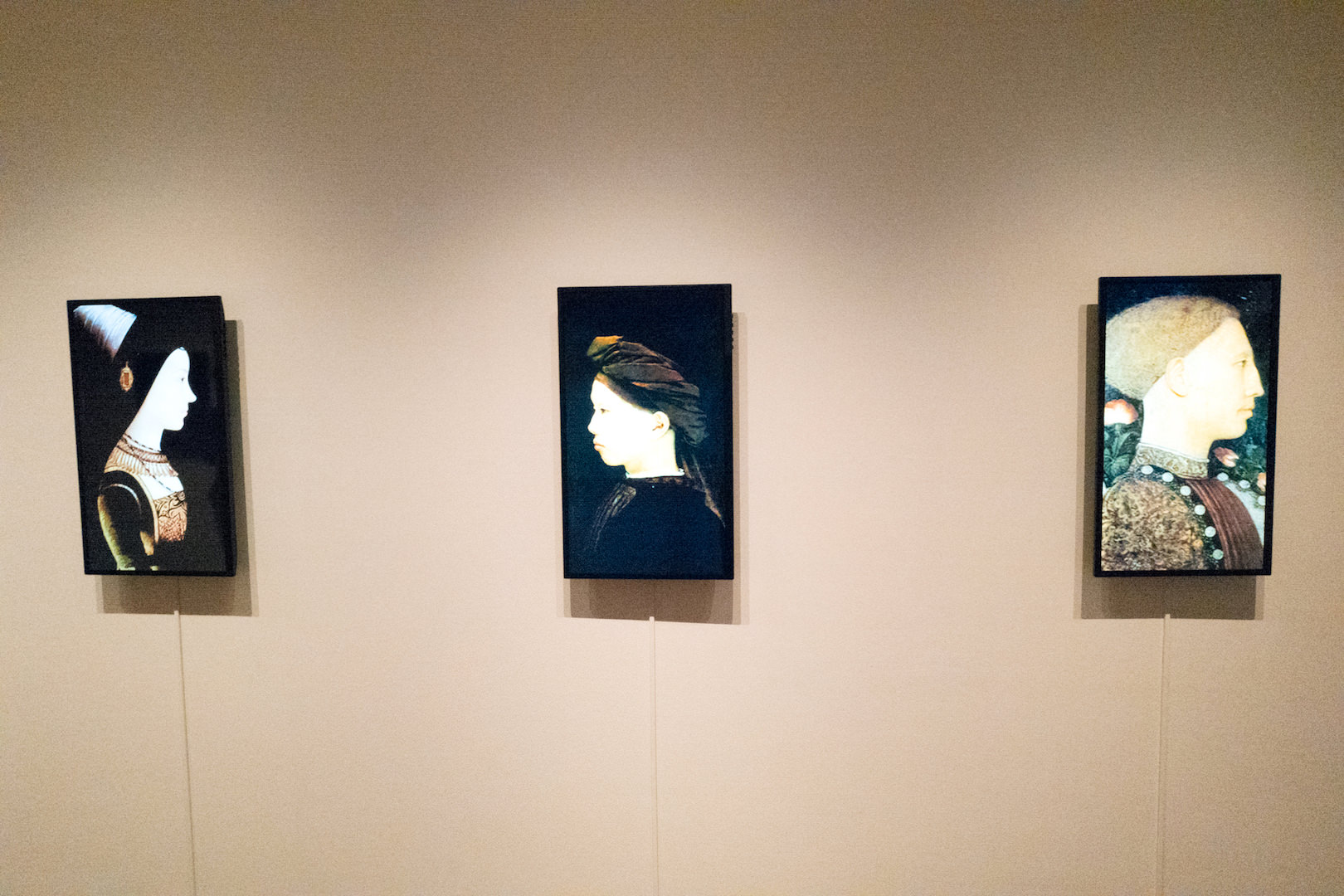 As you can see in the comparison images below, the subjects blink and their mouths move — you can watch the changes. The reference is Pisanello’s portrait Portrait of a Princess of the House of Este, but the eyes appear to have been rearranged with a Japanese cast.
[Gallery III] Room of Figures — episode 3, the sound of breathing
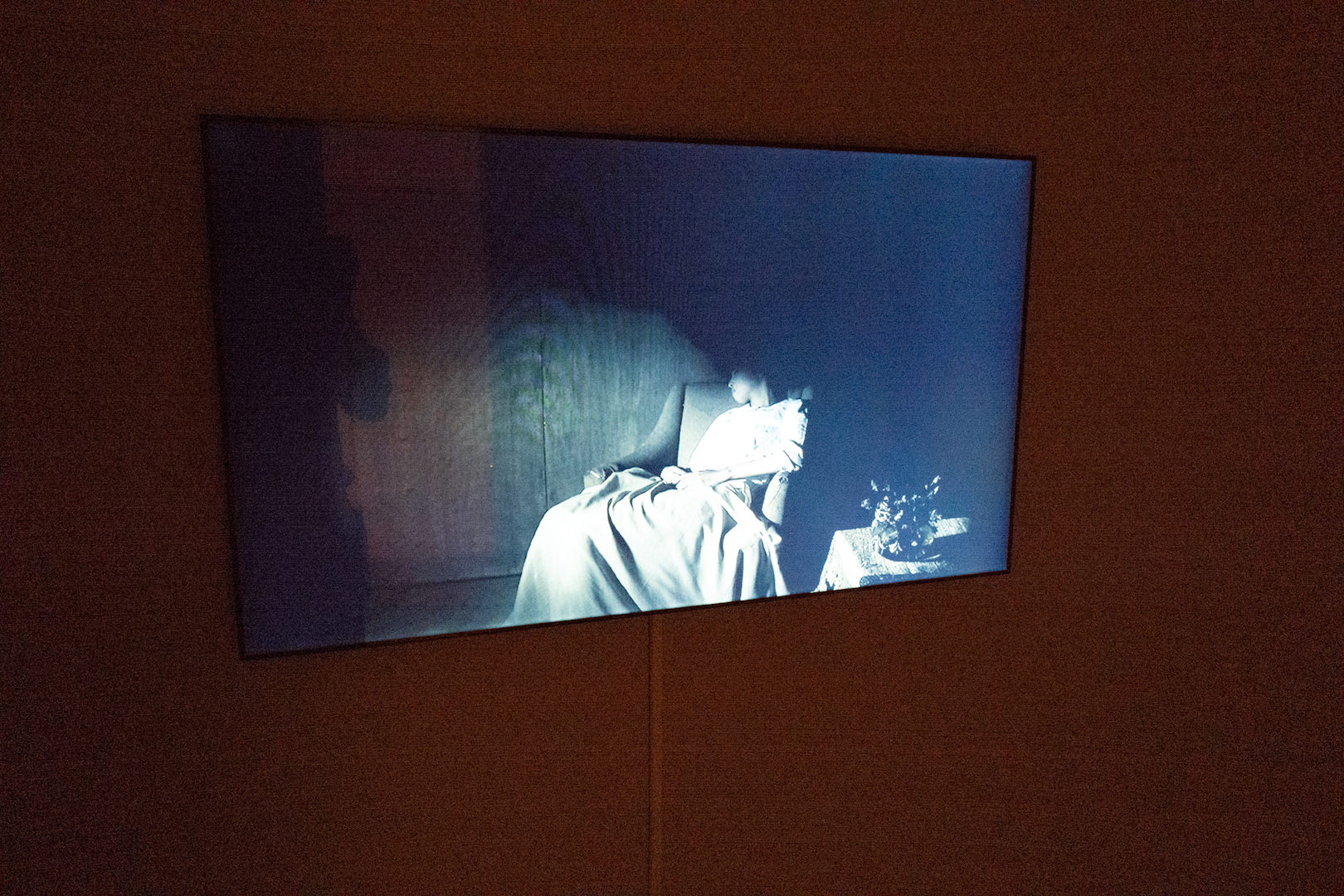
Moving up to the second floor of the museum, you enter the third room. Mami Kosemura is shown sleeping in a chair. You hear the sound of her breathing, and time simply passes. Then the appearance of the room in the image gradually changes — that’s what the piece is.
[Gallery IV] The New York Room — expansion from painting, and rough experiments
The fourth room brings together works Kosemura produced during a residency in New York in 2016–2017.
Pendulum is a work that turns a room in a townhouse in Chelsea into video. Treating the camera itself like a pendulum, it captures movement that is “not clearly defined.” Unlike her clear, lucid works that make photographs look like paintings, this swaying, fuzzy, ambiguous footage left a strong impression.
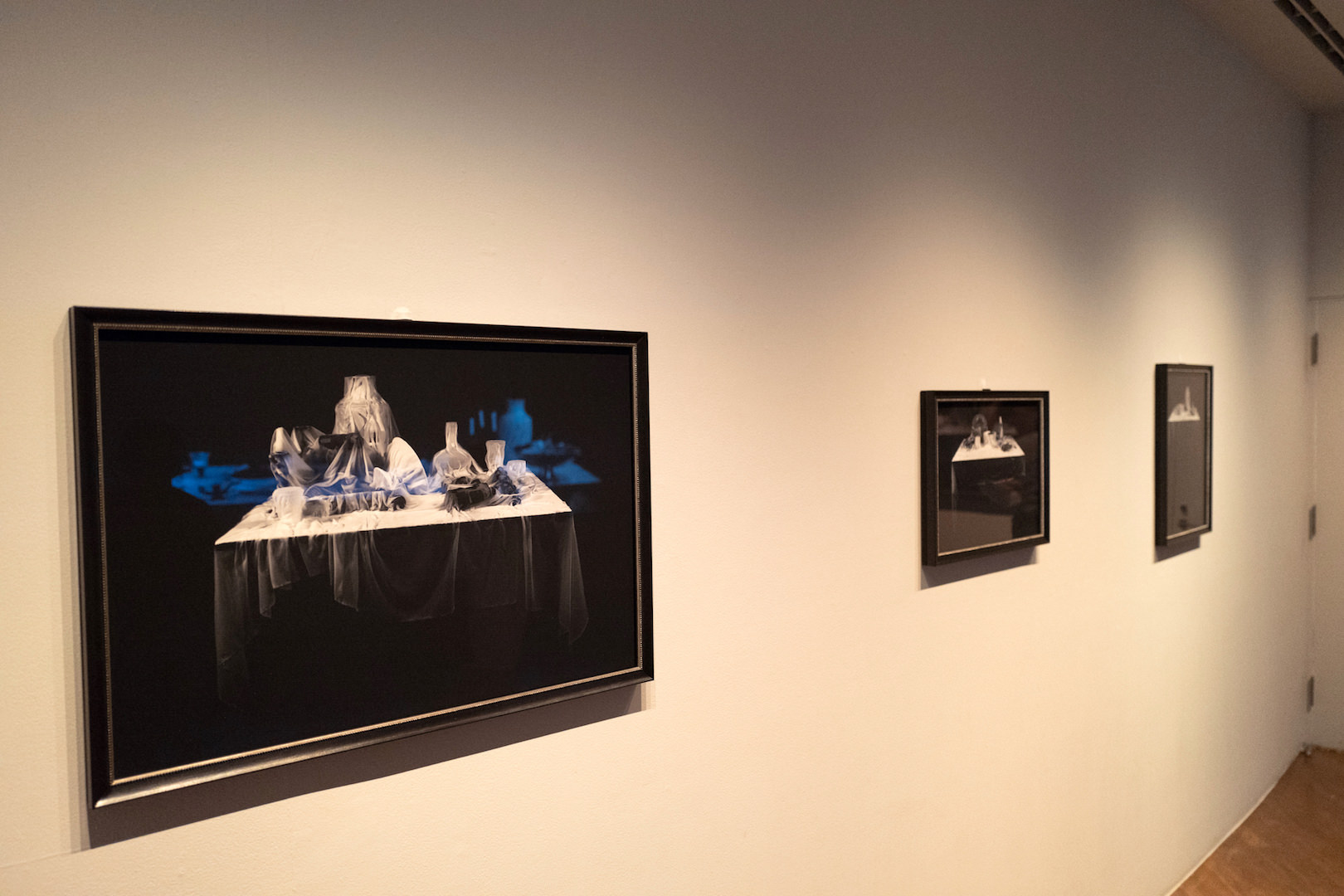
[Gallery V] Room of Black Still Lifes — toward the ending, moving image gives way to still image
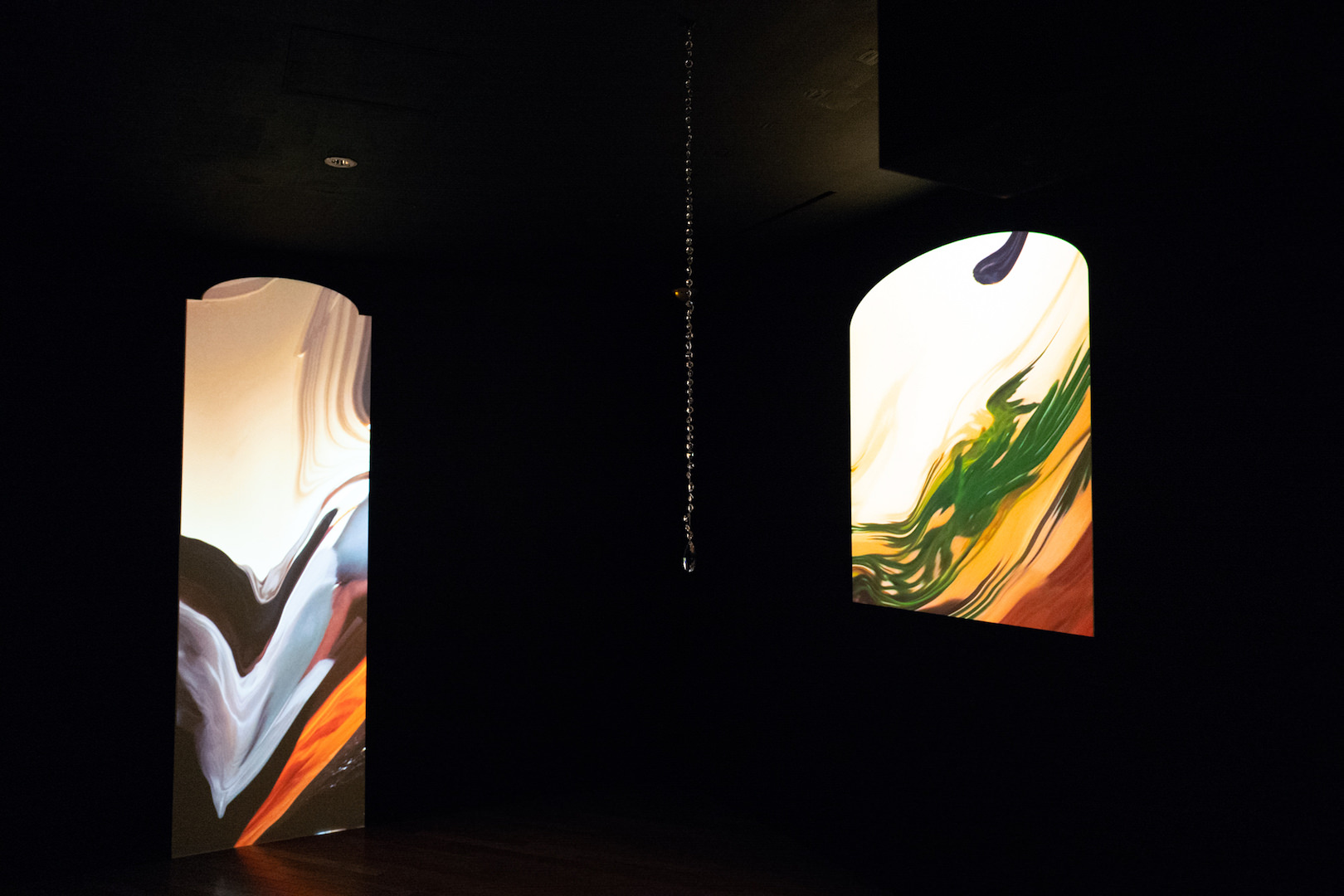
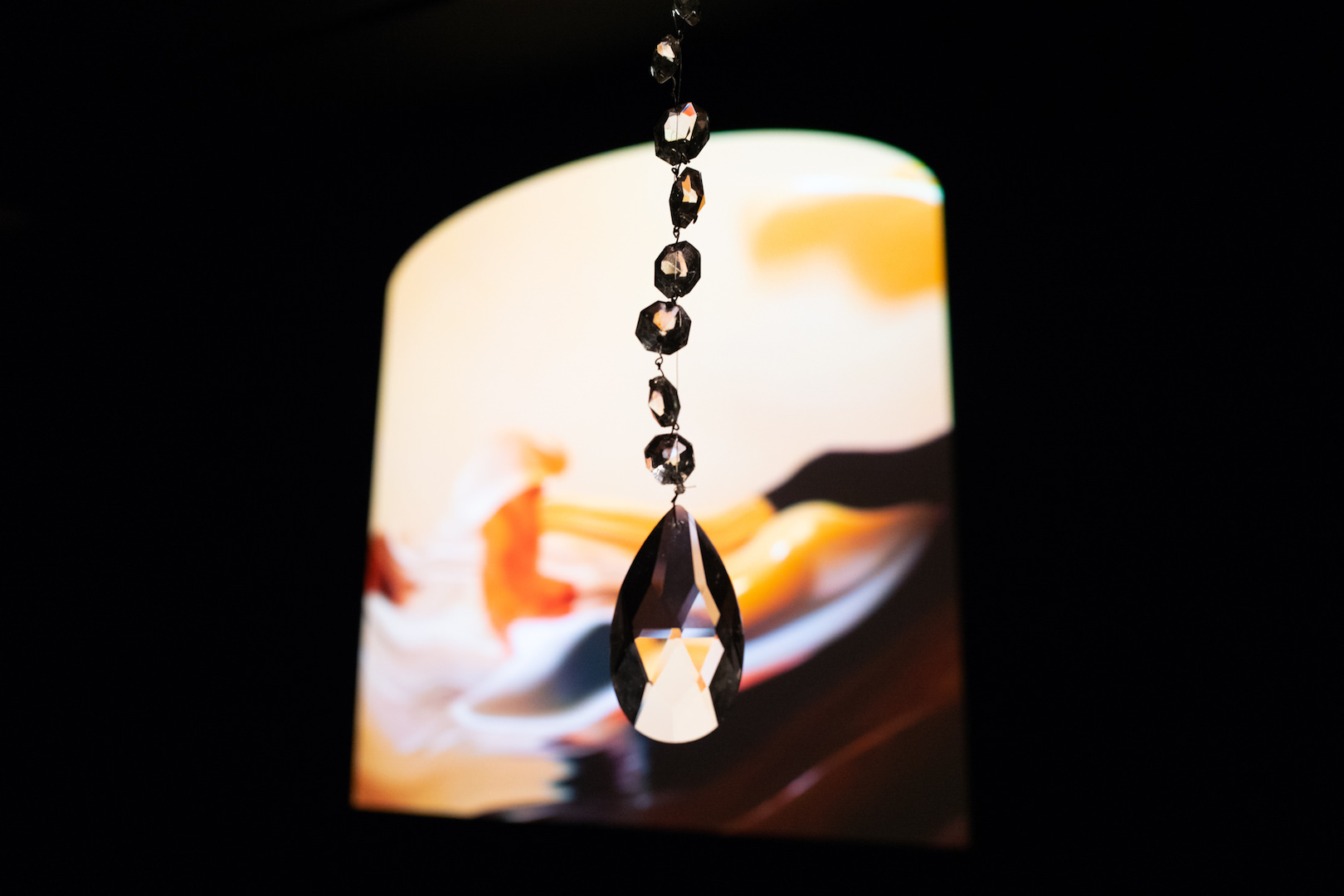
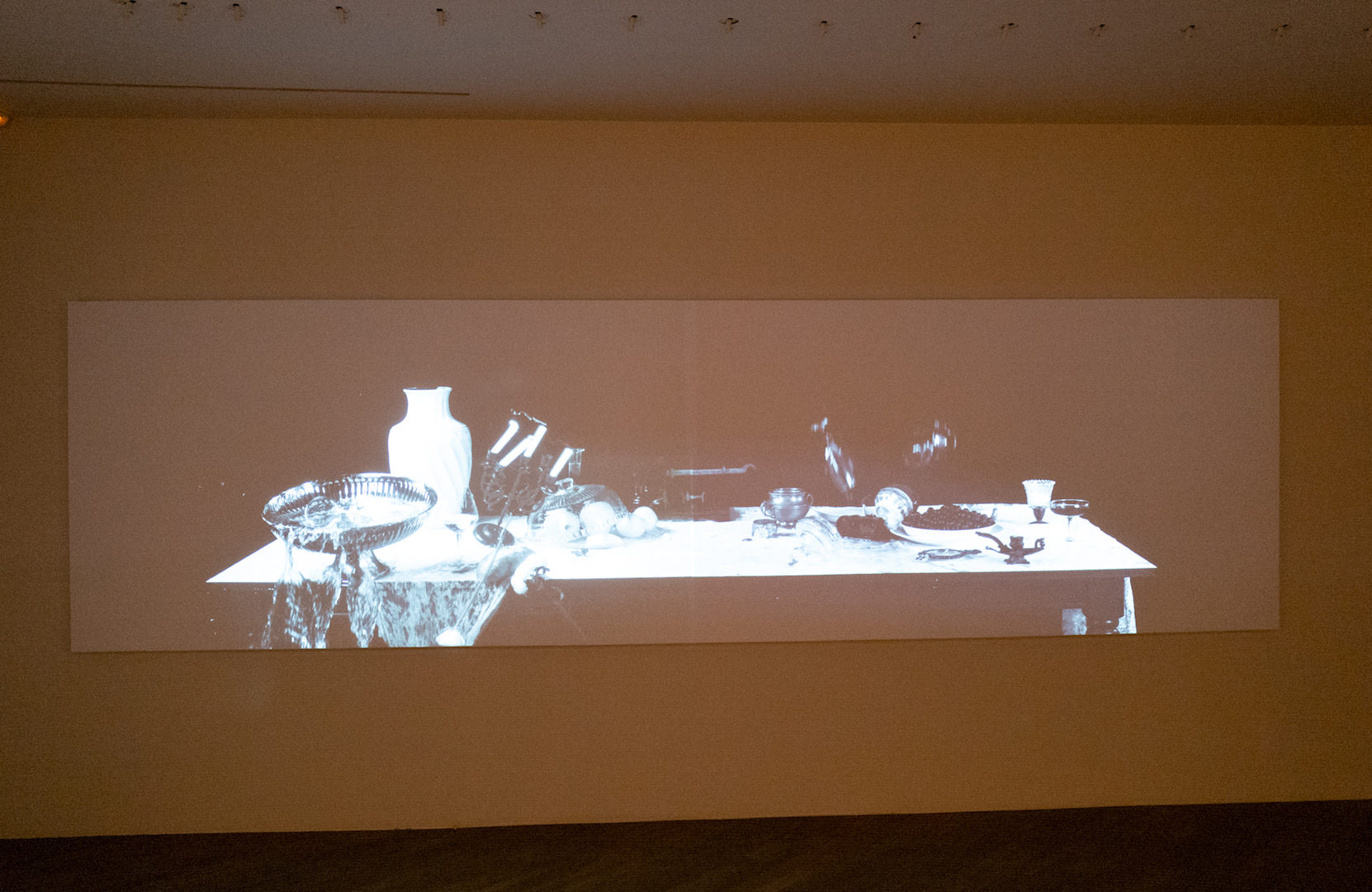
The final room turns the flow entirely — Drop Off, a work that takes a moment’s event and shapes it into a long-form story, was projected on a large screen.
The piece shows a still life laid out on a table, and various actions unfold — objects fall from above one after another — but it’s shot with a high-speed camera, turning four seconds of real time into a twelve-minute video. I’ve called this the last room, but be sure to head back down and revisit the first room afterward. That’s how it wraps up.
Bonus — Evening Screening Program
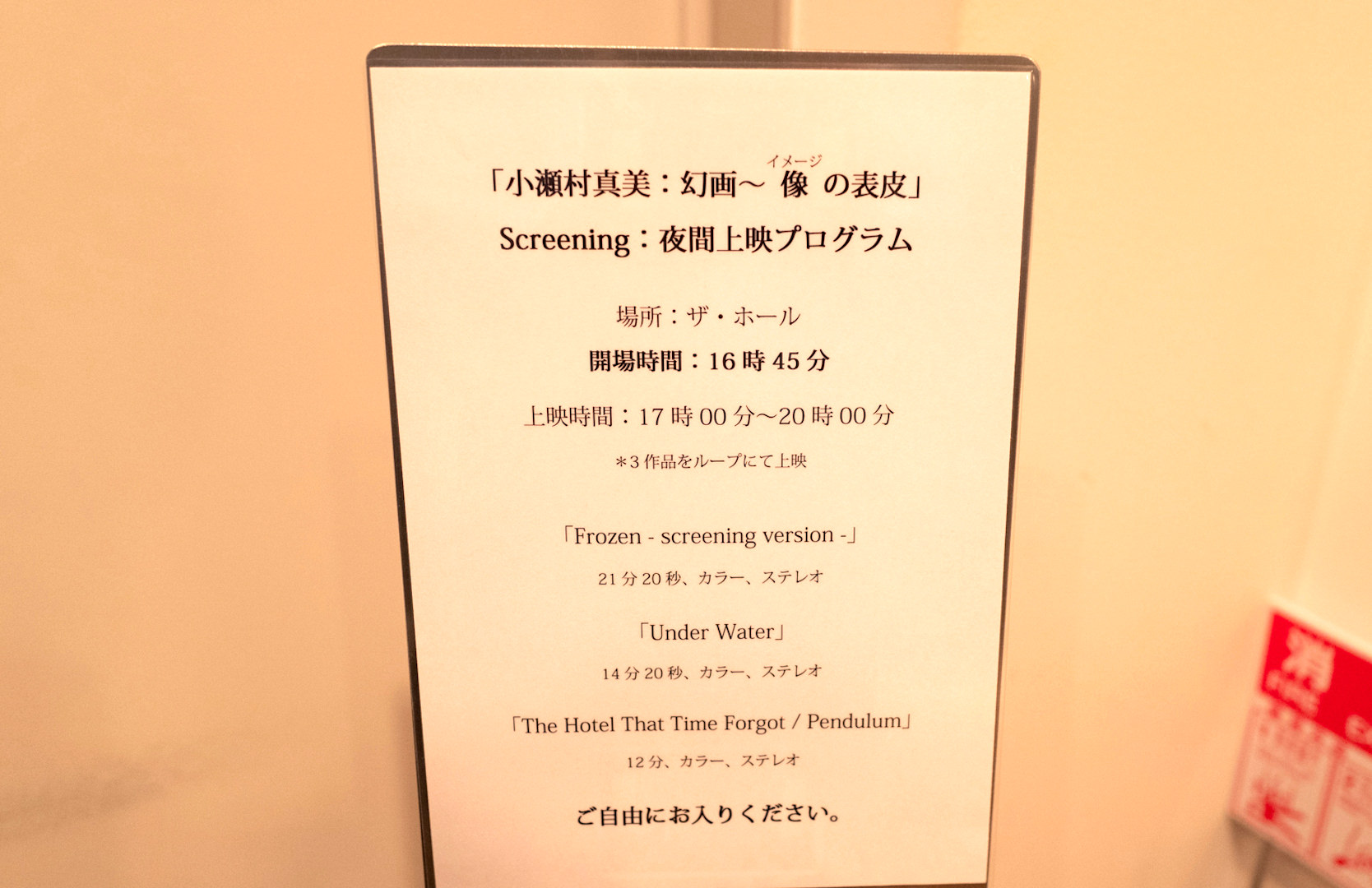
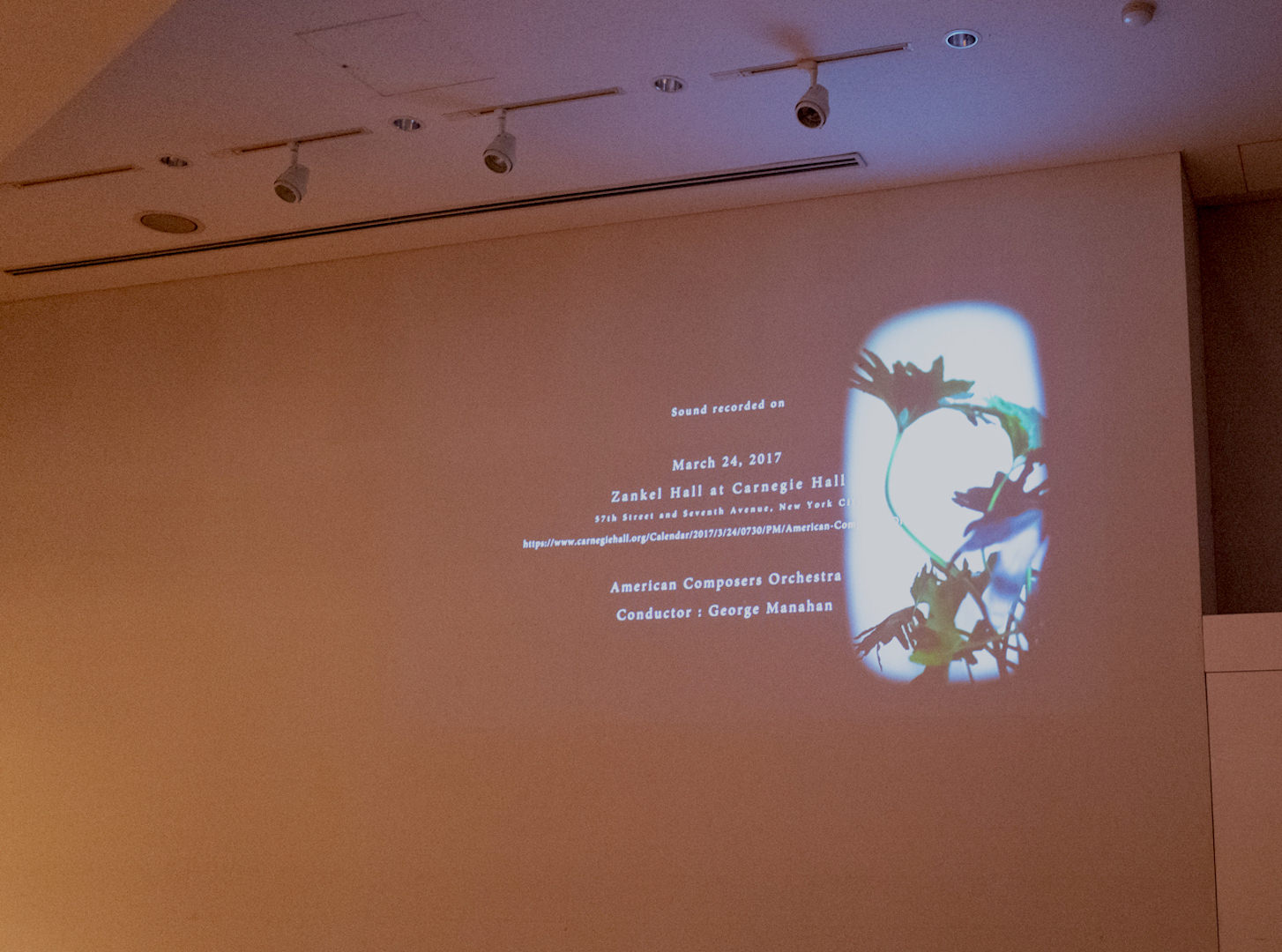
I joined a special program only screened on Wednesday evenings. Three works were shown on loop at “The Hall” in the back of the Hara Museum of Contemporary Art. This too was Kosemura’s world in full force.
Finally
Well then — I stopped by the “Room of Beginnings and Endings” one more time. Things I hadn’t quite understood on the first visit clicked into place when I returned at the end: “Ah, so that’s what this is!” I couldn’t help but grin. It really is a room where beginning and ending are joined together.