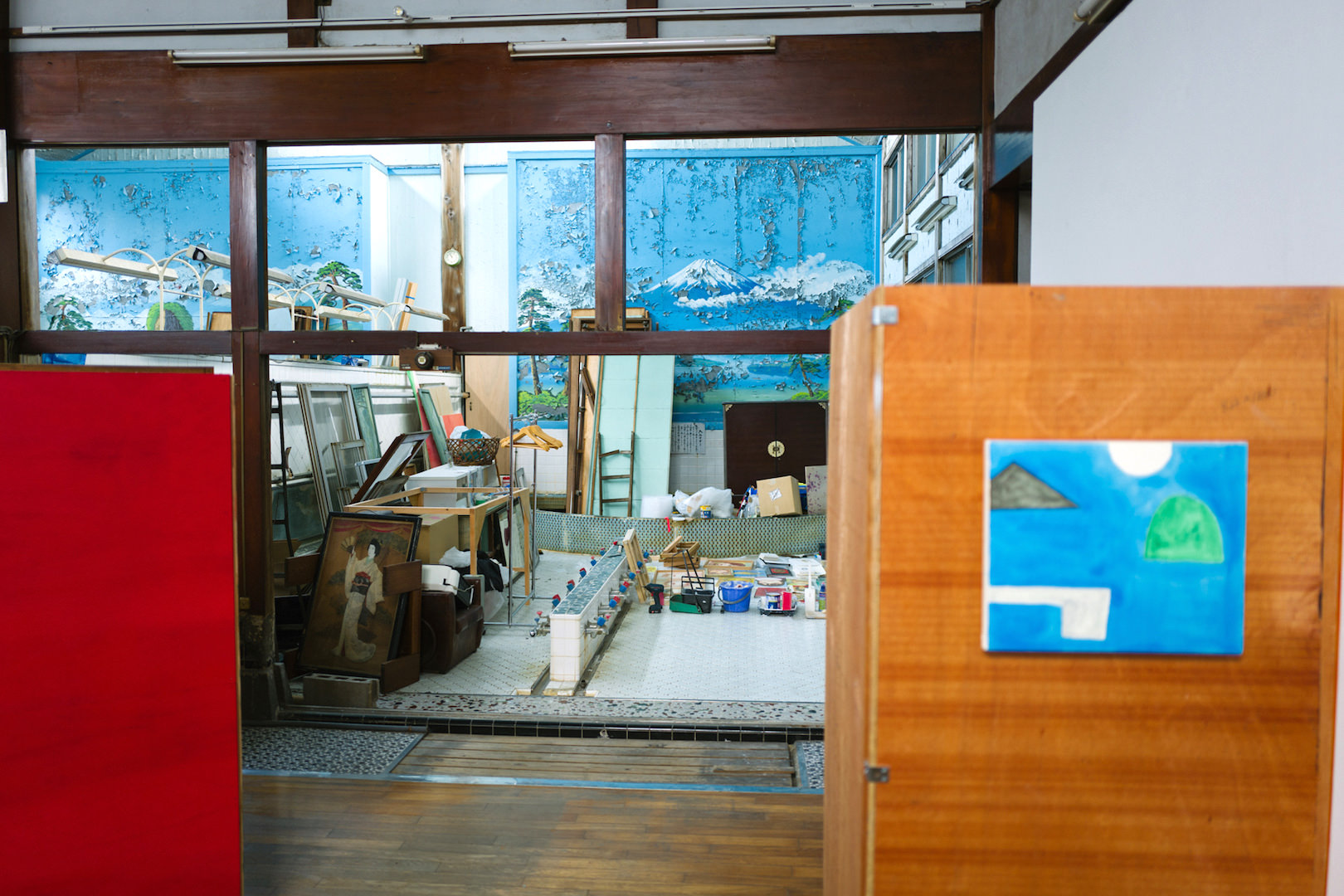
Yotsuya Mikakunin Studio
I visited Yotsuya Mikakunin Studio, a gallery renovated from a former public bathhouse.
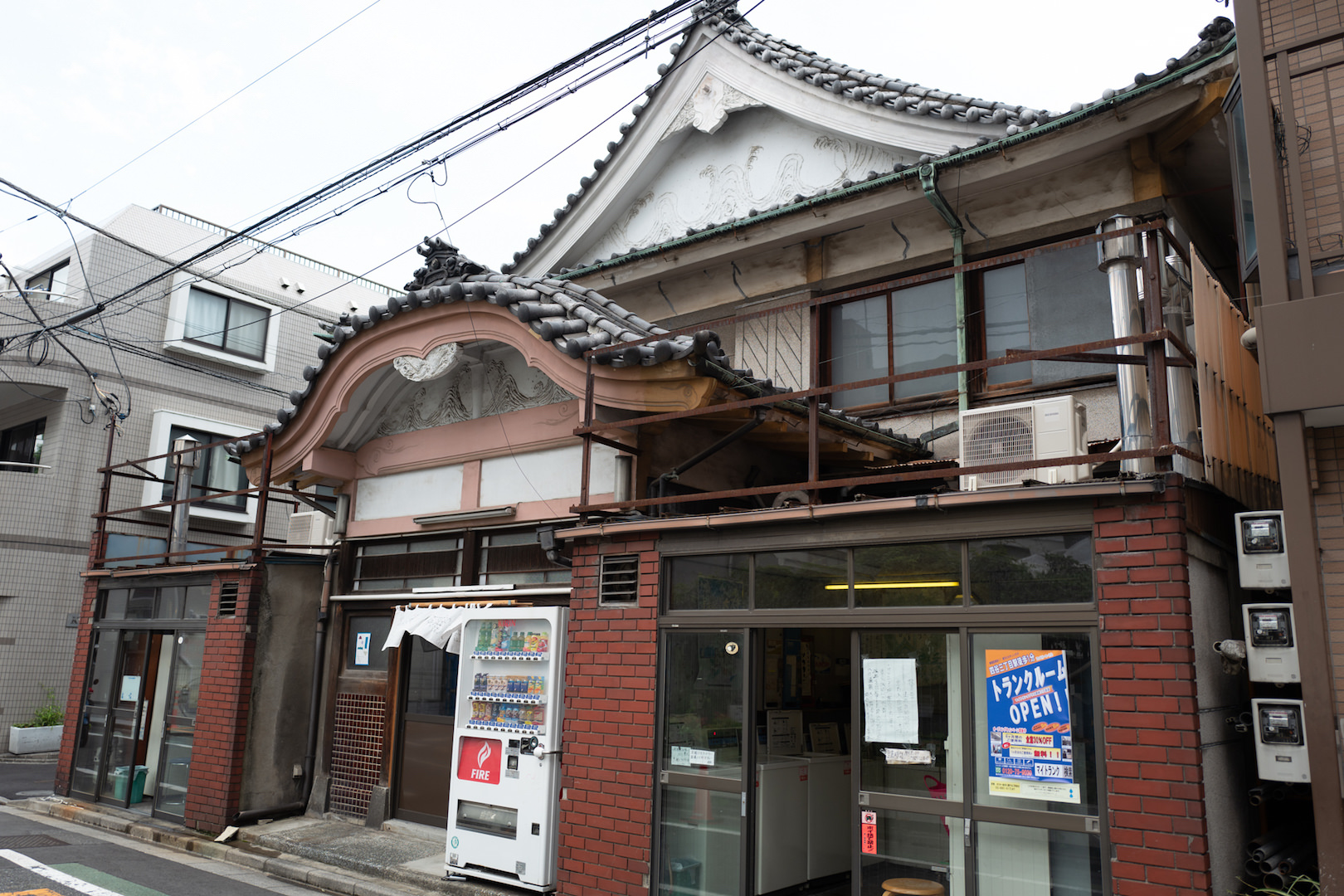
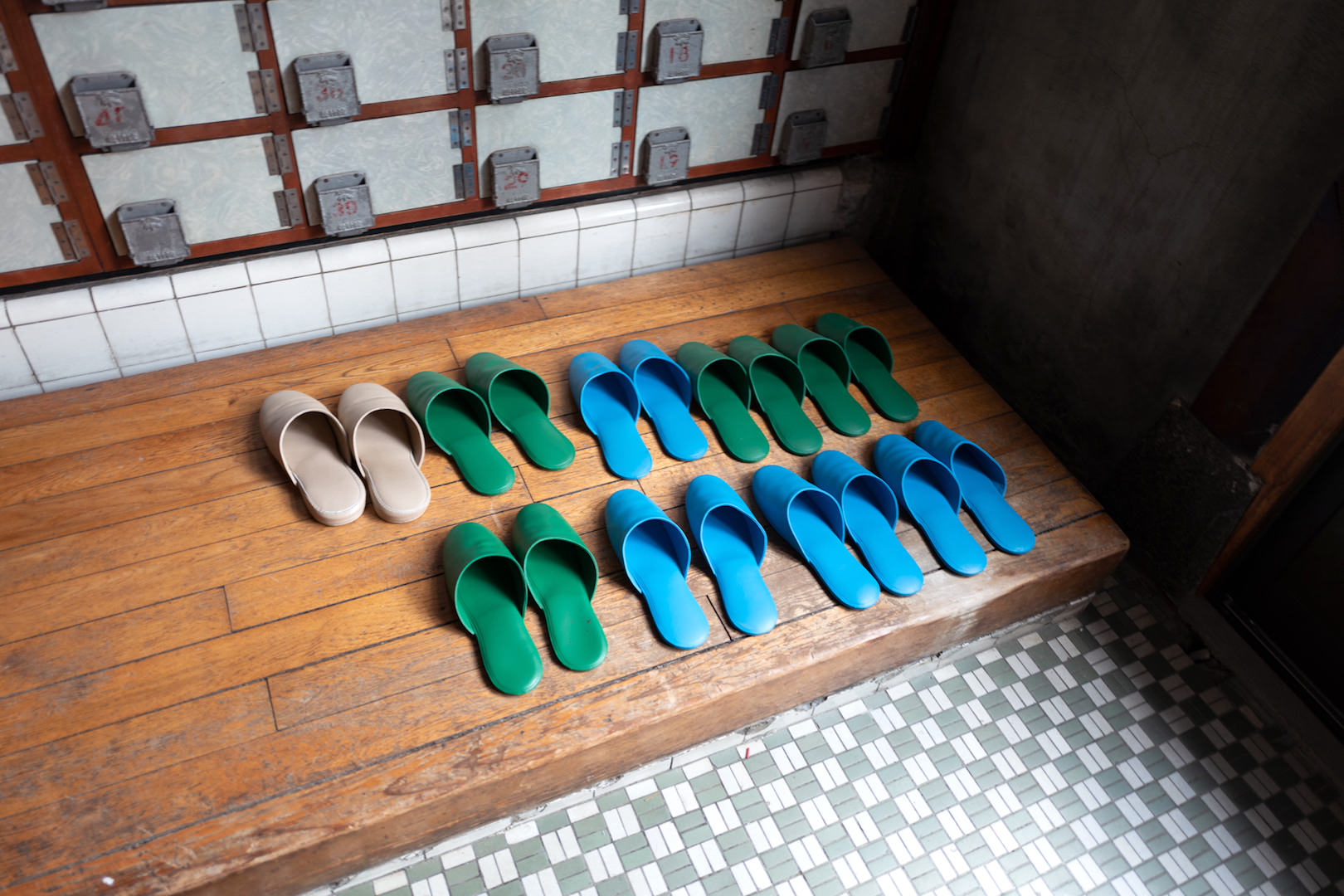
When it comes to galleries converted from public bathhouses, SCAI THE BATHHOUSE is the best known, but this space retains the atmosphere of a bathhouse in every corner, as if you had slipped back into the Showa era.
Yu Kurosaka “Requests from an Overgrown Garden and an Empty Room”
This inaugural exhibition of the gallery is a solo show by Yu Kurosaka, the head of Mikakunin Studio.
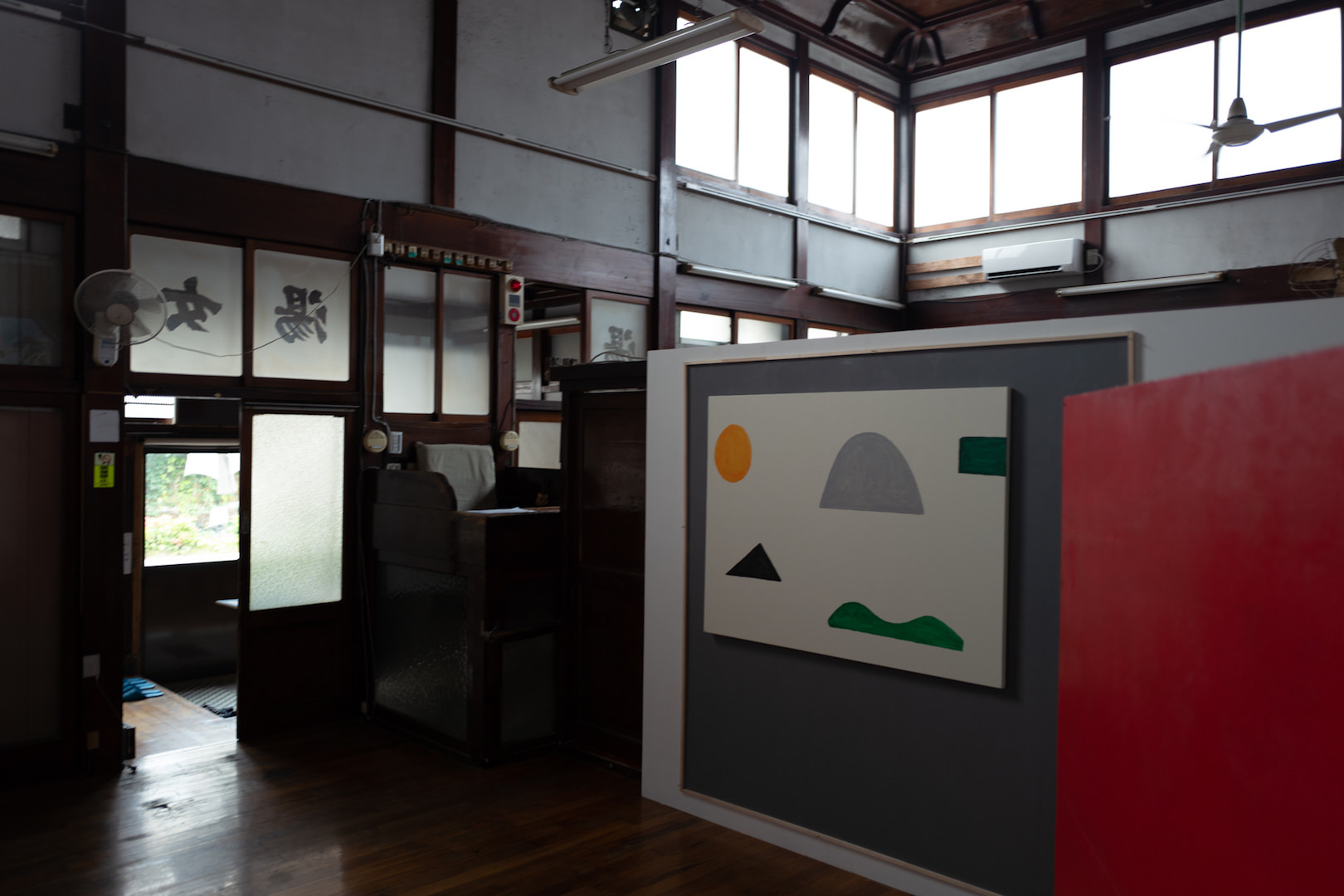
Handmade partition panels have been installed inside the former bathhouse to create a gallery-like space.
I actually saw this exhibition a while ago, and quite some time has passed before writing this piece.
Normally I can put my thoughts into writing fairly smoothly after viewing a show, but this time I could not immediately digest the world created by the works and the space, so it took me longer than usual. That may partly be due to the influence of Noi Sawaragi’s recent book “Sensibility Does Not Get Moved,” which I had just finished reading.
Sawaragi recommends an approach to art viewing that involves “seeing the work as a mass — swallowing it whole, stray thoughts and all,” and I kept that in mind strongly while looking at this show.
Kurosaka’s works are abstract paintings, and the exhibition venue, Mikakunin Studio, is a highly unusual space. I wanted to take time to work through how, after reading the statement carefully, I could organize my own understanding of the work.
Requests from an Overgrown Garden and an Empty Room
For me, painting is like the contents of a room.
Everything I did before I started painting felt like building the outside of that room —
the walls, the outer surfaces, the roof.
Only once the outside had started to take shape could I gradually begin to think about the interior.
Right now, gazing at the still-empty room, I hold my brush and wait for a few important elements to emerge.
What matters here is what the empty room, or the untouched support surface, is asking of me.
In other words, I am not the agent who makes the painting.
Letting one form encounter another by chance, and the composition that arises when I frame them — that is as far as my agency goes.
After that, colors and qualities are chosen in response to their relationships, and it is not I who completes the painting as a painting.
I do not even know what kind of painting it will become.
This is close to the idea of the “moving garden” proposed by Gilles Clément.
The only choice the person makes is to protect what happen to grow in the garden as weeds.
Rather than cutting down plants because they are in the way, the person steps aside and lays a new path.
Plants are the agent; humans take the position of following them and choosing without resisting.
Deciding “this much is the garden” is framing, in painting.
First I lay in a rough form and establish the basic composition.
Up to that point, only a human can do the work, I believe.
From there, the agency shifts to the garden or to the support surface.
Painting driven by necessity rather than mere chance — to achieve that, you have to listen to the requests coming from the overgrown garden, the empty room, the untouched support.
2018/06/28 Yu Kurosaka
The works are painted in acrylic on supports of canvas, linen, and cotton-linen blends. As you can see from the photos, they are abstract paintings with shapes that resemble geometric figures.
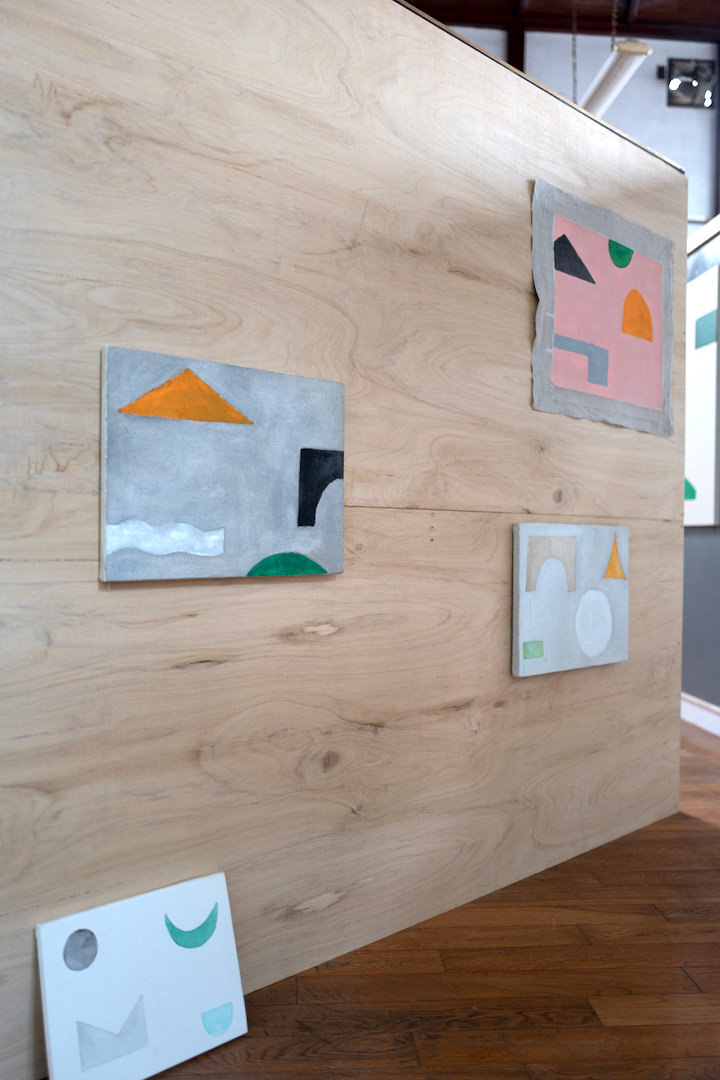 When I view a work rich in information, I tend to prefer building up my own reading from a smaller amount of information rather than breaking a dense work down piece by piece like factoring an equation.
Working out how I would arrive at my own reading of these works is one of the great pleasures of looking at art — but this time, because of the peculiar nature of the venue, it did not come as smoothly as usual.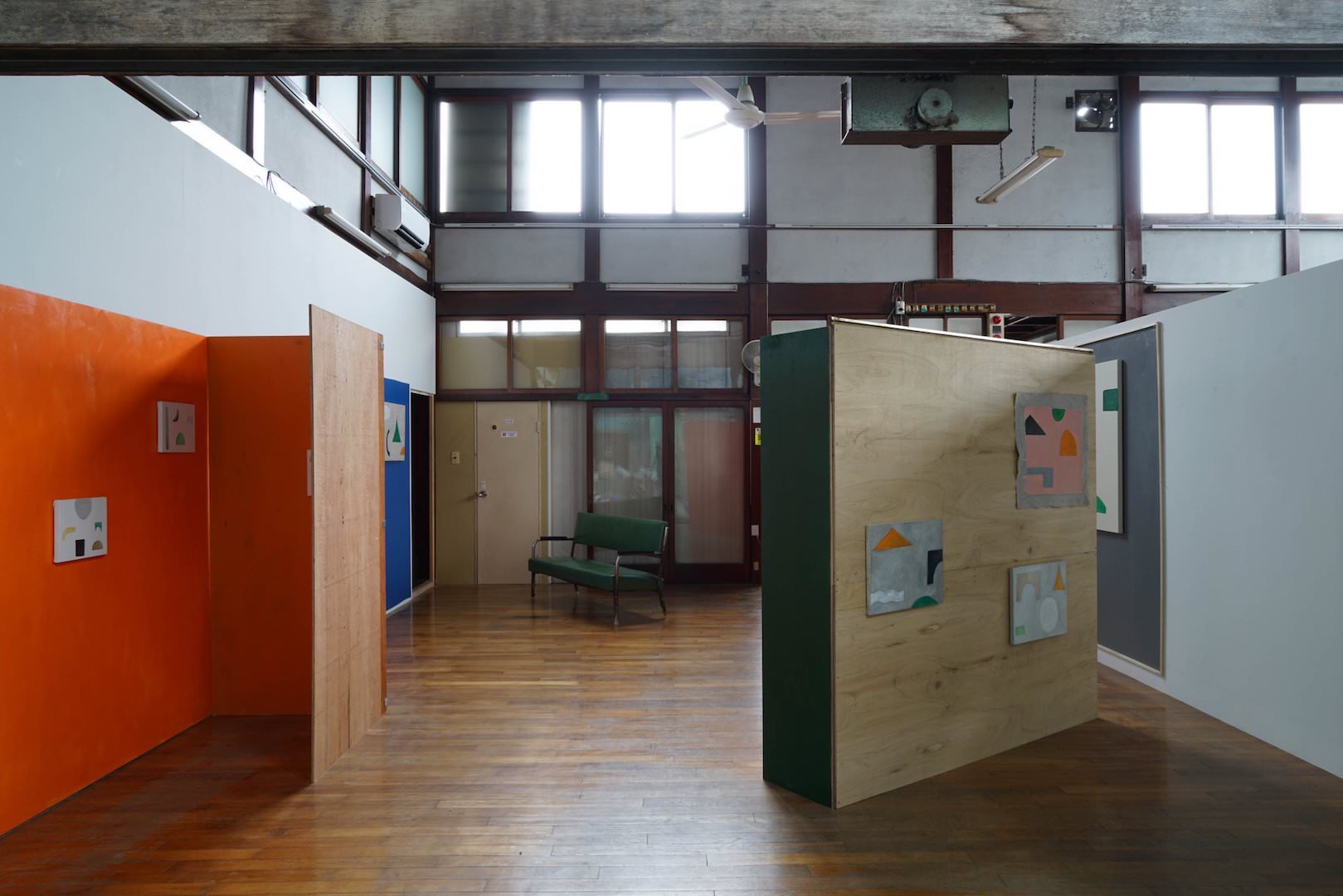 I moved my gaze from work to work, trying to see each as a mass and to swallow it whole, stray thoughts and all.
At the same time I found myself picturing simplified images from the sparse objects on the canvas, translating them into something else, or trying to give them a concrete form in my head.
It felt like moving many different approaches in and out of the limited box of my own mind, all at once.
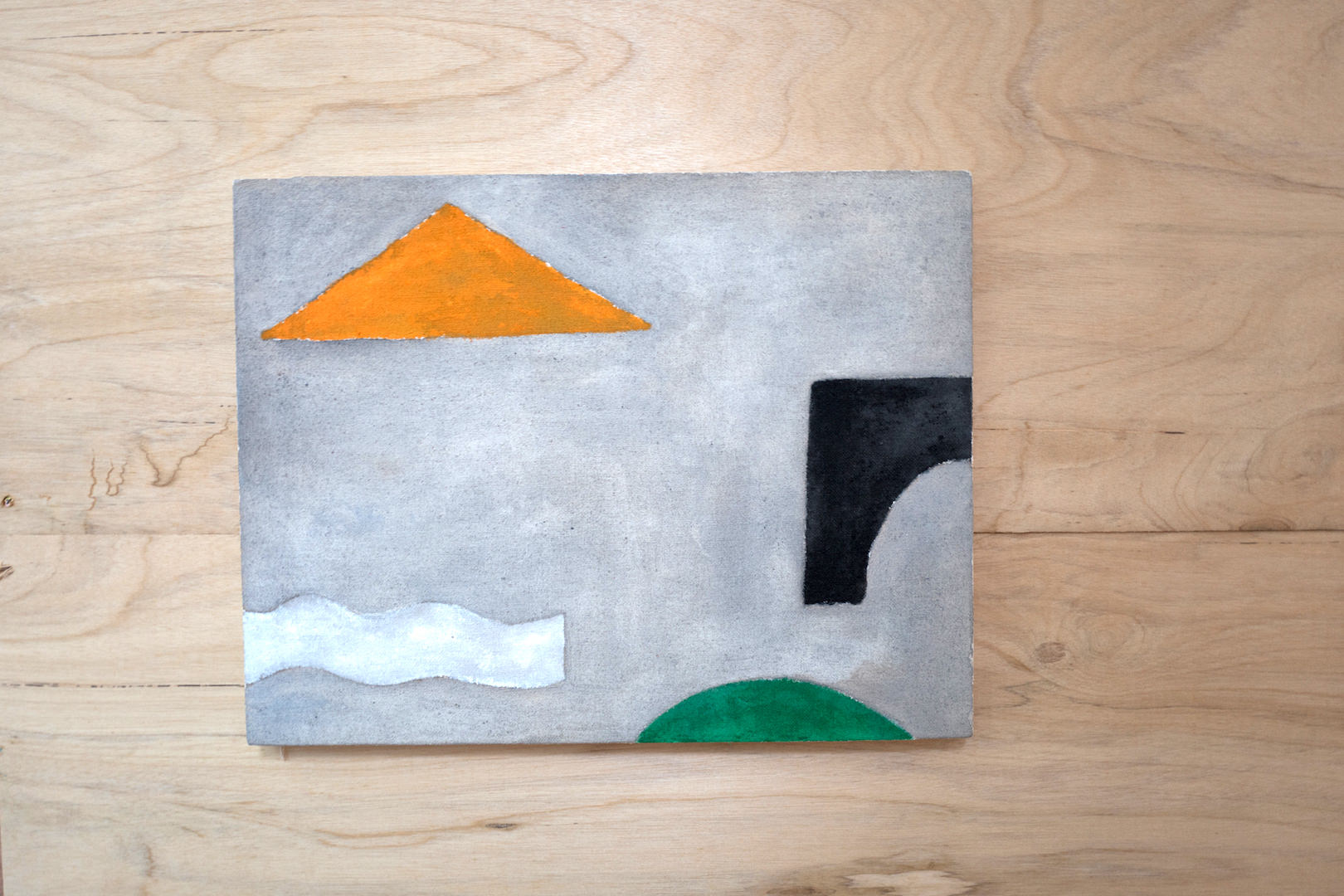 Viewing the show all alone in the quiet studio, there were moments when sound vanished, the air seemed to disappear, I felt myself floating in the space, and my thoughts came to a halt. A strange sensation.
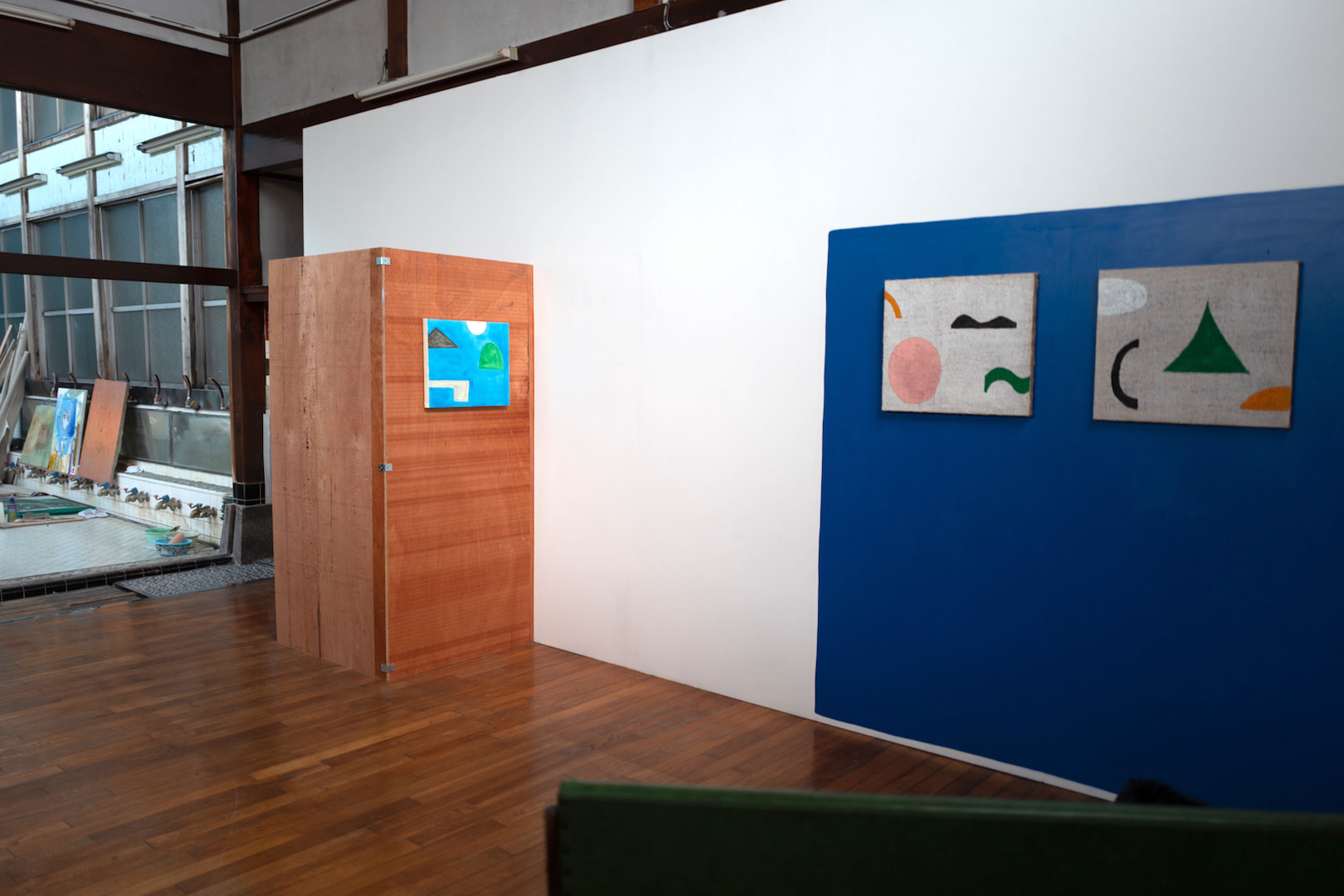 From the exhibition area converted from the changing room, I could see, just beyond, the bare-tiled bath area, left in a state of disarray. Even though I was in an art gallery, the space was unusual enough that I lost track of where I actually was.
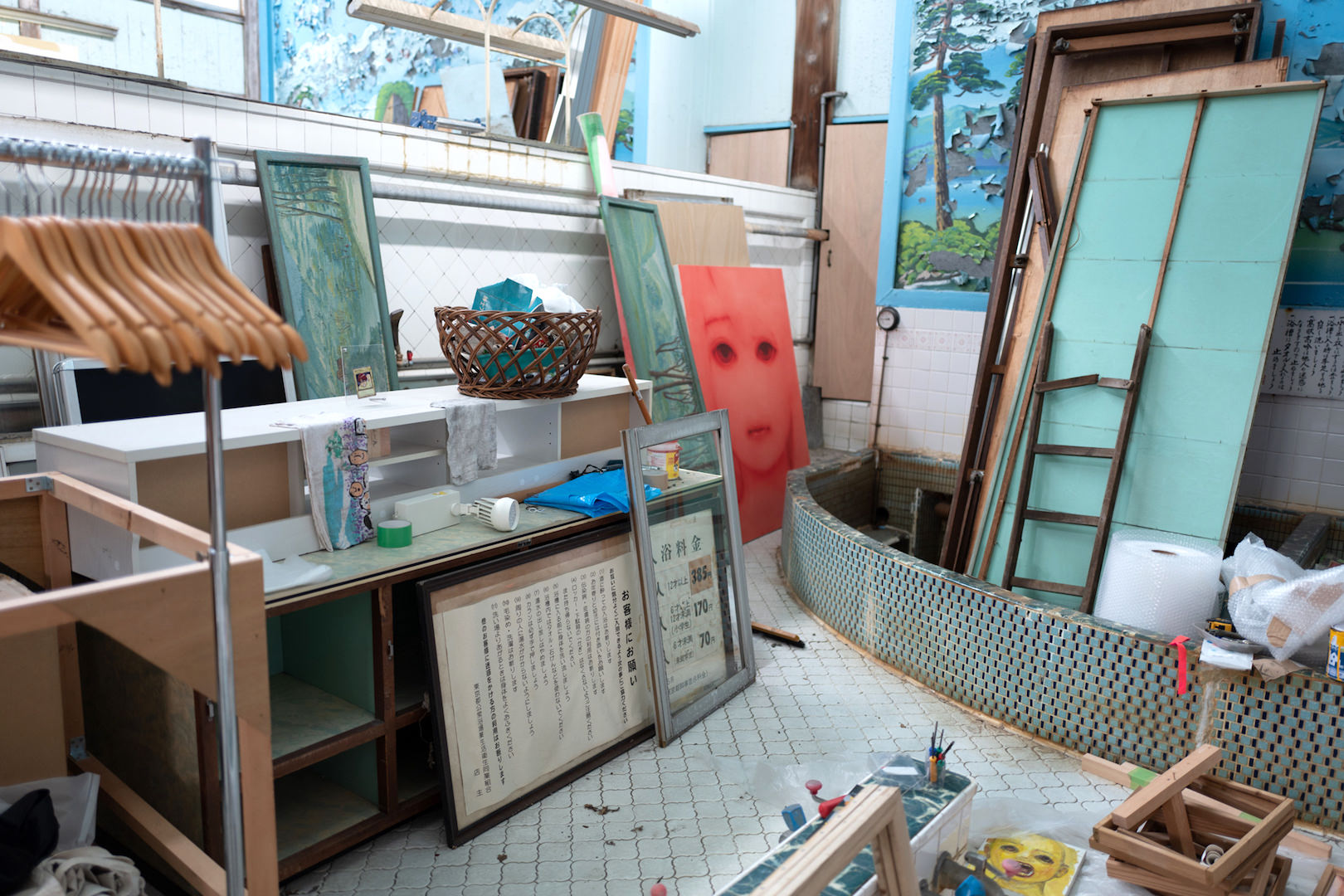
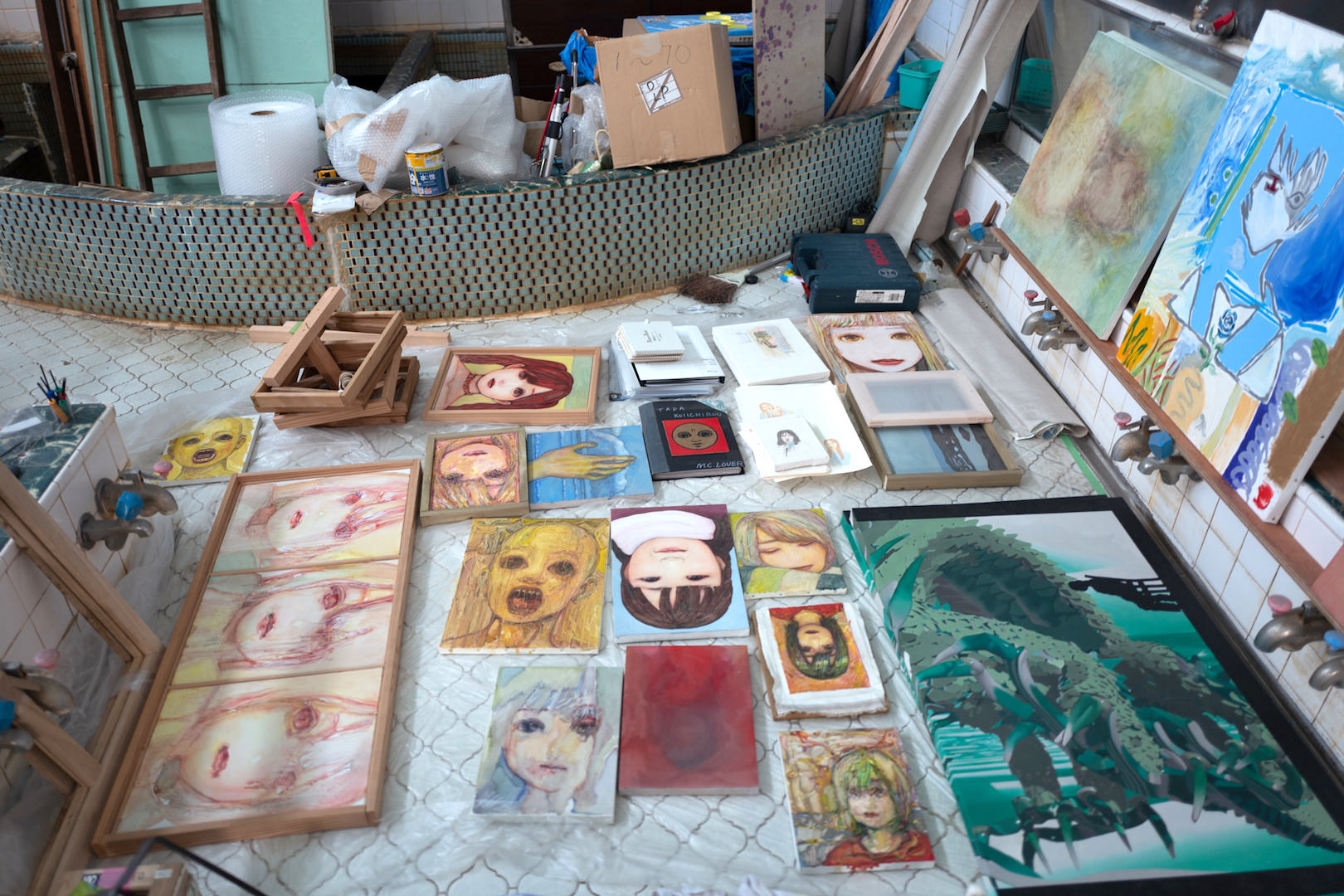
Feeling myself in the presence of works that cannot be measured by conventional standards of prettiness or beauty, yet enjoying a space unlike anything I had experienced before, I confirmed that I was, in fact, enjoying being there — and then left the venue.
Mikakunin Studio has only just started as a gallery.
I am looking forward to their next exhibition.