“Beyond the End: An Art History of Ruins,” an exhibition themed around ruins, opens at Shoto Museum of Art from December 8, 2018.
The lineup of participating artists is remarkable, and now that we have received exhibition images, we would like to introduce them.
Beyond the End: An Art History of Ruins
Buildings and ruins that are on the verge of collapsing while still retaining traces of past glory and civilization.
In Western art, “ruins” have been repeatedly depicted as one element of landscape painting. Interestingly, when the so-called taste for ruins became fashionable from the 18th to the 19th century, “ruins” established themselves as the main subject of paintings.
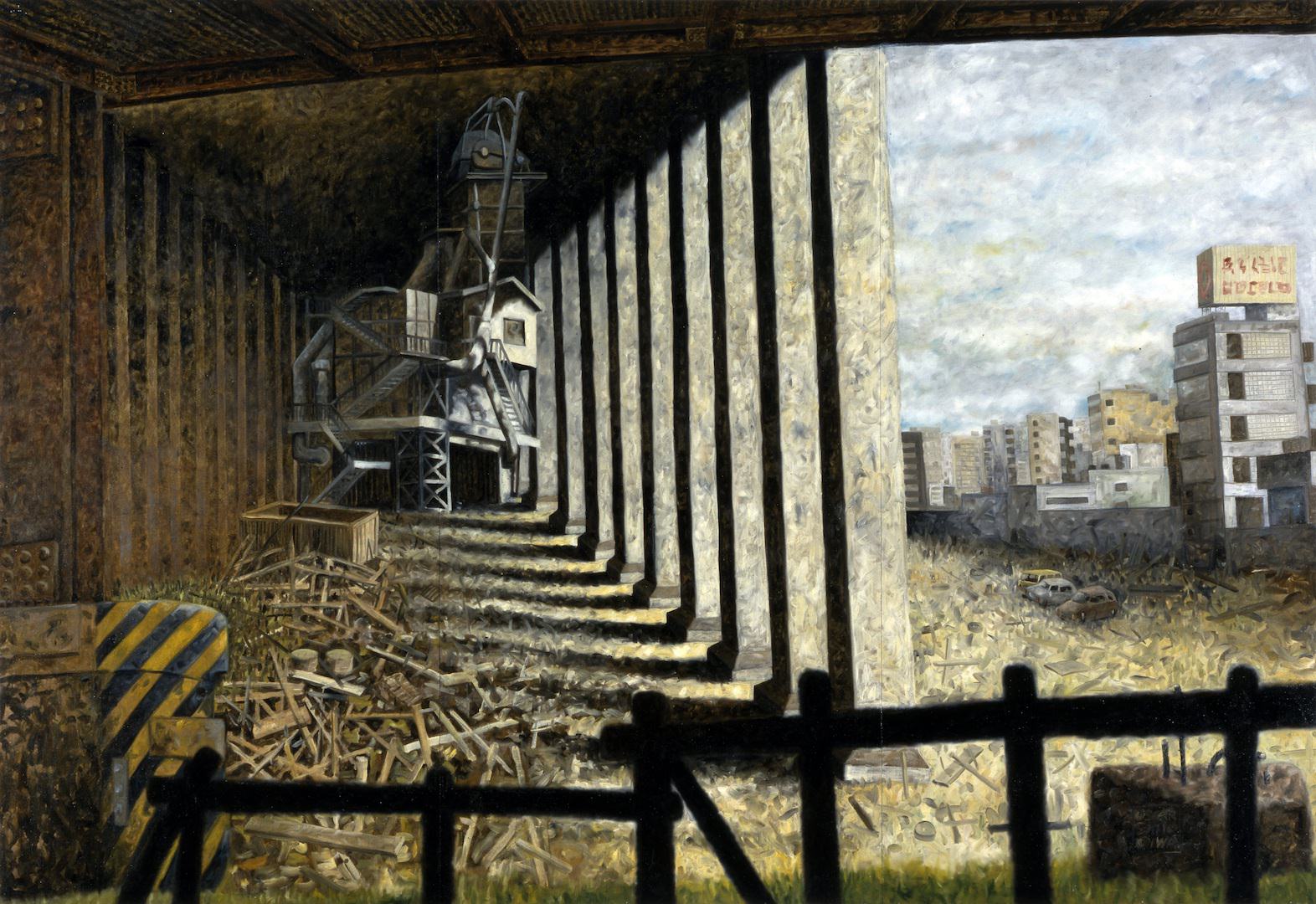
To adore and depict “ruins” — this aesthetic also spread into Japanese art in the modern era. From the 18th-century Hubert Robert, famed as a painter of ruins, and the printmaker Piranesi, to the 19th-century Constable, the 20th-century Henri Rousseau, Magritte, and Delvaux, and further to Japanese painters from the Edo period through the modern and contemporary eras — Aodo Denzen, Takeji Fujishima, Shikanosuke Oka, Hisaharu Motoda, Oscar Oiwa, and Minoru Nomata — the theme of ruins has been passed down through generations.
Why are people drawn to scenes from the distant past or the distant future — of things that have perished, or that will one day perish, within the flow of time?
This exhibition brings together works themed on ruins, remains, and cities from Western classical art to contemporary Japanese art, tracing this “art history of ruins.”
The ruins boom began 400 years ago?
The oldest work in this exhibition dates all the way back to the 17th century.
Rare works by artists such as Charles Cornelisz de Hooch of the Netherlands, who was already renowned for his ruin paintings at that time, will also be on display.

The rise of the “painters of ruins”
In the 18th century, painters emerged who devoted their entire lives to pursuing the theme of “ruins.”
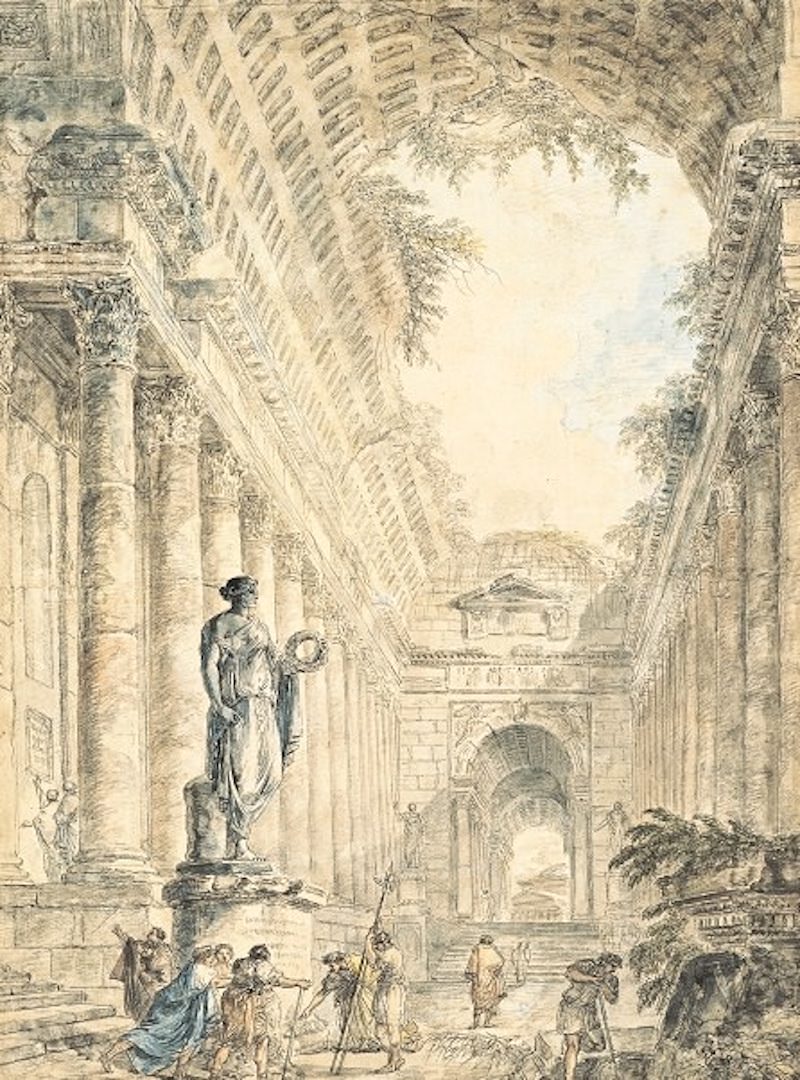
Please take a look at the grand landscapes — where reality and fantasy intermingle — by France’s Hubert Robert, known as “Robert of the Ruins,” and by Italy’s printmaker Piranesi.
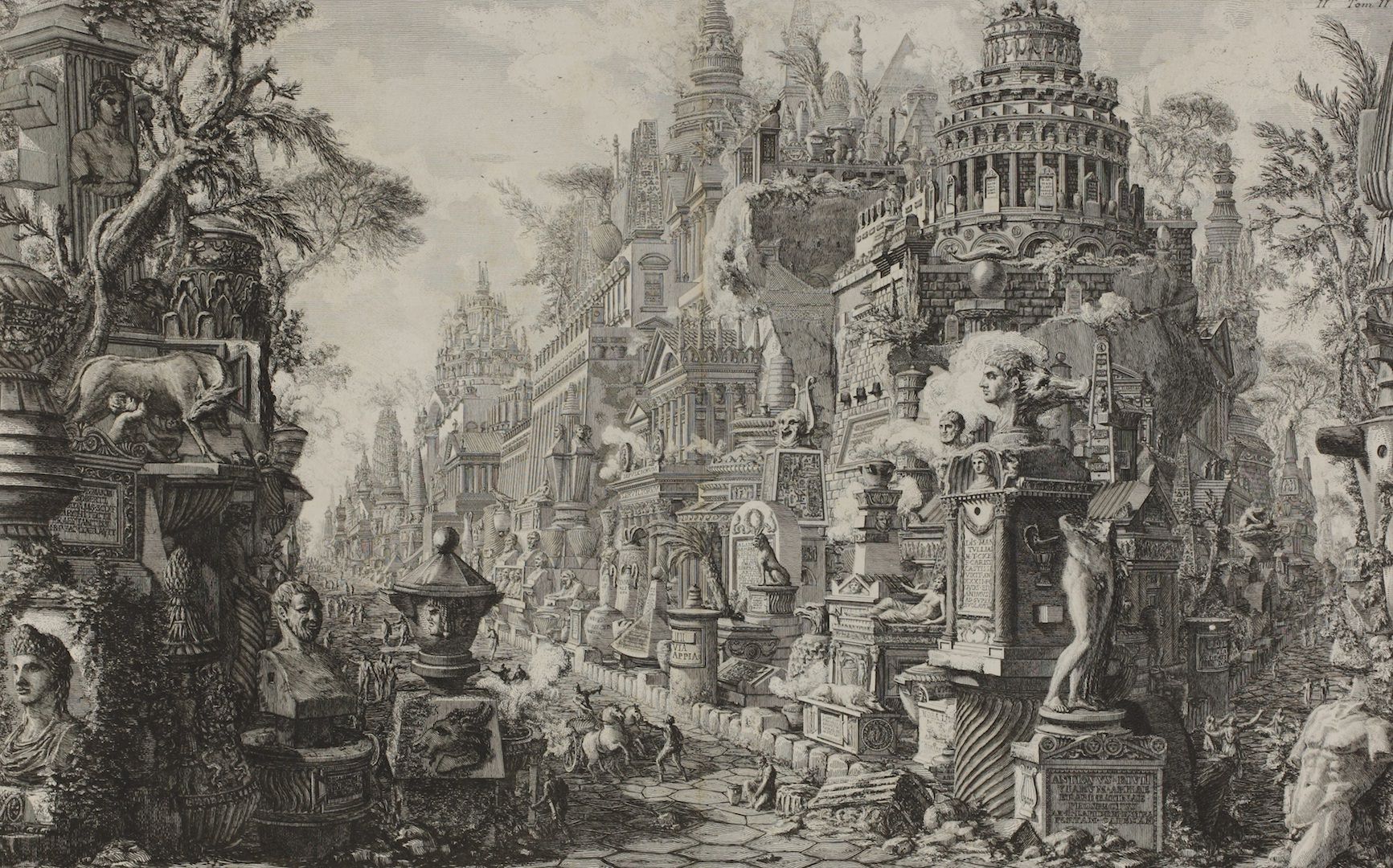
Does the aesthetic of “ruins” also carry over to Japan?
On the other hand, within Japanese art history, there was hardly any custom of deliberately depicting or admiring “ruins.”
However, as Japan came into contact with Western art from the Edo period onward, the “aesthetic of ruins” quietly began to seep into Japanese art. For example, in the West, the taste for ruins flourished from the 18th to the 19th century, and based on imported copperplate prints from that same period, ukiyo-e prints and copperplate engravings of the late Edo period featuring numerous ancient Roman ruins came to develop a curious and fascinating world of their own.
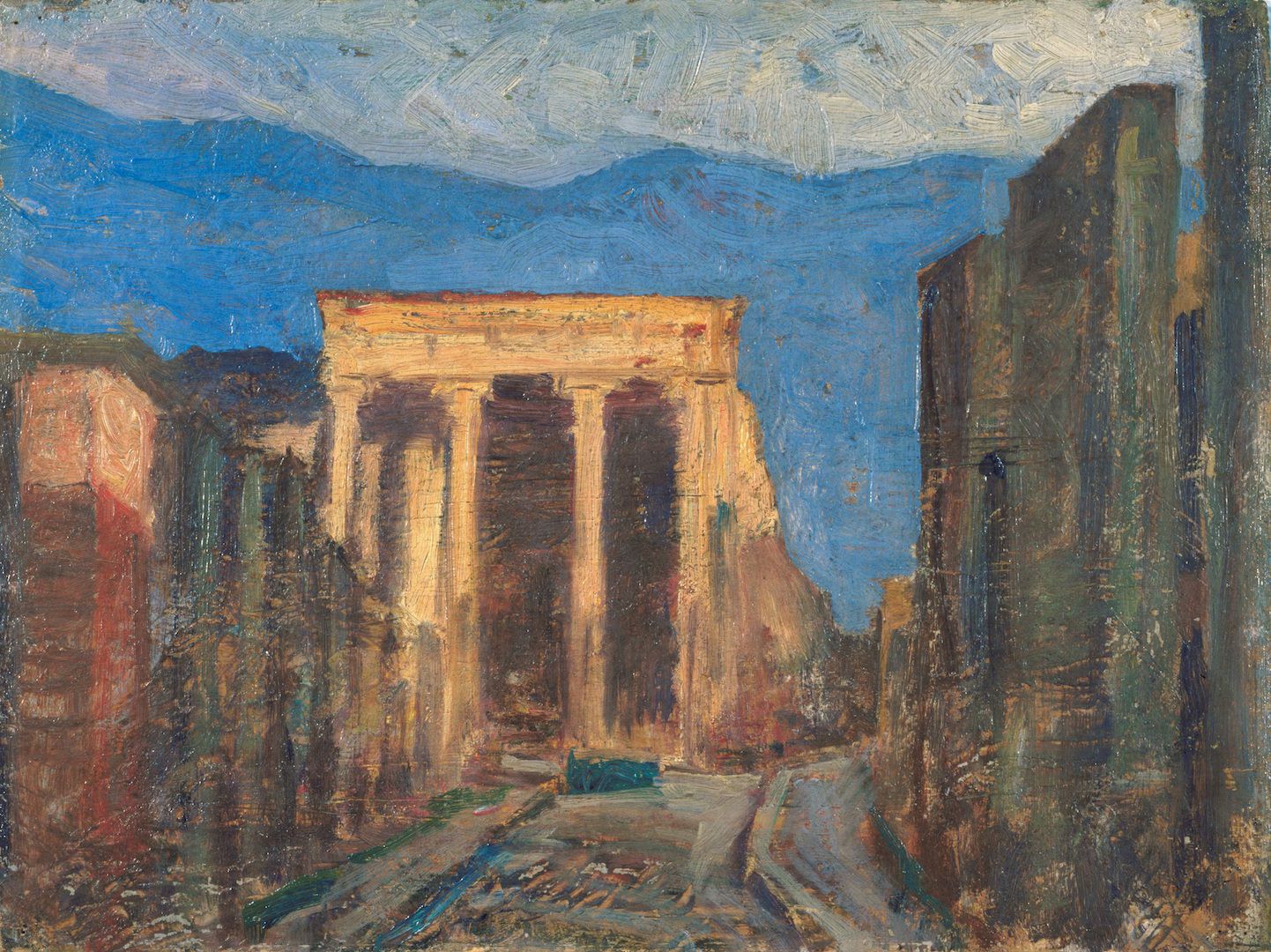
Furthermore, from the Meiji era onward, Japanese painters who traveled abroad realized that ruins were “picturesque” subjects.
They then chose ruins, remains, and old castles that they had seen with their own eyes as subjects, depicting them in both Western-style painting and Japanese-style painting.
Surreal “ruins”
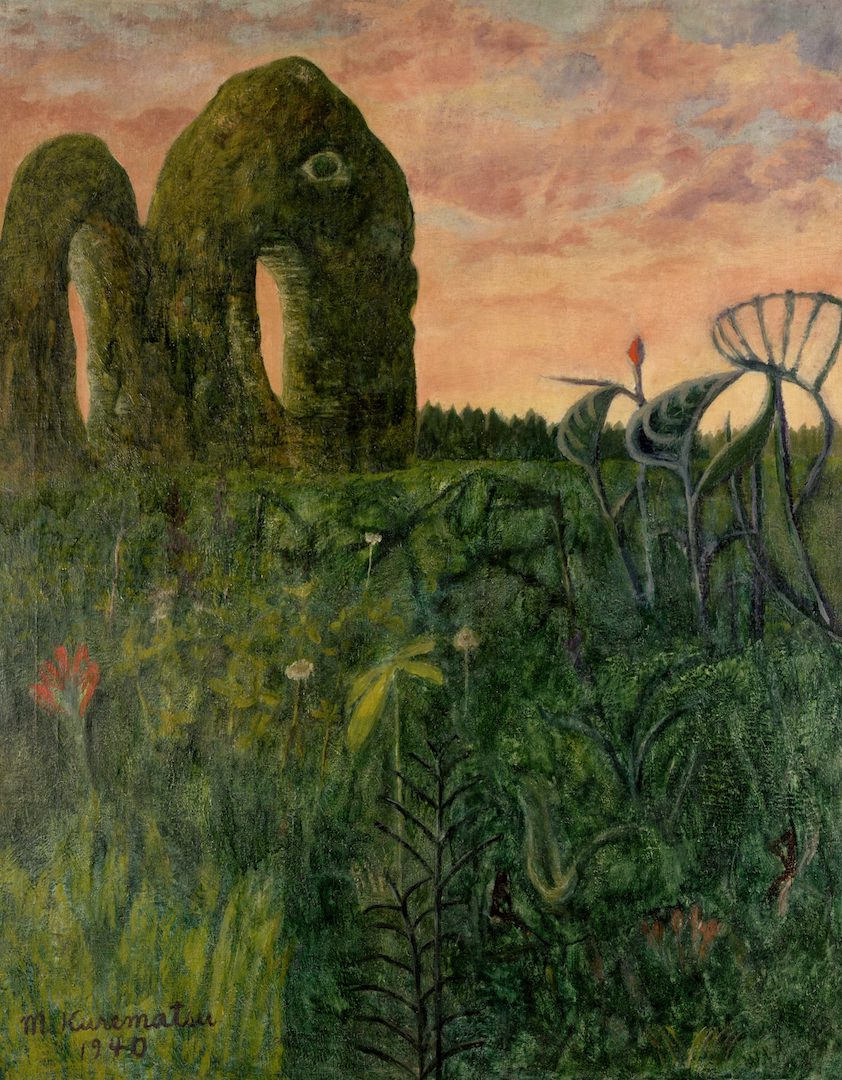
Passing through the Surrealism of the early 20th century, painting came to depict not only reality but also the inner world of human beings.
The ruins that appear here lose the temporal and locational quality of “things of the past” and begin to invite viewers into a space of no specific time or place.
Artists who depict the “ruins” of the distant future
And now in the present, artists have come to depict “ruins” of the future as well.
The “present” will inevitably become the “past” — through the eyes of these artists who look beyond, what kind of scenes will emerge?
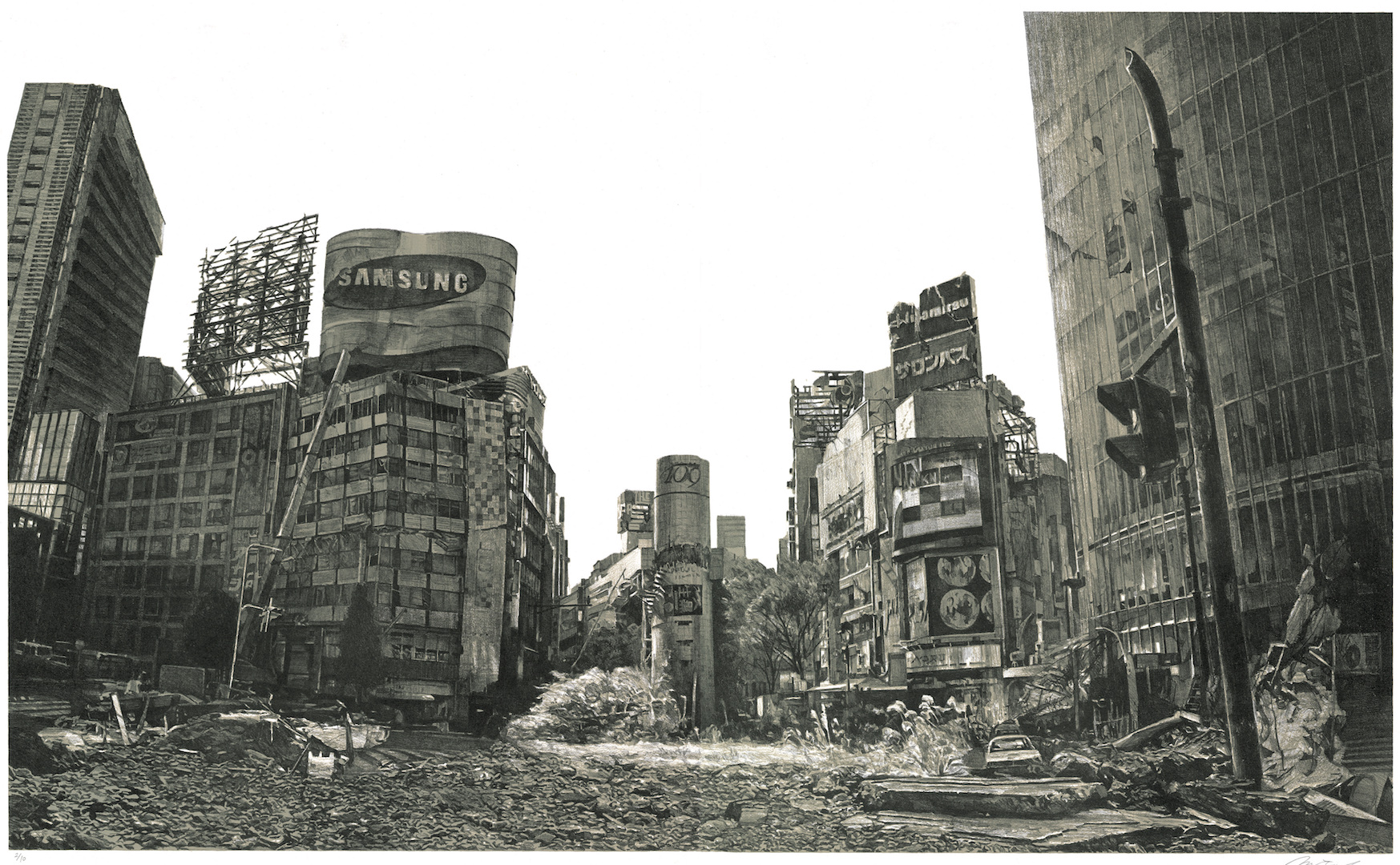
Please pay attention to Hisaharu Motoda, who overlays imaginary ruins onto Shibuya, where this exhibition is held, and to new works by Minoru Nomata that depict “beyond the end” specifically for this exhibition.

Alongside a formidable lineup that also includes artists like Oscar Oiwa, this exhibition is shaping up to be a must-see not only for ruin enthusiasts but for a much wider audience!
Overview
“Beyond the End: An Art History of Ruins”
Venue: Shoto Museum of Art
Dates: December 8 (Sat), 2018 – January 31 (Thu), 2019
Admission: General ¥500 (¥400), university students ¥400 (¥320),
high school students and those 60 and over ¥250 (¥200), elementary and junior high school students ¥100 (¥80)
* Prices in parentheses apply to groups of 10 or more and to Shibuya residents
* Free for elementary and junior high school students on Saturdays, Sundays, national holidays, and summer vacation
* Free for Shibuya residents every Friday
* Free for visitors with disabilities and one accompanying person
Closed: December 10 (Mon), 17 (Mon), 25 (Tue), December 29 (Sat) – January 3 (Thu), January 7 (Mon), 15 (Tue), 21 (Mon), 28 (Mon)
(Some works will be rotated during the exhibition period)
Organizers: Shoto Museum of Art, The Yomiuri Shimbun, The Japanese Association of Museums
Sponsors: Lion Corporation, Dai Nippon Printing, Sompo Japan Nipponkoa
Participating artists:
Charles Cornelisz de Hooch
Johannes Lingelbach
Richard Wilson
Giovanni Battista Piranesi
Hubert Robert
Toyoharu Utagawa
Aodo Denzen
Thomas Girtin
John Constable
John Sell Cotman
John Linnell
Achille-Etna Michallon
Eugène Isabey
Antonio Fontanesi
Students of the Technical Fine Arts School
Kaneyuki Hyakutake
Henri Rousseau
Hisashi Matsuoka
Takeji Fujishima
Seigoro Sawabe
Giorgio de Chirico (Studio)
Chikkyo Ono
Tetsu Fusen
Paul Delvaux
René Magritte
Shikanosuke Oka
Noboru Kitawaki
Shosuke Osawa
Sho Nakao
Rokuro Yabashi
Tatsuoki Nambata
Kyuzaburo Ito
Kenichi Imai
Kaoru Yamaguchi
Hamao Hamada
Masatoshi Kurematsu
Tatsuo Ikeda
Hiroshi Asada
Minoru Nomata
Oscar Oiwa
Hisaharu Motoda