Bio Art
“Bio art” — art that takes life itself as its subject — has recently drawn attention especially from younger artists. It could be seen among the works at the recent Geisai festival (@ Tokyo University of the Arts) as well.
The exhibition introduced here, “Frankenstein in 2018 — Art, Science, and Society Today Through the Lens of Bio Art,” is a group show of nine bio-art practitioners curated by Yosuke Takahashi (curator, 21st Century Museum of Contemporary Art, Kanazawa).
The year 2018 marks the 200th anniversary of the publication of “Frankenstein” by the English novelist Mary Shelley. The monster that the scientist Victor Frankenstein, having unraveled the mystery of life, created by stitching together fragments of the dead has since become the theme of hundreds of artworks. Yet the questions the novel raised — “the rebellion of the created against its creator,” “the price of creating life in place of God,” “the separation of sex from reproduction” — are, in an age when technologies such as artificial intelligence and stem cells are advancing at dramatic speed, hardly outdated; if anything, they are becoming ever more contemporary.
This exhibition therefore focuses on the questions “Frankenstein” raised, and — around the themes that resonate most with contemporary art: “resurrection,” “the Anthropocene,” and “biopolitics” — selects works by nine artists. Though a mere handful, the works of the artists from five countries introduced here condense a new cluster of issues that touch on art’s mediums, its history, and its institutions — issues such as “the living being as copyrighted work,” “sculpture made of protein,” and “land art as the origin of the art of the Anthropocene.”
This show introduces a slice of the front line of “bio art,” a new artistic current that has recently begun to swell worldwide. It does not, however, endorse a formalistic classification or superficial understanding under which anything involving biotechnology or life gets tagged “bio art.” Rather, it re-examines from a contemporary vantage what meanings the mediums each artist has chosen produce within today’s historical and social contexts, and how those mediums also carry within themselves something that exceeds those meanings.
If this exhibition can serve as a clue for positioning the value of a new kind of art in an era when the allegory of creating life is becoming reality, and if it can offer even a glimpse of that future, there would be no greater joy.Yosuke Takahashi — Curator of this exhibition / Curator, 21st Century Museum of Contemporary Art, Kanazawa
*The bold emphasis was added by the author of this article.
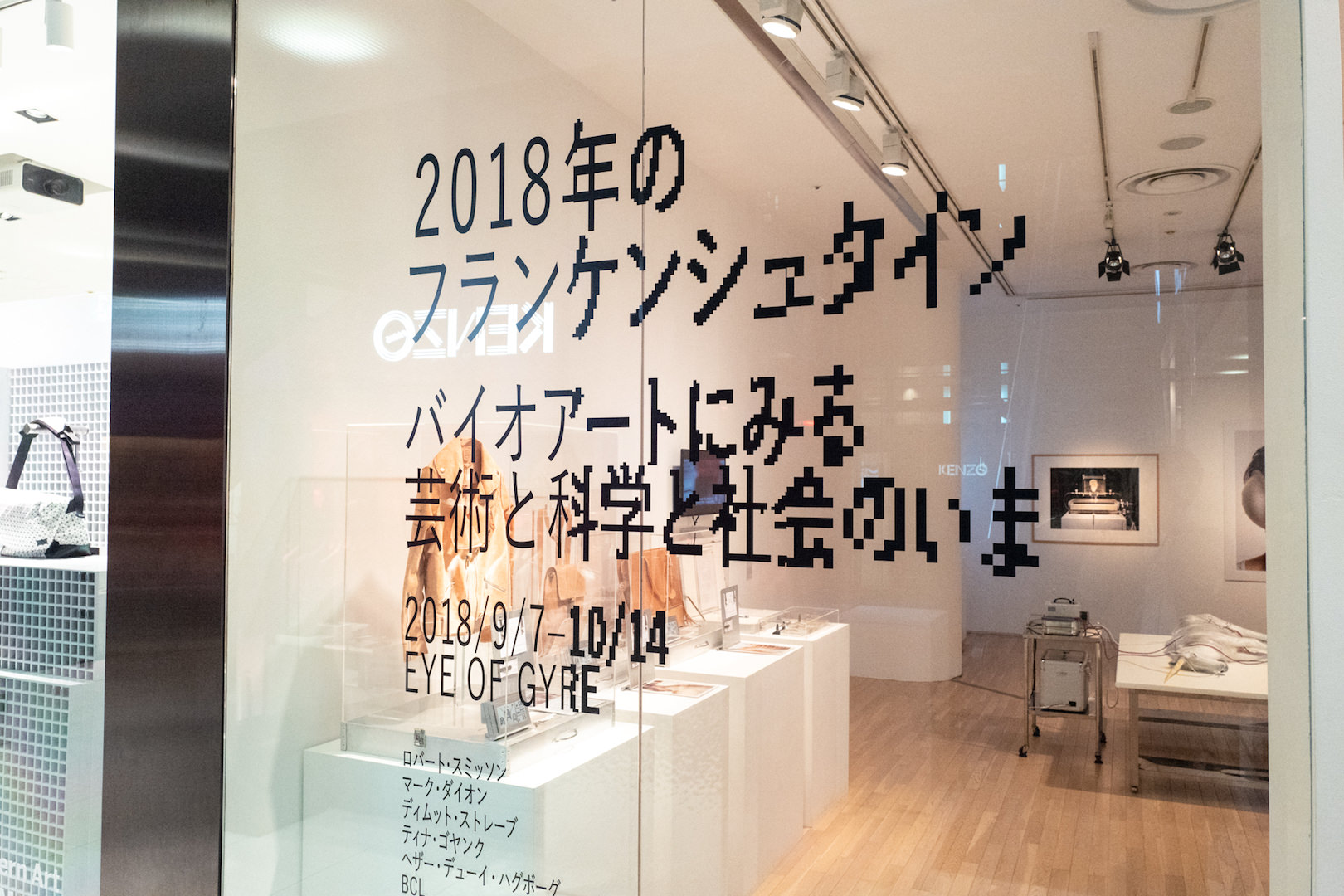
Frankenstein in 2018
The exhibition “Frankenstein in 2018 — Art, Science, and Society Today Through the Lens of Bio Art” is a group show by the following nine artists.
Tina Gorjanc
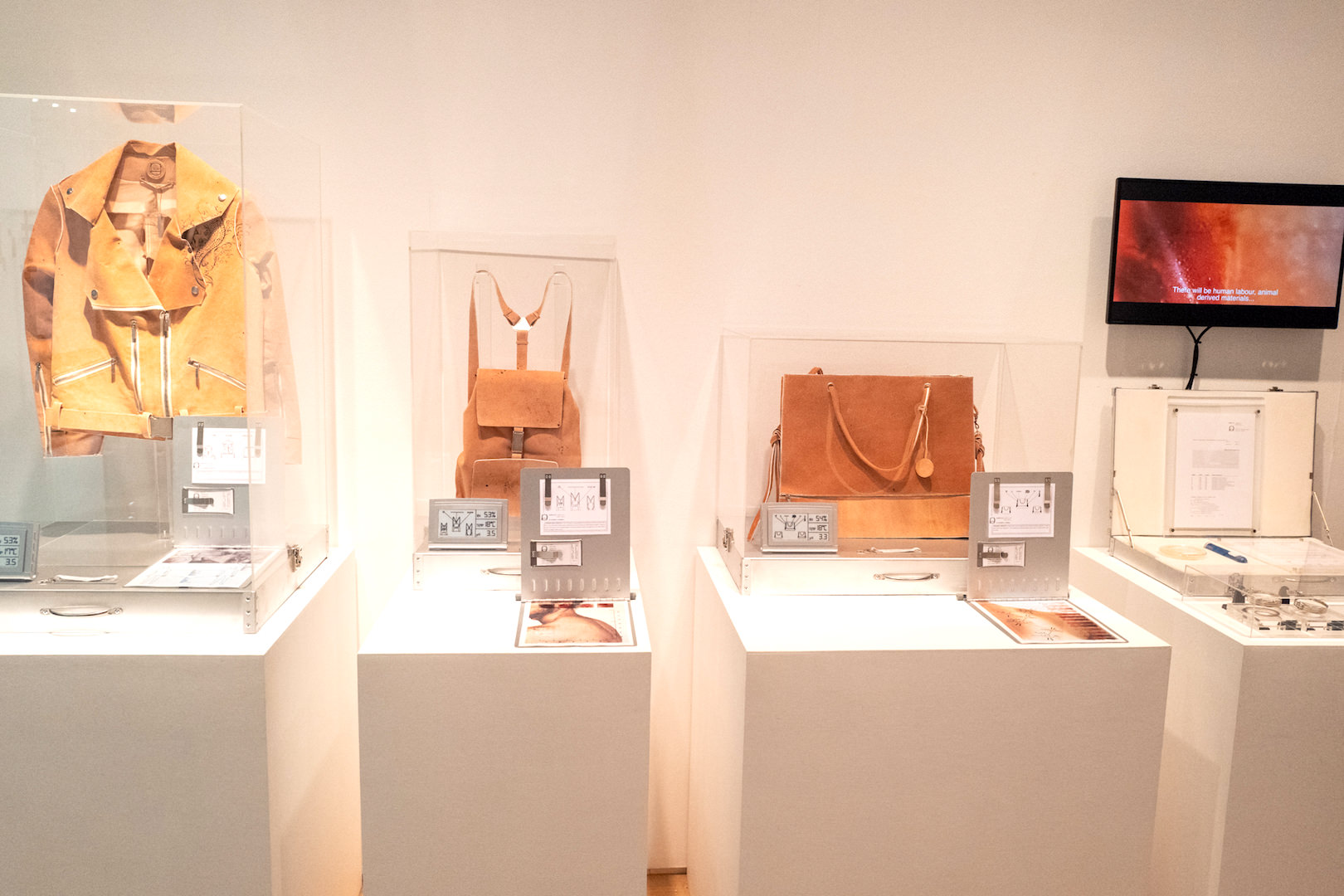
“Pure Human” is a project that regenerates the skin of fashion enfant terrible Alexander McQueen using stem-cell technology and turns it into “material for fashion.” It is a work by London-based designer Tina Gorjanc.
The leather jacket, which looks strikingly like human skin, is a prototype in which McQueen’s build, moles, freckles and even tattoos have been meticulously reproduced in pig leather; but for the plan actually to extract DNA, implant it into stem cells, and grow the skin, the owner of McQueen’s “Jack the Ripper Stalks His Victims” (1992 / a dress with the artist’s own hair woven in) has given consent.
Nicknamed “Frankenstein fashion,” the work asks what it means to “wear the dead” in a form different from a keepsake, and heralds the arrival of a new fashion fetishism spawned by biotechnology.
Mami Hirano
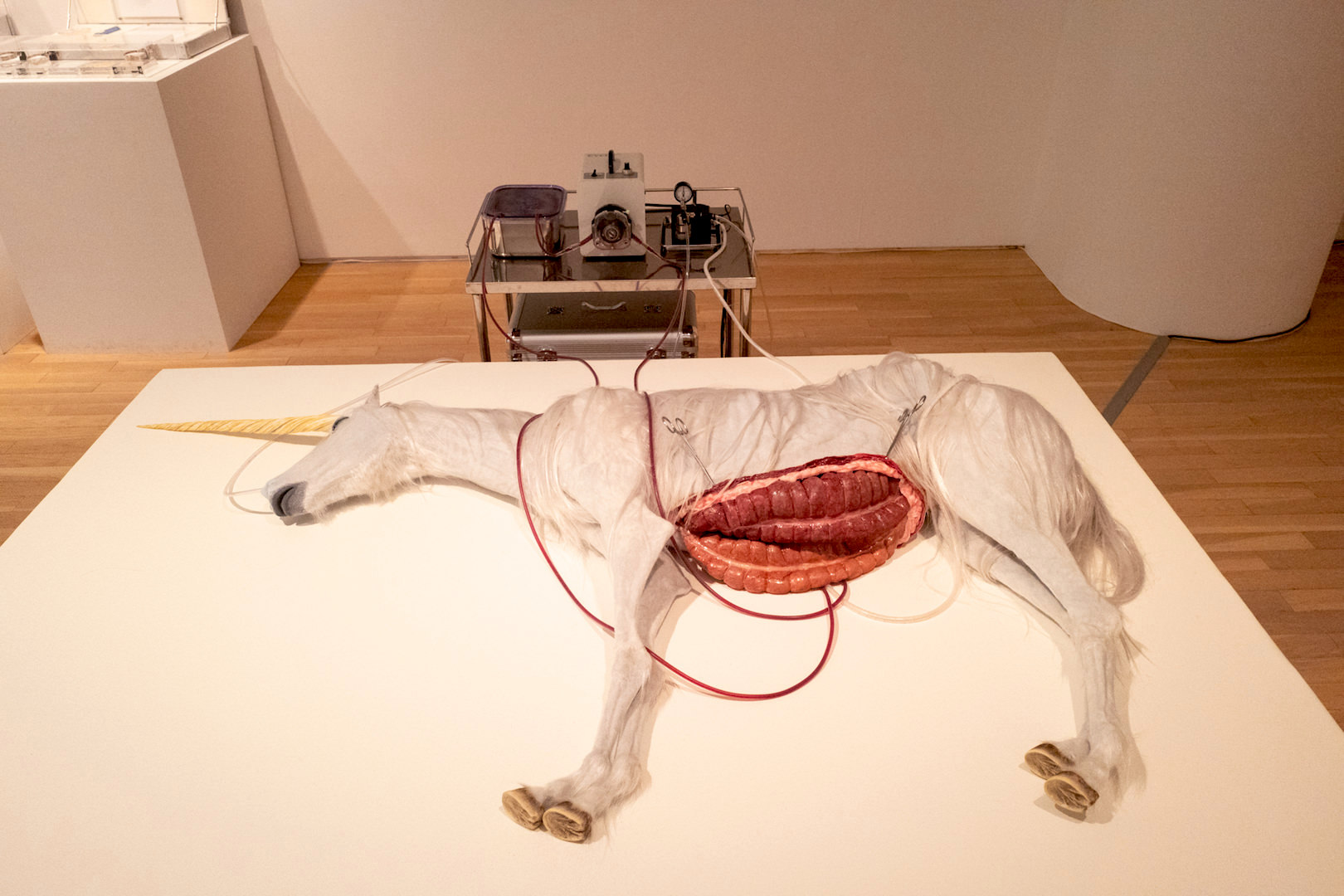
The dying unicorn lying at the center of the room is “Resurrecting Unicorn,” which the show’s youngest participant, Mami Hirano, has been working on since 2014.
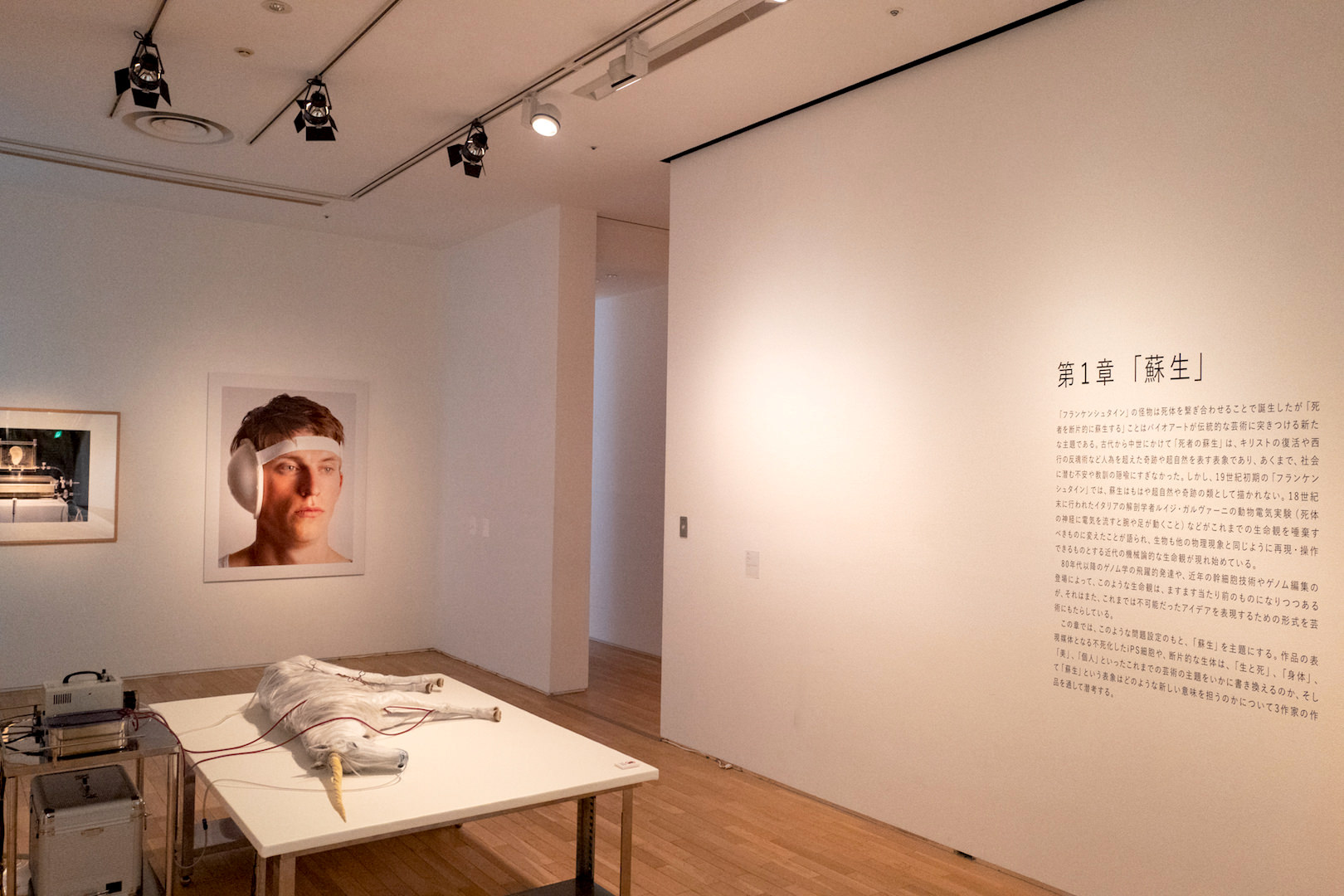
She has fabricated the “unicorn” — a creature that should exist only in myth — from its various parts including skeleton, organs, blood vessels, and skin, building it up as if it truly existed.
Evolutionary theory dismantled the religious narrative that God created humanity and turned dragons and yokai into mere superstition; Hirano, however, dares to attempt to recover just such an imaginary being. Her unicorn, trying to resurrect from the brink of death, becomes a fine metaphor for the way the pre-modern magic that is now being lost is quietly returning to the present as science and technology — synthetic biology, artificial intelligence and the rest — grow so complex as to seem like magic themselves.
Diemut Strebe
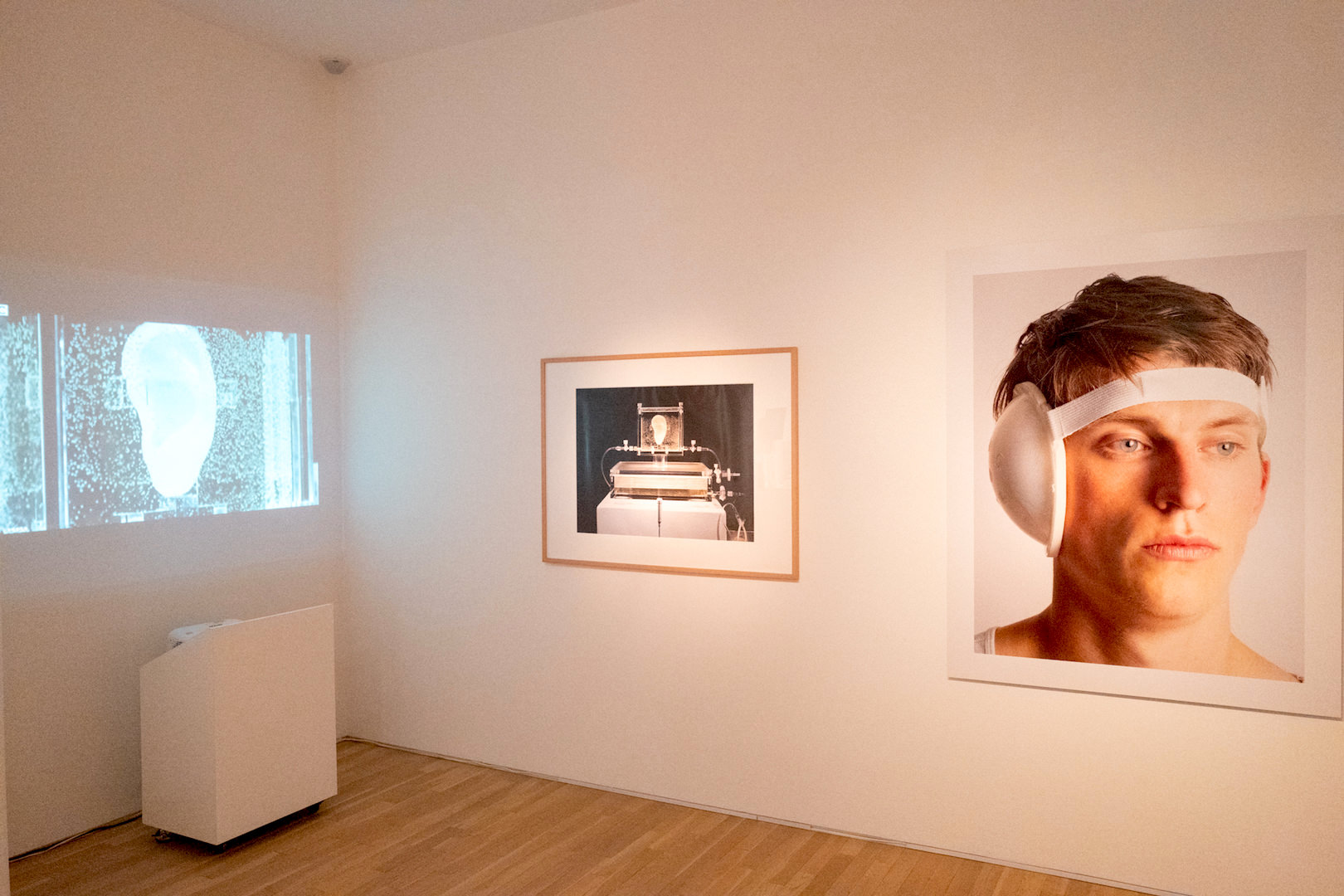
Diemut Strebe’s “Sugababe” is a work that restored, in a living state, the left ear that Van Gogh cut off.
It is a “sculpture made of protein,” equipped with a mechanism that generates sounds mimicking neural impulses in real time whenever anyone speaks to it. At its 2014 exhibition at ZKM in Germany, linguist Noam Chomsky performed by speaking into the ear, and video of the piece was reported by the BBC, CNN and others, becoming a worldwide talking point.
The ear was created by taking cartilage cells provided by Lieuwe van Gogh, a great-great-grandson on the paternal side, and introducing into them mitochondrial DNA extracted from the saliva of a descendant on the maternal side. It stages a Frankenstein-like paradox — “can a body synthesized from fragments of others, even if it contains cells with the same DNA as the deceased, be called that person’s own?” — and shakes the notion of death as an unshakable fate.
AKI INOMATA
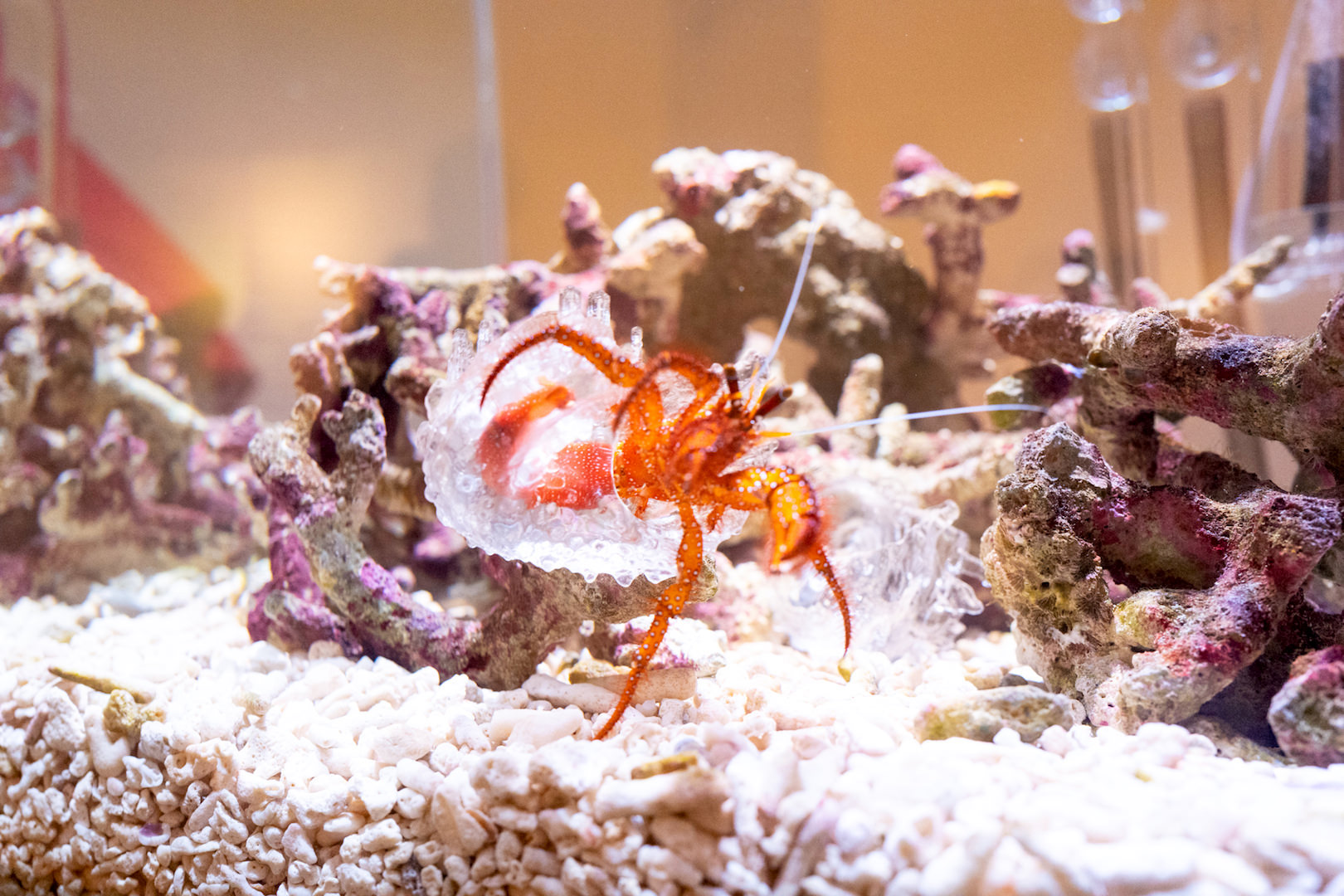
AKI INOMATA has turned creatures living in human-made environments into a mirror that reflects the essence of humanity — through works such as “LINES — Listening to the Growth Lines of a Shell,” which reads the environmental shifts before and after 3.11 in the growth lines of clam shells collected in Soma, Fukushima; and “girl, girl, girl,,,”, in which bagworms make cocoons from the fabric of fashion-brand clothing.
She showed a wonderful piece at the ASIAN ART AWARD at Art Fair Tokyo 2018 as well, and in this exhibition too her lively hermit-crab partner turned in a fine performance.
Robert Smithson
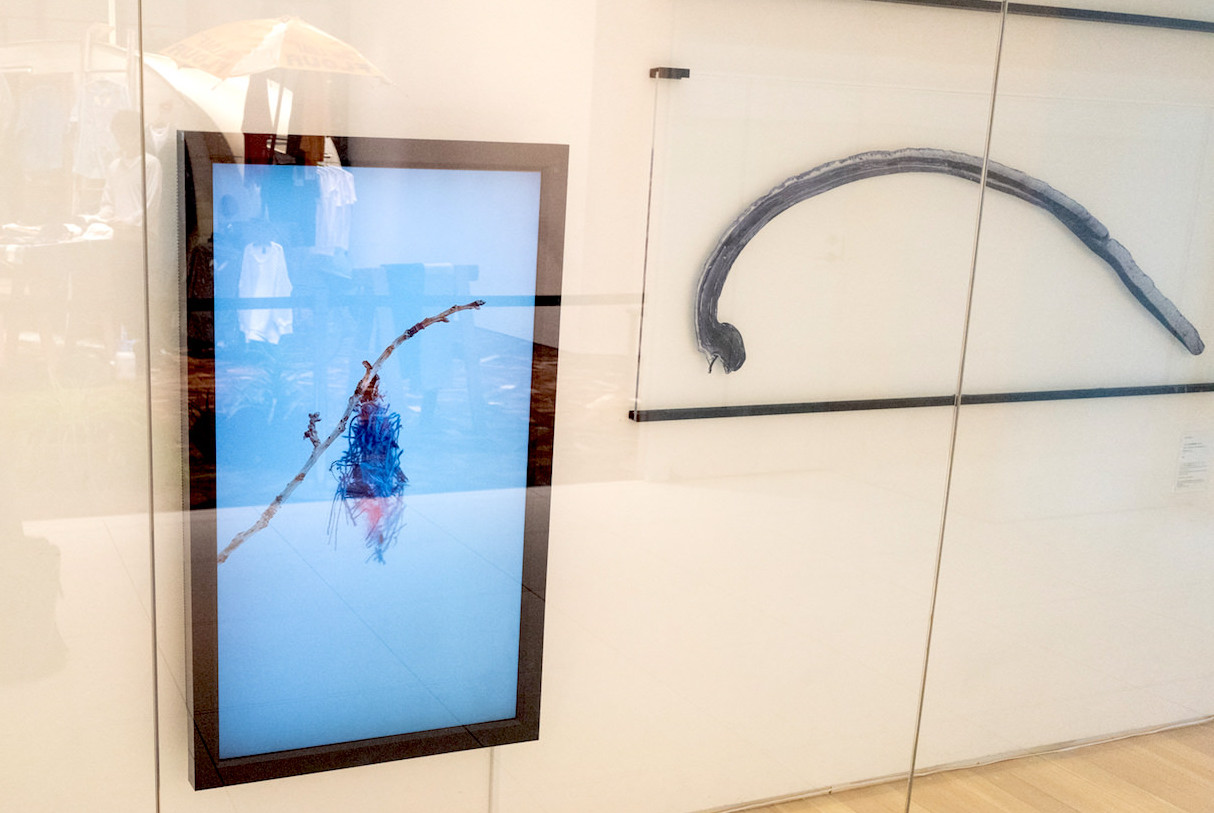
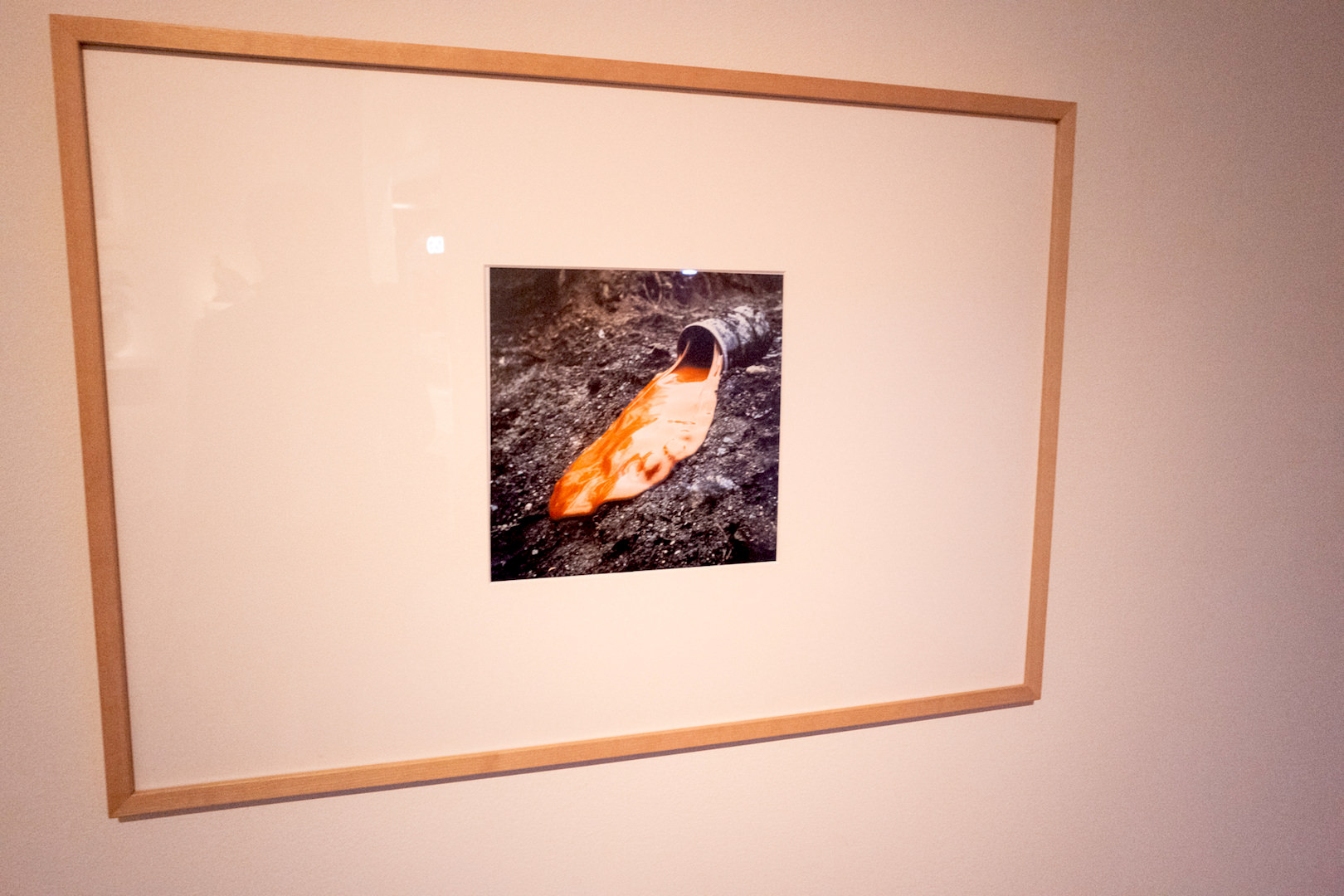
Robert Smithson’s “Glue Pour” is a work in which orange industrial adhesive was poured down a steep slope — an artificial mimicry of magma, and a caricature of modernist abstract painting.
At the same time, in the way toxic man-made matter eats into nature, it can be positioned as art of the dawn of the “Anthropocene,” capturing the fall of the sublime natural world into impurity. A work from 1969.
Mark Dion
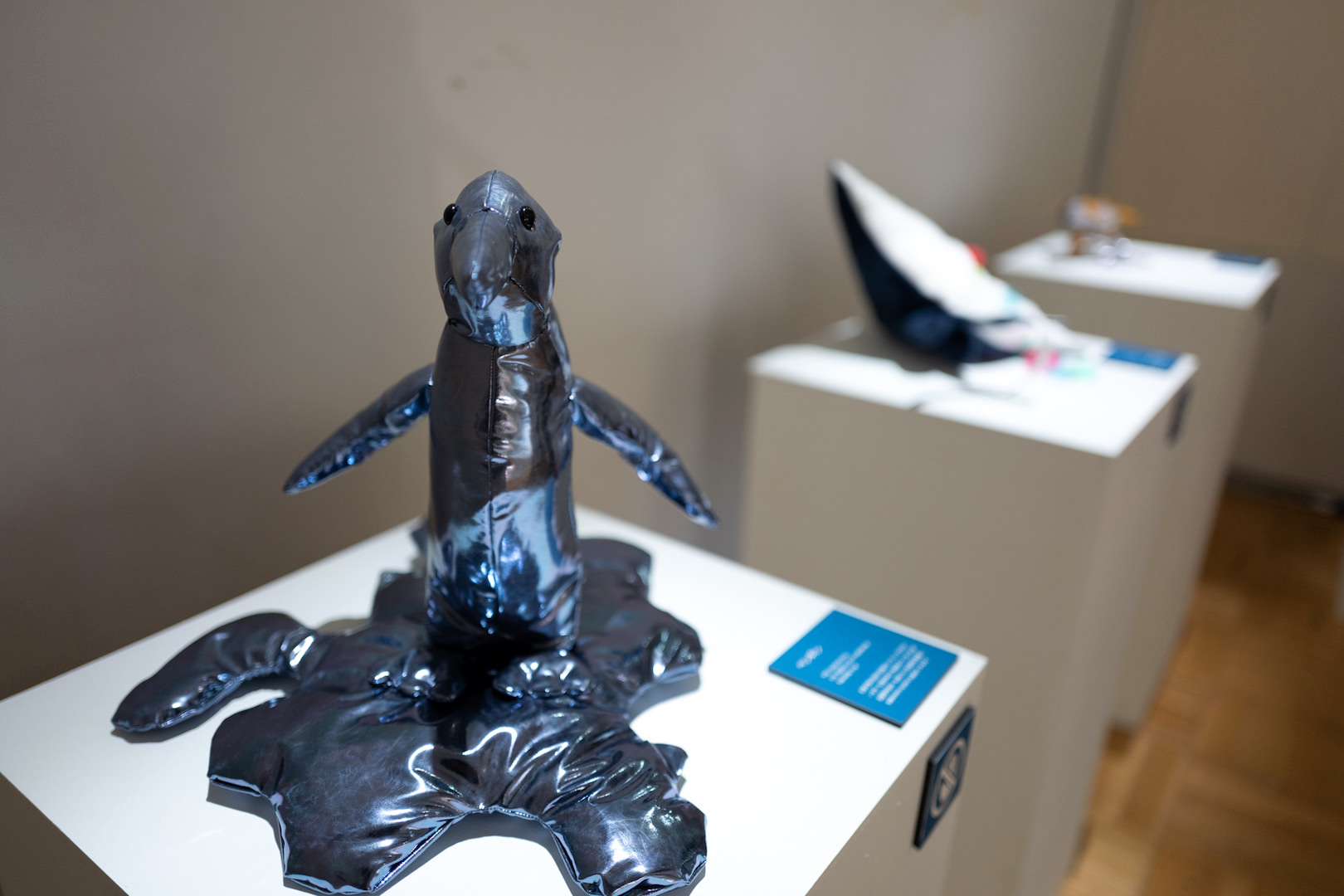
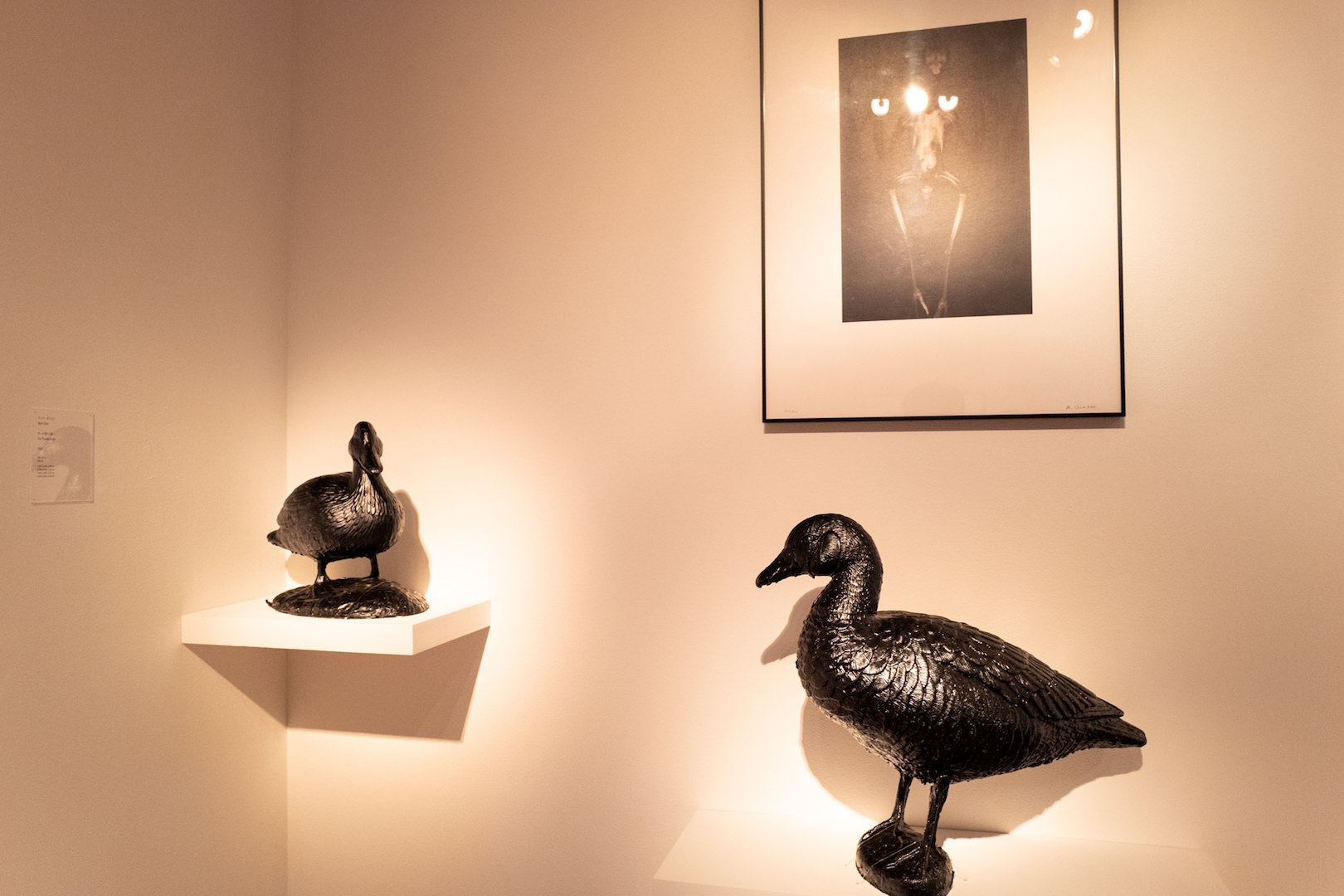
Mark Dion works with immediately striking, high-impact means of expression, such as sculptures of tar-soaked birds and photographs of deformed birds.
His work suggests that the domination of nature by science and technology — pursued in order to increase the wealth of society — is what has induced today’s environmental pollution.
Sae Honda
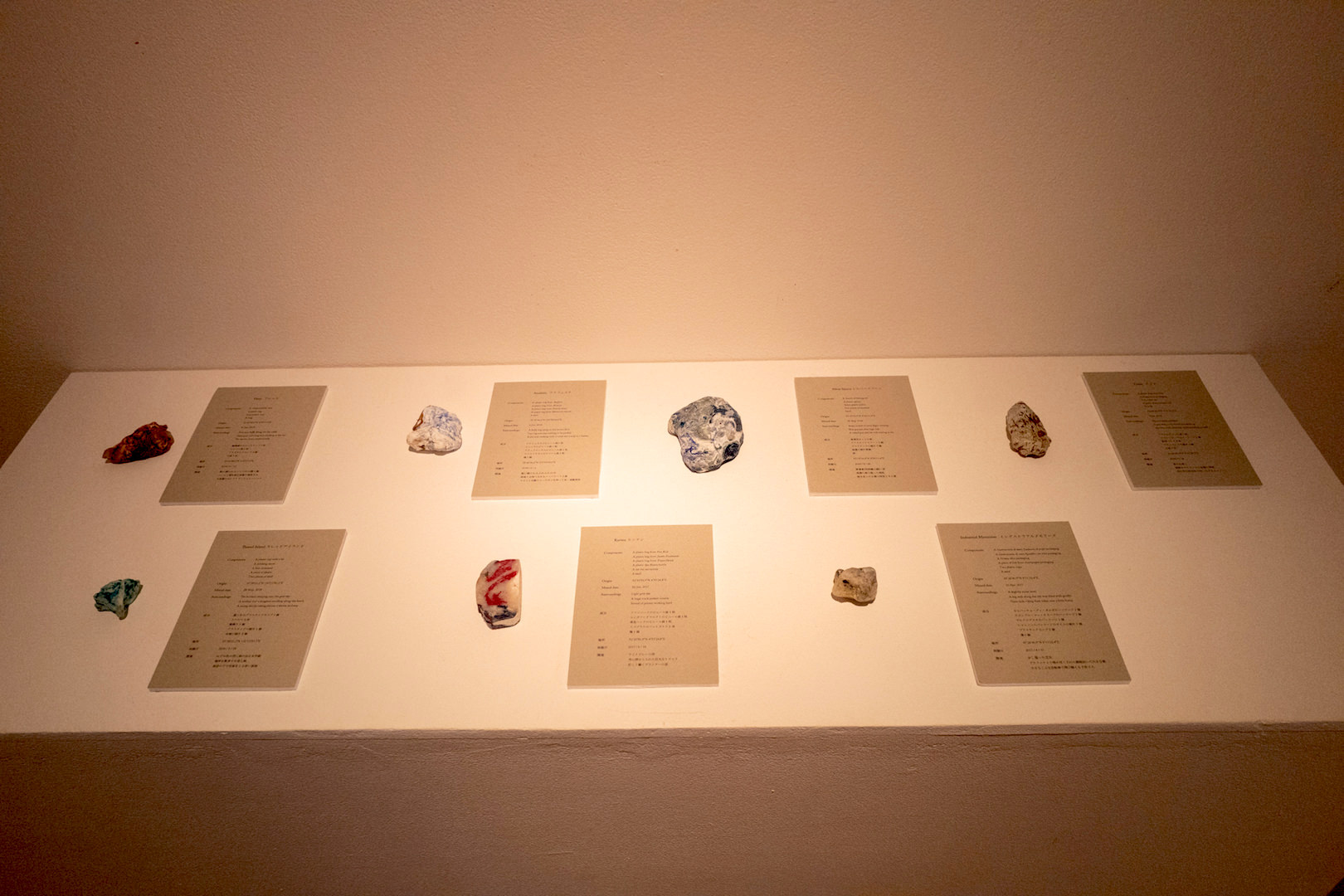
Taking inspiration from “plastiglomerate” — a new type of rock discovered on a Hawaiian beach, formed when heat-melted plastic fuses with volcanic rock, beach sand, seashells and the like — Sae Honda melts and polishes plastic she picks up on the roadside into one-of-a-kind artificial stones.
Heather Dewey-Hagborg
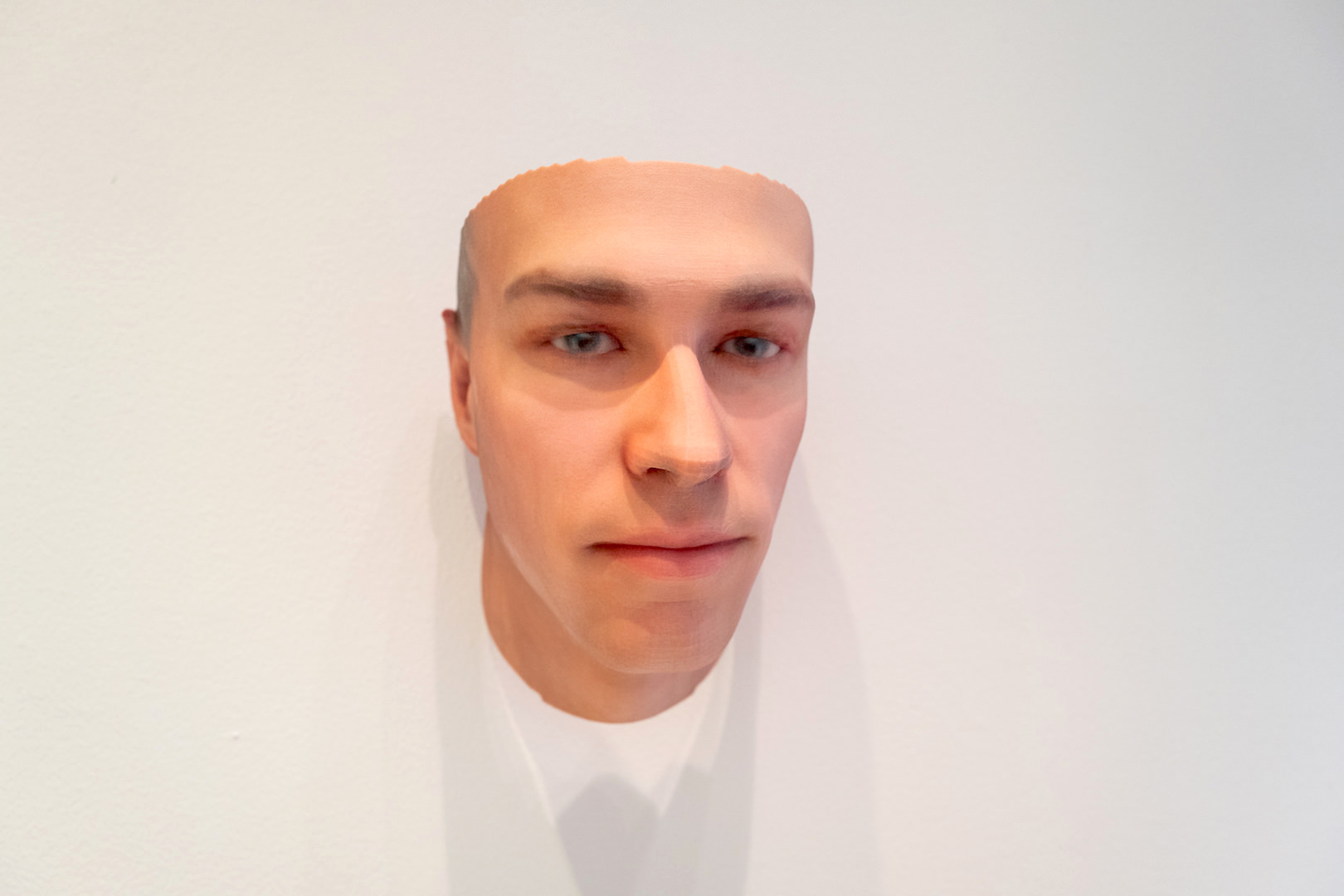
Heather Dewey-Hagborg’s “Stranger Visions” collects DNA from hair and cigarette butts left on street corners and reconstructs the face of the person who dropped them.
The work suggests that even personal information the person may not know about themselves can be extracted from the DNA they scatter around them without realizing it. It appears that this technology, with development support from the United States Department of Defense, has already been put to practical use.
A work that questions being controlled by the very technologies humanity has created.
BCL
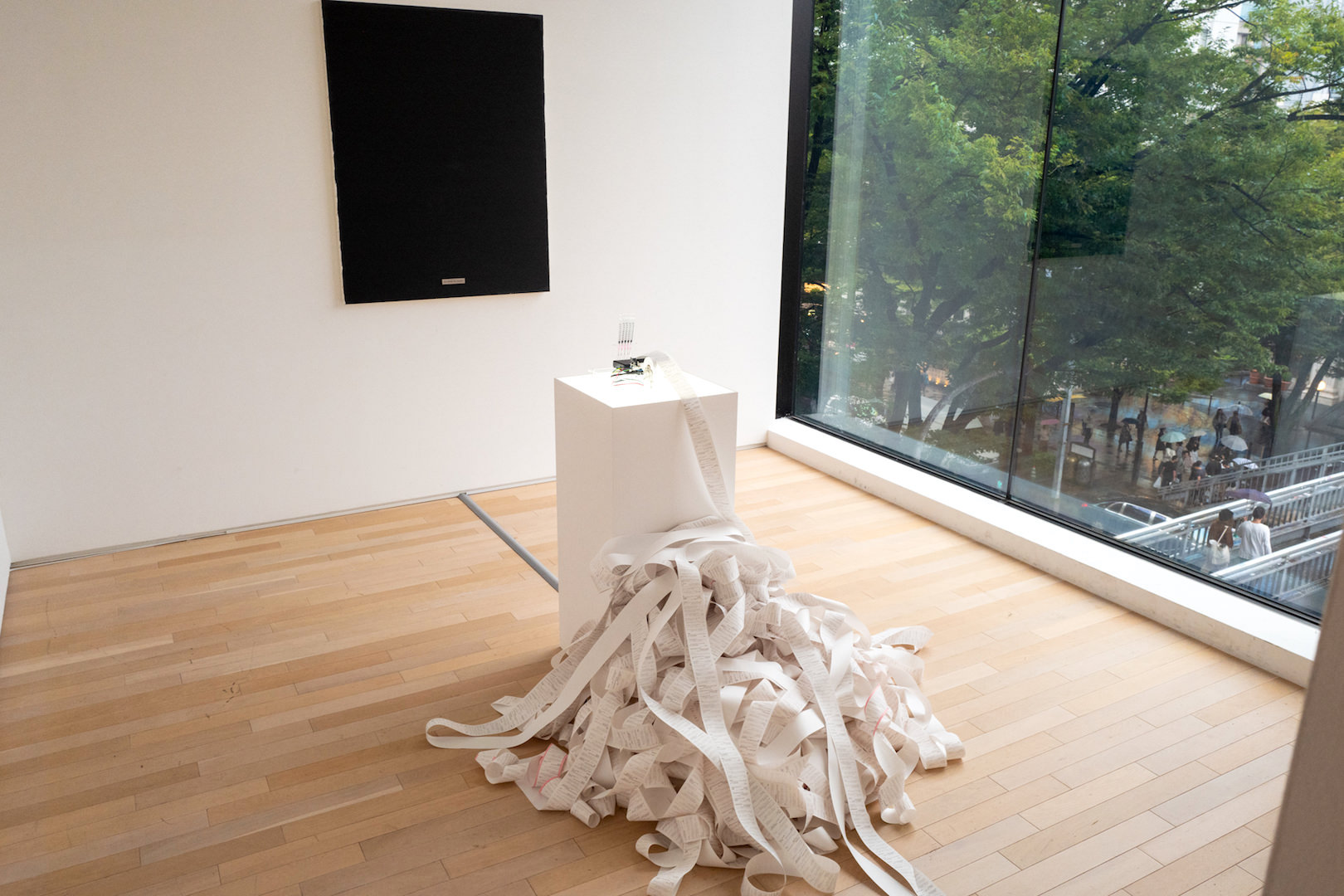
“BLP-2000B: DNA Blacklist Printer,” presented by BCL in 2018, is a work that raises the fundamental question of whether humanity can actually control science and technology.
The piece, which generates and prints only DNA sequences that biotech companies have banned from synthesis, presents the current reality in which life can be edited simply and cheaply, and prompts debate about which future we should choose.
In closing
“Bio art” is a single label, but its interpretations and outputs are extraordinarily varied.
Seeing these works can make you flinch, or think deeply, or nod in agreement… this is not the kind of art you drop in to enjoy casually. The pieces feel like the fruit of long, hard thought on the part of each artist, and demand to be met with equally serious attention.
It felt like a textbook example of art connecting directly with society and doing real work.
Held in the heart of Omotesando, the show also drew many younger visitors — for that reason too, I found it a deeply meaningful exhibition.