Catastrophe and the Power of Art
As the 15th anniversary exhibition of Roppongi Hills’ Mori Art Museum, “Catastrophe and the Power of Art” was held at Mori Art Museum (Roppongi, Tokyo). Approximately 40 artists have come together, each expressing in their works their thoughts and reflections on catastrophe (major disasters or tragic events).
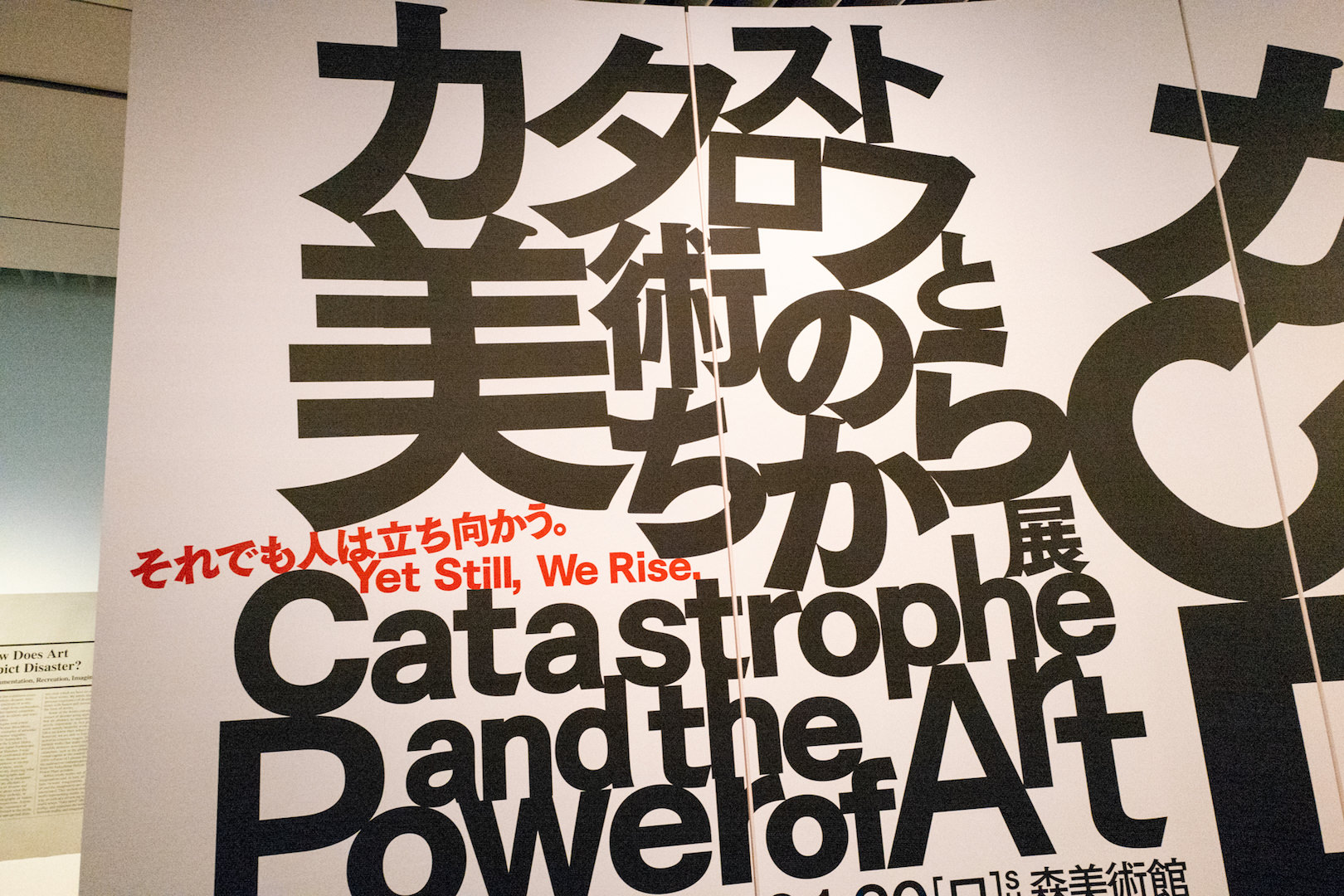 This exhibition is broadly structured in two parts.
- Section I: “How Art Depicts Disaster — Recording, Reproducing, Imagining” — How art has depicted major disasters such as earthquakes, wars, accidents, epidemics, and financial crises, as well as more personal misfortunes.
- Section II: “Creation from Destruction — The Power of Art” — The role art can play in recovery and revival from catastrophe, and the “power” that art can hold.
Section I: How Art Depicts Disaster — Recording, Reproducing, Imagining
Section I focuses on “how art has depicted disaster” — from natural disasters such as earthquakes and tsunamis to man-made calamities such as accidents and war, and even works that express personal tragedy — through a wide-ranging selection.
Works dealing with disaster take many forms, including realistic depiction, fiction, and extreme abstraction. The exhibition also includes works that visualize invisible threats such as the modern globalized virtual capital that triggered the 2008 world financial crisis and the radioactive contamination seen in the Fukushima nuclear power plant accident.
Touching on the unique quality of art to portray disaster with beauty and humor, we consider how artists record and reproduce catastrophe and terror, and try to share it with others in order to hand it down to the future.
The first work you encounter upon entering the venue is this one.
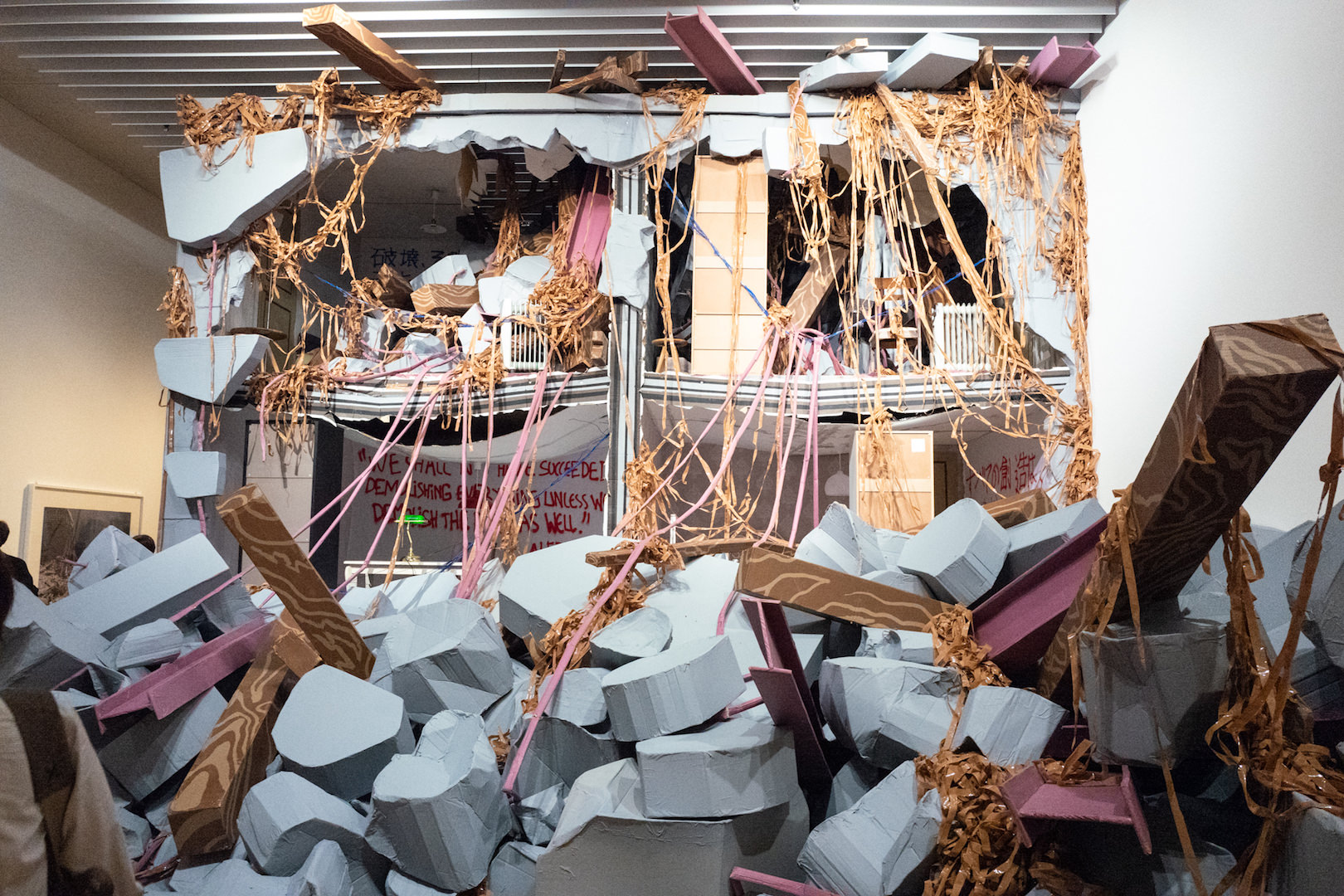
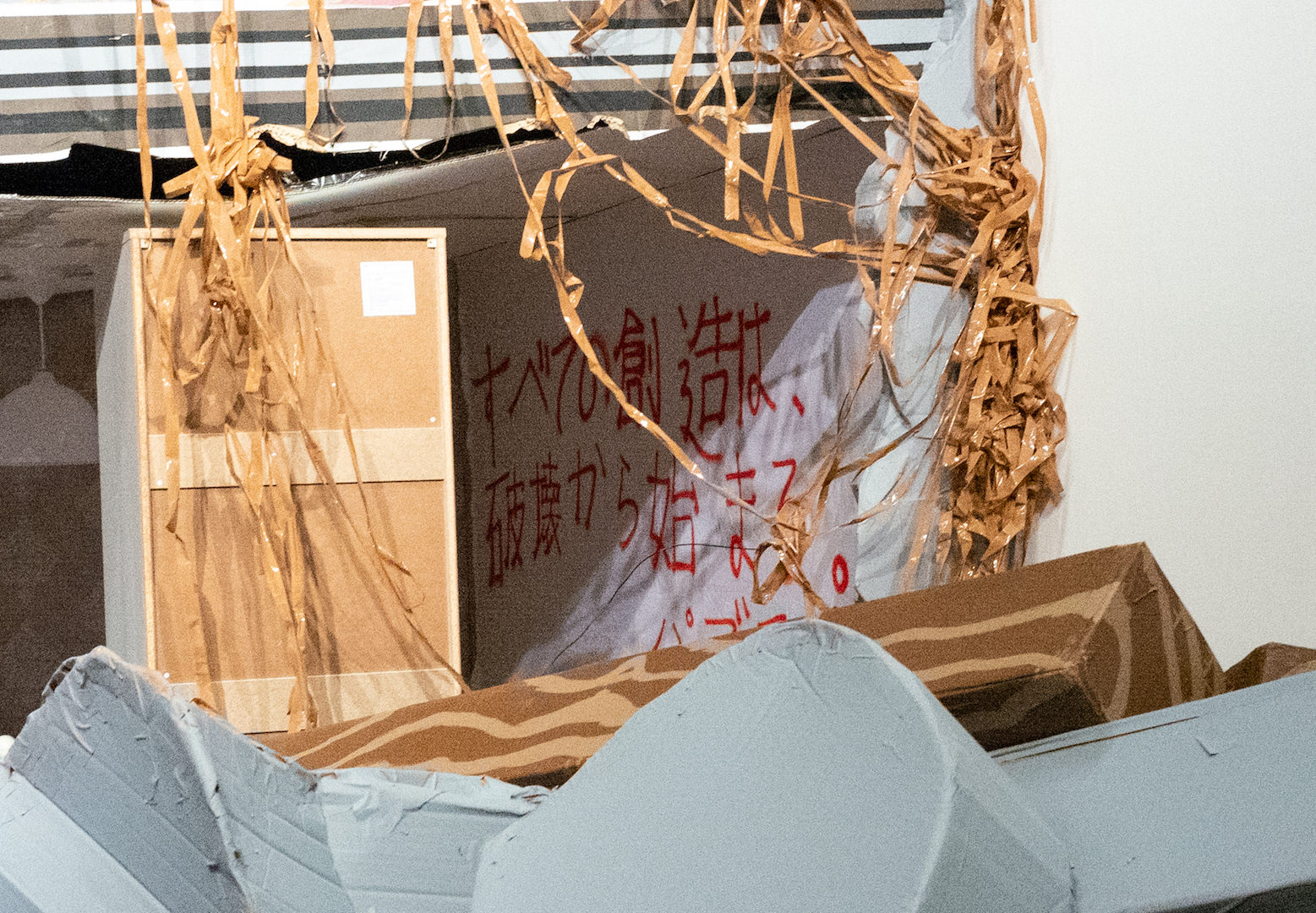
“Every act of creation is first an act of destruction.” These are the words of Pablo Picasso. We found them written within the work.
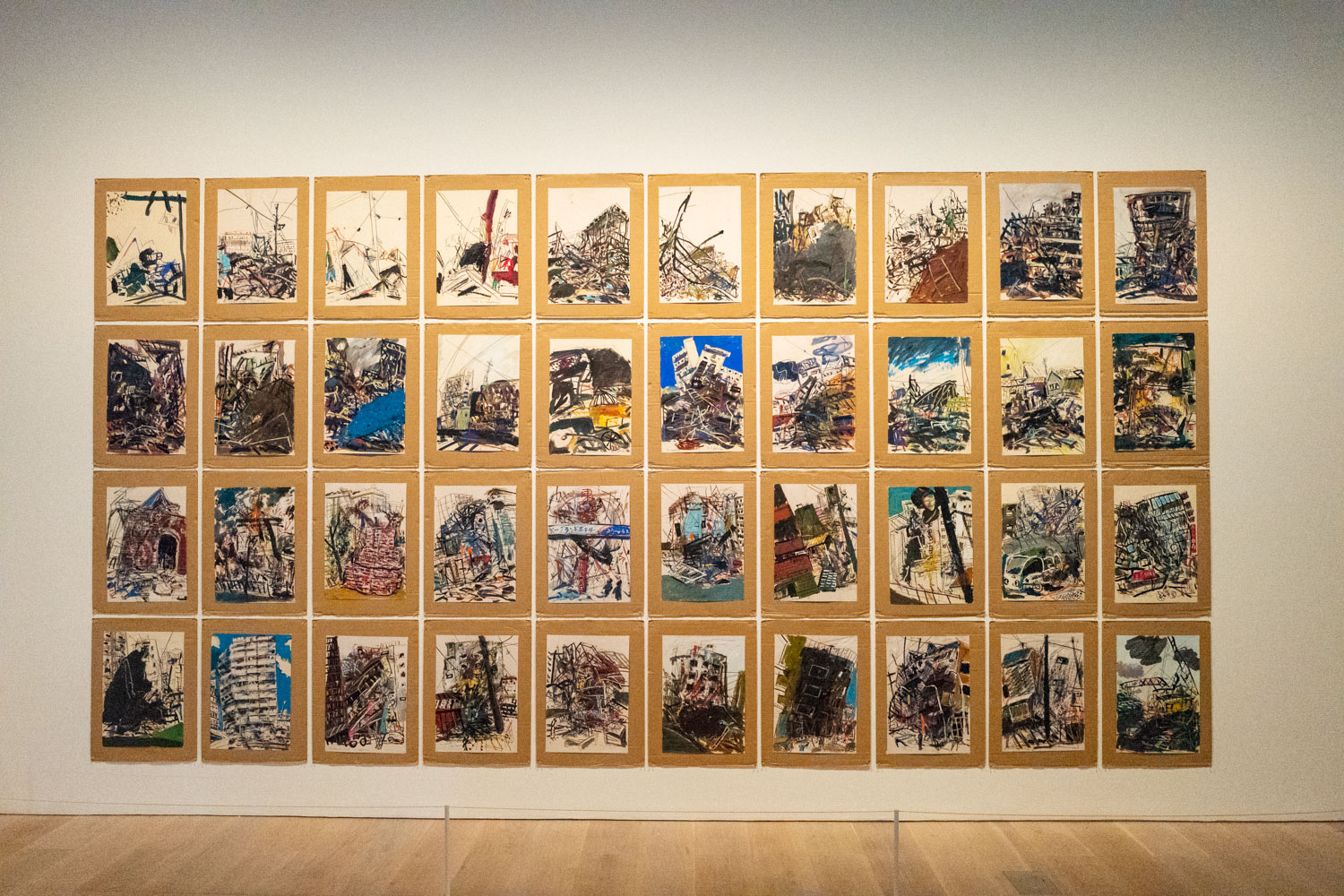
Sadaharu Horio, a survivor of the Great Hanshin-Awaji Earthquake, expresses his inner landscape through drawings.
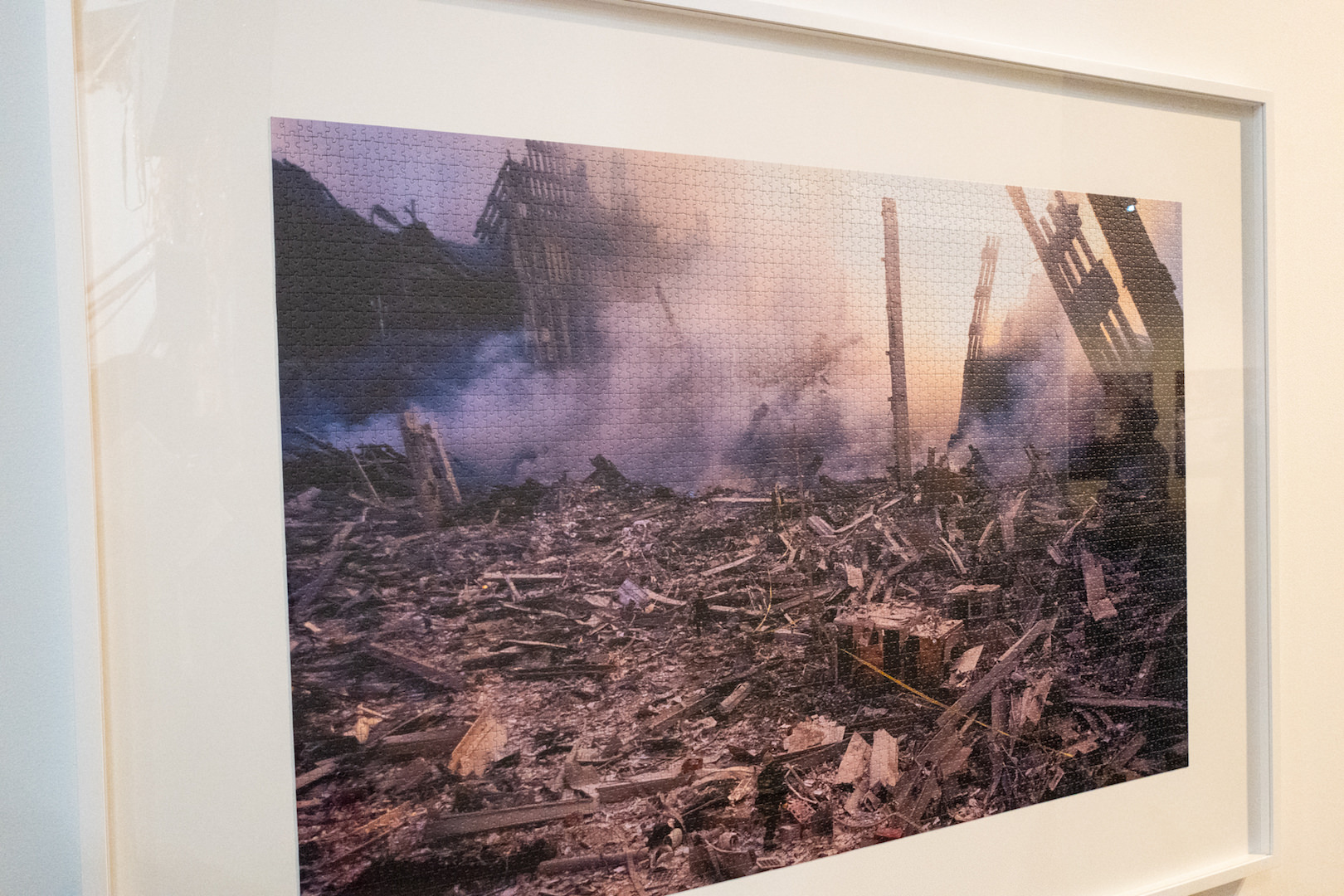
Swiss artist Christoph Draeger prints press photographs onto jigsaw puzzles. This work overlays the fragility of a building with the individual pieces of a puzzle, drawing a contrast between the two.
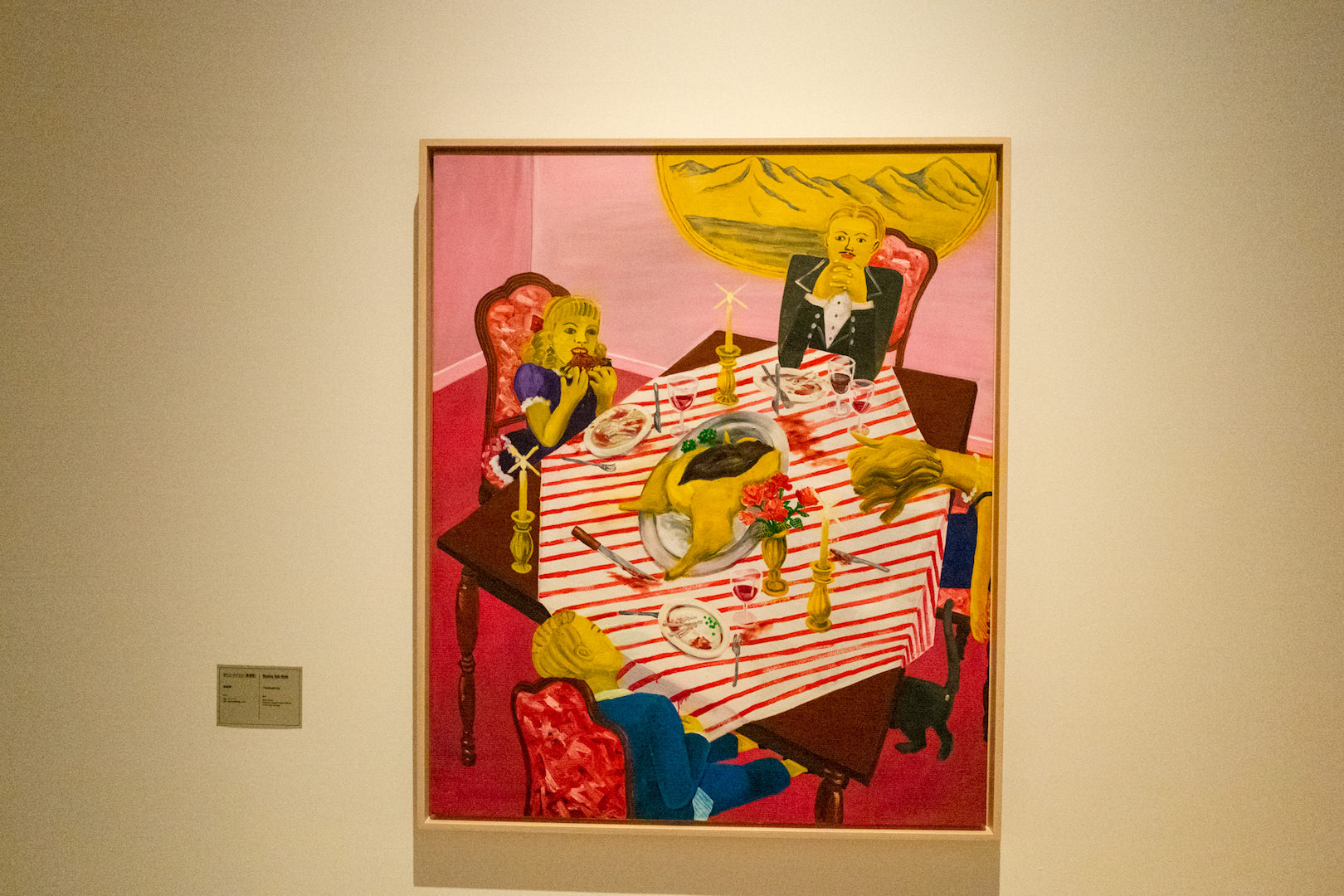
In the work by Taiwanese artist Huang Hai-Hsin, something unsettling is unfolding at what appears at first glance to be a peaceful family dining table.
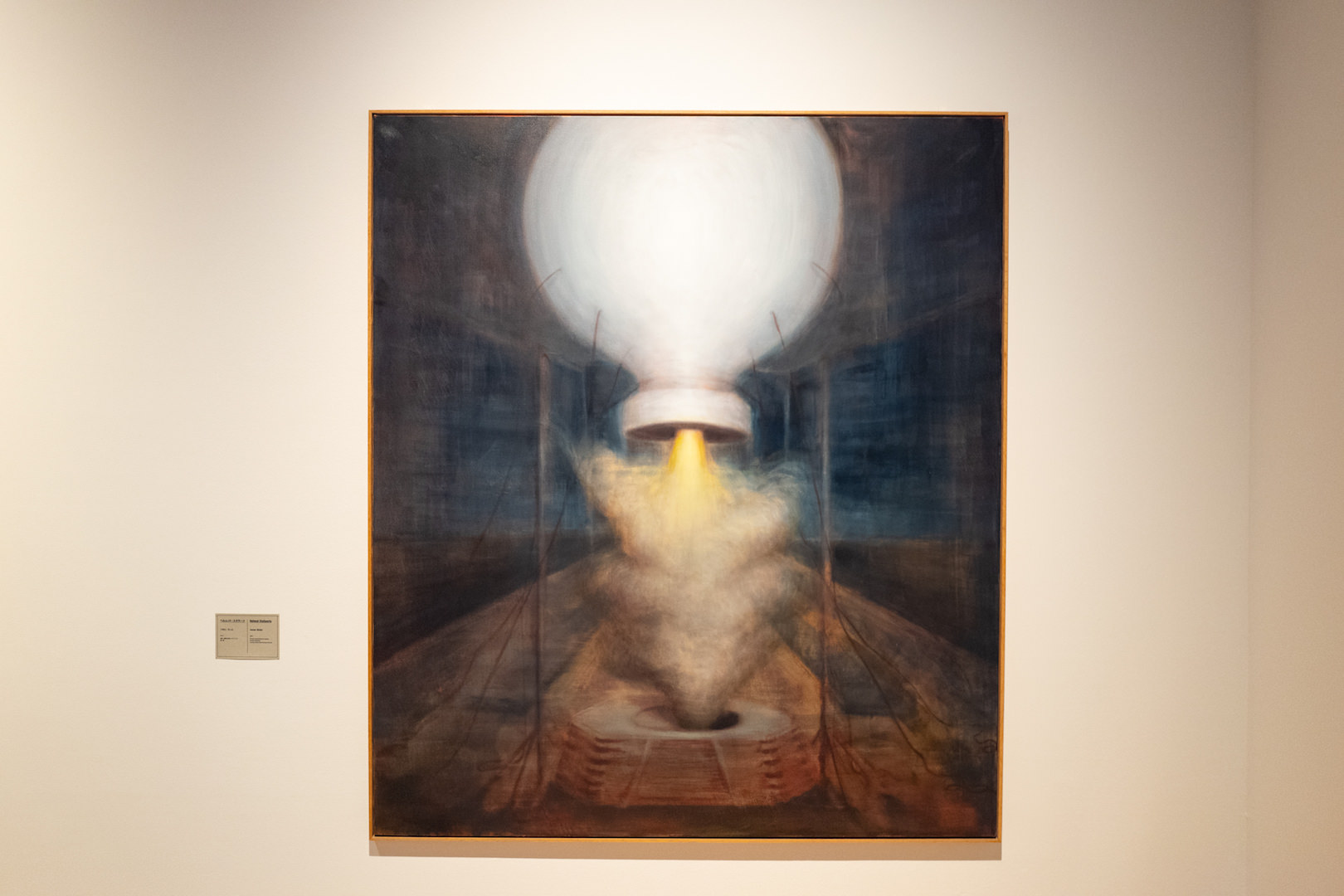
The materials credit on Helmut Stallaerts’s work included “animal blood.” This was a work that carried an overwhelming force.
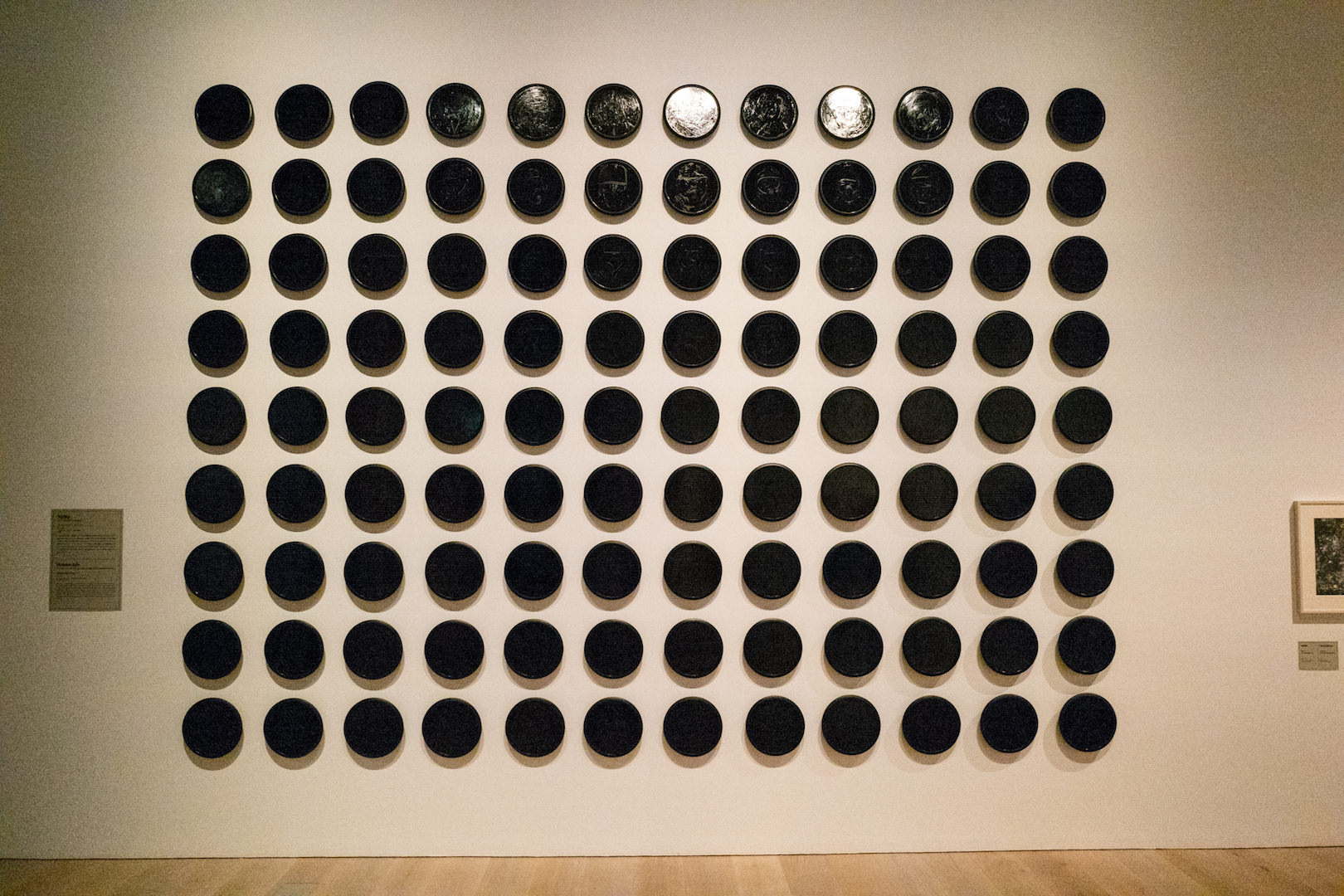
Kota Hirakawa’s Black color timer is a work in which portraits of workers at the Fukushima Daiichi Nuclear Power Plant accident are painted using only black paint on 108 radio-controlled clocks.
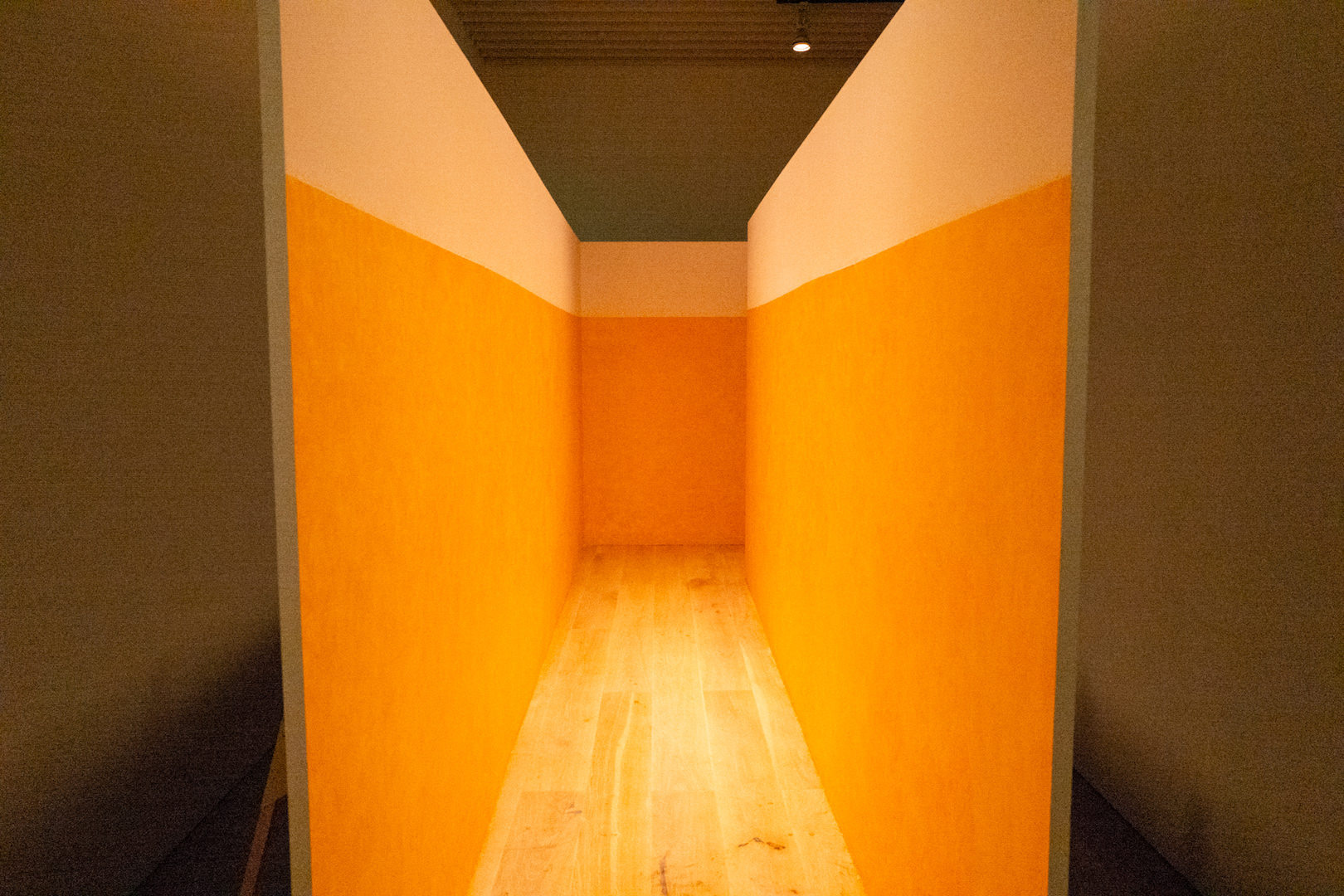
In Miroslaw Balka’s Soap Corridor, real soap is smeared onto the walls.
Soap, which is used to wash newborns and the deceased, and which was also historically handed to Jews before they were sent to the gas chambers, is an object that captures both life and death. Walking through this passage with that history in mind, we became aware of the quiet shifts in our own emotions.
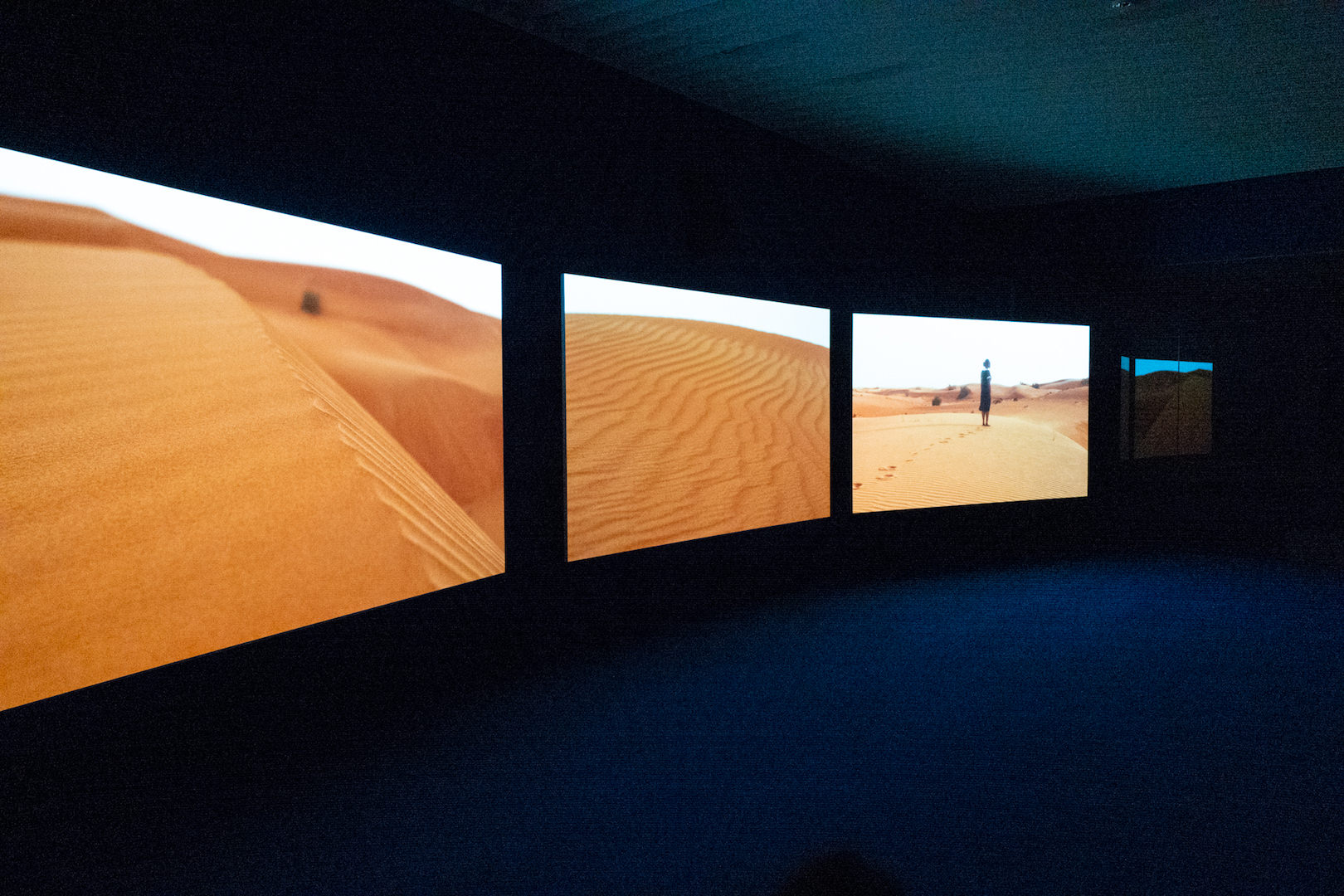
Isaac Julien’s Playtime is a feature-length work of about 60 minutes. It is best viewed with plenty of time to spare.
The relationships between each artist’s works are not explicitly stated; the completed works themselves are simply presented to us. From there, we are asked to re-recognize catastrophe and to receive it in our own way.
Section II: Creation from Destruction — The Power of Art
Section II introduces “the power of art” that gives rise to creation from destruction.
Major disasters and tragedies plunge us into despair, but at the same time it is also true that disaster can become the catalyst for an artist’s creative practice. Works that express renewal, recovery, and a better society through the rich imagination of artists give us the imagination to consider an ideal future.
Art may not, unlike medicine, offer an immediate remedy in the face of catastrophe, but perhaps it can instead serve as a long-term treatment for society. Art carries many powers: transmitting messages of hope, functioning as a tool of solidarity against oppression, contributing economically through charity, and healing wounded hearts.
We focus on this “power” of art to transform negative into positive, and question its possibilities.
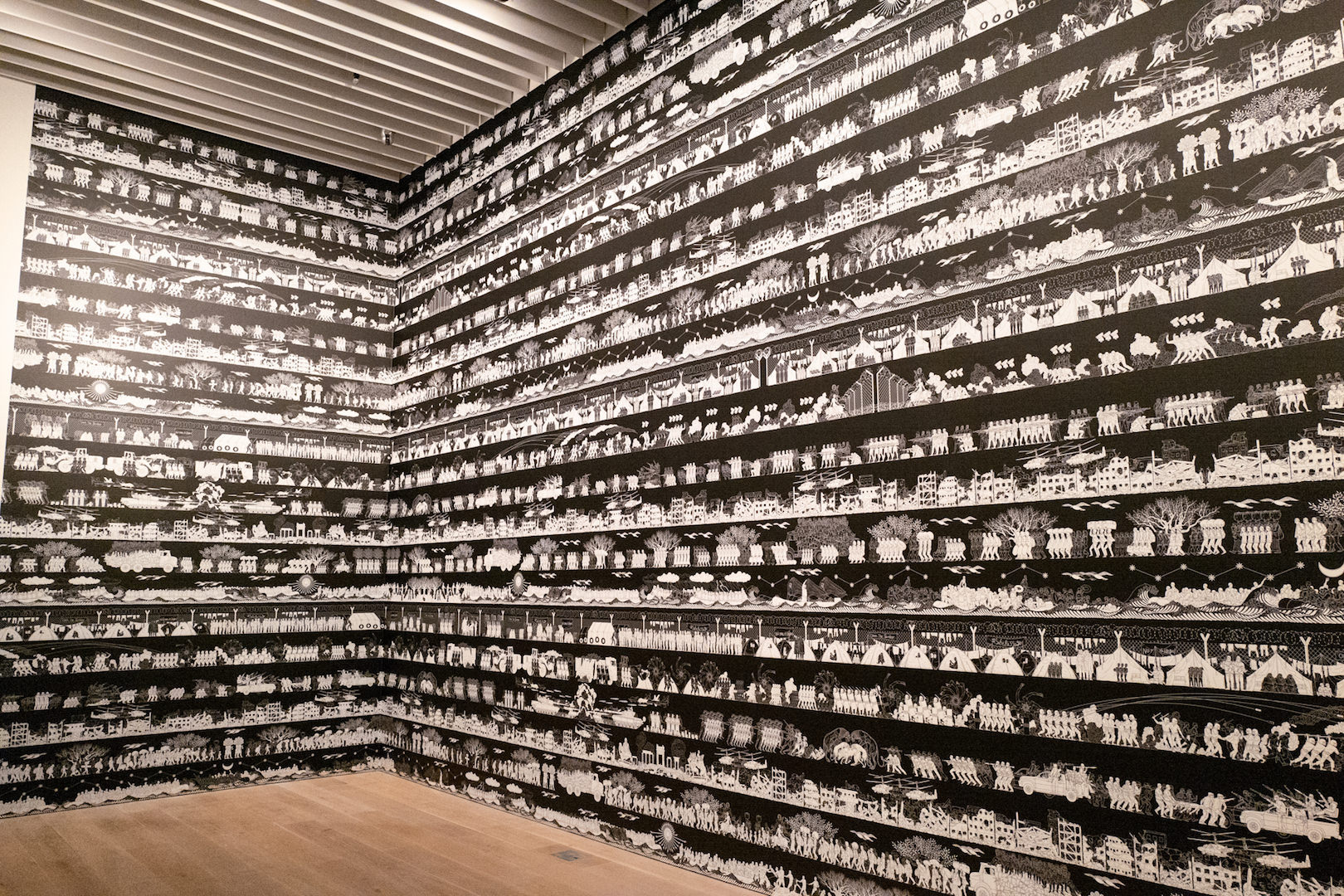
Section II opens with this mural. Ai Weiwei’s Odyssey is a work themed on the refugee crisis. For us in Japan the issue may feel distant, but we find ourselves reflecting on the meaning of it being deliberately presented right at the start.
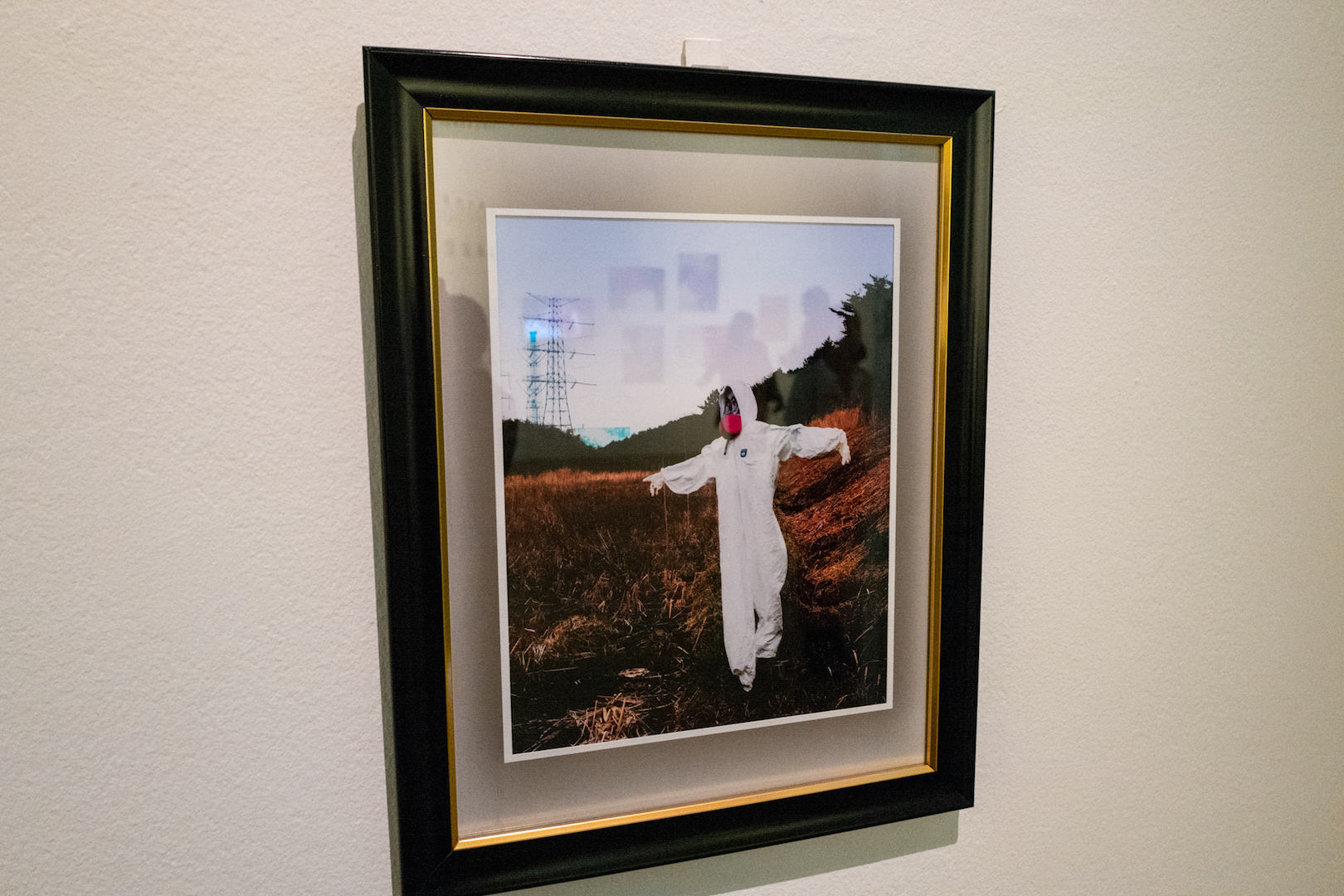
When the Fukushima nuclear power plant problems came to light, Chim↑Pom actually went on site to verify whether media coverage was reporting the truth.
The centerpiece of this exhibition is a participatory installation, Yoko Ono’s Add Color (Painting).
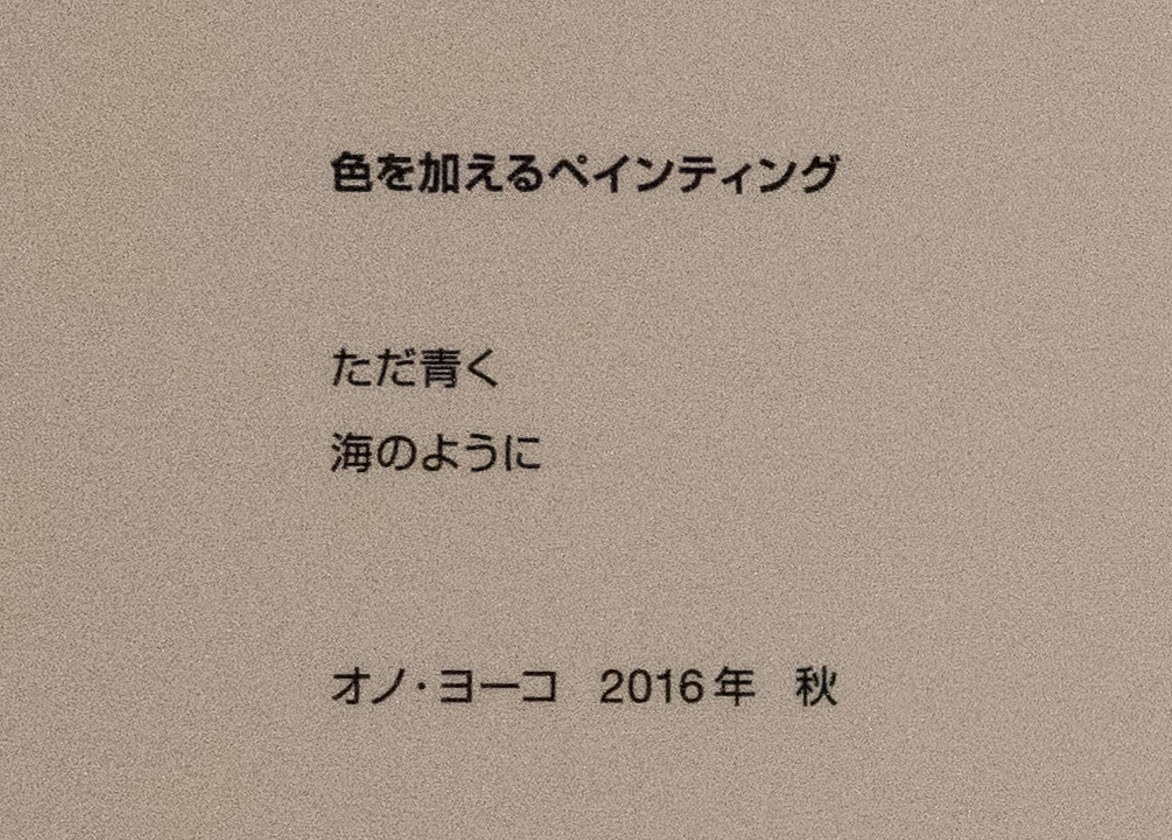 Previously presented two years ago, this work is completed with the participation of visitors here in this exhibition. It is a project in which each person paints whatever message they like onto the walls, the floor, and a boat.
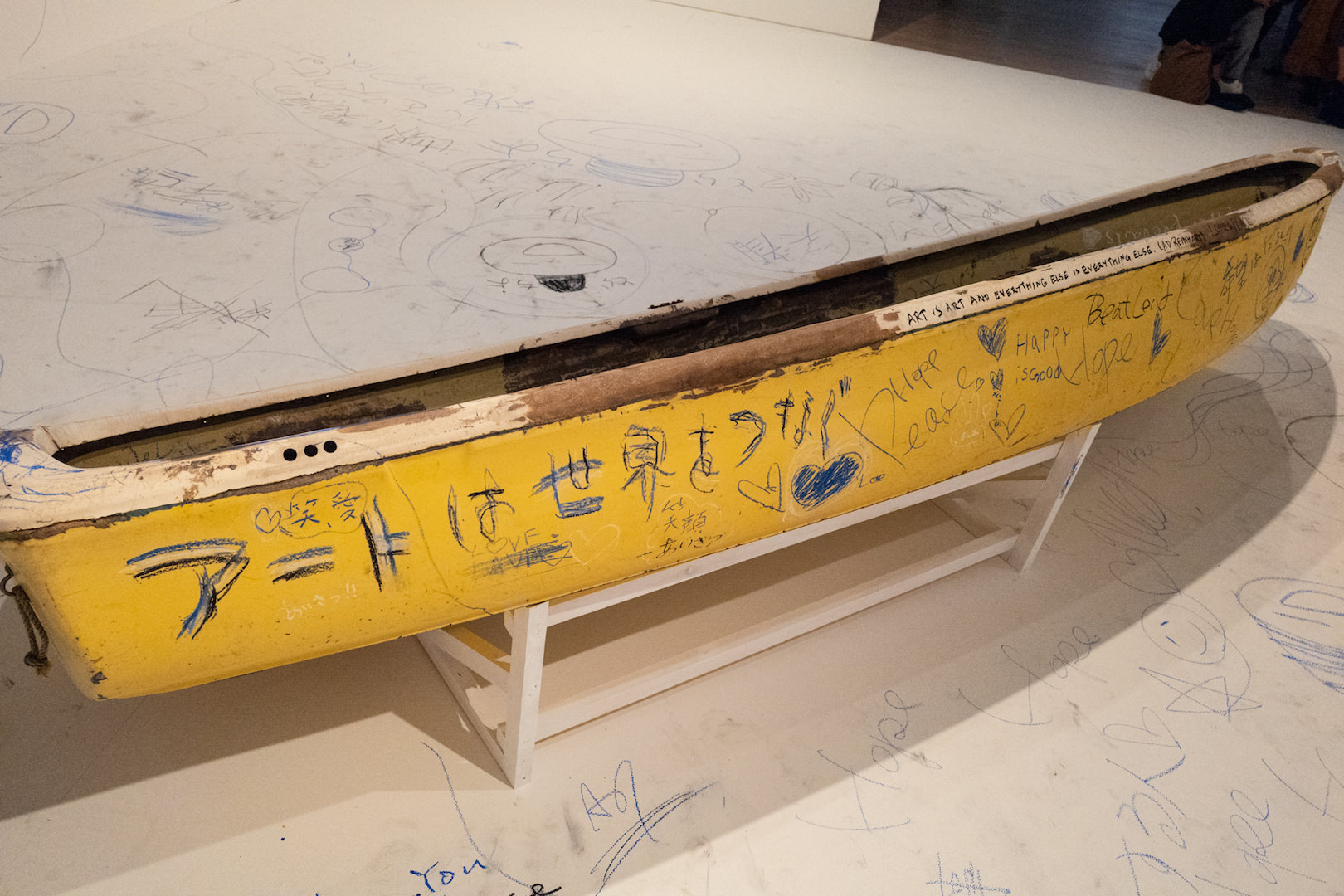
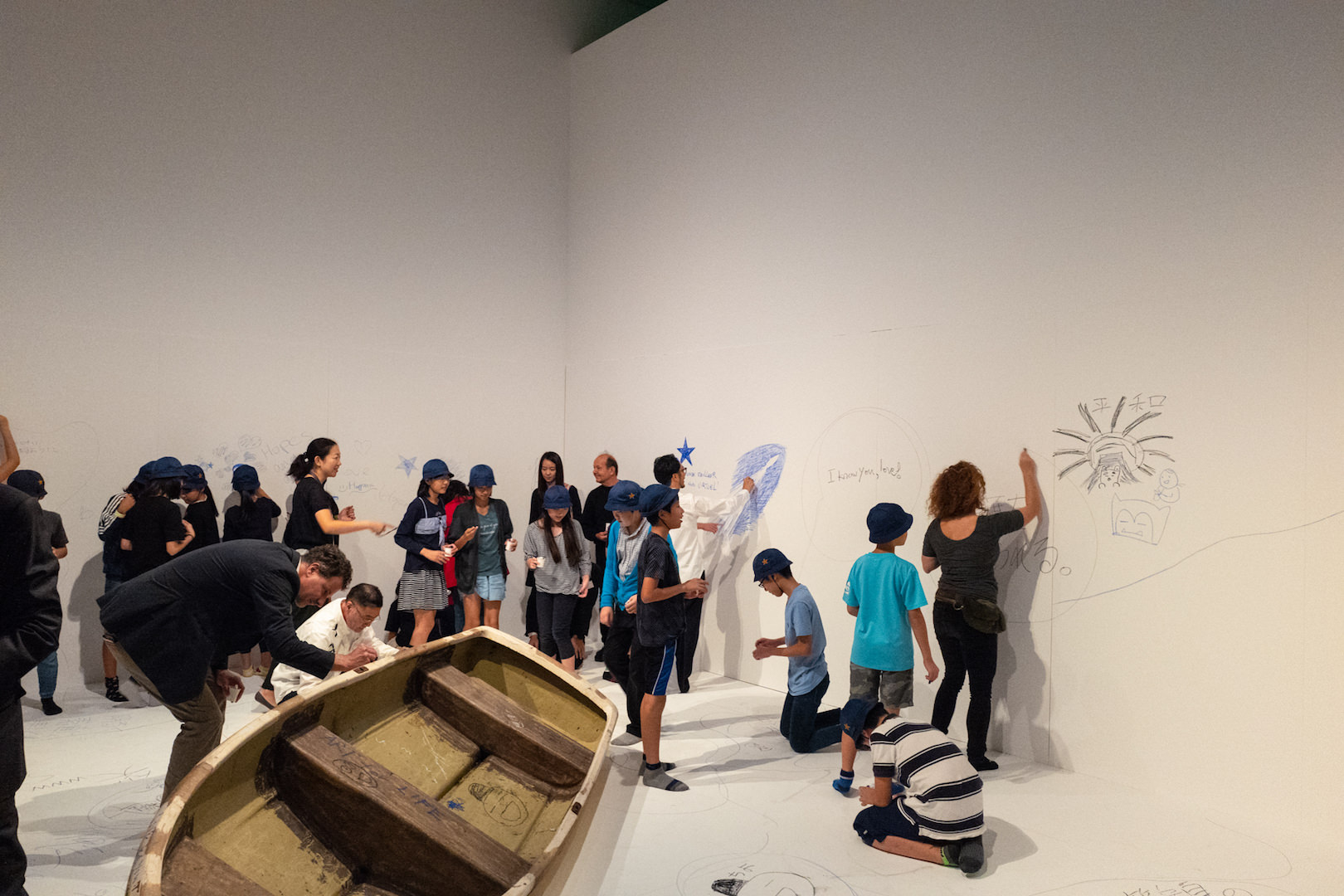
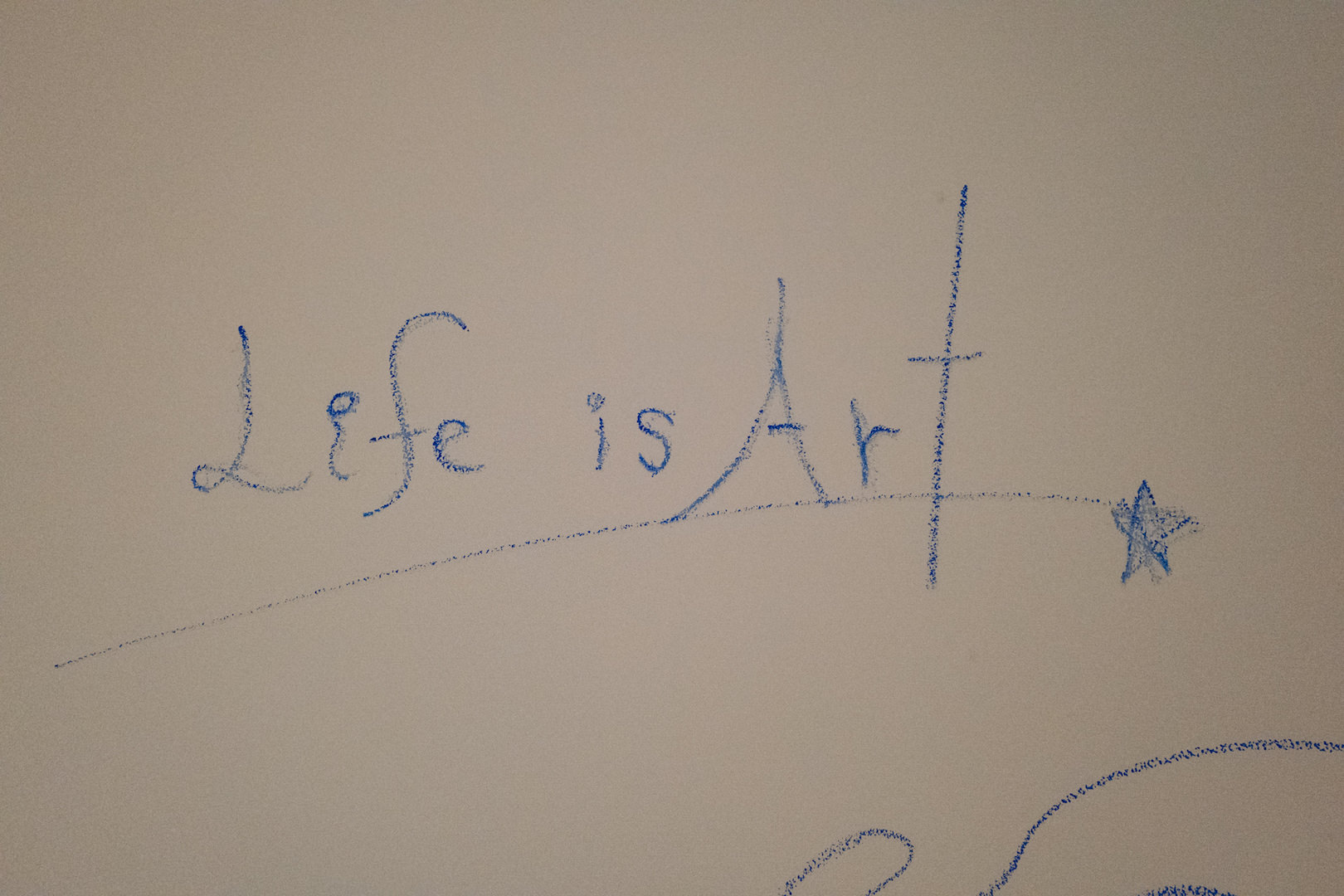
If you visit the exhibition, please leave your own message. The author left one behind as well.
Summary
This was an exhibition in which many artists left behind numerous works throughout the vast museum, each with “catastrophe” in mind. We came to understand that this many artists are consciously engaging with a wide variety of “catastrophes” and confronting them in earnest.
Encountering so many such works, we receive the messages carried by each work’s theme, and new problem awareness, new perspectives, and new ways of thinking that we had not previously noticed within ourselves begin to emerge.
At the final installation, we found ourselves asking: now that this exhibition has renewed our awareness, what action will we take next? — as if we were being tested. We paused there for a moment of self-reflection.
It does not end with viewing. From here, we are tested on the actions we will actually take going forward.