Higashiyama Kaii: A Retrospective for the 110th Anniversary of His Birth
A retrospective commemorating the 110th anniversary of the birth of Kaii Higashiyama — one of postwar Japan’s leading national Nihonga painters — will be held in Tokyo. Following its earlier Kyoto run, this is the first large-scale retrospective in Tokyo in ten years.
Among its highlights, the exhibition will feature a special re-creation of the Toshodaiji Miedo Fusuma Paintings, which took ten years to complete. Around 70 other masterworks will also come together.
Structure of the Exhibition
Chapter 1: A National Painter of Landscape
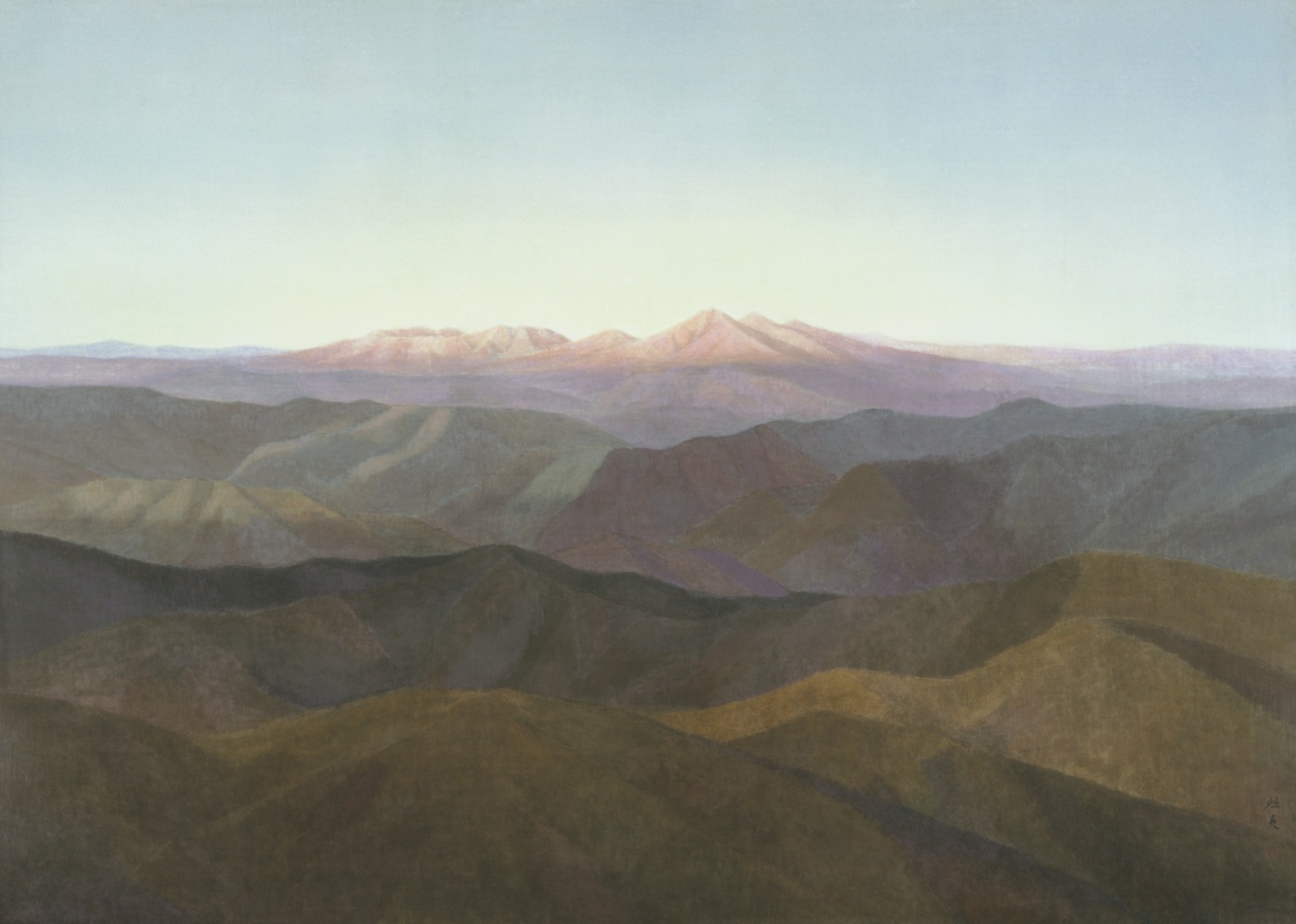
Around the end of the war, Higashiyama lost his father, mother, and younger brother, leaving him without immediate family besides his wife, and air raids destroyed his home. Just before he unveiled “Afterglow,” he was at the lowest point of his life. Sitting at the summit of Mount Kanō in Chiba Prefecture to sketch, he watched the setting sun bathe the distant range of peaks in ever-changing colors moment by moment, and felt a deep resonance between the scene nature was creating and the movements of his own heart. Just before the war’s end, resolved to die, he had also experienced how utterly beautiful — filled with life and radiance — an ordinary landscape had appeared to him. From then on, without straining, he faced nature with an unaffected eye and heart, and painted landscapes in which he layered his own heart over the life that appeared there.
Sketching all across Japan, Higashiyama’s works retain the character of each site while being universalized. To people familiar with Japan’s landscapes, they feel deeply familiar, and become landscapes to which the viewer can quietly entrust their heart. In time, he came to be called a “national landscape painter,” or simply a “national painter.”
Kaii_Higashiyama.jpg)
Chapter 2: Painting Northern Europe
In 1962 (Showa 37), Higashiyama set off on a trip through Northern Europe.
The mountainous north — like the Kiso-ji, with its harsh nature that he had first encountered as a student at Tokyo Fine Arts School — represented an unknown world, an opposite pole for someone whose ancestors came from an island in the Seto Inland Sea and who himself was born and raised in a port town on the Pacific side. And through studying art history in Germany and encountering Western art firsthand, while drawn to the sensory, bright southern culture, he also felt a deeper closeness to the meditative, quiet culture of the north. Even though “Afterglow” and “Road” had made him overnight into a popular painter, Higashiyama was determined to break out of that secure, warm place.
Sure enough, the landscapes of Northern Europe were just as he had imagined and fell precisely into his focus. After returning to Japan, he unveiled a series that was praised for its dreamlike, crystalline vision. Because he used blue extensively, the image of Higashiyama as “the painter of blue” was born here.
Kaii_Higashiyama.jpg)
Chapter 3: Painting Ancient Capitals — Kyoto
Even before his trip to Northern Europe, the writer Yasunari Kawabata had urged Higashiyama to capture on paper the rapidly disappearing former face of Kyoto. Kyoto was also a nostalgic city for the painter himself, one he had visited many times since his Kobe years. On returning from Europe, he was commissioned by the Imperial Household to paint great murals for the new palace. Because of where they would hang, the compositions had to boldly foreground the quintessence of Japan. As he searched for motifs, he found he could not bypass Kyoto — where the essence of Japan’s ancient culture had gathered — and so at last he began to paint this most representative of ancient Japanese capitals.
In 1968 (Showa 43), the same year in which the great murals for the new palace were completed, the “Four Seasons of Kyoto” exhibition unveiled his Kyoto series. Together with the murals, this Japan-facing style — reawakening the yamato-e side of the painter, so different from the Northern Europe series — added a new charm to Higashiyama’s oeuvre.
Kaii_Higashiyama.jpg)
Chapter 4: Painting Ancient Capitals — Germany and Austria
The year after the Kyoto series was unveiled, Higashiyama traveled to Germany and Austria. Having studied in Germany for about two years after graduating from Tokyo Fine Arts School, Germany was, like Kyoto, a nostalgic place for him. Compared with the Kyoto series, in which he painted natural landscapes made familiar and refined by centuries of human intervention, the German and Austrian series overwhelmingly features buildings and townscapes. This may be because Higashiyama sensed the cultural cultivations of the Japanese people more in the nature adjacent to human settlement than in Japan’s frequently rebuilt and reshaped townscapes; and, conversely, felt the cultural accumulation — the charm of ancient cities — more strongly in the sturdy stone buildings and townscapes of Germany and Austria, where people have lived for centuries, than in untouched nature. For a painter who had focused mainly on natural landscapes, this series is somewhat unusual, but here too Higashiyama drew landscapes that resonated with his heart, expanding the range of his artistic charm.
Chapter 5: The Toshodaiji Miedo Fusuma Paintings
In 1971 (Showa 46), after much deliberation, Higashiyama formally accepted the commission — offered the previous winter by Toshodaiji Temple in Nara — to paint the fusuma of the Miedo Hall, which enshrines the seated statue of the temple’s founder, Ganjin (Jianzhen), and to decorate the interior of its miniature shrine. Ganjin, invited by the Yamato court, made five failed voyages that eventually left him blind but reached Japan on his sixth attempt. Higashiyama painted “Mountain Clouds” (as the representative “mountain”) — an image extracting the Japanese landscapes Ganjin would have longed to see — for the tsuke-ita and fusuma of the upper-tier alcove, and “Sound of Waves” (as the representative “sea”) for the fusuma of the inner shrine hall. These he dedicated in 1975 as the first phase of the work. Then, around the miniature shrine housing Ganjin, in the Pine Room he painted “Fragrant Breeze of Yangzhou” — a scene of Ganjin’s hometown of Yangzhou — on the fusuma. In the adjacent Plum Room and Cherry Room, he painted “Guilin: Moonlit Evening,” depicting the landscape of Guilin, where Ganjin stayed for a year after his fifth failed voyage, and “Huangshan: Dawn Clouds,” depicting the celebrated Chinese scenic site of Huangshan. He dedicated these as the second phase in 1980 (Showa 55). Finally, in 1981 (Showa 56), he dedicated “Auspicious Light,” a scene of Akime Bay in Kagoshima — the first Japanese soil upon which Ganjin set foot — for the interior of the miniature shrine. Ten years had passed since he began envisioning the work.
For “Mountain Clouds” and “Sound of Waves,” despite having sketched and painted many of Japan’s mountains and seas, he traveled all across Japan again to sketch. The Chinese fieldwork was more difficult since it preceded the 1978 Japan-China Peace and Friendship Treaty, but over three years and three visits he achieved his purpose. He also took on ink painting for the first time in his career, and the Toshodaiji Fusuma Paintings brought Higashiyama another important fruit: a wholly new motif not seen in his earlier oeuvre — “landscape with a white horse.” Higashiyama later said that this white horse, which appeared galloping across his surfaces only in 1972 (Showa 47), the year he was fully absorbed in research and conception for the Miedo work, was likely the manifestation of his own “prayer.”
Kaii_Higashiyama.jpg)
Kaii_Higashiyama.jpg)
Chapter 6: Landscape as a Mirror of the Heart
Having completed the Toshodaiji Fusuma Paintings as if guided by the white horse, Higashiyama arrived for the first time at the conviction that painting is “prayer” — and that, that being so, what matters is how much of the heart is invested, and whether the work is “good” or “bad” is beside the point. It may be hard to believe, but the painter — who had all along felt he had no talent — was finally able to grasp the meaning of continuing to paint, and to find its value. Ever busier and now over seventy, Higashiyama could no longer easily go out on new sketching trips, but he continued to paint without hesitation, drawing on the countless landscapes he had beheld and the sketches he had made. The works he produced from then on were no longer of Japan or anywhere else in particular. Separated from any specific place, they were paintings of the landscape formed within his own heart. Higashiyama’s brush moved vividly and freely across the surface, growing ever more radiant.
As the culmination of Higashiyama’s art, he left behind a body of work in which condensed nature and his own life were inscribed together. Kaii Higashiyama passed away in 1999 (Heisei 11) at the age of 90, mourned by many. Yet his art still continues to move people, not only in Japan but around the world.
Kaii_Higashiyama.jpg)
Kaii_Higashiyama.jpg)
Kaii_Higashiyama.jpg)
Kaii_Higashiyama.jpg)
Kaii Higashiyama — Profile
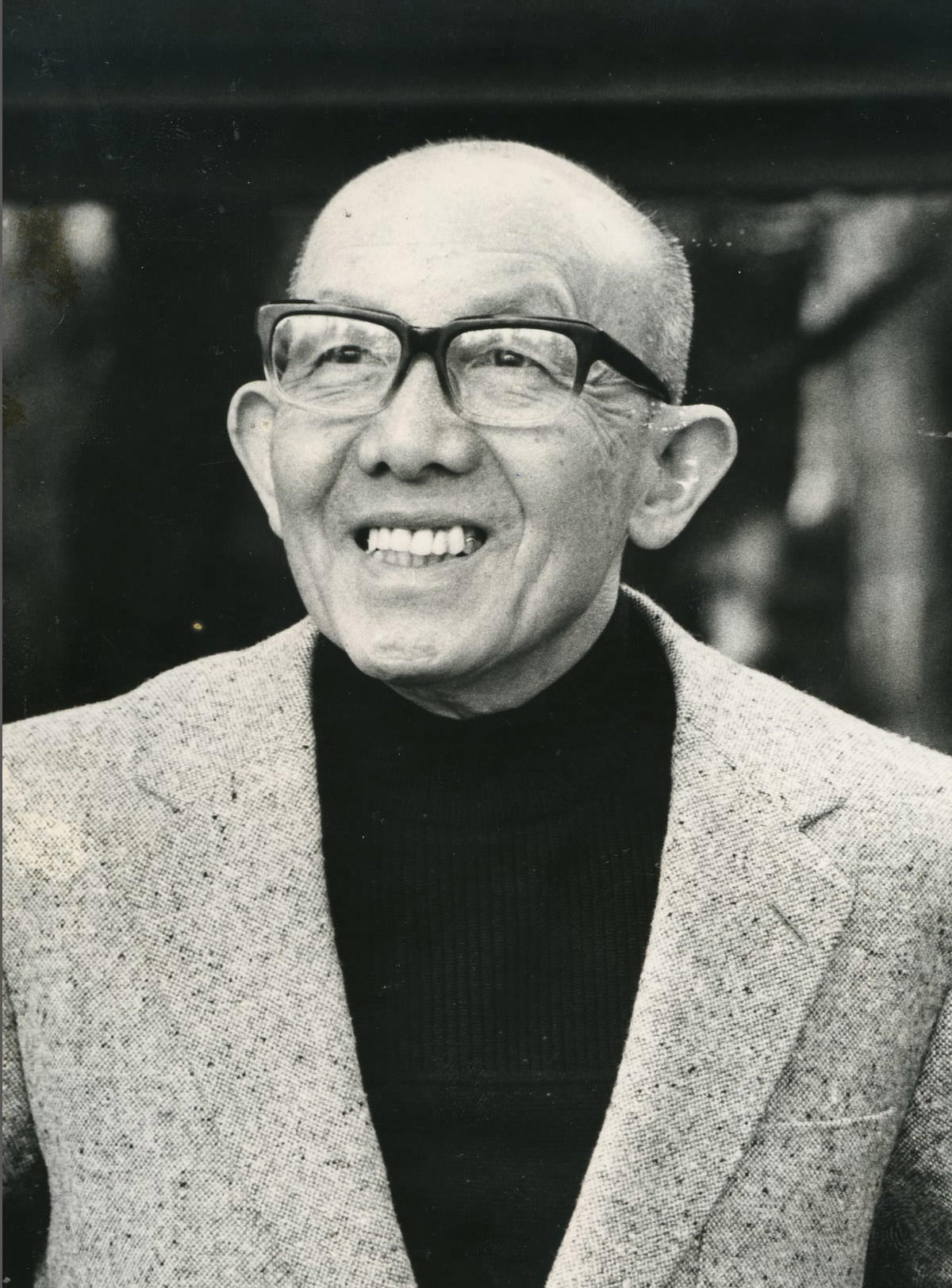
Born in Yokohama in 1908 (Meiji 41), Kaii Higashiyama graduated from Tokyo Fine Arts School and, after studying in Germany, endured the trials of being drafted into the Pacific War and the successive deaths of his close family. Amid these hardships he awakened to the beauty of landscape, and after the war he was mainly active on the Nitten. His artistic world, forged through sincere engagement with nature and continual reflection, is valued as one that carries a universality reflecting even the Japanese view of nature and inner sensibility.
Looking again at the images of the works, one is struck by how many operate at a monumental scale.
The strength of the works carries a very powerful energy, and one feels an urge welling up to stand before them in person. Great expectations!
Overview
Dates: October 24 (Wed) – December 3 (Mon), 2018
Closed on Tuesdays
Hours: 10:00 – 18:00
* Fridays and Saturdays until 20:00
* Last admission 30 minutes before closing
Venue: The National Art Center, Tokyo, Special Exhibition Gallery 2E
7-22-2 Roppongi, Minato-ku, Tokyo 106-8558
Organizers: The National Art Center, Tokyo; Nikkei Inc.; TV Tokyo; BS TV Tokyo
Special Sponsor: Daiwa Securities Group
Sponsors: Daiwa House Industry, Toppan Printing, Toyota Motor, Panasonic, Mitsui & Co.
Special Cooperation: Toshodaiji Temple
Cooperation: Nagano Prefectural Shinano Art Museum / Higashiyama Kaii Gallery