Making the Difference: Vermeer and Dutch Art
“Making the Difference: Vermeer and Dutch Art” will be held at the Ueno Royal Museum and the Osaka City Museum of Fine Arts between 2018 and 2019.
In addition to the eight works originally announced, “The Procuress” — making its Japan debut — has been added, bringing the total to nine works by Johannes Vermeer to be exhibited (Tokyo venue; with rotations).
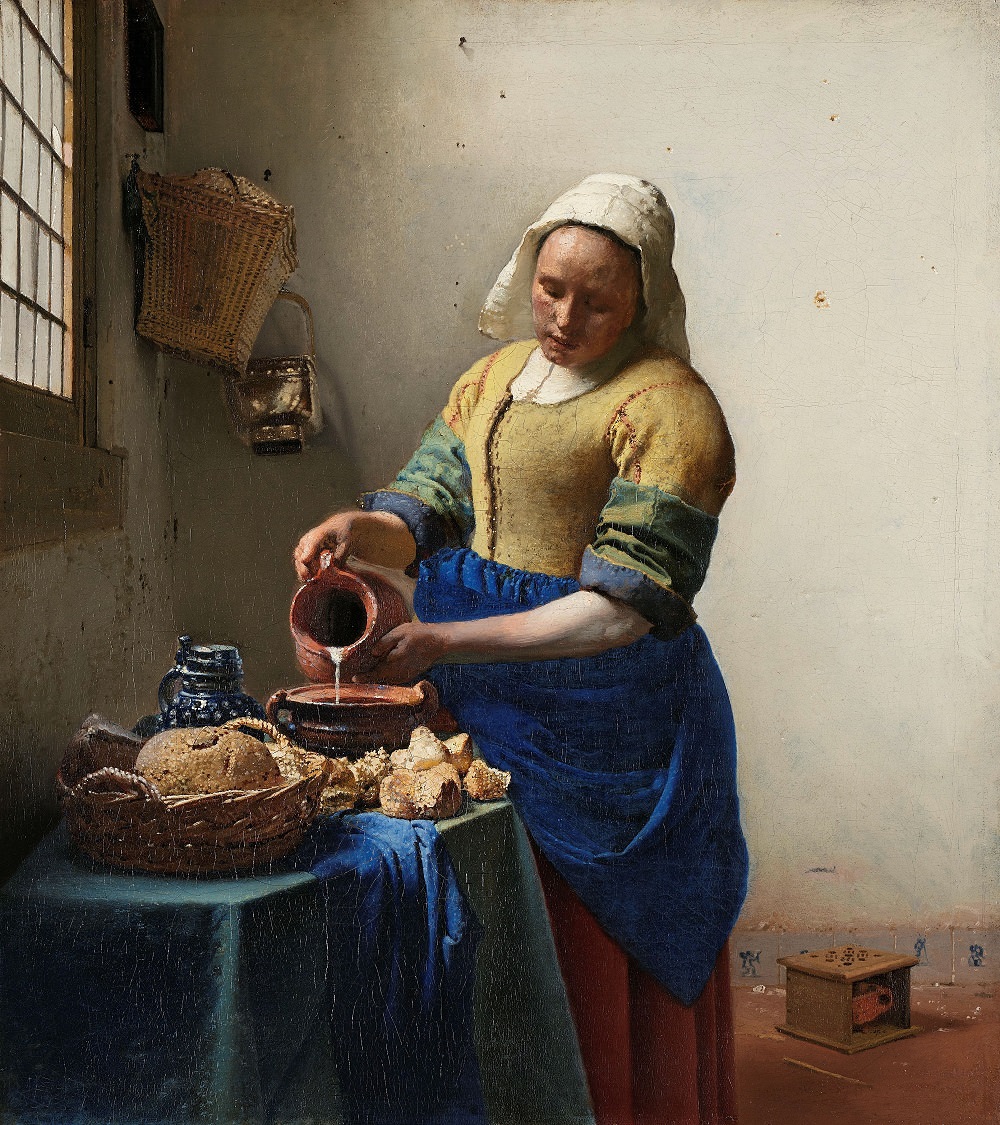
A woman is absorbed in pouring milk. Everything but the falling stream is wrapped in stillness. Vermeer transforms the mundane act of daily life into a striking image of “a woman standing statue-like in a brightly lit interior.” He was also observing how light, composed of countless fine particles, plays across the surfaces of objects.
 Vermeer is known as a sparing painter — only around 35 works are said to survive — but “Making the Difference: Vermeer and Dutch Art” will present nine Vermeers, including Japan premieres (Tokyo venue). This surpasses the seven works shown at the 2008 “Vermeer and the Delft Style” exhibition at the Tokyo Metropolitan Art Museum and represents the largest gathering ever held in Japan.
Four highlights of the Tokyo venue
The Tokyo venue, running from 5 October 2018 to 3 February 2019, has four major highlights.
1. A record nine Vermeers gathered in Tokyo — the most ever in a Japanese art show
Nine Vermeers — from an oeuvre of only about 35 surviving works — have been specially loaned from major museums in Europe and the United States. Among them are “The Wine Glass” and “Girl with the Red Hat”, both making their Japan debuts.
2. The miraculous “Vermeer Room”
Nine works chosen from nearly every stage of his career will be shown together in a single room called the “Vermeer Room” — a miraculous sight that Vermeer himself would never have seen.
3. “Timed-entry tickets” and “free audio guides for every visitor”
Because heavy crowds are expected, the Tokyo venue is adopting a timed-entry system to keep visitors from waiting too long at the door. Every visitor also receives a complimentary audio guide, offering an unprecedented, comfortable encounter with the works.
4. Around 50 masterpieces of 17th-century Dutch painting
Beyond Vermeer, around 50 works by contemporaries such as Gabriel Metsu, Pieter de Hooch, and Jan Steen introduce the breadth and originality of 17th-century Dutch painting.
Below are the works scheduled for the Tokyo venue.
It is a special opportunity to see, in person, paintings you may only have seen in textbooks or art books. Something to look forward to!
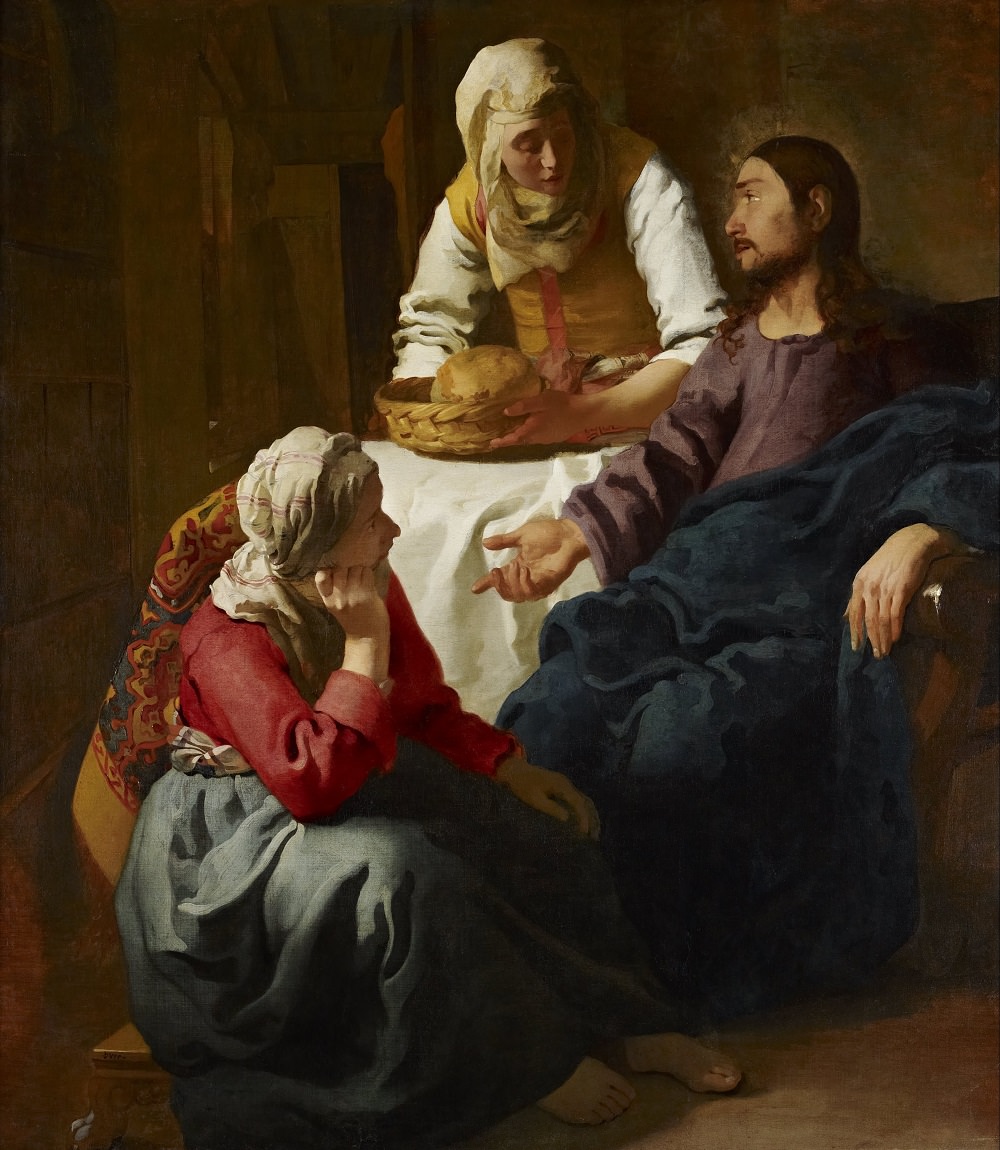
One of Vermeer’s largest and earliest surviving works. In the scene, Christ praises Mary — who chooses to sit and listen to his teachings — while her sister Martha frets over household chores. The interplay of light and shadow, the characterisation of the figures, and the broad, thickly loaded brushwork suggest the influence of the Utrecht painters, who worked in the wake of Caravaggio. Given its unusually large size and subject matter for Vermeer, it was likely a special commission.
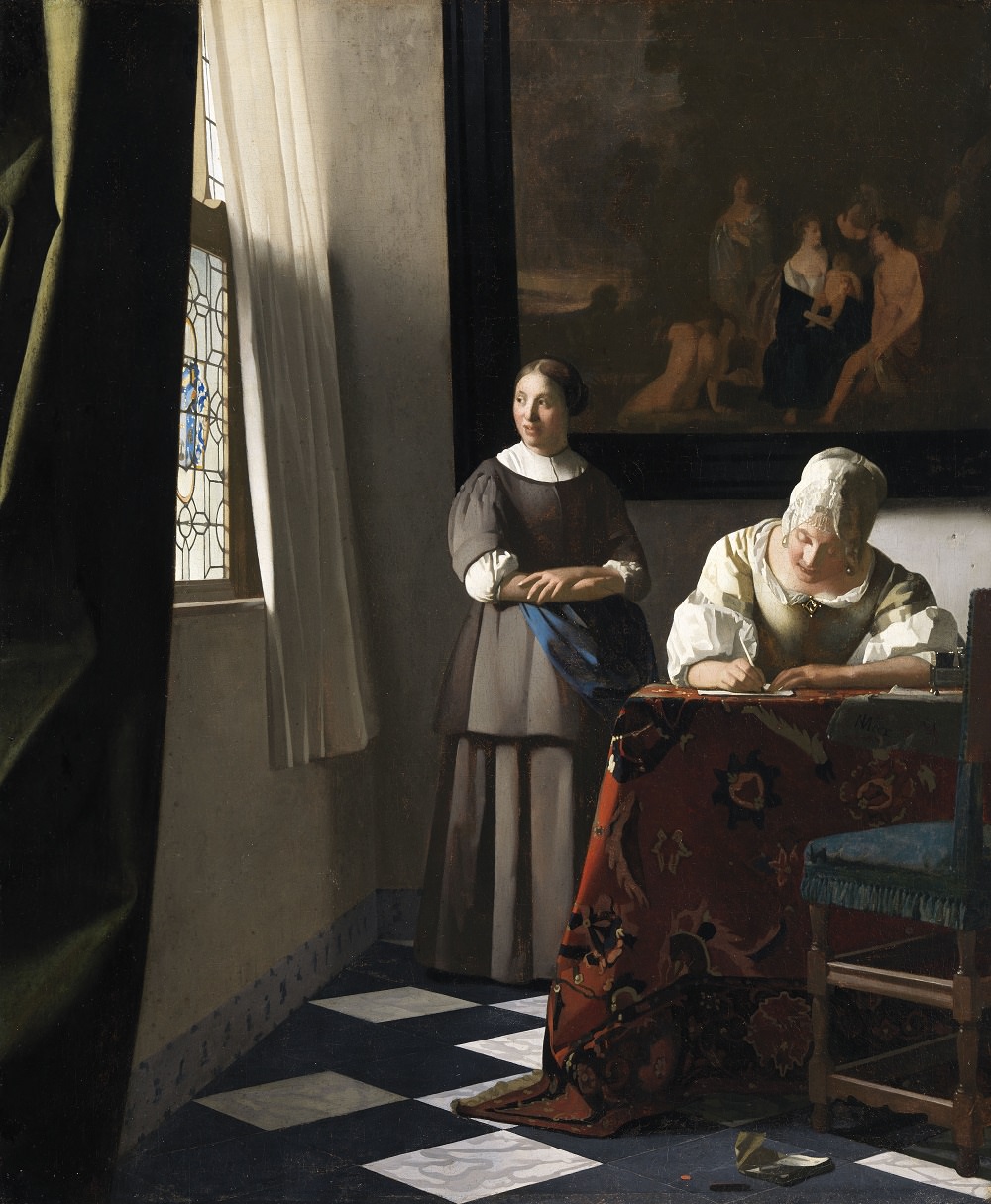
In depicting a reality that feels like a dream, Vermeer’s paintings reach an artistic level unmatched by any other. His figures are often quiet and still, lending his paintings a solemn and mysterious atmosphere. This is one of the most original works of Vermeer’s late period. While her maid looks out of the window, the mistress writes a letter. On the floor lie a red seal and a stick of sealing wax — objects used in the correspondence of the time.
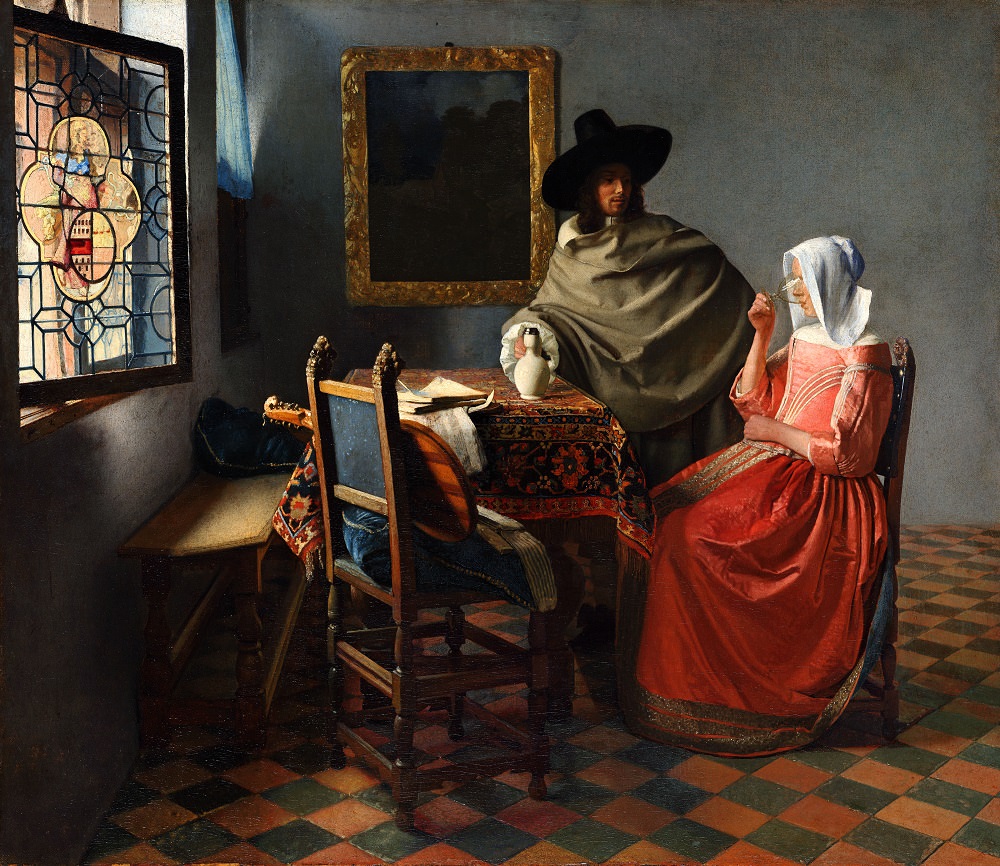
A transitional work between the early and middle periods. In an interior charged with hints of “love” — sheet music on the table, a lute set on the chair — a man in a black hat offers wine to a woman. In the half-open stained-glass window her gaze meets, a female figure carrying a bridle appears at the centre. Because a woman with reins traditionally represents “Temperance”, the scene is read as an allegorical warning against amorous conduct in the household.
.jpg)
As the postal system developed in seventeenth-century Holland, letter-writing flourished, and Vermeer painted six works on the theme. Here, a woman in a fur-trimmed yellow jacket sits at her desk mid-quill-stroke. Pausing, she turns her face toward the viewer as if meeting our gaze from beyond the painting. She smiles gently in the calm light; a bead of light glints on the pearl at her ear. Through the image of a beautiful woman, Vermeer captures the scene surrounding a letter — a scene the people of his time yearned for and cherished.
.jpg)
A woman in a vivid red hat turns to meet our gaze. Her face is mostly cast in shadow by the hat, yet her left cheek is caught in bright light. Grains of light are painted into the pearl at her ear, her eyes and the tip of her nose, and her slightly parted lips glisten. Emerging vividly against a dim room hung with tapestry, her figure carries a striking presence. Vermeer’s masterful brushwork is visible everywhere — in the meticulous detail and the exquisite palette.
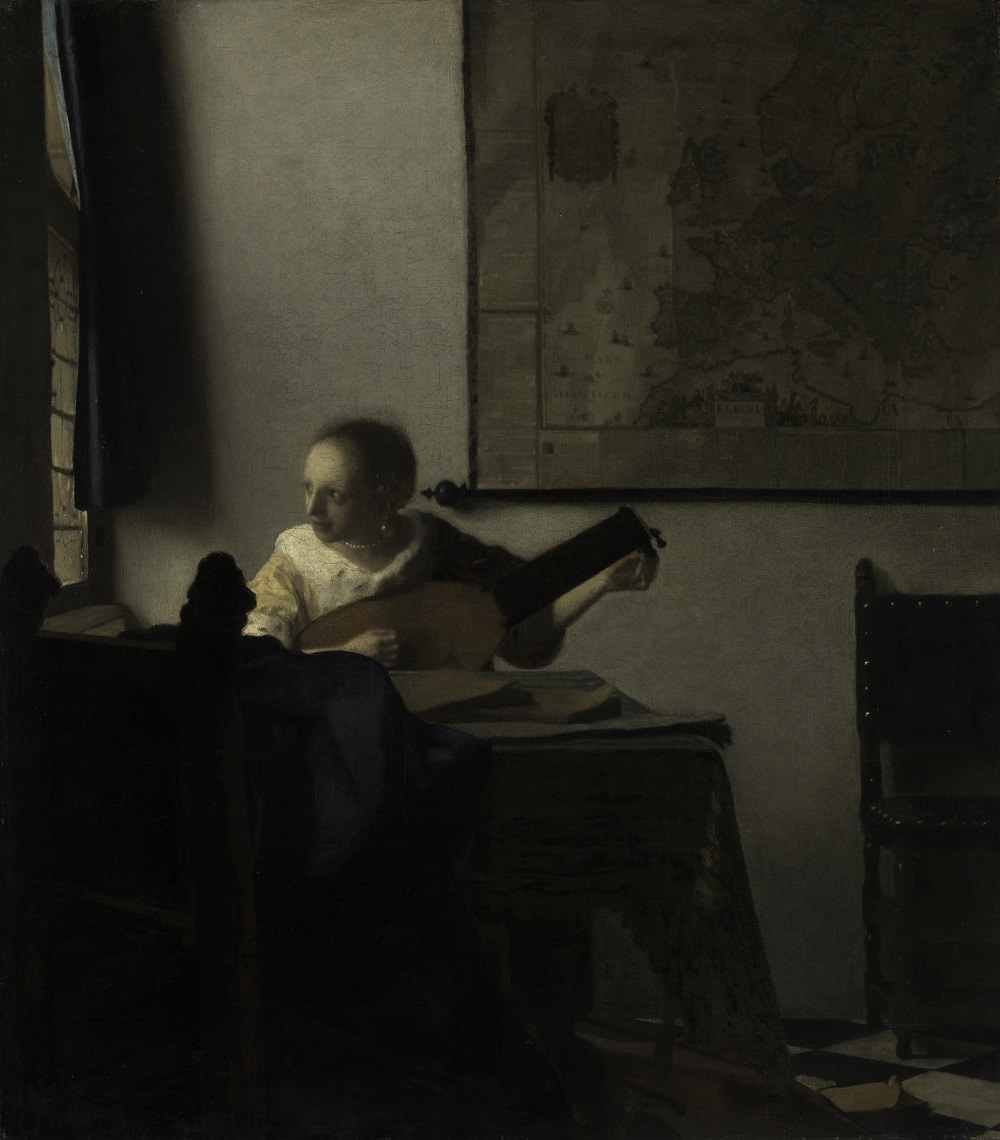
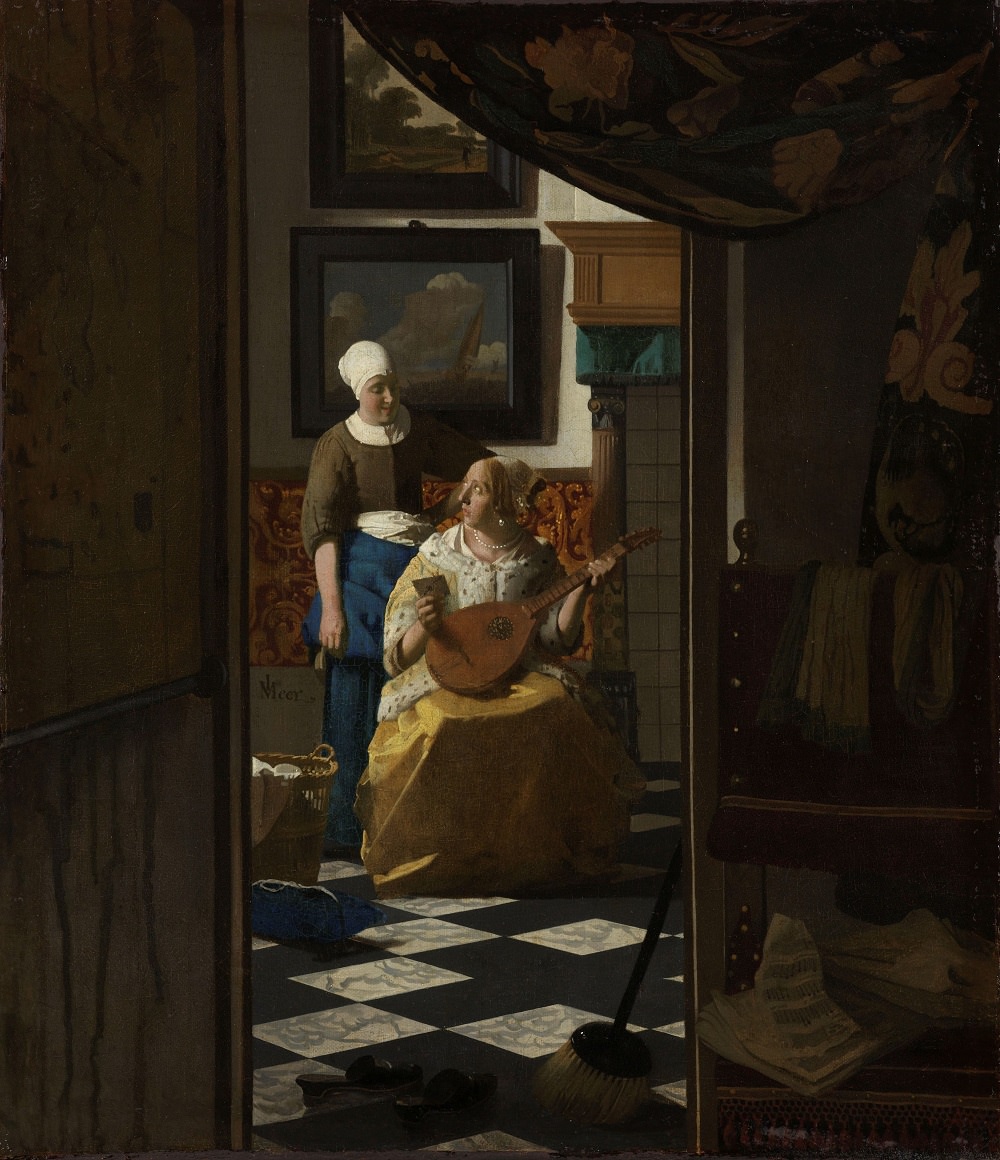
Seated alone in a dim room, a woman cradles a lute and plucks its strings. Her left hand pinches the peg to bring it in tune. Her gaze, cast toward the distant window, stirs the viewer’s imagination. Is she looking at something beyond the window, or straining to catch a sound? Sheet music appears stacked on the table, and on the wall hangs a map — a motif that, in paintings of this era, sometimes hints at a loved one who is far away.
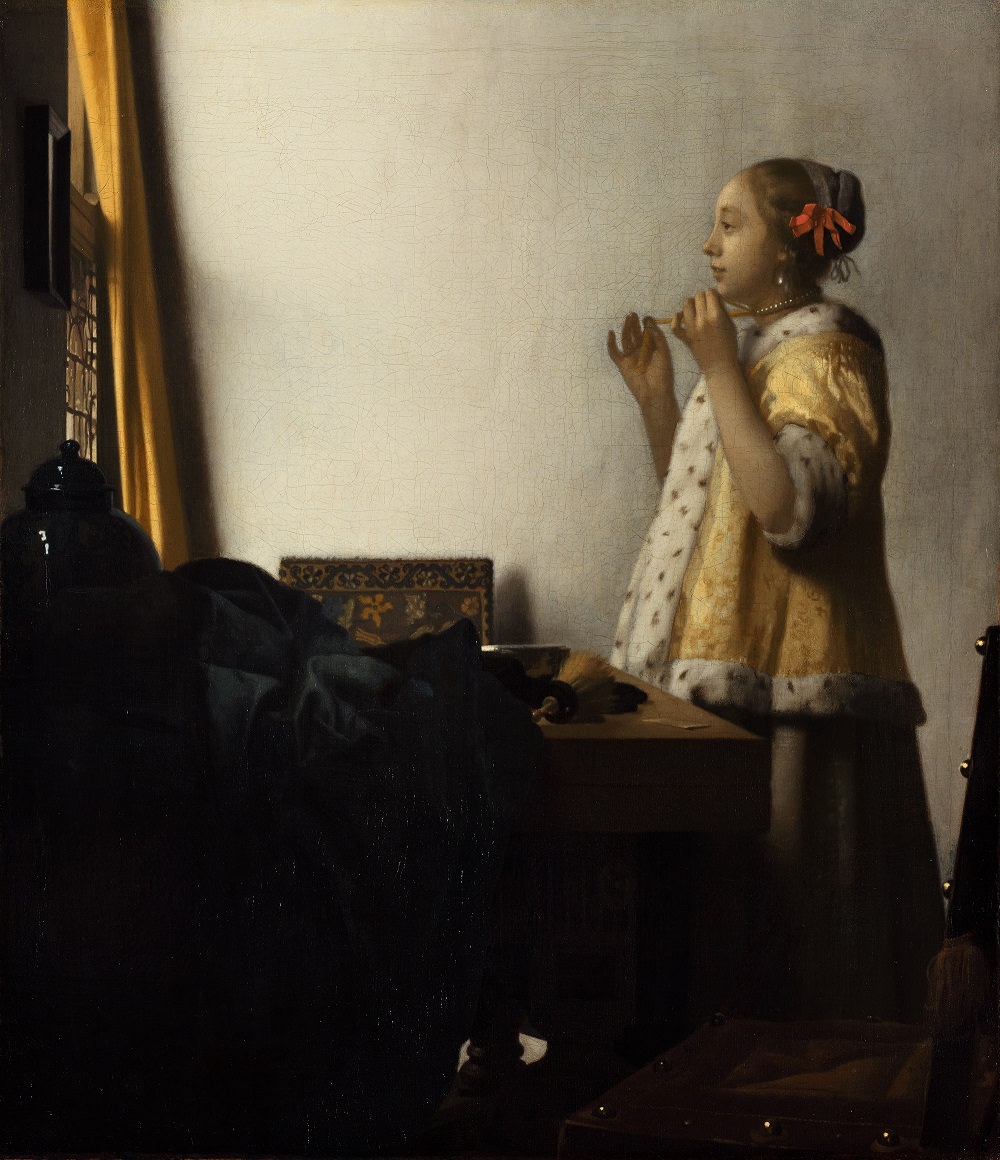
Soft light spills in from a window draped with a yellow curtain. Standing motionless in the room, a woman is about to fasten a pearl necklace, holding the ribbons as she gazes at the small mirror on the wall. Her faintly parted lips and her sweet, faraway eyes reveal a fleeting expression as she readies herself. Vermeer captures this quiet moment amid perfect stillness. On the desk sit a brush for powder and a silver vessel; the bold composition, anchored by a bright white wall, speaks to the painter’s dedication to spatial expression.
Osaka venue
The Osaka venue, following Tokyo, is scheduled for 16 February to 12 May 2019. Some works are exclusive to Osaka, so those aiming for a complete tour should take note.
Overview
Exhibition: Making the Difference: Vermeer and Dutch Art
Venue: Ueno Royal Museum ※ Osaka venue: 16 February – 12 May 2019
Dates: Friday 5 October 2018 – Sunday 3 February 2019 ※ Closed on Thursday 13 December.
Hours: 9:30 – 20:30 (last admission 30 minutes before closing; opening and closing times vary on some days)
Timed-entry system: To ease waiting times, admission is in principle by advance-purchase timed-entry tickets divided into six time slots (same-day timed-entry tickets are +200 yen); same-day tickets are sold only for slots where advance sales have room to spare.
General 2,500 yen / University and high-school students 1,800 yen / Junior-high and elementary students 1,000 yen / Preschool children free
Organisers: The Sankei Shimbun, Fuji Television, Hakuhodo DY Media Partners, Ueno Royal Museum
Supported by: Embassy of the Kingdom of the Netherlands
Planning: Stichting Hata
Special sponsors: Daiwa House Industry Co., Ltd.; NORITSU KOKI Co., Ltd.
Sponsors: Dai-ichi Life Group; Ricoh Company, Ltd.
Special cooperation: NISSHA Co., Ltd.
Cooperation: ANA, KLM Royal Dutch Airlines, Nippon Cargo Airlines, Yamato Global Logistics Japan