Pierre Bonnard — A Special Exhibition from the Musée d’Orsay
We visited “Pierre Bonnard — A Special Exhibition from the Musée d’Orsay,” on view at The National Art Center, Tokyo in Roppongi.
The concurrent Kaii Higashiyama exhibition appears to be crowded, but this Pierre Bonnard show is not — one reason may be that he is relatively unknown in Japan and lacks the sense of a “major” name. 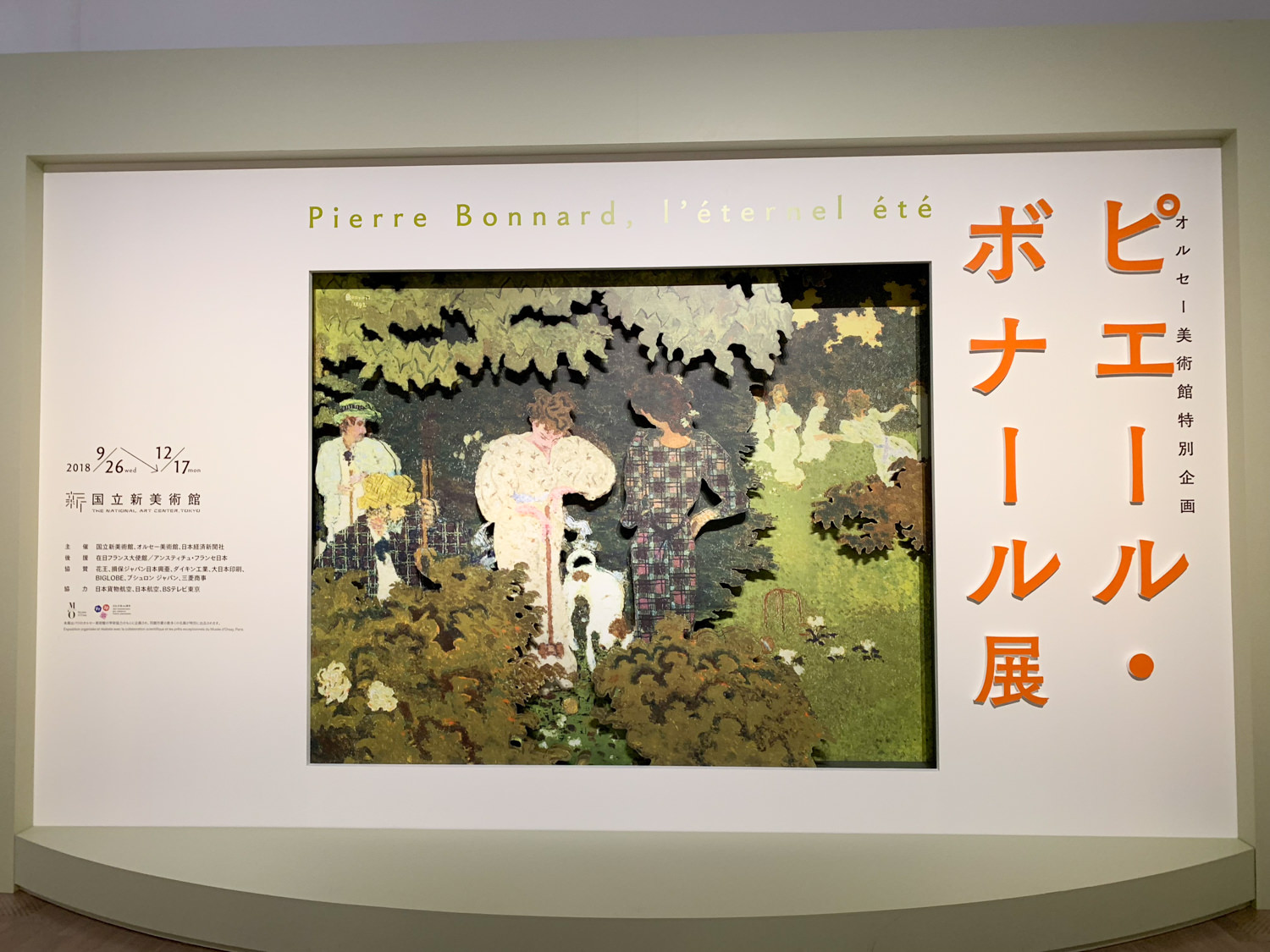 The advance PR highlighted these five points as attractions:
- The Musée d’Orsay’s Bonnard collection comes to Japan in force! Approximately 30 paintings are shown in Japan for the first time.
- An introduction to Bonnard’s devotion to Japanese art — he was known as “the Japonard Nabi.”
- A close look at his “adventure of the optic nerve,” which turned the process of seeing into painting.
- Bonnard’s muse, the mysterious woman Marthe, adds color to the exhibition.
- The dogs and cats Bonnard loved appear throughout.
In actually viewing the show, the following three points made the strongest impression on us:
[1] Devotion to Japanese Art
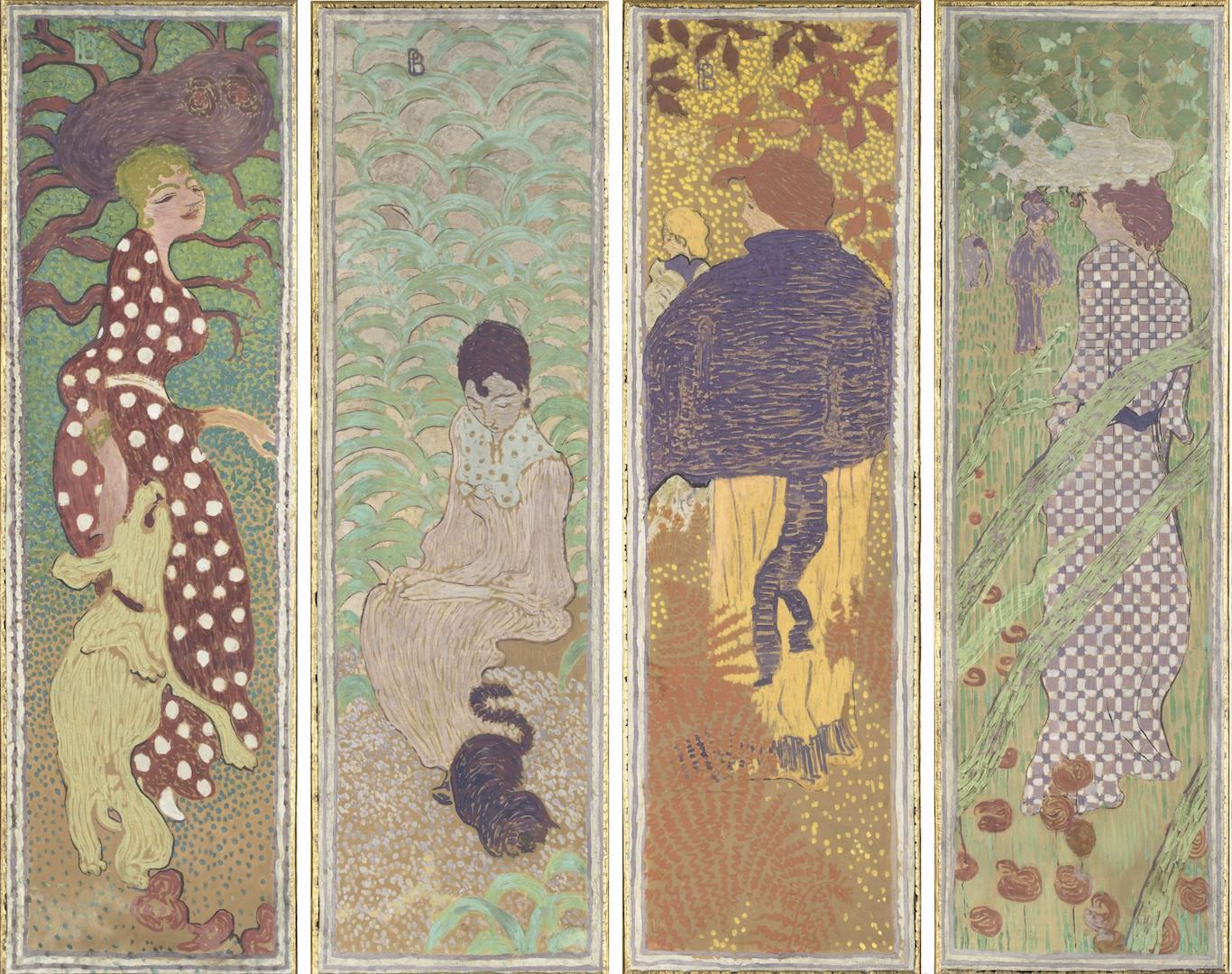
Right after entering the exhibition, the first section was titled “the Japonard Nabi,” lining up works consciously informed by Japan.
Indeed, being a “Japan enthusiast,” many of the exhibited works showed a strong awareness of Japanese art.
[2] Cats Everywhere
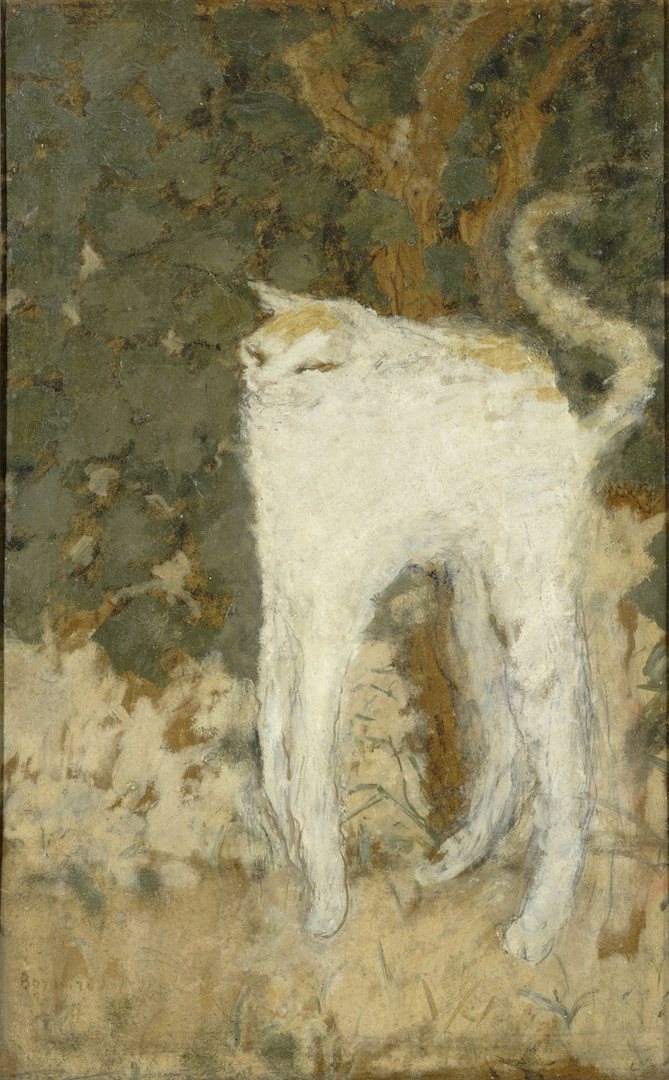
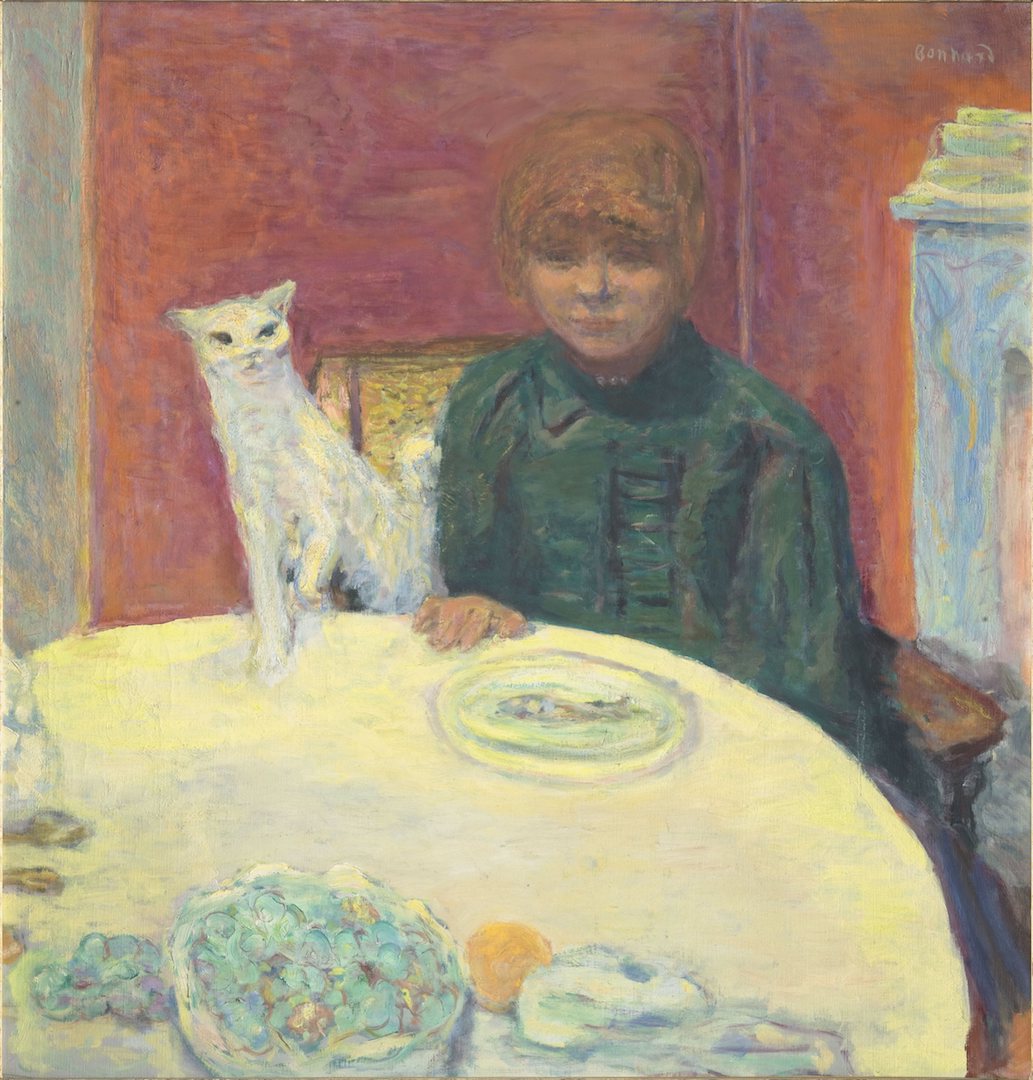
Bonnard kept a cat and four dogs, and of the roughly 2,300 paintings he produced in his lifetime, he is said to have included animals in around 700 of them. Perhaps for that reason, cats appear all over his paintings here.
They don’t feel forced into the frame — they appear naturally, which is nice — but honestly, they were maybe a little over-represented… (laugh).
.jpg)
[3] Talent as a Graphic Artist
Bonnard’s activity extended beyond painting to lithographs, photography, and more. How was his design sensibility — which still feels contemporary today — received in his time? These are wonderful works.

A Painting Experience: “AIT”
Near the exhibition exit, a spatial experience zone using live-action footage called “AIT” was set up.
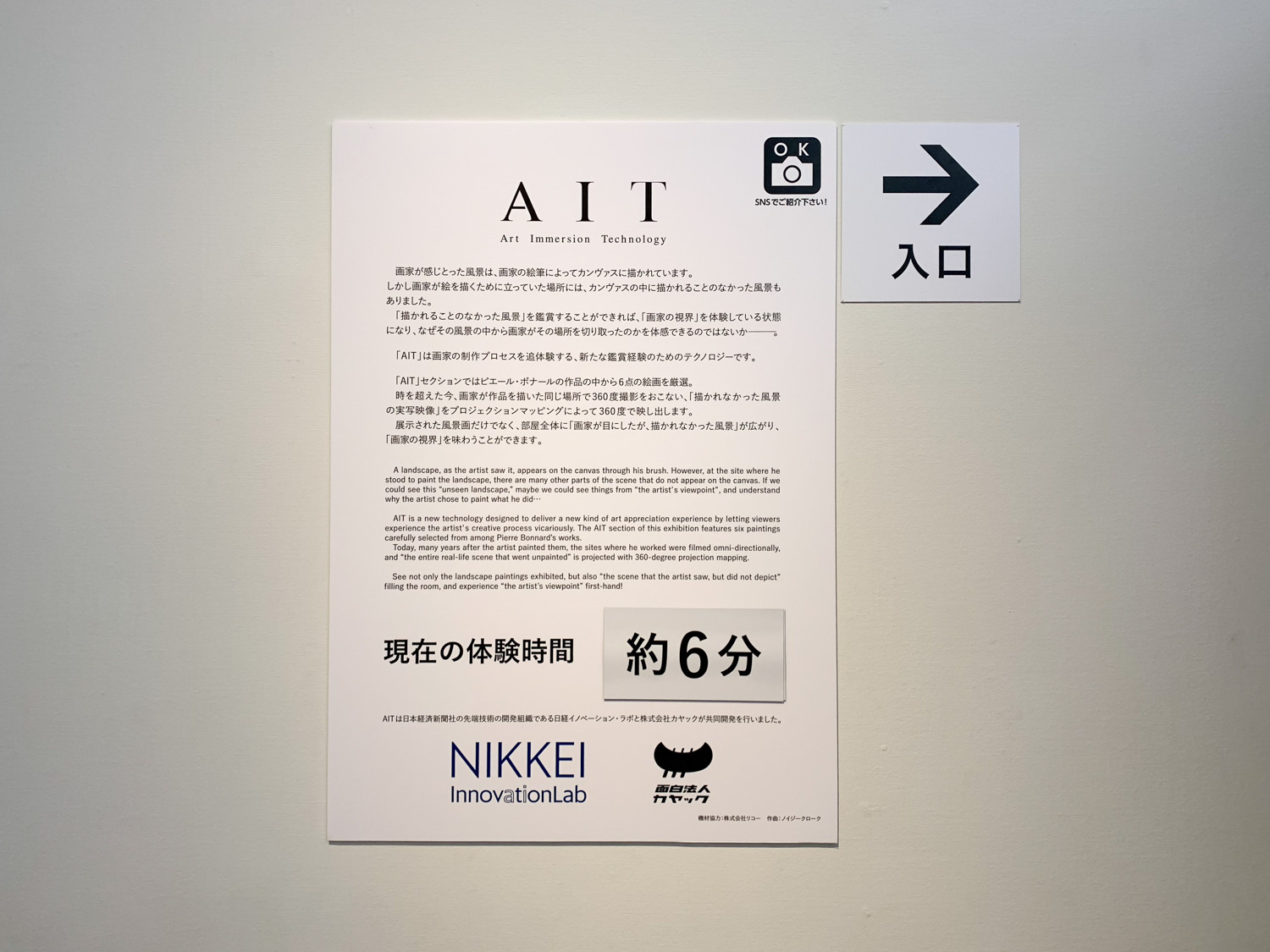 From Pierre Bonnard’s paintings, six were carefully selected. The team filmed 360-degree footage at the very locations where he painted them, then used projection mapping to project the “live-action footage of the landscapes he did not paint” across 360 degrees.
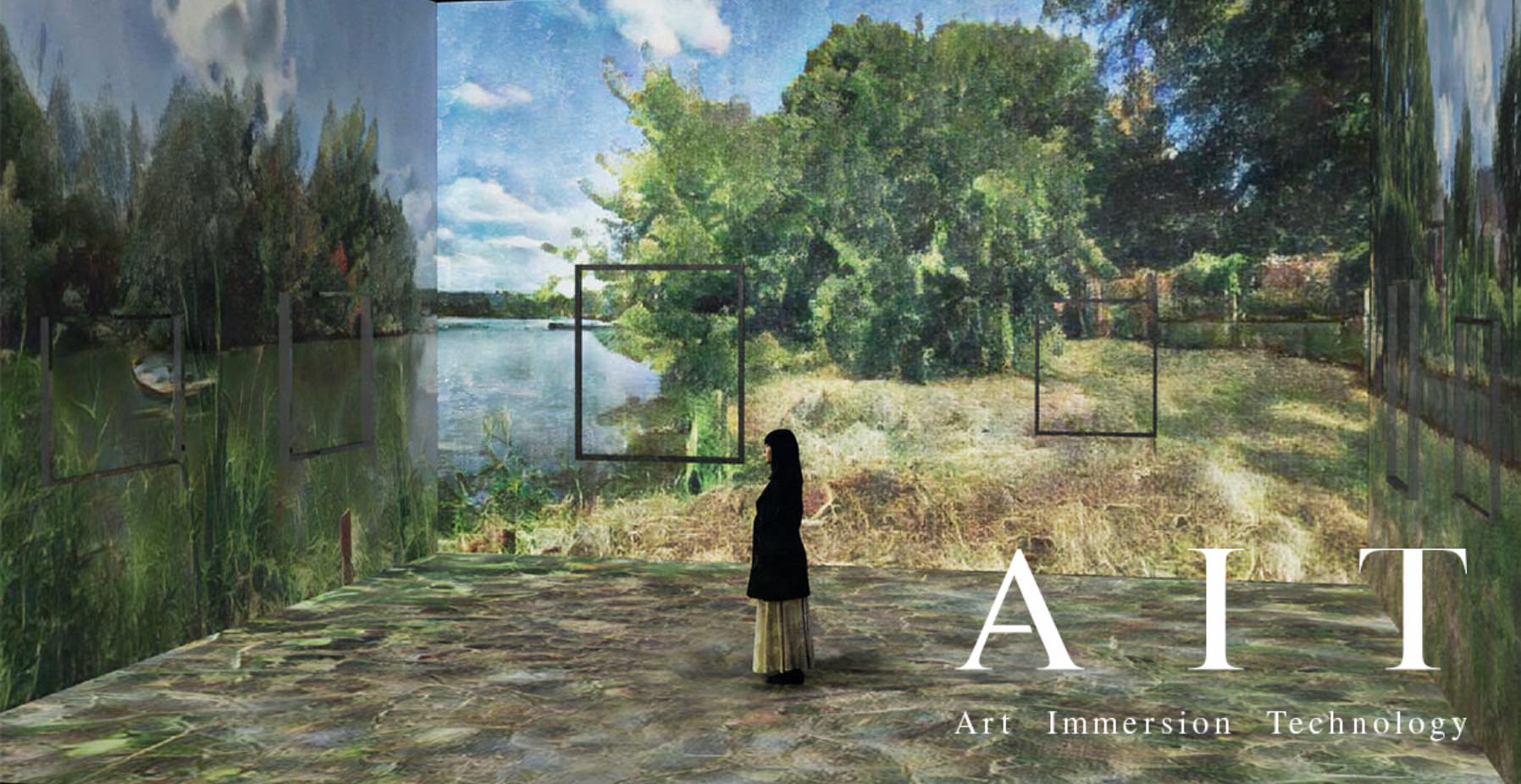 The idea is that by viewing “the scenery that was not painted,” you enter something like the painter’s field of vision,
and can perhaps sense why the painter chose to cut this particular moment from the scene.
It didn’t quite click for us, but recent exhibitions have been trying many new approaches, which we welcome.
Summary
In Japan, the fact that Bonnard has no “iconic masterpiece” has unfortunately kept his name recognition low, but the actual works are full of strong individuality, and many of them are deeply human.
– Far more cats appeared in the works than we had imagined
– Many nude female figures were on view (the presence of women could be felt everywhere)
– We felt his talent as a graphic artist
– The show ambitiously presented “monumentally scaled works”
…and other points. For us, it was an exhibition full of things to see.