An Artist Sketching at a Yakiton Joint
There’s a yakiton joint I frequent.
Tucked into a corner of Okachimachi, the place fills up with tourists and businesspeople with little local connection, drawn in by its high Tabelog rating.
I live nearby, and on my usual route home from the station I glance through the window; when the balance of empty seats, appetite, and stress lines up, I’ll pop in alone, tell the master “table for one,” and take my seat.
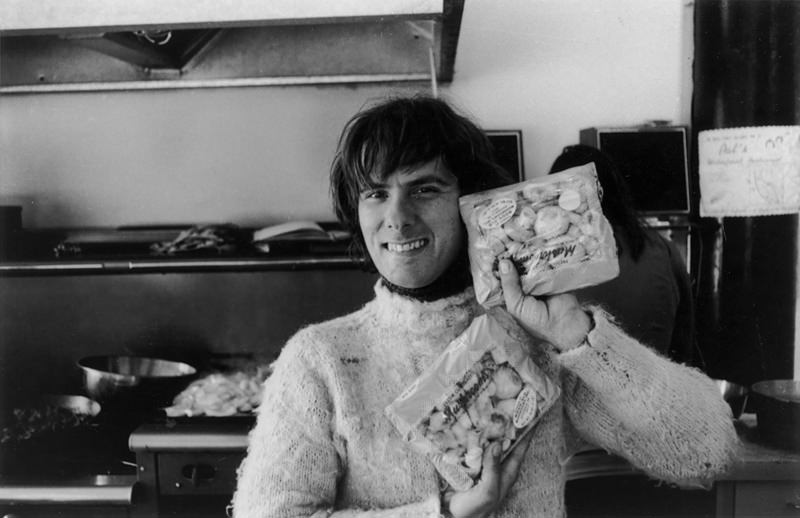
The stream of guests fills empty seats in an instant, and the one next to me was soon taken. In a place that keeps English menus on hand, foreign customers are hardly unusual, but this was the first time I’d seen a foreign woman on her own — and when she ordered sake with her first drink, then promptly pulled out a pencil and notebook and started to sketch, I couldn’t help but strike up a conversation.
Her name was Caroline Lavergne — the artist I’ll be introducing today.
Caroline Lavergne
Caroline Lavergne is an artist from Montreal, Canada.
She spent two months in the artist-in-residence program at Almost Perfect, a newly opened gallery in Kojima, Taito Ward, culminating in a solo exhibition (November 17–23, 2018).
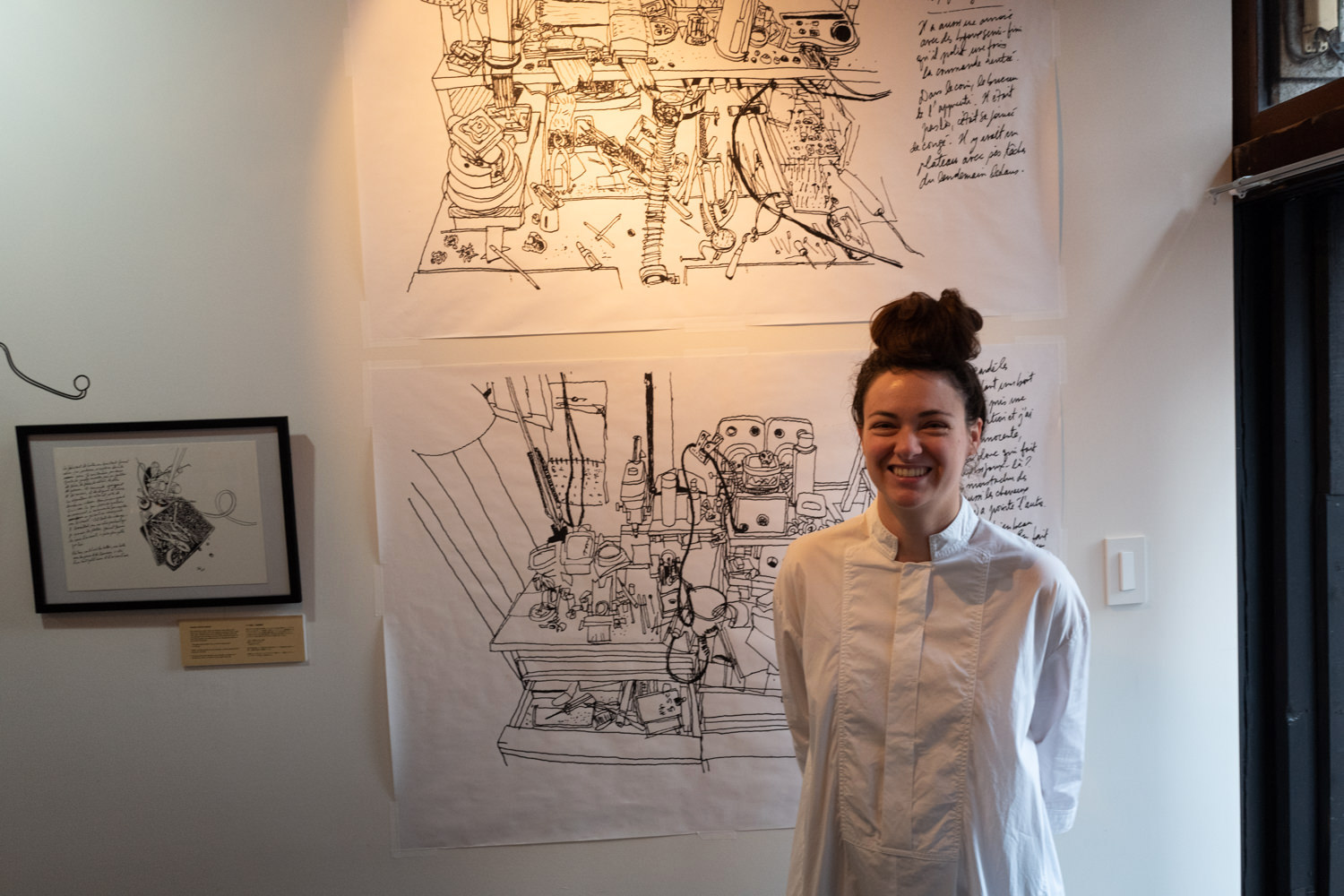
Past works include the illustrated book Les platanes d’Istanbul, which captured street corners of Istanbul, Turkey — a pattern of turning her overseas stays into work that observes people and cities through her own distinctive lens.
For this Japan visit, she has produced a series of works based on visits to primarily small, family-run workshops and ateliers centered around her home base at Almost Perfect (Kojima, Taito Ward).
Almost Perfect
Almost Perfect is a gallery and artist residence in 2-chome, Kojima, Taito Ward that launched in October 2018.
The three-story building houses a gallery on the ground floor, a residency room and atelier for artists on the second, and the owners’ residence on the third — and, as the exterior photo shows, it’s a converted building that used to be a rice shop called Asai Rice Store.
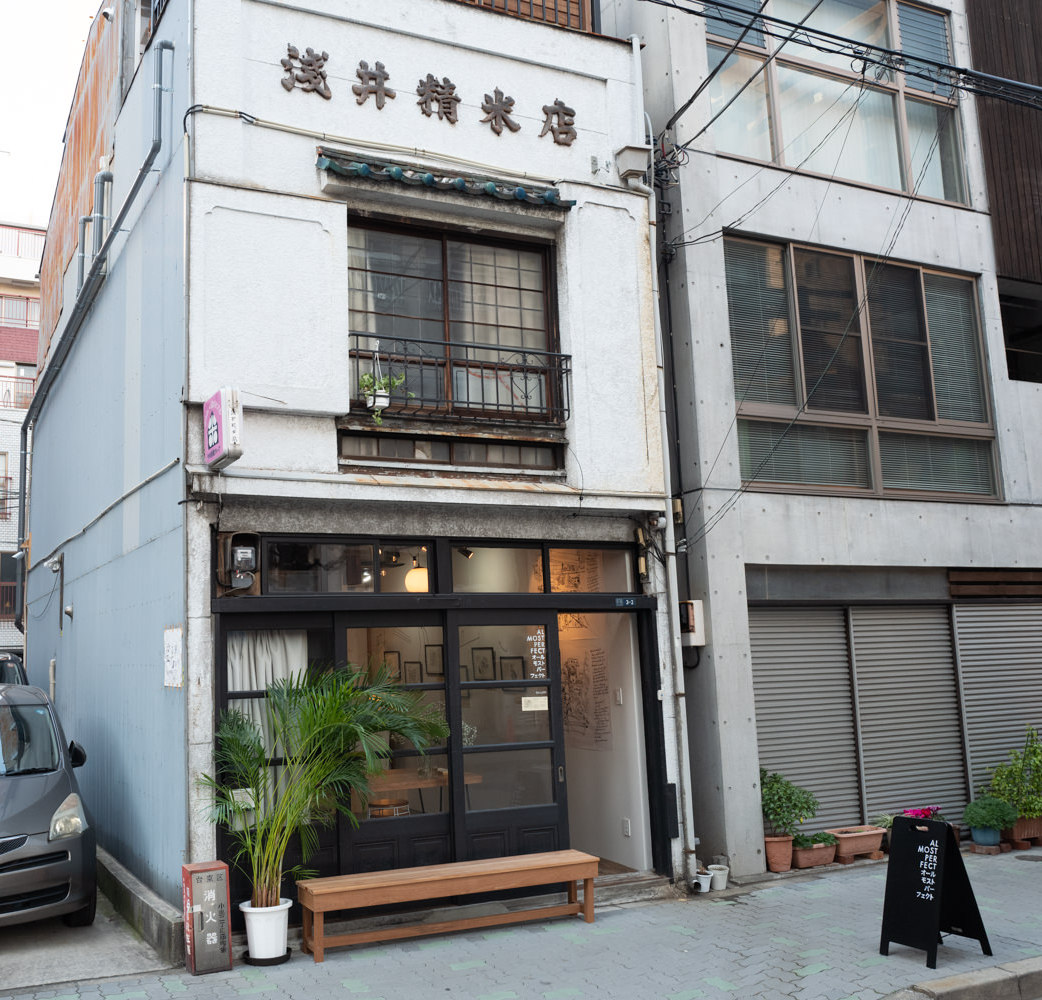
Built shortly after the Great Kanto Earthquake, the building survived the wartime air raids and stands today. This 100-year-old structure reveals fascinating historical traces once you step inside.
The tale of an open fire once being lit inside seems unbelievable — until you see the ceiling and floor still darkened with soot.
Makers of Taito
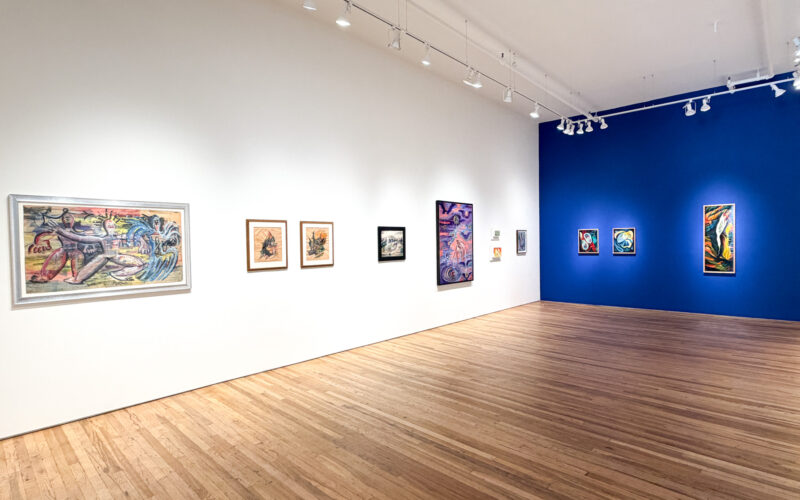
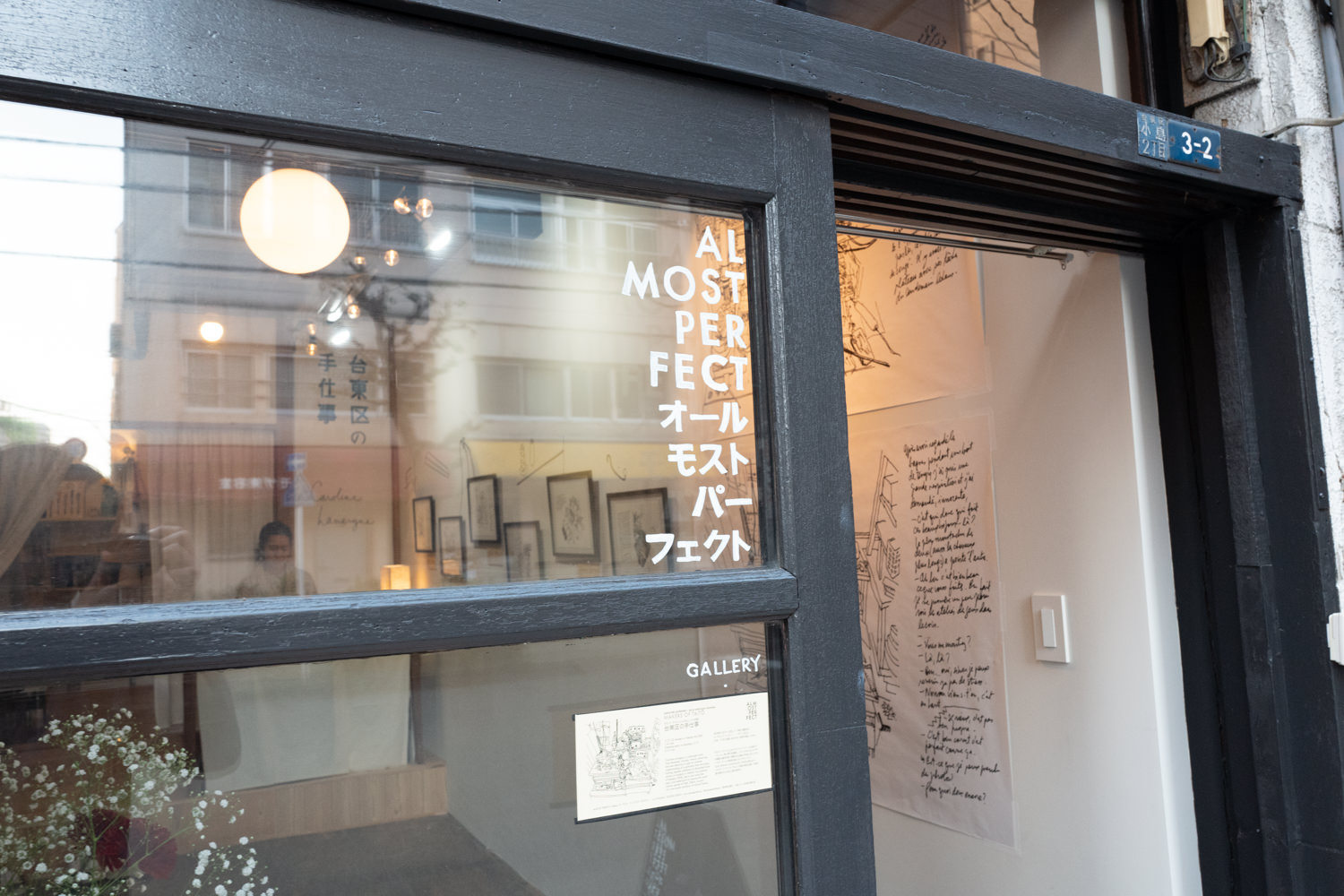
As its title suggests, “Makers of Taito” is an exhibition of works produced by researching the handmade craftsmanship still alive within Taito Ward.
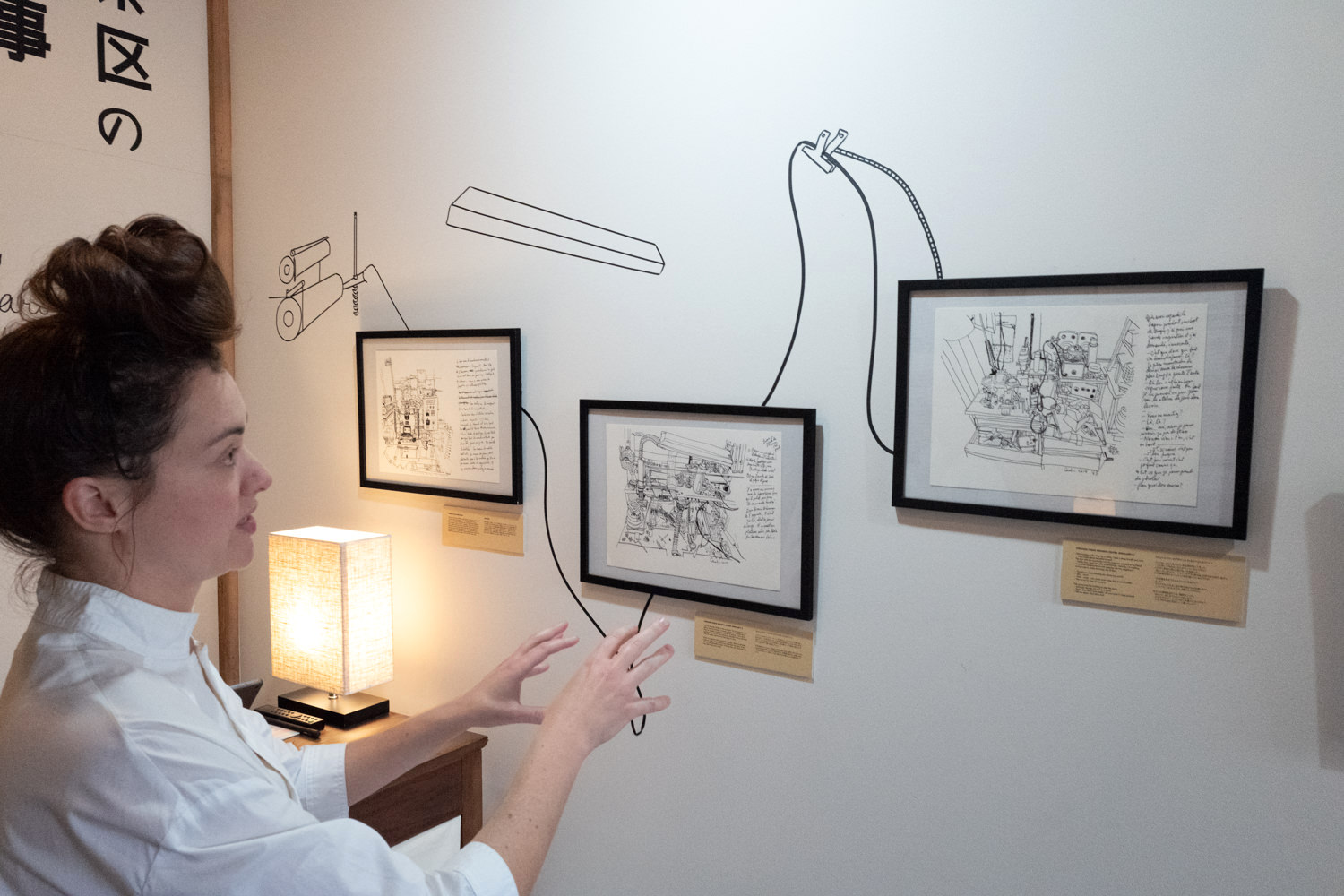
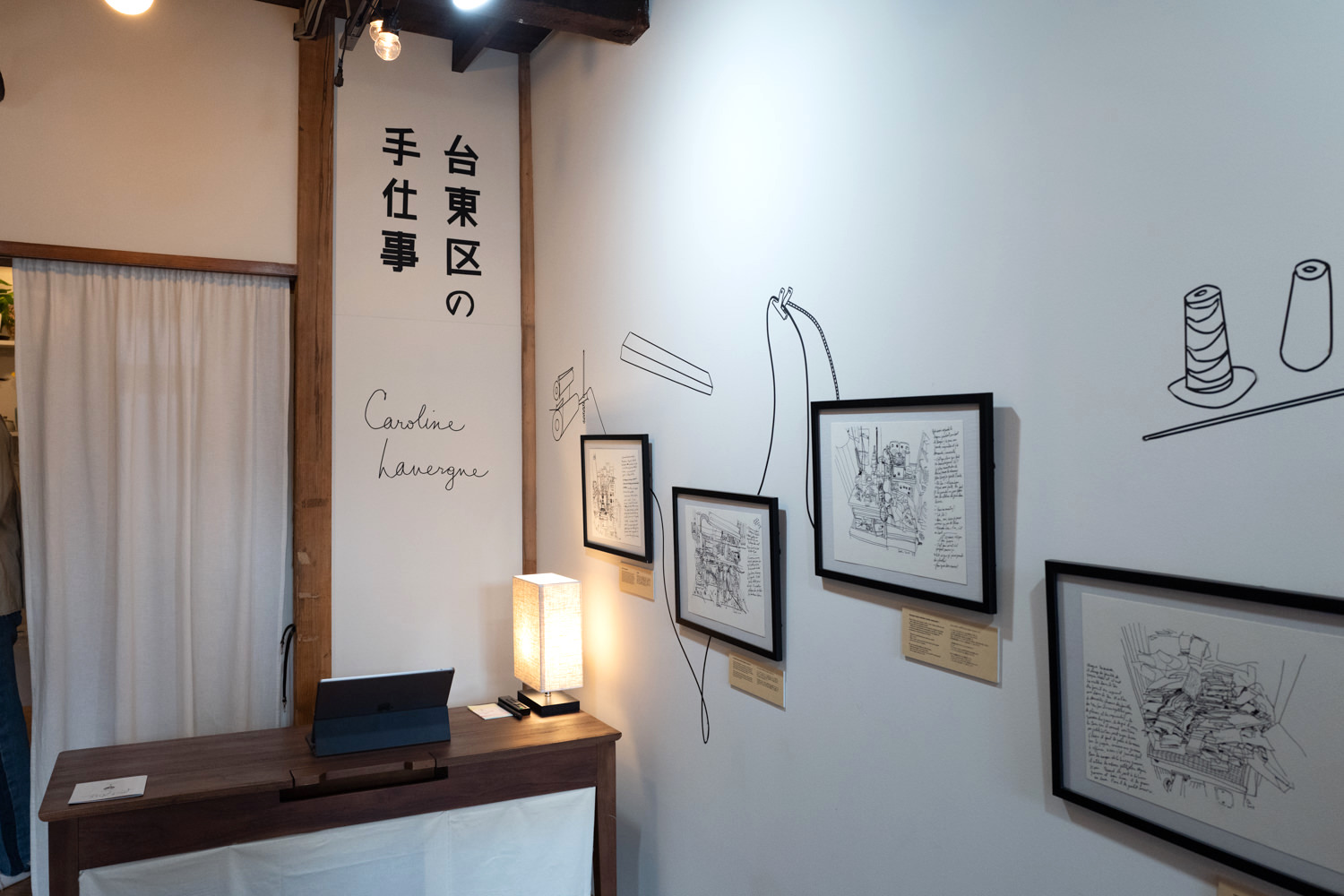 Canadian artist Caroline Lavergne conducted careful interviews with workshops and craftspeople around Taito Ward, and each of her works is annotated in French and Japanese with the background and her reflections on how it came about.
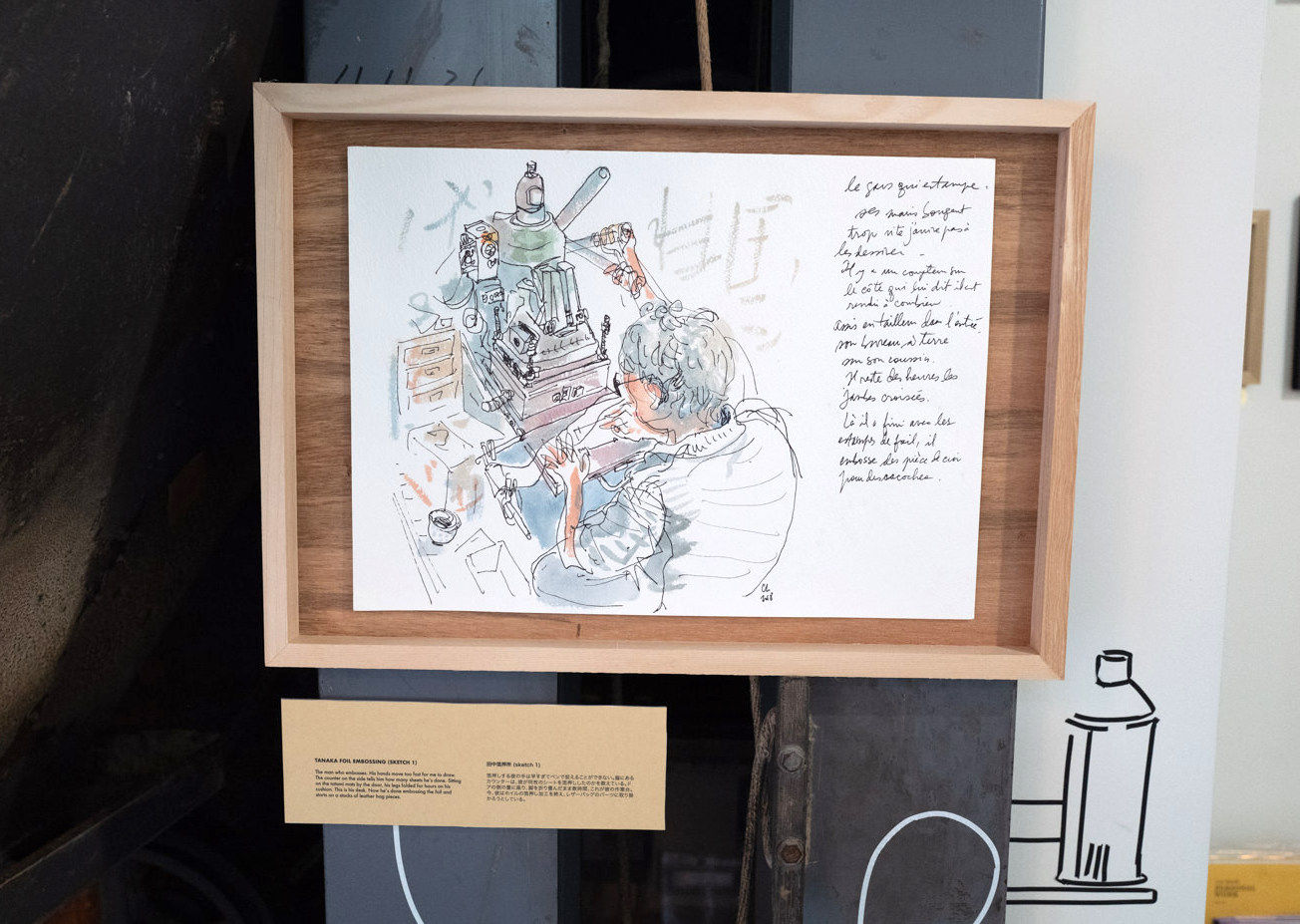 The observations and expressions that only a foreigner could offer are distinctive — some notes are amusing enough to make you smile — but the works themselves match the artisans’ care, rendered with meticulous drawing and a sharp eye.
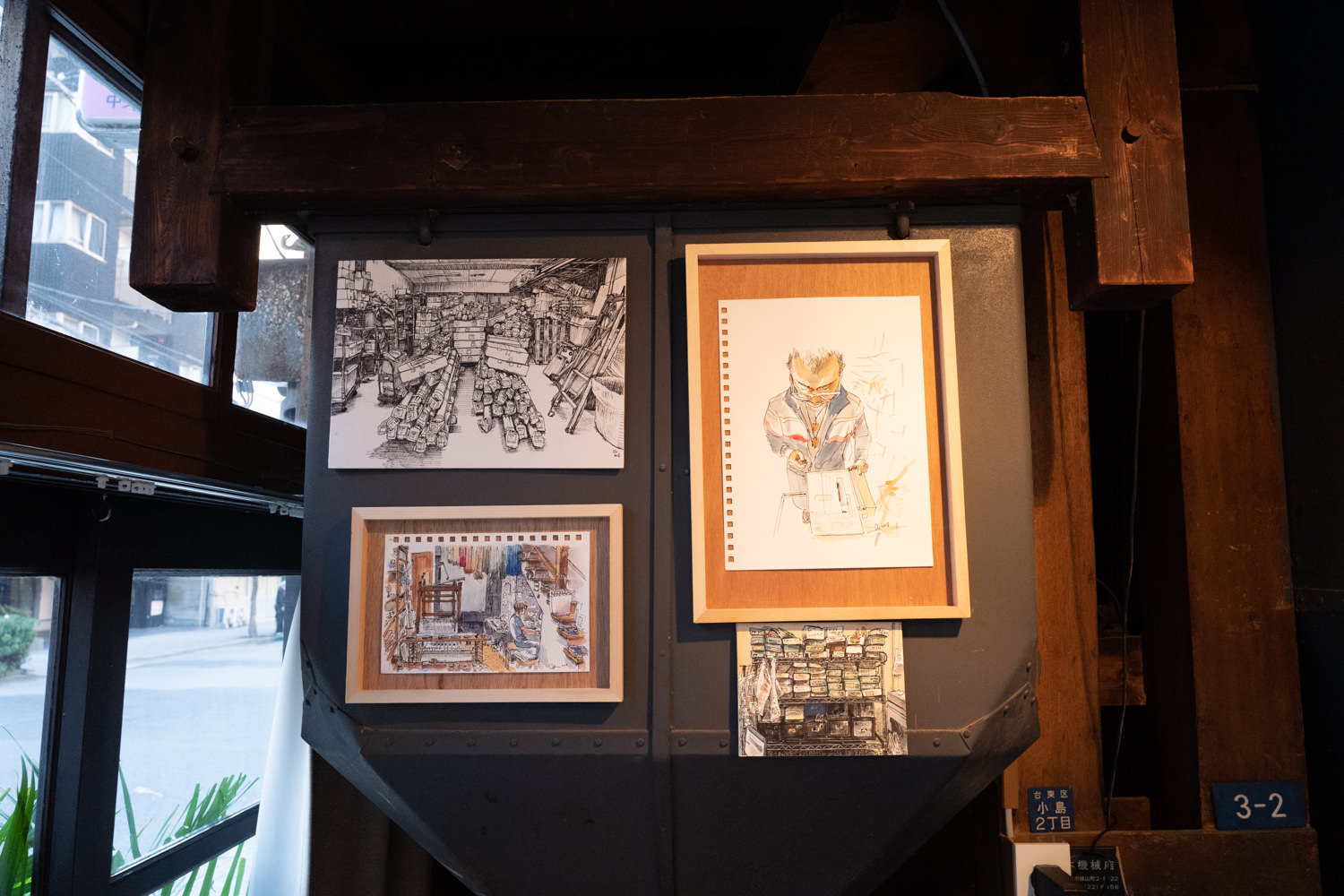 Her watercolor pieces are warm; the monochrome pen drawings seem to leave the color to the viewer, and both convey a gentle gaze that seeks to shine a light on the craftsmanship of Taito.
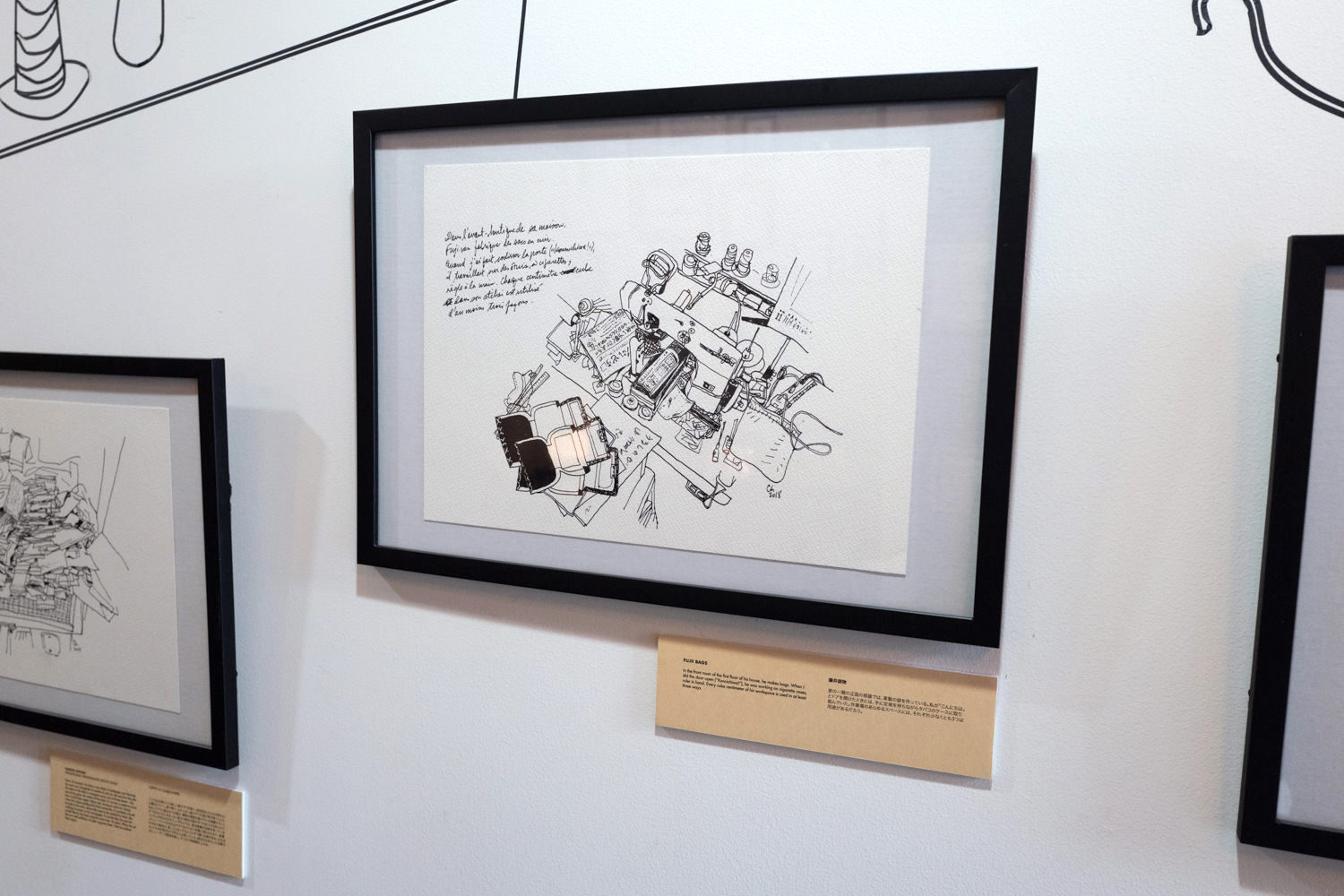 The bold spirit that could walk alone into a yakiton joint clearly served her work here, taking her into many workshops for face-to-face research and observation. Her Japanese is skillful and her communication warm, and she seems to have blended right into the culture of Tokyo’s old downtown.
 Caroline is set to leave Japan shortly after the exhibition ends.
The works produced here may yet find a spotlight abroad — and with them, further attention may fall on the Japanese artisans whose craftsmanship deserves such pride.