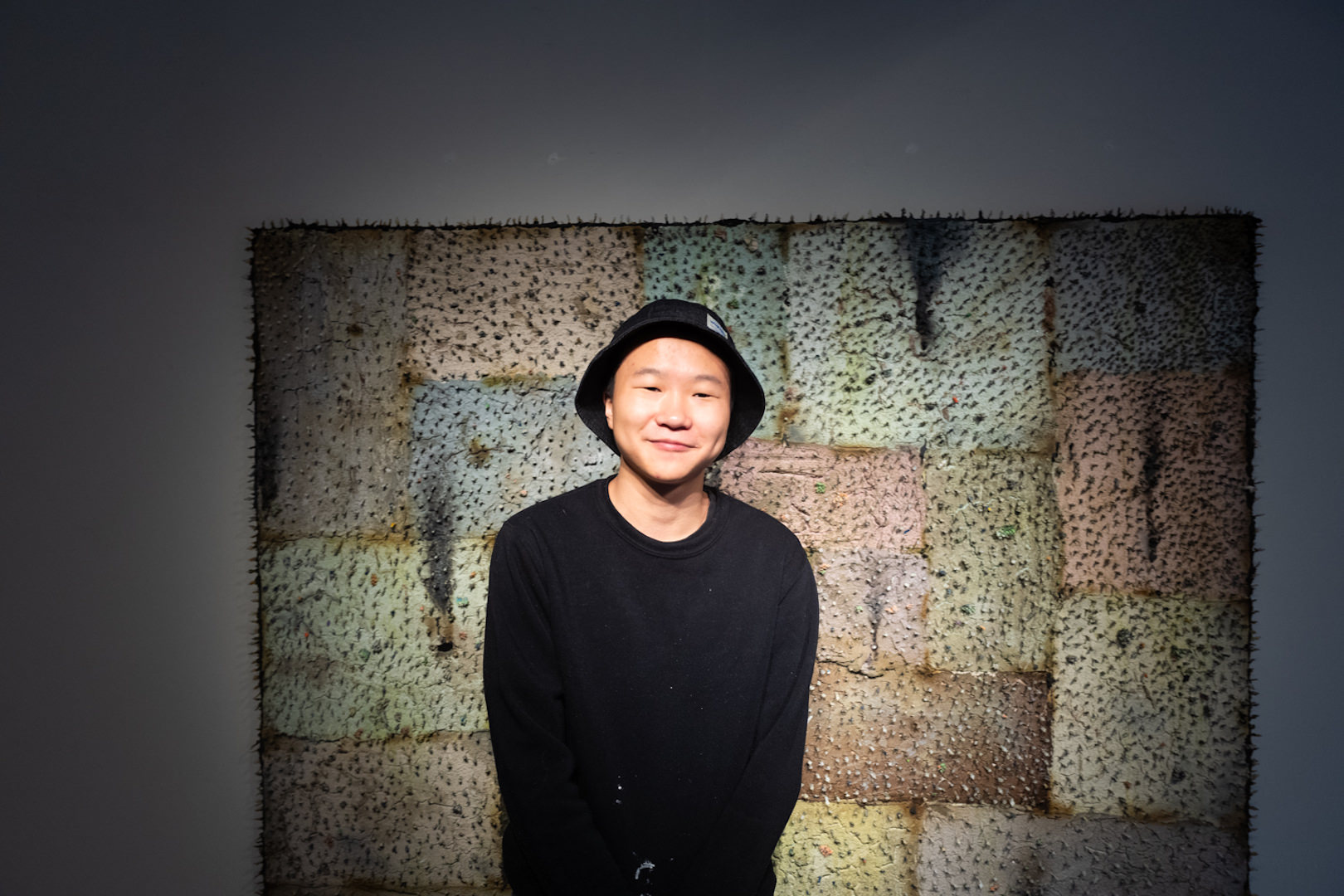
Ma Jiahao “Bai PM2.5”
“Would you buy a painting if Prime Minister Abe had painted it?” — this innocent grin came from Ma Jiahao, 22, a third-year Tama Art University undergraduate. A young Chinese artist who had come to Japan.
This solo exhibition came about because he walked his own portfolio into the gallery and asked to hold a show himself. An energetic young man, but in person he’s playful and full of jokes — a slightly bashful young man.
I was born into an era called “peaceful.” Yet day after day I’ve lived with the doubt that “this world is not peaceful.” Of course I am no head of state, and even if I understood the world’s problems, I could not solve them. But as a person living in the here and now, I want to know the essence of the world’s problems. “What is a soldier for?” “Why did the human race, as a single species, multiply to such numbers?” “What is desire?” I take up the problems I have felt within society and repeat them within my works. These are not my problems alone; I believe they are connected to the essential problems of the world. Rather than thinking of them as artworks, please think of them as equations for finding the true face of the world’s problems (the state of war).
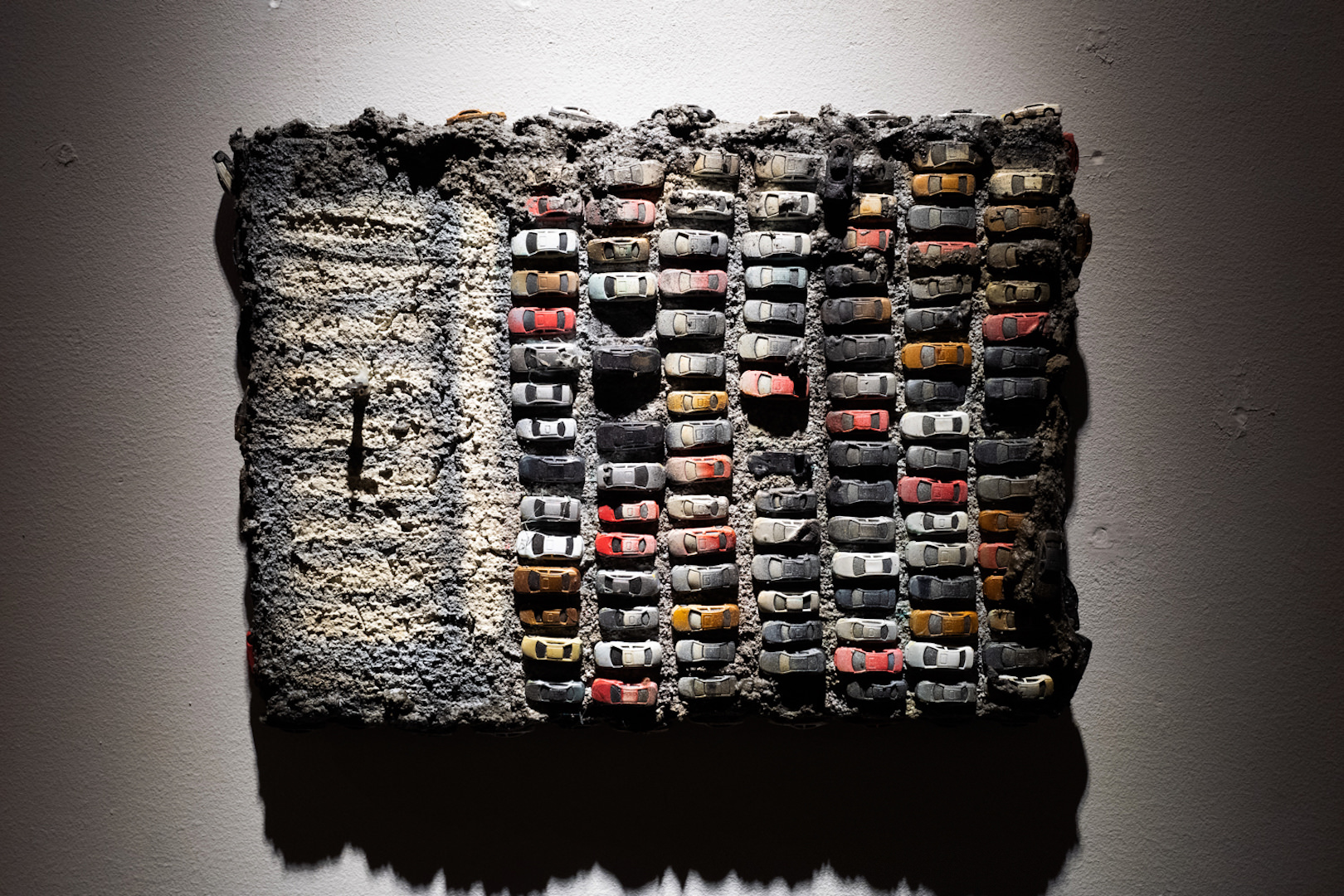
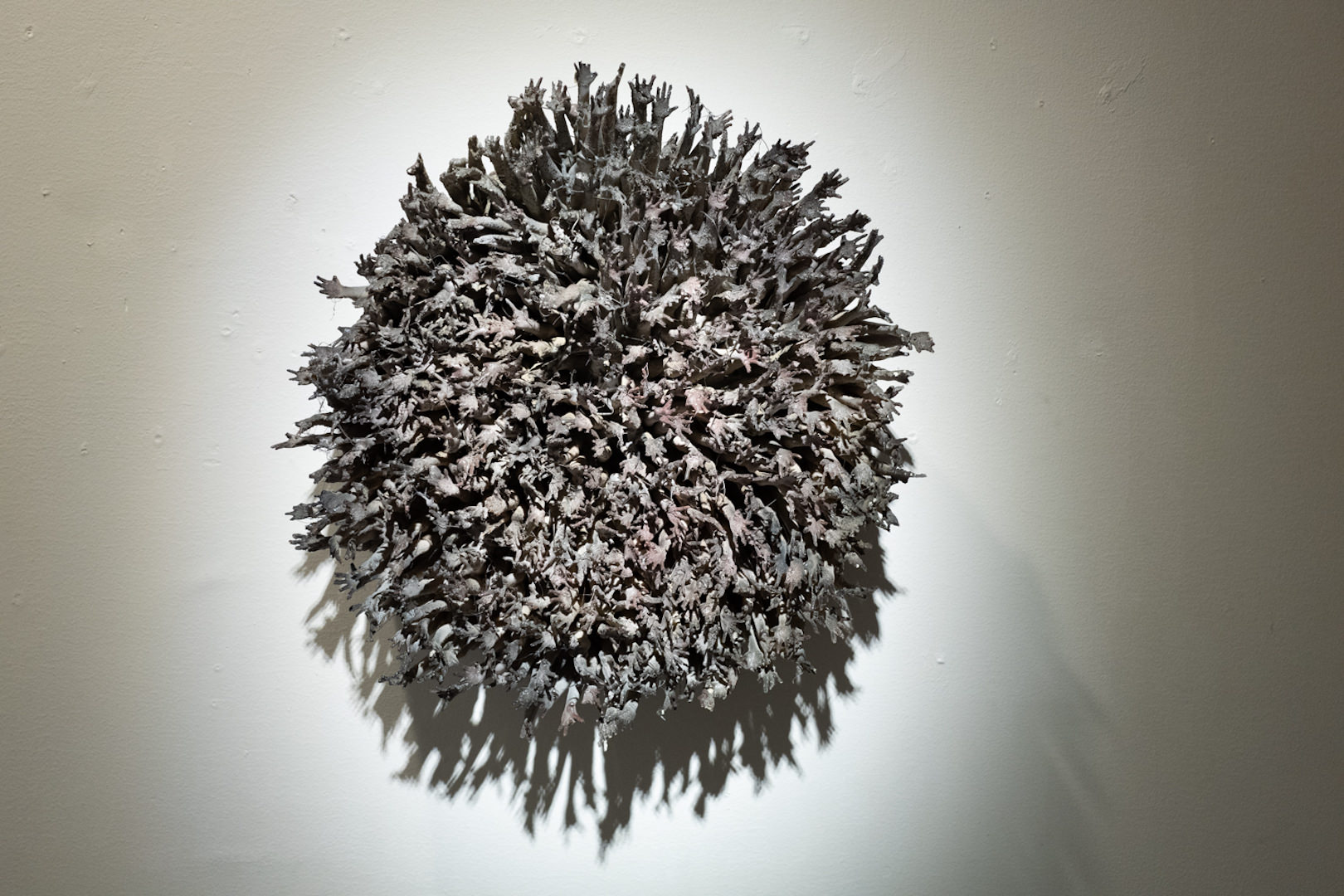
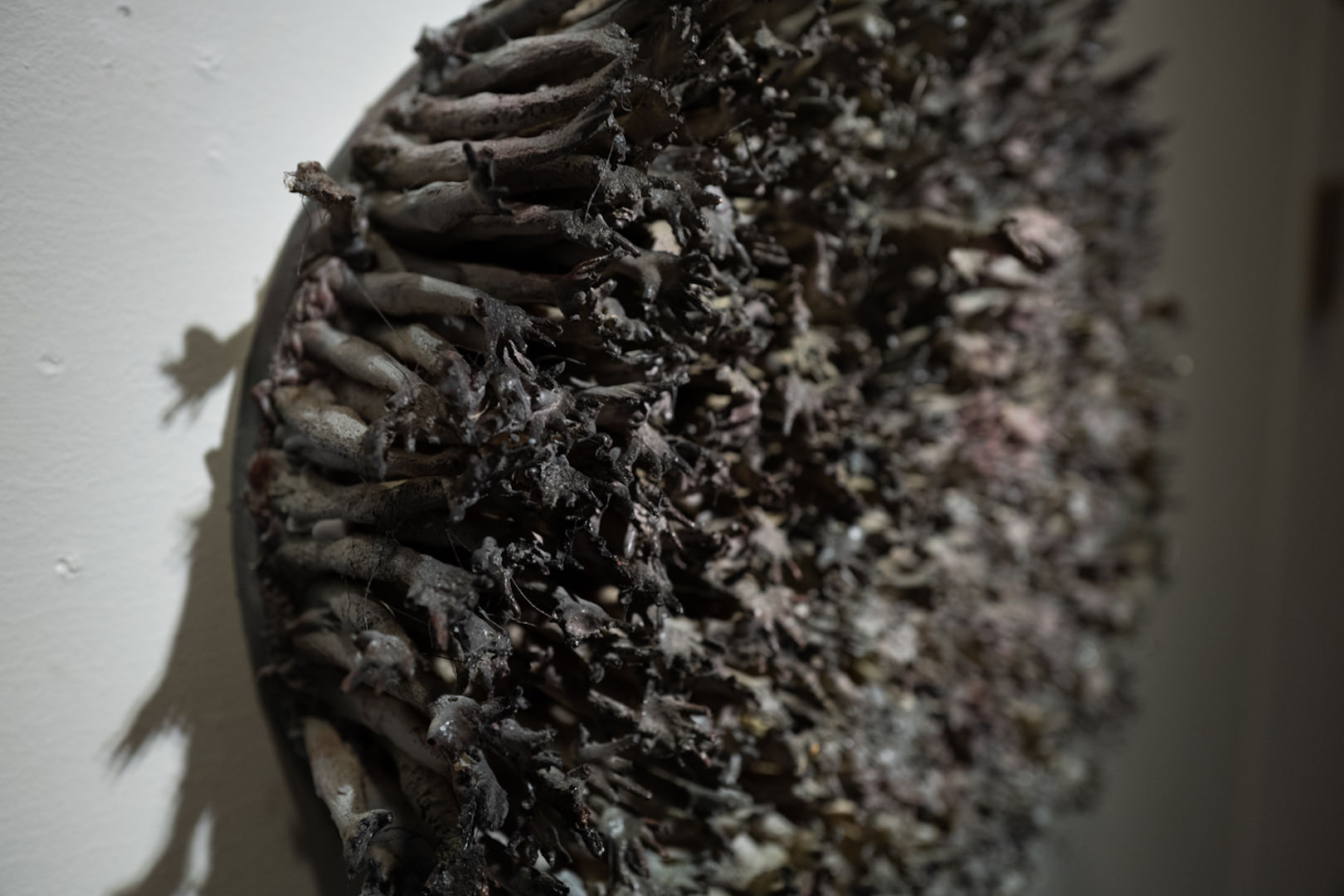
The works exhibited here use large quantities of toy soldiers, salaryman figures, paper airplanes, and doll arms. Seen one at a time, they are toys, playful things. But when they overlap, repeat, and appear en masse, you feel fear and danger. That, I think, is my view of the world. One person’s problem is not frightening; a problem for 7 billion (the world’s population) surely is. One soldier is not frightening; 2.29 million (the size of the Chinese military) will surely be. What I want to express is the problems and contradictions that exist beneath these enormous numbers, and the state of war they give rise to. I also want to find the extraordinary within the ordinary landscape composed by that massed quantity.
The attempt this time to fill the gallery with the smell of PM2.5-like smoke is meant, together with the content of the works, to create the experience of “the state of war.” The moment you open the gallery door, a physiological reaction of “it stinks” arises, and I think that changes how you see the works. I’d like people to understand my work including that smell.
Ma Jiahao
The first thing you notice when you enter the gallery is a strange sense of the air itself.
The gallerist immediately hands you a “mask” and urges you to wear it, cautioning you about the unusual atmosphere.
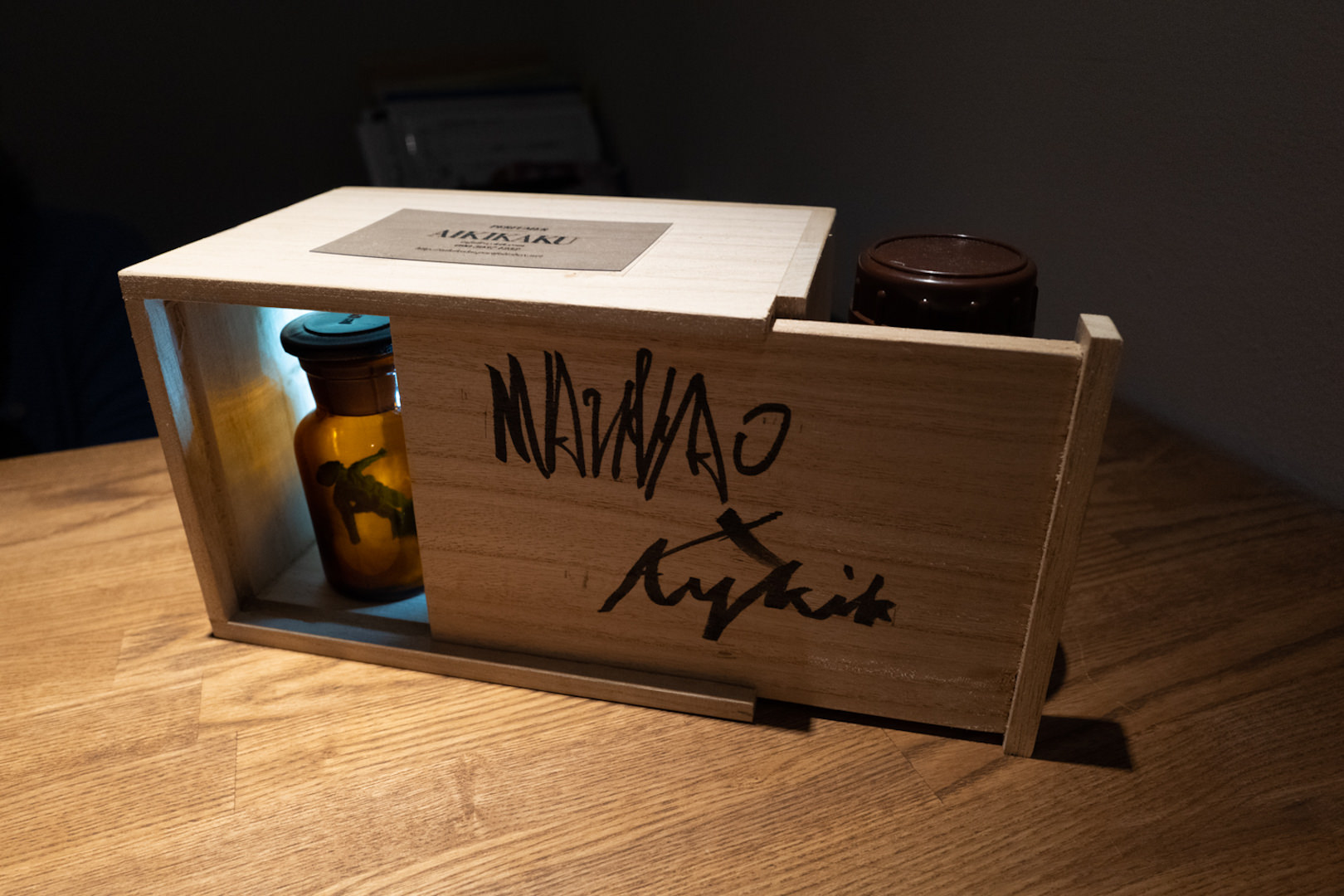
A specially built “PM2.5 generator” transforms the gallery into an extraordinary space.
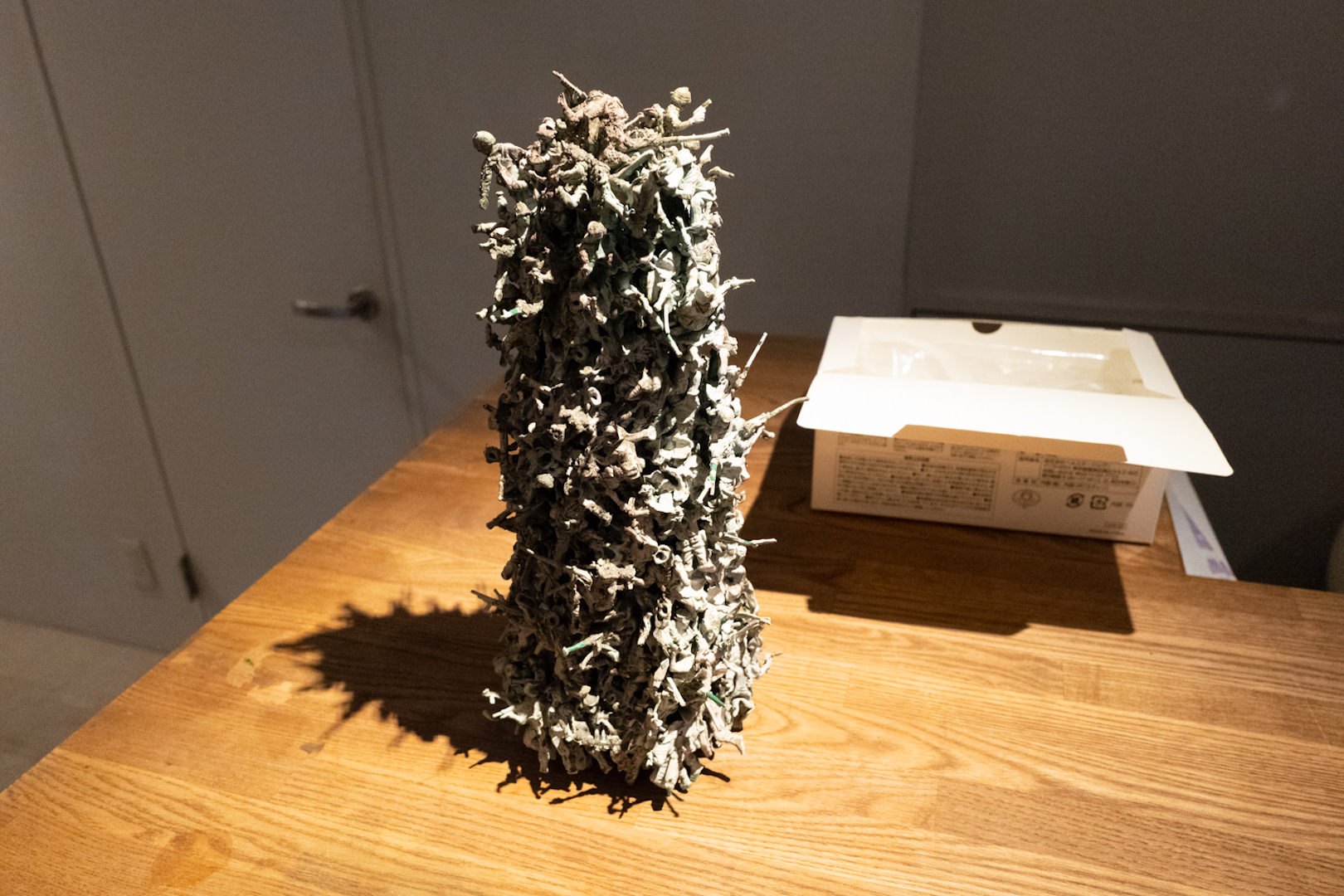
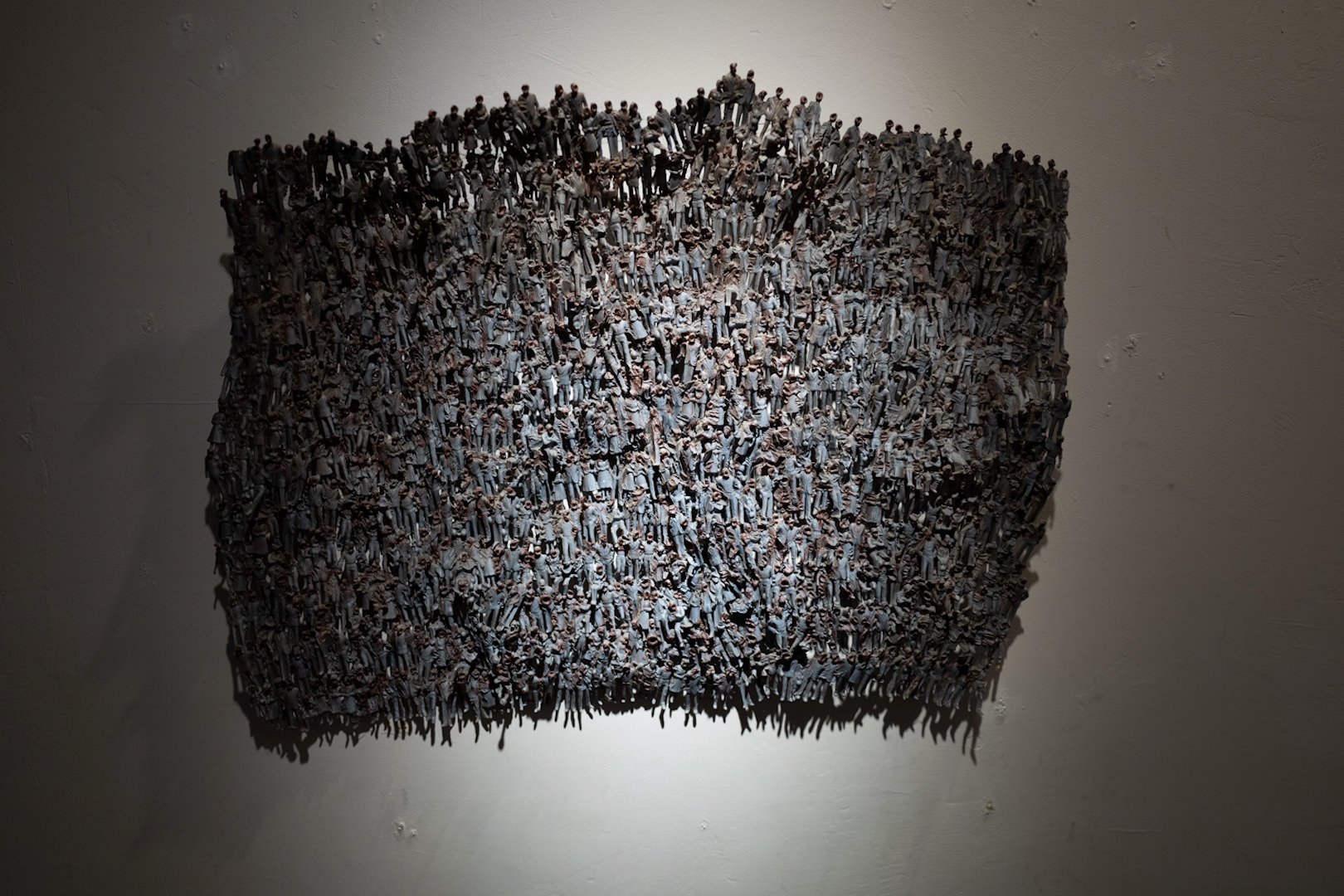
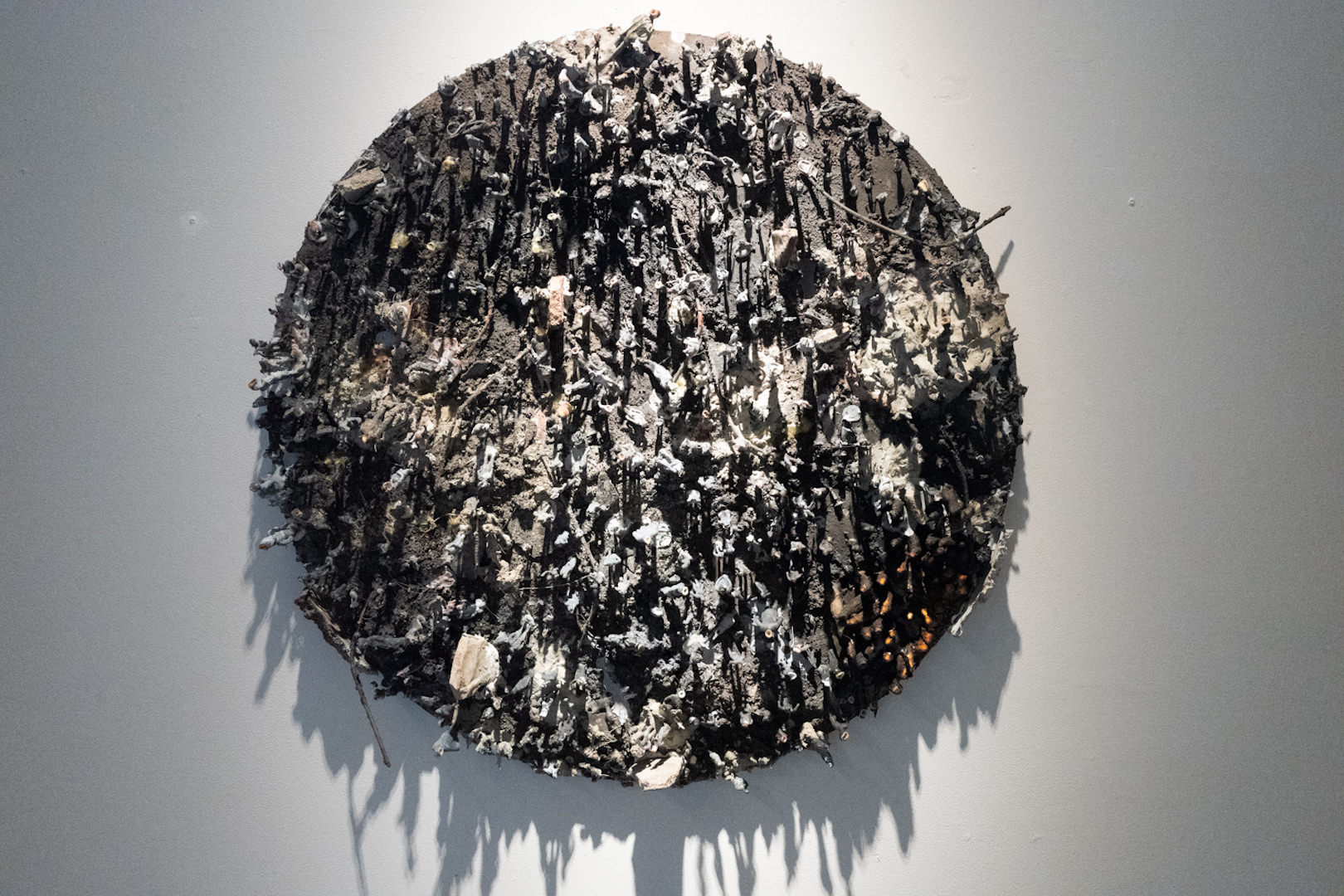
Among the works, the first to catch the eye is the large-scale piece Gate of Occupation.
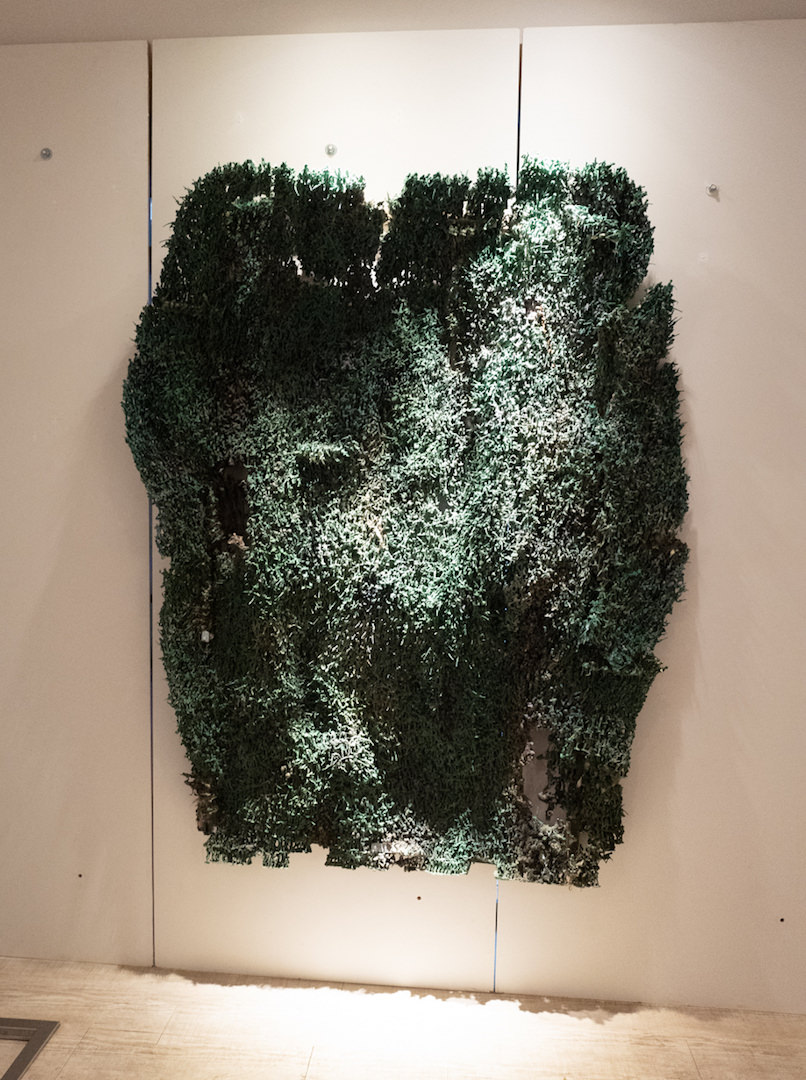
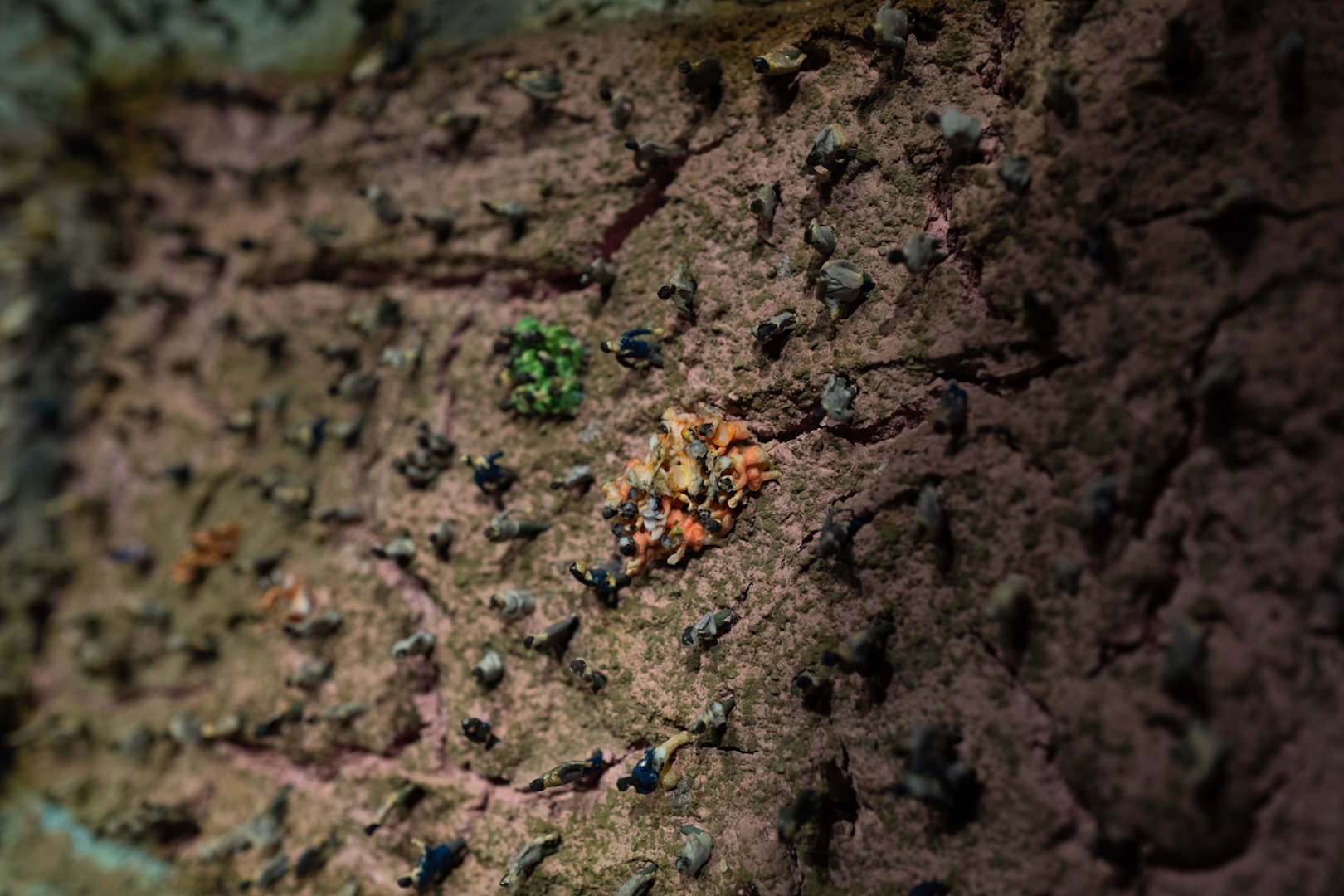
Tiny Chinese-made soldier figurines are welded together one to one, building up into a three-dimensional work.
The extraordinary atmosphere holds your breath for a moment. Soldiers pile atop one another to compose the whole. Where does this gate lead from, and to where…?
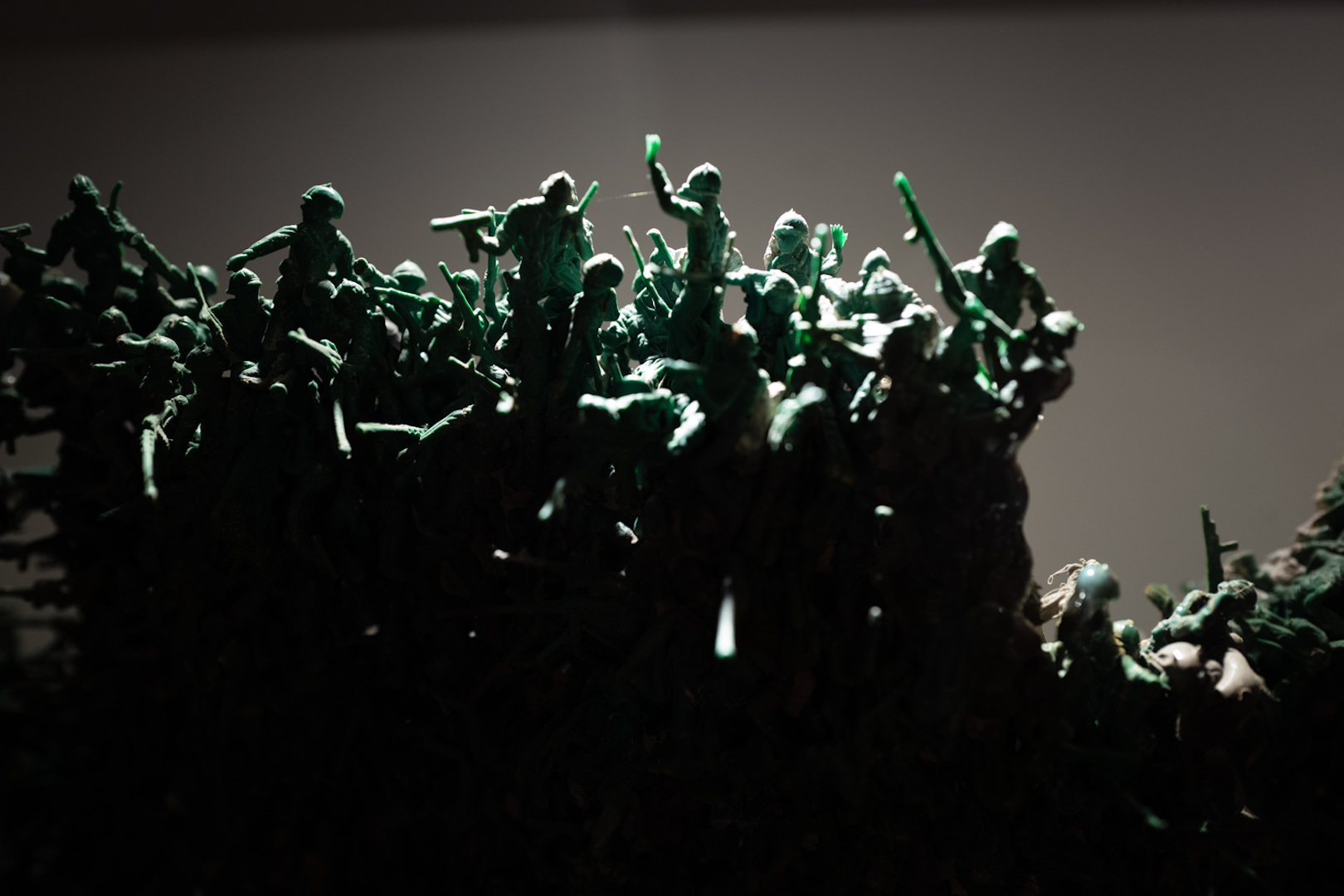
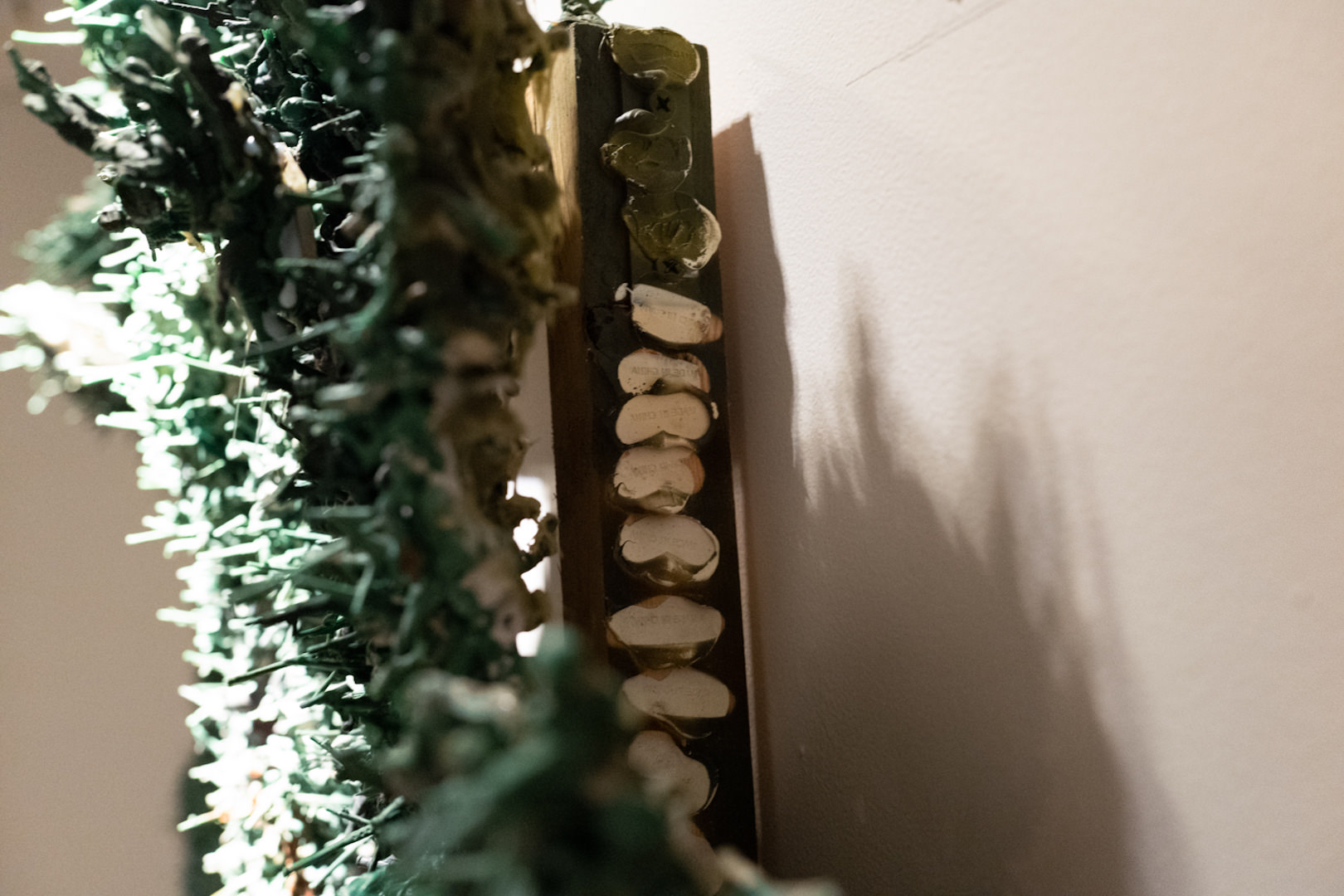
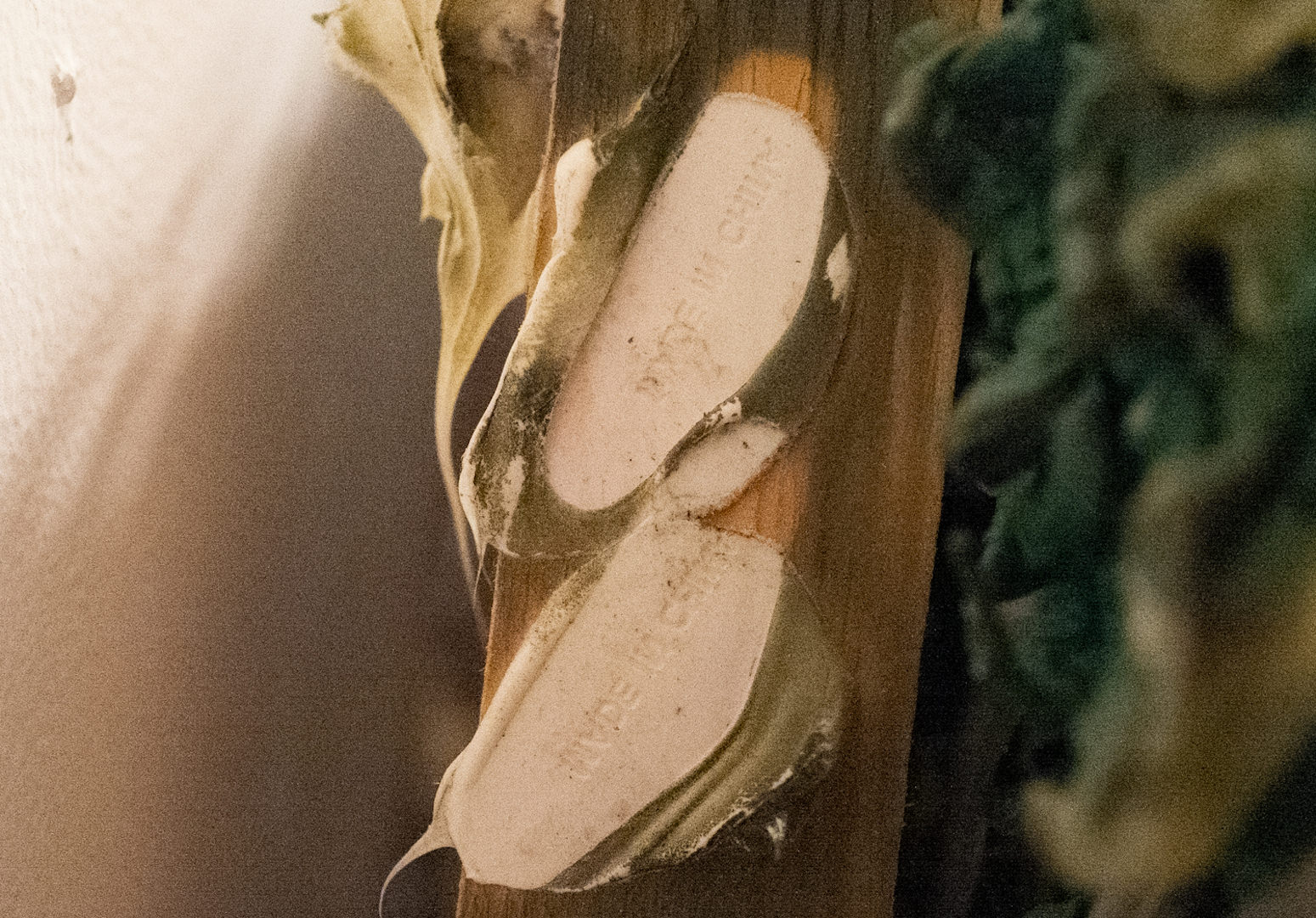
The figurines are Chinese-made, and the artist Ma Jiahao brought them himself, packed in his own suitcase, from China to Japan… in considerable numbers, of course.
* An amusing side note: the figurines are apparently of American design.
We received a comment from the collector “Yuutarou,” who acquired the massive 40-kilogram-plus Gate of Occupation, on why he chose to add it to his collection.
One direction in my collecting practice is work that expresses “human karma.” At its pinnacle are war paintings.
Ma Jiahao’s Gate of Occupation is built not from modern weaponry but from foot soldiers, and I felt it expresses the fear and madness of a system in which individuality is stripped away, and in wartime a single command from above turns lives into mere numbers (the death count).
I wanted to support him — an artist working right at the edge of what’s expressible, while carrying the weight of a country like China on his shoulders.
Although Gate of Occupation has been acquired, for the time being it won’t be installed indoors but stored somewhere. Its weight, its size, its price, and above all its immense presence — that a collector could absorb it whole speaks to a remarkable depth of vision. Hats off.
One of the recurring themes across the other works also seemed to be “number,” with the same motif — starting with the figurines — used repeatedly to striking effect.
Perhaps this is inevitable for an artist born into a great power like China, a country that cannot be talked about without invoking “number.”
Far from a benevolent Thousand-Armed Kannon, Thousand-Armed Guanyin — its uncanny thicket of thrusting arms — was chilling to behold.
The PM2.5 generator emitted its haze as in the video below.
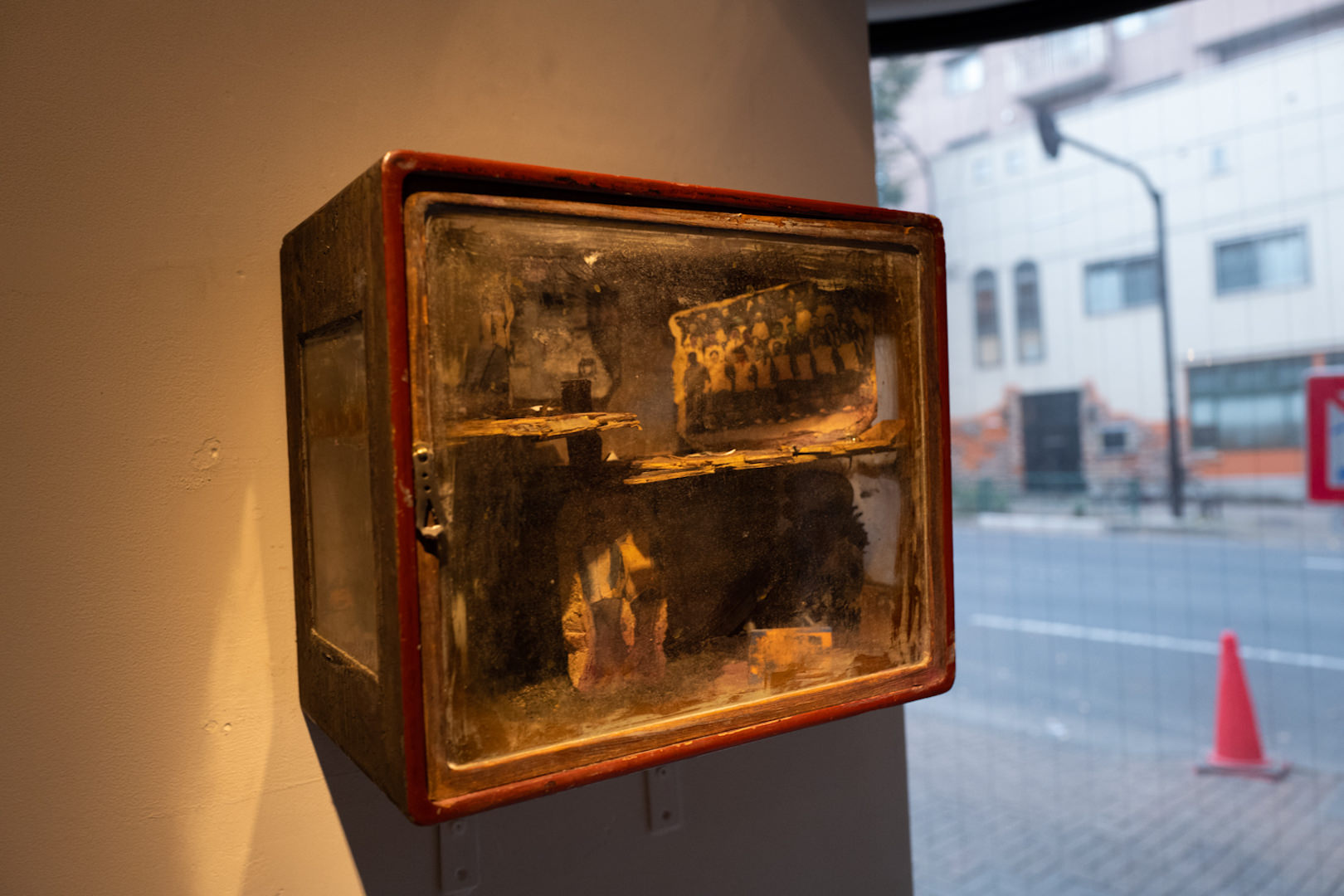
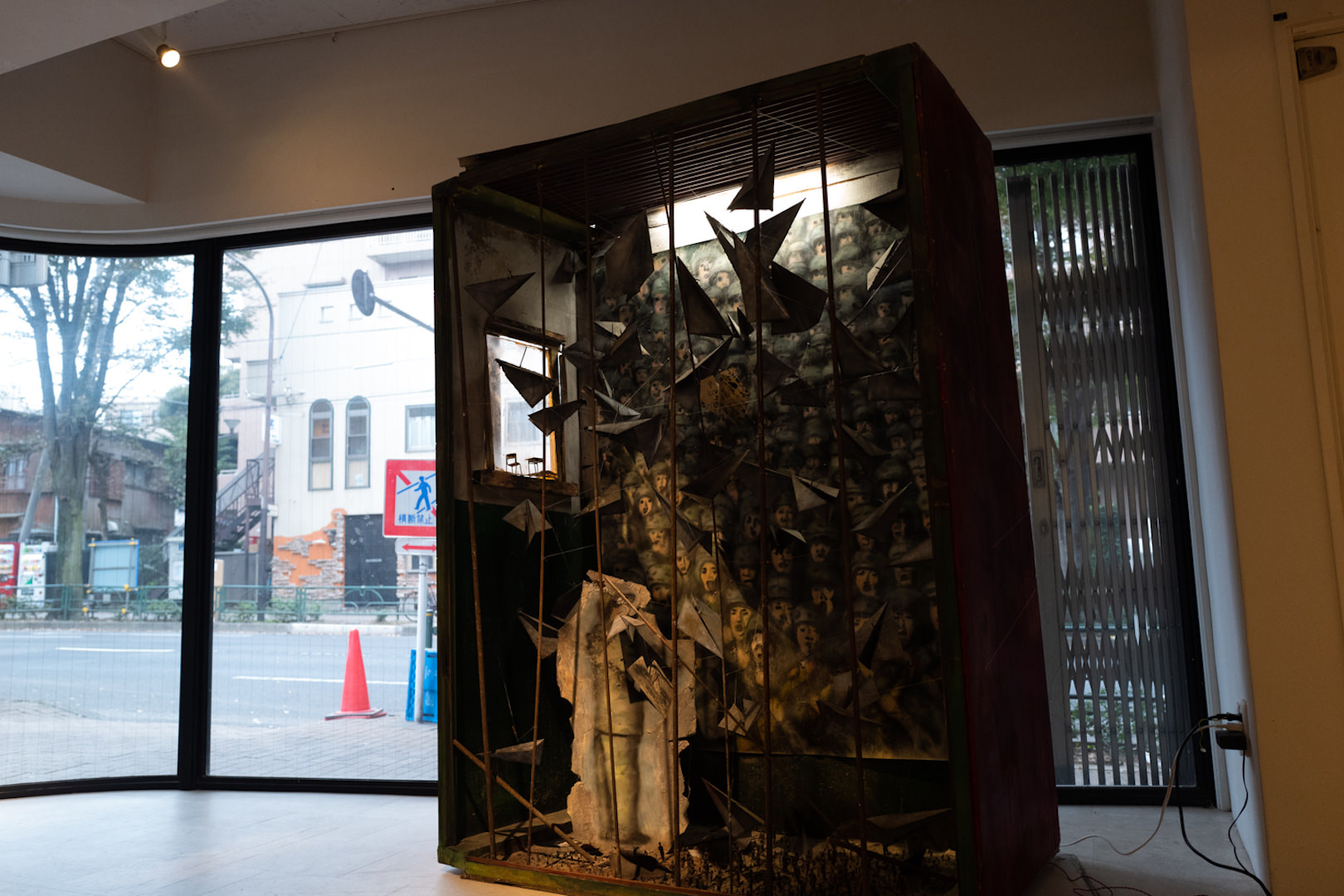
The world of Flying Whirlpools reads as a prison cell from the front and as a school classroom from the side — a work that shows different faces depending on the angle. Inside the box, soldiers are painted in the background, making it look as if someone is imprisoned. And within the cell, many paper airplanes fly about.
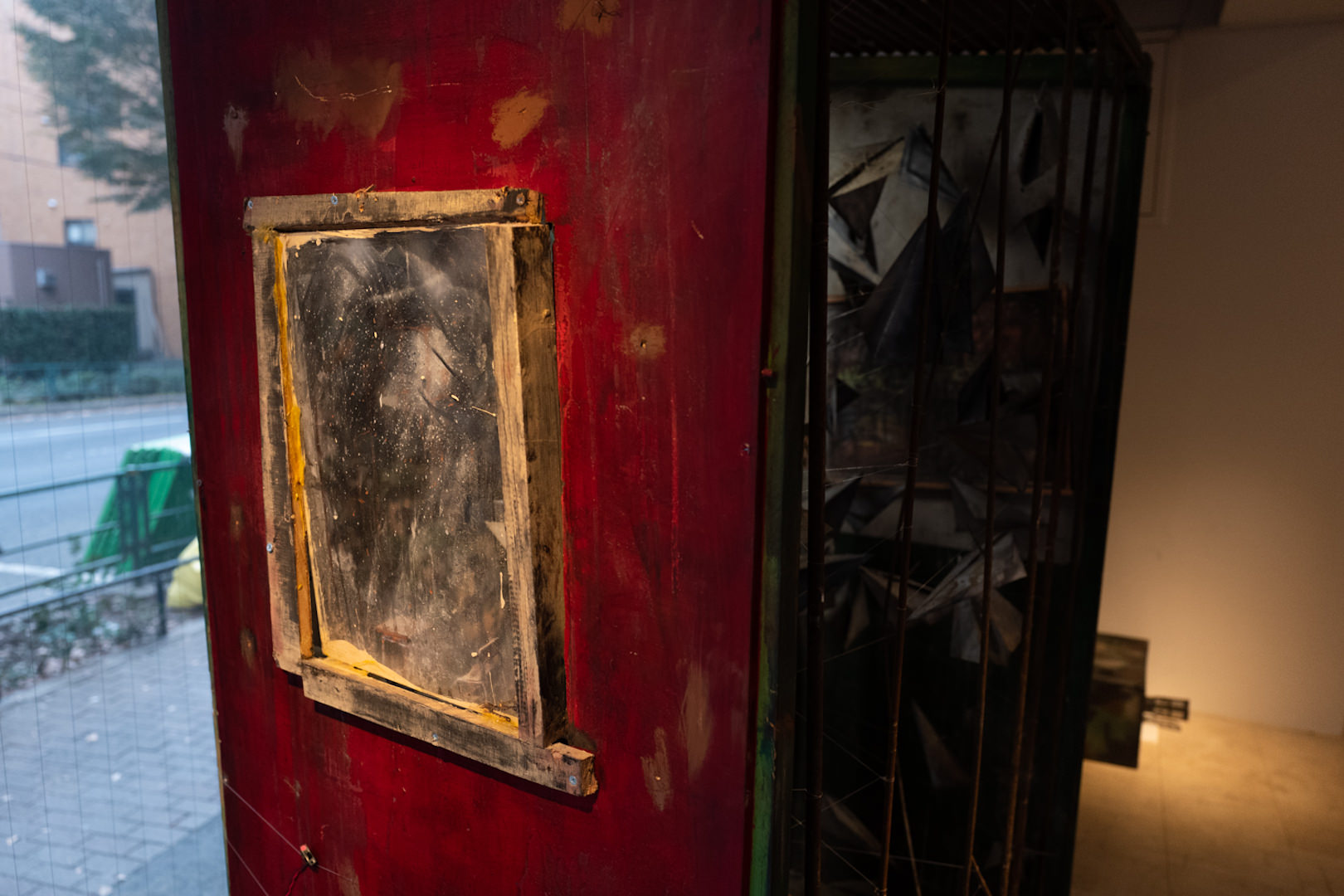
On the side, meanwhile, a small, dusty glass window lets you peer inside.
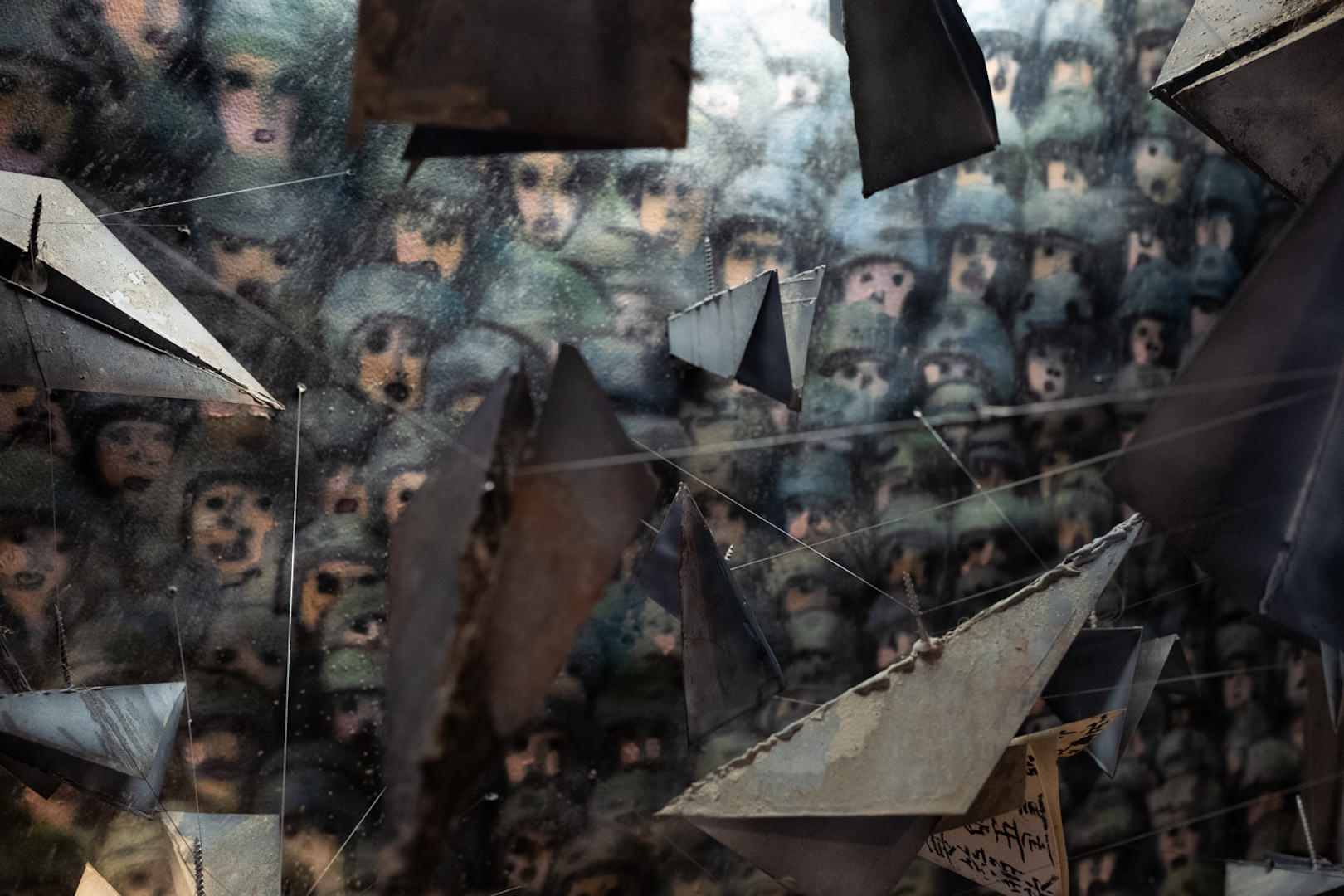
Zuzai Shizilukou is the work that uses the most figurines.
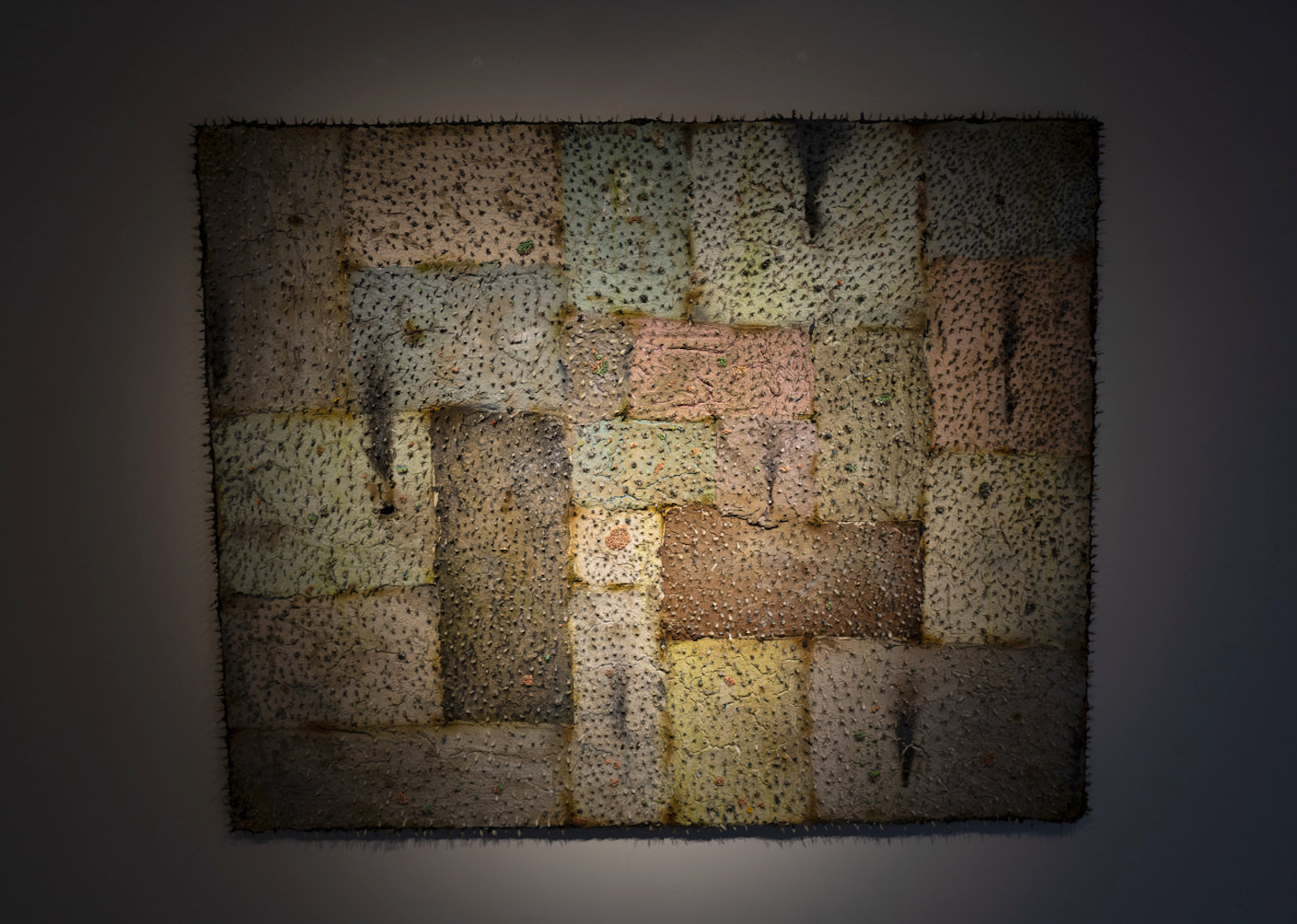
This work employs an enormous number of small figurines.
At its center, a Japanese Hinomaru flag is painted — a work that represents Japan and Tokyo.
Following selection for the 4th CAF Award, Ma Jiahao was also selected for the 22nd Taro Okamoto Contemporary Art Award — a rising young artist to watch.
Future activity is highly anticipated, though as he’s the type to spend many days on a single piece, another solo show isn’t likely for a while.
The gallery held a taut, charged air of a kind that hadn’t been felt in some time.
An overwhelming, brimming-with-expression show — one that felt like witnessing the birth of a marvelous new artist.
Summary
- A 22-year-old Chinese artist, currently a third-year student at Tama Art University
- Selected for the Taro Okamoto Contemporary Art Award after the CAF Award
- A special atmosphere and smell reproducing PM2.5 inside the gallery. Masks provided to the first 400 visitors.
- Expresses discomfort toward the Chinese state — while also raising questions about Japanese society.
- The impact of masses of figurines and overwhelmingly large works.