Smiles President Masamichi Toyama
Smiles is the company behind brands such as Soup Stock Tokyo. I was fortunate to have the opportunity to attend a valuable lecture by its president, Masamichi Toyama.
Soup Stock Tokyo also runs art collaboration soups at their store counters. Most recently, its collaboration soup with the Vermeer exhibition — the biggest art show of 2018 — has become a talking point.
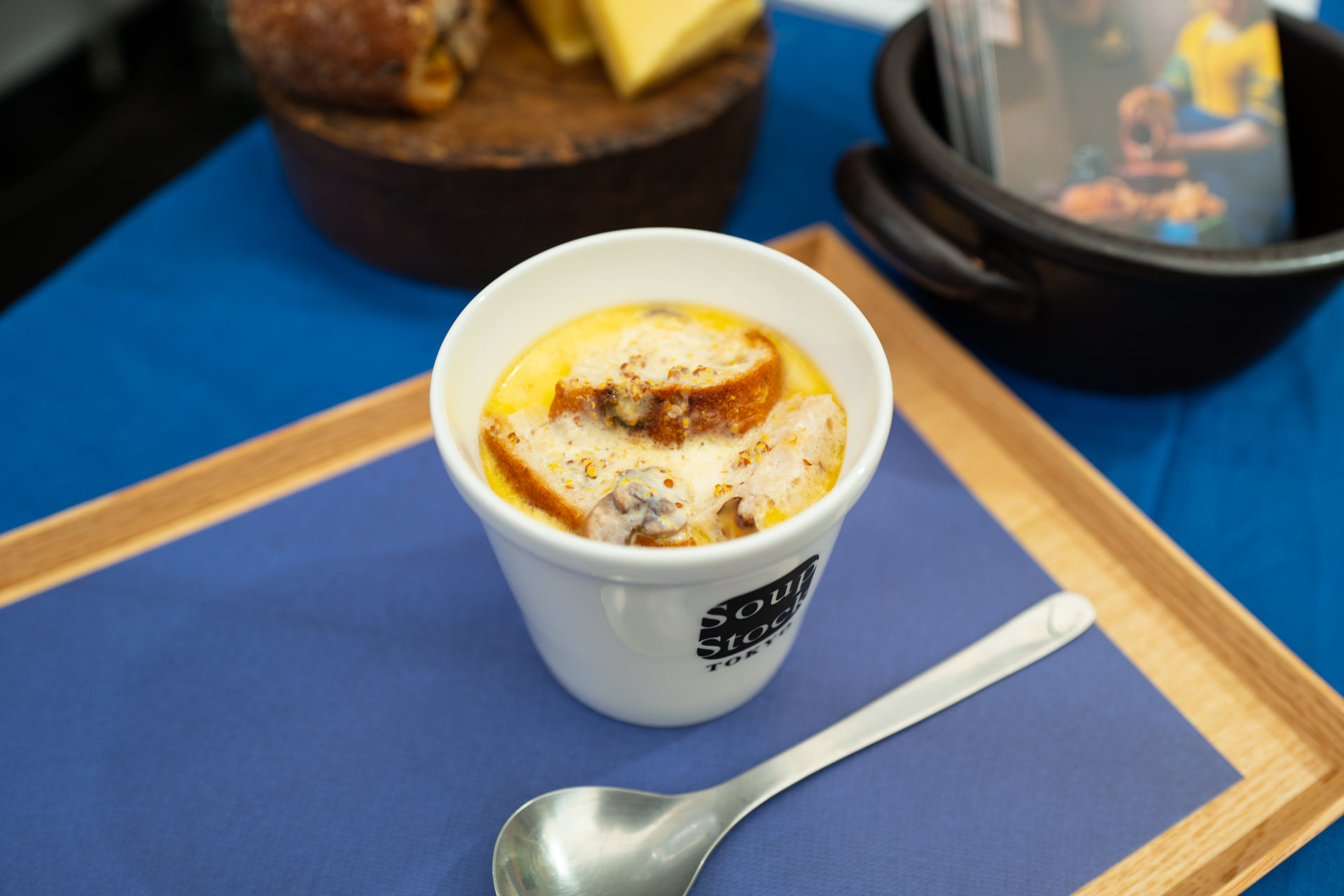
At Soup Stock Tokyo shops, the philosophy is that “the soup gives color”, so all unnecessary decorations and design have been eliminated.
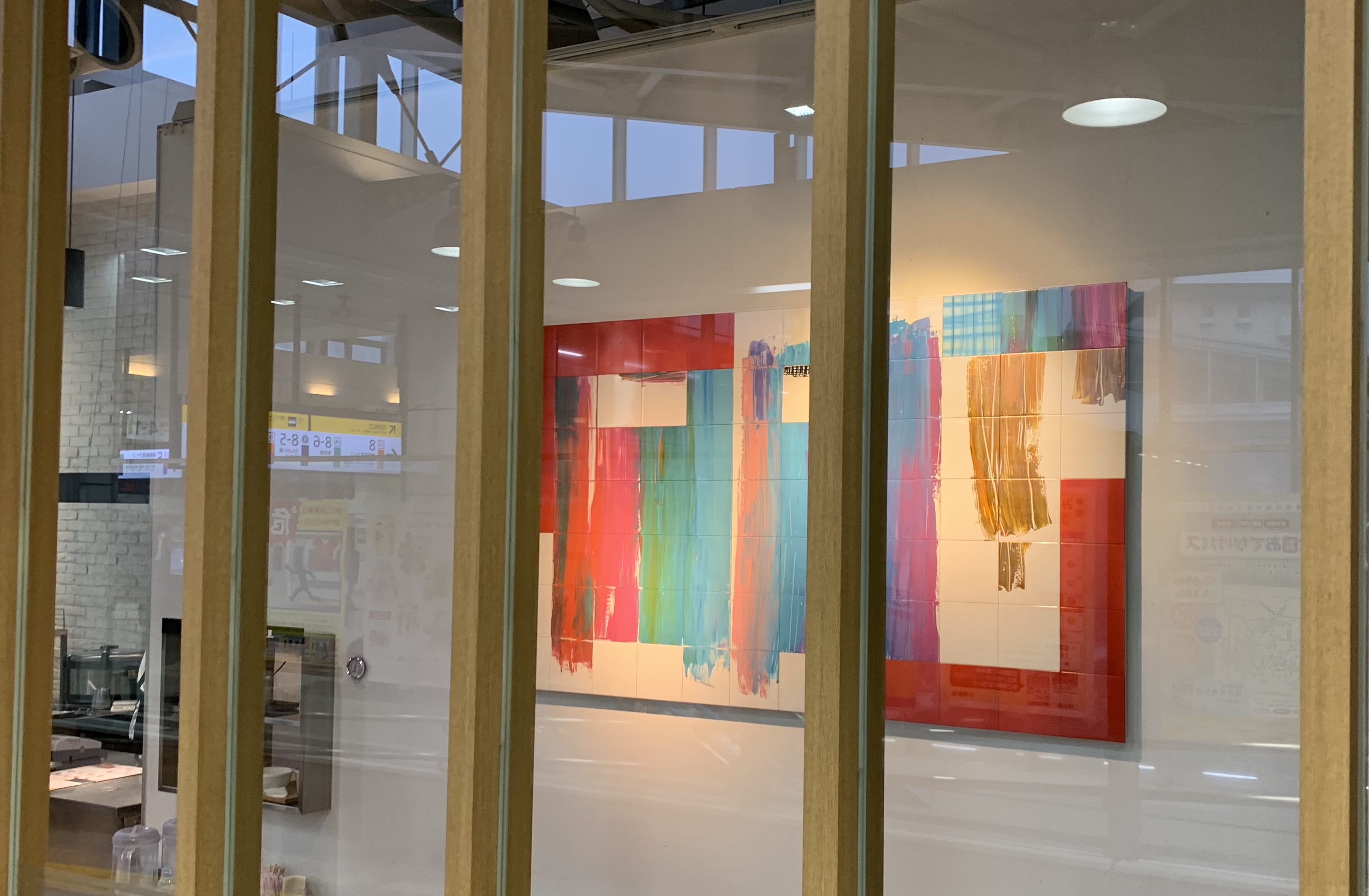
However, one single artwork on display inside the store is treated differently. As few may know, President Toyama has a side as an artist who held his own solo exhibition during his years as a salaryman — and the work in question is President Toyama’s own piece. *See the photo below.
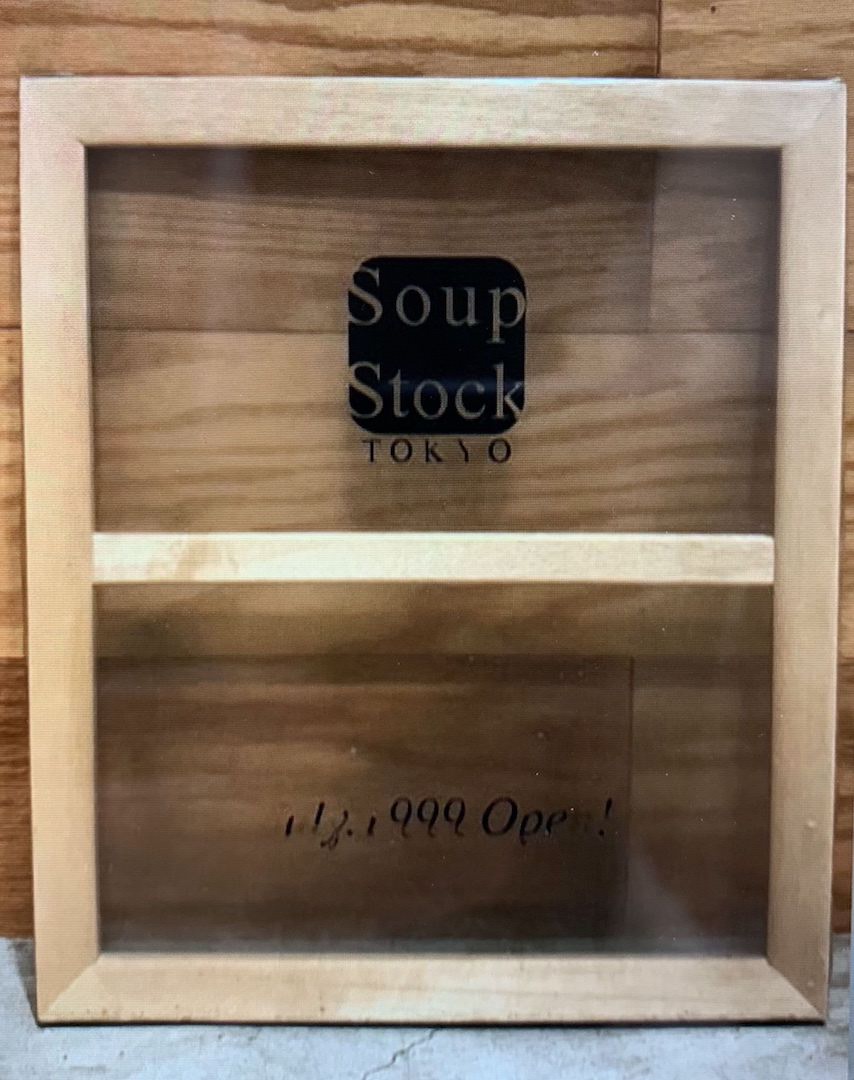
He also showed us a photograph of the signboard from when Soup Stock Tokyo was founded.
This, it turns out, is made of canvas — with transparent vinyl stretched over it in place of linen. It seems to declare that “the soup itself is the artwork” — an artistic approach from the very beginning.
Incidentally, the current Soup Stock Tokyo business plan is apparently drawn on a “canvas”.
Entrepreneurship and Management Through an Artistic Perspective
The theme of President Masamichi Toyama’s lecture was “Entrepreneurship and Management Through an Artistic Perspective”.
Recently, the relationship between art and business has been attracting increasing attention. It was truly interesting to hear how President Toyama — who has a deep understanding of the art side — approaches the interplay between art and business.
This [Burart Diary] article is a casual daily journal by the site’s administrator on all things art, and while it’s not possible to cover the entire two-hour-plus lecture here, I would like to introduce a few of his richly suggestive comments (three, in this case) on “the relationship between business and art”.
[1] “Art” is not business, but “business” resembles art
Art is something that doesn’t move forward unless you think for yourself; the artist is the one at the center driving it.
What happens when business gets involved with art? There are certainly artists like Takashi Murakami who strategically calculate what will sell as they produce their work, but essentially, art is driven by the artist’s own initiative.
Business, on the other hand, tends to depend on work that comes down from above, often proceeding without much thought, doesn’t it? It’s frequently passive, dealing with tasks handed down from a superior. Shouldn’t businesspeople take more ownership and make work their own? This was his first point: “Art” is not business, but “business” resembles art.
[2] A Child’s Gaze × Adult Circumstances
The second point was about the two-sided elements of “a child’s gaze × adult circumstances”.
A child’s gaze refers to the artistic side — innocent, instinctive ideas and thinking; free from marketing; honest expressions like liking or disliking something; a mindset where the very concept of “failure” is faint.
Adult circumstances refers to the external minimum information and rules that always accompany business, such as marketing and finance, whether something can succeed, and consideration for those around you.
The balance between “a child’s gaze” and the “harmony of adult circumstances” may be a key factor in moving business forward.
The very idea of a “soup specialty shop” being born is itself a wonderfully artistic business idea. President Toyama has also challenged himself with other ventures such as “selling nori-bento at GINZA SIX” — deliberately not defining a target audience — and succeeded.
[3] What is art?
For President Toyama, the artistic perspective in business was likened to the “invisible trigger”.
He defines it this way: what we can see — things that have been made concrete or put into words — is only about “10%”, while the remaining “90%” is still unseen, untapped, uncertain, and beyond our grasp.
Rather than the 10% already visible, real value lies dormant in the unseen 90%, and the artistic idea is to create it from there. Art is something that gives you the mindset of “there might be something here” and provides you with a spark. It’s not something vague — you take aim and pull the trigger; that, to him, is art.
Perhaps when we face something unseen, it is important for each of us to have our own trigger.
Summary
Since this is a diary, I’d rather not wrap things up in a tidy summary.
Still, several eye-opening points came out of this lecture, and I was truly grateful to be able to hear such a valuable talk.
He emphasized that from now on, individual passion, personality, sensibility, communication, and passion will matter more than ever, and that these things will overlap directly with one’s work. He also said work and life increasingly overlap.
President Toyama is apparently working on a new art initiative for the spring — something to look forward to. He seems to be aiming for the creation of new value, and I have high expectations. As for me, I’ll be more conscious of ownership and treating things as my own from now on, and I’d like to take on various new challenges with this site as well.
Thank you for your continued support.