Galleries
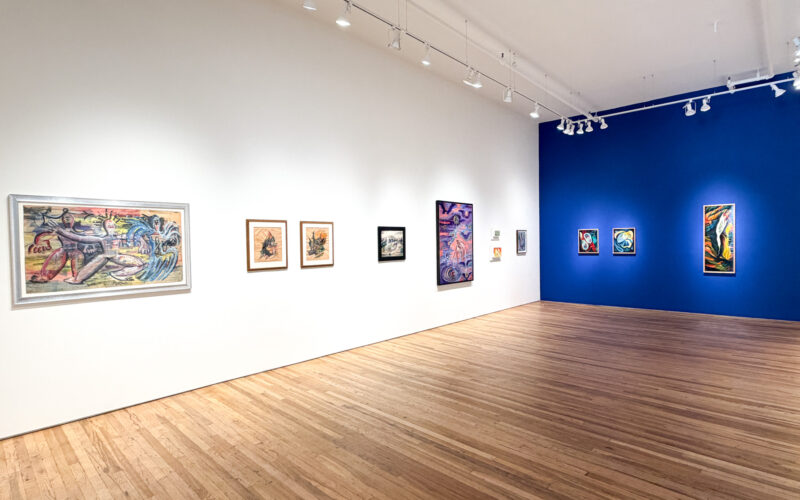
Places called galleries are, for the most part, free to enter and open to all.
Long-established galleries in Ginza, thought to have a high threshold, exude a weighty atmosphere in their storefronts, but basically they harbor the true intent of wanting to gather as many visitors as possible and bring them closer to buying works.

This is inevitable because the exhibition business model depends on “work sales income”; they take the approach of maximizing attendance through free admission and connecting it directly to work sales.
This differs greatly from the revenue model of large exhibitions at national museums, with admission income, merchandise income, and advertising income.
Incidentally, even within the work-sales-income business model, there are galleries that take a kind of “real-estate business form” called “rental galleries.” These are galleries operated by collecting a period rent from artists (work sales income also occurs additionally).
In both, work sales revenue is a “revenue share,” with the sales amount distributed between the gallery and the artist at a decided ratio.
Price list
A work’s selling price is sometimes written on a small tag called a “caption,” together with the artist’s name, work title, year, and materials used.
However, there are many cases where only the title, size, and technique are written on the caption, with no price listed.
In such cases, what you want to check is the material with the prices written on it, called the “price list.”
A price list is, literally, a work “price table.”
Forms vary, but roughly it lists work names and related information, with prices. Some have a layout map of the works clearly plotted, and the format varies by gallery.
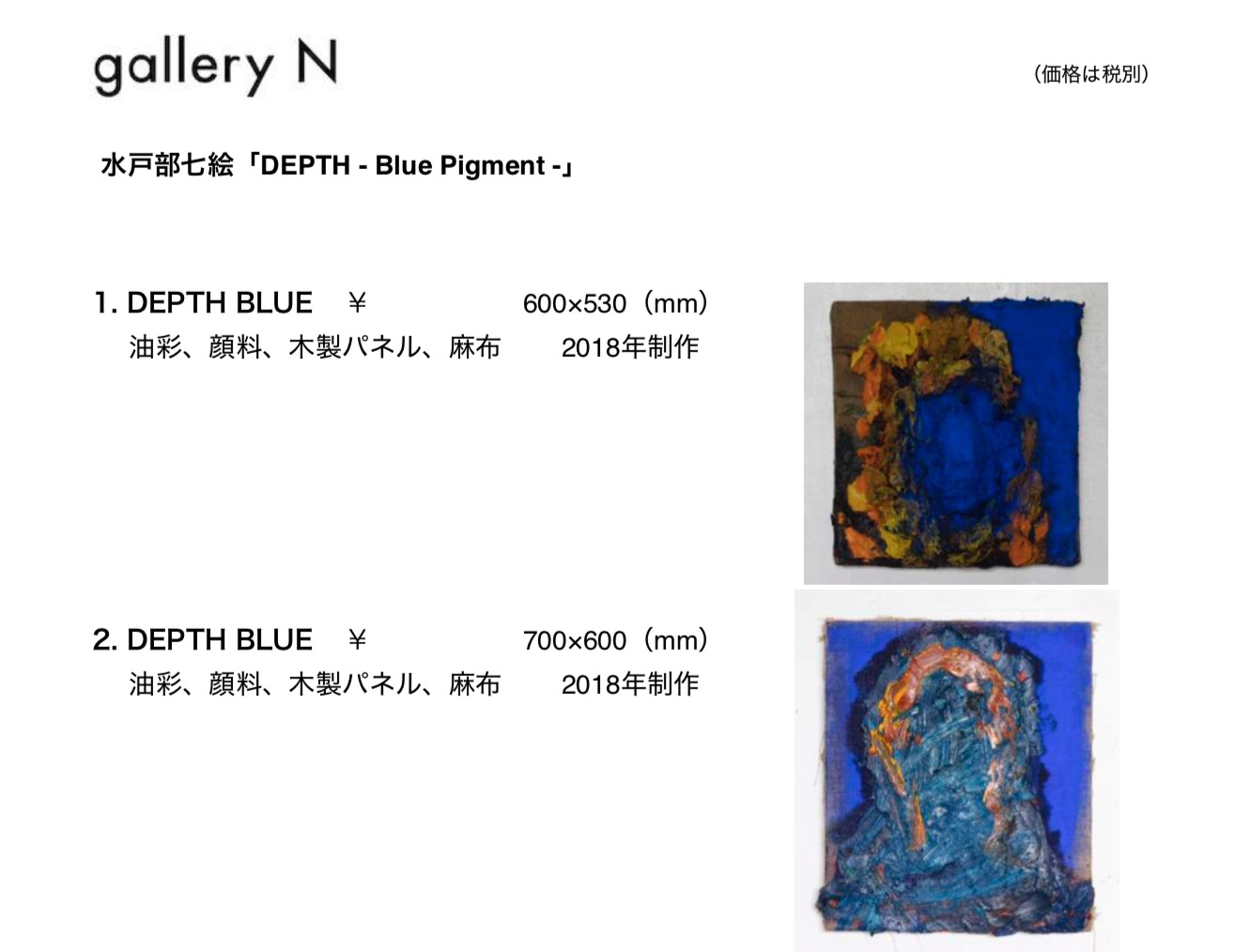
Price lists are often placed in an easy-to-find spot, but depending on the gallery, only a work list may be out, or in some cases it won’t come out unless you ask verbally.
In any case, it’s a “menu” that always exists at a normal gallery.
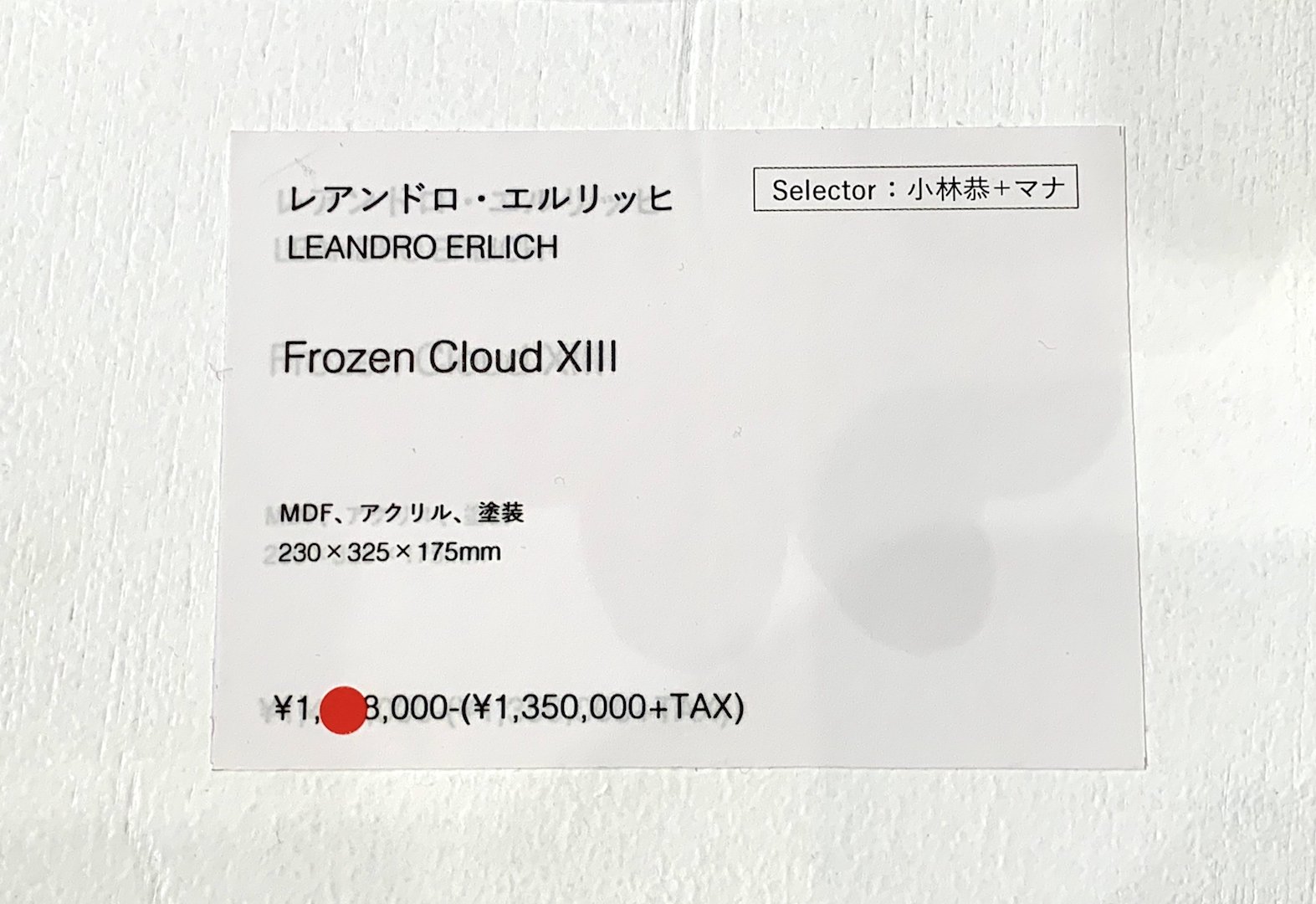
What you want to be careful of is the mark indicating “sold.”
In many cases, a red-circle sticker means “sold out,”so please be careful. It’s a work for which someone has already expressed the intention to buy.
A blue-circle sticker is “under consideration for purchase”—it’s often used as a marker for this.
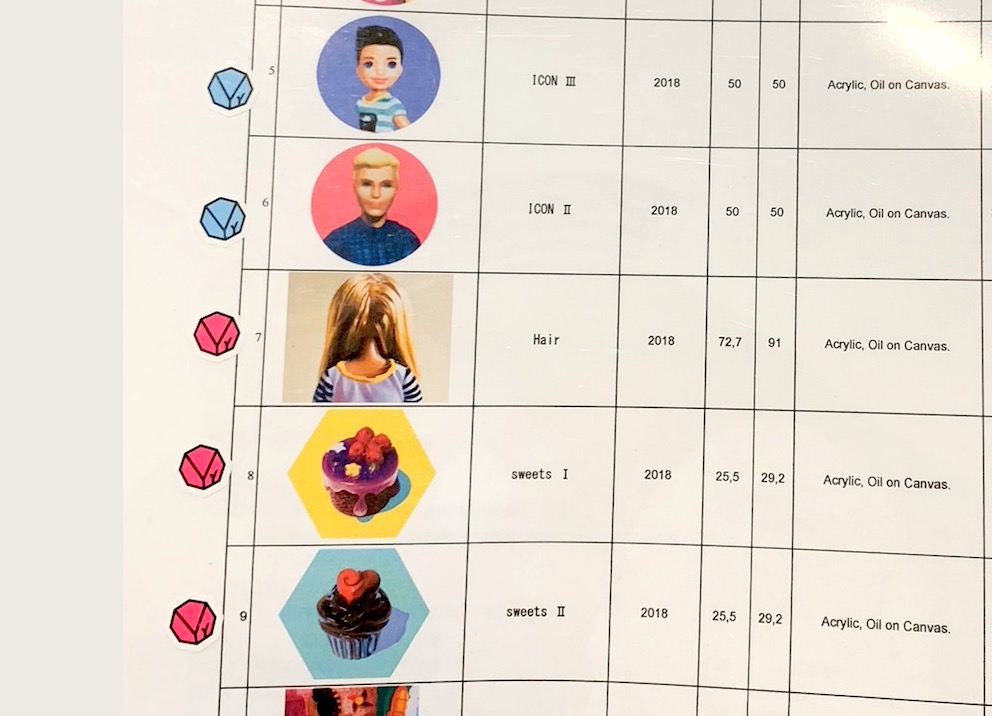
Purchase is first-come, first-served
Work sales at galleries are, in principle, on a “first-come, first-served” rule, so please be careful.
*Lotteries and auctions, etc., rarely occur too.
Also, even without going to the gallery, many galleries will send you the price list.
Galleries that respond via email correspondence sometimes send the price list as an attachment even before the run.
For popular artists, there are collectors who take action early and early. Act early; the gods will smile on those who keep their information antennae up for good works and quickly move to action.
For collecting artworks, checking the price list is the first step.
Summary
If there’s a work that catches your interest, check the price list.
By repeatedly checking price lists, your eye as a collector is cultivated.
If there’s a work you want, try expressing your intention to the gallerist (something might happen).
Buy carefully. It’s OK to say “I’ll think about it overnight” and leave the gallery. Shop without regrets!