The State Tretyakov Gallery: Romantic Russia
Marking the opening of Bunkamura’s 30th anniversary, this exhibition presents 72 works from the rich collection of the State Tretyakov Gallery — the sanctuary of Russian art — by artists representing the tumultuous Russia of the late 19th to early 20th century, including Kramskoi, Shishkin, Levitan, and Repin, introducing them through the lens of the Russian romance dwelling within nature and human portraiture.
The Russian Art World Rising Up at the Time
Composers like Tchaikovsky and Mussorgsky and literary giants like Tolstoy and Dostoevsky, representative of Russian culture in this era, are well known in Japan; but the visual arts field, too, produced many outstanding talents.
In the late 19th century, the “Peredvizhniki” (The Wanderers) — a group organized by Kramskoi and other young painters — rebelled against the constraints of state academism and set out to face reality directly and paint it as it was.
The name “Peredvizhniki” derives from their traveling exhibitions across Russia, with an enlightening intent.
Meanwhile, at Mamontov’s estate in Abramtsevo on the outskirts of Moscow, painters such as Kuznetsov, Levitan, and Korovin gathered and produced many works overflowing with nostalgic romanticism. What they and the Peredvizhniki shared was a love of their homeland.
Highlights of the Exhibition
The exhibition’s highlights can be broadly grouped into six themes.
[1] The Endless, Vast Land
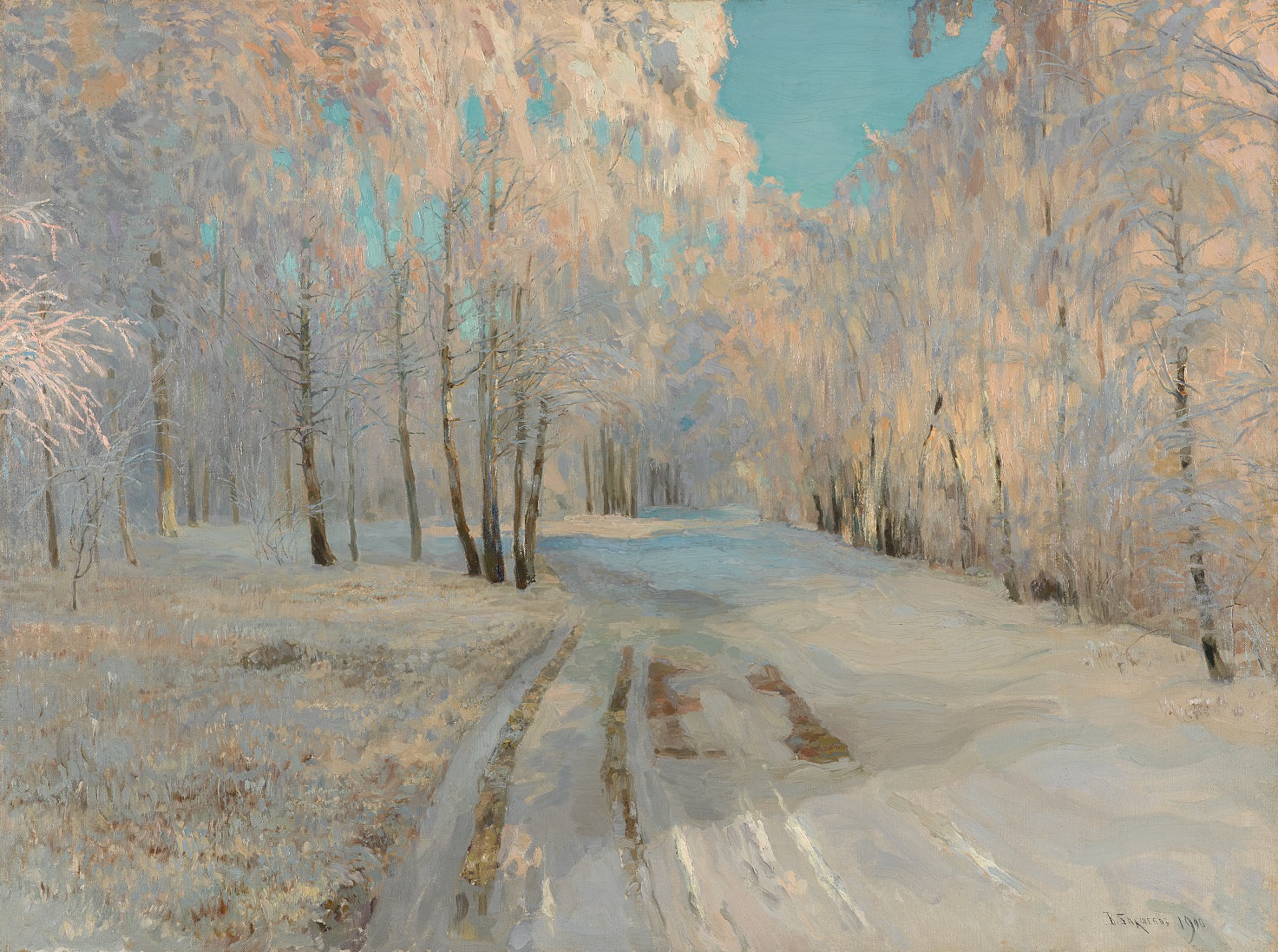
One of the backdrops to romantic Russia is its immense land.
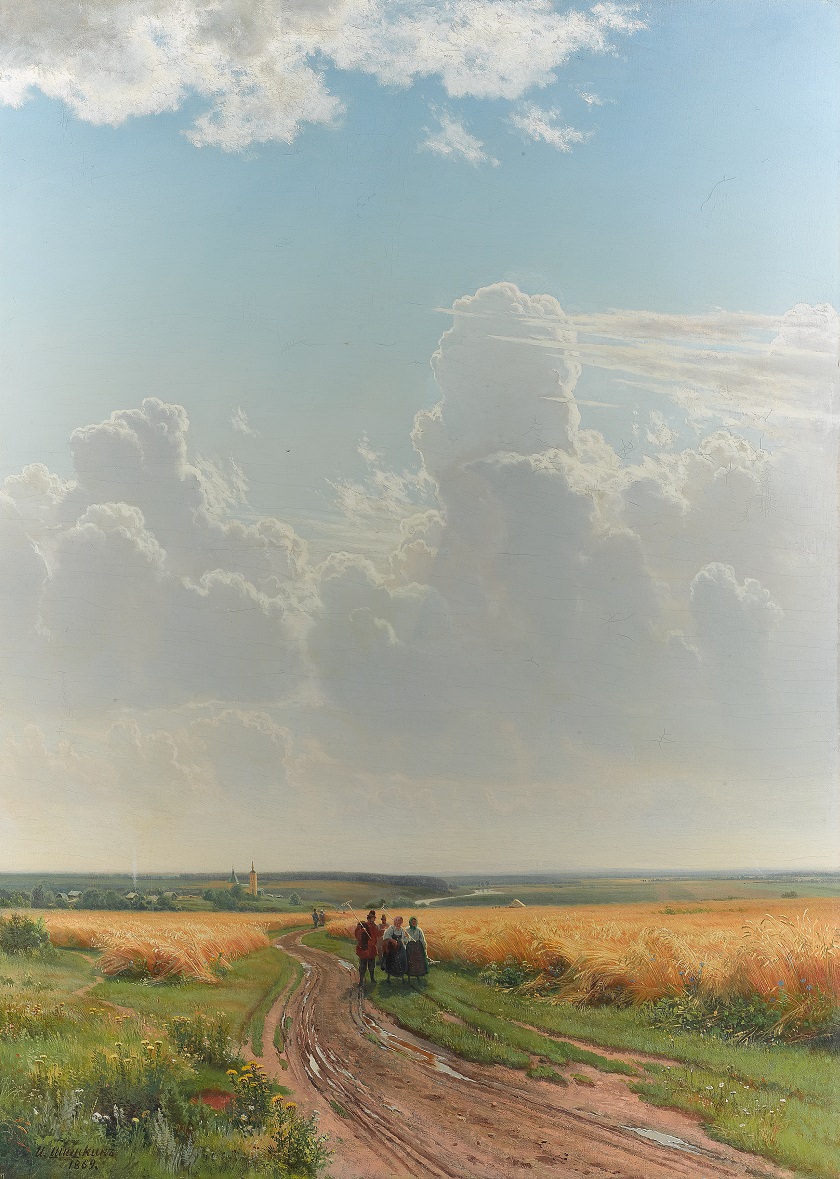
For inhabitants of a narrow island country like Japan, Russia’s overwhelming vastness is an unfamiliar world beyond ordinary experience. Shishkin’s “Noon, in the Vicinity of Moscow” — where a road stretches to the horizon — evokes a majestic Russian romance found nowhere else. Snowy landscapes, too, brim with the romance of the northern lands. Baksheev’s “Rime Frost” is a radiant work in which pure white rime glitters against a blue sky, conveying the sense of crystal-clear air. Seascapes by Aivazovsky and others similarly serve as accents in the exhibition, sharing that same feeling of grand, expansive space.
[2] Deep Forests That Draw You In
Forests broader than the whole of Japan and endlessly deep — this too is a captivating world unknown to us.
Shishkin’s masterpiece “Rain in an Oak Forest,” which depicts a couple walking through the woods under an umbrella, feels like a scene straight out of a film.
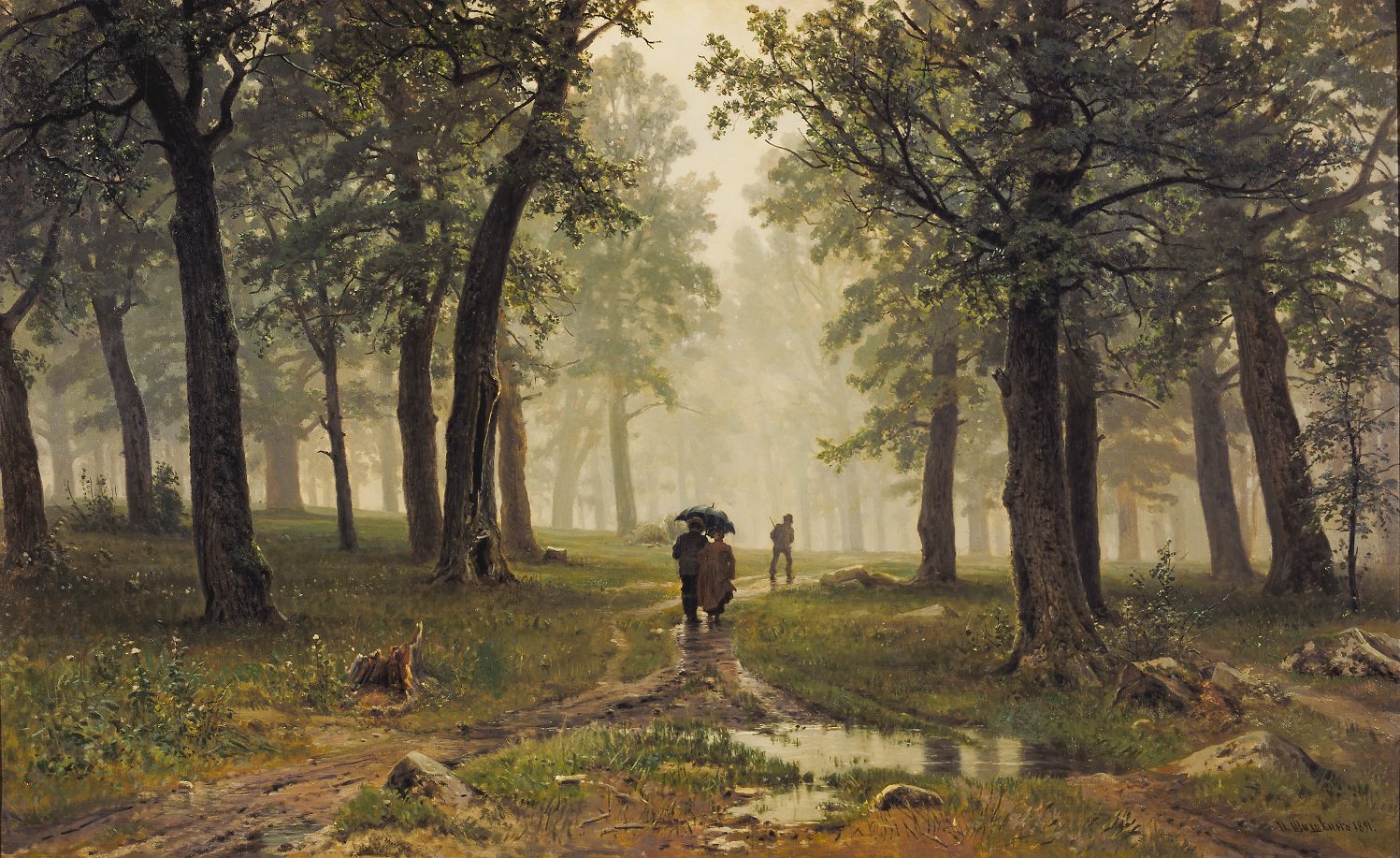
This painter also produced works depicting a single oak tree, each carrying a dignity worthy of a human portrait. The forest reveals many faces as the seasons change. Bears live there too, and this exhibition features an oil study for Shishkin’s major work “Morning in a Pine Forest,” which conveys the atmosphere of that scene.
[3] Romance Found Within the City
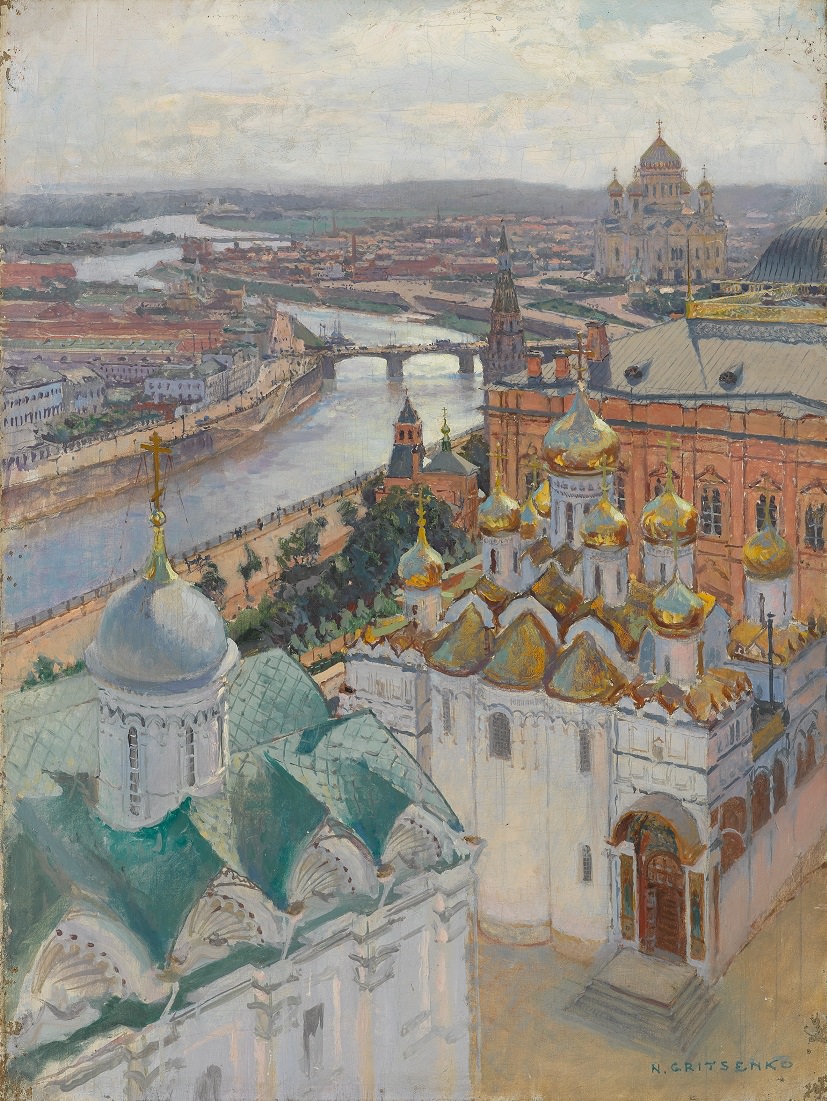
It’s not only nature — life in Russia’s cities also holds many stories. Korovin’s “In a Boat” shows a couple escaping the crowds to spend time together. What is happening — are they professing love, or on the verge of separation? — we can only imagine, yet the tense composition conveys that a drama is unfolding. And when we turn our eyes to the city itself as the stage of daily life, we find many urban scenes adorned by traditional architecture that, like Gritsenko’s “View of Moscow from the Bell Tower of Ivan the Great,” possess the allure of a distant, exotic world for the Japanese viewer.
Also on view is a portrait, painted by Repin, of Kramskoi, the author of the celebrated “Portrait of an Unknown Woman,” who was active in Moscow.
[4] The Romance of Suburban Living
Russia has a tradition of “dachas” — second houses with vegetable gardens. Located within about an hour of the city, they need not be luxurious mansions; many citizens use them on weekends and even as places to spend their retirement surrounded by nature. Life there is a moment of relaxation for Russians, their own romantic way of passing time — a happy interval to put down one’s burdens and quietly spend time with loved ones and family. This exhibition includes heartwarming works such as Makovsky’s “Making Jam.” Still lifes of flowers picked in those gardens and meadows are also included here.
[5] Female Figures That Captivate Men
Aside from paintings of the Russian landscape, there are the female figures that draw us into a romantic world. Above all, Kramskoi’s masterpiece “Portrait of an Unknown Woman” — despite having come to Japan several times before — is the star of the show, keenly awaited each time. (The previous visit was about 10 years ago.)
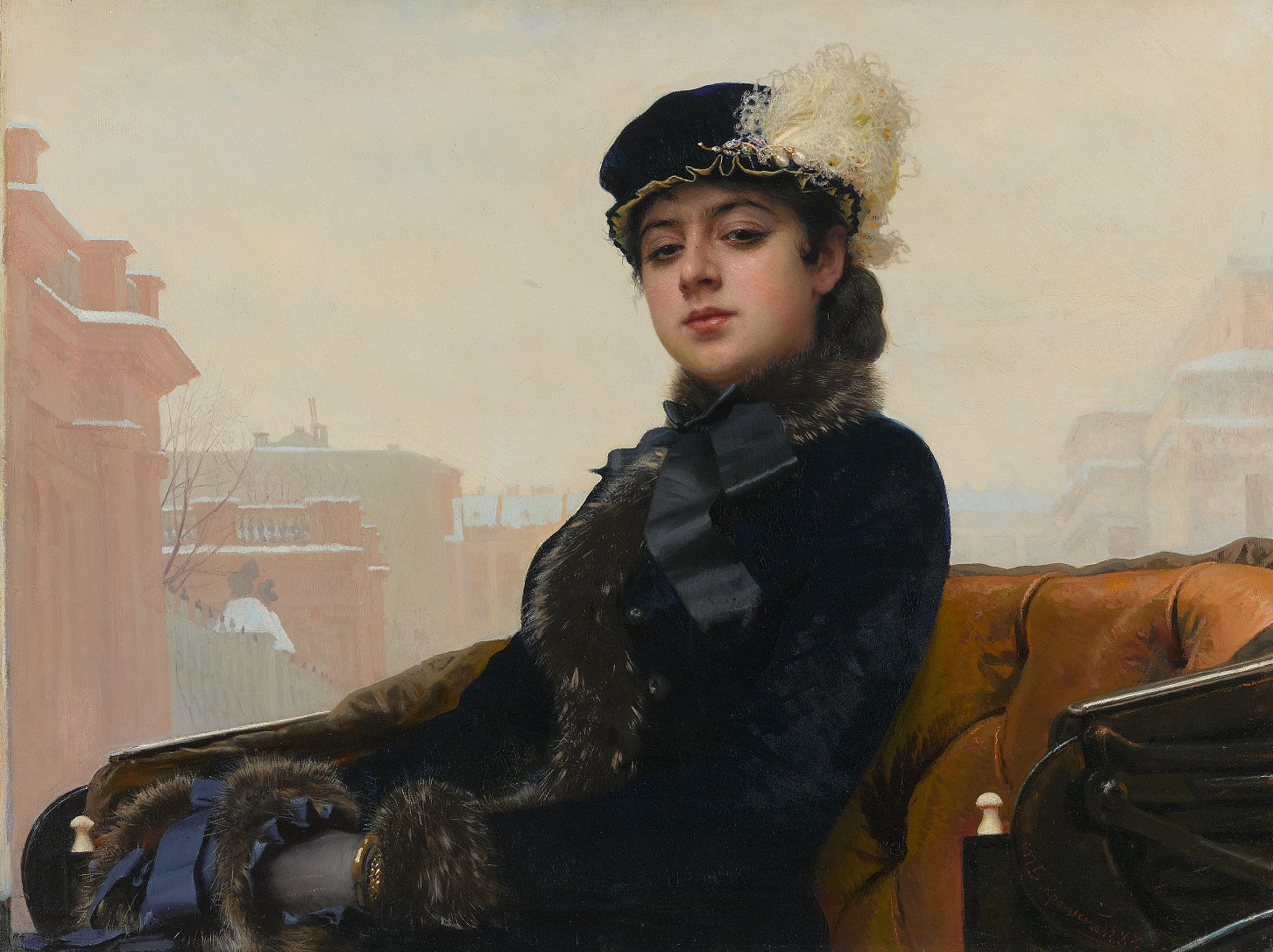
The model for this work — which condenses a world spun by literary giants into a single painting — is said to have been Anna Karenina from Tolstoy’s novel. It can be called a masterpiece in which the painter visually captured a literary romanticism transcending status and class. The same artist’s large-scale “Moonlit Night,” which lyrically depicts an elegant woman in a white dress lost in thought in an old garden at night, is a captivating work that lets one immerse still more deeply in his world.
[6] Children
Whether paintings of children fall into the “romantic” category is a matter of opinion, but many people find peace in the world of children and hold special feelings for them.
This exhibition features fine works that capture such children within the intimate setting of daily life. Among the endearing images, the young girl in Komarov’s “Portrait of Varya Khodasevich” attests that even the world of children holds profound inner depth.
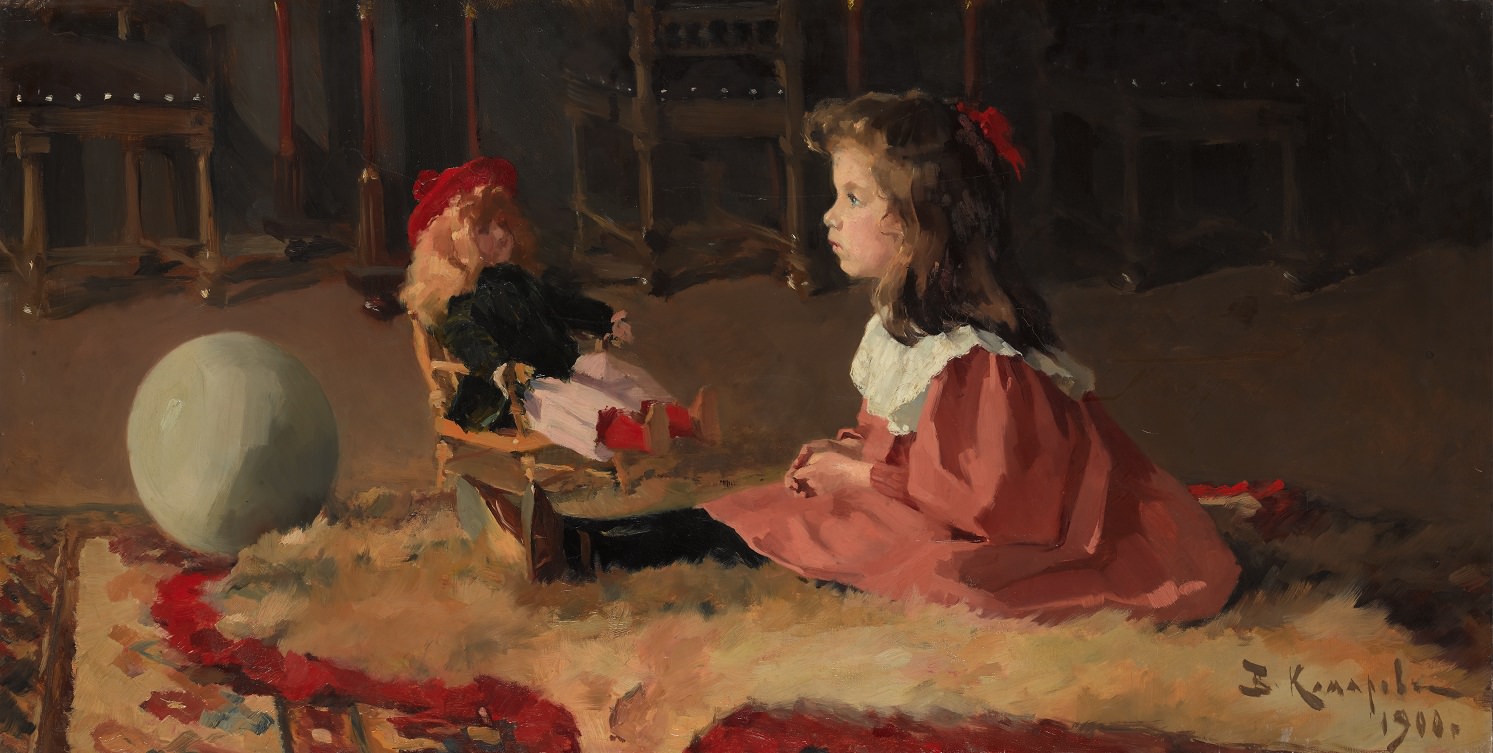
Similarly, in Vinogradov’s work titled “At Home,” a girl stands alone in a spacious interior — a substantial piece that hints at the beginning of some story. Several other works depicting children at play are also on view, making it feel like a corner of children’s literature that draws the viewer back to a childlike heart.
Featured Work
“Moonlit Night,” by Kramskoi — the same artist who painted “Portrait of an Unknown Woman” — can be compared to a nocturne once performed outdoors from evening into night.
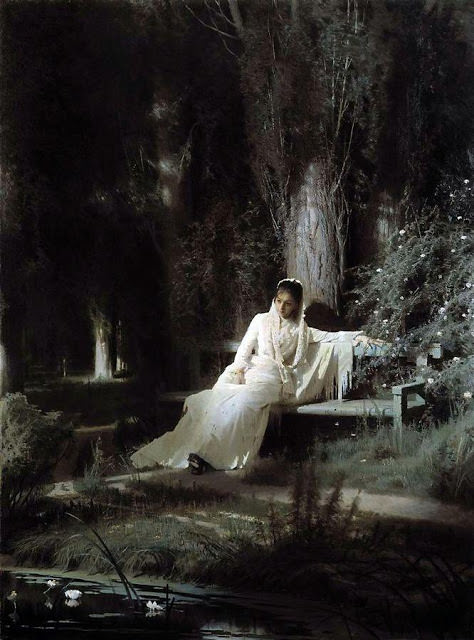
oil on canvas, © The State Tretyakov Gallery
Like a nocturne, this painting elevates the viewer’s heart, revives memories, and invites reverie.
A solitary young woman in a white dress sits on a bench beside an aged tree in an old garden. Her figure harmonizes and merges with the poetic sentiment, silence, and mystery of the moonlit night.
Is she waiting for someone, or is she simply lost in thought or reminiscence?
She will never answer this question. For the painter who created this image, and for the viewer, she remains an embodiment of fantasy, dream, and poetry — the untold something that lives within the human heart and sometimes appears in the natural world.
When Kramskoi first painted this female figure, the initial model was Anna Popova, a young student at the Academy of Arts who later became the wife of the famed scientist Dmitri Mendeleev. However, as the painting neared completion, Sergei Tretyakov — the younger brother of the Tretyakov Gallery’s founder, who had decided to acquire the work — is said to have asked the artist to give the woman in the painting the features of his own wife.
Support Character
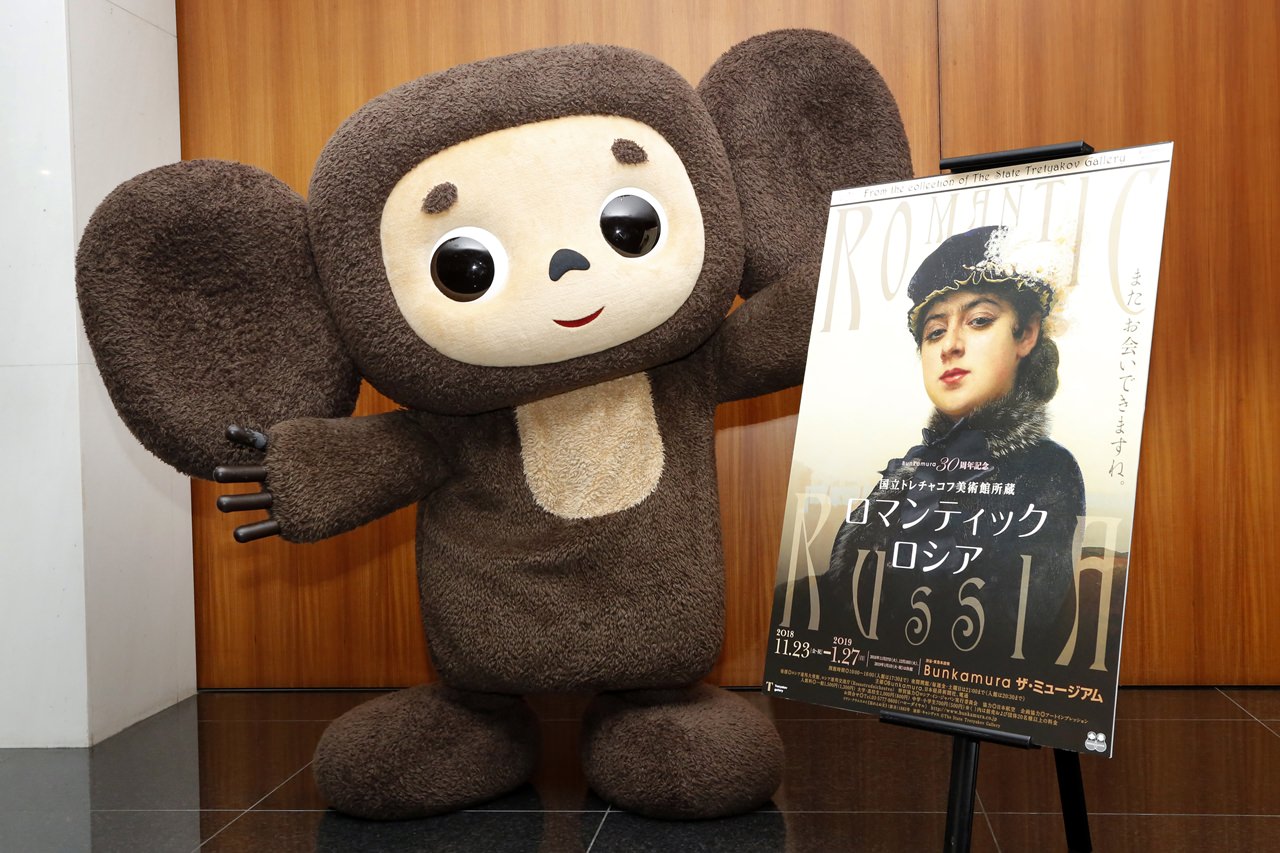
The support character for this exhibition is Russia’s national character “Cheburashka.”
During the run, the shop will sell original-design goods such as tote bags and iPhone cases, and the character will also appear at events.
It’s exciting to imagine what kinds of projects will be developed!
Overview
The State Tretyakov Gallery: Romantic Russia
Venue: Bunkamura The Museum
Dates: November 23 (Fri, holiday), 2018 – January 27 (Sun), 2019
*Closed only on 11/27 (Tue) 2018, 12/18 (Tue) 2018, and 1/1 (Tue, holiday) 2019
Opening hours: 10:00–18:00 (last admission 17:30)
Fridays and Saturdays until 21:00 (last admission 20:30)
Organized by: Bunkamura; Nikkei Inc.; Dentsu Inc.