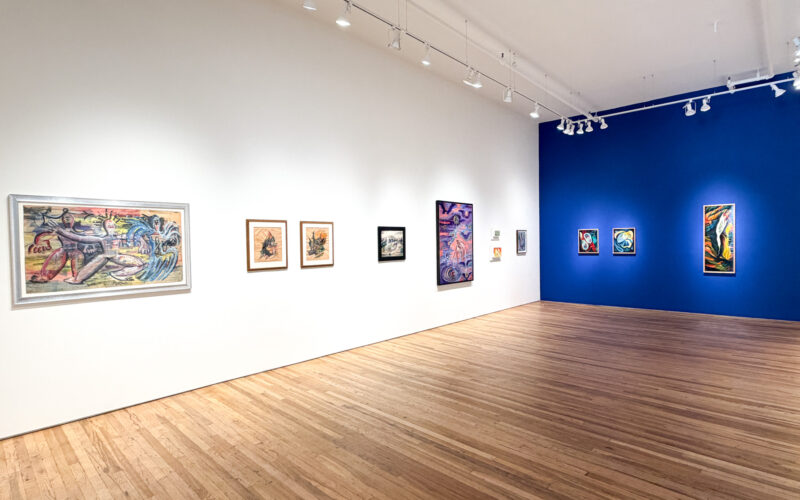
When you think of Koji Kinutani, colorful images of Mount Fuji tend to come to mind, but the exhibition held at the Hokkaido Museum of Modern Art left a strong impression of a different side of the artist beyond those familiar images.
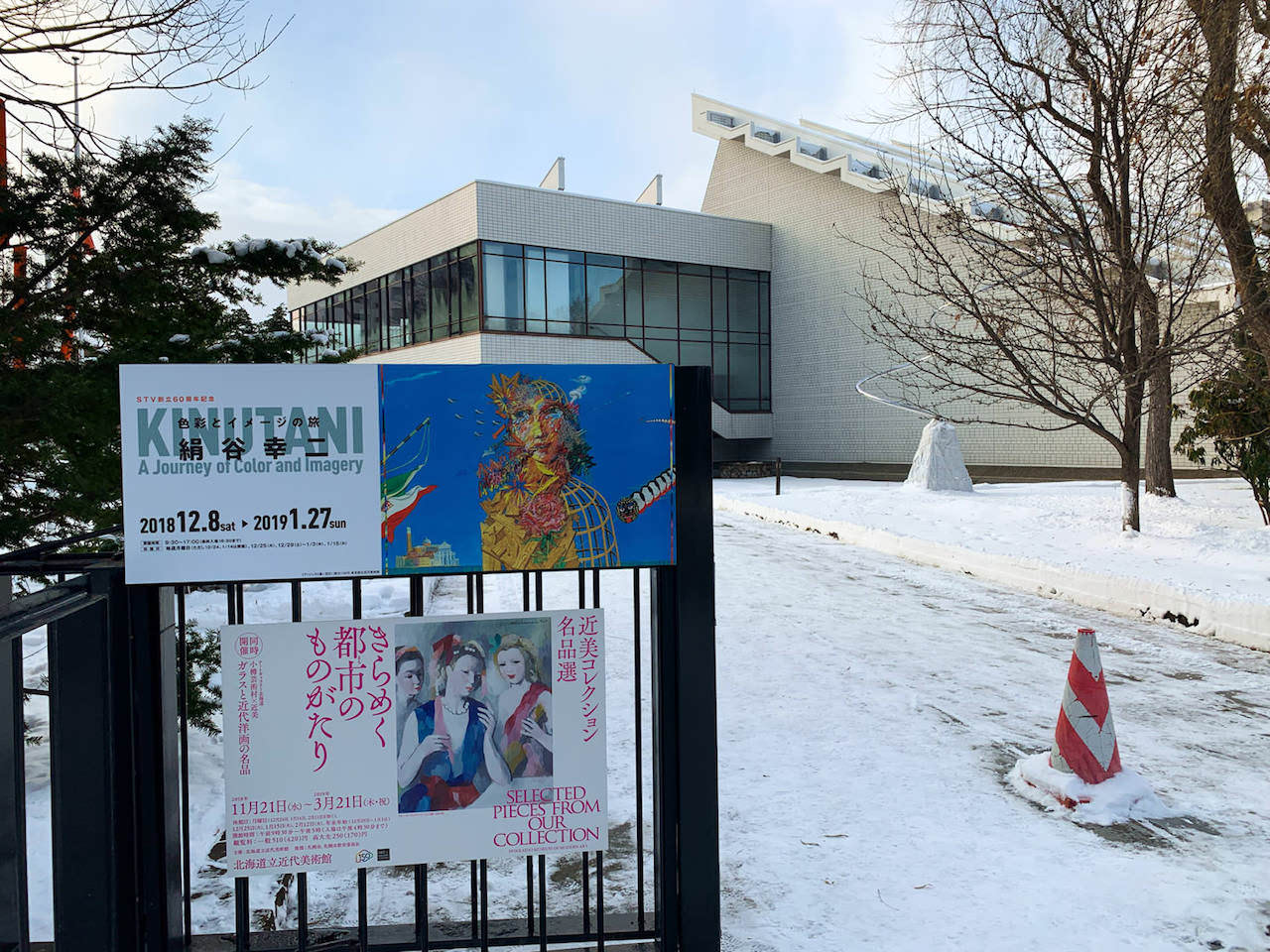
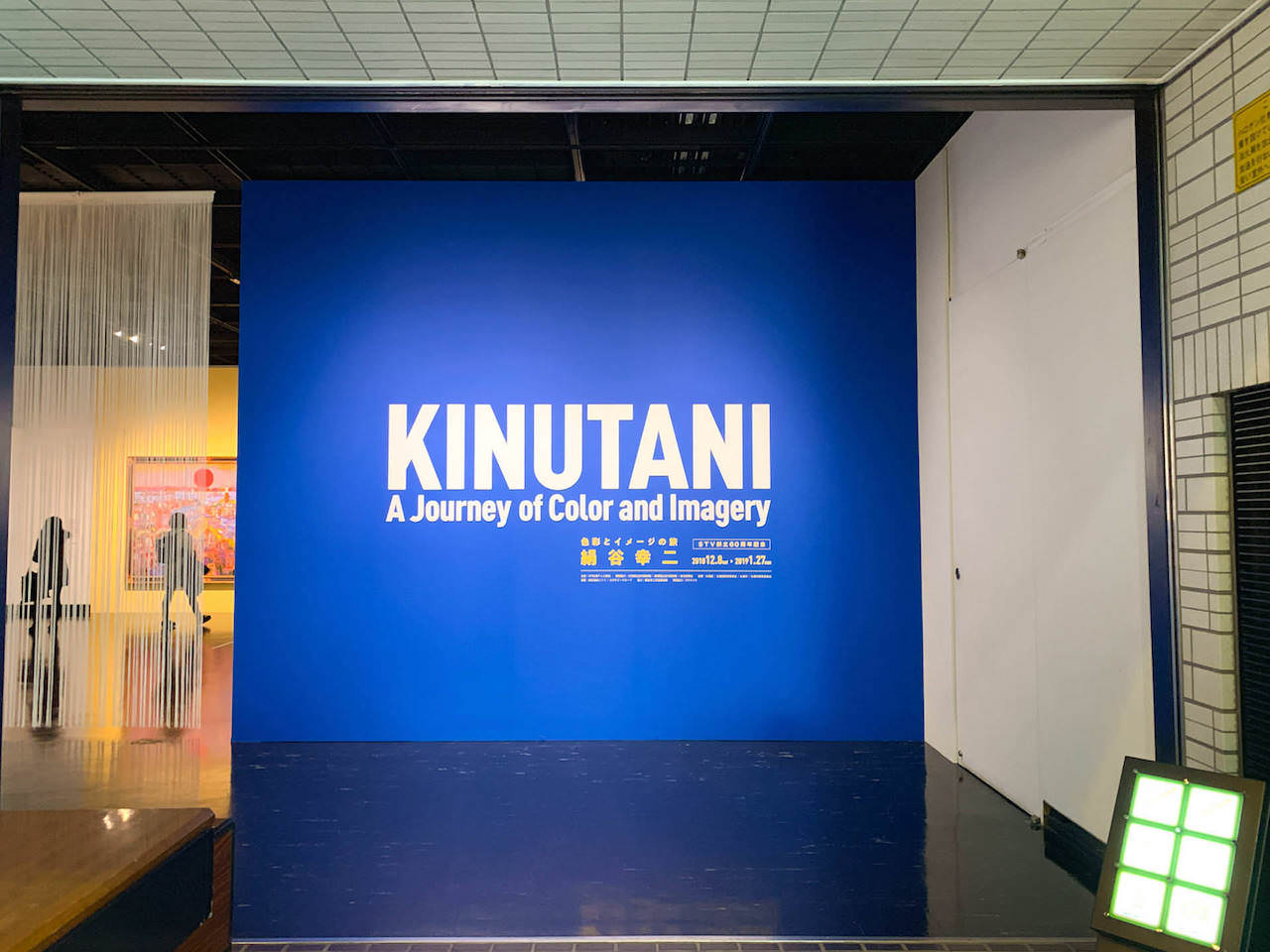
This exhibition attempts to capture the full scope of Koji Kinutani’s wide-ranging activity, encompassing not only paintings but also drawings, ceramics, glass works, and video pieces.
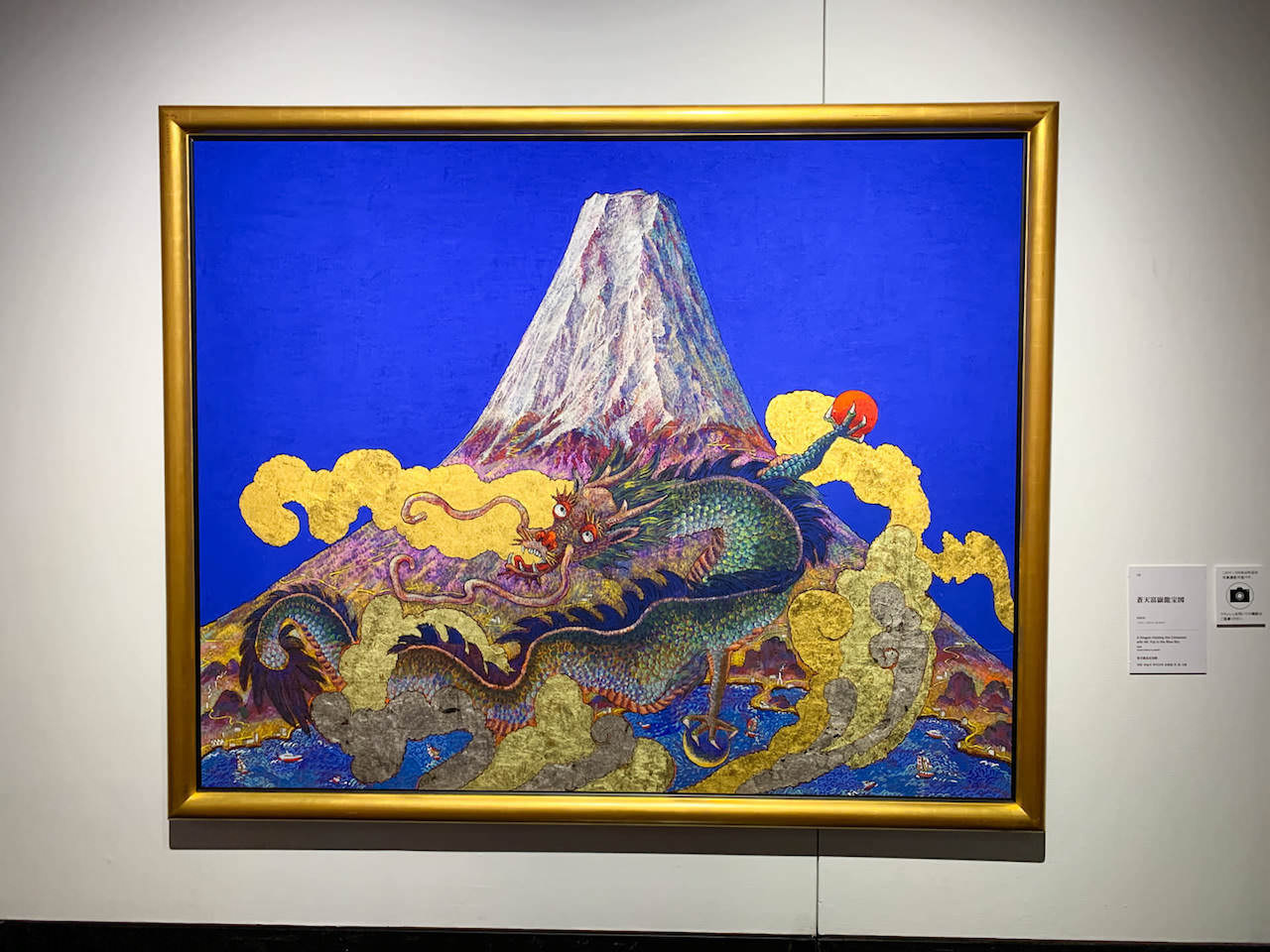
Koji Kinutani is best known for works featuring Mount Fuji as a motif. As expected, these were on display, though the number of pieces was limited.
Beyond the Mount Fuji works, what left a strong impression were pieces with a message—those incorporating text into the composition or addressing social issues. Photography was permitted only in limited areas, so what I can share here is restricted, but the impression was unexpected.
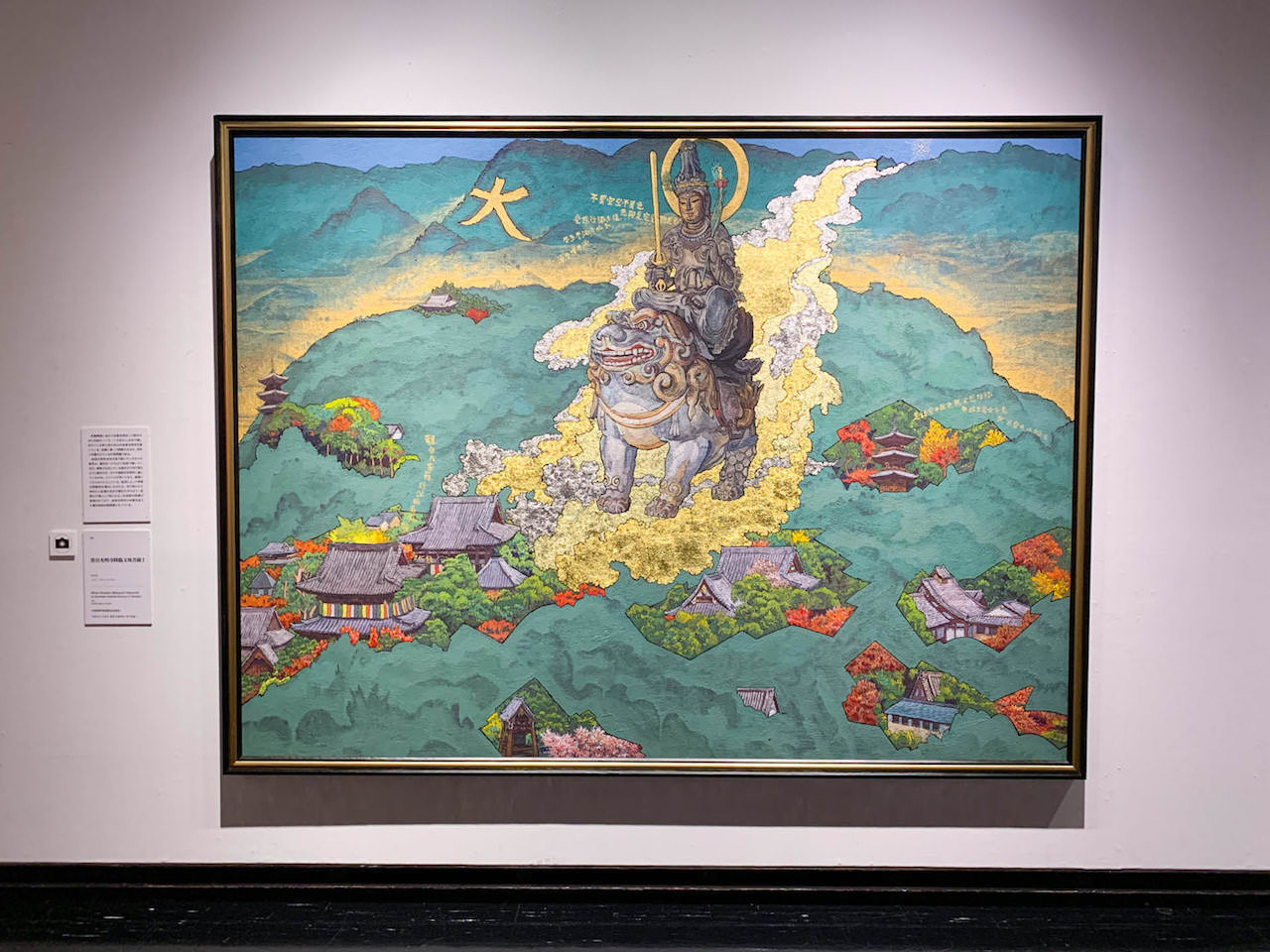
The use of unusual techniques and the incorporation of social themes gave the works an unexpected feel, quite different from the familiar Mount Fuji imagery. The exhibition also had depth, moving beyond simply colorful pieces. In his drawings, I was drawn to the honest, spare quality of the lines.
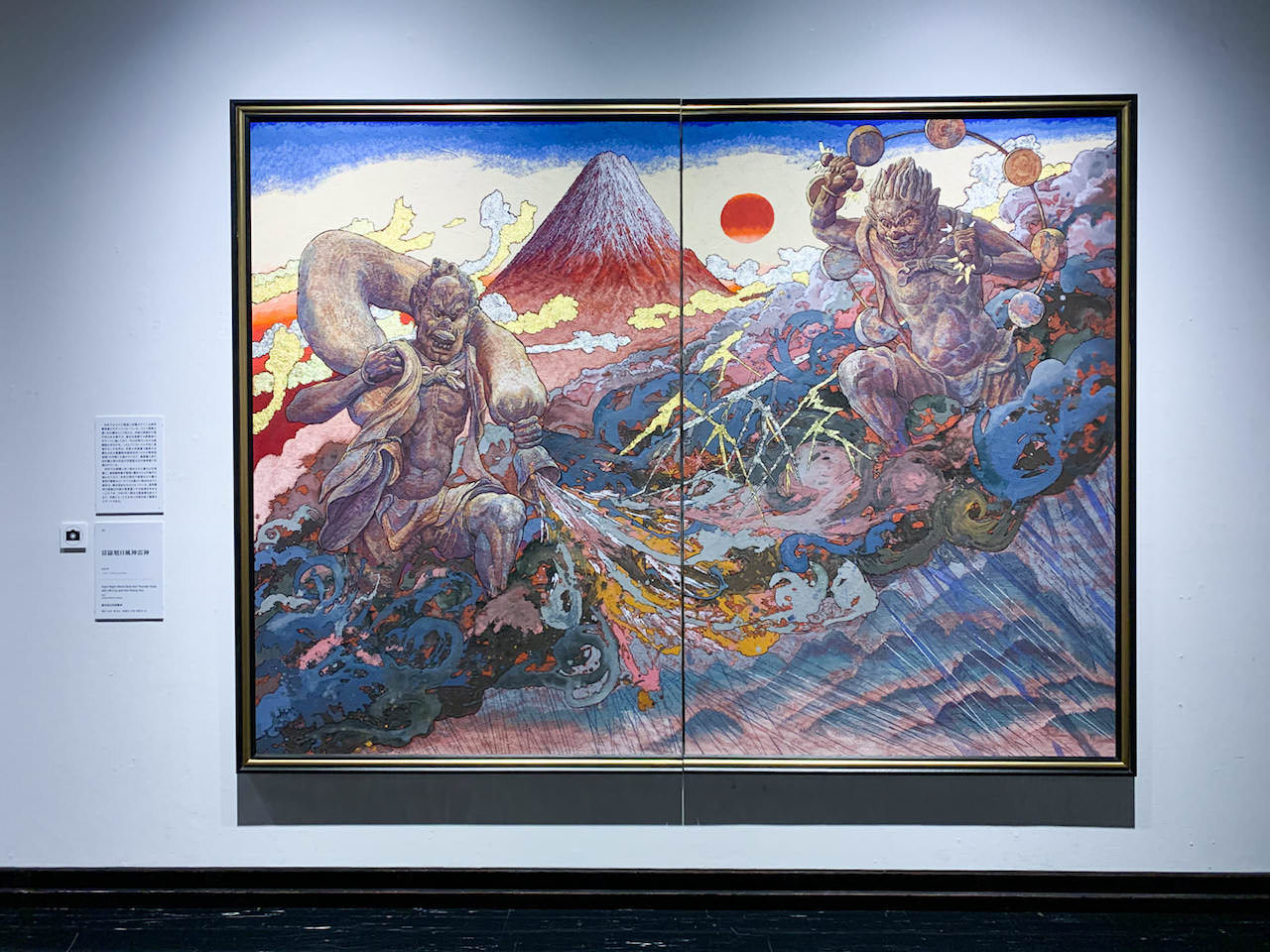
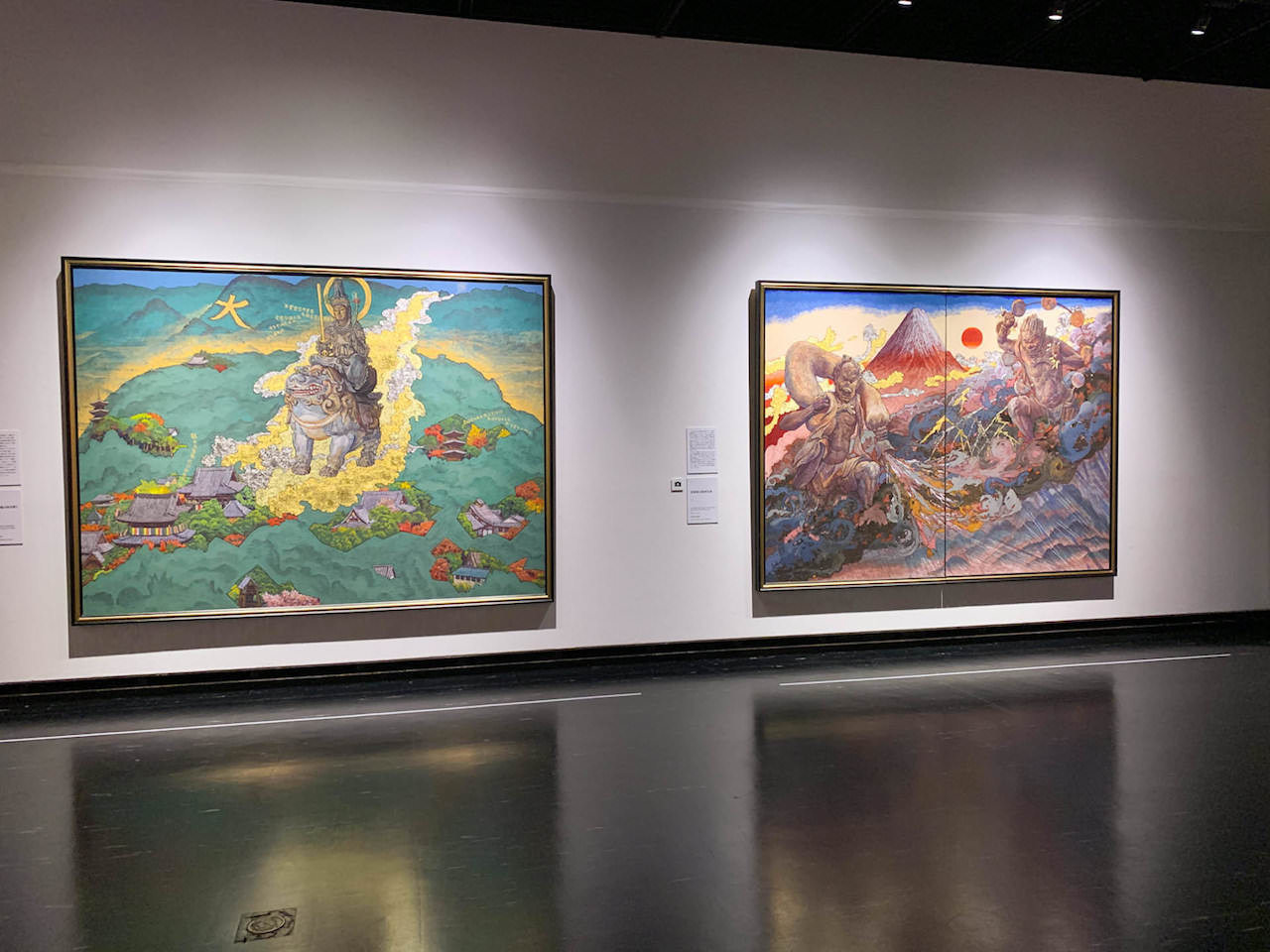
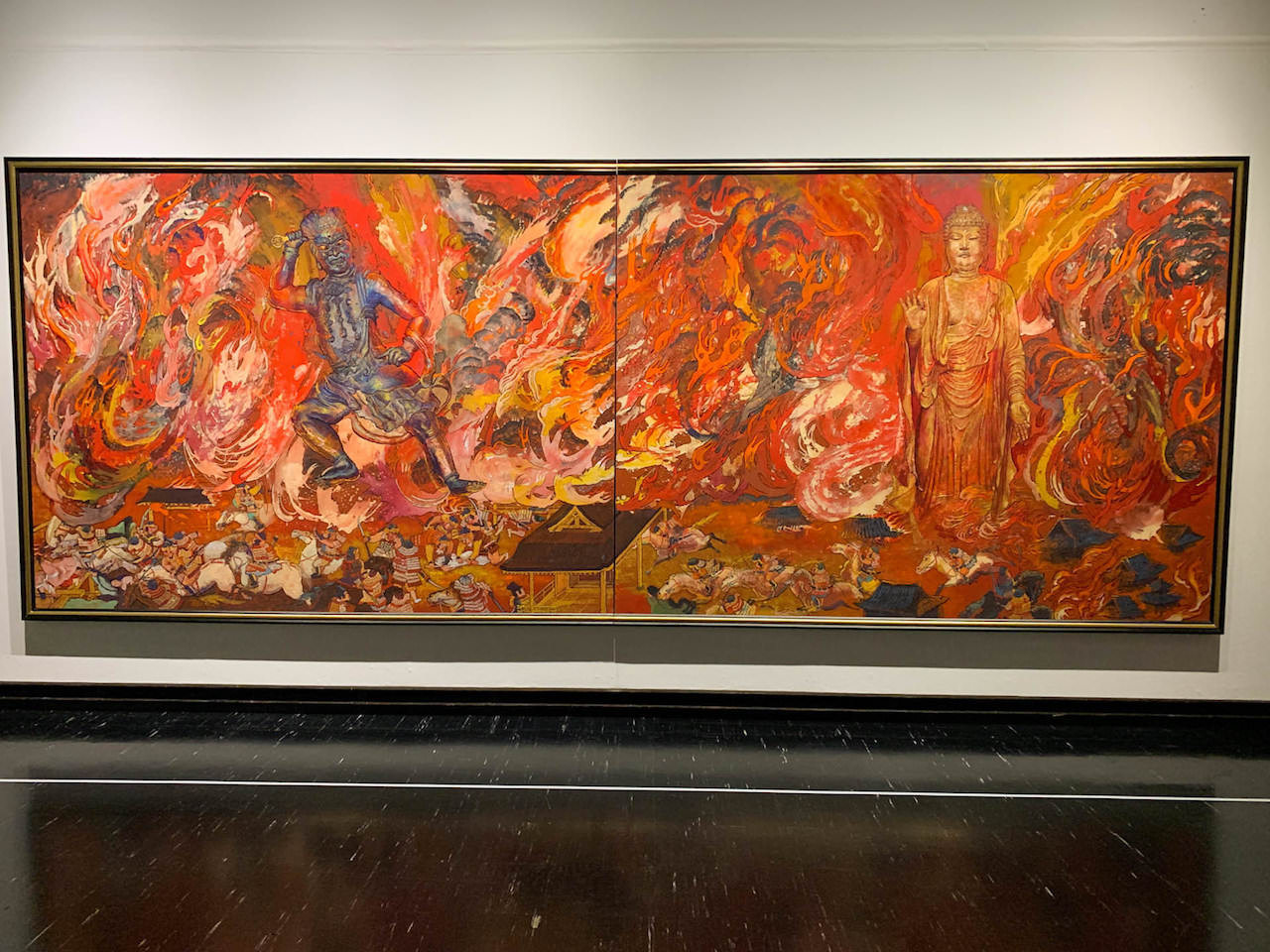
“Homage: Heiji Monogatari Emaki” was created as a tribute to “The Tale of Heiji Picture Scroll.”
It consists of two panels—left and right. On the left, “Katsu (Roar),” Zao Gongen floats in the sky; on the right, “Ku (Emptiness),” Amida Nyorai appears.
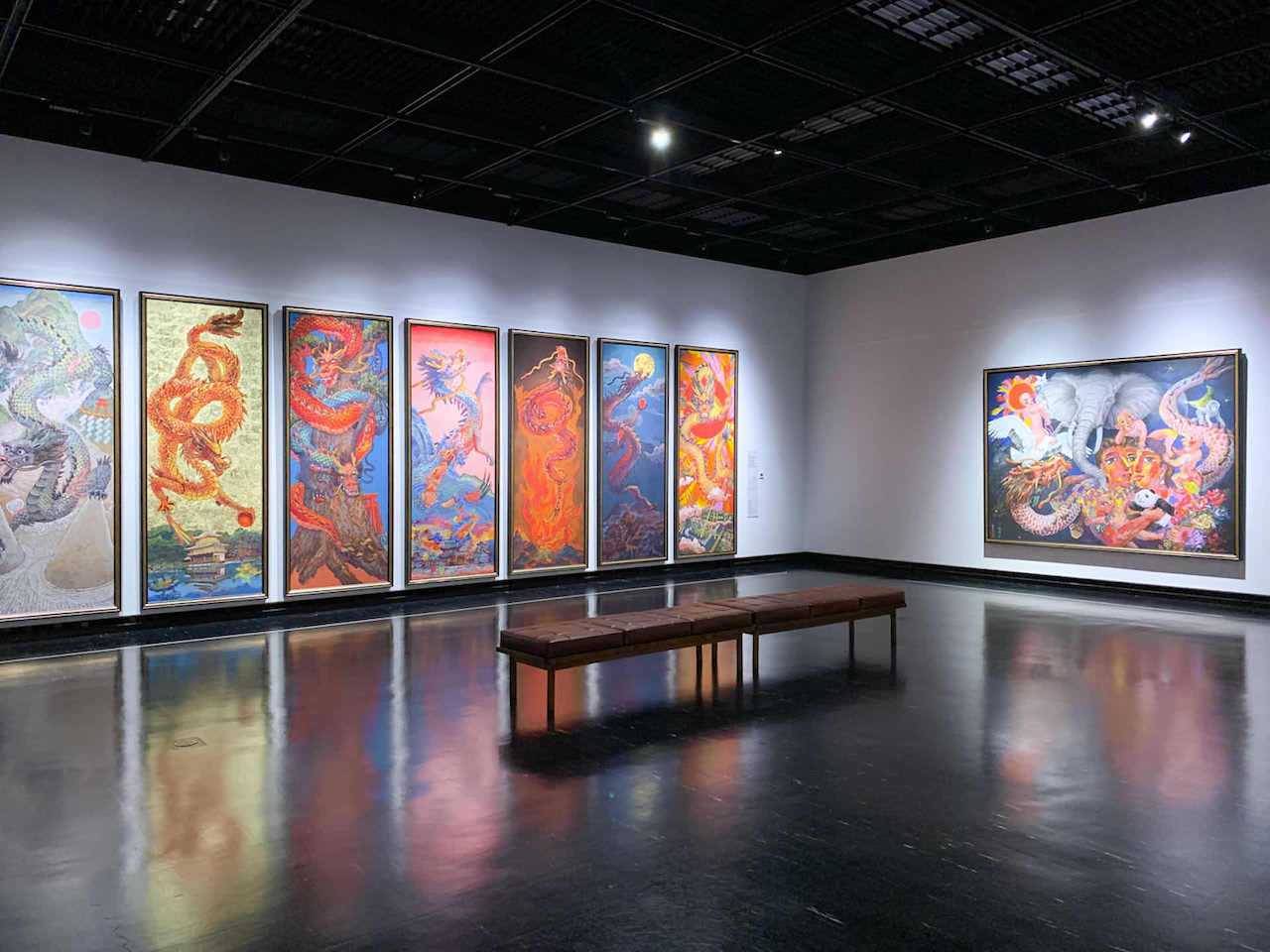
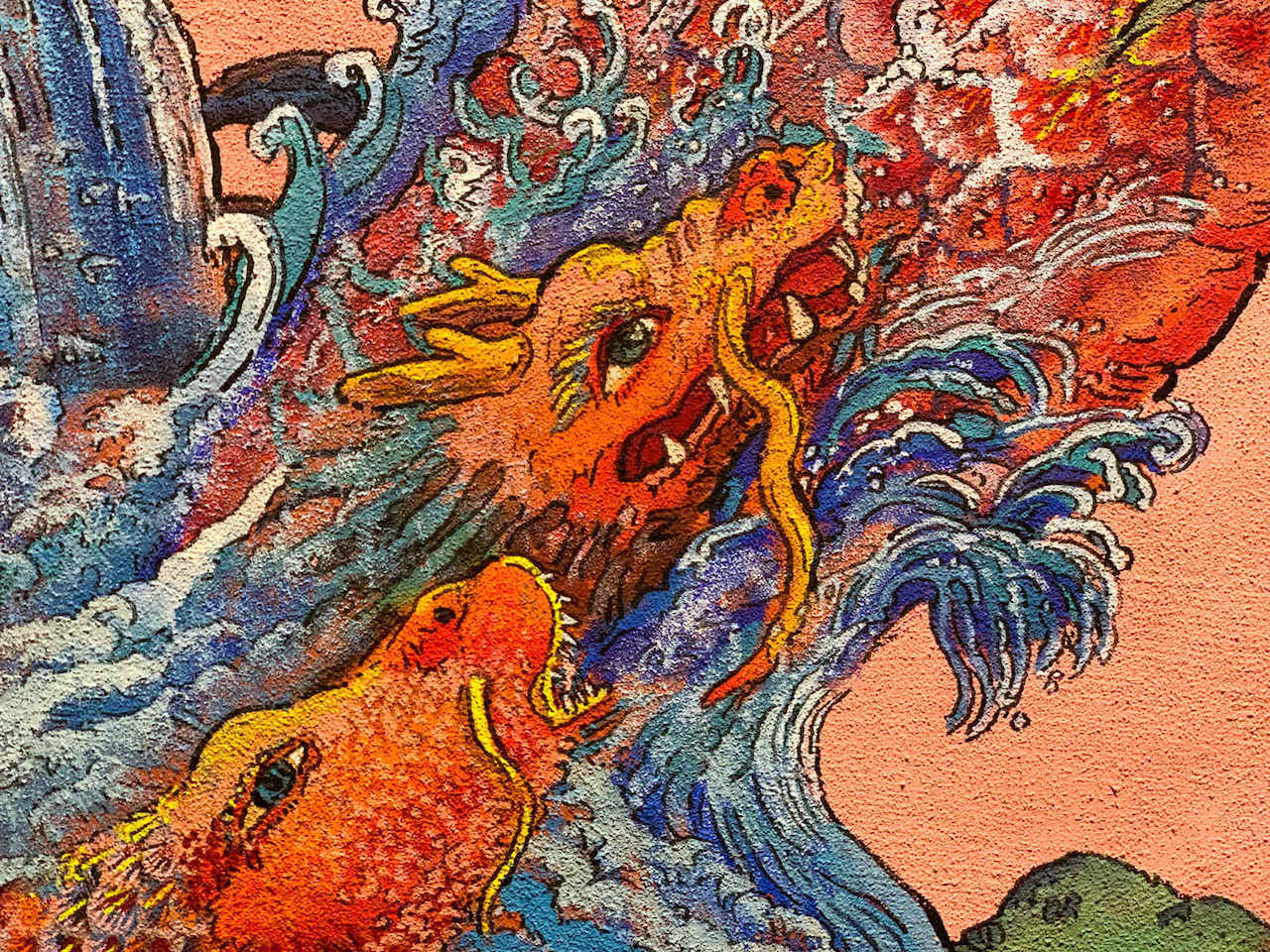
The row of seven dragon deities was magnificent.
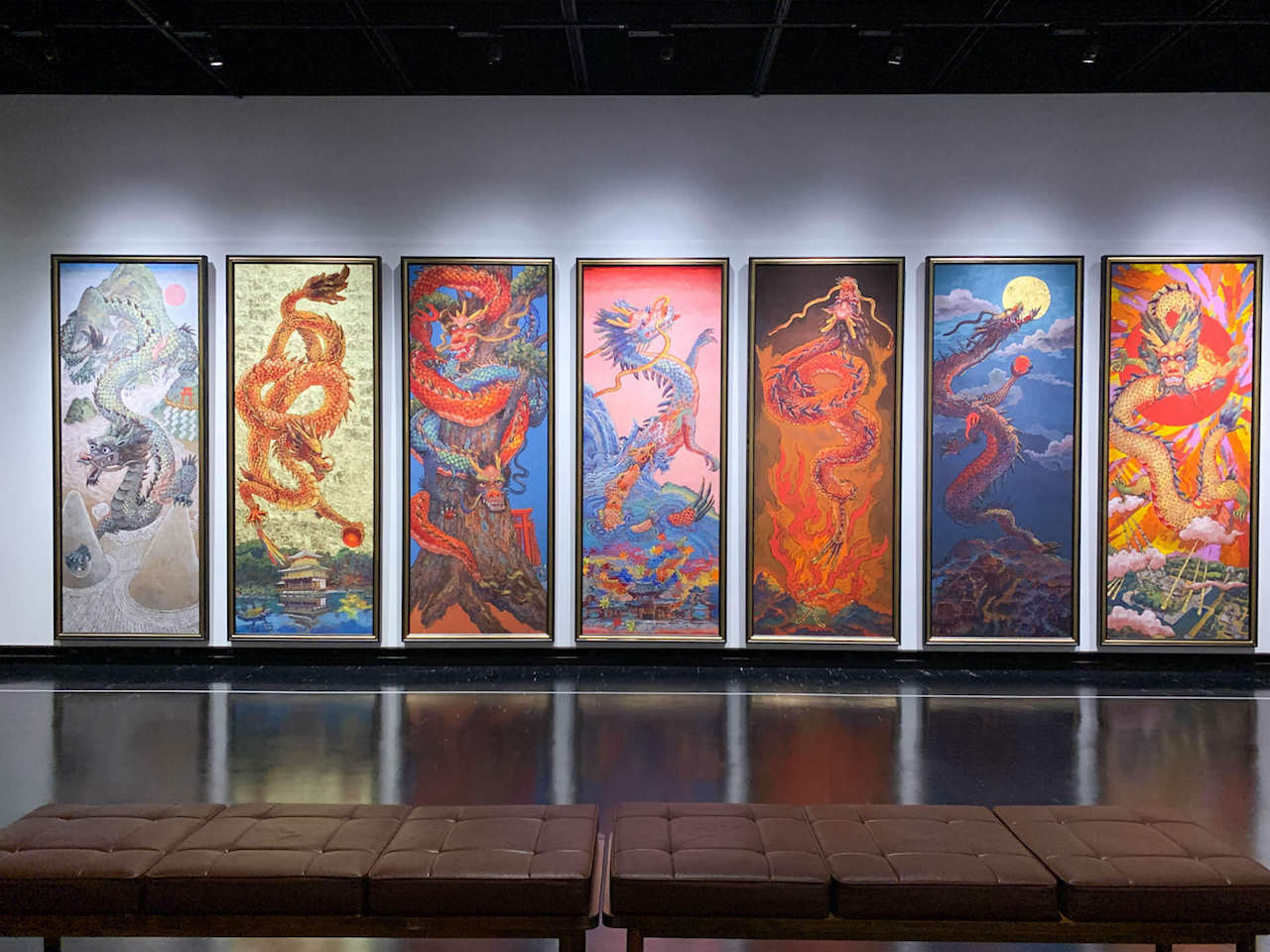
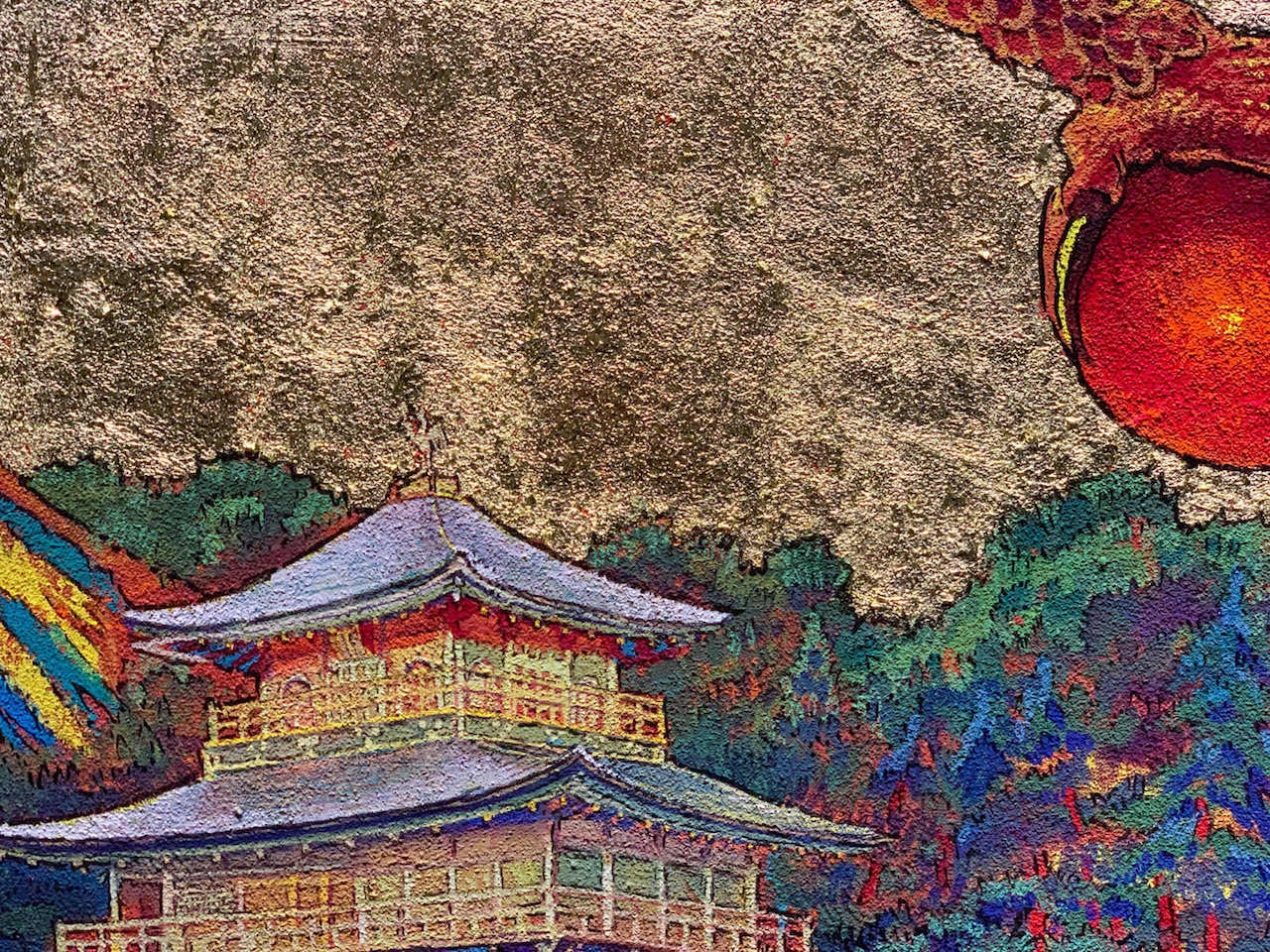
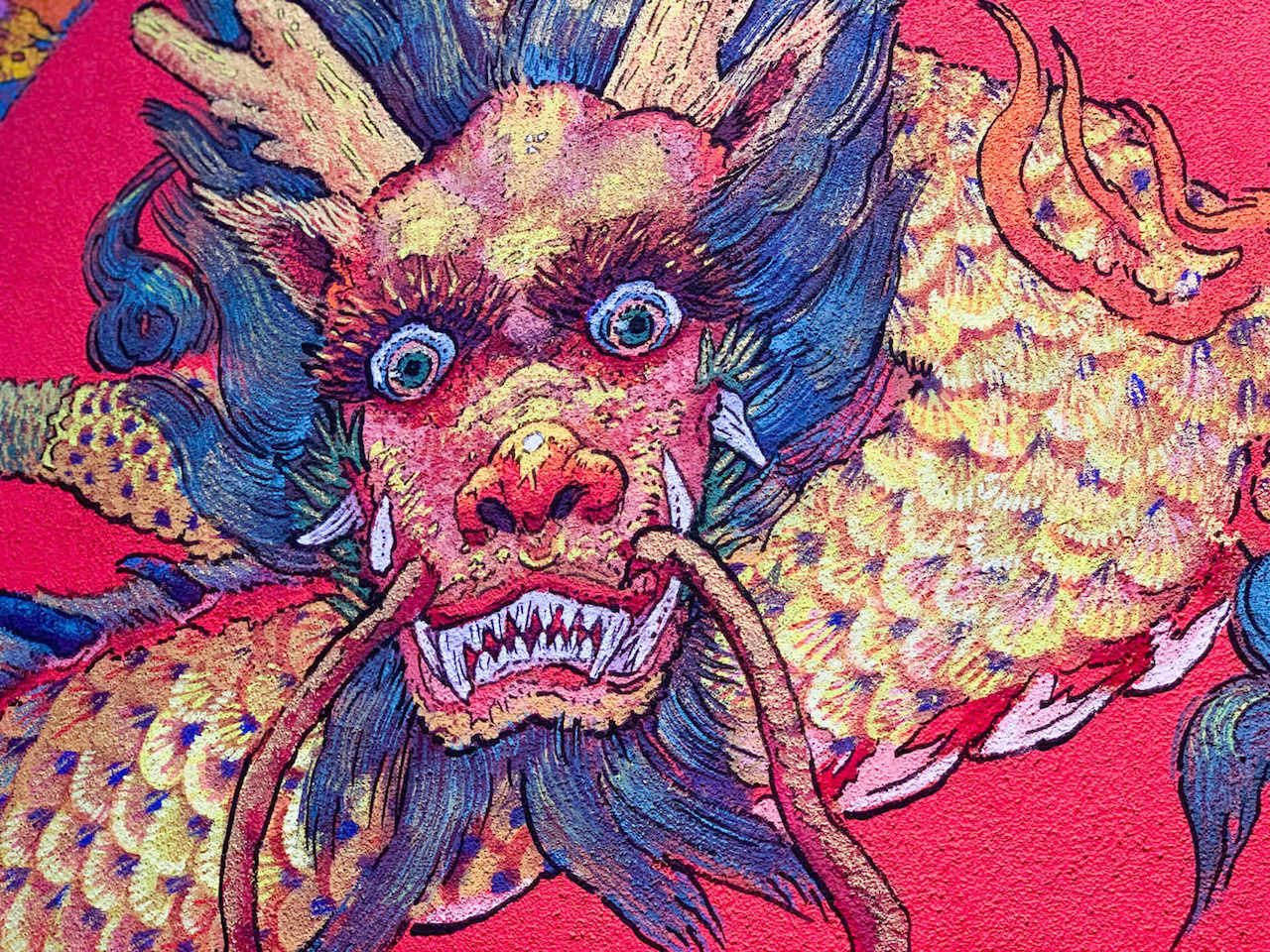
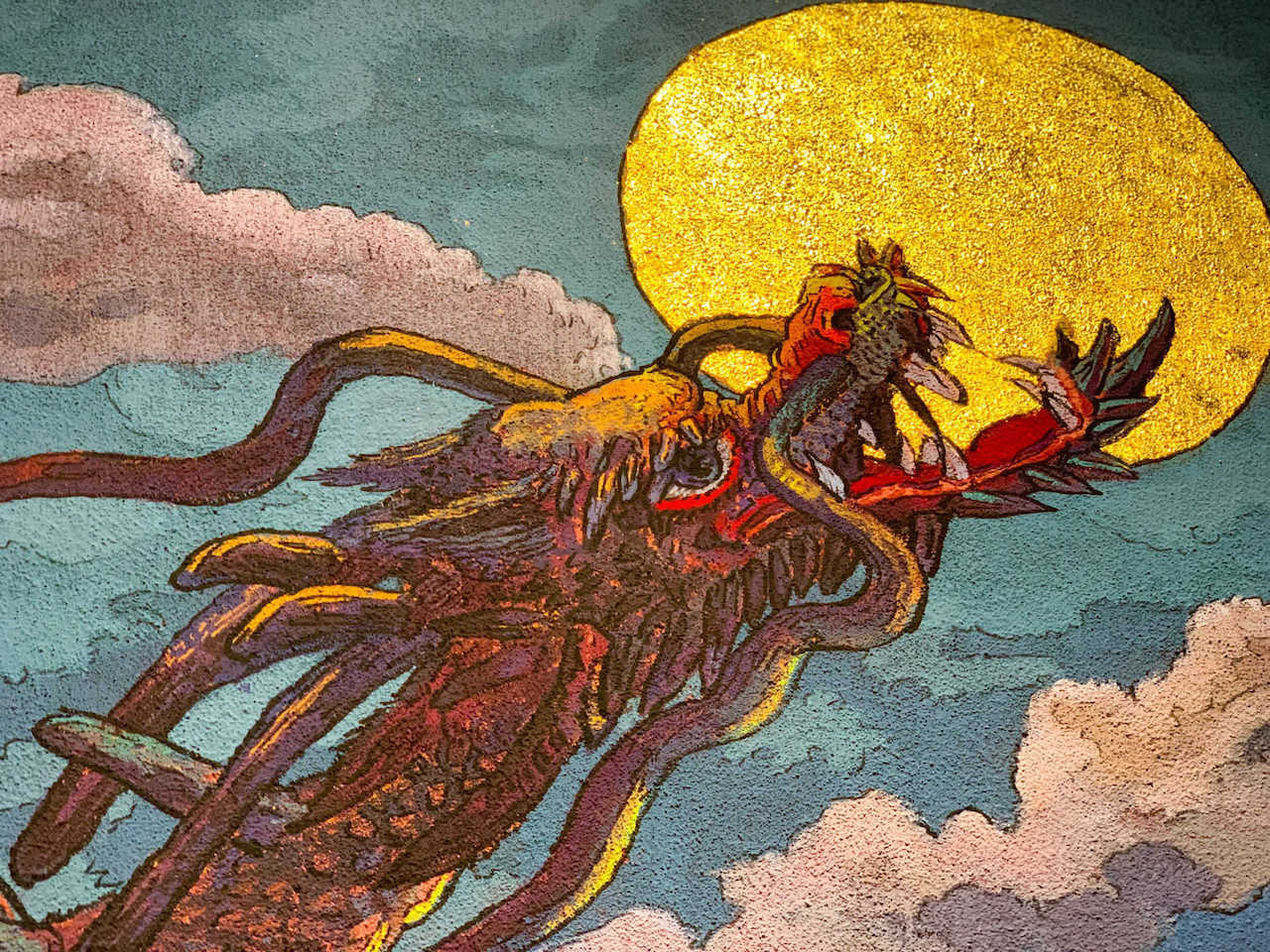
Please take a look at the following close-ups of the works’ surfaces. The materials are listed as “mixed media,” but they include mineral pigments and gold leaf, producing a relatively coarse, tactile texture.
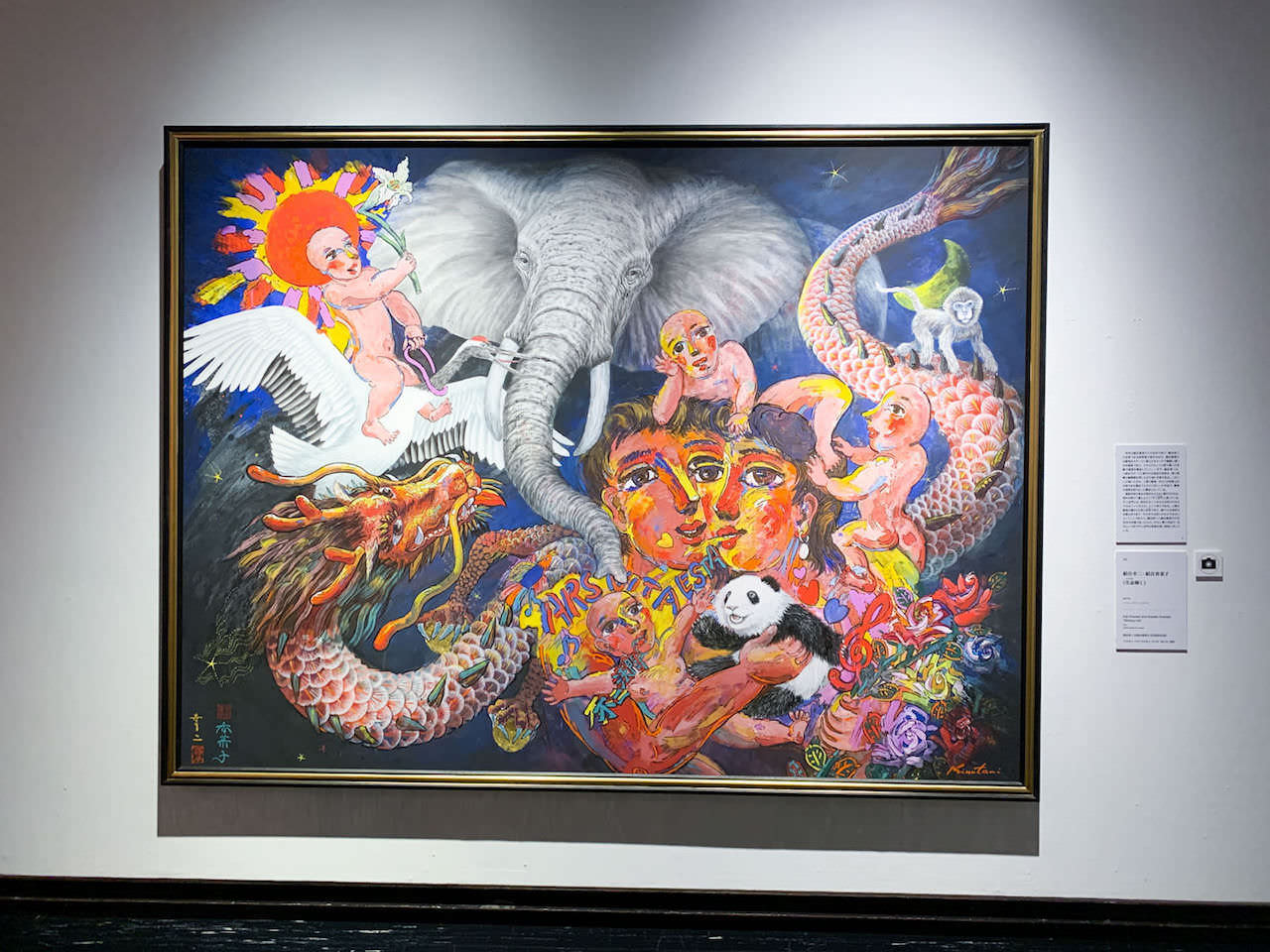
Also on view was “Life Shining,” a collaborative work with his daughter Kanako Kinutani.
The subzero air in Sapporo felt like it was piercing my skin, a tough condition for this writer who had come from Tokyo. Even so, I was able to feel the depth of Koji Kinutani’s artistic career.