Tomoko Konoike “Hunter Gatherer”
I visited “Hunter Gatherer,” the homecoming exhibition of contemporary artist Tomoko Konoike. The venue is the Akita Museum of Modern Art in Yokote City, Akita Prefecture.
The artist’s recommended route was printed on the flyer: “From JR Kitakami Station take the Kitakami Line, cross the Ōu Mountains to JR Yokota Station, then take a bus from the station.” I, however, took advantage of a discount package between Yokote City and JAL. If you catch a good local-tourism promotion, you can find surprisingly cheap tours. I would very much recommend visiting museums in regional Japan.
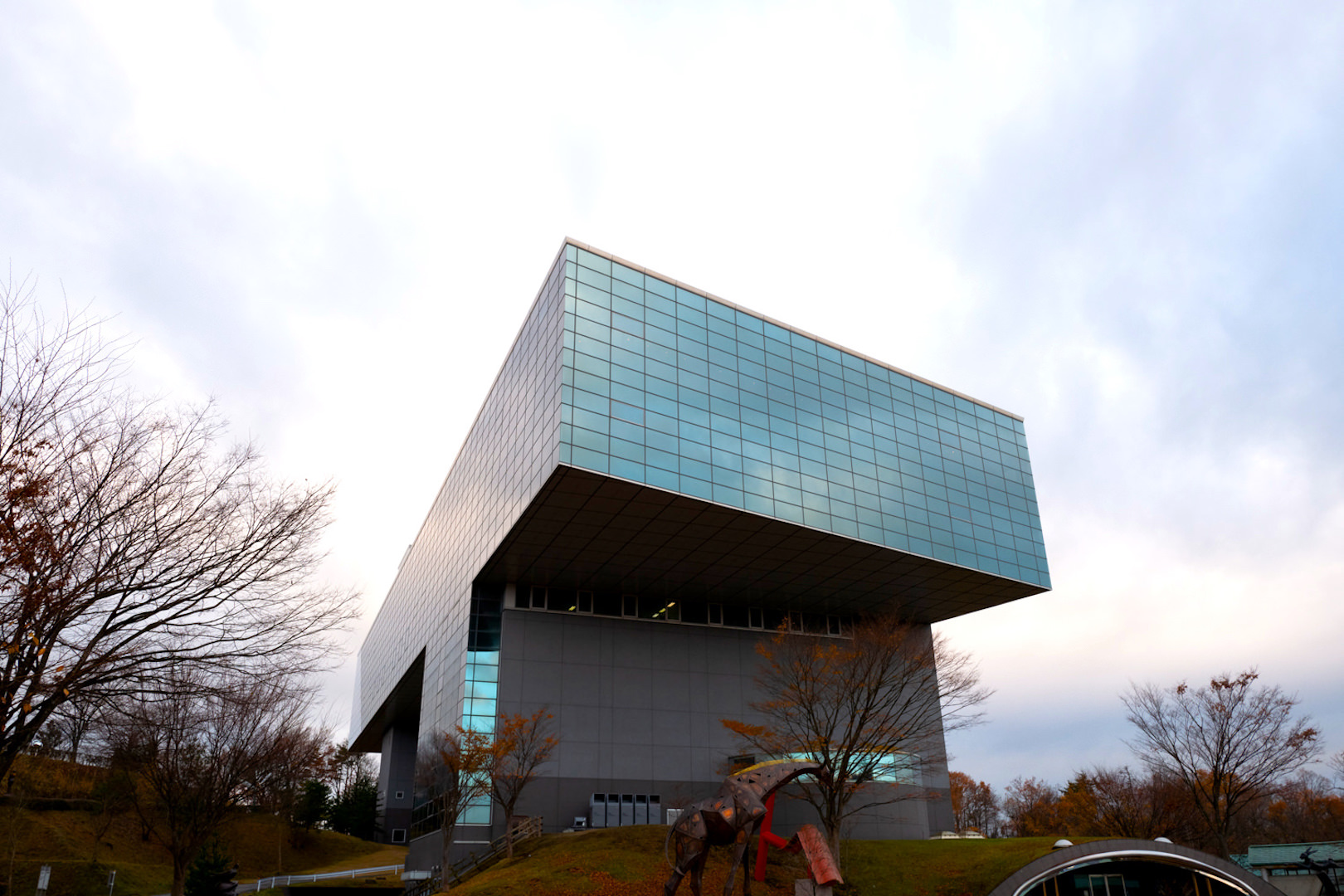
When I was planning my 2018 museum expeditions, this was the exhibition I was most looking forward to.
I visited on the day before the final day, and on the final day itself (more on that later). I timed my trip to coincide with the artist talk, which was capped at 100 people.
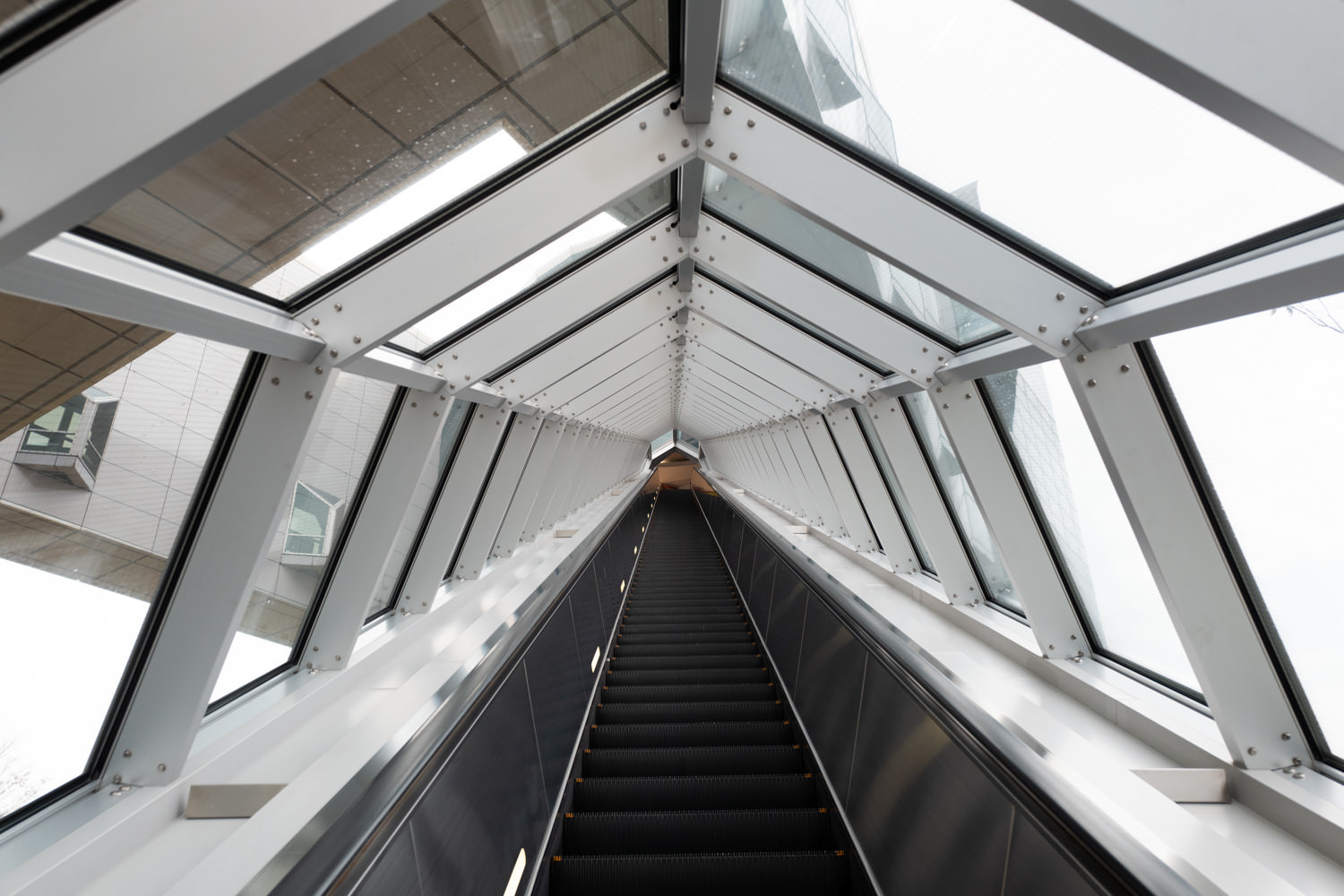
The Akita Museum of Modern Art is housed inside the “Akita Furusato Mura” complex, on its upper floors (5th and 6th), so you take an escalator up. This escalator runs straight up to the venue, and seems to function almost as a device for heightening the visitor’s anticipation.
Not only for this exhibition, but in general, Tomoko Konoike is said to plan her displays only after gaining a precise understanding of the venue’s structure. This time she had thick binders of architectural drawings of the Akita Museum of Modern Art sent to her, and used a measuring tool to check pitches during the museum’s renovation window before the opening. The curators must have had their work cut out for them.
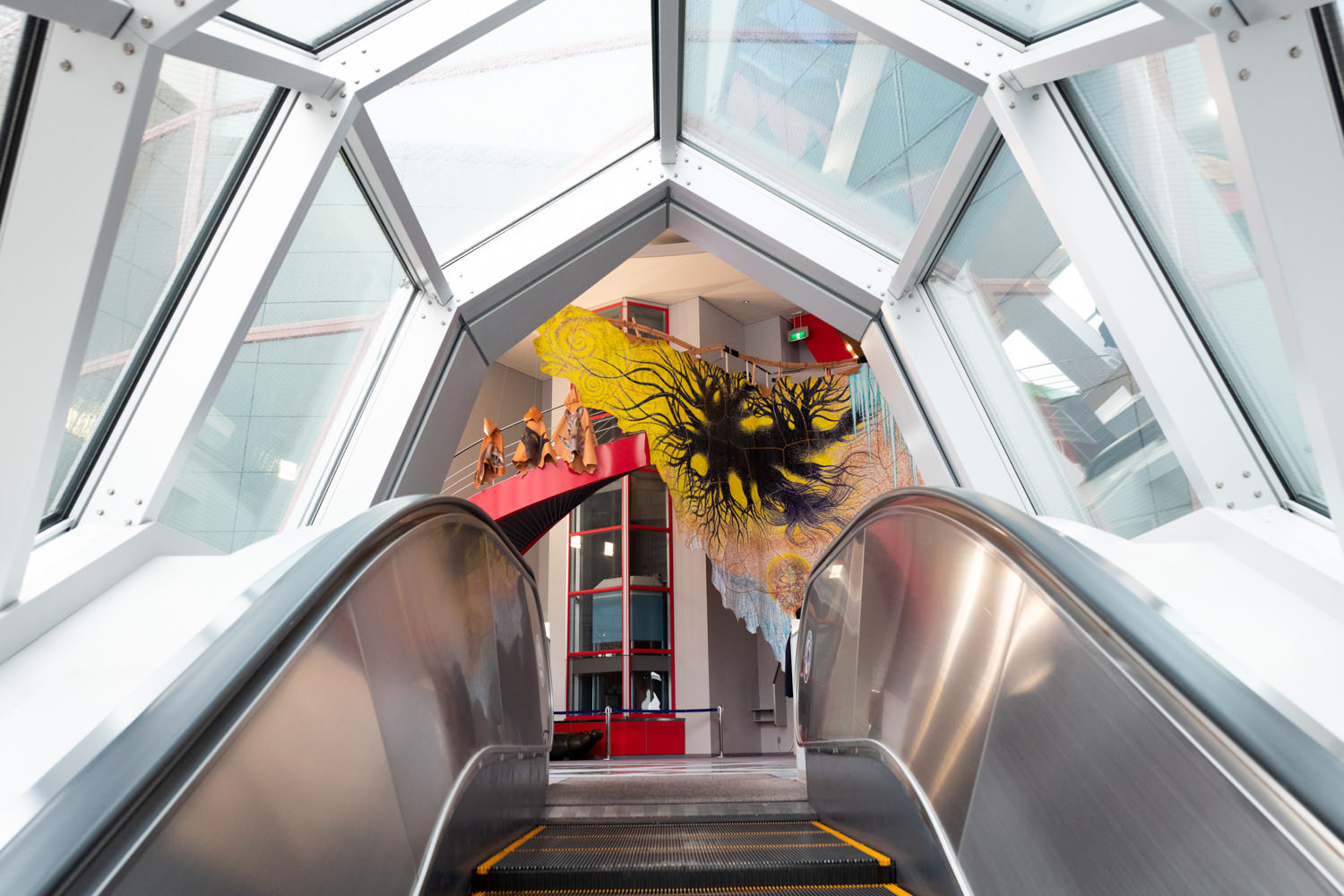
Perhaps “12-nin no Hoito” (The Twelve Beggars) is here to welcome visitors.
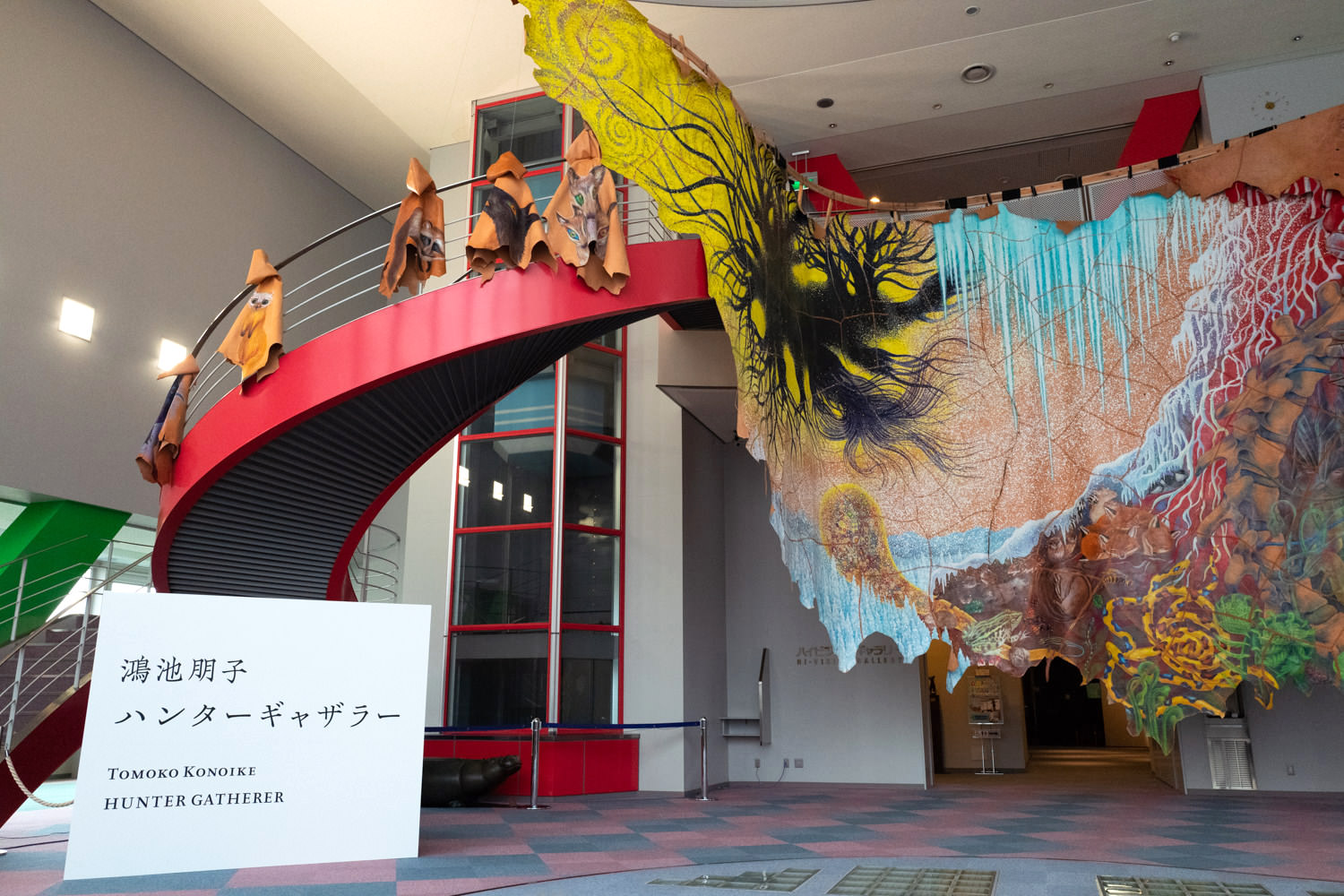
Arriving on the floor after the long escalator ride, you are met suddenly with a kawadonchō (leather curtain). It appears alongside a Rodin sculpture that is too heavy to move (or, in Konoike’s terms, “not to be moved”).
After that, I presented my ticket at the entrance to the exhibition. The approach from there was interesting as well: a long corridor covered in red carpet.
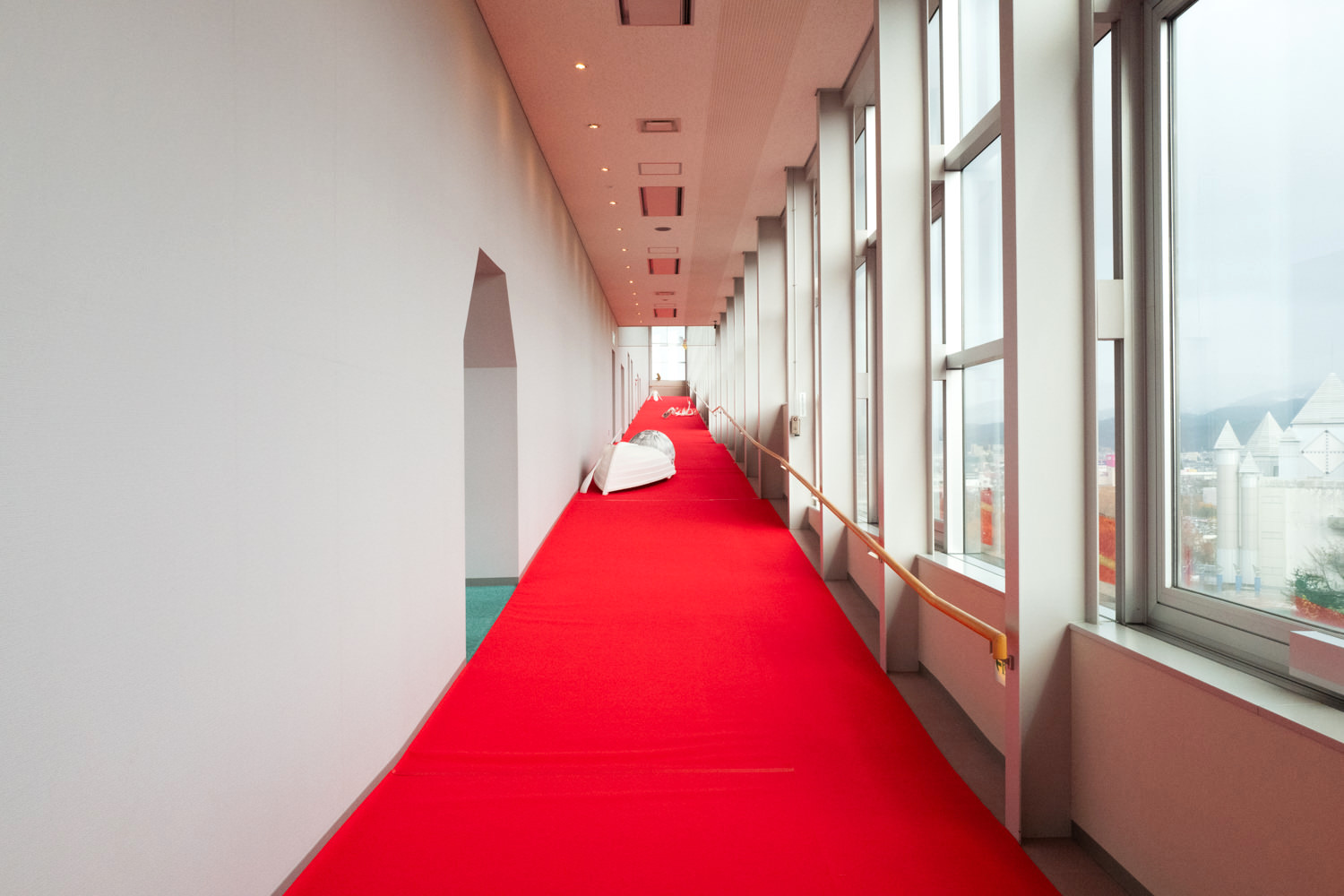
Being my first visit, I didn’t realize it, but the exhibition had apparently been set up in the reverse of the normal route.
A monitor was set up along the way, playing footage of a canoe making its way down a river.
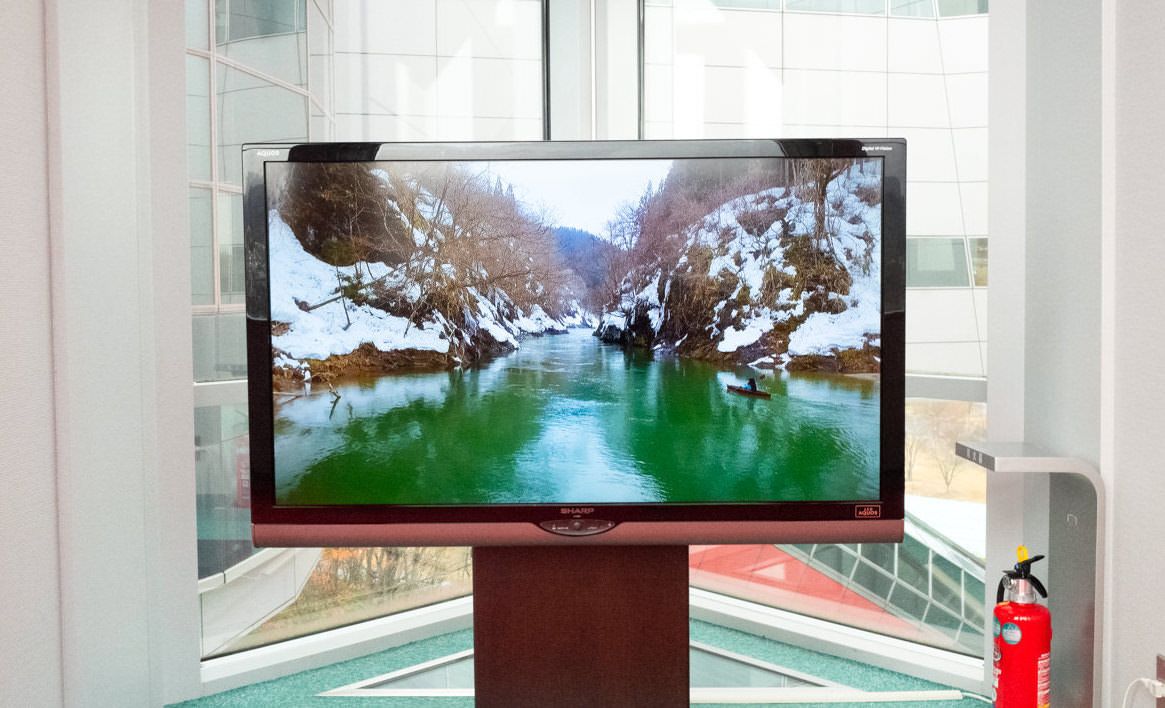
Perhaps the slow pace of paddling a canoe is a message that we, too, should proceed through this exhibition unhurriedly.
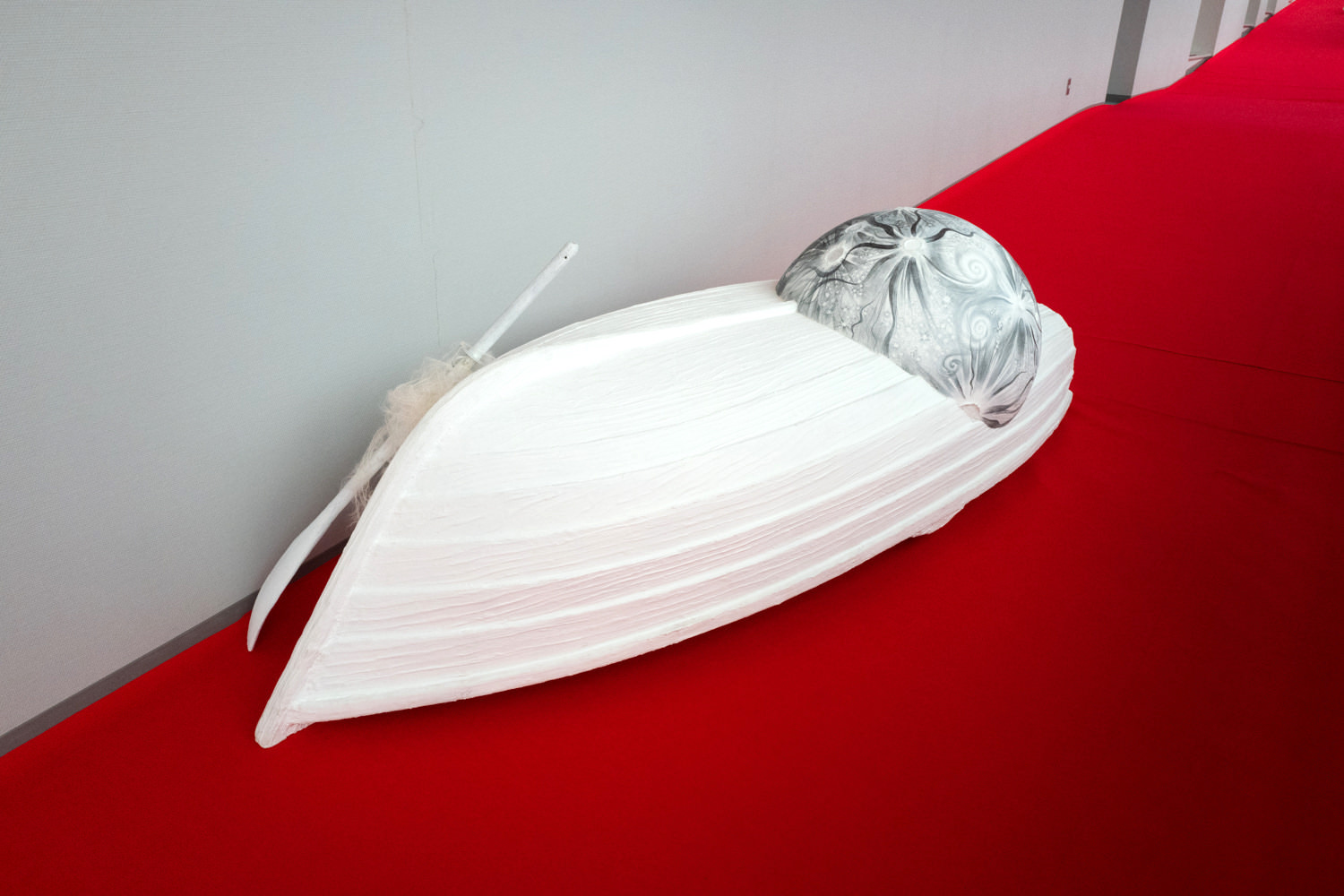
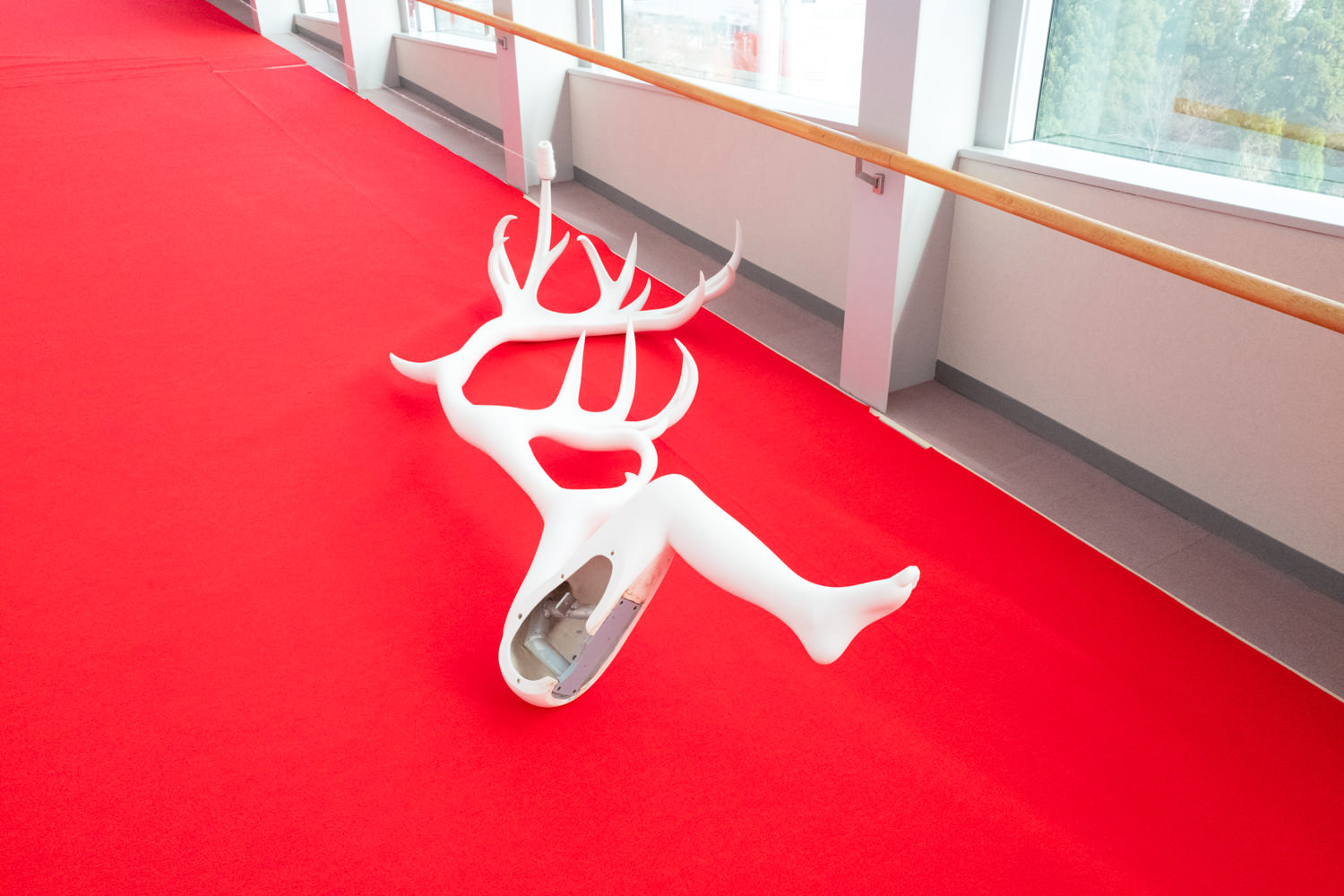
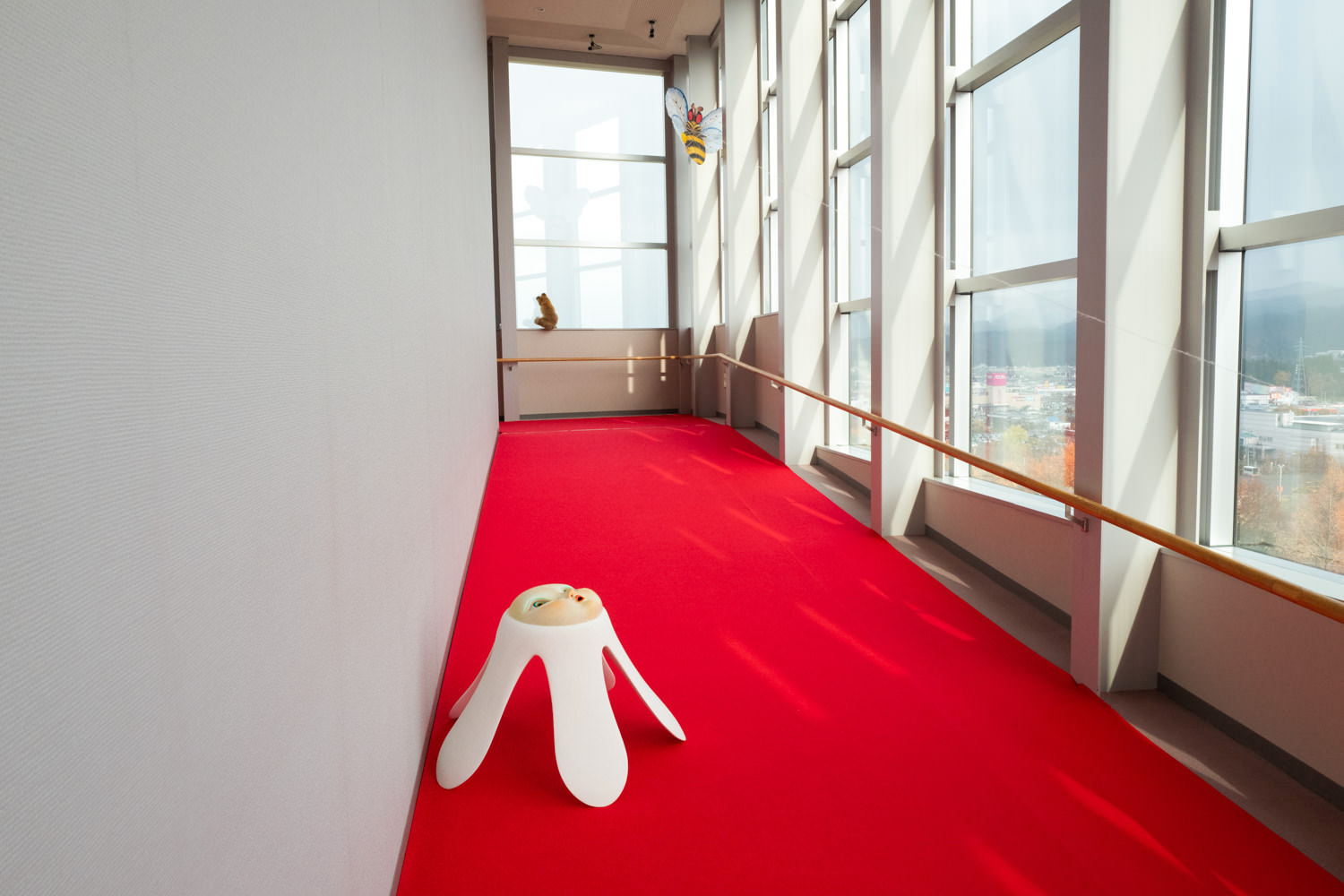
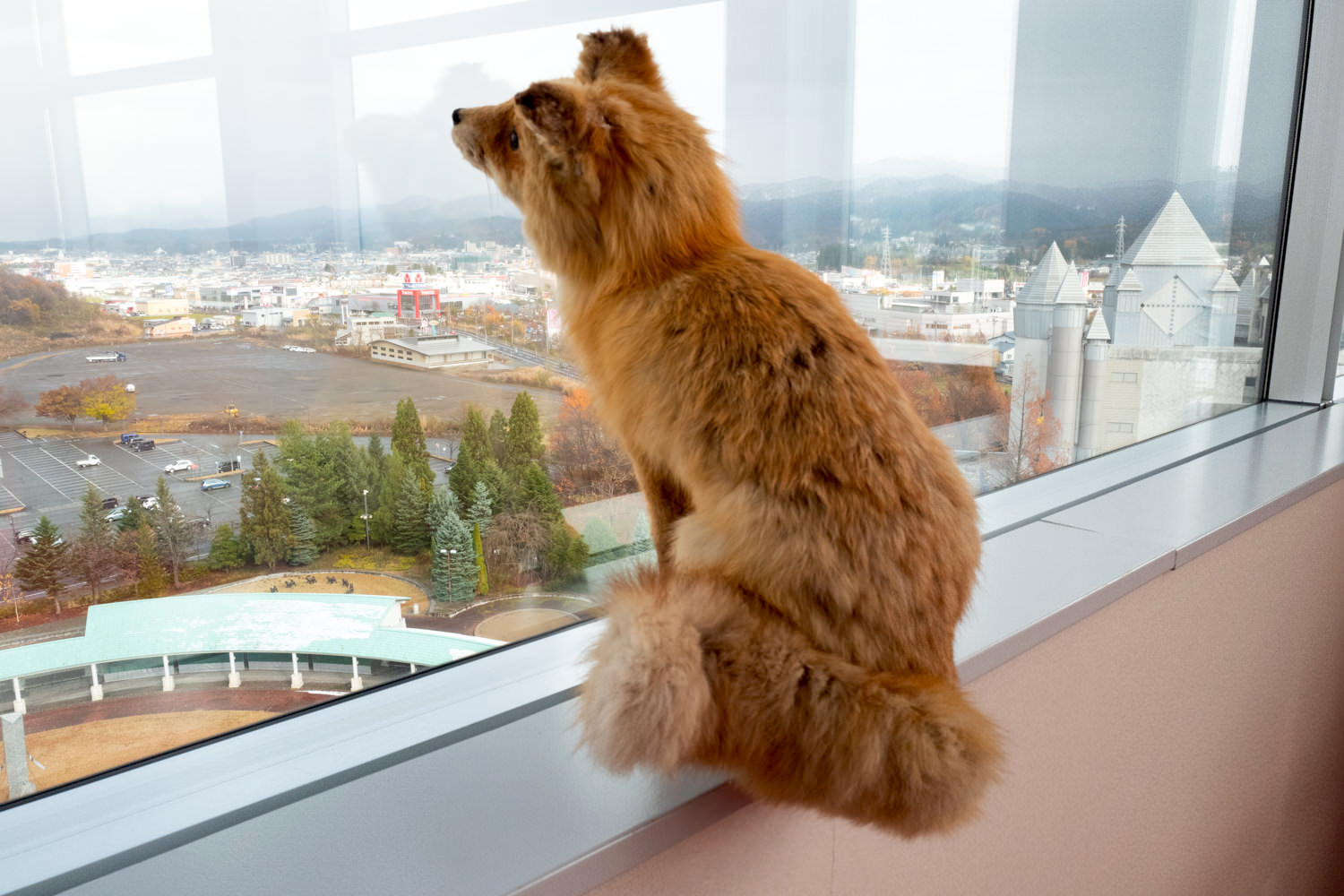
Taxidermied foxes and squirrels were also on display, gazing out through the windows.
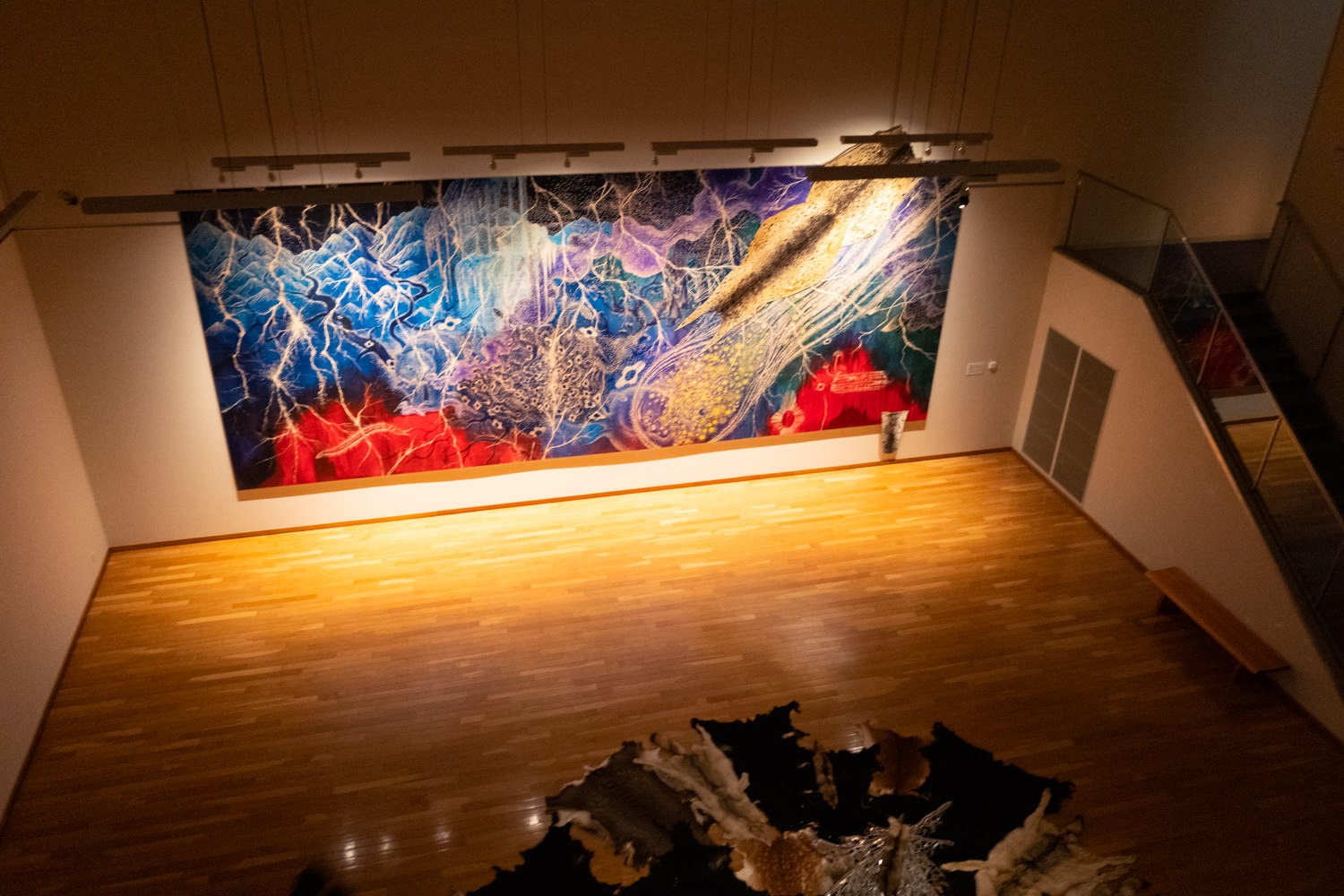
Entering the balcony from the “Red Slope Gallery,” you get a sweeping view of the exhibition room one floor below. From here you can take in the entire scope of the enormous works.
Leaving the balcony and continuing on, you are greeted by a small hut. Having been climbing all this time, it gave the impression of a mountain lodge.
Something was written on its white roof. What might it have said?
[caption id="attachment_11290" align="aligncenter" width="1500"]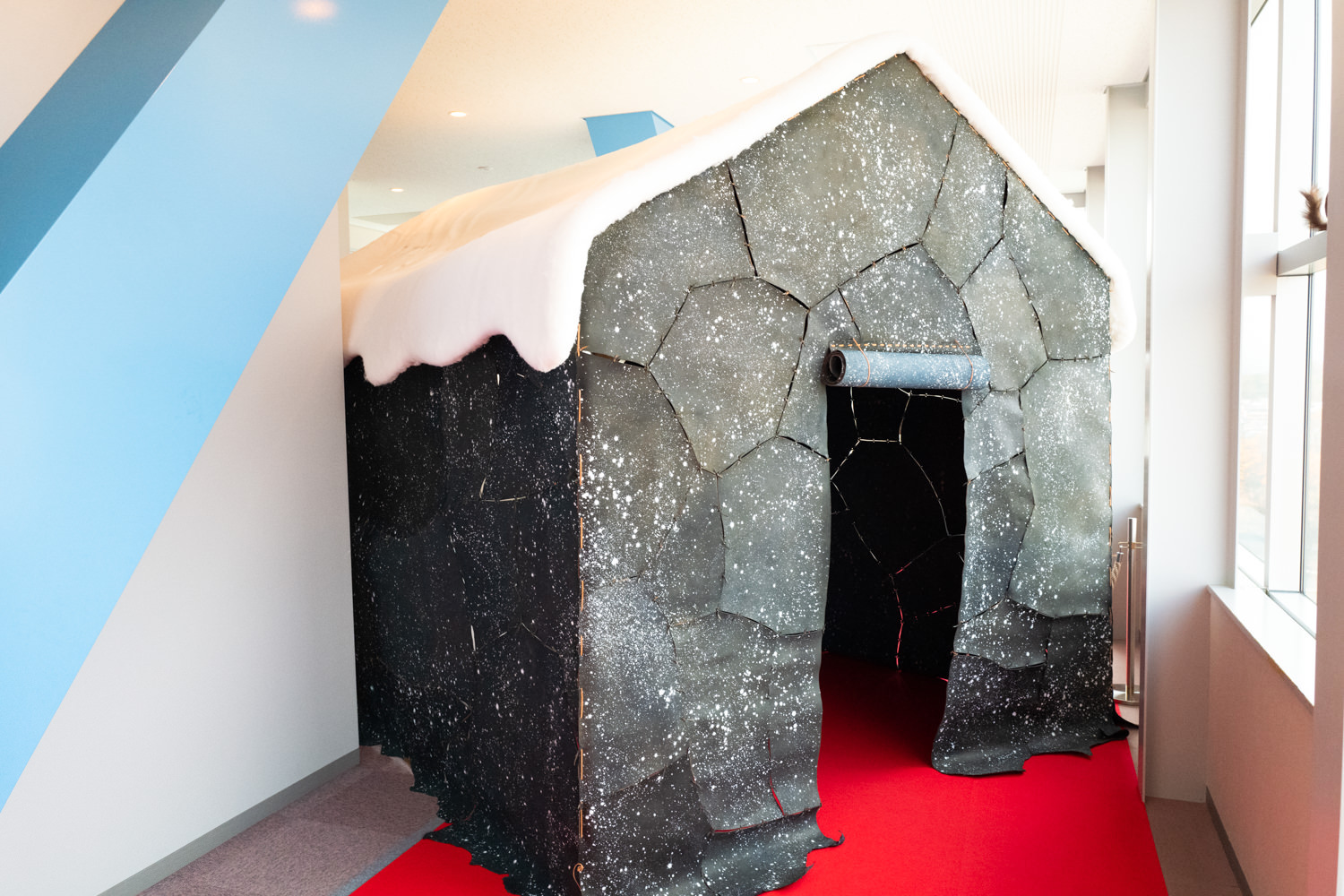 “Tsugihagi Goya” (Patchwork Hut), 2015
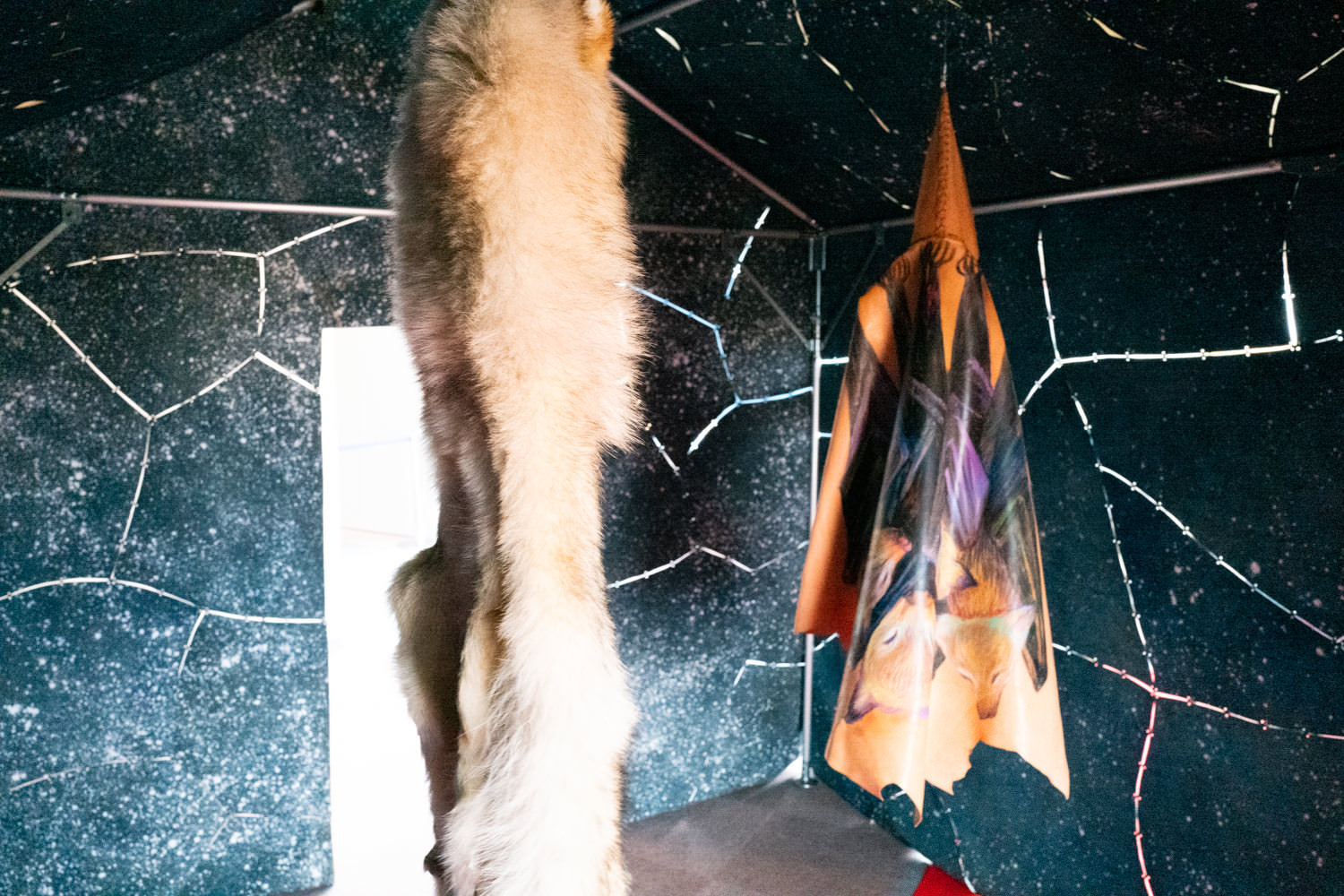
Exhibition Room 4
Coming down the stairs from “Tsugihagi Goya,” I finally arrived at an exhibition room. Because I was moving along the reversed route, this was “Exhibition Room 4.”
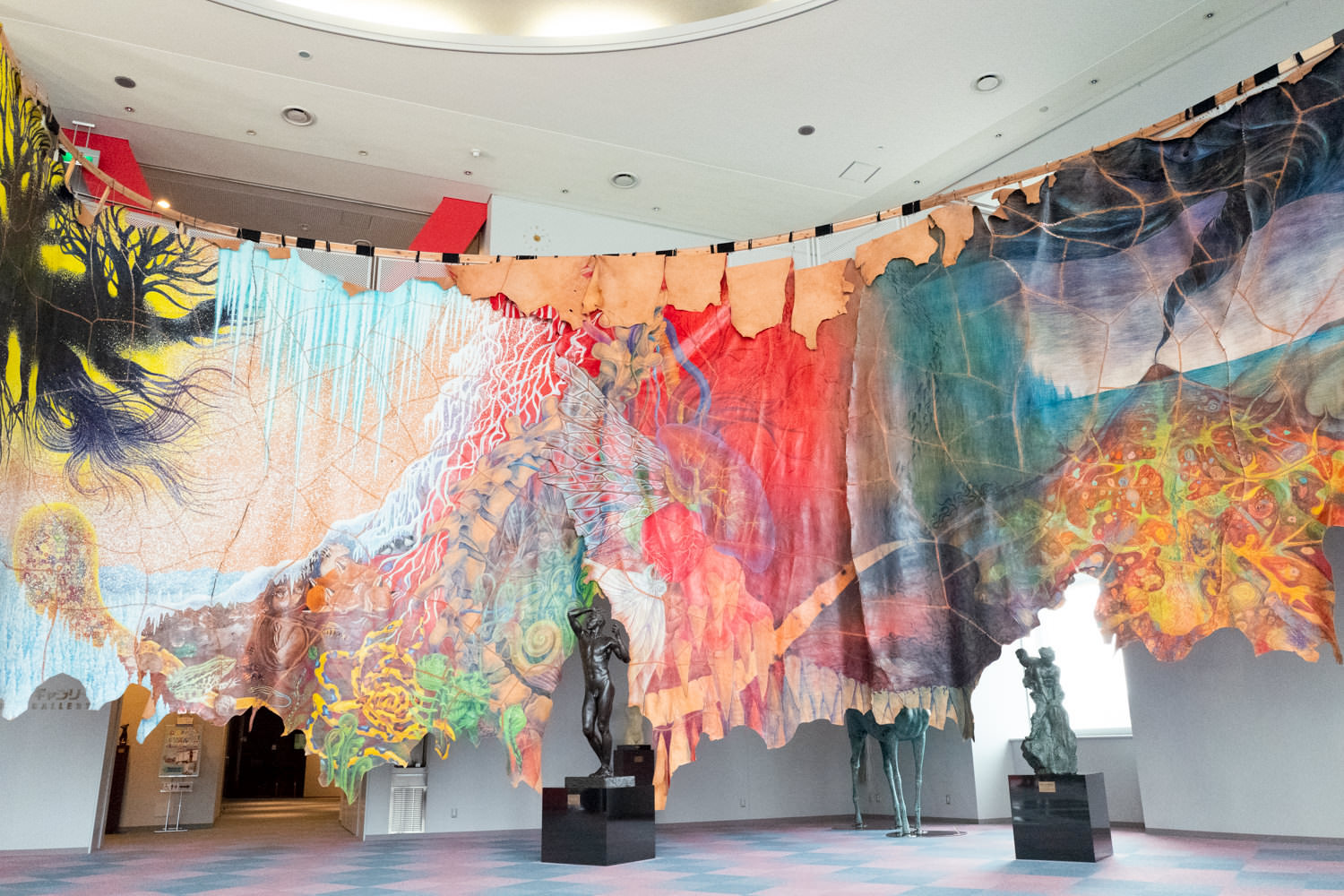
Room 4, titled “Dream Hunting Grounds,” was overwhelming in scale.
Both the murals and the installations were free to touch. Some visitors were checking the texture of the materials, others were absorbed in the murals — everyone spent time in their own way.
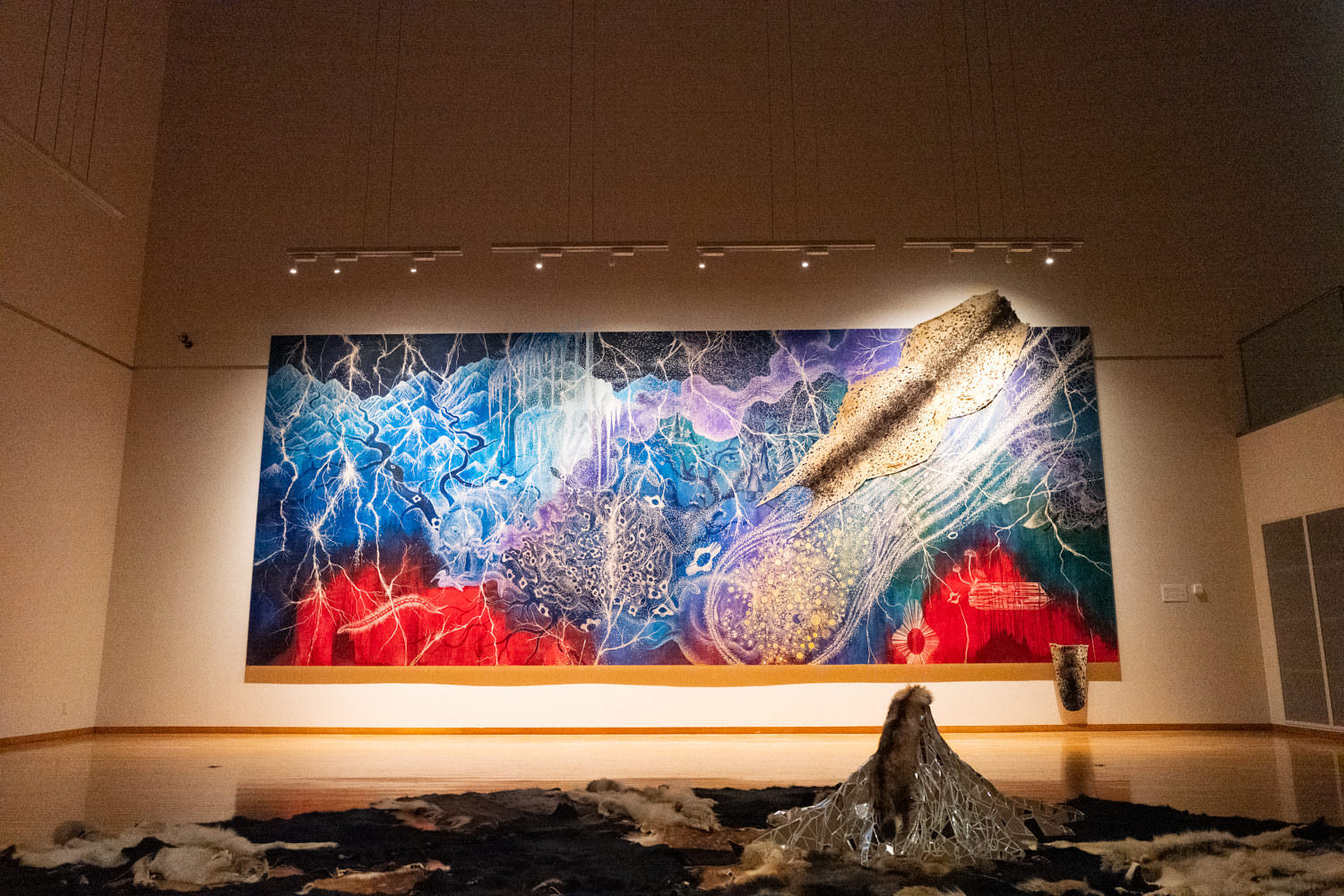
On this floor, Tomoko Konoike’s rendition of “Akita Ohara-bushi” was playing, and her transparent, resonant singing voice reached my ears as if echoing from afar. The reverberation was so pleasant that, in the wide, open space, I ended up staying for a long while.
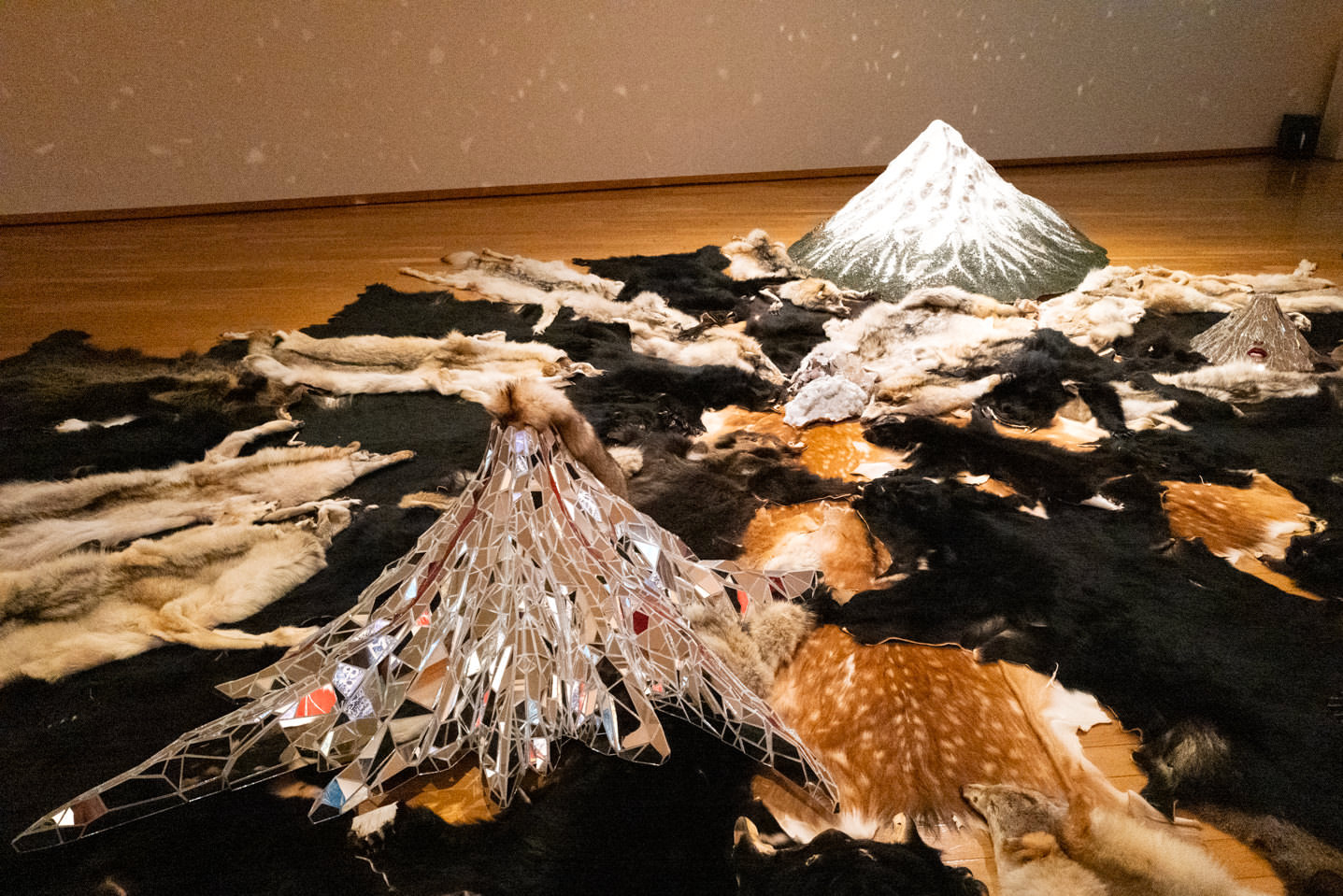
In the photo above, animal fur is laid out like a carpet. These are from culled bears, wolves, deer, martens, and other animals killed under pest-control programs.
Exhibition Room 3
Leaving the tall-ceilinged, comfortable, expansive Room 4, you move on to “Exhibition Room 3.”
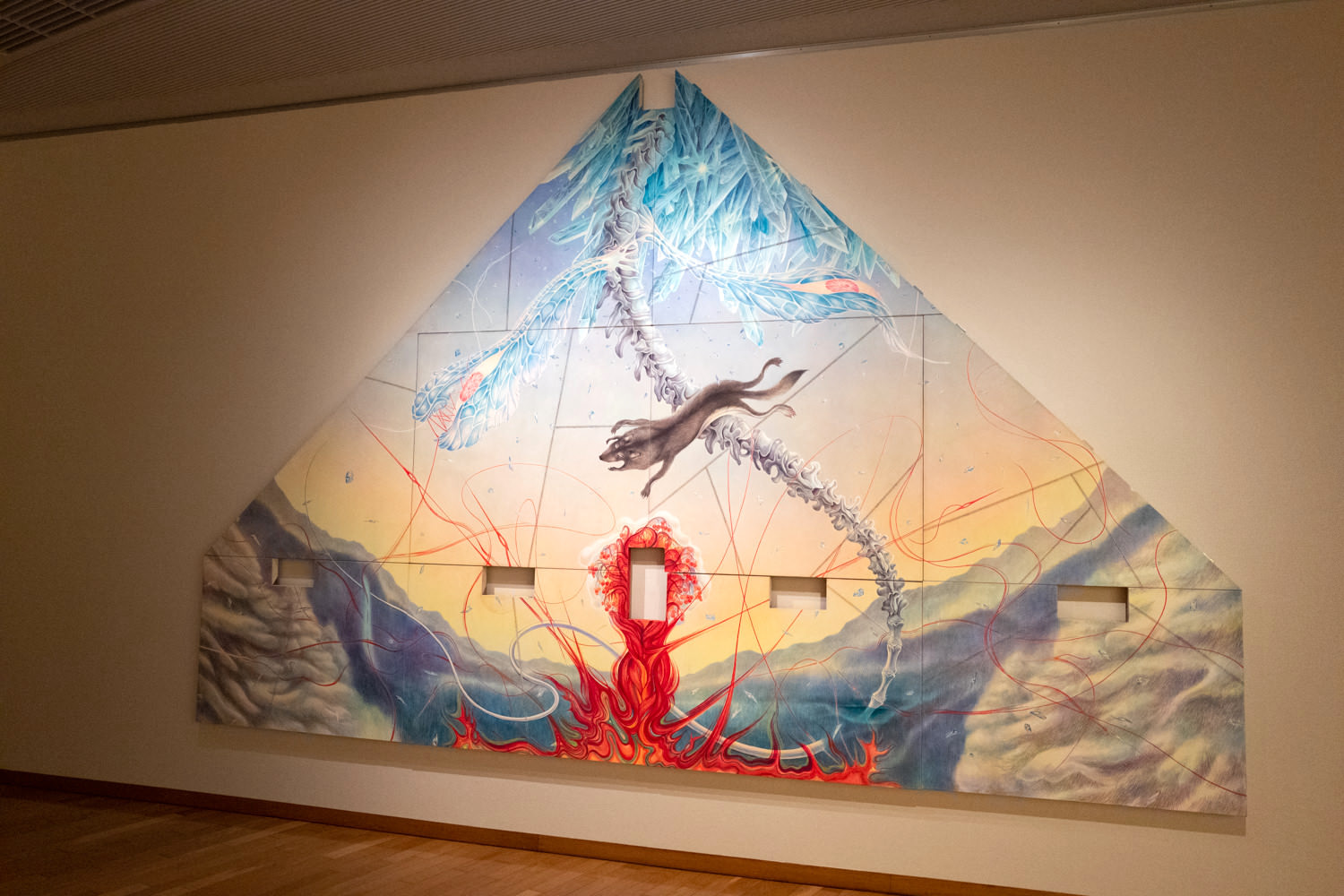
A shift from the vast space: while the layout here is closer to a traditional art exhibition, a large installation stood at the center. Draped with black bear fur
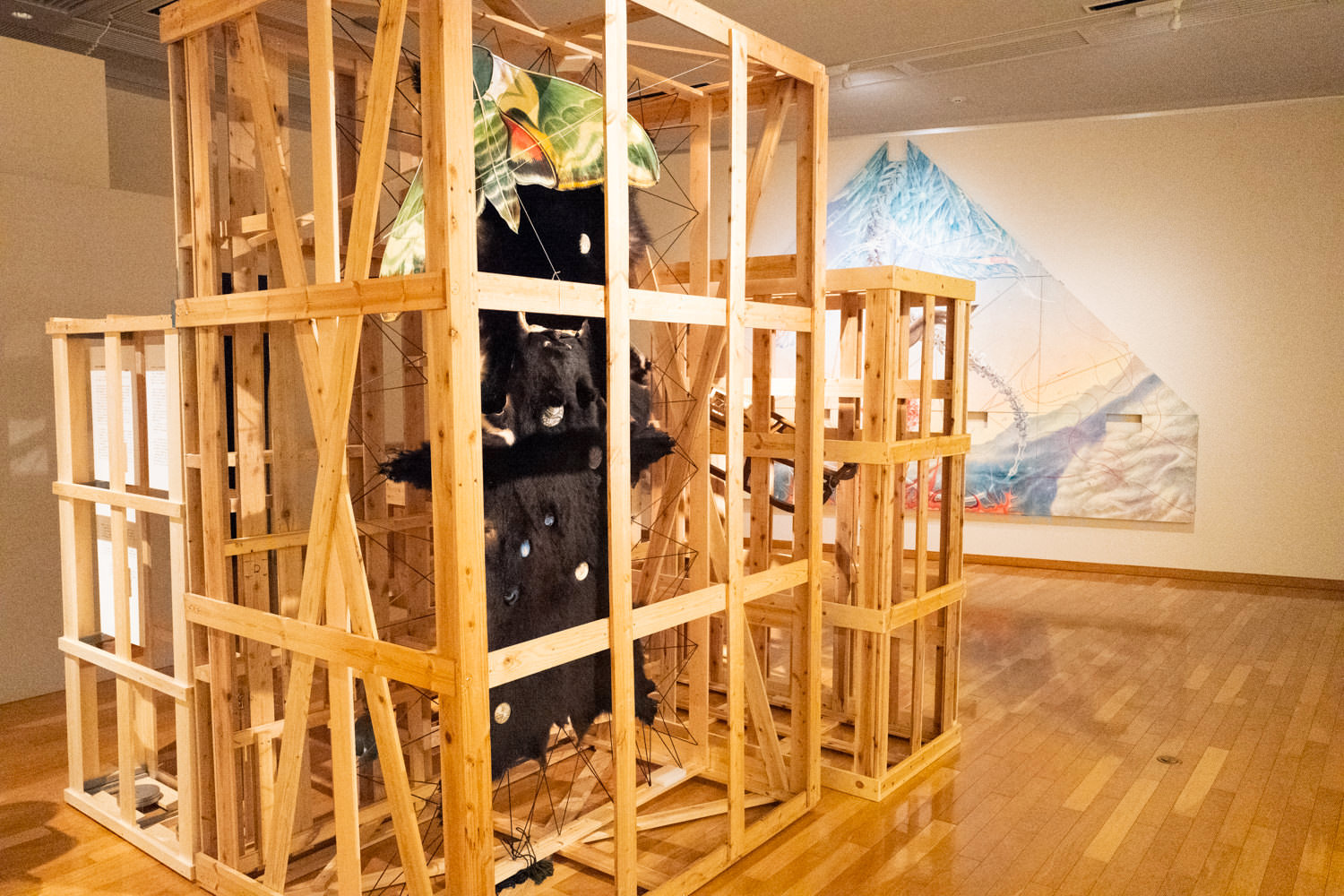
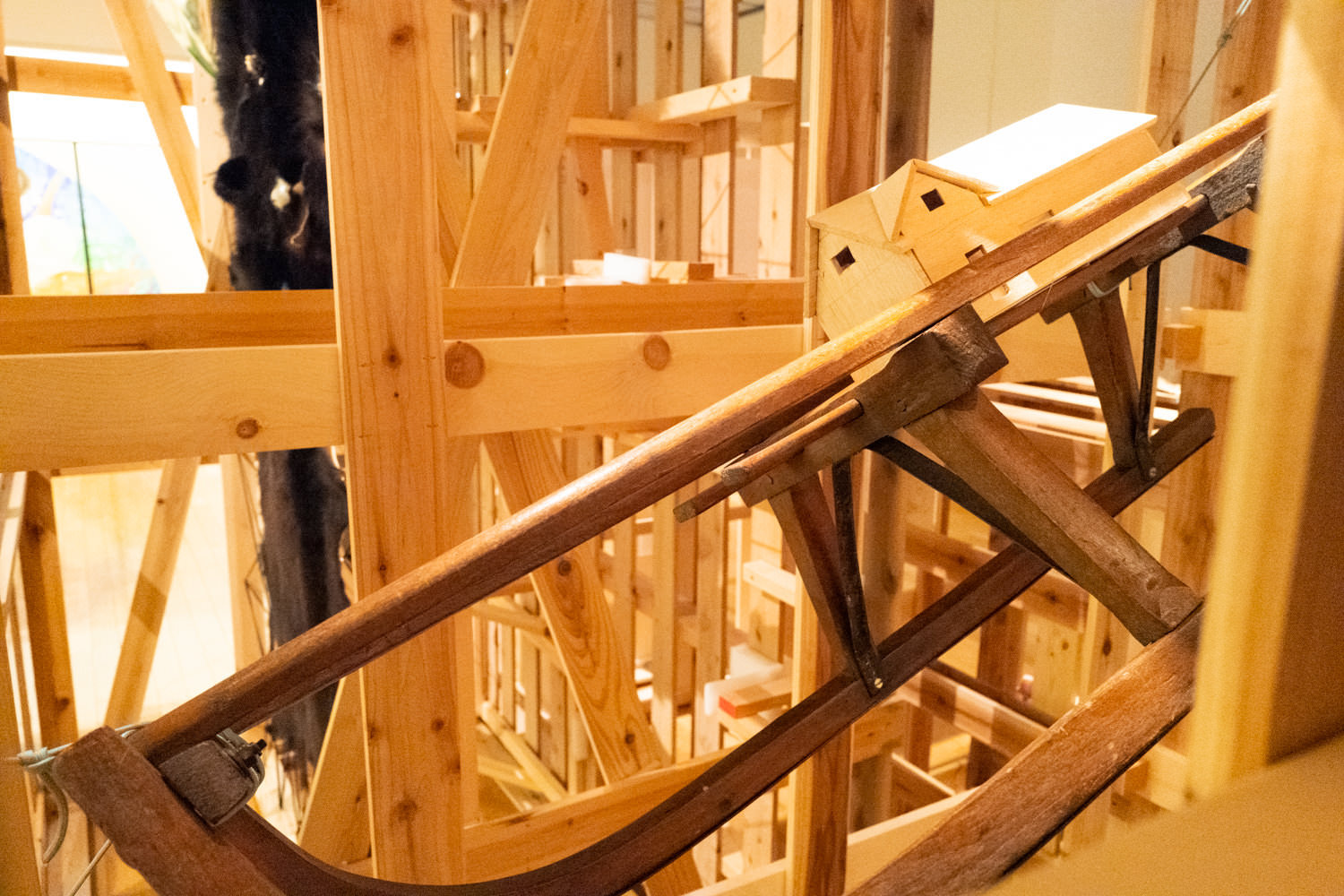
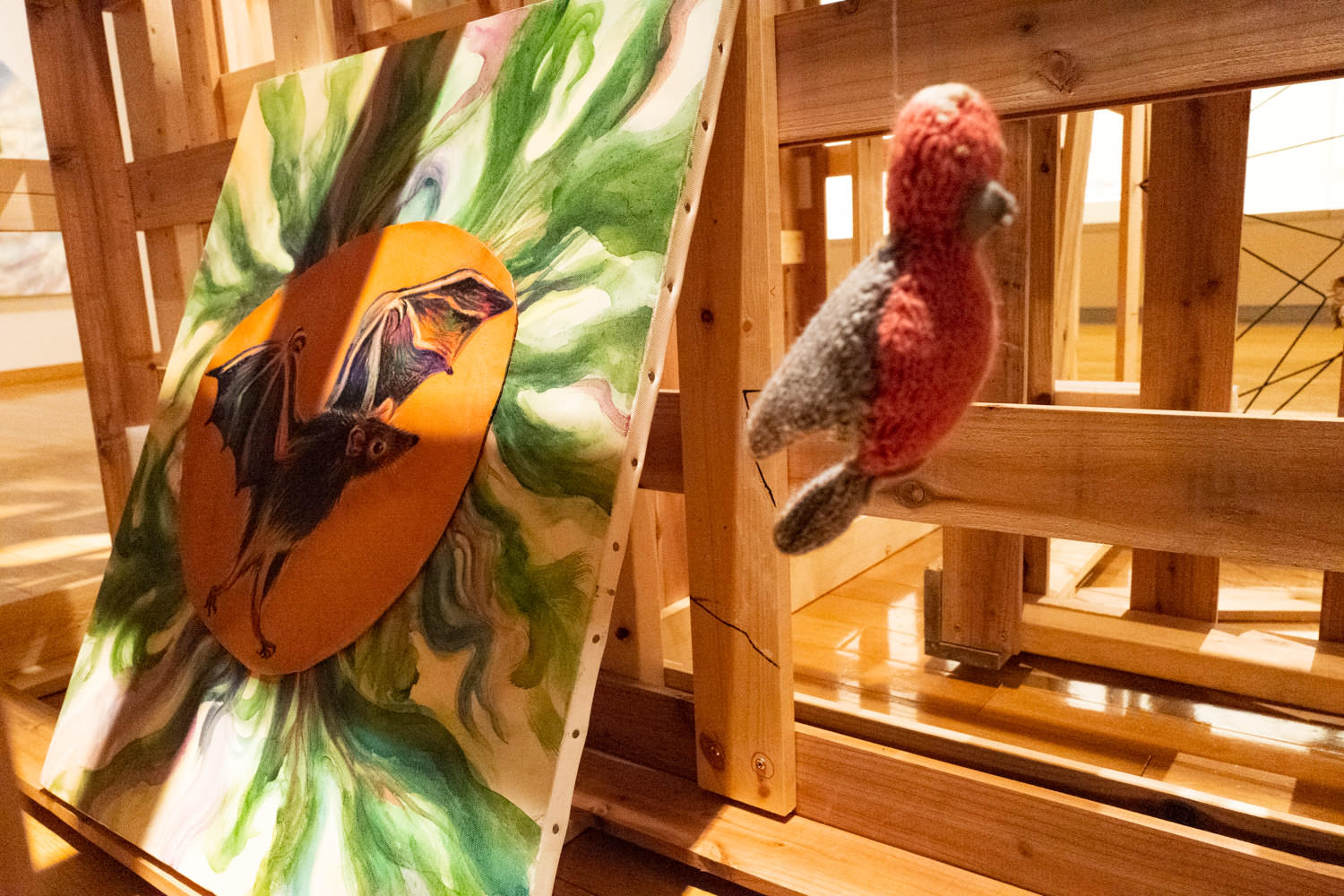
Continuing on
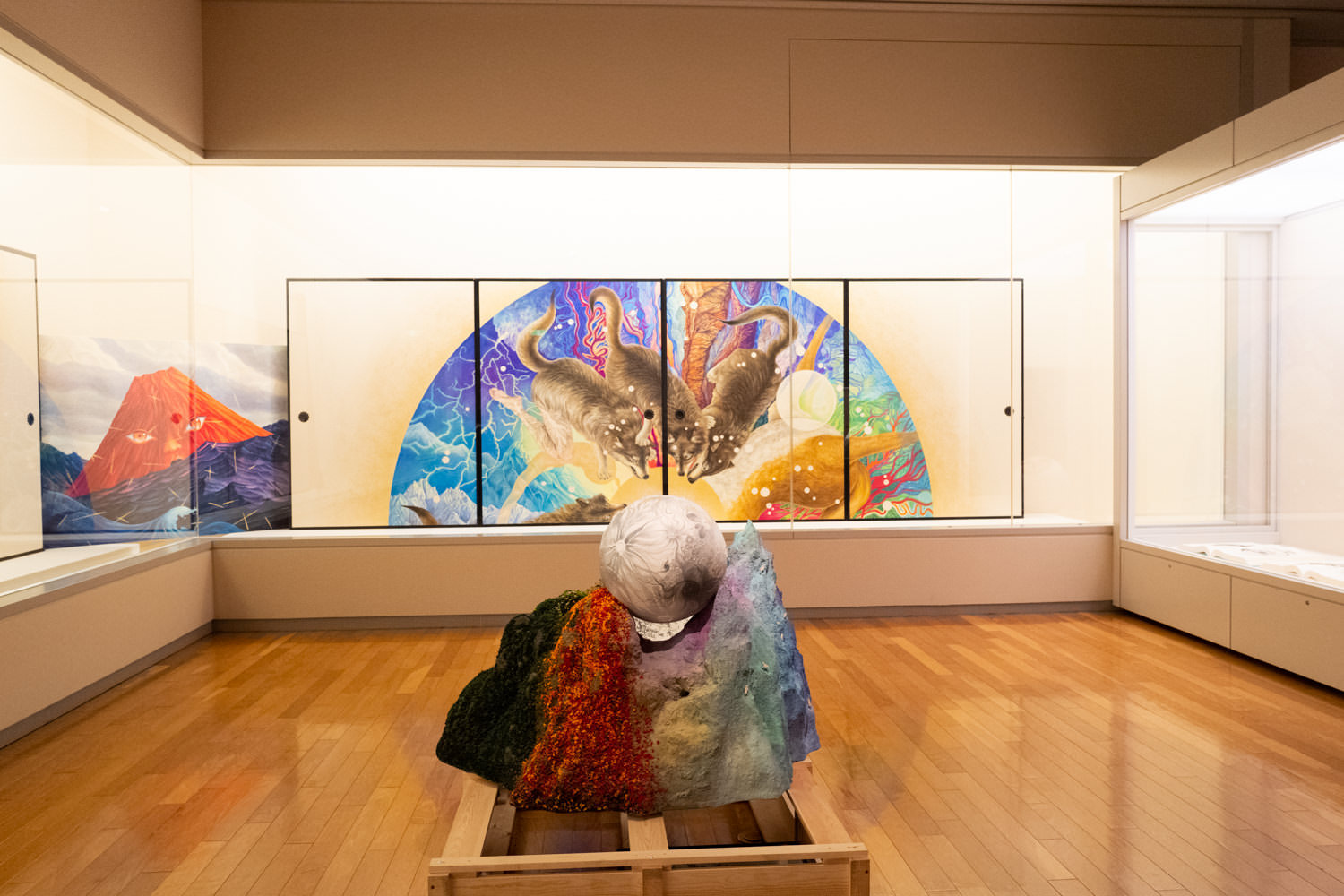
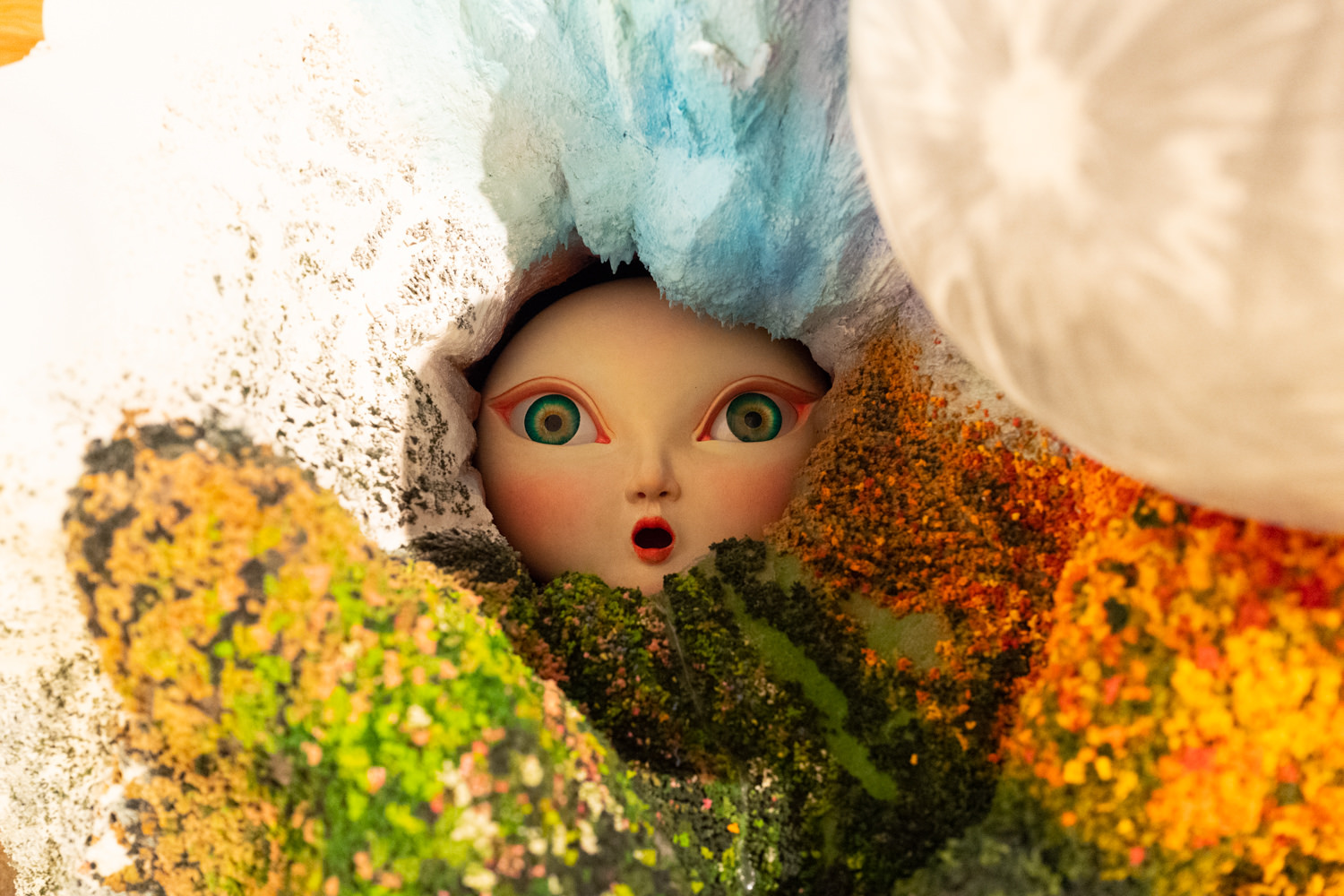
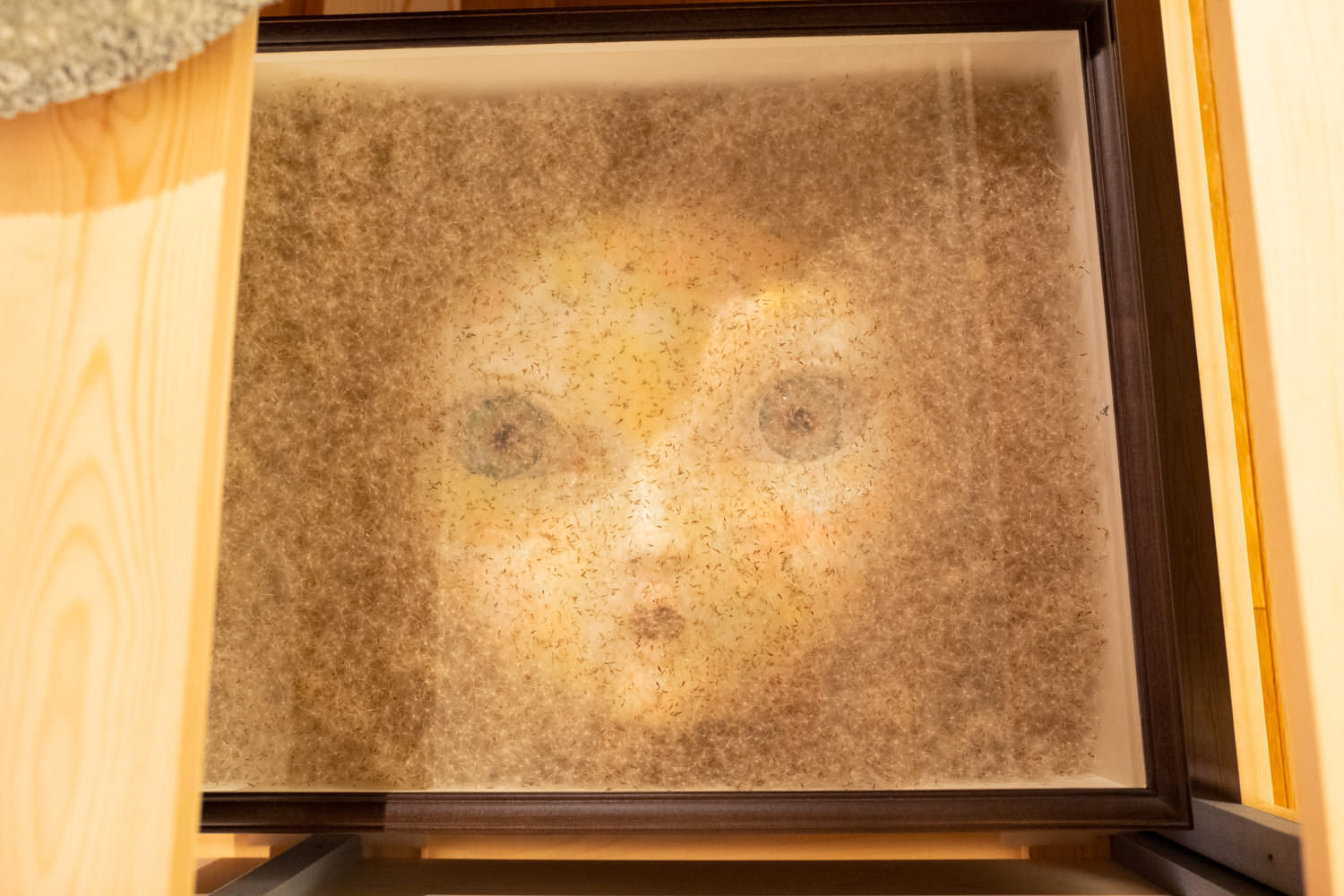
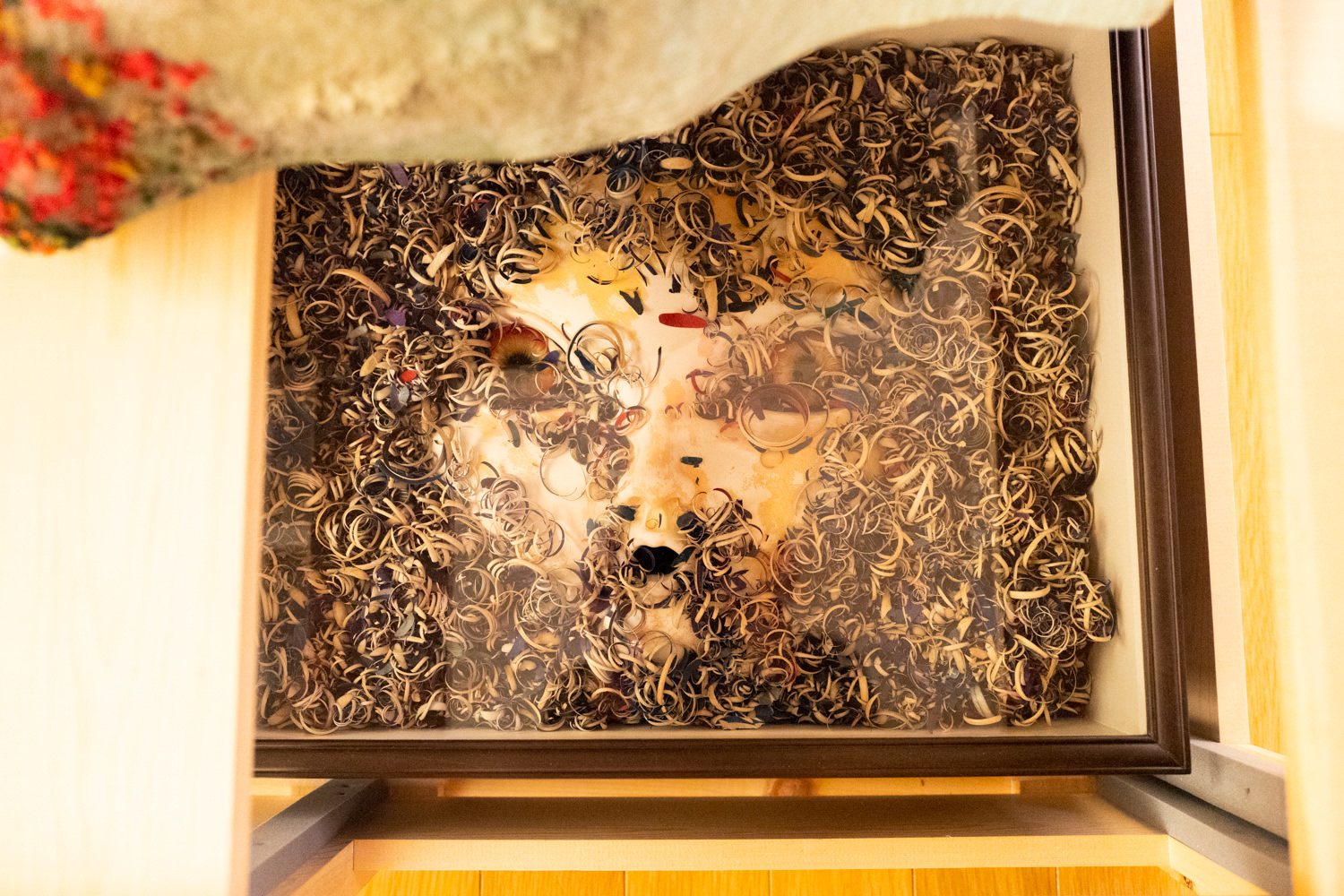
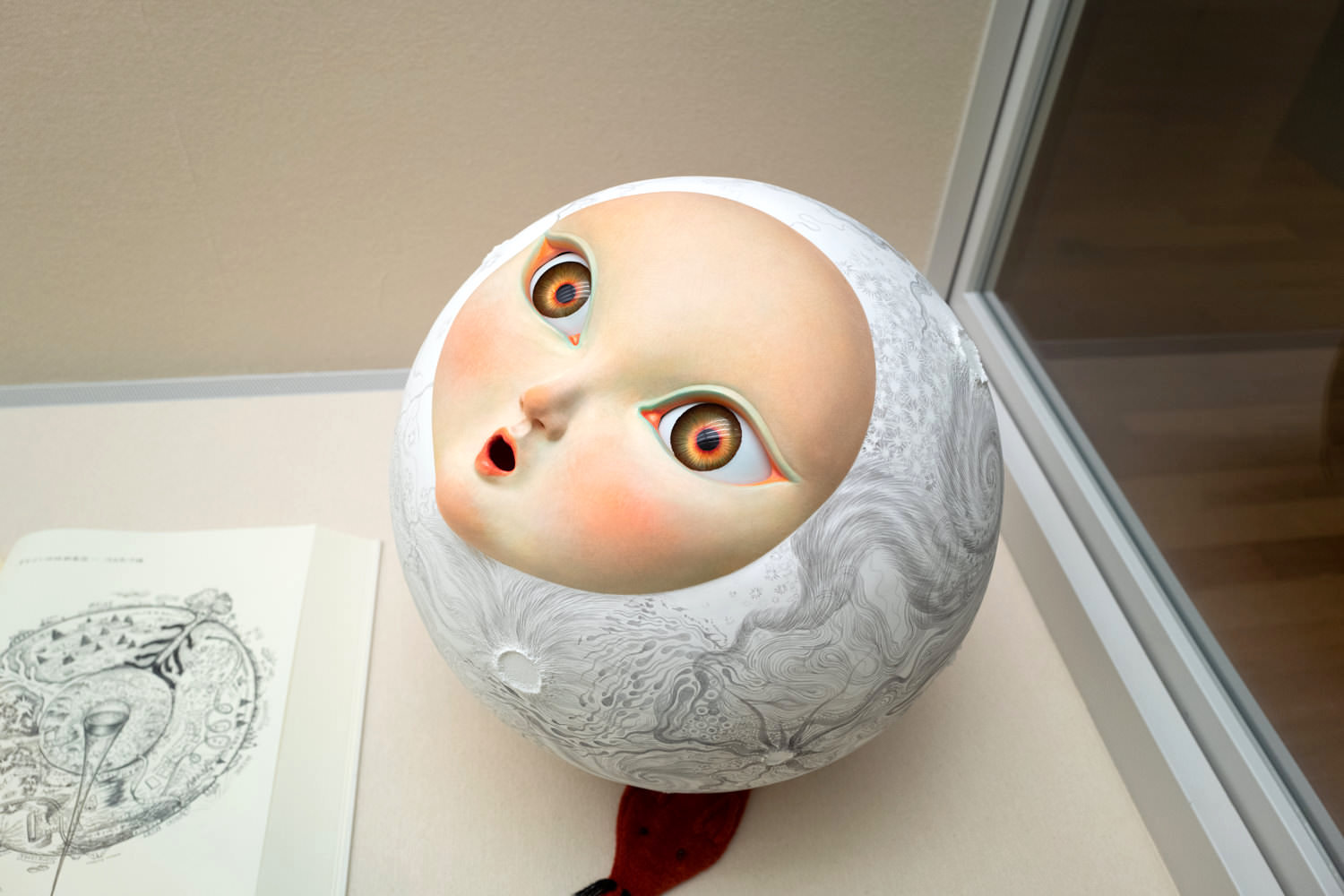
Exhibition Room 2
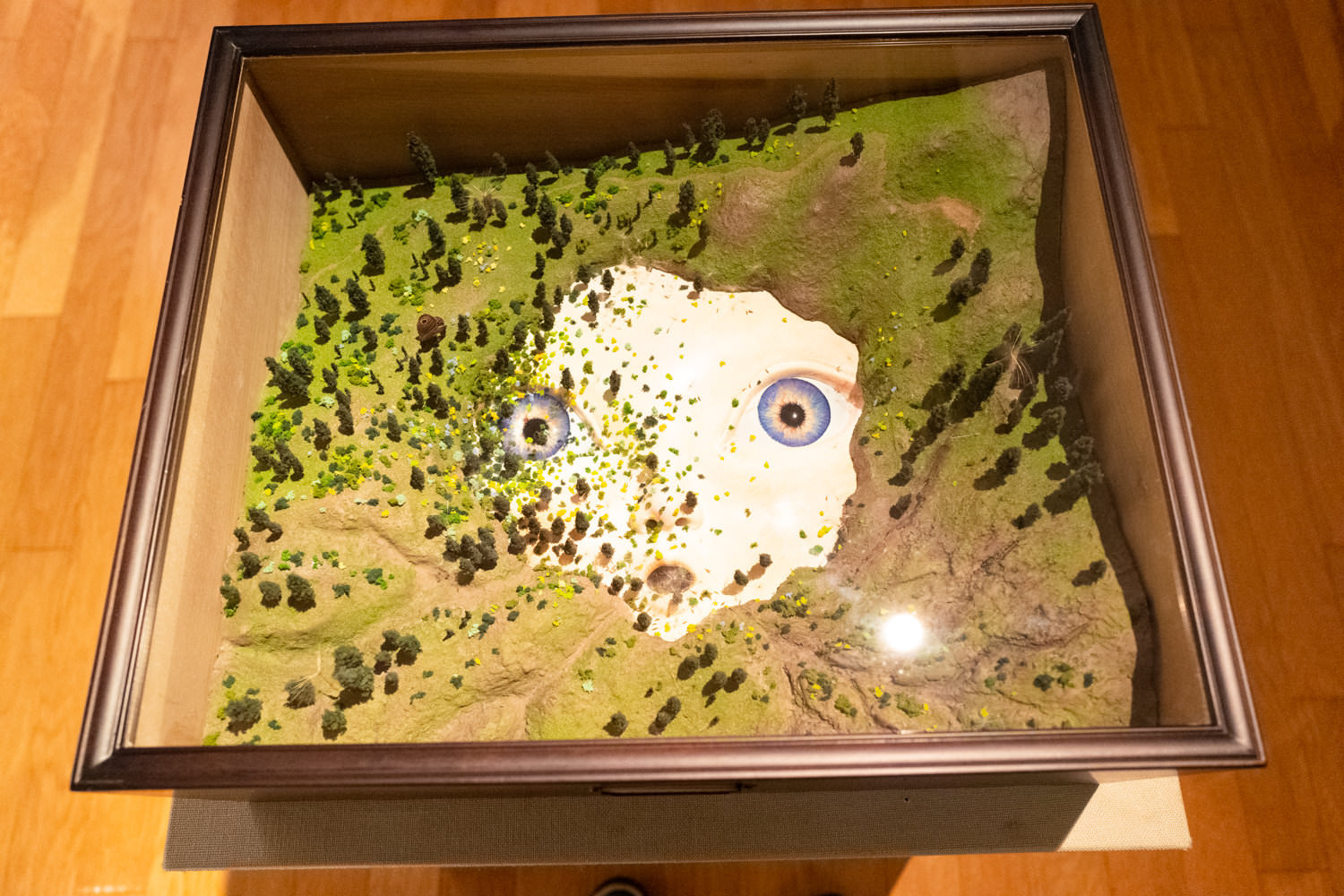
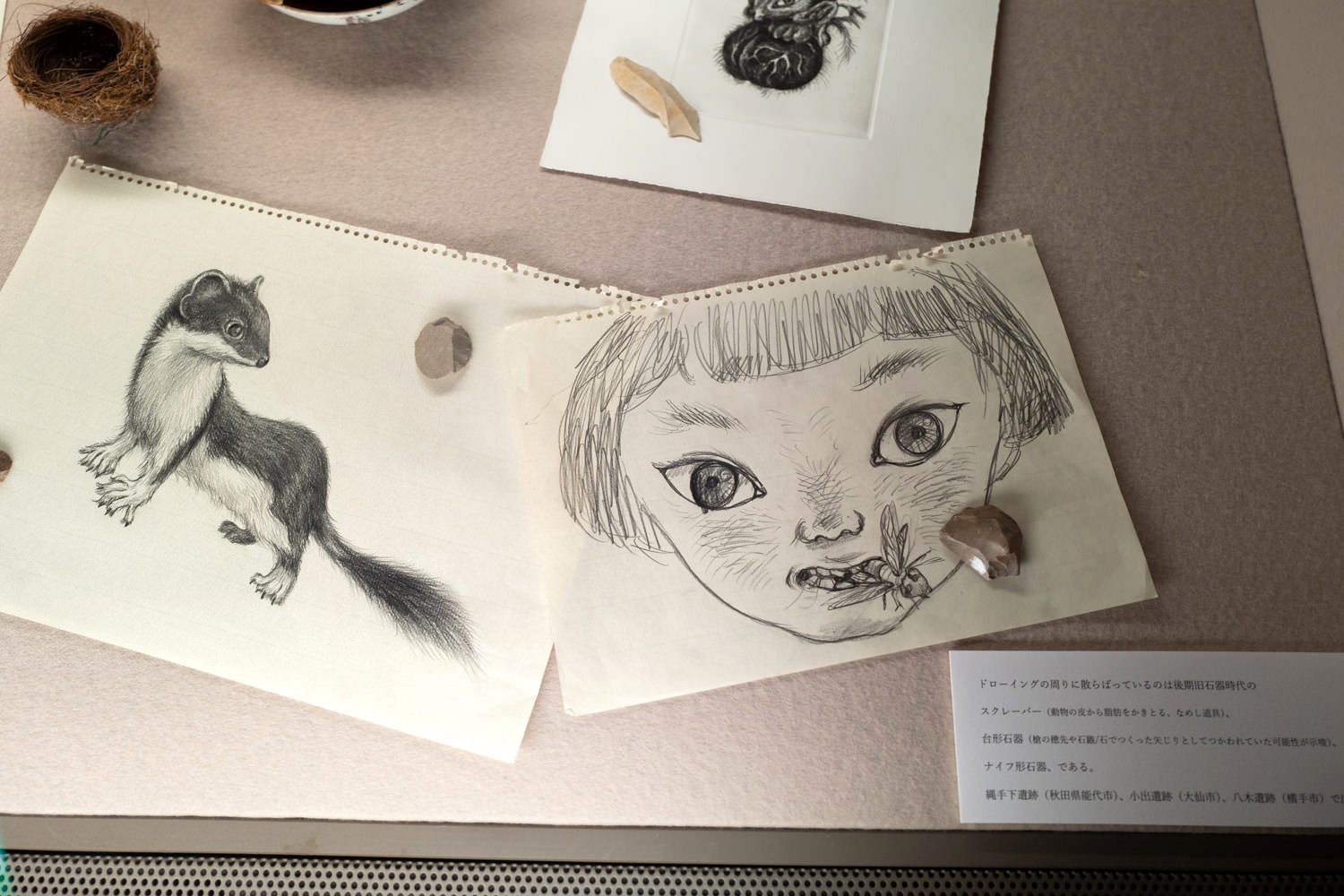
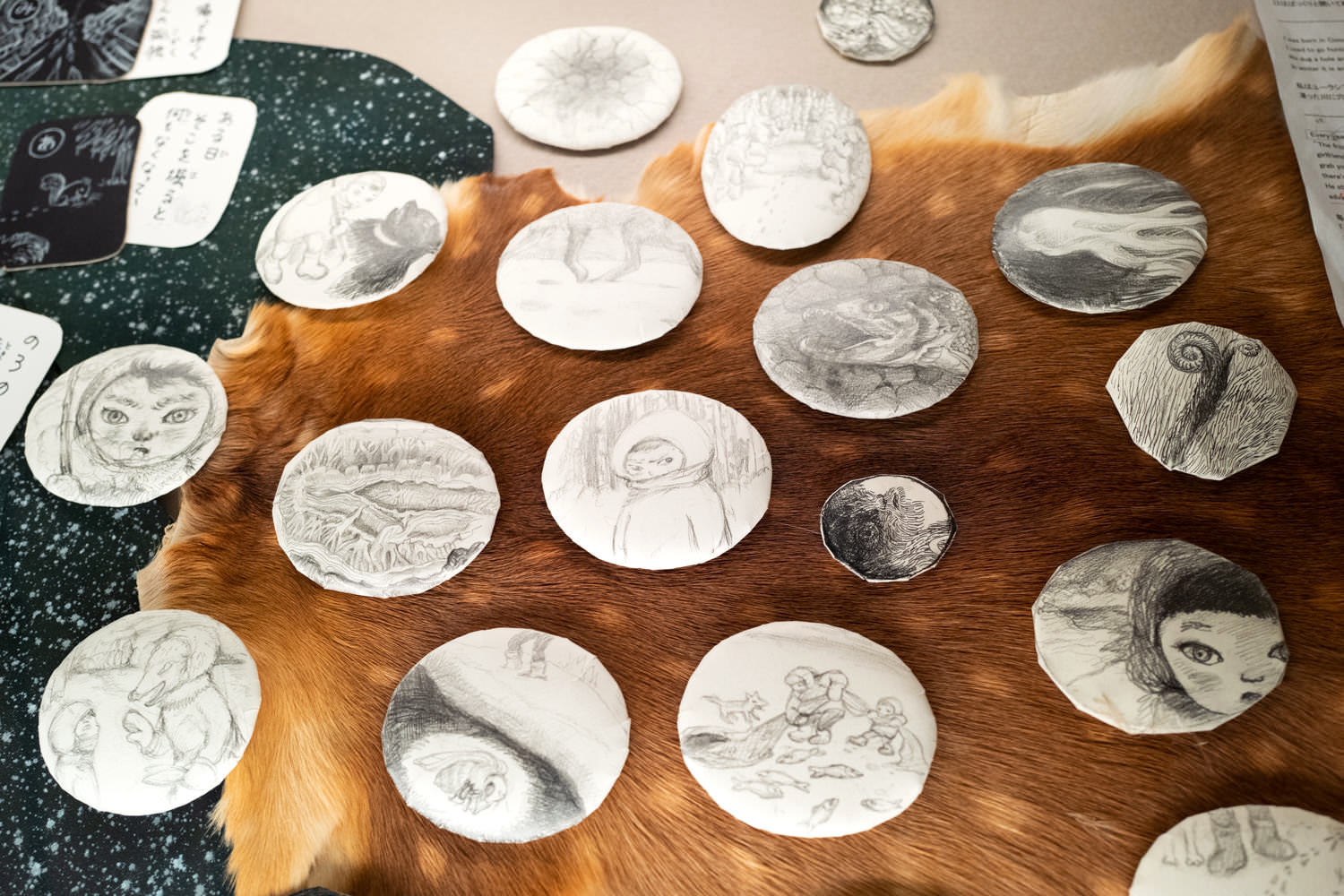
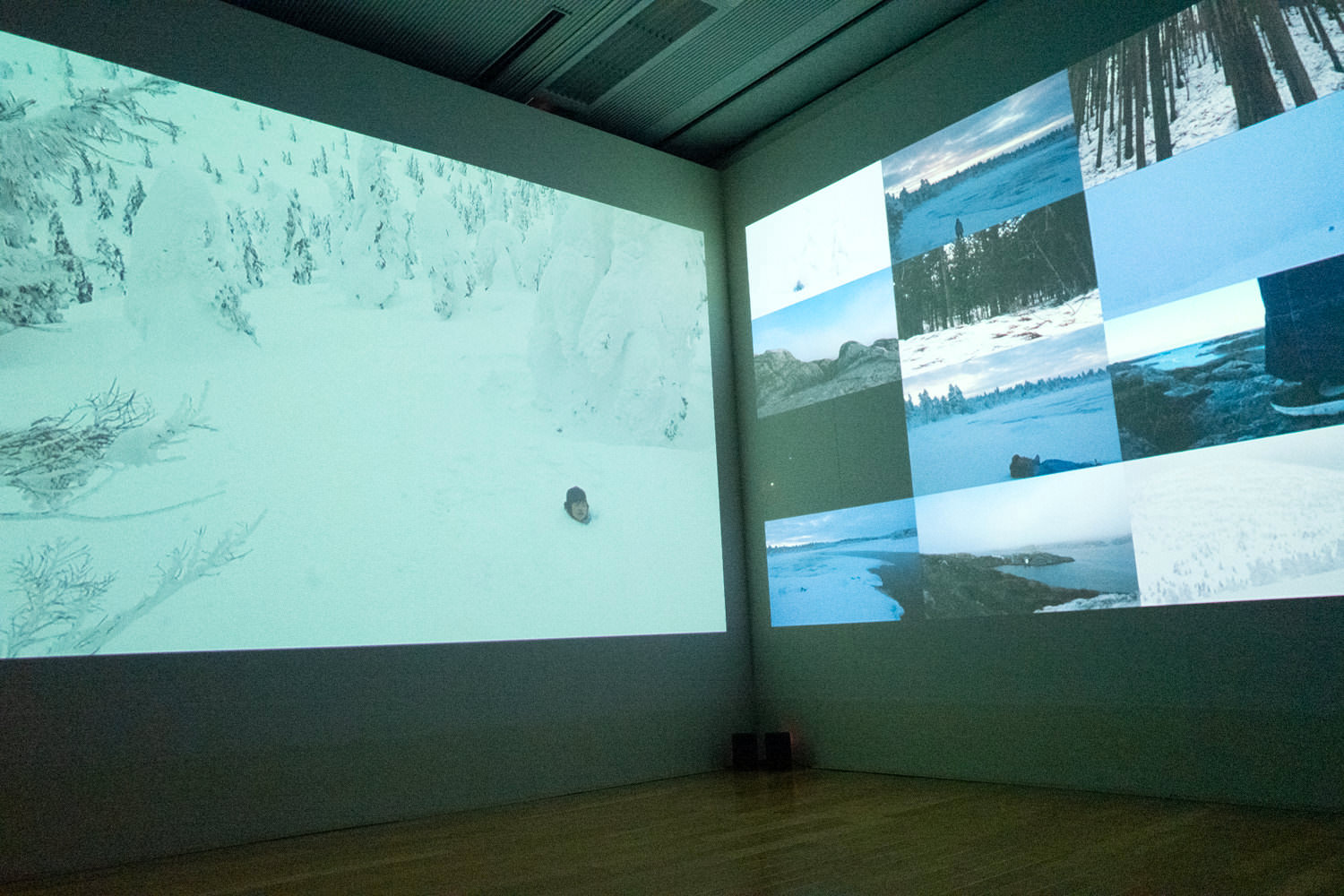
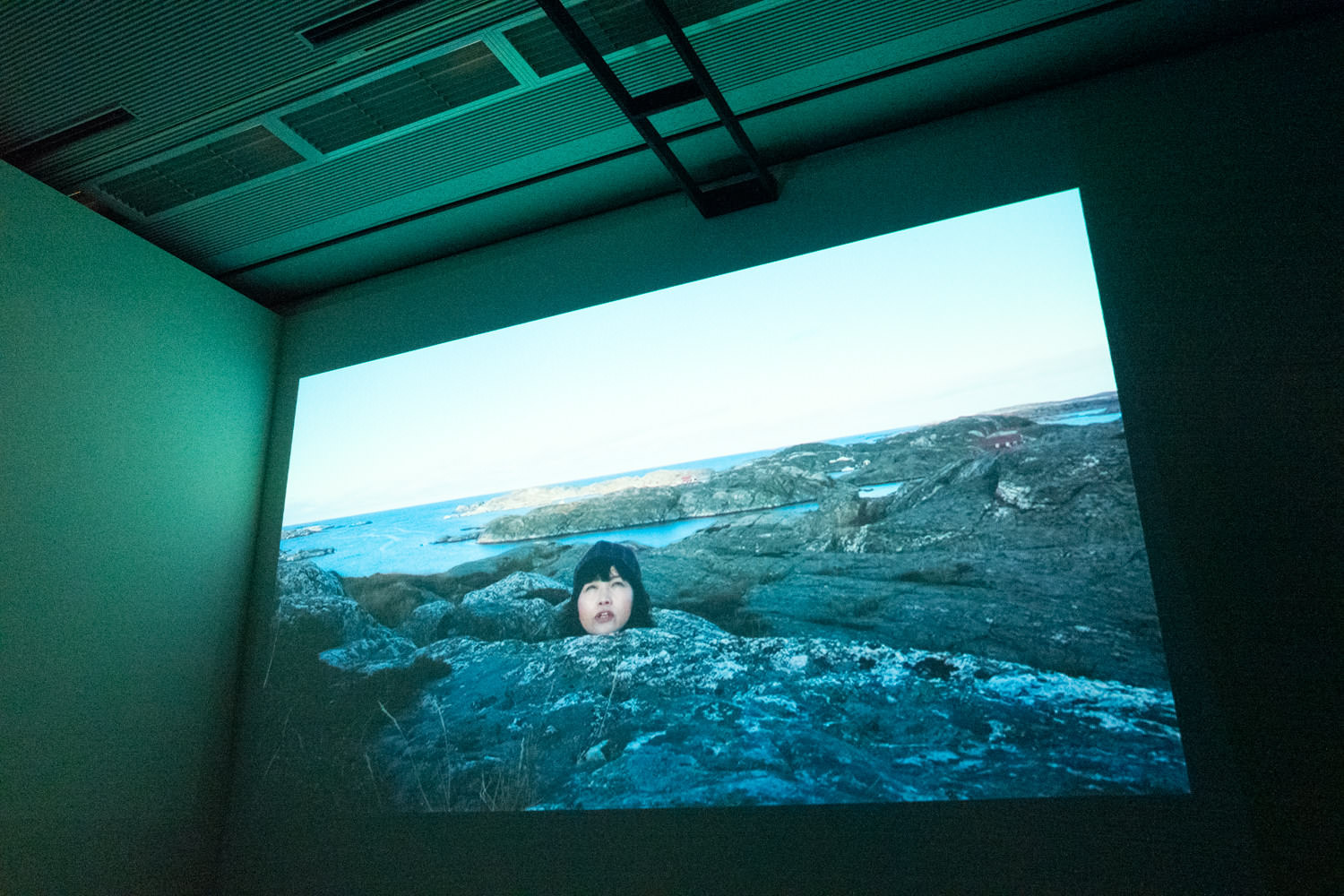
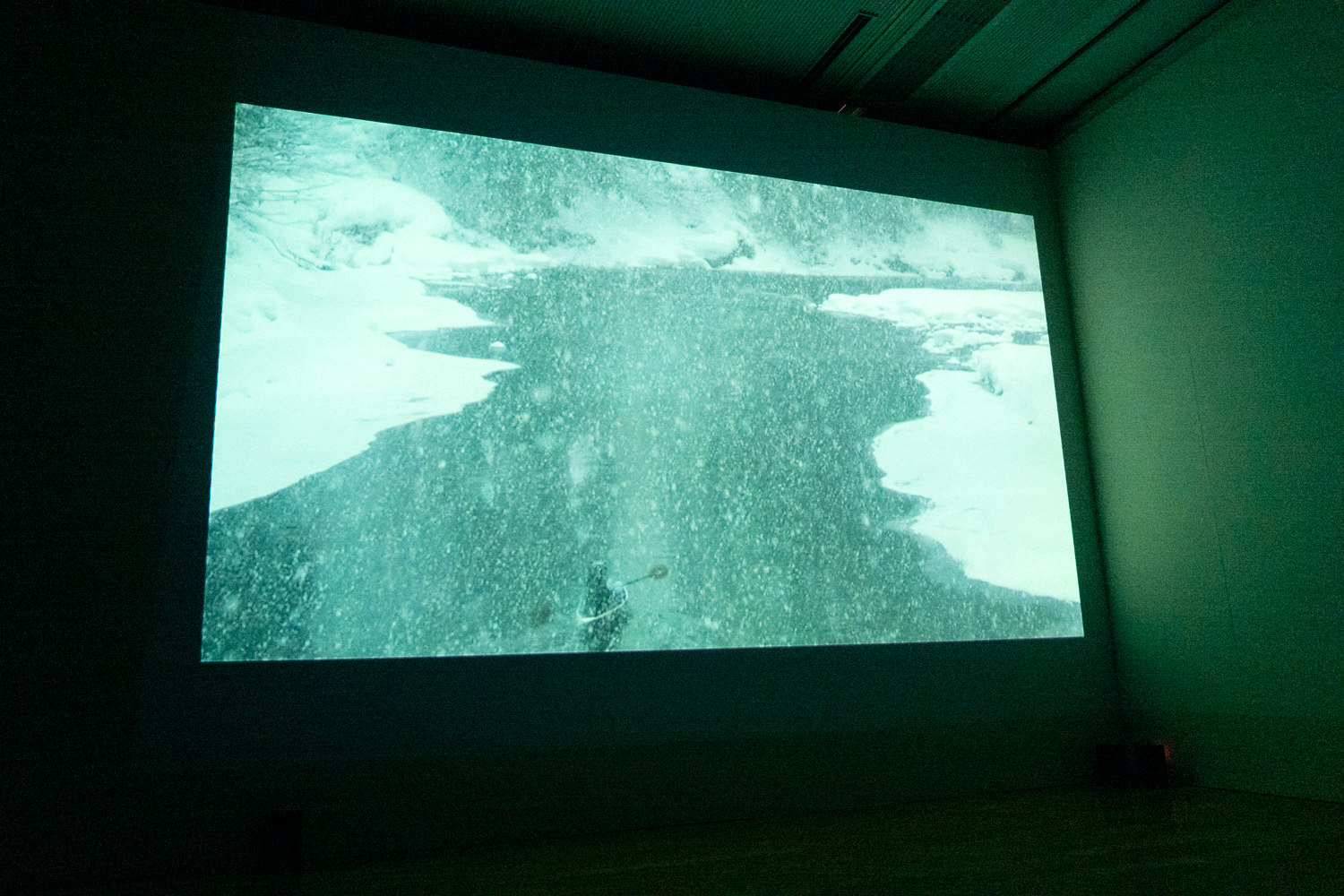
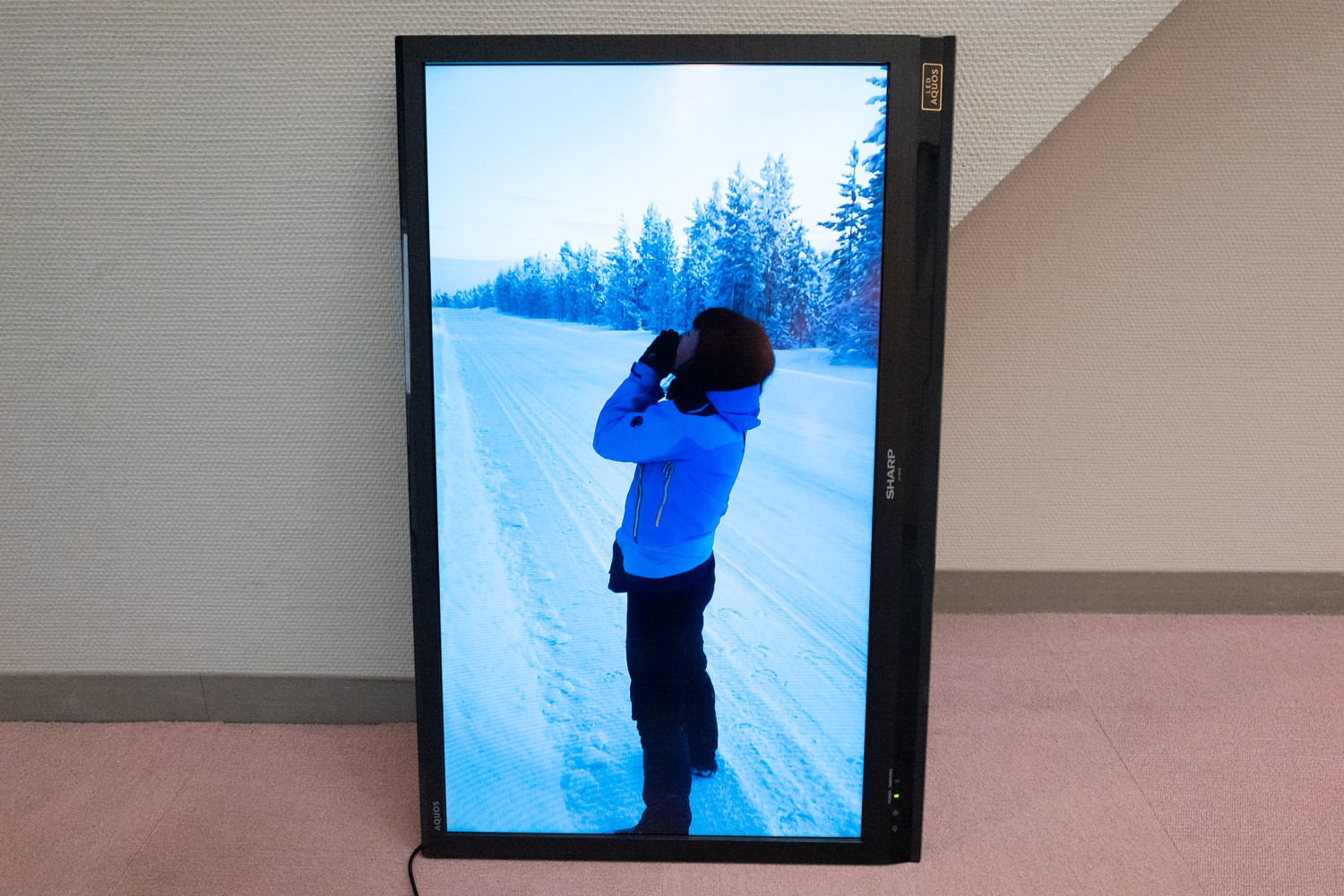
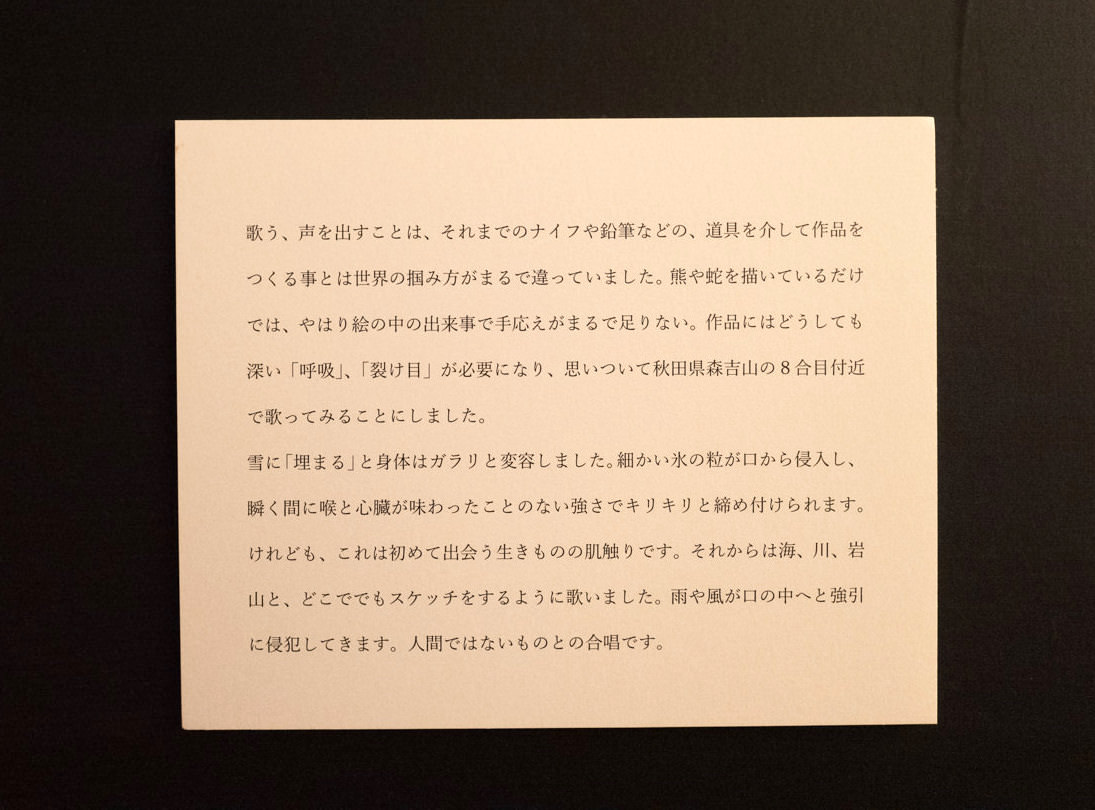
In the projection room, footage showed Tomoko Konoike herself out in the natural world — daringly burying her body up to the neck in snow, climbing a river, and cutting scenes from the natural world through her own distinctive lens.
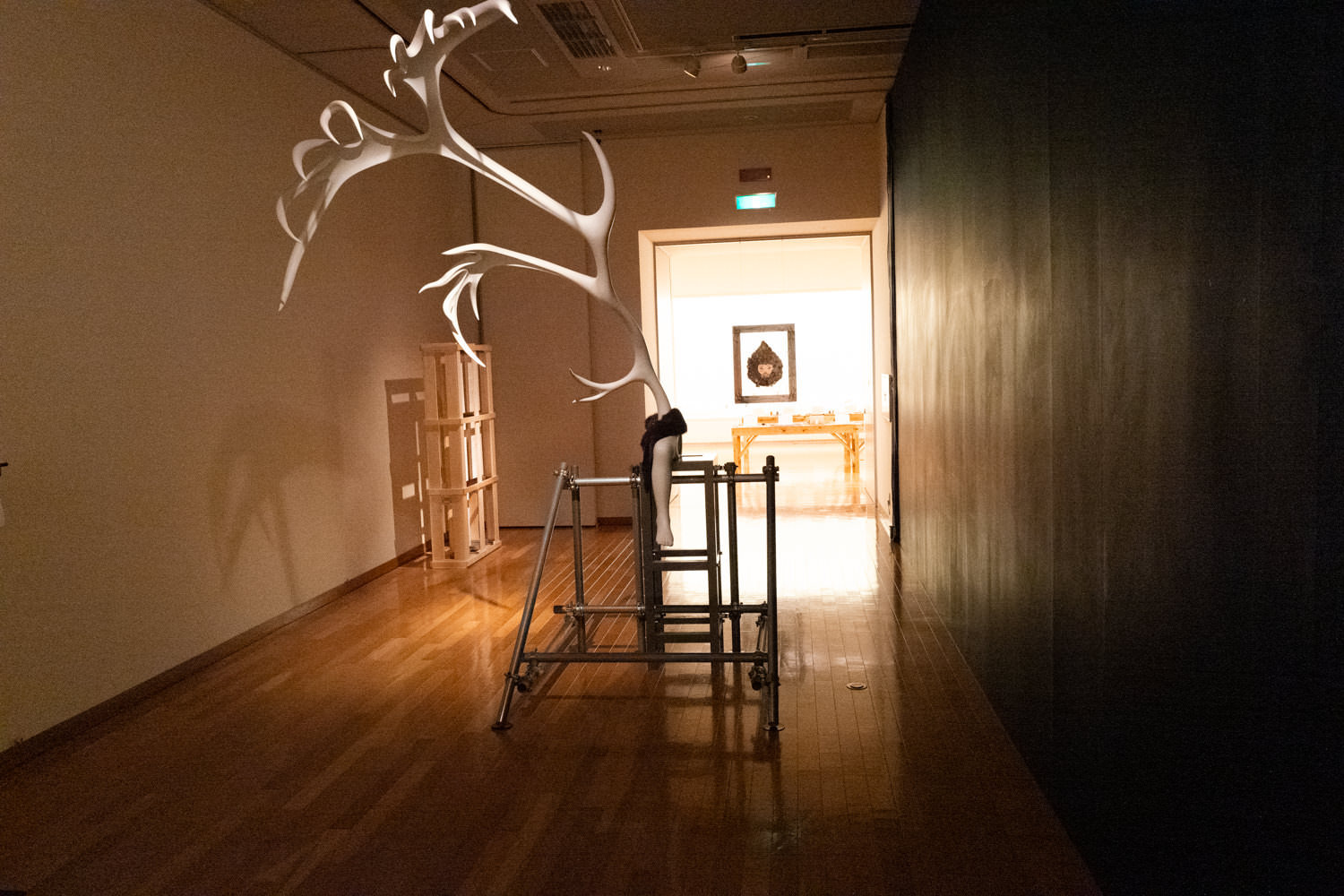
In the corridor leading toward Exhibition Room 1, the counterpart to the “Left Leg” seen earlier — the “Right Leg” — was here!
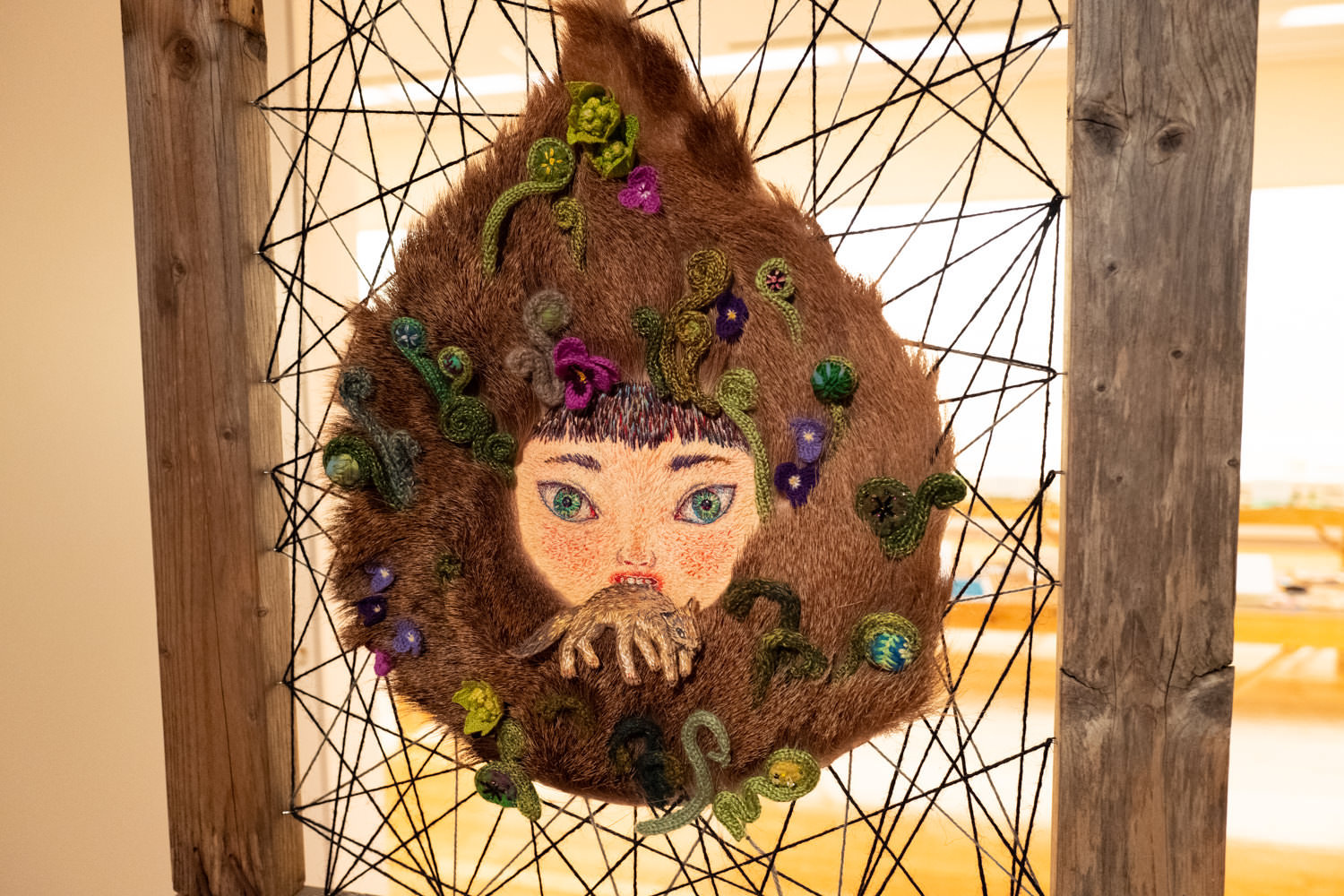
Exhibition Room 1
Photography was not permitted for “Monogataru Table Runner” (Storytelling Table Runner), so I have no photographs, but it is documented in the exhibition catalogue.
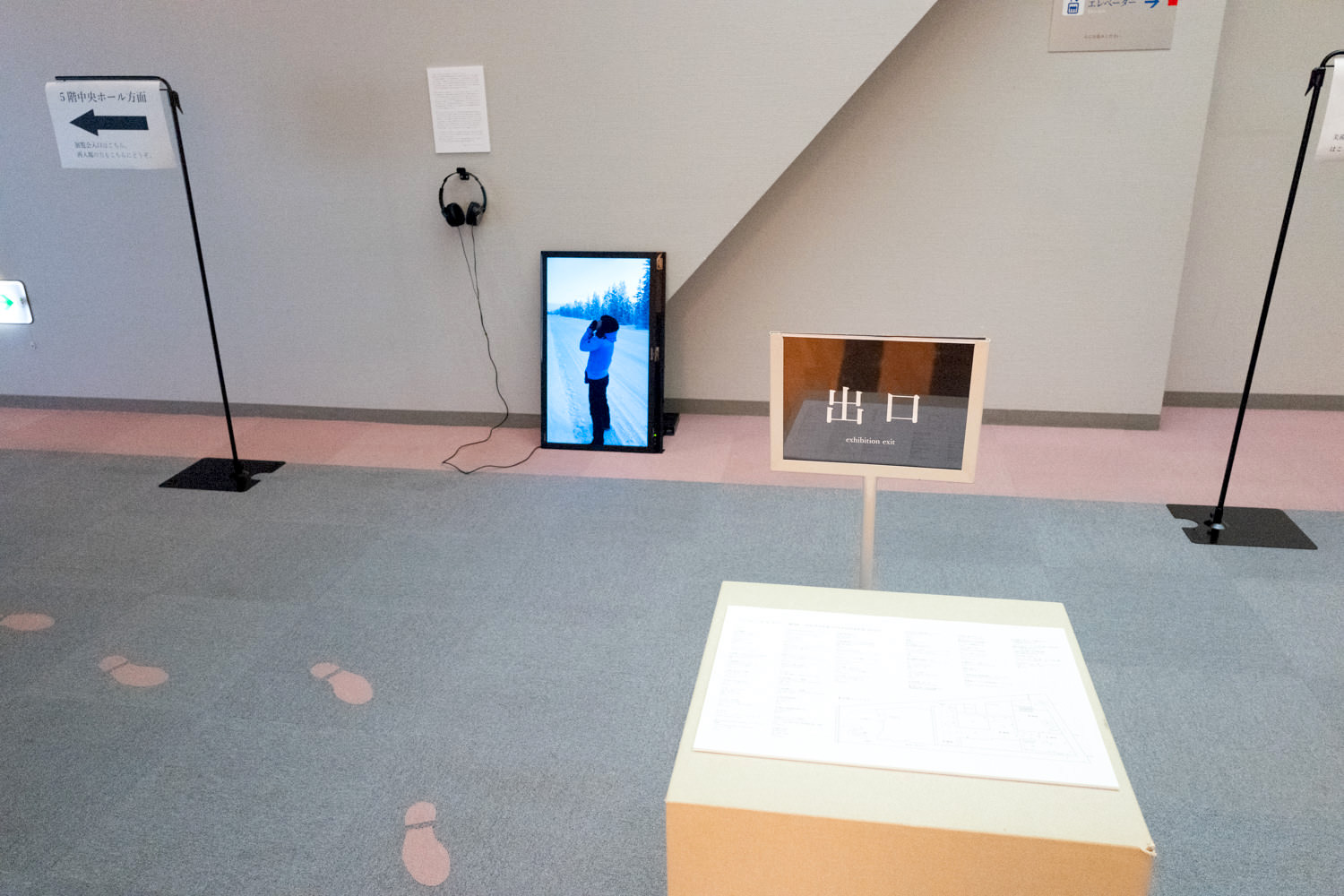
Exit
Reaching the exit of an exhibition with no captions and no list of works, only there did I finally receive the exhibition handout, “Hunter Gatherer Map.” It is an unusual practice to hand out the venue map with the checklist only at the exit — but at the artist talk given the day before the final day, Tomoko Konoike herself opened with, “Since the run is nearly over, I suppose I can talk about it now,” and offered up plenty of spoiler-worthy behind-the-scenes stories, drawing plenty of laughter and creating an enjoyable atmosphere. Her aim, it seems, was to have viewers swallow the works whole, exactly as they are — and indeed, we as viewers were able to take our time and fully engage with the works.
Tomoko Konoike’s solo exhibition “Hunter Gatherer” is made up of works shaped from materials born of the natural world, yet it was charged with an energy that seemed to directly stimulate something fundamental within us as human beings.
The exhibition as a whole is carefully considered, honed, and calculated, and at the same time overwhelming and powerful — it drew us as viewers in with great skill.
Beyond the visual, it stimulated many of our senses: hearing, as we took in Konoike’s transparent voice and her singing; touch, as we ran our hands over animal fur; smell, as we breathed in the air of Akita; and a broader perception, as we faced the workings of nature and our own selves. It was a precious span of time that woke up so many senses at once.
Amid the vast landscape looking out toward the Ōu Mountains, walking a specially built corridor covered by 100 meters of red carpet, watching videos of snowscapes filled with Konoike’s lustrous singing, standing in the vast space where the sound of gentle streams accompanied looming large works, and touching animal fur with my own hands — in Yokote City, Akita, brimming with nature, I was able to wash away the stresses of Tokyo, immerse myself in her world, and bring back that power with me.
The atmosphere of this place moved me so much that I found myself in tears.
Let me record a striking remark from Tomoko Konoike’s artist talk:
“Artists are often asked how they can make the most of the talent within themselves, but presenting a work is something that comes out of contact and friction with the outside world. Through all kinds of contact with the outside world, feelings inside me are moved, and become expression — become a work.”
The “outside world” Konoike refers to, I felt, includes not only relationships within human society and daily life, but every existence in the plant and animal kingdoms and in nature itself.
The sheer, immense energy I felt at this exhibition will remain deeply etched in my heart as an artistic natural phenomenon set in motion by Konoike.
Summary
- Tomoko Konoike’s first solo exhibition in her home region
- An ideal location for making contact with the vastness of nature
- A wide range of works on display, from large-scale pieces to small works, sculpture, drawing, and video
- A theme reflecting nature and humanity
- An exhibition with a scale of thinking of a completely different order, combined with real force of message
- Works and display methods that make you feel energy
- The most memorable art exhibition of 2018, at the very top of the pyramid
Incidentally, the catalogue for this exhibition avoids commercialism and is a truly authentic exhibition catalogue, photographed to record the actual state of the displays. It is of superb quality, and I very much hope you will pick up a copy.