The Truth Inside a Frame
I have a habit of returning to my parents’ home every New Year.
It’s a lively, boisterous family tradition of relatives, with New Year’s money, delicious food, and gifts flying around.
Amid all that, I came across a scene where an artwork in the living room — one I hadn’t paid much attention to as a child — suddenly grew radiant in presence. When I checked with my parent, its owner, I got a “you can take it home,” and, delighted, received it…
What I received was “a print by a certain master.” Made in 1974, it’s a work over 40 years old.
Apparently it was a piece the artist, short on money at the time, had sold by hand himself.
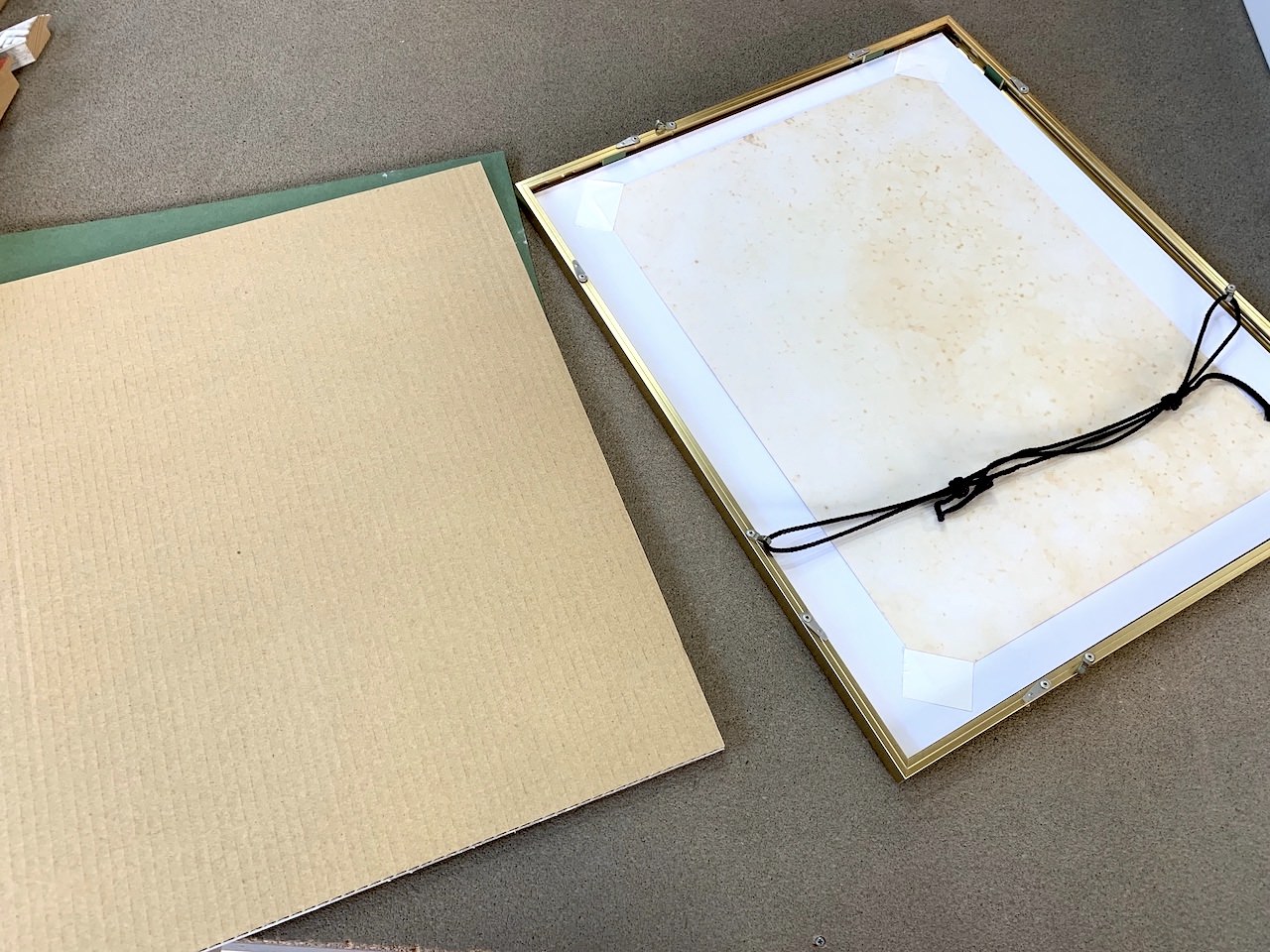
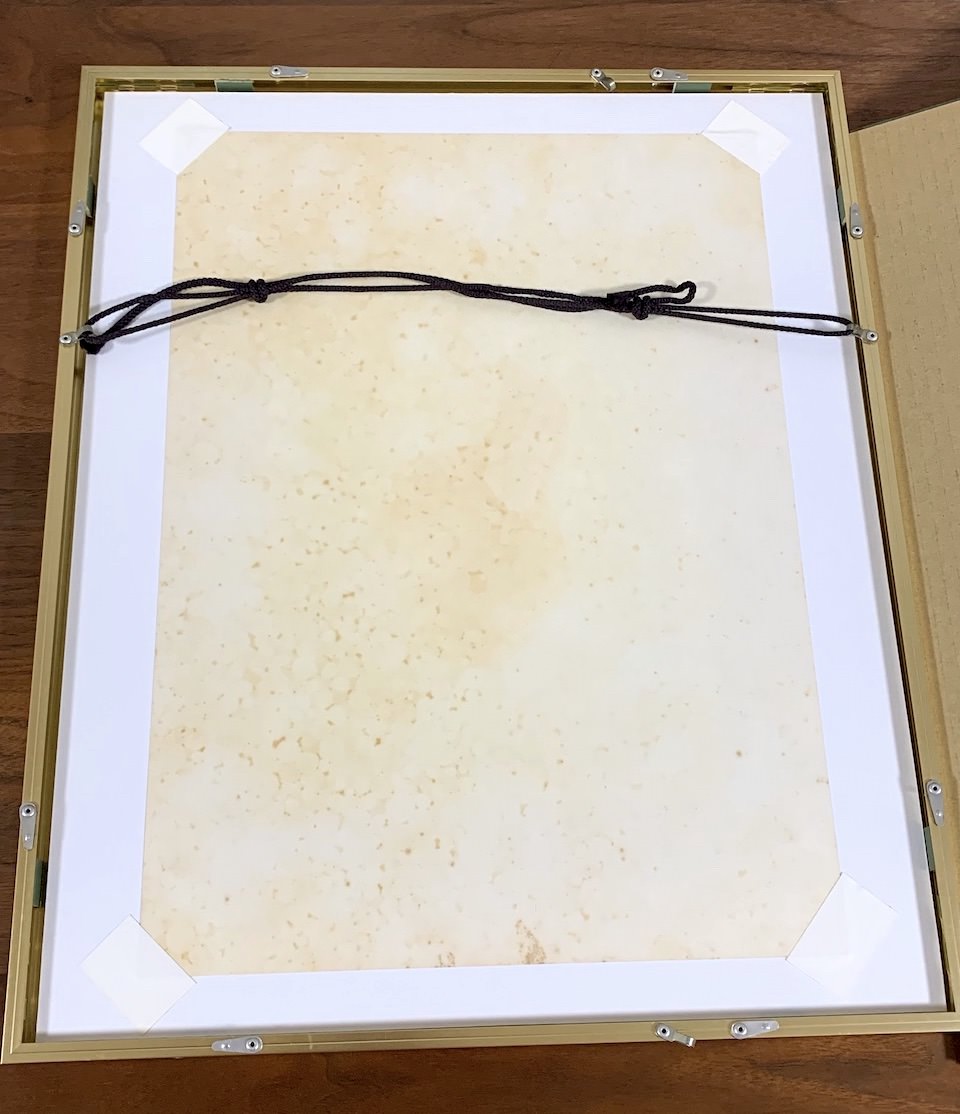
A while after receiving it, curious, I decided to open the back of the frame to look at the work, and opened the frame held shut with turn-buttons.
Wh-what is this…!?
Why Do Stains Form?
With the rainy season and typhoons, Japan is a country with a troubling climate, full of high-humidity periods.
In the case of the spotty brown stains I saw this time, in addition to the influence of components like resin and lignin from the frame’s backing wood, mold-like stains occurring through oxidation caused by humidity changes — that’s the likely mechanism.
The acrylic (glass) on the front mainly serves to counter ultraviolet (UV) rays, and I think you can address that to some degree by avoiding direct sunlight and choosing materials with UV-cutting properties.
On the other hand, the back of the frame uses wood, which has limits in coping with environmental changes. A frame closed tight with no gaps is one thing, but conditions inside a frame with even a slight gap can be considered harsh.The conditions inside a frame are influenced overwhelmingly more from the back than from the front — or so it’s said. Indeed, the “location of the stains” this time was on the back of the work.
Among artworks, those using paper have a support weak to environmental change, so the chance of degradation over long stretches of time is higher.
It’s not that “it’s protected because it’s in a frame”; you must stay cautious even when the work is inside a frame — that’s the point.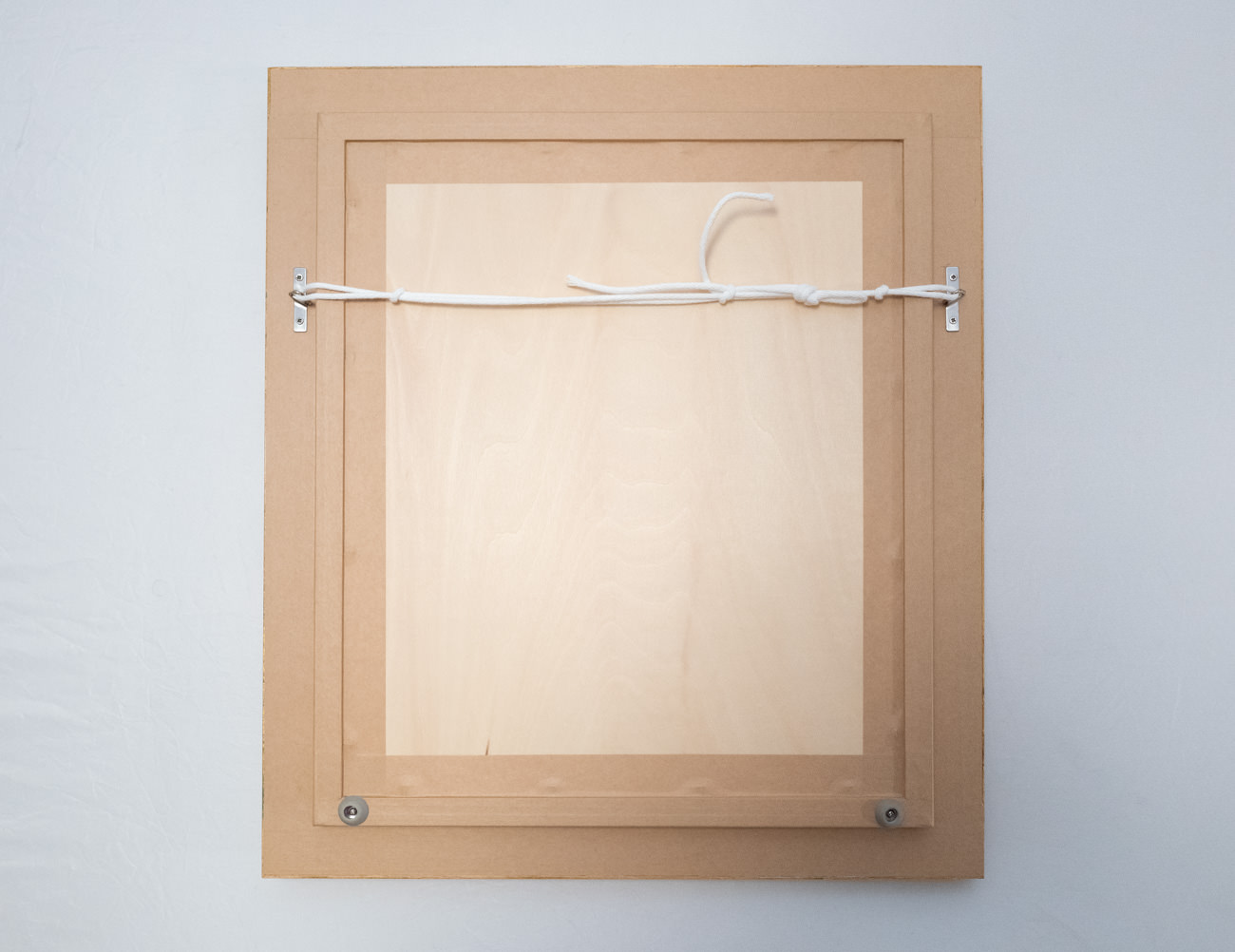
What the Framing Shop Did
What could I do to counter this situation…?
Leave it as is and it would only worsen — mightn’t the stains even spread to the work side, so far unaffected?
So I took the framed work in person and consulted a framing shop I know.
Please see the diagram below.
Proper framing is recommended to protect the work through a flow like this.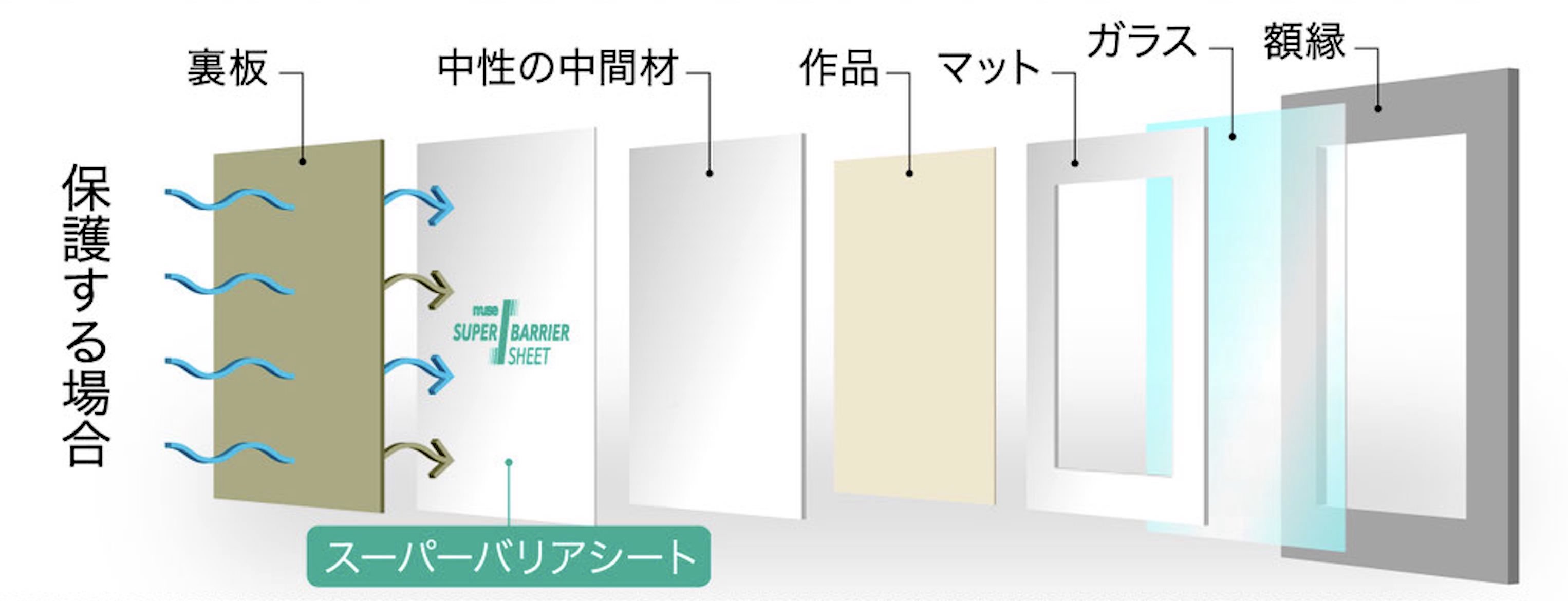
This came to “about ¥800” (materials and prices likely vary by shop).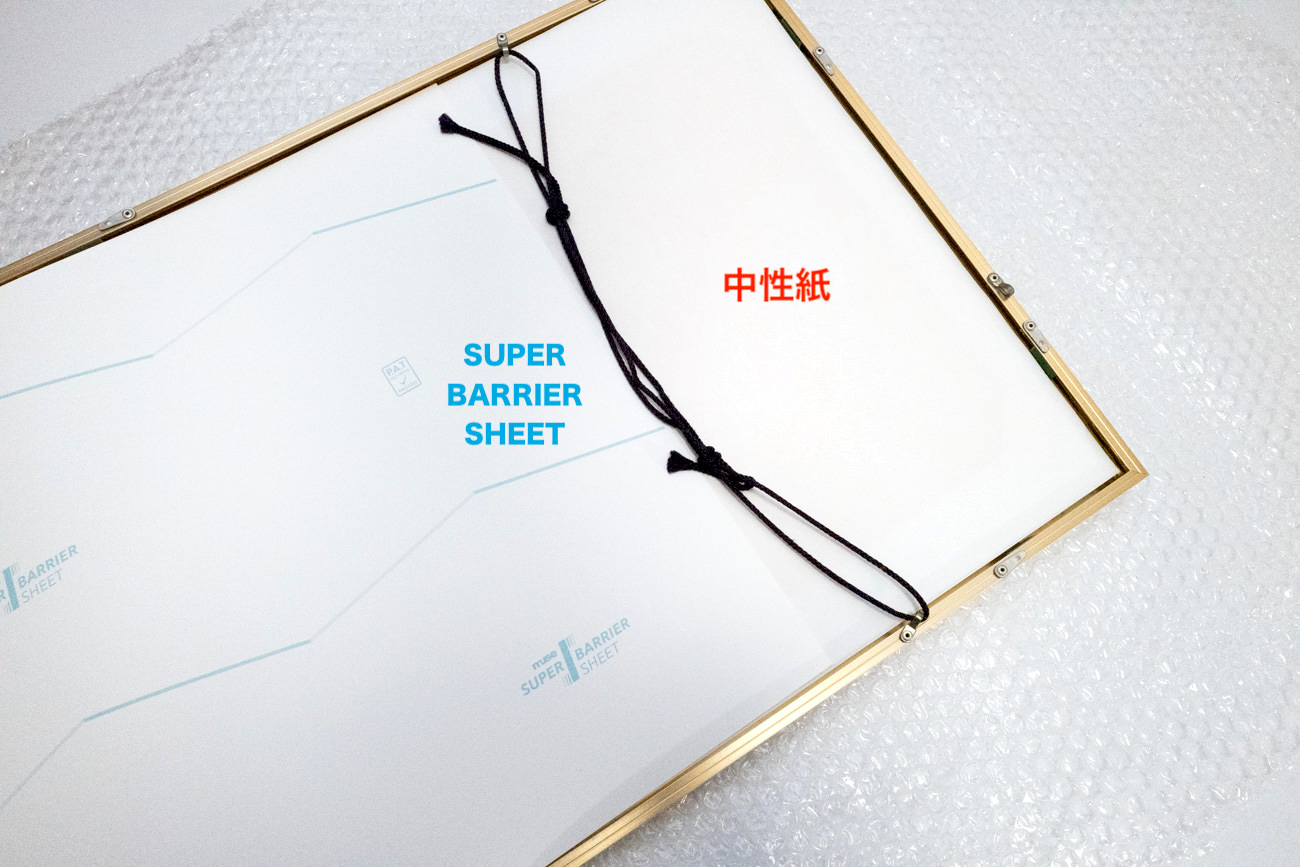
Both neutral paper and the Super Barrier Sheet are, in thickness, as thin as paper, so you can insert them without changing your current frame.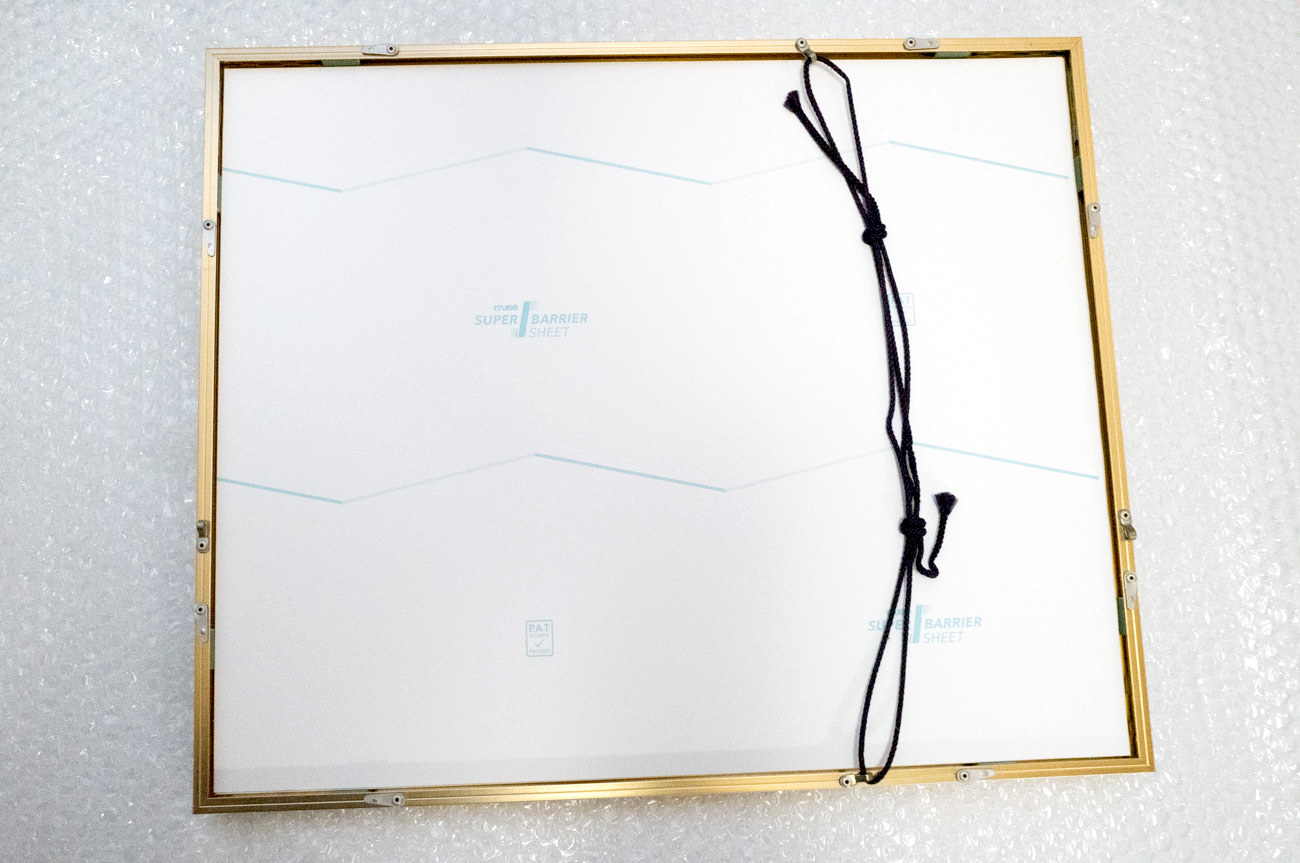
There are also restoration-oriented treatments, such as “removing the stains” or “bleaching the stains.” The framing shop I visited didn’t handle these. If I get the chance, I’d like to report on that separately.
In Summary
- Framing doesn’t mean you’re all set — pay attention to the environment inside the frame.
- Be especially careful with paper works like prints, drawings, and watercolors.
- Guard against oxidation with “neutral paper + a barrier sheet” and mind environmental preservation.
- Rather than framing that opens freely with turn-button backs, sealed (fixed) framing is recommended.
- If you feel uneasy, go to a framing shop and consult them.

![[Framing Basics You Surprisingly Don’t Know] Three Points to Watch When Framing an Artwork](https://art-on.jp/wp-content/uploads/2020/06/Frame_Mat_Order6.jpg)