“A Book for Those Aspiring to Be Painters”
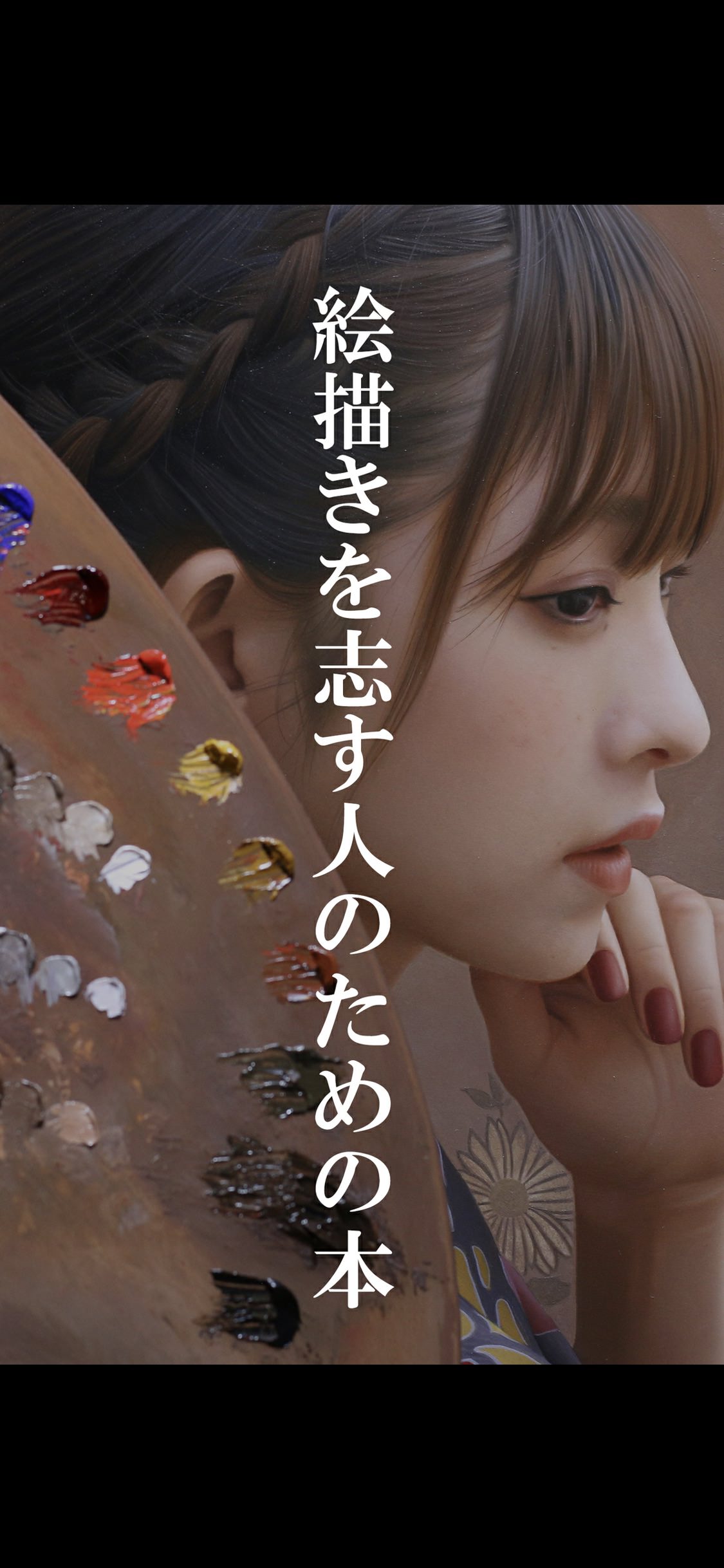
I learned that an e-book by the artist Yasutomo Oka was available on Kindle, so I immediately purchased and read it.
Yasutomo Oka is a fully sold-out artist in his mid-30s who specializes in photorealistic paintings of beautiful women. Even at the solo exhibitions I attended, his works had such competitive lotteries that acquiring them was quite difficult.
Judging only from the title, “A Book for Those Aspiring to Be Painters” might seem like a how-to book from a sold-out artist aimed at struggling young artists. That characterization is not wrong, but there were also several points that art collectors could take away from it.
According to Kindle’s display, it takes “17 minutes” to finish reading.
The volume is relatively short, so you can read through it in one sitting.
As a fast reader, I finished in about 10 minutes.
The chapters are structured as follows:
- The Market Where Paintings Are Sold
- Compatibility With the Market
- Changes in the Art Market and What Young Artists Should Know
- Advice From Experience 1
- Advice From Experience 2
Compatibility With the Market
Because the book is “for those aspiring to be painters,” useful advice for artists derived from the author’s own empirical experience is scattered throughout. One major point is an analysis of which markets suit which types of artists.
By combining patterns of prolific vs. limited output, and figurative vs. abstract style, he classifies venues into department stores, curated galleries, rental galleries, long-established galleries, and so on.
Setting aside whether this analysis fits everyone precisely, it carries a degree of persuasive weight because it reflects the empirical experience of Oka, who produces fewer than 20 works a year.
Since I stand on the collector’s side, this was my first exposure to such a classification. Many galleries operate based on a certain set of values, but I hadn’t really considered the perspective of deciding whom to represent based on the pace at which an artist produces works.
On Pricing Works
Recently, I have often seen students—mainly from a certain art university—set surprisingly aggressive prices, only to end their solo exhibitions with a lot of unsold work.
I can’t outright reject taking such an aggressive pricing strategy from student days, but I always leave the venue thinking, “What a waste…” If you plan out your career as an artist strategically, the single most important task is nothing other than growing your fan base. Increasing the number of owners of your works and the number of your supporters is what connects to the rest of your career as an artist, so I feel it’s really a waste.
This book gives advice on pricing from an empirical standpoint. It says that if you’re going to raise prices, you should undergo some kind of change or growth first. This should be useful for artists. I found it relatable.
SNS
In the second half of the book, the author develops the idea that you should manage yourself as a sole proprietor with the intent to outpace other artists.
In particular, he says you should disseminate information on social media, promote your work, and expand your sales channels.
In a closed-off art industry, information sent out openly through social media is contributing greatly to viewers’ encounters with art in our time.
As a modest collector myself, I am constantly gathering information about artists.
Seeing works in the field, including at group exhibitions held in galleries. Catching information on Instagram, Twitter, and other social media and then checking the details—these days I rely on the power of the internet no small amount.
Oka’s point may well be the minimum required etiquette for artists going forward.
The Hurdle of a Second Purchase
The passage that made the biggest impression on me was the one about “the hurdle of the second work.”
Having someone buy a work, display it at home, view it over a long period, and then think “I’d like another one” is unexpectedly not simple.
…Indeed!
The works in my collection span various genres and career stages, but artists from whom I own multiple works may be fewer than 10%. Out of many works, they are truly countable on one’s fingers. What it takes to reach the point of “I want another!” is, I believe, whether the work carries the everyday energy of “I’m glad I own this!”
What made the strongest impression on me was learning that Yasutomo Oka himself faces his creative practice with exactly that awareness.
I hope every artist’s creative activity becomes even better.
![【特装版図録】目[mé]「非常にはっきりとわからない」展・ドローイングサインカタログをハッキリと明らかにする。](https://art-on.jp/wp-content/uploads/2020/02/me_Drawing_Catalogue6.jpg)