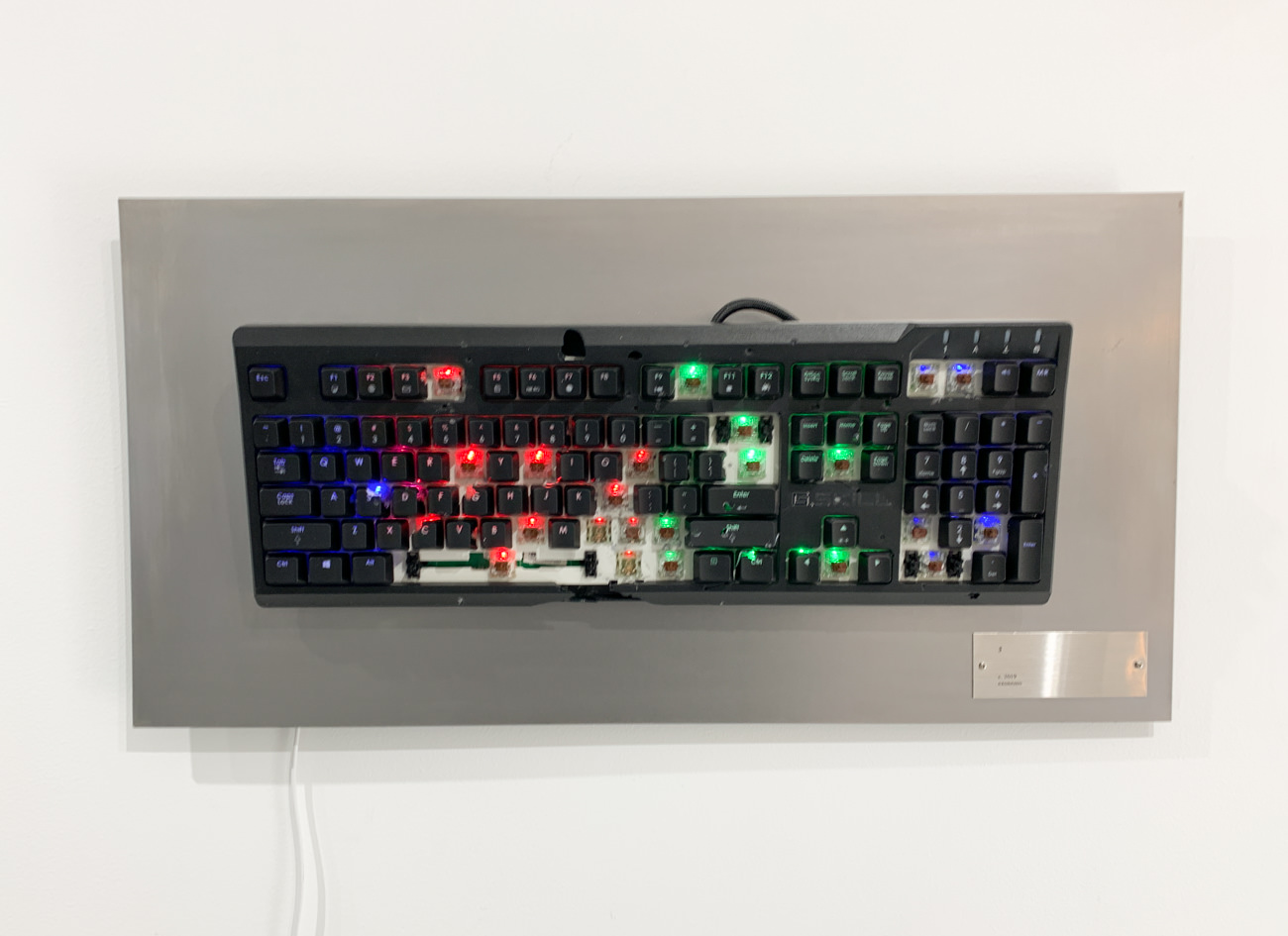
exonemo “LO”
The art unit “exonemo,” made up of Kensuke Sembo and Yae Akaiwa.
Based in New York, they staged a rare Japan solo exhibition. The venue is WAITINGROOM gallery in Edogawabashi.
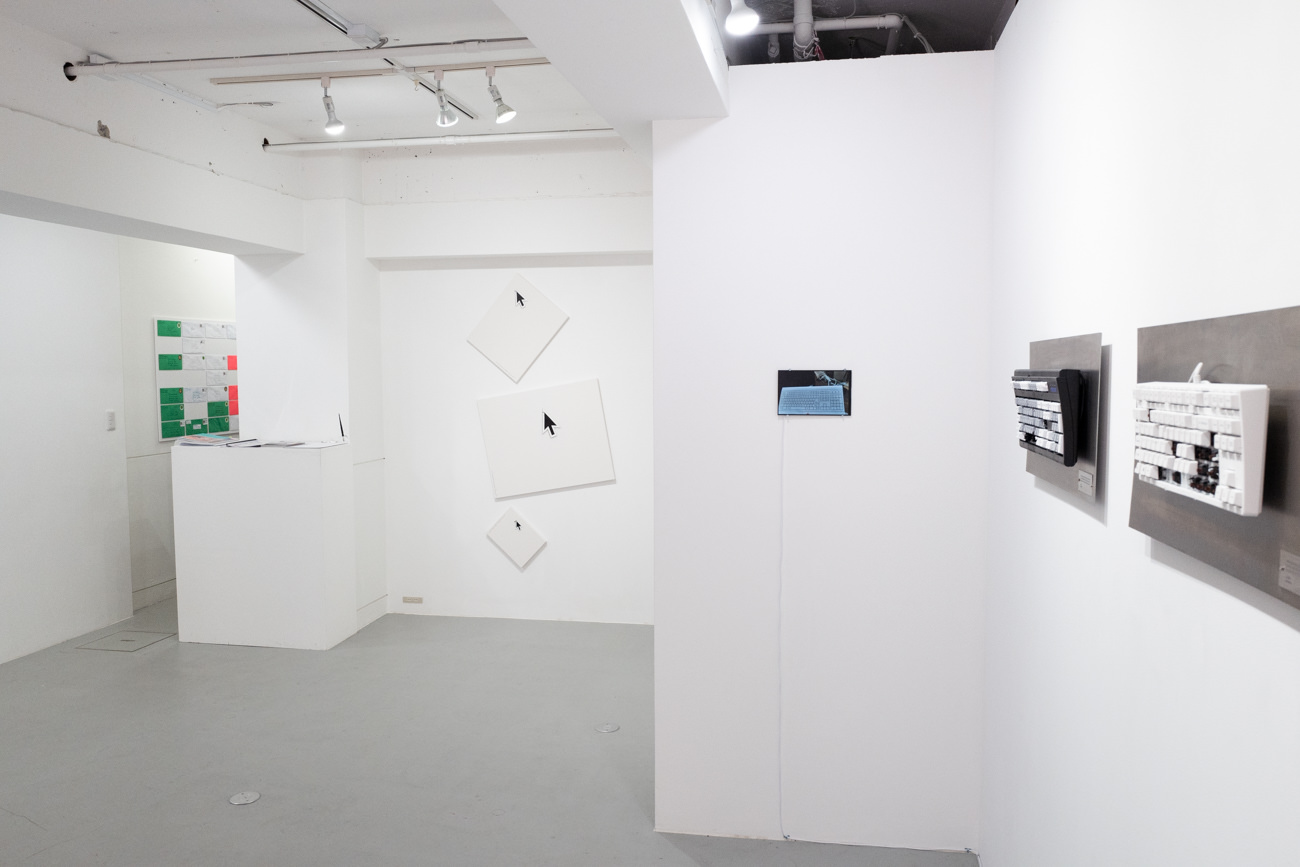
The exhibition presented a number of works that connect digital society to physical reality, posing questions directly to the viewer.
Artist Statement
“The title of this exhibition, ‘LO,’ comes from the very first message transmitted in 1969 (50 years ago) on ARPANET, the prototype of the internet.
Someone tried to type ‘LOGIN,’ but after ‘LO’ was sent, the system crashed. The following ‘G’ was never transmitted, and those two letters became the opening words of the internet age.
exonemo let their imagination run: if the word that followed ‘LO’ at that world-branching moment had not been ‘G,’ perhaps it would have been ‘VE’ (LOVE), or perhaps ‘L’ (LOL).
The fact that an ‘incomplete message’ shaped the present as it now stands is, in a sense, telling. It’s precisely because a message is incomplete that something else can come through — and from there, something aberrant can be born.
This exhibition assembles exonemo’s new and older works (including remixes), summons up an incomplete message from them, and asks the viewer what should come next.” — exonemo
Shotgun text
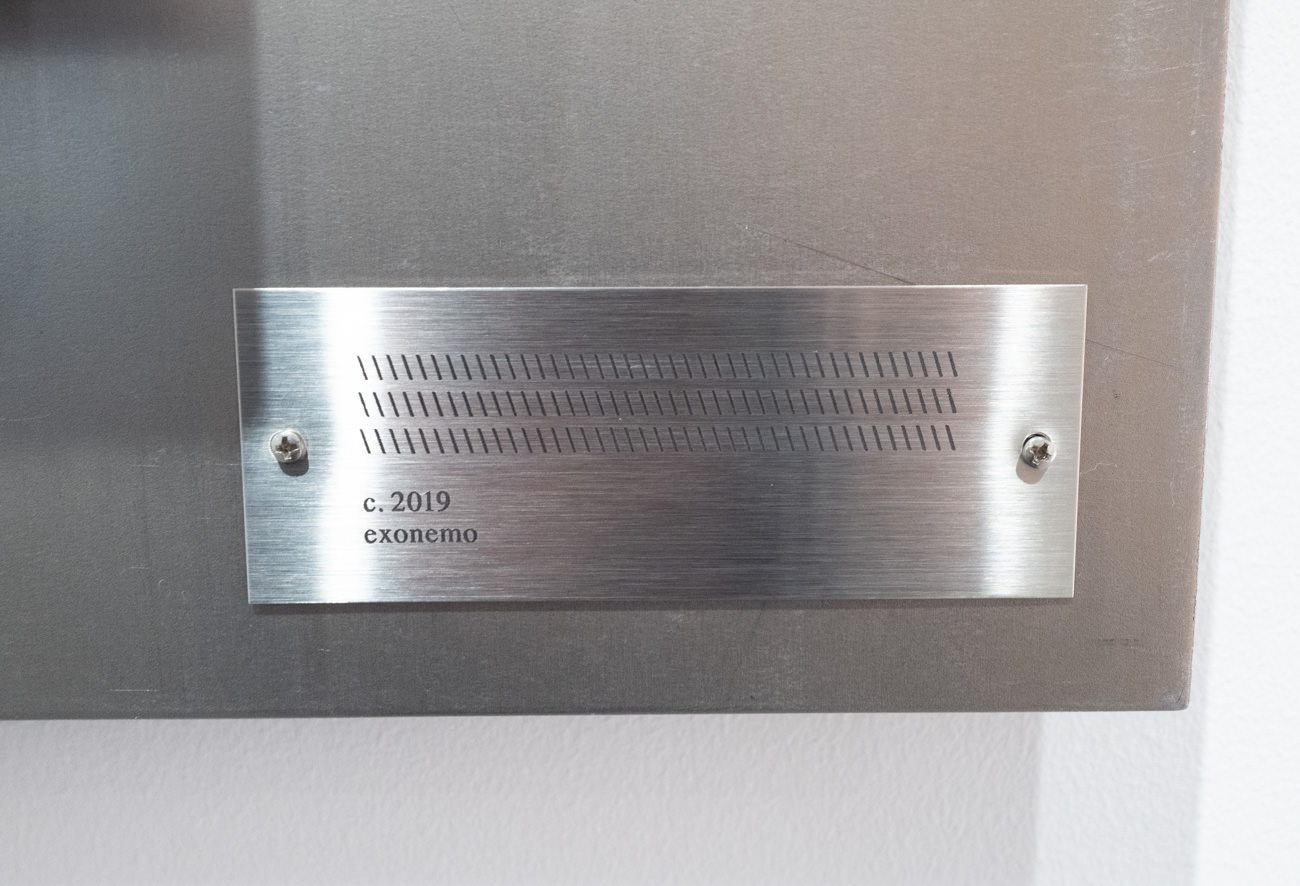
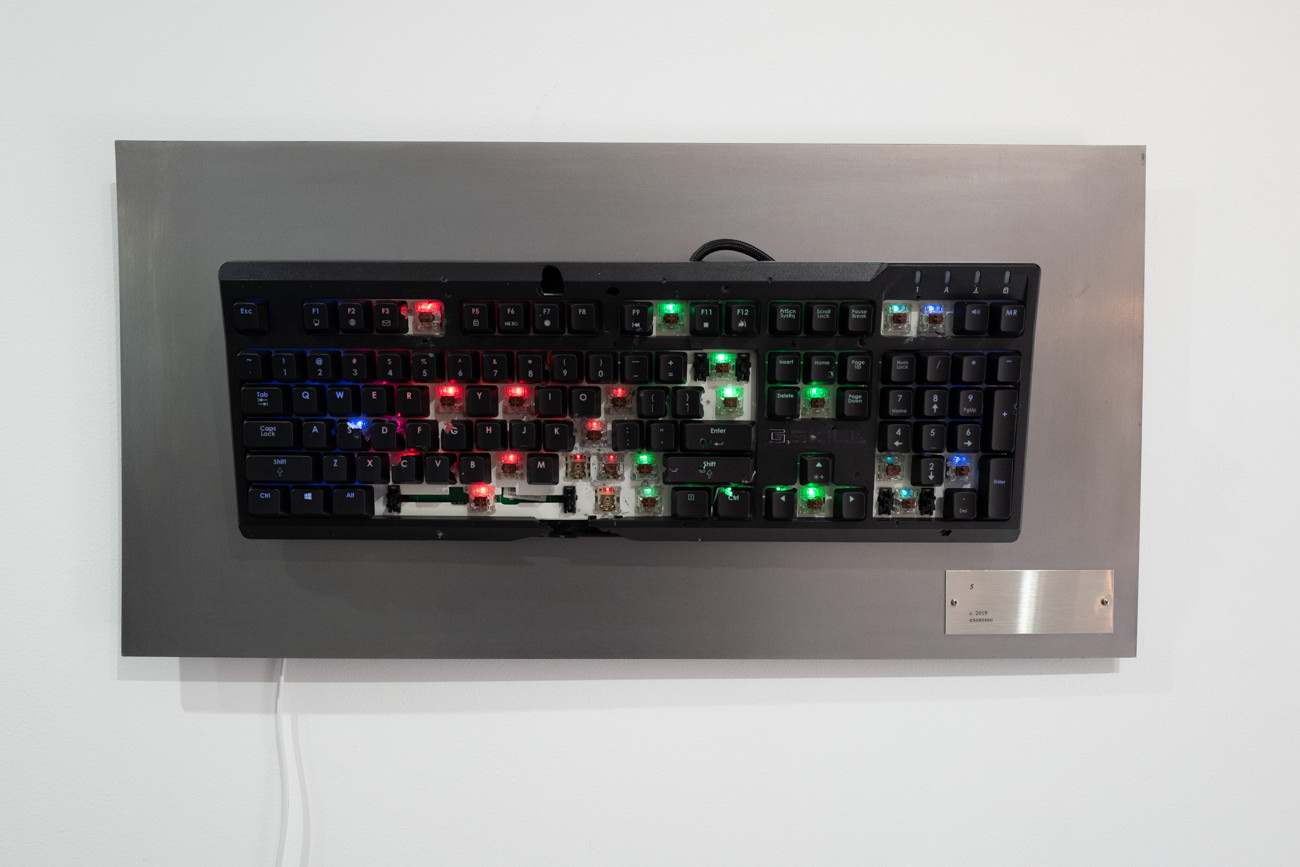
The first things to catch the eye upon entering the venue were PC keyboards. Each of them has keys missing and is broken.
This is the “Shotgun text” series.
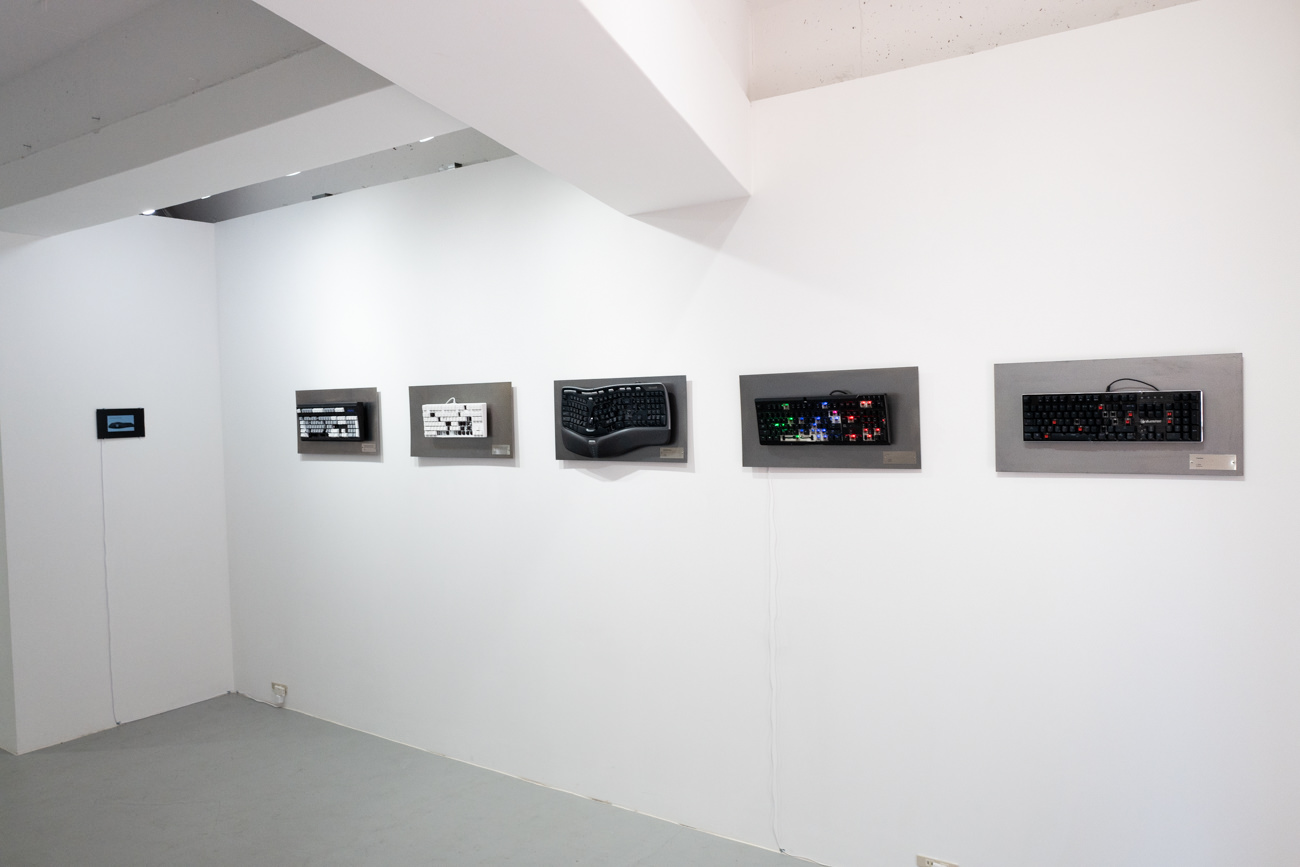
The “Shotgun text” series consists of works in which an active keyboard is shot to pieces with a gun.
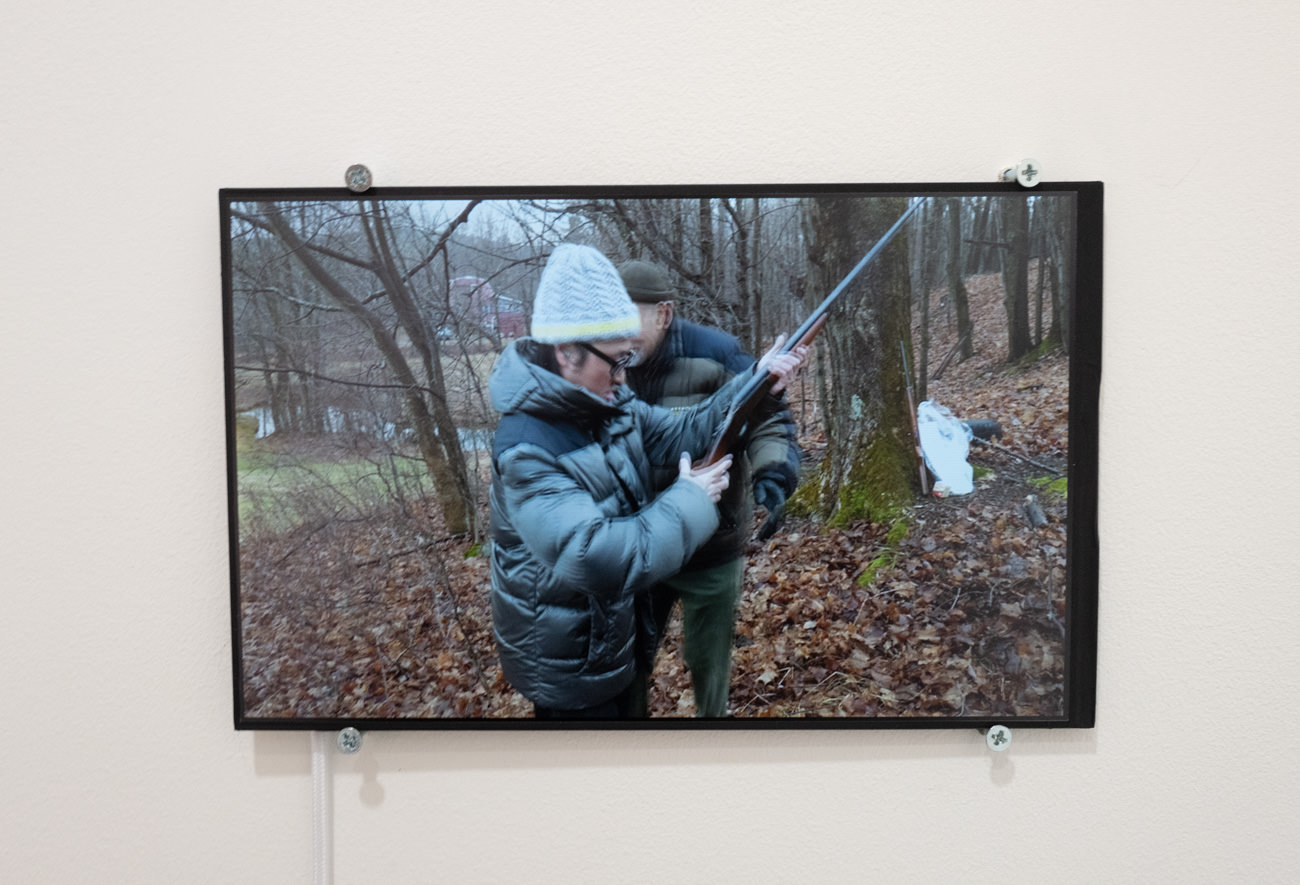
It’s a bit hard to describe, but it’s an act of destruction like the one in the video below.
The ‘input signal’ punched into the keyboard at the moment of a bullet’s impact becomes the title of the work as is.
Click and Hold
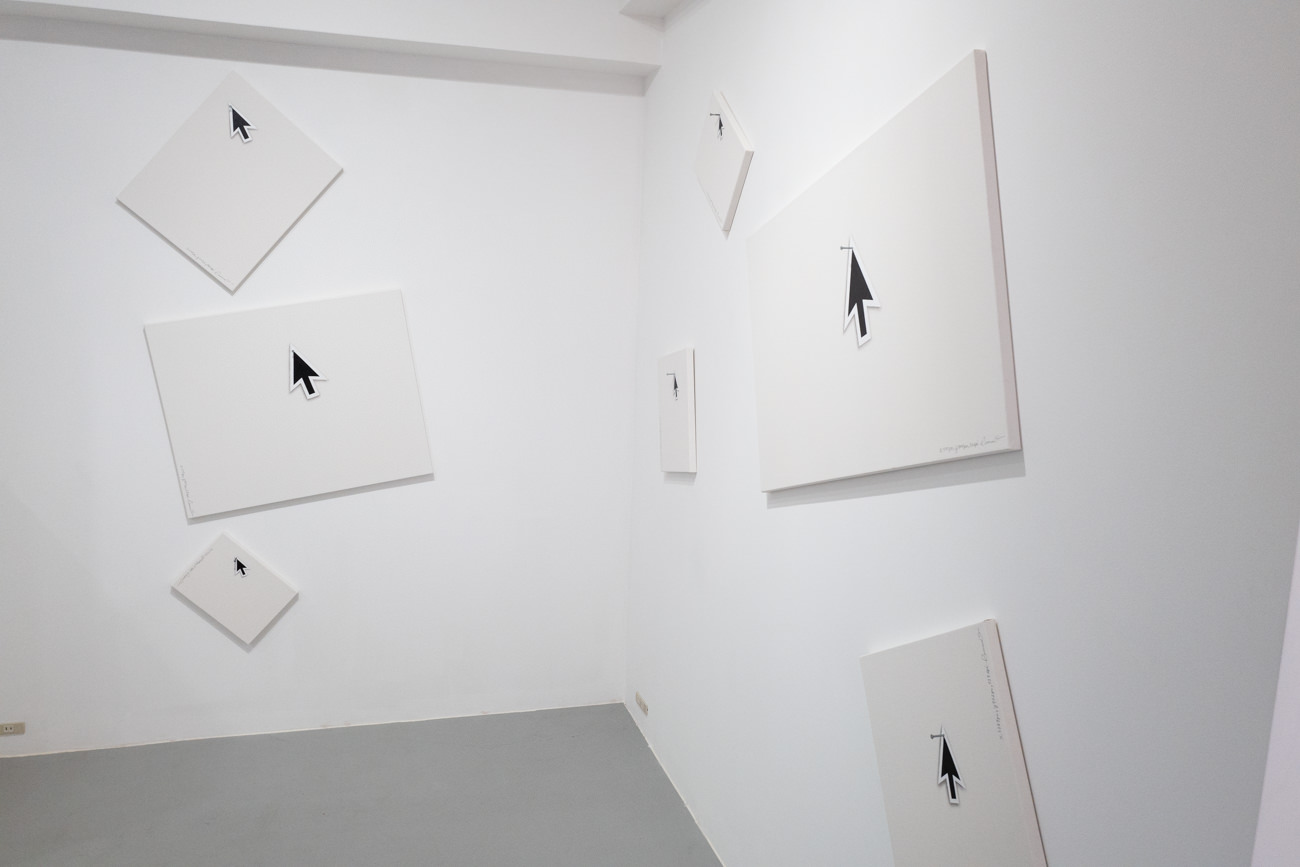
The “Click and Hold” series is a fairly unique set of works.
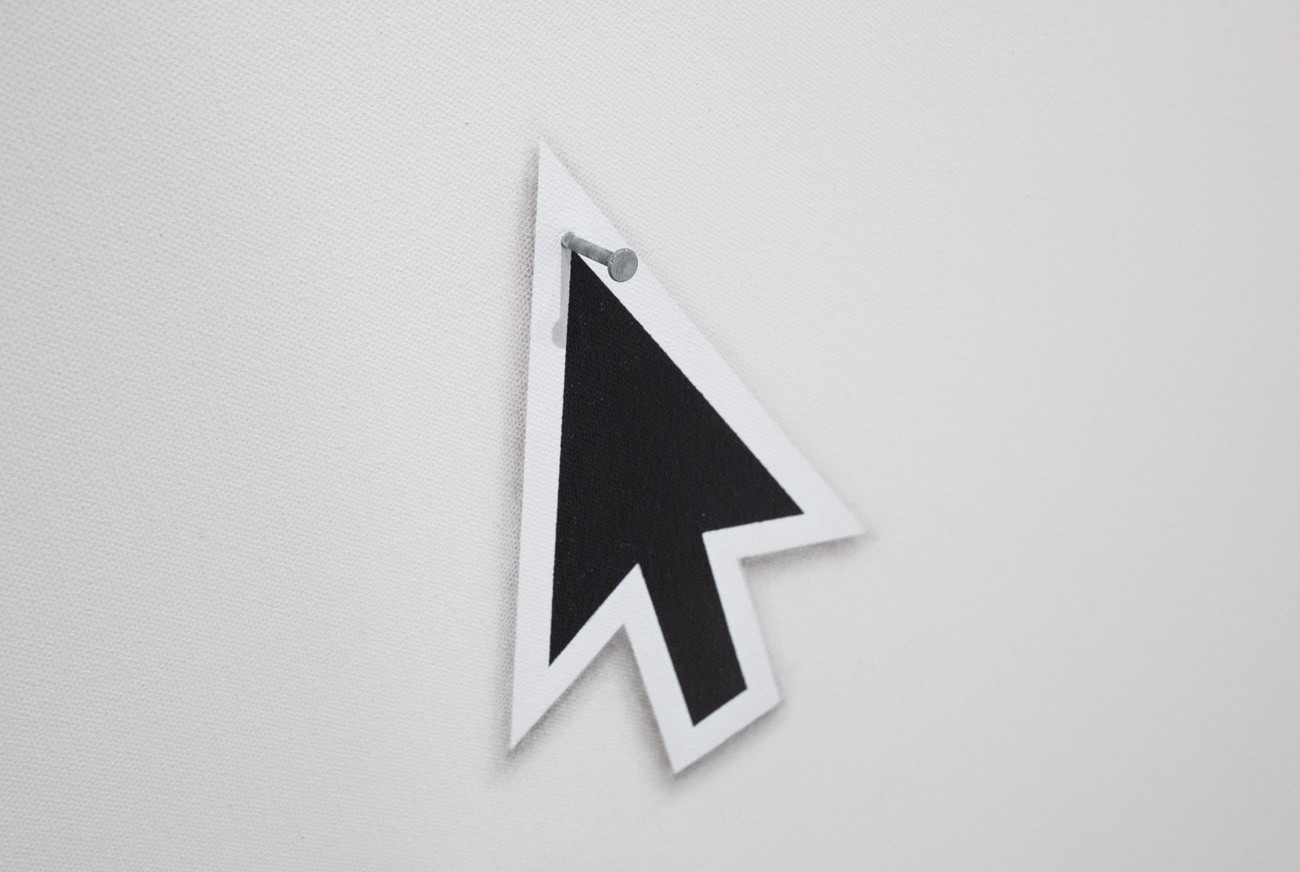
What is depicted on the white canvas is a mouse pointer (arrow).
You notice that the size of the arrow changes depending on the size of the canvas.
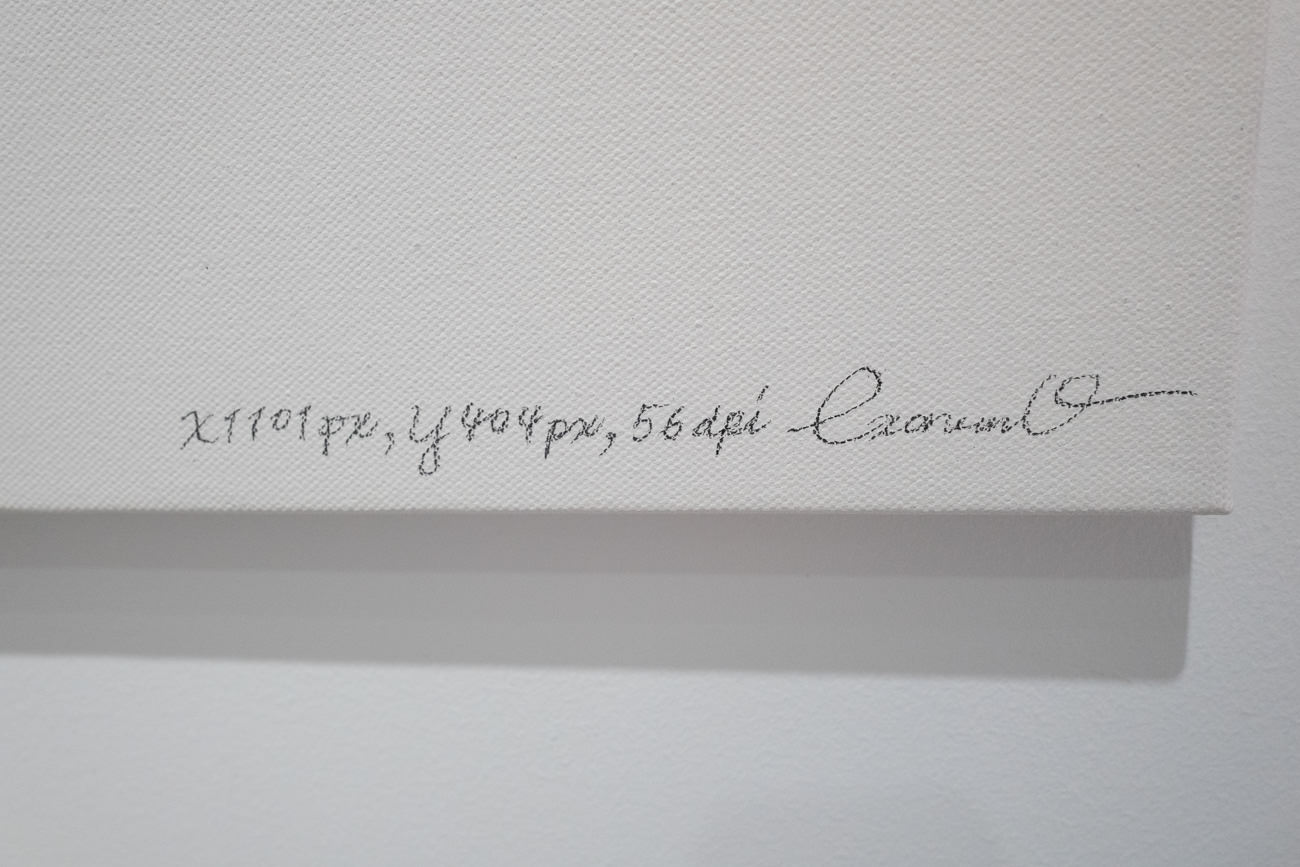
Looking closely, pixel and dpi notations have been left on the work.
These are works in which the corner of the canvas is taken as the origin of a coordinate system, the X and Y axes are traversed by the pixel value across the canvas, and the mouse pointer is nailed into place at that point.
The canvas came in three sizes — large, medium, and small — of the same work.
What was interesting was the price. Astonishingly, all works were a flat 200,000 yen (excluding tax).
Art works generally rise in price as the size grows, but because these convert digital data into artworks, they are priced on the premise that “the only difference is resolution — they are all the same digital work.”
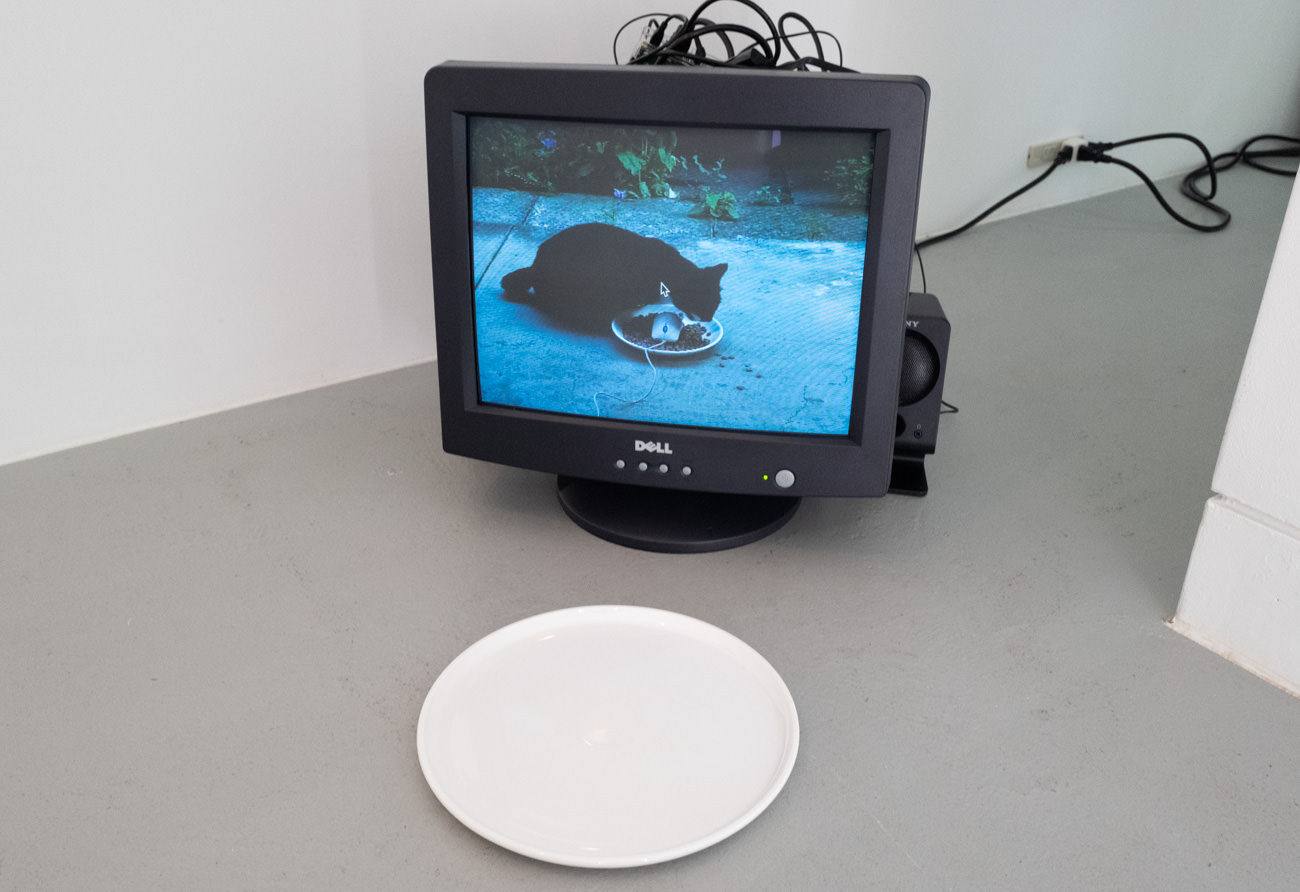
A cat eating nonstop inside a monitor. On top of that sits a powered-on mouse.
Look at the center of the monitor and you’ll see a mouse pointer, but the cat’s movements as it eats are cunning — it never touches the mouse inside its dish.
The immobile mouse pointer inside the monitor and the cat cheerfully munching away form an interesting contrast.
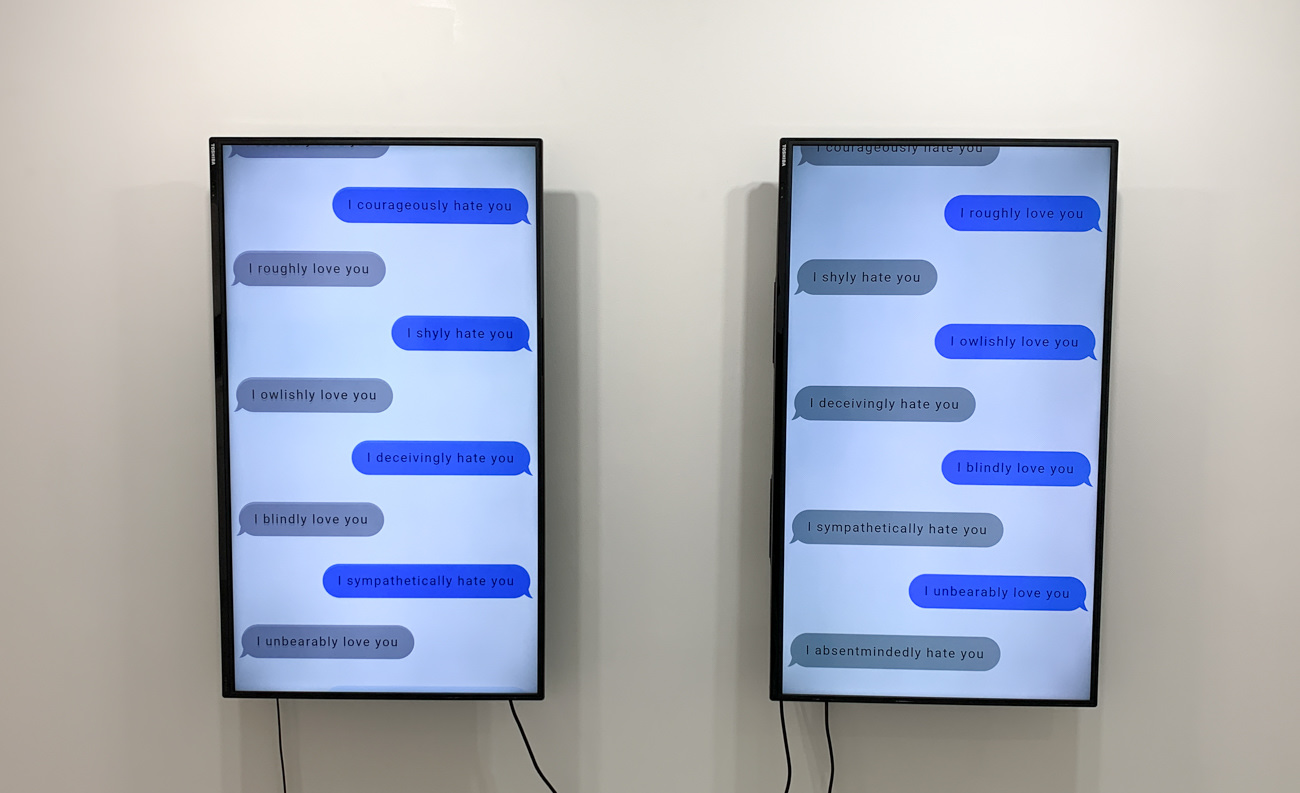
Displayed on two vertical monitors is the work “I randomly love you / hate you.”
Random words are inserted before “love you” and “hate you,” producing a stream of dialogue that never quite lines up.
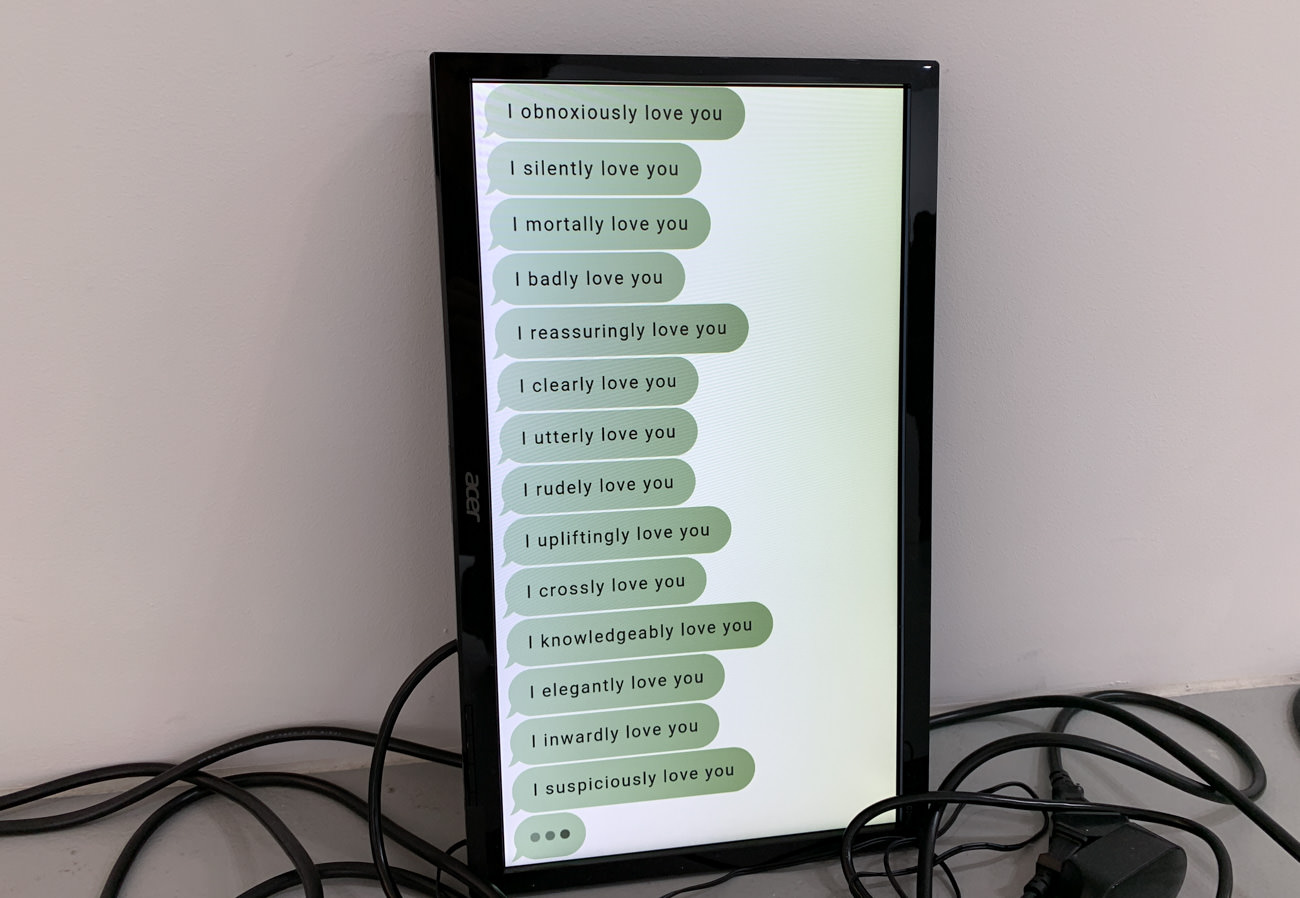
“I randomly love you,” made with a single monitor, is a work in which one person murmurs love endlessly.
It’s a world filled with every conceivable expression of love.
Though the works take digital as their keyword, the way they are presented is thoroughly physical and analog.
As digital is accepted by society at large and takes root, the exhibition offered a unique perspective on things we let pass unnoticed — and it made for a genuinely fascinating viewing experience.