Kisō no Keifu (Lineage of Eccentrics): The Miracle World of Edo Painting
On Saturday, February 9, 2019, amid falling snow in Ueno, Tokyo, the exhibition “Kisō no Keifu (Lineage of Eccentrics): The Miracle World of Edo Painting” opened at the Tokyo Metropolitan Art Museum.
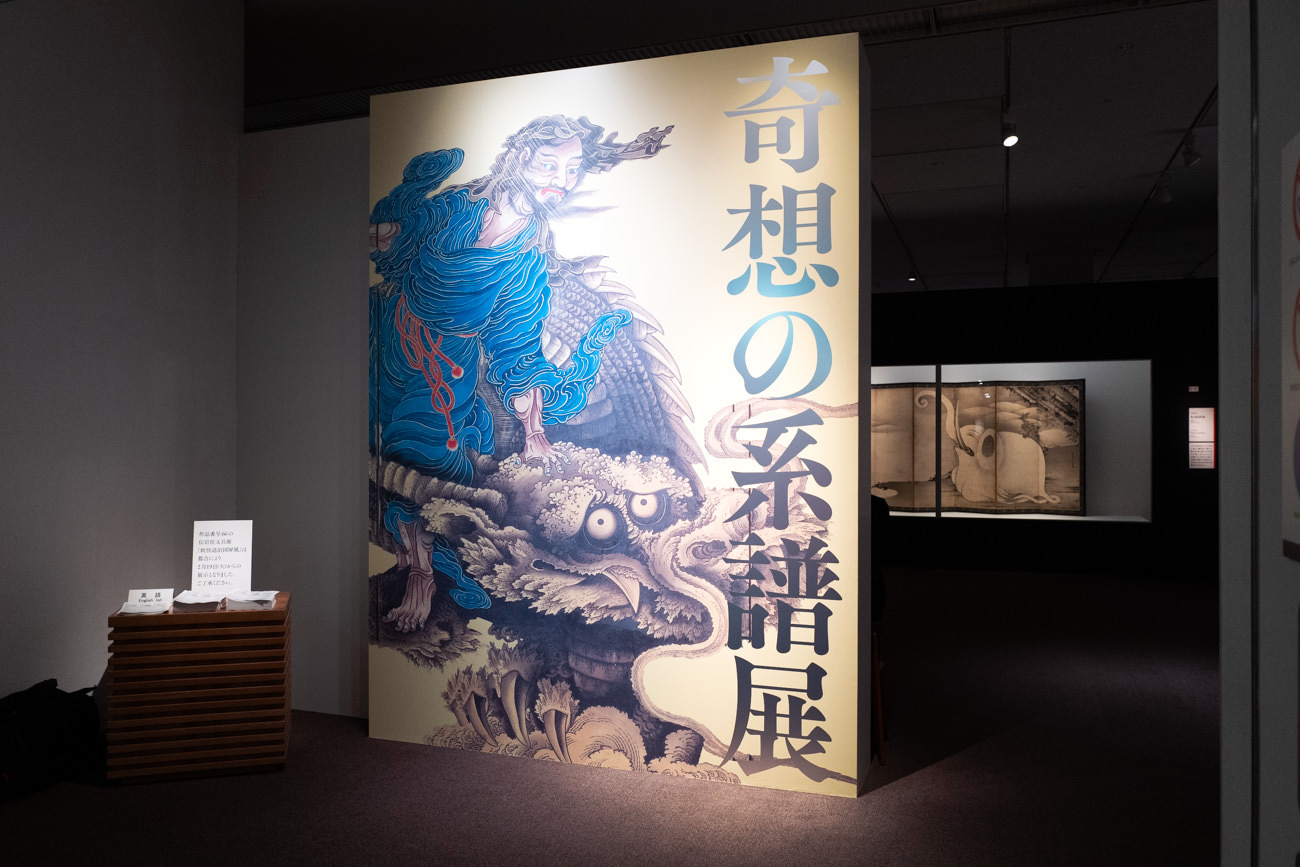 The exhibition title “Kisō no Keifu” derives from Lineage of Eccentrics, written in 1970—nearly half a century ago—by art historian Nobuo Tsuji.
A recent example of a book title being adopted as an exhibition name is the “Scary Paintings” exhibition, but for an exhibition of Japanese painting this is a first.
Lineage of Eccentrics introduced a wealth of paintings that had never before been presented together in books or exhibitions—works that broke the shell of convention and defied expectation, drawing viewers into extraordinary worlds through free and innovative ideas. Nobuo Tsuji’s achievement in gathering these works under the word “eccentric (kisō)” and making them known to the world deserves the highest praise.
The 2016 “Jakuchu exhibition” became so popular that wait times reached up to 320 minutes.
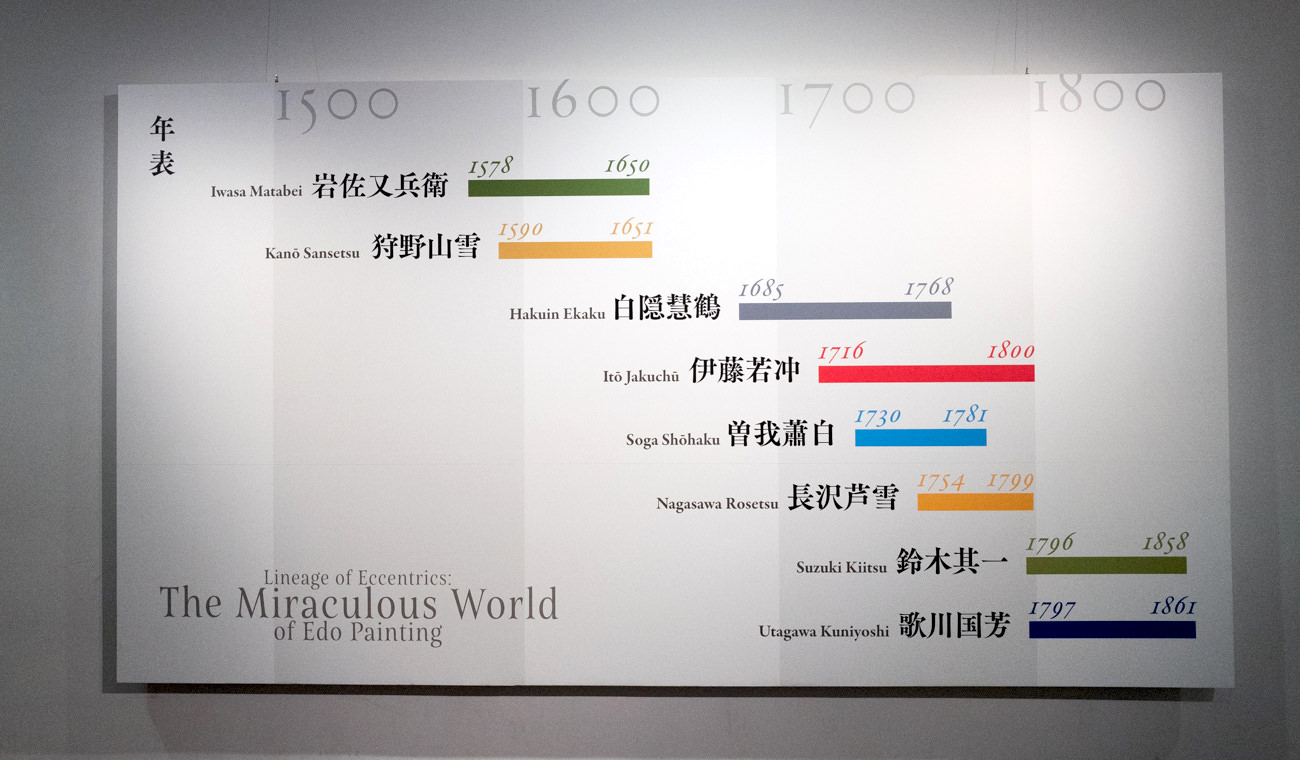
This exhibition features eight painters in total: the six taken up in Lineage of Eccentrics—Iwasa Matabei, Kano Sansetsu, Ito Jakuchu, Soga Shohaku, Nagasawa Rosetsu, and Utagawa Kuniyoshi—plus two more, Hakuin Ekaku and Suzuki Kiitsu.
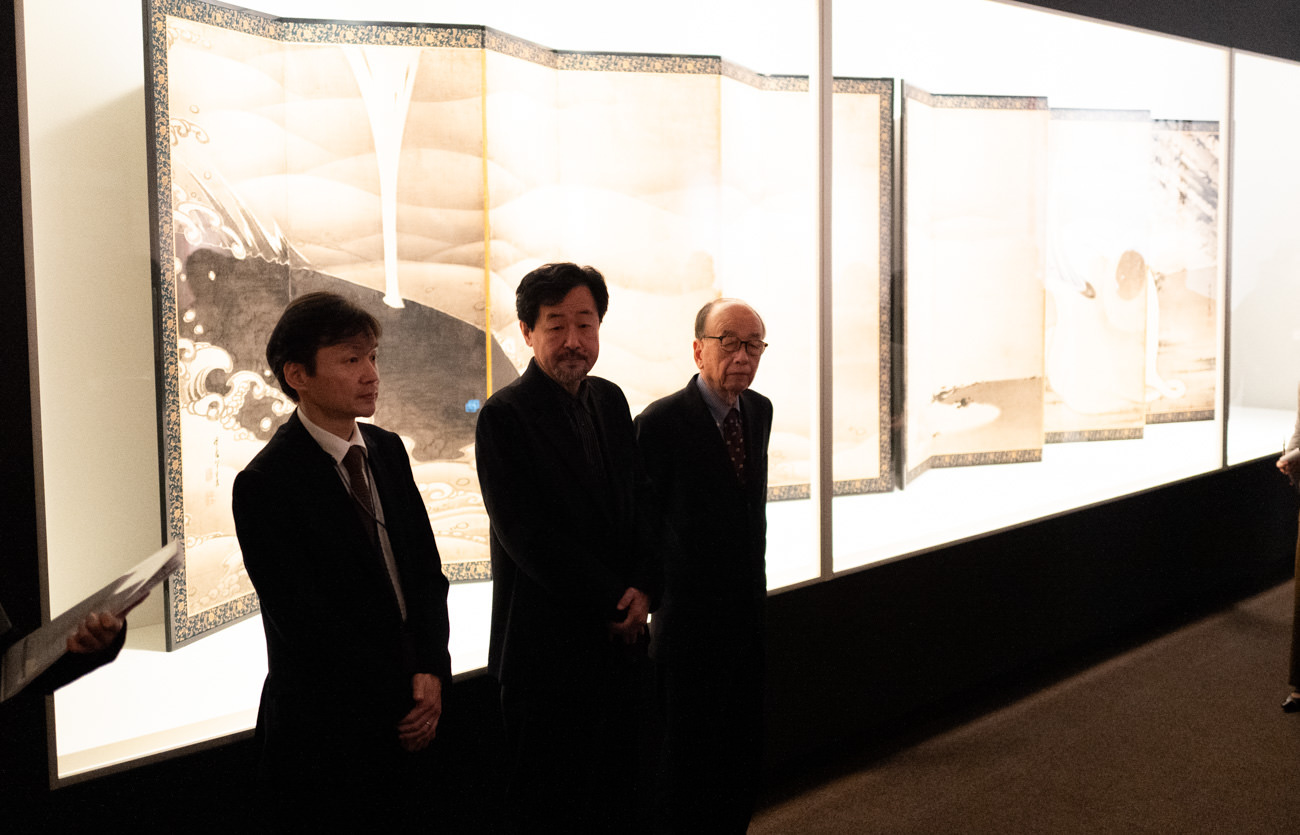
At the press preview, Nobuo Tsuji remarked in his greeting that this was “an exhibition that fills you up.” True to his words—”a lavish all-star billing with content everyone can enjoy”—it is a rich and deeply satisfying exhibition.
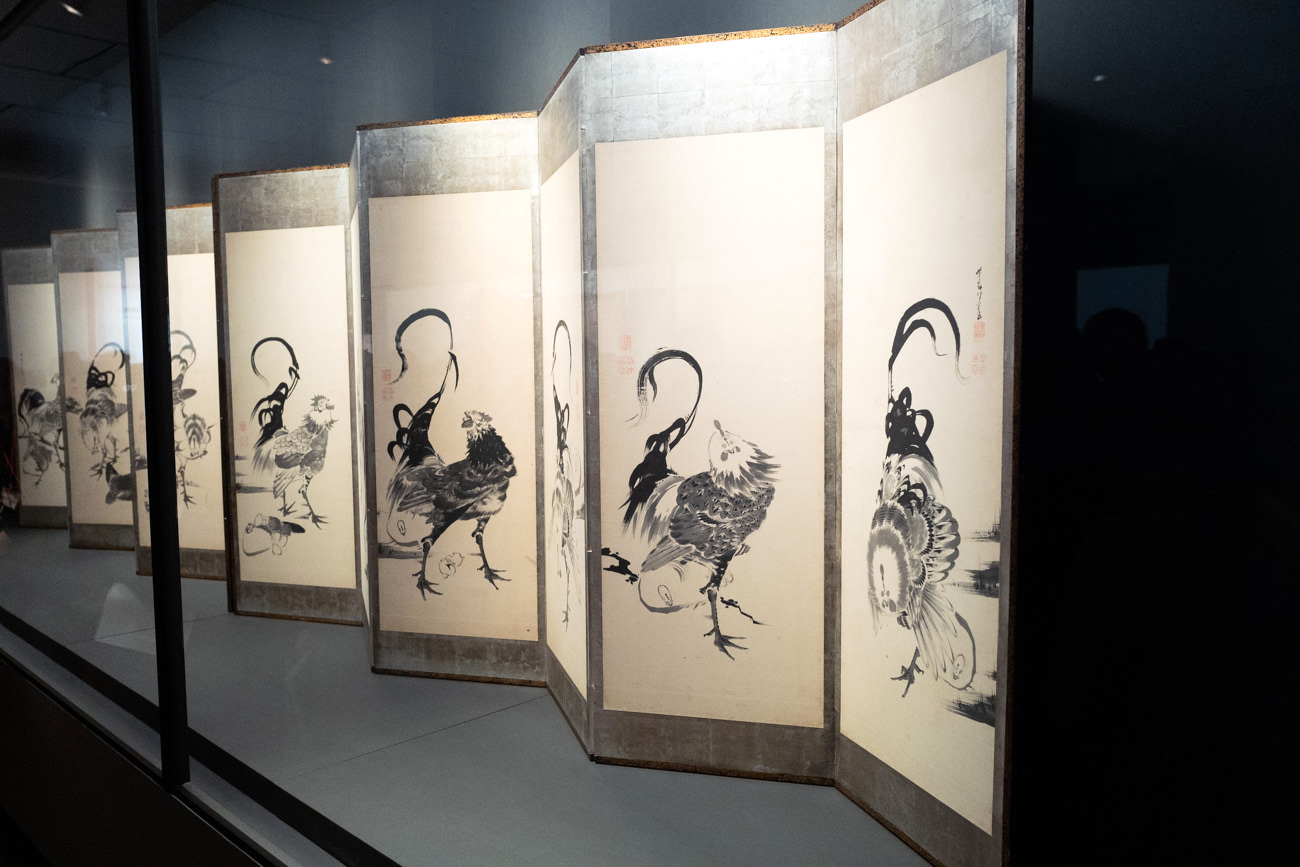
Ito Jakuchu
The exhibition is organized artist by artist across the eight painters.
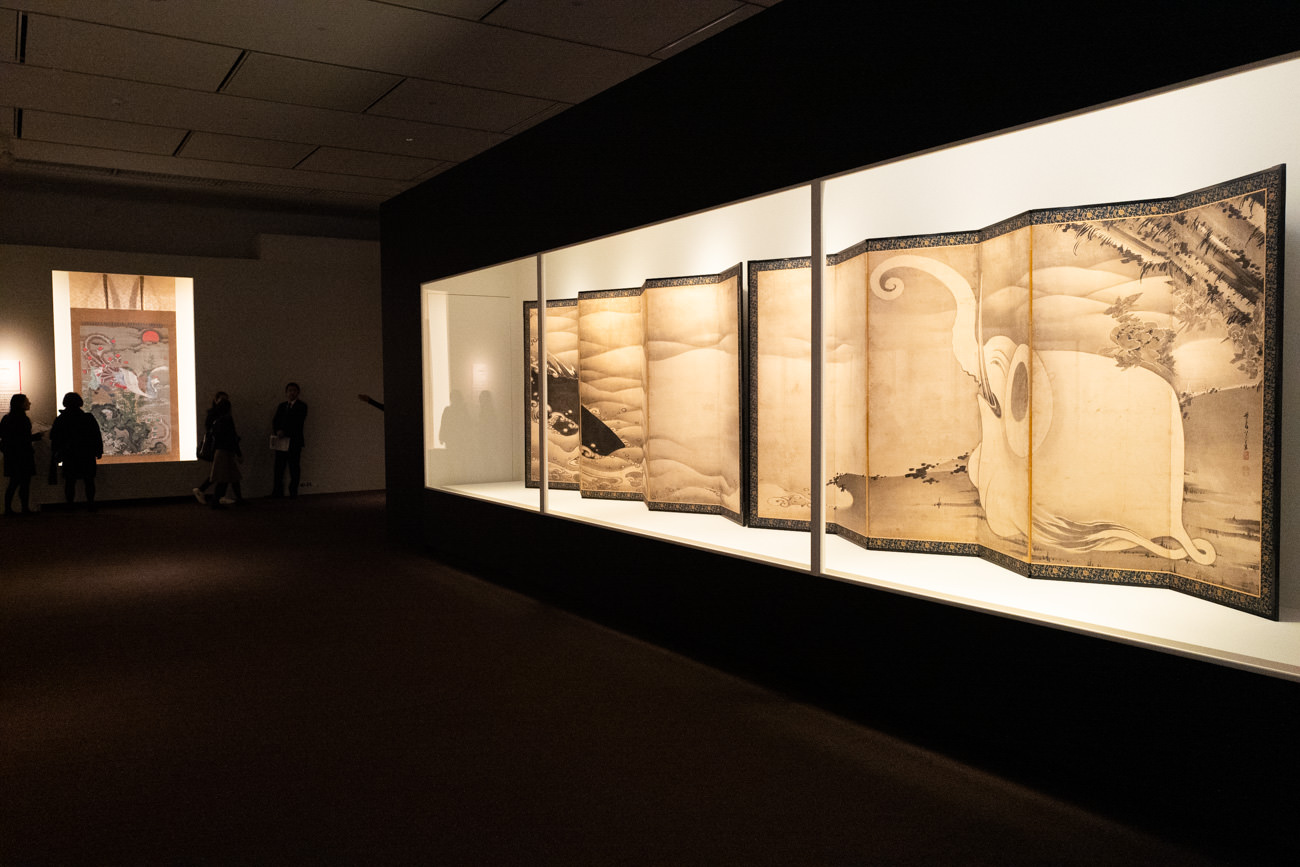
The first gallery is Ito Jakuchu. What supervisor Yamashita calls the “three eccentric crows”—Jakuchu, Shohaku, and Rosetsu—are placed in the first half.
Jakuchu is shown with 18 works in all.
![Ito Jakuchu, 《旭日鳳凰図》, Hōreki 5 (1755), Sannomaru Shozokan, Imperial Household Agency [On view: 2/9–3/10]](https://art-on.jp/wp-content/uploads/2019/02/Kiso_no_Keifu51.jpg)
Soga Shohaku
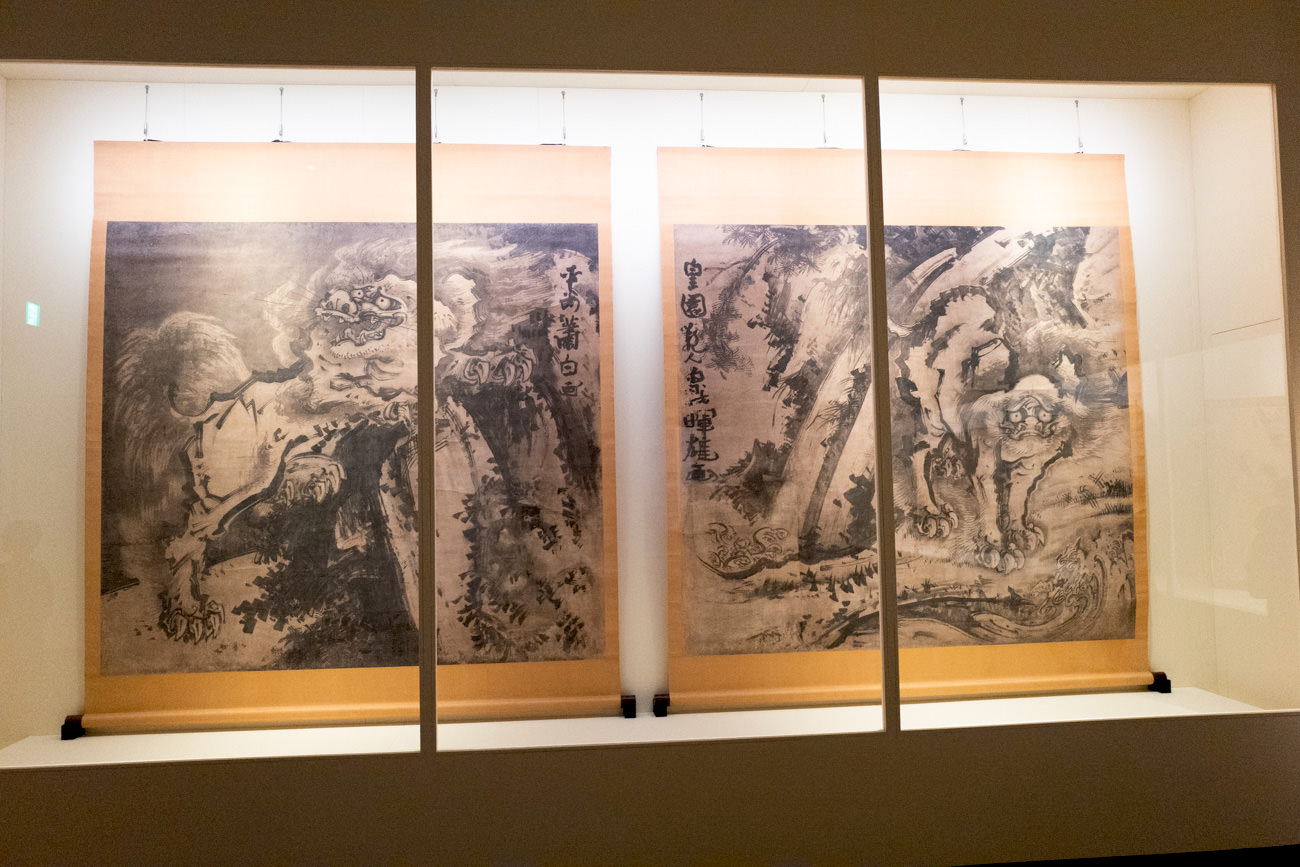
Next comes Soga Shohaku.
Among the geniuses of the 18th-century Kyoto painting world, Shohaku pursued the most intense expression of all. In his late twenties he claimed to be a direct heir of the Muromachi-period Soga school and took the Soga surname. He studied Chinese-style painting and depicted many traditional tales of Chinese immortals and sages, yet his expression was original and filled with madness—at times grating on the viewer’s nerves and plunging them into a vortex of chaos.
Nagasawa Rosetsu
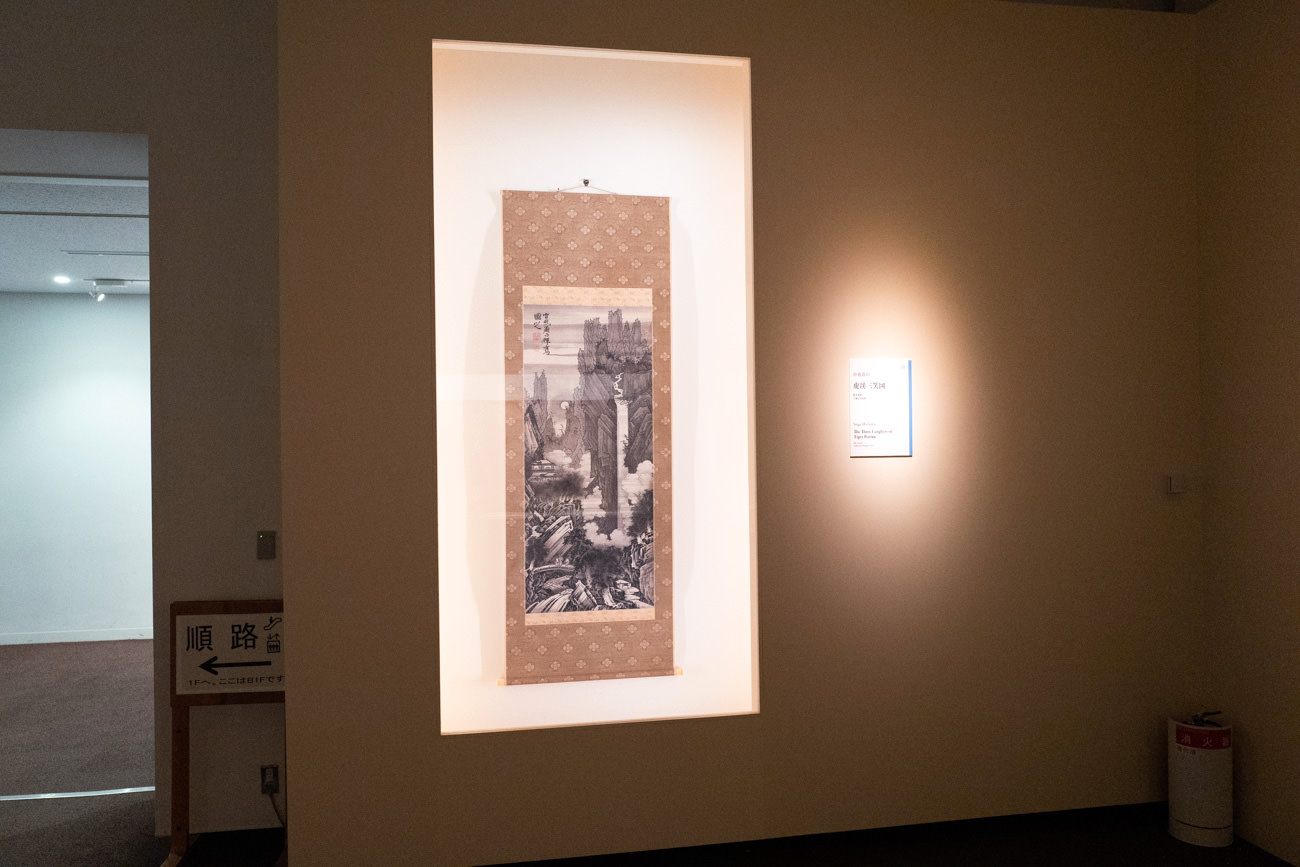
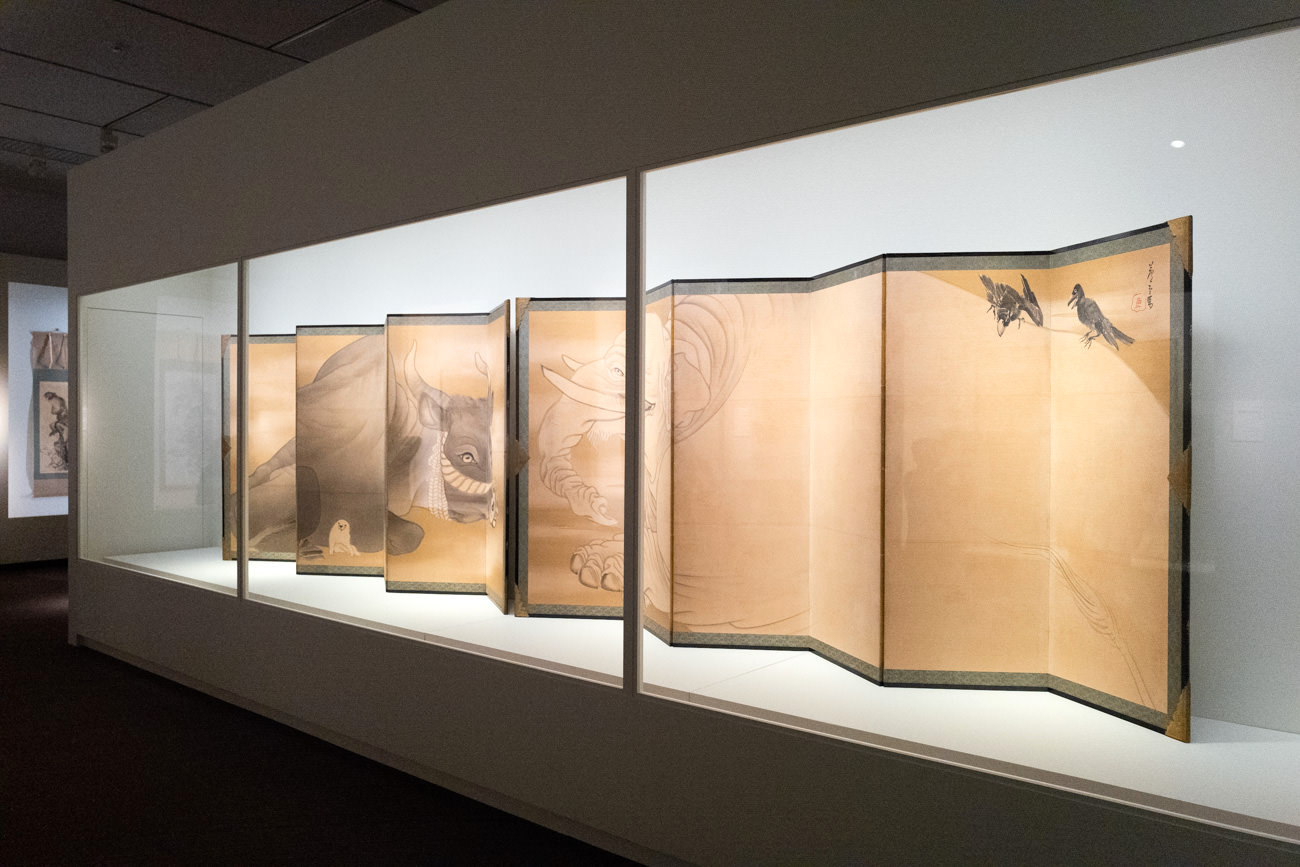
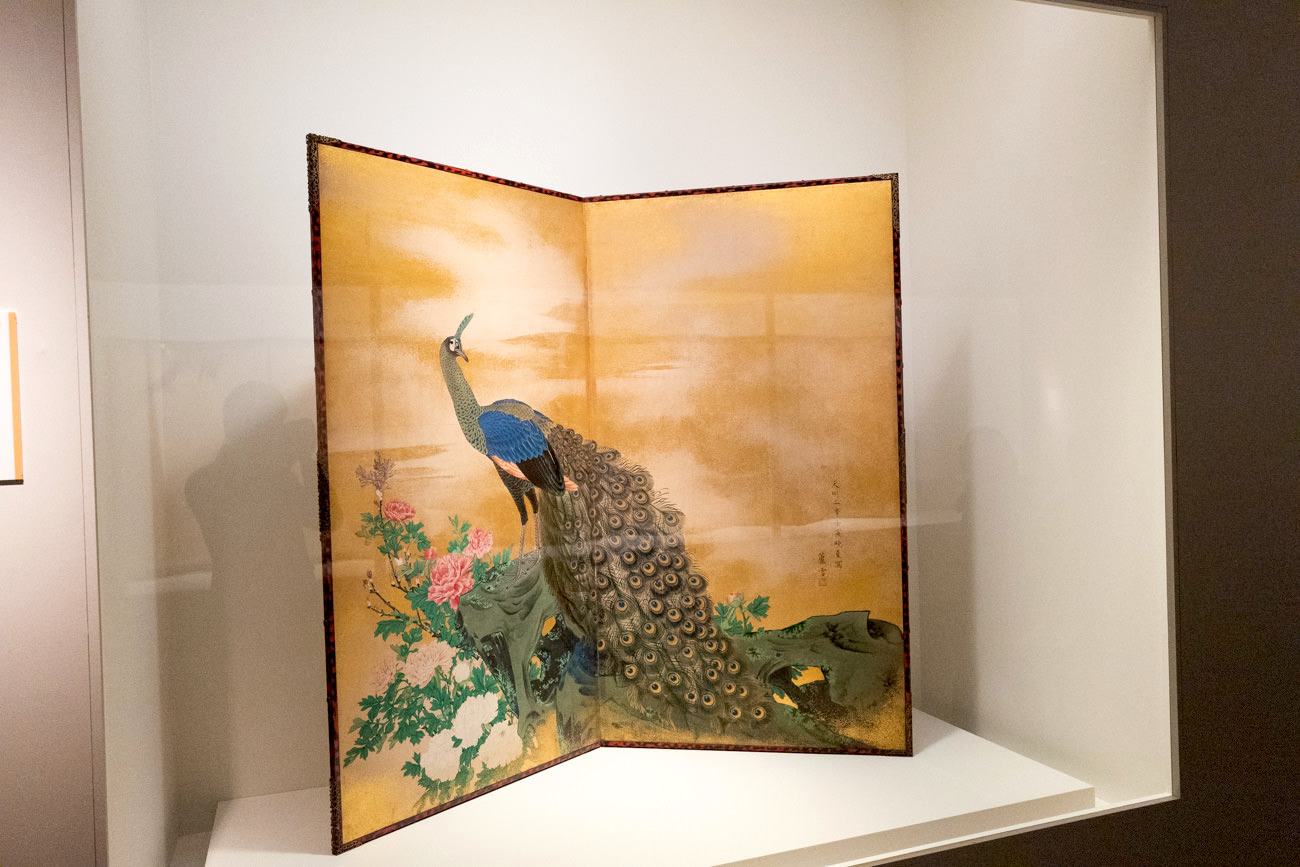
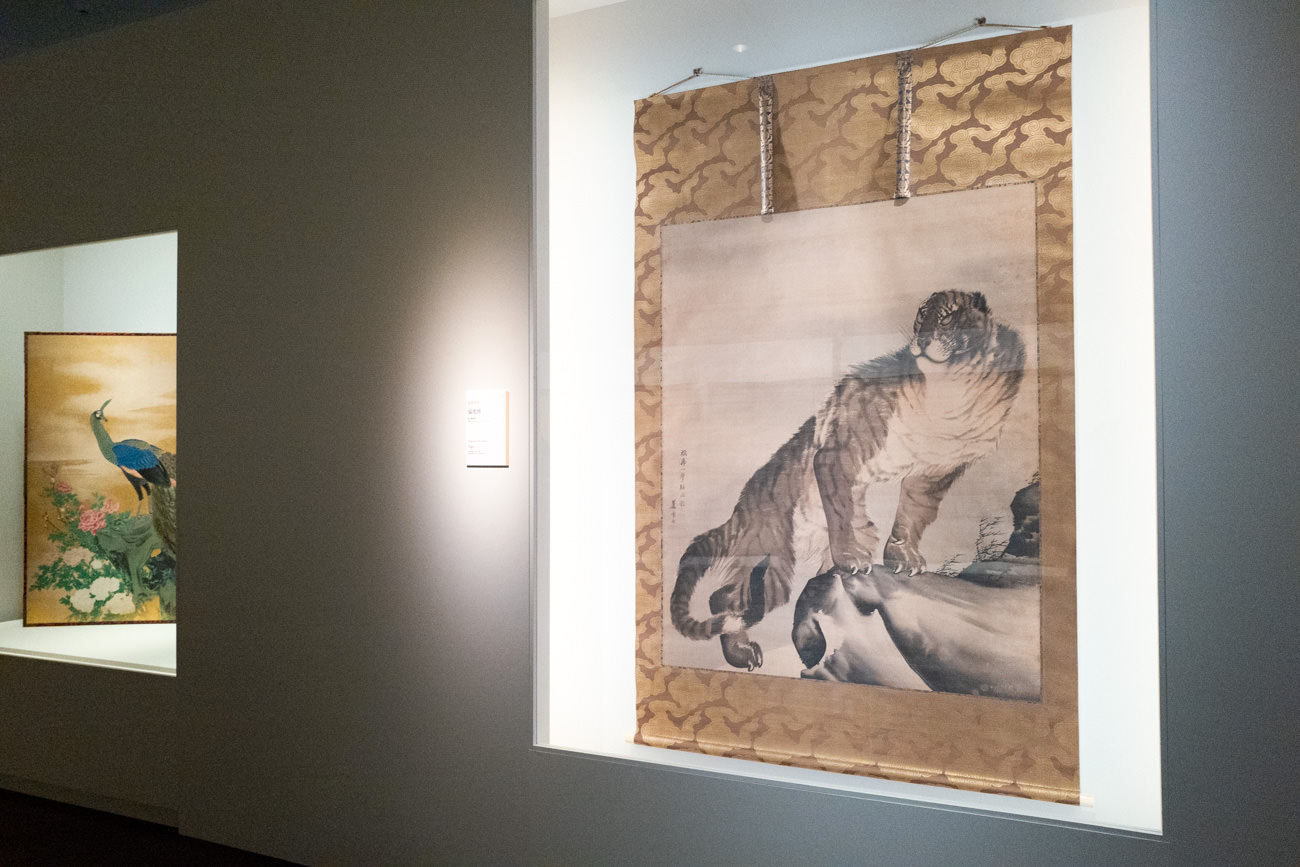
Born the son of a low-ranking samurai in Sasayama, Kyoto, Rosetsu studied under Maruyama Ōkyo. While most of Ōkyo’s pupils faithfully followed the master’s realistic painting method, Rosetsu opened up his own artistic realm with bold compositions and a free, brilliant brush, leaving many distinctive works full of an entertainer’s playful spirit.
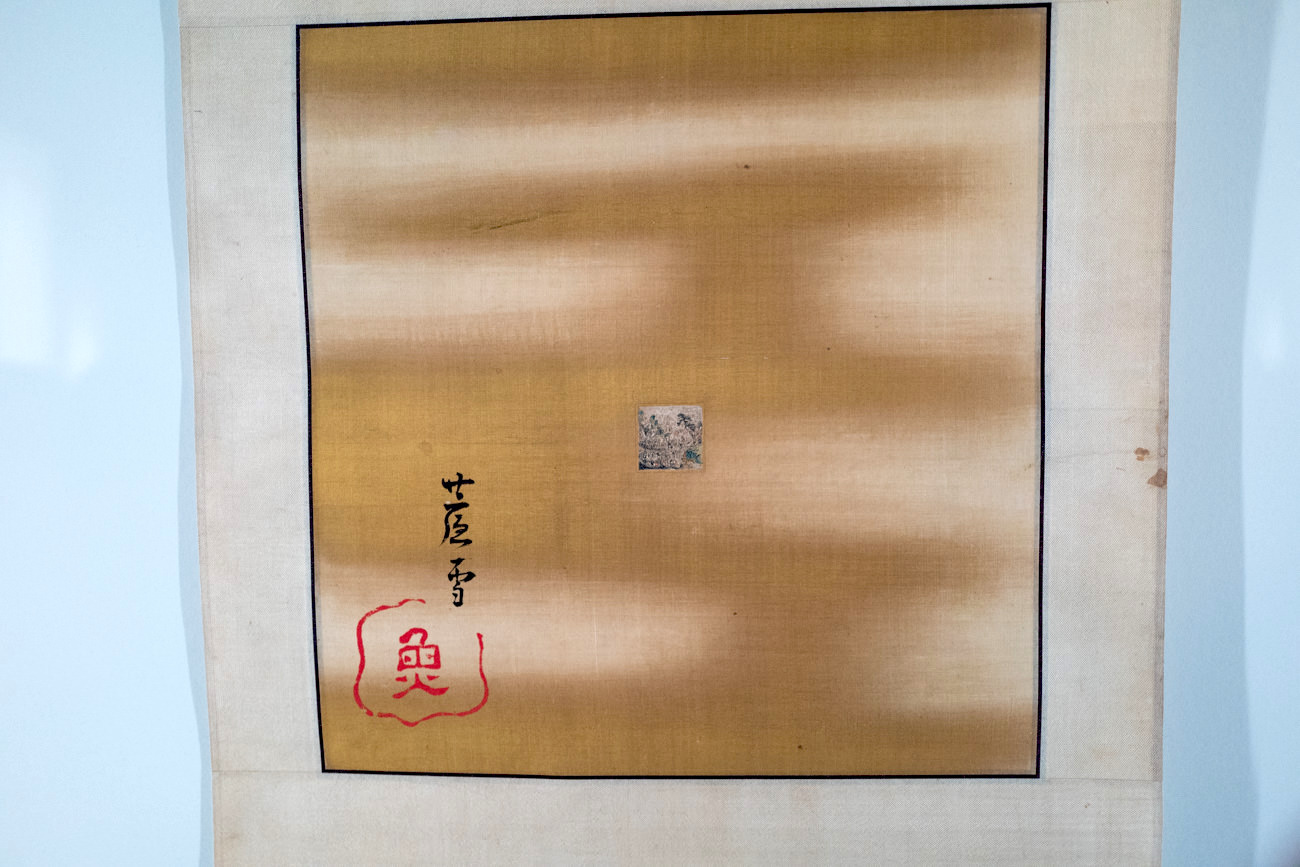
The uniqueness of the tiny 3.1 cm-square work 《方寸五百羅漢図》 drew an involuntary smile.
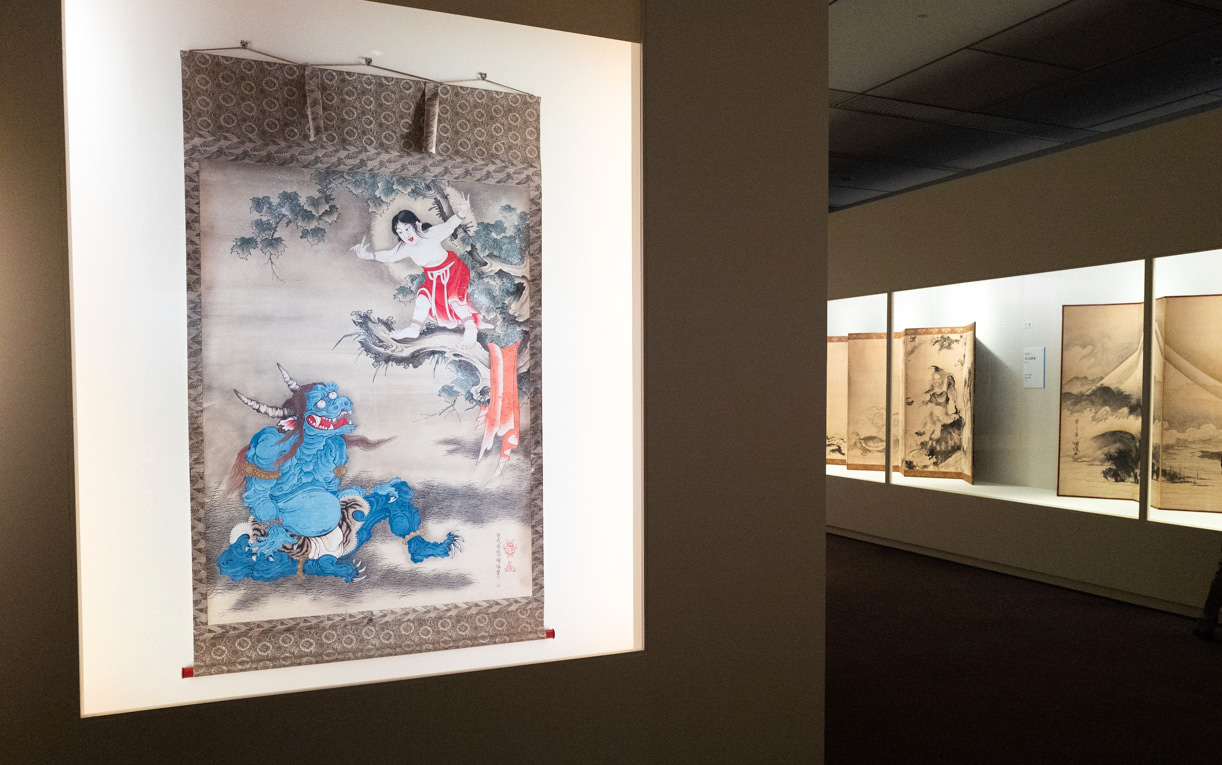
Iwasa Matabei
Iwasa Matabei, the subject of Tsuji’s master’s thesis and arguably his life’s work, comes next.
Around 20 works touching on Matabei—called the mysterious ukiyo-e master—can be seen, including a self-portrait and picture scrolls.
The presentation of this zone seems packed with Tsuji’s personal attention: the handscrolls could be viewed up close from above, making them very easy to appreciate.
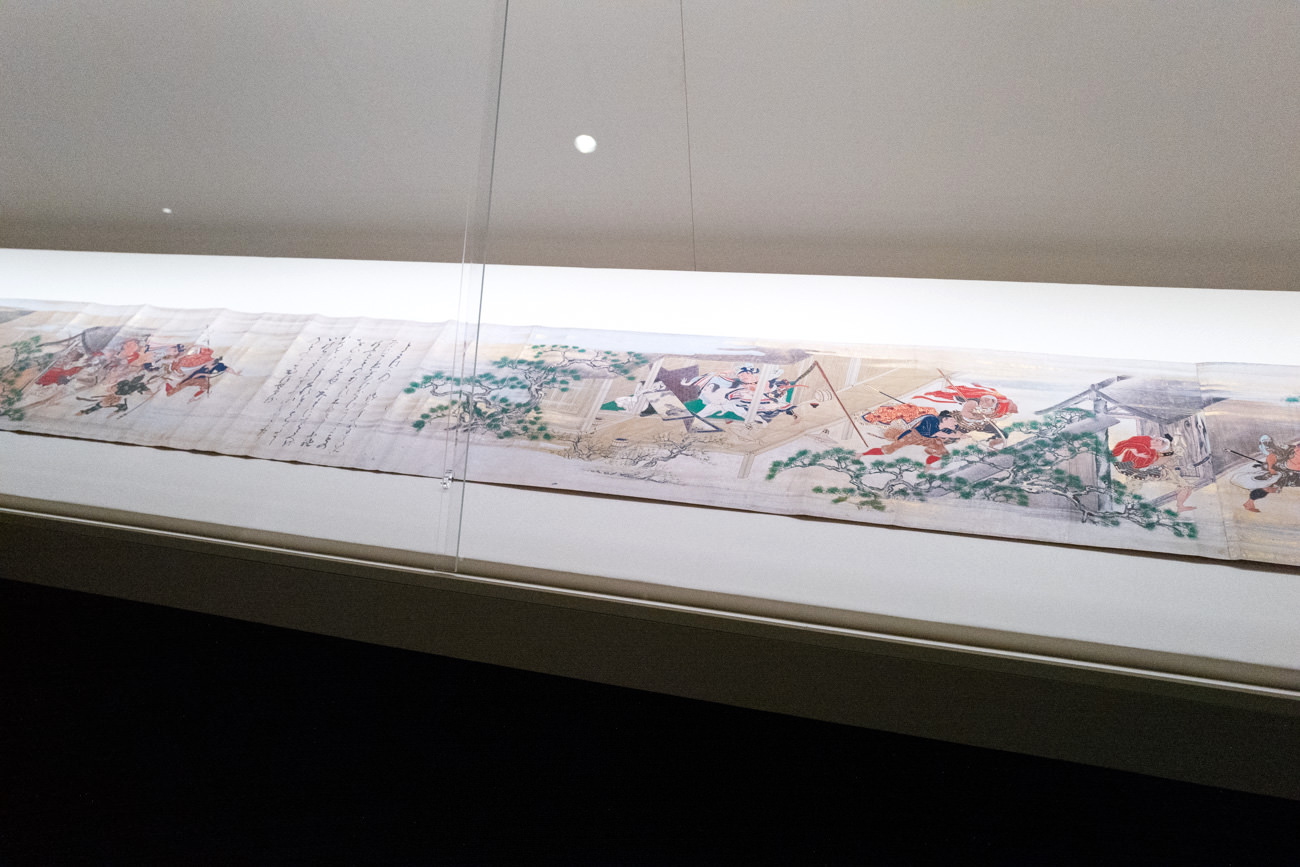
early Edo period (first half of 17th c.), MOA Museum of Art, Shizuoka [On view: 2/9–3/10]
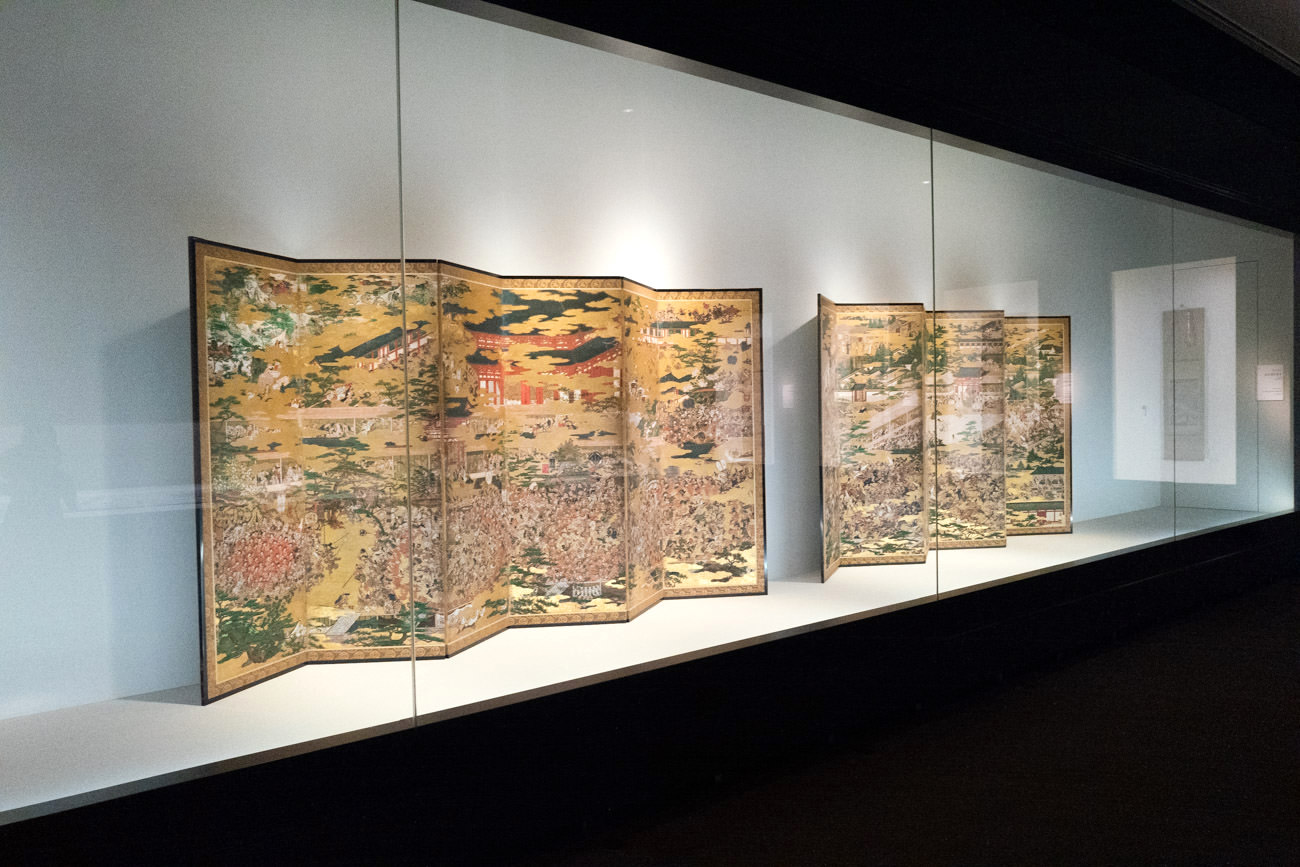
Kano Sansetsu
Kano Sansetsu is known for reinterpreting traditional subjects from his own perspective, using intellectual geometric compositions that emphasize verticals, horizontals, and isosceles triangles.
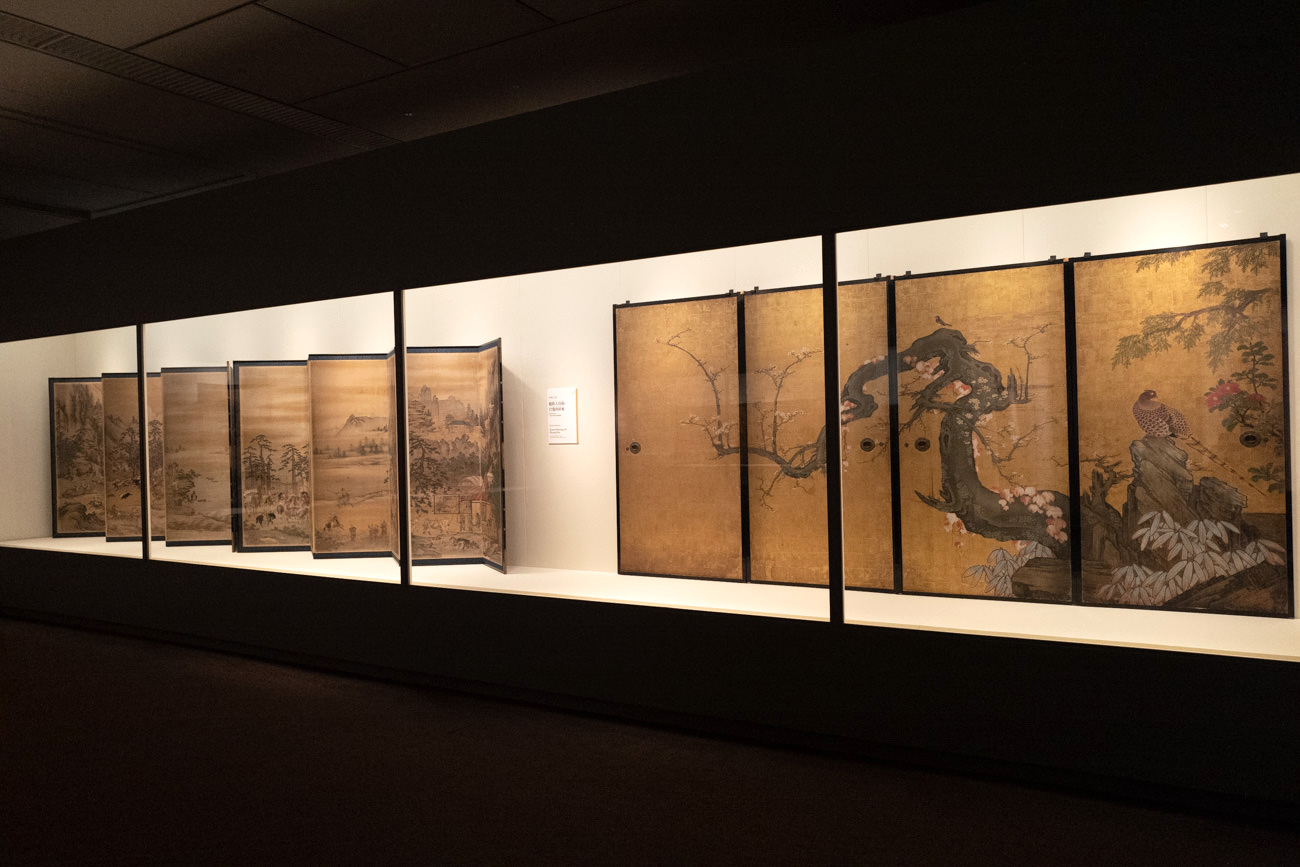
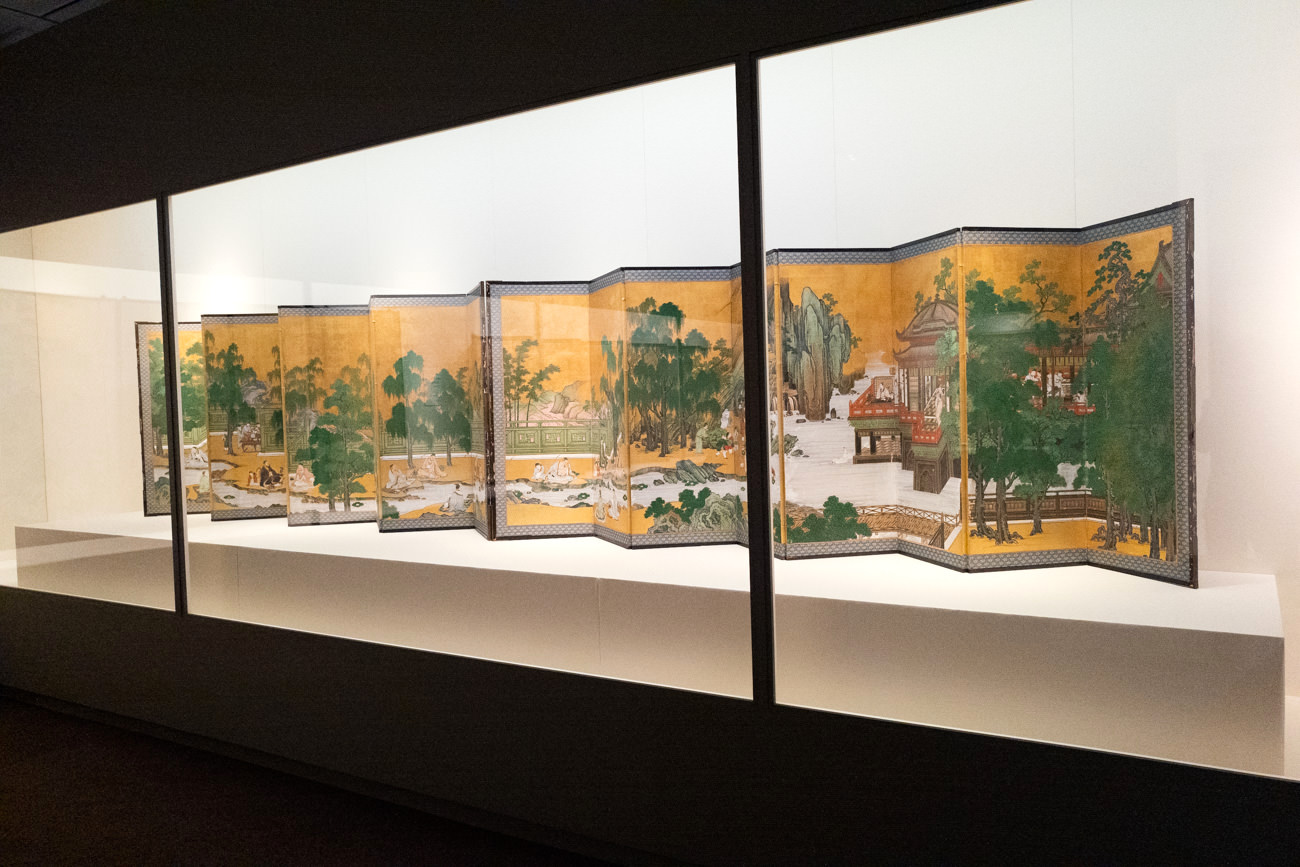
Hakuin Ekaku
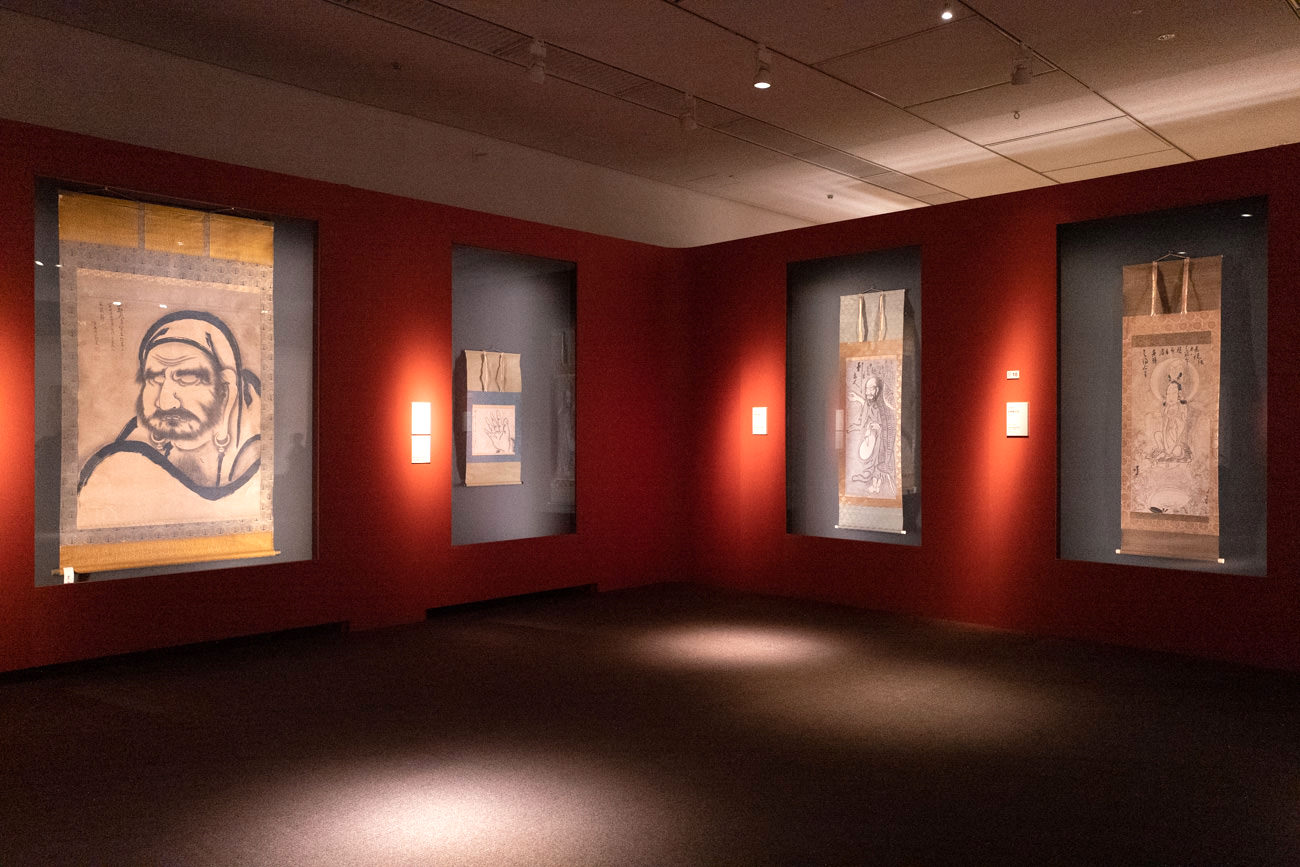
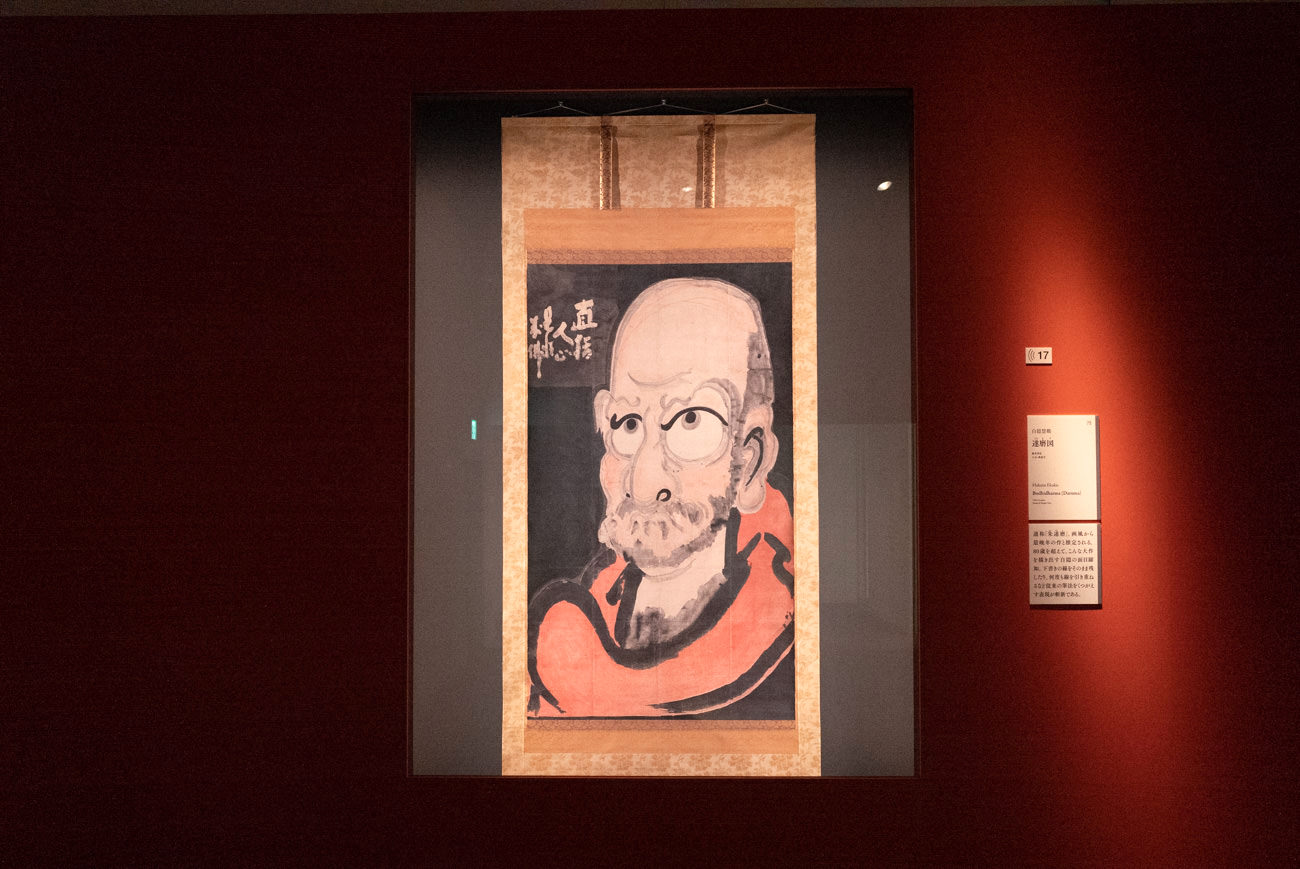
A Zen monk called the reviver of the Rinzai sect. Born in Suruga’s Hara-juku (present-day Numazu), he became a monk at 15. In Zen, said to “stand not on words,” Hakuin left an enormous number of Zen paintings and calligraphy.
Not a professional painter, his seemingly humorous, light, yet bold paintings and calligraphy—created as a means to convey the Buddha’s teachings—served as a catalyst for the eccentric painters of the 18th-century Kyoto world such as Shohaku, Rosetsu, and Jakuchu.
Suzuki Kiitsu
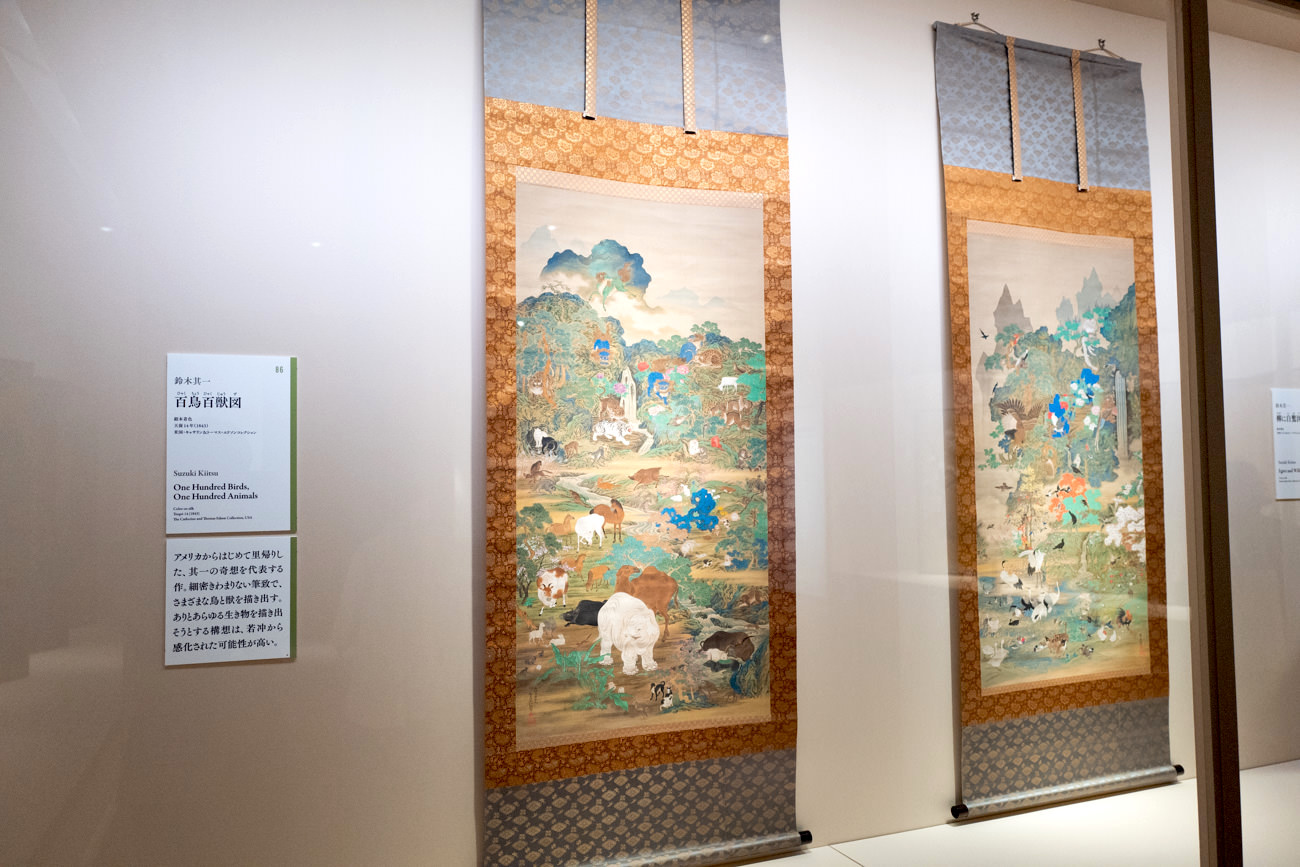
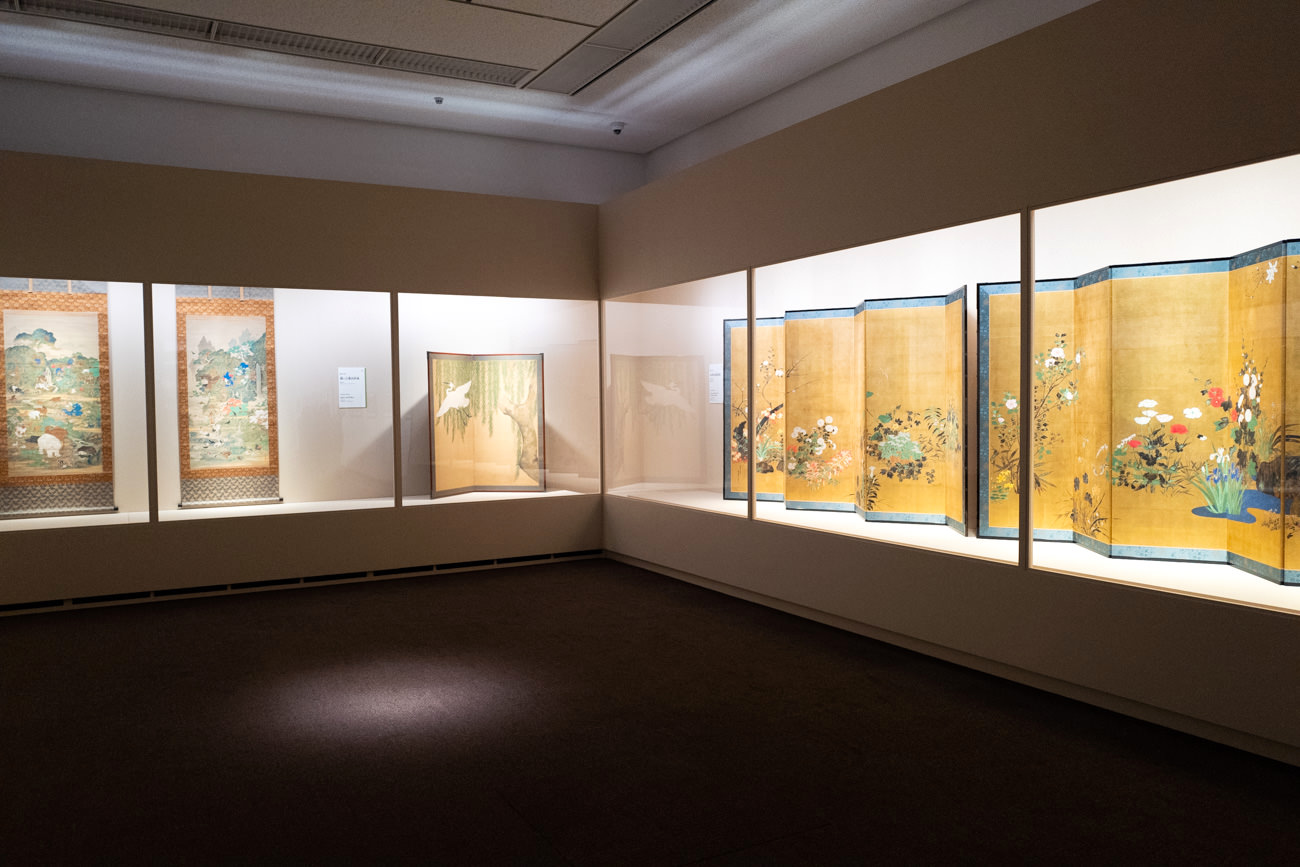
《百鳥百獣図》, returning to Japan from the United States for the first time, is a work representative of Kiitsu’s eccentricity.
With exceedingly fine brushwork, it depicts a variety of birds and beasts. It feels like a work influenced by Jakuchu.
Utagawa Kuniyoshi
The last of the six eccentrics, Utagawa Kuniyoshi, can be seen at the end of the exhibition.
Alongside Kunisada for actor prints and Hiroshige for landscapes, Kuniyoshi became the leading figure for warrior prints.
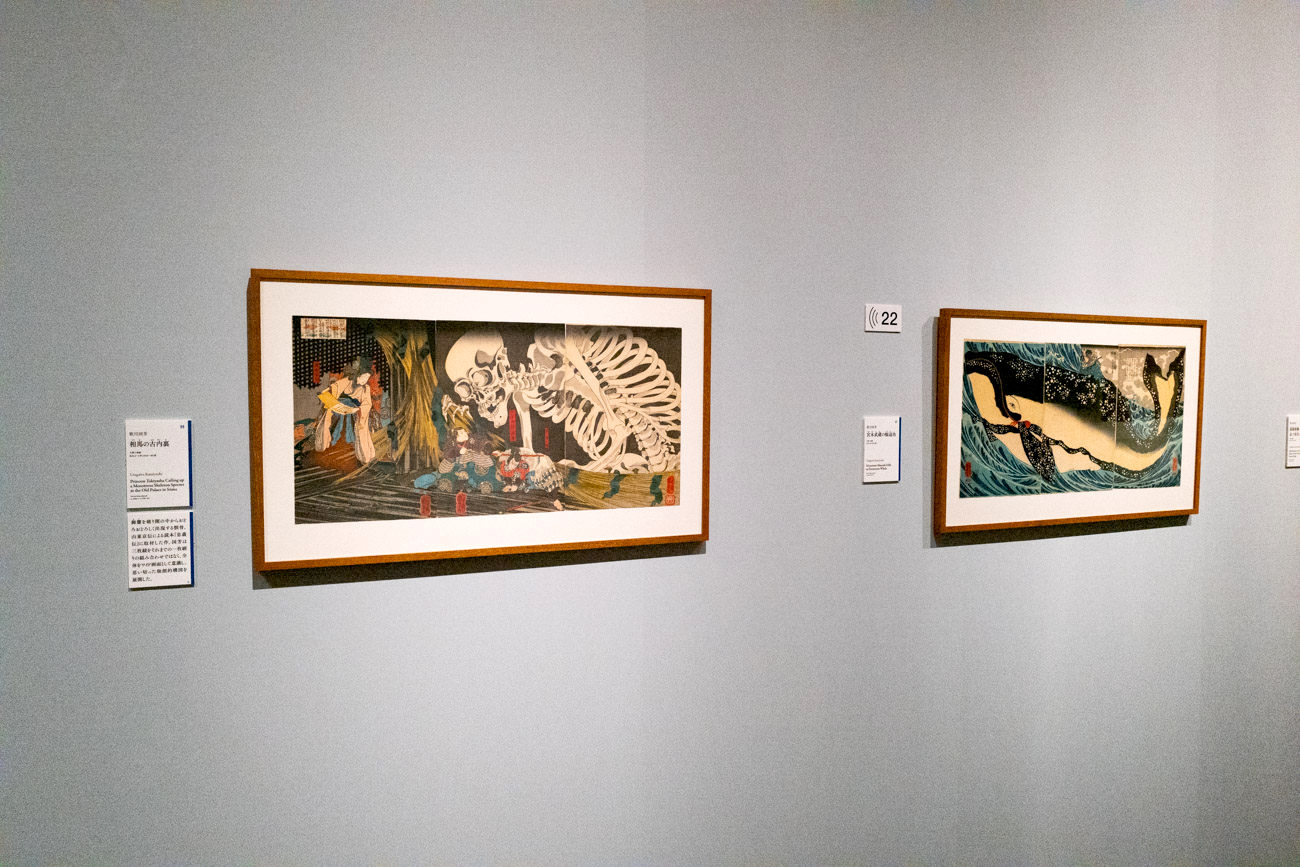
Right: Utagawa Kuniyoshi, 《宮本武蔵の鯨退治》, ōban nishiki-e triptych, c. Kōka 4 (1847), private collection
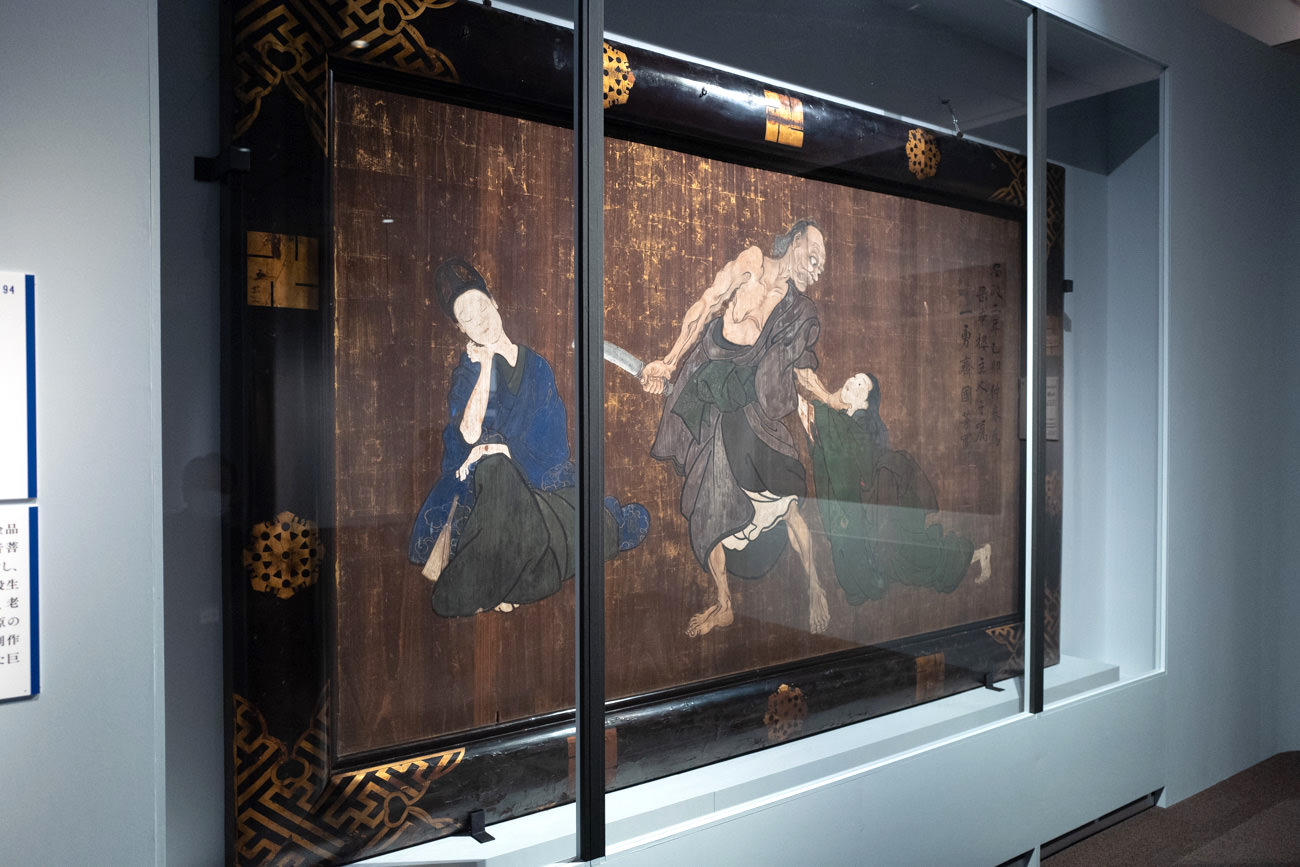
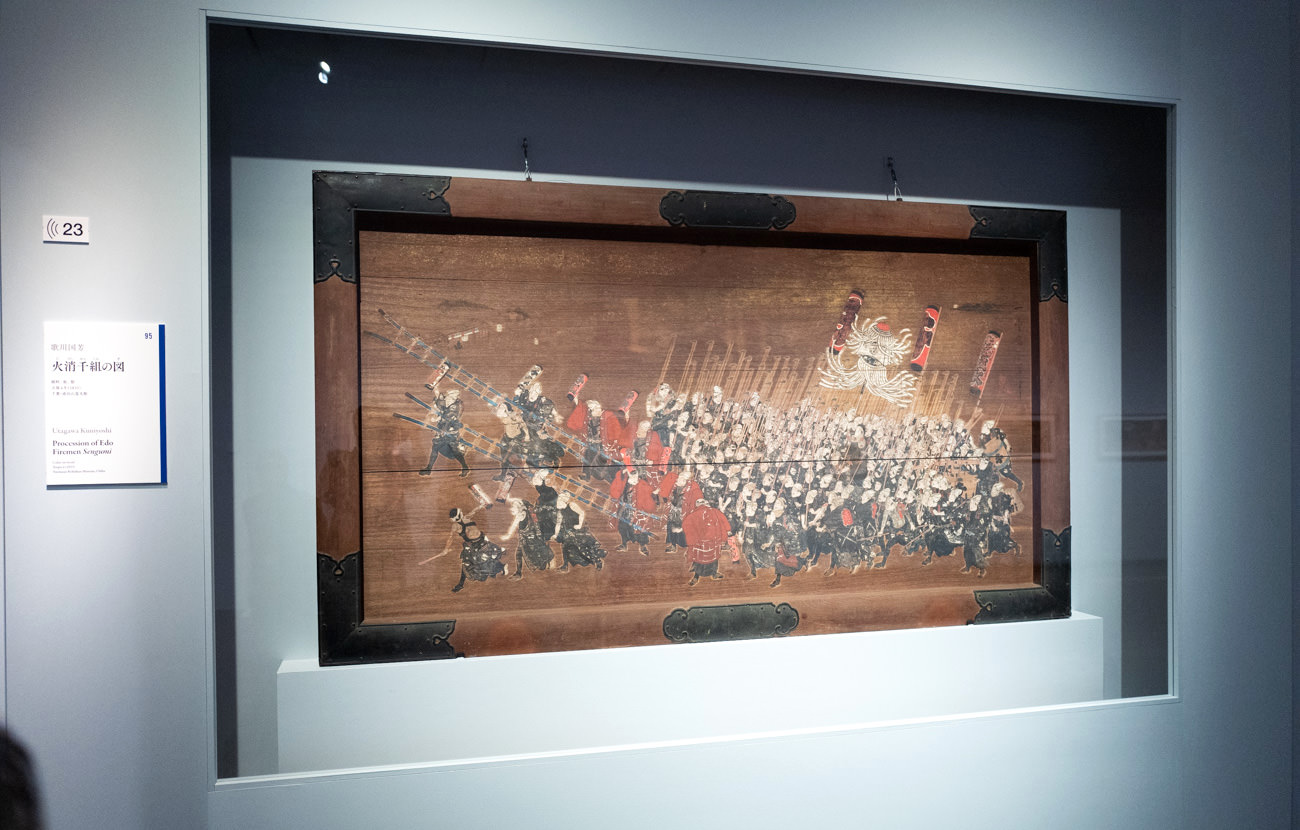
Special Work
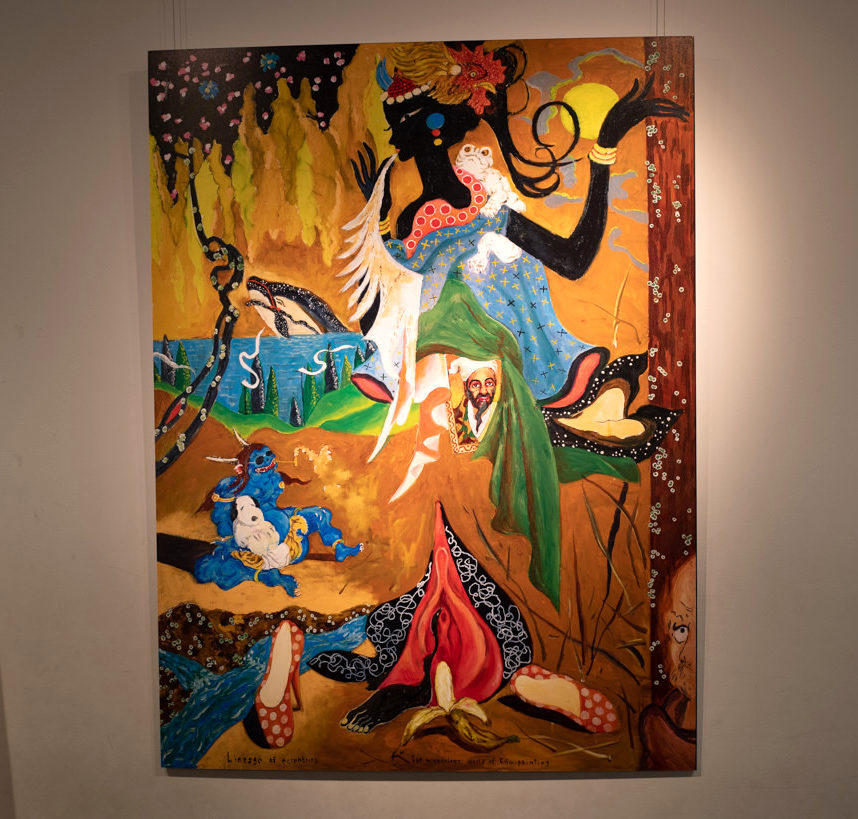
At the very end of the venue, you can see a work specially created for this exhibition by Tadanori Yokoo.
Collaging the imagery of six of the featured artists, Yokoo—citing the work of shōjo painter Chiaki Fujii as a Shōwa-era eccentric answering the Edo lineage—produced his own “eccentric painting.” A magnificent work.
Summary
The many works by these eight painters gathered under the keyword “eccentric” are all wonderful and richly rewarding to view.
An exhibition where a lavish lineup and superb works come flying into view one after another.
It is sure to be a deeply satisfying show.
Long lines are all but guaranteed for this exhibition too. We recommend going early in the run to avoid the crowds!