Miran Fukuda
Miran Fukuda is the daughter of the late Shigeo Fukuda, an internationally renowned graphic designer.
In 2018, she exhibited her works in several art shows, and her piece from “Monet: The 100 Years After” remains vivid in memory.
Like the piece “Water Lily Pond” shown at the Monet exhibition, she is an artist who quotes past masterpieces, digitally processes them, and develops her own unique interpretations.

Newspaper Prints
The “Newspaper Prints” series, which Miran Fukuda continues to produce and present, involves the artist herself cutting out the portions of newspapers where her works — mainly pieces from exhibitions — have been reproduced, signing them, and selling them as “prints.”
The idea of treating a reproduction printed in a newspaper as a “print” is a fascinating approach.
Since printmaking is synonymous with printing, it is not unreasonable to call this contemporary printmaking made possible by the era of ubiquitous color printing and advanced print technology.
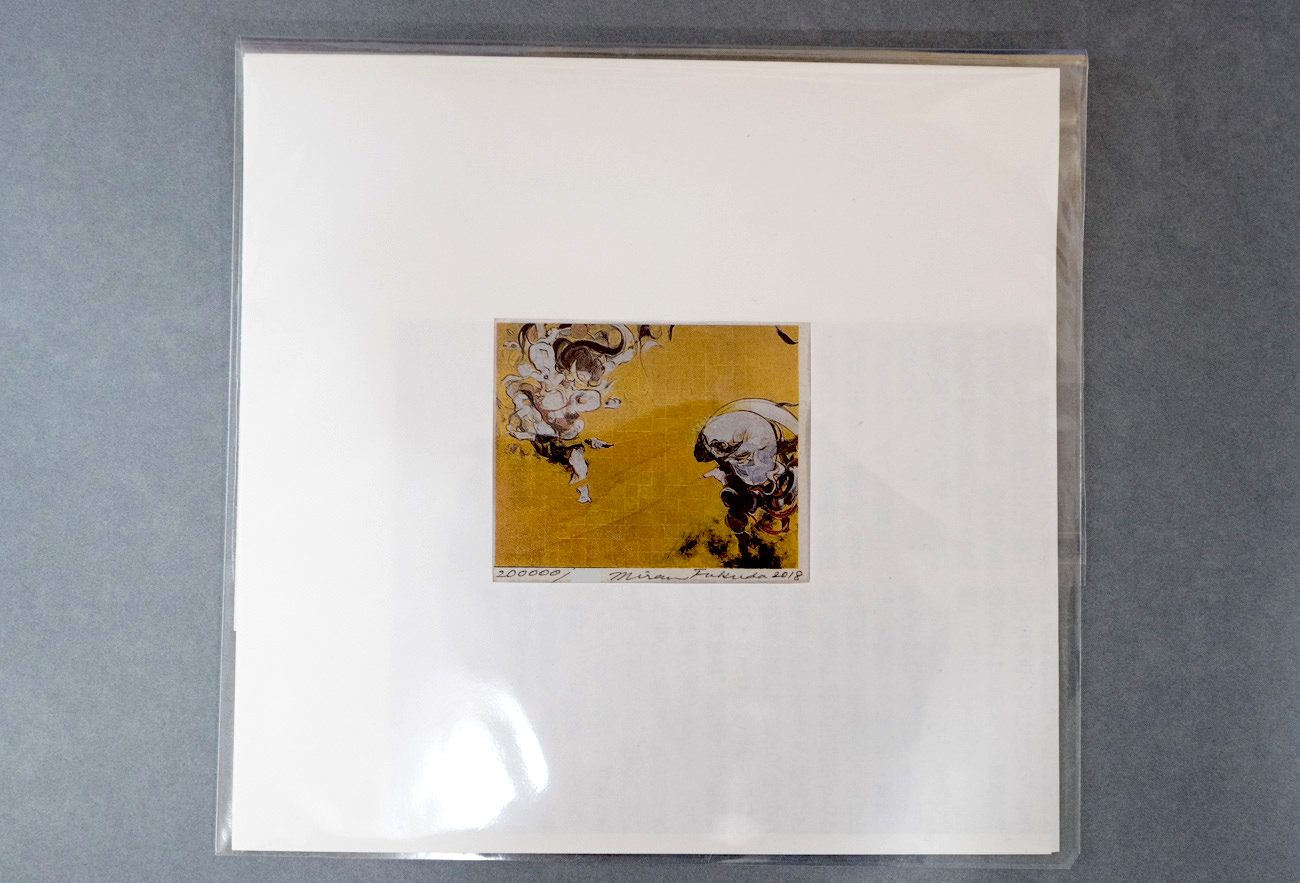
Furthermore, what makes this work uniquely distinctive is that its value increases through the addition of the artist’s signature — an approach reminiscent of Duchamp signing and exhibiting a urinal.
Perhaps it also carries an ironic commentary on the art market, where a work becomes valid simply because it has been signed.
The edition number corresponds to the newspaper’s print circulation at the time of publication.
Even though there may be discrepancies between officially announced figures and actual sales, there is a certain exhilaration in selling mass-printed newspapers as “prints.”
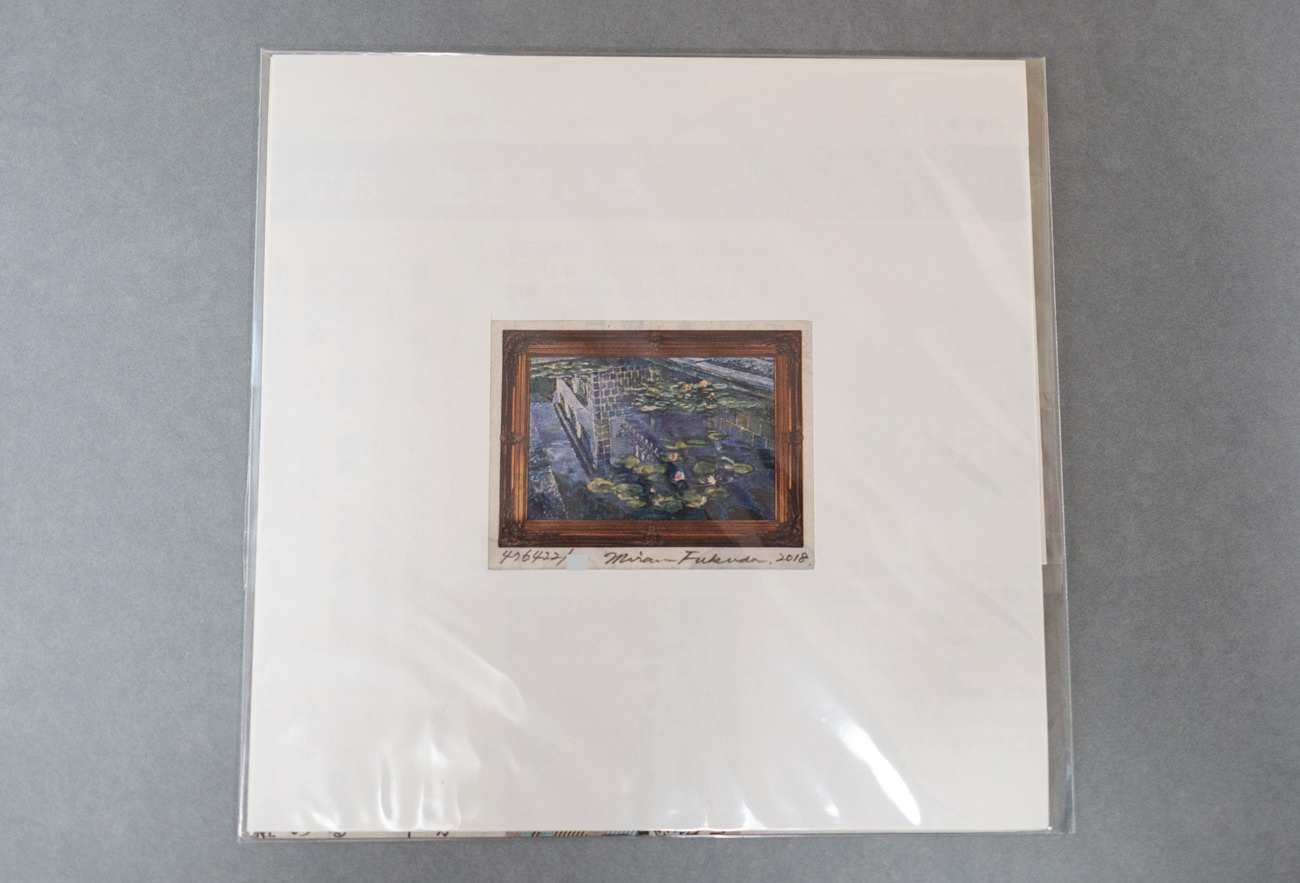
The advances in newspaper printing technology in recent years are impressive.
This series reportedly began in 1996, and precisely because it is realized in the present day, it seems to fulfill the role of a genuine contemporary artist.
The writer intends to join in this project and treat the works with proper framing.
Miran Fukuda, “Wind God and Thunder God,” 2013
This work was exhibited in a collection show at the Yokohama Museum of Art, quoting imagery from Tawaraya Sotatsu’s “Wind God and Thunder God Screen.”
The composition, with figures confronting each other at the upper left and lower right, is rendered in a manner reminiscent of the tarashikomi technique on a gold-leaf ground. Although the figurative quality of the original imagery is in fact deconstructed,
viewers can immediately recognize the original as Sotatsu’s Wind God and Thunder God — the work has been transposed into an abstract form that dwells on the very edge of recognizability.
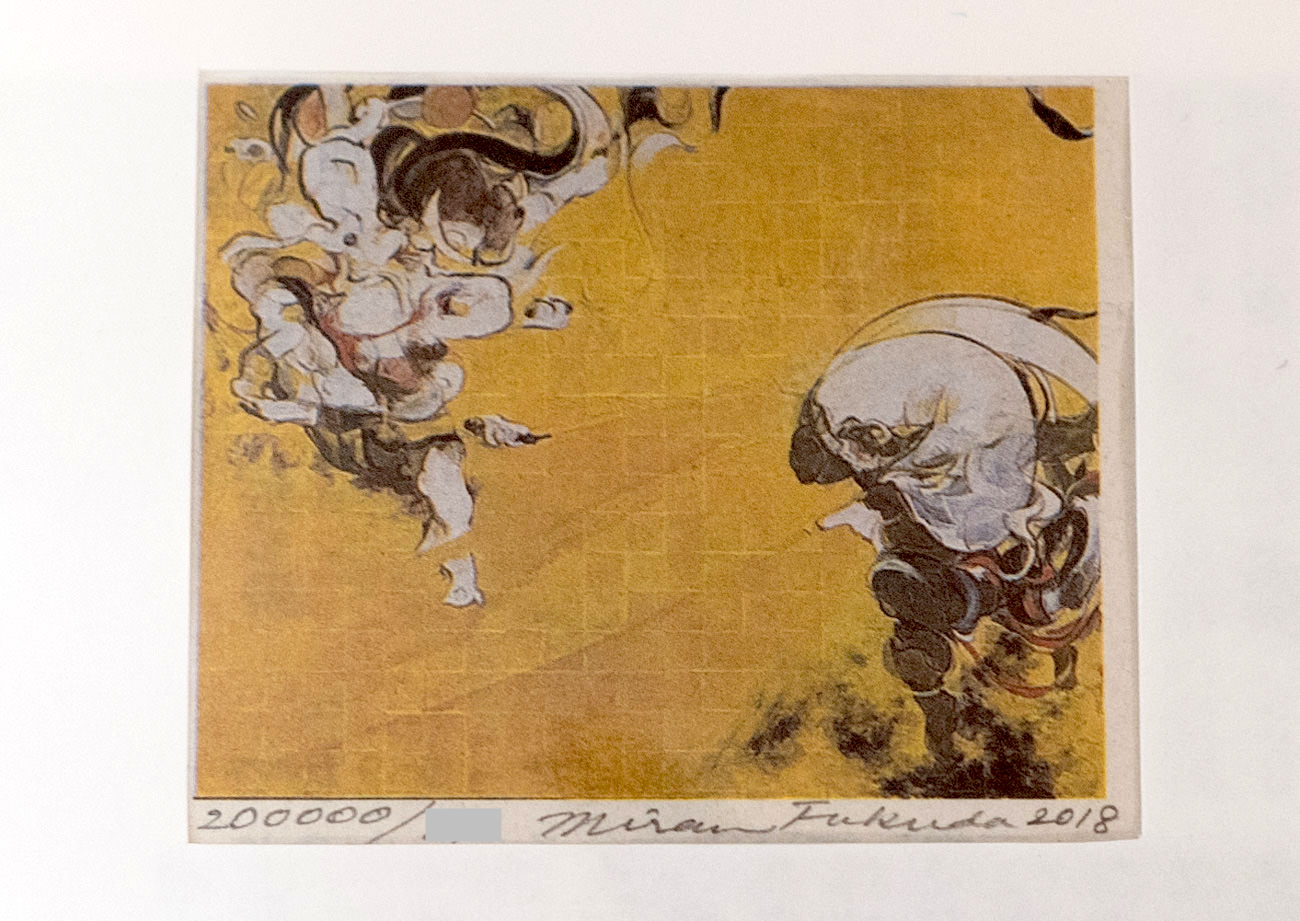
*Published in Asahi Shimbun, September 4, 2013
Miran Fukuda, “Water Lily Pond,” 2018
The large-scale work “Monet’s Water Lilies,” which was displayed at “Monet: The 100 Years After,” has also become a newspaper print.
During the same exhibition, the new work “Water Lily Pond” was also released as a newspaper print.
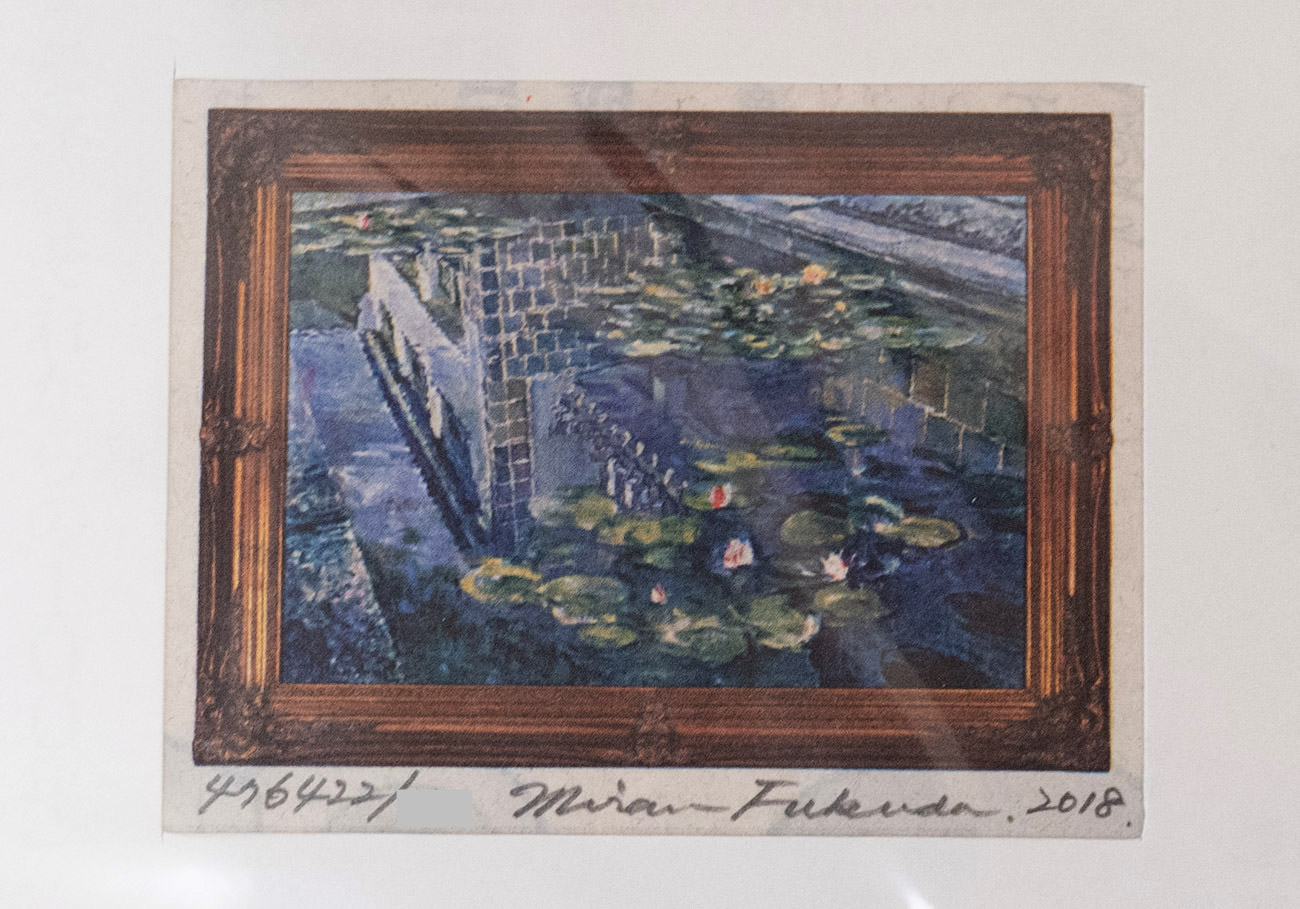 *Published in Tokyo Shimbun, July 11, 2018
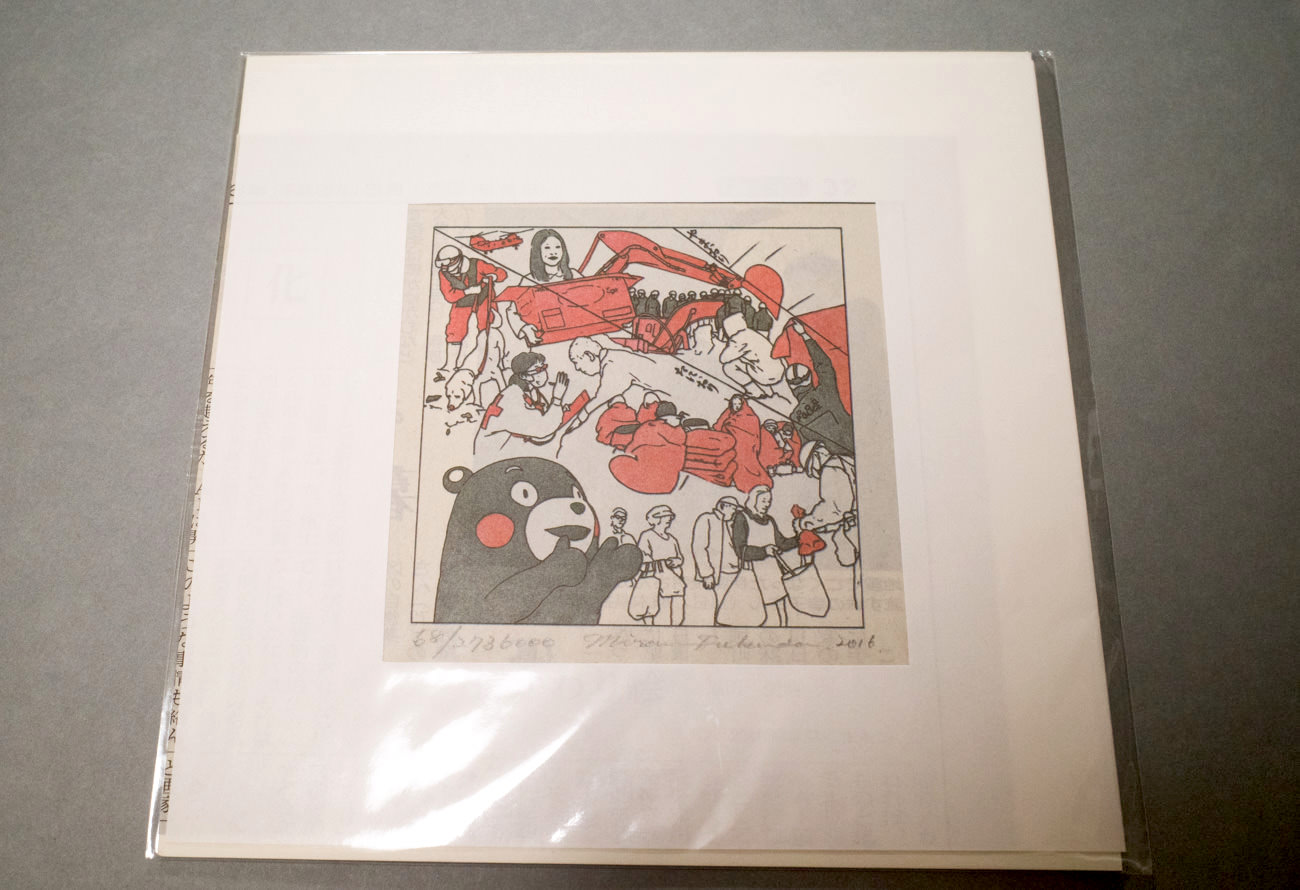
Prompted by this article, a collector I know through social media kindly transferred the work “Folding Metamorphosis” to me.
Thank you very much! *Updated May 10, 2019.
Framing
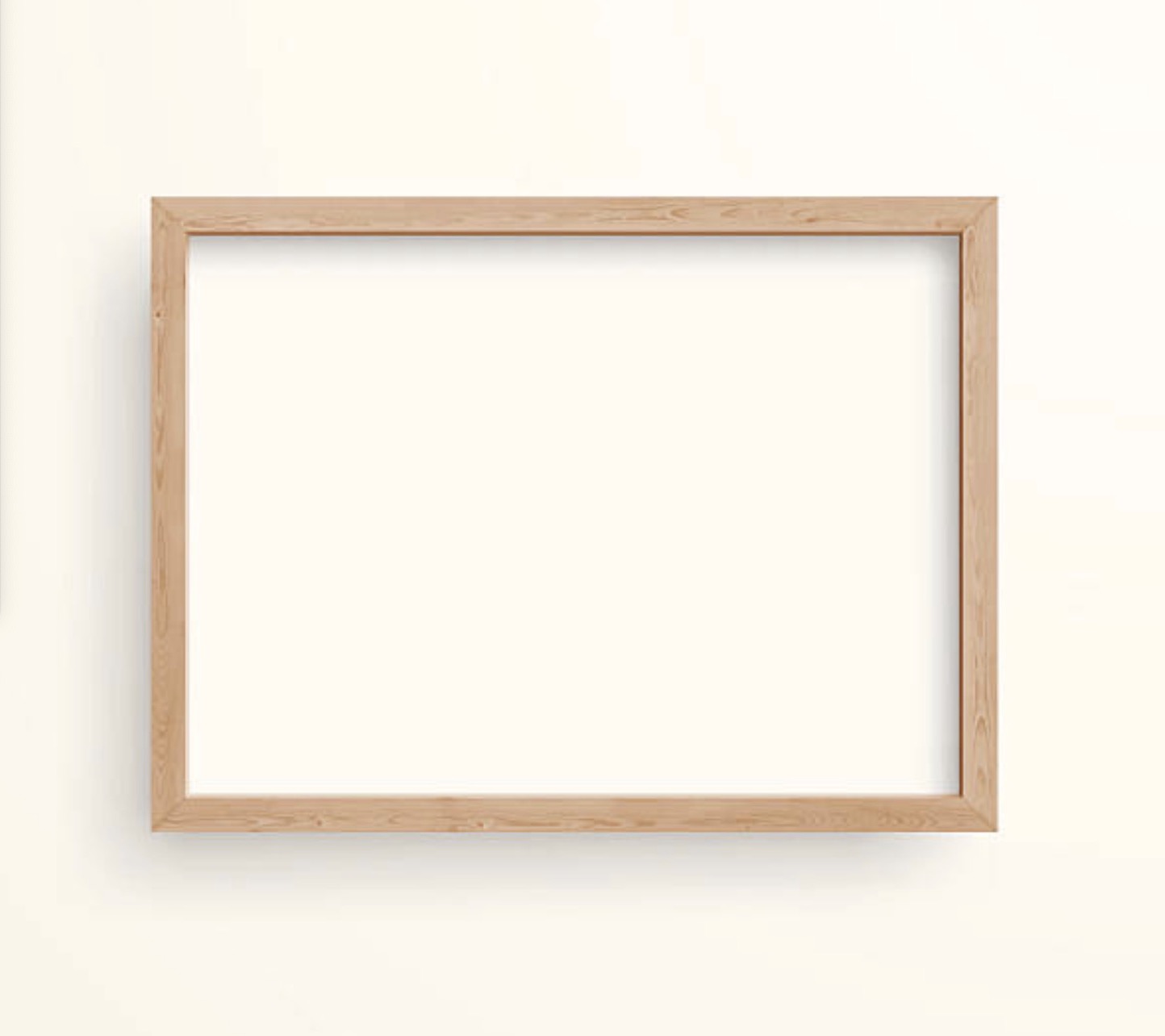
As if playing along in the palm of Miran Fukuda’s hand, I tried framing the newspaper prints.
I ordered them at nabis gallery, whom I always rely on — for just 2,000 yen (tax excluded)!
For a total of 3,000 yen, how about this package?
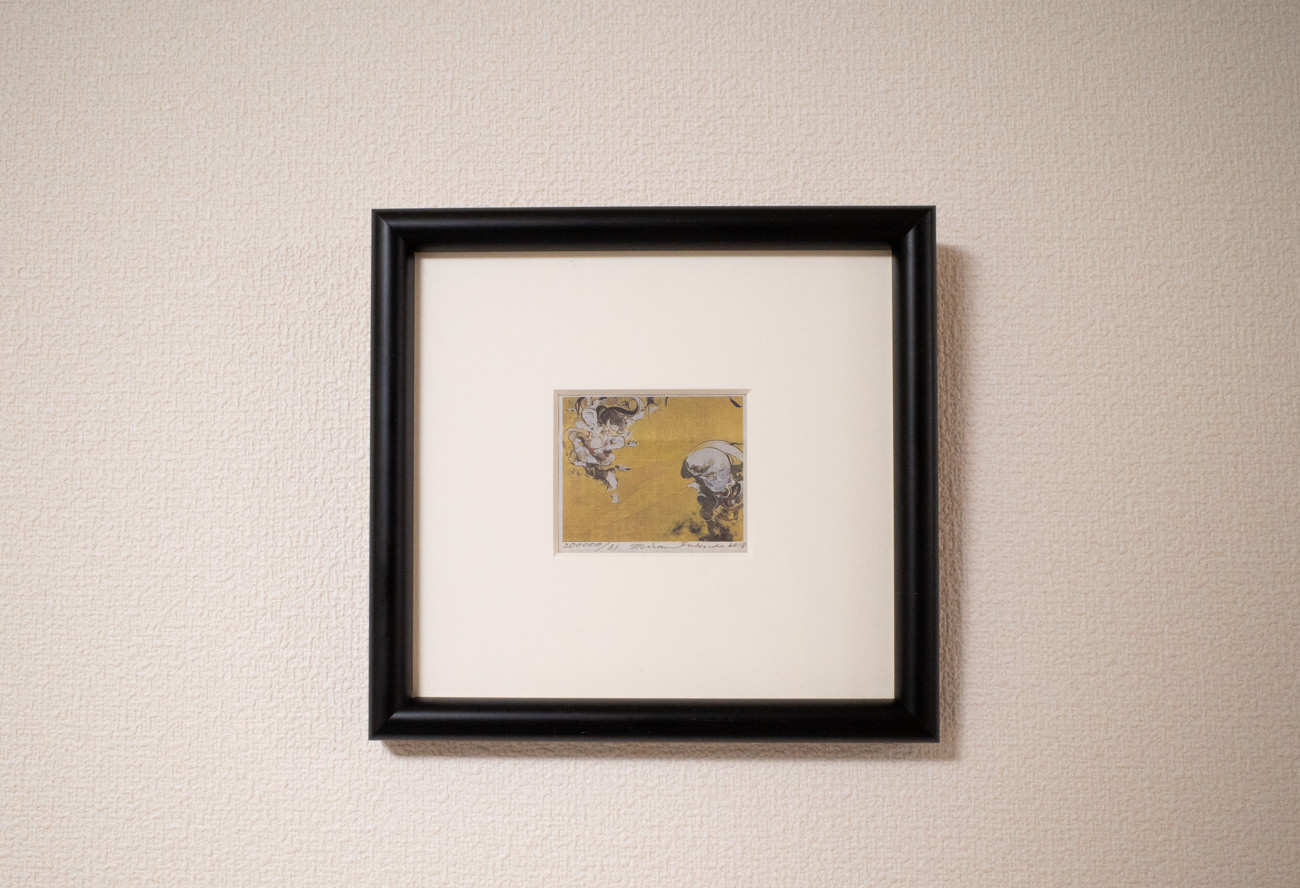
The newspaper prints are priced at just “1,000 yen (excluding tax)” — an affordable setting.
They may continue to be available at museum shops of institutions where Miran Fukuda exhibits.
Why not try looking for one?