Introduction
Art Fair Tokyo 2019 has closed.
The four days, invitation day included, went by in a flash, ending with a record turnout of 60,717 visitors (101% year-on-year).
* The free-admission area “World Art Tokyo” drew 39,594 visitors, and “Future Artists Tokyo” (FAT) drew 36,854.
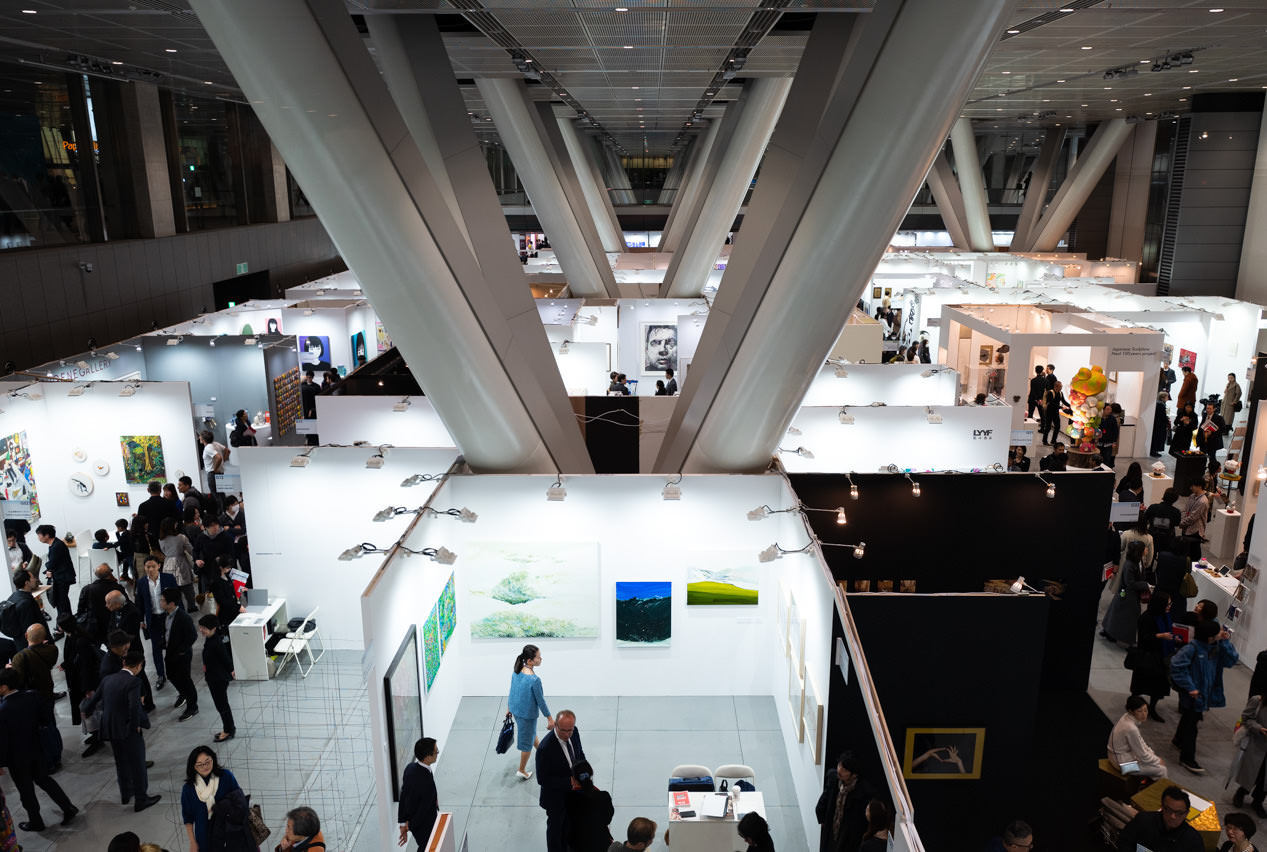
Drawing on comments from those involved and from some participating collectors, I would like to look back at the fair.
The Position of Art Fair Tokyo
Including Art Fair Tokyo, there are said to be about 35 international art fairs across the Asian region.
The largest of them is, of course, Art Basel Hong Kong.
It is the Asian edition of the world’s leading contemporary art fair “Art Basel,” held alongside its Basel (June) and Miami Beach (December) editions (usually staged in late March).
Sales at Art Basel Hong Kong are said to reach roughly 6.5 to 7 billion yen, while Art Fair Tokyo has reported sales of 2.92 billion yen (2018 edition, organizer figures).
That 2.92 billion yen figure ranks as the second-largest sales total among art fairs held in Asia.
At the press briefing on opening day of Art Fair Tokyo 2019, Executive Producer Naohiko Kishi had this to say:
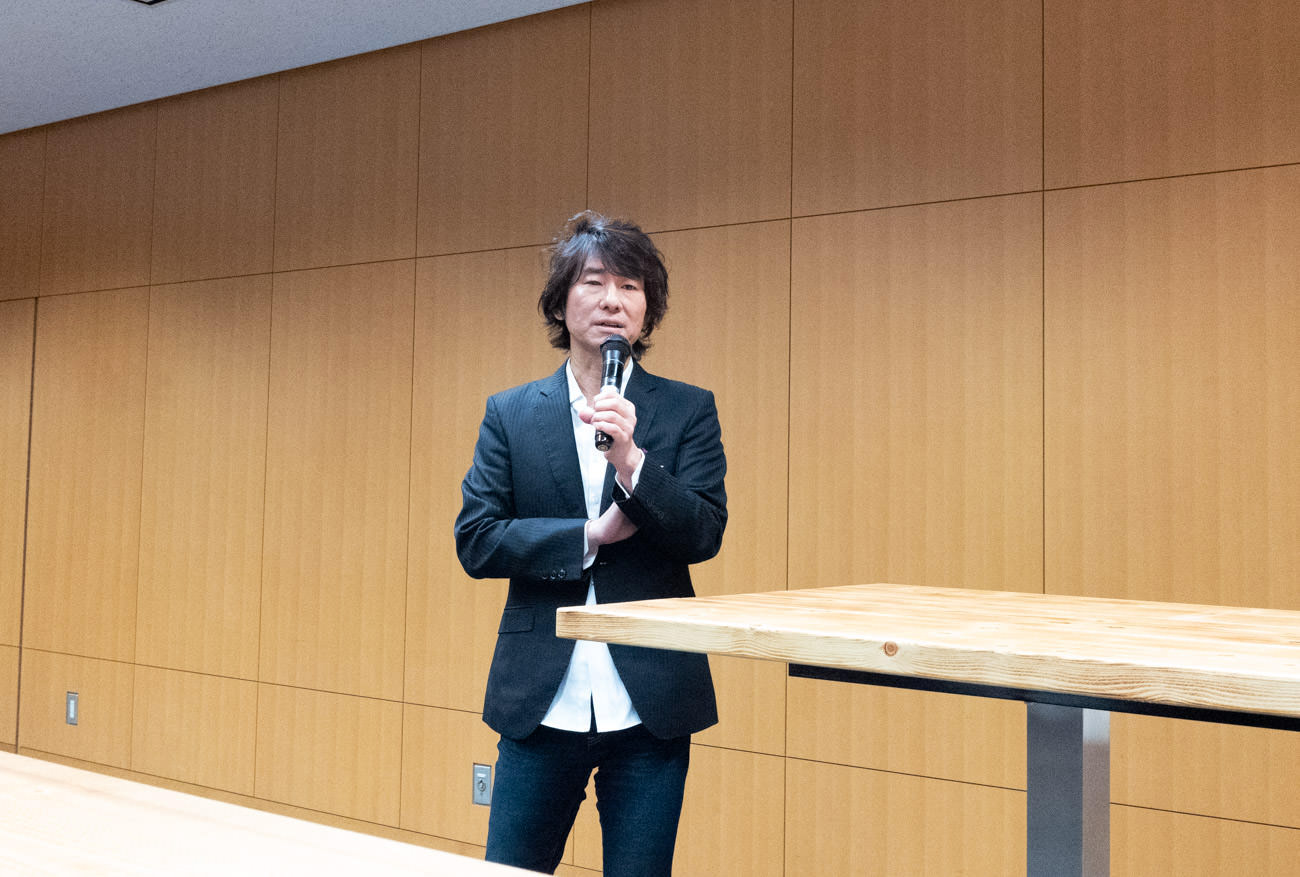
“Four or five years ago, sales were around 900 million to 1 billion yen. That figure has been growing steadily, reaching 2.9 billion last year. For 2019 we are aiming at 4 billion, and for 2020 we want to set our sights on 5 billion.” — Naohiko Kishi
Art Fair Tokyo in Data
On Admission Fees
Below is Art Fair Tokyo’s “1DAY Passport price” over the past five years (day-of / tax incl.).
What do you make of it? You can see clearly that prices have shot up sharply of late.
Art Fair Tokyo “1DAY Passport” — 5-Year Trend
2015: 2,000 yen
2016: 2,500 yen
2017: 2,800 yen
2018: 4,000 yen
2019: 5,000 yen
* Prices are for door tickets, tax included
The rise in admission fees is unmistakable at a glance. It has climbed to 2.5 times the 2,000 yen price of five years ago.
The Relationship Between Attendance and Sales
Meanwhile, the relationship between visitor numbers and sales figures is fascinating.
Attendance has barely budged (up around 6,000 over five years), yet sales have jumped by roughly 2 billion yen — a striking figure.
Art Fair Tokyo “Attendance & Sales” — 5-Year Trend
2015: 54,850 visitors / 1.02 billion yen
2016: 56,300 visitors / 1.13 billion yen
2017: 57,800 visitors / 2.45 billion yen
2018: 60,026 visitors / 2.92 billion yen
2019: 60,717 visitors / 2.97 billion yen
* Organizer figures (estimates based on voluntary exhibitor surveys)
Without much need for speculation, we can say that “raising admission fees shifted who attended, and successfully drew in customers who actually buy art.” Higher ticket prices seem to be attracting the collector segment that translates into sales.
Booth Fees and Complimentary Tickets
Take a look at the table below. These are the booth fees paid by galleries exhibiting at Art Fair Tokyo 2019. They are considerable.
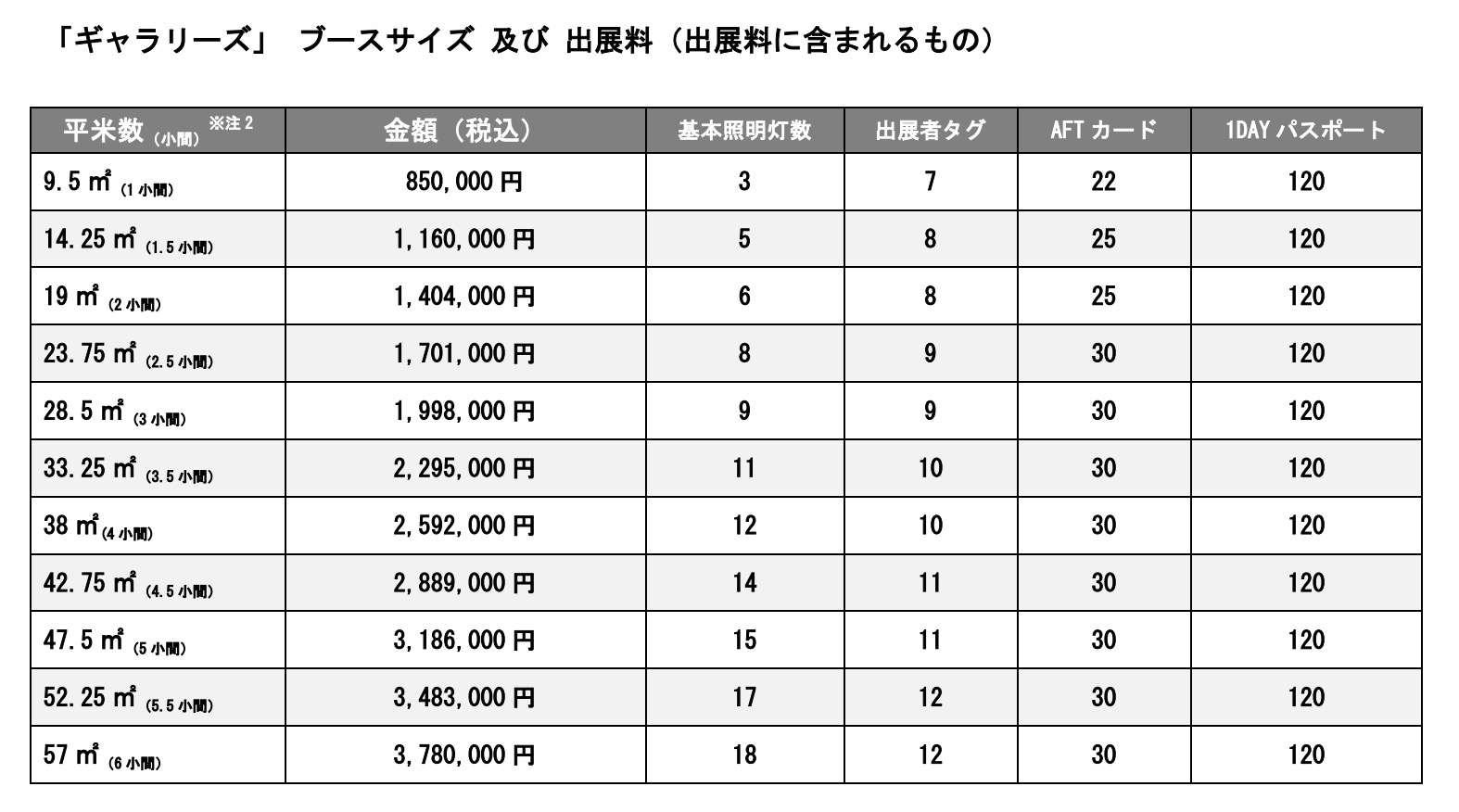
What deserves attention here is the number of “AFT Cards” and “1DAY Passports” provided to exhibiting galleries. * For more on the AFT Card, see the article below.
Exhibiting galleries are entrusted with a large number of invitations, and these flow rapidly to their collector clients.
Among the collector circles around me, those who had built relationships with exhibiting galleries through purchases were receiving free tickets and AFT Cards from several sources. Right before the opening, there were cases of certain individuals holding many surplus tickets.
The bigger a collector’s annual budget, the more this system produced a concentration of multiple tickets in a single collector’s hands.
* I have no idea what kind of sellers they were, but the flea-market service Mercari had many of these invitations listed.
Roughly 160 galleries exhibited at Art Fair Tokyo 2019. If each gallery received 150 free invitations, that alone accounts for about 24,000 free tickets in circulation. * In practice, still more invitations circulated among people in the art world.
Of the 60,000 total visitors, roughly half may well have been invited guests.
Inside the Fair — Invitation Day
The opening day of Art Fair Tokyo 2019 is reserved for invitees.
And yet, it may well be the most energetic day of all — the buzz is that palpable.
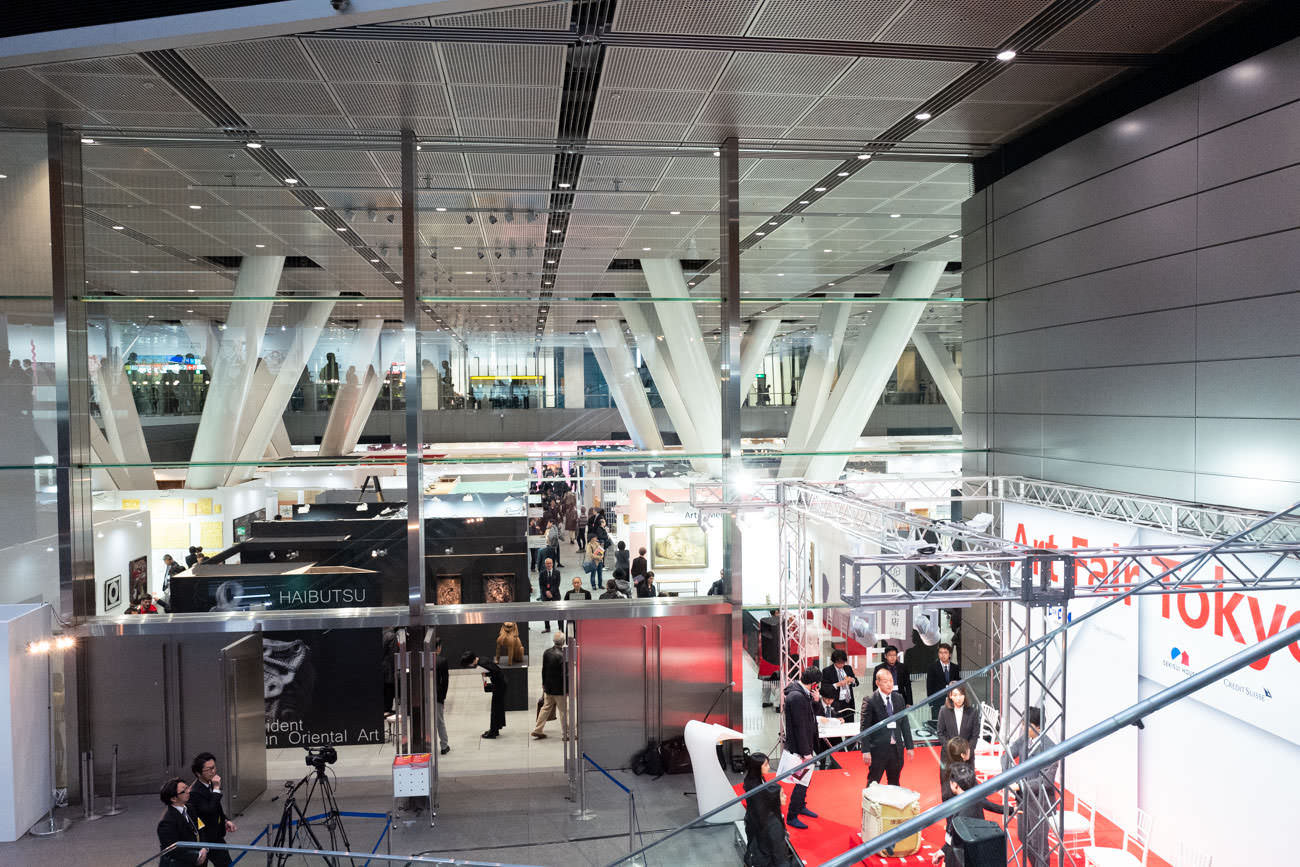
Opening day, the 7th, was a Thursday weekday. The “Private View” from 14:00 is when VIPs including AFT Card holders arrive.
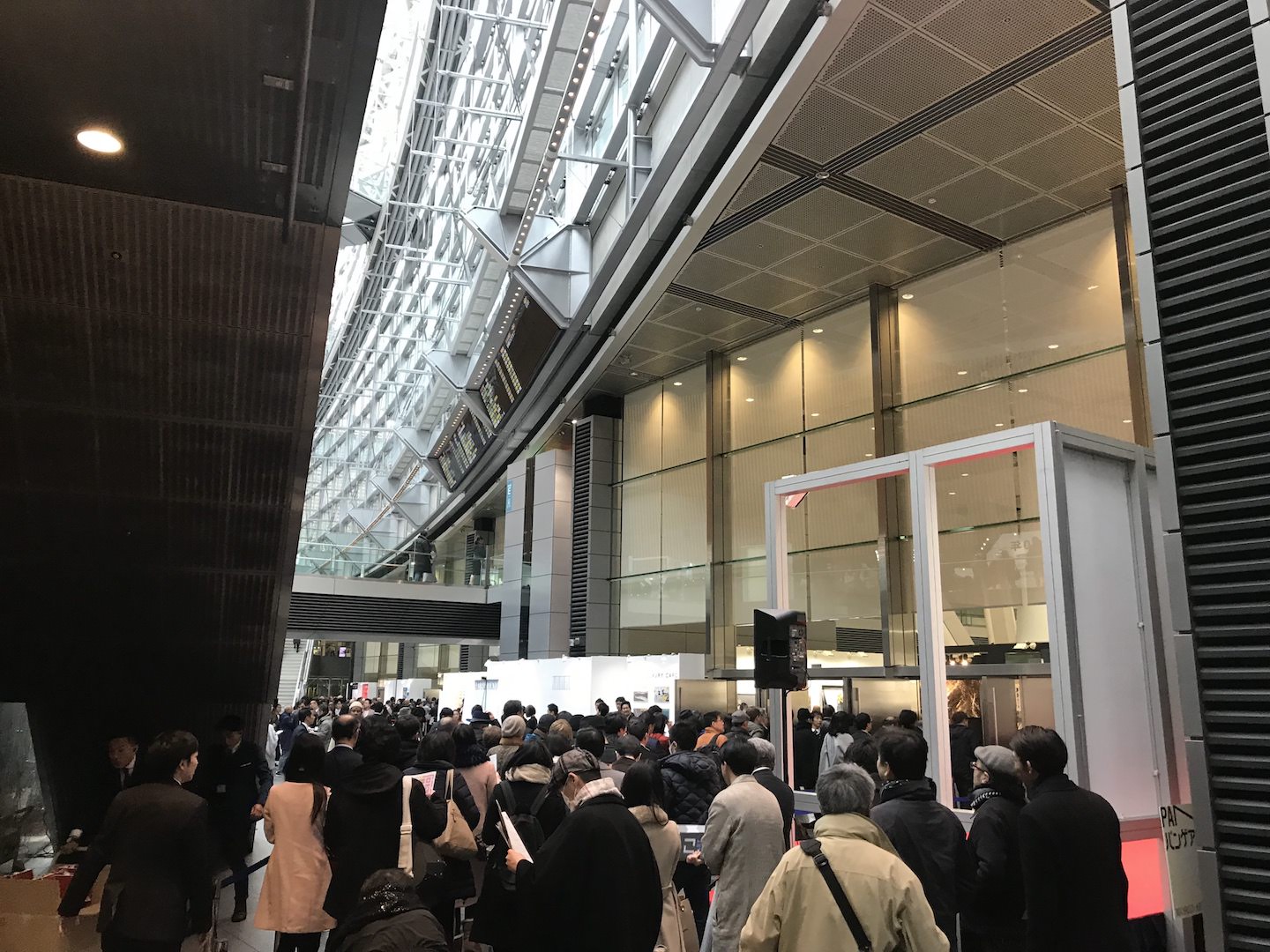
At the 14:00 open, visitors were already queued up, and the moment the doors opened they scattered toward their target galleries.
Aiming to photograph the booths before the crowds arrived, I entered during the “Press View” at 13:00, one hour before the Private View. When the venue speakers announced 14:00, I was shooting at a gallery with an artist whose works were certain to sell out. Right after 14:00, visitors immediately formed lines, and buyers flocked to pick up the price lists to check exhibited works.
The Private View on invitation day is when the most motivated collectors gather.
There was a real rule in place: without an AFT Card, purchasing works by the most popular artists was impossible.
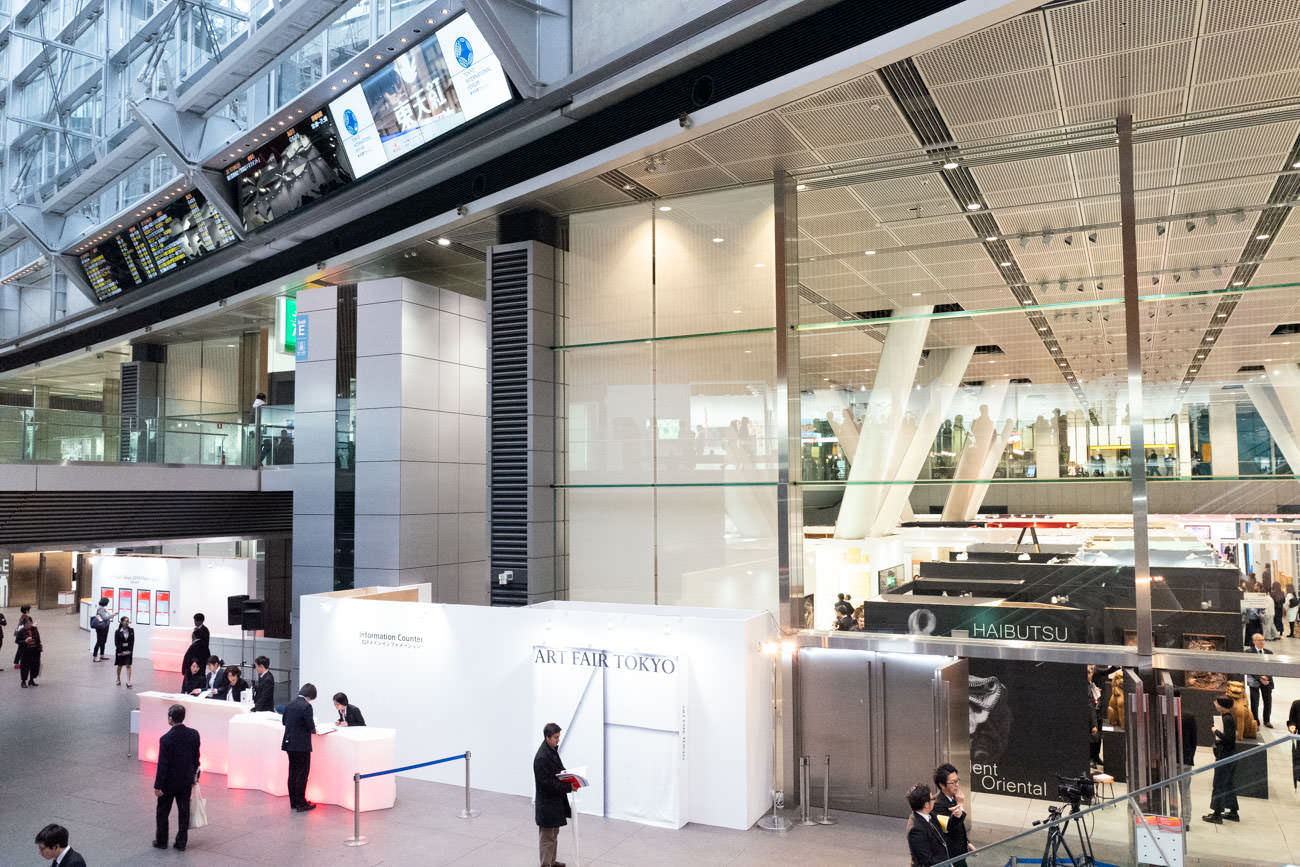
Inside the Fair — The Free-Admission Area
The B1 space of the venue, Tokyo International Forum, is a free-admission area that requires no entry ticket.
The “Projects” section there is a booth space that presents artists worthy of attention in a solo-show format. Since no invitation is required, anyone can visit from opening day.
* The booth fee for these galleries is set separately from the fee table above, at a relatively affordable 270,000 yen (subject to selection).
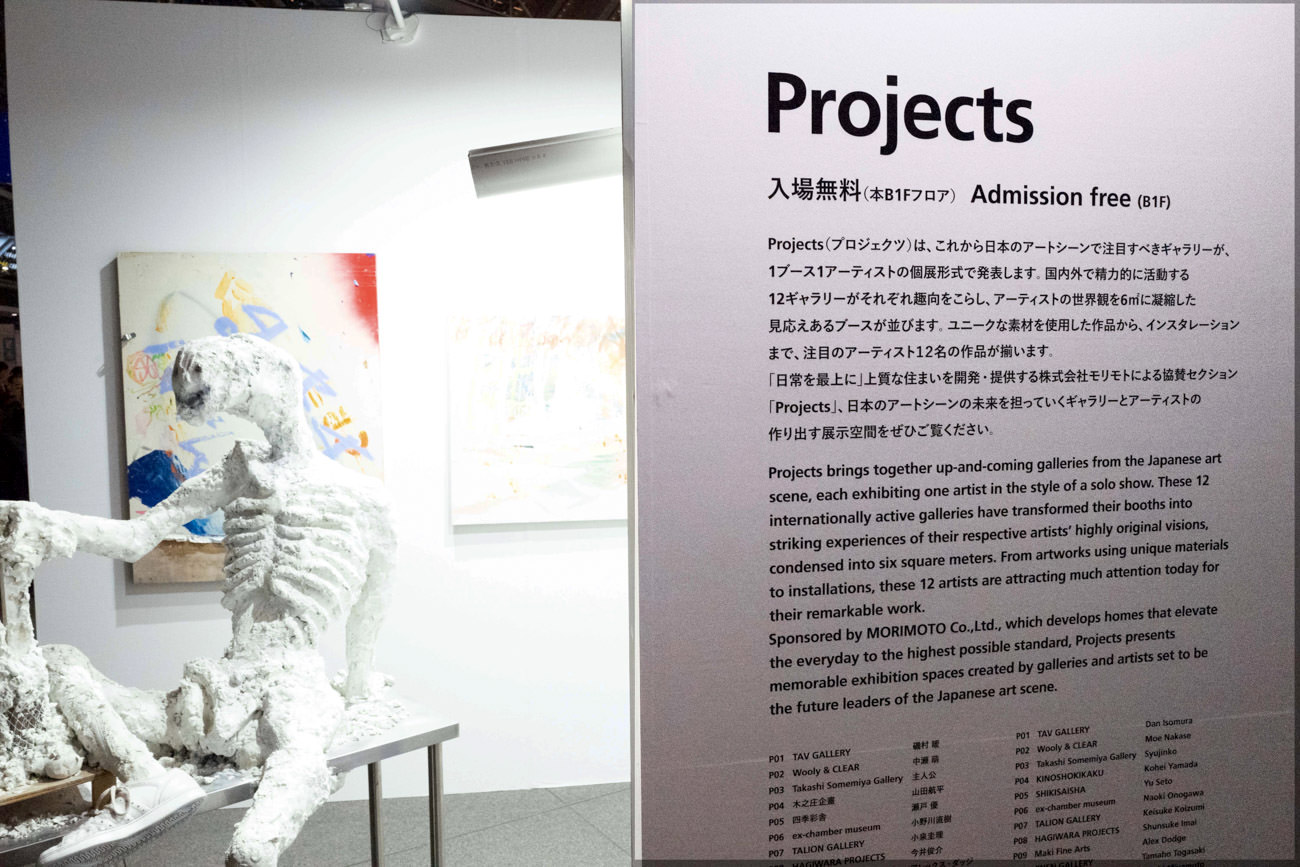
Other programs in this free-admission area included “Future Artists Tokyo,” in which 38 students selected from 101 representative students across 19 art universities took part alongside 7 students studying art production; and “World Art Tokyo,” an international show of contemporary artists recommended by their respective embassies in Japan and expected to be active on the global stage. In addition, the “Crossing” program invited department-store art galleries to broaden the entry points into art. Particularly prominent was an exhibition organized by Seibu Sogo featuring Meguru Yamaguchi and three other artists.
The “Yoshimoto Kogyo booth” that seemed to be brought in as a comedy hook to draw in less art-inclined visitors felt as though it did not quite land. Even so, the free-admission area, with its high foot traffic, felt as though it was doing well in pulling more casual visitors — those who would not pay the high ticket price — into the art world.
The Race for Works
On the invitation day of the fair, arriving first with an AFT Card does not automatically mean you can buy a work.
Art works are usually one of a kind, and the general rule is “first come, first served” — but in many cases the buyer has already been decided before the fair opens.
This time as well, a certain department-store art gallery informed its premium clients in advance; other galleries pre-set a time and sent out work lists all at once. Various formats were used depending on the seller. Some cases involved on-site lotteries, but the sale of art works still holds many trade practices that remain opaque to the general public.
Popular works are given “prior notice” to clients who have contacted the gallery in advance, or to those on waiting lists.
A somewhat unusual display was GALLERY TARGET’s solo show of KYNE — a project unveiling commissioned works that had been booked in advance. “Nothing for sale” is a rare stance at an art fair. Was it a piece of artist branding, meant to sharpen the sense of scarcity?
What Collectors Expect from an Art Fair
What collectors expect from an art fair is the chance to see (or confirm) new works by artists they follow, and to collect (purchase) them.
They also come looking to discover unknown artists, and to encounter works for the first time.
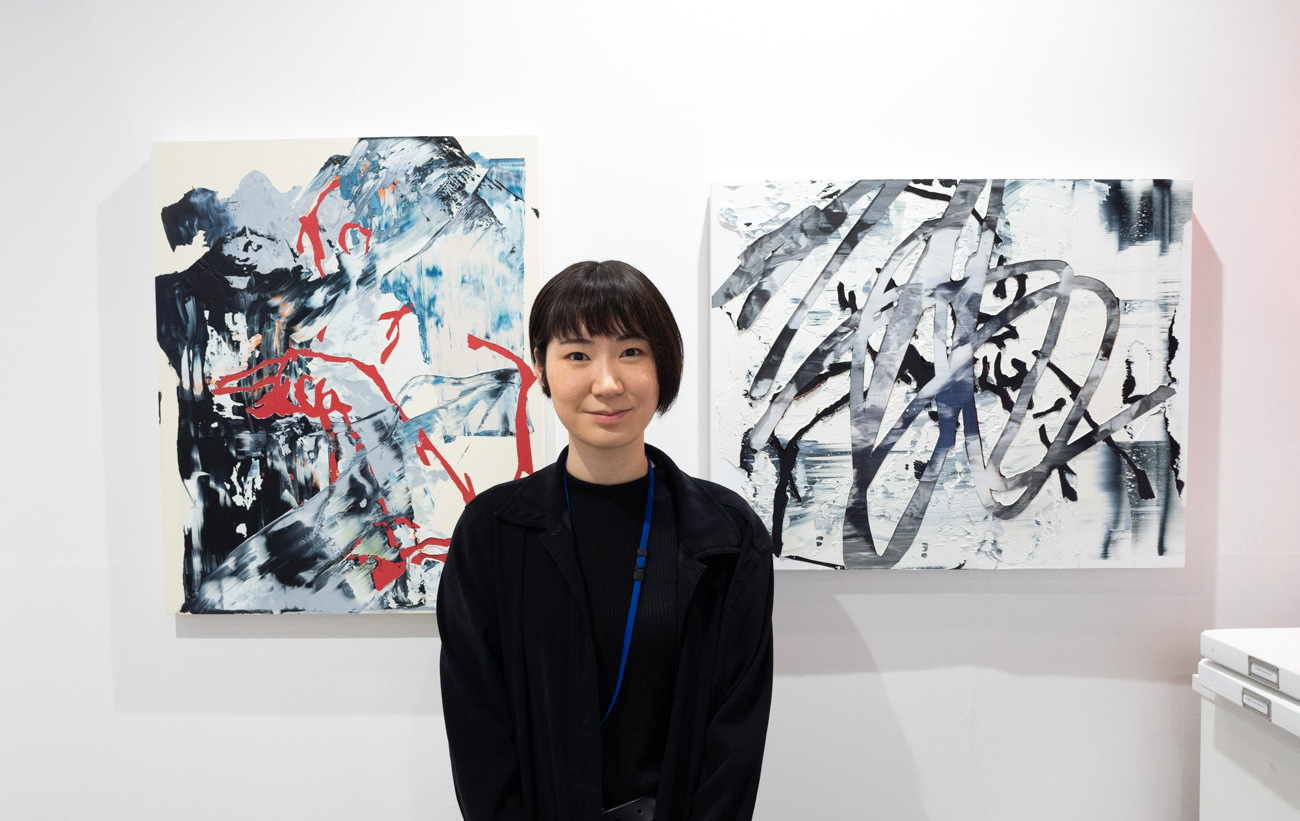
Works by artists otherwise shown in museums can sometimes be purchased here; even when they cannot, you can at least check the prices.
Works by historical masters are on view “for sale.”
And exhibiting artists can be met and spoken with in person — the fair is a valuable ground where art becomes tangible.
Training your eye by seeing outstanding work in person is important. As your eye develops, your own “collecting axis” may take shape.
Collectors’ Reactions
I reached out to contemporary-art collectors in my network to reflect on Art Fair Tokyo 2019.
* This is a small-scale, informal survey and may be biased. Please read it as such.
The responses were from just a handful of people and are not a quantitative study, but within the range I heard from, the fair was on the whole well received.
There were requests for improvement, but I came away with the impression that most participants would rate the fair positively.
Collector Y
Days attended: 2
Purpose: purchasing new works by favored artists; researching prices and sales pace of artists I plan to collect or already own
Purchases: entered the lottery for a work by Tetsuya Noguchi at Gallery Gyokuei (did not win)
Differences from other years: perhaps my tastes have shifted, but many of my favorite artists were exhibiting this year
Good points and areas for improvement: with no cloakroom, having to leave luggage in coin lockers was disappointing. Some aisles are narrow and cause bottlenecks — I’d like to see this fixed.
Overall: it is valuable to have this once-a-year moment where each gallery’s flagship artists gather in one place. It overlaps with other art fairs, which makes budget allocation tricky. The one-day walkable format is a plus, but I’d like better scheduling next year. It would also be nice to check price lists and artist profiles on an AFT smartphone app.
Collector H
Days attended: 1 (March 7, 14:00–20:00)
Purpose: not so much for buying, but mainly to greet collected artists and long-supported galleries. I arranged appointments with artists in advance of the fair.
Purchases: Saya Okubo (WAITINGROOM) — one two-dimensional work * pre-reserved
Good points: perhaps because it was Private View day, artist attendance was high and I was able to greet many. It was very meaningful to encounter — all in one place — works, artists, and galleries I don’t normally see.
Areas for improvement:
– The venue was large and dense with galleries, making it feel like a maze. It was hard to find the galleries I wanted. Gallery names should be shown in larger, more legible signage.
A word as a collector: collectors can’t build a collection passively — I made a point of actively communicating with galleries and artists. I think the following points are important:
– Gather information through Instagram, Twitter, and other SNS.
– Decisiveness matters — while you’re mulling, others buy the piece. * Editor’s note: this is exactly my pattern…
– Collecting is a lonely fight — actively meet fellow collectors who share your values.
* Information matters, but so does the pleasure of talking with people who share your sensibility.
Overall:
Two young artists to watch stood out.
Kohei Yamada‘s stoic dedication to production is remarkable. His technical skill is superb and his work maintains a strong consistency. I’m very excited to see where he goes.
Dan Isomura‘s exhibition felt as though his very way of living had become the work. Unlike his striking appearance, I found him to be a person of real character. I have no doubt he will emerge as a talent recognized on the world stage.
The three galleries I paid the most attention to were:
– WAITINGROOM — with promising artists such as Hirako, Kawauchi and Okubo on their roster, but also a director whose skill really stands out. Their production sensibility and client care feel a head above other galleries. A gallery I’ll be watching closely.
– 104GALERIE — the artist selection by the curator is superb; a curator with a sharp eye and high sensitivity. I’m eager to see which artists she curates next.
– Over The Influence — a relatively young gallery based in LA and Hong Kong that champions street-oriented artists. With globally known names like INVADER on their roster, they carry real momentum. I have no doubt they’ll be showing at Basel soon. Japanese artists such as Nobuyoshi Araki and Hikari Shimoda are also represented. Incidentally, the Hong Kong gallerist speaks fluent Japanese.
Many major domestic commercial galleries also exhibited, but I sensed a “just showing up” attitude that suggested their real focus was Art Basel Hong Kong.
And many major galleries did not exhibit at all — a stark reflection of Japan’s still-unactivated art market. I hope AFT can grow into a fair that stands shoulder to shoulder with Art Basel Hong Kong.
Collector M
Days attended: 2
Purpose: I attend every year, and see it as a good chance to test my own skill as a collector. This year I especially focused on communicating with artists and gallerists.
Purchases: Saya Okubo (WAITINGROOM) — one two-dimensional work. * Purchased at the stage where a list was sent out to inquiring clients about two weeks before AFT began. I also bought catalogs at various galleries as well as a novel written by an artist.
Differences from other years: perhaps my tastes have shifted, but many of my favorite artists were exhibiting this year
Good points: mixing the contemporary art, antique, and modern-art booths more thoroughly than in past years really brought out AFT’s strengths.
Areas for improvement: a cloakroom is needed, and the lounge is too small — there aren’t enough seats, and that dampens the will to buy. It should be fixed.
Overall: compared with past years, more attendees were clearly there to buy. Artist attendance was also higher, which encouraged deeper engagement with the work and made the market feel more active. This year overlaps almost exactly with New York’s Armory Show, and I felt the fair was missing globally minded collectors — a sign that the market risks staying domestic.
Even so, being able to meet fellow collectors, gallerists I rarely see from other regions, and artists I haven’t seen in a while, all in one venue — I look forward to it every year as a kind of festival.
* M’s Twitter account is here
Novice Collector A
Days attended: Private View opening day only.
Purpose: to discover new artists and galleries, and to study the current state of art.
Purchases: there were works that caught my eye, but they were over budget, so I did not purchase.
Differences from other years: perhaps my tastes have shifted, but many of my favorite artists were exhibiting this year
Good points: the large number of galleries made for a rich viewing experience. Many overseas artists and galleries had interesting works, giving a sense of real diversity. I hope Art Fair Tokyo does not go the “Galapagos” way but instead attracts more overseas galleries and grows to be more like Art Basel Hong Kong.
Areas for improvement: it was raining on opening day, so I had a lot of luggage including an umbrella, and the lockers filled up quickly — that was disappointing. I hope a cloakroom is set up. Some galleries didn’t display prices unless asked. It’s important to know the current price, so having a legible price list on view would be great.
Overall: I hear that raising admission fees led to higher sales this time. Still, to nurture the next generation of young collectors, I feel the price is too high. For the sake of growing future collectors, I want people to know that art is something you can buy. There are works available from the tens of thousands of yen range, so I think it’s important to lower the barrier and educate a wider audience.
As a novice collector, it was a wonderful chance to speak directly with gallerists and artists.
Stepping into an unfamiliar gallery takes courage. The great strength of an art fair is that you can see them all in one place.
It also creates opportunities to follow up on artists and galleries via SNS after the fair, and to visit them later.
I also had the good fortune to talk with senior collectors this time. Researching favorite shows and artists alone has its limits, so it was a truly valuable time to learn from others.
art on Editor
Days attended: 3
Purpose: an annual tradition — not going wasn’t an option. Greeting and speaking with the artists I collect is one main aim. Encountering new works is another big draw.
Purchases: there were two works I wanted, but while I hesitated other buyers appeared and I missed them. For one of them, the gallery and the artist kindly proposed a commissioned work, which is currently in progress. I also picked up several catalogs and other items.
Differences from other years: works appeared to be selling even more briskly than usual. A higher proportion of artists were personally on-site. I felt that both my time in the venue and the quality of what I experienced went up.
Good points and areas for improvement: the B1 free-admission zone drew visitor attention and felt genuinely lively. It was a shame that “Future Artists Tokyo,” the program for art-university students, could not sell works.
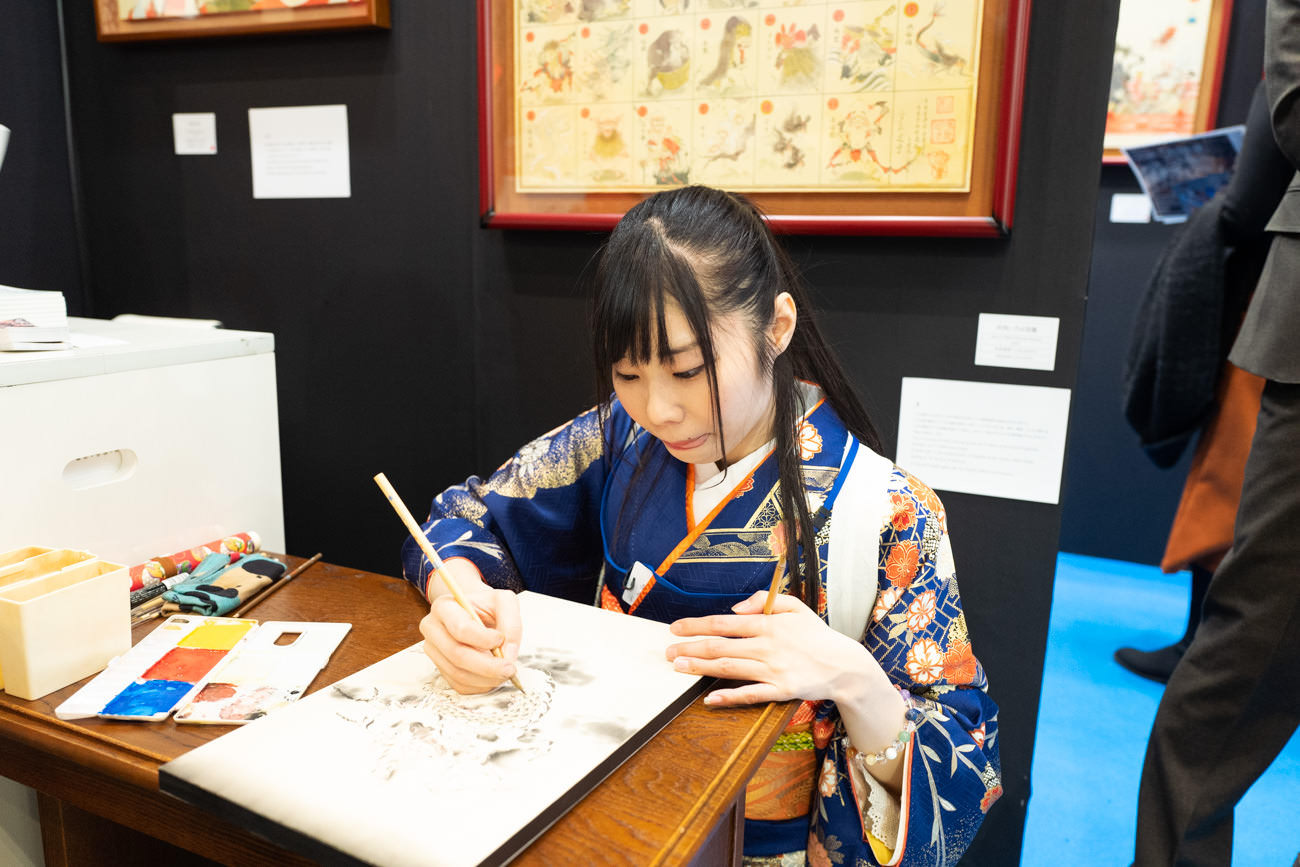
Overall: I had a truly good time. The venue is dense with art, and even watching carefully, one day is not enough — plenty of works slip past. I saw several live drawings by artists and some booth rehangings mid-fair. Fine-grained info delivery via web or app would make it even more exciting. Looking forward to what’s next.
Closing
Gathering collectors’ voices, a common thread was the value placed on relationships with artists.
Most striking of all was how visibly happy so many artists themselves looked.
For them, the fair is a very different atmosphere from a gallery show — a big stage in front of many viewers and buyers.
Seeing the artists so alive and radiant was, as a collector, a welcome sight in itself.
I did have some concerns about the sharp rise in ticket prices.
Looking at the sales-attendance correlation above and the density of the venue, further price hikes still look possible. Growing the collector base does require lowering the threshold, and the free zone’s programming seems, at least, to have opened a certain door.
At the same time, year over year, it felt like more visitors were coming as collectors intent on buying art. Their number and their energy both feel higher. “Younger people are starting to collect lately,” one gallery representative told me. I hope this trend continues to be nurtured.
Tokyo’s fair does not yet reach the level of international fairs where the whole city takes on the atmosphere of art, but a Tokyo-style fair format seems to be settling into place.
On the other hand, Art Fair Tokyo 2019 turnover was 2.97 billion yen — only a slight rise from the prior year.
Some major domestic commercial galleries opted out, and are putting on grand booths at Art Basel Hong Kong instead — an indicator that AFT’s market position is not yet high. I hope for growth in the future.
Note: the next “Art Fair Tokyo 2020” is scheduled for four days from March 19 (Thu) to March 22 (Sun), 2020, at Tokyo International Forum. * March 19 (Thu) is invitation-only. That timing falls just after New York’s international “Armory Show 2020” (March 4–7), and squarely overlaps with the global fair “Art Basel Hong Kong 2020” (March 17–21).
I hope AFT will assert its international presence even more forcefully next year.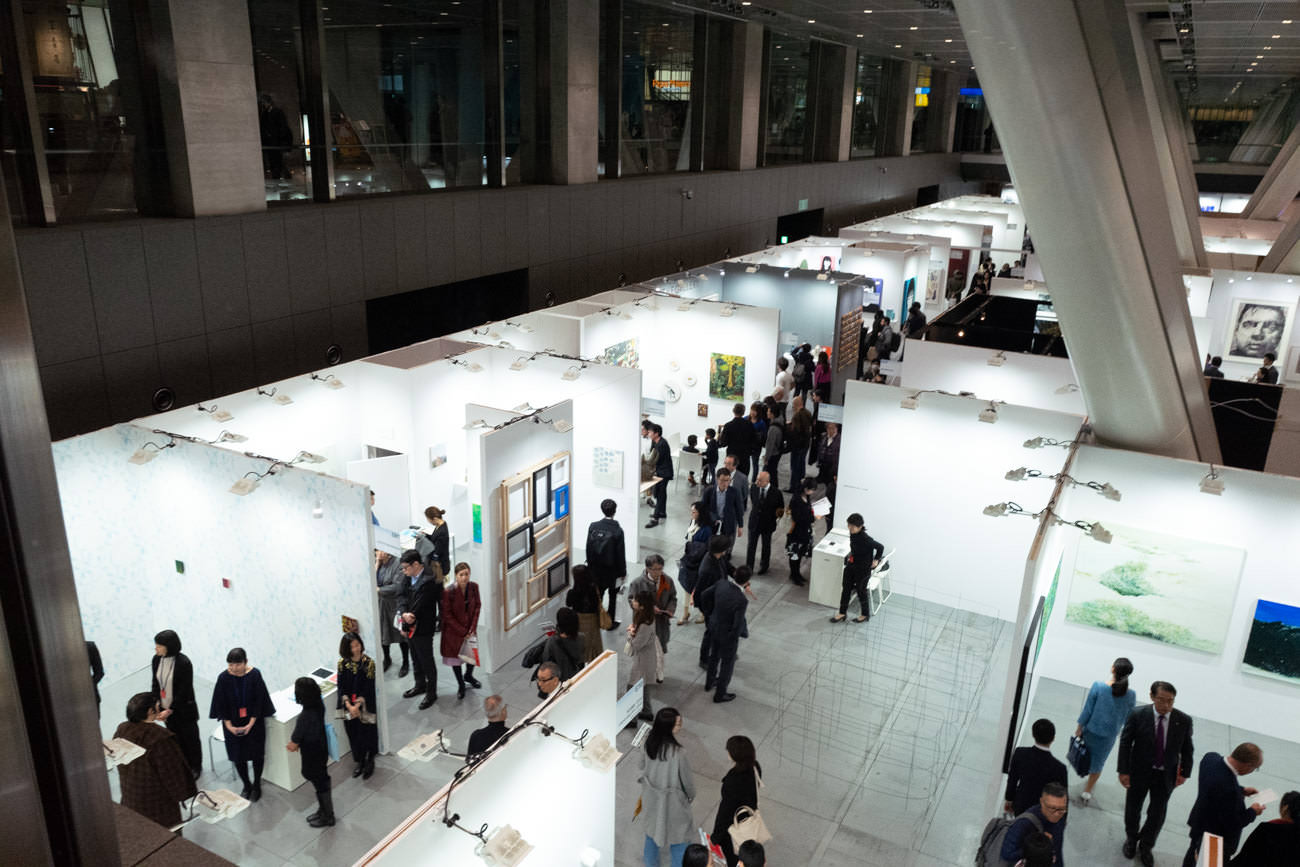 Here’s to meeting wonderful works.
Looking forward to March 2020!
Overview
Art Fair Tokyo 2019
Venue: Tokyo International Forum, Hall E
Dates: March 7 (Thu) – March 10 (Sun), 2019, 4 days (last admission 30 minutes before daily closing)
Press View: March 7 (Thu) 13:00–14:00
Private View: March 7 (Thu) 14:00–16:00
Vernissage: March 7 (Thu) 16:00–20:00
Public View: March 8 (Fri) & 9 (Sat) 11:00–20:00, March 10 (Sun) 11:00–17:00
Admission: Advance / 1DAY Passport 4,000 yen (tax incl.); Door / 1DAY Passport 5,000 yen (tax incl.) (elementary schoolers and younger admitted free when accompanied by an adult)