Christian Boltanski — Lifetime
Speaking of Christian Boltanski, one of France’s foremost contemporary artists, a friend of mine — someone who rarely says anything unscientific — once muttered, “I get the feeling he can ‘see’ something.”
It’s true: visit a Christian Boltanski exhibition and the boundary between life and death no longer feels clearly drawn but rather like a continuous thread. “I don’t quite think so, but maybe.” That was more or less my own reply.
Christian Boltanski is famed for works that use the sound of a heartbeat, secondhand clothing, and photographs of unknown people to convey — across an entire space — the weight and fragility of human existence. He has taken part in the Echigo-Tsumari Art Triennale and the Setouchi Triennale, and is well known for his deep ties to Japan. “Christian Boltanski — Lifetime,” his largest retrospective ever in Japan, will travel from the National Museum of Art, Osaka to The National Art Center, Tokyo and then to the Nagasaki Prefectural Art Museum.
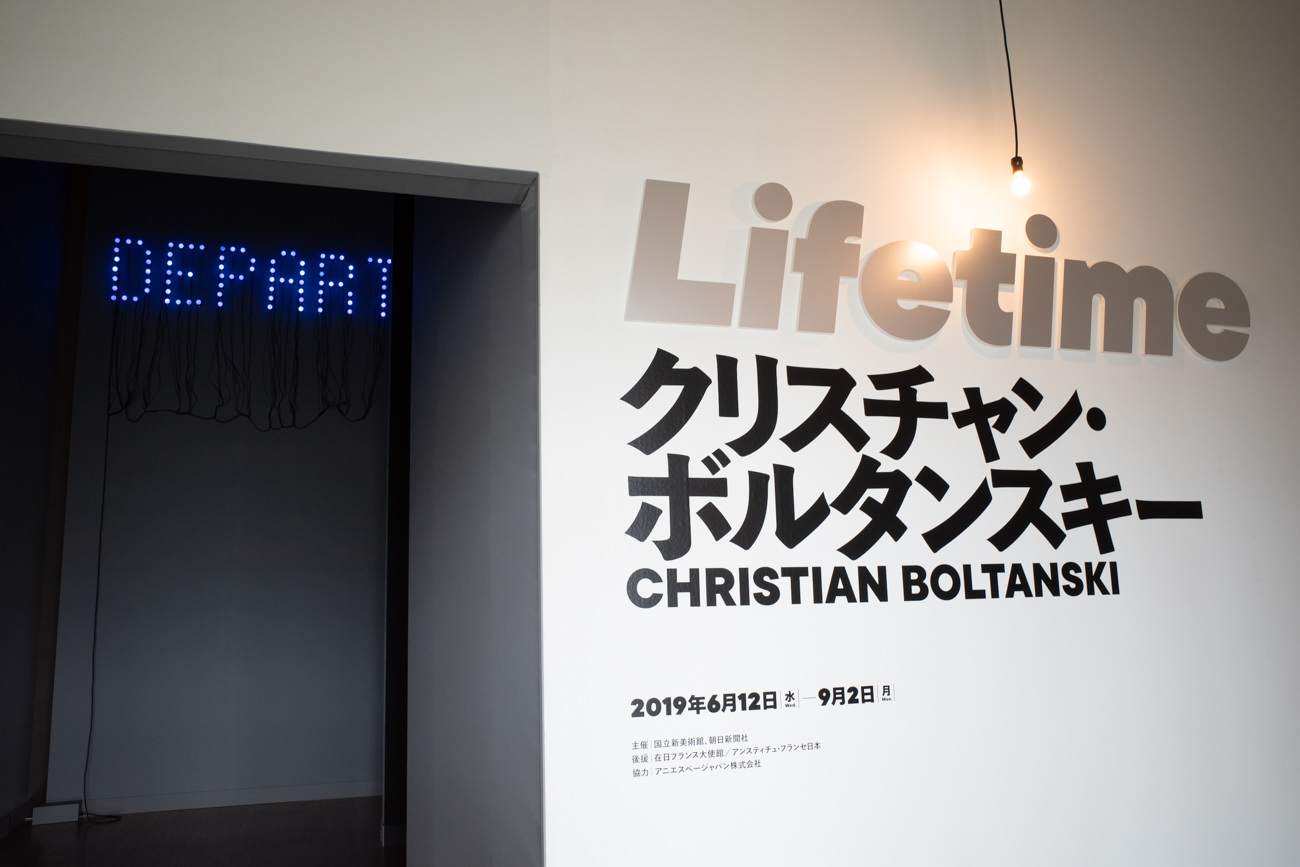
At the press preview of the Tokyo installment at The National Art Center, Tokyo — which opened after the Osaka show had closed — Boltanski, who arranged the entire exhibition himself, spoke about the intentions and feelings he had poured into it.
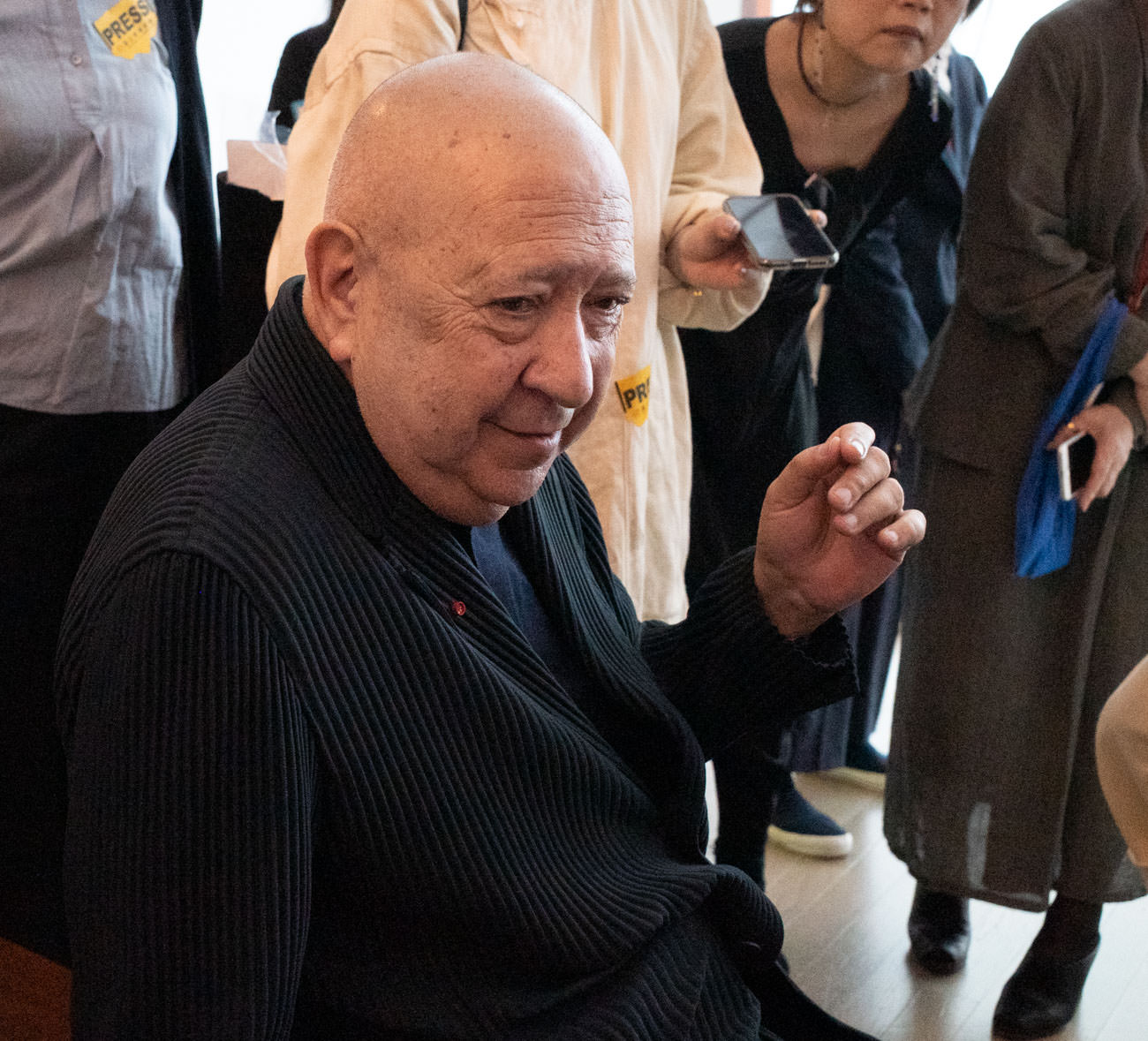
At the time of the Tokyo show, Boltanski was 74 years old, with a career spanning more than half a century. Even so, he insisted: “This is not a retrospective that lines works up chronologically.” That “on the offensive” stance toward the very idea of a retrospective was striking.
One characteristic is that, as befits a retrospective, both his “oldest” work and the “newest” one — created specially for the Tokyo show — are on view. The oldest is a 1969 video work, believed to be the short films “The Man Who Coughs” and “The Man Who Licks,” released the year after his first solo exhibition; they were being screened near the exhibition entrance.
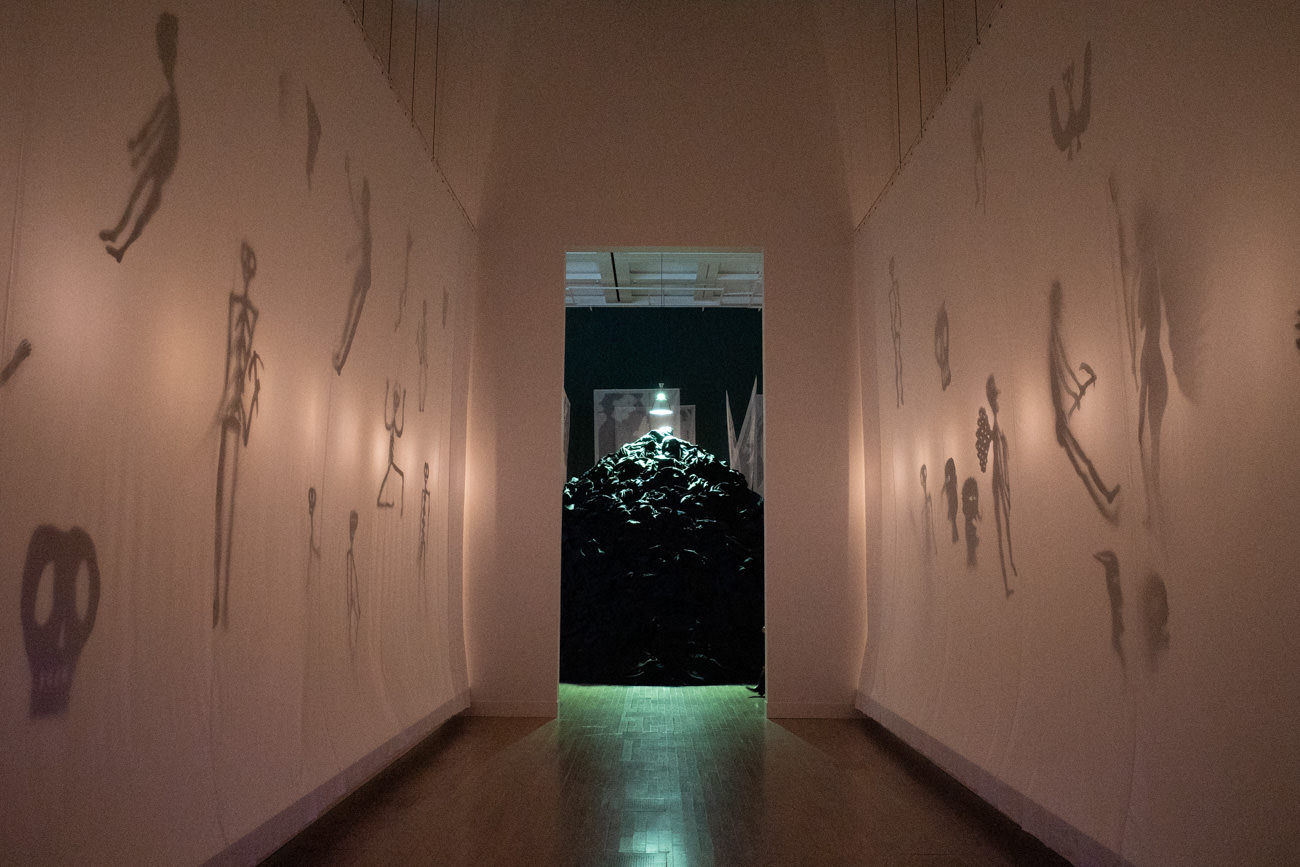
The newest is “Corridor of Ghosts,” a long passage with curtains draped on either side, on which oversized silhouettes of puppets are projected. It calls to mind the wall paintings of ancient ruins, yet the shadows of the puppets sway with the movement of the curtains, evoking ghosts as elusive beings.
Also, no title labels are placed in front of individual works. Forty-seven works are exhibited at the Tokyo show, but this reflects Boltanski’s wish that “the exhibition itself be regarded as a single work.”
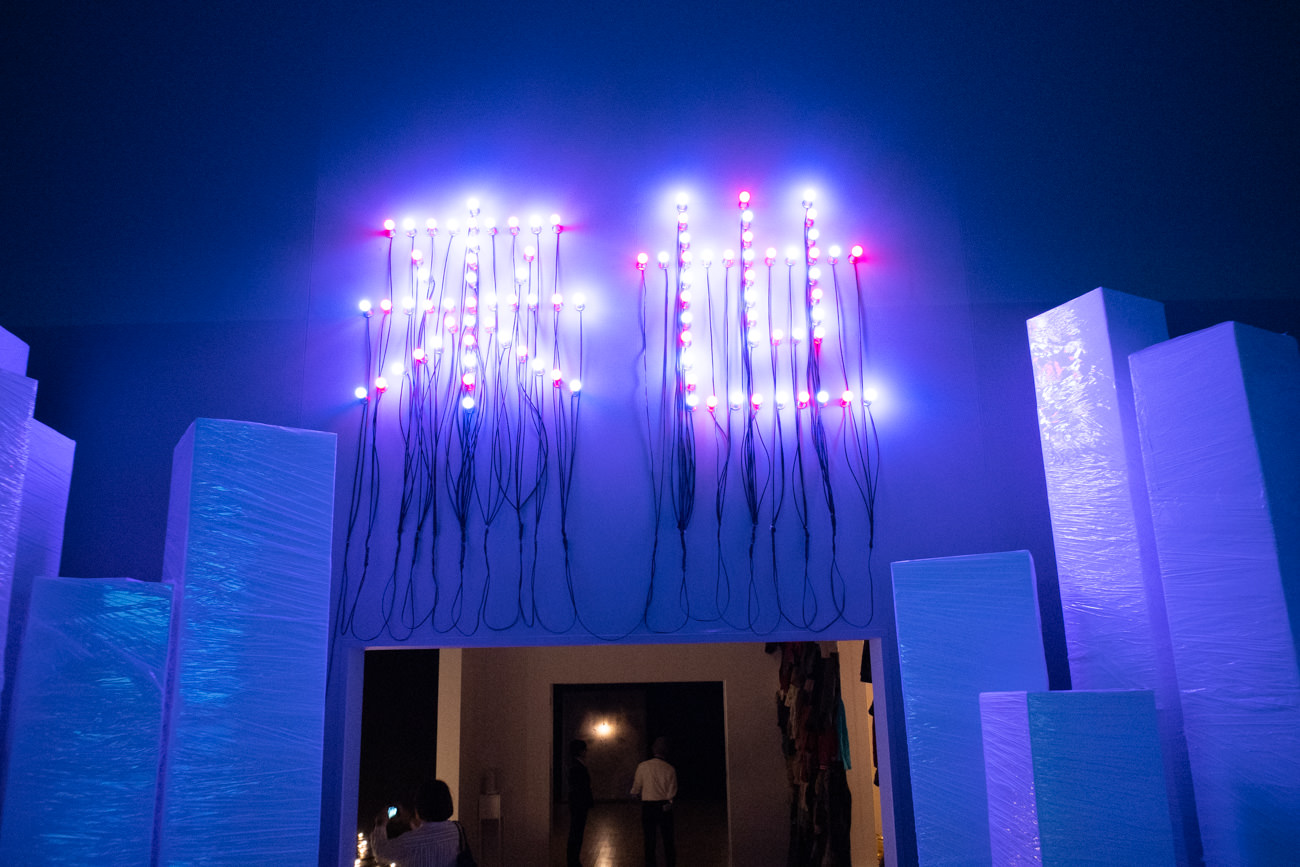
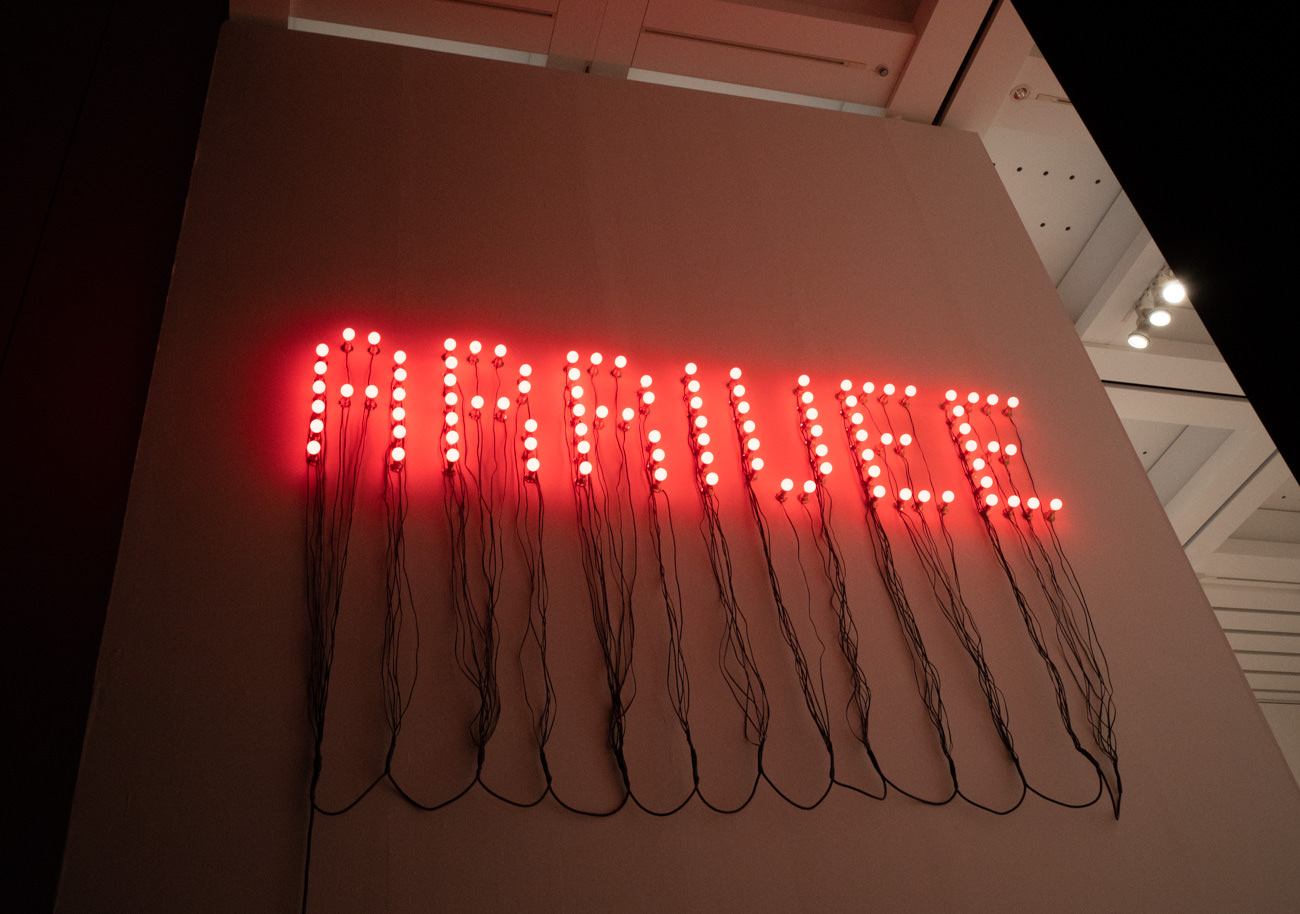
Just past the entrance stood a work spelling out “DEPART” in light bulbs; midway through the show, in the same style, was “Afterlife” in Japanese; and at the very end, “ARRIVÉE.” Treating even the “Afterlife” as part of a person’s life, Boltanski seems to have shaped the entire exhibition as “Lifetime = a life.” At the press preview, he himself called it “an exhibition that mirrors all of one’s life.”
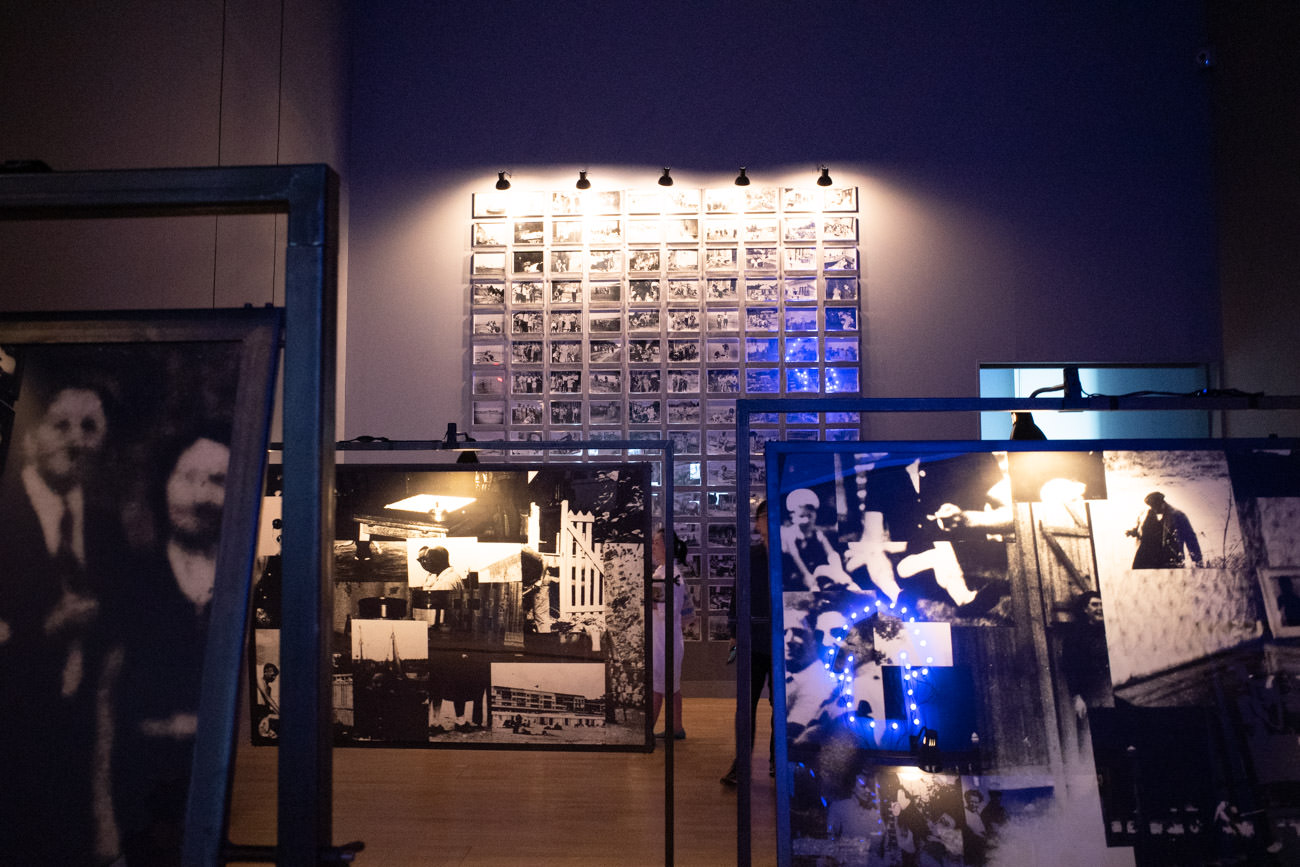
In the large area near the entrance, “Memories of Youth” — a work combining many photographs — is on view. Photography, so often used as a motif of memory, appears in numerous works throughout this exhibition.
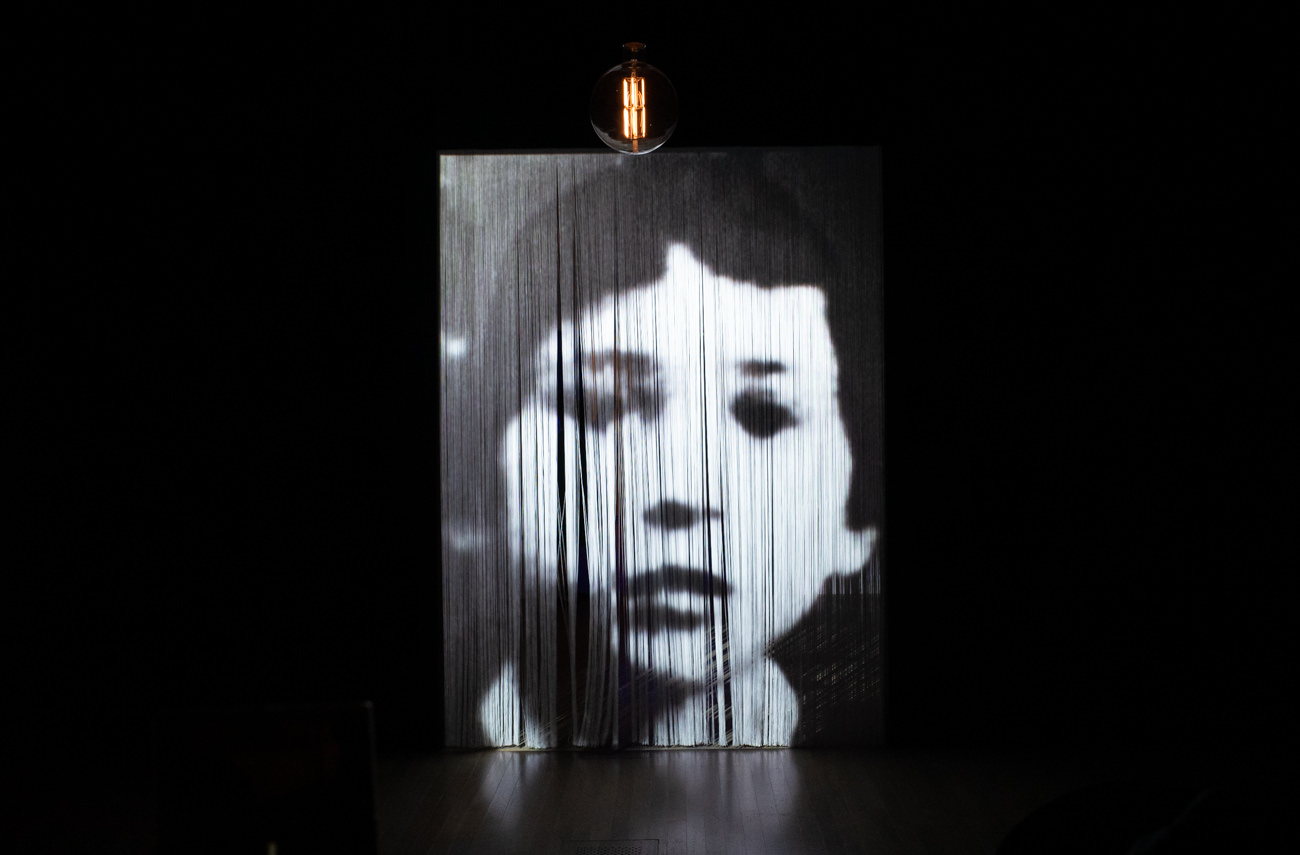
Emerging from this section, one hears the throb of a heartbeat: “The Heart Beats,” Boltanski has been saving heartbeats from people around the world since 2008, and since 2010 has been presenting them at the Teshima Art Museum as “Les Archives du Cœur.” This work uses Boltanski’s own heartbeat, provided from “Les Archives du Cœur.” Just beyond it hangs a curtain made of strings, onto which Boltanski’s own image, from age 7 to 65, is projected; visitors pass through it.
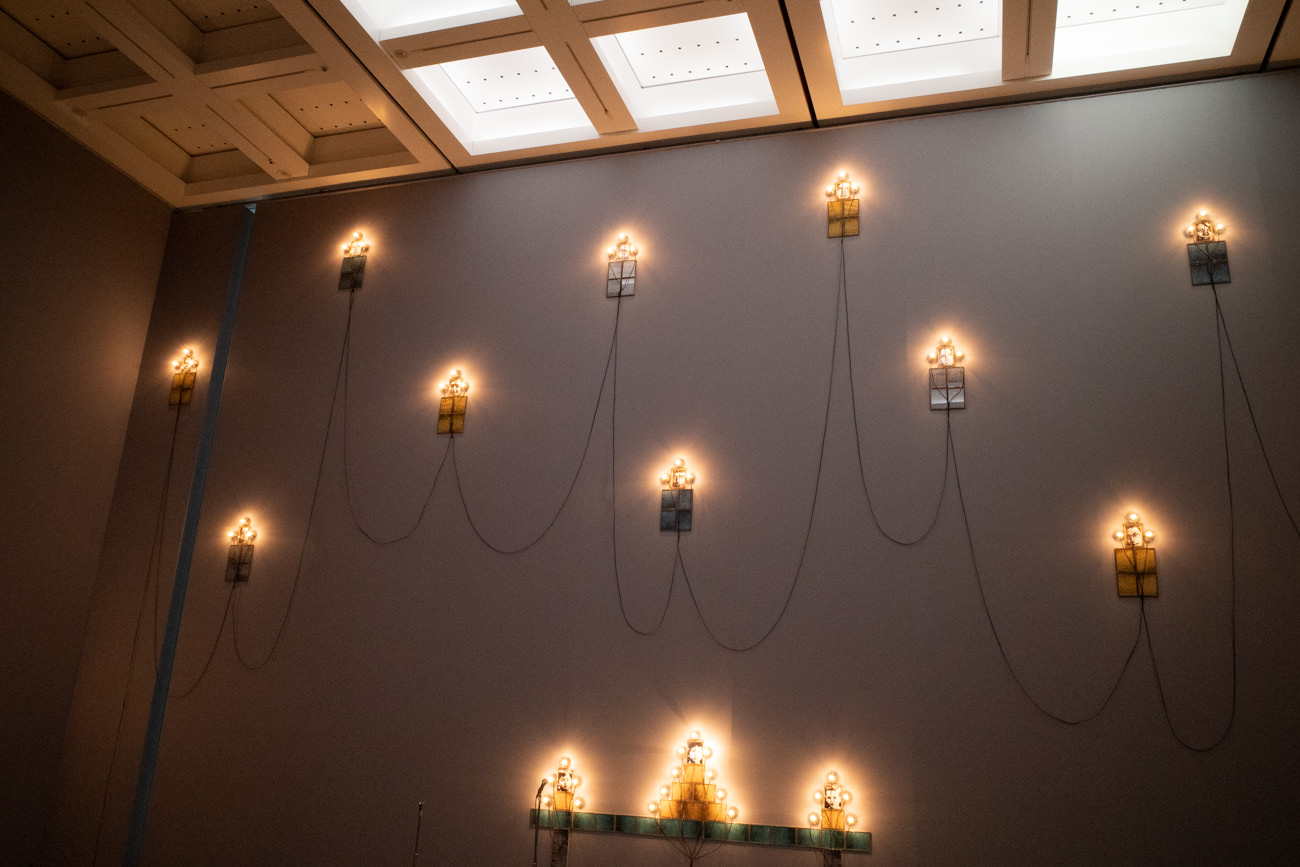
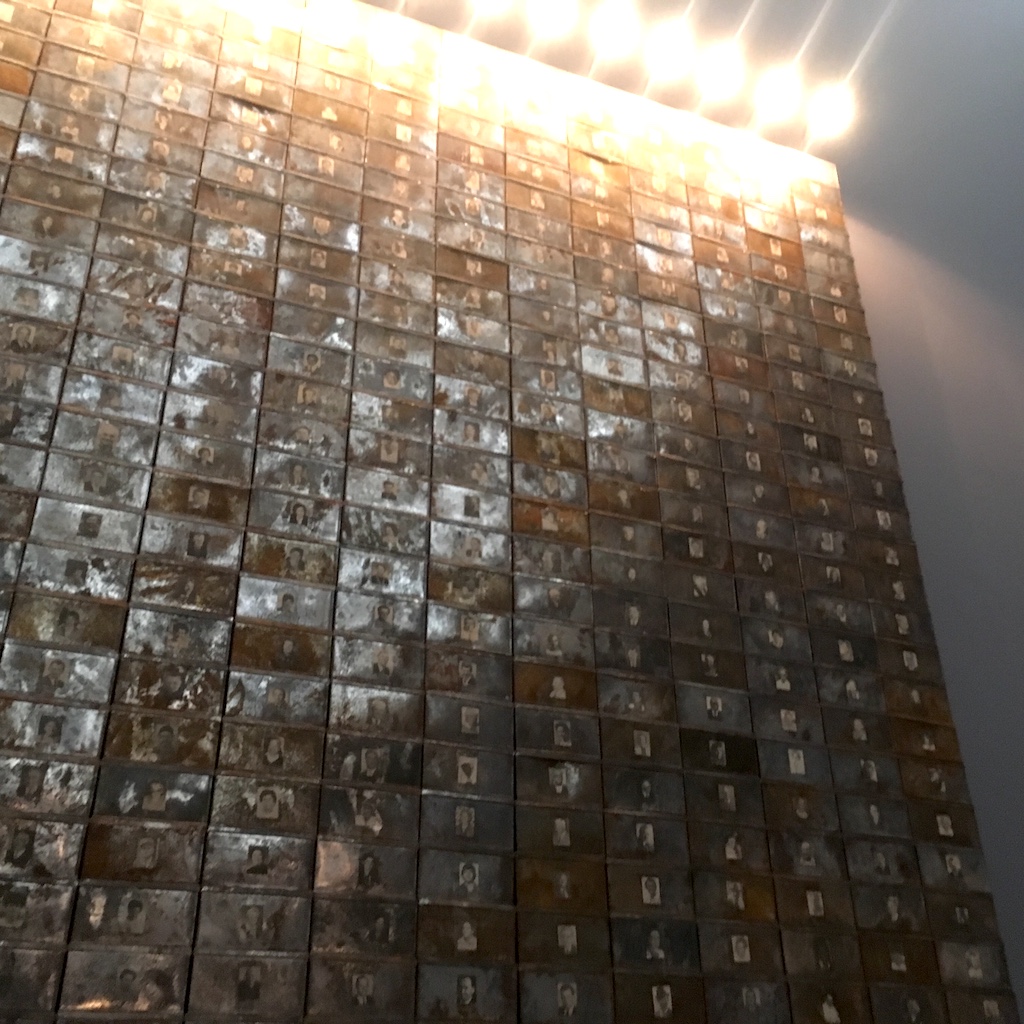
Next, an area gathers works reminiscent of altars. Boltanski has produced many pieces in which black-and-white photographs of people, framed, are dimly illuminated. Multiple works stacking tin boxes suggestive of urns are on view as well.
In the largest area of the exhibition, “Slag Heap,” a mound of piled-up black clothing, is encircled by “Speak Up,” a work in which black garments are hung one by one. Overhead, thin veil-like fabrics printed with photographs of figures hang as “Spirits.”
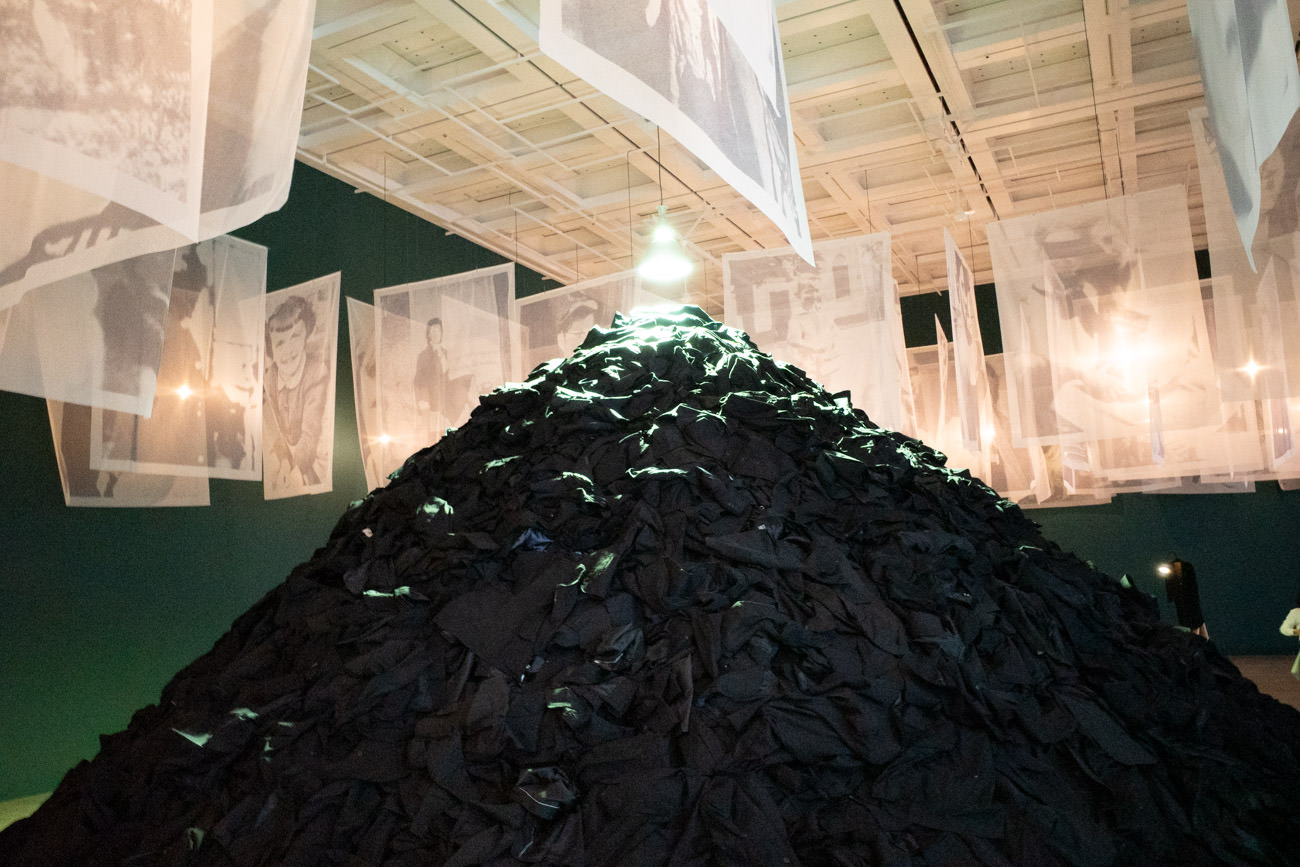
“Black clothing represents a person from whom the soul has departed,” Boltanski said. Combined with the works drifting overhead, one has the sensation that here, in this very space, souls are being softly released.
“Storage Area (Canada),” in which countless pieces of secondhand clothing hang on the walls: standing before it, the distinctive musty odor of used clothes stings your nose. That smell too must be part of the work. Though nothing tangible is present, this work overwhelms with a “sense of presence” of the people it evokes.
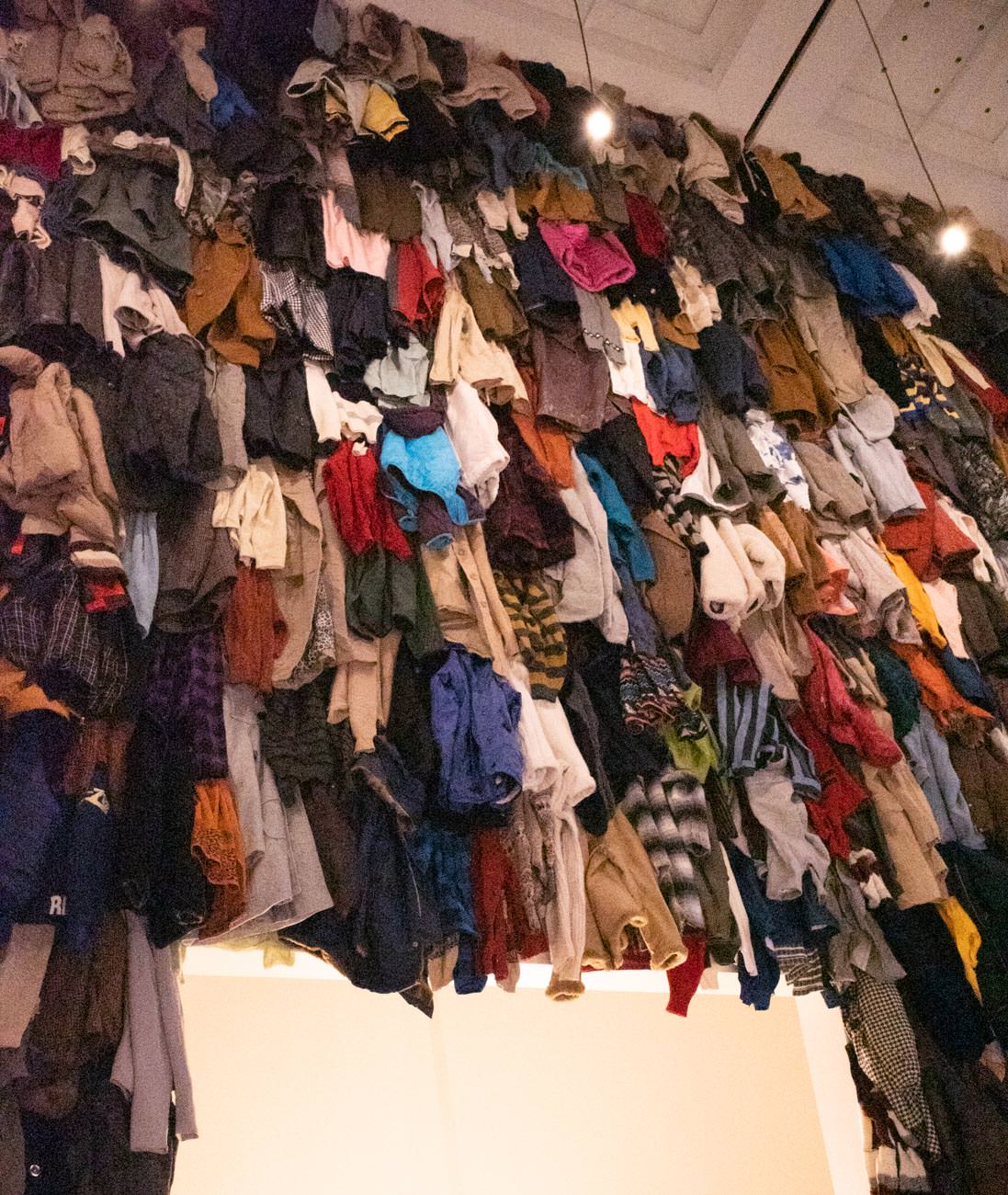
As Boltanski himself put it, “I composed these works taking advantage of the ceiling heights of The National Art Center, Tokyo”: “Slag Heap” and “Storage Area” have both been built up high, making for imposing works.
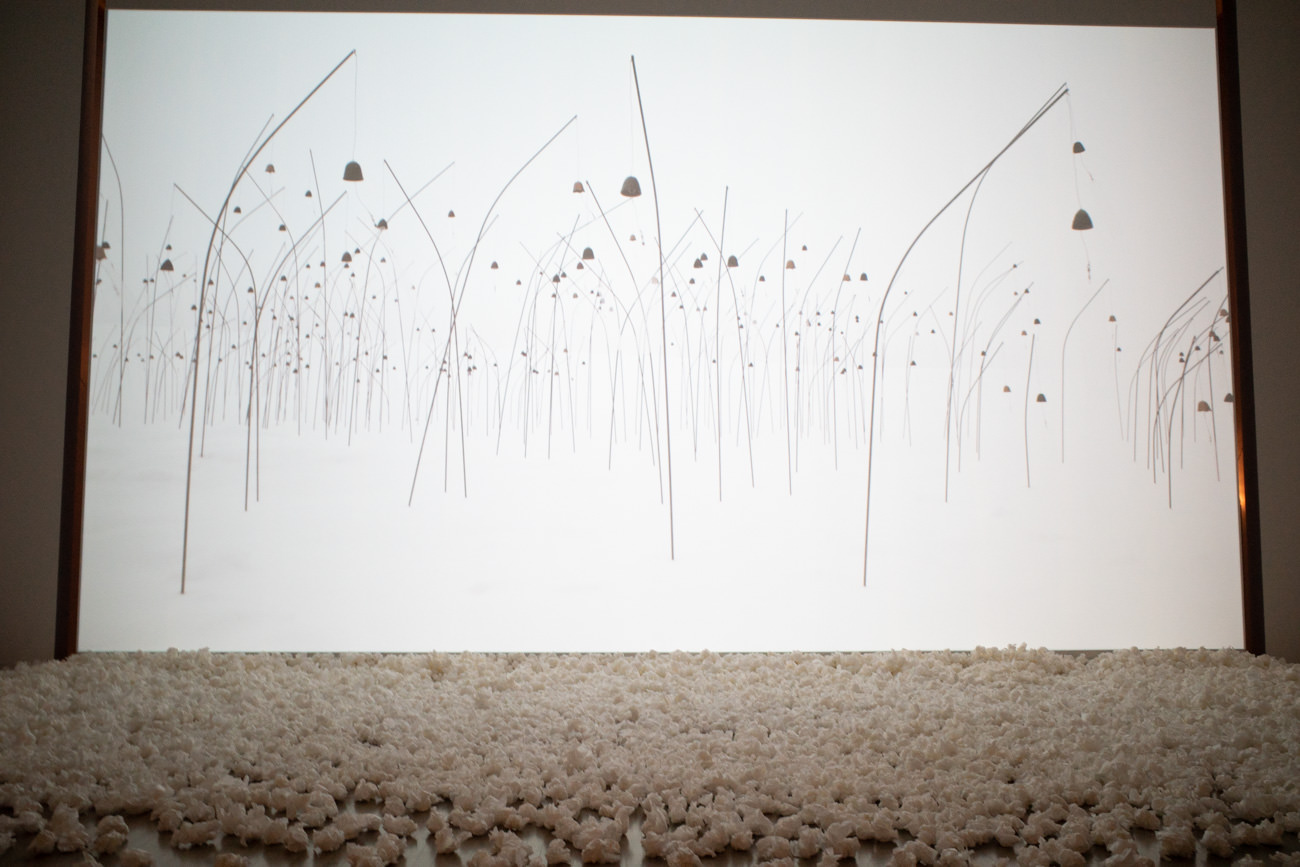
The video piece “Animitas (White)” was shot over ten hours in the snowfields of Canada, where numerous wind chimes have been installed. The faint tones give one the sensation of a breeze passing right beside you.
Boltanski has visited Japan often and has been deeply influenced by Japanese philosophy.
“Rather than being moved by an artwork, I hope people will take in various things from a work, raise questions within themselves, and quietly contemplate. Then each will return to his or her own ‘life.’ That’s what an exhibition is,” he said.
As the artist describes himself as “an artist of space,” even sound, smell, and the flow of air are staged as part of the work. Within the space Boltanski has fashioned, one comes to feel that human “existence” is not merely the existence of the body. The beat of the heart, the breath, the smell, and the memory of that person that lingers in someone else — all of these might be called human “existence.” How do you, yourself, wish to grasp that precious existence? The exhibition seemed to be asking that of us.
There is a sensation that cannot be conveyed by photographs alone — only by immersing yourself in this space. Everyone will find themselves reflecting on human “existence” and slipping into the mood of a philosopher. It was an exhibition that seemed to fill one’s whole body with circling thoughts.
Note: In another series of “Animitas” is scheduled to be screened at Espace Louis Vuitton Tokyo from June 13 to November 7, 2019.
* All photographs are installation views of “Christian Boltanski — Lifetime” at The National Art Center, Tokyo, 2019.