Chiharu Shiota “The Soul Trembles”
At the press conference where the media gathered, there was a moment when Chiharu Shiota herself spoke about the recurrence of her cancer.
Perhaps overwhelmed with emotion, she was momentarily at a loss for words, and the room fell silent for a while.
After a brief pause, curator Mami Kataoka’s exquisite response changed the atmosphere, and it seemed to bring not only Shiota but also this writer’s consciousness back into focus, providing a sense of relief.
Sitting in the press seats where Shiota’s face was clearly visible, I felt a glimpse of the severity of her battle with illness while witnessing this scene and the atmosphere.
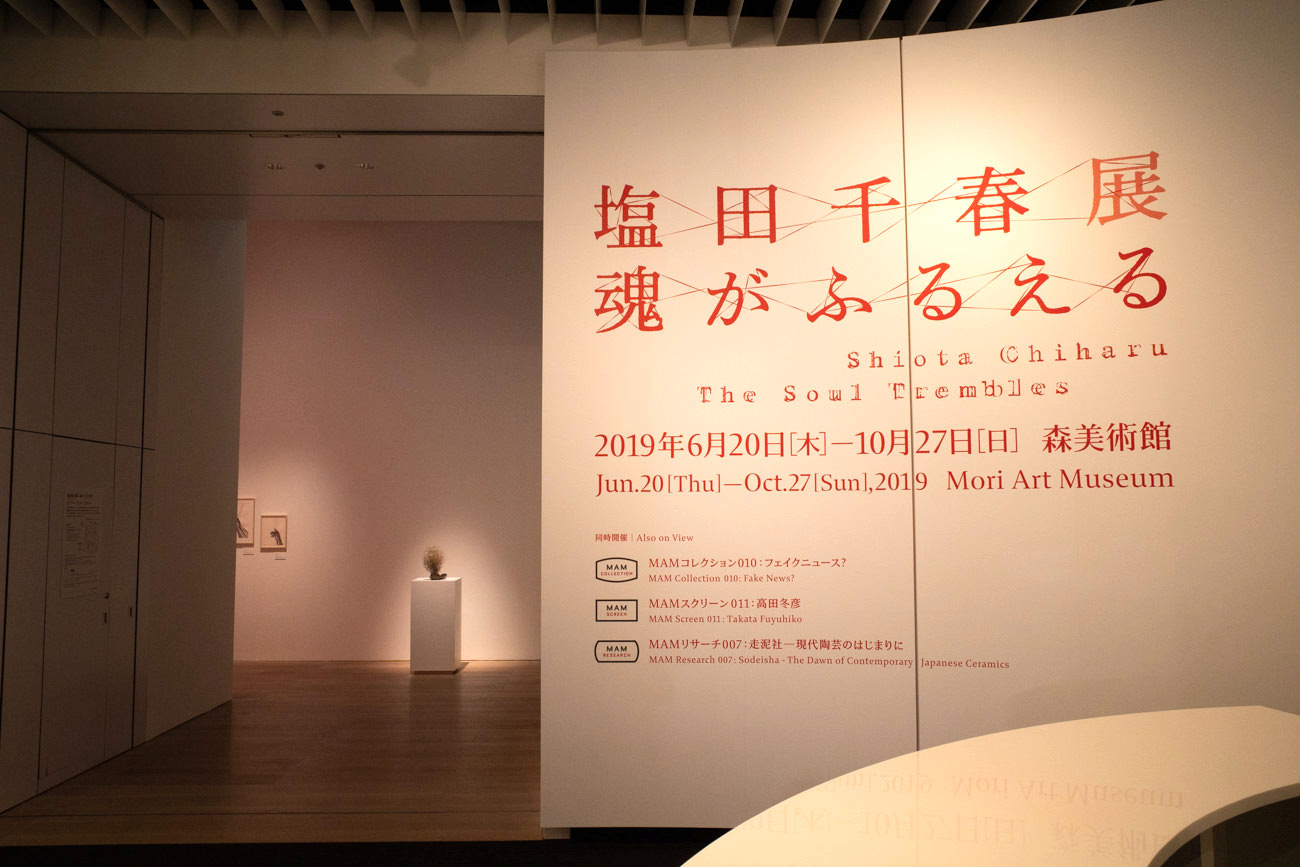
Until now, I loved exhibitions — they were my sole reason for living, and I created works for them.
My works are the manifestation of inner conflicts that can’t be resolved, feelings that can’t be conveyed in words, and my inexplicable existence.
Two years ago, the cancer I had 12 years ago recurred, but I thought perhaps the difficult treatment of living alongside death might be a trial to make better works.
This exhibition presents 25 years of my work.
Please see the dialogue with my bare soul.Chiharu Shiota
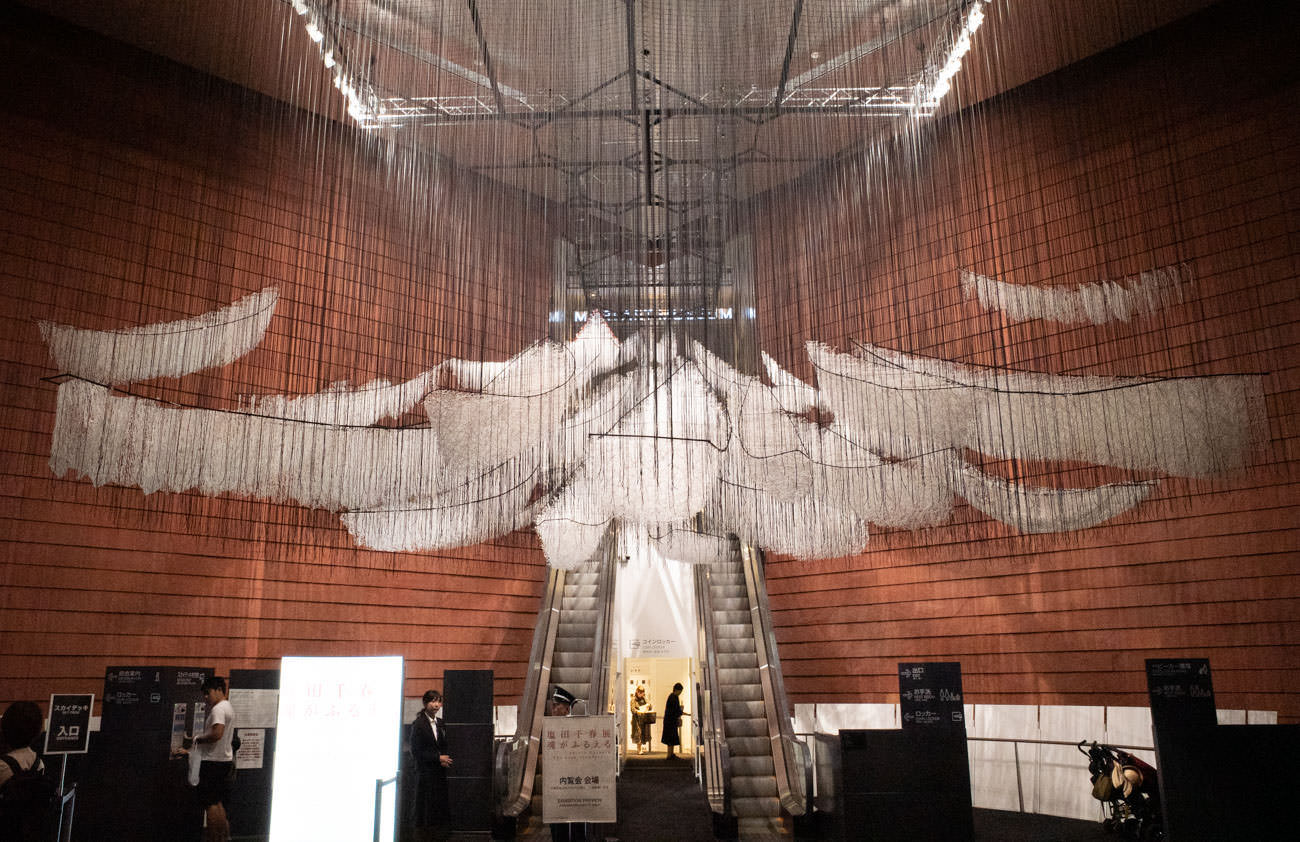
Visitors begin their viewing with the work “Where Are We Going?” in the open atrium space with escalators leading to the venue.
Sixty-five boats suspended from an 11-meter-high ceiling greet visitors at the museum entrance, inviting them on a journey through the exhibition.
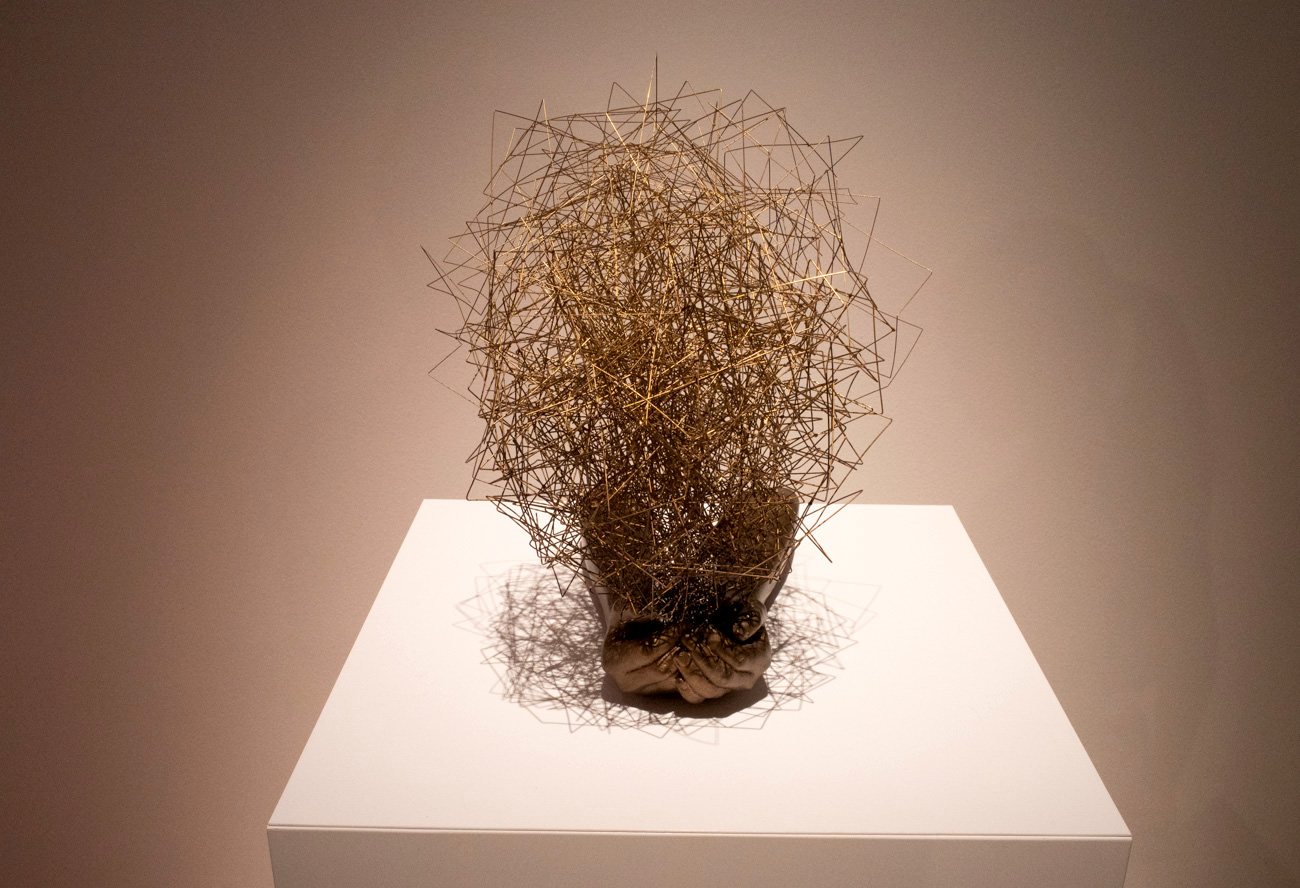
“In the Hand”
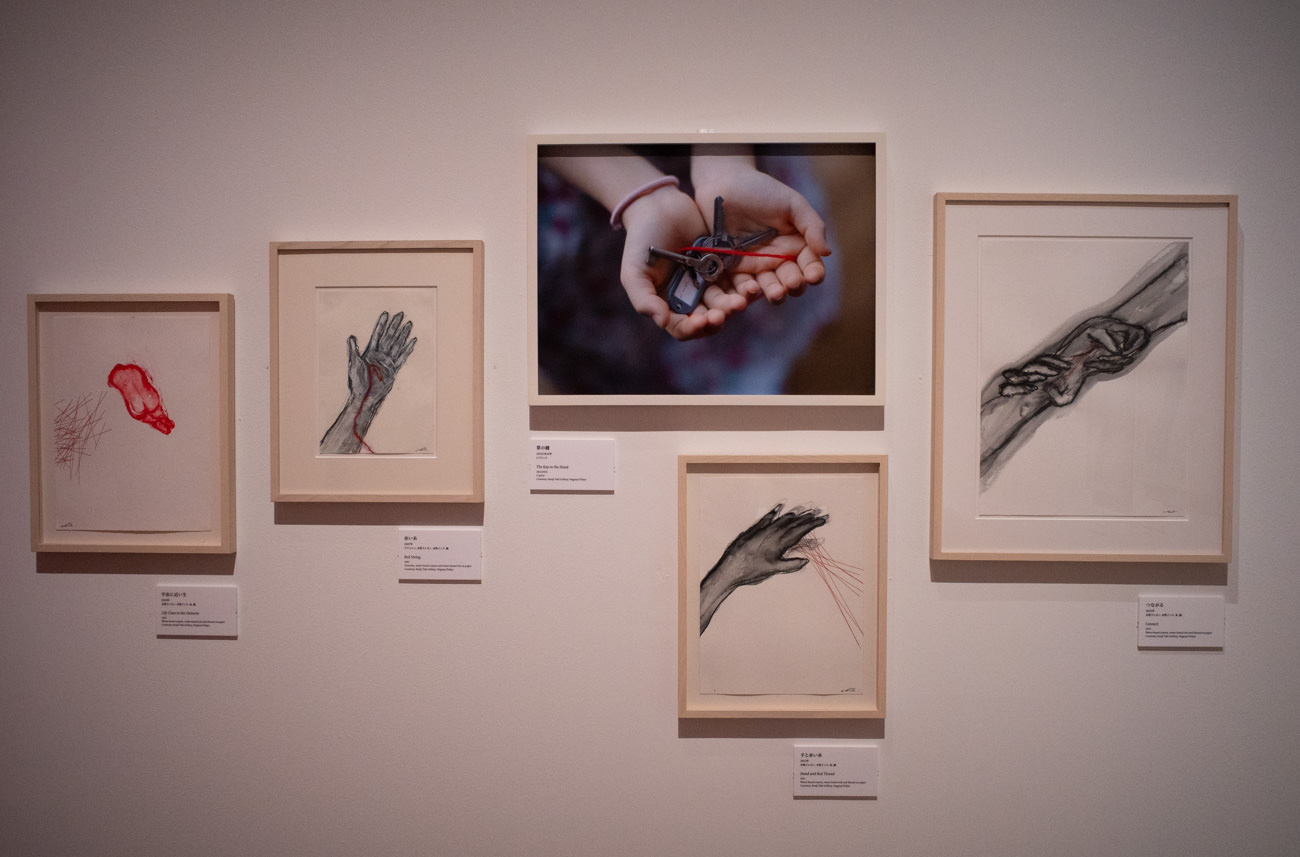
A fragile object seemingly on the verge of breaking is cradled in a child’s hands. Through her thread installations that cover galleries, Shiota has visualized invisible presences hidden in space, and this abstract motif quietly nestled in the palms seems to represent the life or soul within her body, evoking the exhibition’s subtitle “The Trembling Soul.”
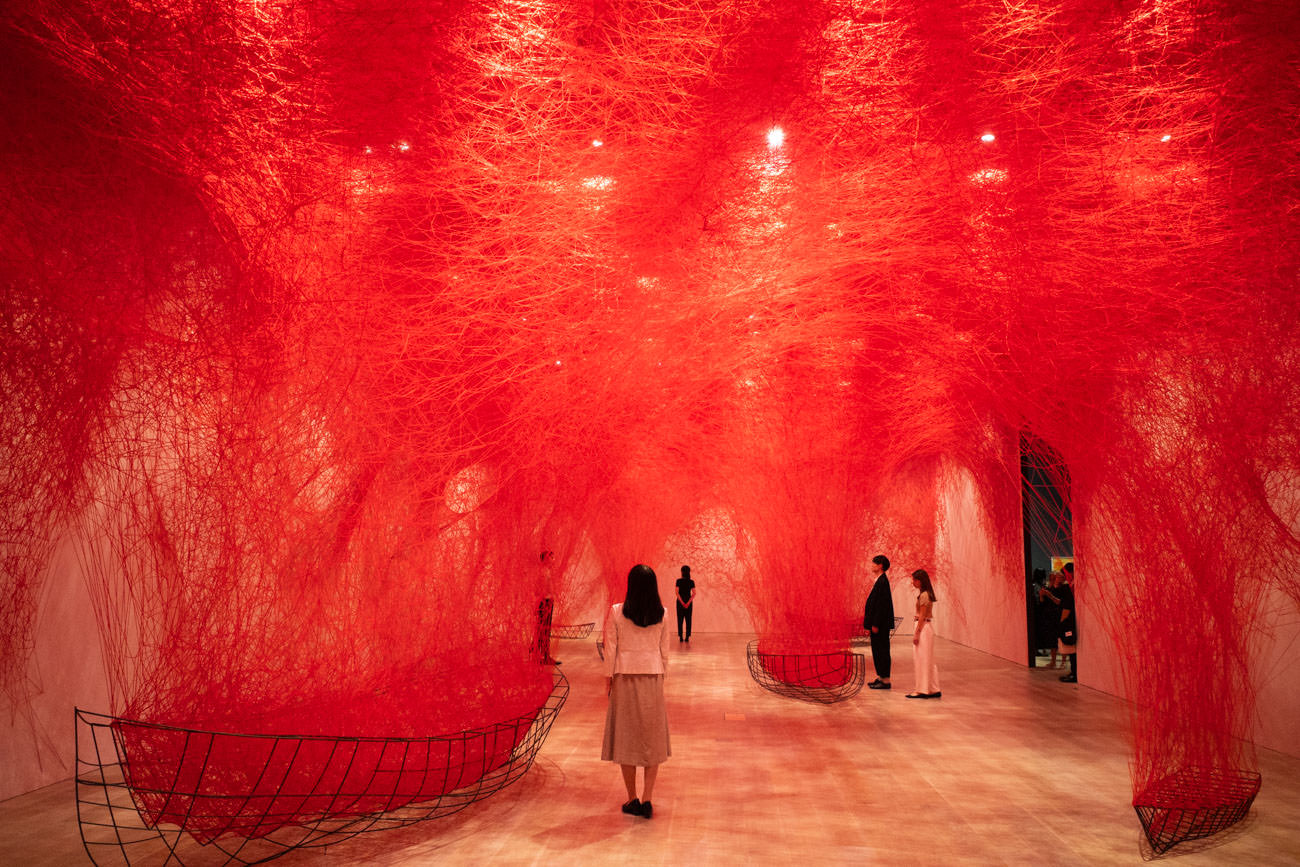
“Uncertain Journey”
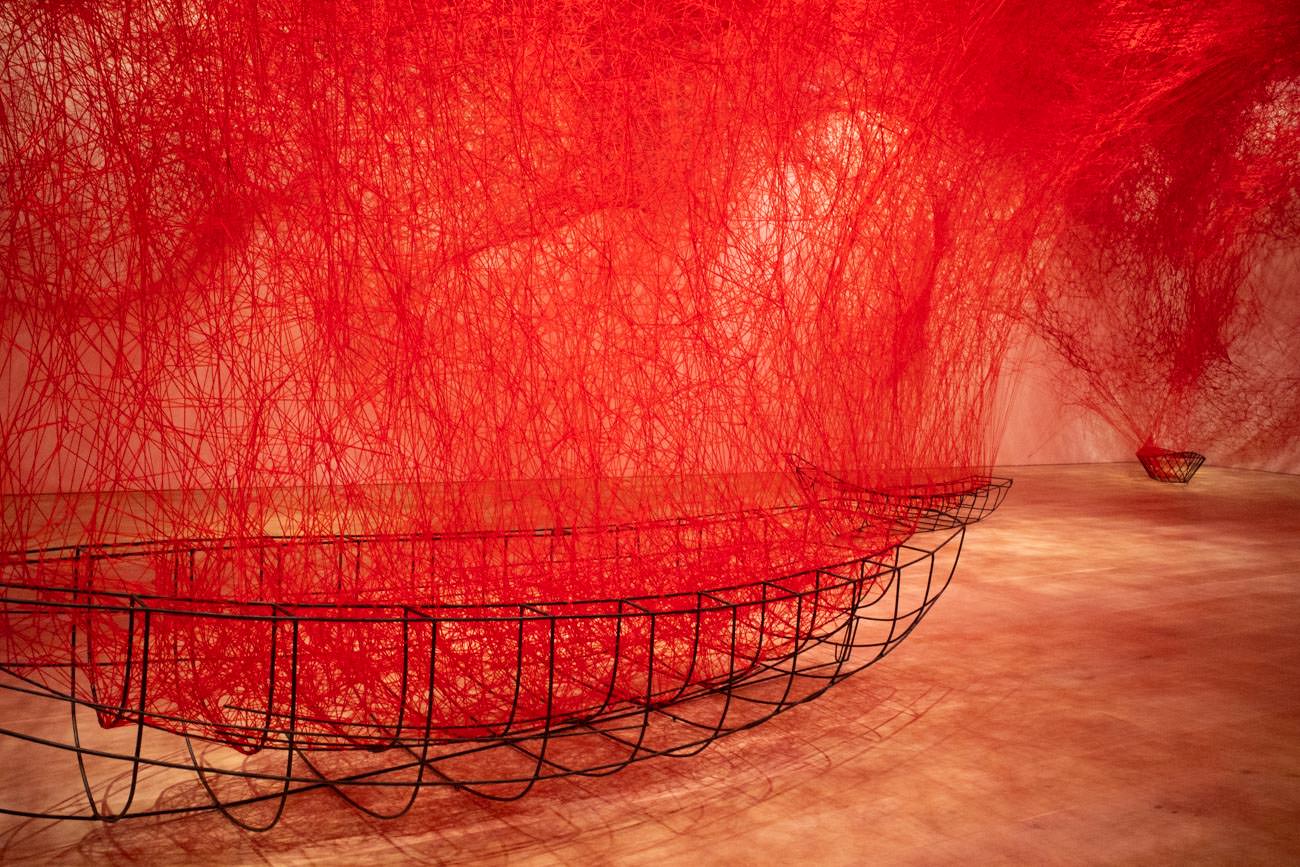
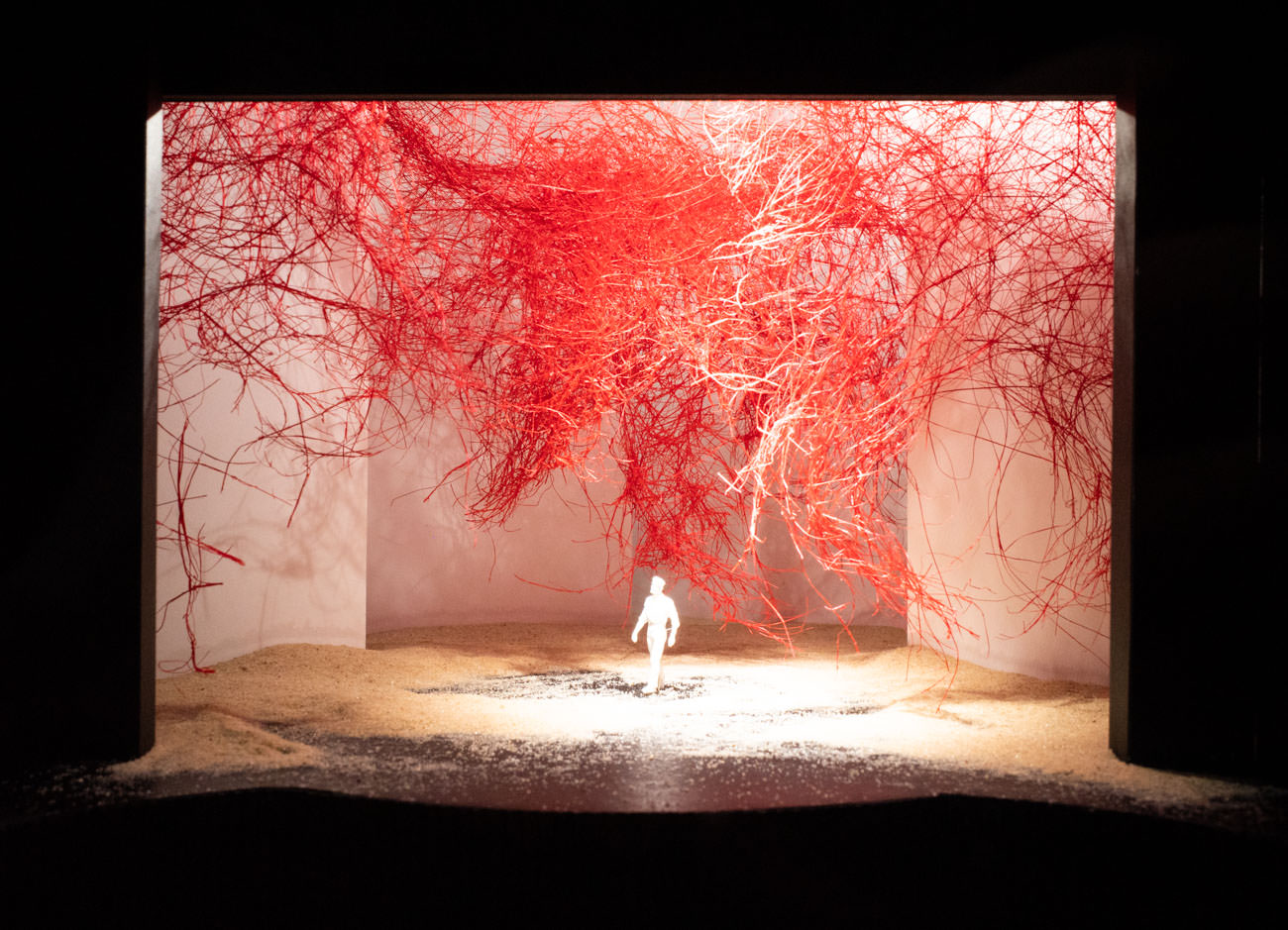
The first installation upon entering the venue is a space covered in bright red thread, with boats made only of frames. In the 2015 Venice Biennale Japan Pavilion display, an enormous number of keys were suspended above traditional old Venetian boats, but in “Uncertain Journey,” the boats are more abstract, and the space filled with red thread seems to suggest the many encounters that lie beyond the uncertain journey.
“In Silence”
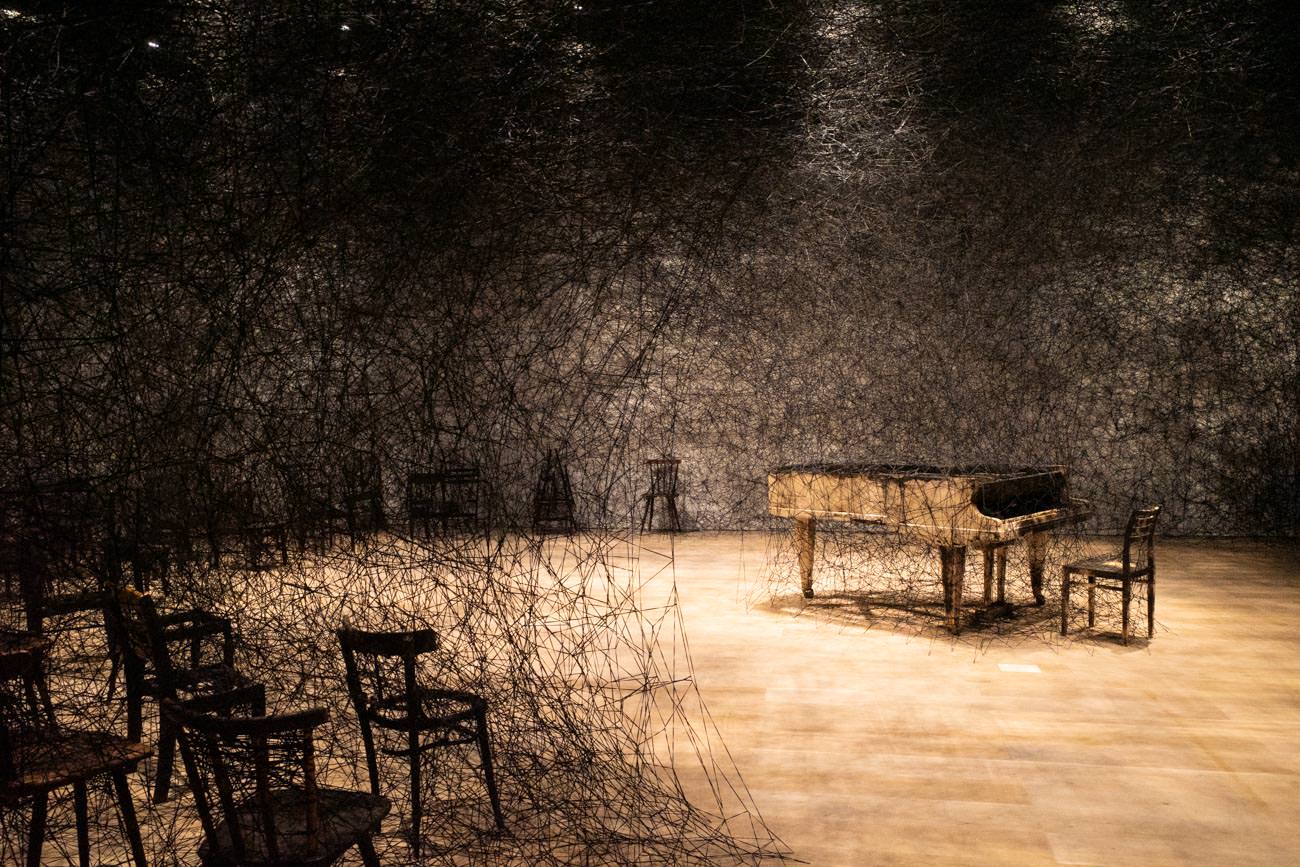
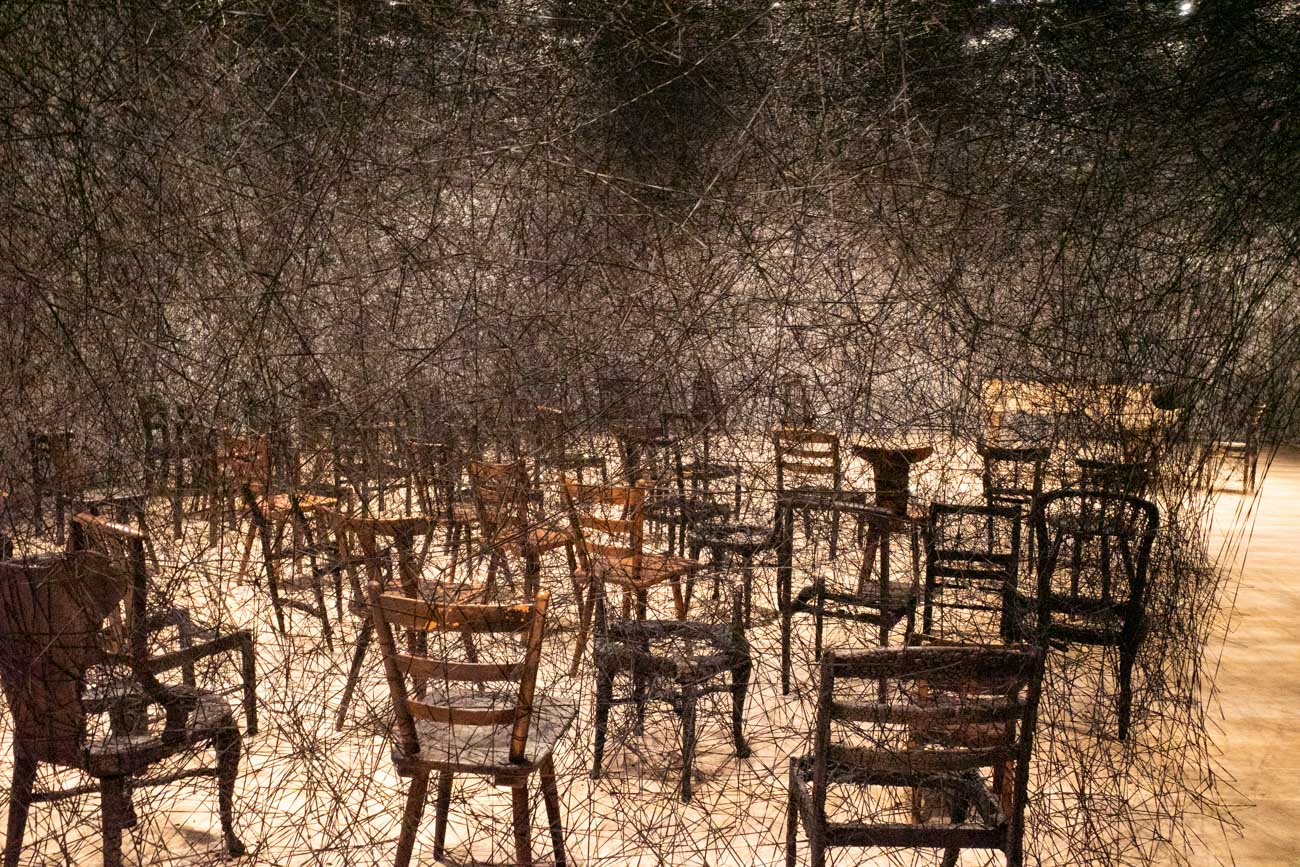
This installation was created from Shiota’s childhood memory of a neighboring house burning down in the night. A burnt grand piano and audience chairs are entirely filled with black thread throughout the space. The soundless piano symbolizes silence while playing a visual music.
“Reflection of Space and Time”
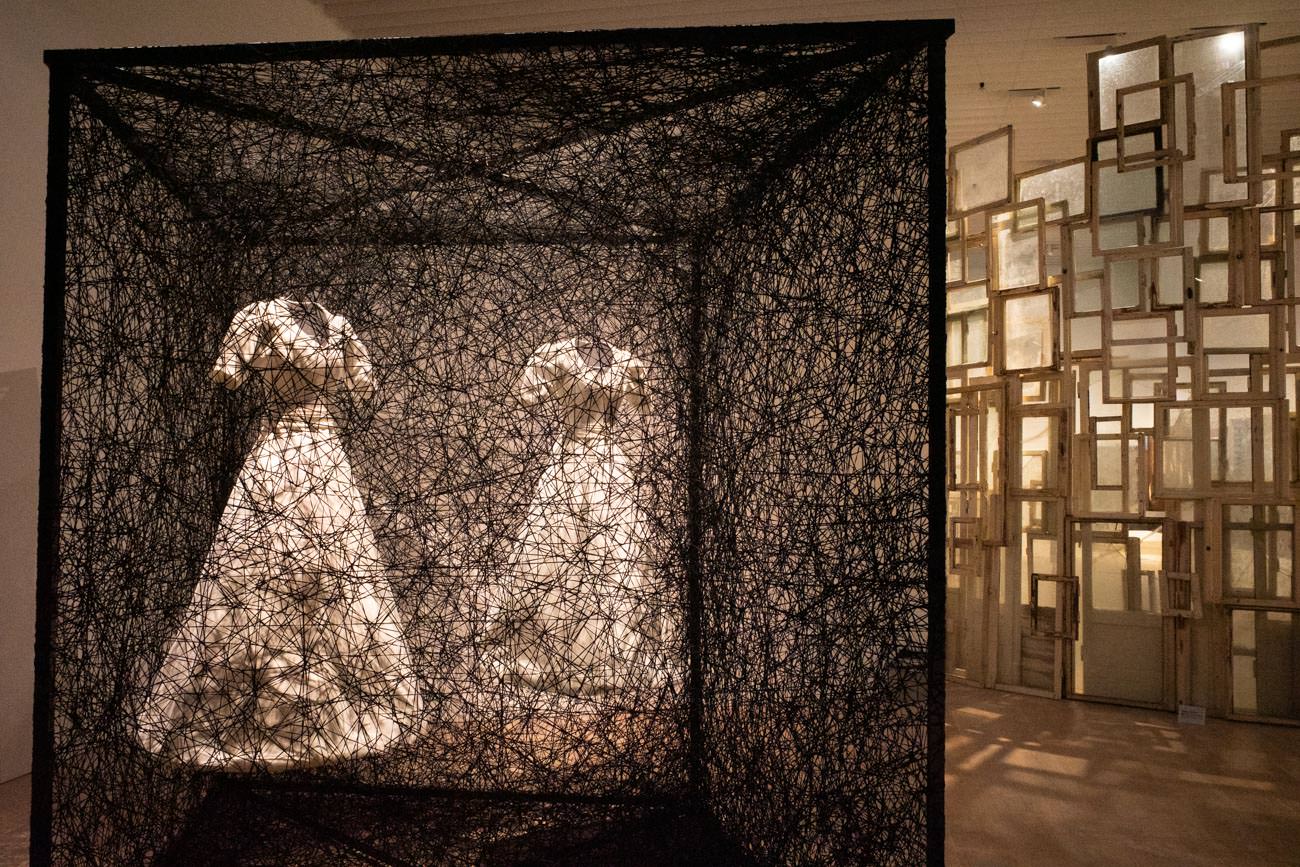
Like skin covering the body, a dress symbolizes the boundary between one’s interior and exterior. By suspending these dresses in a space filled with black thread, they evoke the presence of absence. Furthermore, with dresses hung on both sides of a mirror that divides the space enclosed by iron frames in half, the reflected dresses in the mirror and the actual dresses on the opposite side mix together in the viewer’s consciousness.
“Inside – Outside”
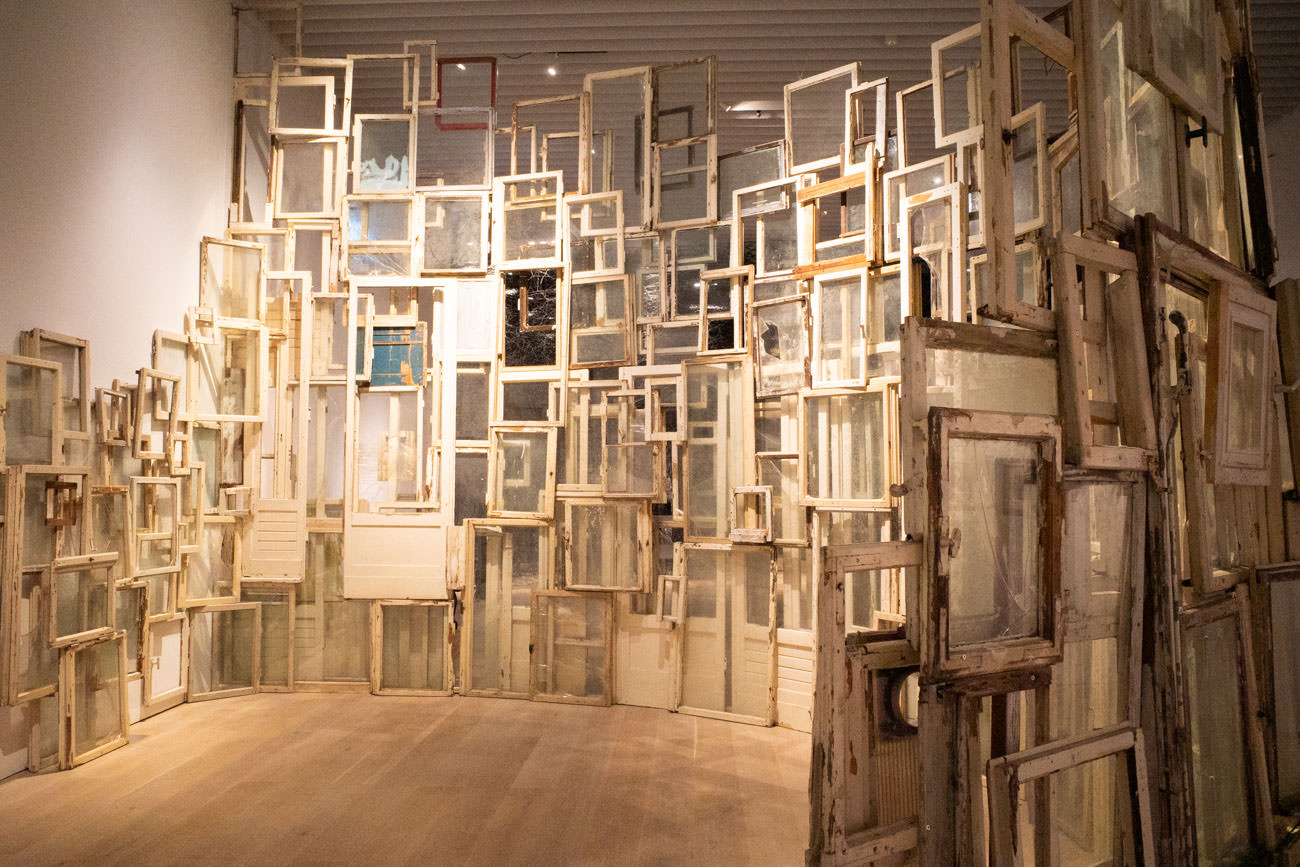
Shiota moved to Germany in 1996 and is currently based in Berlin. Around 2004, fifteen years after the fall of the Berlin Wall, she began creating works using windows. At that time, as redevelopment progressed in Berlin and many buildings were being demolished, Shiota walked around collecting discarded window frames. Windows exist as boundaries between the interior and exterior of private spaces, but they also evoke the wall that divided East and West Germany. “Inside – Outside” has been produced since 2009 with several versions, and this exhibition displays a work using approximately 230 window frames.
“Accumulation – Searching for the Destination”
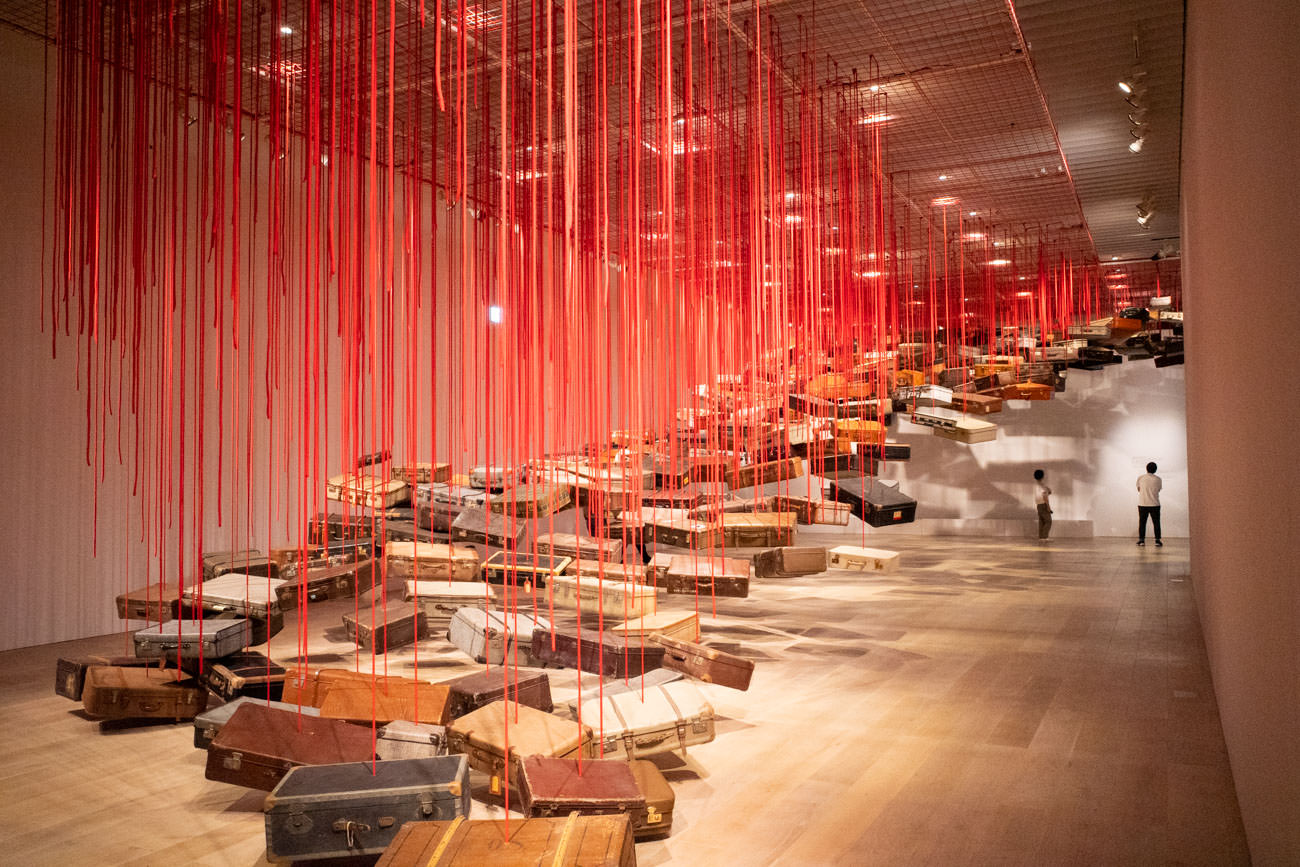
This work, in which approximately 430 suitcases continuously vibrate, was created after Shiota found an old newspaper inside a suitcase discovered at a Berlin flea market. All objects contain their own memories, but here the suitcases seem to suggest the memories of strangers, movements and migrations, or the journey of refugees seeking a place to settle — the very journey of life itself.
“Where to Go, What to Be”
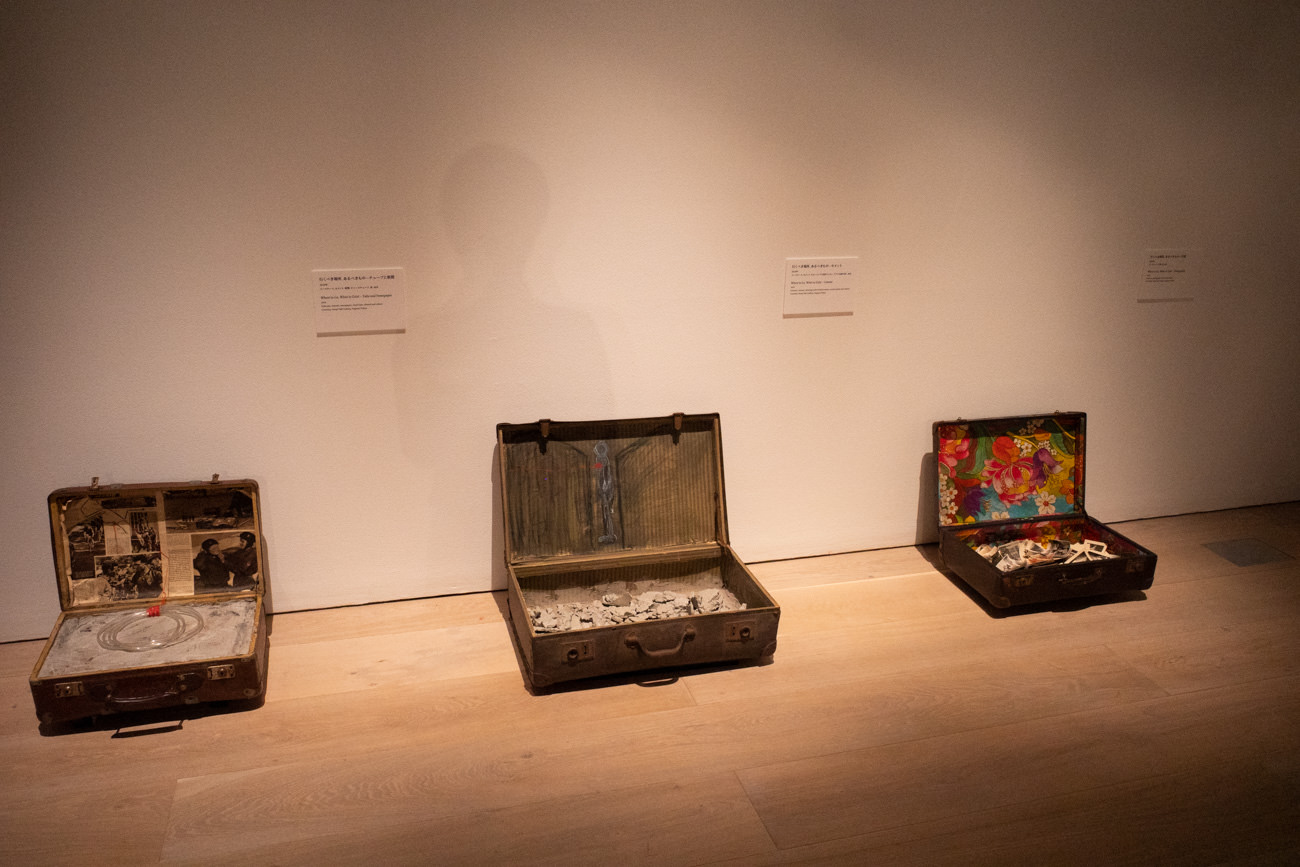
Personal photos gathered from somewhere, newspaper clippings, building rubble, and other objects suggesting a lost past are packed into old suitcases. Carrying someone’s keepsakes and mementos toward a future with no promises, the suitcases seem to embody the yearnings of people seeking the certainty of existence while living in an uncertain world.
“Out of My Body” * New work
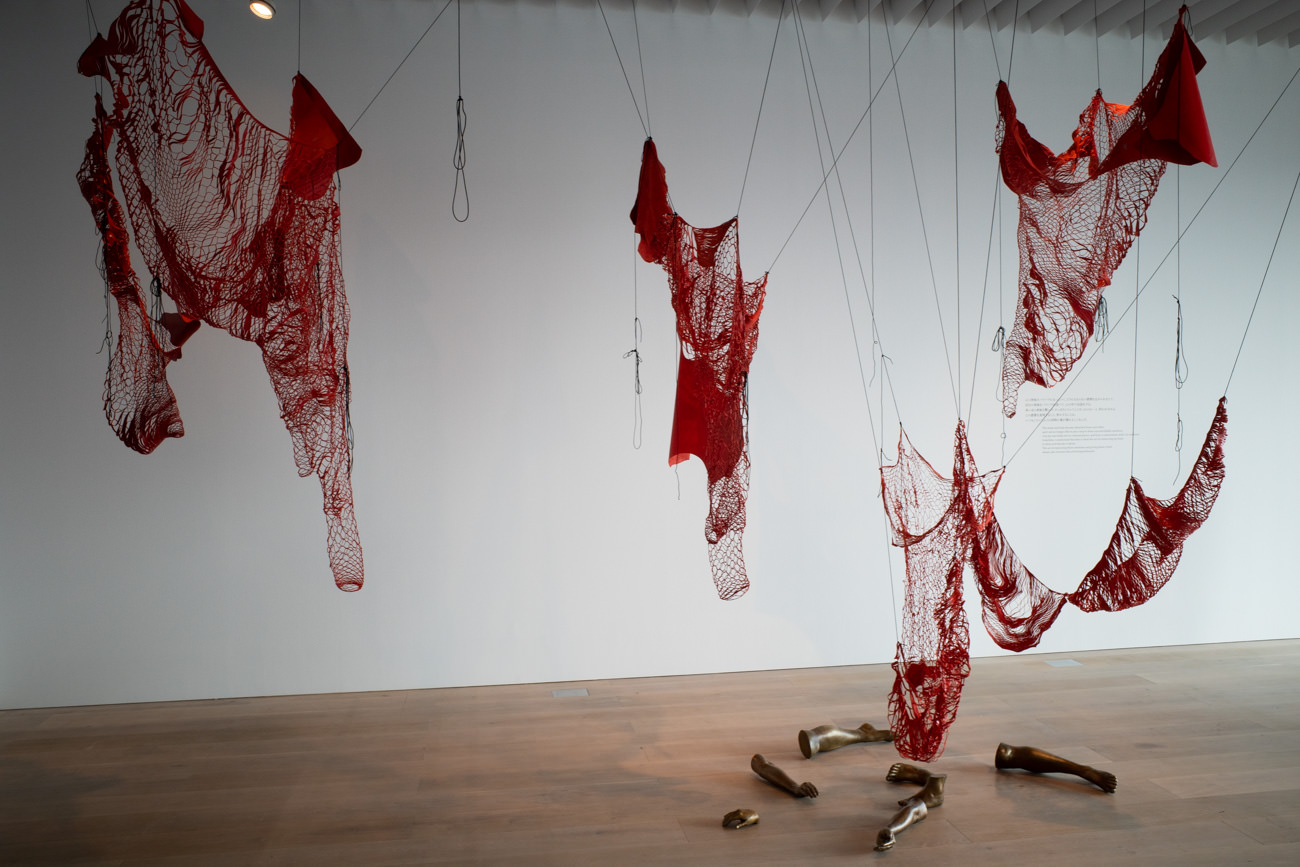
Since the recurrence of her cancer and treatment in 2017, body parts have become part of Shiota’s work. Behind this is her experience of feeling that her soul was left behind as body parts were removed, as if on a conveyor belt during treatment, and while receiving chemotherapy. For Shiota, who has felt the presence of life within absence, using the body in her work may be a way of imagining that absence.
Summary
The day after this exhibition was confirmed, she discovered her cancer had recurred, and the two years leading up to the opening began with the question: “How should I live?” The time spent contemplating life and death appears to have significantly influenced her new works.
Mami Kataoka’s response to Shiota when she was at a loss for words at the opening was the question: “How did it turn out?”
The Mori Art Museum allows photography, so many people will likely see this exhibition through photos shared on SNS. However, the atmosphere Shiota created in her installations cannot be conveyed through images.
Shiota did not directly comment on how the exhibition turned out, saying only, “It hasn’t quite sunk in yet.”
However, standing in the vast space of this museum, one will be overwhelmed by the power of the works. And it will lead to an experience where one’s own heart trembles, where the soul truly quivers.
Chiharu Shiota’s bared soul is here.
Please make your way to the museum.