Maha Harada “The Tableau of Beautiful Fools”
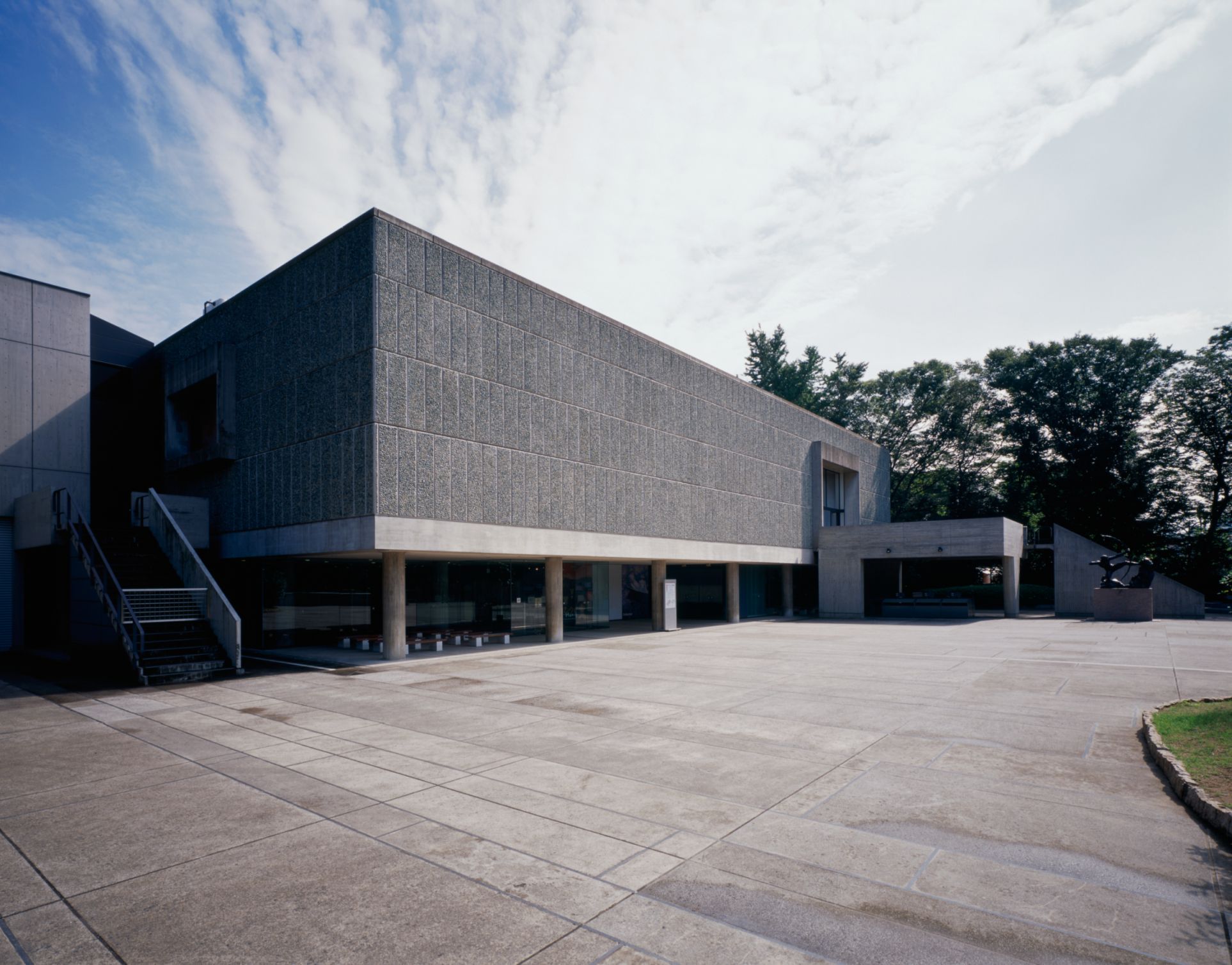
June 2019, when the National Museum of Western Art—which opened on June 10, 1959 (Shōwa 34)—marked its 60th anniversary.
It was the timing of a collection exhibition of the collector Kojiro Matsukata, who dreamed of building a museum while holding up the cause of “I want to deliver real art to Japan’s youth!”
The new book edited with this timing in mind is “The Tableau of Beautiful Fools” by novelist Maha Harada, who centers her work on art.
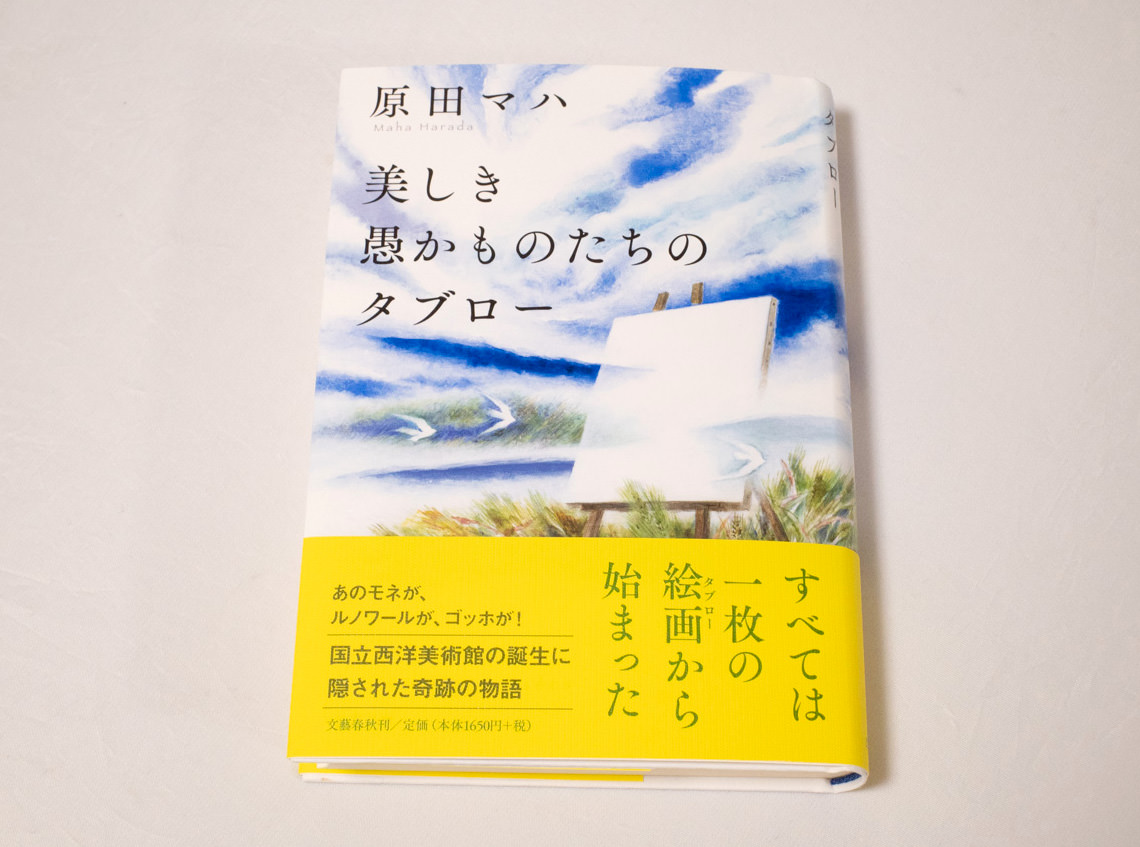
This book is a work that can be called Maha Harada’s true forte: “writing fiction based on historical fact.”
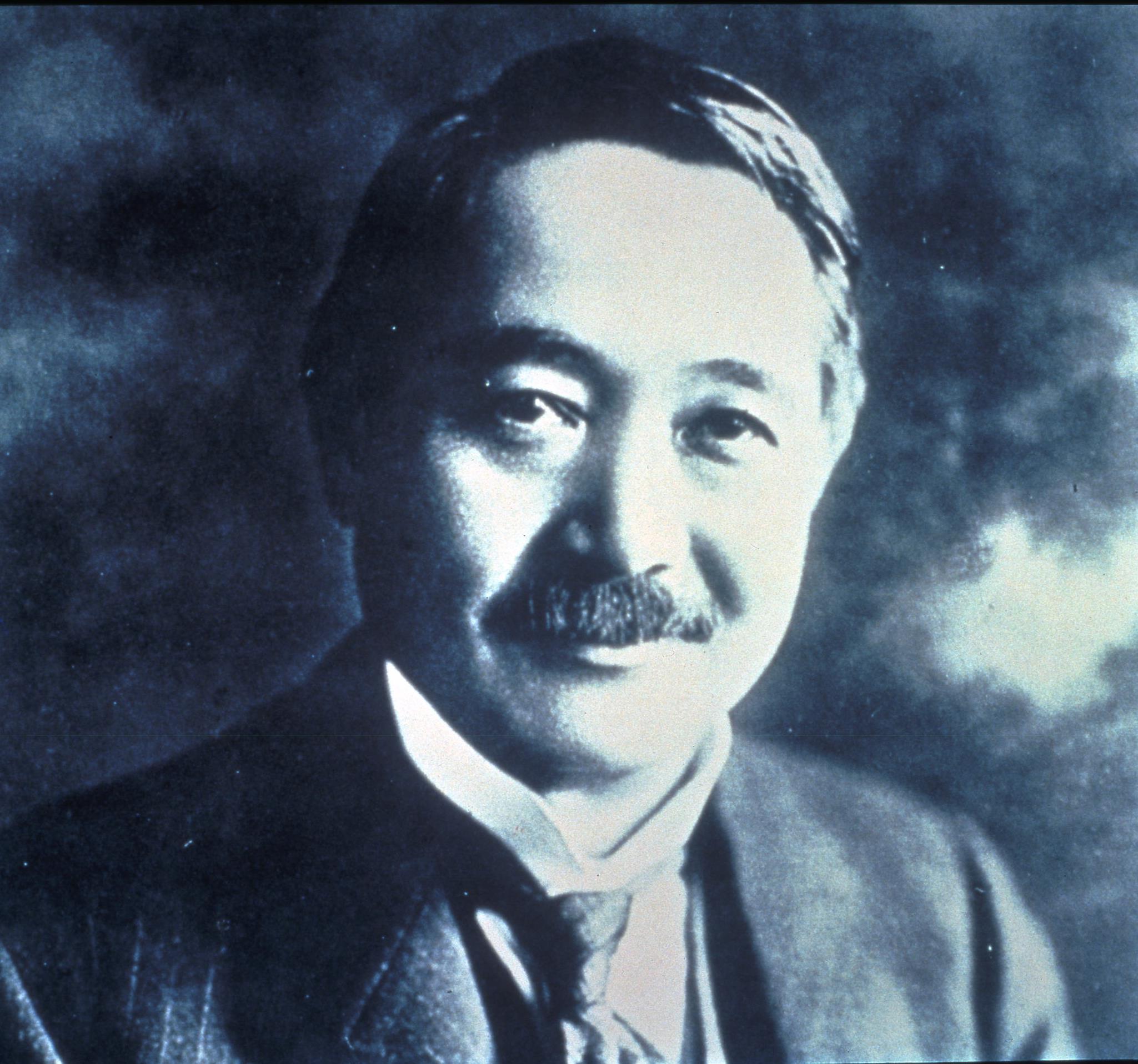
It’s a story that unfolds around the most centrally depicted character, “Yuichi Tashiro (real-life model: Yukio Yashiro),” together with “Kojiro Matsukata” himself, who built the Matsukata Collection; “Prime Minister Shigeru Yoshida,” the mastermind who had the collection returned to Japan; and “Kozaburo Hioki,” who protected the collection through the ravages of war.
Synopsis
This book weaves the footprints left by the businessman Kojiro Matsukata, who kept buying a collection out of a desire to create a museum in Japan and “deliver real art to Japan’s youth!”
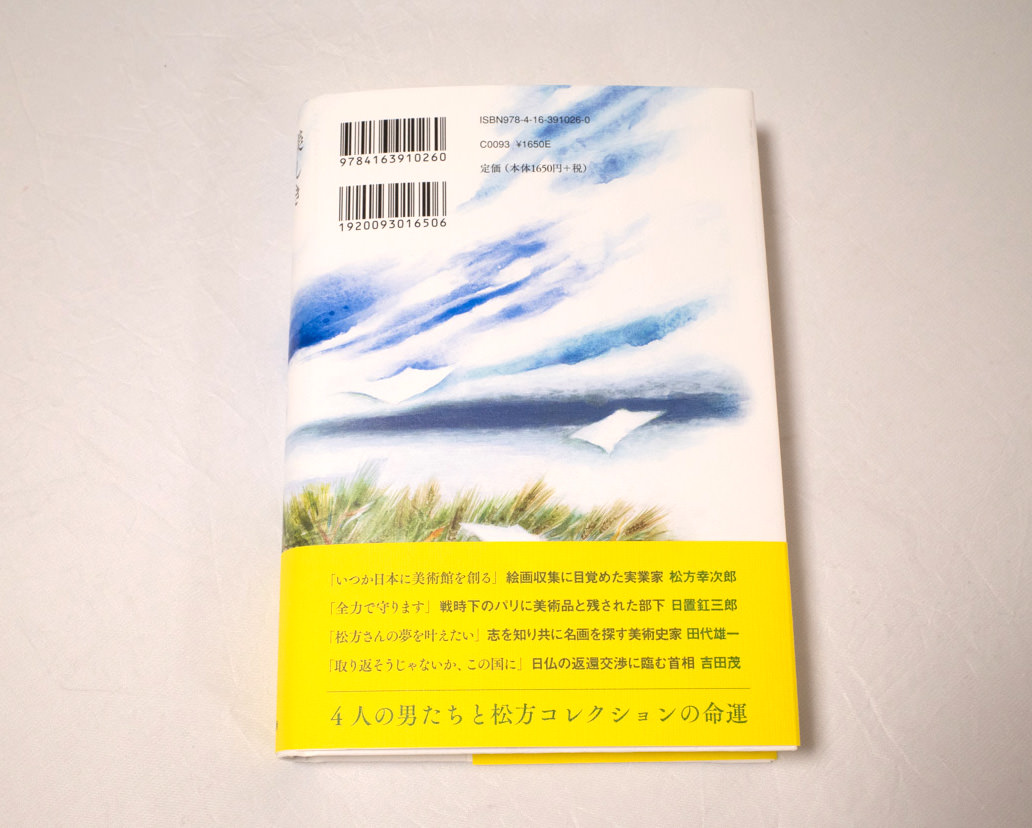
In an era when almost no Japanese had seen a real Western painting, Kojiro Matsukata, who bought up paintings in London and Paris, was a man without an “eye for beauty.” For that reason, he bought by looking at people rather than at pictures; the one who accompanied him to galleries and artists as an advisor was the book’s central figure, Yuichi Tashiro. Including the prime minister who appointed him, Shigeru Yoshida, and Kozaburo Hioki, who protected the painting collection in wartime France, the book expands its depiction of tense return negotiations and the friendships in which each is involved.
The story unfolding around the four men connects to the present National Museum of Western Art, containing the appeal of a biographical novel.
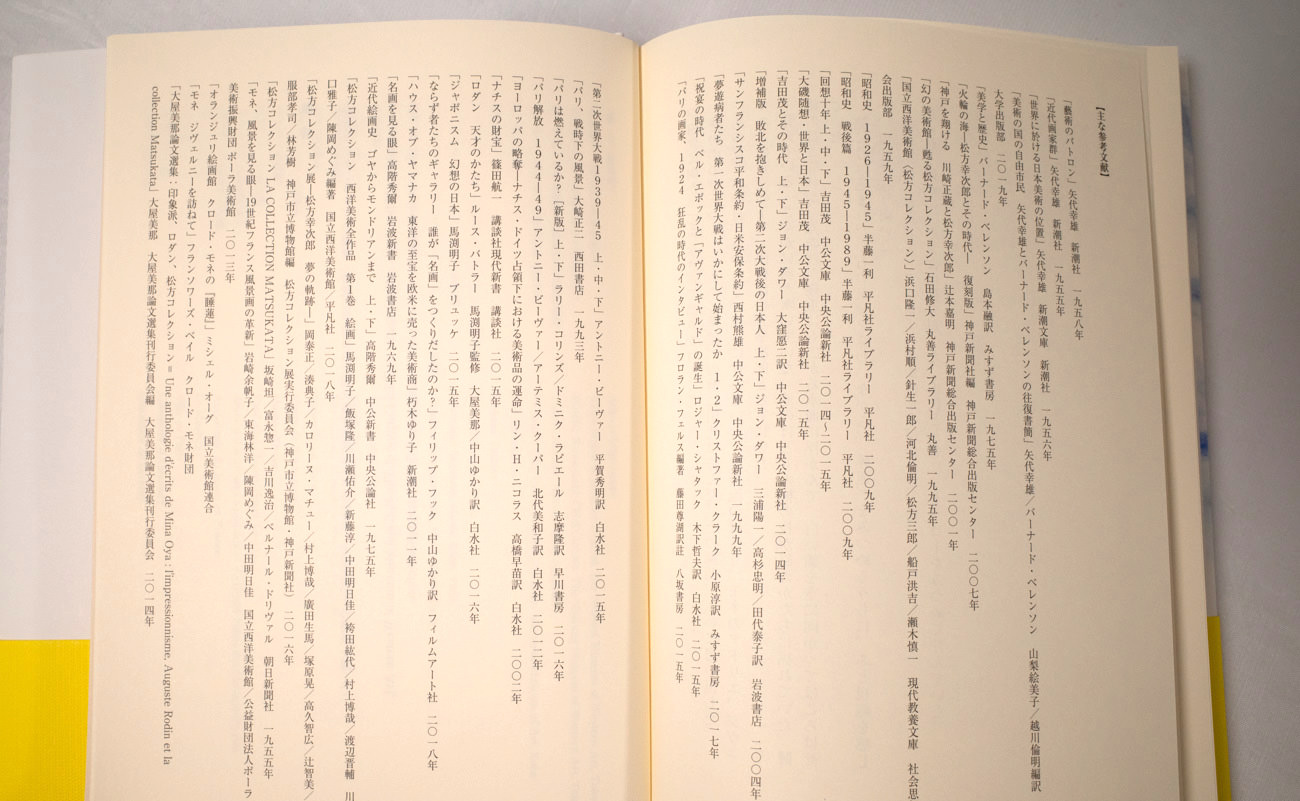
Art and the Four Men
What strikes the heart is the straight devotion to Western art of the four men and those around them.
That sight connects to the passion for building Japan’s first museum to exhibit Western paintings, and one is moved by the strong energy of these predecessors.
Kojiro Matsukata‘s large-scale purchase of artworks, backed by his bold temperament and financial power, connects to the collection now kept at the Museum of Western Art; but even while working as a businessman, his drive to buy art in Europe and his manner toward local art people contain much of the appeal men admire.
Shigeru Yoshida‘s negotiation skills as prime minister command renewed admiration.
The episode of drawing a large quantity of valuable artworks requisitioned by France into a flow of donation-return had something thrilling about it.
Also, this book is Yuichi Tashiro (real-life model: Yukio Yashiro), composed mainly around his viewpoint. The story of a young art historian growing while caught up in various human dramas—through Maha Harada’s brushwork, like a tableau, rich colors come flying in.
Placed in the latter half of the story, Kozaburo Hioki‘s role and way of life were very impressive.
The way Hioki, who had been unrelated to art, has his life tossed about by art is like a mystery.
How did the Matsukata Collection works that Hioki evacuated to Abondant return to Paris? And why were they kept at the National Museum of Modern Art in Paris and requisitioned by France? It still seems not well understood. I wanted to know him more deeply, but perhaps it will never be clarified.
Each of the four characters is drawn, making an attractive human drama.
Things I Noticed from a Collector’s Viewpoint
I’ve compiled what I noticed reading this book from “an art collector’s viewpoint.”
It includes cautions to myself and realizations as a collector, and was full of suggestion.
The following is my summary, but each reader will surely have their own impressions.
- Make a list of the works you own
The Matsukata Collection reportedly wasn’t accurately grasped in full. The whole picture of the collection remains unclarified even now.
Just in case, perhaps a prior database of collection works is necessary. - Direct conversation with artists and buying works
Matsukata bought by looking at people, not just pictures. Even in France, where there was a commercial custom of buying through galleries, he reportedly had many chances to make direct contact with artists and buy. Through direct engagement with artists, various factors—the work, the personality, the compatibility—seem to have led to purchase decisions. - The problem of storage
Part of the Matsukata Collection was burned, and many works went missing in wartime chaos.
We should properly handle the storage problem after buying works! I recently contracted a trunk room, but my thoughts extended not just to storage for works but to a work-centered way of passing them to the next generation. How should the works I own be handled after my death…? - Art advisor
Just as the art historian “Yuichi Tashiro (real-life model: Yukio Yashiro),” one of the book’s protagonists, and Masakazu Naruse became the connoisseurs of the Matsukata Collection, having someone advise on purchases while relating to the context of art history is a field I too would like to request. - A collector’s pride
It may be only some collectors, but I think one carries various egos as an art collector—wanting to own masterpieces, wanting to make oneself look big and strong by wearing the armor of art. I realized anew that a collector bears responsibility for the works they own.
I’m proud that Japanese who collected with a cause certainly existed before we were born.
Summary
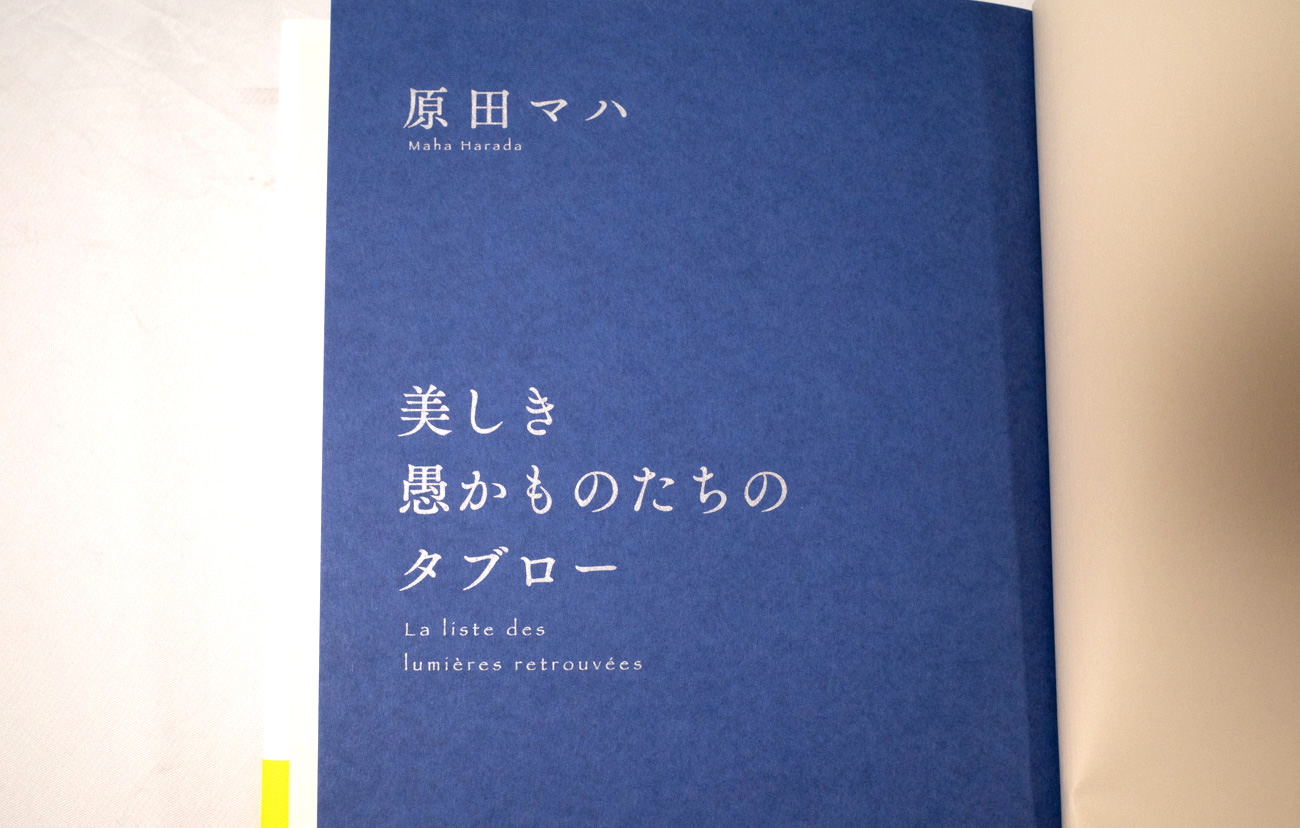
This book contains no plates at all, including the cover. It seems to embody Maha Harada’s feelings, including a role like a device that creates a route to the Museum of Western Art. I definitely want to check it at the museum.
What I feel after finishing it is that my gaze on the Museum of Western Art and the Matsukata Collection has changed. I came to be able to enjoy even more the “National Museum of Western Art 60th Anniversary: Matsukata Collection Exhibition” (June 11 – September 23, 2019), planned to coincide with the book’s release.
This book was compiled to make it in time for the special exhibition, but I felt the latter half of the story is a bit rushed.
If there is a sequel, one awaits a project offering a glimpse behind the scenes leading to the construction of the Museum of Western Art.
I think the content is easy to understand and enjoyable both for art lovers and for those about to encounter art.
An interview with Ms. Harada was posted.
![【特装版図録】目[mé]「非常にはっきりとわからない」展・ドローイングサインカタログをハッキリと明らかにする。](https://art-on.jp/wp-content/uploads/2020/02/me_Drawing_Catalogue6.jpg)