Aichi Triennale 2019 — Taming Y/Our Passion
The Aichi Triennale is Japan’s largest international art festival, held once every three years since 2010.
For its fourth edition in 2019, more than 90 artist groups from Japan and abroad were invited. Alongside the international contemporary art exhibition, the festival gathered cutting-edge works crossing a wide range of expression, including a film program, performing arts, and a music program.
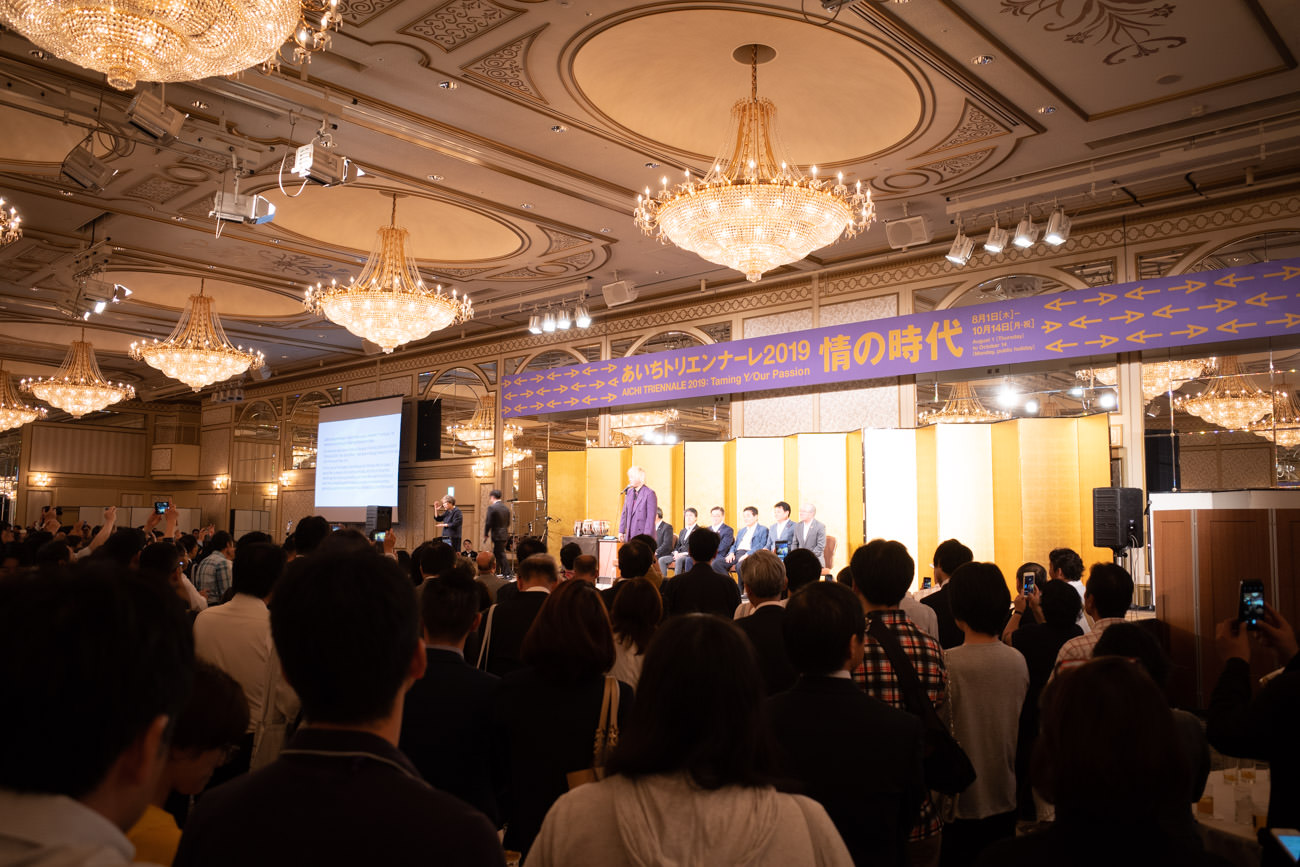
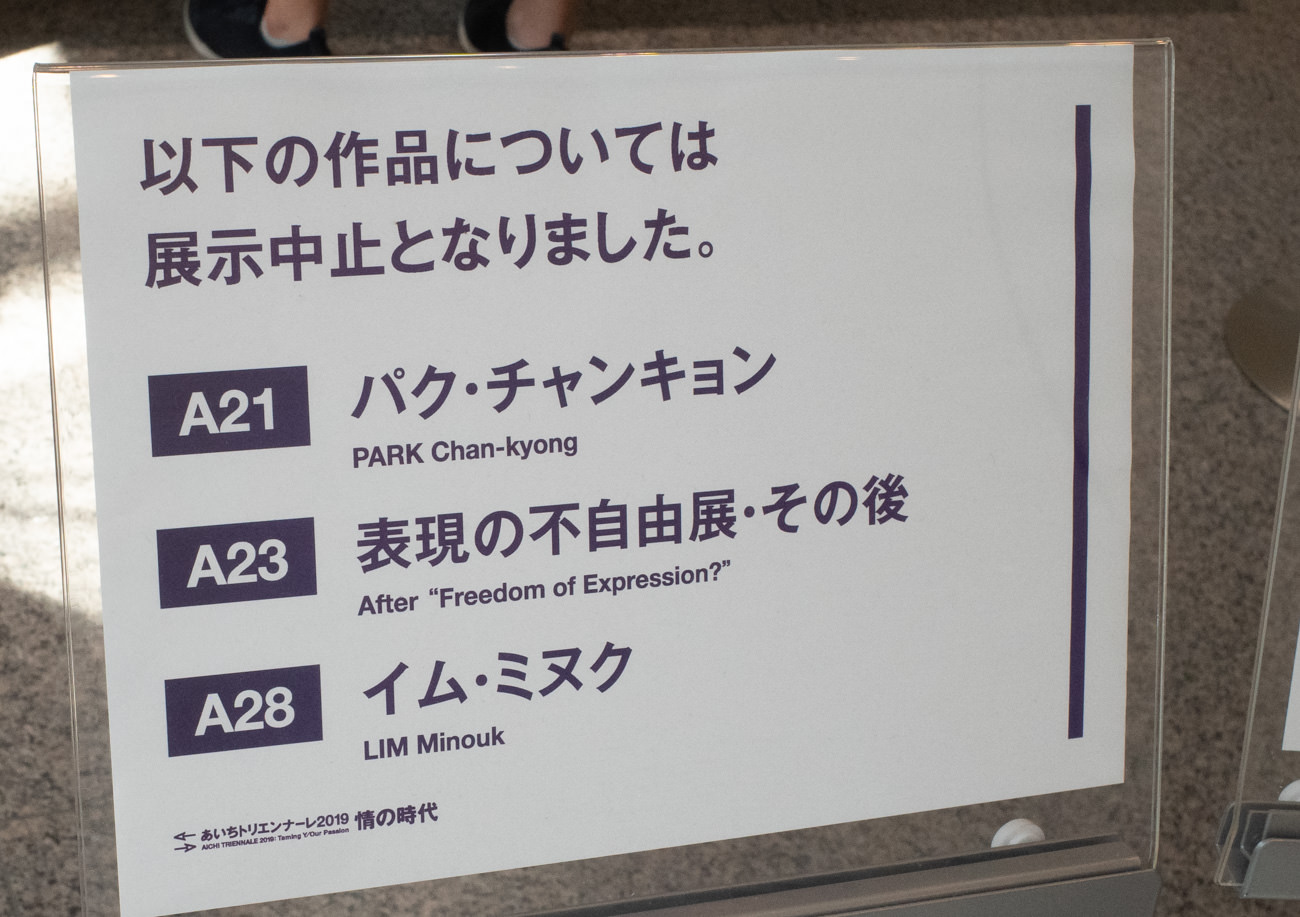
Unfortunately, the cancellation of “After ‘Freedom of Expression?'” led to a series of cancellations, mainly by overseas artists, which cast a shadow over the Triennale. Nevertheless, supported by the outstanding works of many artists, we felt that this festival maintained a very high standard.
In this article, we introduce highlights venue by venue.
Aichi Arts Center
The main hub of the Aichi Triennale is the Aichi Arts Center.
The exhibition floors were mainly the 8th and 10th floors, with a defined route to follow.
Aichi Prefectural Museum of Art (10F)
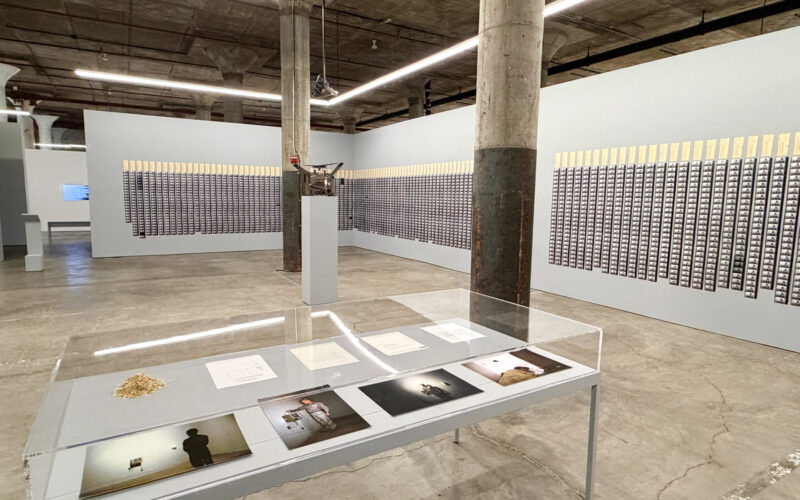
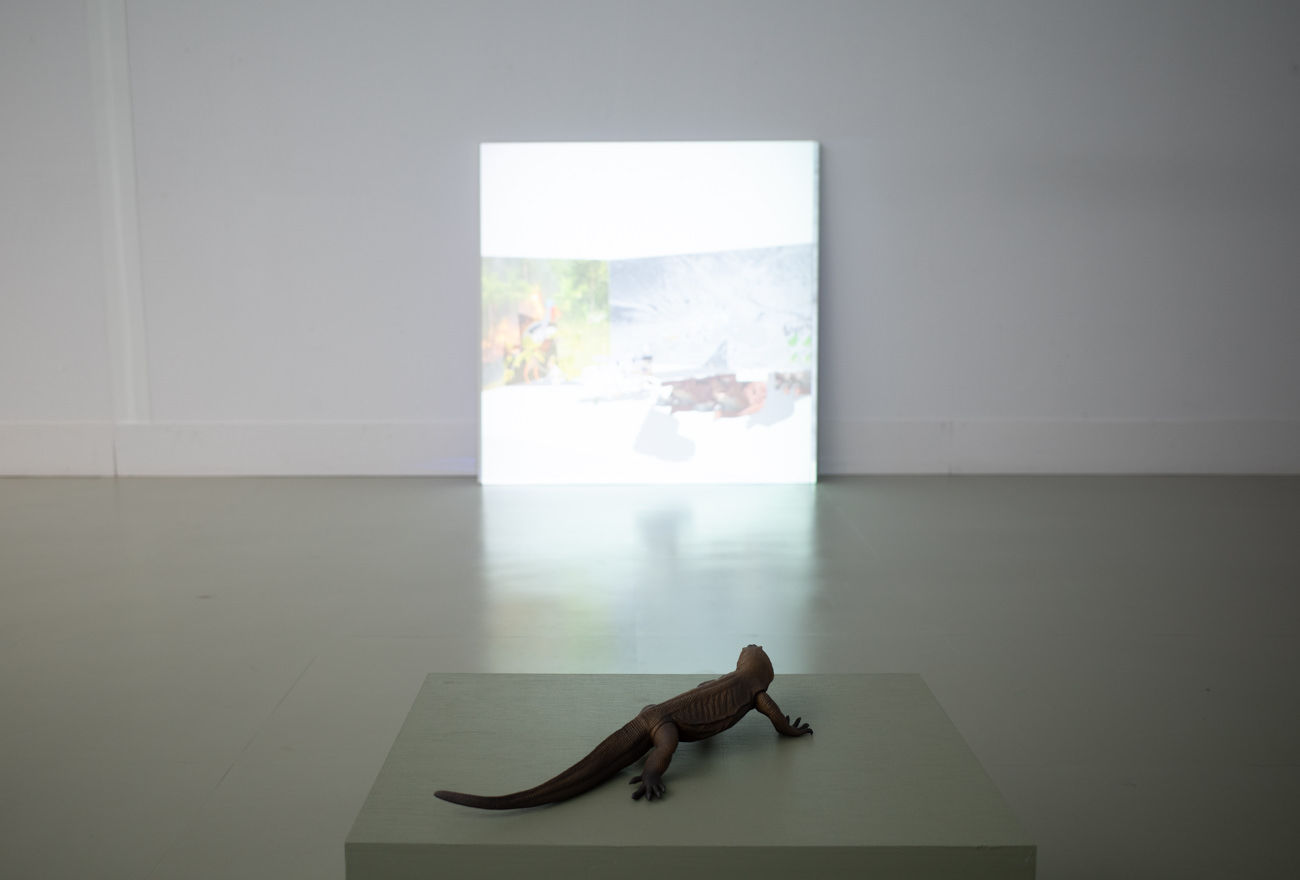
Exonemo
Exonemo is a two-person art unit based in New York (USA), consisting of Kensuke Sembo and Yae Akaiwa.
Their work was displayed just inside the entrance of the Aichi Prefectural Museum of Art — the gateway of the exhibition.
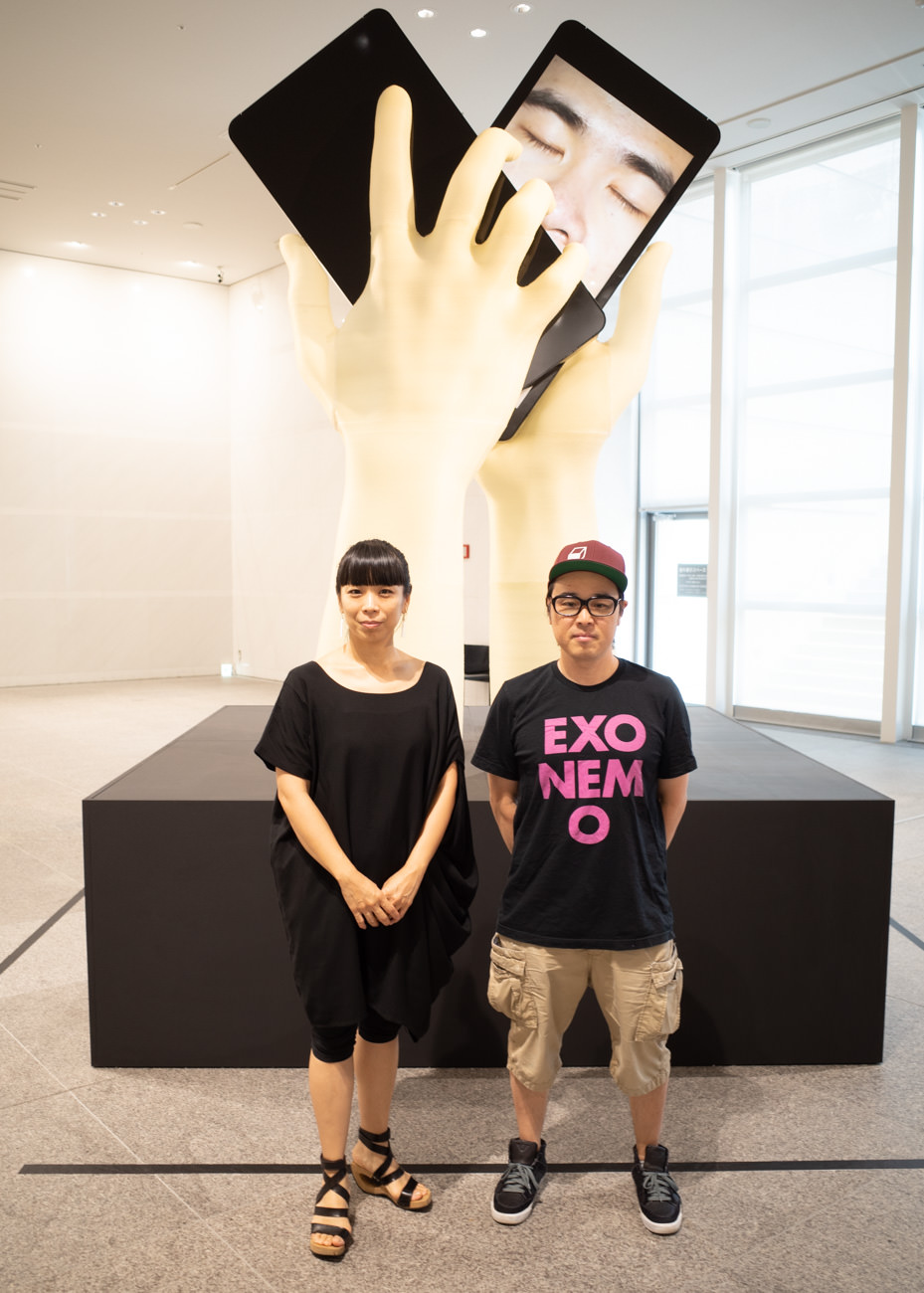
Artistic Director Daisuke Tsuda apparently approached Exonemo at an early stage, after seeing their work at a group exhibition at Art Tower Mito in 2018.
Ugo Rondinone
Born in Switzerland and based in New York, Ugo Rondinone presented “vocabulary of solitude,” an installation of 45 clown sculptures spread across a wide floor space, each with a strikingly lifelike presence. It was also chosen as the main visual for the Aichi Triennale 2019.
Each clown is named after an act it performs.
be / breathe / sleep / dream / wake / get up / sit / listen / look / think / stand / walk / pee / shower / dress / drink / fart / shit / read / laugh / cook / smell / taste / eat / clean / write / daydream / remember / cry / doze / be moved / feel / moan / enjoy / float / love / hope / wish / sing / dance / fall / curse / yawn / undress / lie
They depict the solitary acts one person repeats throughout the 24 hours of a single day at home.
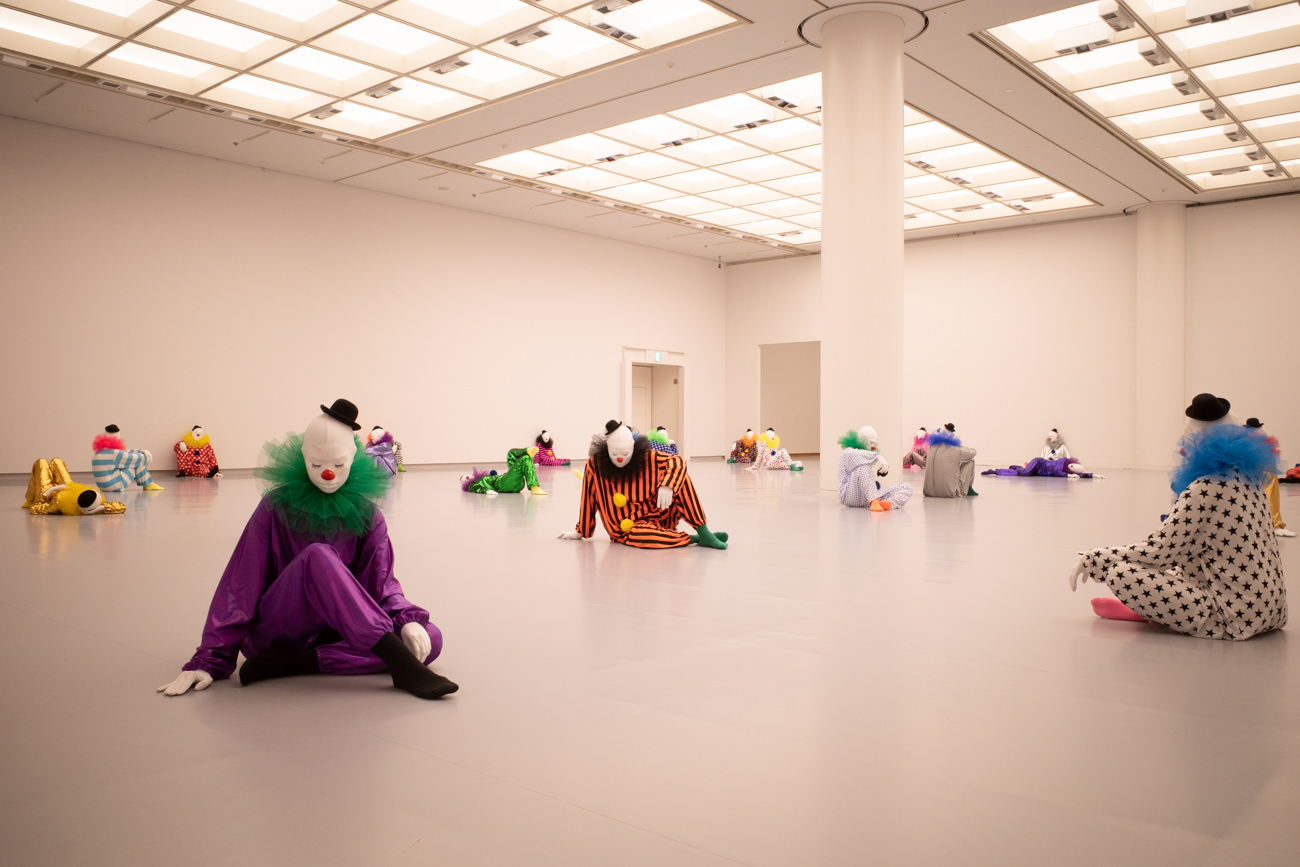
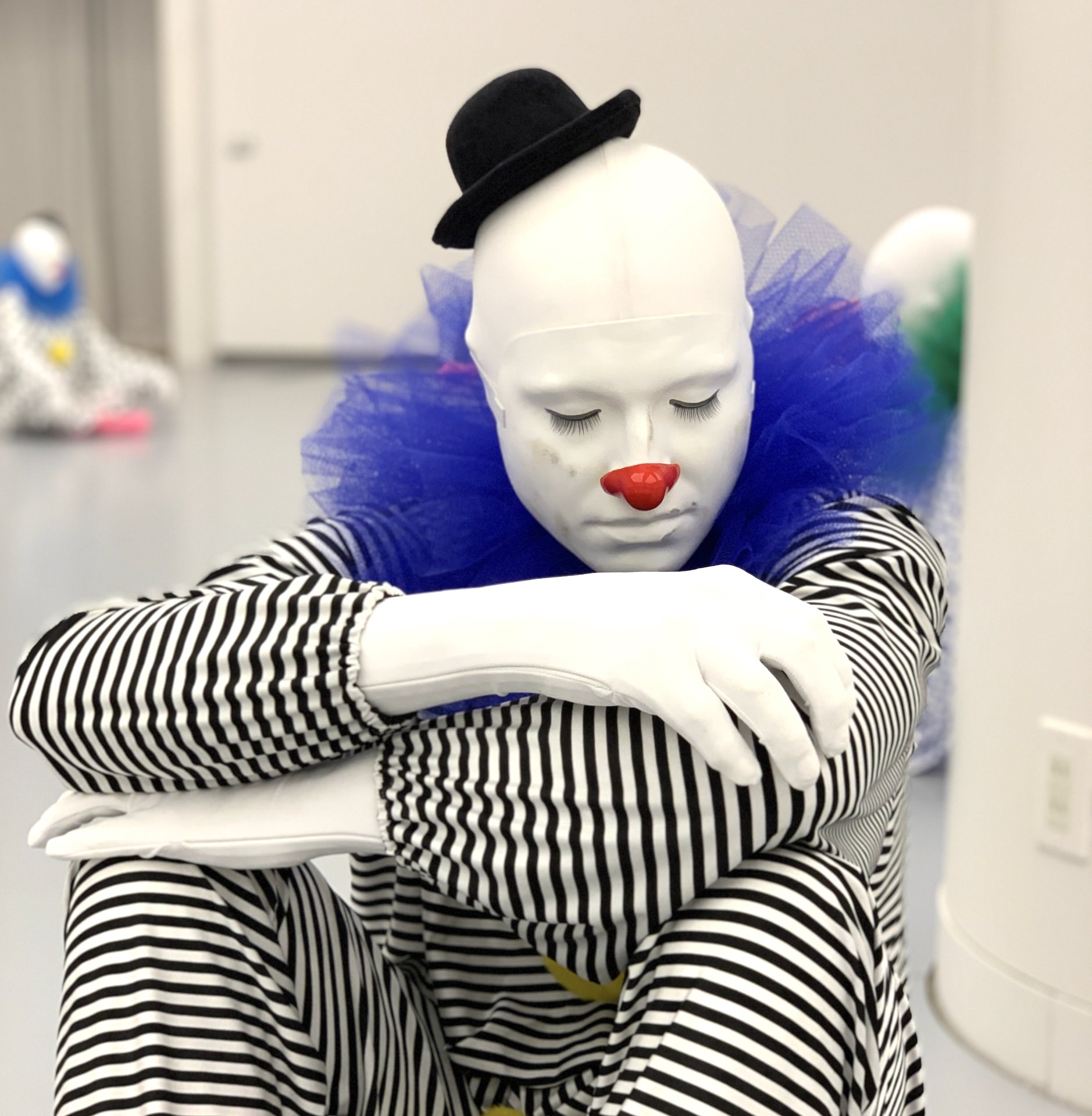
Every clown’s face is slightly downcast, so you find yourself peering into each one, going around the piece as if reading them one at a time.
As you gaze at their expressions, they begin to look as though life dwells within them.
Some clowns even seem a little like yourself, and complex emotions began to intermingle.
Ayako Ishiba
Ayako Ishiba’s photographic works have a painterly quality, offering a viewing experience that shakes the senses.
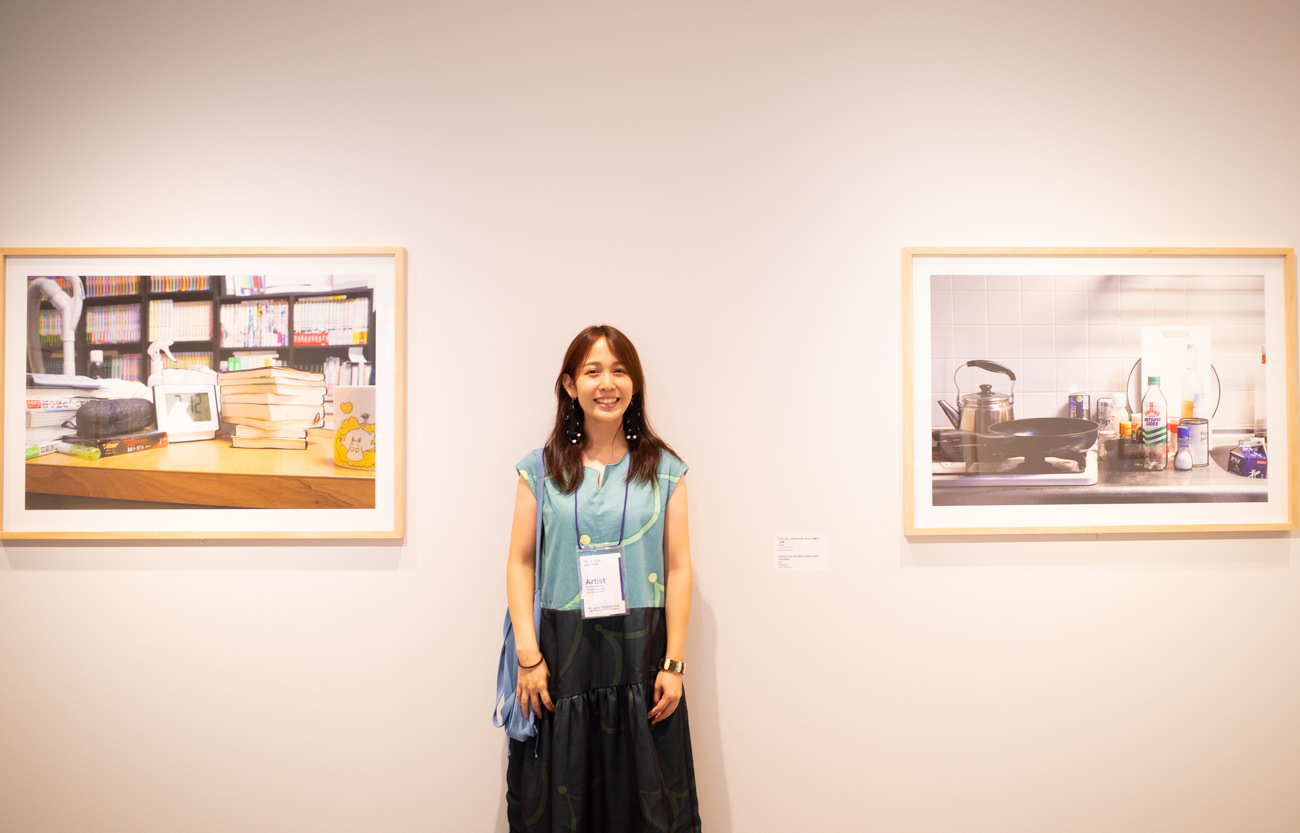
A separate article with photos of her works is below.
Gabin Ito
While video works were plentiful at this year’s Aichi Triennale 2019, Gabin Ito’s piece was a projection mapping work full of playful spirit.
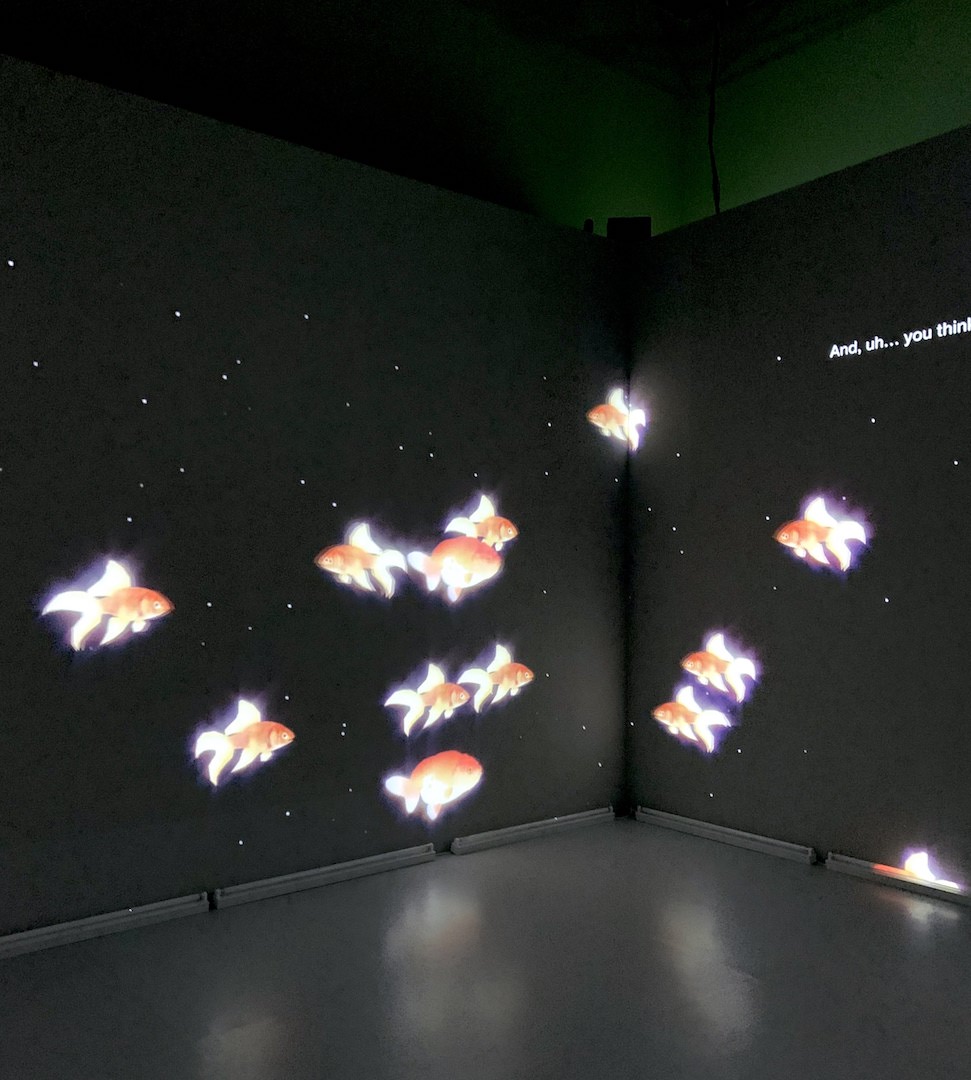
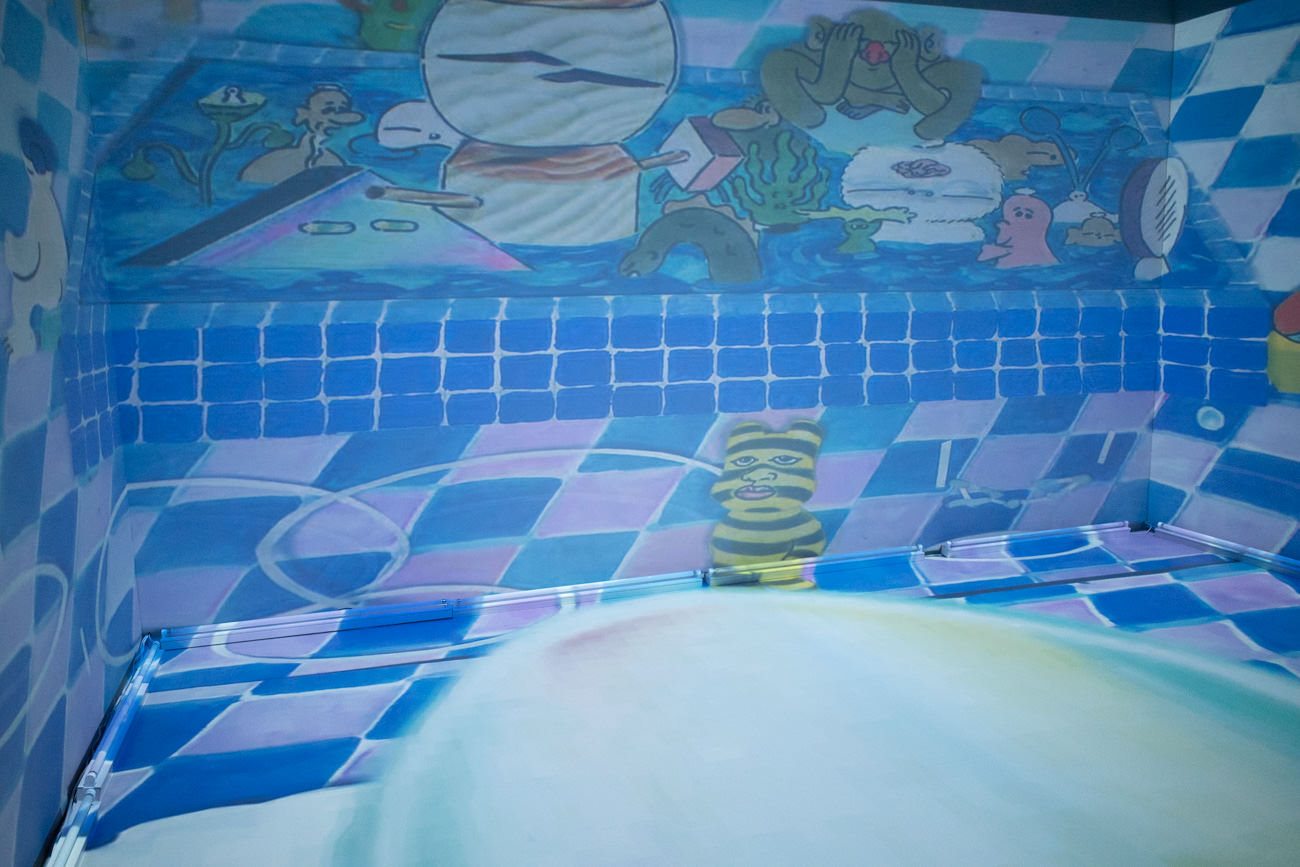
At busy times, visitors rotated in groups of 20, but when it was less crowded I was enveloped in the 360-degree imagery and it felt wonderful.
Aichi Prefectural Museum of Art Gallery (8F)
Yohei Imamura
Yohei Imamura creates works that repeat silkscreen prints “ten thousand times” — an insanely obsessive practice (meant as praise).
His work questions the boundary between two- and three-dimensional forms.
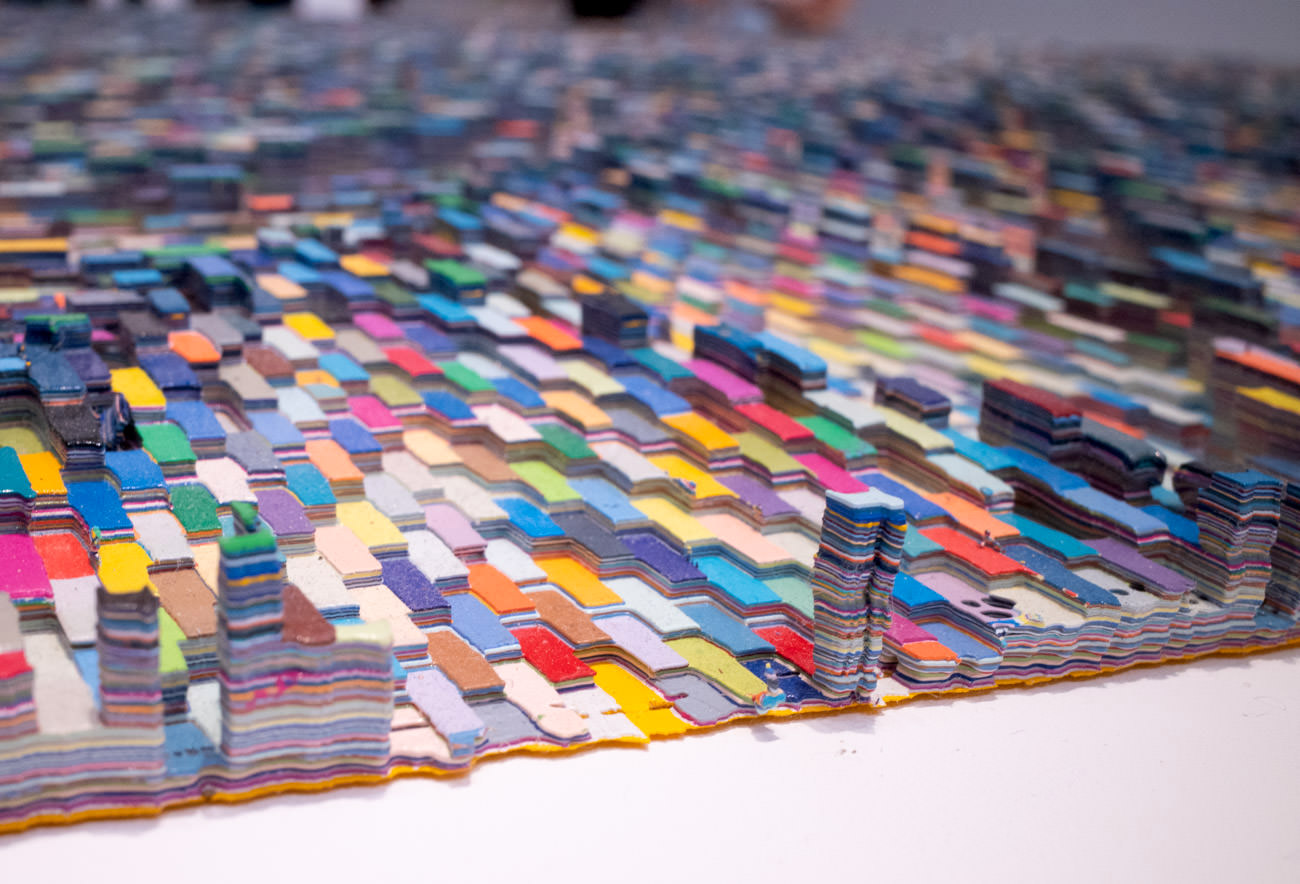
A full article is available below.
Stuart Ringholt
“The Atomic Clock” is a work that can be viewed from both sides.
A billion years from now, the Earth’s rotation will have slowed to the point where a day lasts 34 hours.
“The Atomic Clock” is a clock that will keep working even in that future where the length of a day has changed.
After “Freedom of Expression?”
I viewed “After ‘Freedom of Expression?'” during the press preview.
Because I hadn’t received advance information, seeing the works made a strong impact, and the intent — “we thought it would be meaningful to hold ‘After Freedom of Expression?’ at a public museum precisely because it would spark controversy” — quickly grew into a large public debate after the opening, as is now widely known.
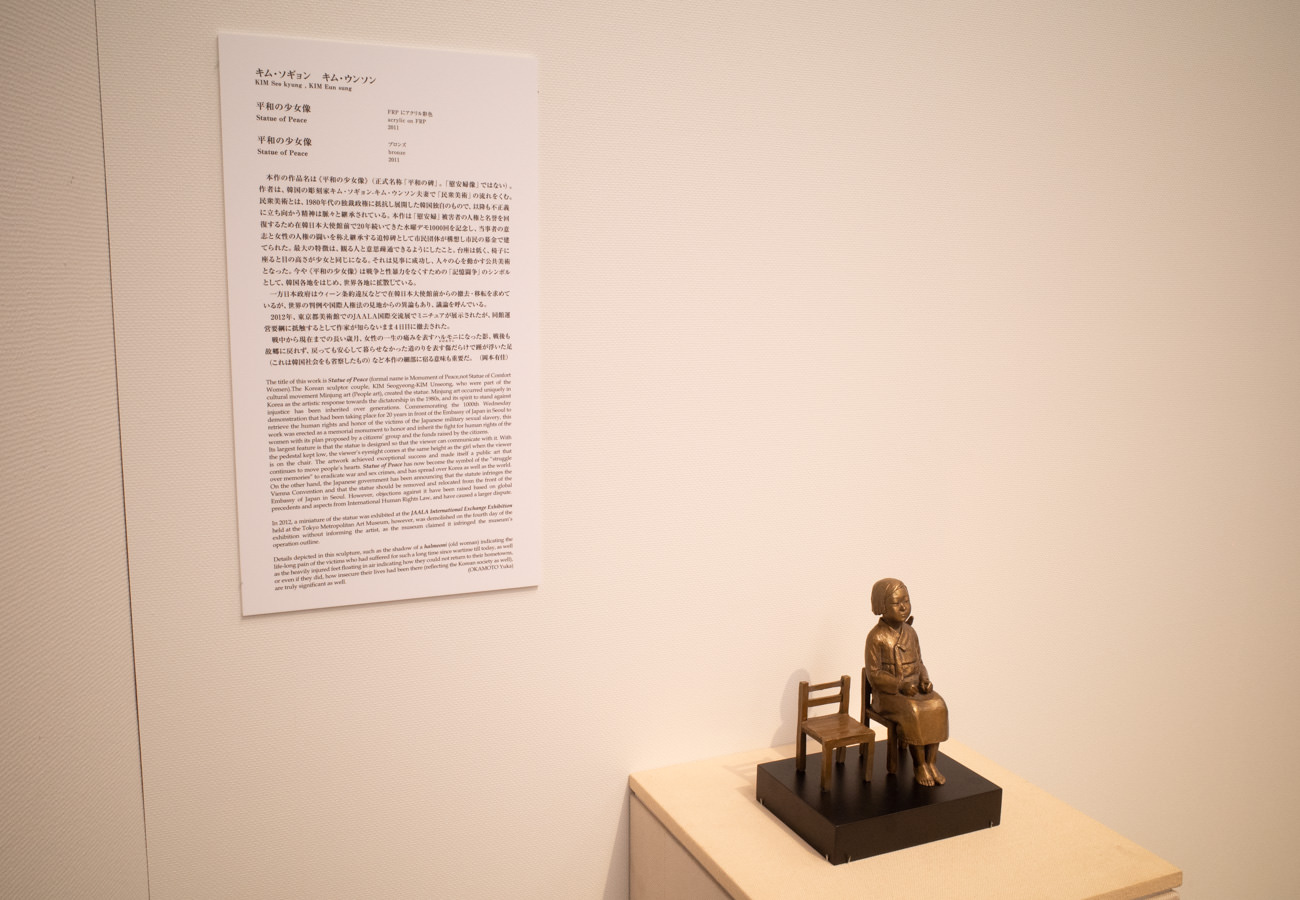
Following the shutdown of “After ‘Freedom of Expression?’,” twelve artist groups requested that their own works be temporarily withdrawn as well.
Yuan Goang-Ming, “Everyday Maneuver”
I found myself watching Yuan Goang-Ming’s “Everyday Maneuver” over and over.
It’s hard to tell in an instant whether the imagery is real or CG, but it’s live drone footage of the air raid drill that has been held in Taiwan every year since 1978.
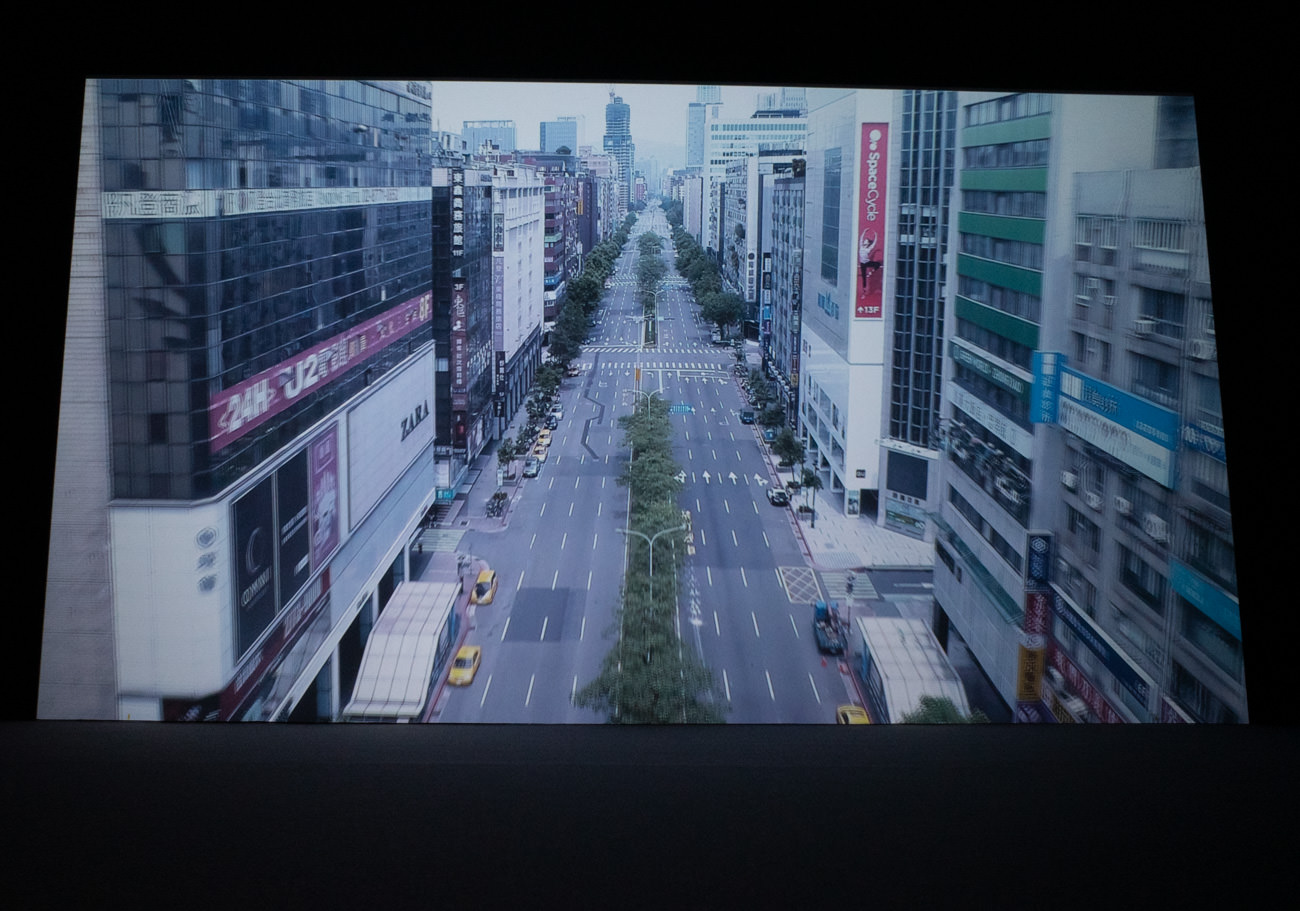
Five locations, including the busiest streets in Taipei, are shown emptied of people — a scene that makes us think about the threat of war lurking within a seemingly stable, peaceful, everyday city.
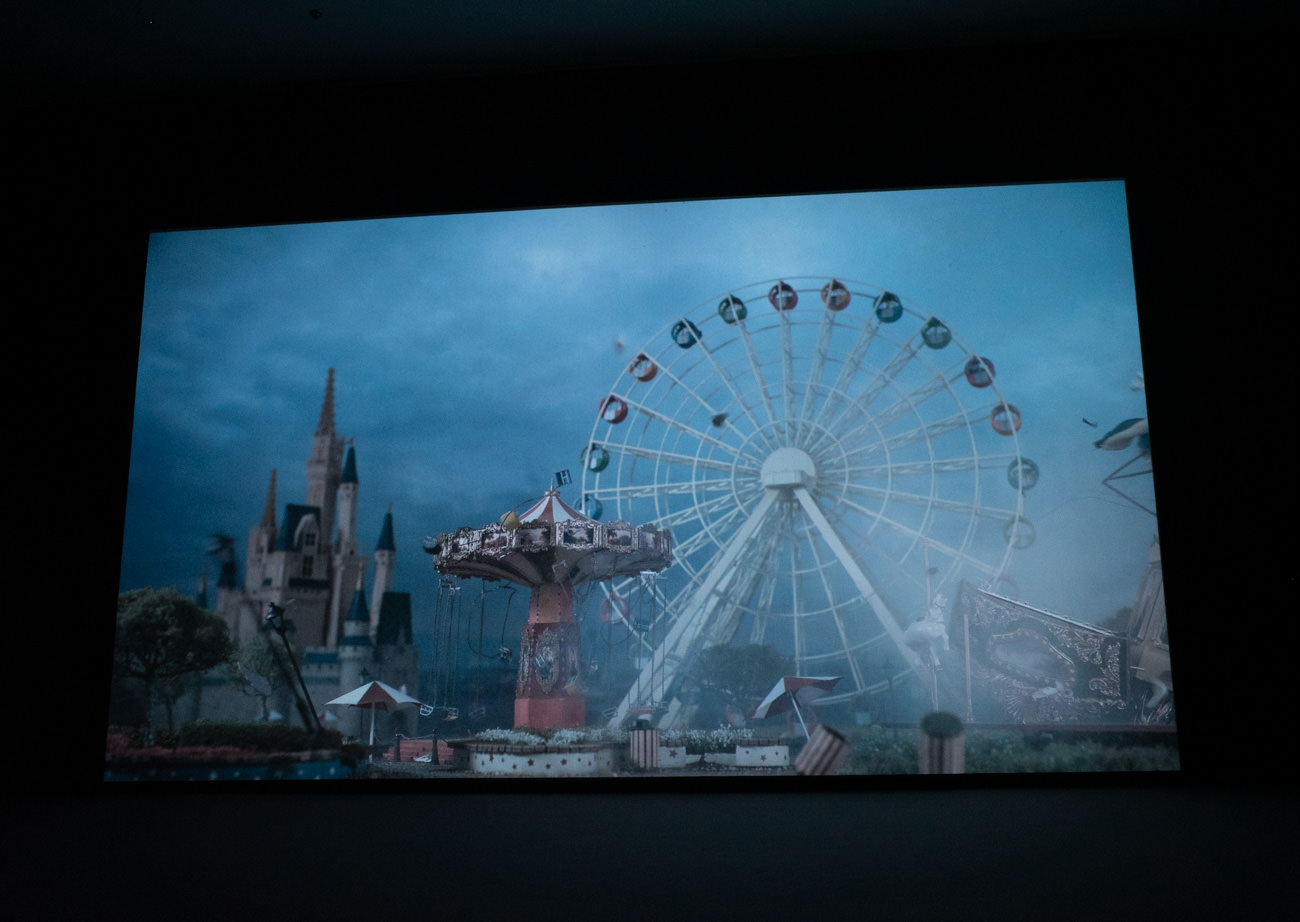
Also, in “Tomorrowland,” an amusement park is suddenly blown up and the destruction plays back in slow motion. As the scene unfolds slowly, it suddenly reverses and returns to the original landscape. The way it snaps back in an instant, as if nothing had happened, gives the work the impression of an unreal dream.
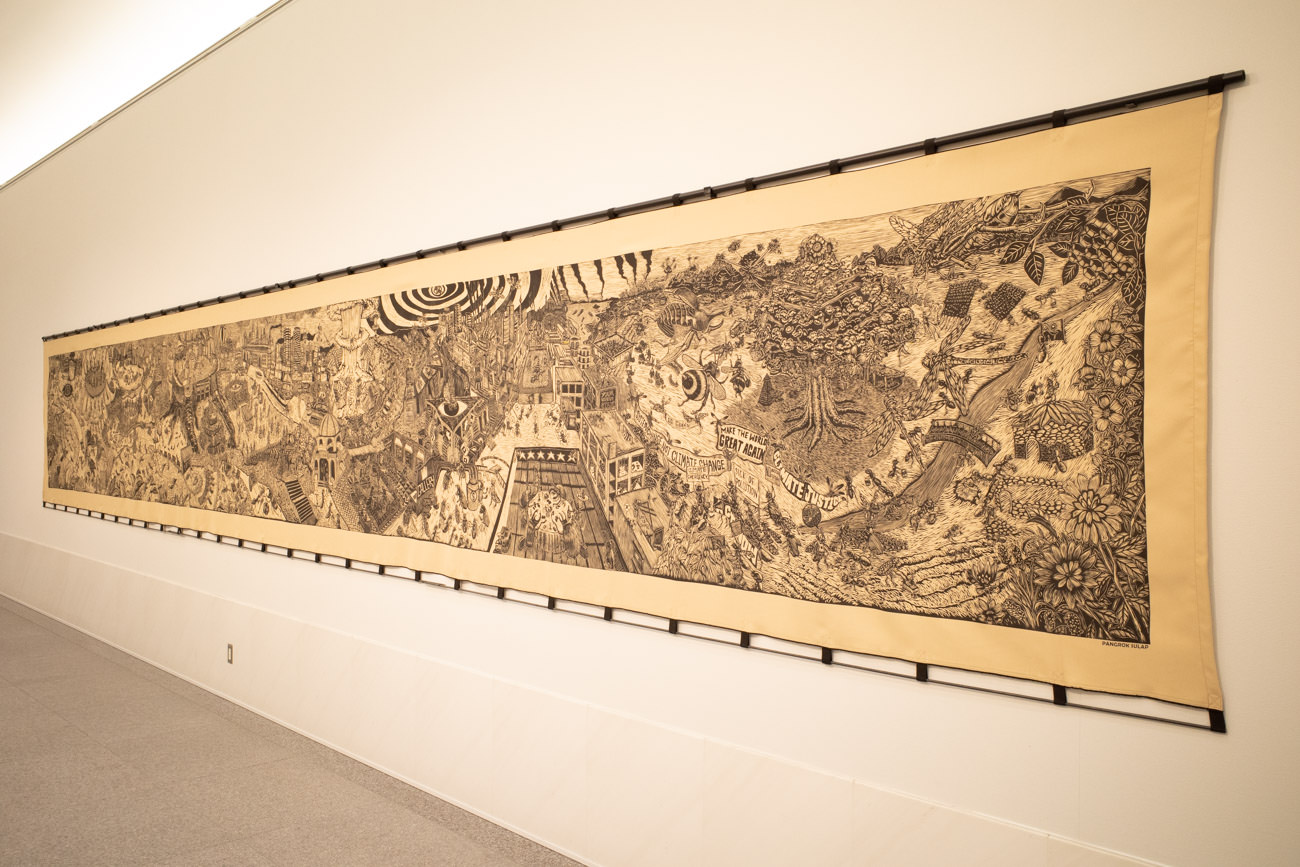
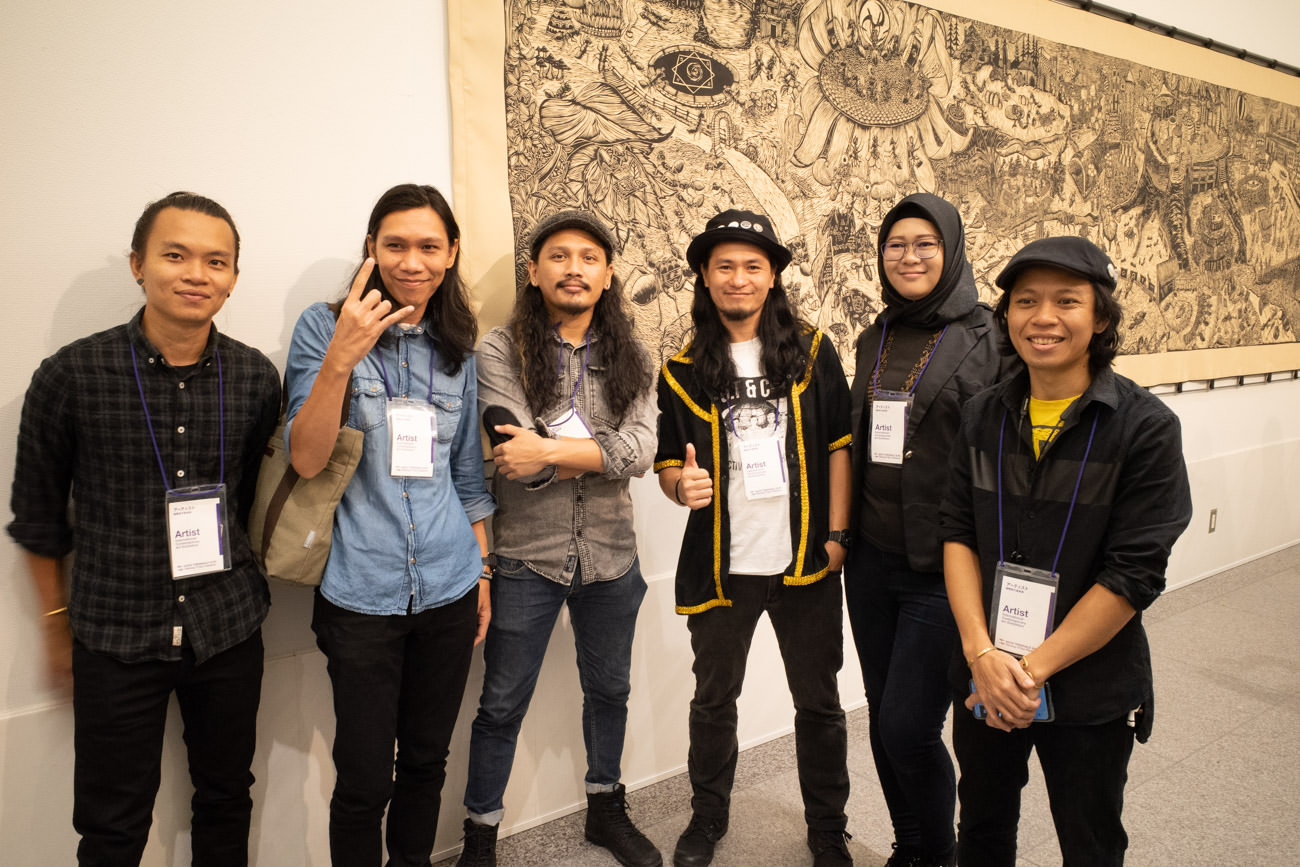
Pangrok Sulap
Pangrok Sulap is an artist collective formed in Malaysia in 2010.
The name is a combination of the words meaning “punk rock” and “farmers’ rest hut.”
They exhibited one work, a large horizontal woodblock print titled “Devolution.” The motifs unfold from right to left, depicting insects, but they read as a cynical critique of humanity’s runaway prosperity. Though large, the piece contains richly detailed passages that reward extended viewing.
Aichi Prefectural Museum of Art (12F)
James Bridle
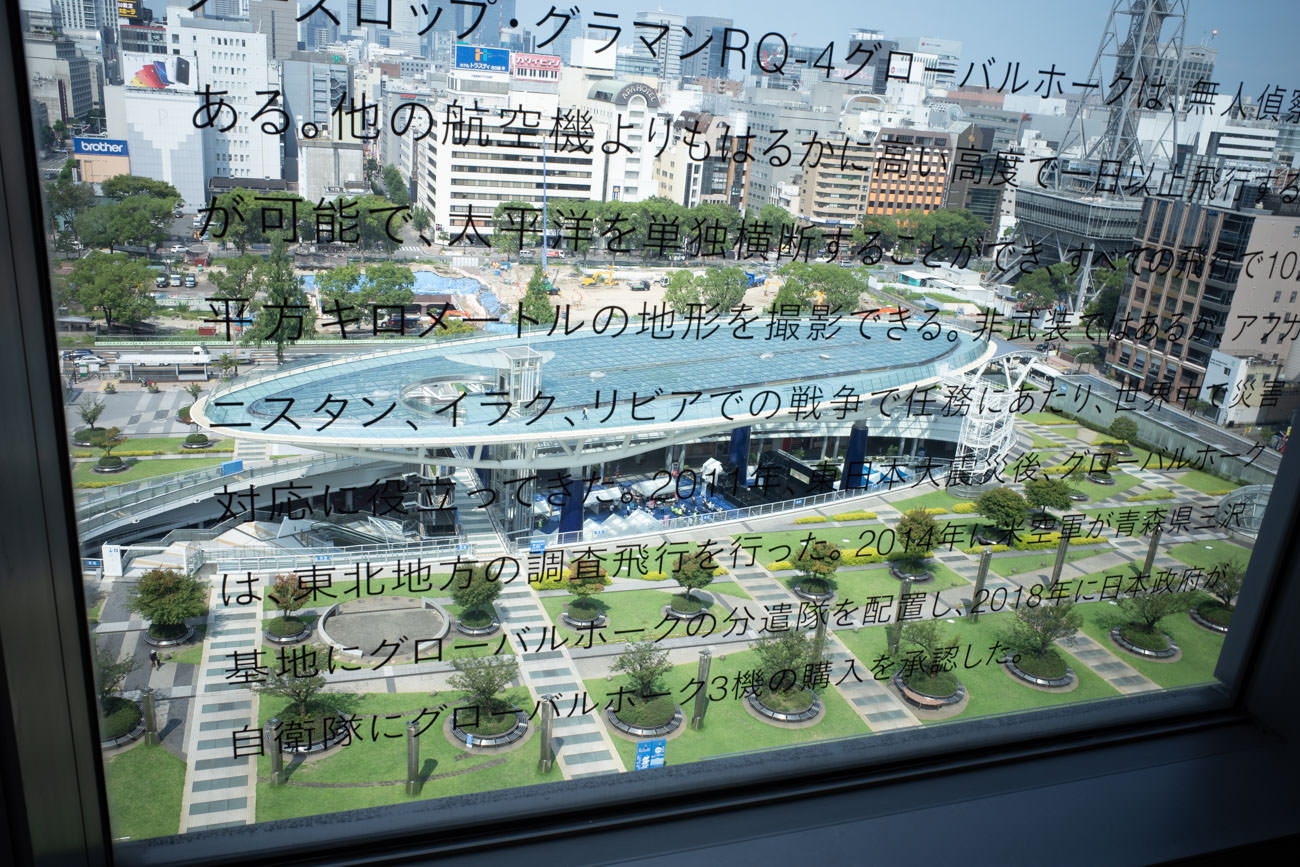
The white line drawn on the ground and viewed from the 11F observation corridor of the Aichi Prefectural Museum of Art is “Drone Shadow,” a life-size silhouette of the real-life unmanned reconnaissance aircraft “RQ-4 Global Hawk.”
The aircraft has a wingspan of about 35 m and a length of about 14 m. It has been operationally deployed in Iraq and Afghanistan, and Japan’s Self-Defense Forces are also scheduled to introduce three units.
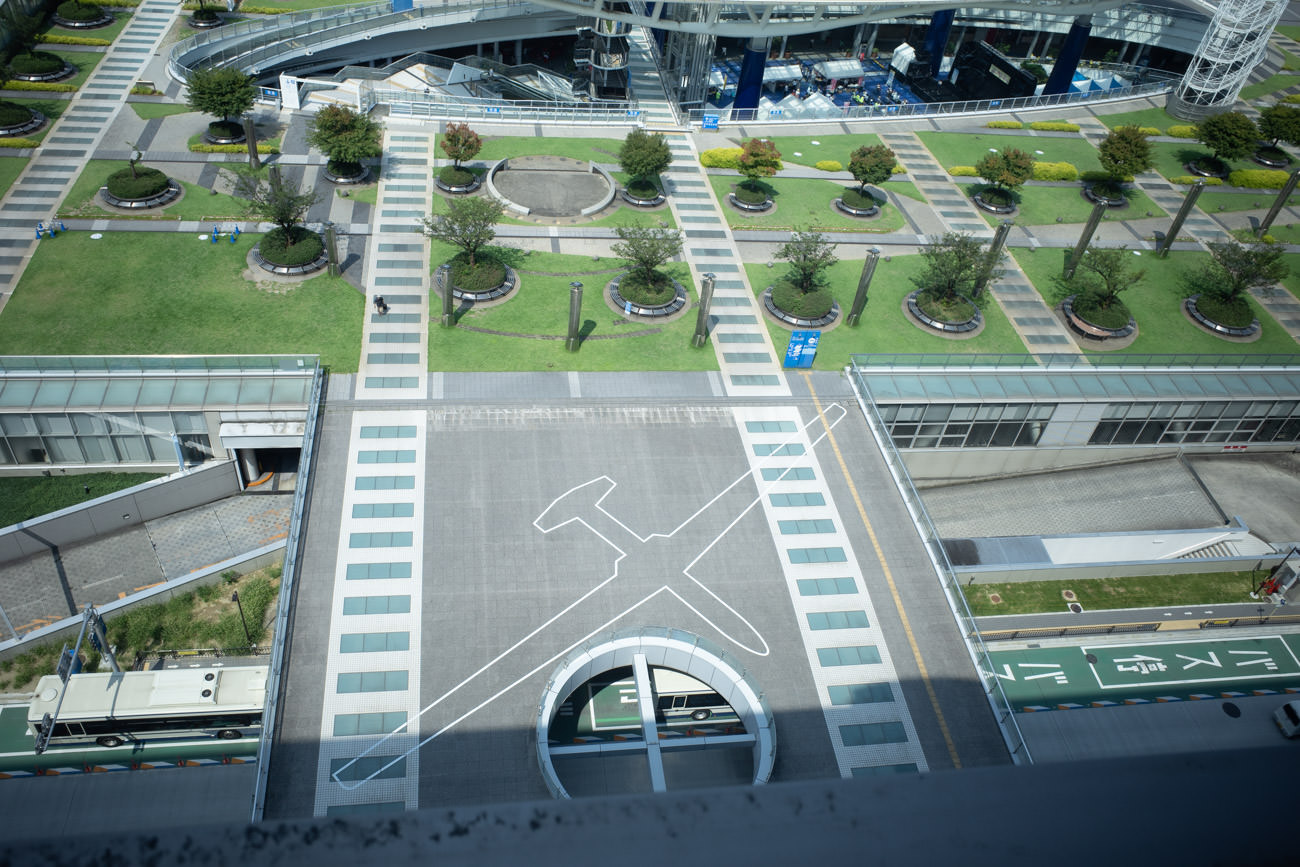
The work makes what is otherwise hard to see visible, and poses a question to us.
Nagoya City Art Museum
sholim
sholim uses GIFs to create seconds-long looped videos in which human faces and landscapes morph uncannily.
The works are published on social media and their strange, “digital surrealist” world has earned high praise.
A few works can be seen on the sholim YouTube channel, and also on this site.
https://gifmagazine.net/users/32966/profile
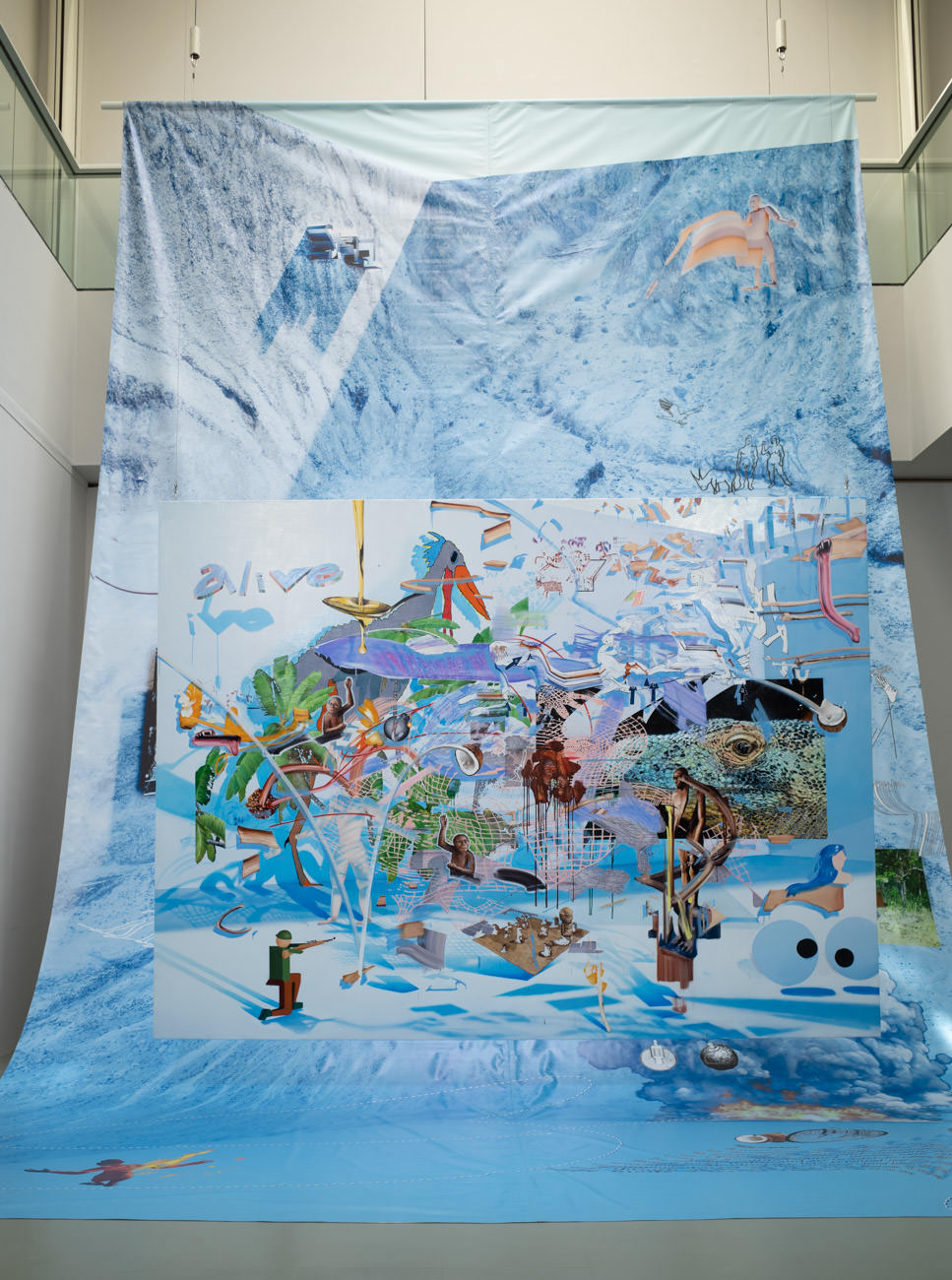
Kei Imazu
Based abroad in Indonesia, Kei Imazu is highly active and often exhibits in Japan.
Her installation combined large paintings with sculptural elements and video.
As the title suggests, it prompts reflection on evolution.
Shikemichi & Endoji
Tomoyuki Washio
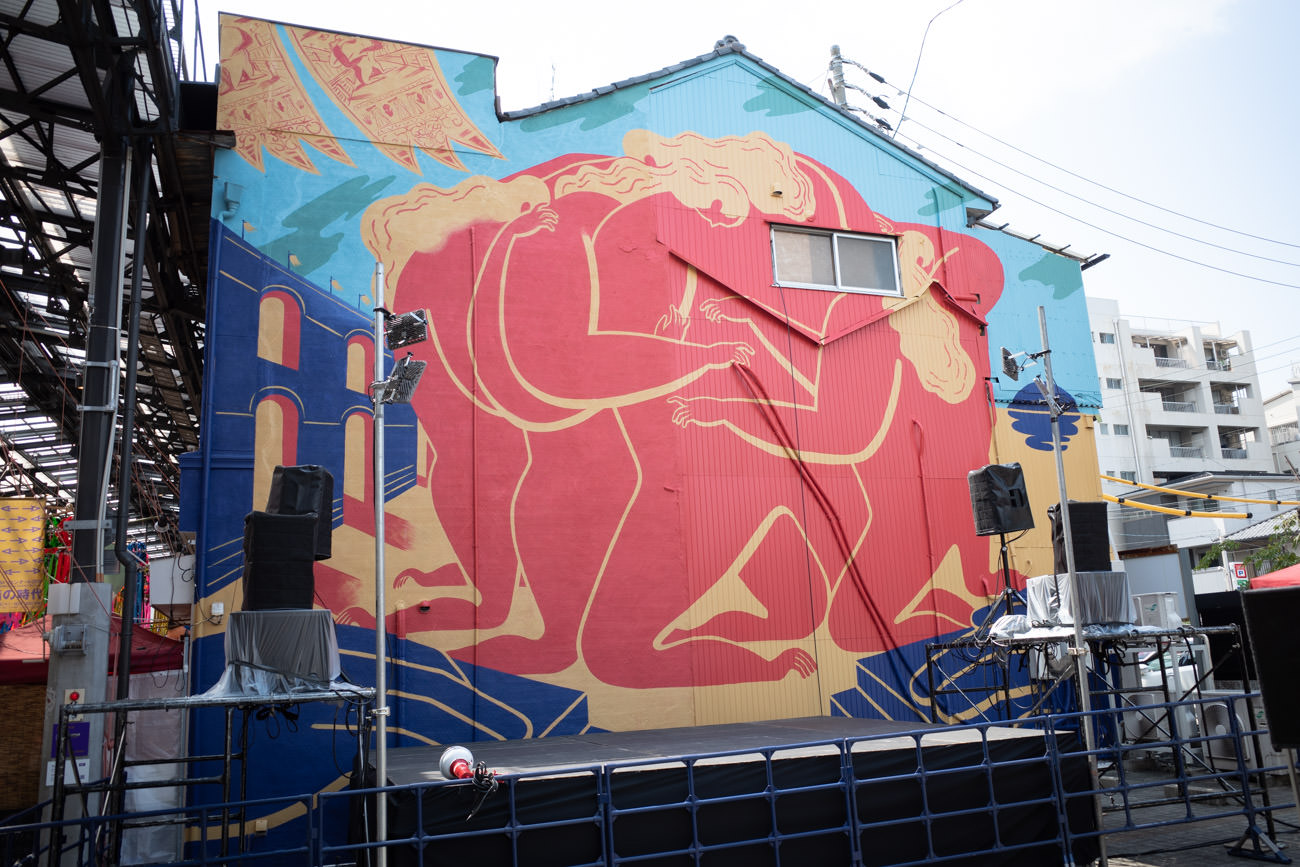
A special stage was built. The mural is “MISSING PIECE,” a huge work by Aichi-based artist Tomoyuki Washio.
It’s painted on the parking lot wall of Chokyusan Endoji Temple in the Endoji shopping street, with a specially built stage set up beneath it for live music and other events.
Kanji Yumisashi
Kanji Yumisashi’s exhibition “Shining Children” takes as its theme the incident on April 18, 2011 in Kanuma, Tochigi Prefecture, in which a crane truck plowed into a line of children on their way to school, killing six.
It’s an art project built on Yumisashi’s careful reporting, centered on the children who lost their lives in the traffic accident.
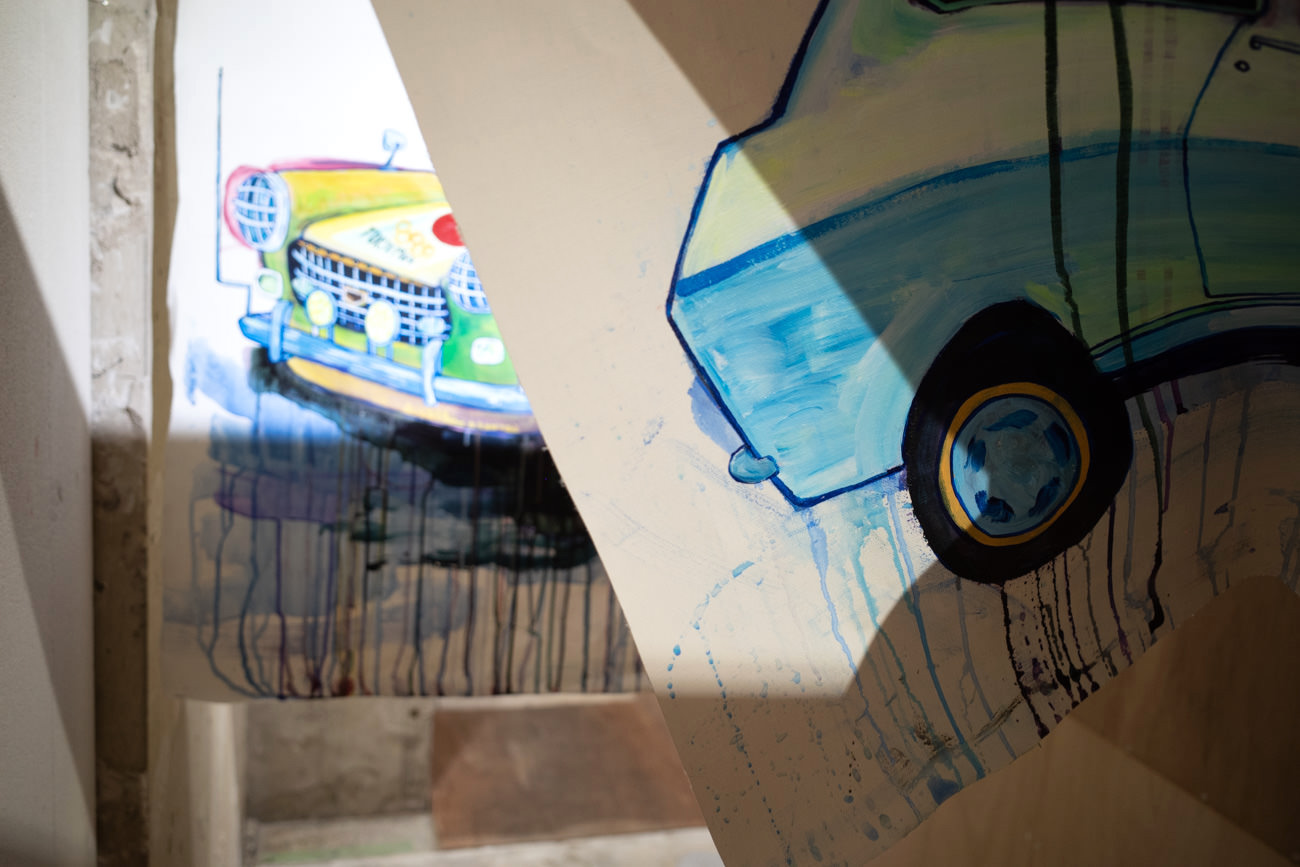
A full article with images is available below.
Takahiro Iwasaki
The Ito Family House in the Shikemichi area is a merchant residence dating from around Kyoho 7 (1722), a designated tangible cultural property of Aichi Prefecture and one of Nagoya’s Important Landscape Buildings — a precious surviving structure. Shikemichi and the Endoji area are among the few parts of Nagoya that escaped the wartime air raids.
Displayed within this building was Takahiro Iwasaki’s “Machi-gura,” a work representing Nagoya’s old castle town using carbon-based materials.
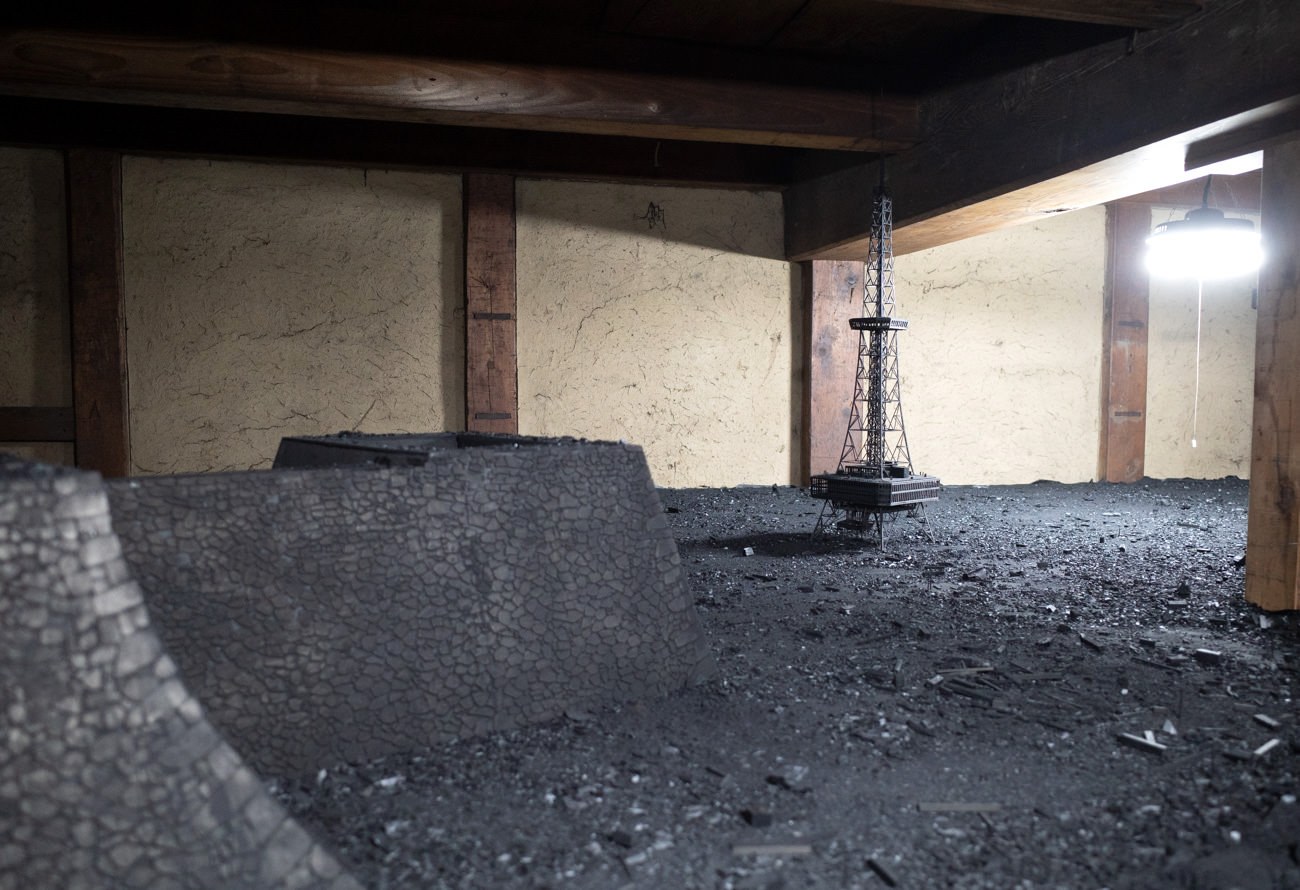
A full article with images is available below.
Toyota Municipal Museum of Art Area
Tadasu Takamine
Tadasu Takamine’s work “Han-ka” is a piece created by stripping out the bottom of the swimming pool at a closed school (the former Toyota Higashi High School) and standing it upright.
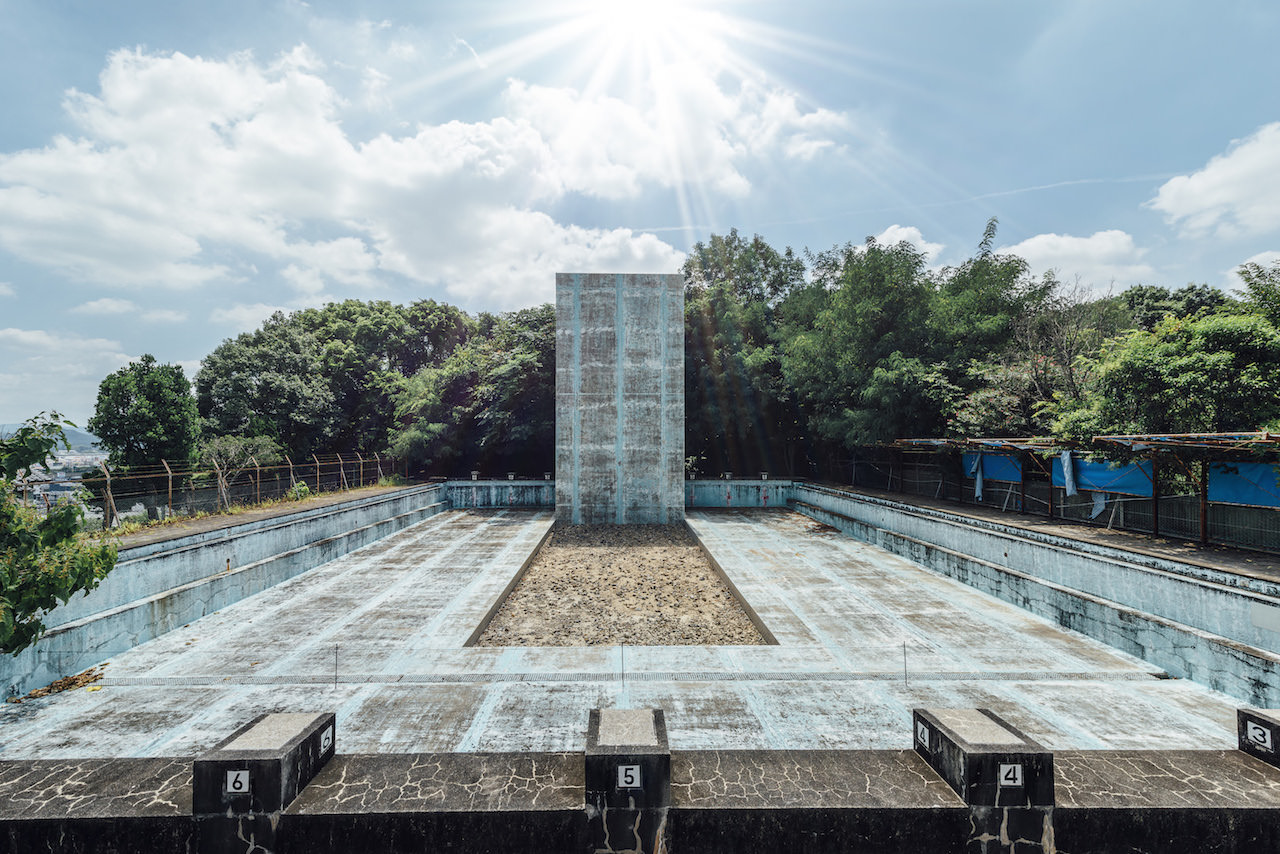
Photo: Takeshi Hirabayashi
The title reads like a poem that is itself part of the work.
The piece has an overwhelming presence.
Nodoka Odawara
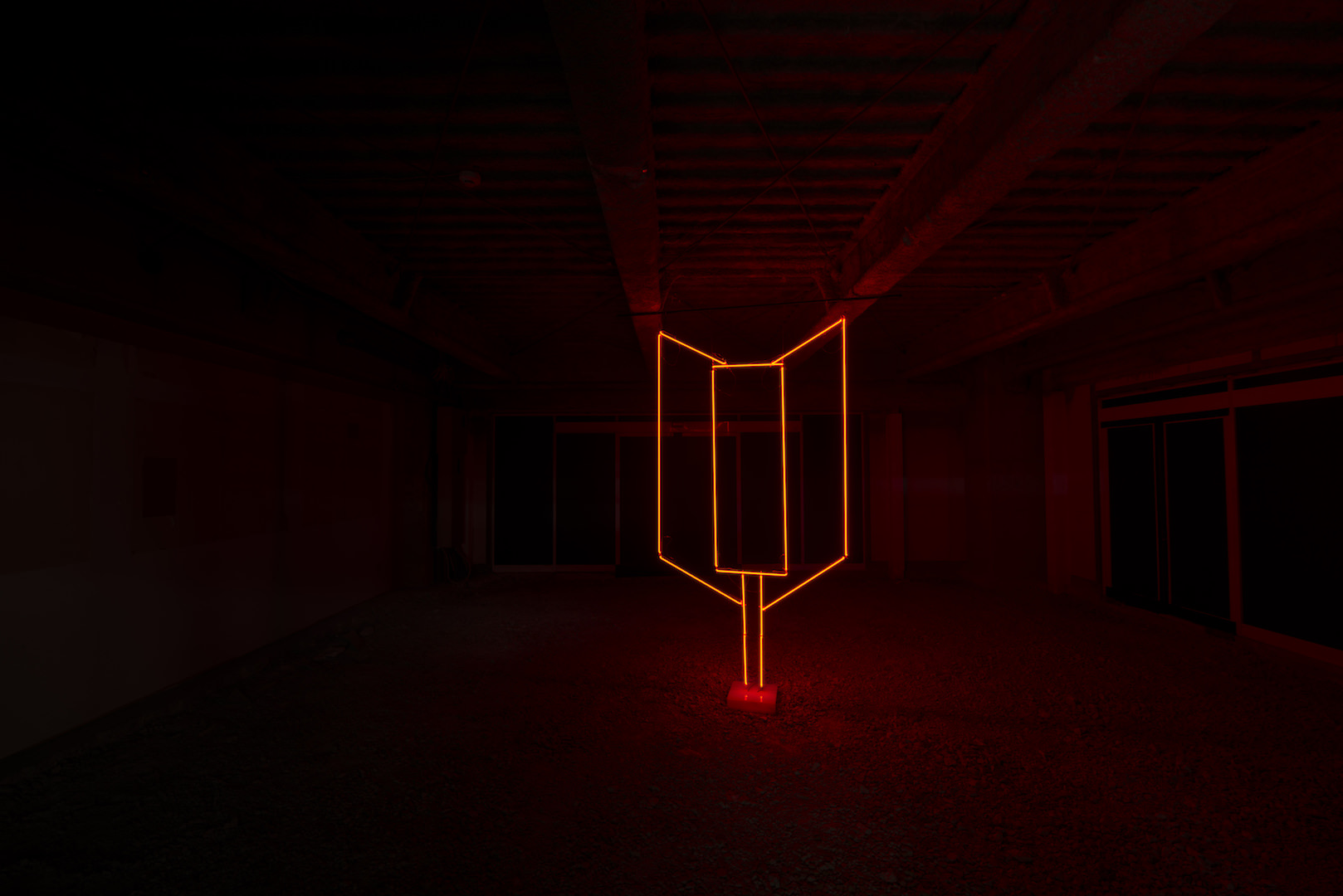
Nodoka Odawara’s signature work “↓.”
The piece takes as its motif the arrow-shaped marker post that once stood at the hypocenter of Nagasaki.
It revives the scars of war in the present as a neon sign.
Anna Hulačová
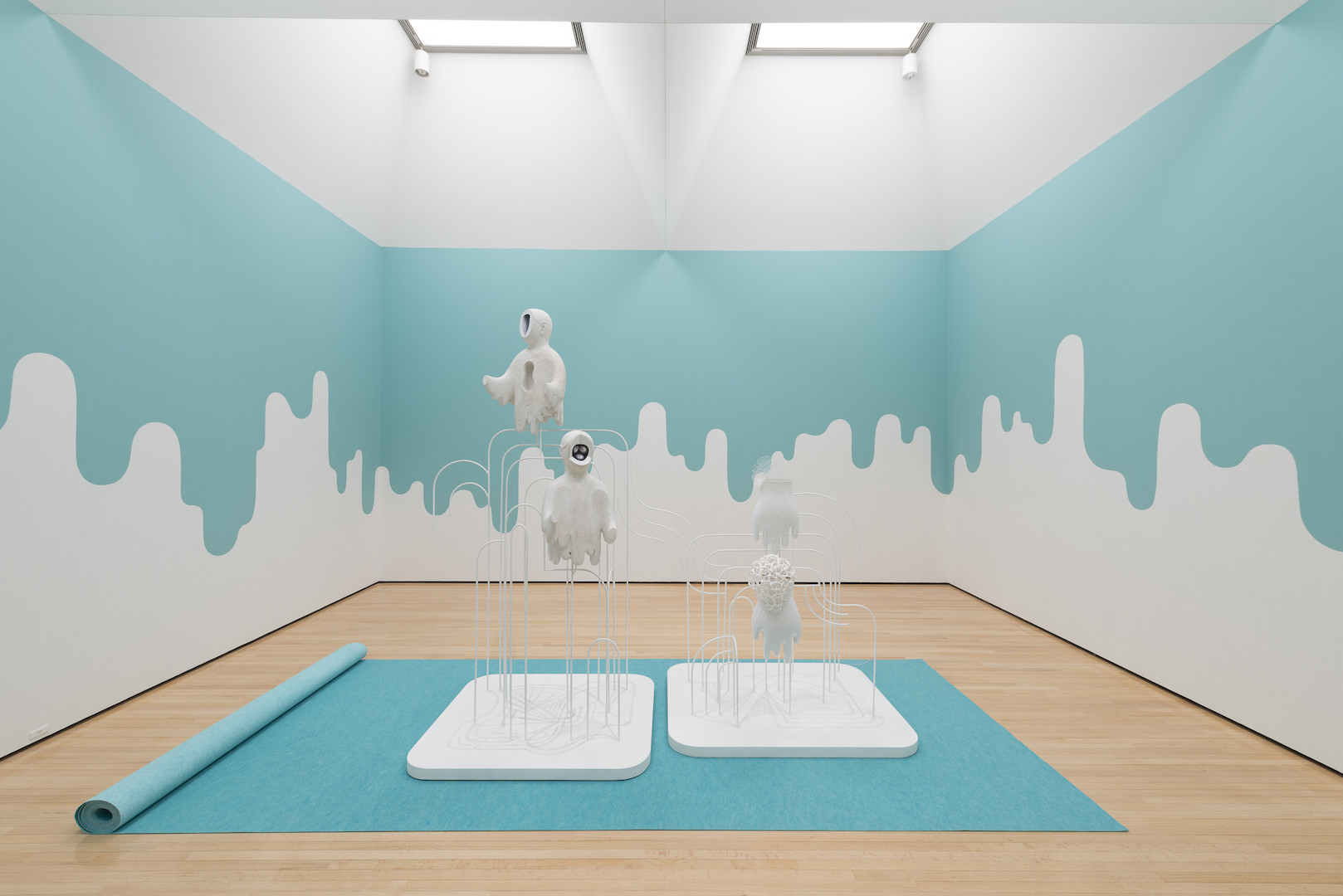
A woman artist from Czechoslovakia, Anna Hulačová.
Faces are without expression, replaced by an iron and a shaver.
In closing
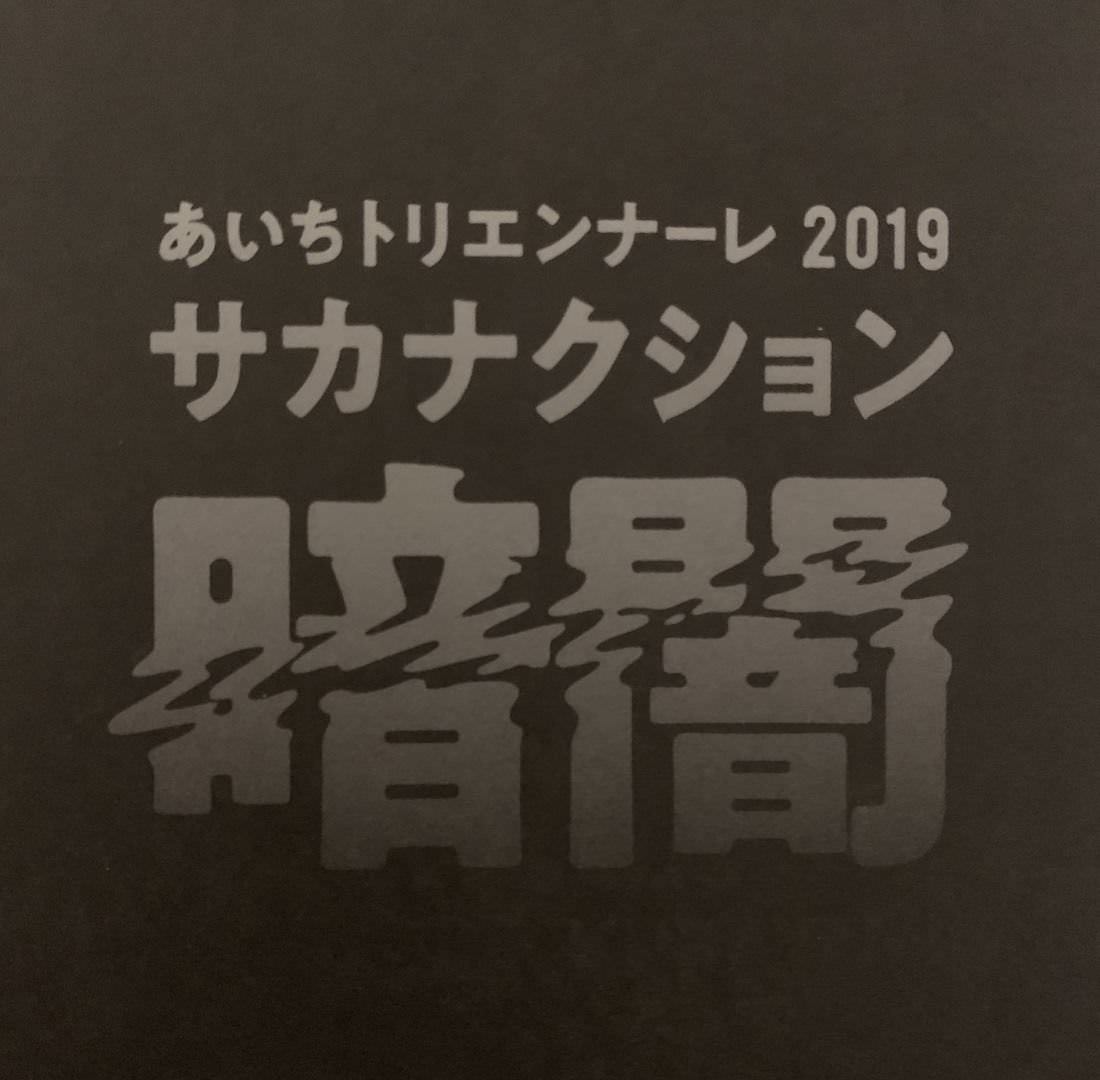
As the subtitle “Taming Y/Our Passion” suggests, the Aichi Triennale 2019 was a festival in which artists expressed many kinds of “passion,” and the works stirred emotions in us as viewers.
The controversy around “After ‘Freedom of Expression?'” made it easy to be swept along by biased information, but standing in front of so many works, you can feel that this really is an outstanding international art festival.
Do go and see it for yourself, take in the real works of art, and think about the future of art.
Overview
Aichi Triennale 2019
Theme: Taming Y/Our Passion
Artistic Director: Daisuke Tsuda (journalist / media activist)
Dates: August 1 (Thu) – October 14 (Mon, holiday), 2019 [75 days]
Main venues:
Aichi Arts Center
Nagoya City Art Museum
Downtown Nagoya (Shikemichi & Endoji area, etc.)
Toyota City (Toyota Municipal Museum of Art and downtown)
Organizer: Aichi Triennale Organizing Committee