Cartier, Crystallization of Time
We visited “Cartier, Crystallization of Time,” currently on view at The National Art Center, Tokyo.
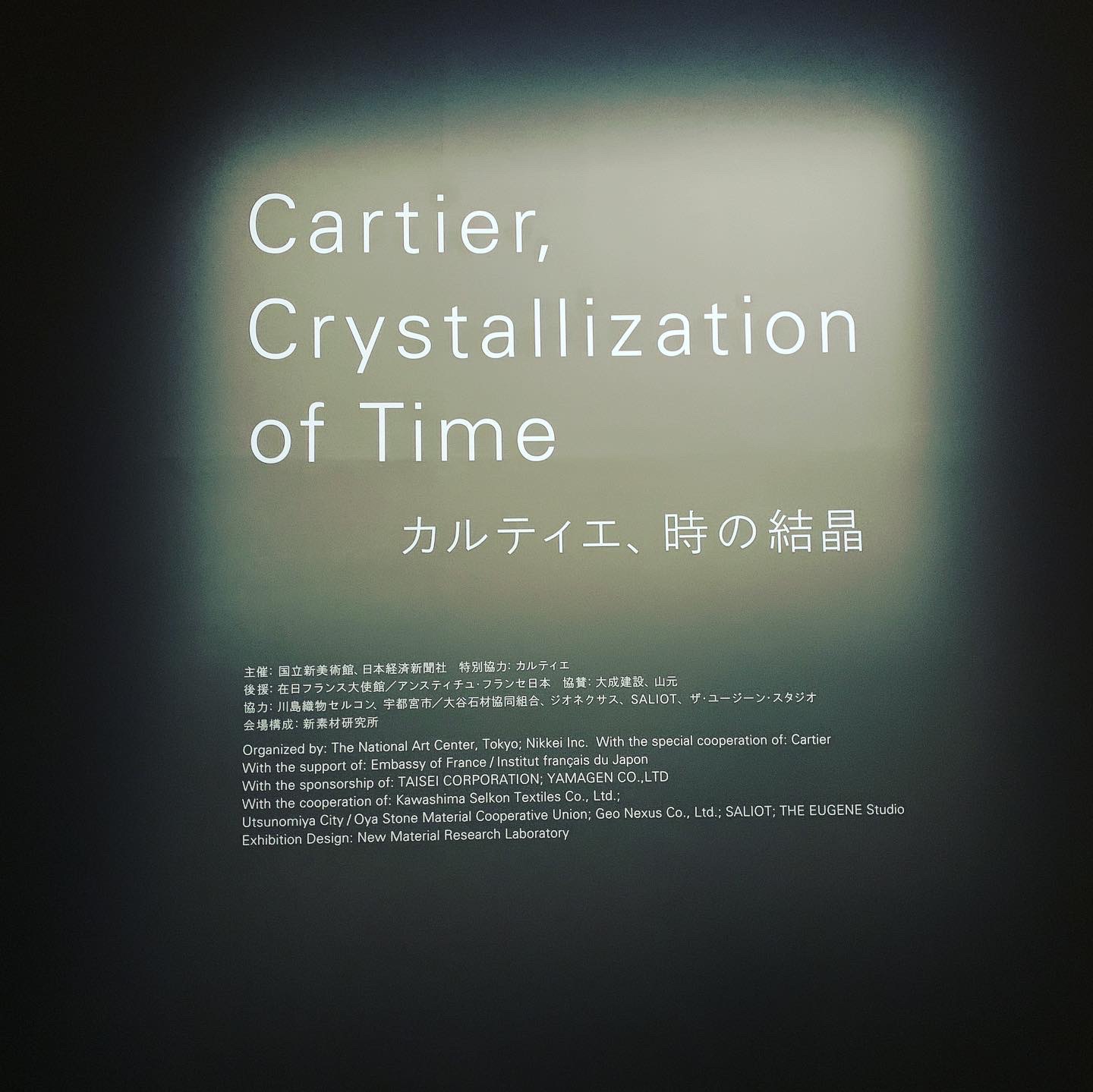
Cartier exhibitions focusing on the historical works of the “Cartier Collection” have been held several times in the past — in 1995, 2004, and 2009 — but the present exhibition is the first in the world to focus on contemporary works produced from the 1970s onward.
It is also notable that, of a total of approximately 300 works, roughly half are “private collection” pieces on display.
This is a precious opportunity to see so many privately held collection works gathered in one place.
The exhibition design is by New Material Research Laboratory / Hiroshi Sugimoto + Tomoyuki Sakakida.
Between the natural materials such as wood and stone, and the minimal, refined lighting design, the sophisticated exhibition space made viewing the Cartier works an especially high-quality experience.
Prologue: “Chamber of Time”
Passing through the entrance, Hiroshi Sugimoto’s “Reverse Clock” rises up before you.
It is a clock driven backwards by the weight of glass beads, and depending on the timing it also makes a sound.
![Hiroshi Sugimoto, "Reverse Clock," 2018, mixed media (a clock manufactured in 1908 [maker: Fontana Cesare, Milan], reversed …](https://art-on.jp/wp-content/uploads/2019/10/2019_cartier杉本博司《逆行時計》.jpg)
© Hiroshi Sugimoto/Courtesy of N.M.R.L.
The remarkable spatial design by
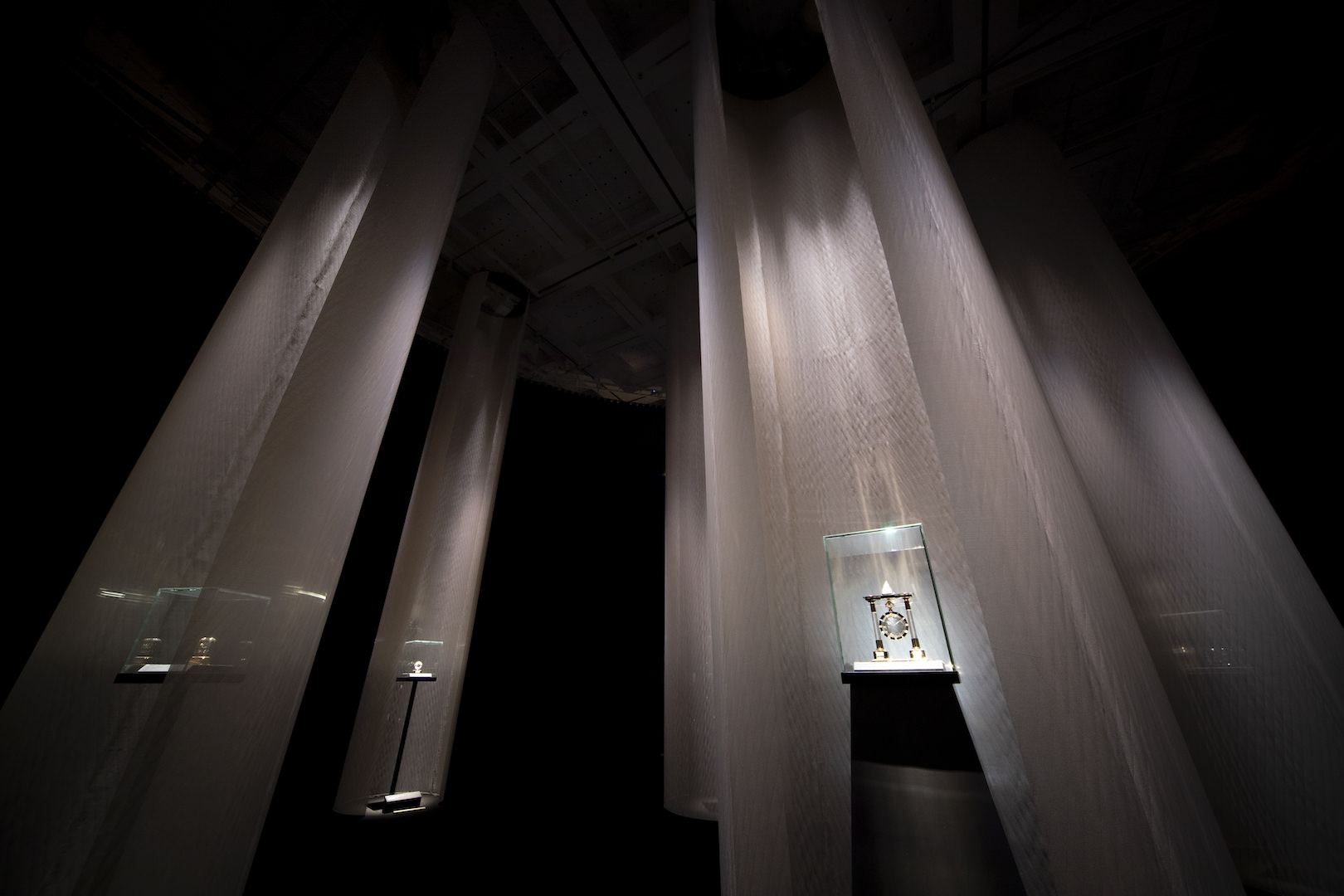
© N.M.R.L./ Hiroshi Sugimoto + Tomoyuki Sakakida
The “Chamber of Time” is where the Mystery Clocks and Prism Clocks — described as “miracles of clockmaking” — sit in state.
On the Mystery Clocks, the two clock hands appear to float in mid-air as if entirely unconnected to any mechanism. The movement is hidden within the pedestal and decorative sculpture. Even on careful inspection, the workmanship is so ingenious that we could not uncover the mechanism. Their production reportedly requires the collaboration of many specialists — watchmakers, gold- and silversmiths, enamelers, polishers, and others — with completion taking at least several months.
Chapter 1: “Transformations of Color and Material”
Beyond the “Chamber of Time,” we move on to Chapter 1, “Transformations of Color and Material.”
By viewing Cartier’s works — combinations of various materials and colors — from the perspectives of material and color, this section examines Cartier’s original vision and expressive methods.
Here again, the calming spatial design and the use of natural materials such as wood and stone to further enhance the beauty of the works filled us with delight.
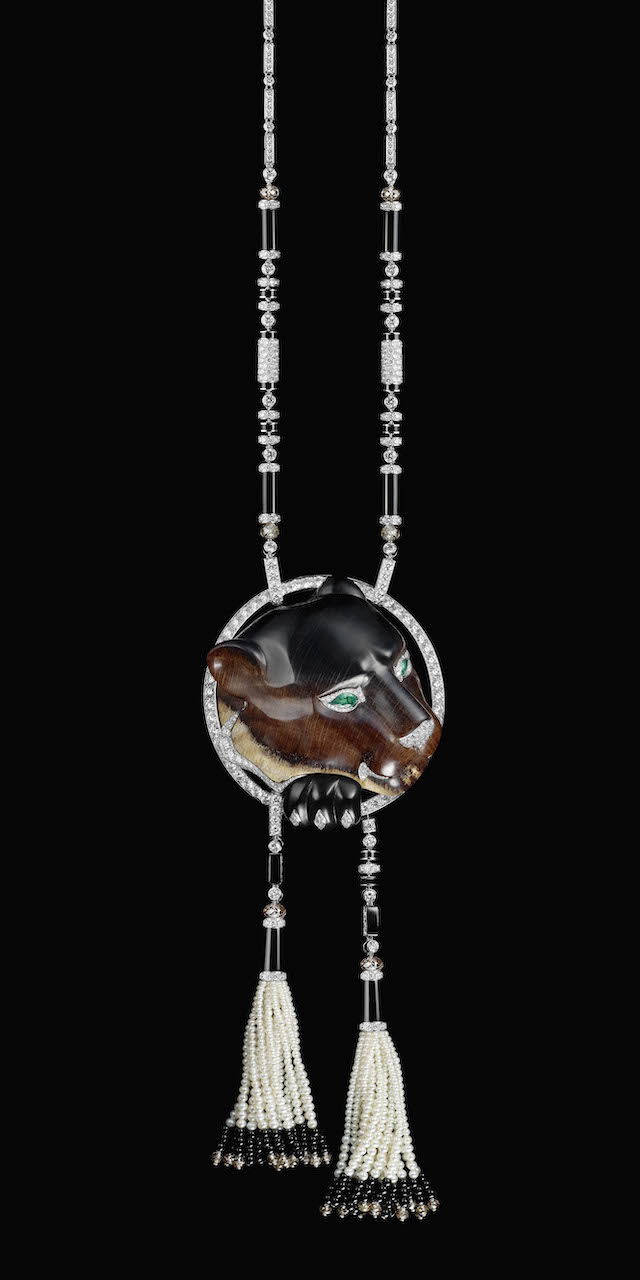
The “Necklace,” which uses petrified wood (fossilized wood buried in the earth), features a carved panther’s head. The fusion of an unusual material with fine jewelry was superb.
Chapter 2: “Form and Design”
The next section, Chapter 2, is organized around Cartier’s “Form and Design.”
By combining precious stones and applying various cuts, the design is constructed, rhythm is born, and the power residing in compositional abstraction is unleashed.

© N.M.R.L./ Hiroshi Sugimoto + Tomoyuki Sakakida
This chapter contains the largest number of works, with 122 pieces on display.
Piece after piece from the “Cartier Collection” leaps out at you, each radiating its own distinctive brilliance — an overwhelming exhibition space.

© N.M.R.L./ Hiroshi Sugimoto + Tomoyuki Sakakida
Chapter 3: “Universal Curiosity”
The final exhibition space was composed of works incorporating designs from countries around the world, including Japan.
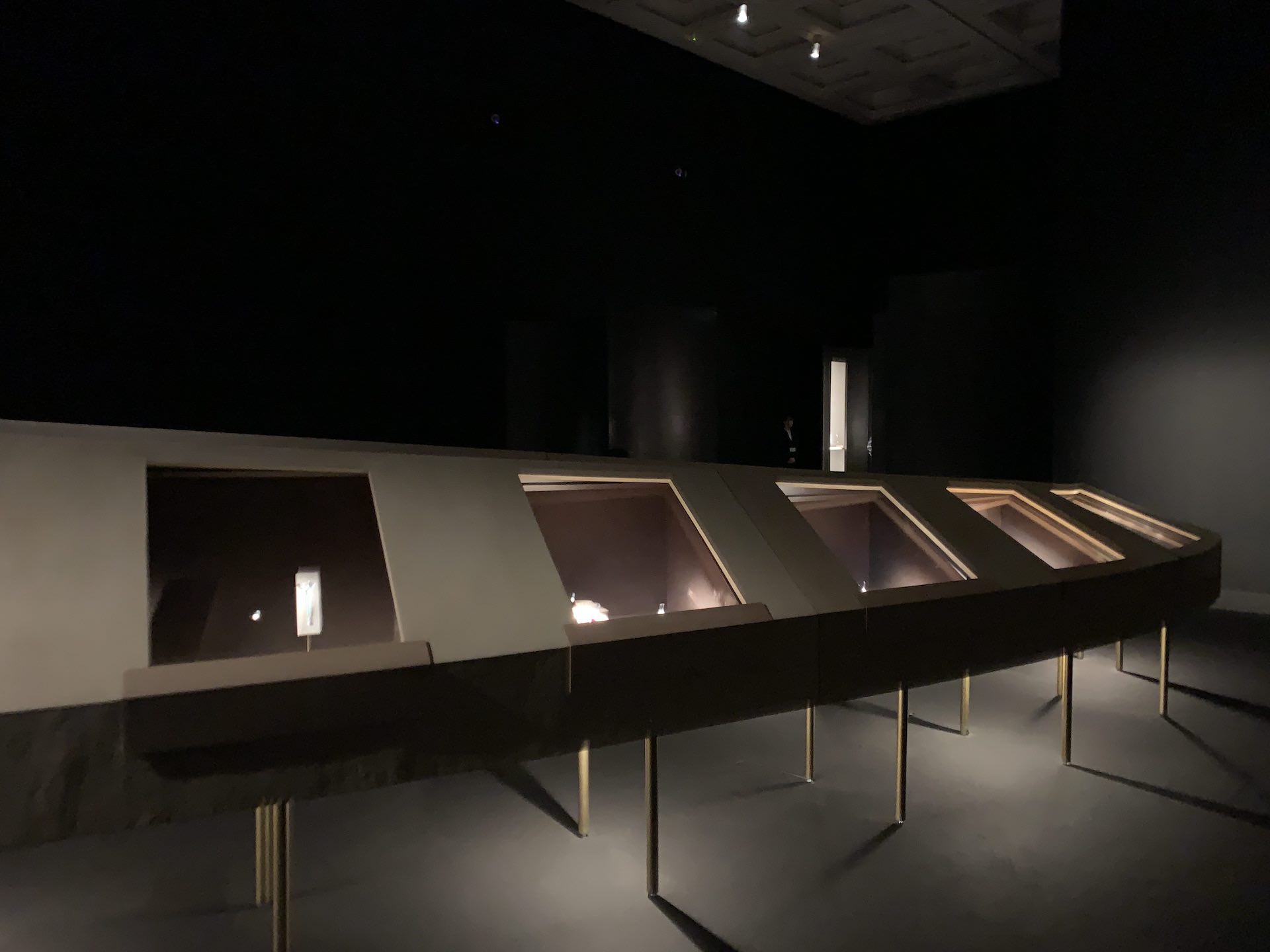
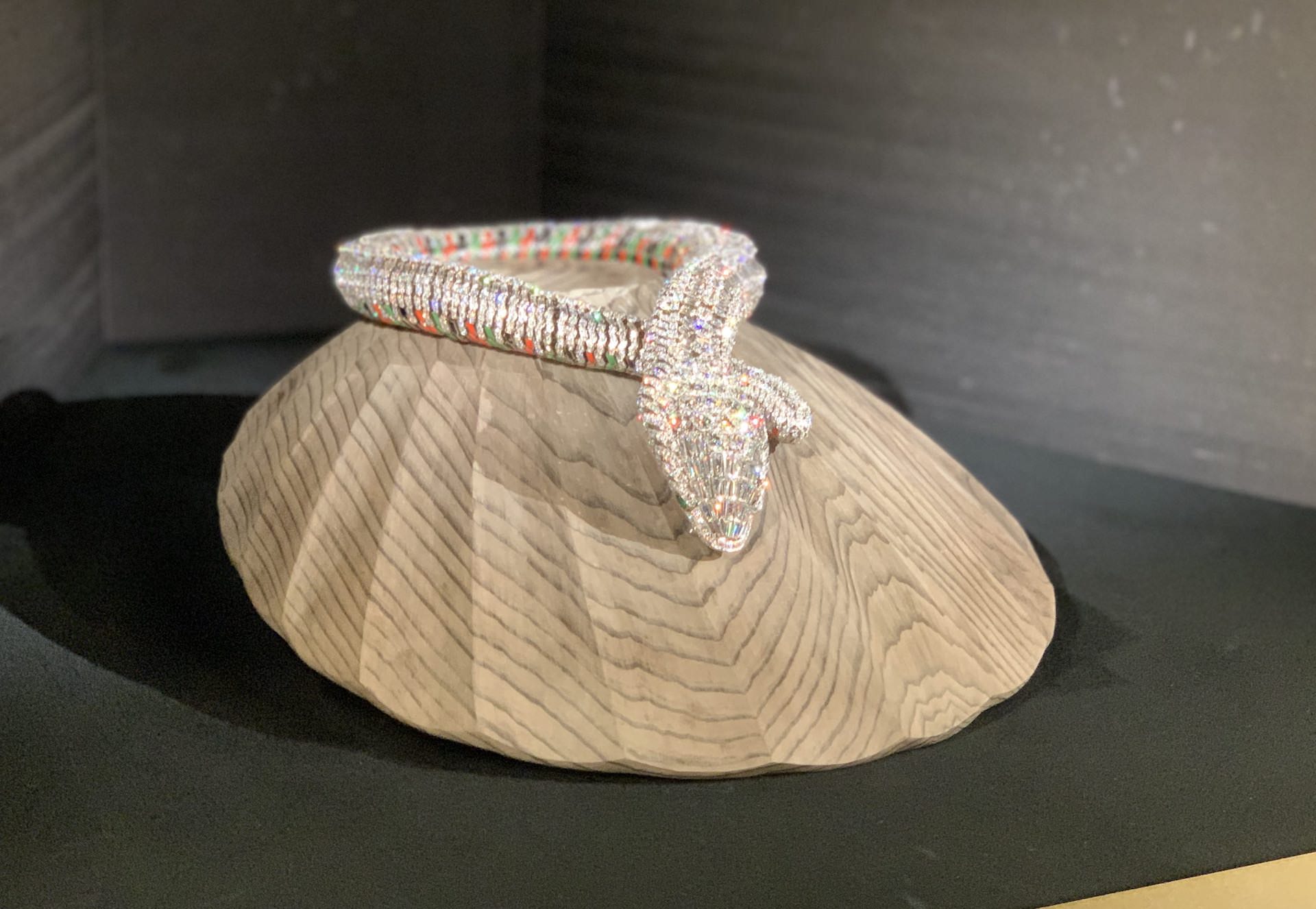
Platinum, white gold, yellow gold, diamonds, emeralds, green enamel, red enamel, black enamel
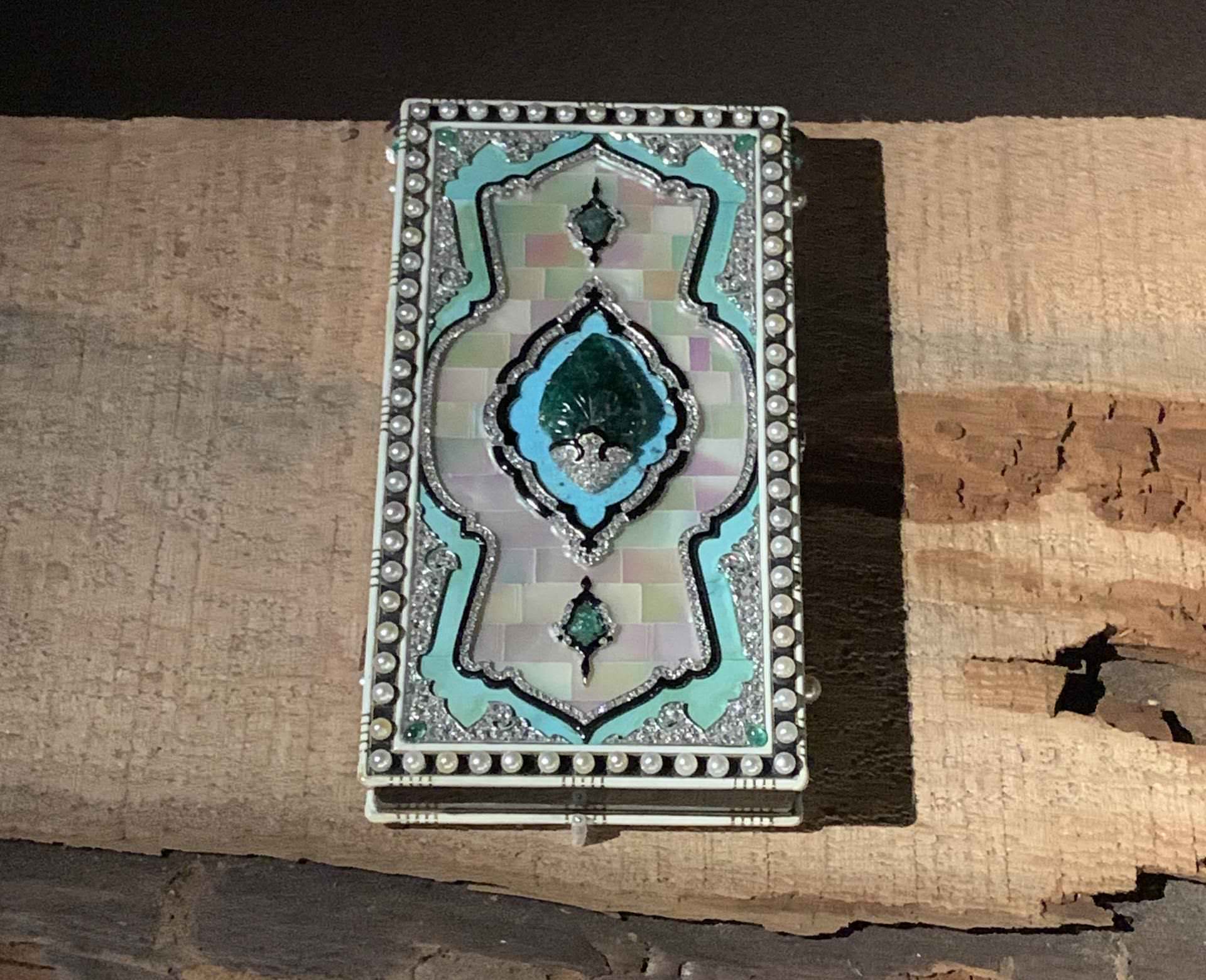
The exhibition design by New Material Research Laboratory — Hiroshi Sugimoto + Tomoyuki Sakakida — was magnificent, seamlessly merging a space of refined dignity with the many works on view.
Calm lighting bathes each of the roughly 300 works, showcasing the gorgeous, glittering “Cartier Collection” and making for a thoroughly rewarding exhibition.
Museum Shop
The special museum shop, positioned just past the exit, also featured meticulously designed space.
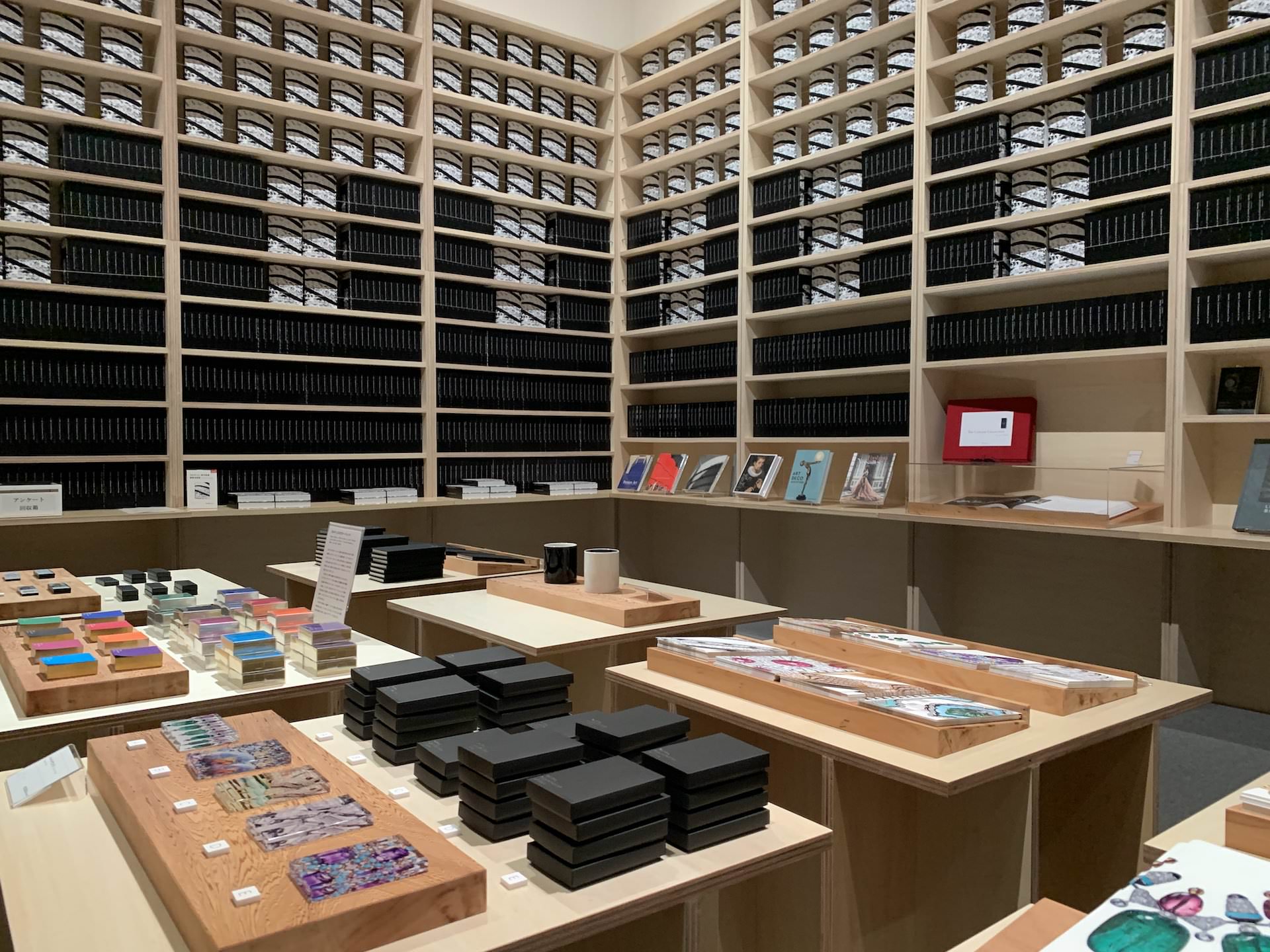
© N.M.R.L./ Hiroshi Sugimoto + Tomoyuki Sakakida