![【Bur@rt Diary】目[mé]の展覧会 を見て、嬉しくなった。](https://art-on.jp/wp-content/uploads/2019/11/BurartDiary4.jpg)
bur@rt Diary
Every Monday morning we publish bur@rt Diary.
This is a diary-style column where the editor-in-chief of art on jots down thoughts on art, everyday interests, and passing reflections.
Please enjoy reading it whenever you have a moment.
Art Abroad — Seeing It and Buying It
On my recent art trip to Shanghai, I finally came face to face with a work I had been longing for more than two years — a piece by the Japanese artist Ayane Eguchi.
I loved the feel of the paint surface and had a strong desire to add it to my collection. But when I began thinking about the cost and effort of purchasing a work in a place like China, I couldn’t bring myself to take the leap. Since encounters with artworks are once-in-a-lifetime, I don’t know whether the opportunity will come around again — it was a difficult moment.
Recently, there was another exchange with an overseas gallery about a different artist: “I happen to be traveling to Japan soon, so please buy the work — shipping is free!” Policies vary by gallery, but it seems that in many cases, shipping costs for works purchased overseas are borne by the buyer. I usually purchase artworks within Japan, so I need to be mindful of the etiquette and rules when buying abroad. I want to study up before Art Basel Hong Kong next year. That said, I’m concerned about the situation in Hong Kong…
On Handling Prices
Regarding our practice on art on of displaying artwork prices, we often receive positive feedback from readers. I’ve long felt a sense of discomfort with the peculiar convention in galleries of not prominently displaying prices, even though the works are for sale.
Even a mega-gallery like Perrotin clearly displays prices on its online store, yet in its exhibitions you can’t know the price without inquiring. I’d love to understand the reason behind maintaining these two different faces.
For the first time, I recently received a message from a certain commercial gallery asking us to “remove the prices from the article.” We do receive requests to publish articles or make corrections, but this kind of request was a first. Seeing it as a good opportunity, I replied: “We will accommodate, but could you please share your reasoning?” With that, the previously ongoing correspondence simply stopped. Was the representative checking with a superior? Did they forget to reply? I don’t know what happened on their end, but it was an unresolved and unsatisfying exchange.
The way prices are represented and handled may be a difficult issue, but from the perspective of people who aren’t close to art, without a price shown, they can’t even tell if a work is for sale. The art world’s unnatural habit of not disclosing amounts often leaves outsiders bewildered by conventions and customs that are hard to understand. Perhaps if there were a clear message — “for such-and-such a reason, please don’t list the price” — one could accept it.
In regions like Japan, where the culture of purchasing artworks hasn’t taken root, I feel that without initiatives that build recognition and understanding from the market side, the industry will only continue to shrink.
“mé: Obviously, no one can make heads nor tails”
I went to see “mé: Obviously, no one can make heads nor tails,” a currently-running exhibition at Chiba City Museum of Art by the contemporary art team mé.
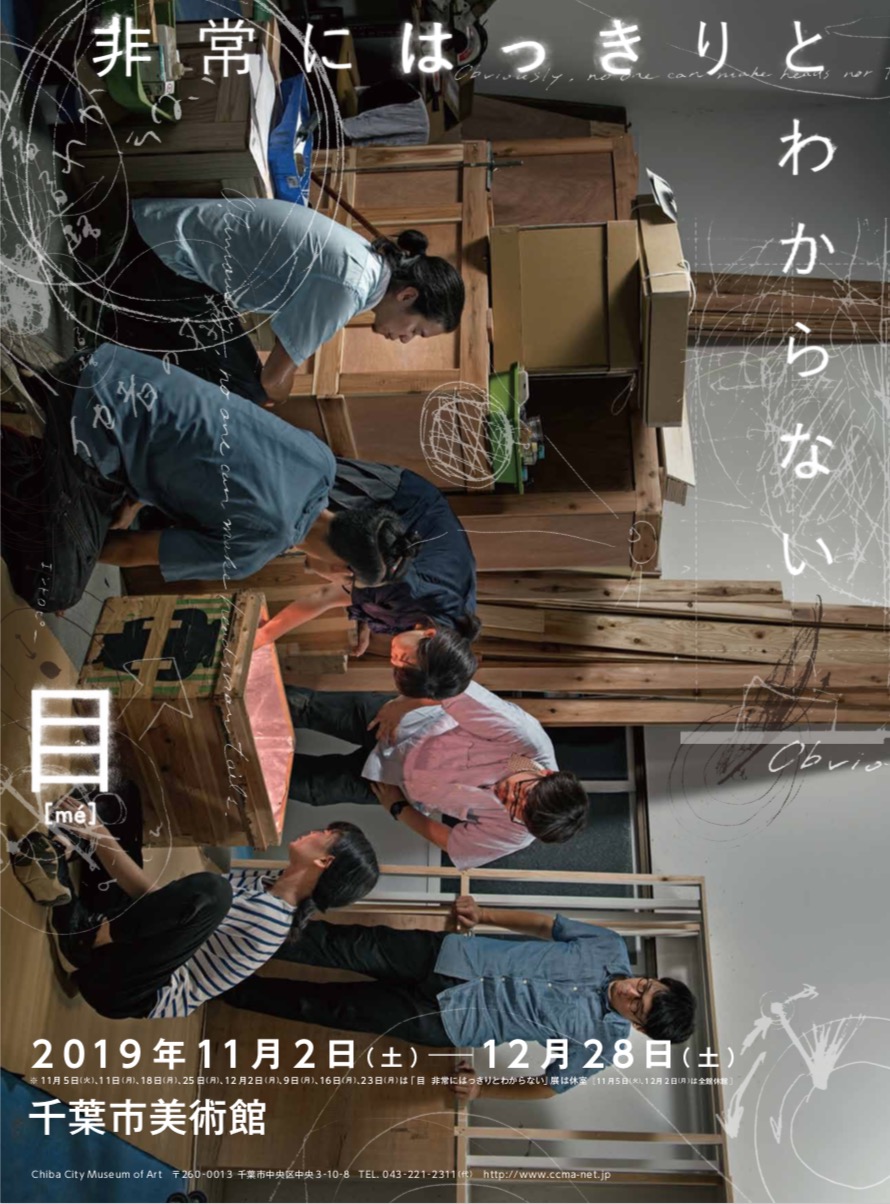
For this exhibition report on “mé: Obviously, no one can make heads nor tails,” I need to be careful to avoid spoilers as much as possible.
On art on, I plan to post a fuller report after the exhibition closes, but for now I’d like to summarize what has already been made public. → This article has received so much traffic that I have compiled a follow-up article below (updated December 4, 2019).
If you feel you don’t want even publicly available information, this Diary ends here — please exit at this point.
If you’re happy to read on, please continue below.
The following passage from the official website is the only information provided about the exhibition “mé: Obviously, no one can make heads nor tails”:
As demonstrated by phenomena such as the geomagnetic reversal stratum in Chiba Prefecture (the Chibanian), and the geology that reveals them, the world of the ground surface we call reality is built upon a continuous chain of natural upheavals whose causes remain unexplained.
In this exhibition, the entire situation of the Chiba City Museum of Art facility — including not only the exhibited works but also the visitors’ movements and moments of realization — is deployed as an installation. Visitors are led into a museum framed as a reality left standing at a distance. The dynamic exhibition space, where diverse situations accumulate, will strip away the meanings and essences that visitors thought they understood, offering an opportunity to re-perceive with fresh senses a real world so taken for granted that it usually goes overlooked.
Visitors to this exhibition may find themselves unable to grasp its content.
Visitors are also allowed to re-enter as many times as they wish during the run. This special rule seems to reflect the very nature of the exhibition. In short, it’s a wildly audacious project.
Also, for those who couldn’t make sense of the exhibition, a “Collection Box for Things You Don’t Understand” has been installed.
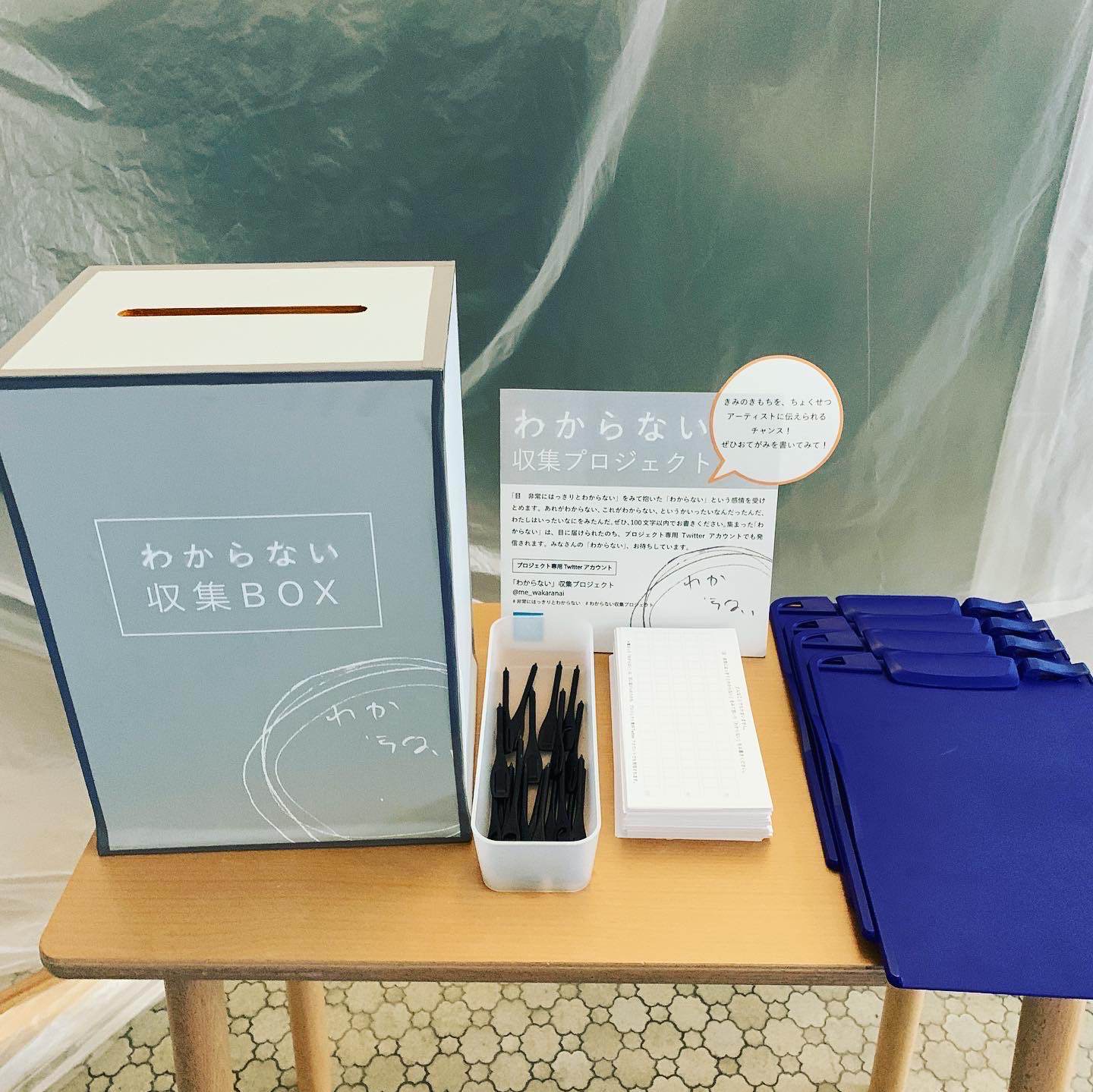
Submissions posted into the “Collection Box for Things You Don’t Understand” are shared publicly through Twitter. Looking through them, you’ll find posts from people who did understand the exhibition too — reviewing them after your visit adds a rich and enjoyable layer to the experience.
Tweets by me_wakaranai
Also, the limited-edition goods sold at the venue are precious collector’s items.
Posters with drawings are limited to 30 copies and are available for immediate take-home. The catalogs with drawings will ship in late January next year, since production is still ongoing.
The poster with drawing that I purchased incorporates the exhibition’s content as its material and motif — a piece that couldn’t help but bring a smile to my face. Each item is a unique, hand-drawn piece, so anyone interested should check them out.
This exhibition, “mé: Obviously, no one can make heads nor tails,” felt like a show whose meaning shifts depending on how the viewer engages with it. At first I was puzzled — “What is this?” — but before long a smile crept across my face. Applause to everyone involved in seeing this daring exhibition through!
art on Editor-in-Chief
Mahiro Kobayashi