news

[News] The First Major Museum Exhibition in 17 Years — "Kenjiro Okazaki: The Reservoir of Vision" at Toyota Municipal Museum of Art

【News】 17年ぶりの美術館大規模展〜「岡﨑乾二郎 ― 視覚のカイソウ」 豊田市美術館

Kenjiro Okazaki: The Reservoir of Vision

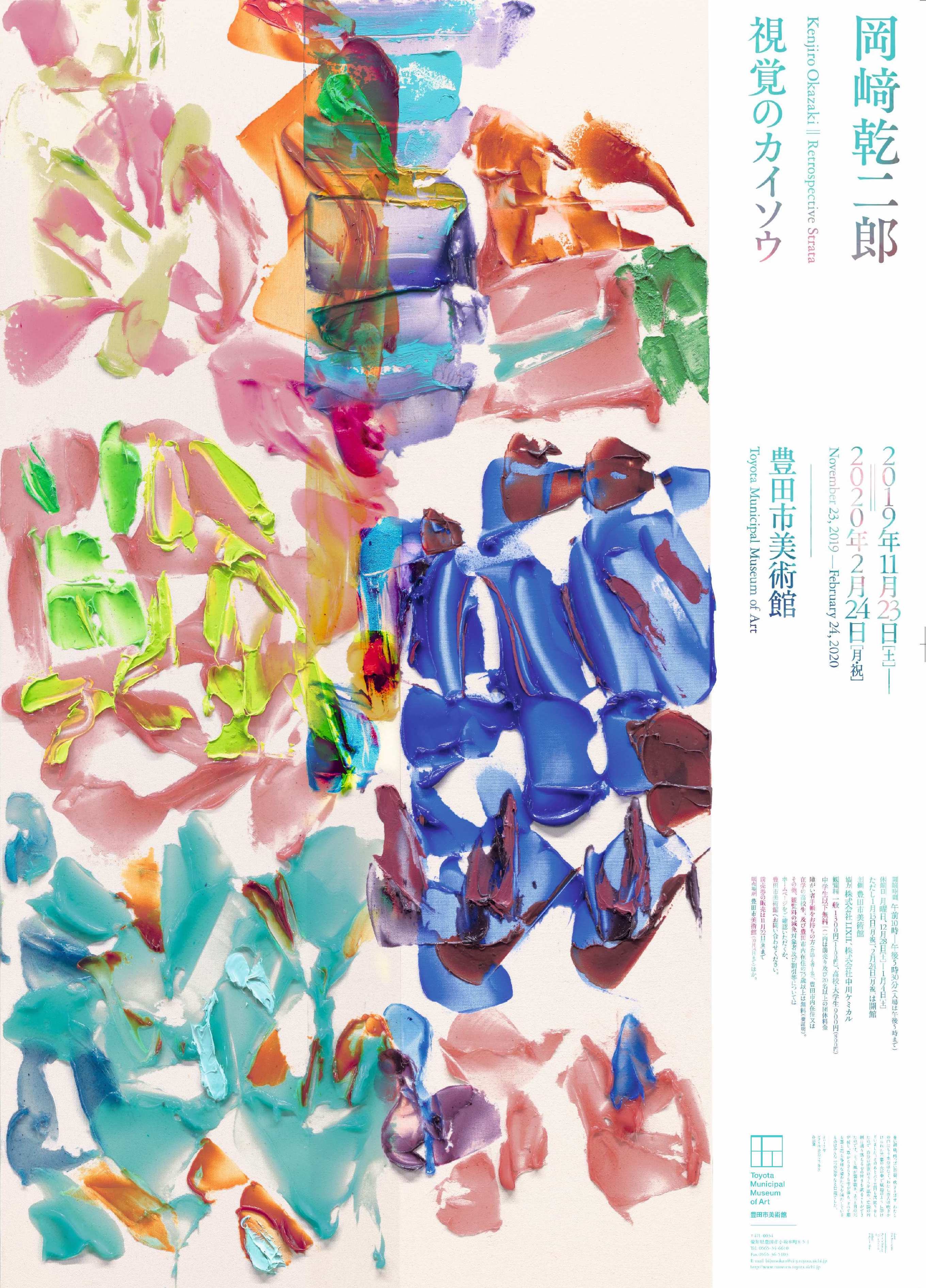
A solo exhibition by the visual artist Kenjiro Okazaki will be held at Toyota Municipal Museum of Art.

In 2017, Toyota Municipal Museum of Art held “The Power of Abstraction,” an exhibition curated by Kenjiro Okazaki himself. That exhibition illuminated the concrete, real-world power that abstract art has always carried, deftly overturning the monolithic modernist reading of art history and offering us many stimulating and fresh insights. As a follow-up to that project, this solo exhibition presents the full scope of Kenjiro Okazaki’s work and practice.
Highlights of “Kenjiro Okazaki: The Reservoir of Vision”

The main highlights of the exhibition are summarized below.

– Okazaki’s first large-scale museum solo exhibition in 17 years, since his 2002 show at Sezon Museum of Modern Art.
Nearly the entirety of Toyota Municipal Museum of Art will be devoted to the show, allowing visitors to experience displays that unfold one after another through rooms of varying scale.

– In addition to paintings and sculptures, the exhibition presents a wide range of works including reliefs, textile pieces, tiles, drawings, and cartoon-style sketches.
It offers a comprehensive introduction to Kenjiro Okazaki’s multifaceted practice.

The formative work “Katadaminokatachi,” which precedes his early signature piece “Akasakamitsuke,” will be on display. This will be its first showing since the 1979 B-Semi exhibition.

– Along with new paintings and new sculptures, new tile works and drawings will also be presented.

– A recreation of the “Brancacci Chapel frescoes,” which Okazaki analyzed lucidly in his major work “The Renaissance: Conditions of Experience,” will be presented.
Using AR (Augmented Reality) technology, visitors will experience the complex layering of figures within each fresco.
Through this, viewers come to sense that Okazaki’s own paintings and reliefs are likewise constructed through the exchange and traffic of various colors and forms.

Kenjiro Okazaki, "Akasakamitsuke," 1981, acrylic and polyethylene, collection of Takamatsu Art Museum
Kenjiro Okazaki, “Akasakamitsuke,” 1981, acrylic and polyethylene, collection of Takamatsu Art Museum
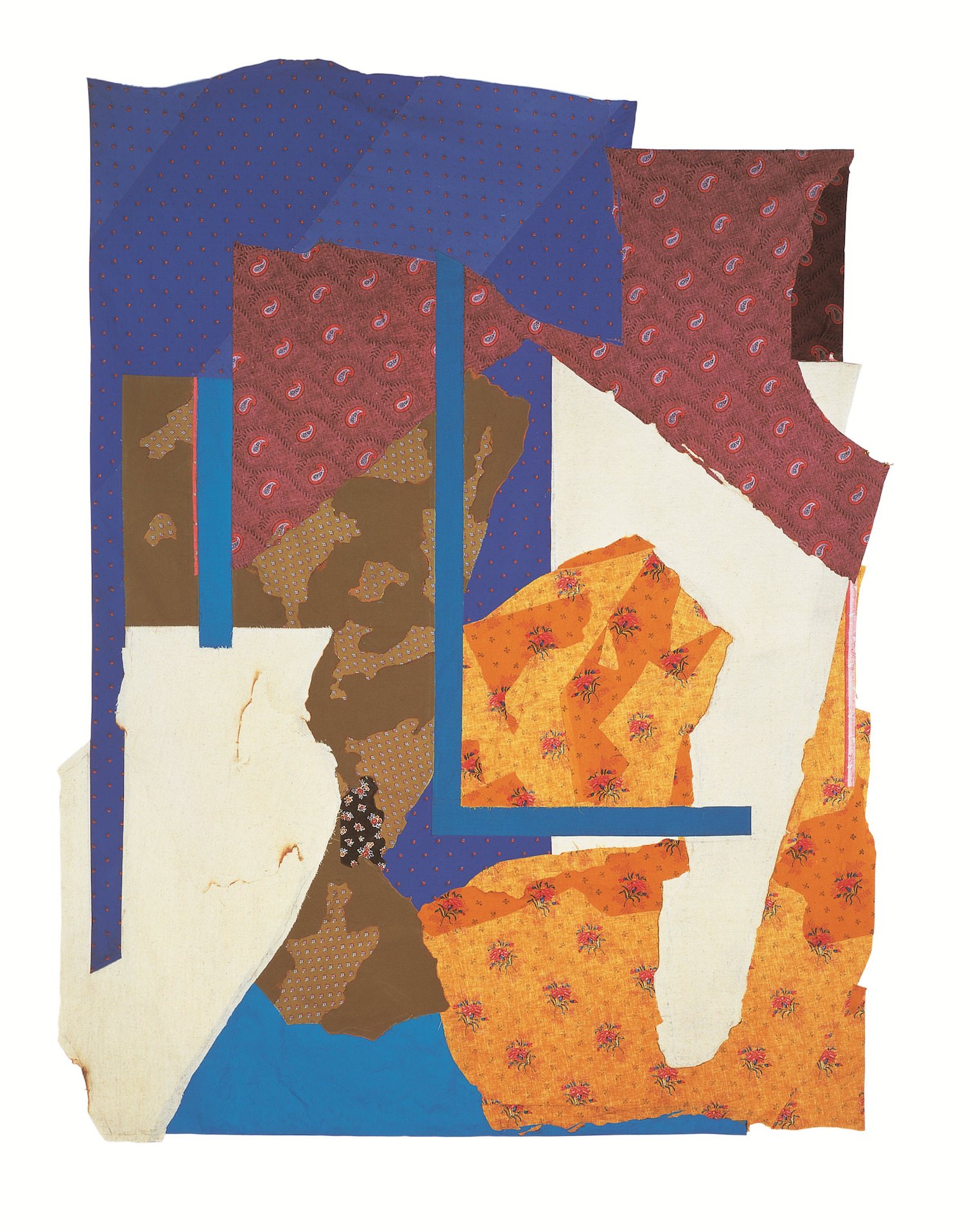
Kenjiro Okazaki, "Still Early, Yet Growing Late," 1986, cotton cloth and silk, collection of Ohara Museum of Art
Kenjiro Okazaki, “Still Early, Yet Growing Late,” 1986, cotton cloth and silk, collection of Ohara Museum of Art
Left: Kenjiro Okazaki, "'You wouldn't understand. You're just a child.' The child fidgeted, moving his face for a while, but…
Left: Kenjiro Okazaki, “‘You wouldn’t understand. You’re just a child.’ The child fidgeted, moving his face for a while, but suddenly his figure vanished from view; a glimpse of his bottom crossed the surface of the water, and in the next instant a whitish shadow was there in the water, sinking toward the bottom. Concentric ripples spread outward across the clear surface, as if a single drop of rain had fallen. I have only now noticed: there was nothing strange about it at all. Perhaps the eye can see even at midnight. Day and night were joined inseparably, and even if tears fogged the glass, eyelids do not belong to spectacles. ‘I can’t see a thing through my tears. So I’ll reach out my hand and try to grasp whatever’s closest.'”
Right: Kenjiro Okazaki, “‘You, of course, must be able to hear it, madam.’ The lady kept silent as if lost in thought, but at last she yawned widely at the wall. In an instant her own hand covered her mouth. On the wall the shape of a moonlit window stood out clearly. The naked frames of leafless branches trembled faintly, casting their shadows over it. Somewhere far off a telephone rang, and from the next room a voice was heard through the wall. At the very same moment, at the very same place, one’s heart is torn between two opposing worries. If only I could see my own face, everything would surely become clear. ‘I’ve even forgotten my own name. But I know who lives in this room.'” 1997, acrylic on canvas (diptych), collection of Toyota Municipal Museum of Art
Kenjiro Okazaki, "'Do Not Meddle. This is the only word we have.' It came closer and closer. But it did not come. There was …
Kenjiro Okazaki, “‘Do Not Meddle. This is the only word we have.’ It came closer and closer. But it did not come. There was no sound, and it was still bright. Please don’t call me so insistently. I am about to go of my own accord. Now I understand why he said such things. And yet, that afternoon, right beside the residential area where we live, it fell. Yes, I know only one person. The transfer of thermal energy — there is nothing to do but leave it to nature. No, this is not nature’s work; it is the chemist’s work. ‘So well-mannered that there is nothing to be done. So please, do not put me in the shade.’ Now you understand why he said such things, don’t you?” 1990-91, steel and wood, collection of Nakanoshima Museum of Art, Osaka
Kenjiro Okazaki, "Mourning Teumin and the People, Felling the Trees and Cutting Down the Sins," 2000, ceramic, collection of…
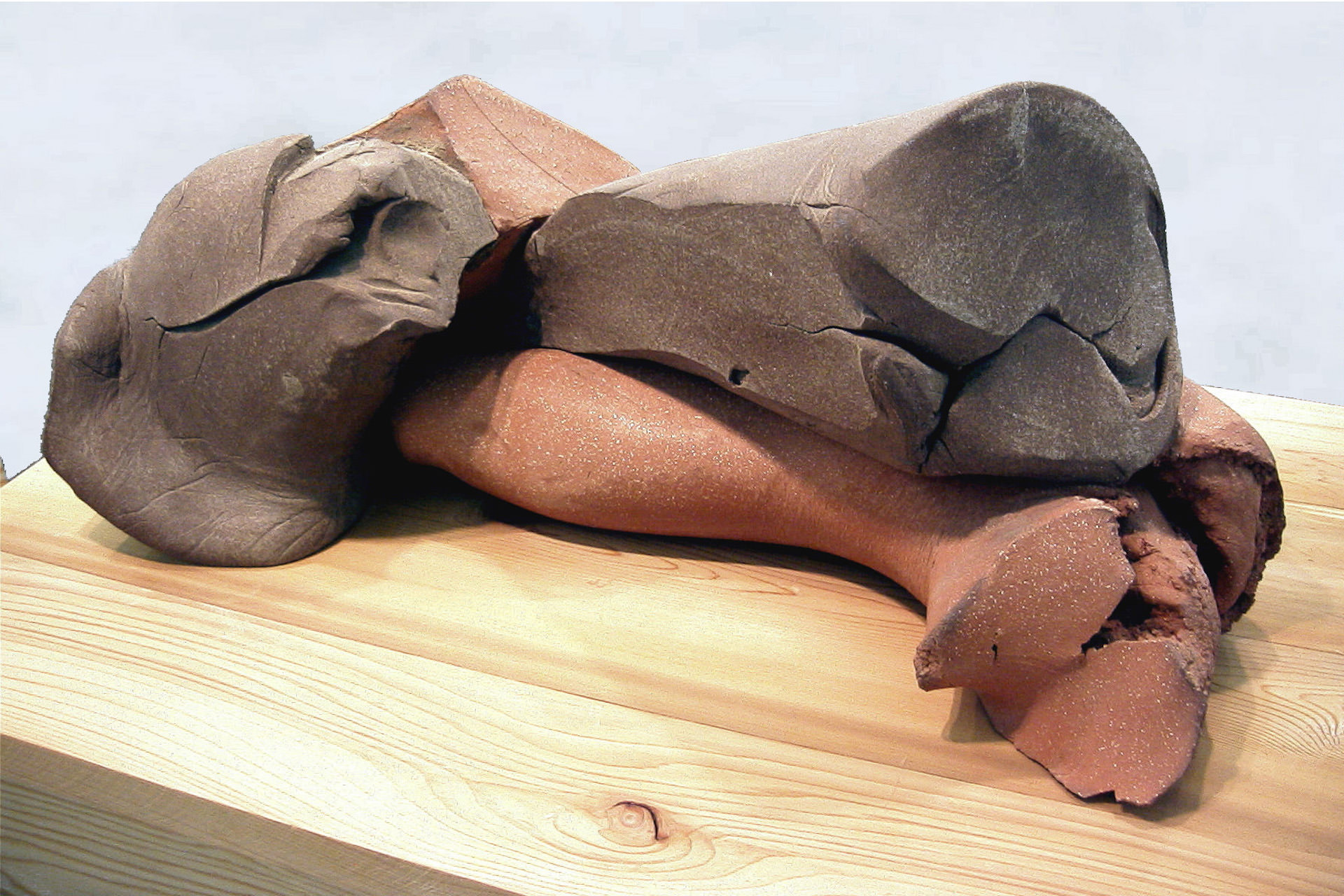
Kenjiro Okazaki, “Mourning Teumin and the People, Felling the Trees and Cutting Down the Sins,” 2000, ceramic, collection of The National Museum of Modern Art, Tokyo
Kenjiro Okazaki, from left: "Deki / Luther's Table," "Kawachi (Hanoi) / The First Voice on Earth," "Ruri / The Vigor of the …
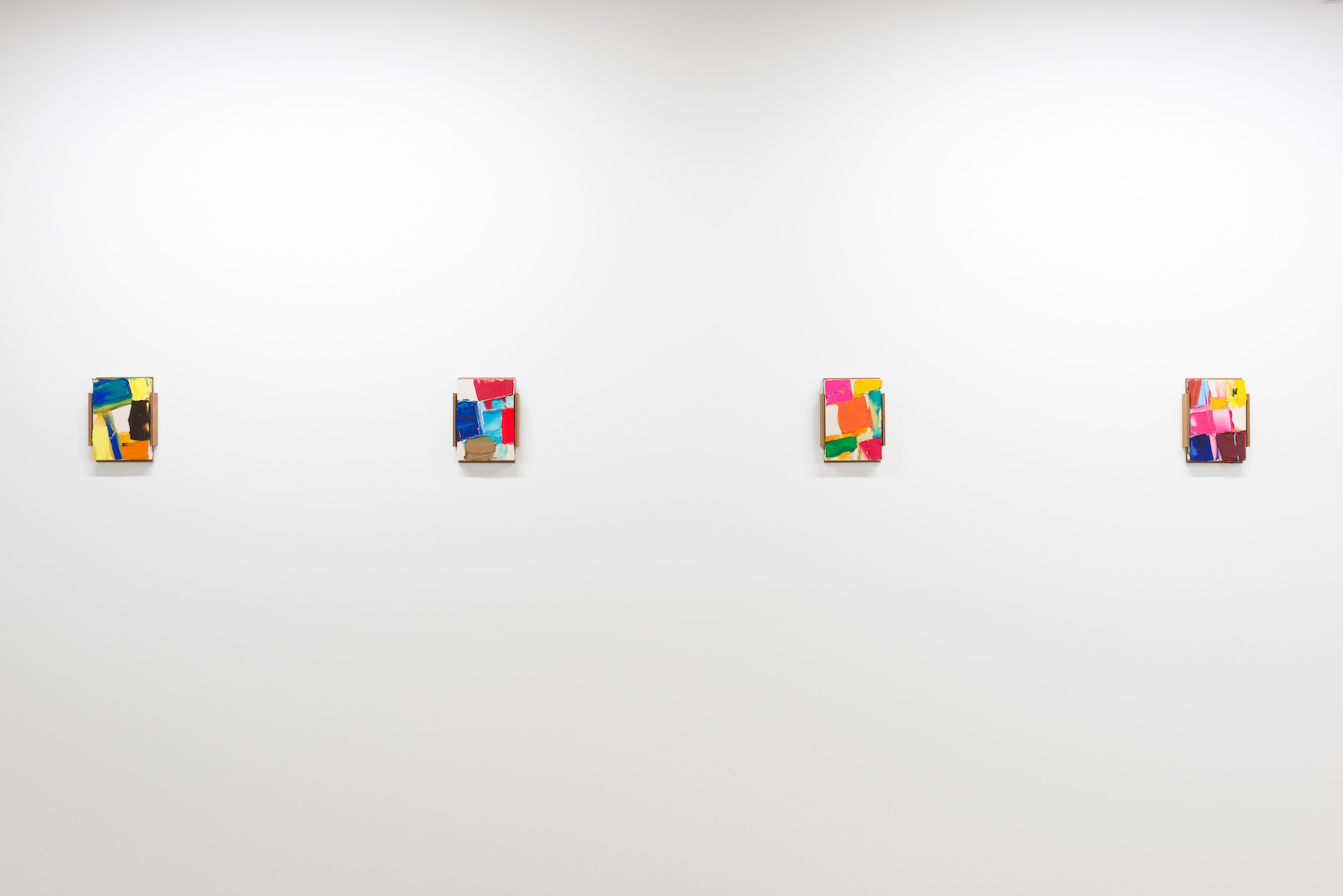
Kenjiro Okazaki, from left: “Deki / Luther’s Table,” “Kawachi (Hanoi) / The First Voice on Earth,” “Ruri / The Vigor of the West,” “Doorway / Rag and Palm-Fiber Shoe Wiper”
Kenjiro Okazaki, "Cartoon Sketch," 2014, colored pencil on paper, private collection
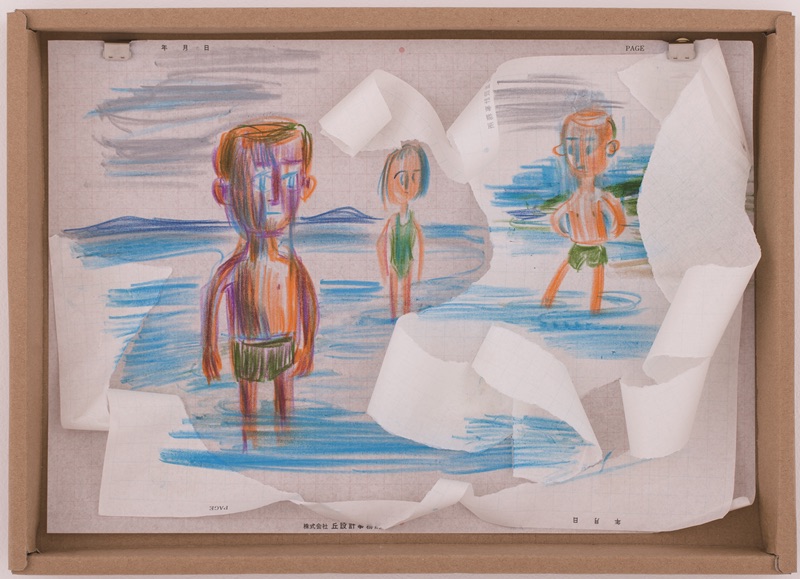
Kenjiro Okazaki, “Cartoon Sketch,” 2014, colored pencil on paper, private collection
Kenjiro Okazaki, "What Does 'Beneficial' Mean? / The Wit of the Fox," 2018, acrylic on canvas, BBar collection
Kenjiro Okazaki, “What Does ‘Beneficial’ Mean? / The Wit of the Fox,” 2018, acrylic on canvas, BBar collection
Kenjiro Okazaki, "Physiognomy," 2016, ink on paper, collection of Taguchi Projects Co., Ltd.
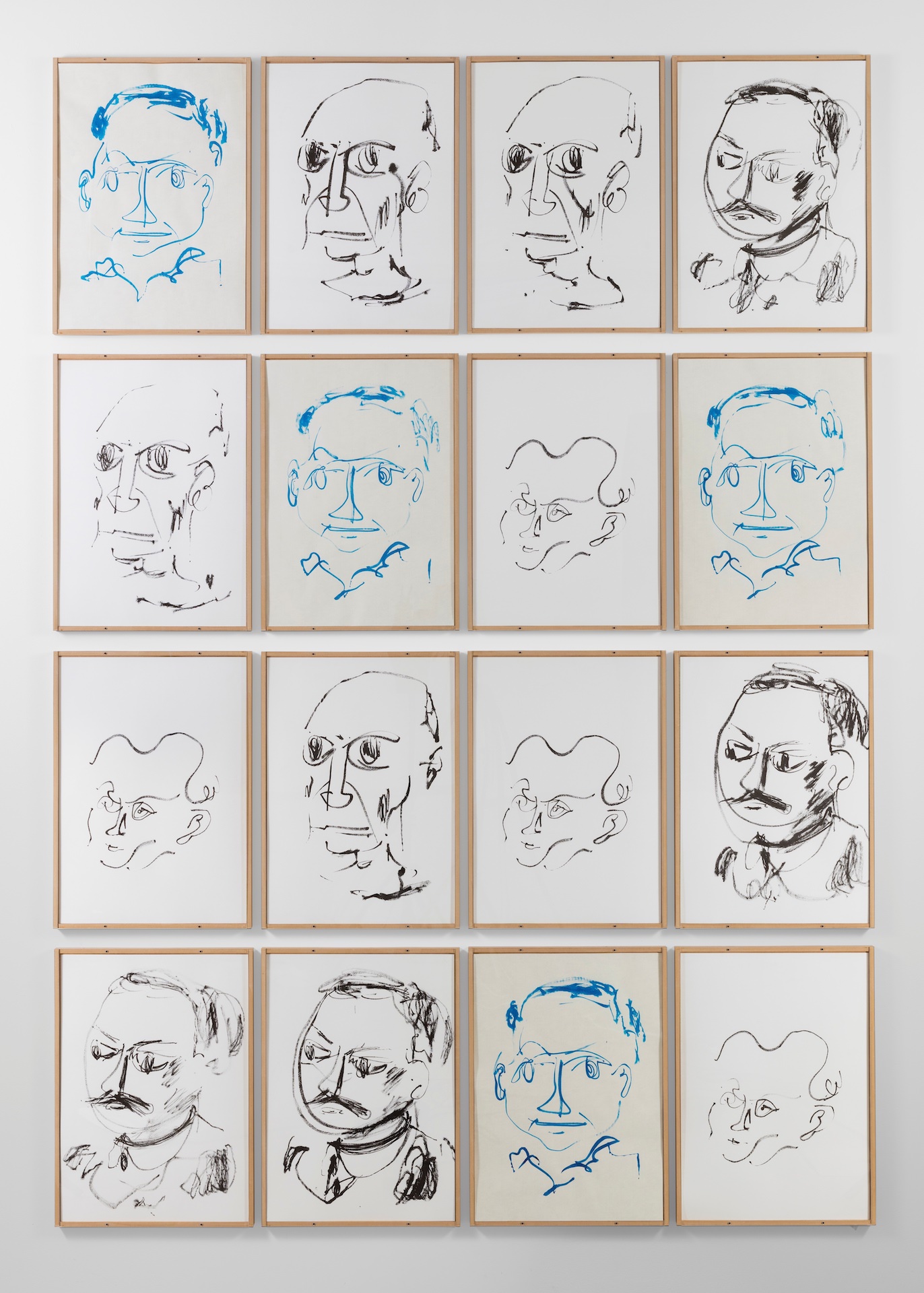
Kenjiro Okazaki, “Physiognomy,” 2016, ink on paper, collection of Taguchi Projects Co., Ltd.
Left: Kenjiro Okazaki, "You will dry up this water, or drink it dry. Yet water never perishes. It has only changed form and …
Left: Kenjiro Okazaki, “You will dry up this water, or drink it dry. Yet water never perishes. It has only changed form and moved. Water does not dry up; water quenches the throat’s thirst. Likewise, even if I cut off a single finger, or a hand, or a foot, I cannot cut myself off. The willful shape-shifting is not water, and it is not me (the red water — the blood — of me). Within water there dwells a spirit of water that has nothing to do with the appearance of water (do not mistake it for the ripples water throws off. Ripples spread here and there like music, growing and diminishing, but the spirit of water neither increases nor diminishes nor is divided). I am within water; I swim, I doze, and I awake.”
Right: Kenjiro Okazaki, “Broom in Midair / Aufheben,” 2016, acrylic on canvas, private collection

This promises to be a rare and precious exhibition offering a comprehensive view of the visual artist Kenjiro Okazaki’s practice. We look forward to it with high expectations.

Details

Kenjiro Okazaki: The Reservoir of Vision

Venue: Toyota Municipal Museum of Art
Dates: Saturday, November 23, 2019 – Monday (national holiday), February 24, 2020
Closed: Mondays; December 28 (Sat) – January 4 (Sat)
*Open on January 13 (Mon, national holiday) and February 24 (Mon, national holiday)
Hours: 10:00–17:30 (last admission 17:00)
Admission: General 1,300 yen (1,100 yen) / High school & university students 900 yen (800 yen) / Junior high school students and younger free *Figures in parentheses are advance ticket and group (20+) rates
Organized by: Toyota Municipal Museum of Art
Cooperation: LIXIL Corporation, Nakagawa Chemical Inc.
Translating...