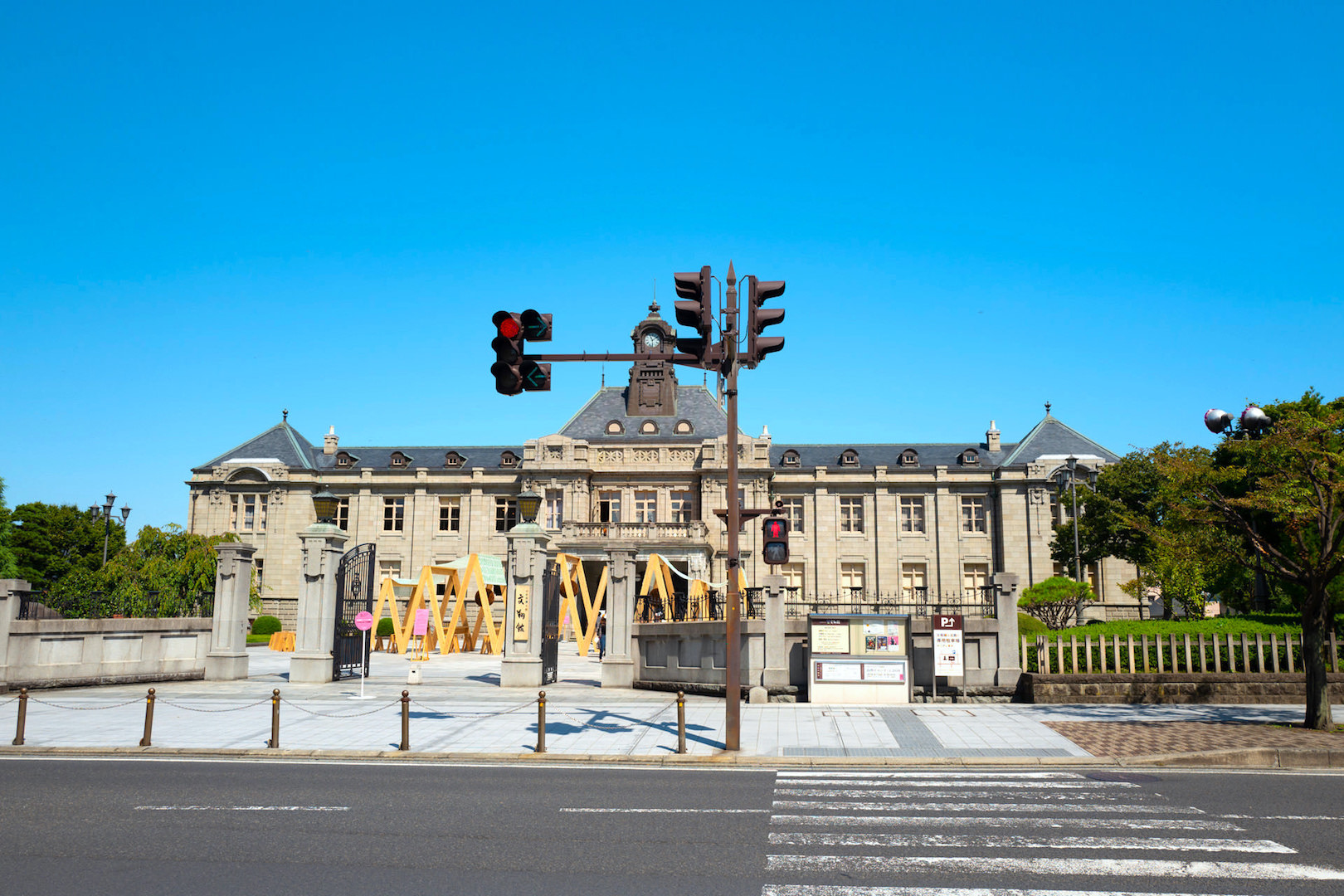
Aichi Triennale 2019
I went to the Aichi Triennale 2019.
I visited twice: once at the press preview on July 31, 2019, the day before the opening, and again on August 10, 2019, timed to Sakanaction’s darkness live show.
Several months have passed since it opened, and the memory has begun to fade. Yet looking back, I’d say the Aichi Triennale 2019 — its overall curatorial framework and its individual works — was superb and rewarding. In a sense, I may have been lucky to view it before the flood of information started swirling.
At the start of the press preview, artistic director Daisuke Tsuda declared: “Success is certain. I want this to be an art festival that will be spoken of as a legend.” In the end, his words did not lie — not about the success, but about the “legend.”
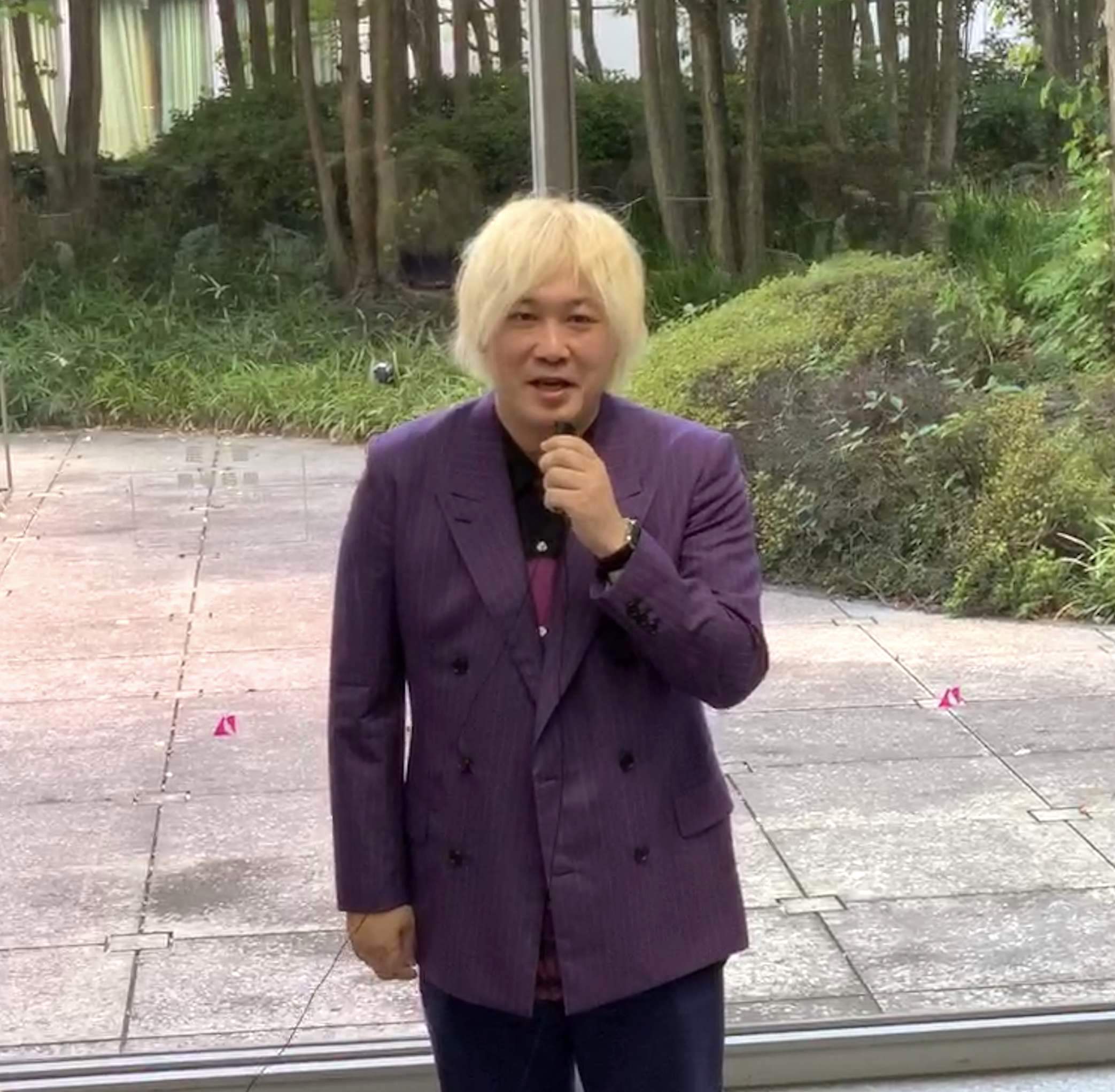
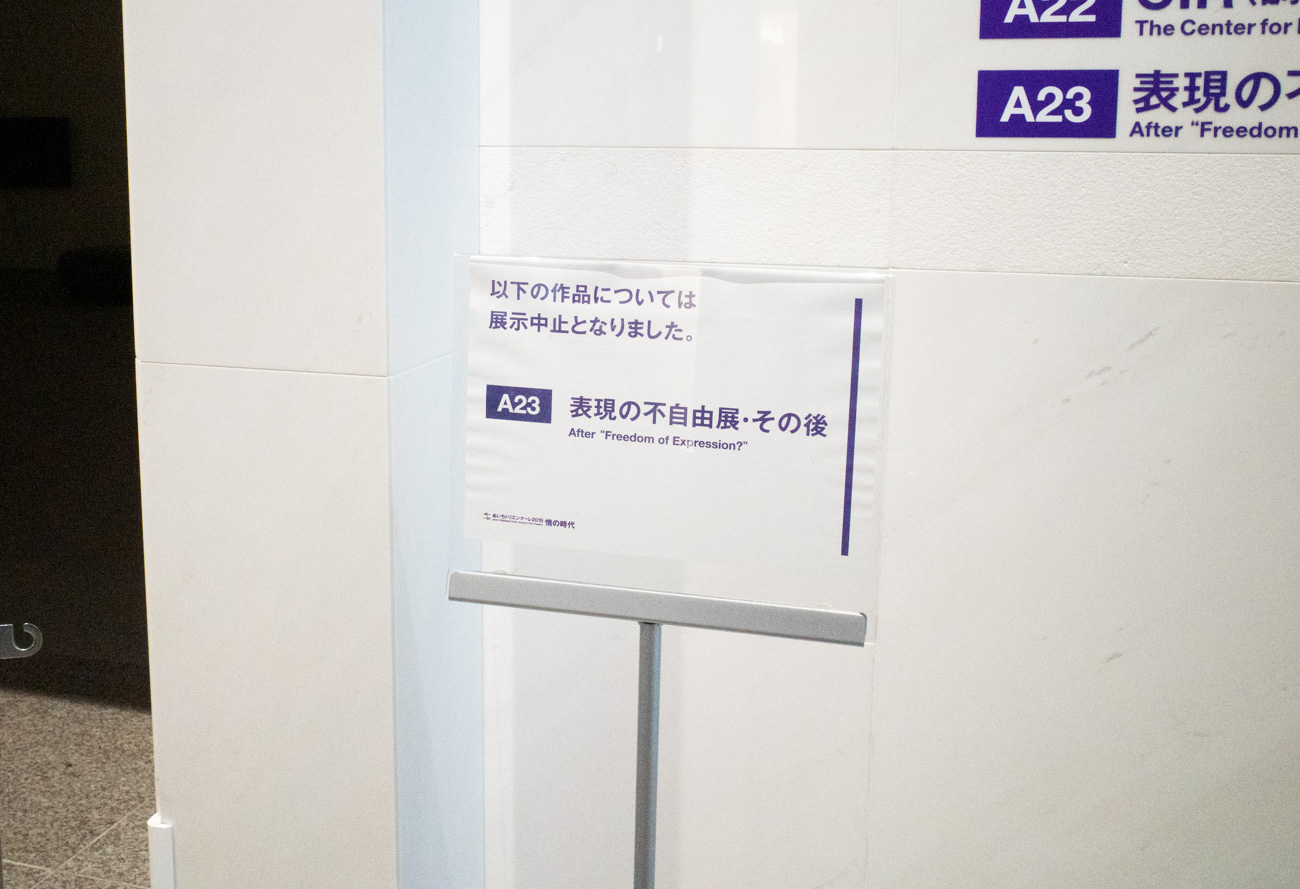
The heavily reported “After ‘Freedom of Expression?'” section was apparently first revealed at the press preview. At the press conference held later that evening, once the exhibited works were disclosed, the questions came in a flood.
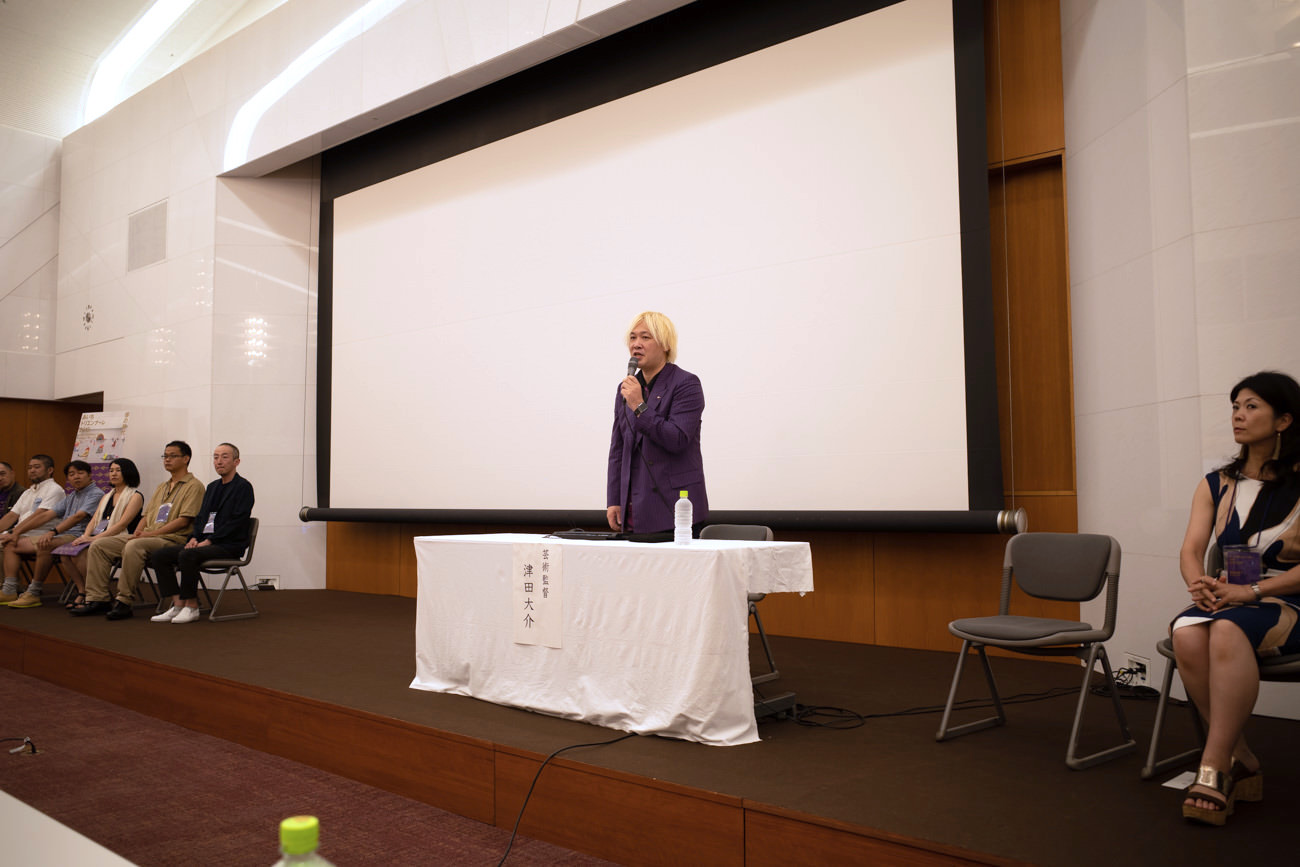
But Tsuda’s read was off. As everyone knows, it flared up far beyond what he had assumed.
What I felt at that press conference was that “this is exactly the way he operates on Twitter.” Grab public attention with a sensational hook or hot topic — the manner of a native of the web.
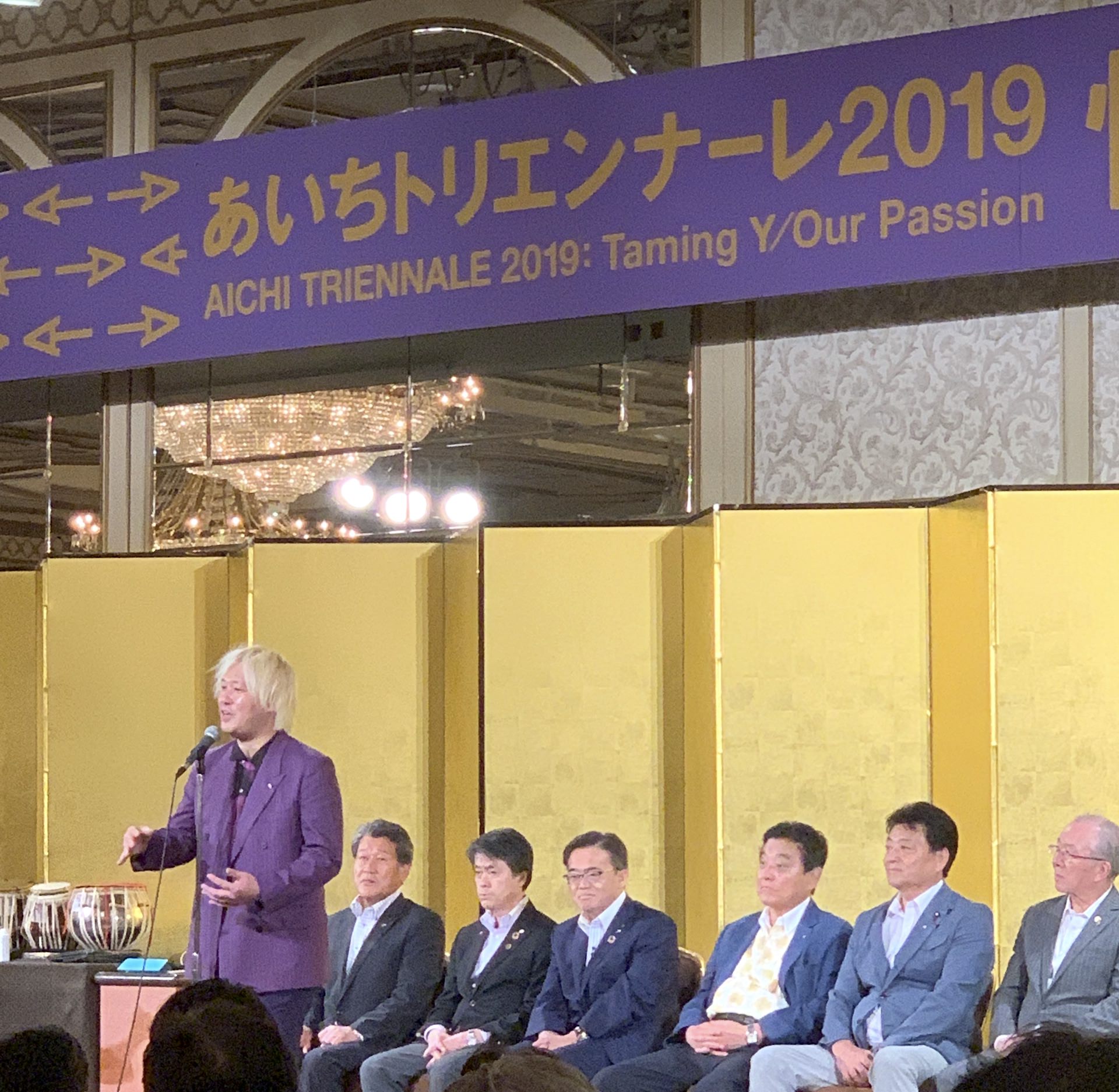
Just as Tsuda had hoped, the media immediately began to report.
Press previews at any art exhibition take place within a limited amount of time.
It’s hard to view works at your own pace — between photography and interviews, the time simply evaporates.
The Aichi Triennale 2019 preview was no different, moving through each venue like a conveyor belt. It was in that rushed flow that I ended up viewing “After ‘Freedom of Expression?’.”
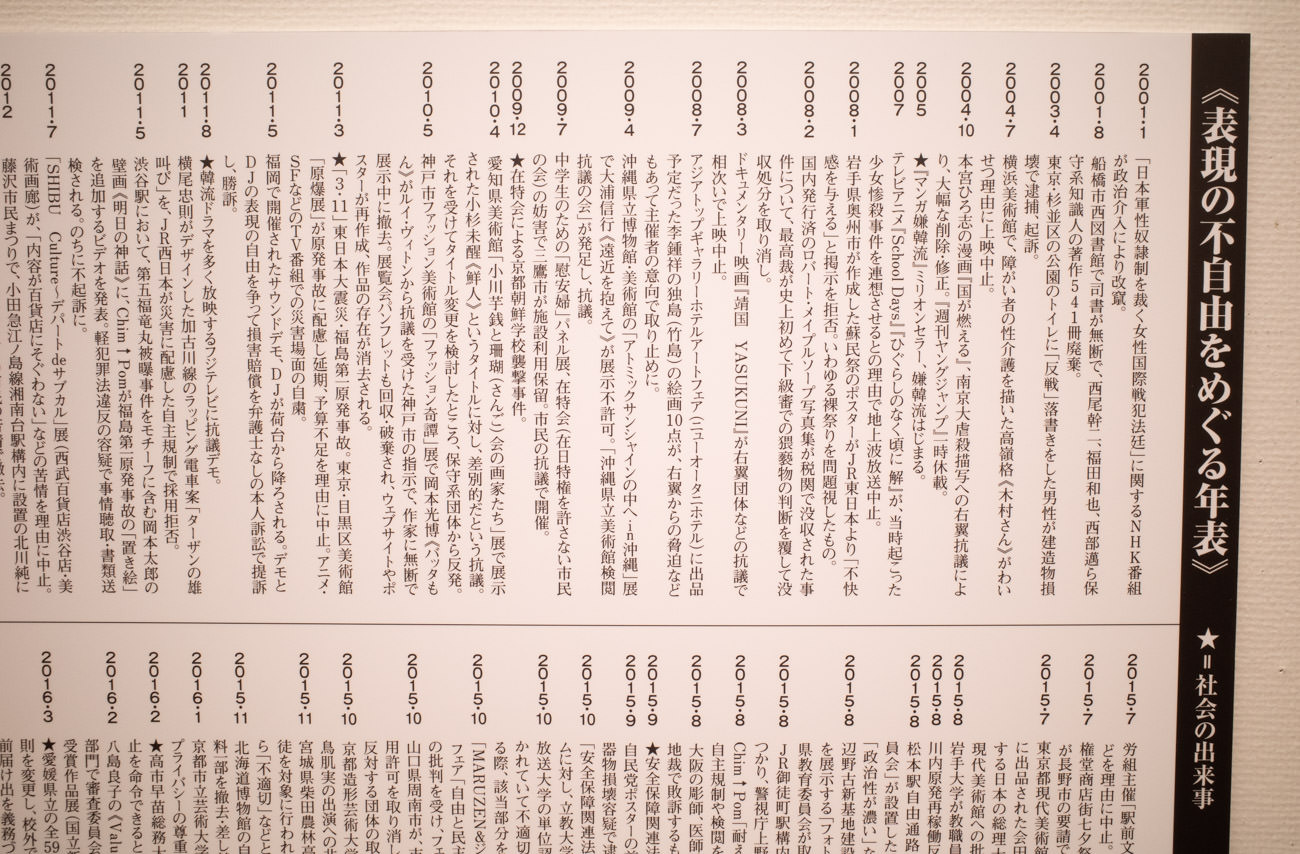
The entrance is relatively narrow, and as I recall, the chronology corner set at the very beginning wasn’t a space where you could take your time.
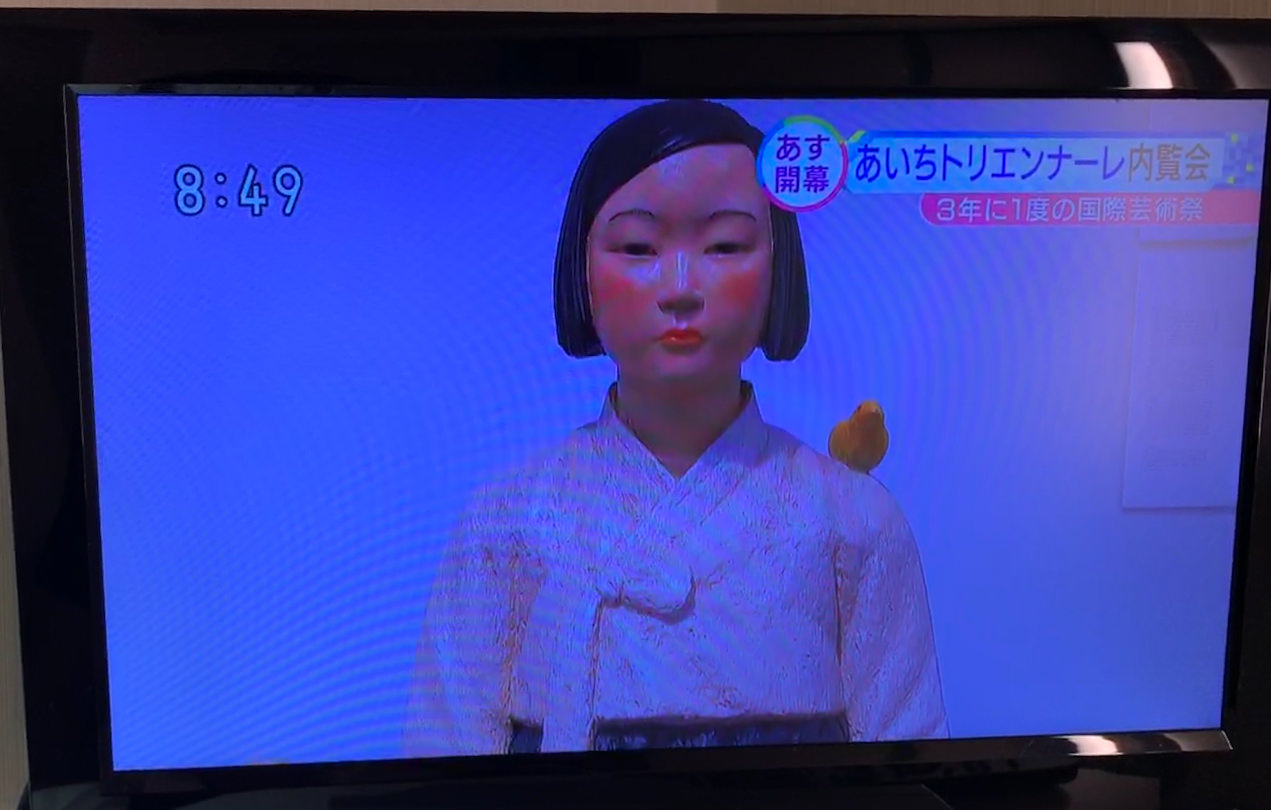
The controversial “Statue of a Girl of Peace” did startle me when I first saw it. Even knowing of its existence from news reports, seeing the physical object in front of me was less like taking in an artwork and more like a moment of “so this is it.” A woman near it — presumably the artist — was answering media questions with visible delight. The scene remains etched in my memory.
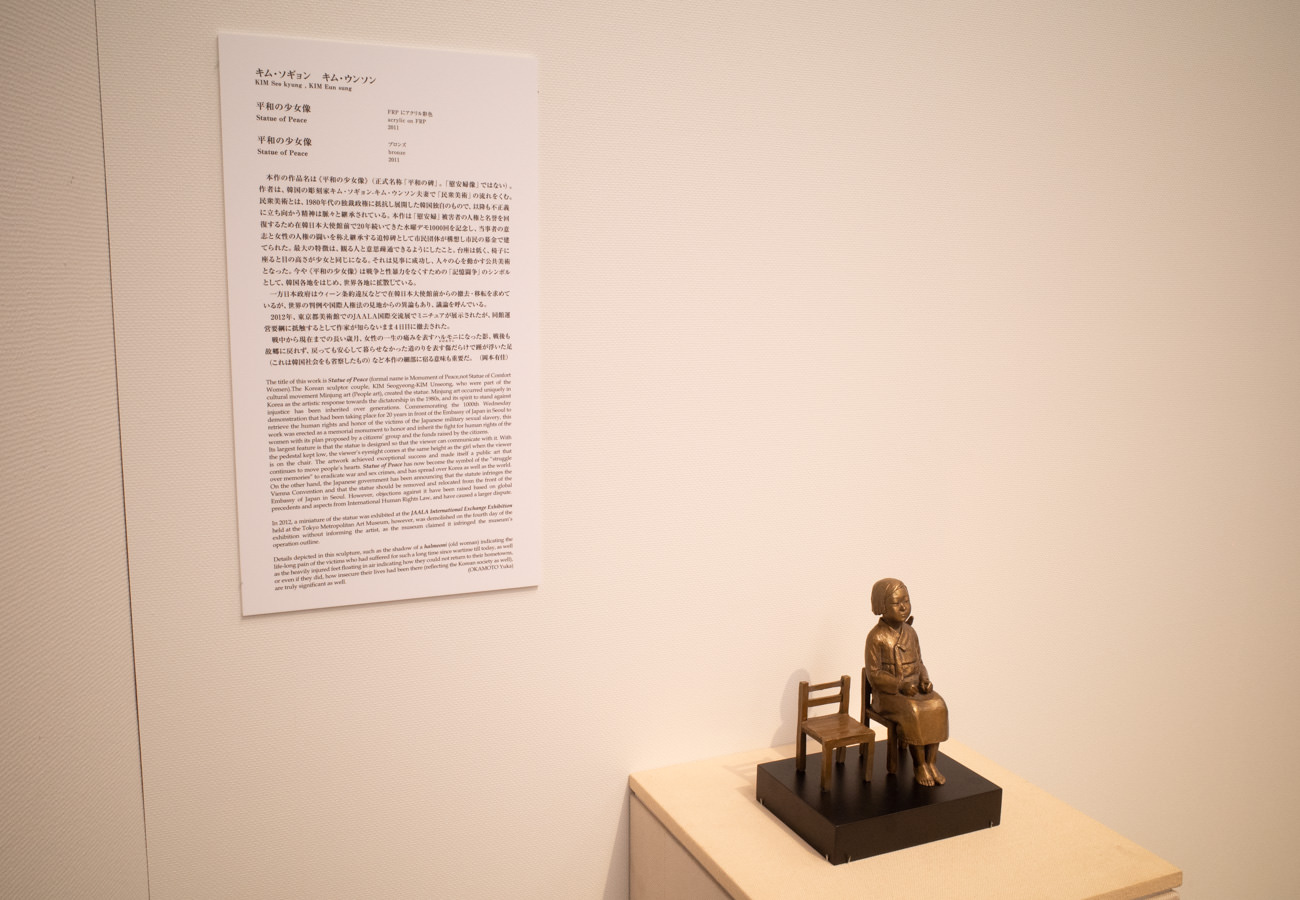
My own feelings were mixed and unresolved.
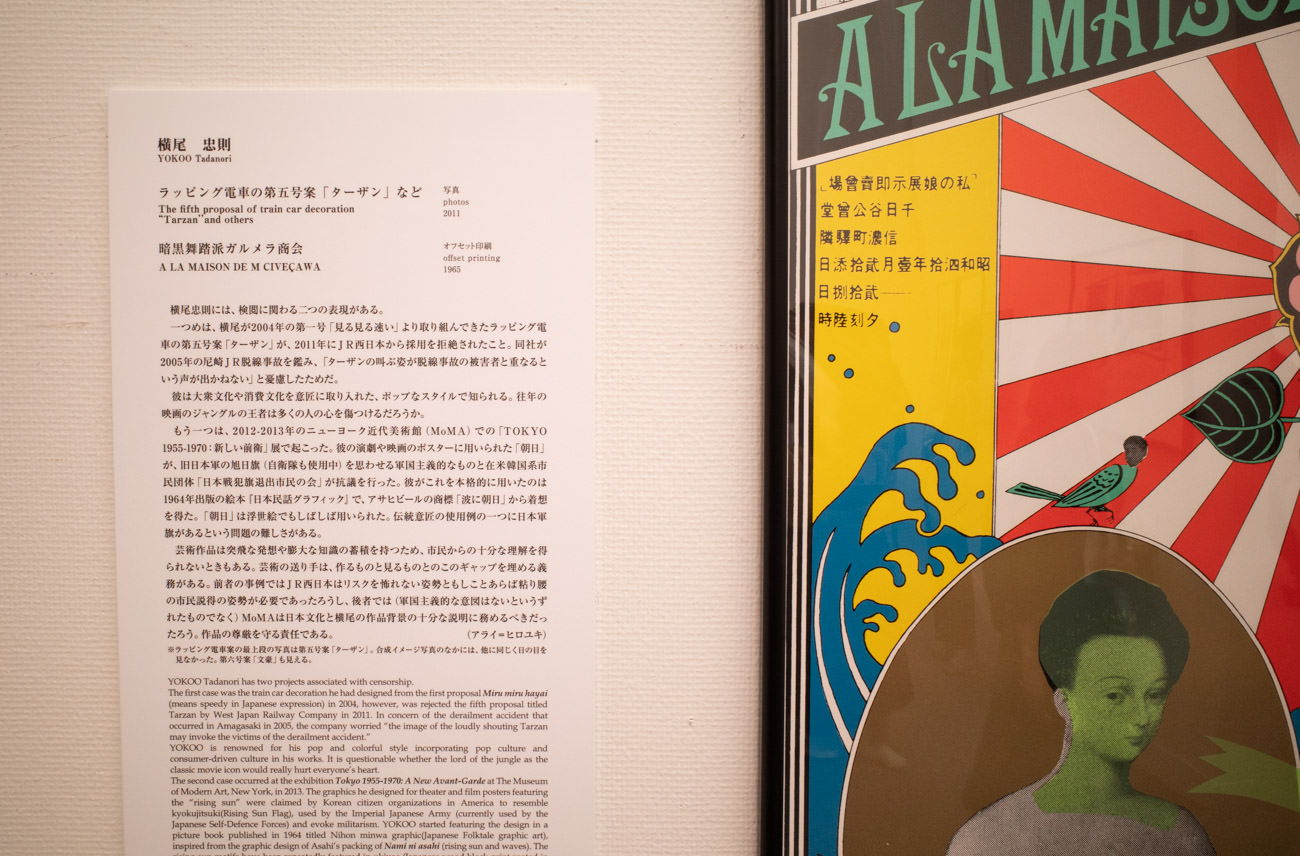
It wasn’t a setting where you could look at length; and as artworks, they didn’t move me. I was drawn in for a long time by Tadanori Yokoo’s works, so I honestly didn’t notice the piece involving Emperor Showa.
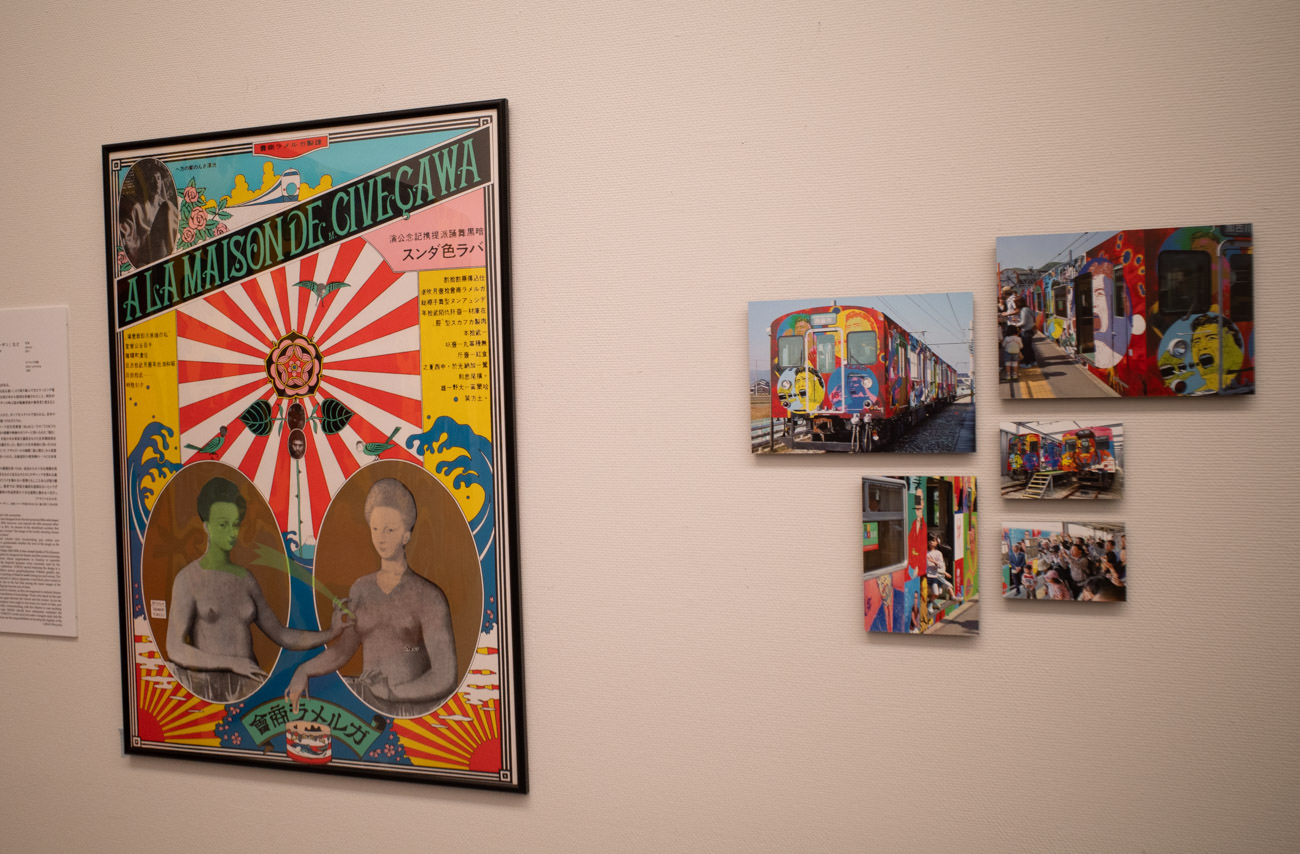
I had not anticipated that the fallout would reach even Chim↑Pom’s work.
It made me feel the terror of runaway public opinion.
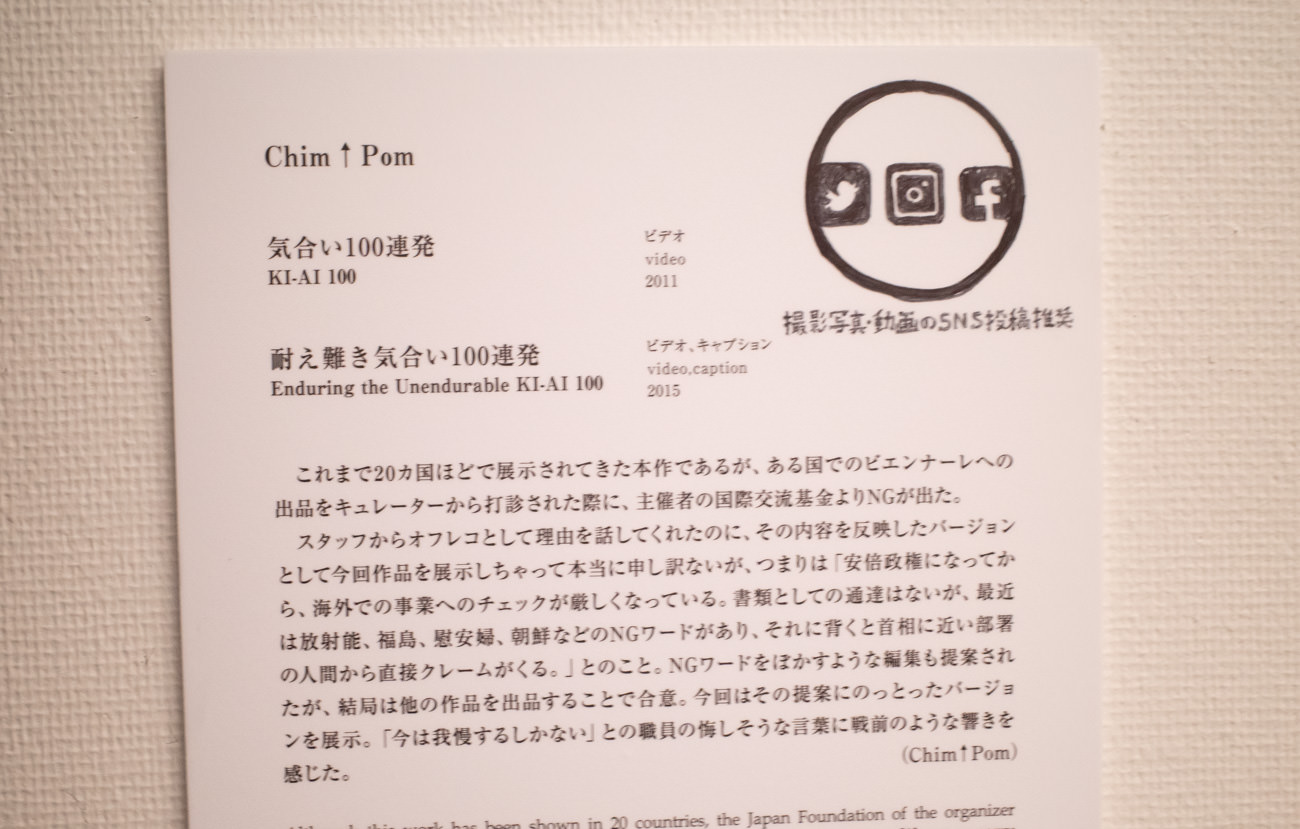
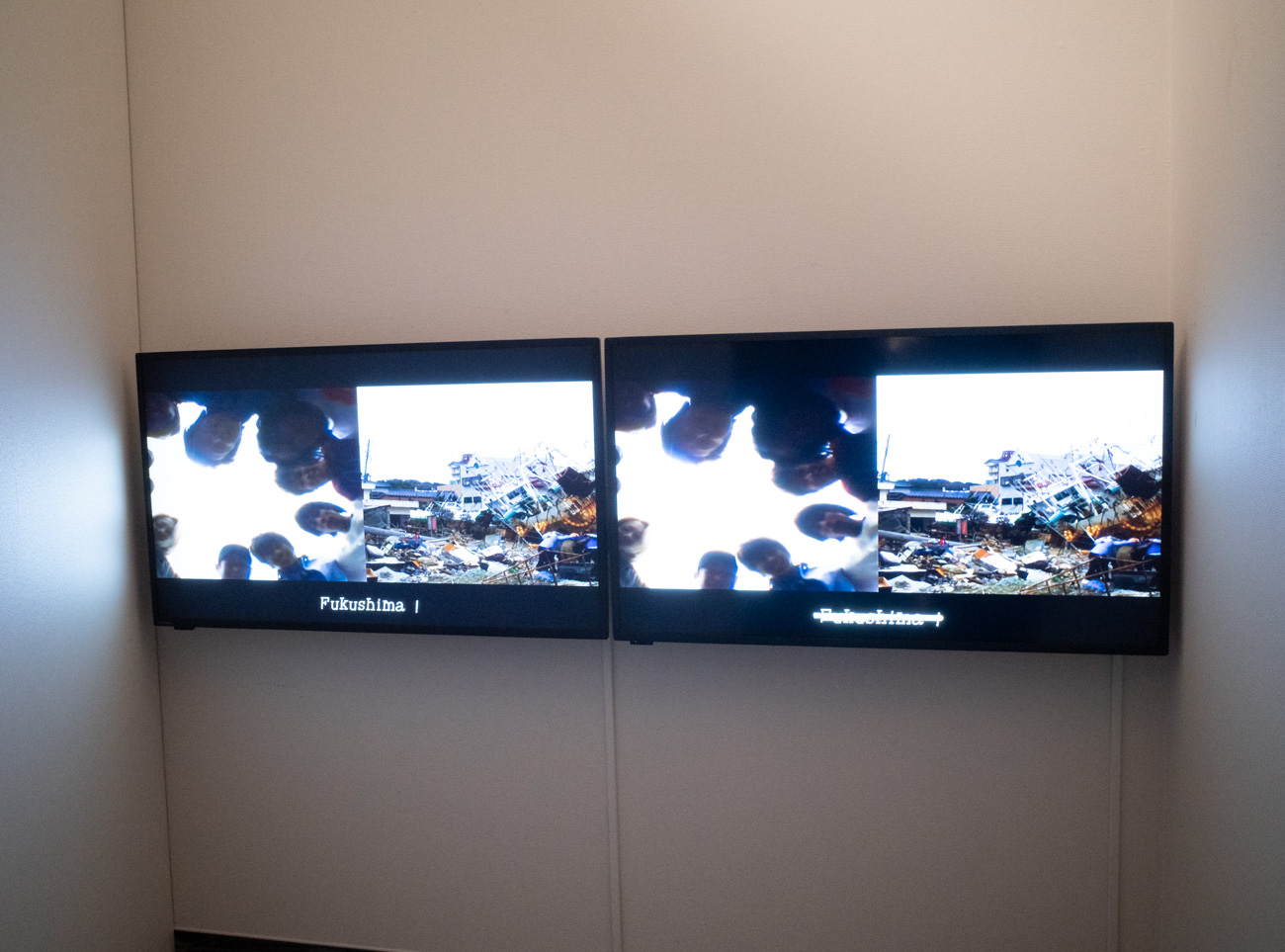
This work has been exhibited in roughly 20 countries. When a curator invited it to a biennial in a certain country, the co-organizer, the Japan Foundation, rejected it. A staff member told us the reason off the record — we’re truly sorry to display a version incorporating that content, but essentially: “Since the Abe administration, oversight of overseas projects has become stricter. There’s no official directive on paper, but recently ‘radiation,’ ‘Fukushima,’ ‘comfort women,’ ‘Korea’ and other keywords are treated as NGs; violating them draws direct complaints from someone in a department close to the Prime Minister.” An edit that obscured the NG keywords was proposed, but in the end we agreed to show a different work. This exhibition presents the version made in accordance with that proposal. In the staff member’s frustrated words — “For now we can only endure it” — I sensed an echo of the prewar era. (Chim↑Pom)
What ruled the “After ‘Freedom of Expression?'” exhibition room aligned with the overall concept.
It carried a clear curatorial intent — asking the present day about the many histories of suppressed freedom of expression. That exhibition space itself felt like a single work.
I read through the subsequent reporting and the various opinions of art-world figures, but how many of them had actually seen the works on-site and experienced the whole thing?
At the Toyota Municipal Museum of Art, which also served as a satellite venue for the Aichi Triennale, a solo exhibition by Kenjiro Okazaki was underway. In the exhibition release materials, I found the following introduction.
Okazaki insists that this world is by no means monolithic — it consists of plural, disparate worlds each with mutually irreconcilable specificities. And he has consistently held to the idea that when a nowhere-place emerges in which these worlds can circulate while retaining each of their individualities, without being fused into one, rich creativity arises.
Doubting and resisting the tendency for expression to end up representing something; respecting instead the possibilities of what is more peripheral, more small. That Okazaki’s activity has never settled into a single form but has continuously formed and expanded networks with many people and things is, one might say, an expression of this conviction in plural worlds.
From “Kenjiro Okazaki: The Elevation of the Visual”
I found myself wishing I could look at art and society with the kind of perception and imagination Okazaki gestures toward.