* This article contains spoilers about the exhibition, viewing tips, and subjective commentary.
Kenjiro Okazaki: Retrospective / Strata
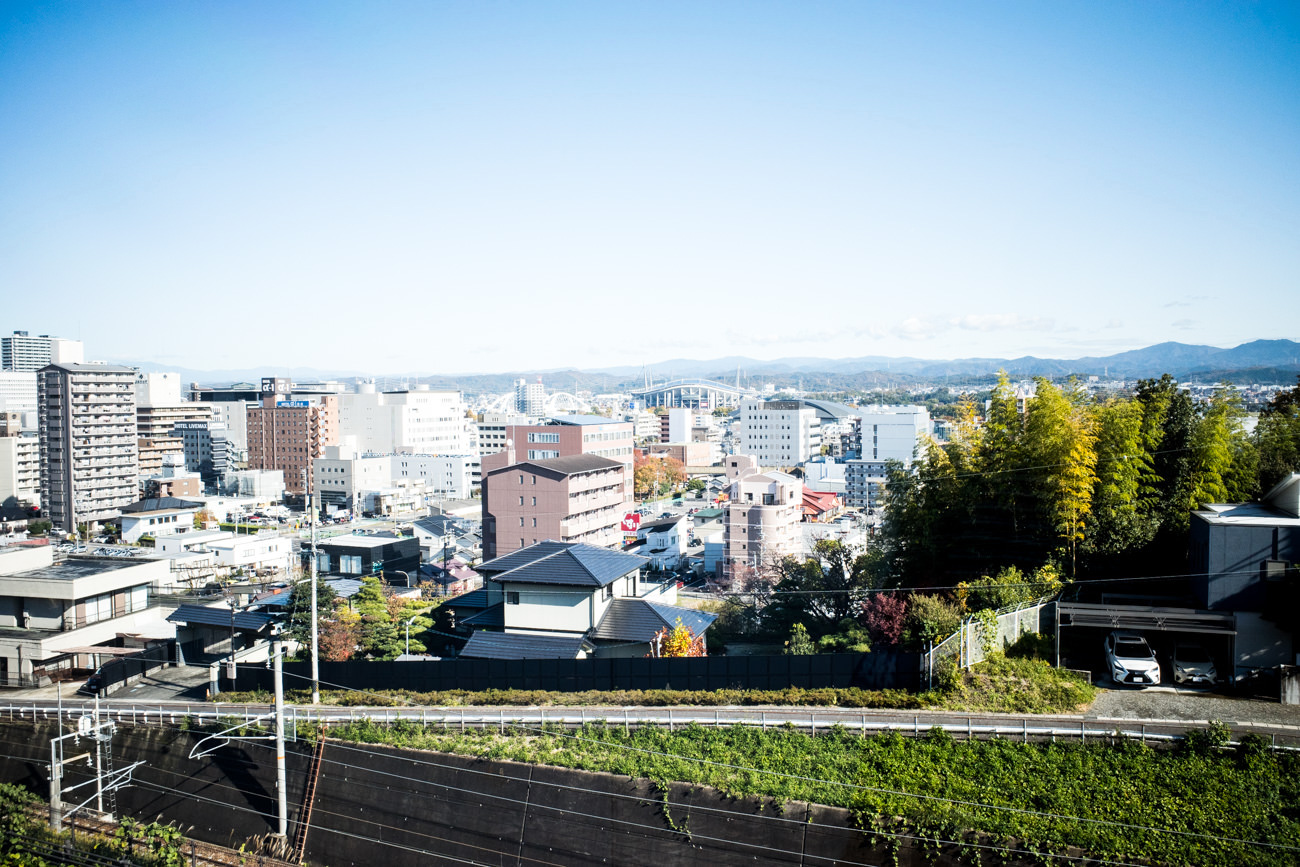
I visited Kenjiro Okazaki’s solo exhibition “Retrospective / Strata.” The venue is Toyota Municipal Museum of Art.
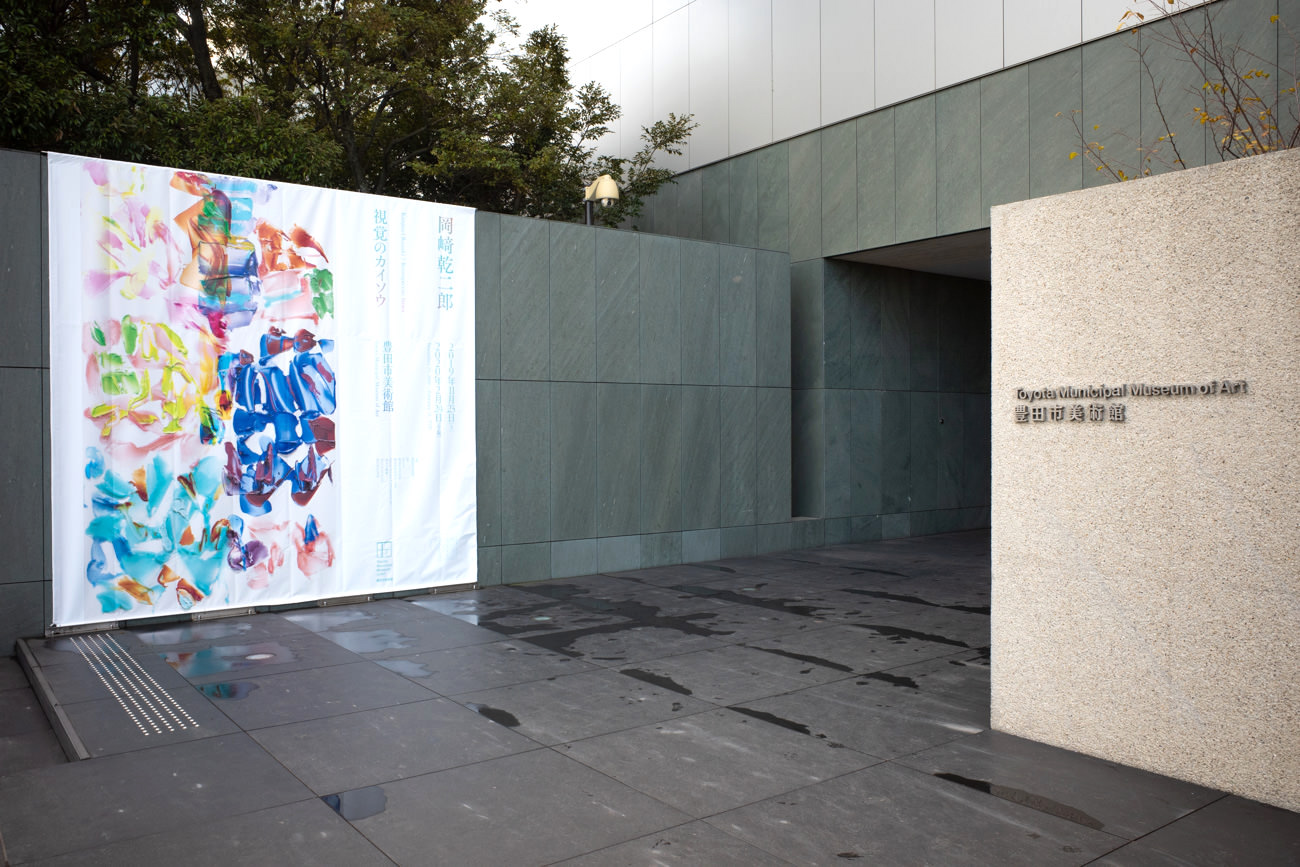
The Japanese title of the show, “Shikaku no Kaisou,” is a triple pun. It is a retrospective presenting both new and old works by Kenjiro Okazaki; it is a set of strata in which the works form relationships with one another and reach the viewer through layered access; and it also refers to Okazaki’s own steady stride across many fields — criticism, architecture, and writing among them. In every sense, it is a major solo exhibition.
When we look at a work of art, we are often bound to the single fixed image the individual work seems to hold.
As the title “Retrospective / Strata” suggests, this exhibition is not only about the works on display; it also invites the viewer to reflect on the relationships and meanings between works, and to notice the exhibition space itself, which is structured like strata. Moving one’s viewpoint and thoughts three-dimensionally — reaching beyond the surface of a work into what lies outside and inside it — I enjoyed unearthing and decoding its riddles.
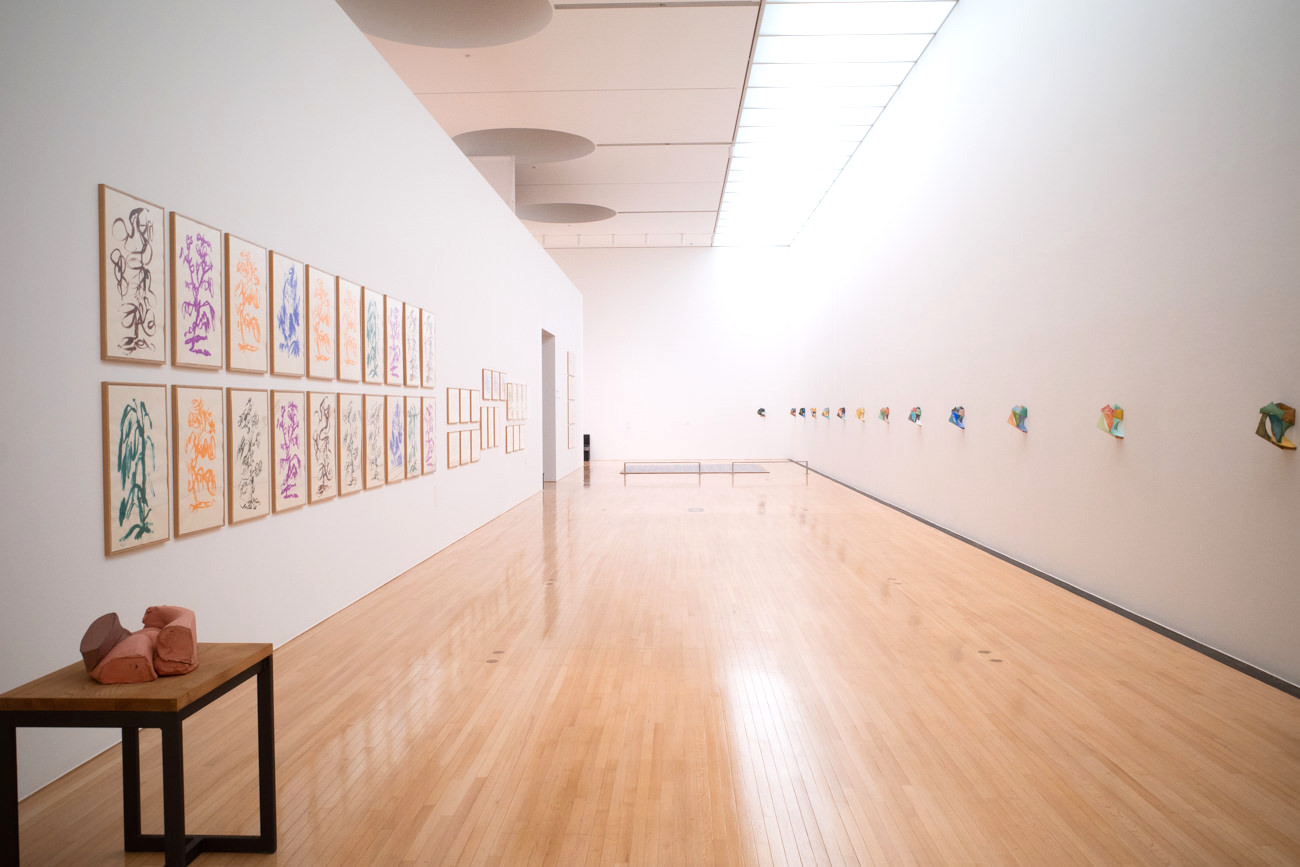
In the first exhibition room “8” past the reception, the show opens with 20 drawings.
As seen in the photo below, drawings in six colors are arranged in an orderly array. Similar motifs by color are rendered with the same touch, and they look almost like copies. In fact, all of these works are collaborations with a drawing robot.
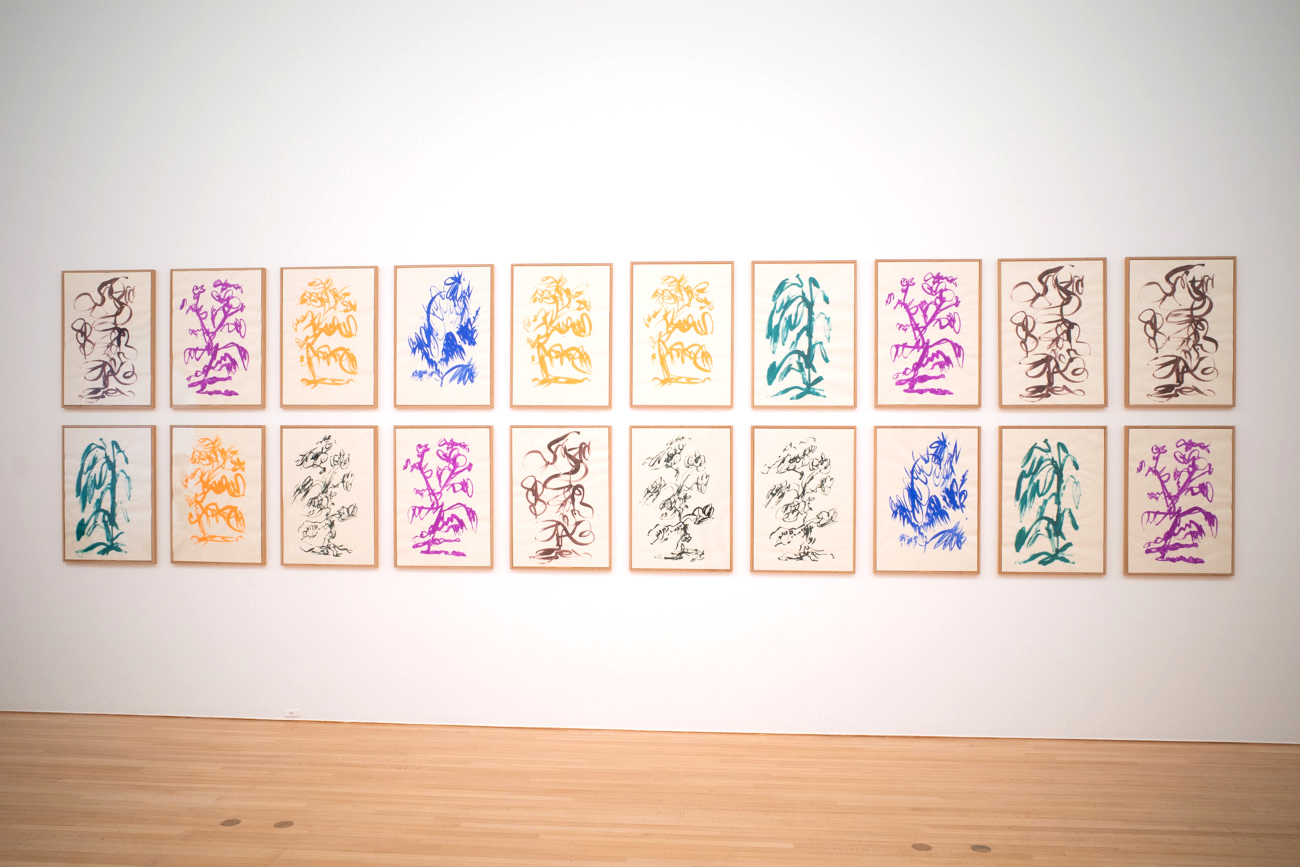
These works were made by recording Okazaki’s own drawings into a computer, then programming the mechanism so that instead of the drawing agent moving, the support itself moves.
The point is not simply that a drawing robot draws, but that the movement is transferred to the movement of the support. It is a work completed by a collaboration between a robot re-performing the Okazaki of the past, and the Okazaki
This display feels like a device Okazaki has planted at the outset — asking how we might dig one step deeper into the momentary discomfort or subtle noticing we experience while viewing, and how to interpret them. Even if the answer remains unknown, this device may function as a trigger for reading the works that follow.
Past the drawing corner, to the left, is the “Brancacci Chapel Fresco Analysis” section.
It is a rare opportunity to visually experience the research Okazaki elucidated in his book “Renaissance: Conditions of Experience.”
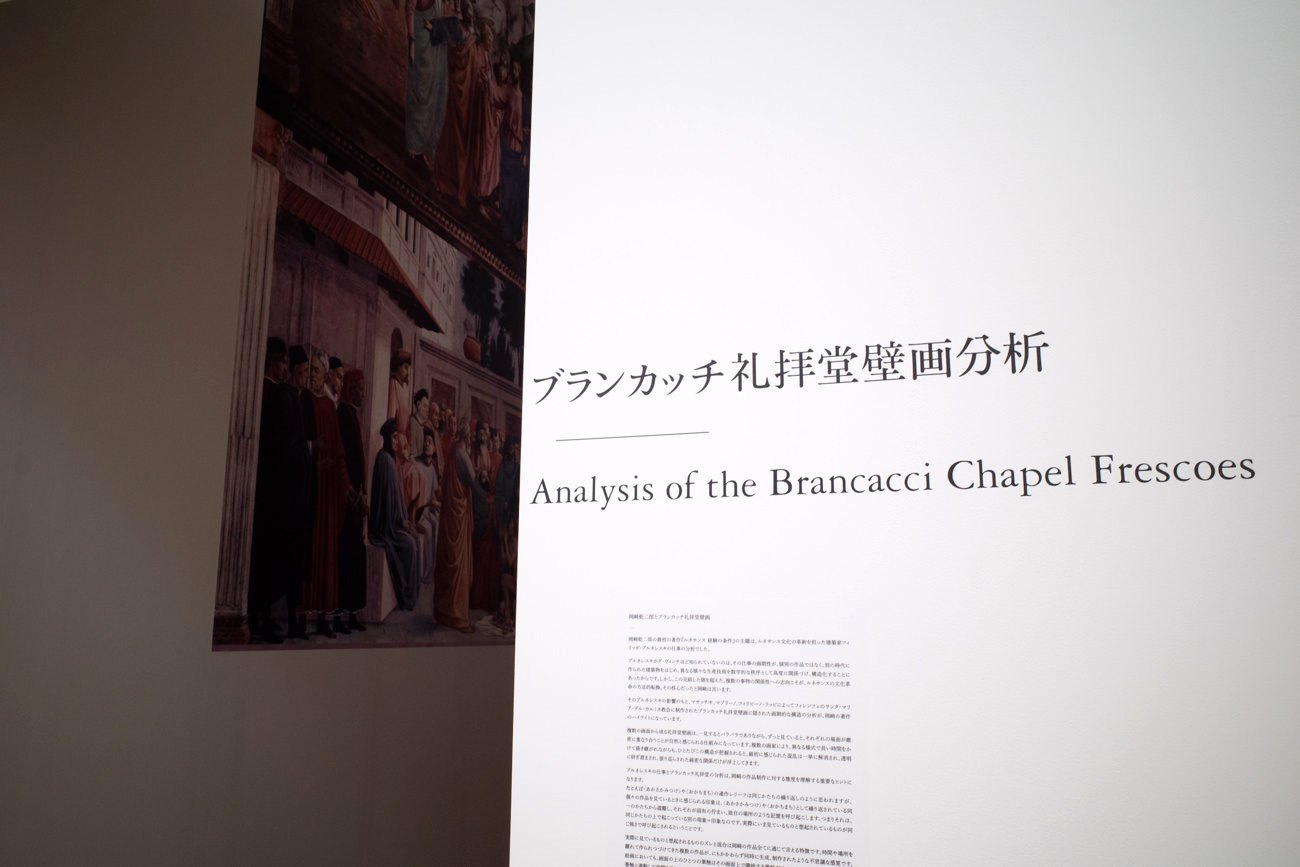
Here, through PC demonstrations and AR-driven experiences, the secrets hidden in the Brancacci Chapel frescoes are unlocked.
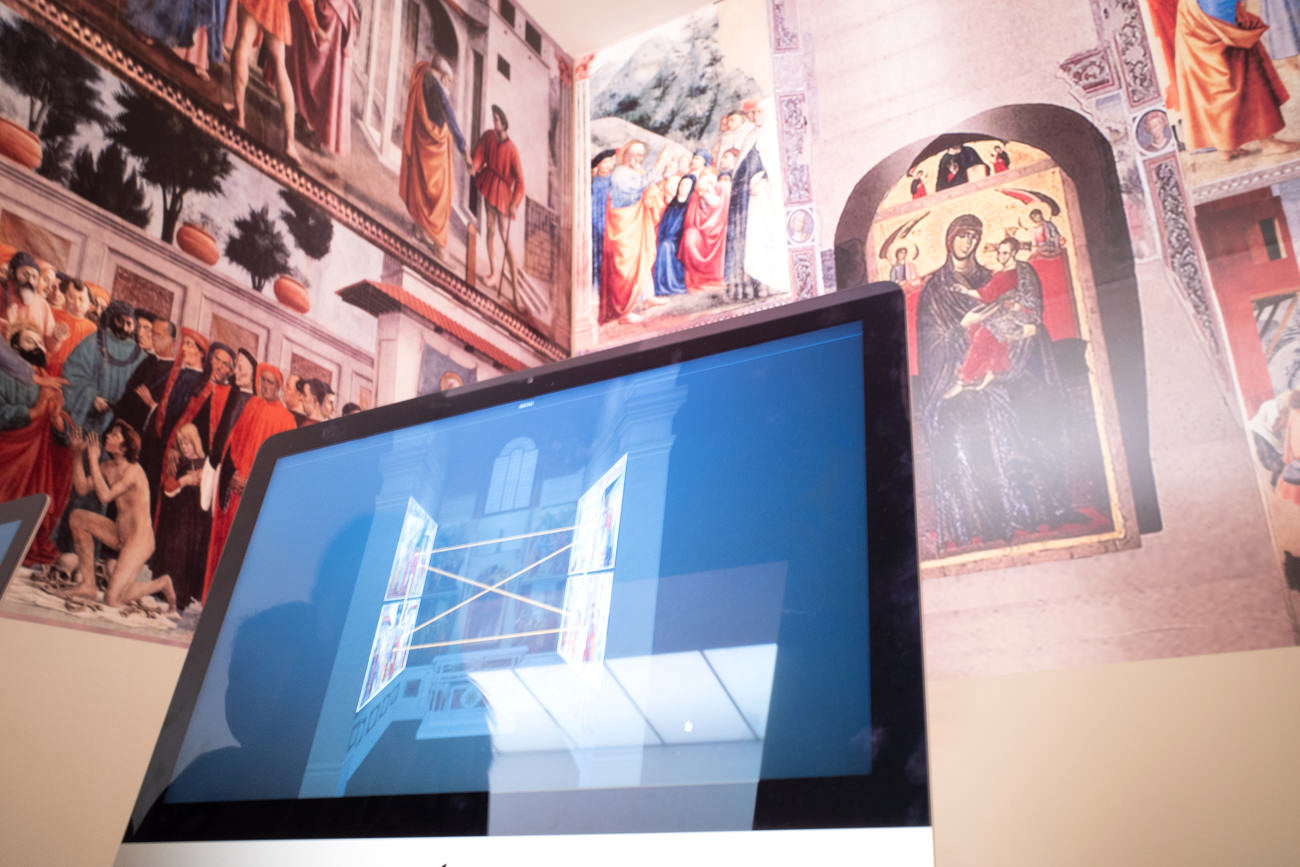
The riddle-solving process of the fresco analysis directly hints at how to read the works on display. It overlaps with a feature common to Okazaki’s works — the multi-layered interweaving of color, material, and form. Passing through this fresco-analysis room, one finally enters the full-scale Okazaki exhibition zone.
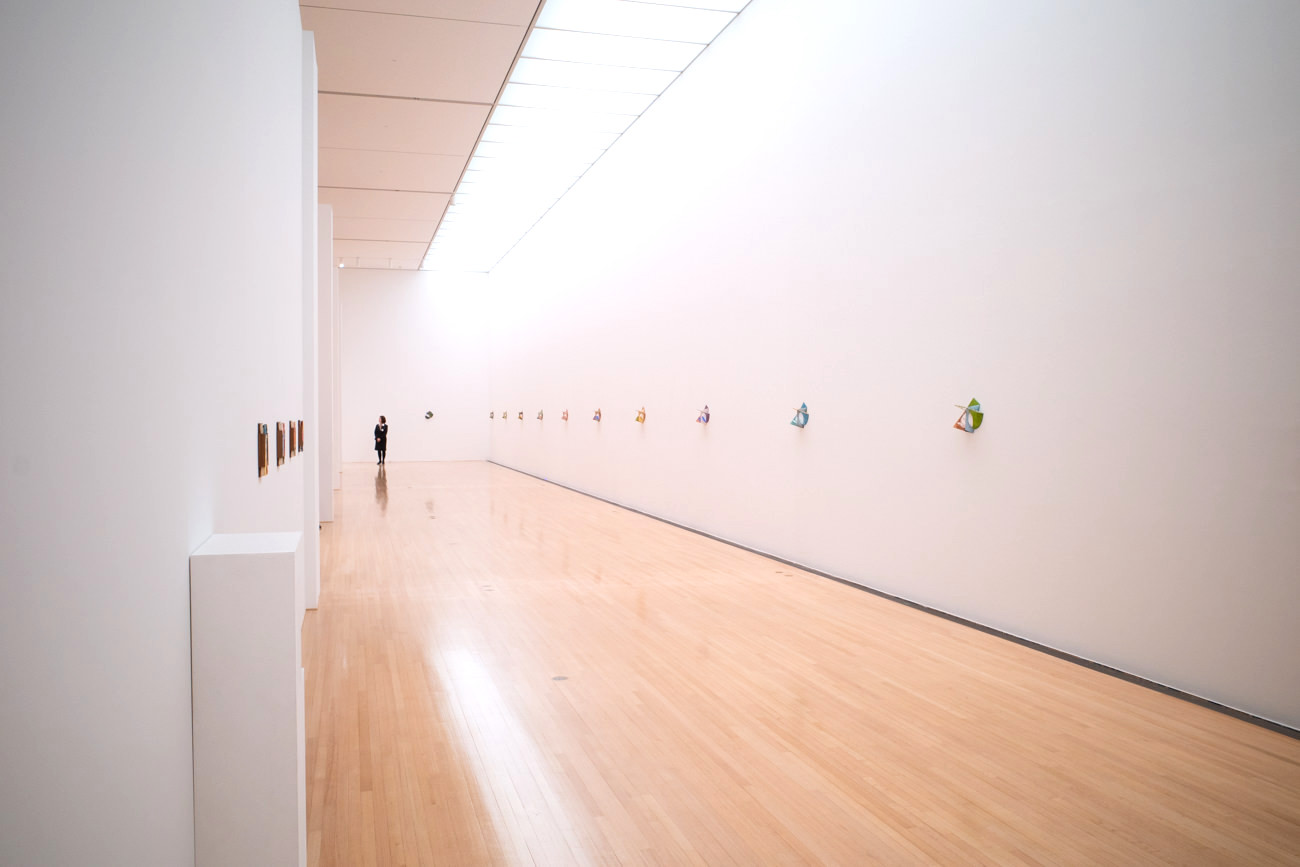
The first-floor galleries were organized around paintings and reliefs.
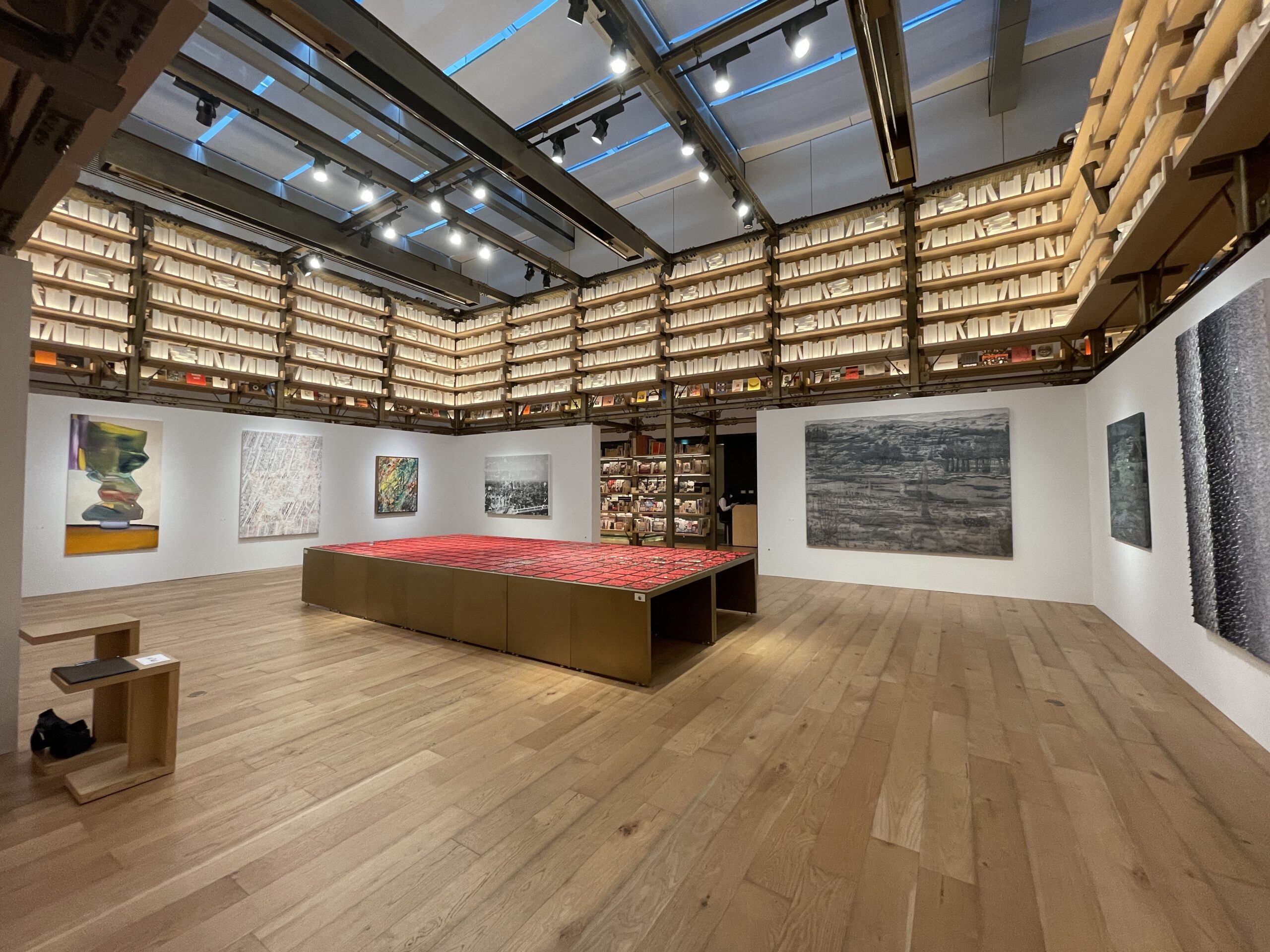
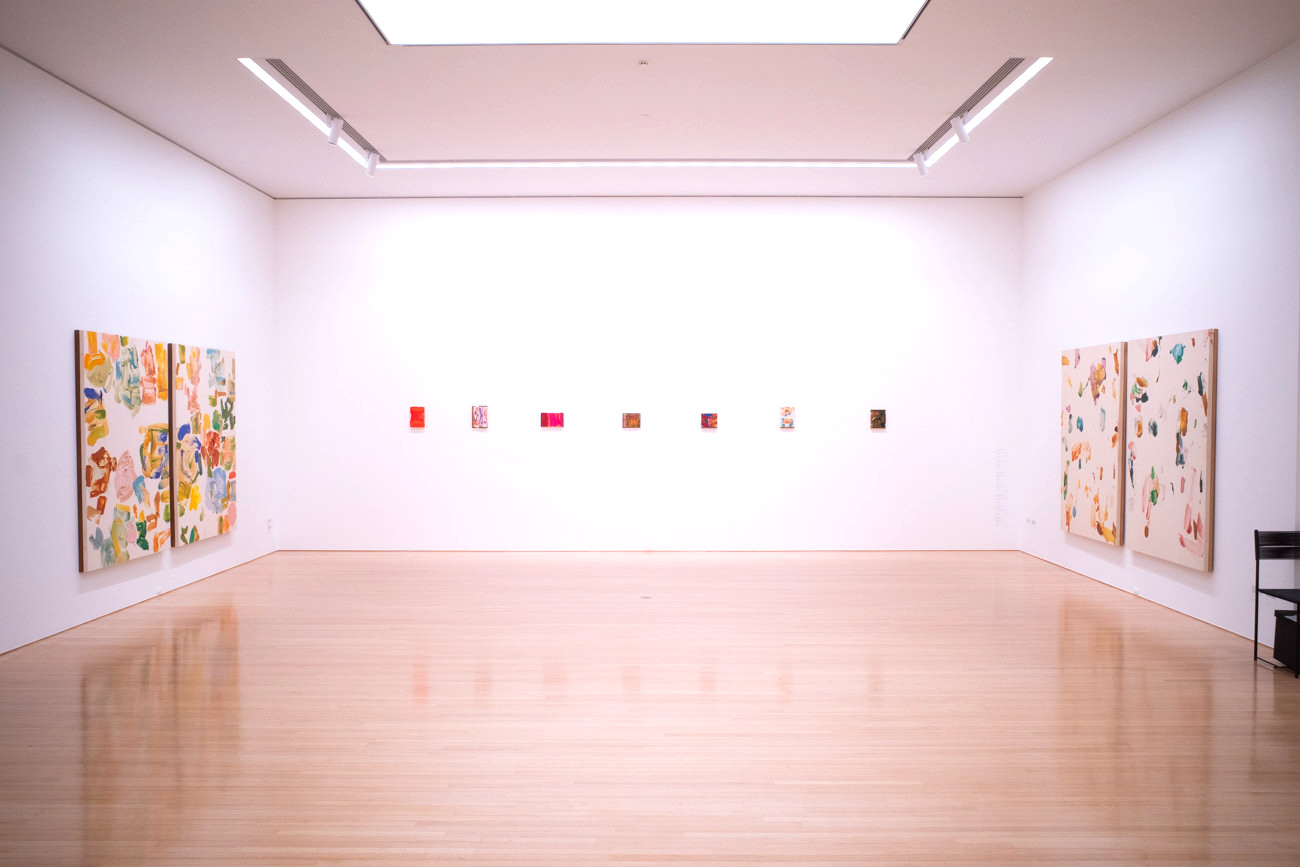
In the museum’s large exhibition rooms, works of various sizes were arranged with pleasing rhythm.
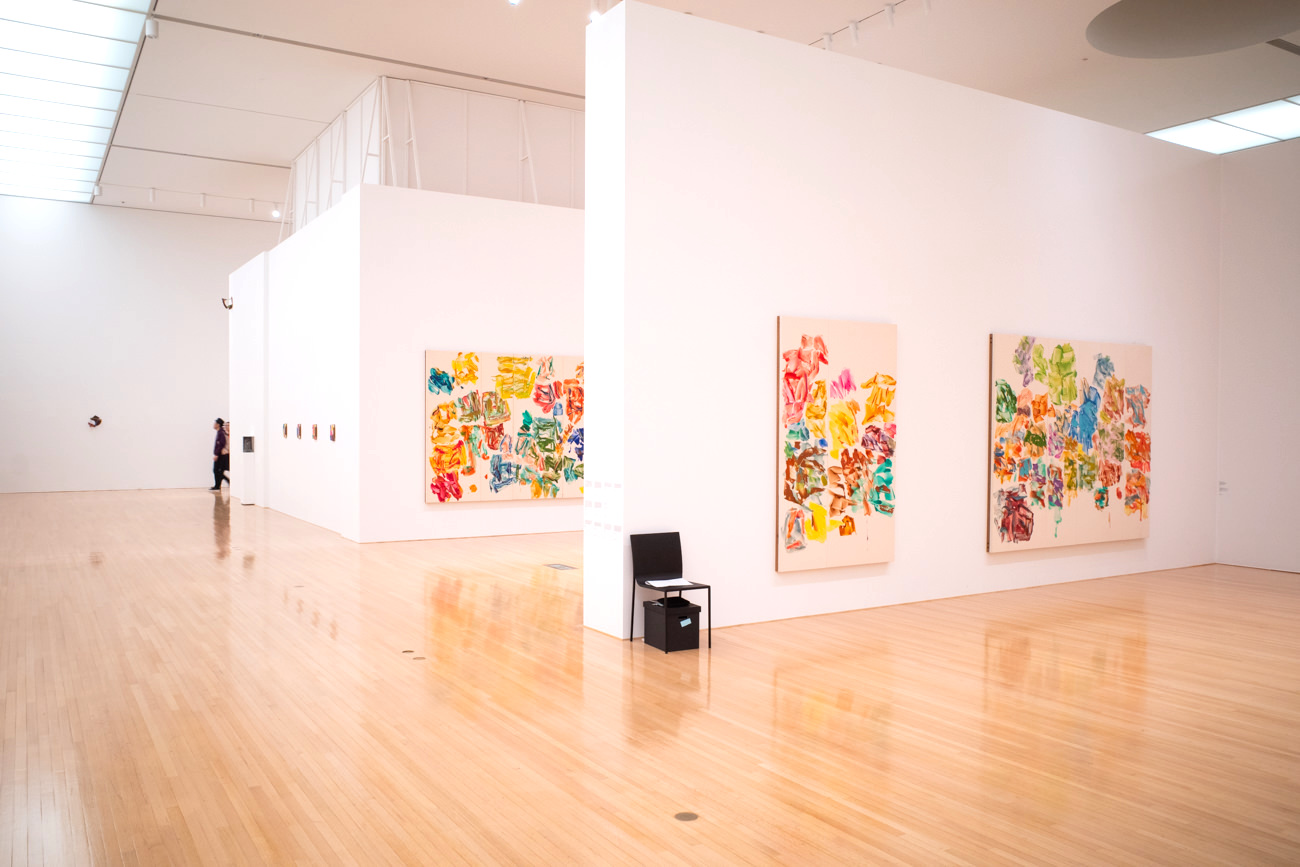
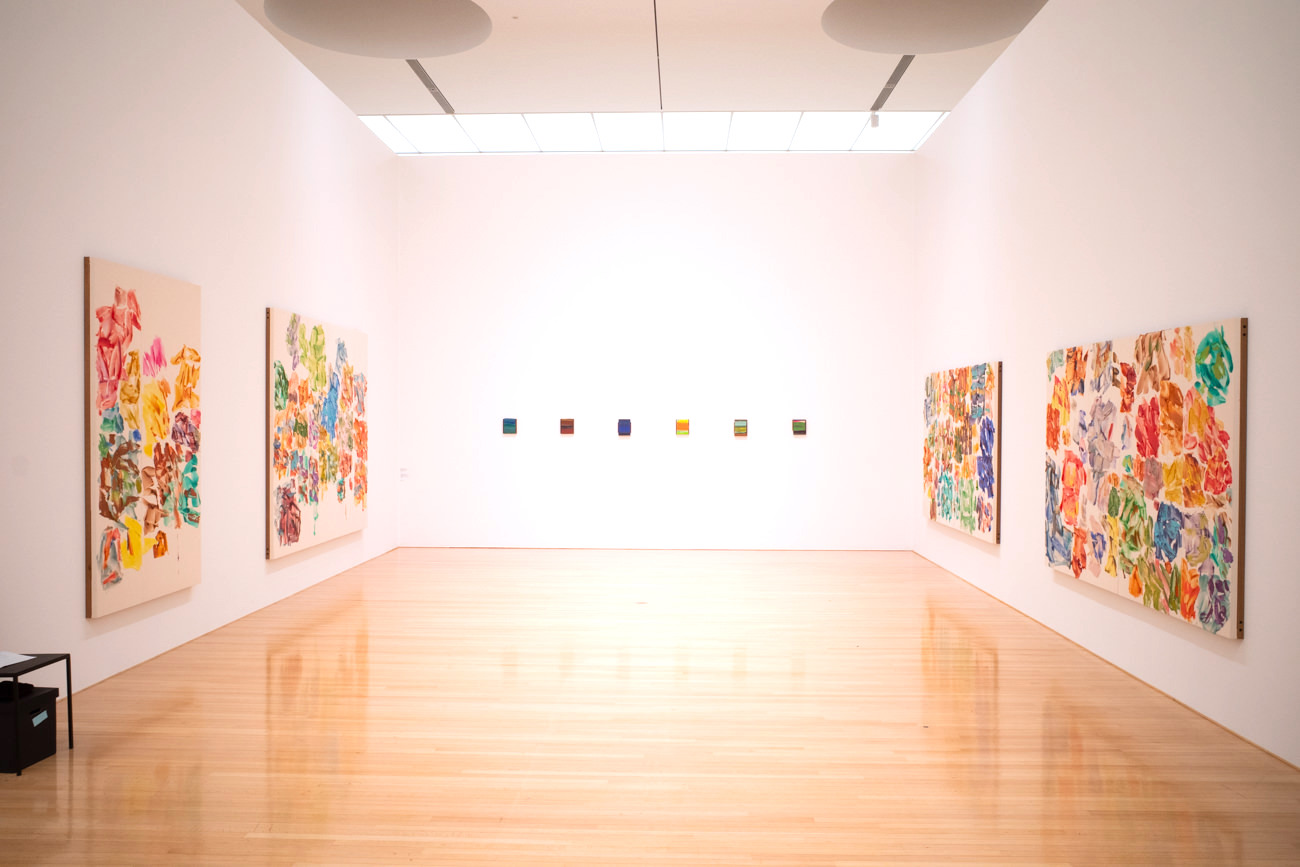
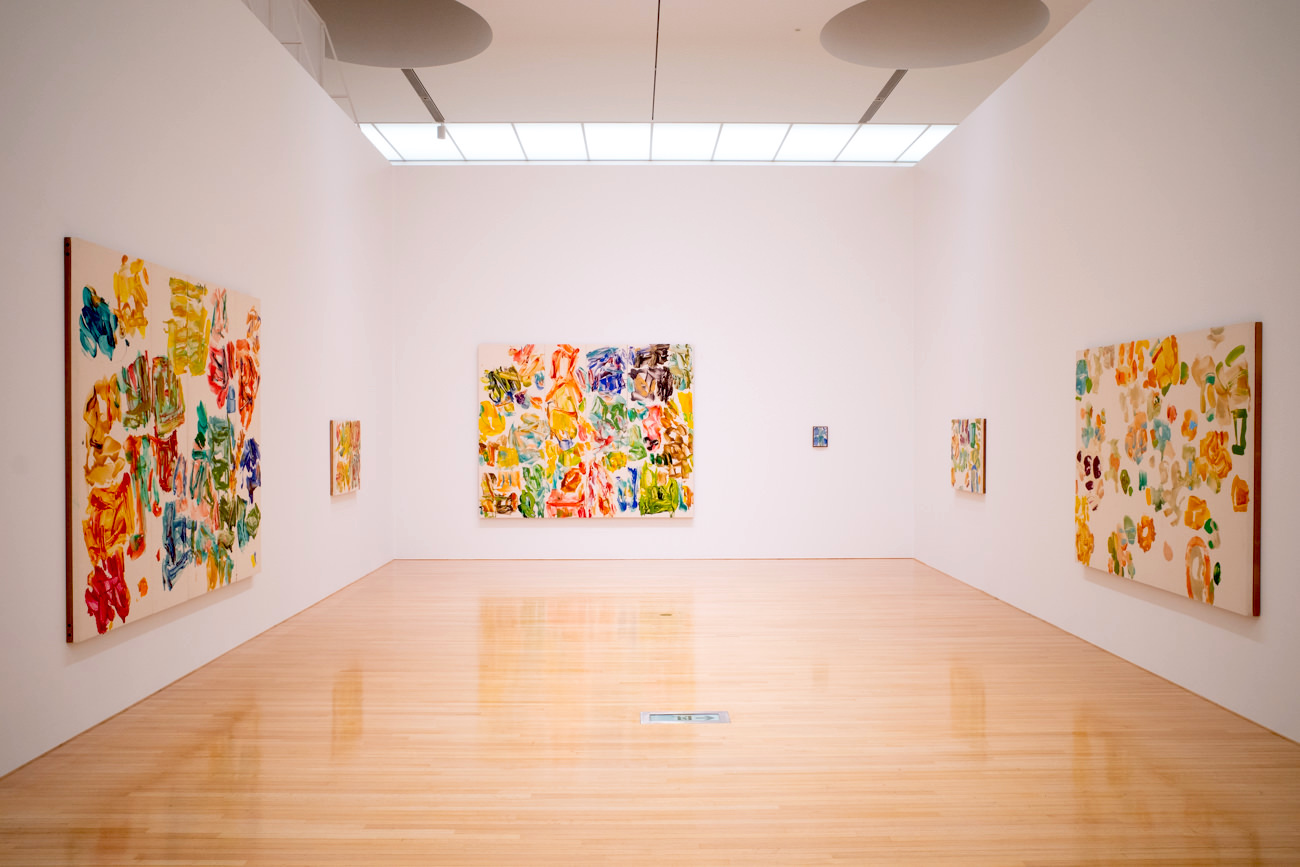
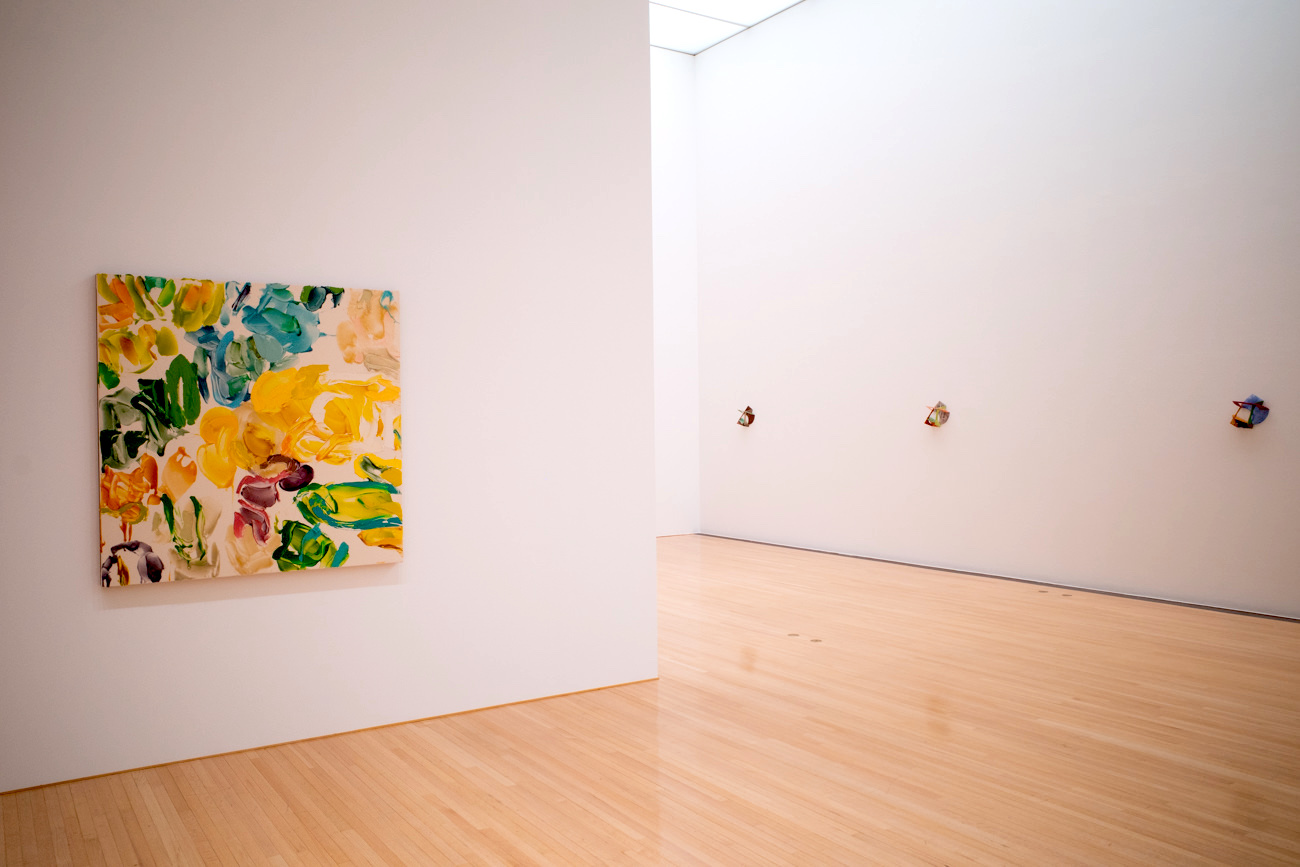
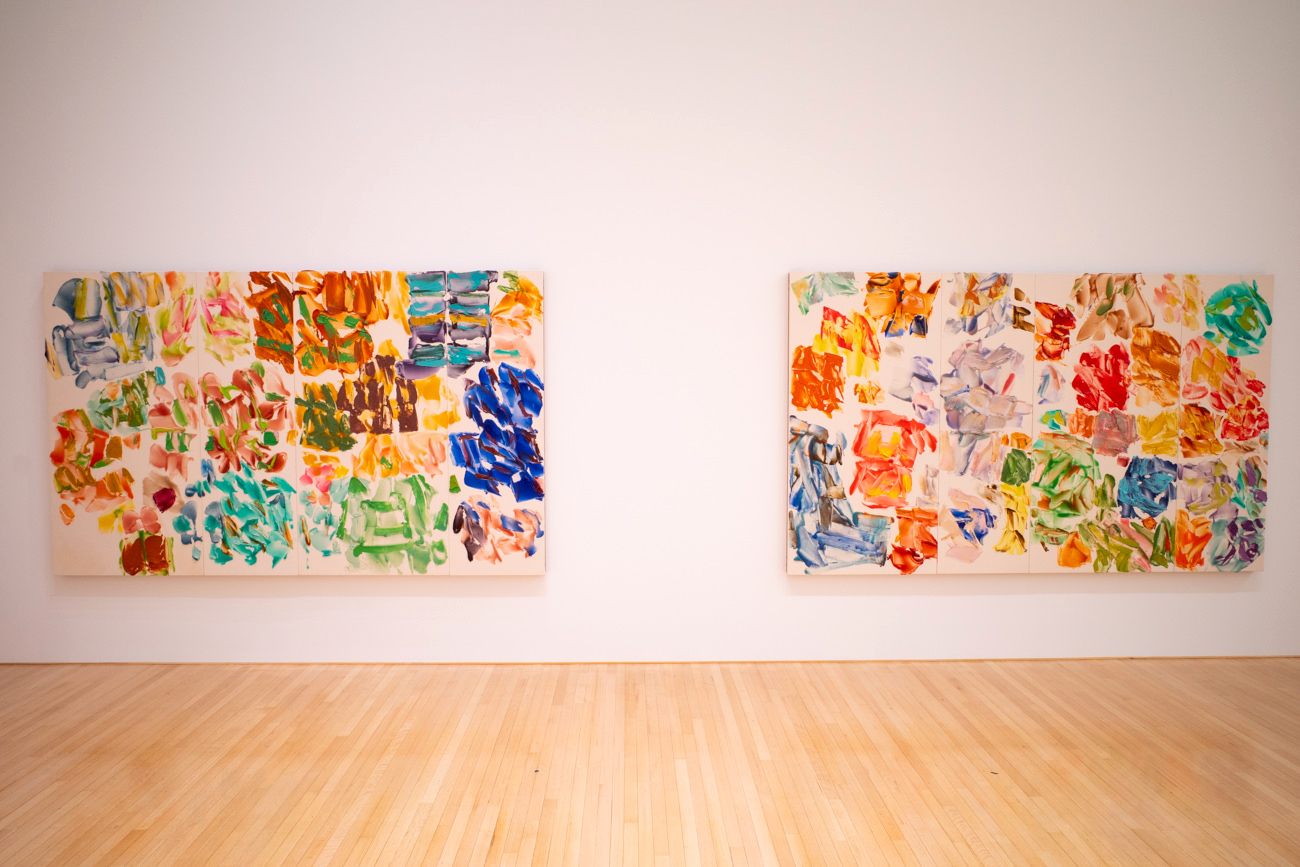
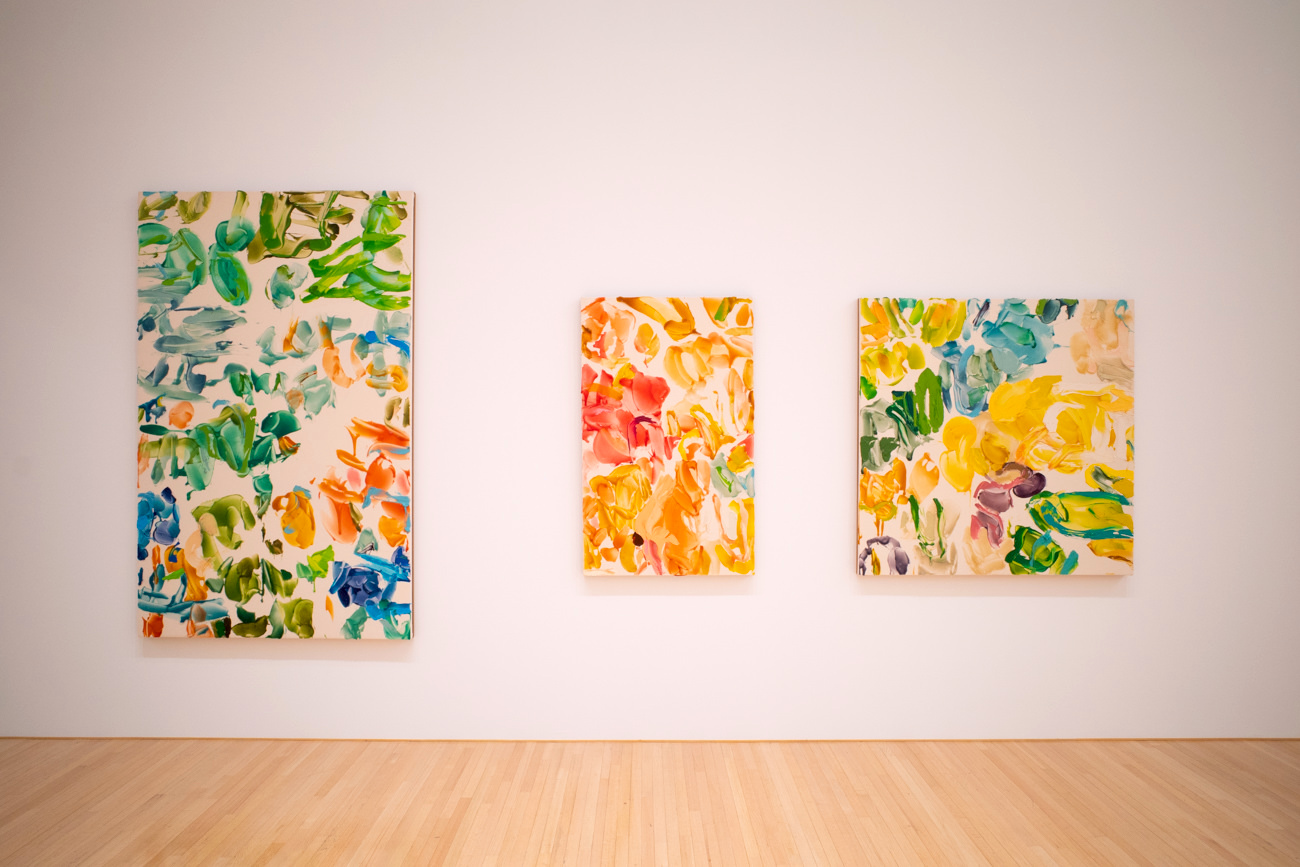
Center: “For light, air is not transparent (an impediment to intrusion). Therefore stars in the heavens! That is, windows open, and in the evening a dazzling light (not words) reaches the ground.” 2008
Right: “The country of the sky, too (like the earth), is full of trees and flowers, animals and birds (of course ducks and rabbits too), and everything is more beautiful than on earth! They surely exist! Look at the blueness of the sky. Anything far away looks blue.” 2008
The work list handed out at the entrance divides the show into roughly 130 works, but because many are grouped works, the actual number of pieces feels closer to 300–400.
Being grouped, the works generate multiple relationships in the spaces between painting and painting, form and form — and that multiplicity opens up a richly varied viewing experience.
Reliefs
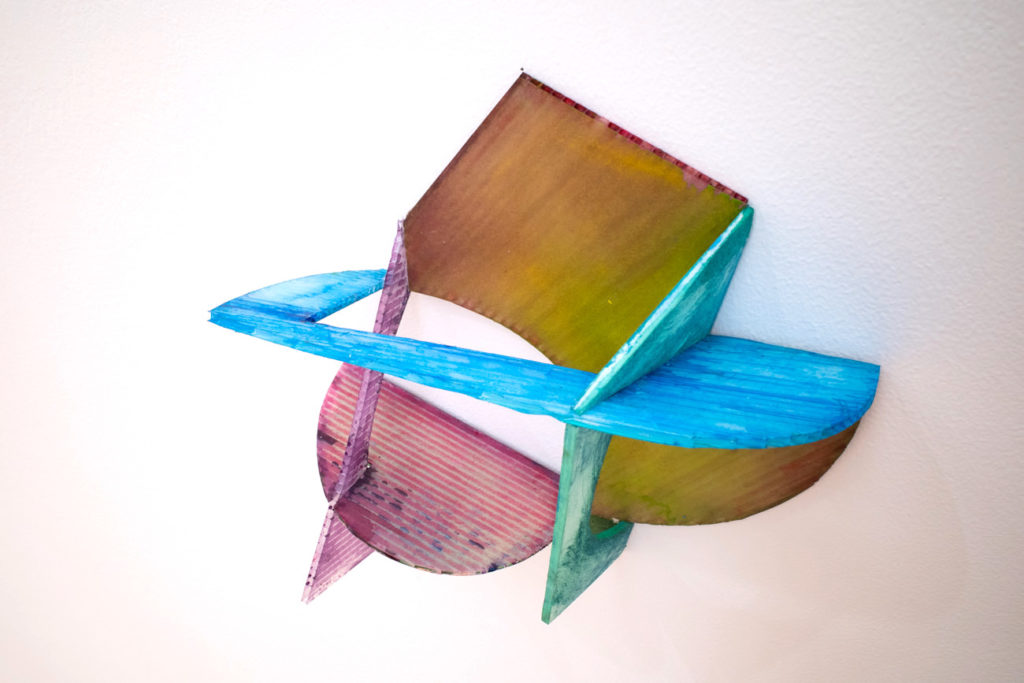
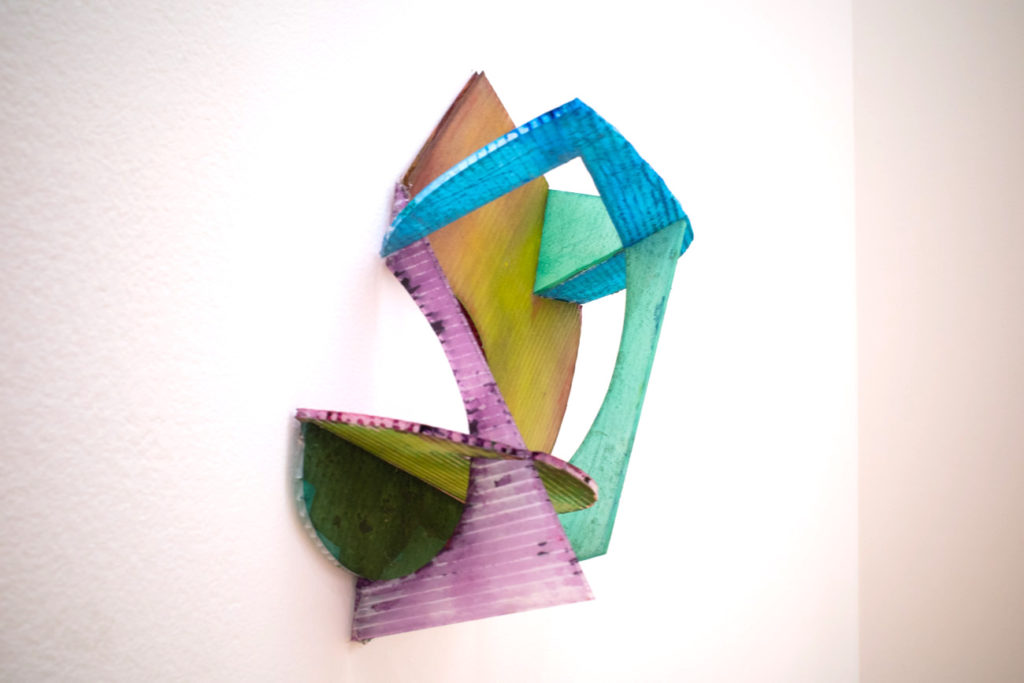
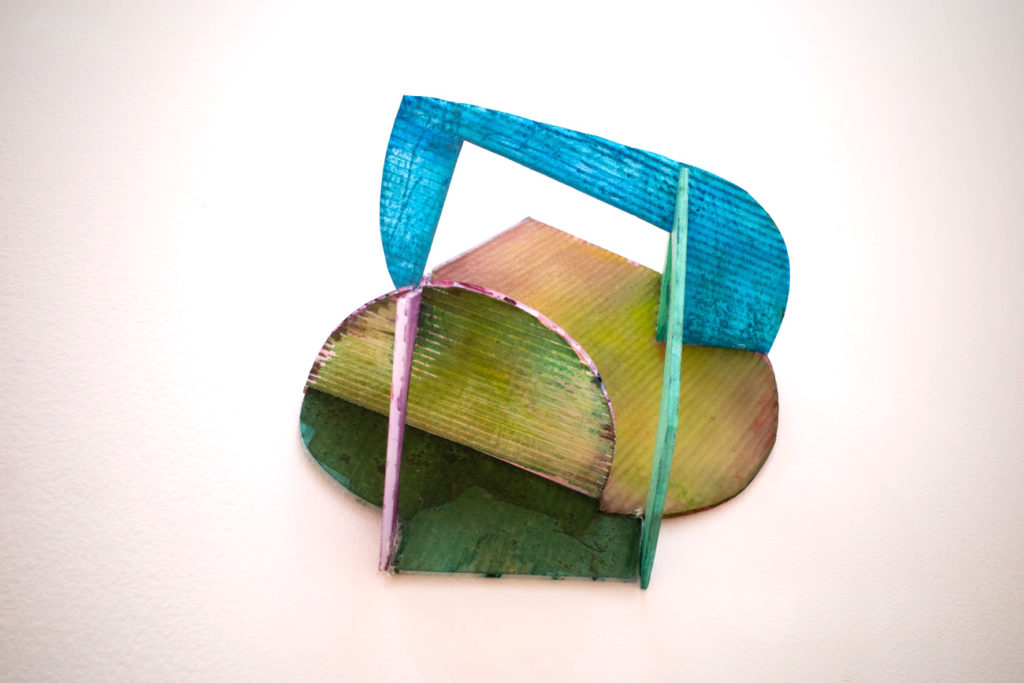
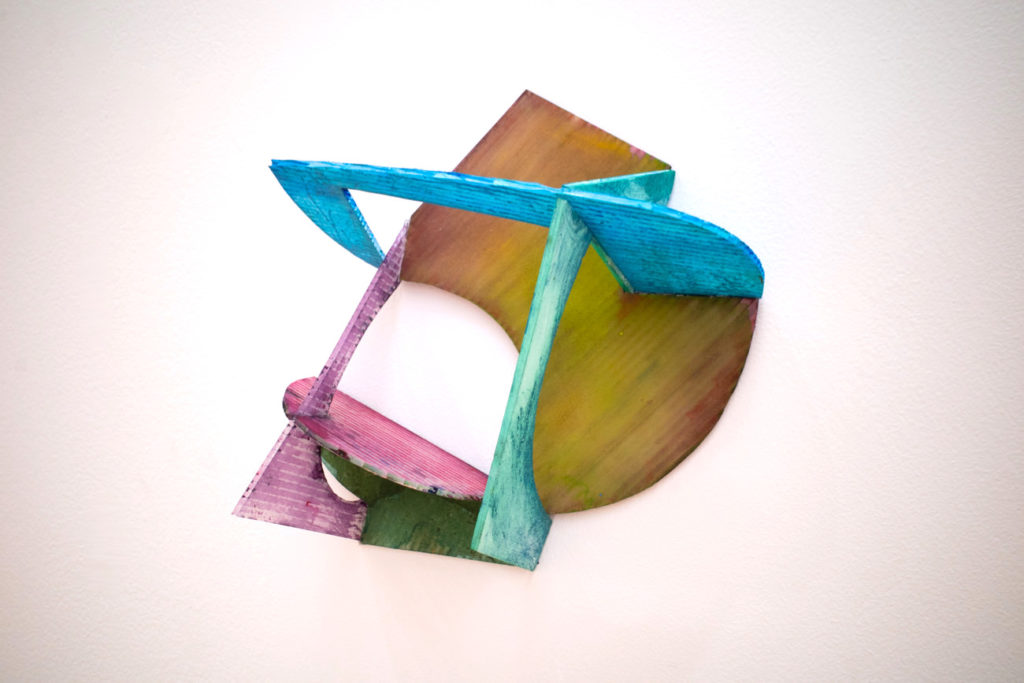
The relief works — the “Okachimachi” series shown in the photos below — are one of Kenjiro Okazaki’s signature series, and were also chosen for the flyer of the show.
As the photos below show, even the same work gives quite different impressions depending on the angle from which it is viewed.
Zero Thumbnail series
Another series, the Zero Thumbnail series, was also presented in large numbers.
Among Okazaki’s works, this is the series that fascinates me most. Many pieces from it were on view.
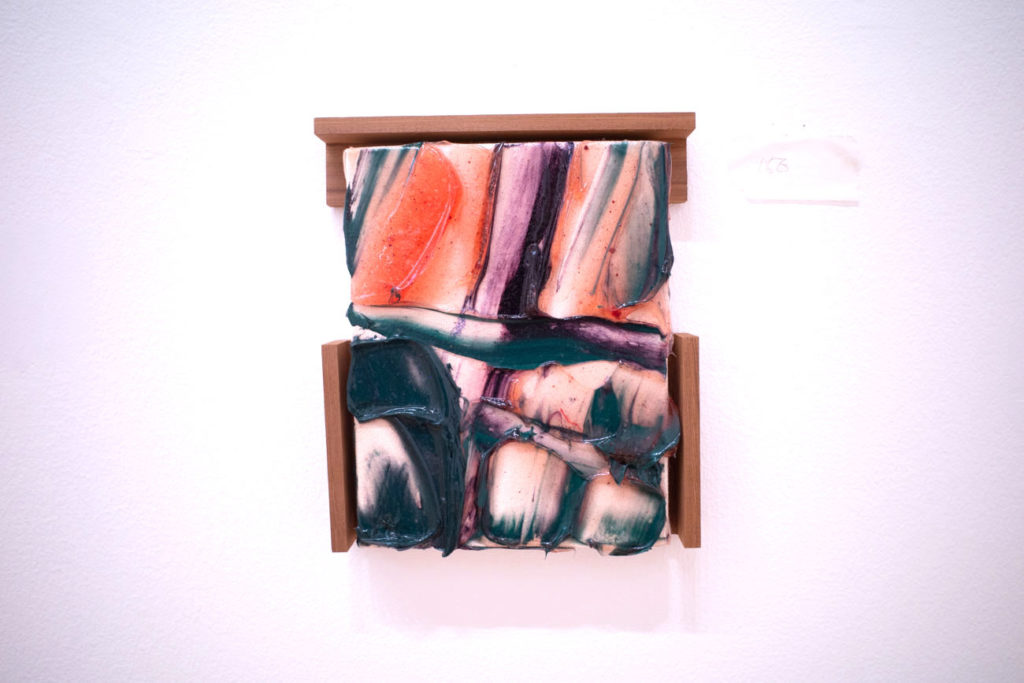
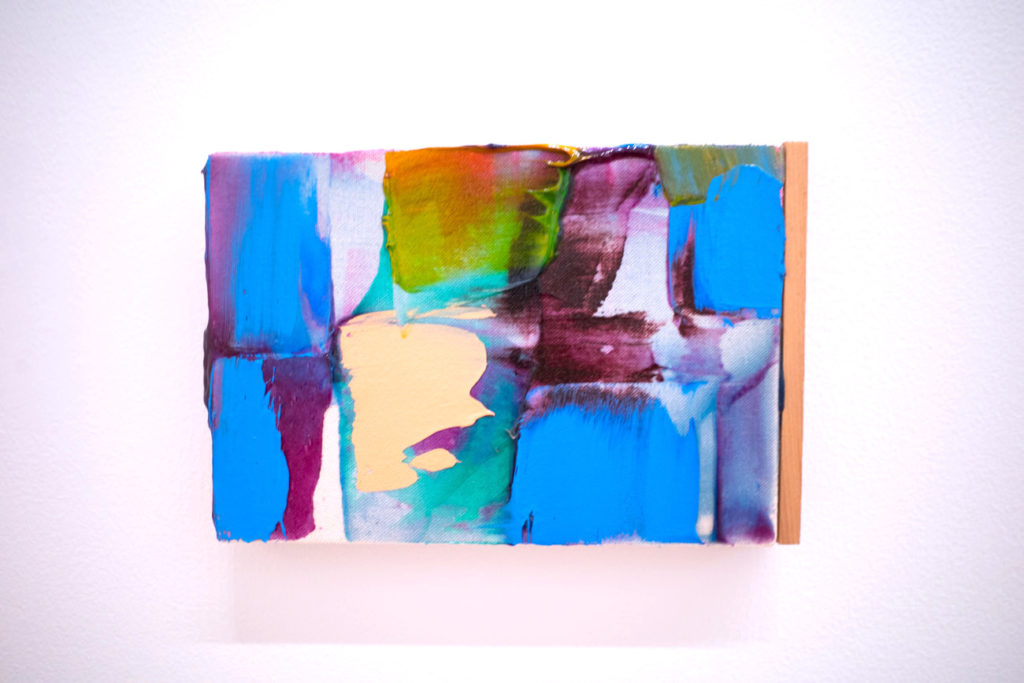
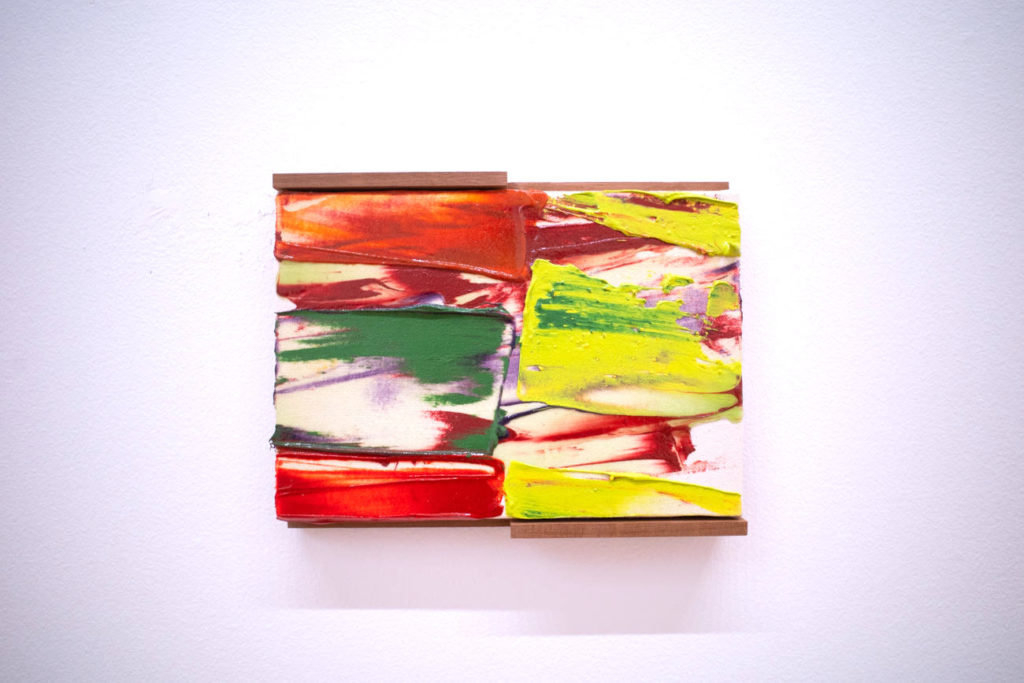
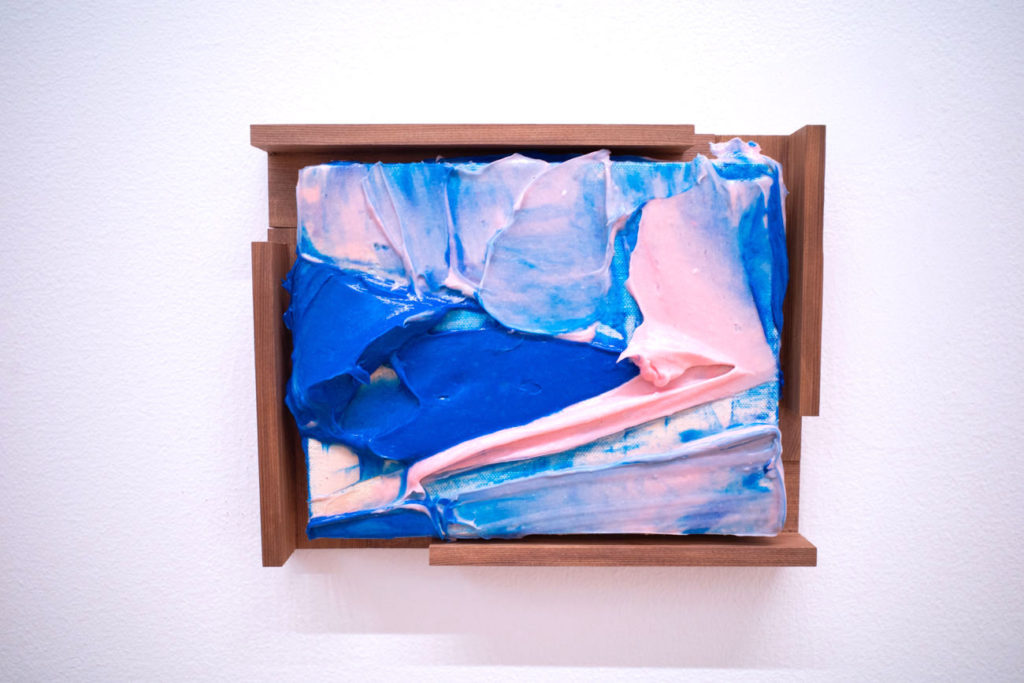
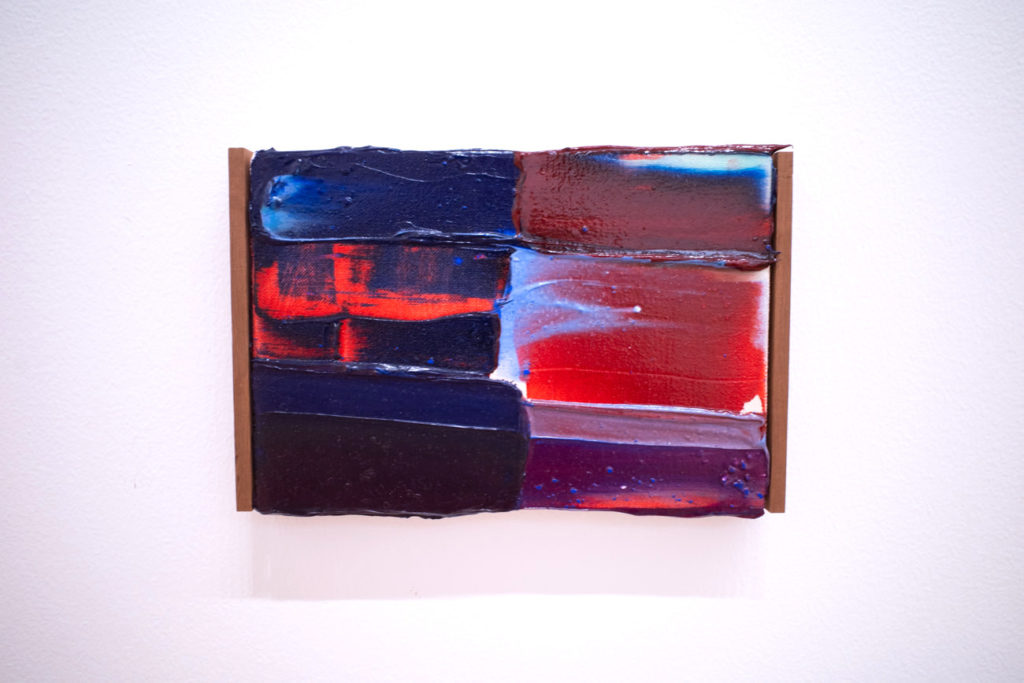
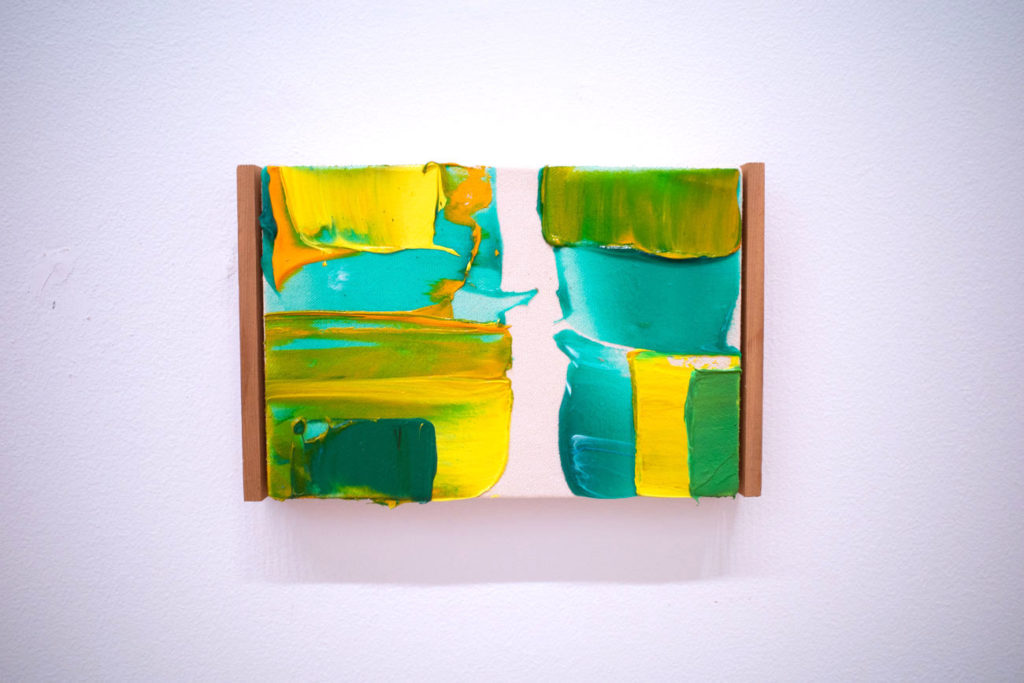
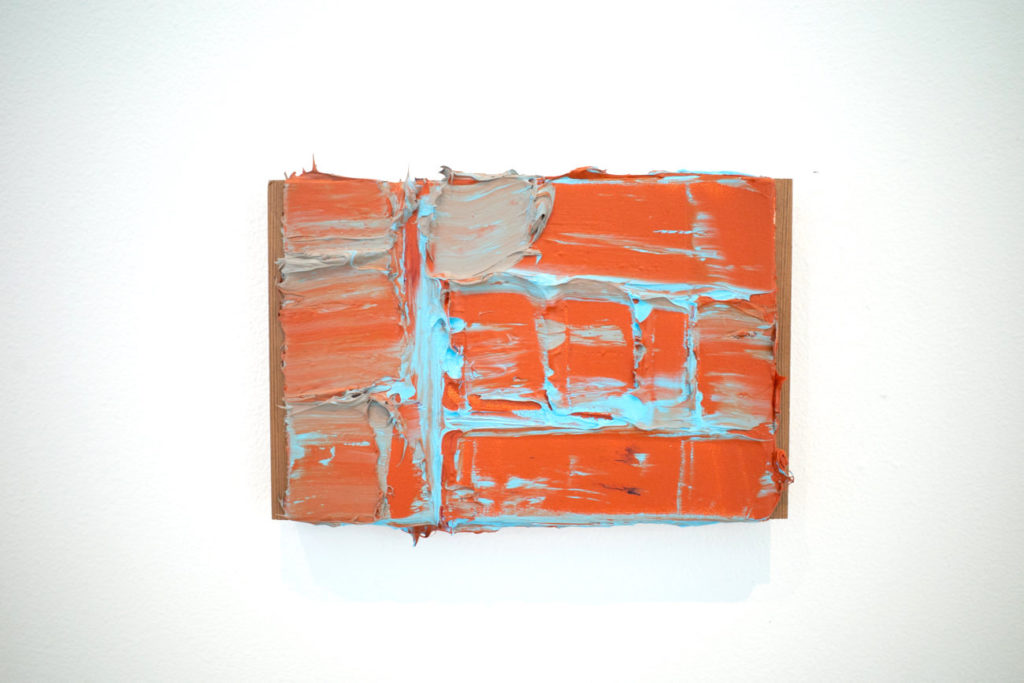
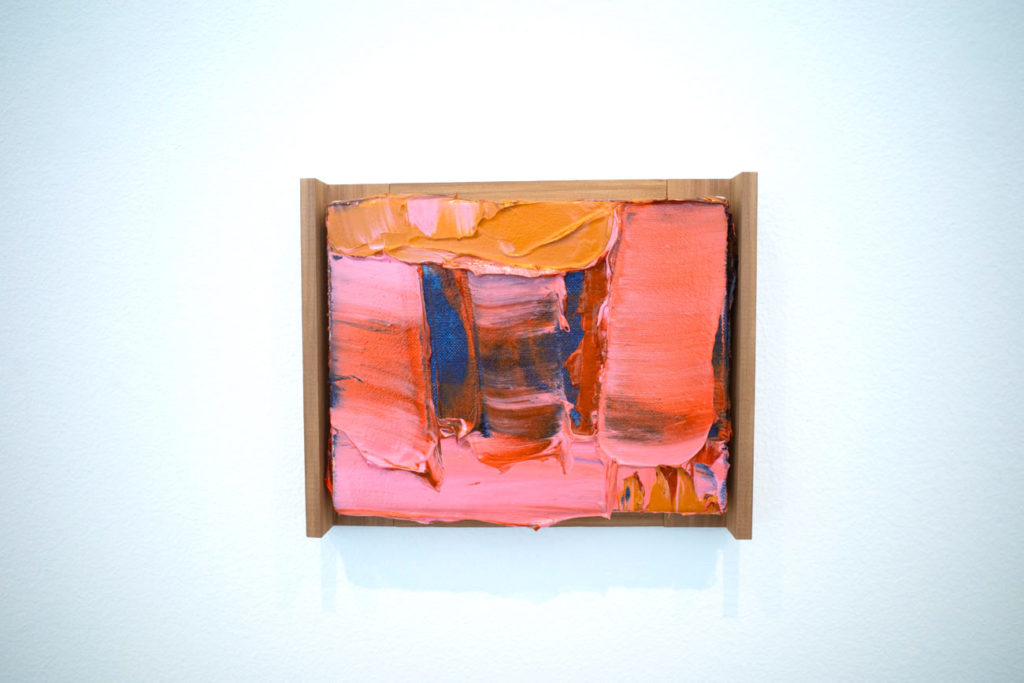
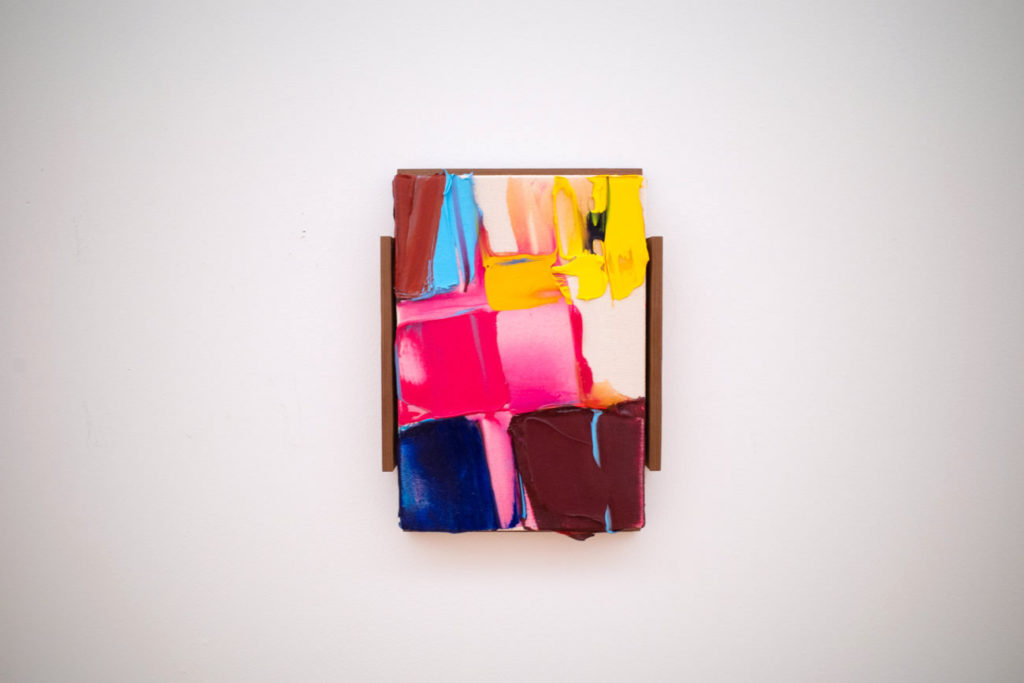
For reference: his 2019 solo show at TAKURO SOMEYA CONTEMPORARY ART (Tennozu, Tokyo) was also built around the Zero Thumbnail series. https://art-on.jp/2019/08/kenjiro-okazaki-tsca/
Sculpture
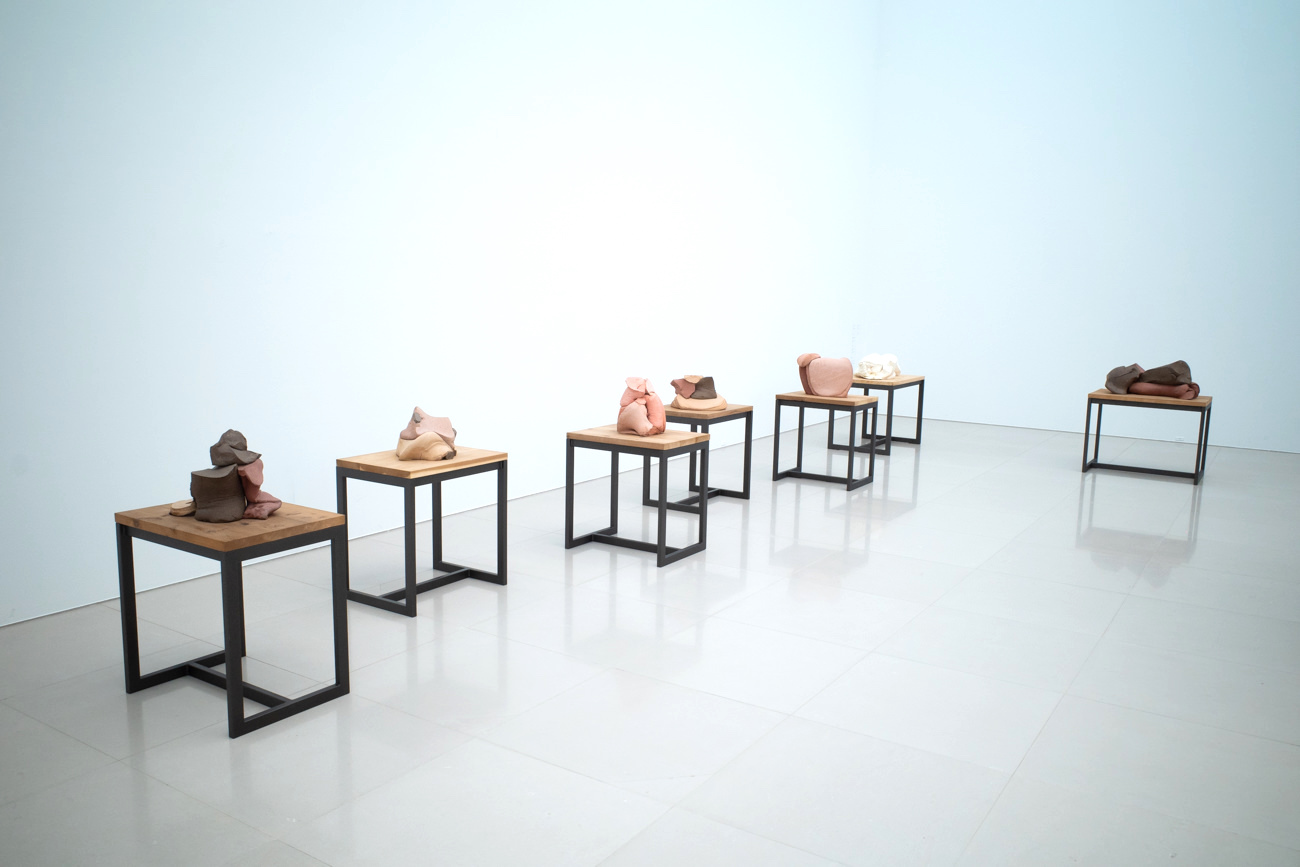
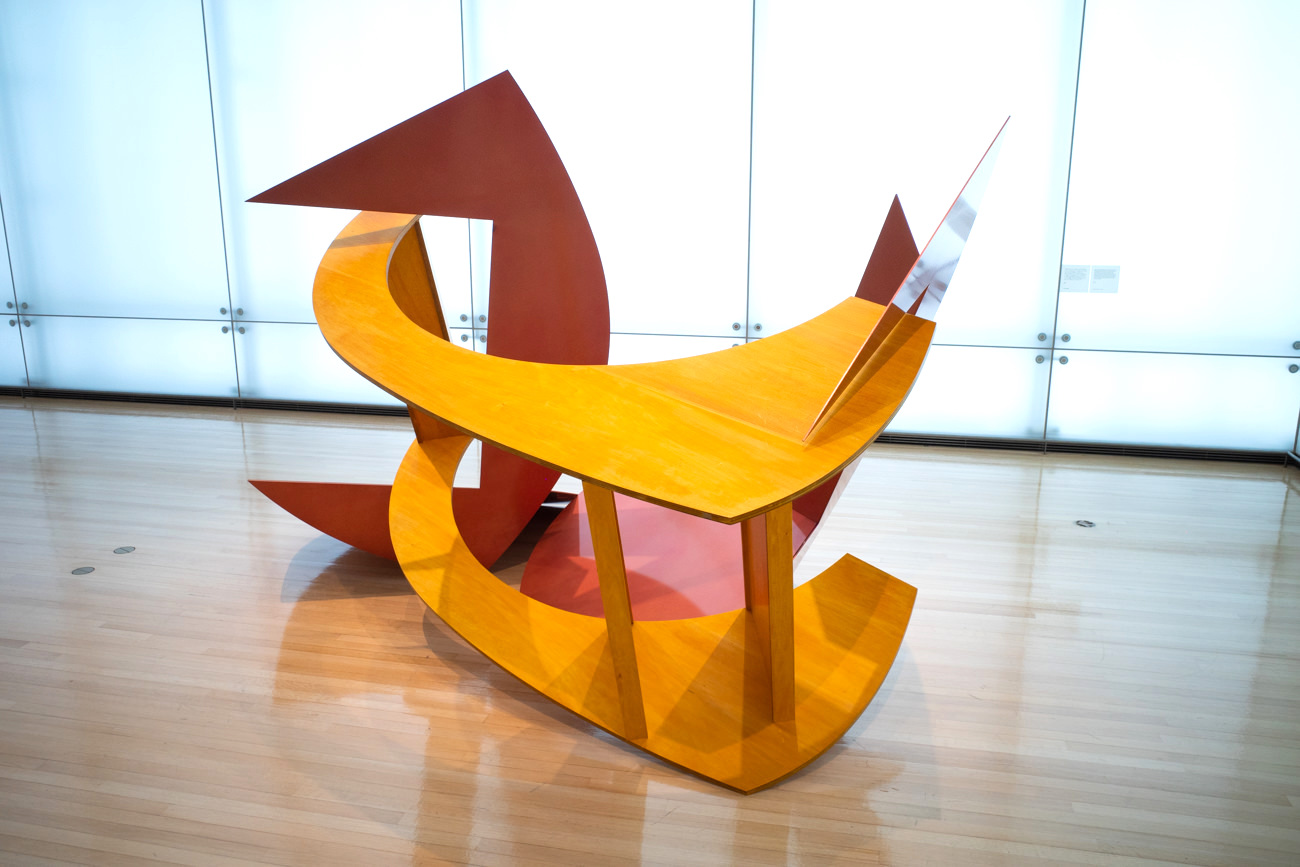
On the second floor, the sculpture shown at the 8th International Architecture Exhibition of the Venice Biennale in 2002 stood alongside new works.
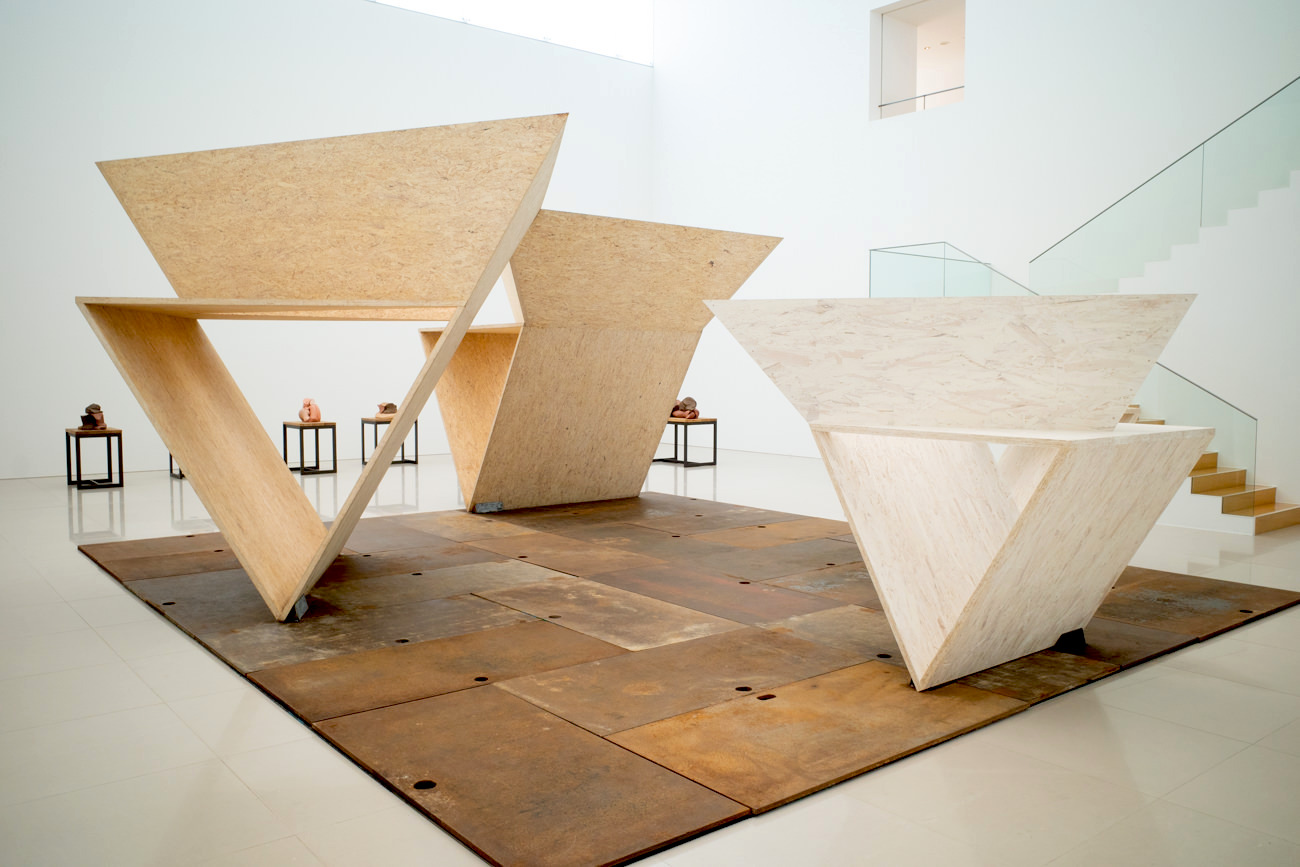
Right: Kenjiro Okazaki, “1853” 2019
Tile works
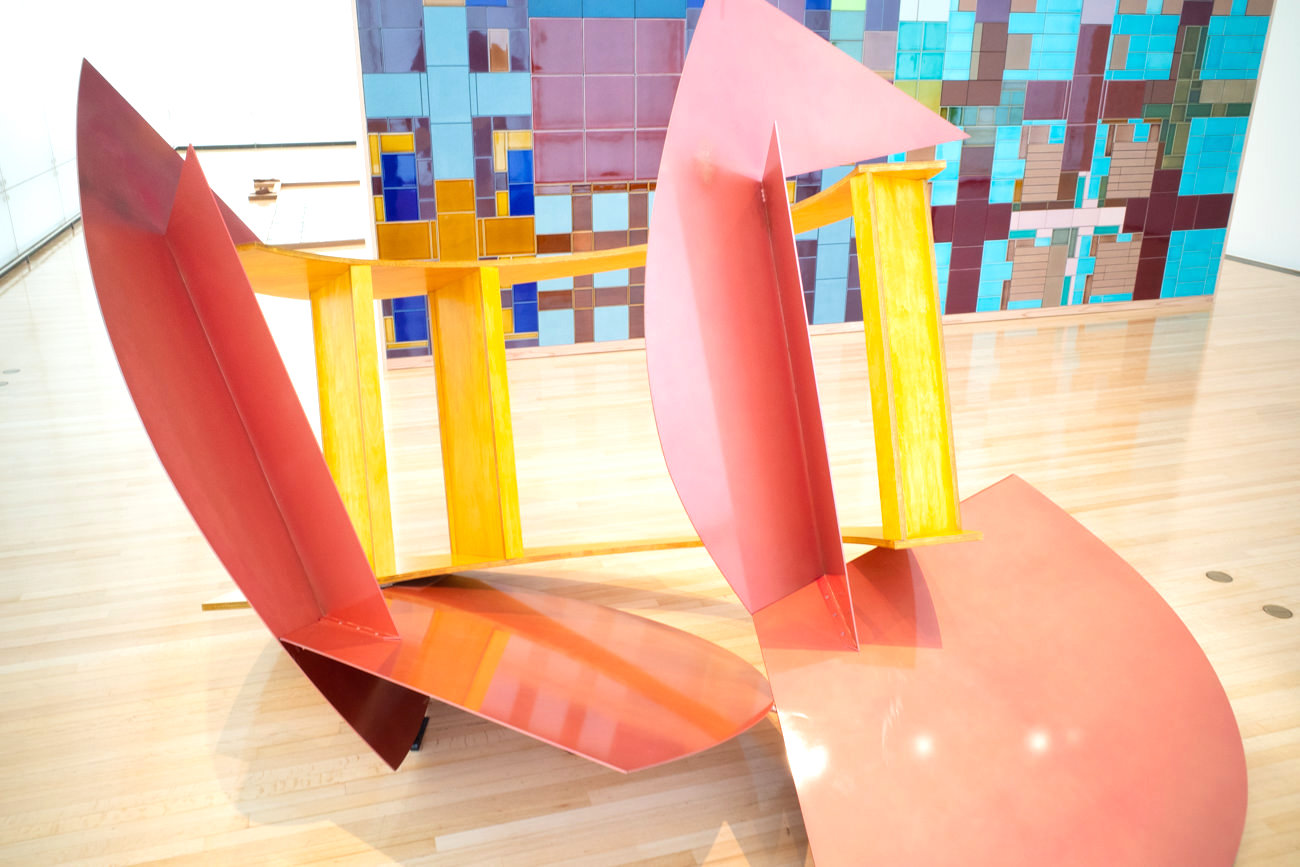
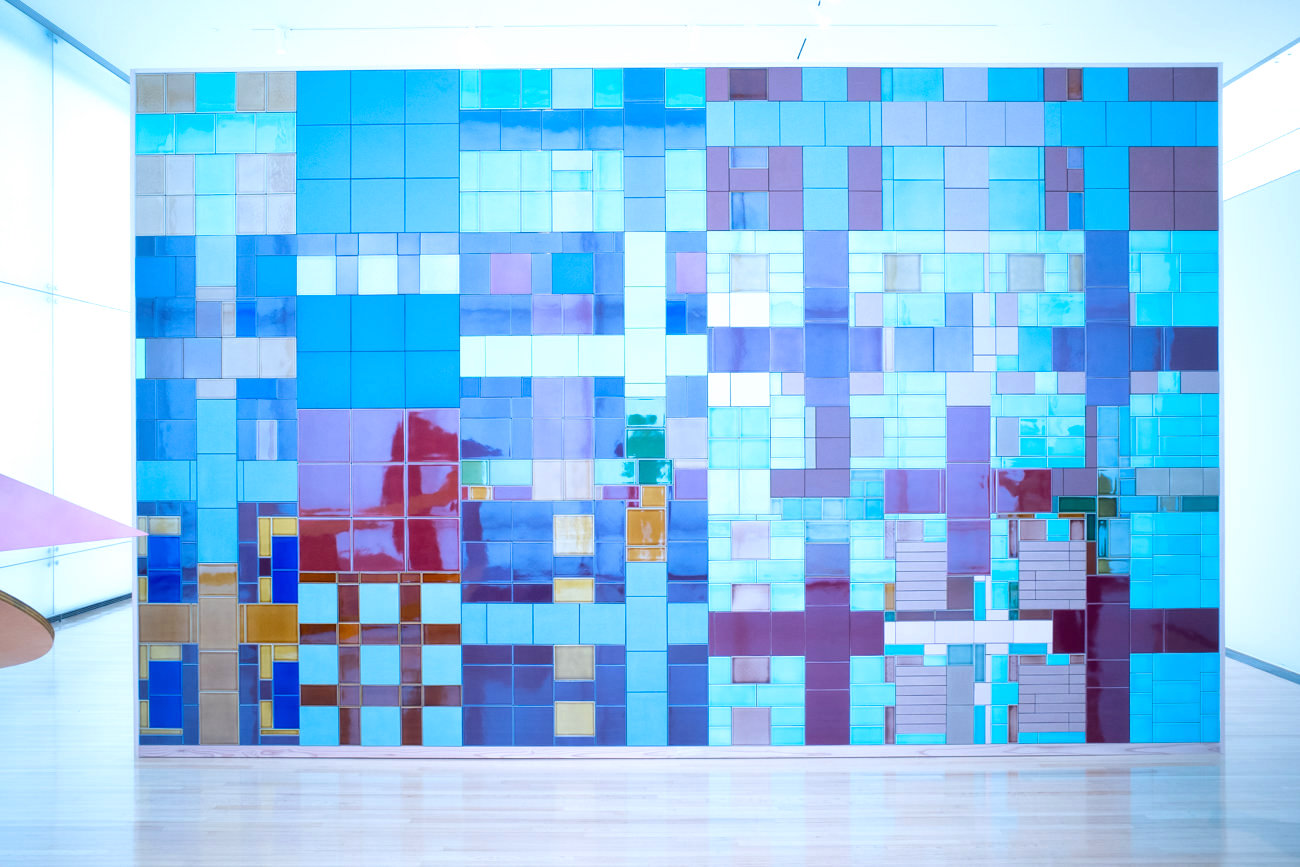
At “Hareza Ikebukuro,” the mixed-use complex set to grand-open in July 2020, murals using tiles and glass are being deployed; new tile works were shown in this exhibition as well.
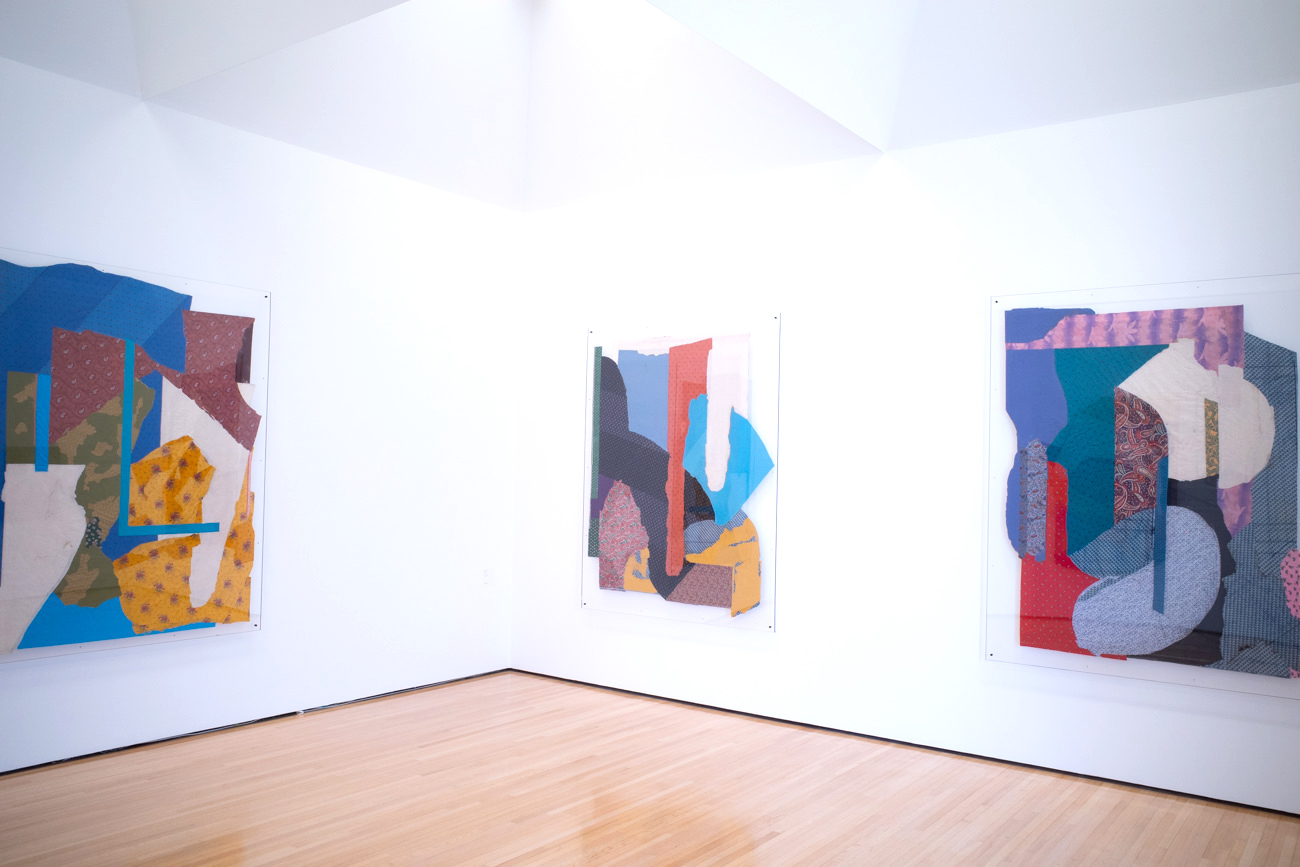
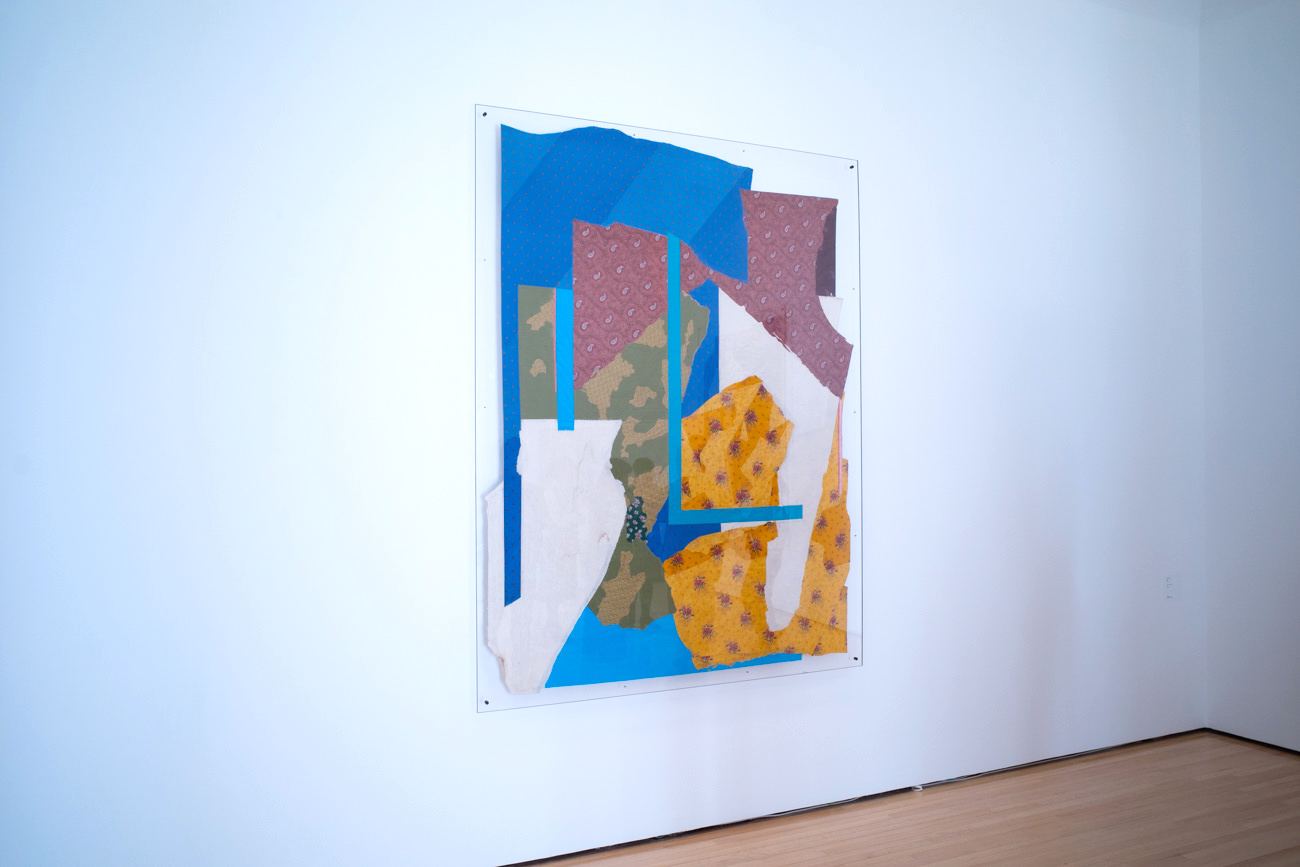
Fabric works
Collage-like works made by cutting fabric with dressmaking patterns and sewing the pieces together.
These are older works, but they are still very much Okazaki — always incorporating varied materials into his practice.
The final room
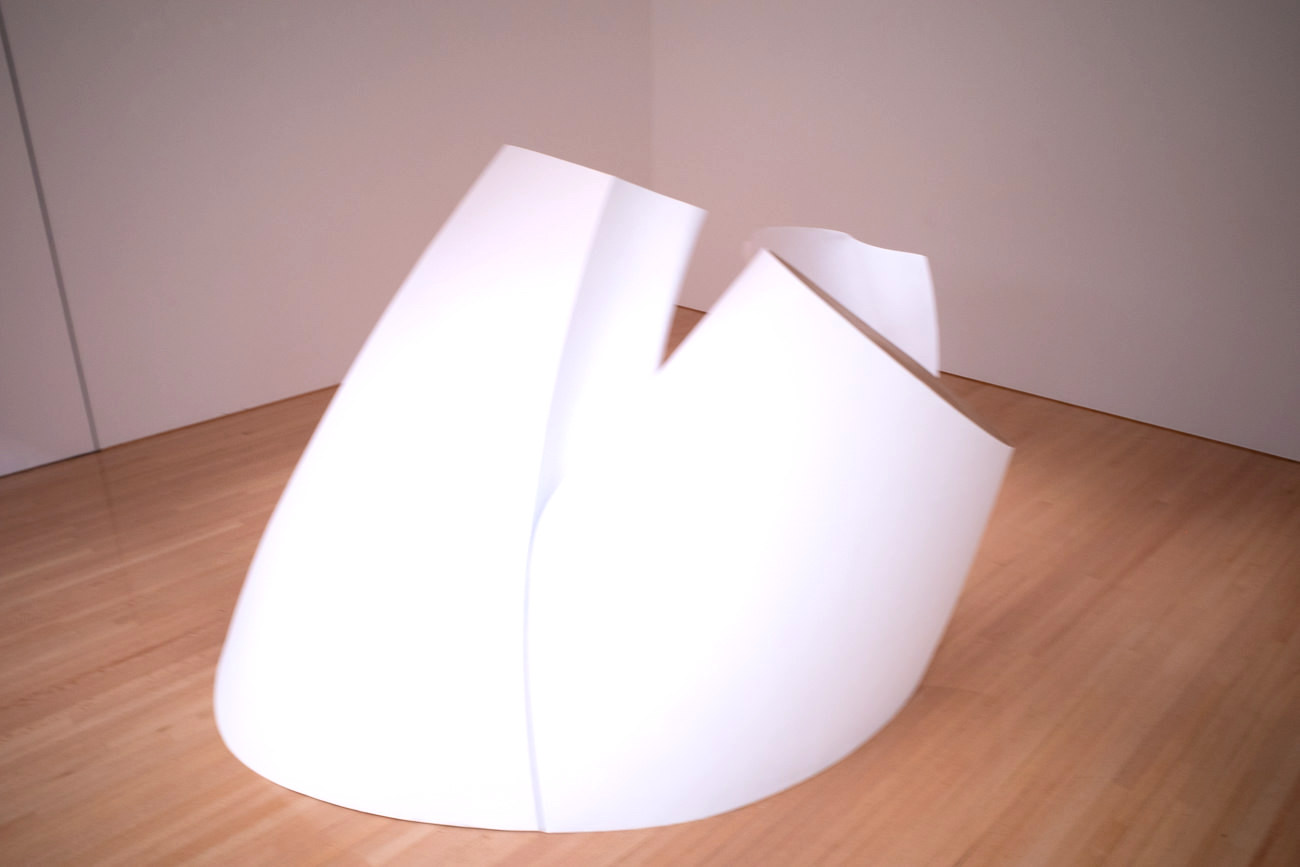
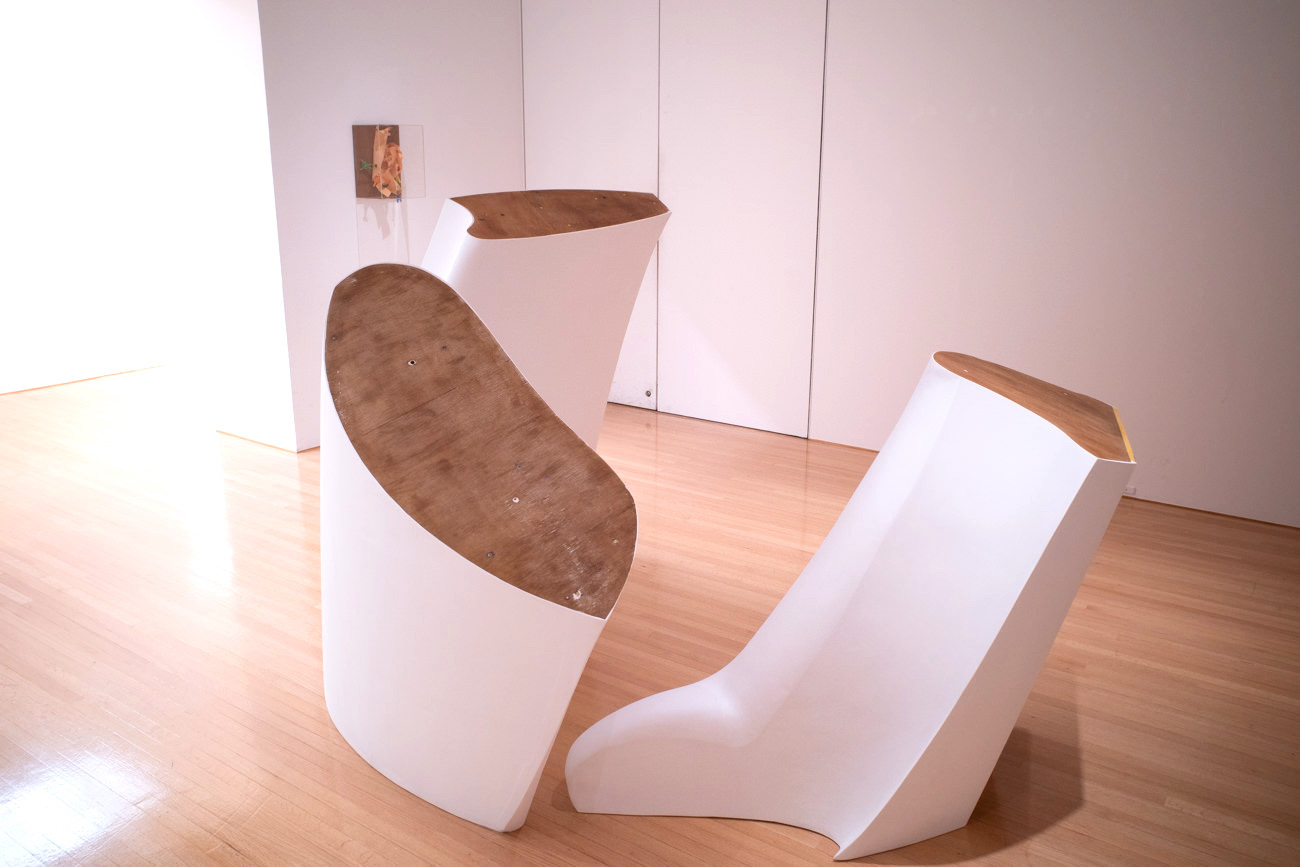
The sculpture placed alone in the final room on the third floor felt like a work that symbolically summed up the whole exhibition.
In closing
Seeing Kenjiro Okazaki’s many works in the large exhibition spaces of Toyota Municipal Museum of Art, I could view them while carrying my gaze across the relationships with adjacent works and spaces.
Setting aside — at least once — the habit of taking an artwork as a single fixed image, and instead approaching the artist’s message with a rotating mind: this way of viewing may be one of the joys granted to us as viewers. It was a precious viewing experience for savoring the greatness of art.
Passing through this layered, stratified way of engaging with a single work, I also became aware that we ourselves, each individual, influence and resonate with one another as layers within society.
Among the many exhibitions I saw in 2019, this stood out as one of the most satisfying.