![【美術館初個展】目[mé]「非常にはっきりとわからない」千葉市美術館](https://art-on.jp/wp-content/uploads/2019/12/Me_Chiba13.jpg)
Introduction
This article is a review I had originally planned to write up properly after the end of mé’s “Not Quite Clear,” now on view at Chiba City Museum of Art.
Given the unified etiquette that runs through the exhibition — the tacit rule that visitors should not reveal spoilers — I confess I was avoiding the need to write cautiously about it. However, I changed course and decided to publish the summary article as early as possible during the exhibition period.
…That decision came because, ever since I gave a brief mention of the show in the site’s weekly diary “Burart Diary” (published on November 18), we have been seeing significant sustained traffic, growing further day by day.
Alongside the access counts, records of many related search queries have also been streaming in, and I can feel a strong sense of energy from our visitors.
This article is written and posted quickly, aimed at readers who may be curious about the “Not Quite Clear” exhibition — clearly generating buzz — in the hope of nudging even a few more people to actually visit.
*This article contains photos taken inside the museum and viewing commentary; it cannot fully eliminate spoilers. Readers who plan to visit before reading, please proceed with caution. That said, the article does not touch on the core essence of the exhibition.
mé
mé is an artistic unit of three: artist Haruka Kojin, director Kenji Minamigawa, and installer Hirofumi Masui. Through installation works and other means, they engage in activities with a consciousness aimed at bringing us viewers moments of “awareness.”
The following two works were photographed by this writer while covering exhibitions (group shows) held in 2019.
Both were pieces that shook the body from the eyes downward — the surroundings vanished from view, and I fell into the illusion of being swallowed by the work.
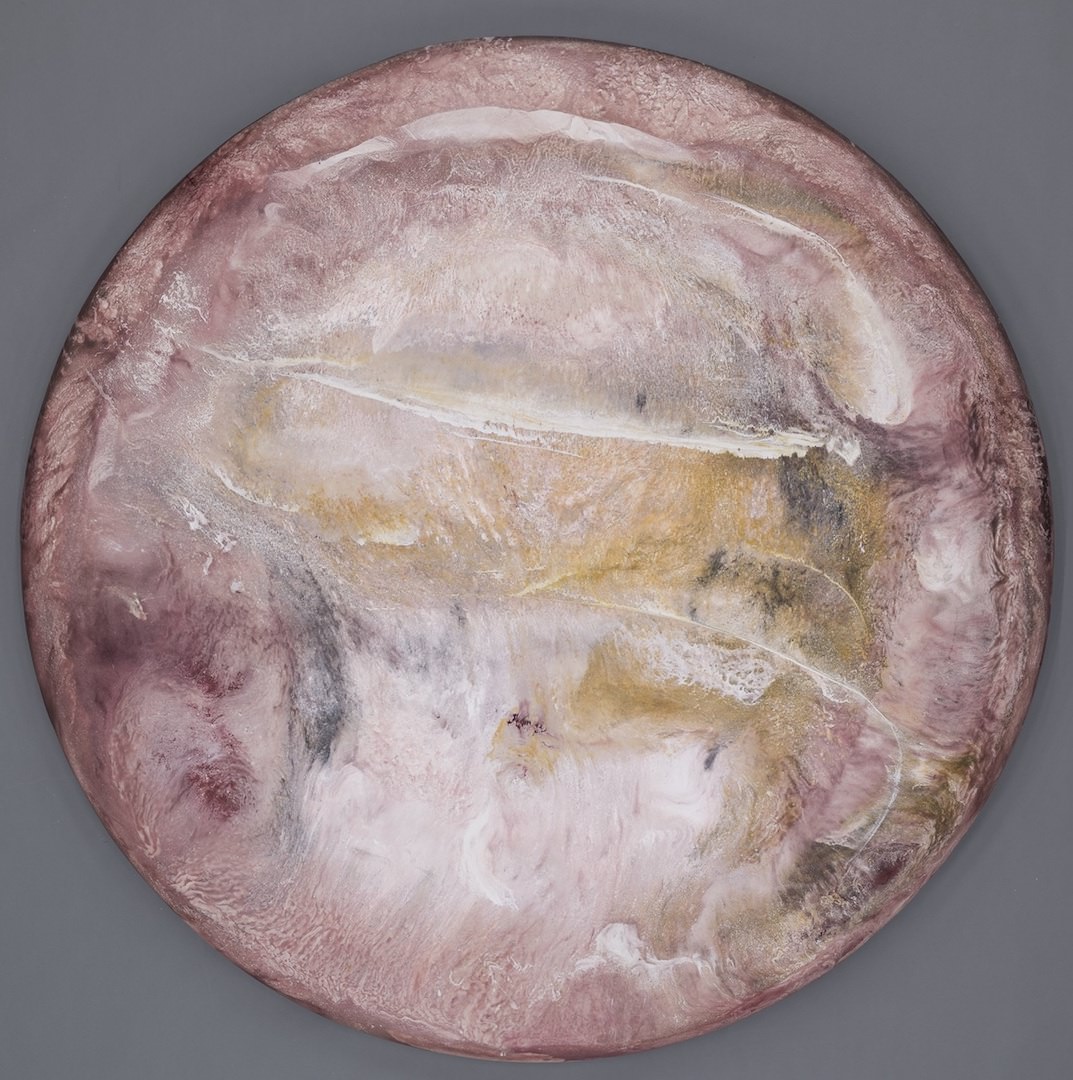
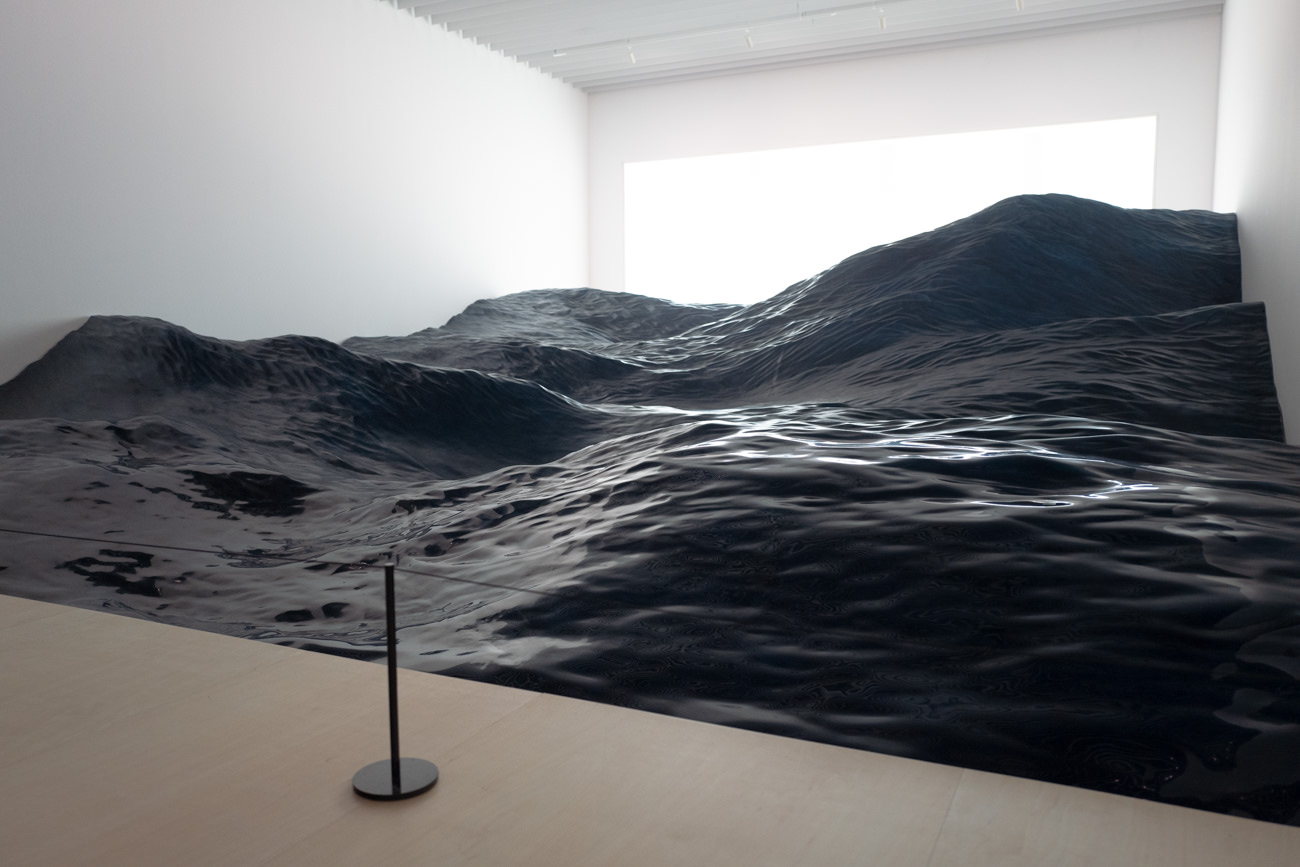
mé, “Not Quite Clear”
Now, on to mé’s “Not Quite Clear.”
The Chiba City Museum of Art, where the show is being held, is scheduled for a large-scale renovation, and this exhibition is being held right on the eve of a full closure period running from January to the end of June 2020.
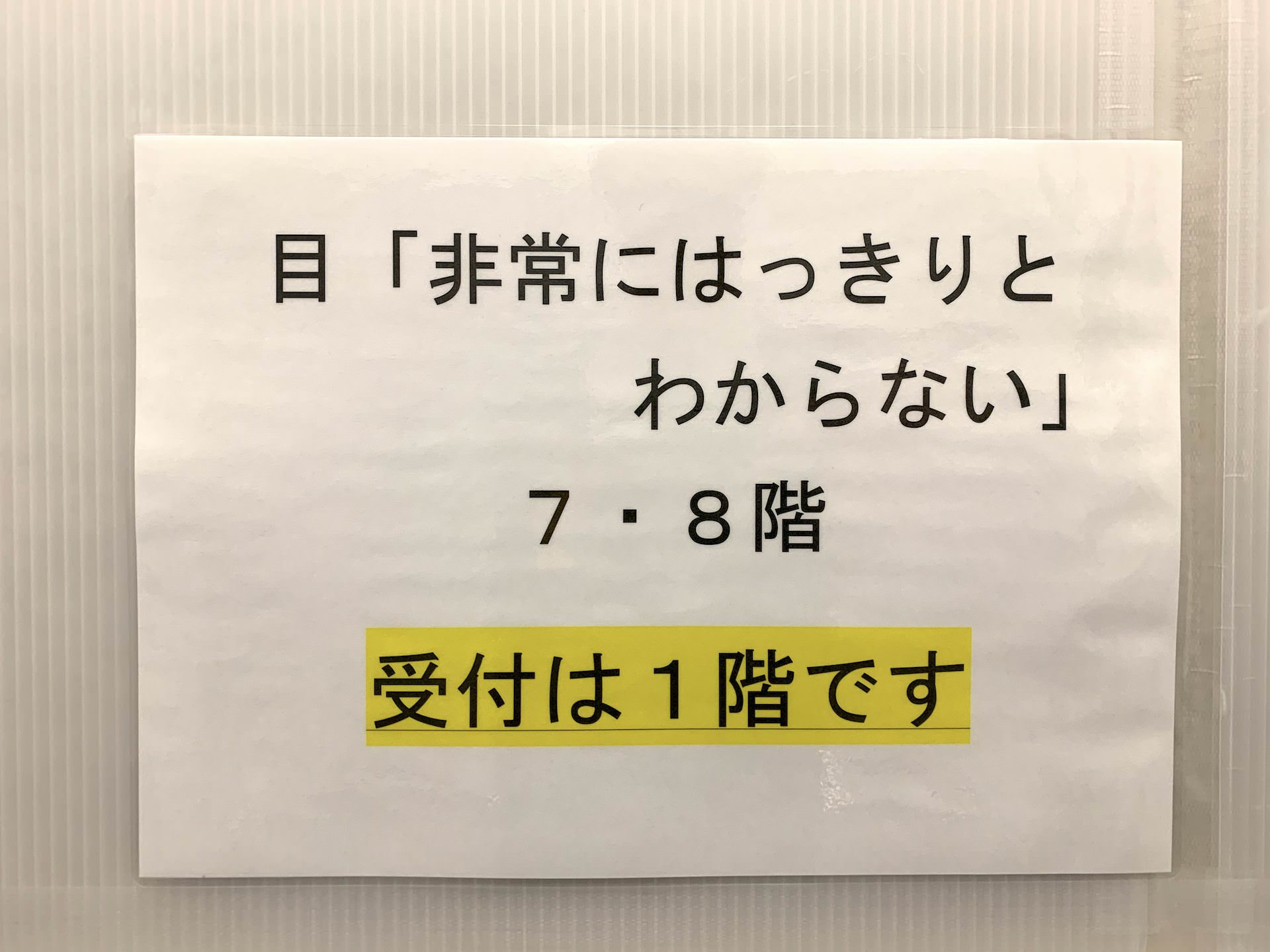
The exhibition is composed as though skillfully absorbing that state of the museum itself. It is a project that envelops the entirety of the Chiba City Museum of Art facility as a large-scale installation work.
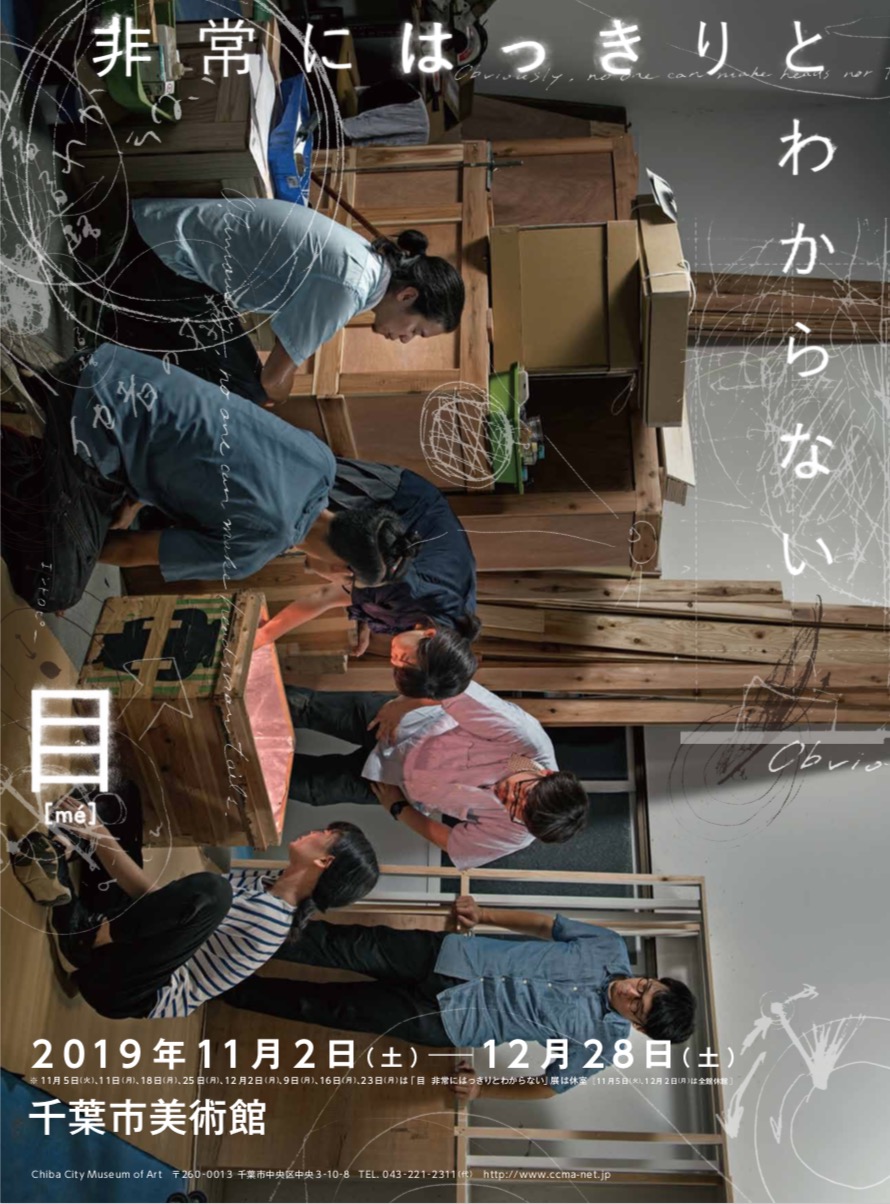
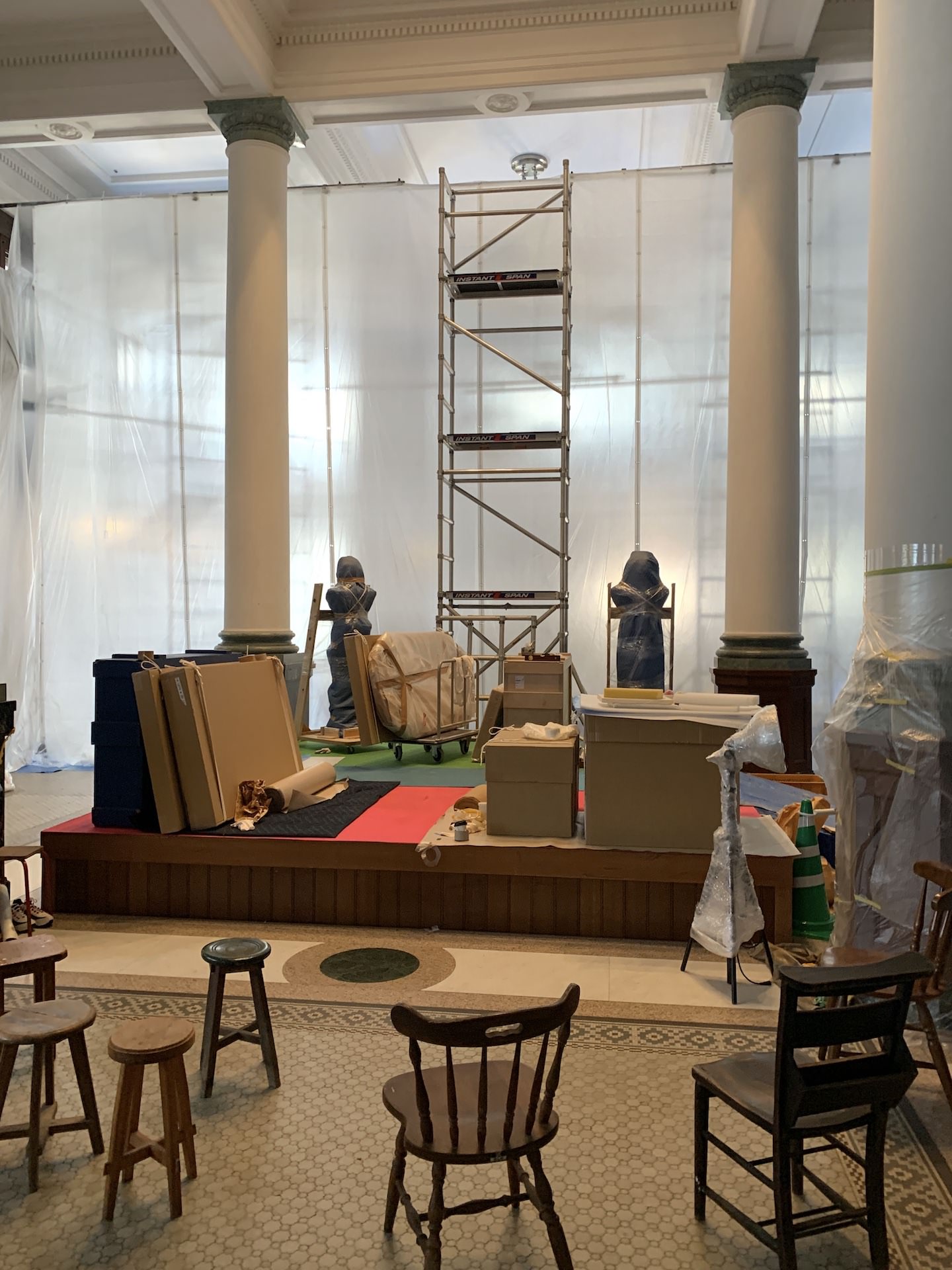
Only the first-floor space of the exhibition is open for photography, but what greets visitors is a cluttered scene that at first glance appears to be renovation work already underway. The exhibition has already begun here. Feeling a strange, uncanny dissonance, we walked to the elevator that goes up to the exhibition floors on the 7th and 9th floors.
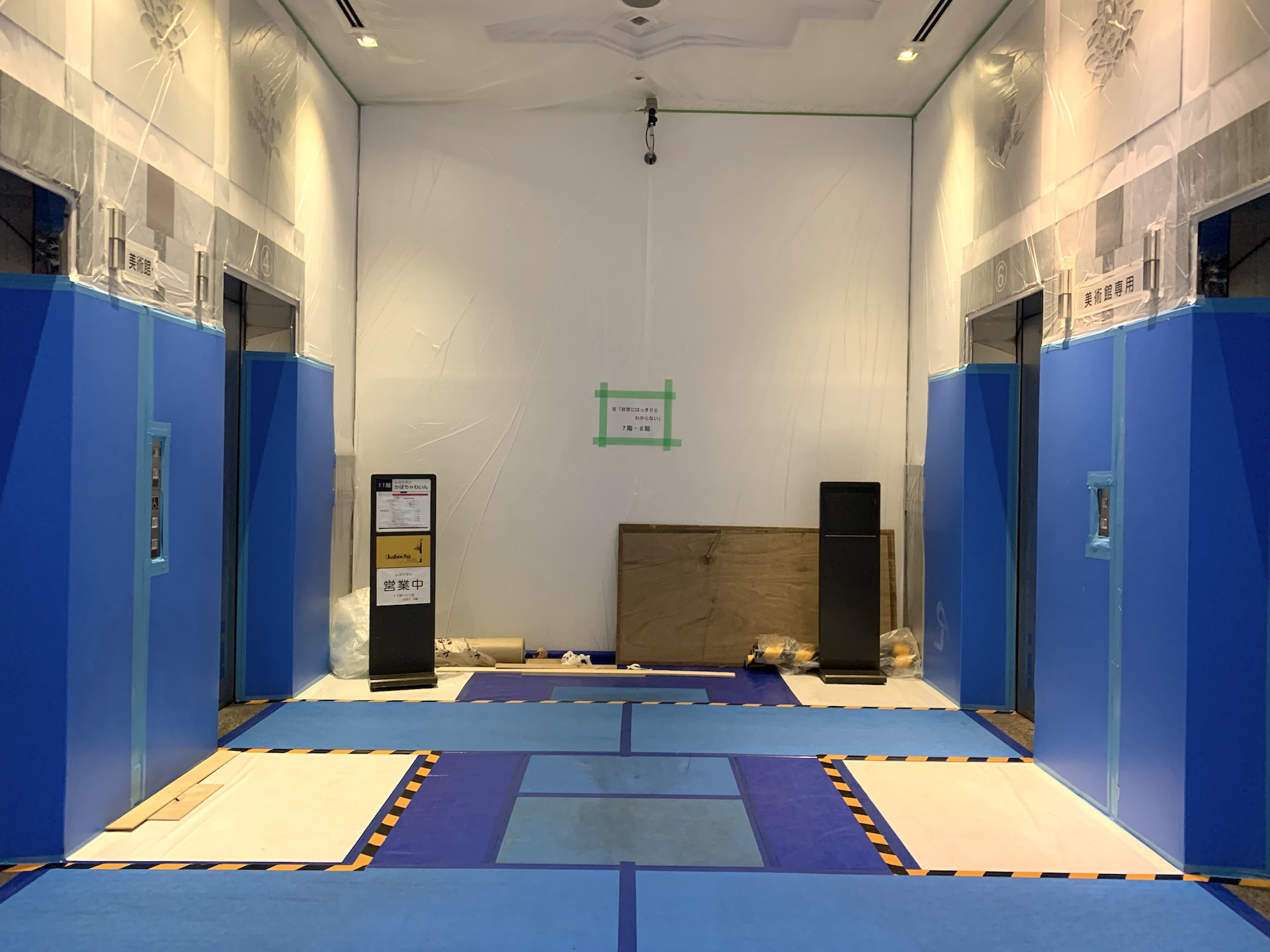
The elevator hall too is covered with protective sheeting, and tape marking off-limit zones restricts visitors’ movement so they can only walk in permitted areas.
As the exhibition title suggests, one becomes convinced of the “not quite clear” state of things upon reaching the exhibition floors on the 7th and 8th floors.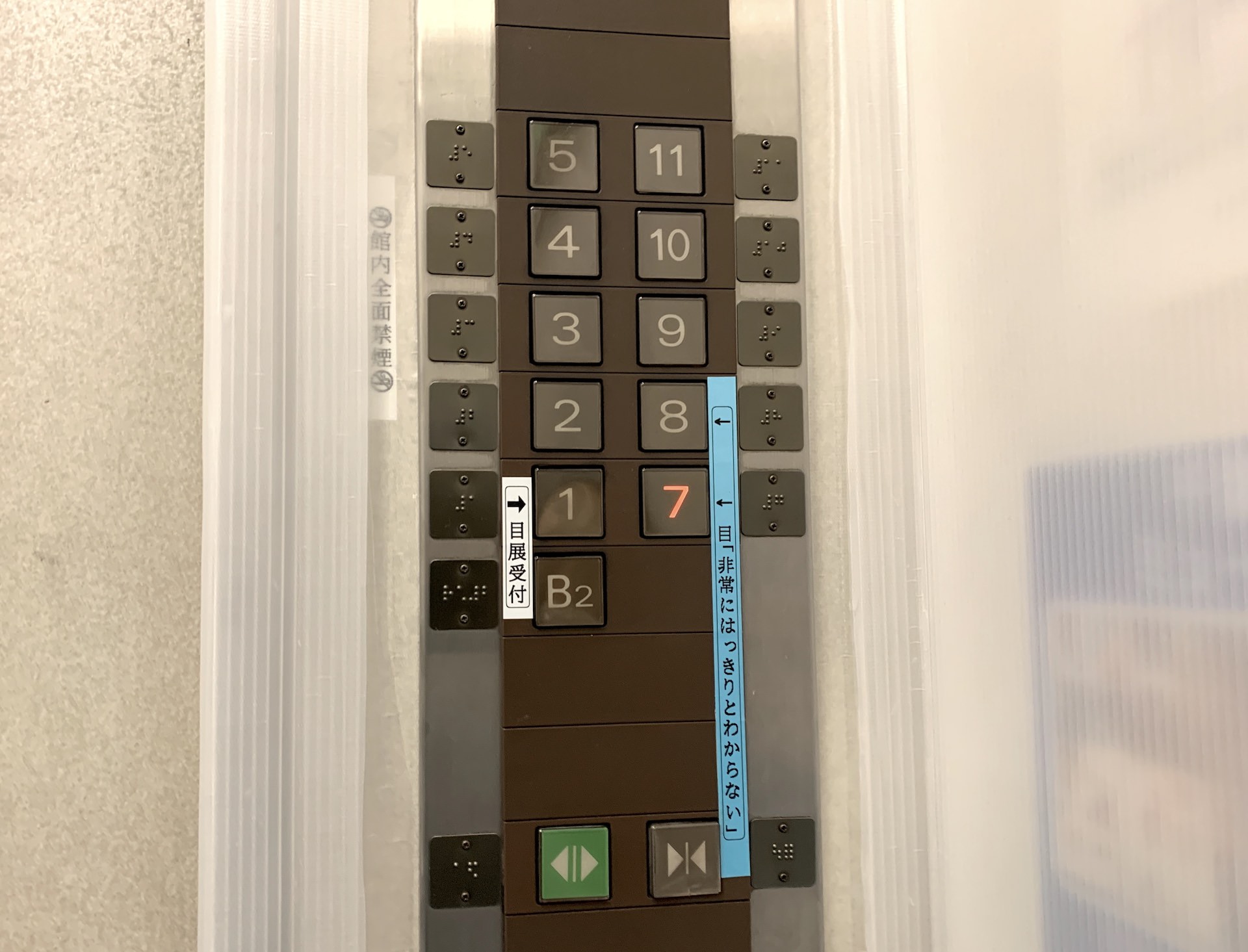 What one discovers on the exhibition floors is that the concept is entirely different from that of an ordinary art exhibition space. Perhaps clues are hidden — or perhaps not — in the exhibition statement quoted below.
Greetings
(Preamble omitted)
We present the first large-scale solo museum exhibition of “mé,” a contemporary art team that has garnered significant attention both domestically and internationally through works — such as large-scale spatial transformations — that bring the uncertainty of the real world close to people’s actual experience.
Just as with Chiba Prefecture’s geomagnetic reversal stratum (Chibanian) and the geological science it embodies, our reality — the surface world we stand on — rests upon a continuous succession of natural cataclysms whose causes still resist explanation. In this exhibition, in addition to the exhibits themselves, the entire situation of the Chiba City Museum of Art facility, including visitors’ movements and moments of awareness, will be deployed as an installation work, drawing people into the museum as a reality that has been thrust away.
The dynamic exhibition space in which various situations accumulate will, as if peeling away the meanings and essences that visitors thought they understood, provide an opportunity to re-grasp — with fresh sensation — the real world that we tend to overlook as something obvious.
(Postscript omitted)
As the statement indicates, there is a subtle art to the works, the exhibition method, and the manner of presentation, all inspired by the discovery of the geomagnetic reversal stratum (Chibanian). Those exhibition methods — quoted from a condition in which time and place are indeterminate — are once-in-a-lifetime experiences that can only be felt on site. And depending on the timing of one’s visit to the museum too—
“A great work of art is nothing other than one that moves the viewer’s heart.” This is a line the art critic Noi Sawaragi wrote in his book “Sensibility Does Not Move Us”; I too find it deeply resonant. That there are not a few viewers whose hearts move in this exhibition can be taken as evidence of an excellent show.
For those unable to make sense of the exhibition, there was a box installed titled “Not-Clear Collection Box.”
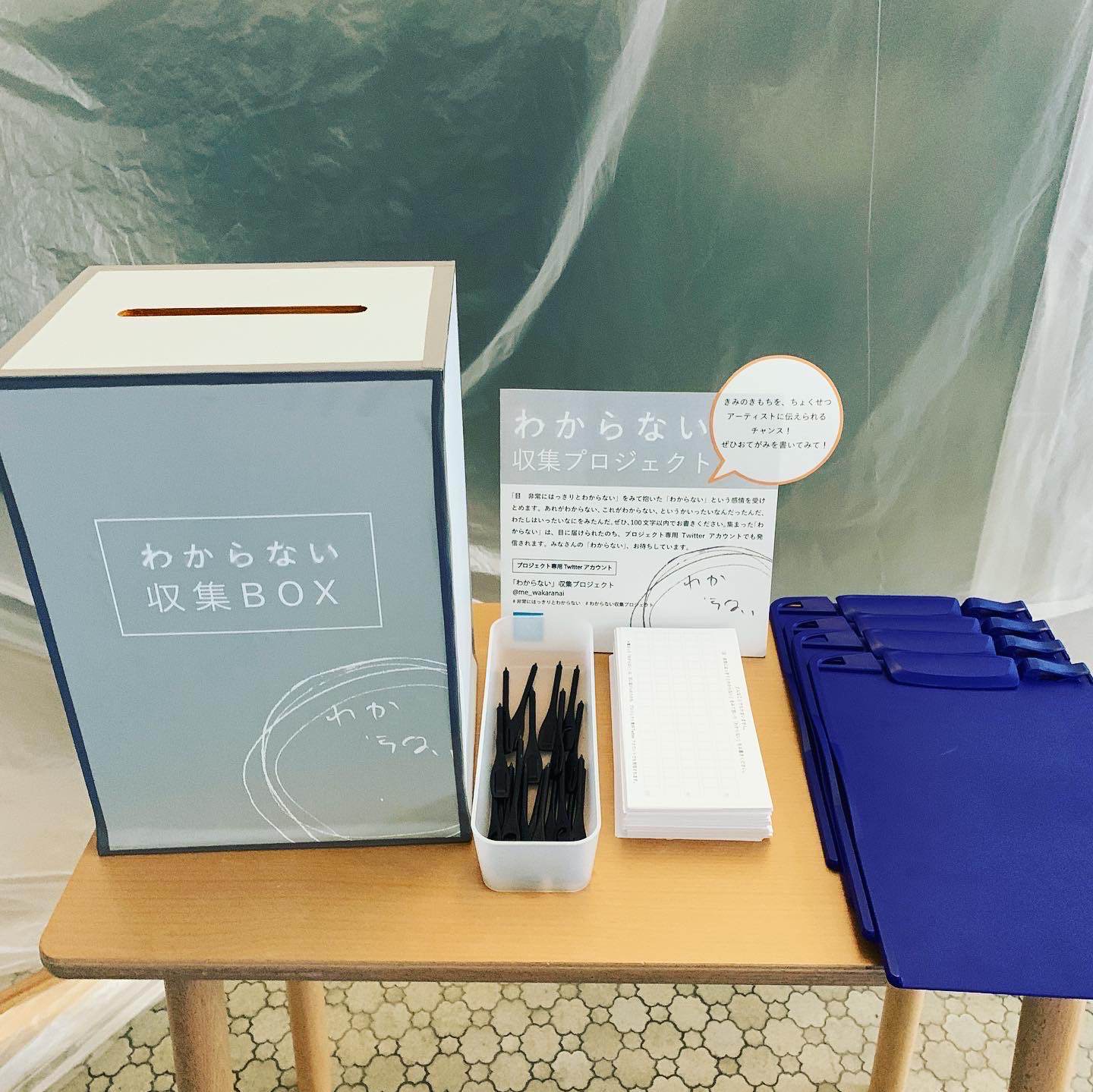
Posts made in the “Not-Clear Collection Box” are shared publicly through a linked Twitter account. Looking at the posts, you’ll find contributions from viewers who did understand as well, and if you check them after your own visit, the content becomes flavorful and quite enjoyable.
*For this writer, it was an exhibition I was able to enjoy and understand on my own terms.
Museum Shop
At the museum shop on the 7th floor, the exhibition poster and catalog (pre-order) are on sale.
The catalog is scheduled for publication at the end of December, priced at 2,800 yen (tax included). Only pre-orders will be shipped with free postage (with a sticker exclusive to pre-order buyers).
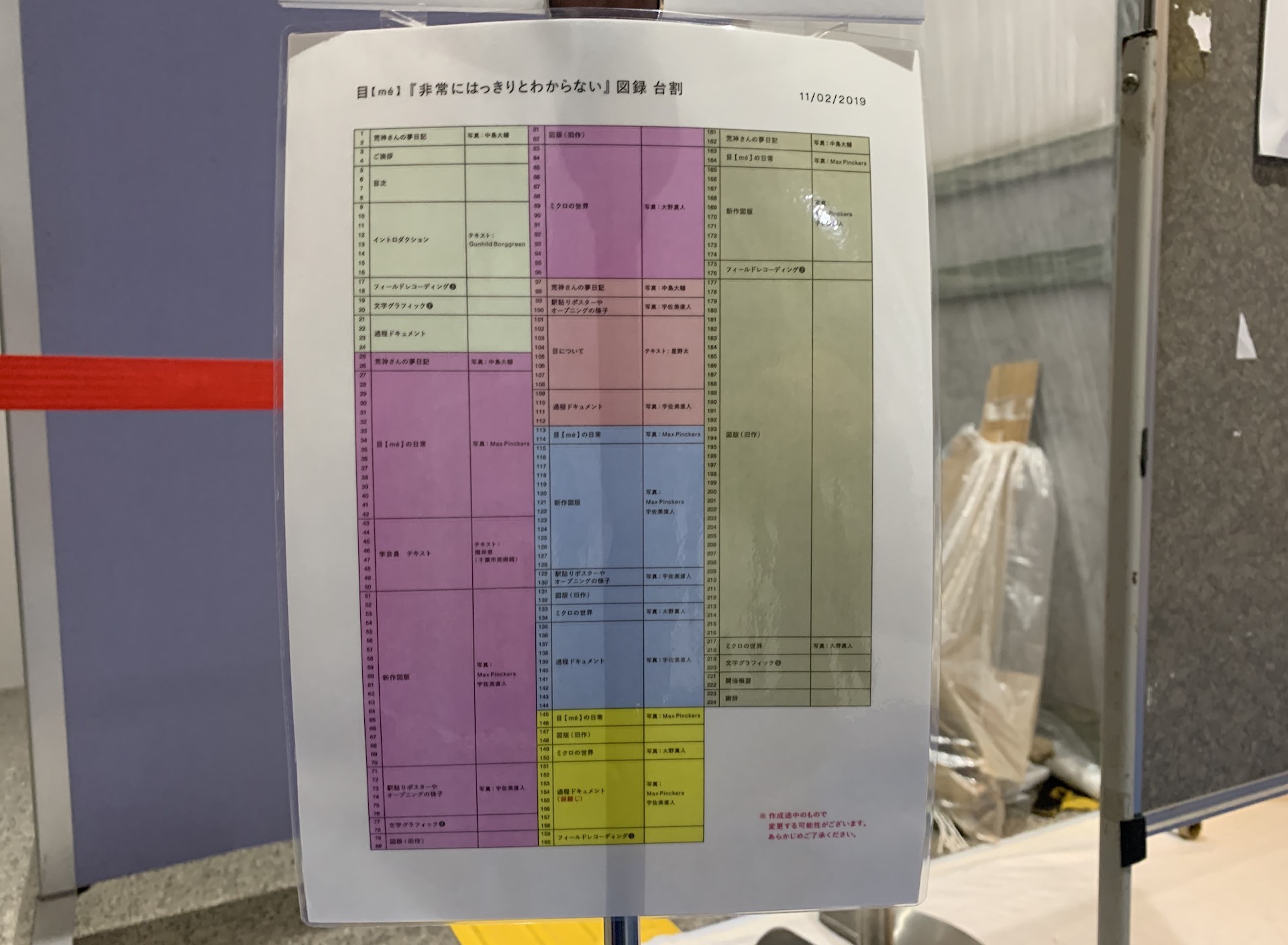
The following limited items were also on sale:
(1) Not Quite Clear: Drawing-Signed Poster α
(2) Not Quite Clear: Drawing-Signed Catalog α
*Each item features a different drawing.
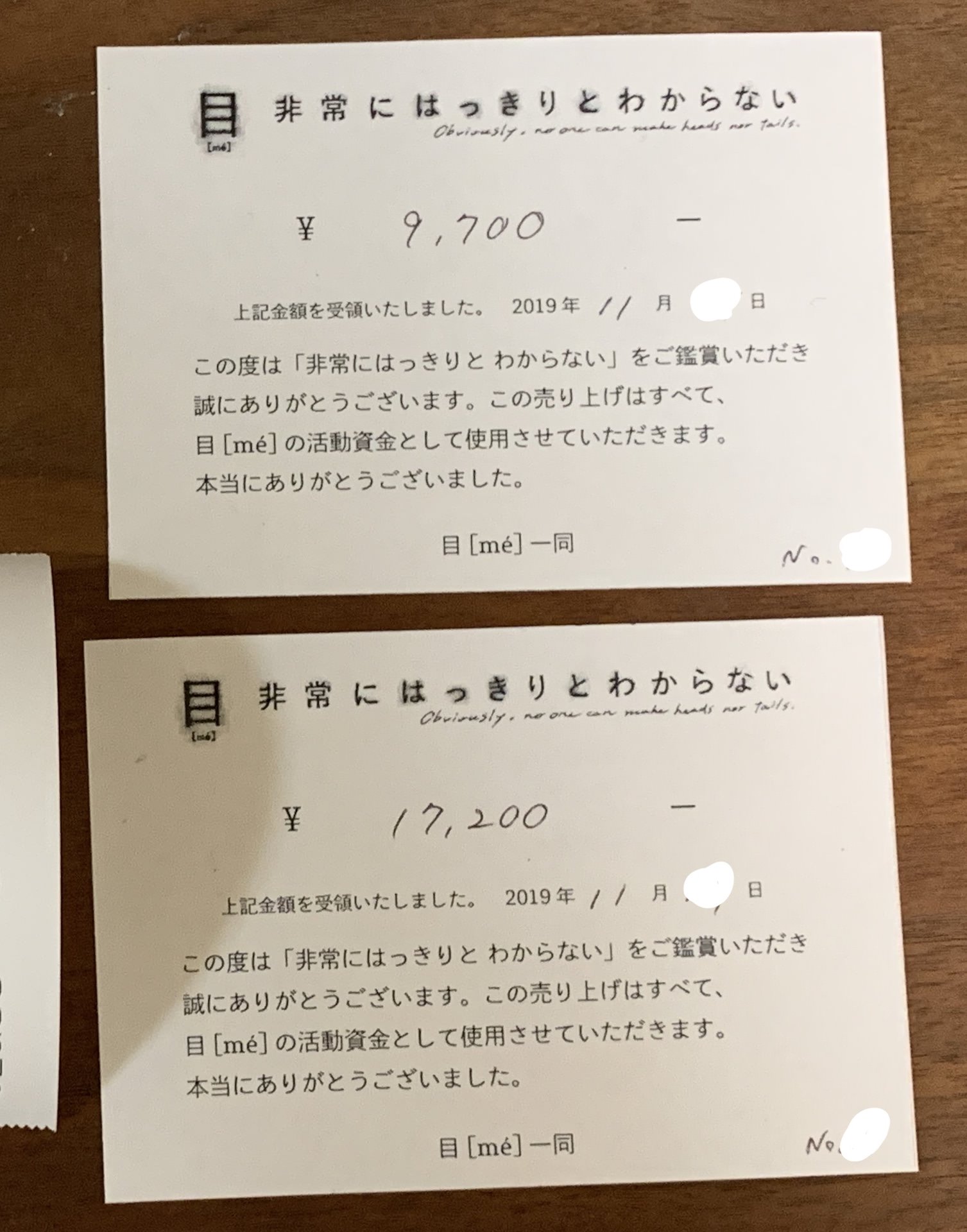
*The amount listed is a receipt showing only the activities-funding portion.
Summary
Rather than the popular-artist shows at Mori Art Museum where camera shutters clatter in pursuit of Instagram-ready shots, this exhibition — photography forbidden, time, action, and heart all commanded, thought and values profoundly shaken — is one I strongly recommend.
*That said, in this age of intersecting values, there will surely be viewers with no interest whatsoever in this show. And of course, this site cannot reject or oppose such people.
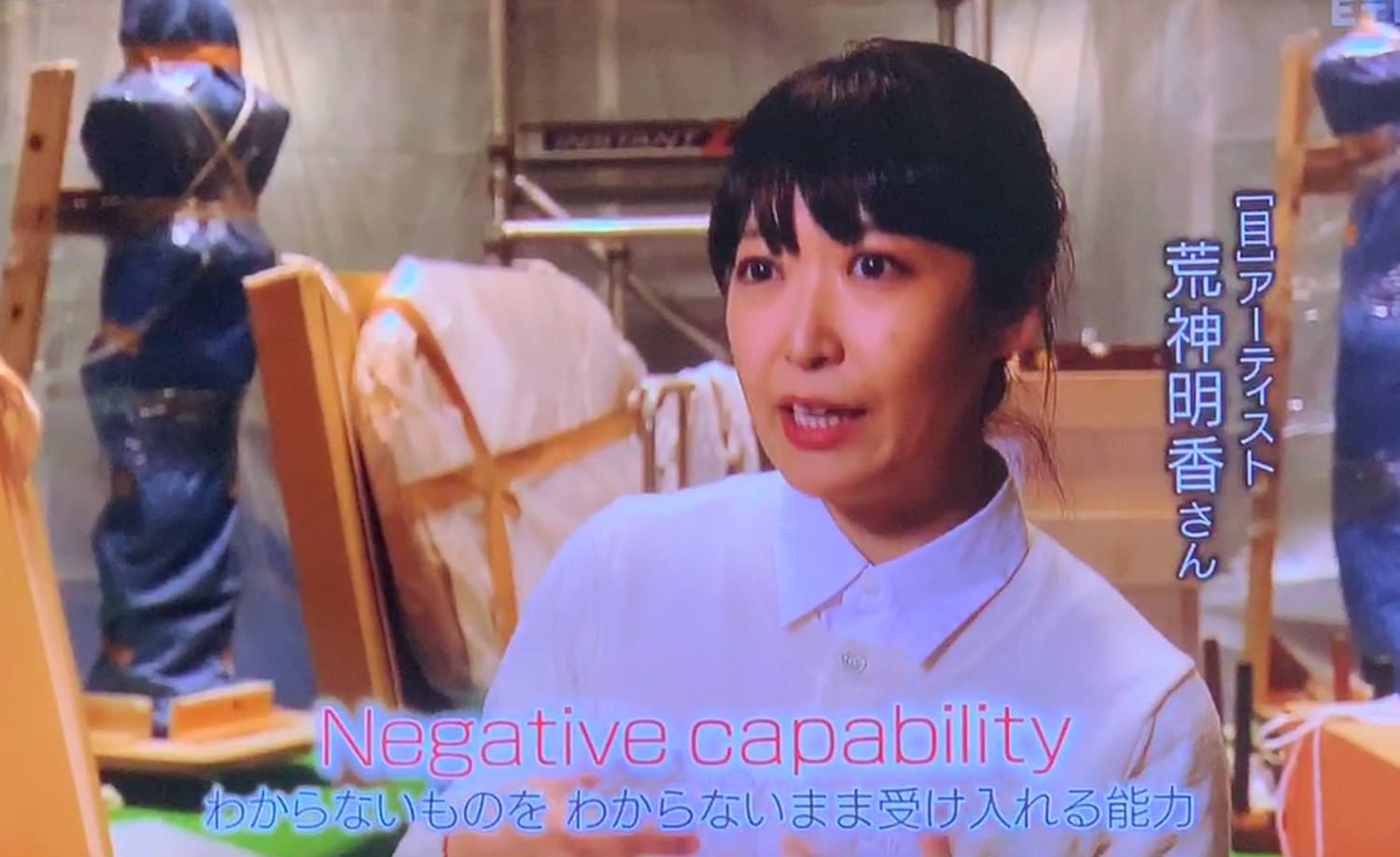
From NHK’s “Nichiyo Bijutsukan: Art Scene,” broadcast on December 8, 2019
As the title “Not Quite Clear” suggests, whether visitors understood the exhibition’s content or not, each person’s individual response can be simply accepted as it is.
It was an exhibition I would love many people to visit.