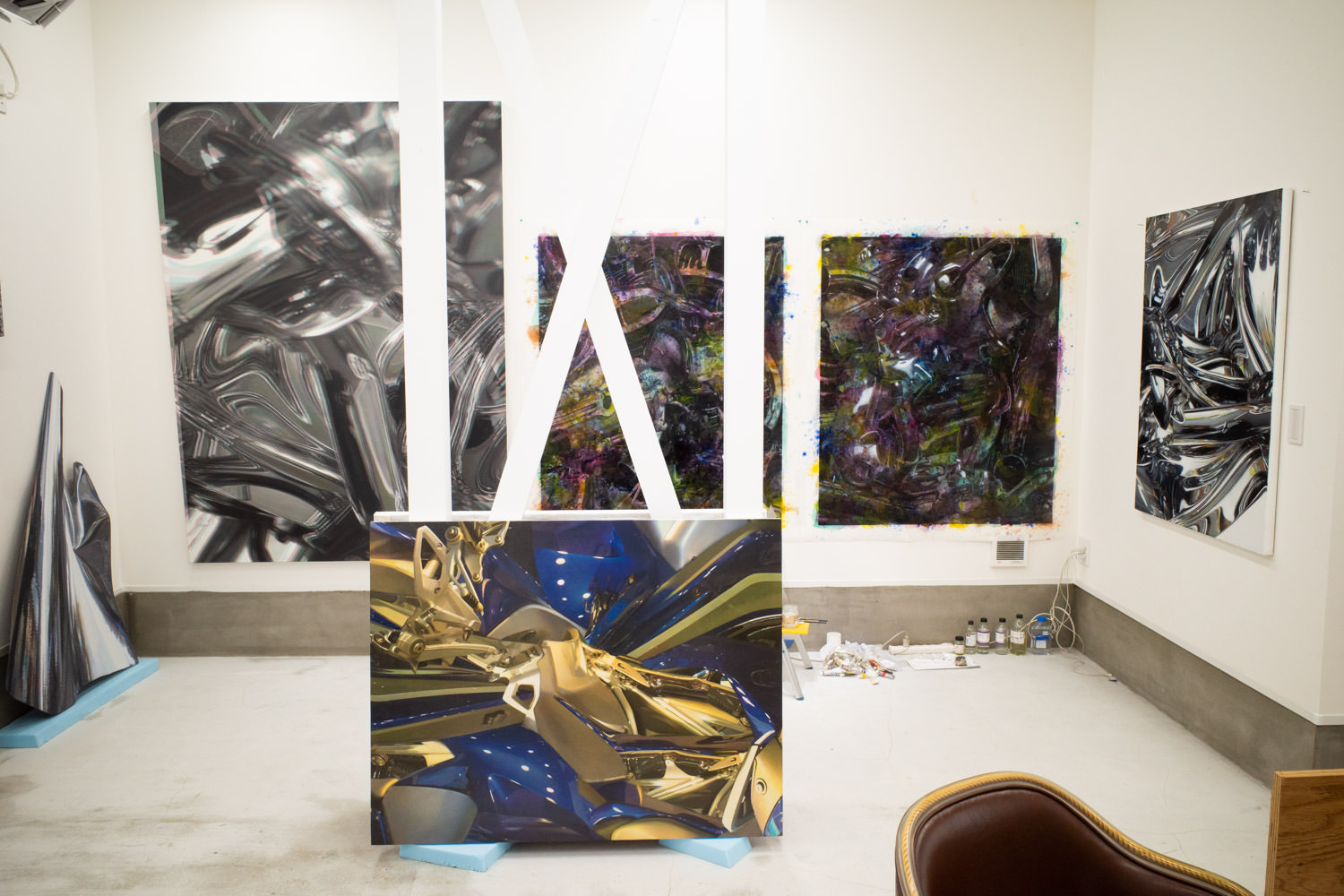
Visiting Ai Makita’s studio
I was given the chance to visit Ai Makita’s studio.
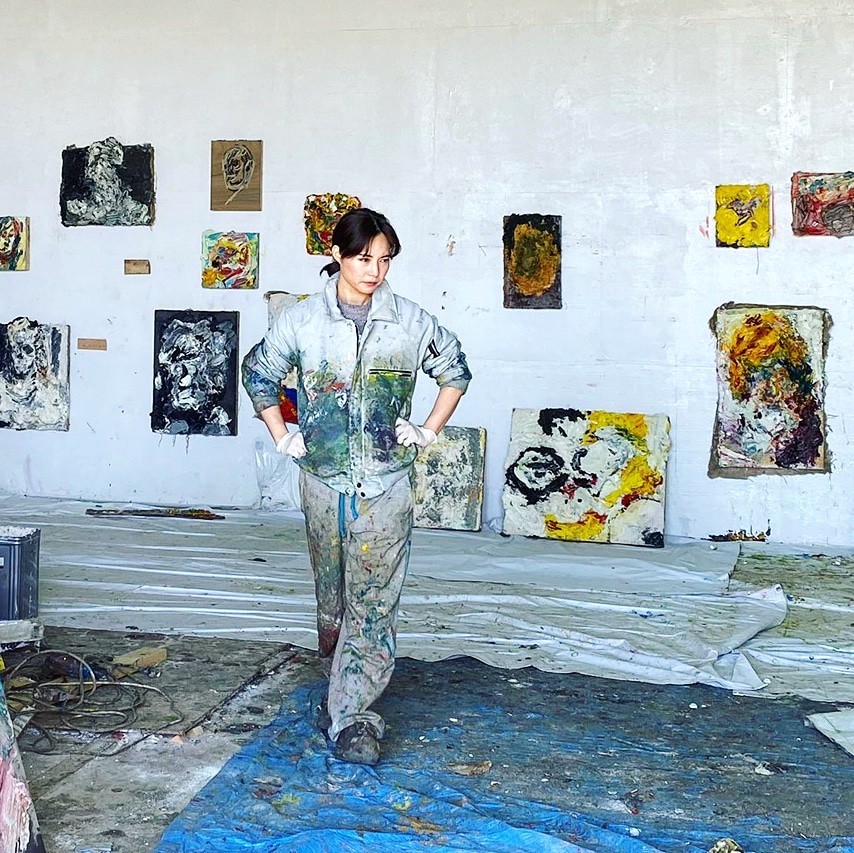
The day I visited was early January, just after we’d entered 2020. I called on her home-cum-studio in the western suburbs of Tokyo.
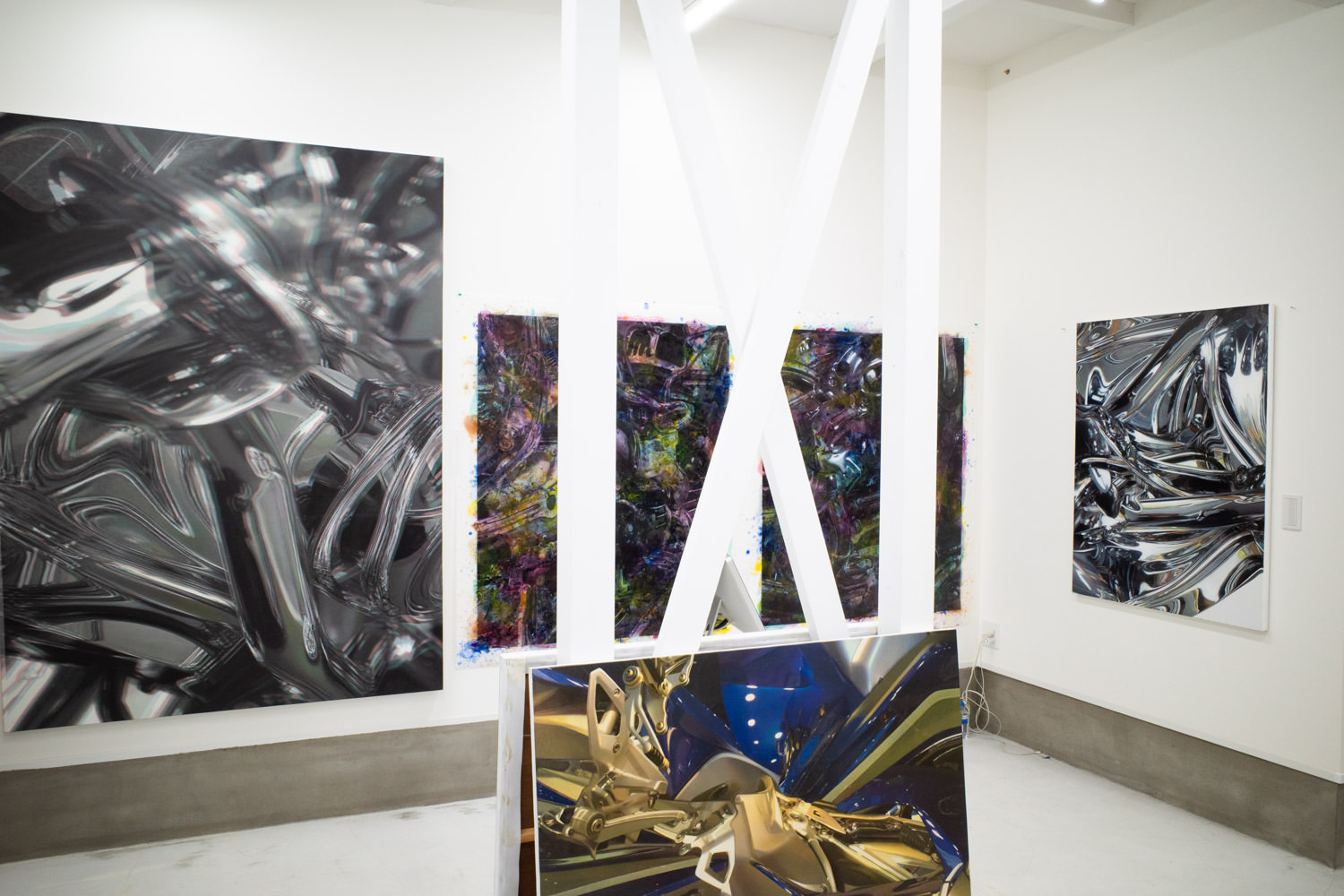
Makita currently works while going back and forth between Tokyo and New York. As an artist challenging the art market, she talked about how it’s overwhelmingly important to touch the atmosphere of Europe and America and work there rather than in Tokyo.
In Tokyo, she continues to create at the home-cum-studio built a little over a year ago.
She apparently designed the studio space’s layout herself. It was a comfortable space with high ceilings, surrounded by white walls.
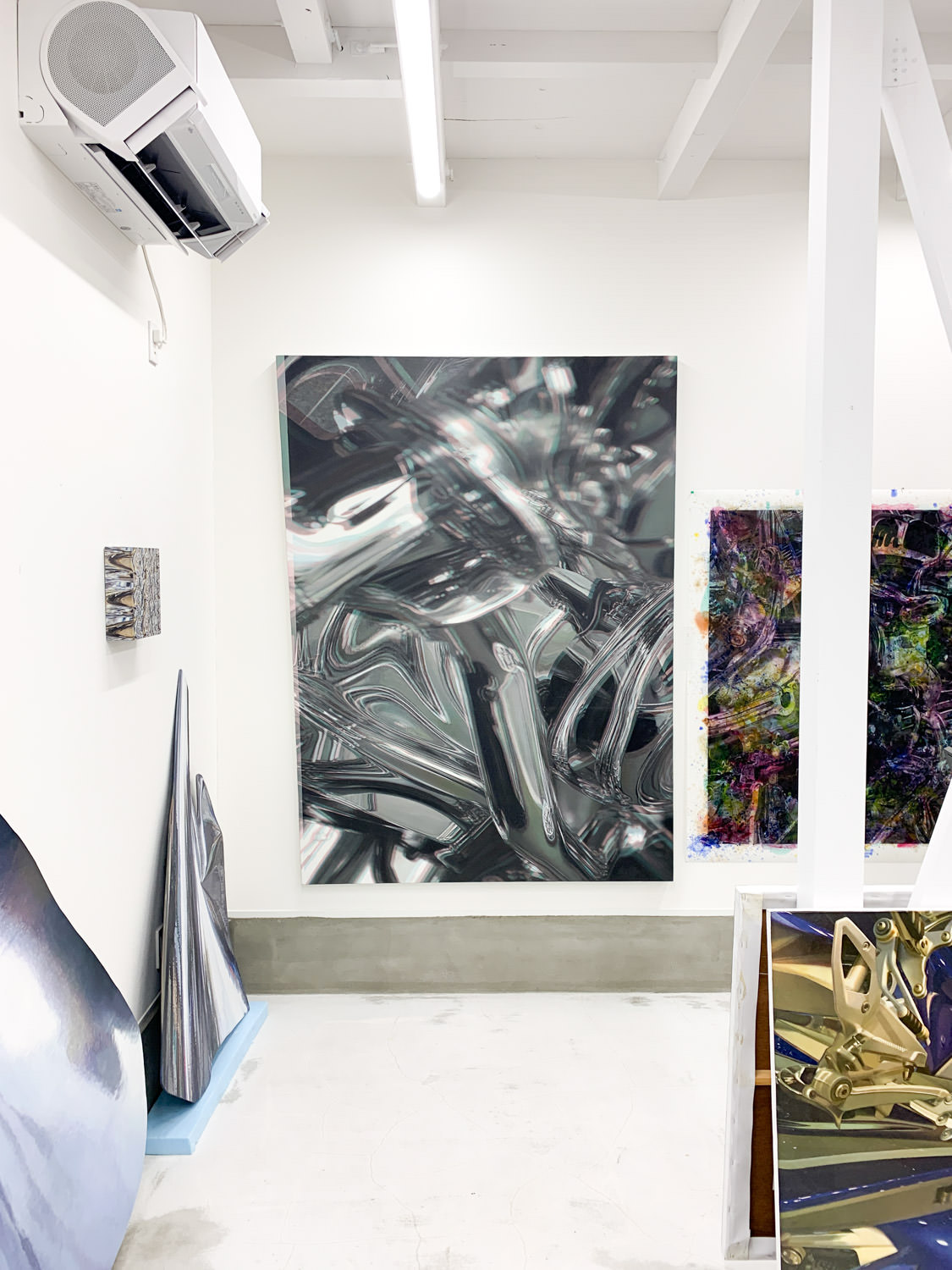
Ai Makita’s production method begins with building a digital image by collaging on a PC, making full use of processing tools such as Photoshop.
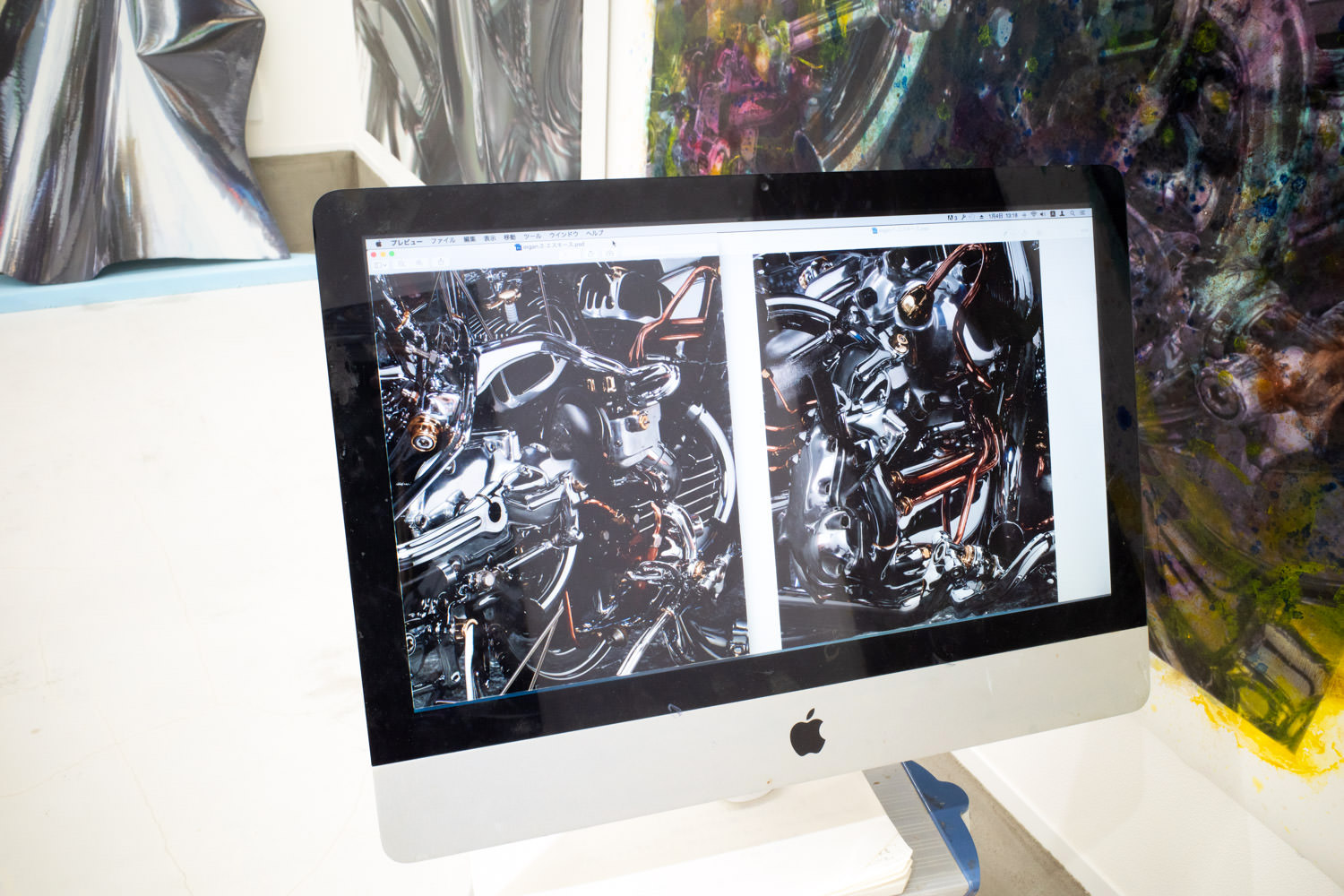
After spending time building the digital image, she outputs it and transfers it onto the support.
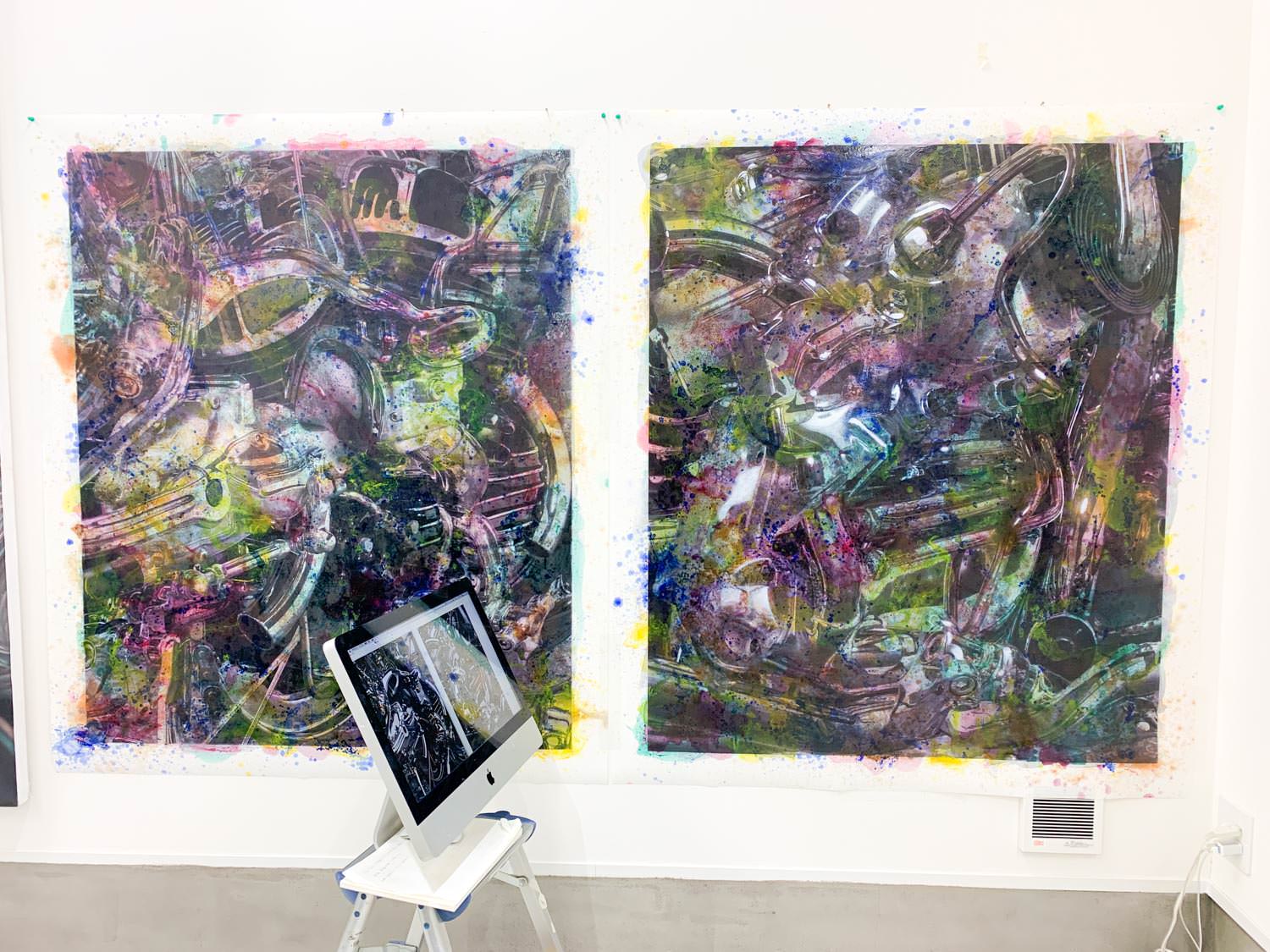
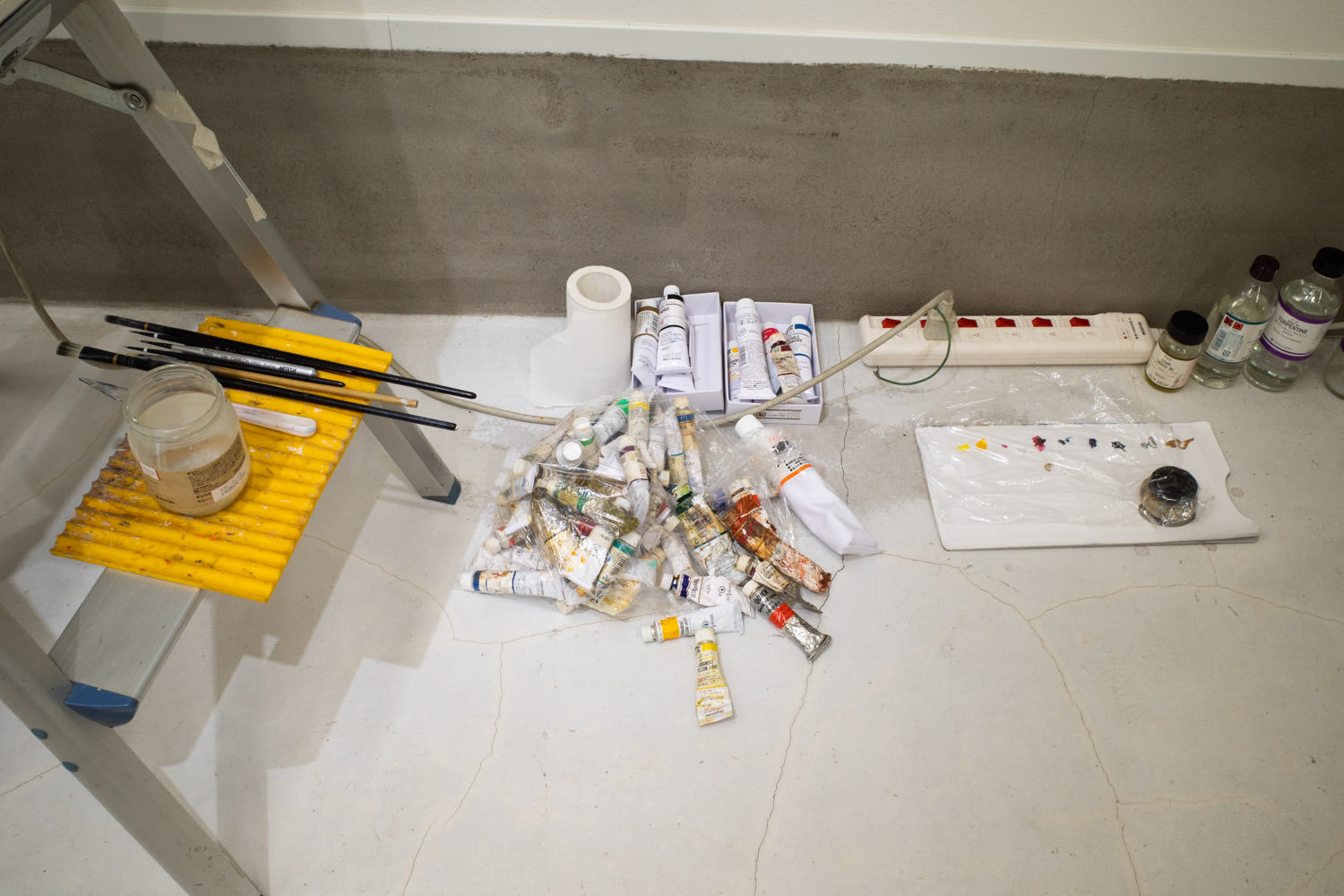
Over the transferred image, she depicts using oil paint and expresses it as a painting. Through layers of paint stacked many times over, the transferred part is completely covered.
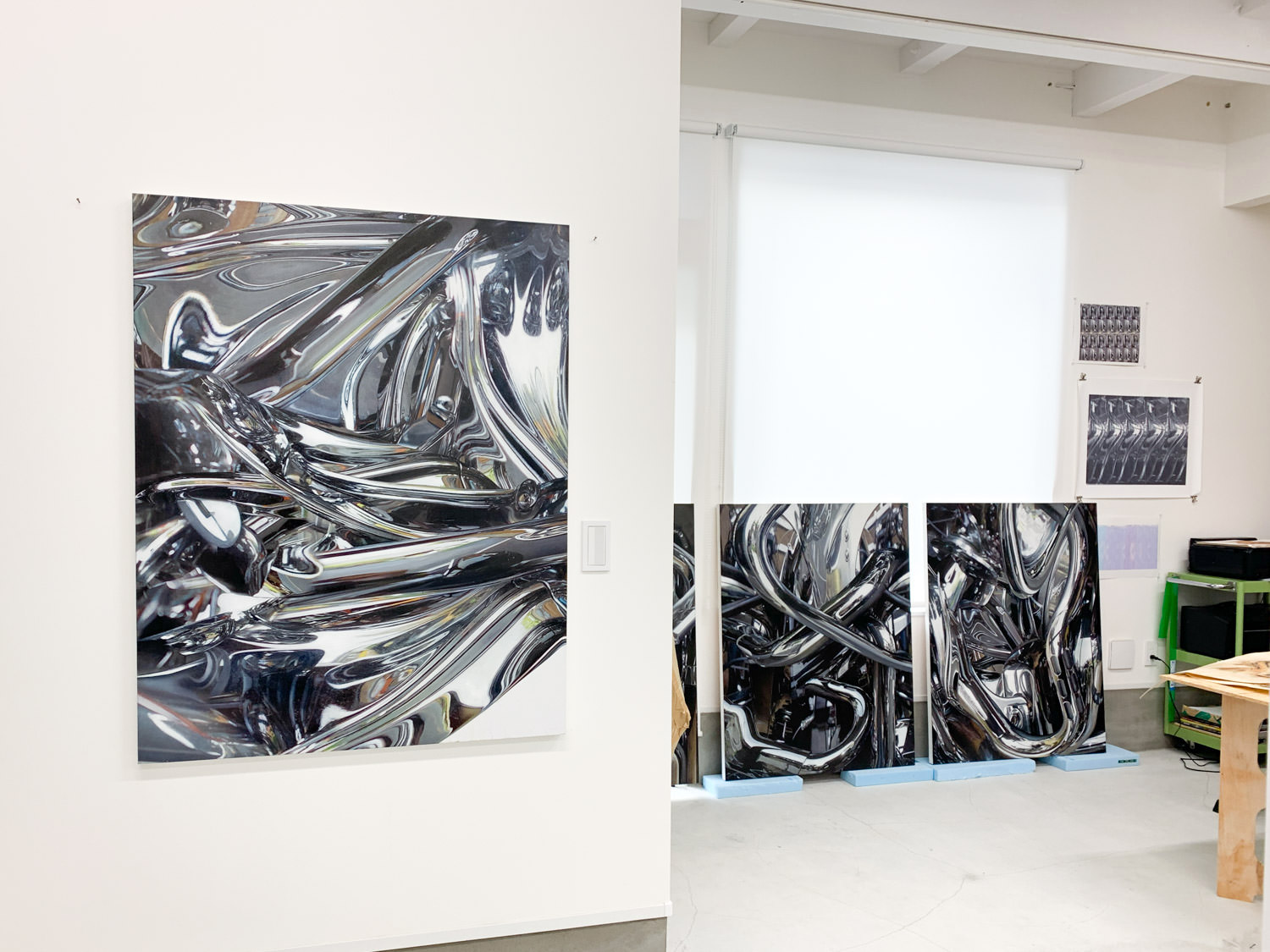
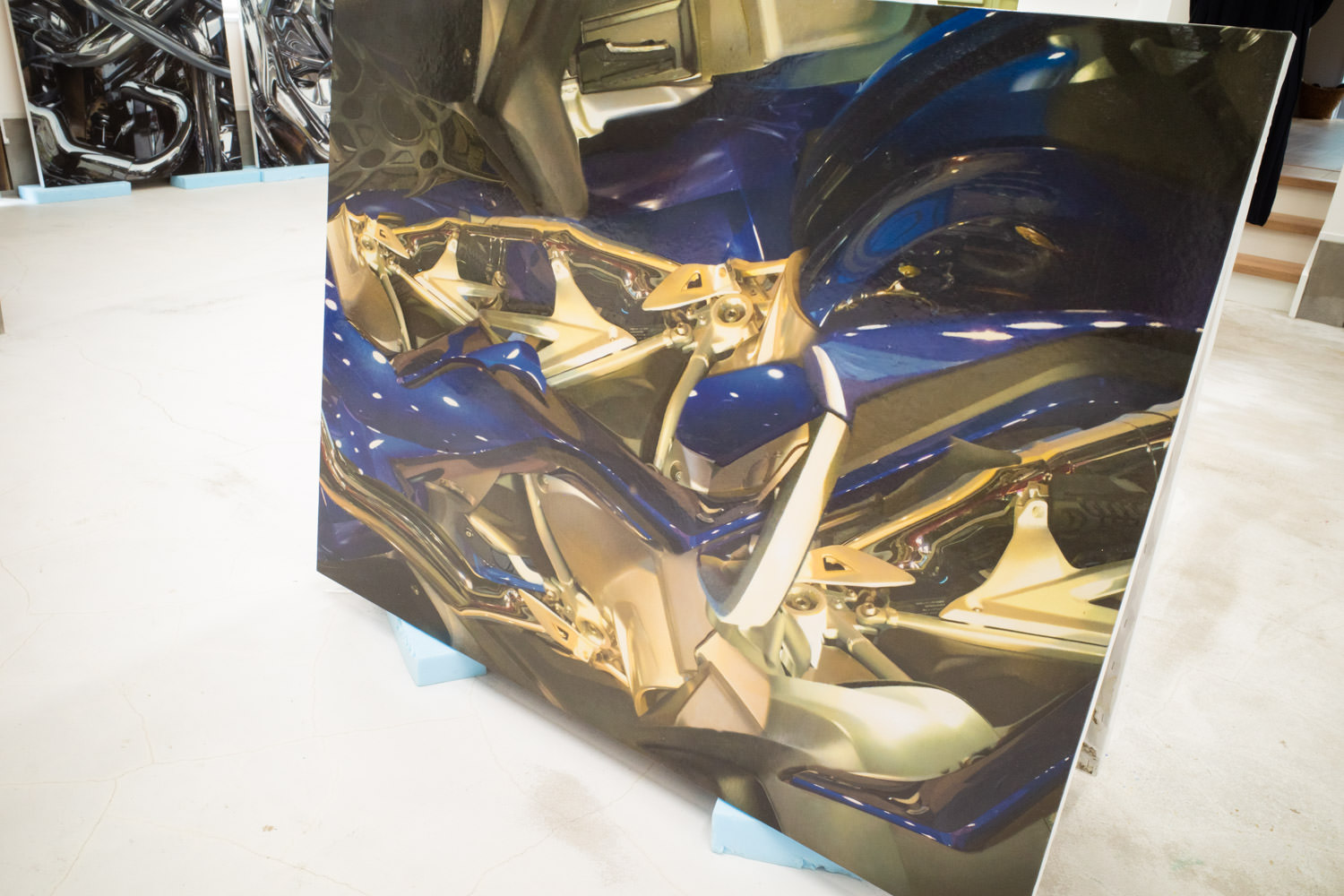
The transfer methods vary too. The work in the photo below, being made at the time of my visit, was UV-printed in monochrome onto the fabric support. Depending on the work, a technique called alcohol transfer is used too; she apparently changes the method to suit the work.
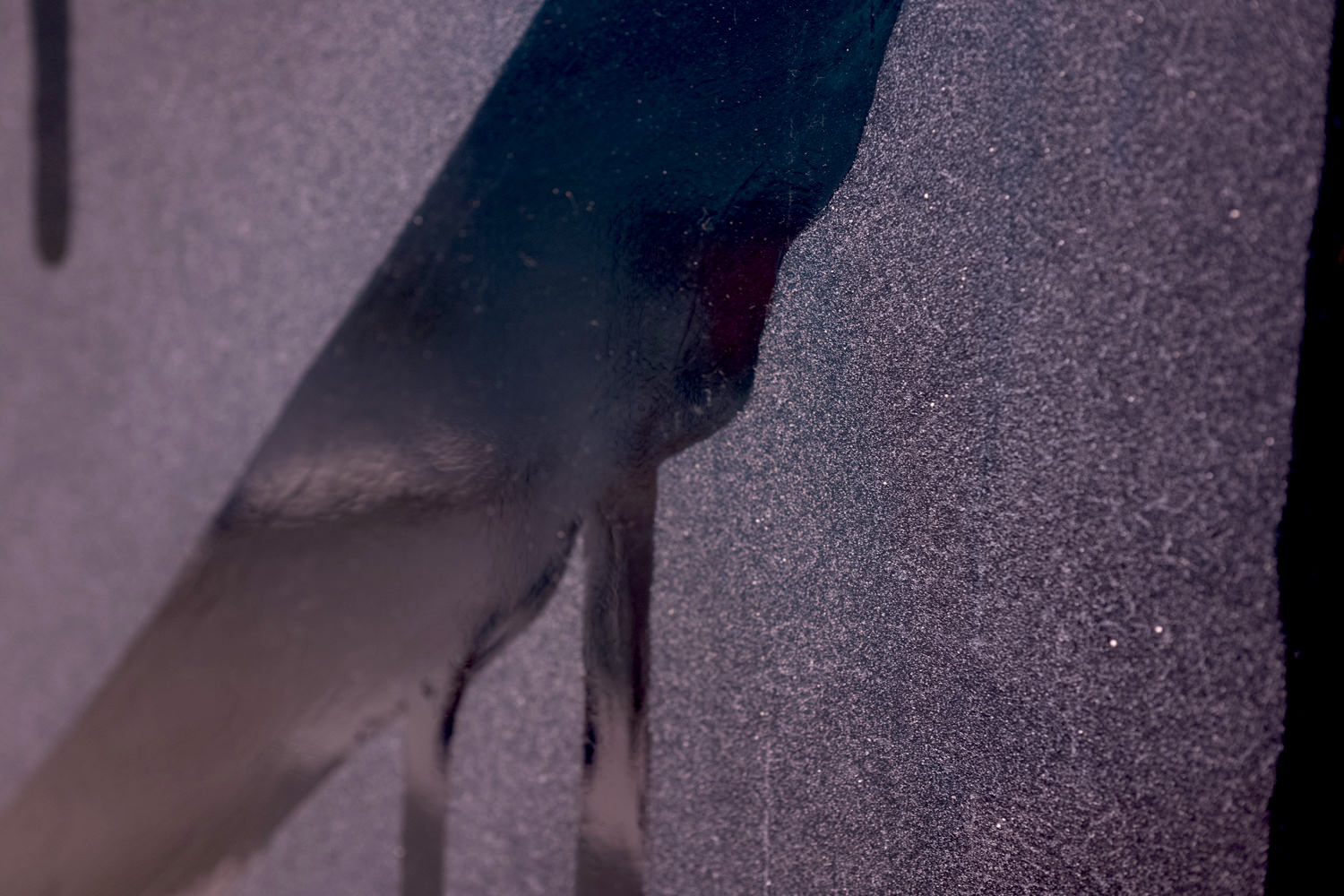
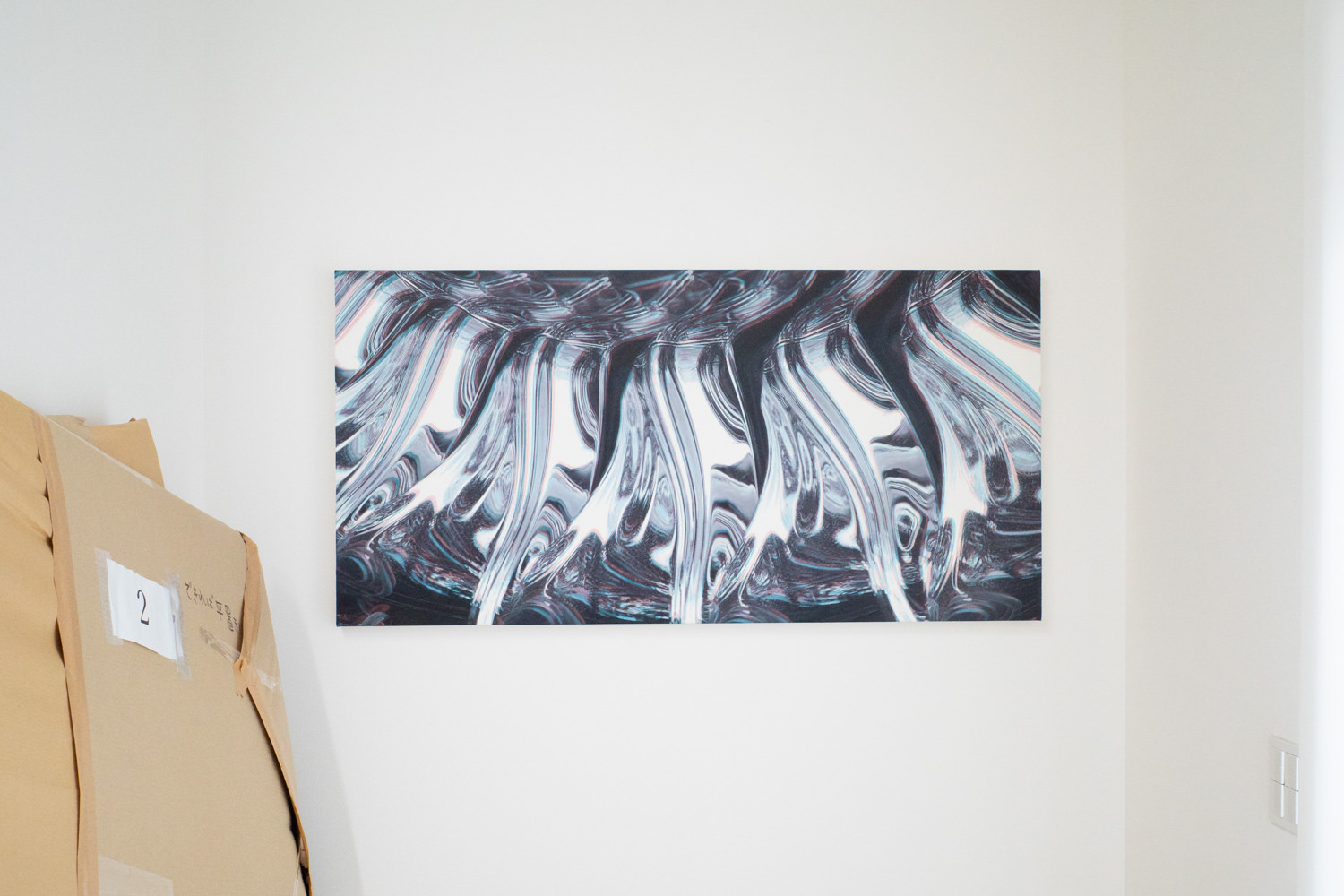
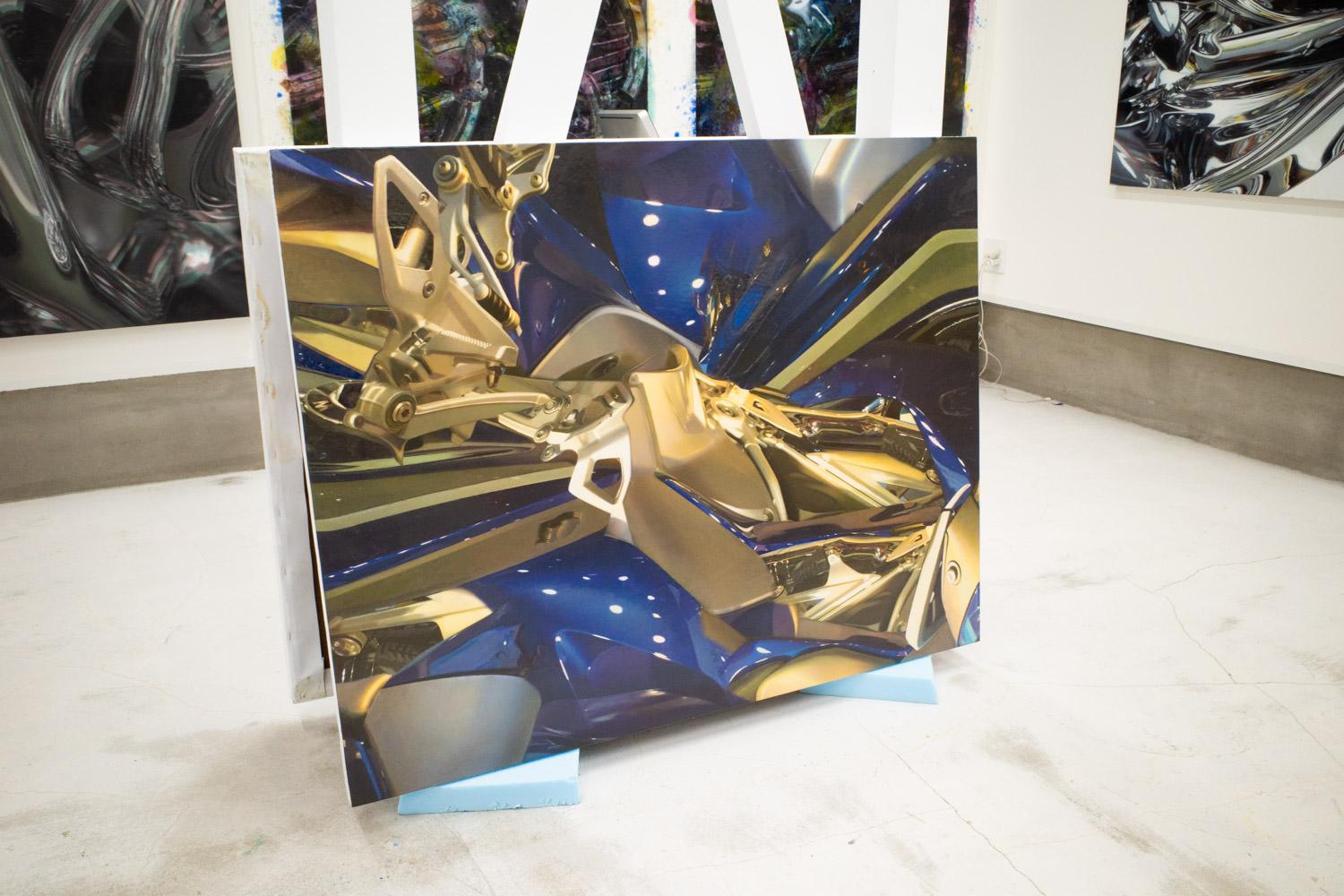
Makita, who originally loved motorcycles, precisely depicts inorganic materials like plastic and metal, adopting motifs such as the plated metal of motorcycle engine parts.
Makita said she wants to express the space between 2D and 3D, inorganic and organic, digital and physical.
Is it an illusion? Is it the truth? By blurring this, she creates a gap between reality and unreality, in works that seem to shake the viewer’s vision.
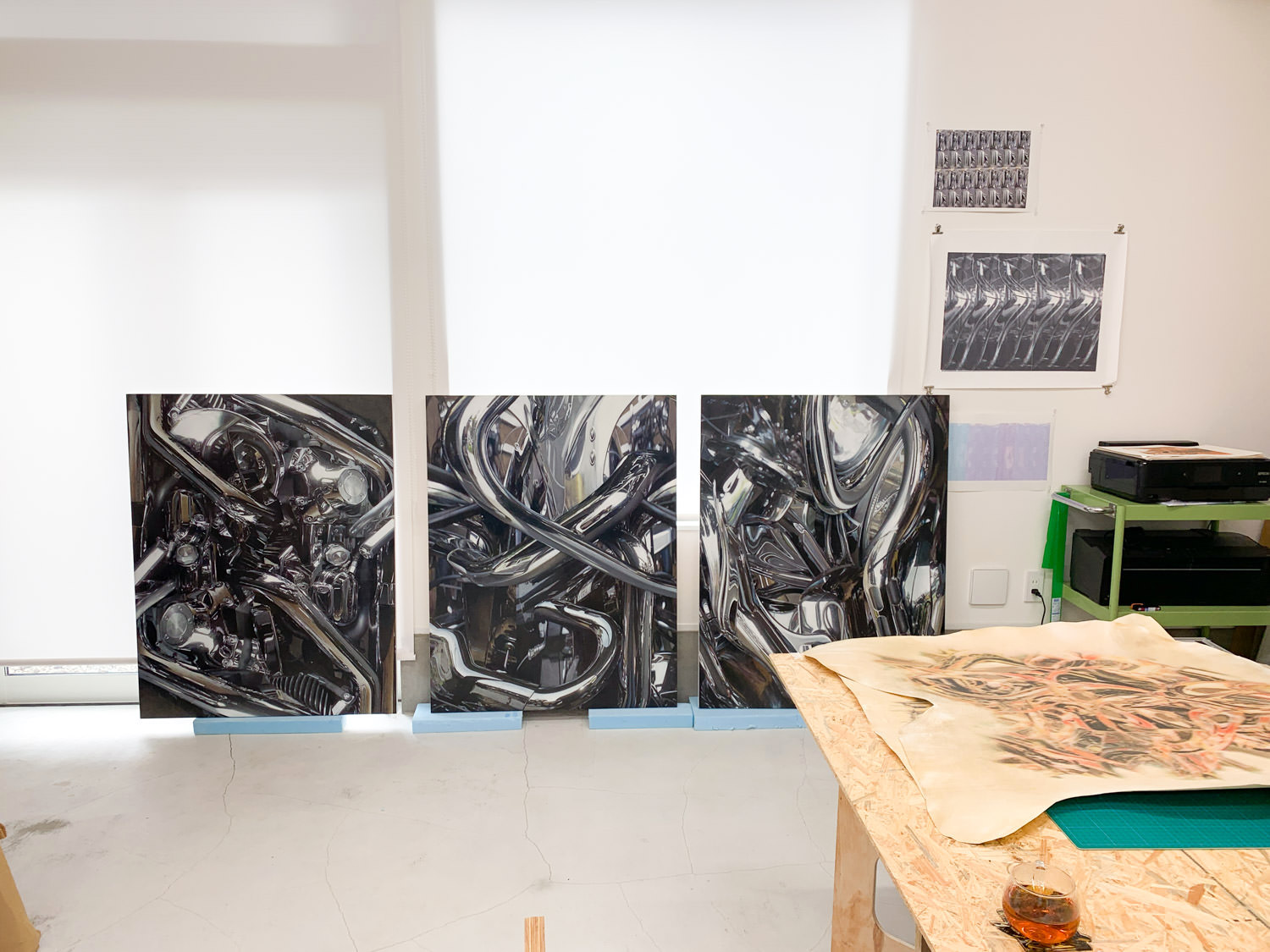
In the nine-part 《Gradation》 series, while adopting inorganic motifs, she incorporates the way scenery is reflected, as well as expressions like metal melting gooily or the depicted motif peeling off the canvas. I was able to view some works from the series remaining in the studio; they were three-dimensional and deep, and I was struck by a sensation of my own vision being shaken.
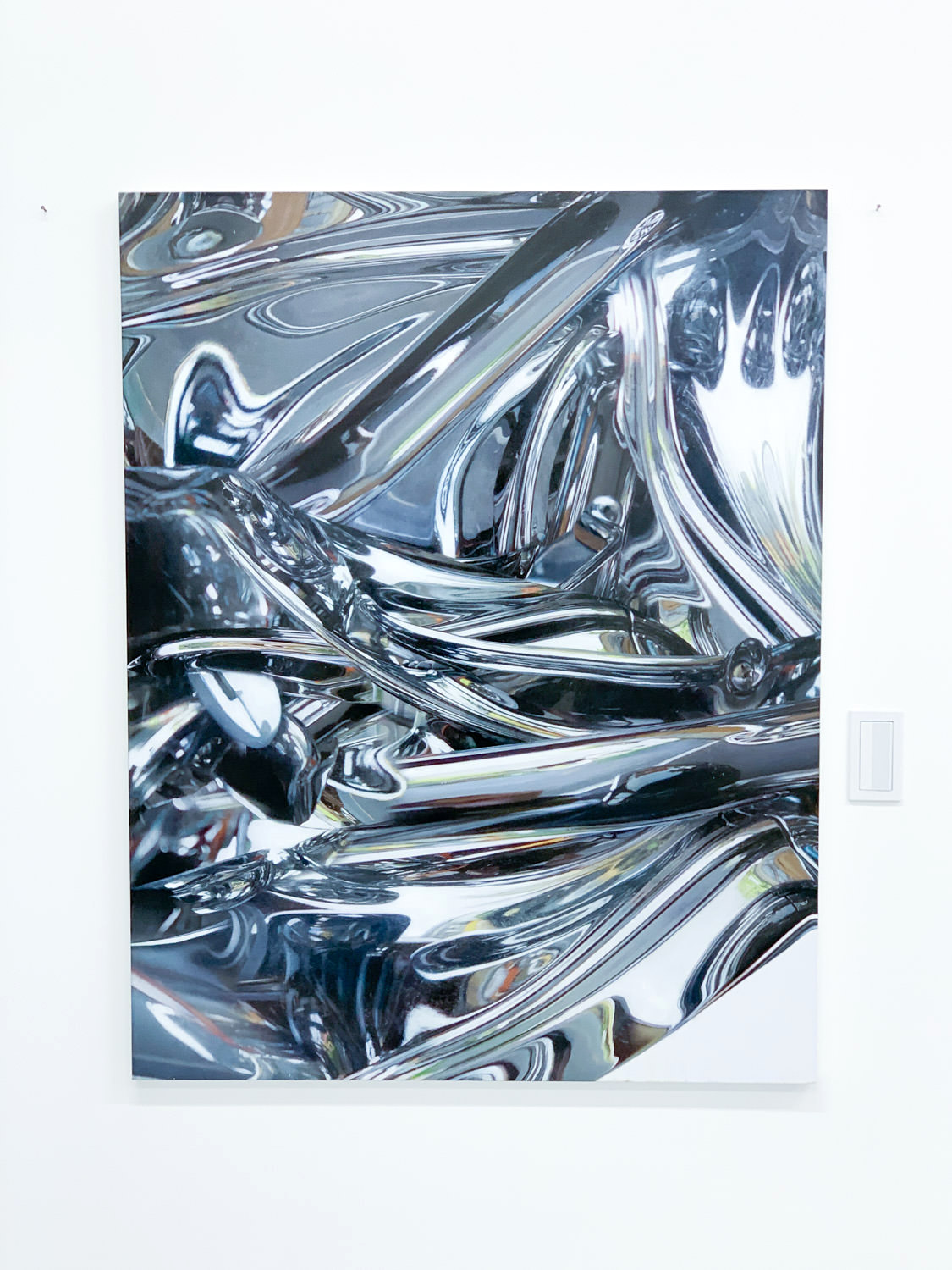
《Gradation viii》 is an abstract work even within the series, and it left a strong impression.
Ai Makita’s father was apparently a wood-carving artist. Perhaps due to that influence, she apparently approaches painting with a sculptural awareness. Conscious of a three-dimensional sense, she adds paint and stacks layers little by little.
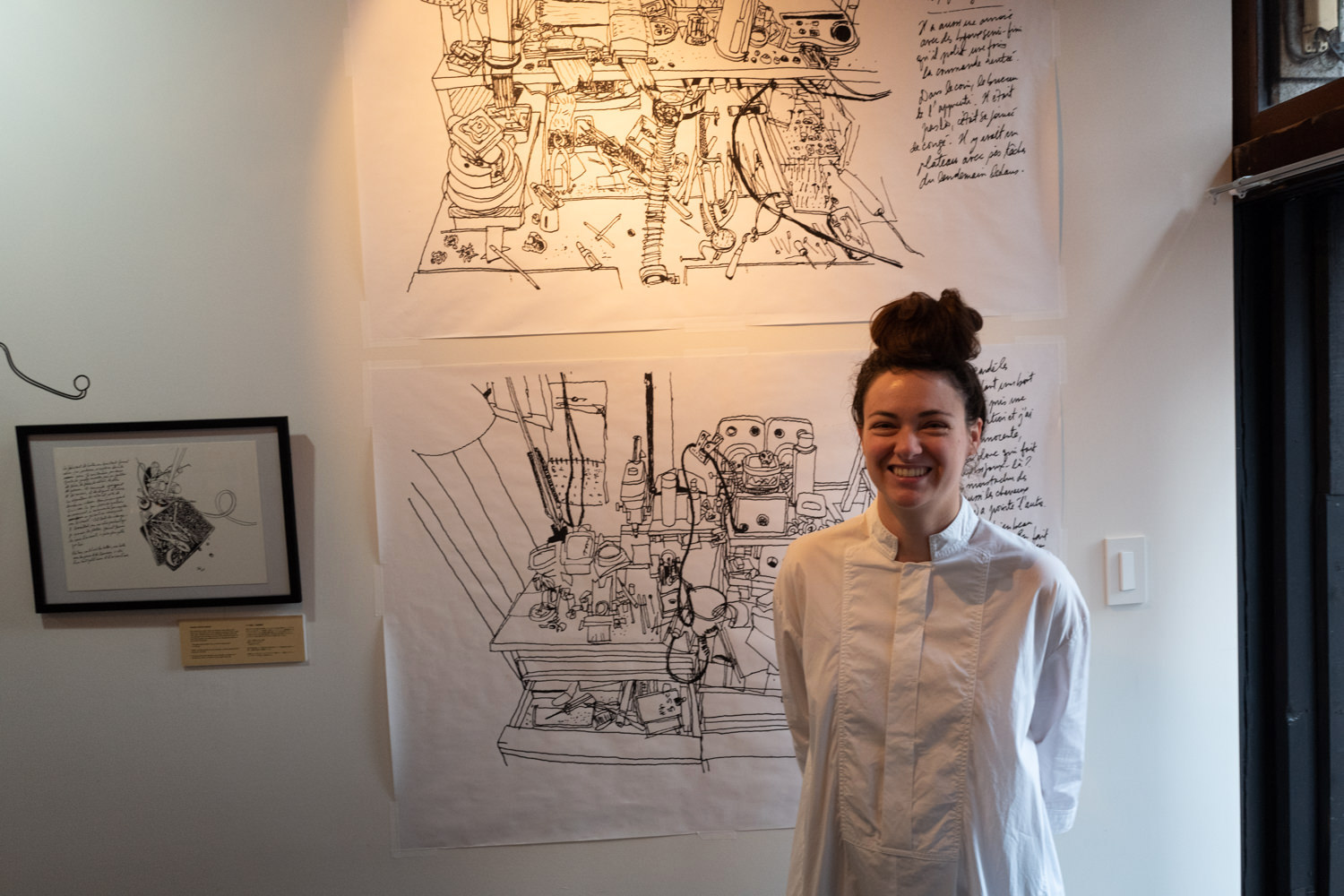
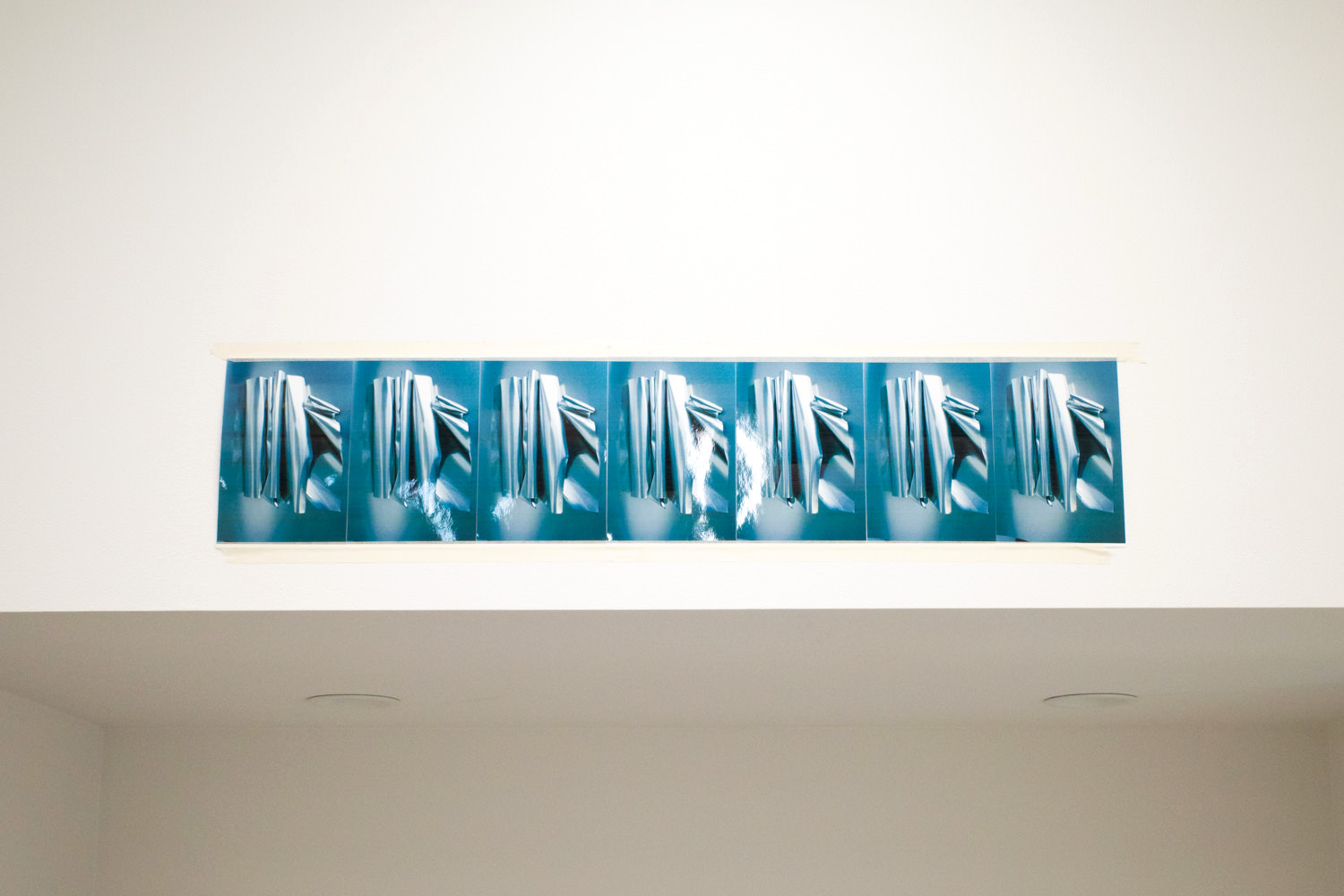
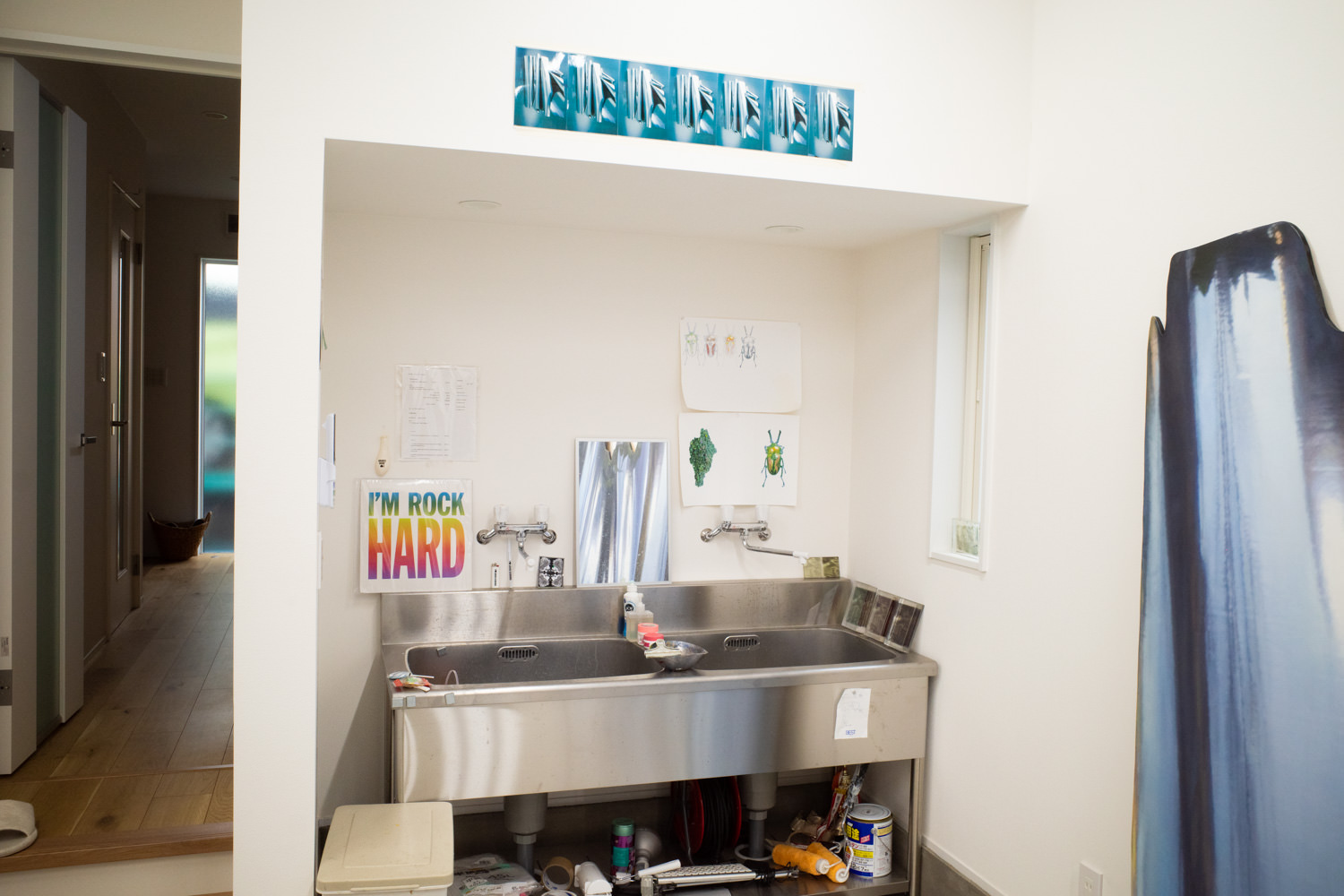
Recently she’s interested in optical-illusion effects, and images she’d assembled digitally were posted on the studio walls too. Skilled at assembling on a PC, she was also taking on works that pop out when viewed with 3D glasses.
Techniques vary by work. 《Backbone》 uses silkscreen for the first layer and is composed of three layers using red and blue images.
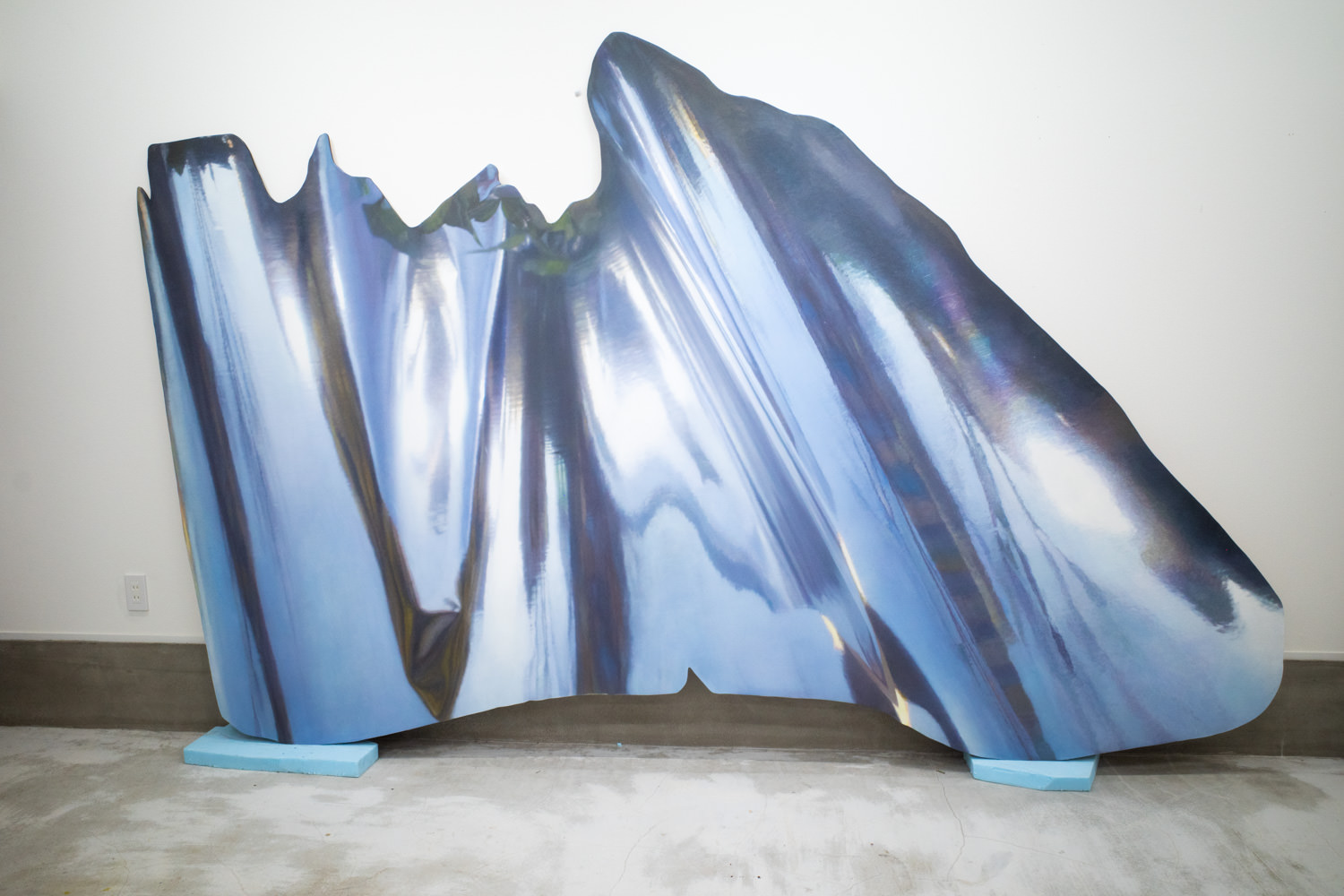
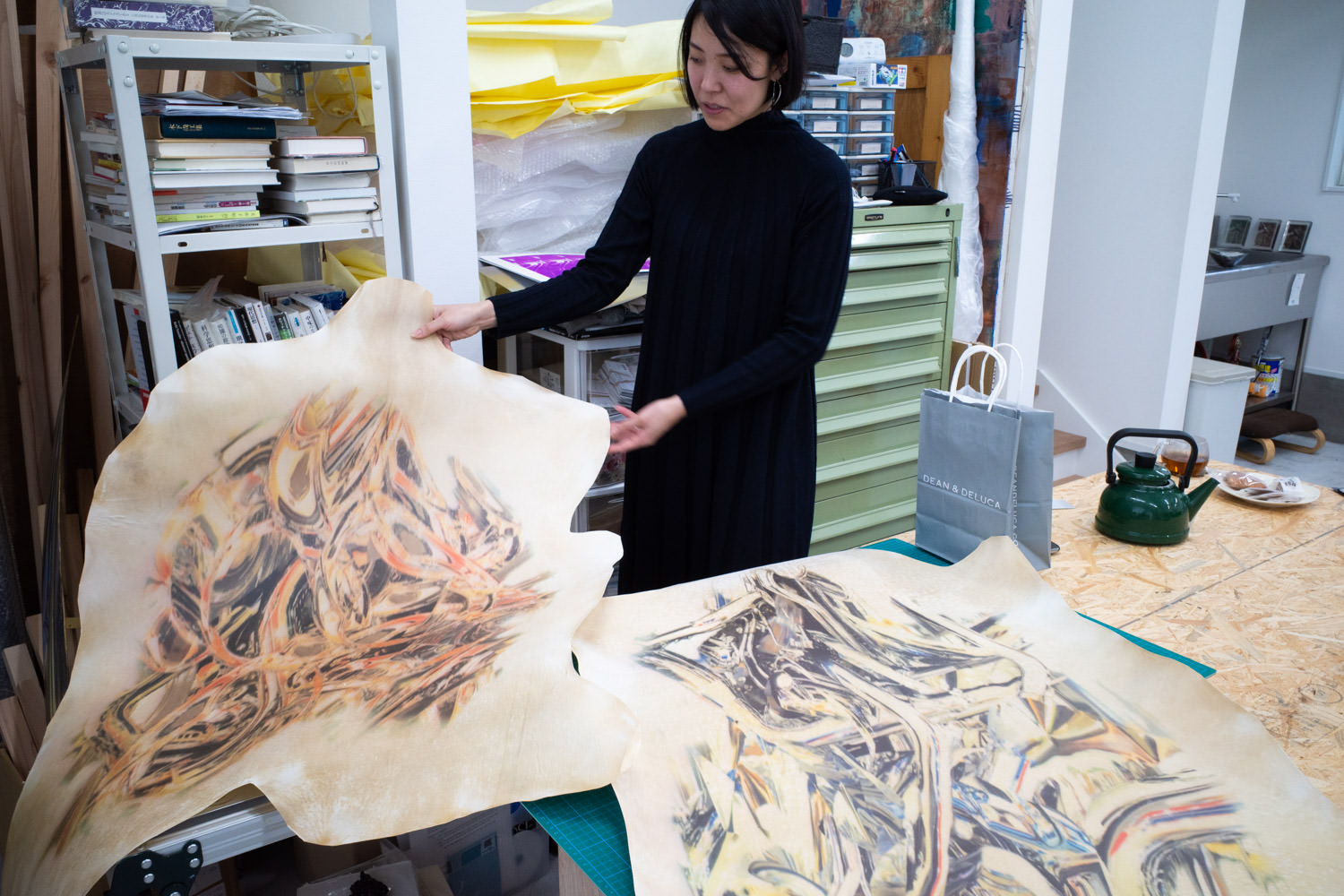
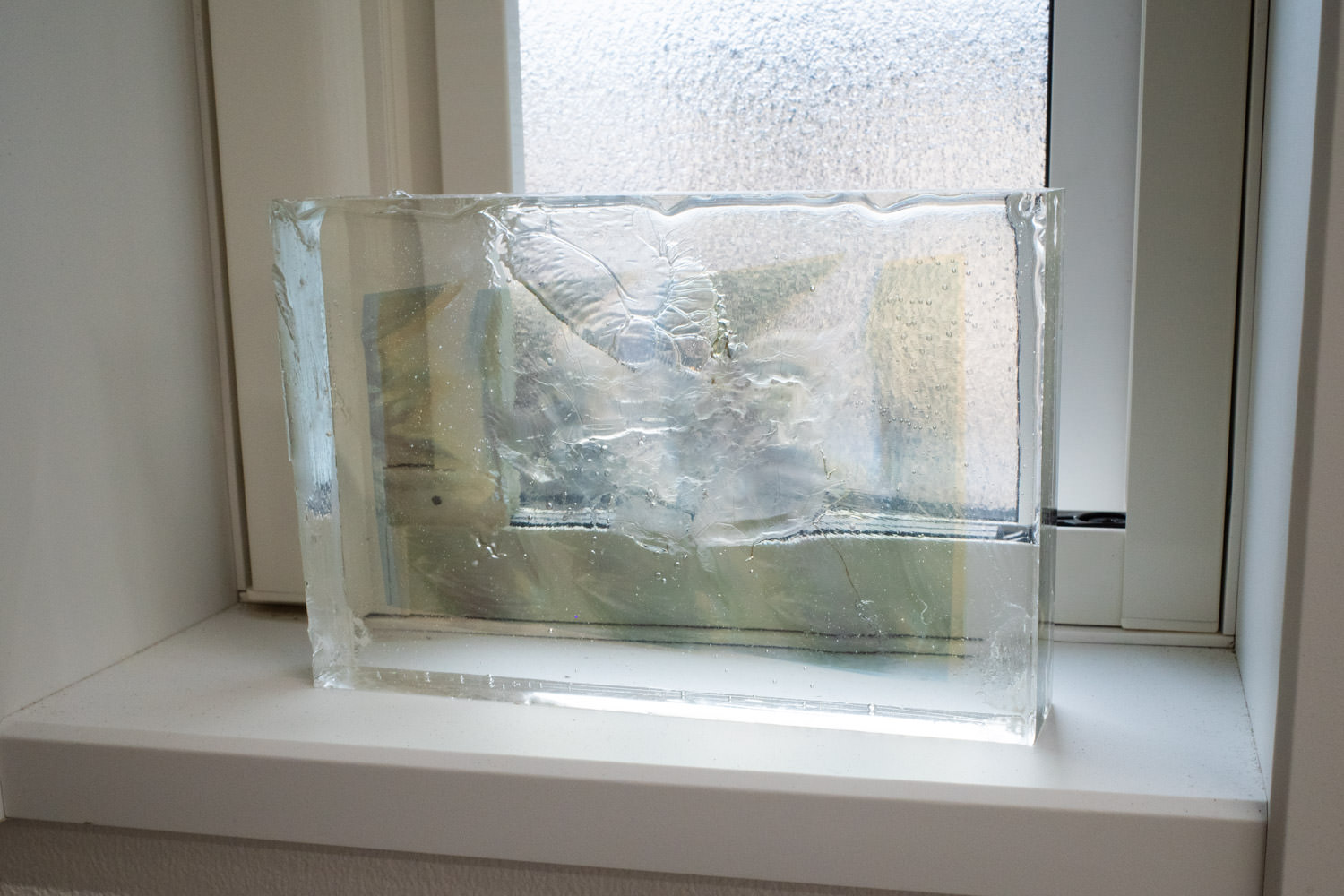
An approach that mutually swaps organic and inorganic is also carried out from the support side, and she was also taking on an effort using animal hide.
Ai Makita will be energetically active in 2020 too.
A solo exhibition in New York in April, a two-person exhibition with Gensho Sugawara at Kannai Bunko in summer, and a solo exhibition at the Nihonbashi Mitsukoshi main store in September are among her plans.
She’s an artist expected to be increasingly active.