exhibition

[Solo Exhibition] The Power of Painting Barefoot — Kazuo Shiraga "Kazuo Shiraga : a retrospective" at Tokyo Opera City Art Gallery

【個展】裸足で描くチカラ〜白髪一雄「Kazuo Shiraga : a retrospective」東京オペラシティ アートギャラリー

Kazuo Shiraga “Kazuo Shiraga : a retrospective”

I visited Kazuo Shiraga’s solo exhibition “Kazuo Shiraga : a retrospective.” The venue is Tokyo Opera City Art Gallery in Hatsudai, Tokyo.
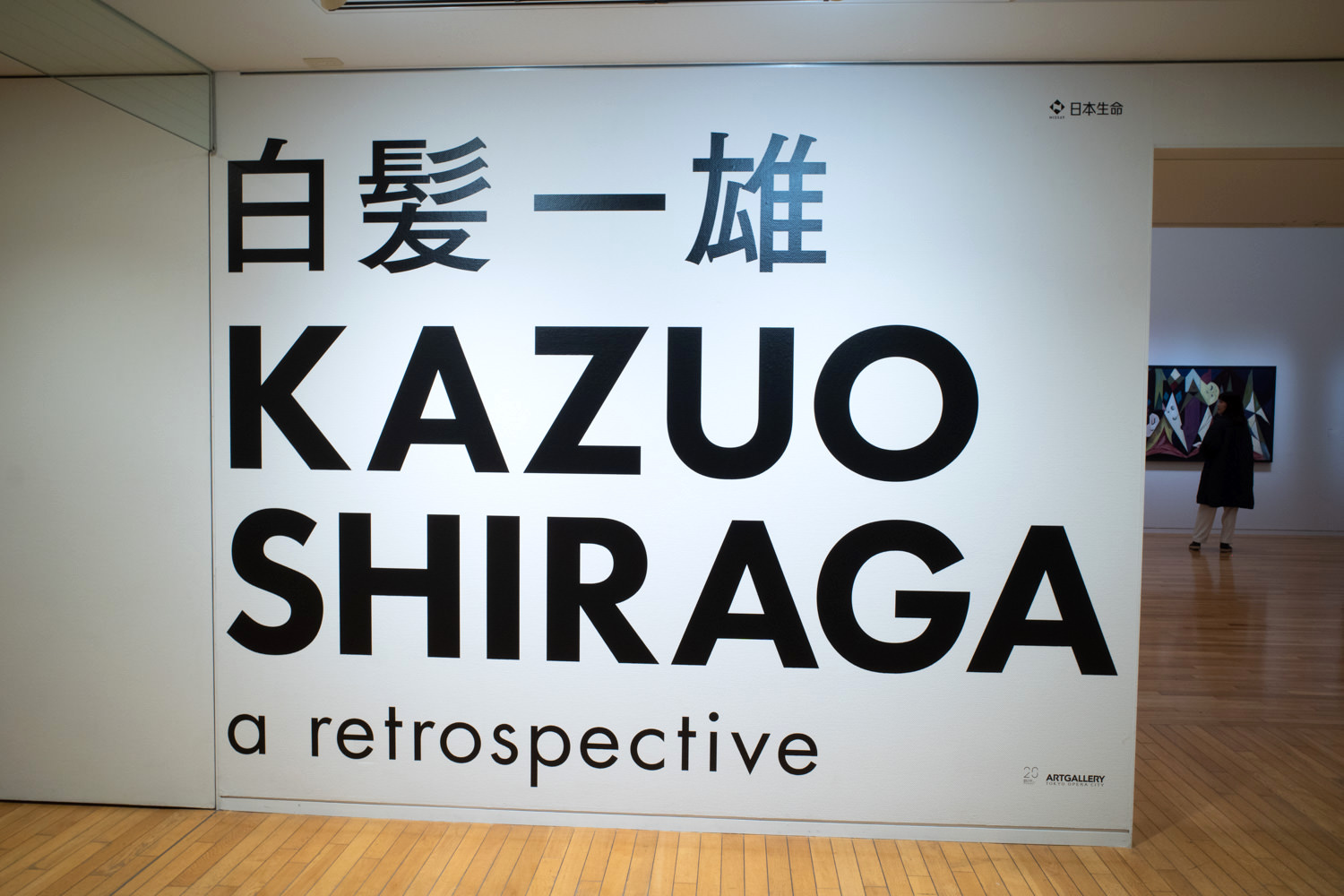
Tokyo Opera City Art Gallery

In the adjacent museum shop, a valuable video documenting Kazuo Shiraga at work was being screened; watching it before entering the galleries gave me an extremely useful frame of reference.
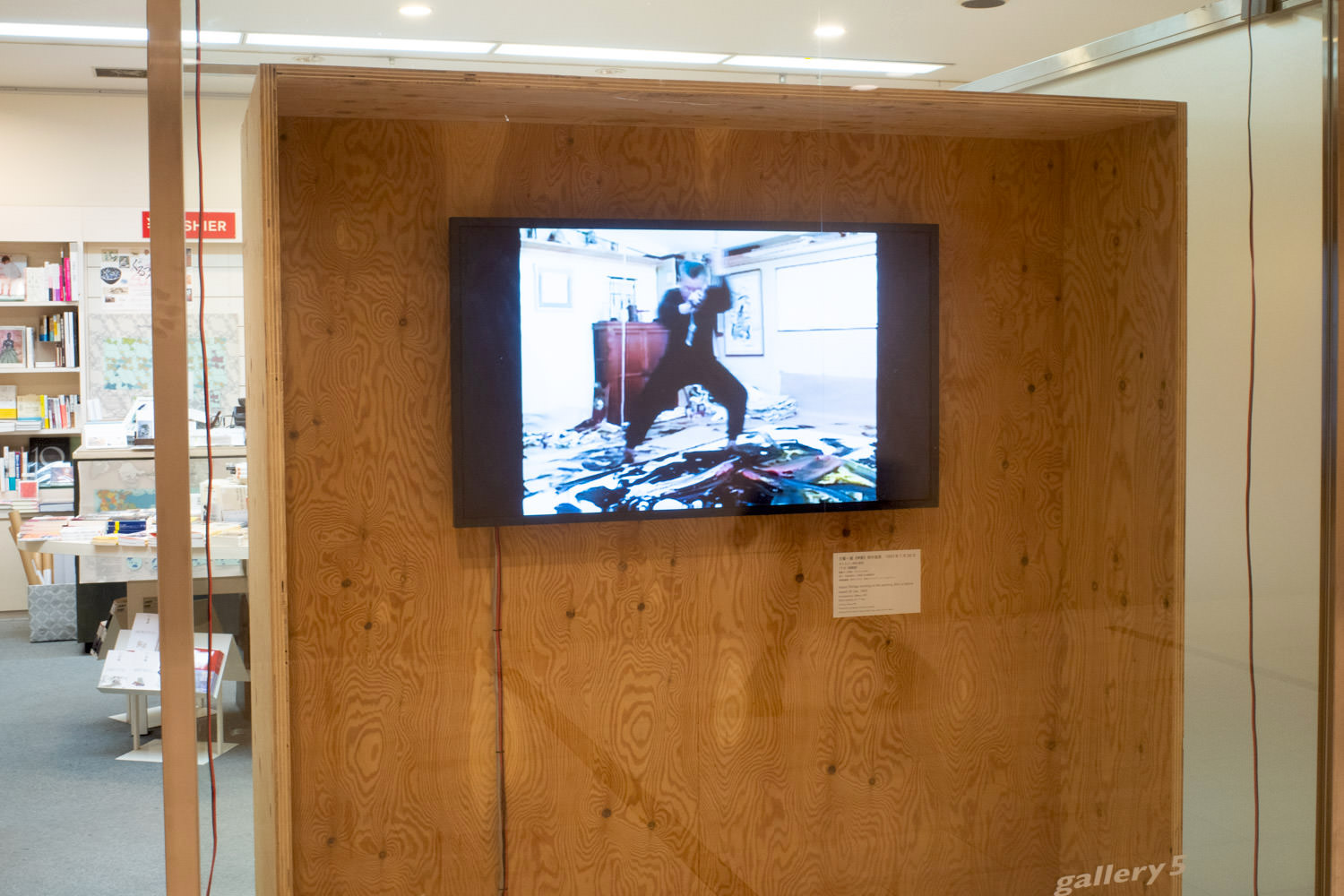
Footage from the studio during a foot-painting session (July 26, 1993, while producing ≪Shinjū≫) @Gallery5

Kazuo Shiraga is an internationally renowned artist — often called an action painter — famous for his “foot painting” technique, in which he suspends a rope from the ceiling, spreads a canvas on the floor, and paints with his feet.
In the footage, the 70-year-old Shiraga grips the rope hanging from above, rotates his body, and glides his feet across the canvas as though smearing the paint into it.
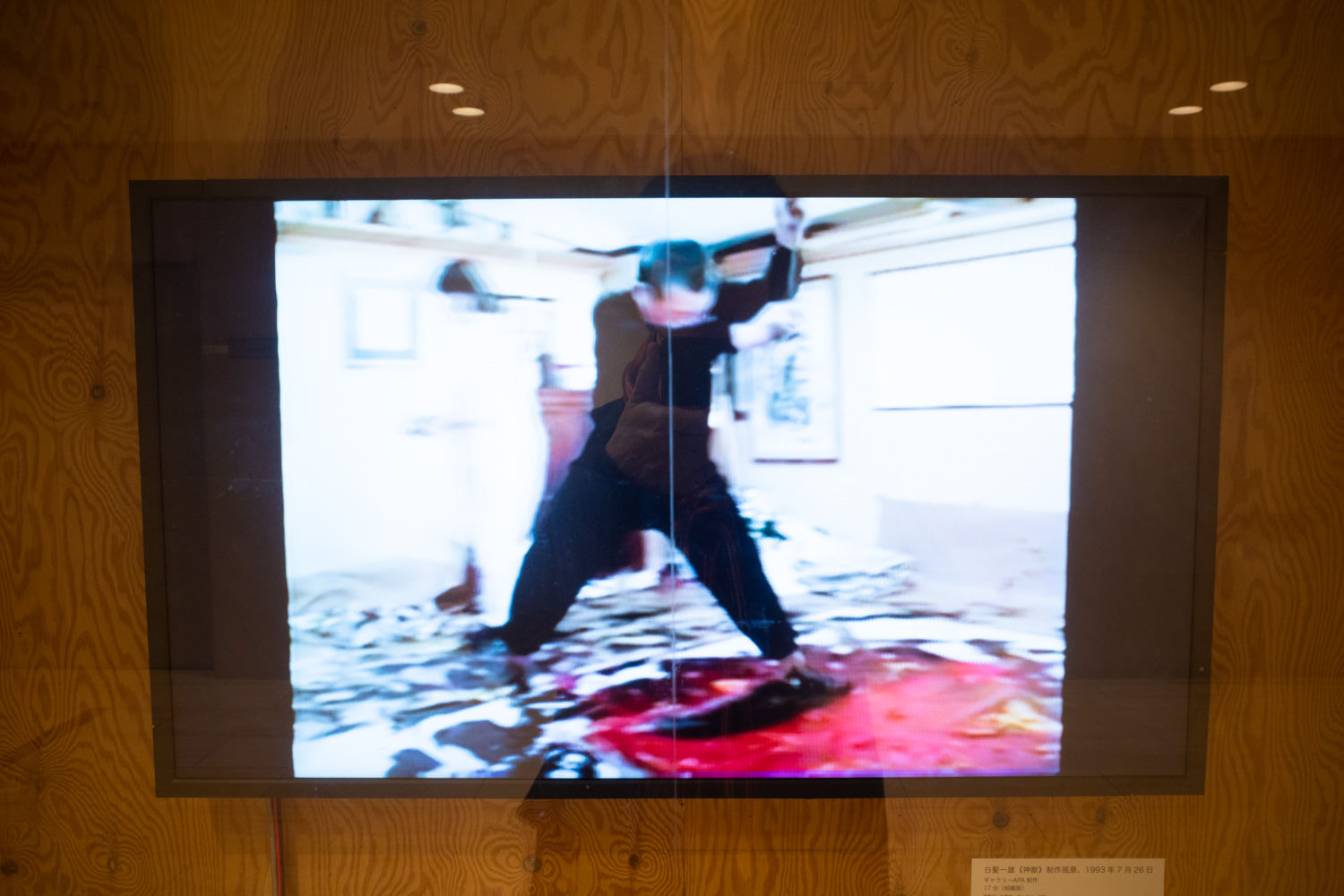
The movements are anything but light — this is a highly aleatoric mode of expression that even the artist himself cannot ful…
The movements are anything but light — this is a highly aleatoric mode of expression that even the artist himself cannot fully control.

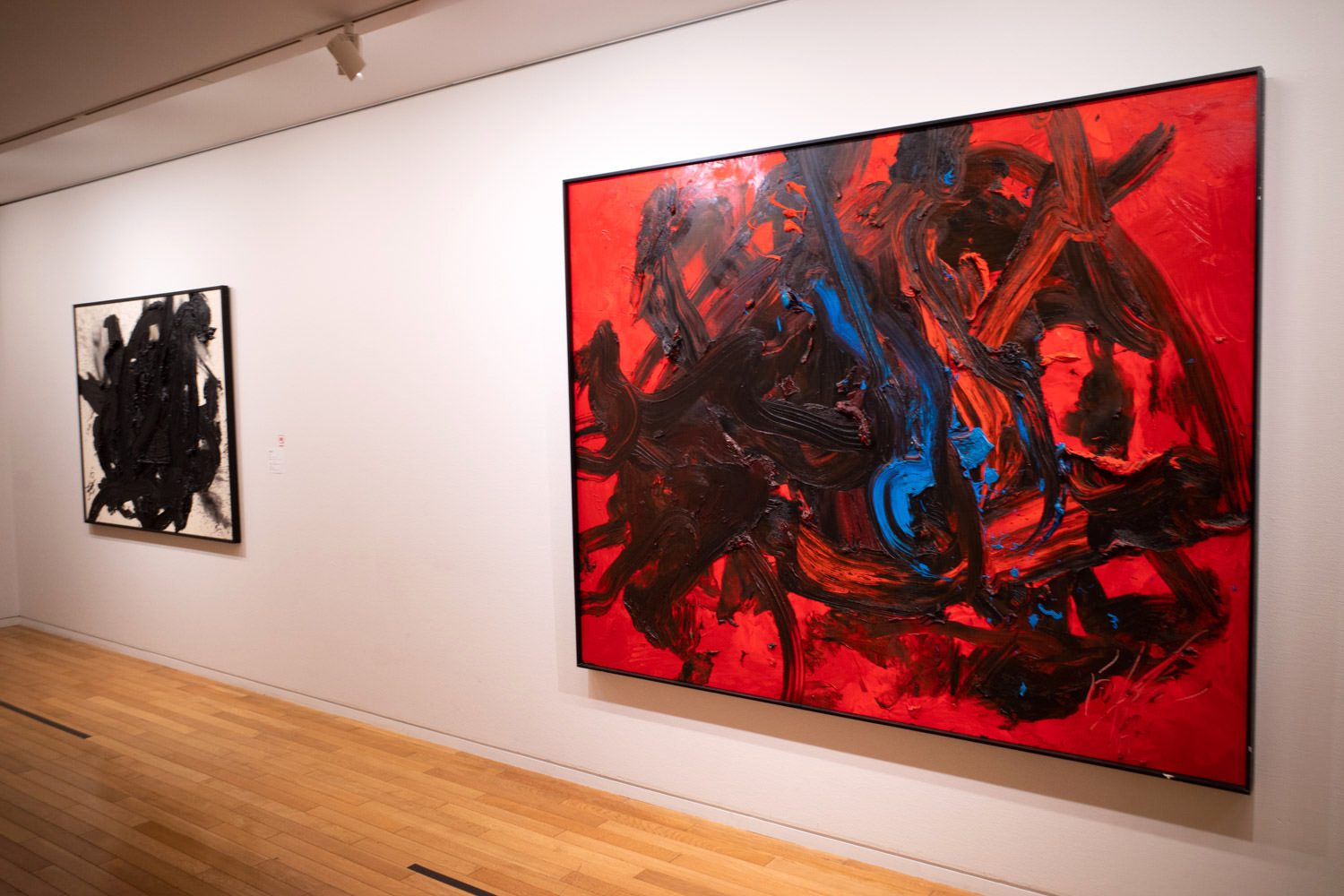
The exhibition brings together roughly 100 works loaned from museums and private collectors across Japan, shown alongside related archival material.
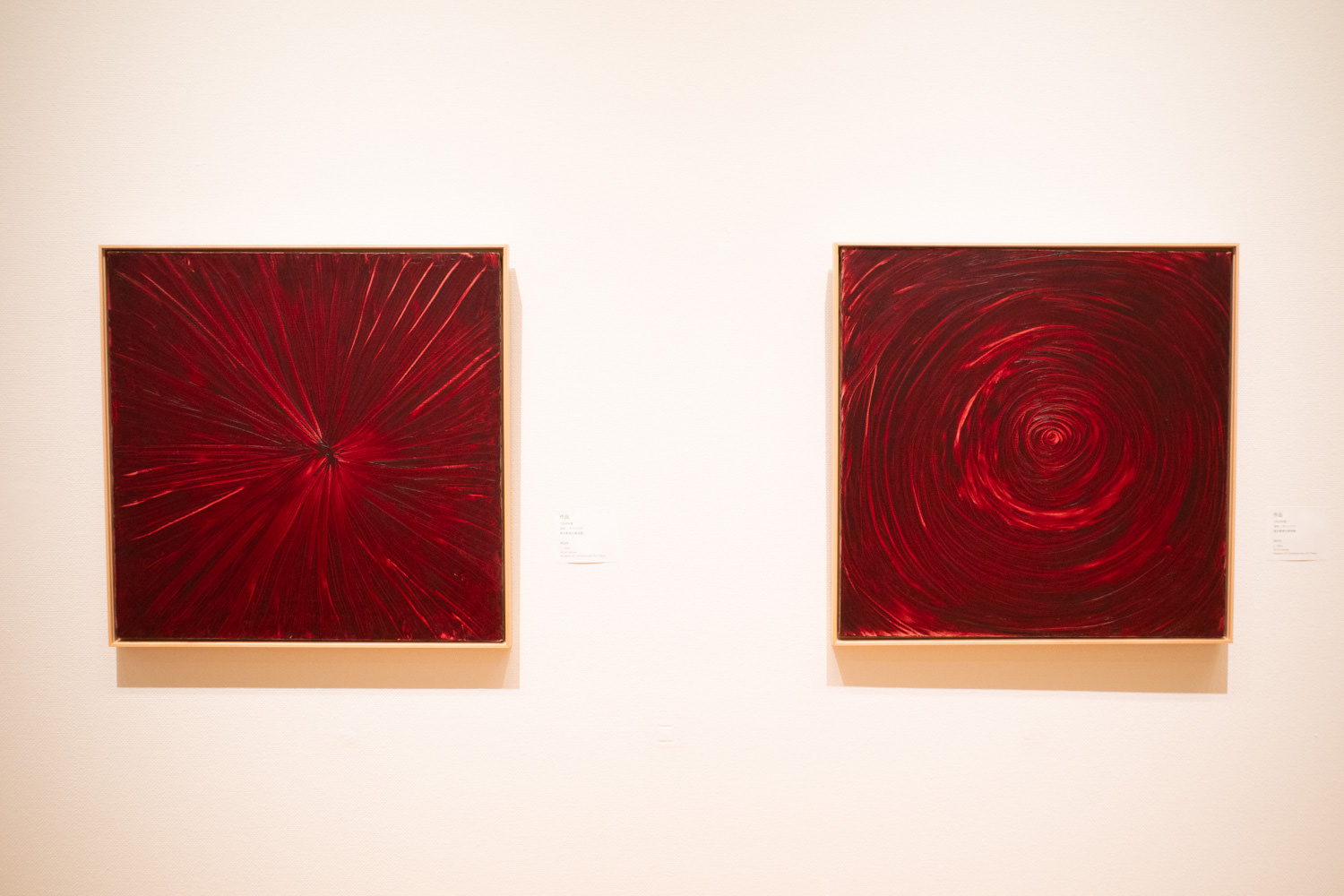
Kazuo Shiraga, ≪Work≫, c. 1954, collection of the Museum of Contemporary Art Tokyo

Works from the Yamamura Collection were also on view.
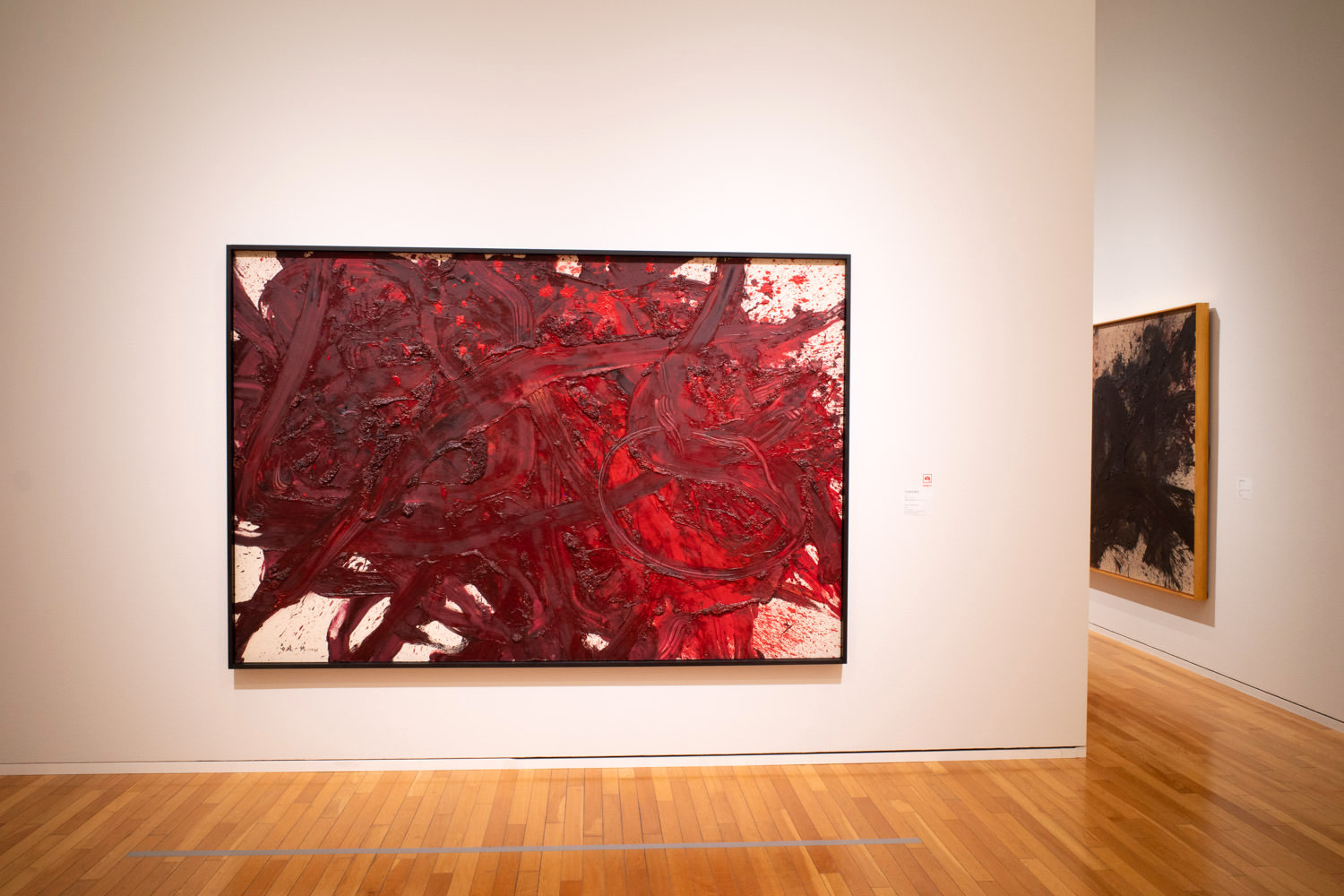
Kazuo Shiraga, ≪Ten-i-sei Sekihatsuki≫, 1959, collection of the Hyogo Prefectural Museum of Art (Yamamura Collection)
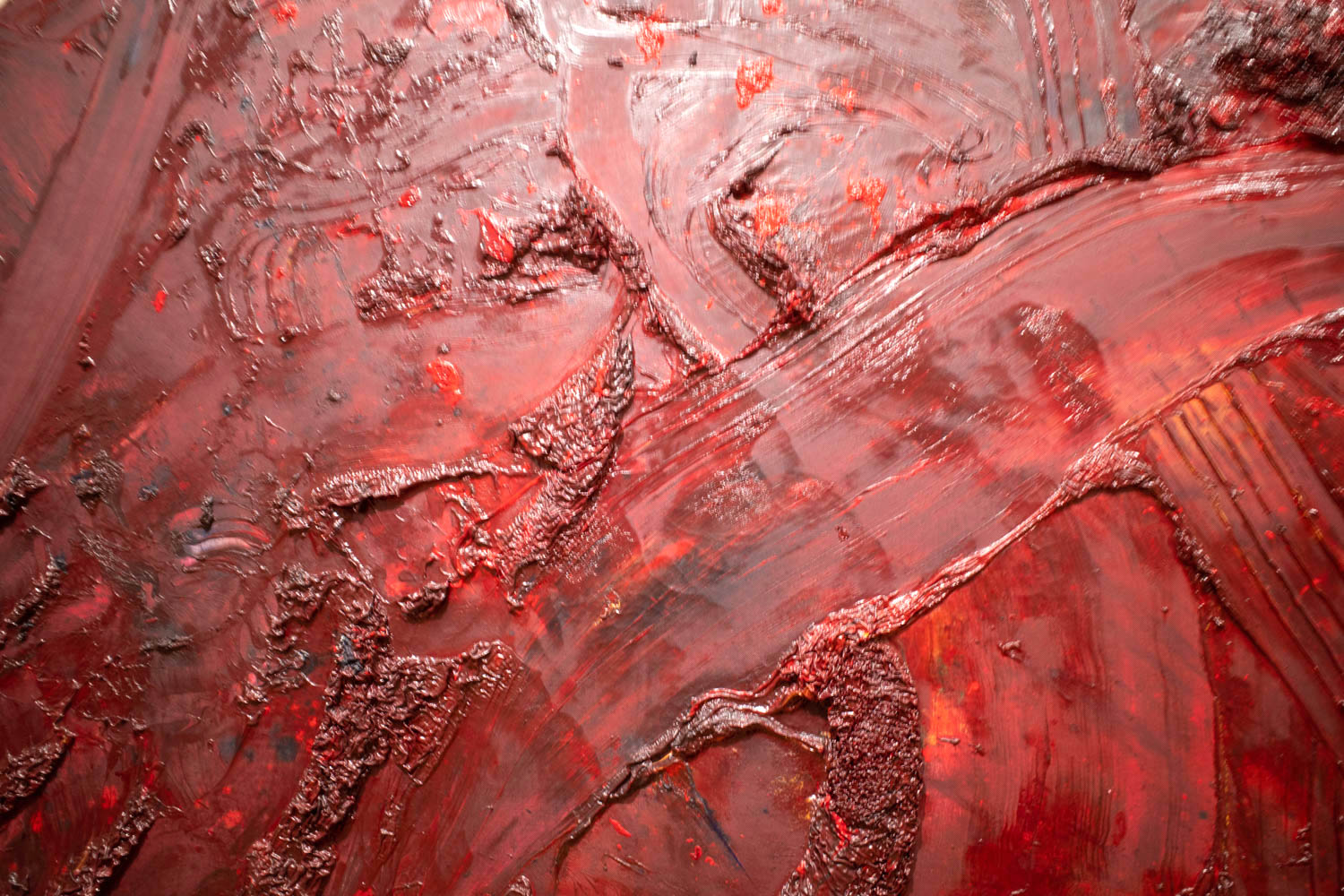
Kazuo Shiraga, ≪Ten-i-sei Sekihatsuki≫ *Detail
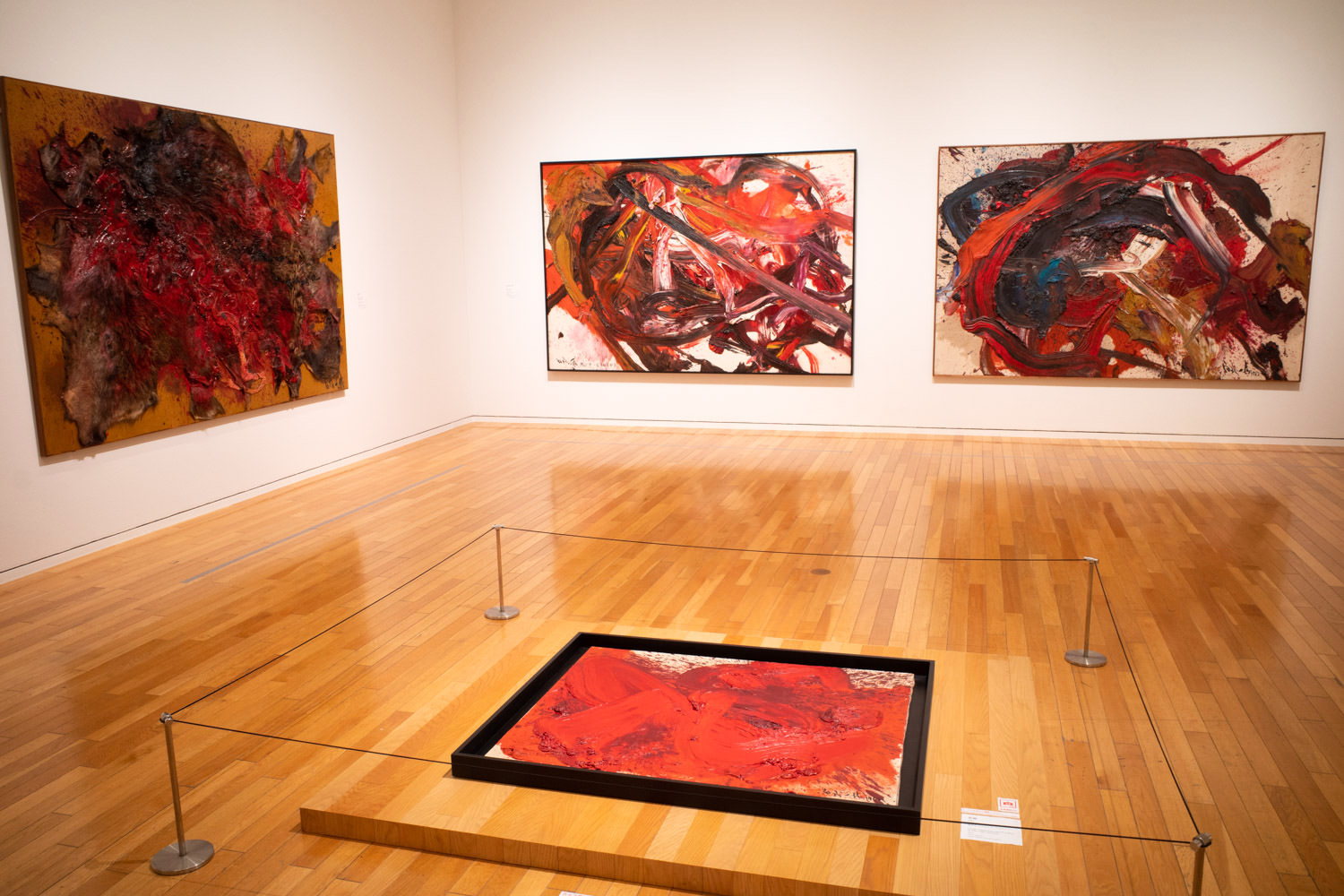
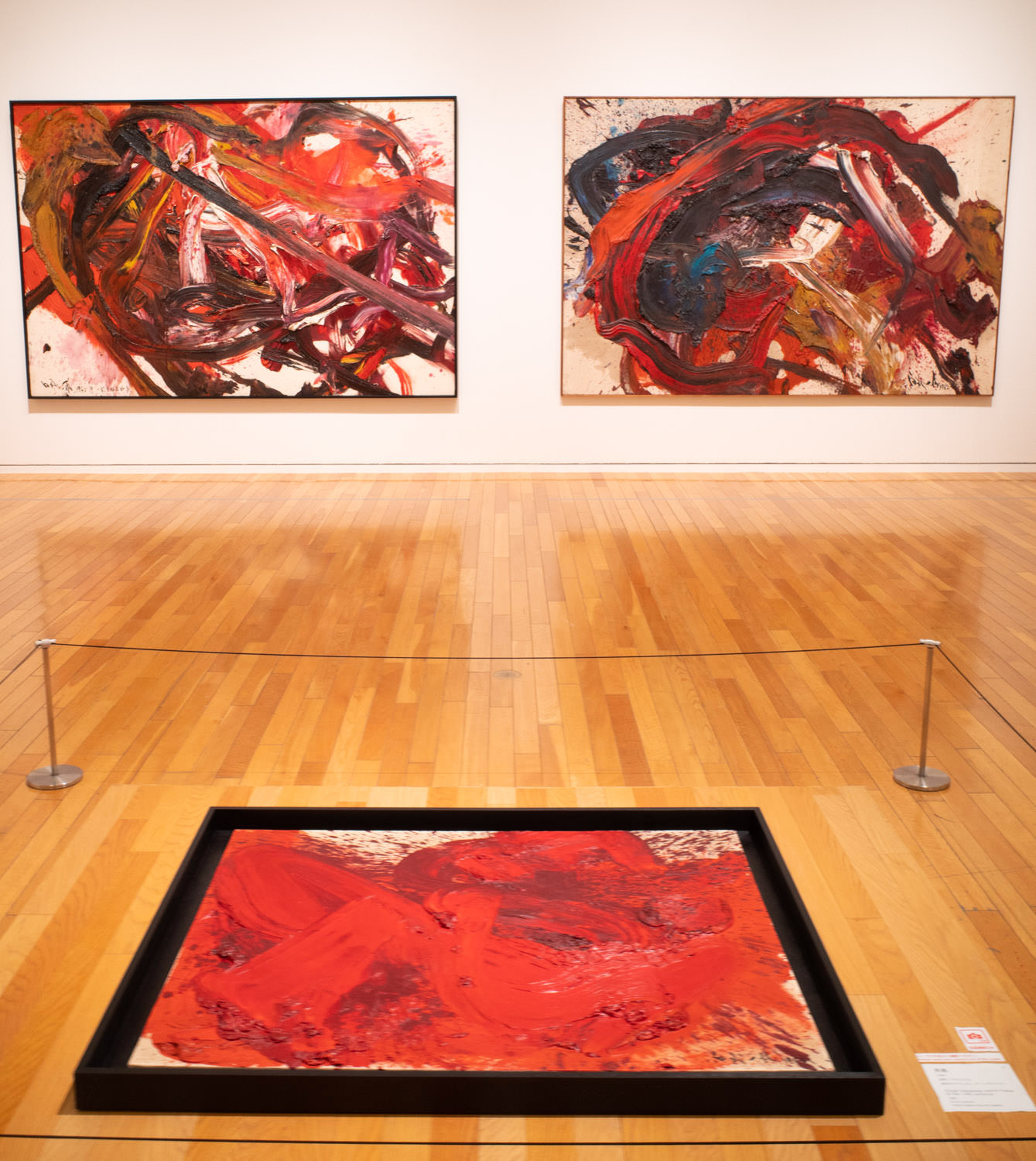
Installation view
Installation view
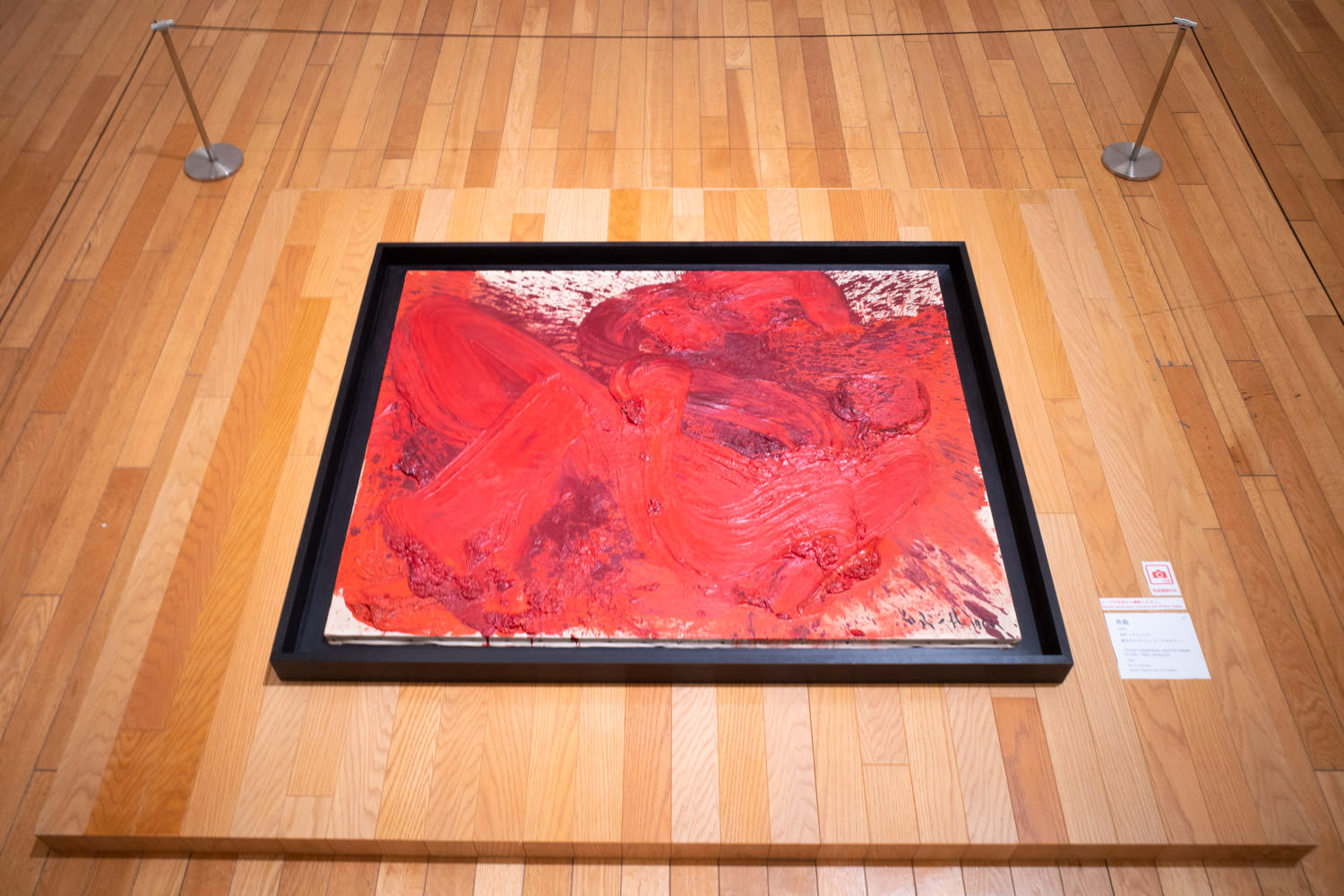
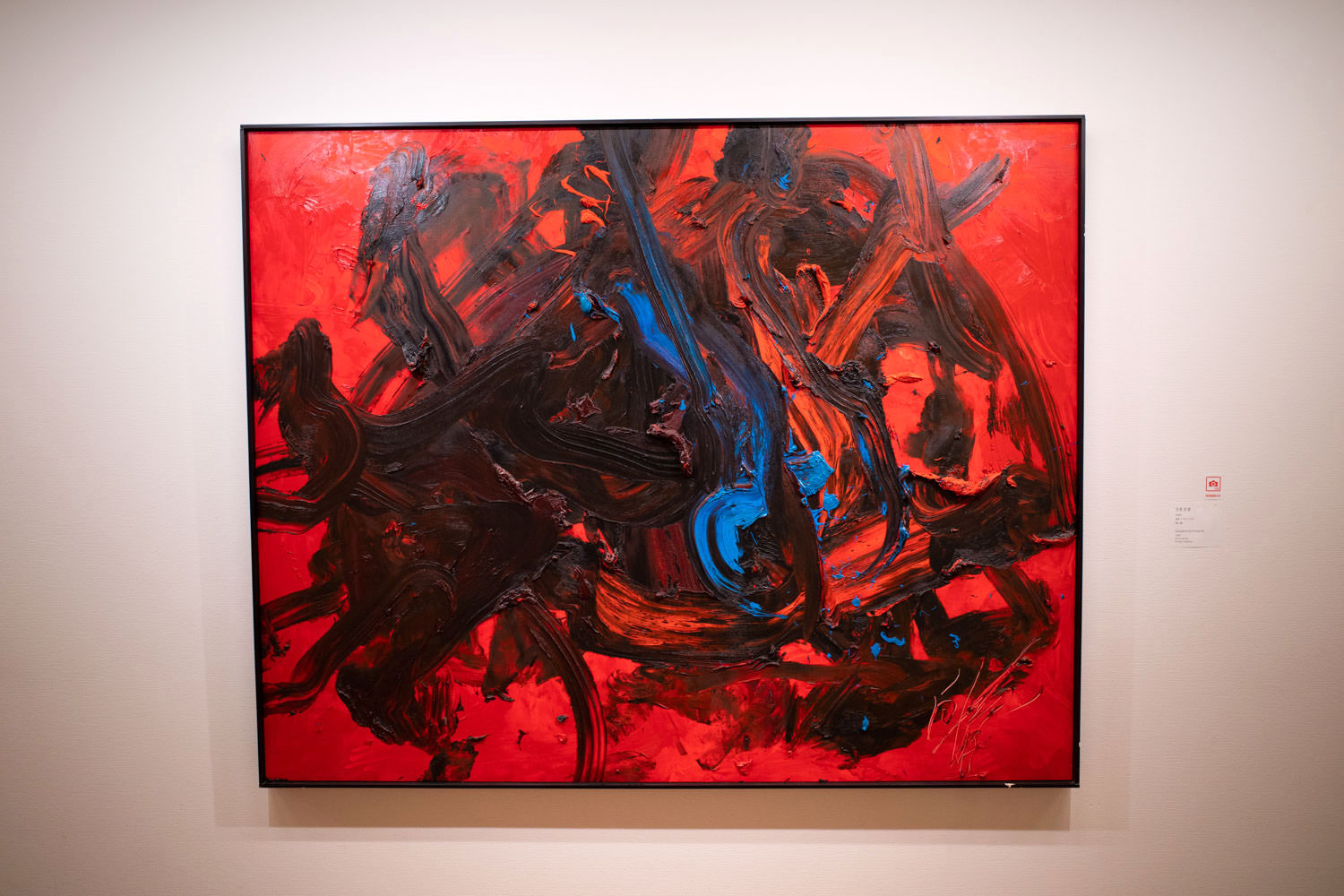
Kazuo Shiraga, ≪Chōgi≫, 1961, collection of Tokyo Opera City Art Gallery
Installation view
Installation view
Installation view
Installation view
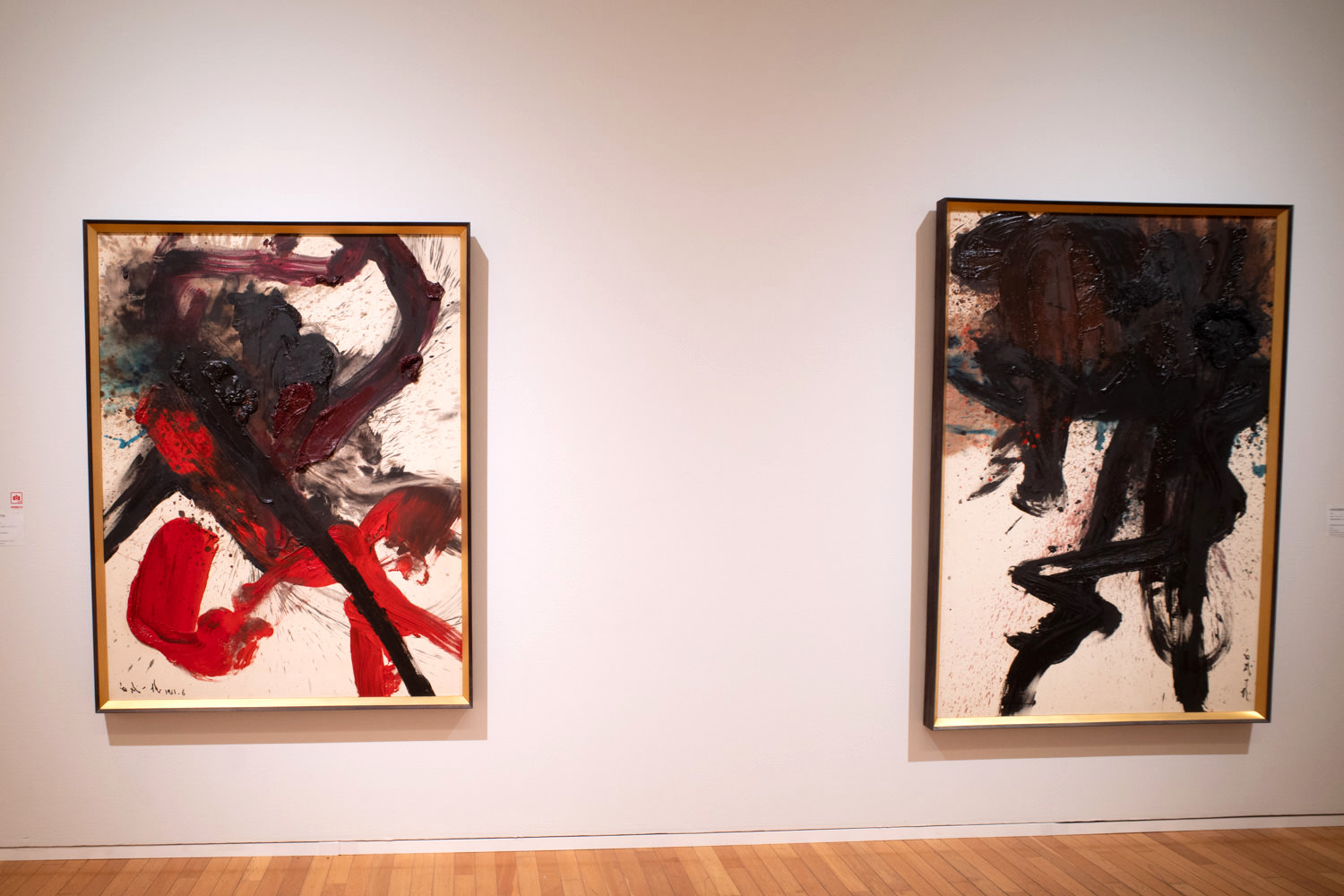
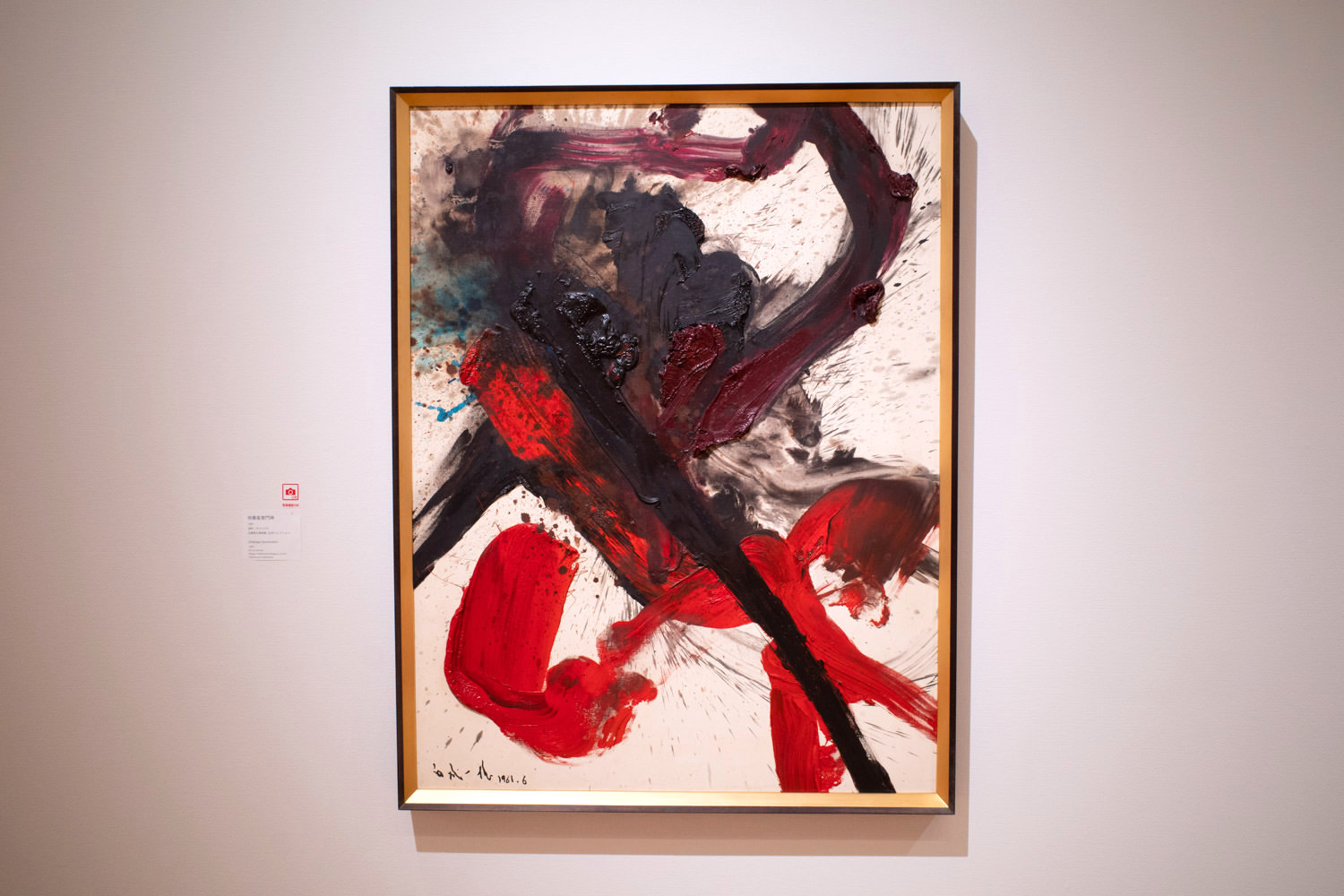
Kazuo Shiraga, ≪Chibōsei Sōmonshin≫, 1961, collection of the Hyogo Prefectural Museum of Art (Yamamura Collection)
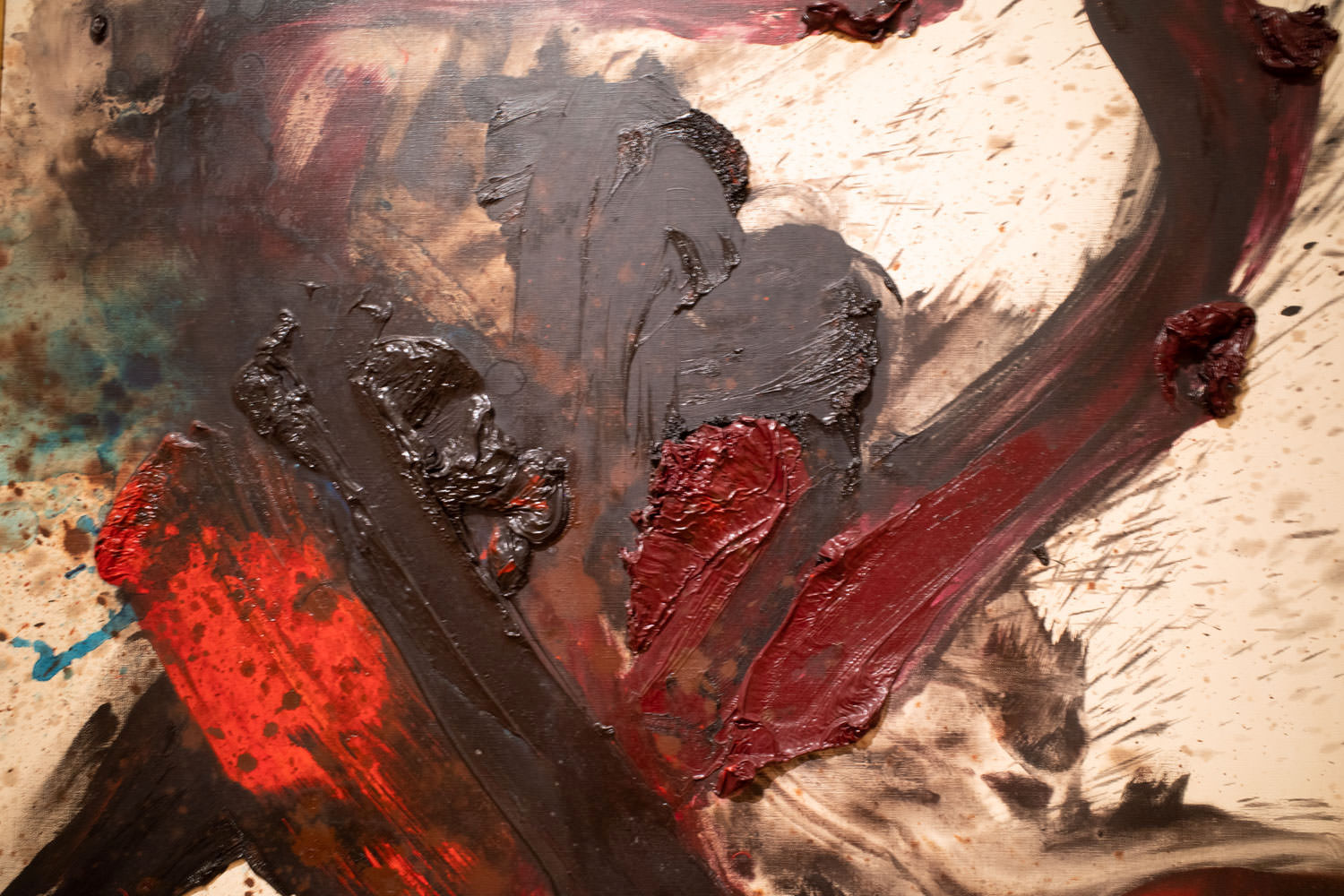
Kazuo Shiraga, ≪Chibōsei Sōmonshin≫ *Detail

Shiraga’s practice is not limited to foot painting; the exhibition also includes works made with skis or squeegees.
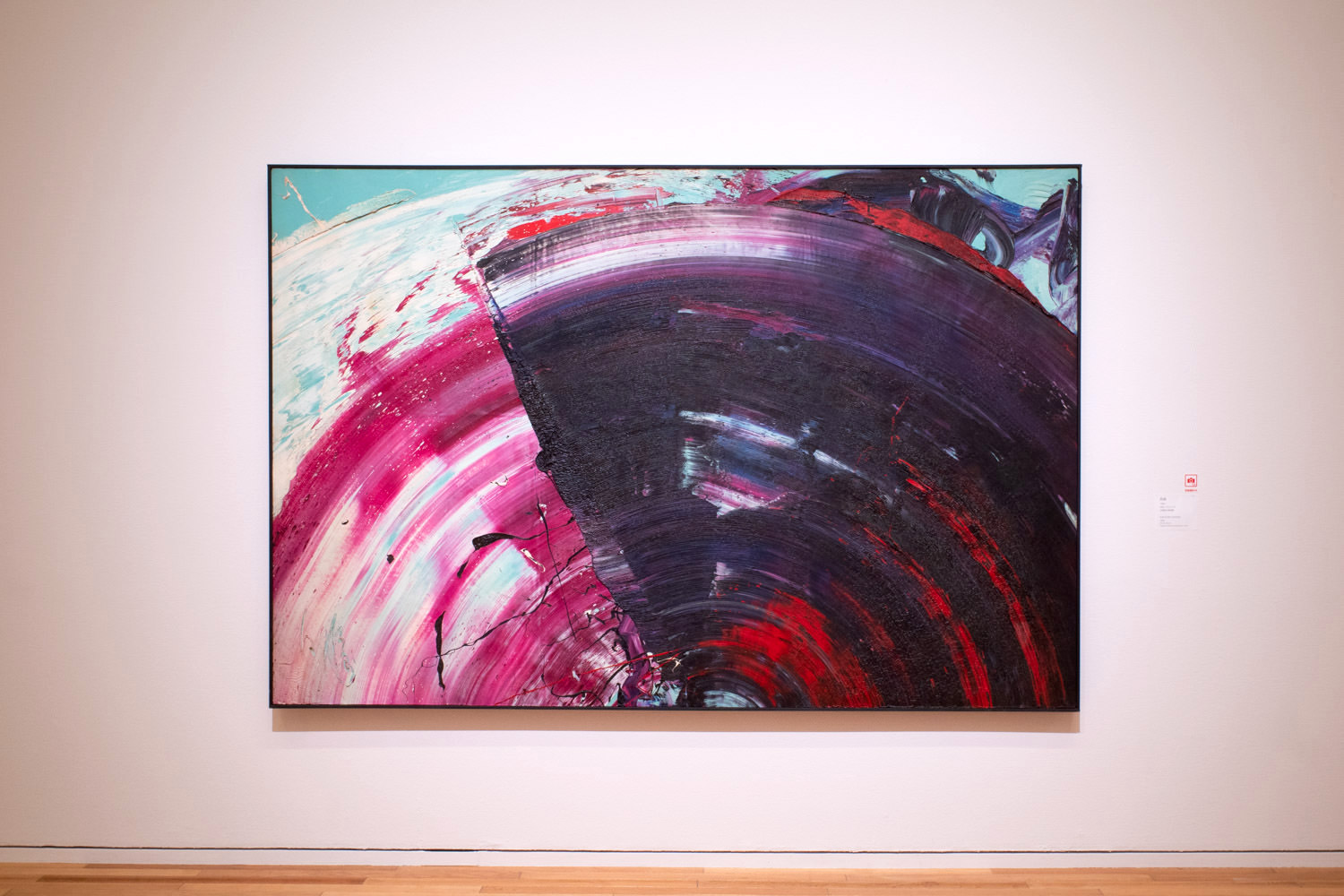
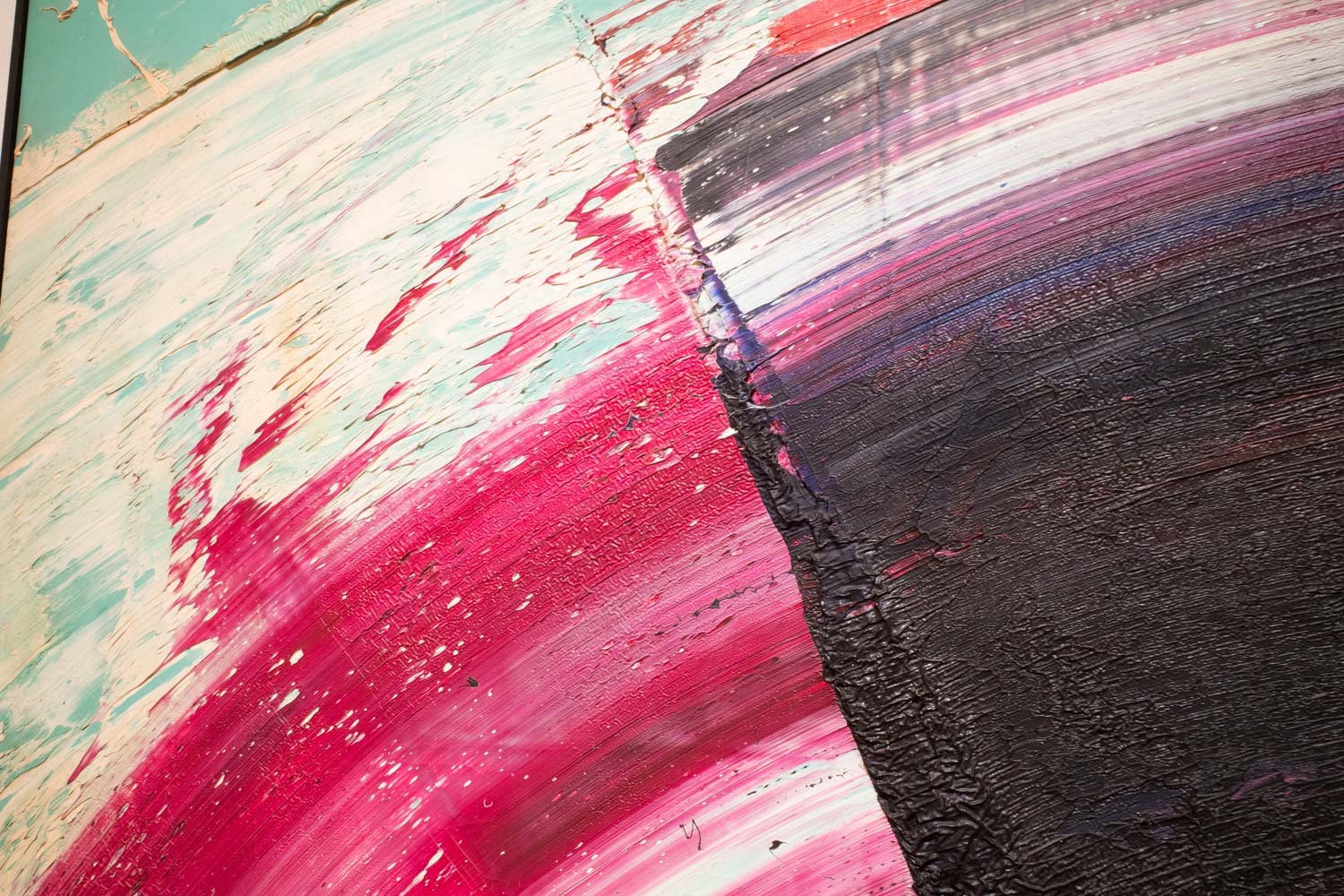
Kazuo Shiraga, ≪Shikie≫, 1966, collection of the Hyogo Prefectural Museum of Art
Kazuo Shiraga, ≪Shikie≫ *Detail
Installation view
Installation view
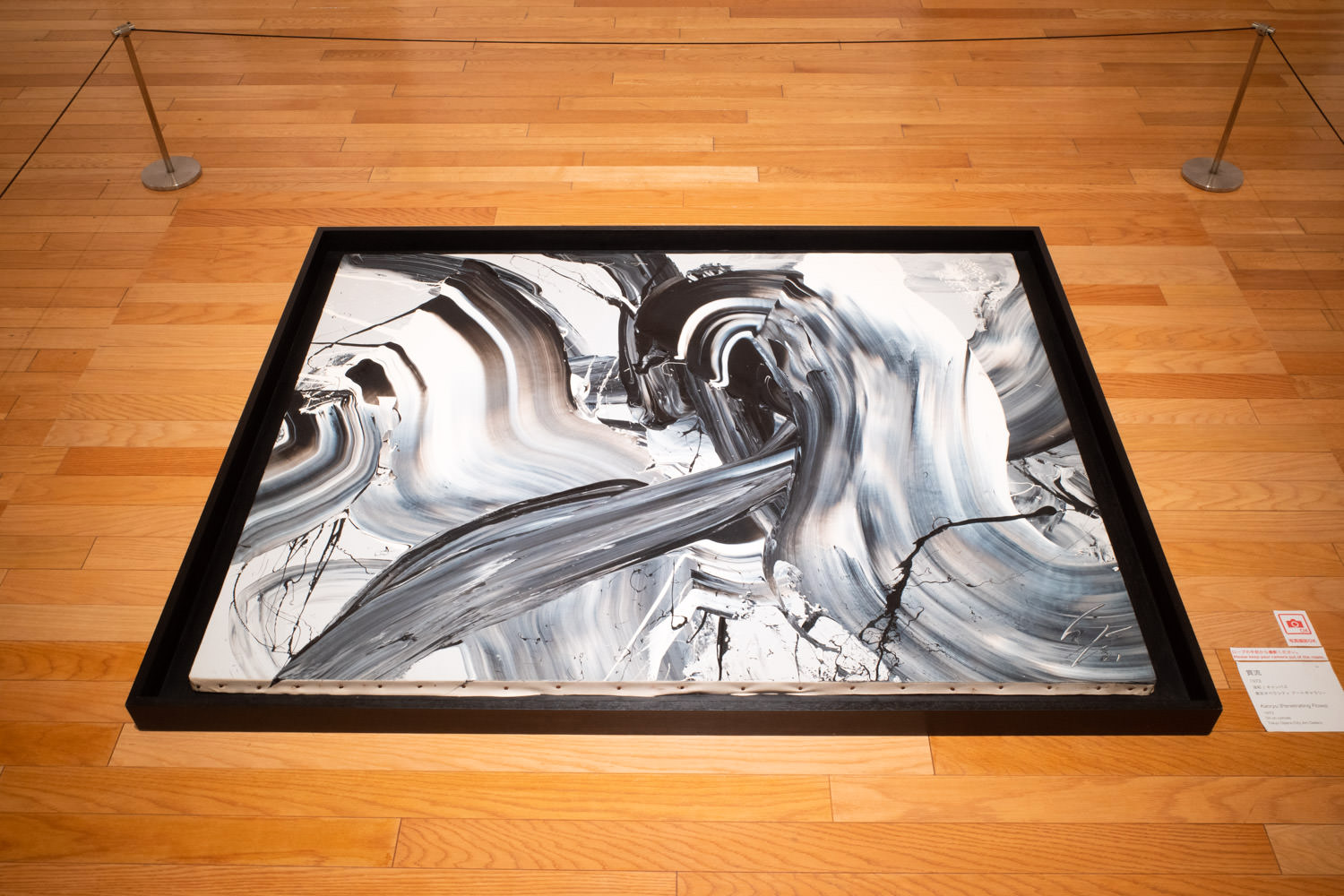
Kazuo Shiraga, ≪Kanryū≫, 1973, collection of Tokyo Opera City Art Gallery
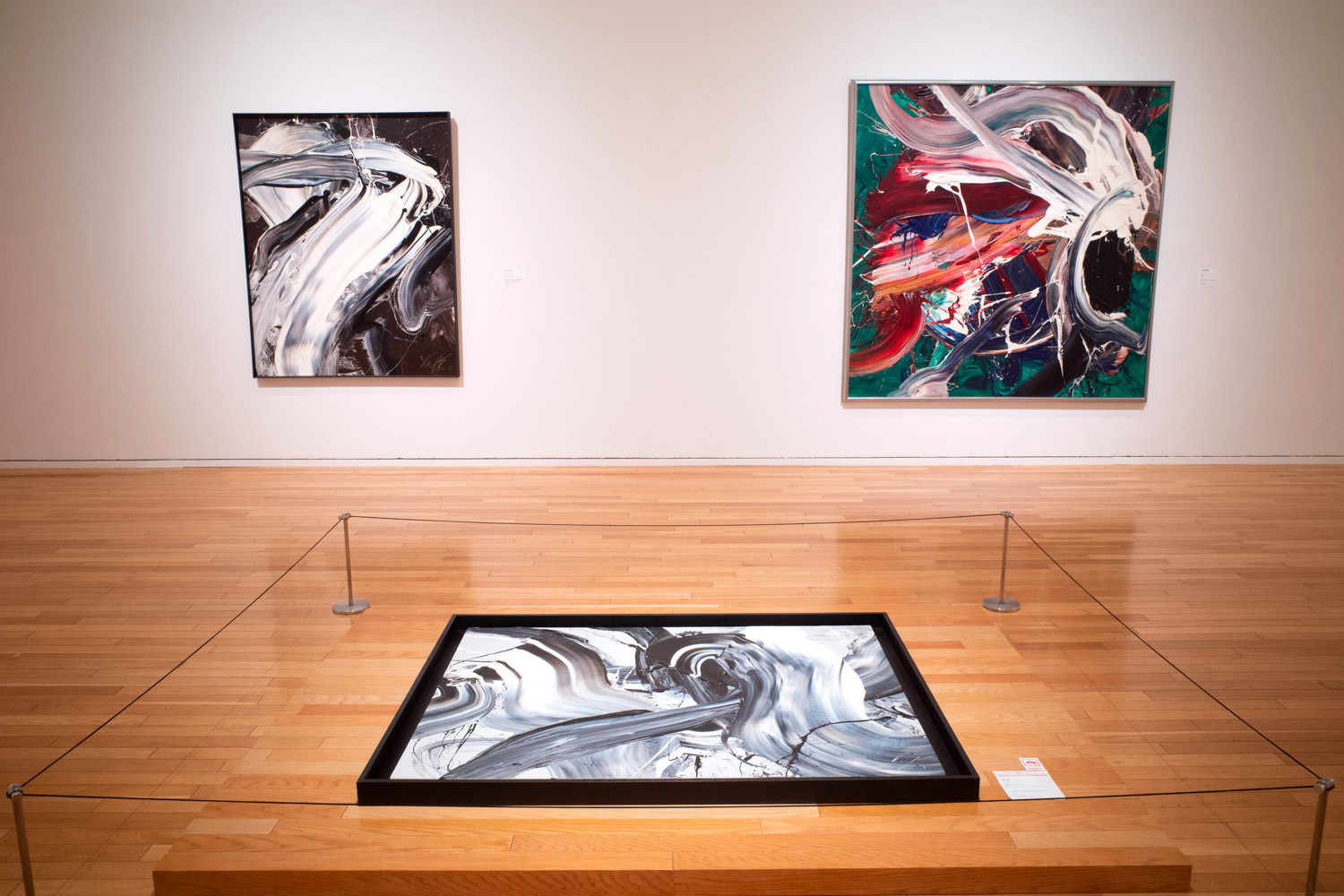
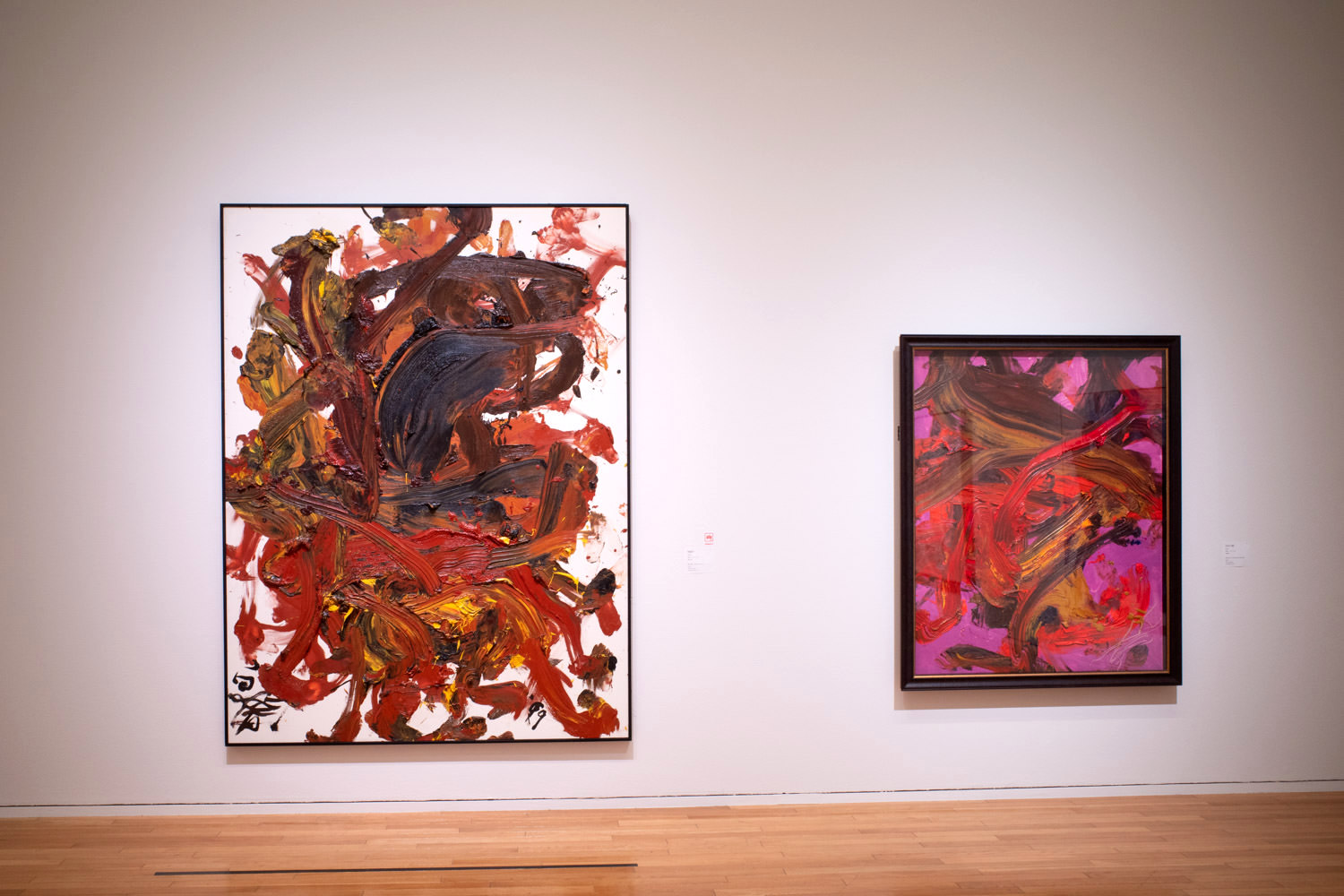
Left: Kazuo Shiraga, ≪Suishishi≫, 1999, private collection / Right: ≪Tennyo no Mai≫, 2000, collection of the City of Amagasa…
Left: Kazuo Shiraga, ≪Suishishi≫, 1999, private collection / Right: ≪Tennyo no Mai≫, 2000, collection of the City of Amagasaki
Kazuo Shiraga, ≪Yūboku Ichi≫, 1999, collection of Tokyo Opera City Art Gallery
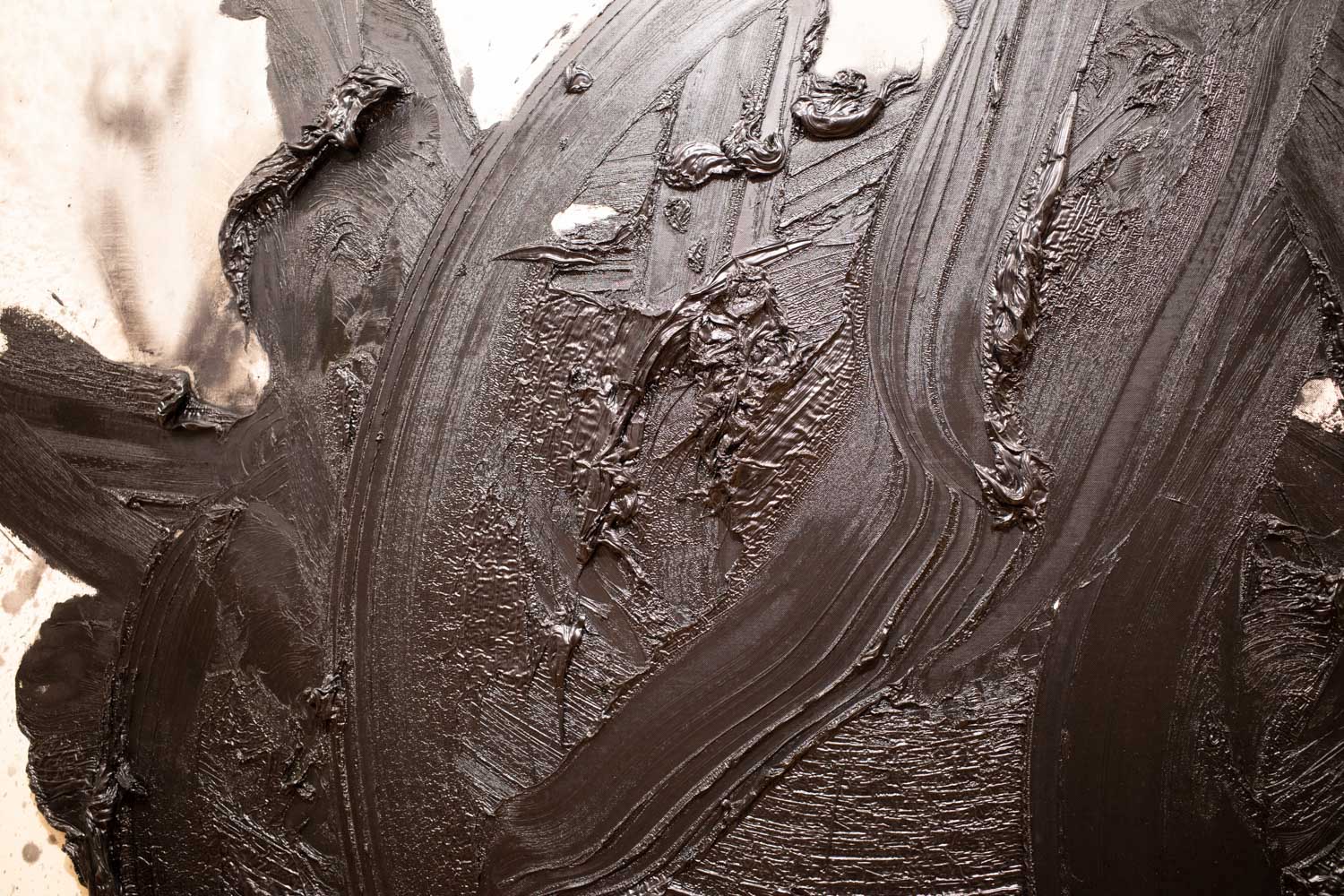
Kazuo Shiraga, ≪Yūboku Ichi≫ *Detail
Installation view
Installation view
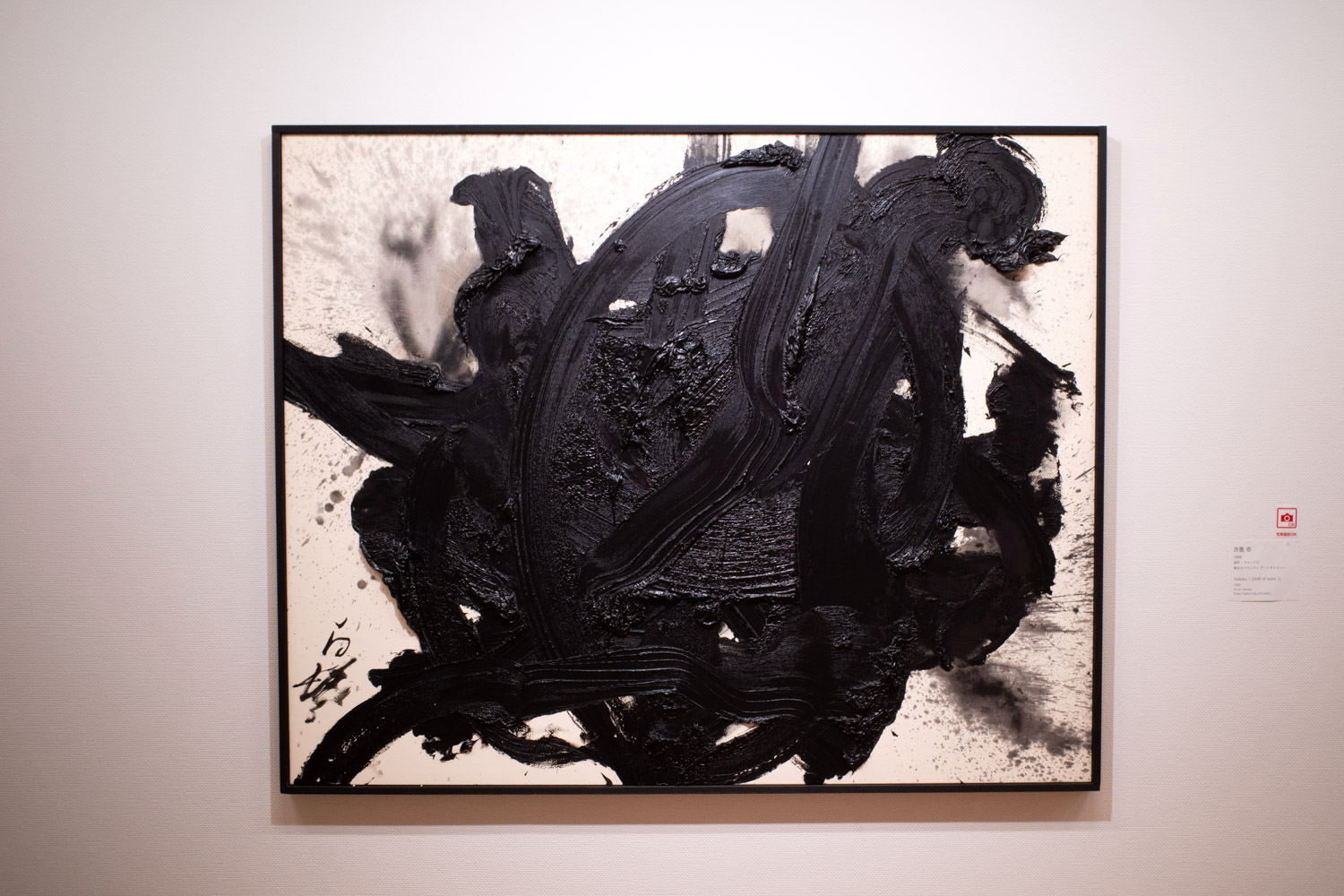
Kazuo Shiraga, ≪Ususama≫, 1999, private collection

Back to the studio footage.
The video captured how the artist worked in tandem with his wife Fujiko, herself an artist, the two proceeding almost as a single unit. Dressed in black and white respectively, they went about the process in a way that felt almost ceremonial — and in fact the film also showed the couple bowing at a household Shinto altar.
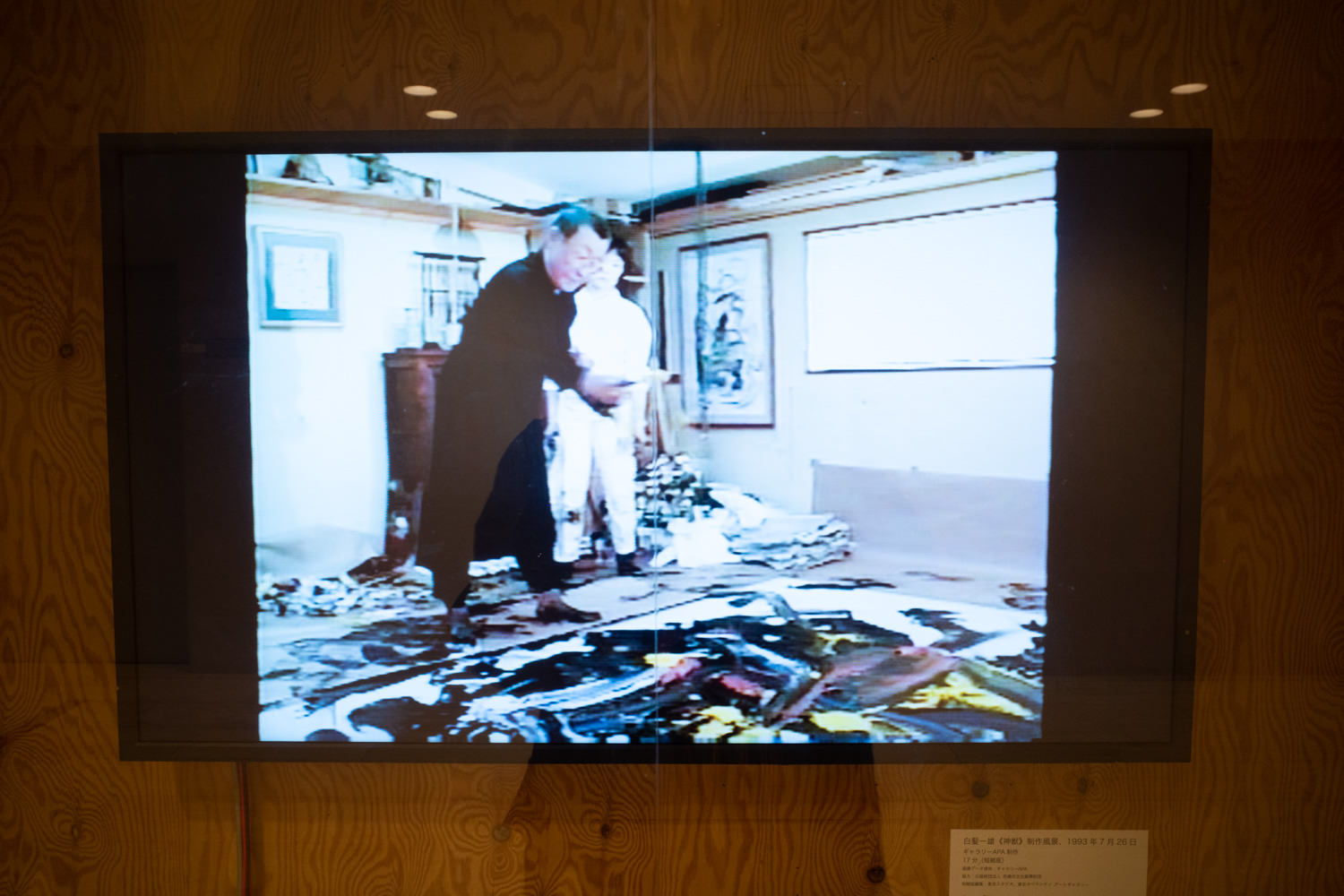
Scenes of Fujiko wiping the sweat from Kazuo Shiraga's face during the work were also included.
Scenes of Fujiko wiping the sweat from Kazuo Shiraga’s face during the work were also included.

The act of gripping a suspended rope while smearing paint with the feet gives a religious impression, as if channeling a power from above and releasing it toward the earth.

Kazuo Shiraga’s work is dynamic, natural, and pulses with an outpouring of raw energy.
Translating...