Ryo Shinagawa, “Nature’s first green is gold,”
I visited Ryo Shinagawa’s solo exhibition “Nature’s first green is gold,.”
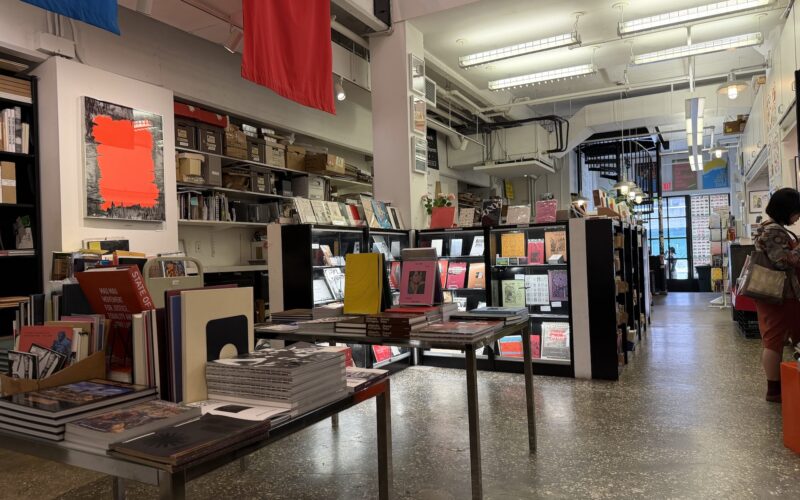
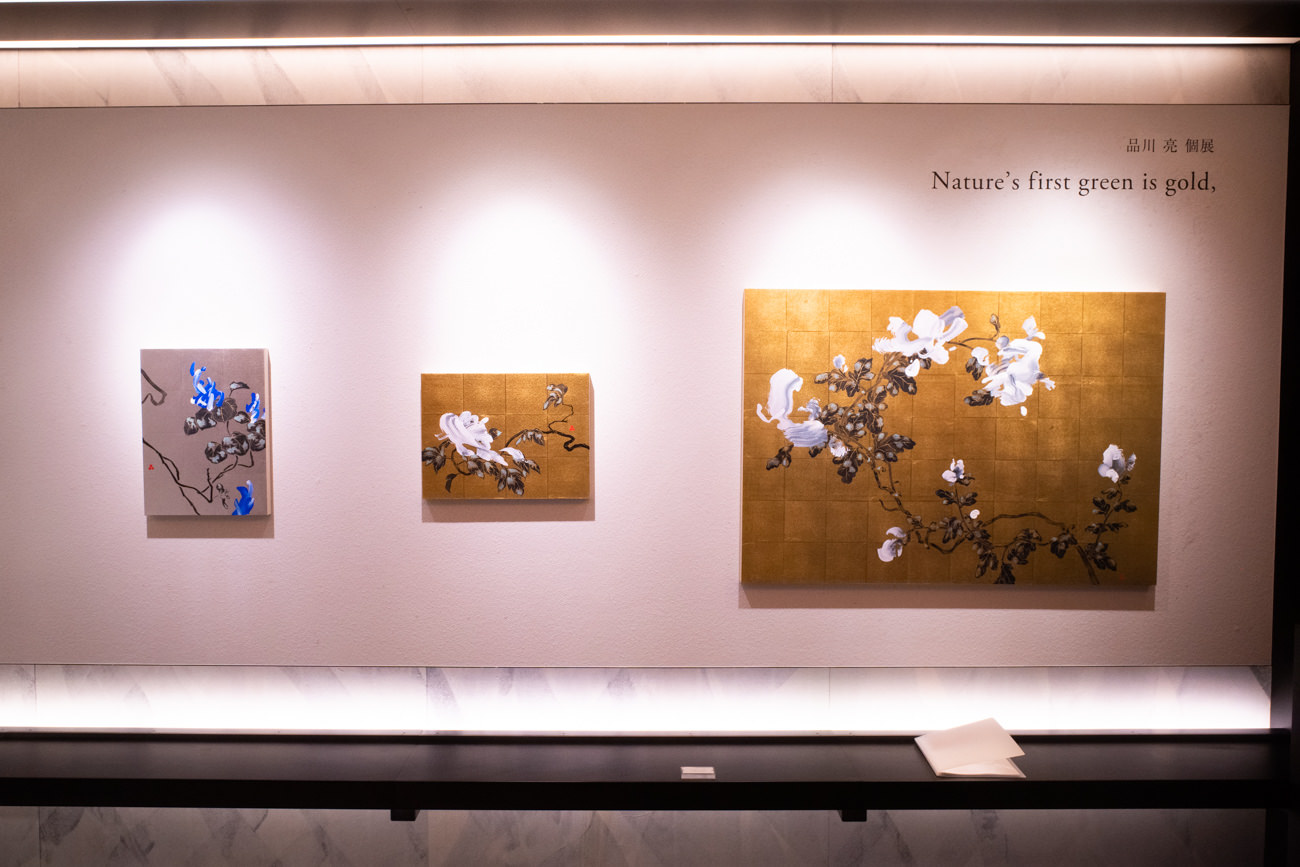
The venue is the Art Wall Gallery of Ginza Tsutaya Books (the exhibition space in front of Starbucks) on the 6th floor of GINZA SIX.
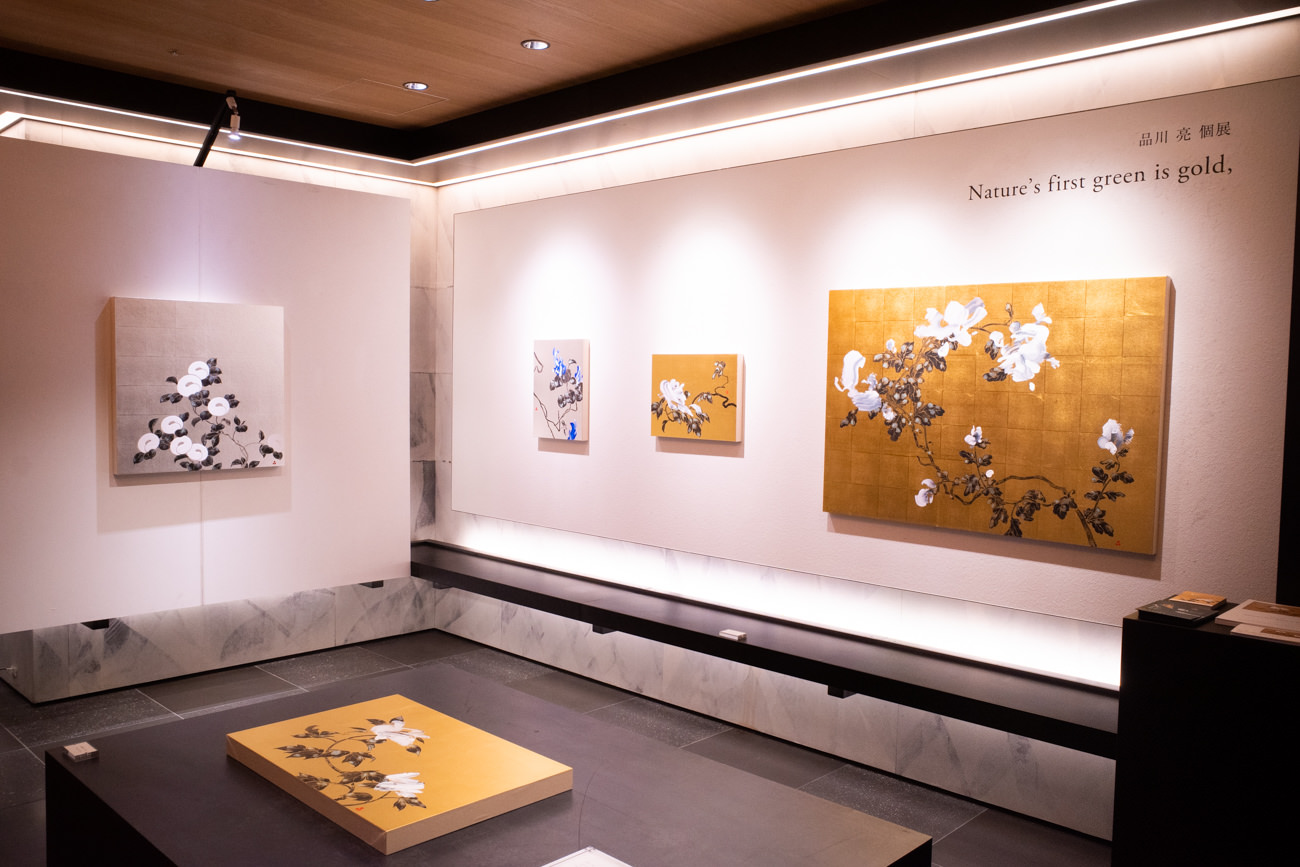
After graduating from high school, Ryo Shinagawa spent two years working part-time, then stayed in Italy for one year. After returning to Japan he worked for another year, and entered the Japanese-painting course at Kyoto University of Art and Design four years behind schedule.
Interview with Ryo Shinagawa
I had the chance to talk with Ryo Shinagawa on the opening day of the exhibition.
Q: Could you introduce your background?
Until I went to Italy I had always painted oils, but after going to Italy I began to think seriously about Japanese painting. I entered the Japanese-painting course at university, but during a six-month exchange to Geneva partway through, the work I had been making—aimed at the Inten exhibition—was harshly criticized, which led to my current style.
While a student, I also helped with Tabaimo’s production at the Venice Biennale and received all sorts of advice. She is still the artist I respect most.
Q: Could you explain your works?
I am presenting two series: a sumi-ink series and a gold-leaf series.
The ink works come from thinking about why I paint—by the arrow analogy, they are inward-facing works.
The gold-leaf works think about Japanese painting and Japanese culture—by the arrow analogy, they are outward-facing works.
The solo exhibition being held simultaneously in Ginza, including both series, expresses the present Ryo Shinagawa.
Here at Ginza Tsutaya Books, thinking it a chance to be seen by many people, I decided to exhibit works using leaf, my representative series.
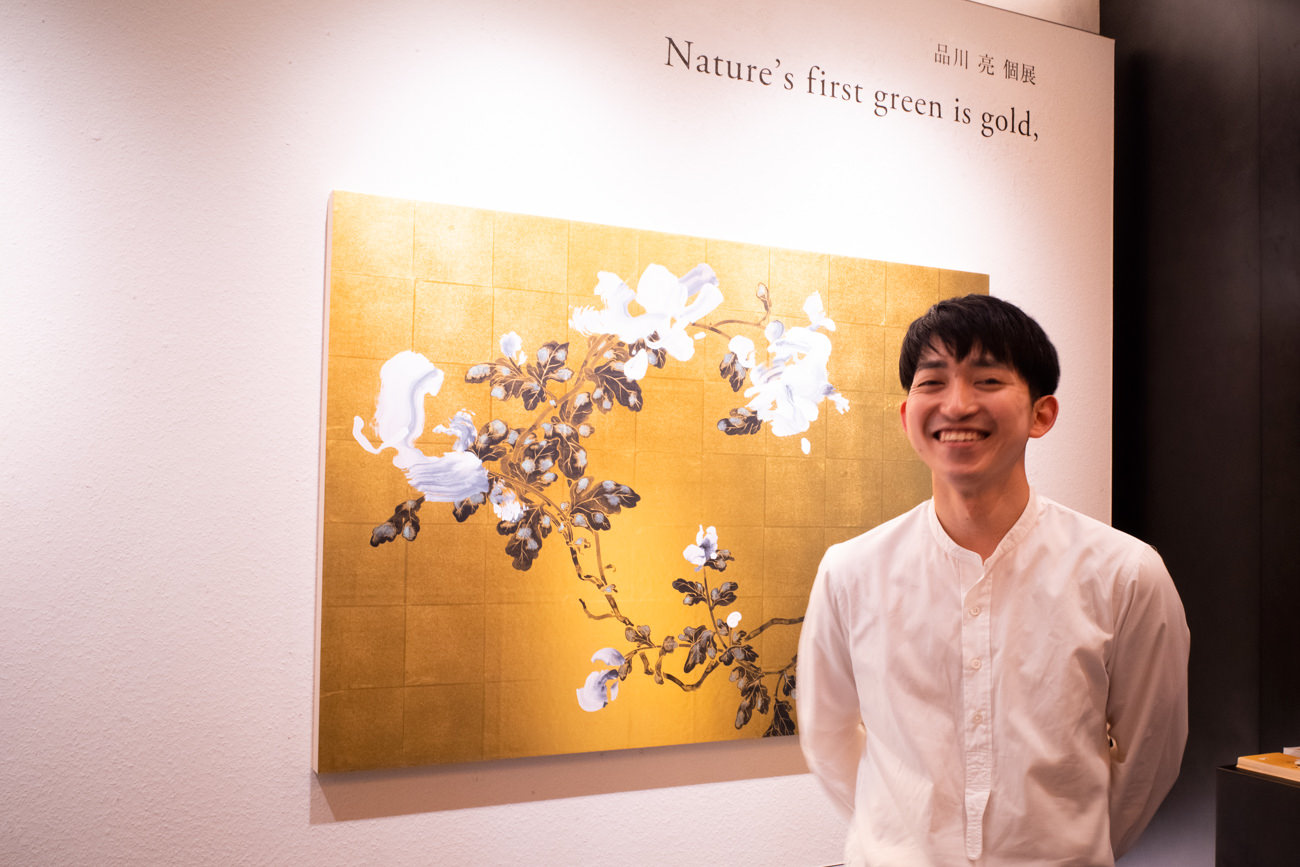
Q: When it comes to Japanese painting, which era are you conscious of?
This is just my own view, but I think painting distinctly as Japanese emerged around the Muromachi to Sengoku periods. In the Sengoku period everything was burned to the ground; then, as people rebuilt, castles were made, wide spaces appeared, and large works came to be hung. In that era, gold-ground wall paintings appeared and ink-wash painting came from China, and I think the painting at the core of the Japanese is made using “gold leaf” and “sumi ink.” So when I think of Japanese painting, I mean from the Muromachi period through Edo to around Meiji. I paint wanting to update those into the present.
Q: Why are there so many plants as motifs?
I paint plants thinking they are a motif that East Asians can draw unconditionally, as a kind of privilege.
Q: The prices are low and works sell out immediately—what do you think about that yourself?
I want to keep painting no matter what, and I want to be a painter for life. Thinking about that, rather than raising prices right away, I want everyone to collect my work at a somewhat accessible price, and to build a presence where “anyone can see at a glance that it’s a Ryo Shinagawa.” That connects to my driving force for painting.
In a first-grade essay I wrote “I will become a painter in the future,” and someday I’d like to be featured on “Jōnetsu Tairiku” (a Japanese documentary program) (laughs).
Q: I heard a rumor that if you ask you for a commission (made-to-order work), it’s a “three-year wait”—is that true?
Sorry, right now it’s about a four-year wait.
I’ve received many orders and am very grateful.
Works on display
He also told us about the works shown in this exhibition.
Simplification
Ryo Shinagawa:
“From kanji to hiragana, from Zen to wabi-sabi, the Japanese have used a method of ‘simplification’ when taking in continental culture and making it their own. This series draws inspiration from such things.”
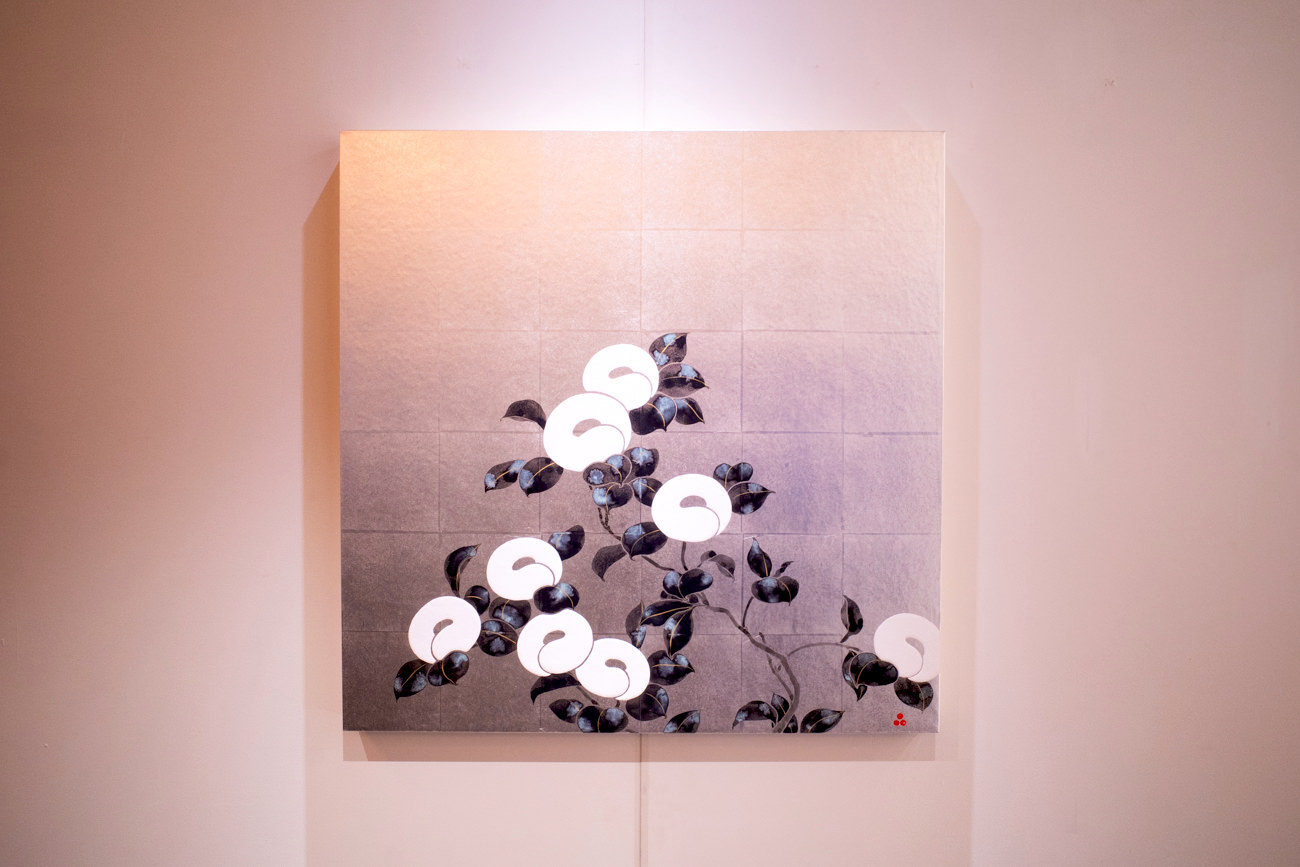
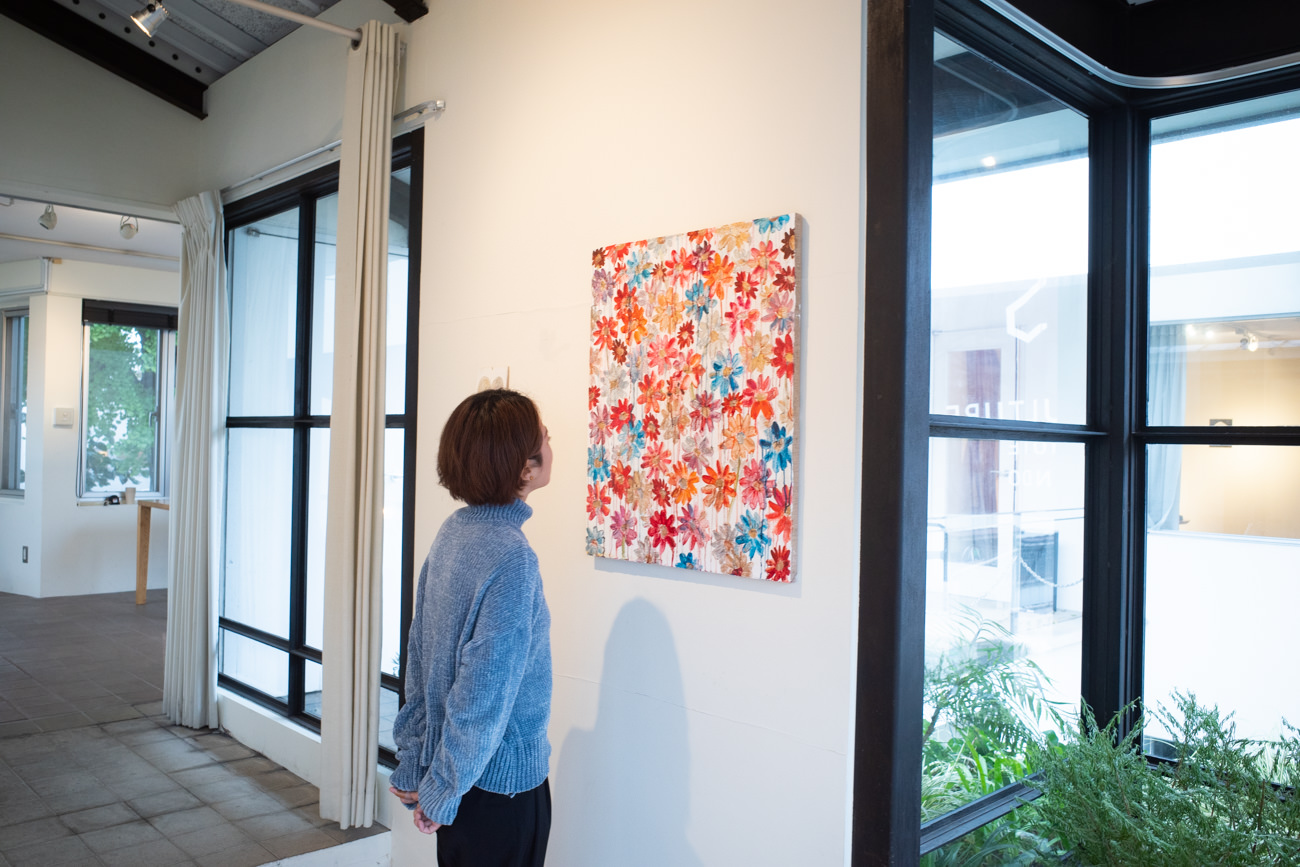
A work that simplifies only the flower parts of the plants depicted on the picture plane—a production method based on the act of replacing them with Japan’s distinctive “kata” (form).
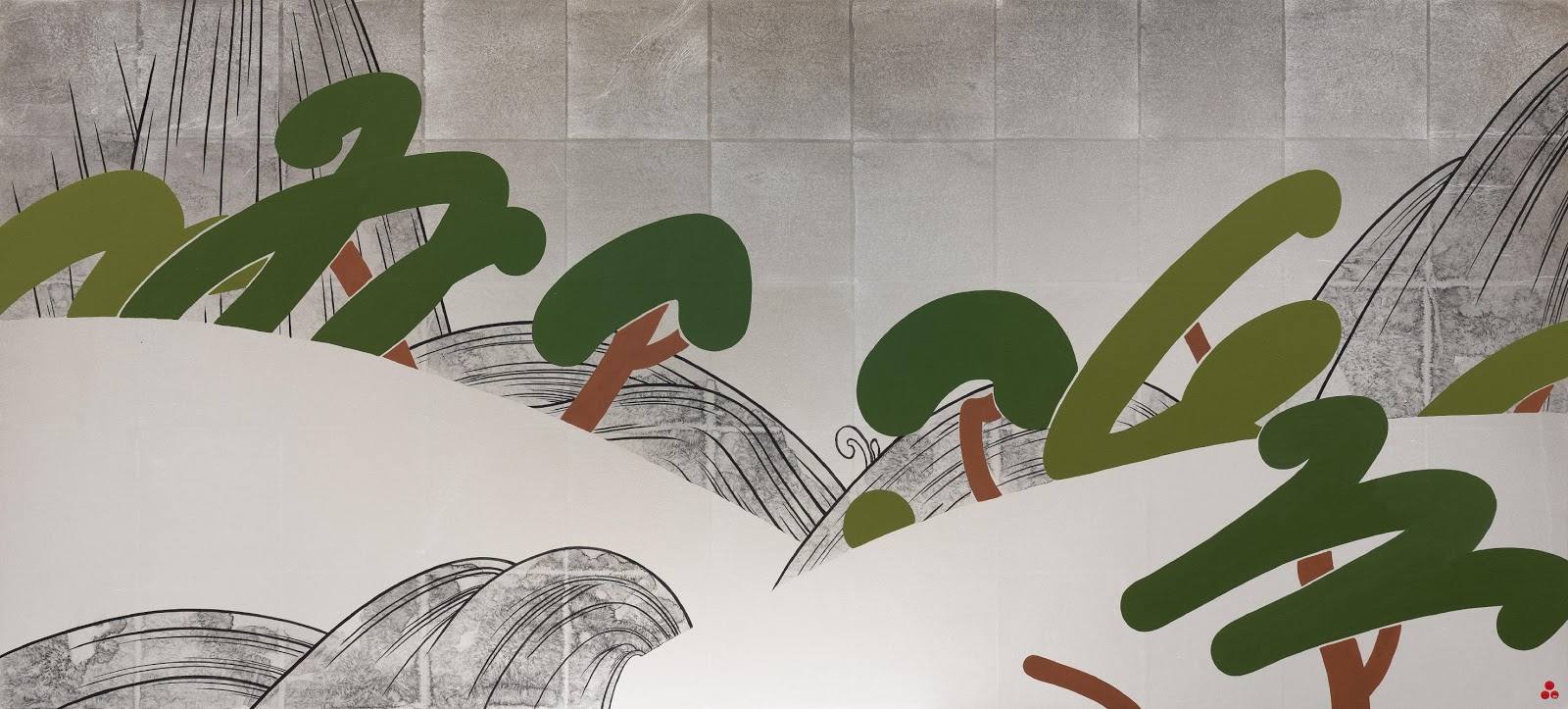
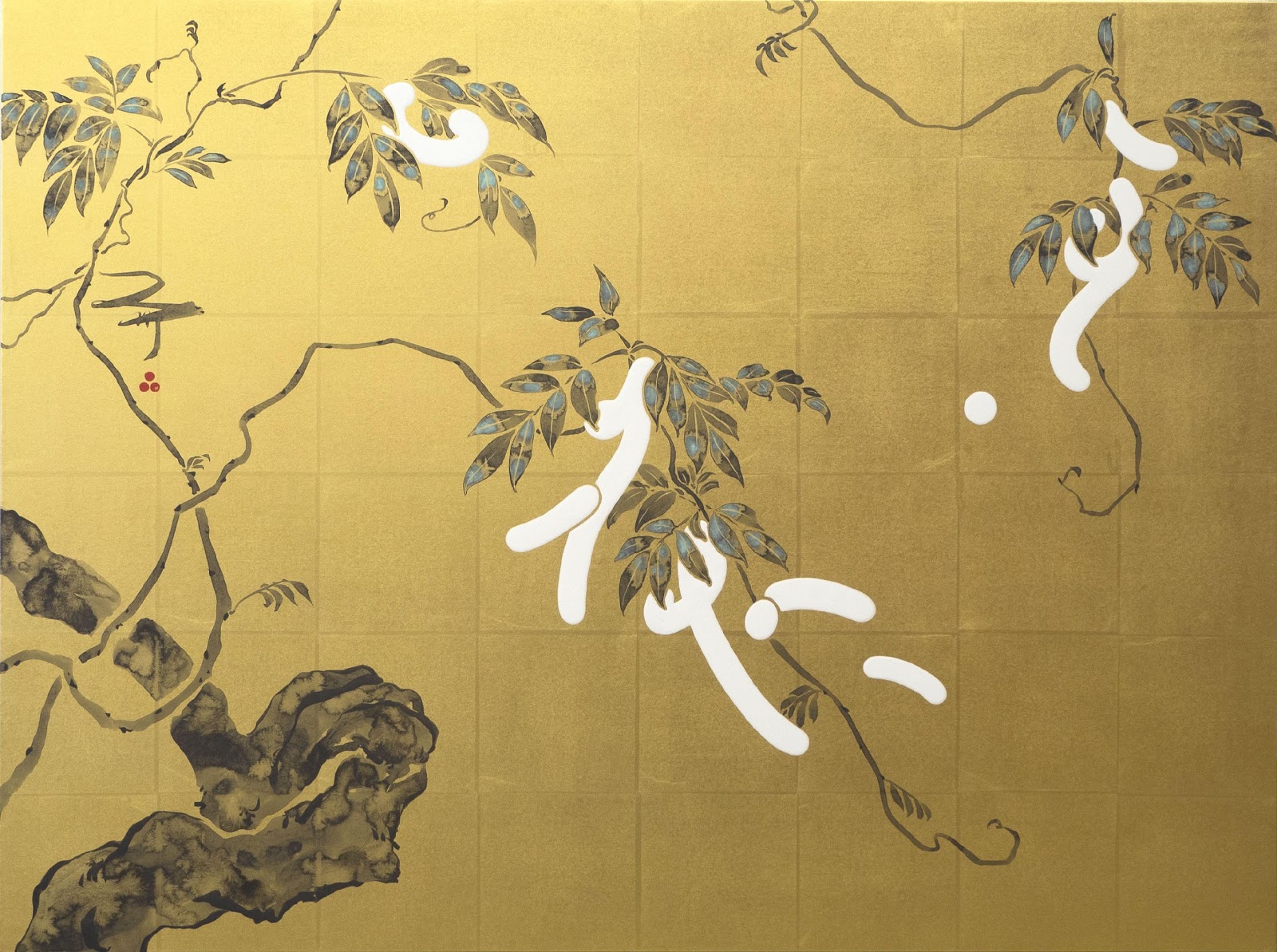
Brushstroke
Ryo Shinagawa:
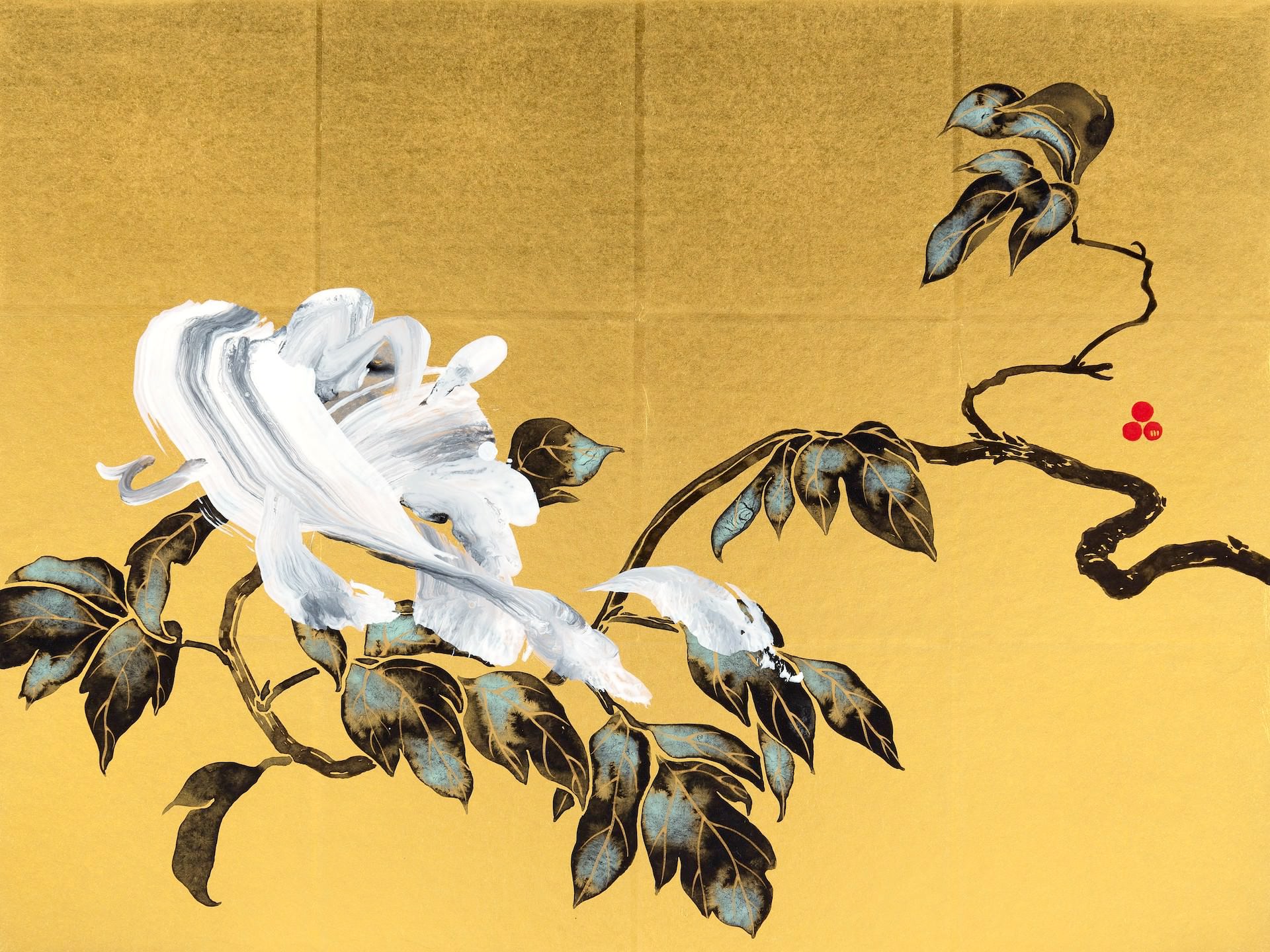
“Lately I’ve been making works that incorporate brushstrokes, and series such as 《菊図 (Chrysanthemums)》 are the works I most want people to see right now.
The painting I make is, in the end, local painting. Mingei (folk craft) is one example; in the old days ‘local’ meant using your own local to update the local.”
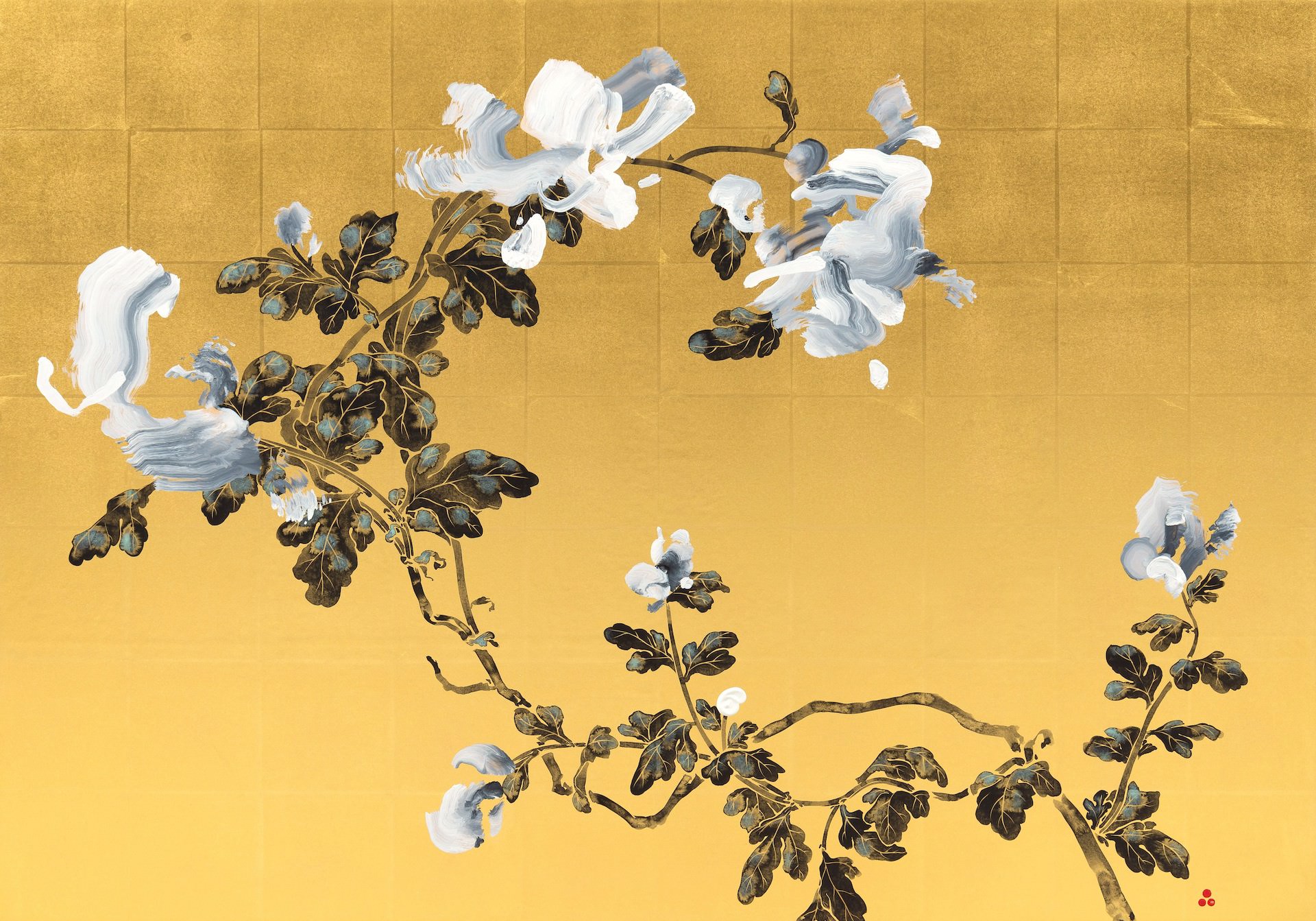
Flowers drawn with bold brushwork—while quoting the brushwork seen in ink-wash painting and calligraphy, they attempt to update Japanese painting by incorporating the brushstroke often seen in modern painting since Abstract Expressionism.
Ryo Shinagawa:
“When I think about ‘local’ in the present day, I think it means also quoting the global as an object of sampling, and using those to update the local. As one part within the global, I think Japanese painting can be updated by quoting the painter’s breath and brushstroke since Impressionism in a calligraphy-like form—so I’m doing these experiments.”
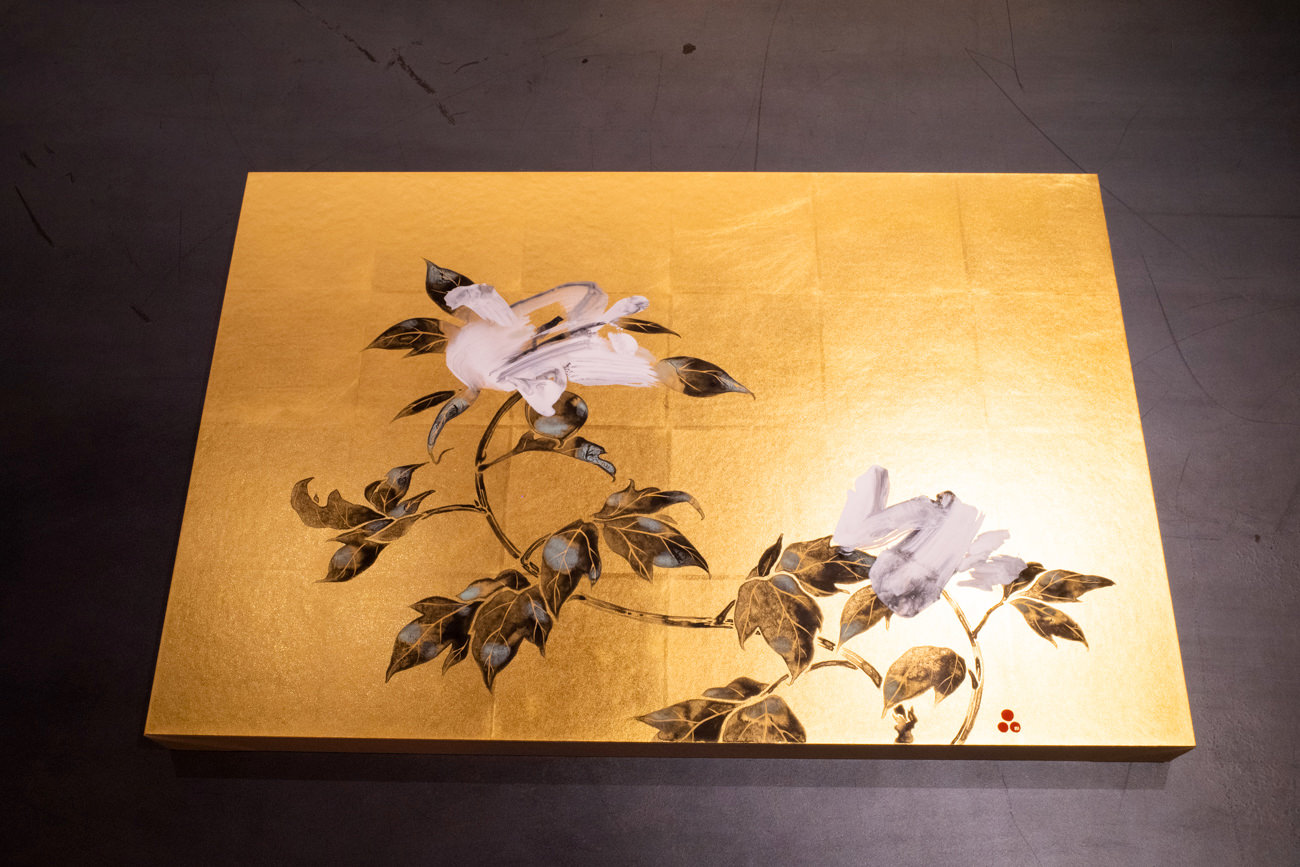
Ryo Shinagawa:
“I admire Western painting, and I love Gerhard Richter. I like Laura Owens too, and Michaël Borremans too; I can’t purely follow them, but I love the painterly. I also really like Yukimasa Ida, whose work is on display next door.”
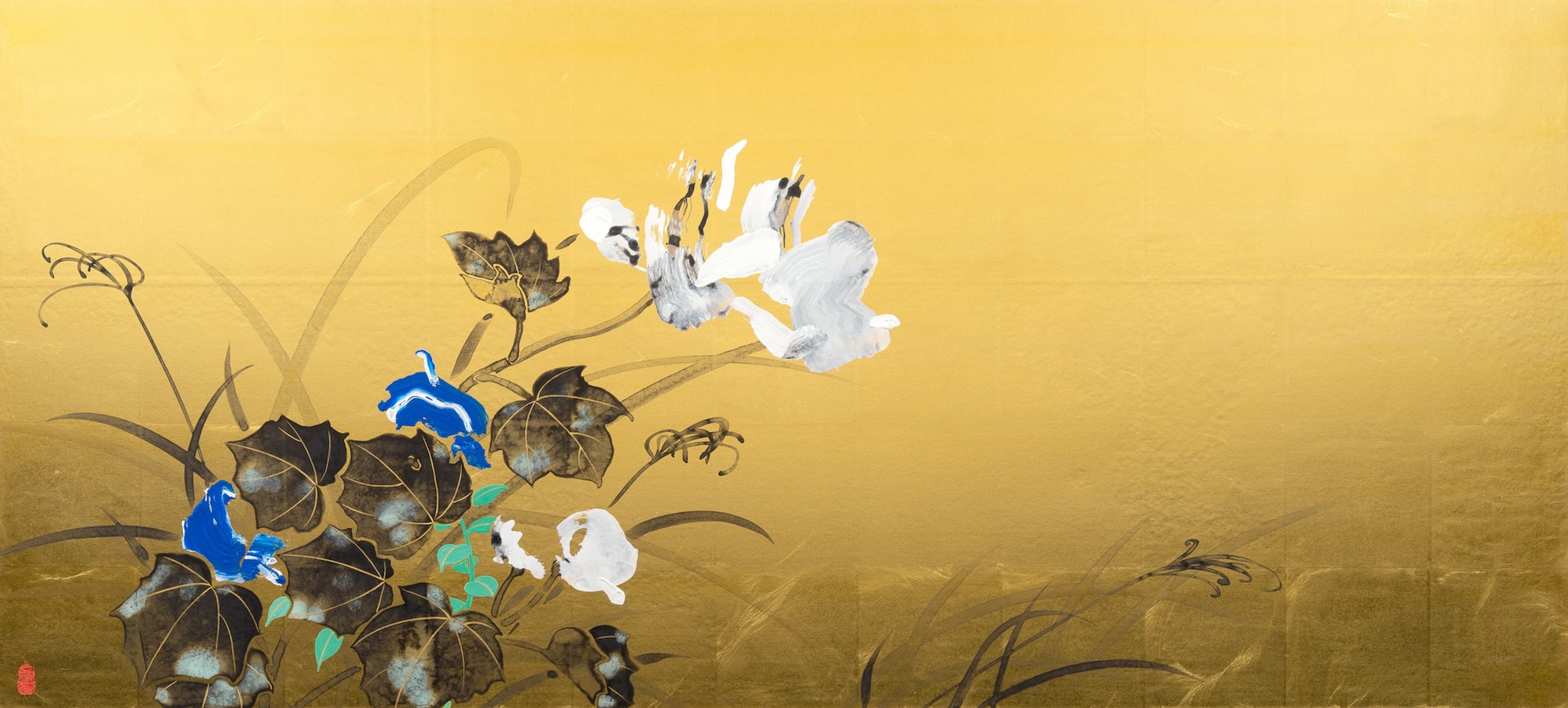
Ryo Shinagawa:
“For my works, I sometimes quote past works in terms of motif combinations and composition, and there are also motifs I devise myself. This time, I considered the whole space for the exhibition and decided each work’s size. The leaf panel works are all multiples of 125mm. I also carefully finish the support so that it can be seen as part of the work.”
Ryo Shinagawa:
“Large sizes are very fun because I paint using my body. I paint large works while moving, and that’s really fun. The matière (paint surface) of artists who have used oils all along is thrilling to look at, but I’m still not that good at using paint… Still, I feel there’s a romance of painting in texture and breath!”
Summary
Ryo Shinagawa creates many distinctive works—beauty of the visuals, calculated composition, the lively touch of Western brushstrokes, pop and contemporary elements, and the beauty of a craft-like finish.
Based on a firm concept, his work fascinates many collectors and viewers, and it will surely keep evolving and updating in the future.