Teshima Art Museum
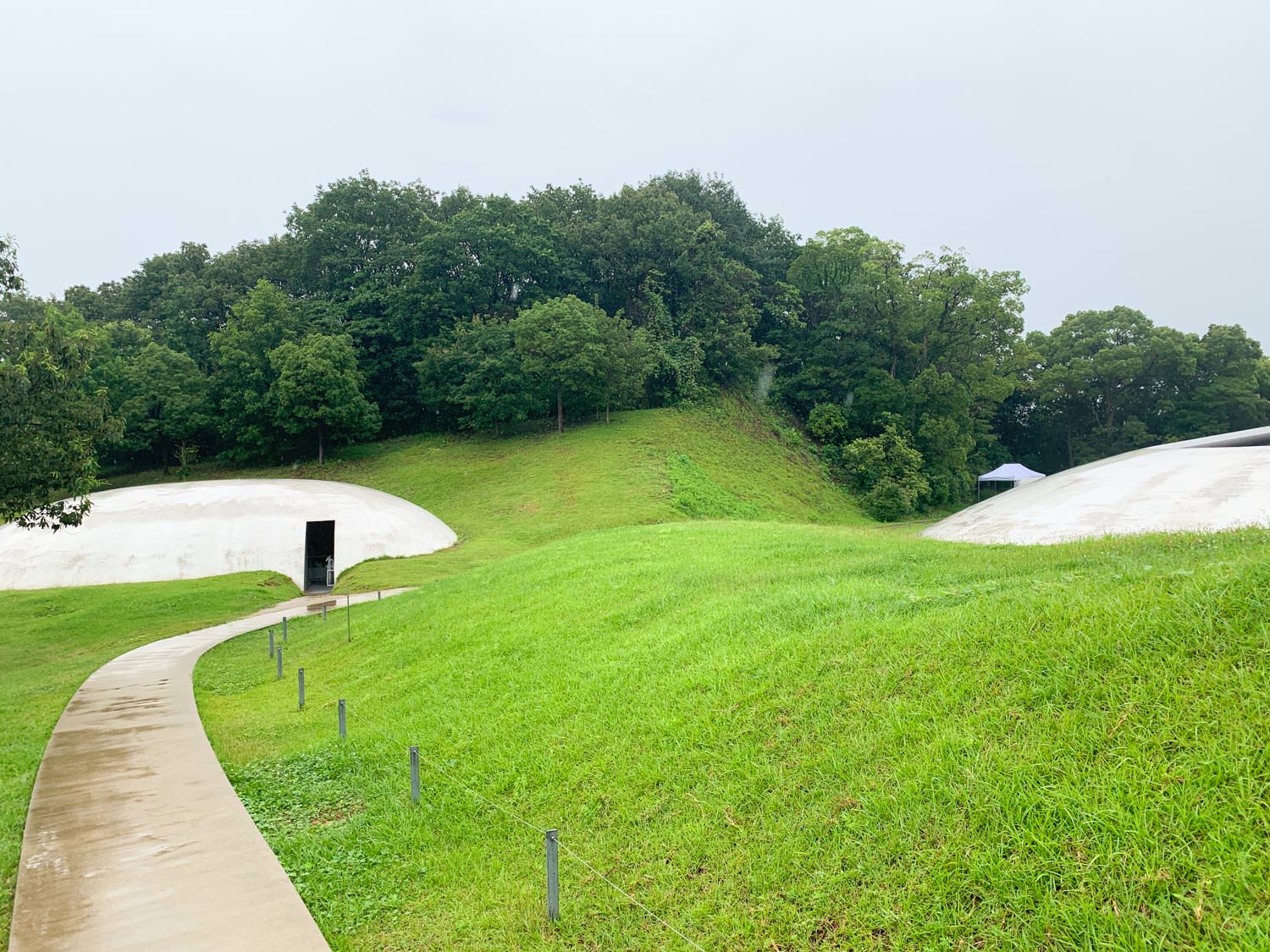
On Teshima, one of the islands floating in the Seto Inland Sea, “Teshima Art Museum” was built on a small hill climbing up from Karato Port.
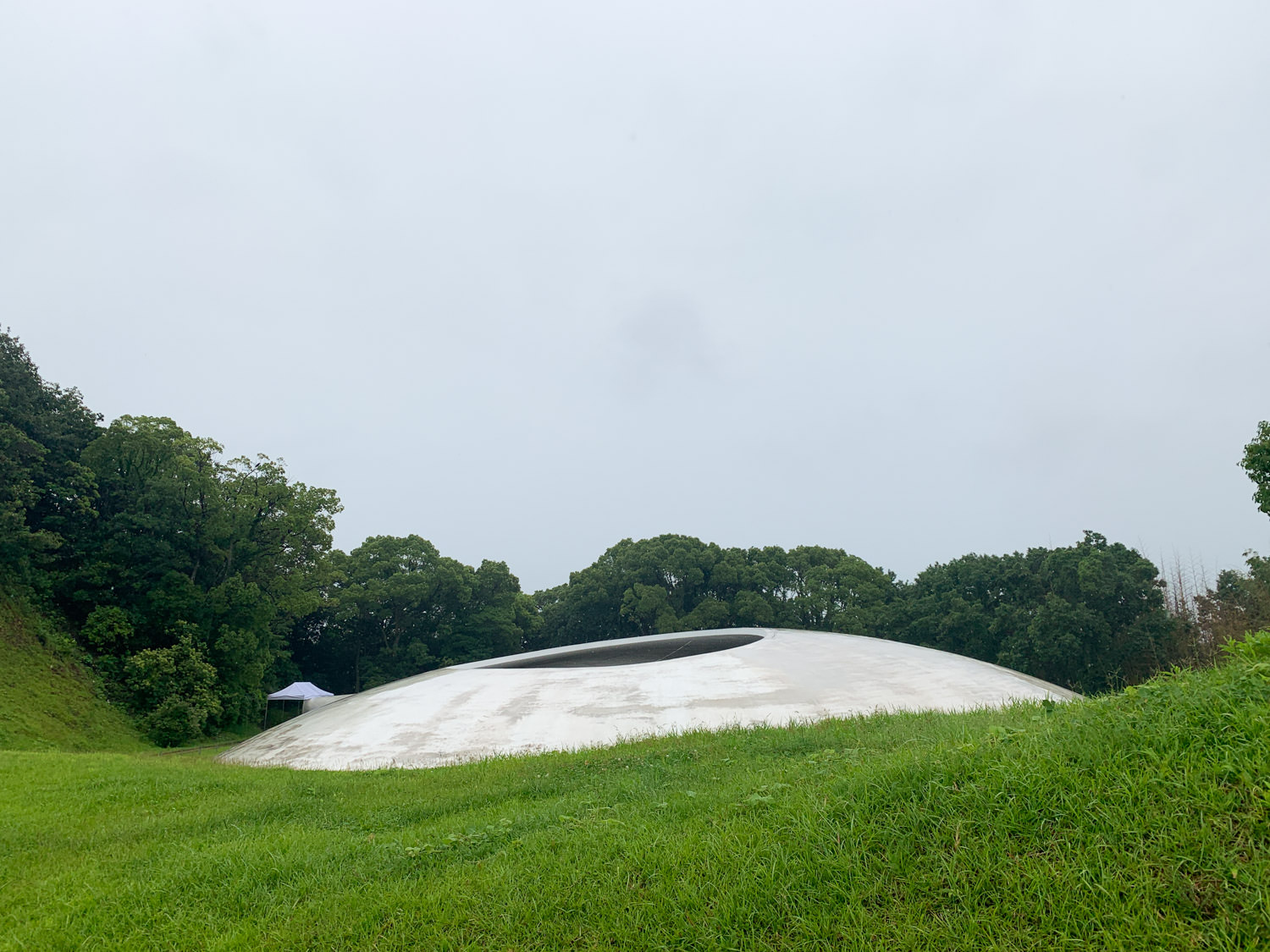
Teshima Art Museum is a white architectural work whose shape evokes a “water droplet.”
Designed by architect Ryue Nishizawa, it is a shell-shaped concrete museum measuring approximately 40 × 60 meters and 4.3 meters high. Inside the building, a work titled “Matrix” by artist Rei Naito is on display.
The interior floor has 186 tiny openings, each about 2mm in diameter, from which groundwater irregularly springs up.
The water that suddenly surges up is pushed out into small droplets, guided by gentle breezes and slight undulations, drifting across the floor — designed with delicately calculated slope angles — as they roll about crisply and delightfully.
Viewers, their gaze captured by the many water droplets teeming here and there, sit down on the floor and spend a while chasing the movements as they occur.
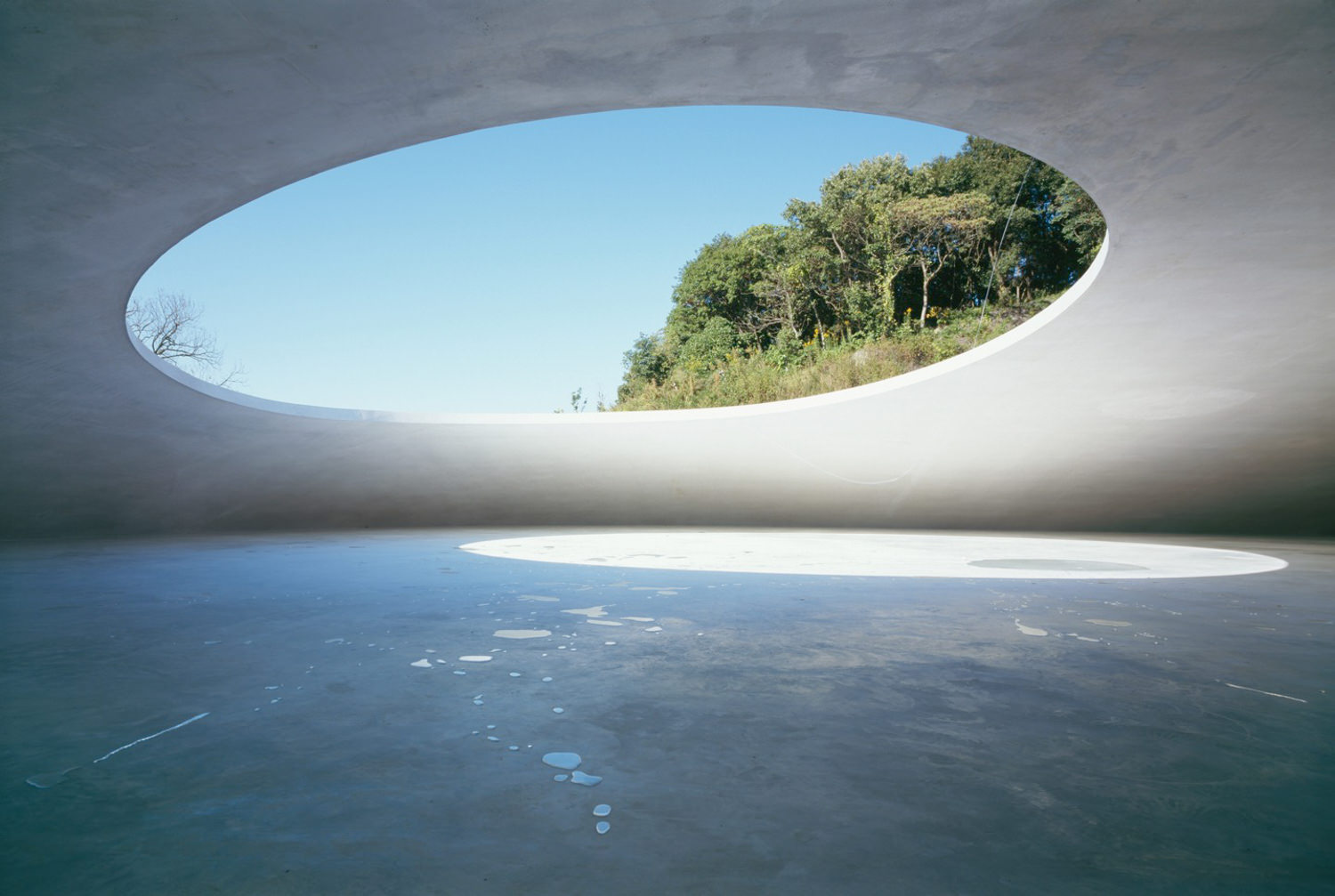
Springing droplets flow and form small pools, which then flow and merge with other pools, forming even larger pools — the scene unfolds everywhere.
At the same time, breezes reaching in through the two openings, light streaming in, and the greenery growing lushly all around create an experience of coexistence with nature through sight, touch, and hearing.
Teshima Art Museum is not the kind of usual museum where multiple artworks are displayed.
Rather, this is a space that receives states that change according to the surrounding environment and the passage of time.
As time flows onward in a serene setting, the heart seems to grow gently attuned.
Teshima Art Museum is not a place designed to sharpen one’s nerves or sharpen thought, but the fact that “hidden items,” which you cannot see unless attentive, exist here is apparently not widely known.
In fact, the author did not notice at all on my first visit. On my second visit, when they suddenly became clearly visible, that discovery brought no small change to my inner state.
[1] Three Threads
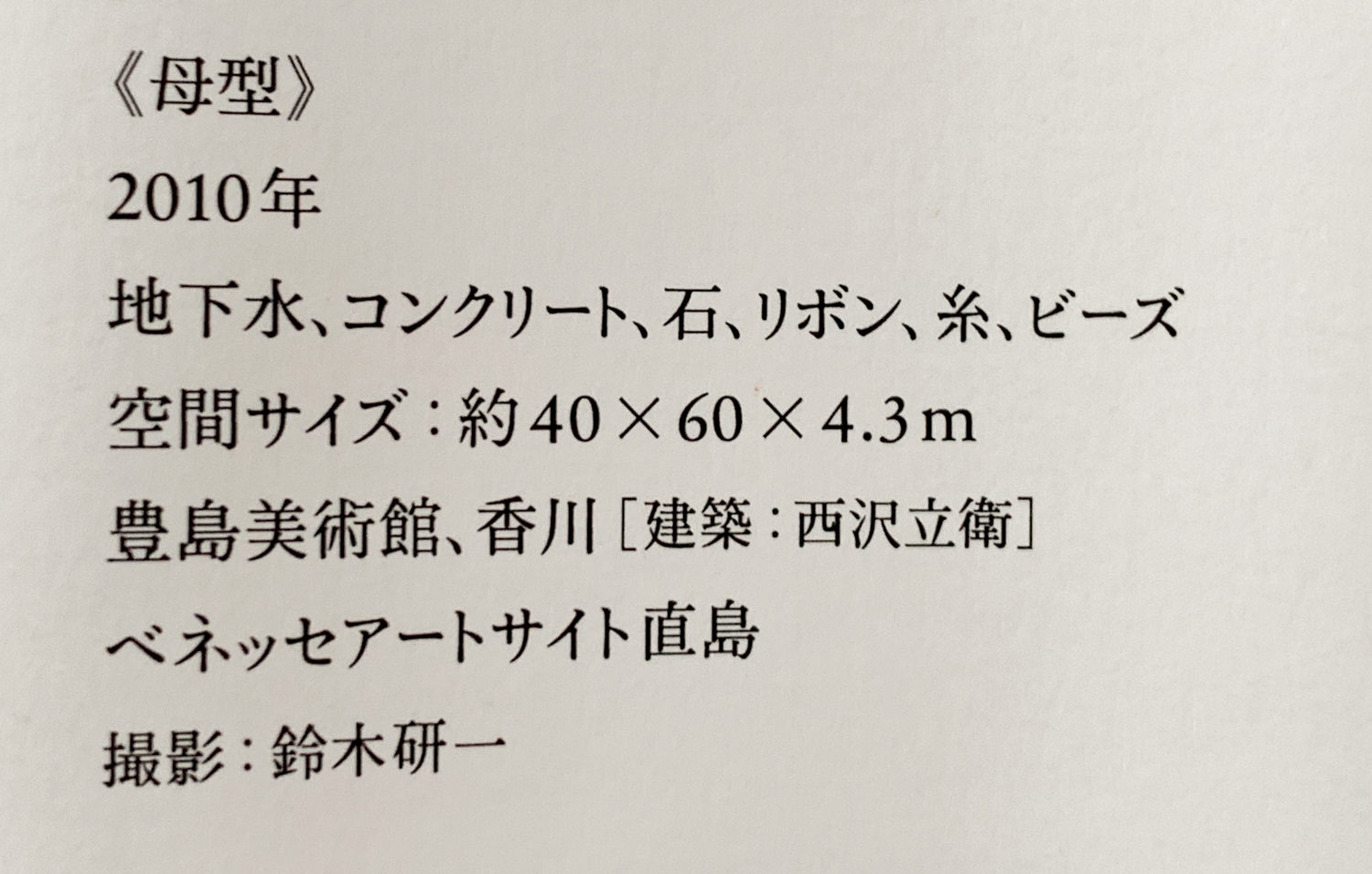
The hidden materials become clear when you look at the work credits for Rei Naito’s “Matrix.” Reading the following credits, you’ll notice materials that go unnoticed in the space.
One of them is “thread.”
At the two openings, “ribbons” — evident to everyone — flutter, but scarcely anyone can easily find the “threads.” Within such a broad space, finding an ordinary thread is a daunting task.
Yet, while attentively wandering the museum, mindful of the springing water and pools, at last I found them! Dangling and floating from the ceiling — I unmistakably found the threads!!
The threads I discovered were red, white (silver), and yellow (gold) — three threads.
Depending on the lighting, white may appear silver, and yellow may appear gold, so the perception of color may change.
Because they are truly fine threads, without attentive searching, even the red thread is hard to find.
For reference, when the author found them, the three threads were fixed to the ceiling at 1–2 meter equal intervals at one end, and the other end dangled at a length reaching the viewer’s line of sight.
The three threads, drifting as they swayed in the breeze, seemed to contain a message from Rei Naito, and I was moved.
[2] Beads
And another hidden item mentioned in the work credits is “beads.”
Although “beads” often appear in Rei Naito’s works, even searching with the awareness that they are a hidden item, the author was unable to find them.
Since they seem to be in quite hard-to-find locations, I would like those who are curious to please try their best to find them.
Conclusion
The two hidden items concealed within Teshima Art Museum — three threads and beads.
Did you notice? And were you able to find them?
In both cases, why those materials were used is not clarified by their creator, Rei Naito.
How do we, as viewers, receive and process the emotion of touching those small discoveries in situ…? While staying attuned to changes in one’s heart, there is also a joy in unraveling their meanings.
And even if you ask the staff on site, they will absolutely not tell you what is where…
Overview
Teshima Art Museum
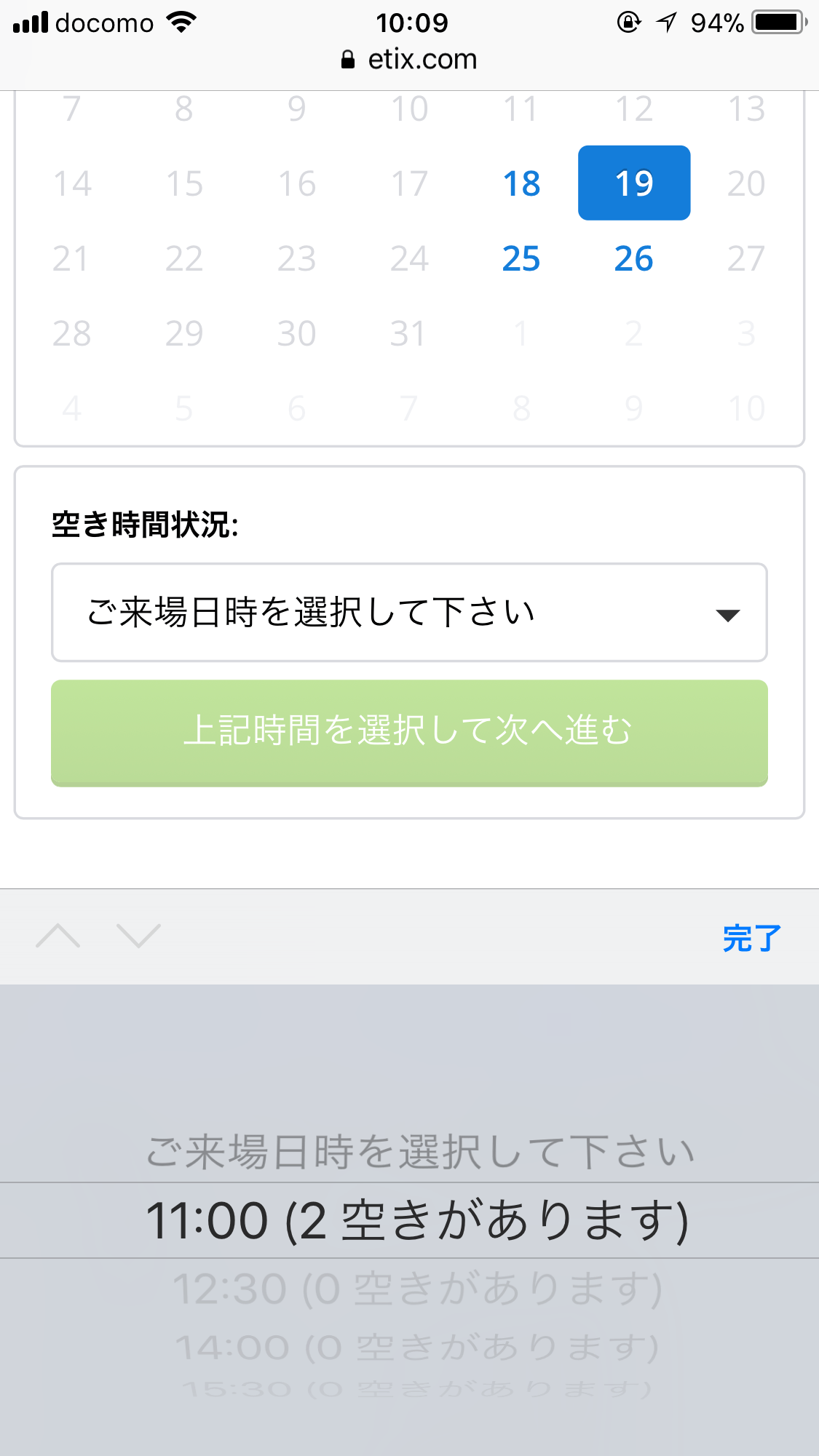
From July 11 (Sat), 2020, an advance-reservation system (online ticket system) is introduced.
Opening hours:
March 1 – end of October: 10:00 – 17:00 (last entry 16:30)
November 1 – end of February: 10:00 – 16:00 (last entry 15:30)
Closed days: Tuesdays (March 1 – November 30); Tuesdays through Thursdays (December 1 – end of February)
※However, when a national holiday falls on a closed day, the museum opens on the holiday and closes the following day.
※When a national holiday falls on a Monday, the museum opens on Tuesday and closes the following Wednesday.
Admission: 1,570 yen ※Free for those 15 and under
Phone: 0879-68-3555
Address: 607 Karato, Teshima, Tonosho-cho, Shozu-gun, Kagawa 761-4662