Tomo Municipal Museum of Art
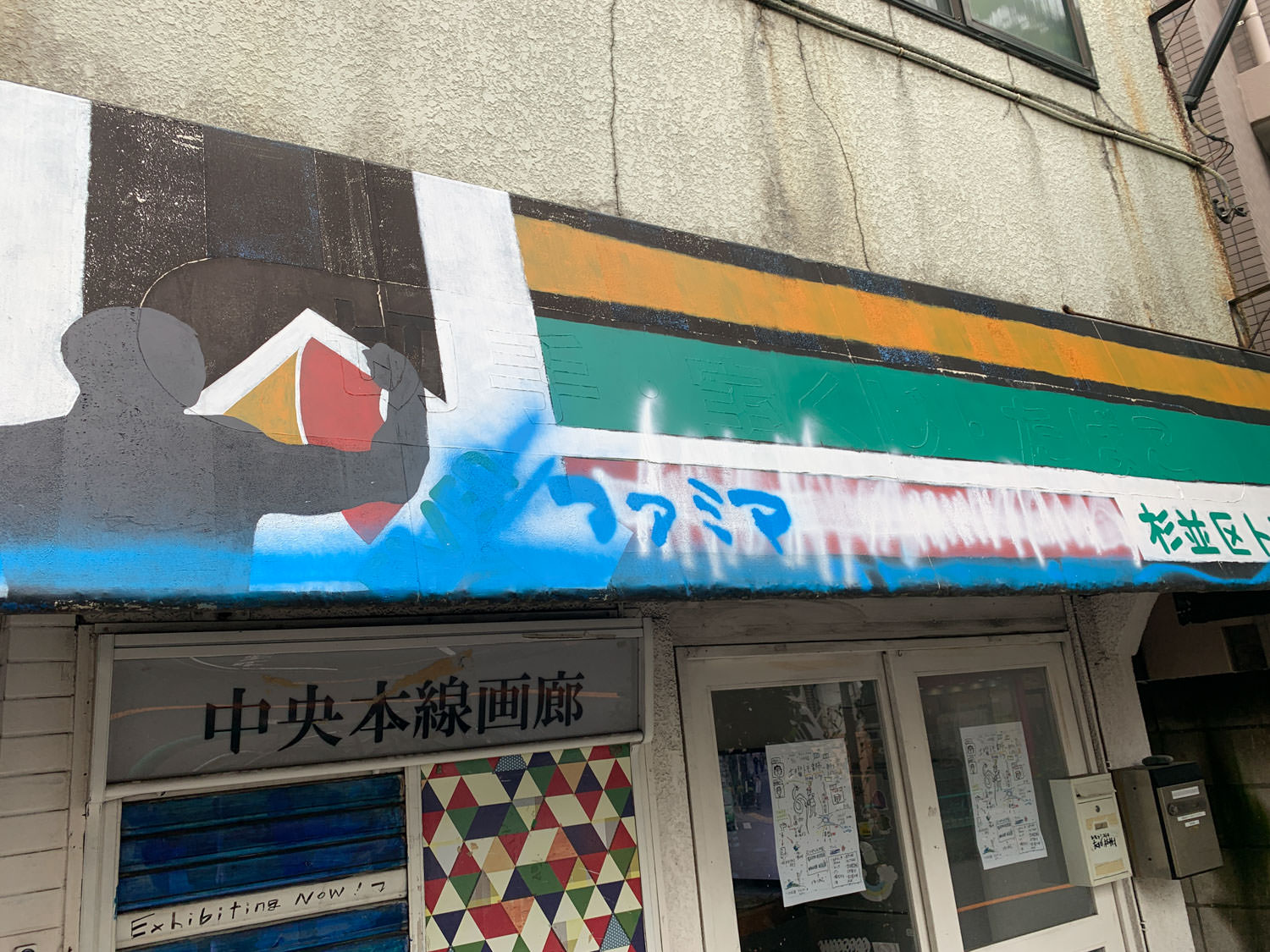
“Tomo Municipal Museum of Art” is a museum that opened in Nishi-Ogikubo, Tokyo in April 2020, amid the COVID-19 pandemic, dedicated to practicing and introducing experimental initiatives in the contemporary city.
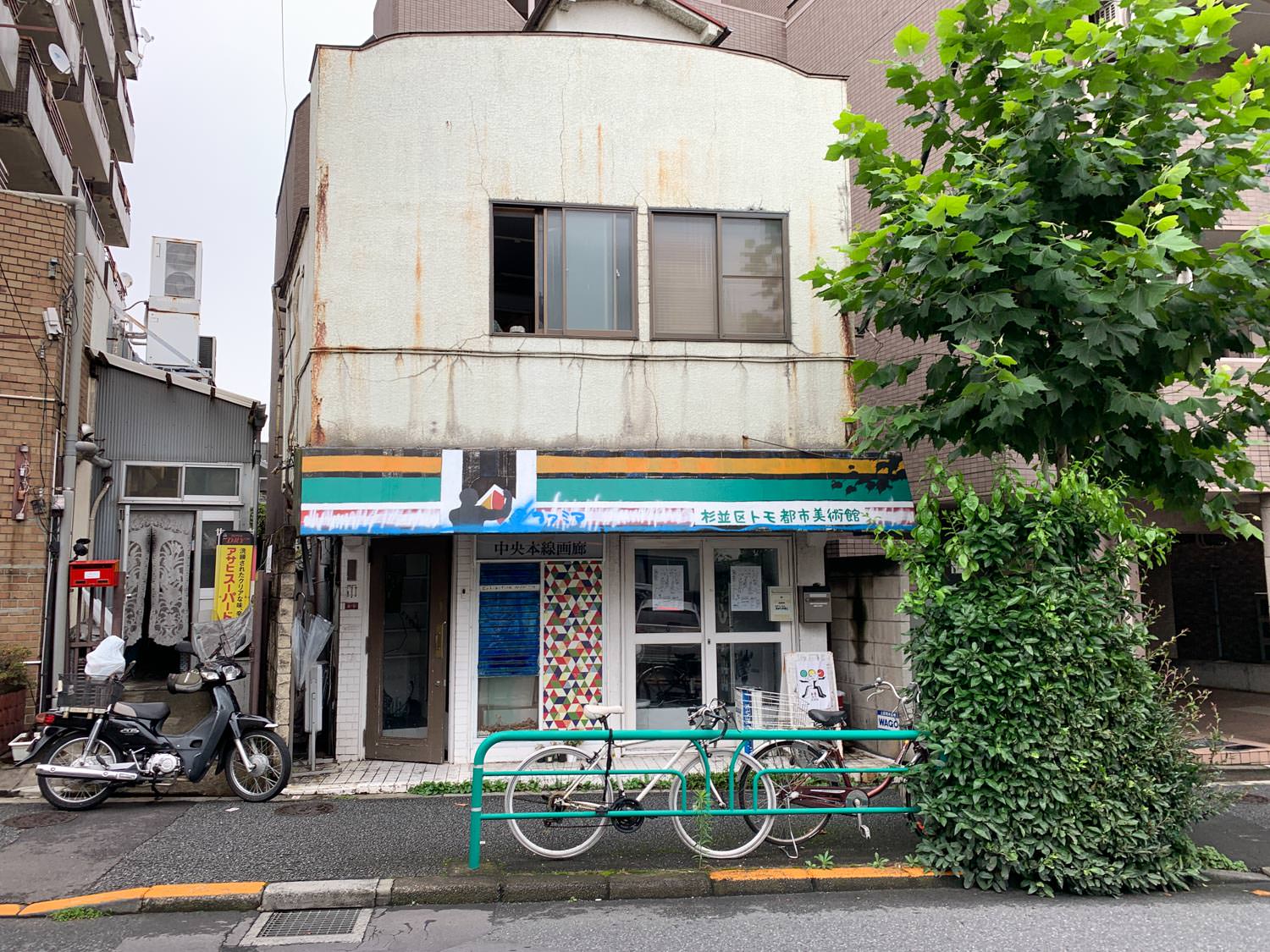
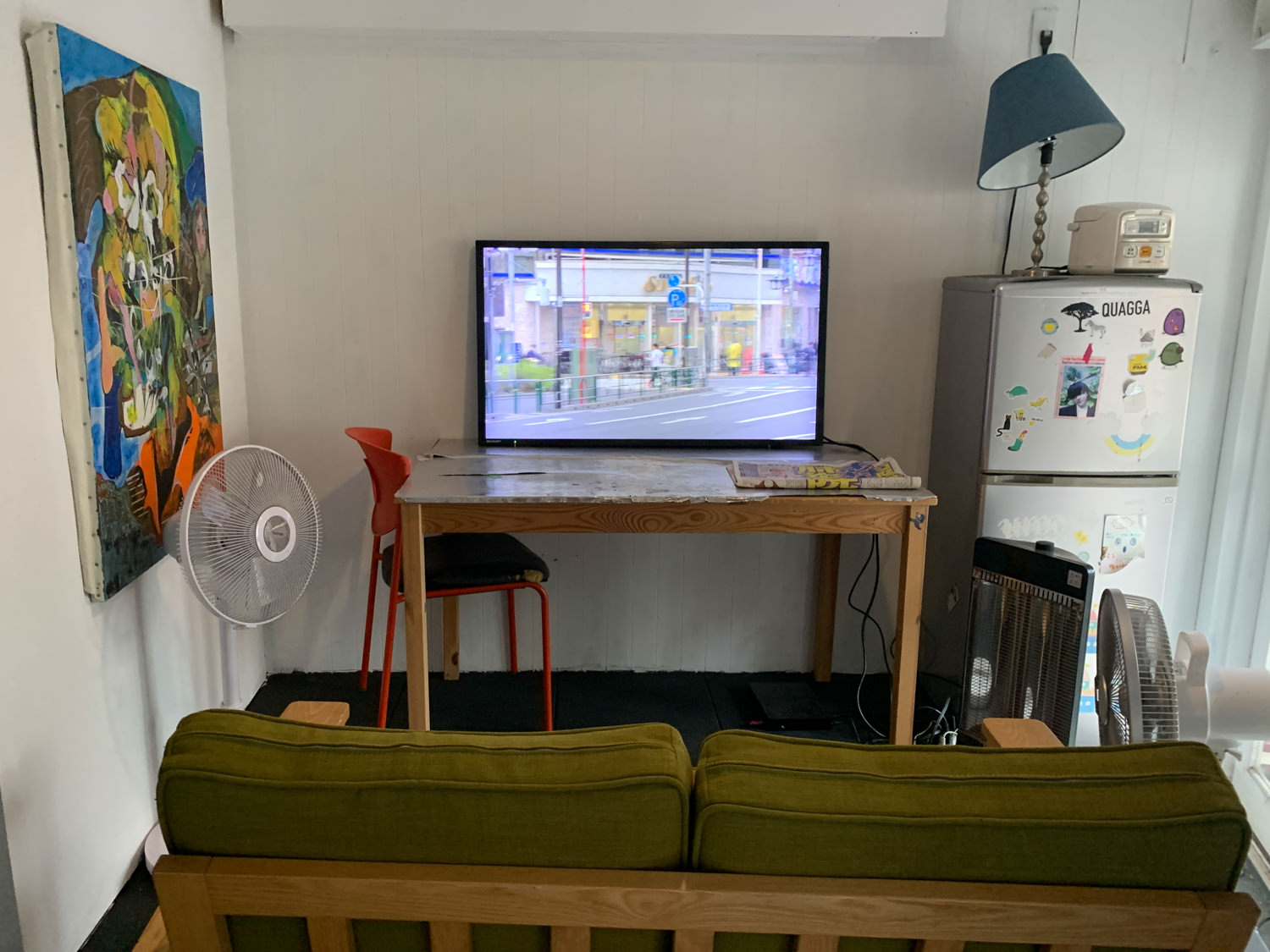
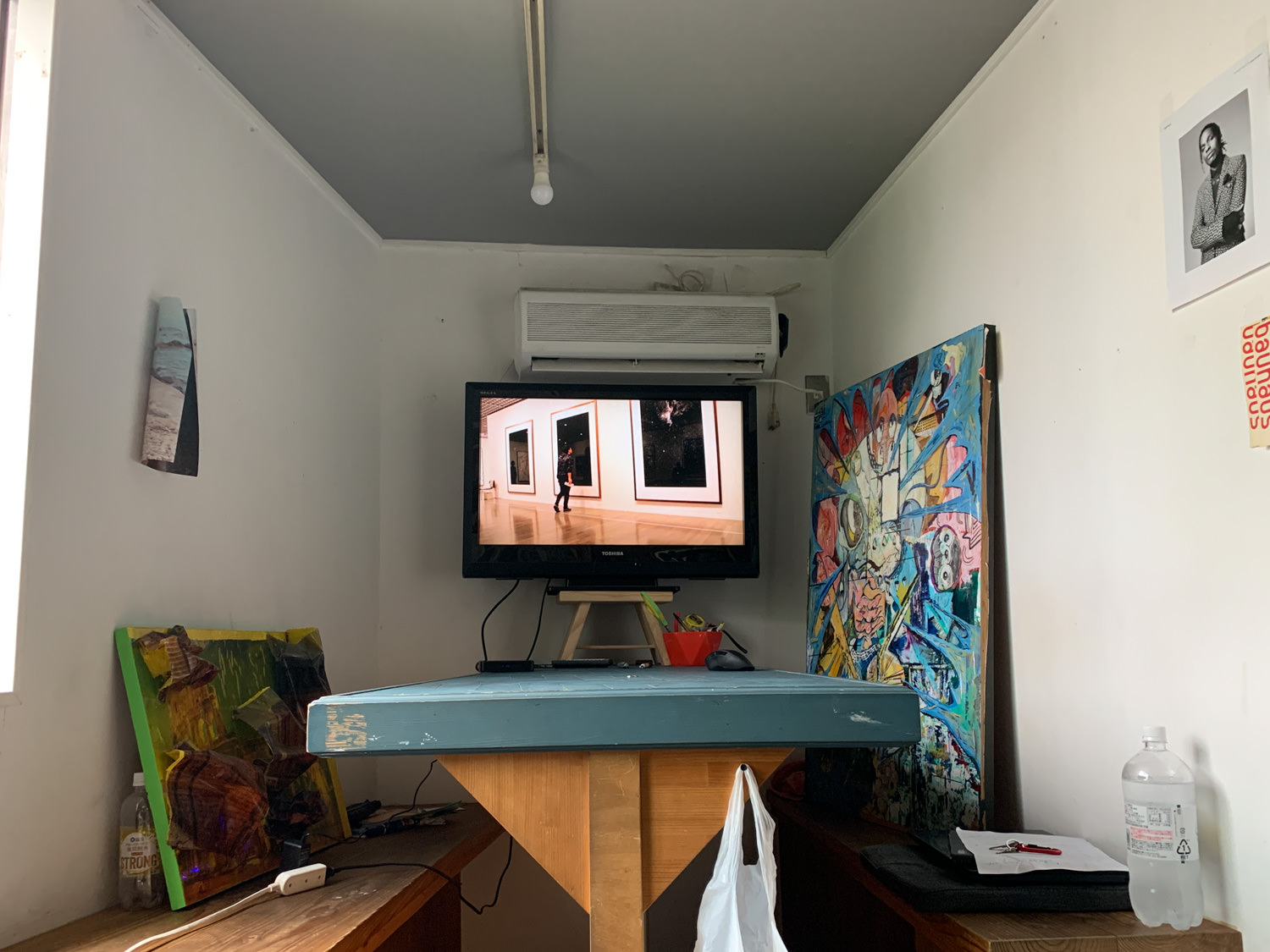
I visited Tomotoshi’s solo exhibition “Hernia City,” held as the pre-opening exhibition of the Tomo Municipal Museum of Art.
Tomotoshi is a video artist who focuses on urban spaces and, through his own actions and interventions, skillfully draws out human psychology, posing messages to viewers and to society.
At this exhibition, a total of 8 works — including 2 new pieces responding to the COVID-19 pandemic — were screened, offering an overview of Tomotoshi’s activities over the past several years.
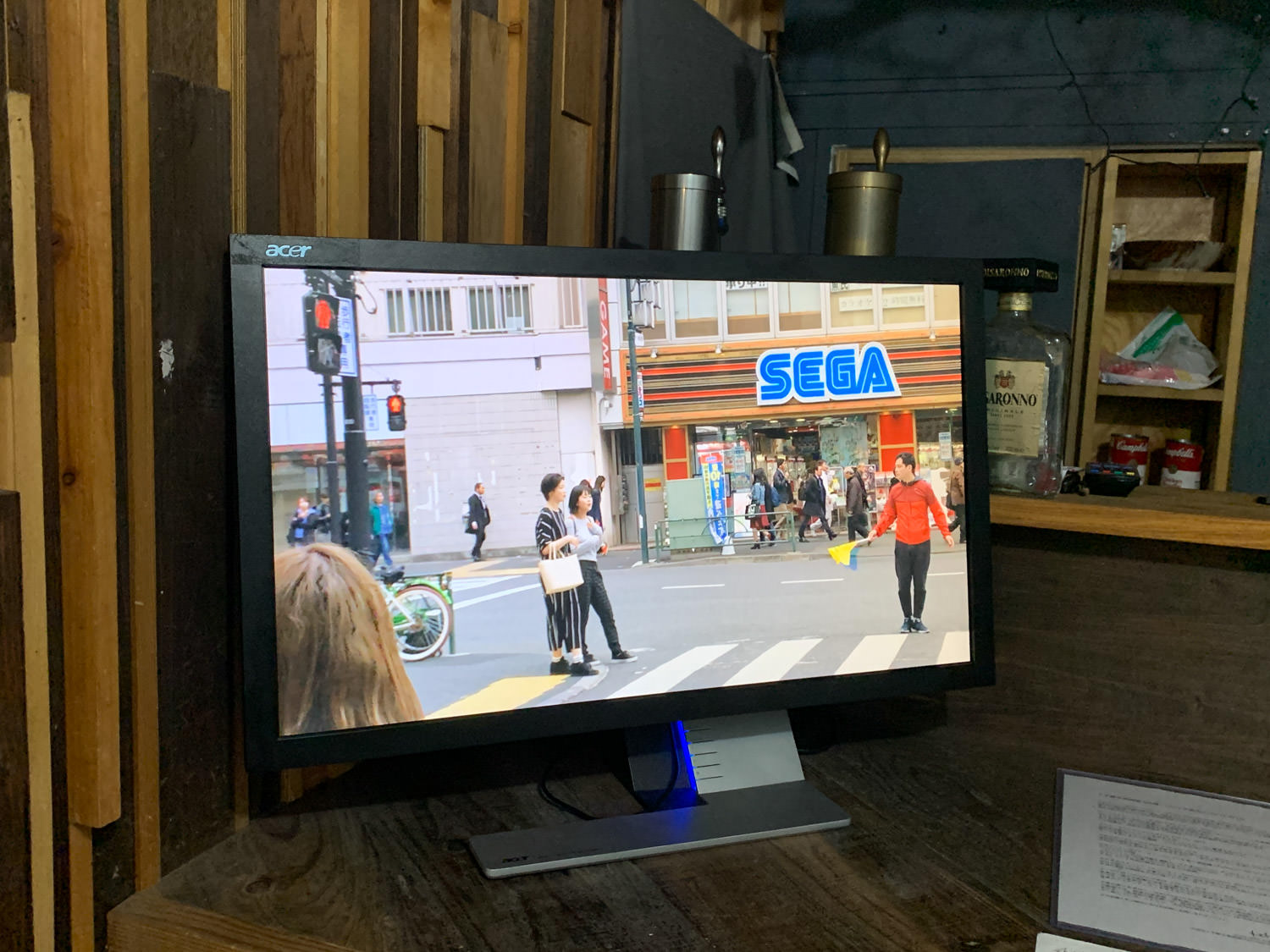
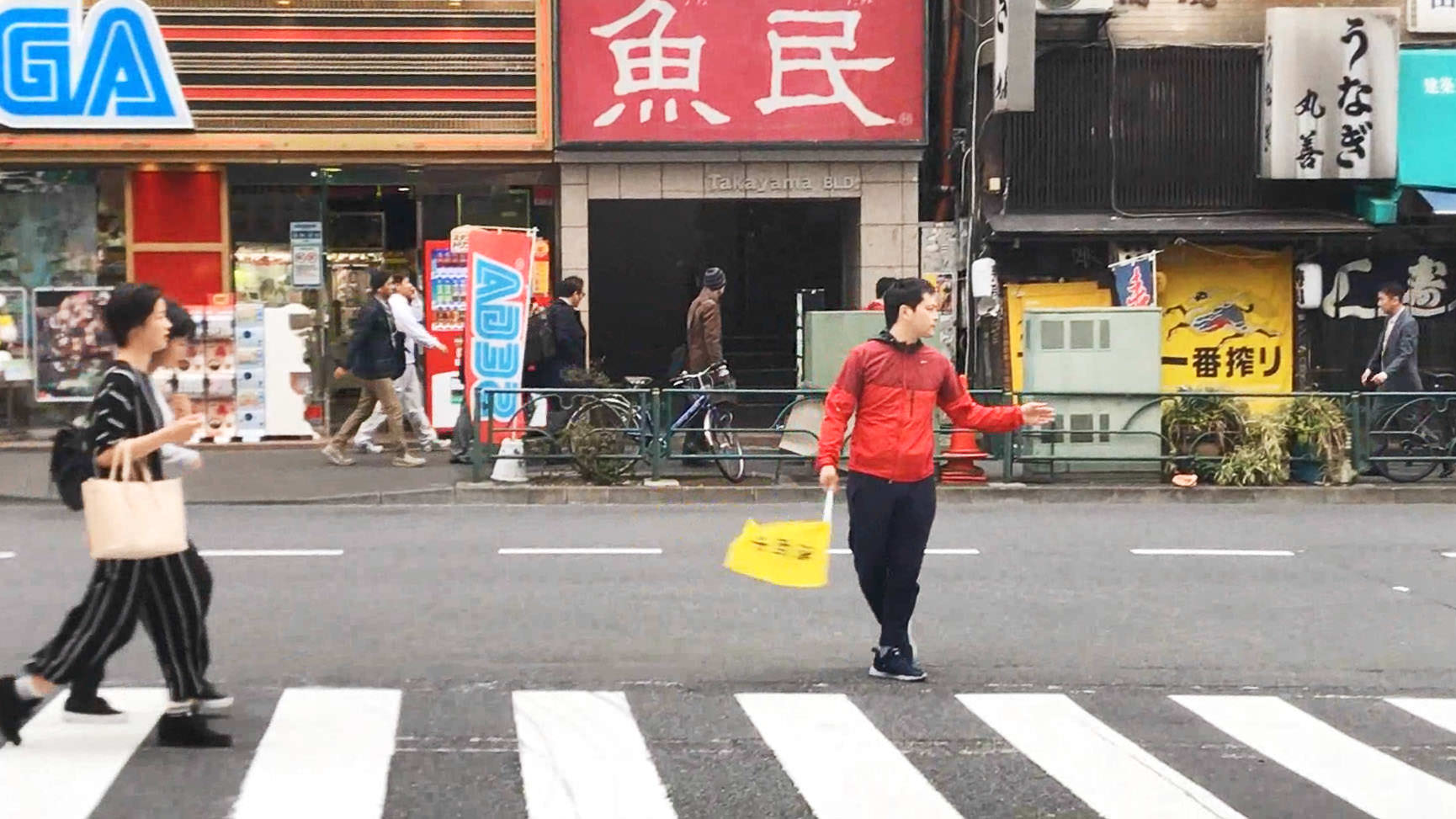
The Red Old Man
At school crosswalks, there is a role called “the Green Old Man” who safely guides elementary school children across. This time, I played the role of the “Green Old Man” to safely guide adults across.
In Search of the Onyama Climb
Tomotoshi spent his years up to age 18 in Kudamatsu City, Yamaguchi Prefecture. In this region, an event called the Onyama (Meguyama) Climb has been held once every three years.
“At sunset, a crowd chases a wild boar from the foot of Onyama. They reach the summit around sunrise. At the center stands a sacred area framed by a large square, into which the boar is driven. The first boar to enter the sacred area is captured by the Shinto priest and kept for three years at the shrine as a guardian lion. Then, at the next festival, it is eaten.”
Because his father served as a Shinto priest, Tomotoshi was strongly drawn to this ritual and had resolved in his heart to become deeply involved with it in the future. But when he was 14, amid a municipal merger upheaval, the event was suddenly abolished. He appealed for its reversal, but the decision was not overturned. Ever since, Tomotoshi has traveled throughout Japan continuing his research on the Onyama Climb.
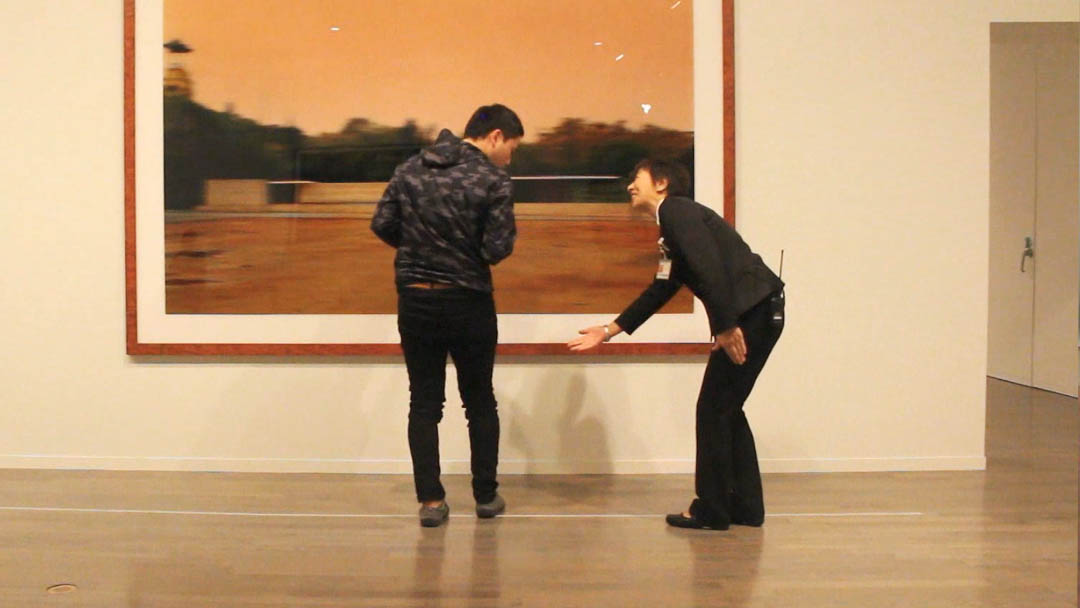
This video presents the results of research on the roots of the Onyama Climb discovered in art museums and museums in the Kanto region.
The finding that “the behavior of the museum guards corresponds in every respect with that of the Shinto priest who captures the boar that has trespassed on sacred ground” served as decisive material.
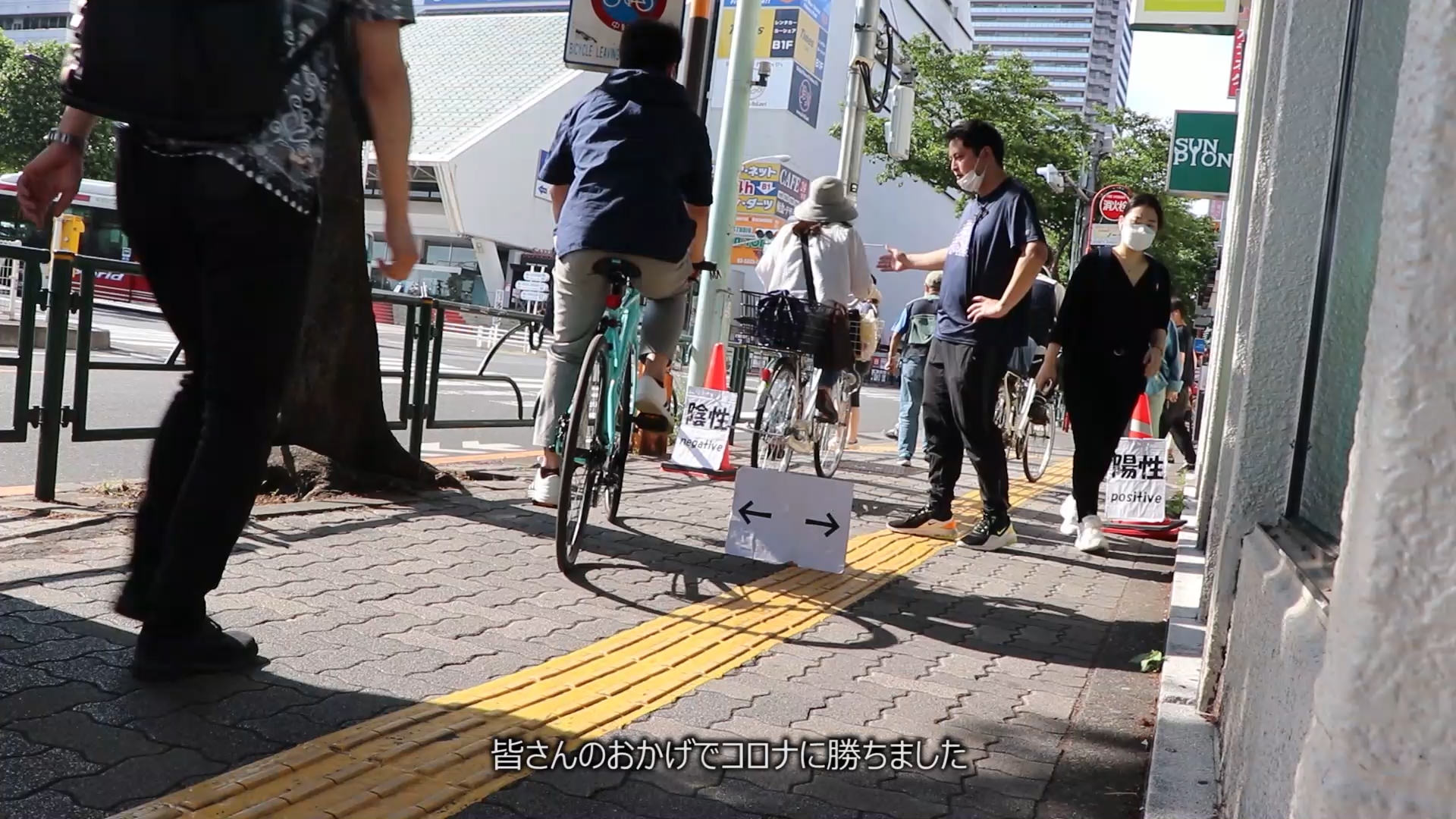
Victory Negative Road
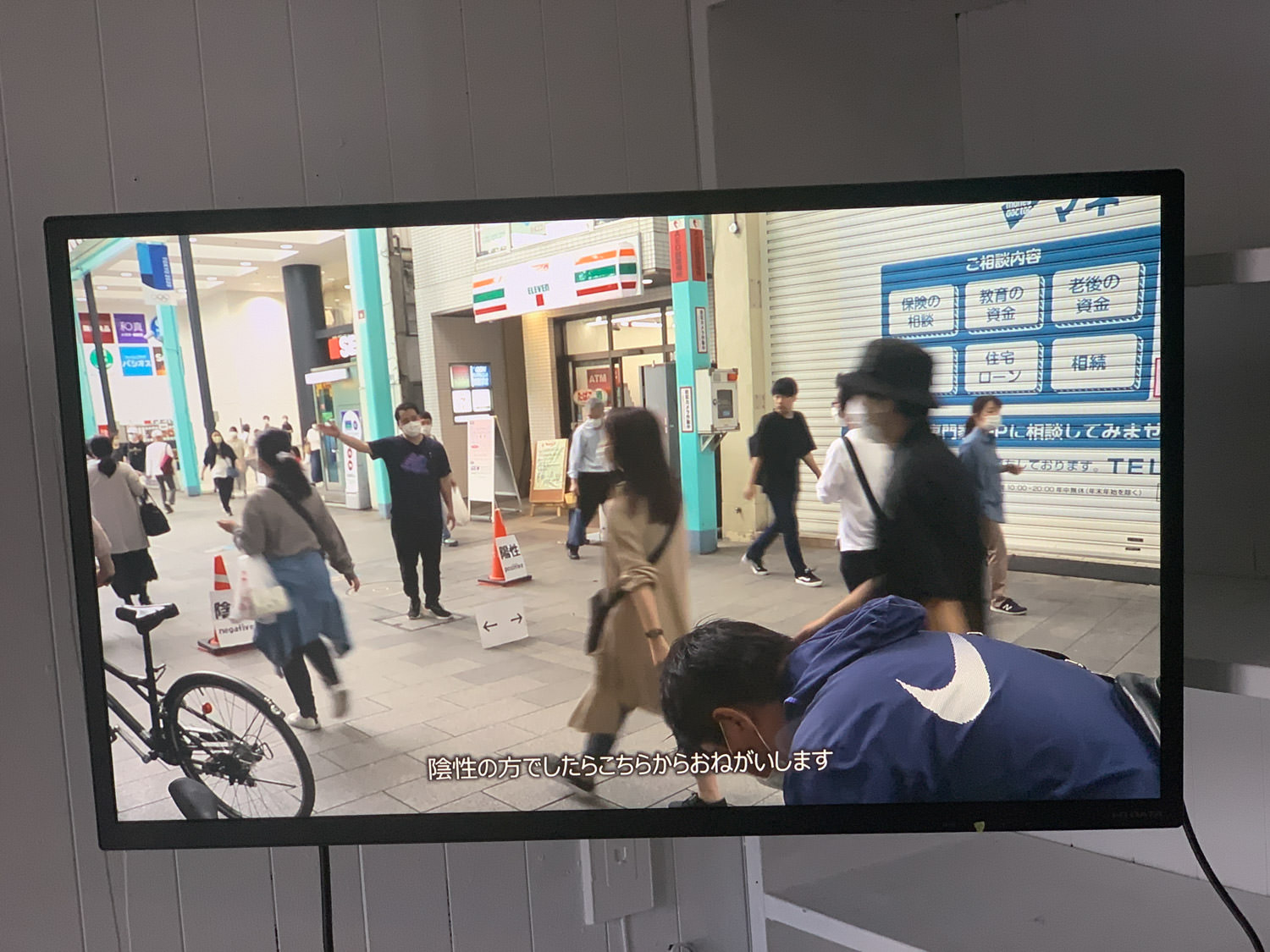
In early May along the Chuo Line, as the spread of COVID-19 had settled, the number of people ending their stay-at-home lifestyle was rapidly increasing.
Amid tangled information and wandering government responses, these were people who made their own decisions. To honor their COVID-19 decisions, I installed a “Victory Road.”
If I Move Me
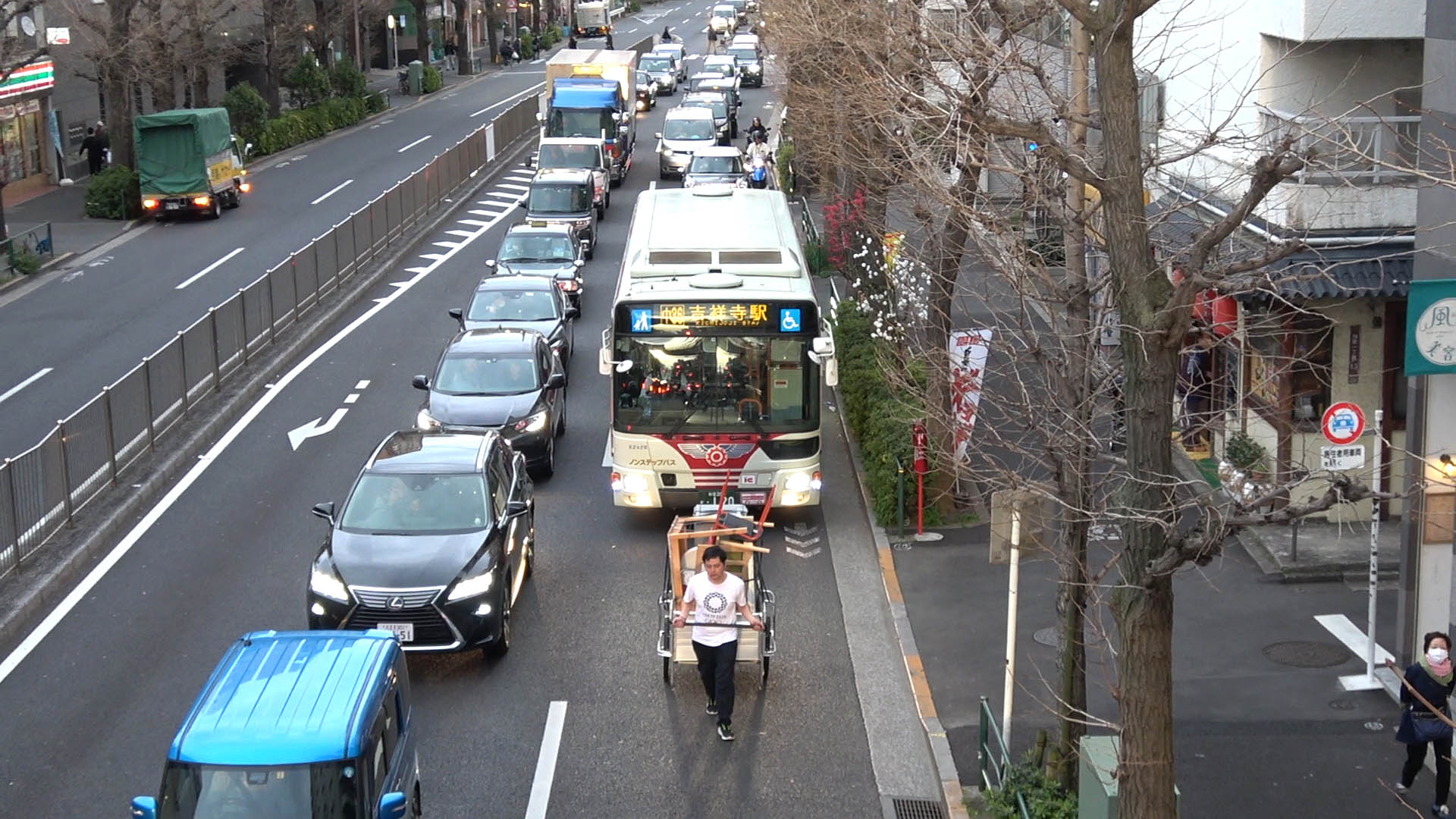
Due to the impact of COVID-19, five events and exhibitions I was scheduled to participate in were cancelled.
At the end of that March, I moved out of the house in Nishi-Shinjuku where I had lived for 6 years.
Having lost my income, I could not hire movers and decided to carry my belongings by myself.
This video is a record of transporting my household goods to my new residence in Nishi-Ogikubo, taking 6 hours.

Formal City
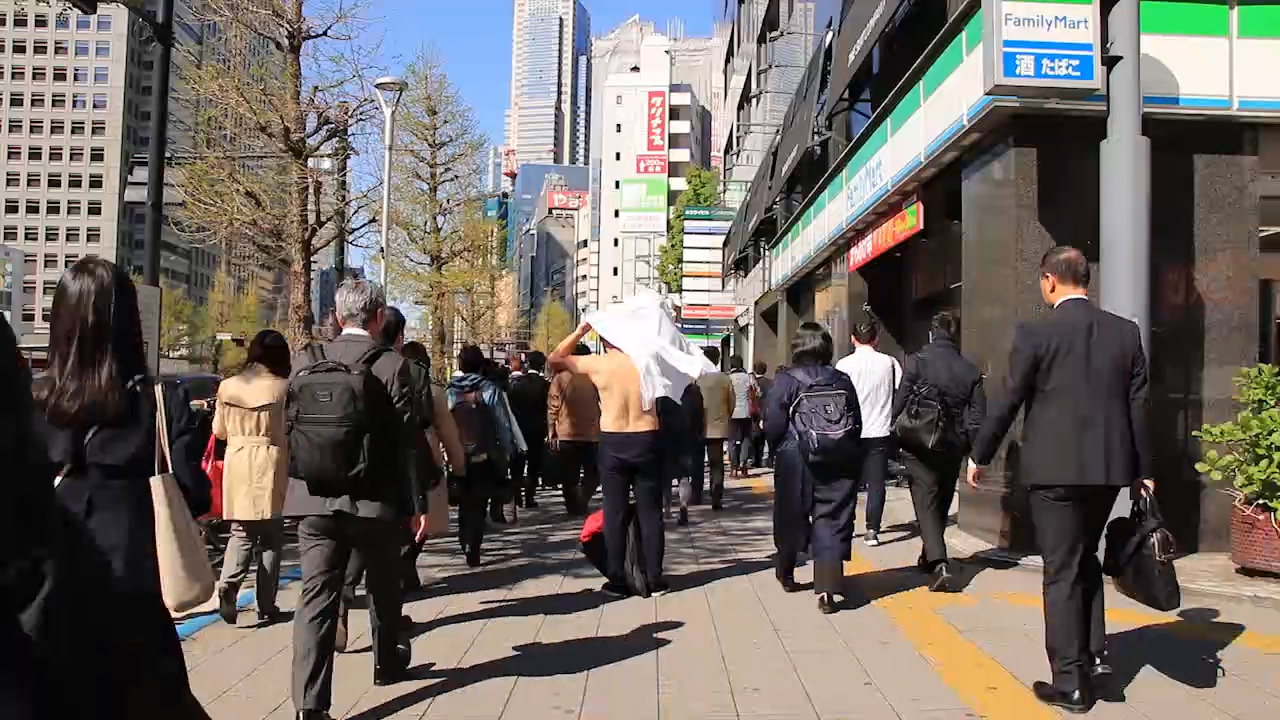
April, when all of Japan makes a fresh start.
Amid the morning commuting rush of central Tokyo, I performed the act of changing from pajamas into a suit. The moment I put on the suit, I felt just a little more blended in with those around me.
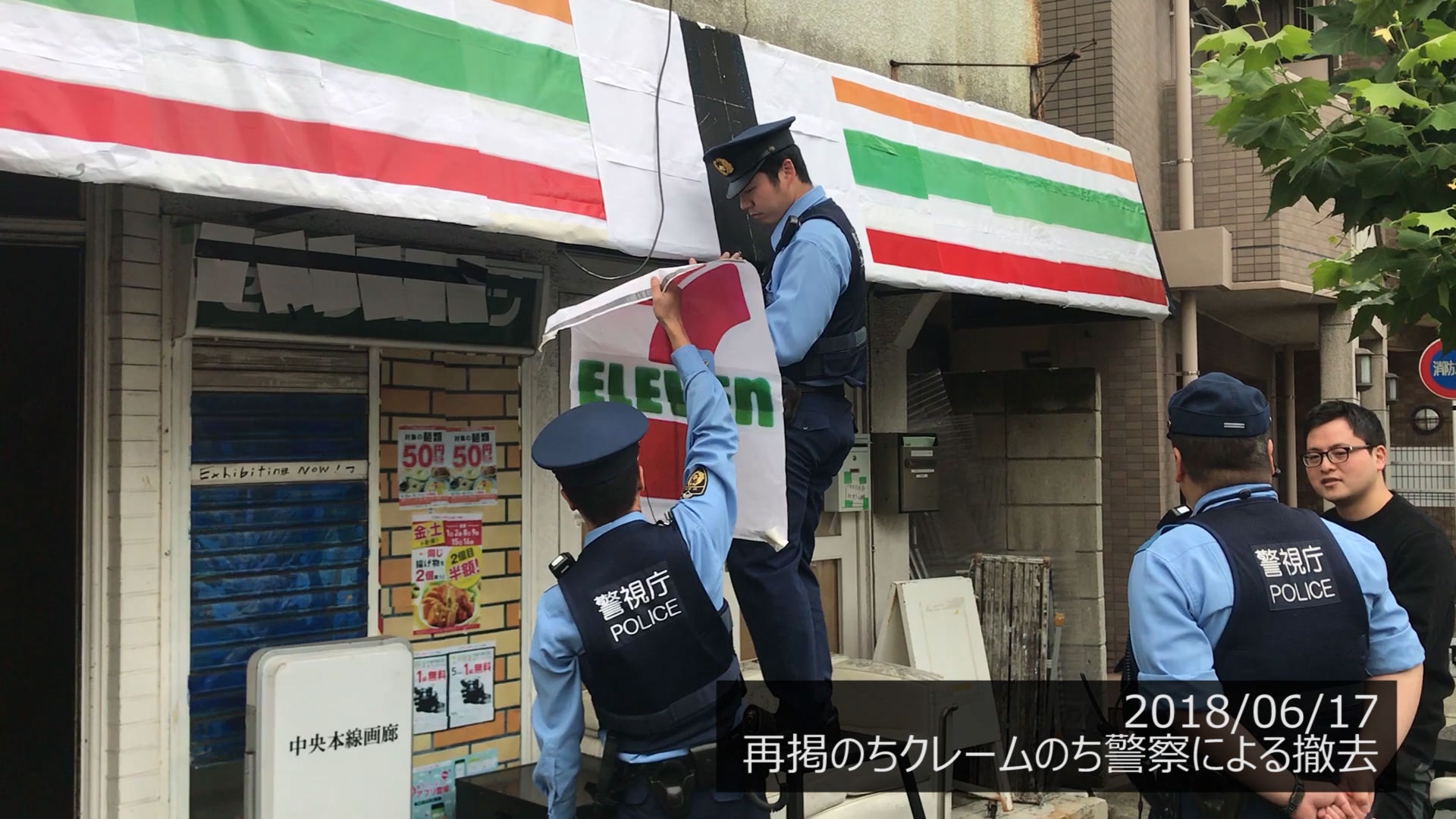
Buying 7-Eleven at 7-Eleven: Removal Edition
A record of a work being removed — where I “photographed the exterior of a 7-Eleven, printed it with 7-Eleven’s net-print service, and pasted it up with scissors and tape bought at 7-Eleven, thereby copying and pasting a 7-Eleven onto the gallery.”
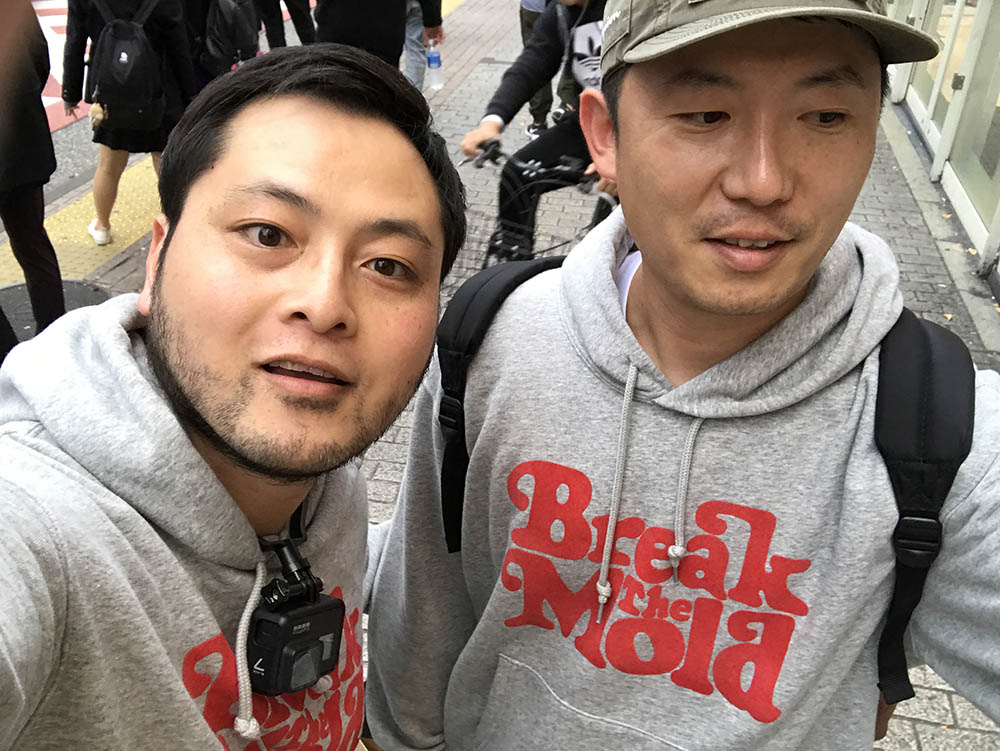
Democratic Fashion
A record of wandering the streets in search of someone wearing the same hoodie as me.
Because it took a really long time to find someone, when I finally did, I felt a joy as if the person were no stranger at all.
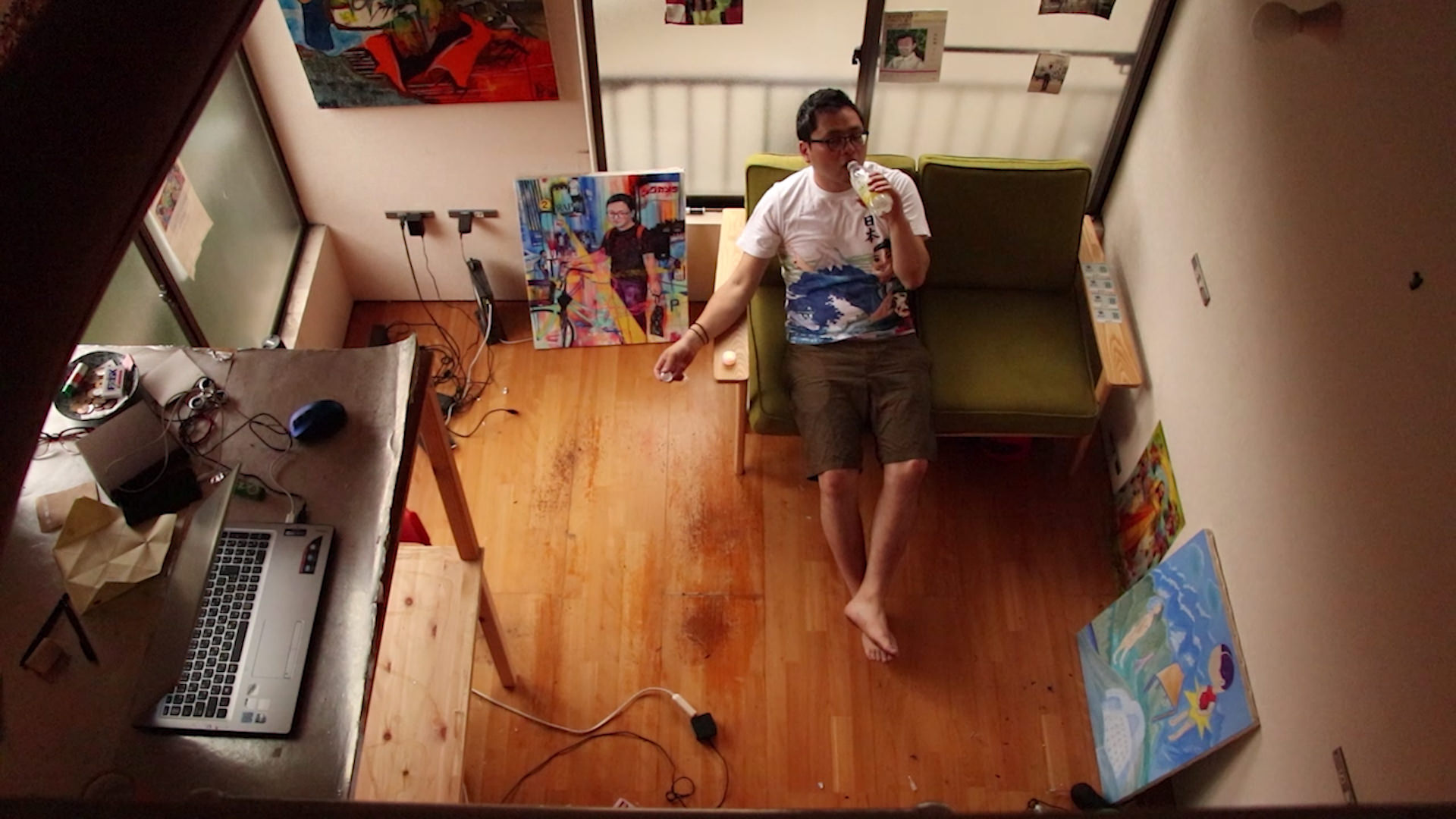
IKEA Selections
Once furniture is placed, it is rarely moved again.
At that point, it might be more fitting to call the furniture “architecture” rather than “furniture.” In order to think about the identity of furniture, I spent a day doing nothing but continually moving furniture.
All 8 video works were planned, performed, and produced by Tomotoshi himself.
The changes in human behavior brought about through Tomotoshi’s actions carry richly suggestive messages that will surely bring insights to us as members of daily life.