
“Never Look Away”
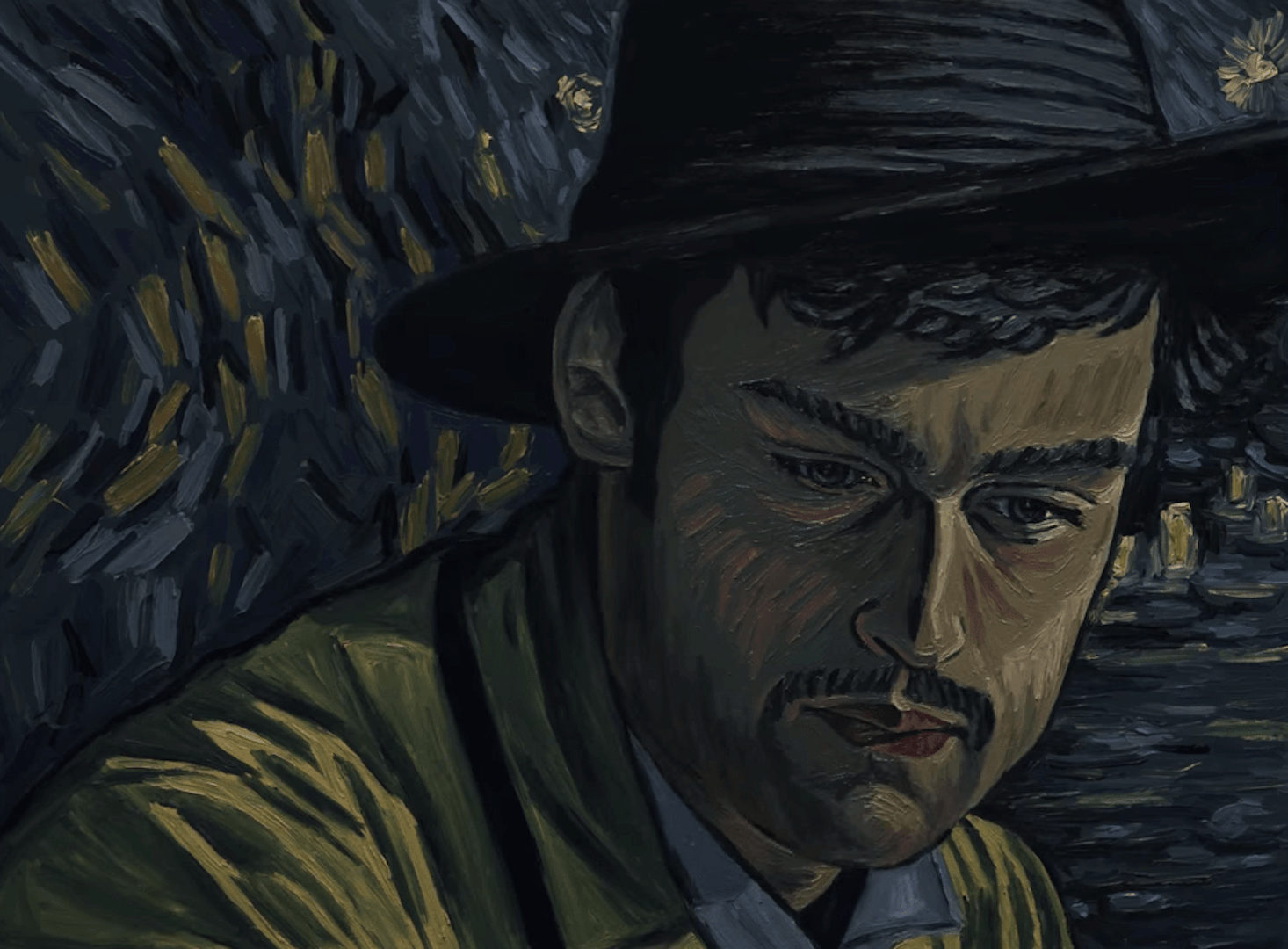
I watched the 2018 German film “Never Look Away,” nominated at numerous prestigious film festivals. Its Japanese title is “Aru Gaka no Suki na Unmei.”
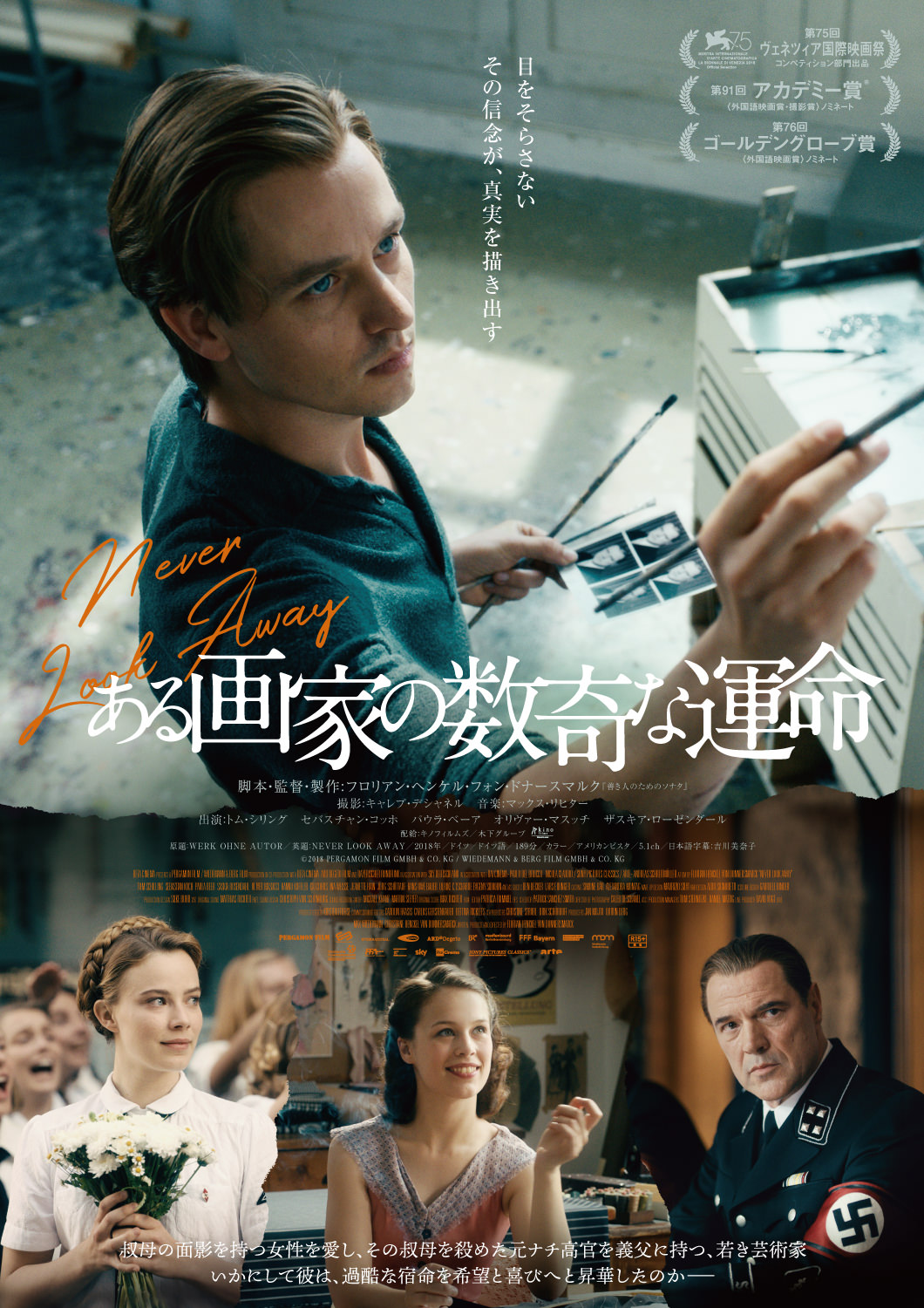
The film was realized when director Florian Henckel von Donnersmarck, whose “The Lives of Others” won the Academy Award for Best Foreign Language Film, approached the master Gerhard Richter with the project.
Gerhard Richter
Born in Dresden, Germany (former East Germany) in 1932.
After studying painting at the Dresden Academy of Fine Arts, he moved to West Germany in 1961 and enrolled at the Kunstakademie Düsseldorf. Major museums around the world hold his work in their collections; both in name and in fact he stands at the summit of global evaluation, and is among the most influential contemporary artists alive today. In Japan, retrospectives were held in 2005 at the 21st Century Museum of Contemporary Art, Kanazawa and the Kawamura Memorial DIC Museum of Art. In 2016, Japan’s first permanent facility for Richter’s work opened on Teshima in the Seto Inland Sea.
The conditions Richter set for the film were pointedly mysterious: “The names of the real people who inspired the characters must be changed, and neither of us is ever to reveal what is fact and what is not.” An arrangement designed to stir the viewer’s imagination. Even the character understood to be Richter himself is given the fictional name “Kurt.”
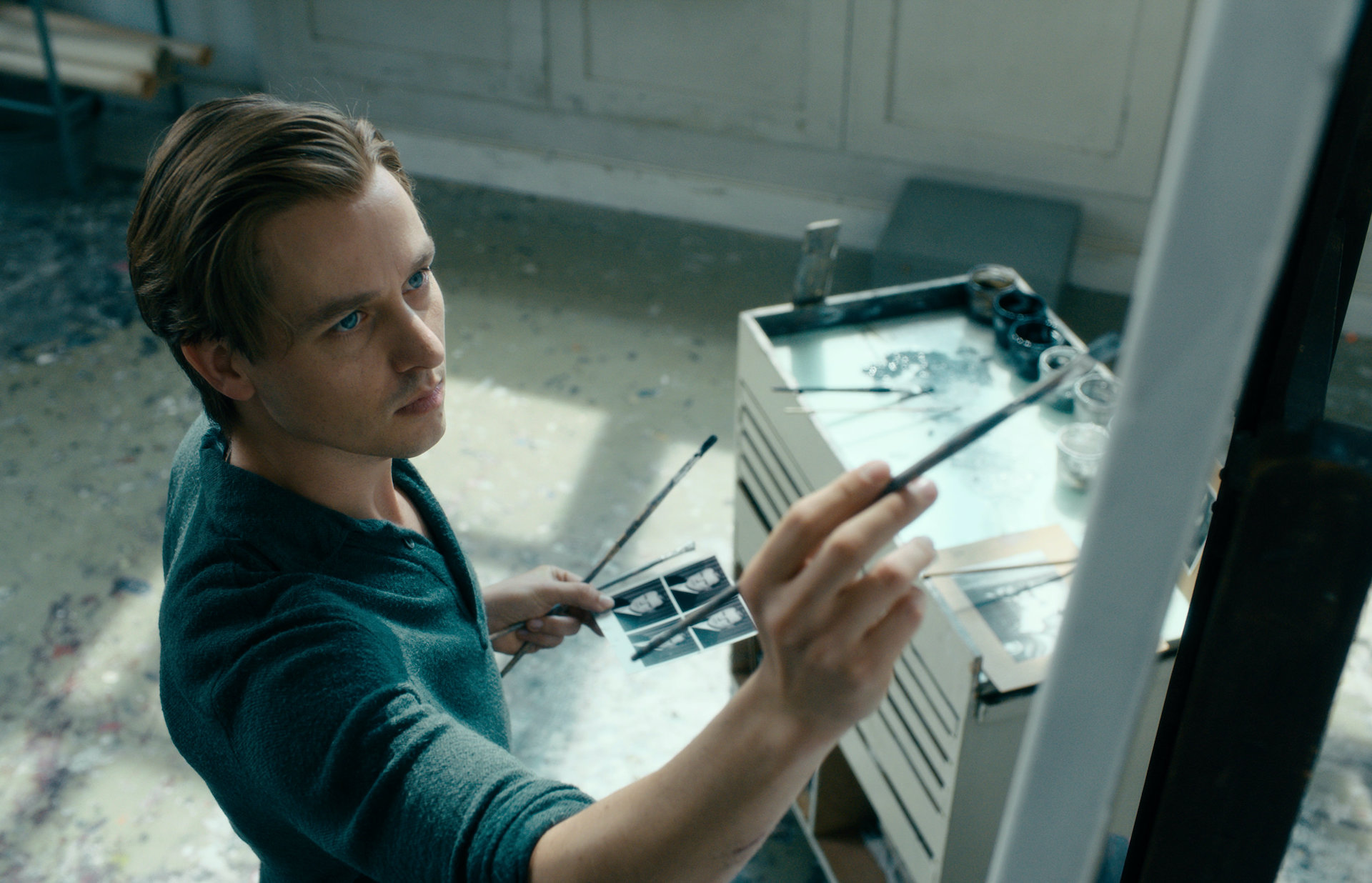

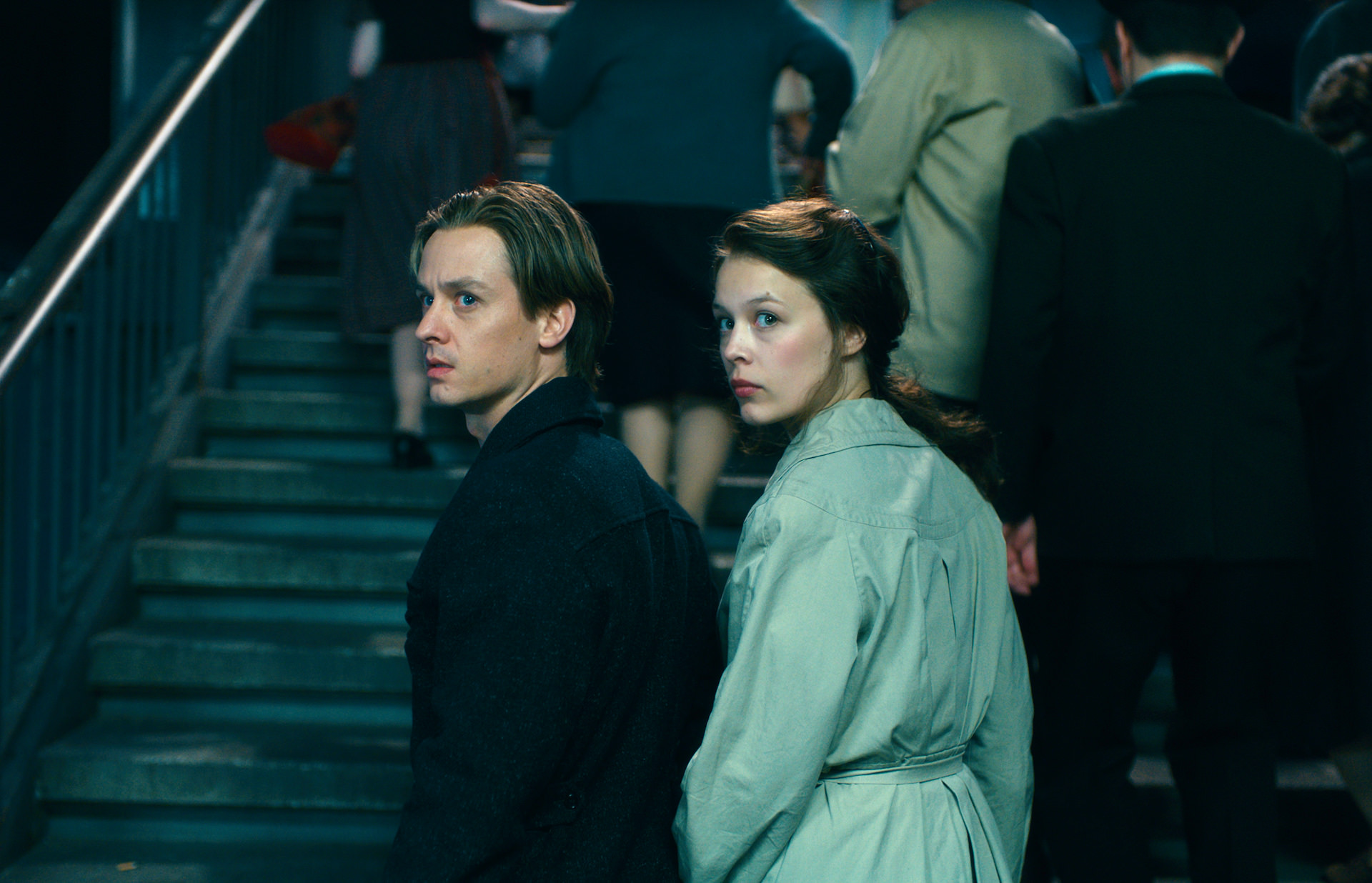
From roughly the midpoint of the story, the setting shifts to the Kunstakademie Düsseldorf, and one can’t help but imagine that the various figures on screen are modeled after real people from the art world.
Whether the film faithfully re-creates the historical record is, exactly as Richter intended, left to the viewer to decide. Interpreting the film freely on our own terms may itself be one of the ways to enjoy it.
Some characters are unmistakable — “That must be Joseph Beuys!” — while others turn out to be figures Richter could not chronologically have crossed paths with.
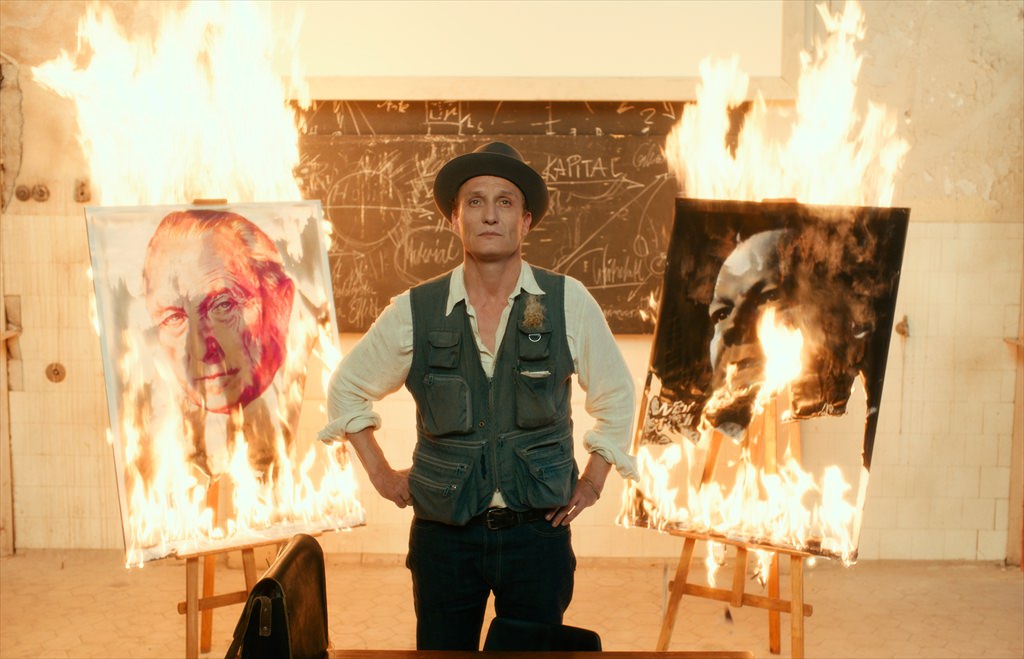

The main narrative traces Richter’s engagement with the practice of painting up to the birth of his signature “Photo Painting” series — enlargements of newspaper and magazine photographs transferred to canvas and then blurred across the entire picture plane. The finale re-creates the mood of a solo exhibition, closing with the sense of the artist Richter taking flight into his future.
The works below are among those whose motifs served as reference for the paintings featured in the film. Whether the anecdotes woven around them in the film are true or not, we as viewers may be free — just as we are in the act of art appreciation itself — to receive the film according to our own reading.
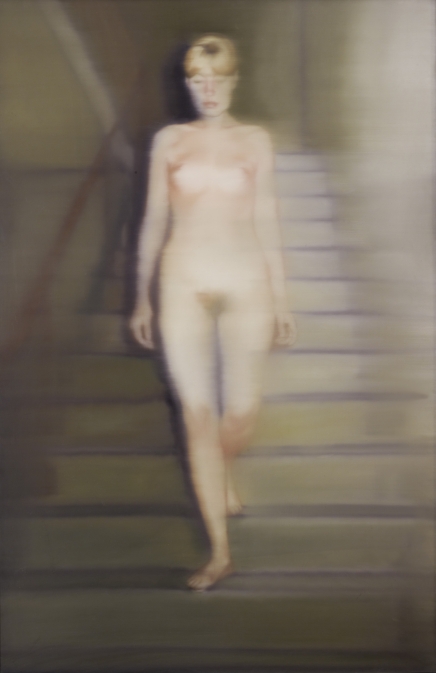
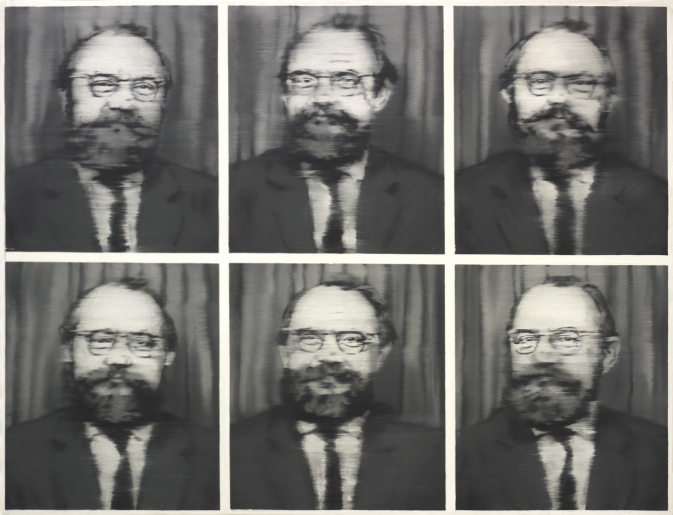
In an interview at the opening of a solo exhibition, Richter said, “All truth is beautiful.”
Every viewer brings their own reading to a work, and freedom to interpret is part of the film’s pleasure — a pleasure not unlike looking at art.
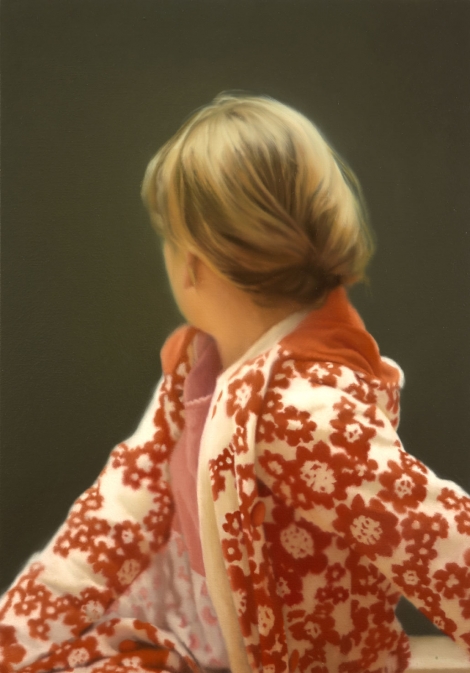
Overview
“Never Look Away”
Official site: neverlookaway-movie.jp
Japan release date: October 2, 2020 (Fri.), opening nationwide at TOHO Cinemas Chanter and other theaters.
Director / screenwriter / producer: Florian Henckel von Donnersmarck
Cast: Tom Schilling, Sebastian Koch, Paula Beer, Oliver Masucci, Saskia Rosendahl
Cinematography: Caleb Deschanel
Music: Max Richter
Original German title: WERK OHNE AUTOR / English title: NEVER LOOK AWAY
Year of production: 2018
Running time: 189 minutes
Country of production: Germany / German language
Japanese subtitles: Minako Yoshikawa
Distribution: Kino Films / Kinoshita Group
Rated R-15